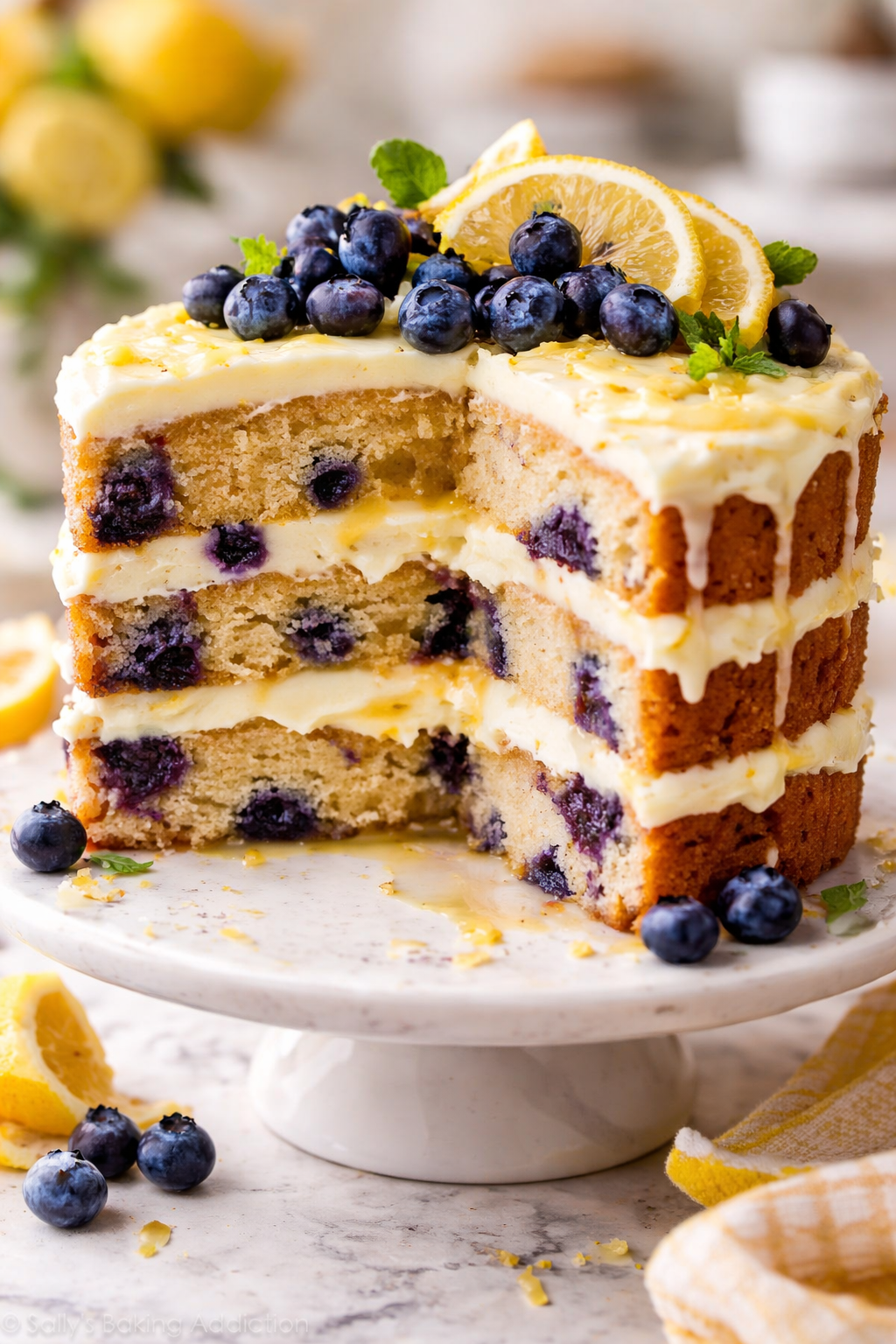
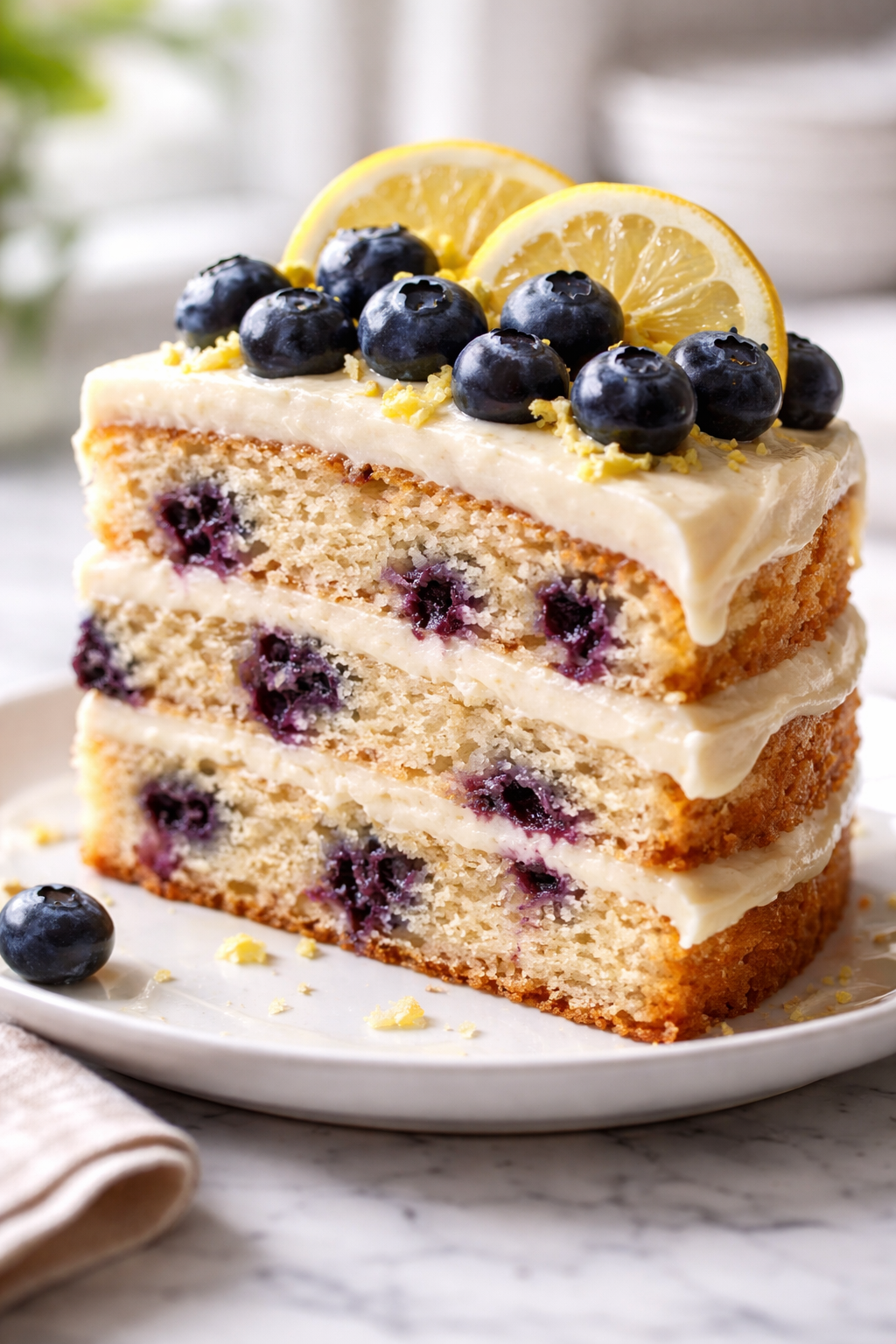
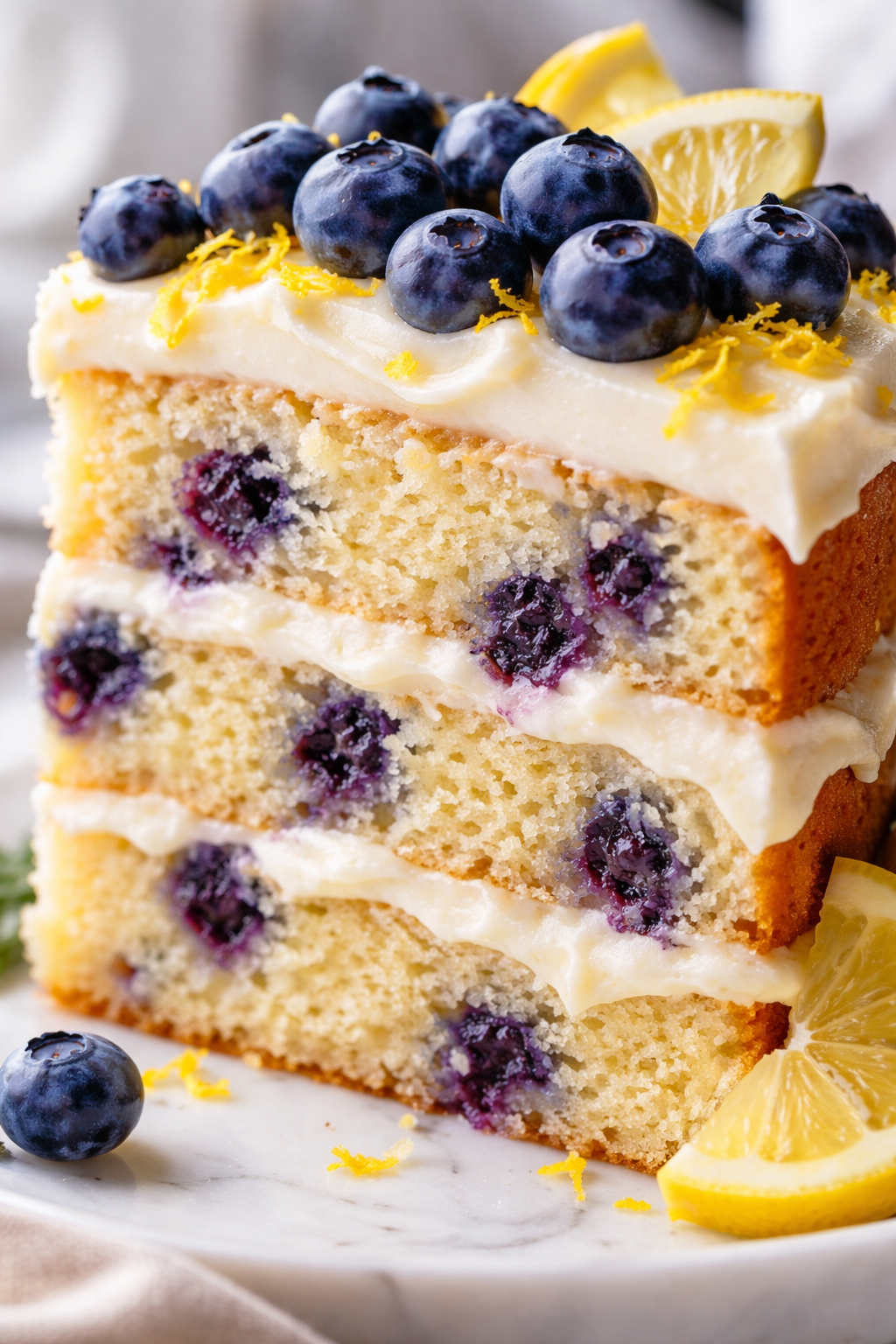
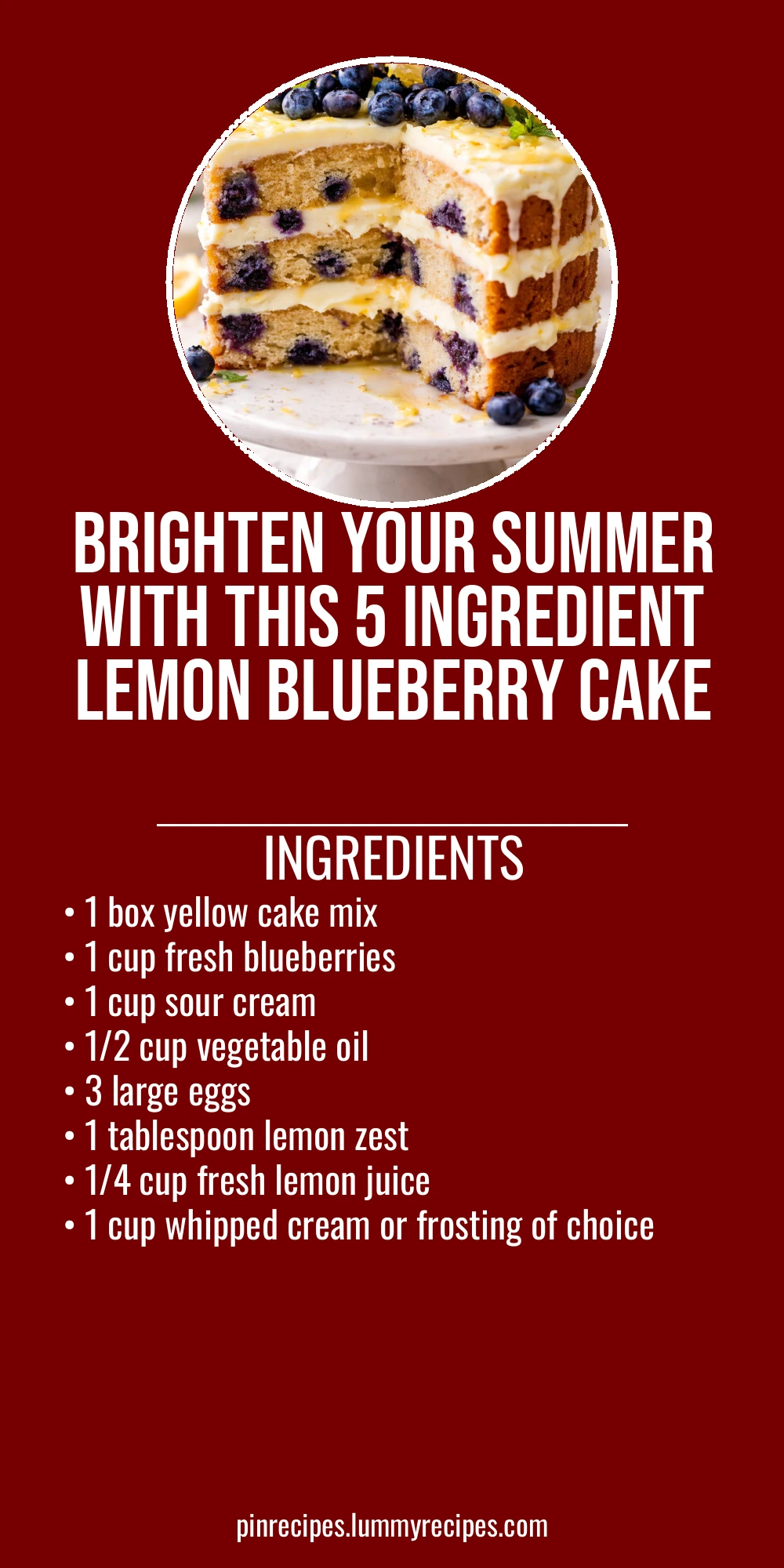
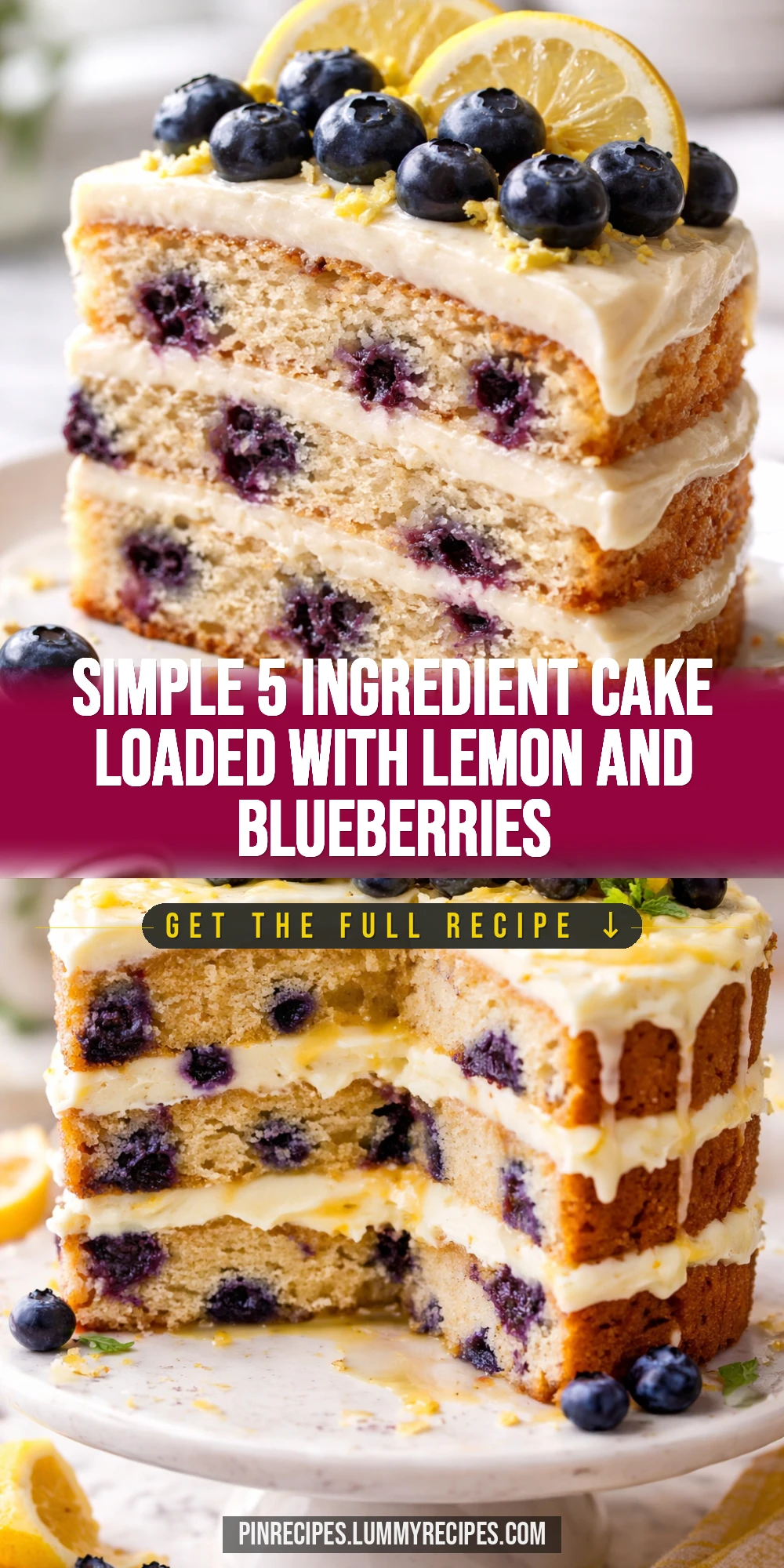
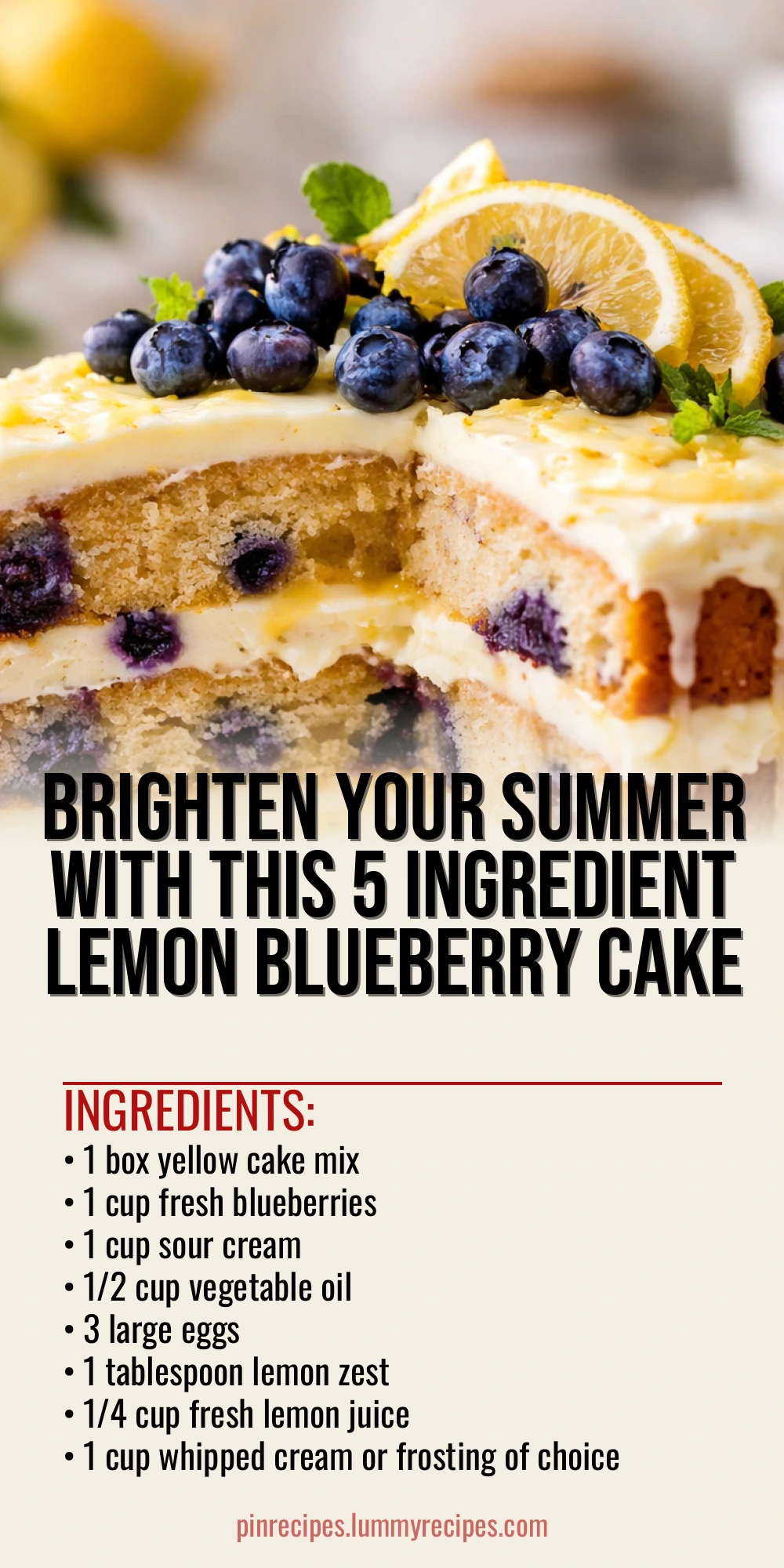
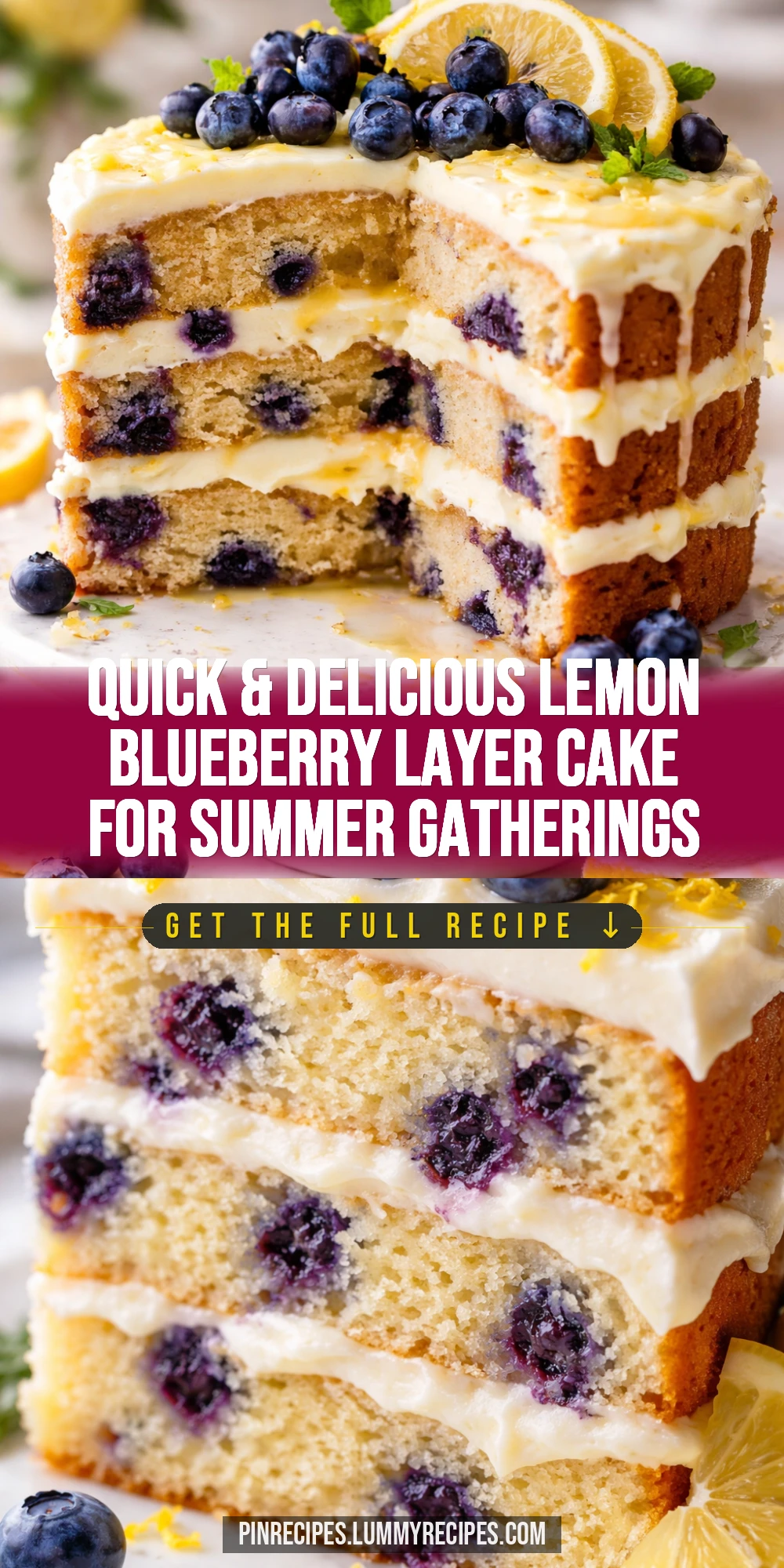
This light, fresh lemon blueberry cake is a summer favorite. With just five simple ingredients, it’s easy to whip up and perfect for backyard parties or casual get-togethers. The burst of blueberries and zesty lemon makes it so refreshing!
Introduction
I first made this lemon blueberry layer cake a few summers ago when I wanted something light and fresh for a family gathering. Most lemon cakes I tried felt heavy or too sweet, but this one struck the perfect balance—bright lemon flavor with juicy blueberries, yet still fluffy and tender. The best part? It only calls for five main ingredients, plus a bit of lemon zest and juice to punch up the flavor. I like to use a boxed yellow cake mix as a base because it keeps things simple, but adding sour cream and fresh lemon really elevates the texture and taste. My secret is gently folding in the blueberries at the end so they don’t break apart and color the batter too much. When it’s done, the cake layers are soft and moist, with little bursts of blueberry and a lovely citrus zing. I frost it lightly with whipped cream or a simple lemon glaze, making it perfect for summer parties or a weekend treat. It’s one of those recipes I keep coming back to because it’s easy, reliable, and everyone seems to love it!
What You'll Need
One 9-inch two-layer cake, serves 8
- 1 box yellow cake mix
- 1 cup fresh blueberries
- 1 cup sour cream
- 1/2 cup vegetable oil
- 3 large eggs
- 1 tablespoon lemon zest
- 1/4 cup fresh lemon juice
- 1 cup whipped cream or frosting of choice
How To Do It
Step 1
Preheat your oven to 350°F (175°C) and grease two 9-inch round cake pans. This step is crucial because a well-greased pan ensures your cake layers come out cleanly without sticking or breaking. I usually use a little butter and flour to coat the pans evenly. Avoid skipping this or using only spray, as it can cause uneven baking or sticking, which ruins the cake’s appearance.
⏱ Time: 10
✓ Doneness: Pans feel evenly coated and smooth to the touch, no bare spots
Step 2
In a large bowl, combine the yellow cake mix, sour cream, vegetable oil, eggs, lemon zest, and lemon juice. Use a hand mixer or stand mixer on medium speed to blend until smooth and creamy, about 2-3 minutes. Mixing well incorporates air for a light texture, but don’t overmix or the cake can become dense. The lemon zest and juice brighten the batter and add fresh citrus notes.
⏱ Time: 5
✓ Doneness: Batter is smooth with no lumps, slightly thick but pourable
Step 3
Gently fold in the fresh blueberries using a spatula. This delicate step prevents the berries from breaking apart and turning the batter purple. Folding rather than stirring keeps the blueberries whole, giving you those lovely bursts of flavor in the final cake. Be careful not to overmix here.
⏱ Time: 3
✓ Doneness: Blueberries are evenly distributed, batter slightly speckled with blue
Step 4
Divide the batter evenly between the two prepared pans. Use a spatula to smooth the tops for even baking. Even batter distribution ensures both layers cook uniformly and stack nicely. Uneven batter can cause one layer to be thicker or undercooked in spots.
⏱ Time: 2
✓ Doneness: Batter surface is level and smooth in both pans
Step 5
Bake in the preheated oven for 28-32 minutes. Start checking around 28 minutes by inserting a toothpick in the center; it should come out clean or with a few moist crumbs but no wet batter. Baking time varies by oven, so watch closely to avoid drying out the cake.
⏱ Time: 30
✓ Doneness: Toothpick inserted in center comes out clean or with moist crumbs
Step 6
Remove the cakes from the oven and let them cool in the pans for 10 minutes. This resting time allows the cake to firm up slightly, making it easier to remove from the pans without breaking. If you try to unmold too soon, the layers might crumble.
⏱ Time: 10
✓ Doneness: Cakes pull away slightly from pan edges and feel set
Step 7
Run a knife around the edges to loosen the cakes, then invert onto wire racks to cool completely. Cooling completely is key for a stable cake that won’t crumble when you frost it. If frosting warm cake, it can melt and slide off.
⏱ Time: 30
✓ Doneness: Cakes are completely cool to the touch, no warmth remains
Step 8
Once cooled, spread whipped cream or your frosting of choice evenly over one cake layer. The lightness of whipped cream complements the fresh lemon and blueberry flavors without overpowering. Use an offset spatula for smooth application.
⏱ Time: 5
✓ Doneness: Frosting is smooth and even, covering the entire top surface
Step 9
Place the second cake layer on top and frost the top and sides as desired. For a simple look, a thin crumb coat works great. You can garnish with extra lemon zest or a few fresh blueberries for a pretty finish. Chill the cake for at least 30 minutes before serving to set the frosting.
⏱ Time: 10
✓ Doneness: Cake looks neat, frosting set, garnishes fresh and vibrant
Pro Tips
Use room temperature eggs and sour cream for better mixing.
Ingredients at room temperature blend more evenly, resulting in a smoother batter and better rise. Cold ingredients can cause the batter to curdle or mix unevenly, leading to dense spots in the cake.
Don’t overmix the batter after adding blueberries.
Overmixing can break the blueberries, causing the batter to turn purple and become watery. Gentle folding preserves the berries’ shape and ensures even distribution without compromising texture.
Let the cake layers cool completely before frosting.
Frosting warm cake can cause it to melt and slide off, ruining the cake’s appearance. Cooling also firms up the crumb, making it easier to handle and frost neatly.
Add extra lemon zest on top for a fresh garnish.
A sprinkle of lemon zest not only looks pretty but adds an aromatic citrus punch that enhances the overall flavor experience.
Use an offset spatula for smooth frosting application.
An offset spatula allows better control and even spreading of frosting, resulting in a professional-looking finish without tearing the cake layers.
Chill the cake after frosting to set the layers.
Chilling helps the frosting firm up, making slicing cleaner and preventing the layers from sliding apart when served.
Use fresh blueberries rather than frozen for best texture.
Frozen berries release excess moisture that can make the batter runny and the cake soggy. Fresh berries maintain their shape and flavor during baking.
Common Mistakes to Avoid
Using frozen blueberries instead of fresh
Why it happens It’s tempting to use frozen berries for convenience or out of season, but frozen berries release water and can discolor the batter.
Fix Always use fresh blueberries for this recipe. If you must use frozen, thaw and drain them thoroughly, then pat dry with paper towels to remove excess moisture before folding into the batter.
Overmixing the batter after adding blueberries
Why it happens In a hurry, it’s easy to stir vigorously, but this breaks the berries and affects texture and appearance.
Fix Fold blueberries gently with a spatula just until evenly distributed. This keeps the berries intact and the batter from turning purple.
Frosting the cake before it cools
Why it happens Impatience or not allowing enough cooling time leads to frosting melting and sliding off.
Fix Let the cake cool completely on a wire rack before frosting. If you’re short on time, chill the layers in the fridge to speed up cooling.
Not greasing the pans well
Why it happens Sometimes people skip thorough greasing or flouring, causing the cake to stick and break.
Fix Grease pans with butter and dust with flour or use parchment paper rounds for easy release and clean edges.
Baking at the wrong temperature
Why it happens Oven temperatures vary and some set too high or low, causing uneven baking or dry cake.
Fix Use an oven thermometer to ensure 350°F. Adjust baking time as needed, checking doneness with a toothpick starting at 28 minutes.
Variations
Gluten-Free Version
Swap the boxed cake mix for a gluten-free yellow cake mix. The rest of the ingredients stay the same. Expect a slightly different crumb texture but still moist and flavorful. Add a bit more lemon zest to brighten the flavor since gluten-free flours can mute taste.
Note: Gluten-free batters are often more delicate; handle gently and bake promptly to avoid drying.
Lemon Cream Cheese Frosting
Replace whipped cream with a tangy lemon cream cheese frosting for a richer finish. Beat cream cheese with powdered sugar and lemon juice until smooth. This adds a luscious texture and deeper lemon flavor, perfect for special occasions.
Note: Chill the cake well before applying cream cheese frosting to prevent melting.
Add a Crunchy Almond Topping
Sprinkle sliced almonds toasted in butter and sugar on top of the frosted cake. This adds a lovely crunch and nutty contrast to the soft cake and creamy frosting, making it more festive and textured.
Note: Toast almonds carefully to avoid burning; let cool before sprinkling.
Blueberry-Lemon Swirl Cake
Before baking, swirl a blueberry compote into the batter for a marbled effect. This intensifies the blueberry flavor and creates a pretty pattern inside the cake. Use less fresh berries in batter to balance.
Note: Swirling too much can cause uneven baking; use a gentle hand.
Vegan Adaptation
Use a dairy-free cake mix, substitute eggs with flax eggs, and replace sour cream with coconut yogurt. Use coconut whipped cream for frosting. The cake will be slightly denser but still delicious and perfect for vegan guests.
Note: Flax eggs need a few minutes to gel before mixing; expect longer baking time.
Nutrition
Per Serving:
Nutritional values are estimates and may vary based on specific ingredients used.
Storage & Tips
Room Temperature
This cake can safely sit covered at room temperature for up to 2 days. Keep it in a cake dome or covered with plastic wrap to prevent drying out. Avoid leaving it uncovered as the frosting can dry and the cake crumb harden.
Refrigerator
Store the cake in an airtight container or tightly wrapped to prevent it from absorbing fridge odors. It will keep well for up to 4 days. The frosting may firm up and the cake become slightly denser when chilled. Bring to room temperature before serving for best flavor.
Freezer
You can freeze the cake layers (unfrosted) wrapped tightly in plastic wrap and foil for up to 2 months. Thaw overnight in the fridge before frosting and serving. Freezing after frosting is not recommended as whipped cream can separate and become watery.
Reheating
This cake is best served at room temperature. If chilled, let it sit out for 30 minutes before slicing. Avoid microwaving as it can melt the frosting and dry out the cake.
Make Ahead
Bake the cake layers 1-2 days ahead and store wrapped in the fridge. Prepare frosting the day of serving for freshness. Assemble and frost the cake a few hours before your event to keep it looking and tasting its best.
FAQ
Can I use frozen blueberries instead of fresh?
I don’t recommend it because frozen blueberries release extra moisture, which can make the batter runny and the cake soggy. If you must use frozen, thaw them completely and pat dry with paper towels before folding them into the batter to reduce moisture.
What can I substitute for sour cream?
Plain Greek yogurt is a good substitute for sour cream and will provide similar moisture and tang. Just use the same amount. Avoid using low-fat or non-dairy yogurts unless you’re okay with slight texture changes.
How do I prevent the blueberries from sinking to the bottom?
Gently toss the blueberries in a tablespoon of flour before folding them into the batter. This helps suspend them evenly throughout the cake instead of sinking during baking.
Can I make this cake gluten-free?
Yes! Use a gluten-free yellow cake mix and follow the recipe as is. The texture will be slightly different but still delicious. Just be sure to check that all other ingredients are gluten-free.
Can I freeze the whole cake after frosting?
I don’t recommend freezing the fully frosted cake, especially if using whipped cream frosting, as it can separate and become watery. It’s better to freeze unfrosted layers and assemble fresh after thawing.
What frosting do you recommend?
Whipped cream works beautifully here because it’s light and complements the fresh lemon and blueberries. You can also use a simple lemon glaze or cream cheese frosting for a richer option.
How can I make the cake more lemony?
Add extra lemon zest and a bit more lemon juice to the batter. You can also brush the baked layers with a lemon syrup (lemon juice mixed with sugar) before frosting for an extra citrus punch.
Why does my cake sometimes turn out dense?
Overmixing the batter or using cold ingredients can cause a dense cake. Make sure eggs and sour cream are at room temperature and mix just until combined. Also, don’t overbake as that dries out the crumb.
Final Thoughts
I hope you give this lemon blueberry layer cake a try—it’s a simple way to bring fresh summer flavors to your table. Let me know how it turns out and if it becomes your new party favorite!