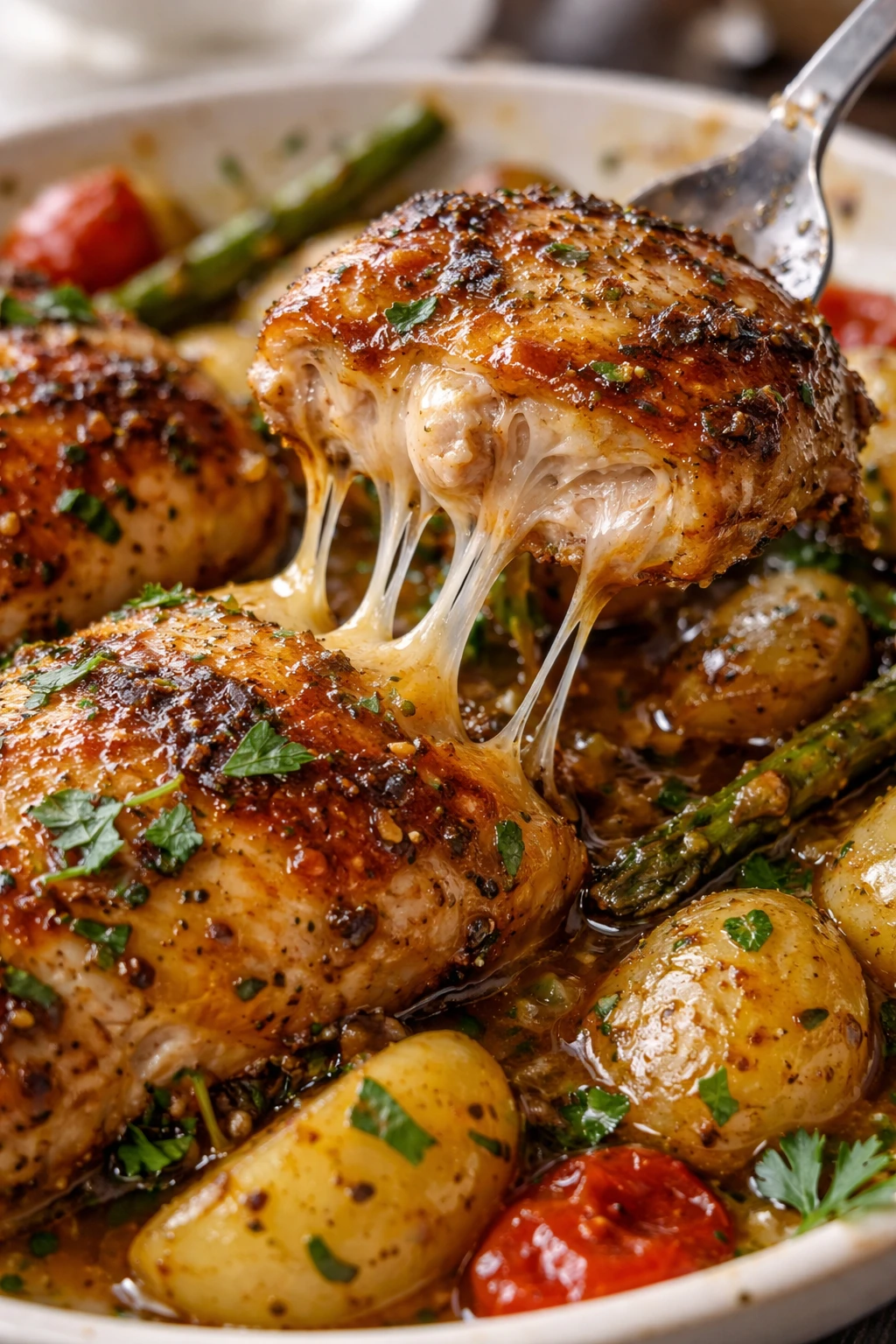
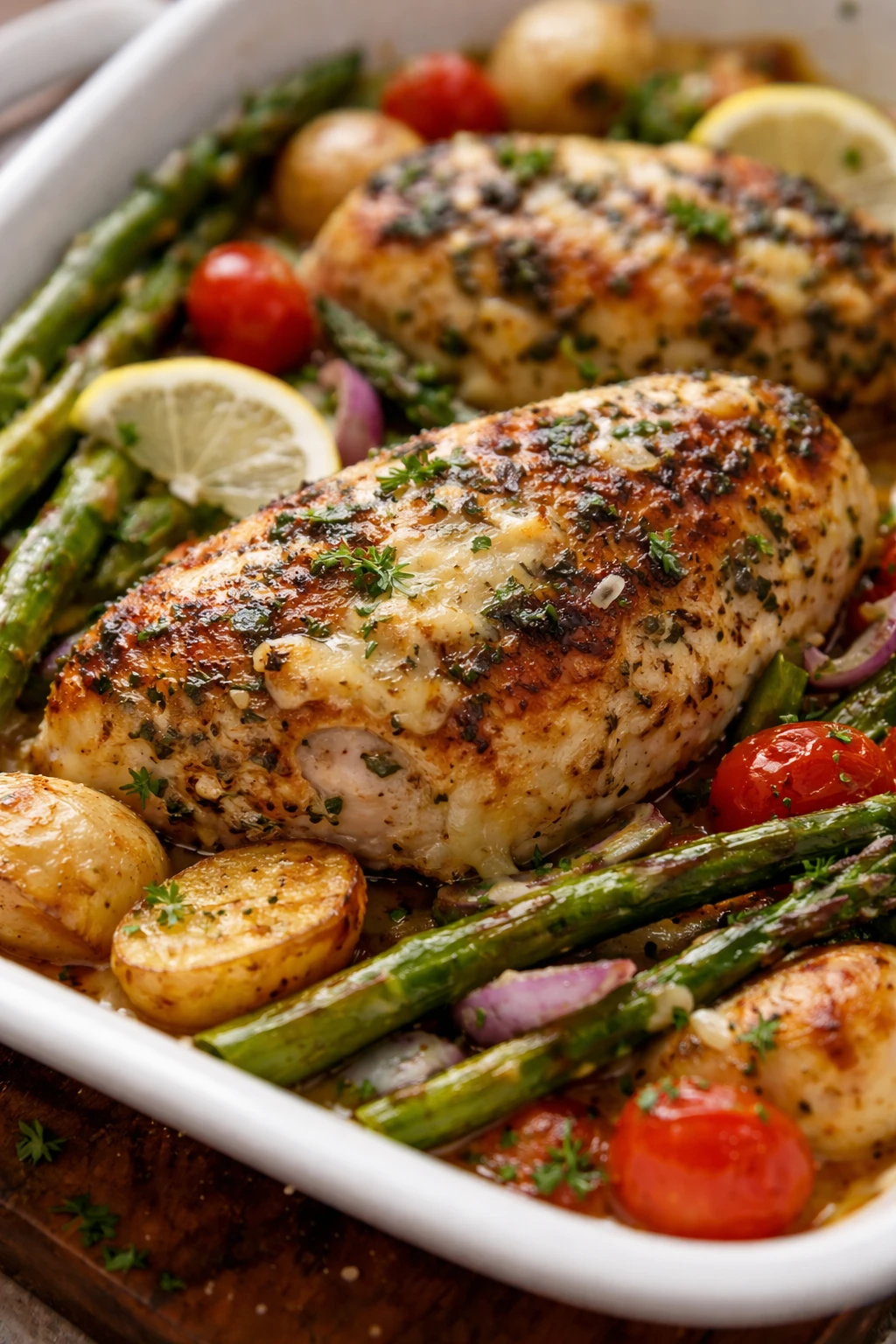
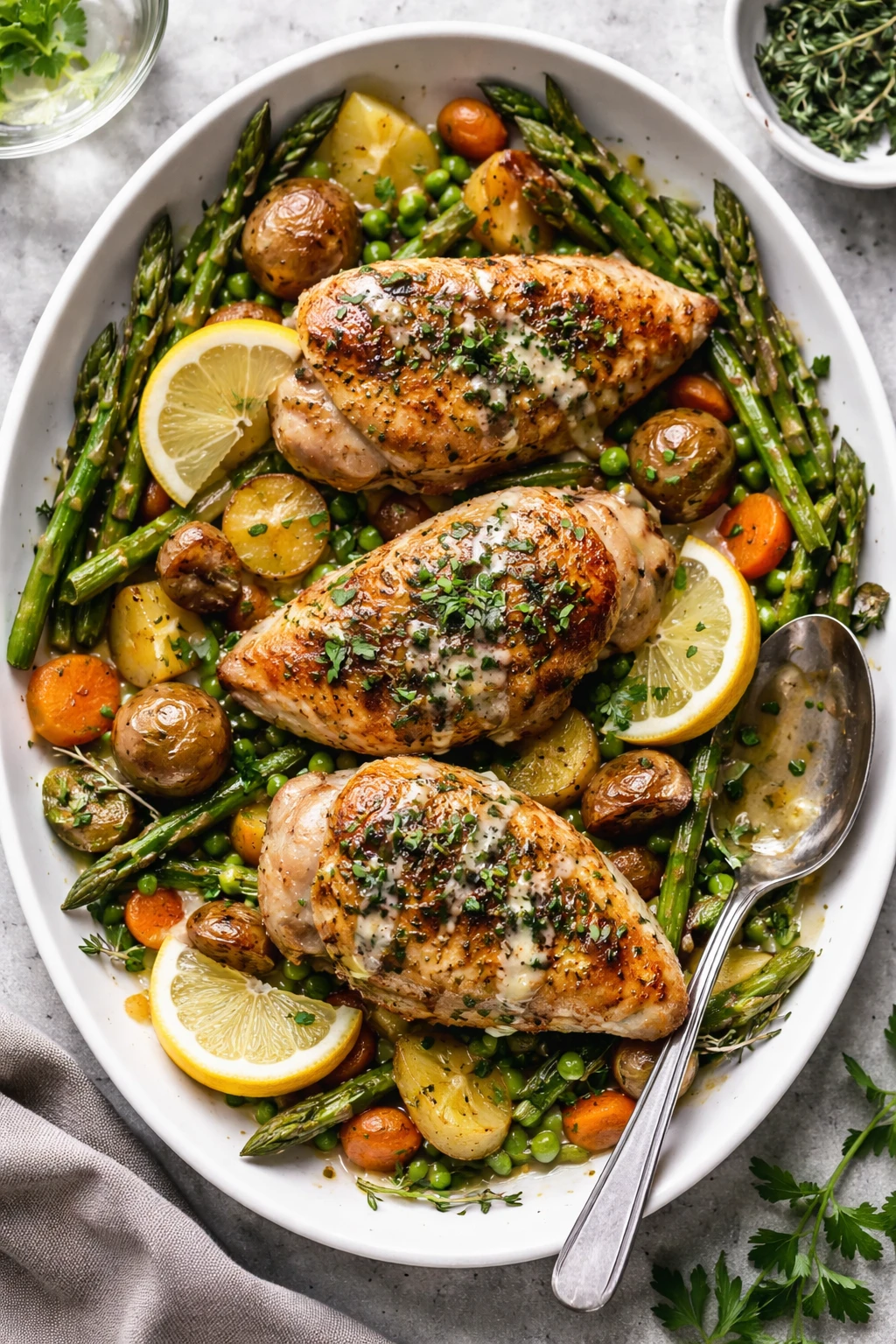
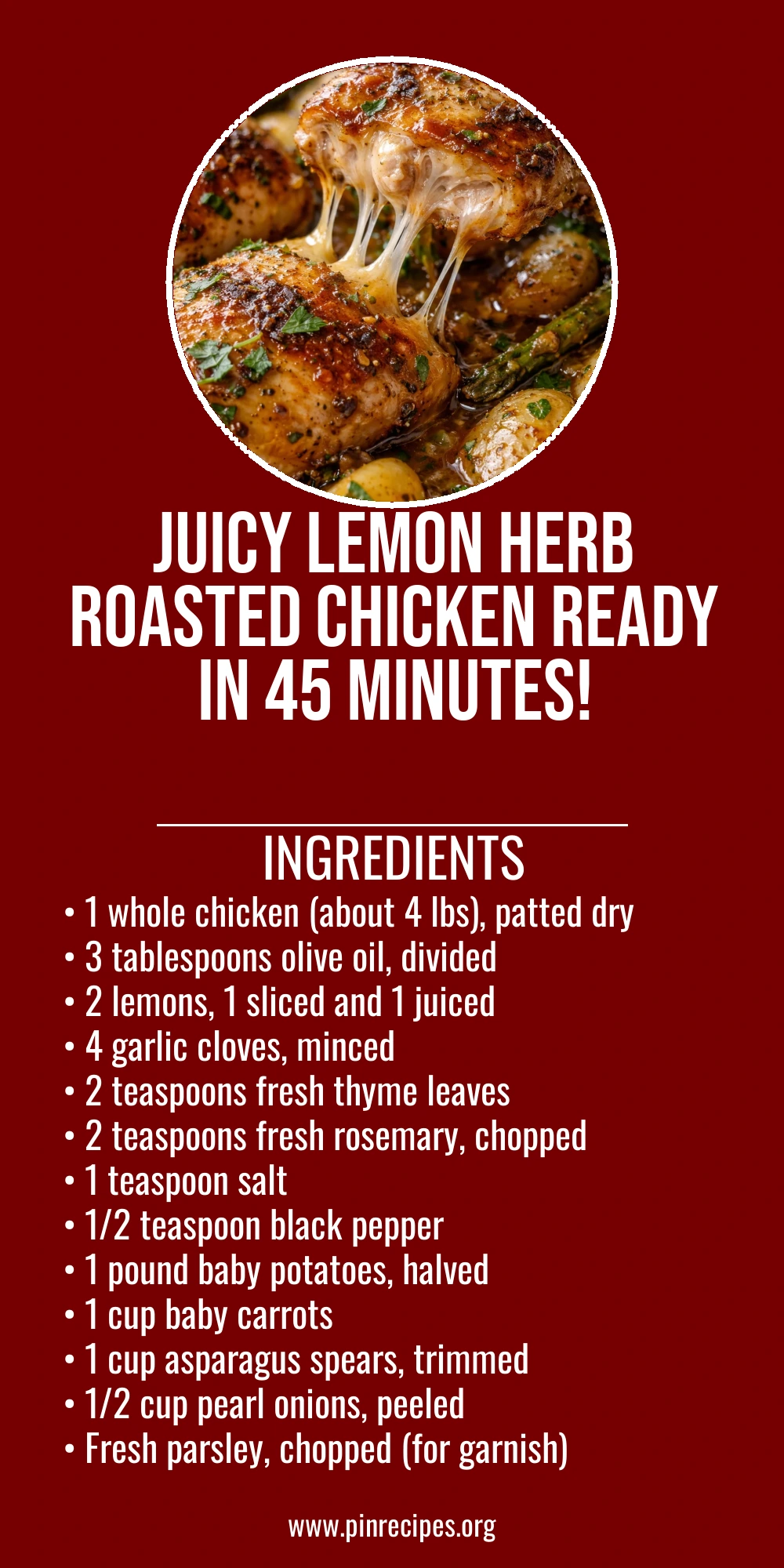
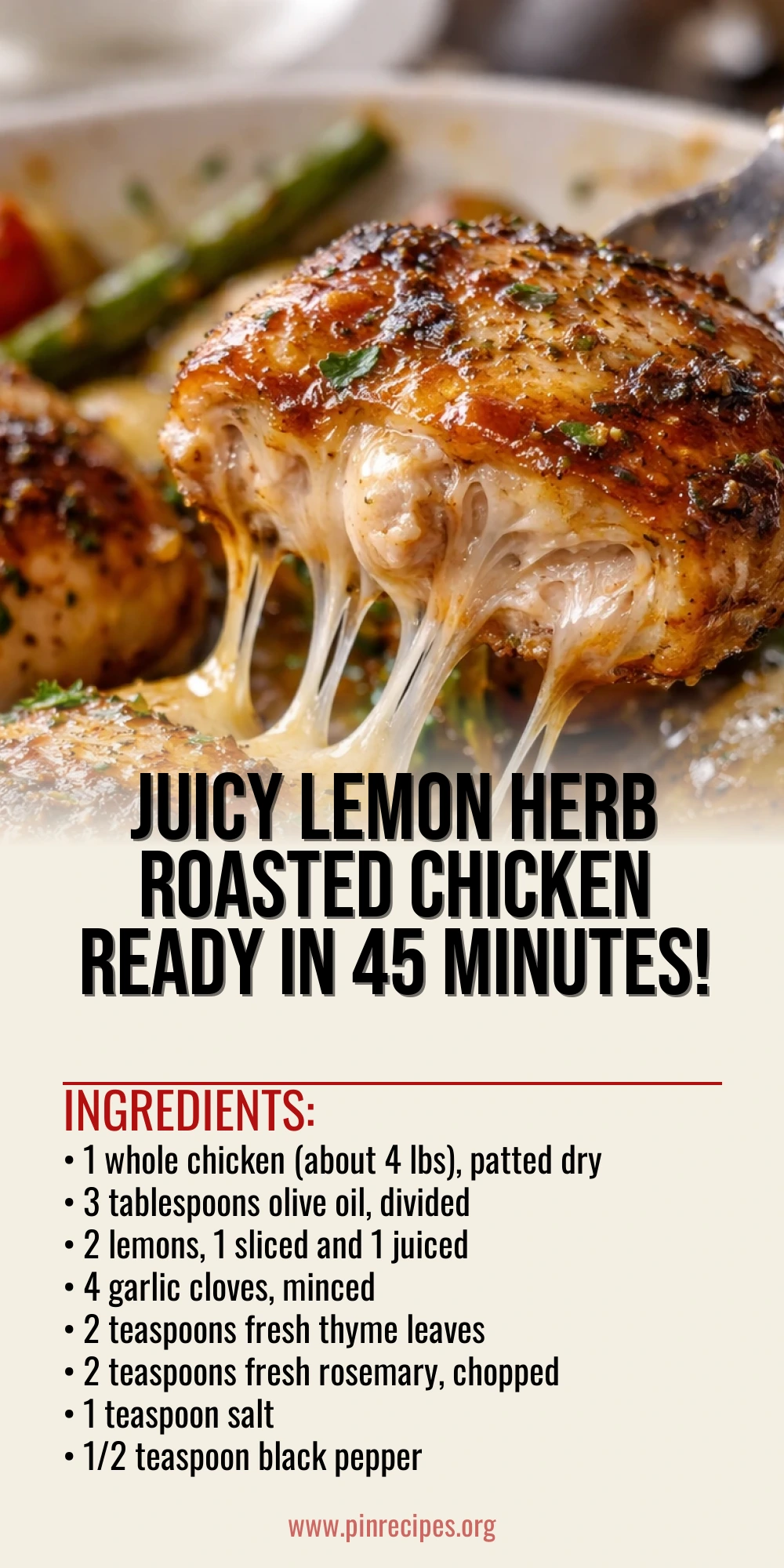
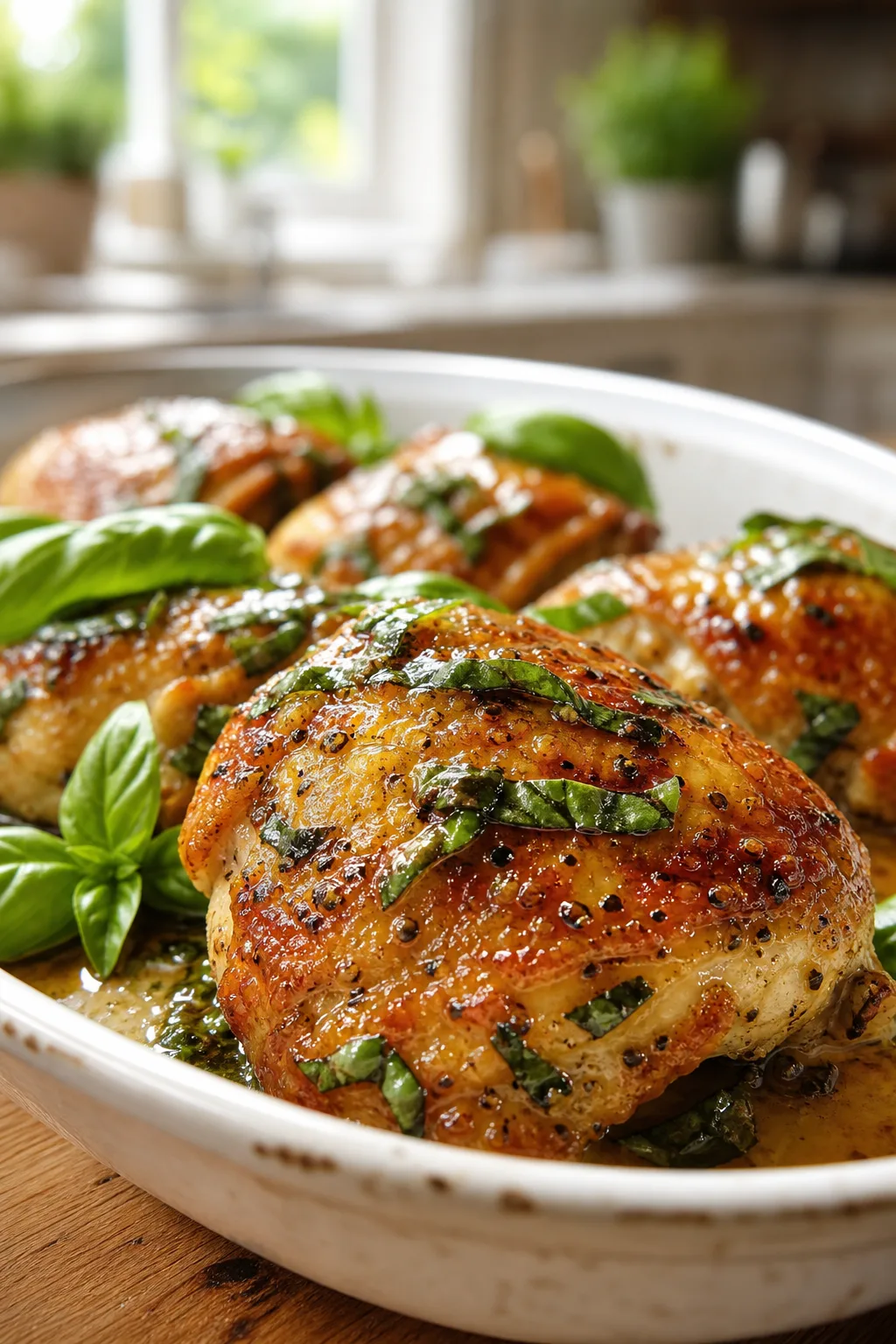
This roasted chicken is a fresh, zesty dinner that comes together fast. The lemon and herbs brighten the juicy chicken, while tender spring veggies roast alongside for an easy all-in-one meal. Perfect for a cozy weeknight!
Introduction
I first made this lemon herb roasted chicken on a hectic weeknight when I wanted something comforting but quick. I’d tried plain roast chicken before, but it often came out dry or bland. The trick I learned was to marinate the chicken briefly in lemon juice and fresh herbs, which really brightens the flavor and keeps the meat juicy. Roasting spring veggies alongside the chicken not only makes cleanup a breeze but also adds a fresh, seasonal touch that my family loves. The chicken skin crisps up beautifully thanks to the olive oil and high oven temperature, while the garlic and herbs infuse every bite. I remember the first time I served it, my partner said it was the best roast chicken he’d ever had — and it only took about 45 minutes! It’s perfect for those nights when you want a home-cooked meal without fussing over multiple pots. You’ll get tender chicken with a zesty, herbaceous punch and veggies roasted to sweet perfection. Plus, it looks gorgeous on the plate, which is always a bonus when you have guests or just want to treat yourself.
How To Do It
Step 1
Preheat your oven to 425°F (220°C). This high temperature is key to getting that crispy skin and juicy interior. While the oven heats, pat the chicken dry with paper towels—this removes excess moisture so the skin crisps properly. Then, rub the chicken all over with 2 tablespoons of olive oil, salt, and pepper. Don’t forget to season inside the cavity too. This step ensures the chicken is evenly flavored and helps the skin brown beautifully. Avoid skipping the drying step, as a wet chicken won’t crisp up well in the oven.
⏱ Time: 10 minutes
✓ Doneness: Chicken skin looks dry and evenly coated with oil and seasoning
Step 2
In a small bowl, mix the minced garlic, chopped thyme, rosemary, and lemon juice with the remaining 1 tablespoon of olive oil. Rub this herb mixture all over the chicken, including under the skin if you can carefully loosen it. This infusion of fresh herbs and lemon juice is what makes the chicken so flavorful and aromatic. If you skip this, the chicken will taste bland and miss that bright, fresh note. Letting the chicken sit with this rub for 5-10 minutes before roasting allows the flavors to penetrate.
⏱ Time: 10 minutes
✓ Doneness: Herb and lemon mixture evenly coats the chicken with a fresh, glossy appearance
Step 3
Arrange the halved baby potatoes, baby carrots, pearl onions, and asparagus spears in a large roasting pan or rimmed baking sheet. Toss them with a drizzle of olive oil, a pinch of salt, and a little pepper. Spread the veggies out in an even layer so they roast instead of steam. Adding veggies now means they’ll cook alongside the chicken, soaking up its juices and flavor. Don’t overcrowd the pan, or the veggies won’t caramelize properly.
⏱ Time: 5 minutes
✓ Doneness: Veggies are coated with oil and seasoning, spread evenly without crowding
Step 4
Place the chicken on top of the bed of veggies, breast side up. Tuck lemon slices inside the cavity and scatter a few on the veggies for extra citrus aroma. The lemon slices will roast and soften, adding subtle brightness to the dish. Positioning the chicken on the veggies allows the drippings to flavor them as they cook. Make sure the chicken is centered and stable so it cooks evenly.
⏱ Time: 5 minutes
✓ Doneness: Chicken sits securely atop veggies with lemon slices visible
Step 5
Put the roasting pan in the preheated oven and roast for about 30 minutes. Halfway through, baste the chicken and toss the veggies gently to promote even cooking and browning. Basting keeps the chicken moist and helps the skin crisp up. Avoid opening the oven too often, as this lowers the temperature and can extend cooking time.
⏱ Time: 30 minutes
✓ Doneness: Chicken skin is golden brown and veggies start to caramelize
Step 6
Check the chicken’s doneness by inserting a meat thermometer into the thickest part of the thigh without touching bone. It should read 165°F (74°C). If it’s not quite there, roast for another 5-10 minutes, checking regularly. Undercooked chicken is unsafe, while overcooked can dry out. The veggies should be tender and lightly browned.
⏱ Time: 5-10 minutes as needed
✓ Doneness: Thermometer reads 165°F and veggies are fork-tender
Step 7
Remove the chicken and veggies from the oven and let the chicken rest for 10 minutes before carving. Resting allows the juices to redistribute, making the meat juicy and tender. If you carve immediately, the juices will run out and the chicken will be dry. Tent the chicken loosely with foil to keep warm during resting.
⏱ Time: 10 minutes
✓ Doneness: Chicken skin remains crispy and meat feels firm but juicy when pressed
Step 8
Carve the chicken into serving pieces—start with the legs and thighs, then the breasts. Arrange the veggies on a platter alongside. Garnish with chopped fresh parsley and an extra squeeze of lemon juice if desired. This finishing touch adds color and a fresh, bright flavor that complements the roasted components perfectly.
⏱ Time: 5 minutes
✓ Doneness: Chicken pieces are juicy and veggies vibrant with garnish
Step 9
Serve immediately with your favorite side like crusty bread or a simple green salad. The combination of zesty lemon, fragrant herbs, and sweet roasted veggies makes this a crowd-pleaser. Enjoy the balance of textures — crispy skin, tender meat, and soft veggies — all in one pan!
⏱ Time: Serve right away
✓ Doneness: Dish is warm and aromatic, ready to be enjoyed
Pro Tips
Let the chicken come to room temperature before roasting.
Allowing the chicken to sit out for 20-30 minutes before cooking helps it cook more evenly. A cold chicken straight from the fridge can result in uneven cooking where the outside overcooks before the inside reaches a safe temperature.
Loosen the skin gently to rub herbs underneath.
Getting the herb and lemon mixture under the skin ensures the flavors penetrate the meat, not just the surface. This technique also helps the skin crisp up better since the oil is directly on the skin’s underside.
Use a meat thermometer to check doneness.
Visual cues can be misleading; a thermometer ensures the chicken is safely cooked to 165°F without drying out. It prevents guesswork and guarantees juicy, tender meat every time.
Don’t overcrowd the roasting pan.
Crowding traps steam and prevents proper caramelization of veggies. Spreading them out allows hot air to circulate, resulting in beautifully browned, flavorful vegetables.
Baste the chicken halfway through roasting.
Basting adds moisture to the skin and helps it brown evenly. It also redistributes the herb flavors and juices, enhancing overall taste and texture.
Rest the chicken before carving.
Resting allows juices to redistribute throughout the meat, preventing them from spilling out when cut. This keeps the chicken moist and tender instead of dry.
Use fresh garlic instead of powder.
Fresh garlic provides a sharper, more vibrant flavor that complements lemon and herbs perfectly. Garlic powder can taste dull and won’t infuse the chicken as well.
Common Mistakes to Avoid
Skipping the drying step before roasting.
Why it happens Many cooks assume rinsing the chicken is enough, but moisture on the skin prevents crisping.
Fix Pat the chicken thoroughly with paper towels before oiling. This removes surface moisture, which is essential for achieving crispy, golden skin.
Using low oven temperature to cook chicken.
Why it happens Some believe low and slow roasting yields better results, but it can lead to pale skin and dry meat.
Fix Roast at a higher temperature (around 425°F) to promote browning and juicy meat. The high heat triggers the Maillard reaction for flavor and texture.
Overcrowding the pan with veggies.
Why it happens Trying to fit everything in one pan without spacing causes steaming instead of roasting.
Fix Use a large enough pan and spread veggies evenly to allow air circulation and caramelization.
Not resting the chicken after roasting.
Why it happens Impatience or lack of knowledge leads to carving too soon, losing juices.
Fix Let the chicken rest 10 minutes tented with foil to keep warmth and redistribute juices.
Skipping the herb rub under the skin.
Why it happens It’s easier to just rub the outside, but flavor doesn’t penetrate deeply.
Fix Carefully loosen skin and spread herb mixture underneath to infuse meat with flavor.
Variations
Spicy Lemon Herb Roasted Chicken
Add 1 teaspoon smoked paprika and a pinch of cayenne to the herb rub for a smoky, spicy kick. This variation adds warmth without overpowering the fresh lemon and herbs. The veggies remain the same, balancing the heat.
Note: Watch the cayenne carefully; too much can overwhelm the dish. The cooking time remains unchanged.
Garlic Butter Lemon Chicken
Swap olive oil for melted garlic butter in the herb rub for a richer, more indulgent flavor. This version yields a slightly more decadent chicken with golden, buttery skin and a luscious aroma.
Note: Butter can brown faster, so keep an eye on the chicken to avoid burning.
Mediterranean Style with Olives and Feta
Add pitted Kalamata olives and crumbled feta cheese to the roasted veggies before serving. This adds briny, tangy notes that complement the lemon and herbs beautifully for a Mediterranean twist.
Note: Add feta after roasting to prevent melting; olives can roast with veggies.
Herb-Roasted Chicken Thighs for Faster Cooking
Use bone-in, skin-on chicken thighs instead of whole chicken for a quicker roast (about 25 minutes). The thighs stay juicy and absorb the lemon herb rub well, making this a great option for smaller meals.
Note: Check internal temperature carefully, as thighs cook faster than whole birds.
Sheet Pan Lemon Herb Chicken with Brussels Sprouts
Swap the spring veggies for halved Brussels sprouts and sweet potatoes for a heartier, autumn-inspired meal. The lemon herb flavors pair well with the earthiness of these veggies.
Note: Sweet potatoes take longer to roast; cut them smaller to match cooking time.
Nutrition
Per Serving:
Nutritional values are estimates and may vary based on specific ingredients used.
Storage & Tips
Room Temperature
You can safely keep the roasted chicken and veggies at room temperature for up to 2 hours covered loosely with foil or a clean towel. Beyond that, bacteria growth increases significantly.
Refrigerator
Store leftovers in an airtight container in the fridge for up to 3-4 days. The chicken may dry out slightly when cold, so reheating gently with a splash of water or broth helps restore moisture.
Freezer
Freeze cooked chicken and veggies separately in airtight containers or heavy-duty freezer bags for up to 3 months. Wrap tightly to prevent freezer burn. Thaw overnight in the fridge before reheating.
Reheating
Reheat in a 350°F oven covered with foil for about 15-20 minutes until warmed through. Alternatively, microwave with a splash of broth to keep moist. Avoid overheating which dries out the chicken.
Make Ahead
You can prep the herb rub and chop veggies 1-2 days ahead, storing them separately in the fridge. Assemble and roast the chicken fresh to keep skin crisp and flavors vibrant.
FAQ
Can I use chicken breasts instead of a whole chicken?
Yes, you can use bone-in, skin-on chicken breasts. They will cook faster (about 25-30 minutes) and still benefit from the lemon herb rub. However, breasts can dry out more easily, so watch the cooking time closely and consider brining briefly to keep them juicy.
What if I don’t have fresh herbs? Can I use dried?
Dried herbs can work in a pinch but use about one-third the amount since they’re more concentrated. The flavor won’t be as bright or fresh, so consider adding a little extra lemon zest to compensate.
How do I know when the chicken is fully cooked without a thermometer?
Pierce the thickest part of the thigh and check that the juices run clear, not pink. The meat should also feel firm but not rubbery. However, using a meat thermometer is the safest and most reliable method.
Can I make this recipe gluten-free?
Absolutely! This recipe is naturally gluten-free as it uses whole chicken, veggies, and simple seasonings without any wheat-based ingredients.
Can I prepare this recipe in advance and reheat?
You can prepare the herb rub and chop veggies ahead, but for best texture, roast the chicken and veggies fresh. Leftovers reheat well but the skin won’t stay crispy.
What sides go well with this lemon herb chicken?
Simple sides like a green salad, crusty bread, or rice pilaf complement this dish nicely. The roasted veggies are already a hearty accompaniment.
How can I make this recipe spicier?
Add a pinch of cayenne pepper or red chili flakes to the herb rub. Start with a small amount and adjust to taste to avoid overpowering the lemon-herb balance.
Can I use frozen chicken for this recipe?
It’s best to use fully thawed chicken for even cooking and to ensure the skin crisps properly. Cooking from frozen may result in uneven doneness.
Final Thoughts
I hope you give this lemon herb roasted chicken a try — it’s one of those meals that feels special but comes together so easily. Let me know how it turns out and what veggies you roast alongside!