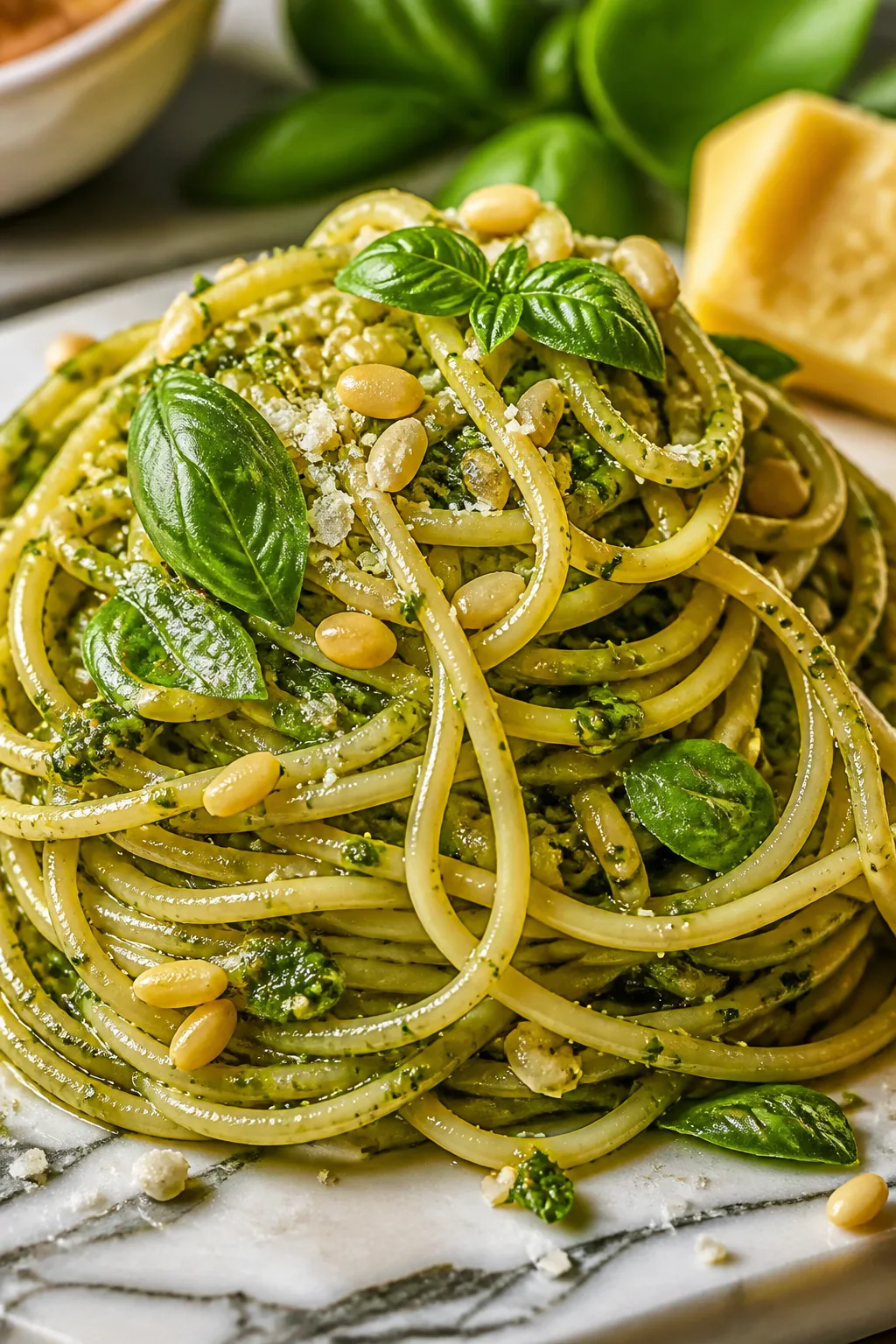
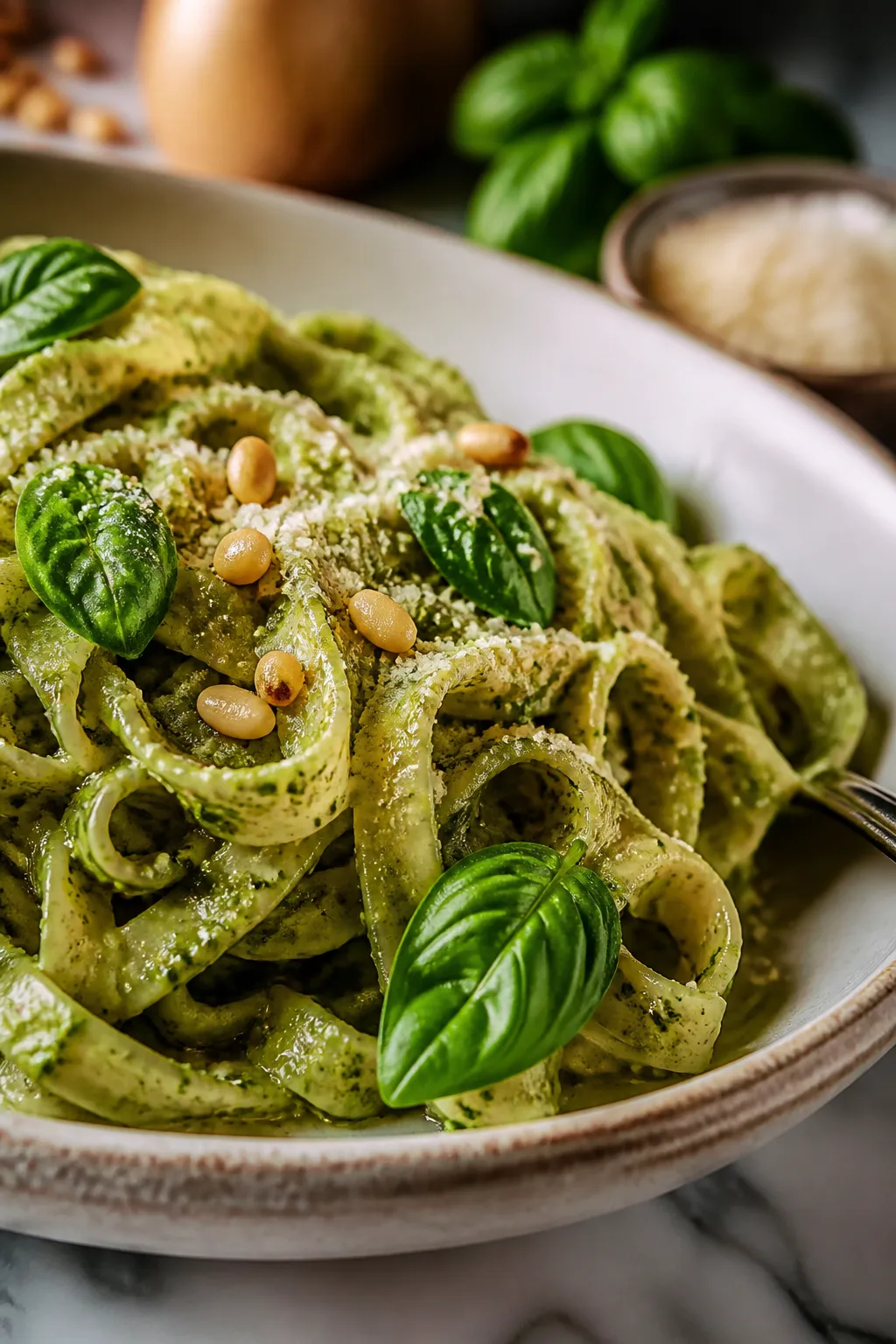
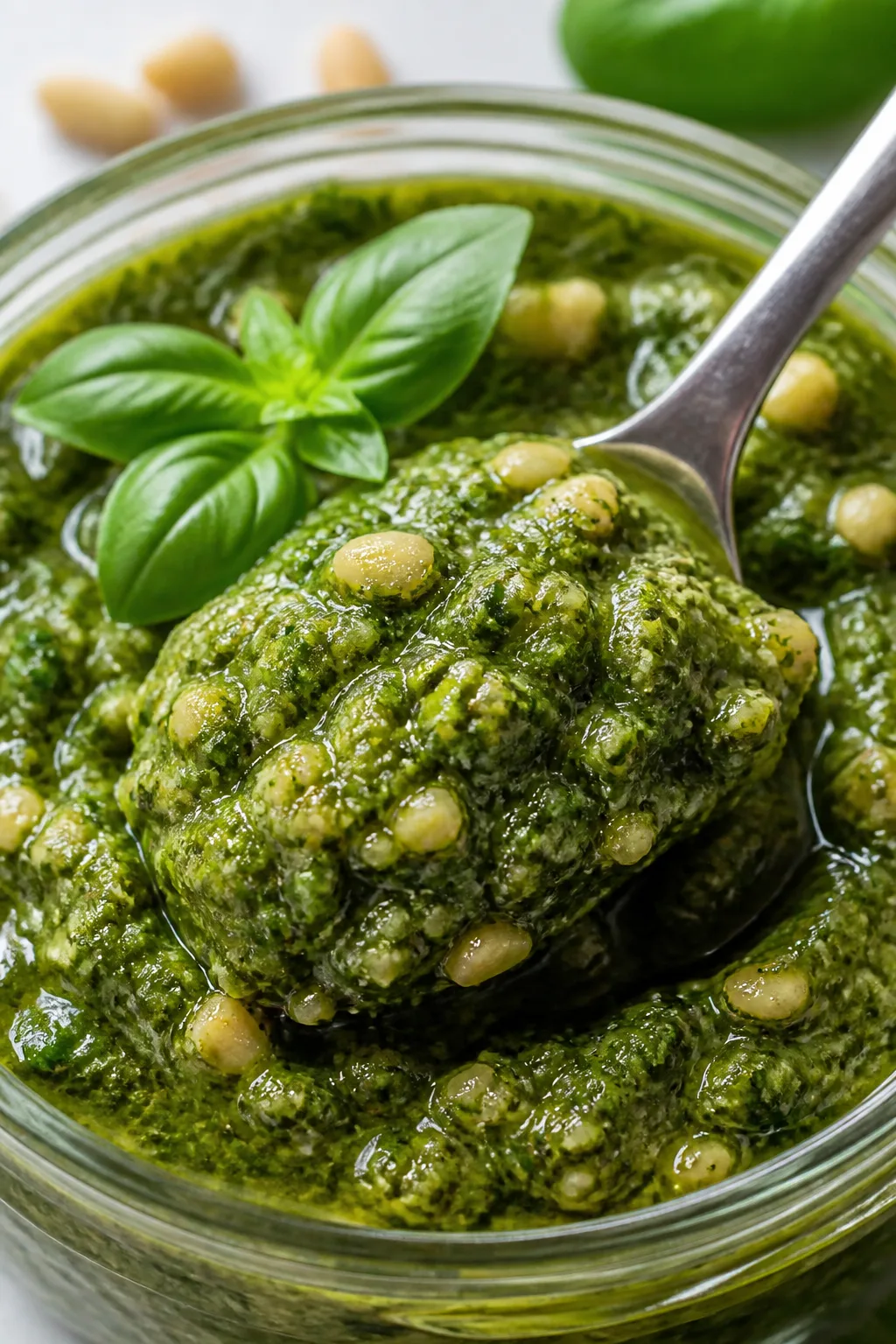
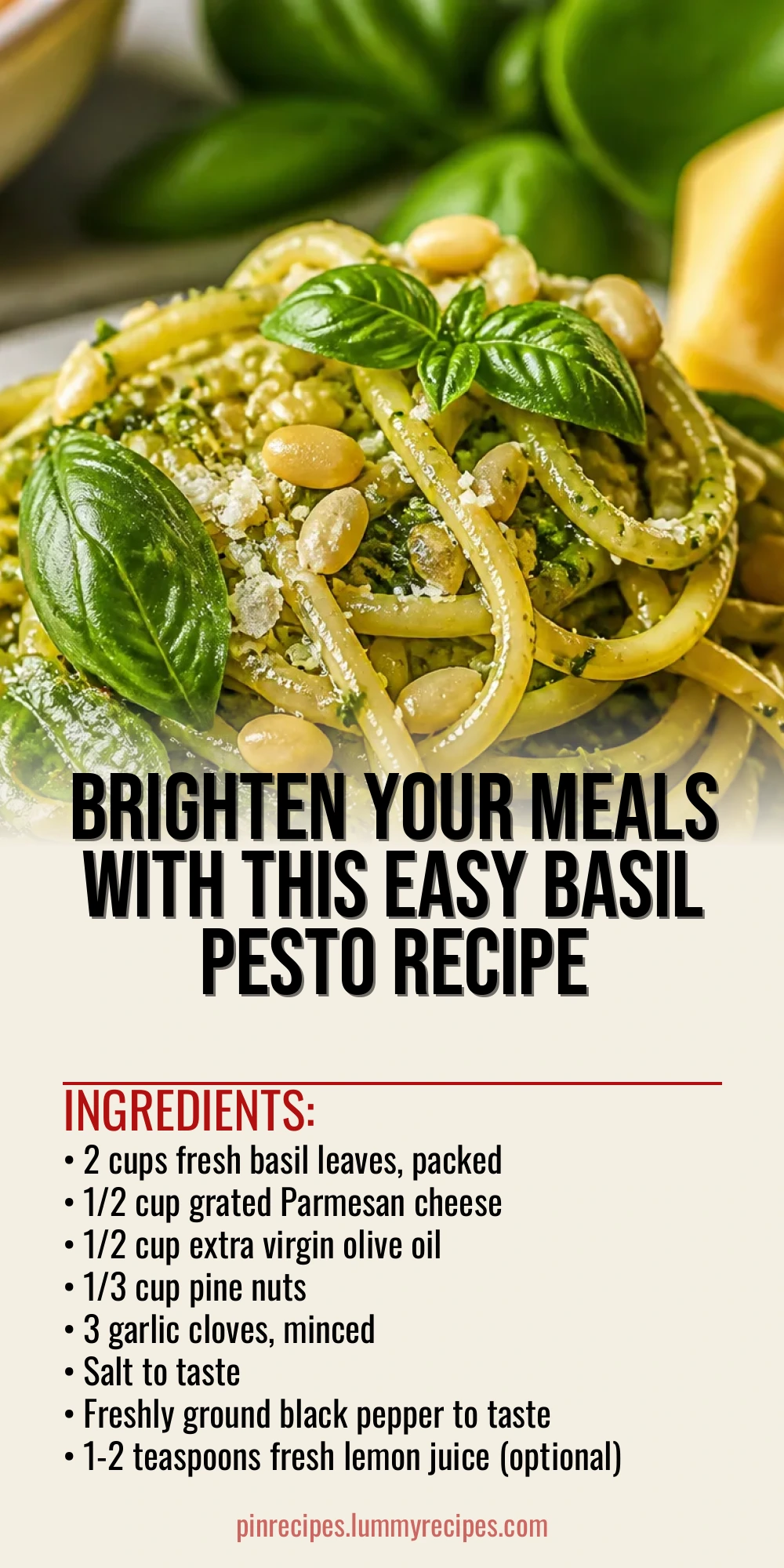
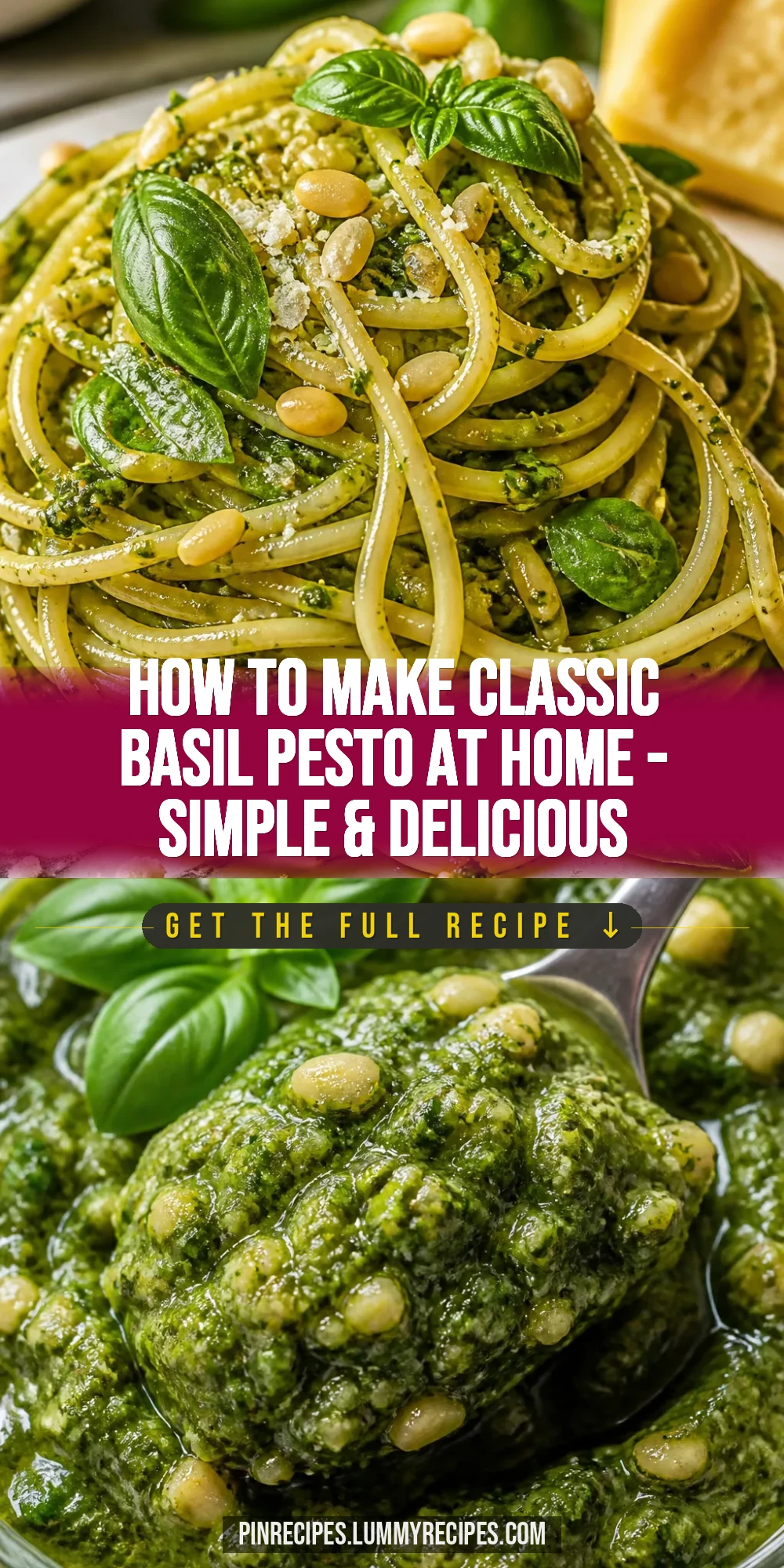
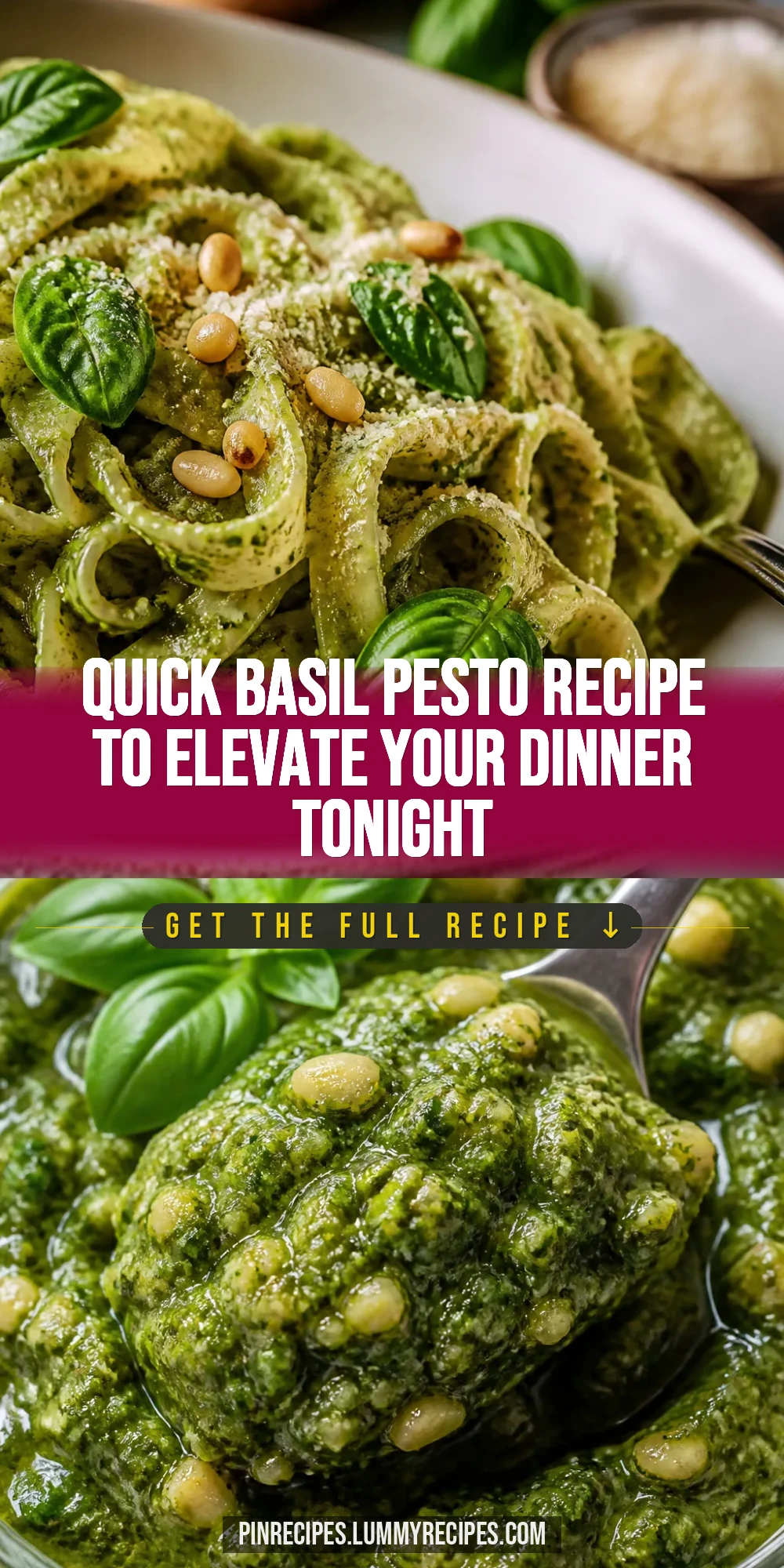
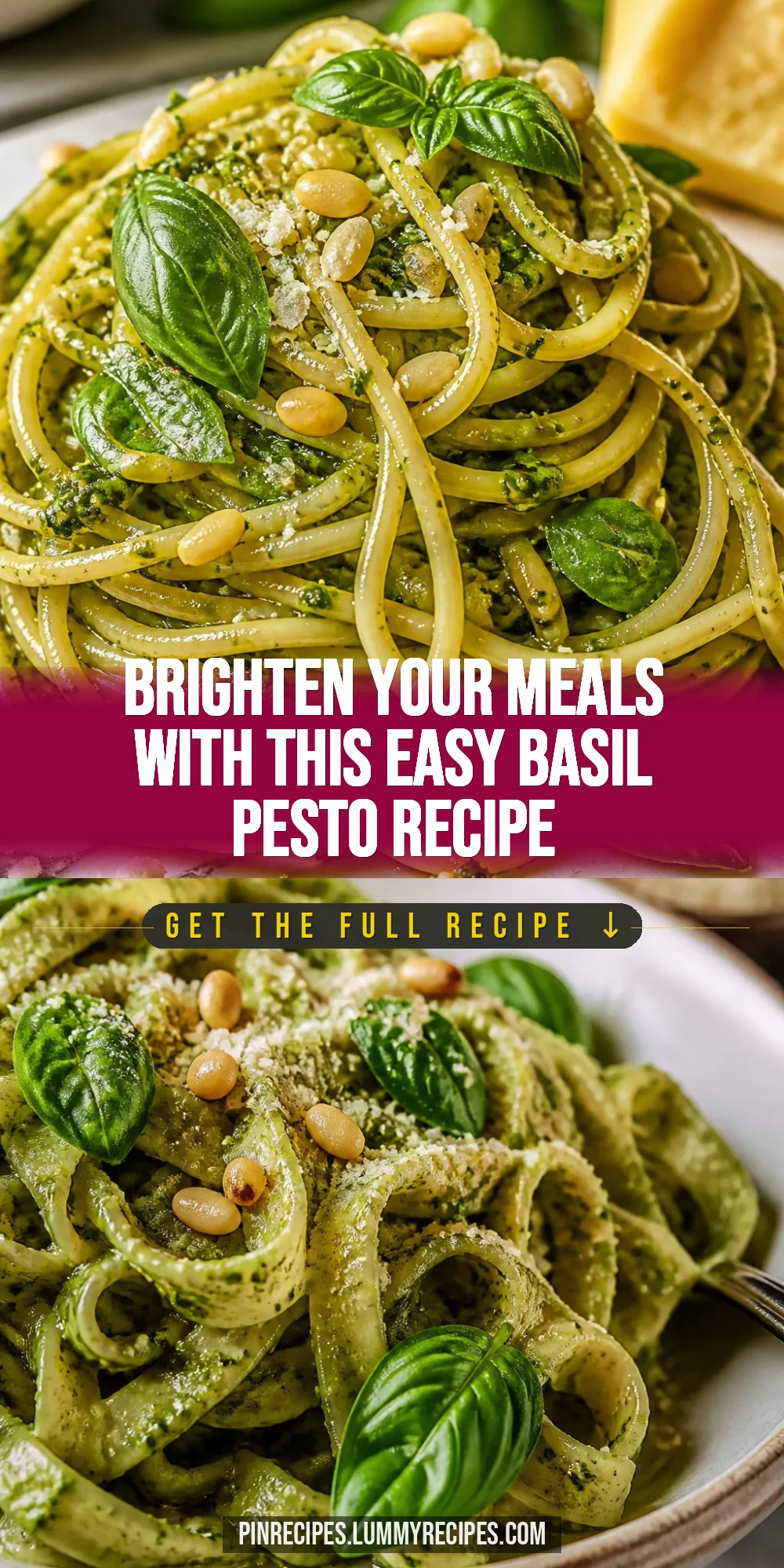
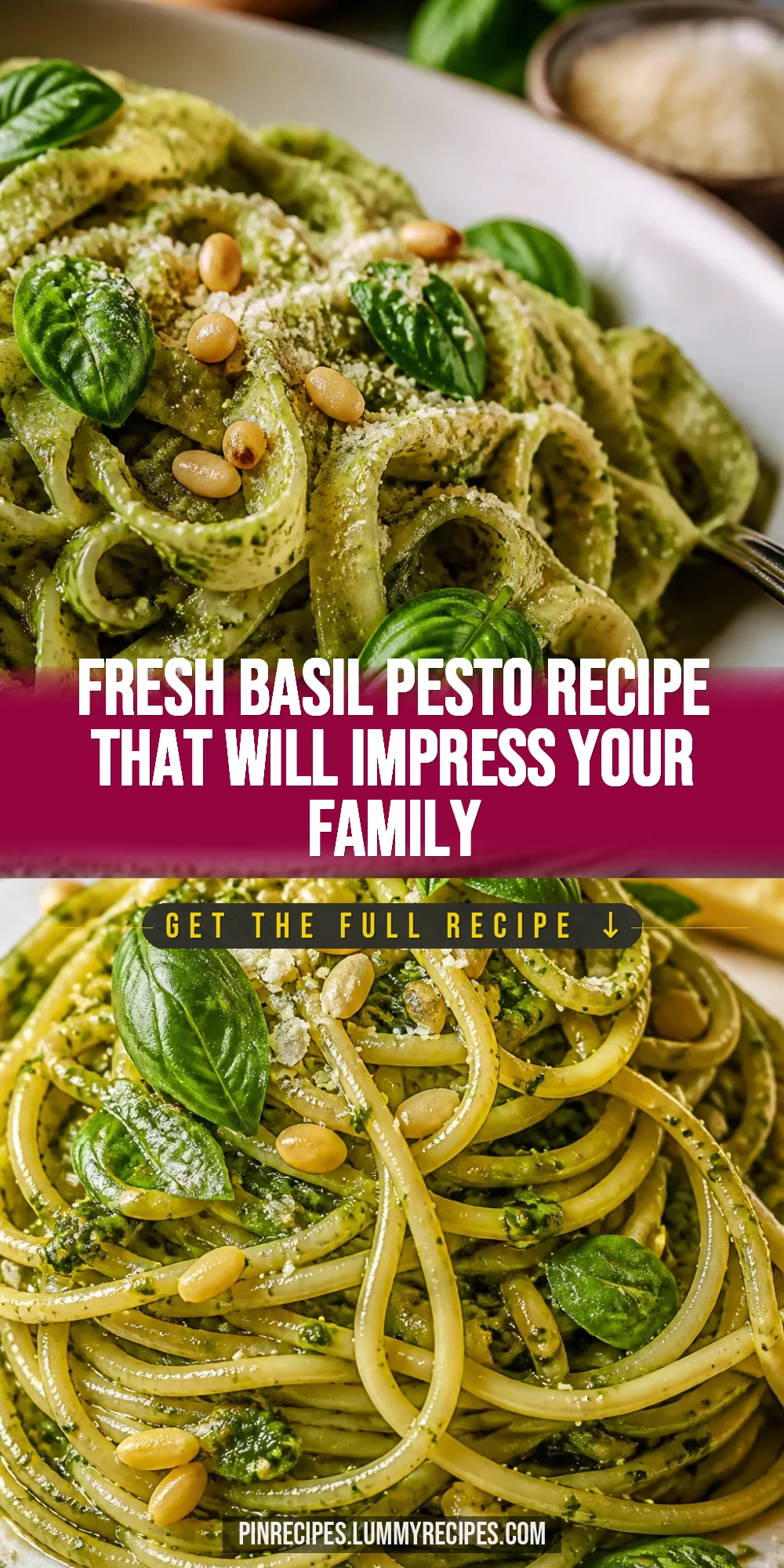
This basil pesto is a vibrant, fresh sauce made with fragrant basil leaves and a touch of garlic. It’s perfect for tossing with pasta or spreading on sandwiches for a quick flavor boost.
Introduction
I remember the first time I made basil pesto — it was a bit of an experiment, but it quickly became a family favorite. What I love about this recipe is how simple and fresh it tastes, unlike the jarred versions that can be a bit dull or oily. The trick I learned is to toast the pine nuts lightly before blending; it brings out a deeper nutty flavor that really makes the pesto pop. Also, using fresh, fragrant basil from my garden or the farmer’s market makes all the difference. This pesto is creamy yet bright, with just the right balance of garlic and cheese. It’s perfect for tossing with pasta, dolloping on grilled chicken, or spreading on crusty bread for a quick snack. I usually whip it up in about 15 minutes, and it feels like a little burst of summer any time of year. If you’ve never made pesto at home, you’re in for a treat — it’s easier than you think, and the flavor is unbeatable.
What You'll Need
Approximately 1 cup pesto, 4 servings
- 2 cups fresh basil leaves, packed
- 1/2 cup grated Parmesan cheese
- 1/2 cup extra virgin olive oil
- 1/3 cup pine nuts
- 3 garlic cloves, minced
- Salt to taste
- Freshly ground black pepper to taste
- 1-2 teaspoons fresh lemon juice (optional)
How To Do It
Step 1
Start by toasting the pine nuts in a dry skillet over medium heat for about 3-5 minutes. Stir frequently and watch closely—they can burn quickly. Toasting enhances their flavor and adds a lovely depth to the pesto. Once toasted, let them cool slightly before blending. Avoid skipping this step because raw pine nuts can taste bland and less aromatic.
⏱ Time: 5 minutes
✓ Doneness: Pine nuts turn golden and smell nutty and fragrant.
Step 2
Place the basil leaves, cooled pine nuts, and minced garlic in a food processor. Pulse a few times to roughly chop and combine the ingredients. This helps release the basil’s oils and garlic’s pungency evenly throughout the pesto. Don’t over-process here; you want some texture in the sauce.
⏱ Time: 2 minutes
✓ Doneness: Mixture is coarsely chopped and fragrant but not fully smooth.
Step 3
Add the grated Parmesan cheese and pulse a few more times to combine. The cheese adds a salty, savory element that balances the fresh basil and nuts. Using freshly grated Parmesan rather than pre-grated powder yields a better texture and flavor.
⏱ Time: 1 minute
✓ Doneness: Cheese is evenly mixed in but pesto still has some texture.
Step 4
With the food processor running on low, slowly drizzle in the olive oil. This emulsifies the sauce, creating a creamy texture that clings well to pasta or bread. Adding the oil slowly prevents the pesto from separating. Stop when you reach your desired consistency—some like it thicker, others a bit looser.
⏱ Time: 3 minutes
✓ Doneness: Pesto is smooth and glossy, with a creamy consistency.
Step 5
Taste the pesto and season with salt and freshly ground black pepper. Add a teaspoon or two of fresh lemon juice if you want a brighter, slightly tangy note that cuts through the richness. Adjust seasoning carefully; the Parmesan is already salty, so taste before adding more salt.
⏱ Time: 2 minutes
✓ Doneness: Balanced flavor with fresh, bright notes and a hint of saltiness.
Step 6
If not using immediately, transfer the pesto to a jar and cover the surface with a thin layer of olive oil to prevent browning. Store in the refrigerator. This keeps the pesto fresh and vibrant for several days. Avoid exposing it to air to maintain the bright green color.
⏱ Time: 2 minutes
✓ Doneness: Pesto covered with oil and stored in airtight container.
Step 7
To serve, toss the pesto with freshly cooked pasta, adding a splash of pasta water to loosen the sauce if needed. This helps the pesto cling to the noodles and creates a silky coating. Be gentle when mixing to keep the texture light and fresh.
⏱ Time: 5 minutes
✓ Doneness: Pasta is evenly coated with glossy, flavorful pesto.
Step 8
Alternatively, spread the pesto on toasted bread or use as a topping for grilled chicken or fish. The fresh herb flavor adds a wonderful lift to simple dishes. Use immediately or within a day for best flavor.
⏱ Time: 2 minutes
✓ Doneness: Pesto retains bright color and fresh aroma on dishes.
Step 9
Clean your food processor right after use to prevent the basil oils from staining and to keep the blade sharp. Rinse with warm water and a little soap, then dry thoroughly. Proper cleanup helps maintain your kitchen tools and makes prep easier next time.
⏱ Time: 5 minutes
✓ Doneness: Food processor clean and ready for next use.
Pro Tips
Toast pine nuts gently over medium heat, stirring constantly.
Toasting releases the natural oils in pine nuts, intensifying their flavor and adding a subtle crunch. Without this step, the nuts can taste bland or even bitter. However, pine nuts burn quickly, so constant stirring and close attention are essential to avoid an unpleasant burnt taste.
Add olive oil slowly while blending to create a smooth emulsion.
Slowly drizzling olive oil into the mixture while blending allows the oil to combine evenly with the basil, nuts, and cheese. This emulsification process creates a creamy texture and prevents the oil from separating. Pouring oil too fast can cause a greasy, uneven sauce.
Use freshly grated Parmesan cheese instead of pre-grated.
Freshly grated Parmesan melts better and integrates smoothly, contributing to a richer taste and better texture. Pre-grated cheese often contains anti-caking agents that can affect the pesto’s consistency and flavor.
Add a splash of lemon juice to brighten the flavor.
Lemon juice adds a subtle acidity that balances the richness of the cheese and oil, keeping the pesto tasting fresh and vibrant. It also helps prevent the pesto from turning brown quickly by slowing oxidation.
Use a food processor for even blending but avoid over-processing.
A food processor chops ingredients uniformly and releases oils from basil and nuts, enhancing flavor. Over-processing can cause the pesto to become too smooth or warm, dulling the fresh herbal notes.
Cover pesto with a thin layer of olive oil before refrigerating.
Exposing pesto to air causes oxidation, which leads to browning and flavor loss. A thin oil layer seals the surface, preserving the pesto’s vibrant color and fresh taste for several days.
Use fresh basil leaves picked just before making pesto.
Basil loses flavor rapidly after harvesting. Using freshly picked leaves ensures the pesto has the brightest, most aromatic flavor.
Common Mistakes to Avoid
Using pre-grated Parmesan cheese
Why it happens Many cooks choose pre-grated cheese for convenience, not realizing it affects texture and flavor.
Fix Grate Parmesan fresh right before making pesto. It blends better and adds more authentic flavor and creaminess.
Skipping toasting pine nuts
Why it happens Some assume raw nuts are fine or want to save time.
Fix Toast pine nuts lightly in a dry pan until golden and fragrant. This step is quick and greatly improves flavor.
Adding olive oil too fast
Why it happens In a hurry, cooks may pour oil quickly without emulsifying properly.
Fix Drizzle oil slowly while blending to ensure a creamy, well-emulsified pesto.
Over-processing the pesto
Why it happens Trying to get a smooth sauce can lead to over-blending.
Fix Pulse the processor and stop when the pesto is still slightly textured to keep fresh flavor and vibrant color.
Not seasoning properly
Why it happens Relying on cheese for salt and forgetting to taste.
Fix Always taste pesto before serving and adjust salt and pepper as needed for balanced flavor.
Variations
Walnut Basil Pesto
Swap pine nuts with toasted walnuts for a richer, earthier flavor. Walnuts are more affordable and add a slightly bitter note that pairs well with basil’s sweetness. This variation is perfect if you want a twist on the classic.
Note: Toast walnuts gently to avoid bitterness and blend until slightly coarse for texture.
Vegan Basil Pesto
Replace Parmesan cheese with nutritional yeast and omit it entirely for a dairy-free version. Add extra pine nuts or cashews to maintain creaminess. This pesto is just as flavorful and works well for vegan diets.
Note: Nutritional yeast adds cheesy flavor, but the texture will be less creamy without cheese.
Basil and Spinach Pesto
Add half a cup of fresh spinach to the basil for a milder, greener sauce. Spinach tones down the strong basil flavor and adds extra nutrients, making it great for kids or picky eaters.
Note: Use fresh spinach and blend just enough to keep the sauce vibrant and not watery.
Spicy Basil Pesto
Add a pinch of red pepper flakes or a small fresh chili to the food processor for a spicy kick. This variation adds warmth and complexity, perfect for those who like a little heat.
Note: Add chili gradually and taste to control spiciness.
Lemon Basil Pesto
Increase lemon juice and add some zest for a bright, citrusy pesto. This version is refreshing and pairs wonderfully with seafood or grilled vegetables.
Note: Use fresh lemon juice and zest to avoid bitterness from pith.
Nutrition
Per Serving:
Nutritional values are estimates and may vary based on specific ingredients used.
Storage & Tips
Room Temperature
Basil pesto can be kept at room temperature for up to 4 hours if covered tightly. Beyond this, it should be refrigerated to prevent spoilage. Always cover the surface with a thin layer of olive oil to minimize oxidation and keep the pesto fresh.
Refrigerator
Store pesto in an airtight container with a layer of olive oil on top for up to 5 days. The flavor remains fresh, though the color may darken slightly. It’s best served cold or at room temperature; if reheating, warm gently to preserve flavor.
Freezer
Freeze pesto in small portions in airtight containers or ice cube trays for up to 3 months. Wrap tightly to prevent freezer burn. Thaw in the refrigerator overnight and stir well before use. Texture may be slightly softer after freezing but flavor stays vibrant.
Reheating
Reheat pesto gently on the stovetop or microwave at low power, stirring frequently. Add a splash of olive oil or pasta water to loosen the sauce if it thickens. Avoid overheating to prevent loss of fresh basil flavor and color.
Make Ahead
You can prepare pesto 1-2 days ahead and store it refrigerated with olive oil on top. For longer storage, freeze in small batches. This makes last-minute meals quick and easy while preserving fresh flavor.
FAQ
Can I use frozen basil for pesto?
Frozen basil can be used in a pinch, but it lacks the fresh aroma and bright flavor of fresh leaves. It may also add extra moisture, making the pesto thinner. If using frozen, thaw and drain excess water before blending to maintain texture.
What can I substitute for pine nuts if I’m allergic?
Walnuts, cashews, or almonds are great substitutes for pine nuts. Toast them lightly to bring out their flavor. Keep in mind these nuts have different flavor profiles, so your pesto will taste slightly different but still delicious.
How long does homemade pesto last in the fridge?
Stored properly with a layer of olive oil on top in an airtight container, pesto lasts about 5 days in the refrigerator. Beyond that, it may lose freshness and develop off-flavors, so it’s best to consume it within this time frame.
Can I make pesto without cheese?
Yes, you can omit the Parmesan for a dairy-free or vegan pesto. Nutritional yeast is a popular substitute that adds a cheesy flavor. Without cheese, the pesto will be less creamy but still flavorful if you balance the other ingredients.
Why is my pesto turning brown?
Pesto browns due to oxidation when exposed to air. To prevent this, always cover the surface with a thin layer of olive oil and store in an airtight container. Using fresh basil and consuming pesto within a few days also helps maintain its bright green color.
Can I freeze pesto?
Absolutely! Freeze pesto in small portions using ice cube trays or airtight containers for up to 3 months. Thaw in the fridge and stir well before using. Freezing preserves the flavor well, though the texture may soften slightly.
How do I adjust pesto thickness?
If pesto is too thick, add olive oil or a little warm pasta water gradually until you reach your desired consistency. If it’s too thin, add more cheese or nuts to thicken it up. Adjust slowly to avoid over-thinning or thickening.
Is it better to use a blender or food processor for pesto?
A food processor is preferred because it chops ingredients evenly without over-processing. Blenders can overwork the pesto, making it too smooth or warm, which can dull the fresh basil flavor.
Final Thoughts
I hope you enjoy making this classic basil pesto as much as I do. It’s a simple way to add fresh, vibrant flavor to your meals—give it a try and share how it turns out!