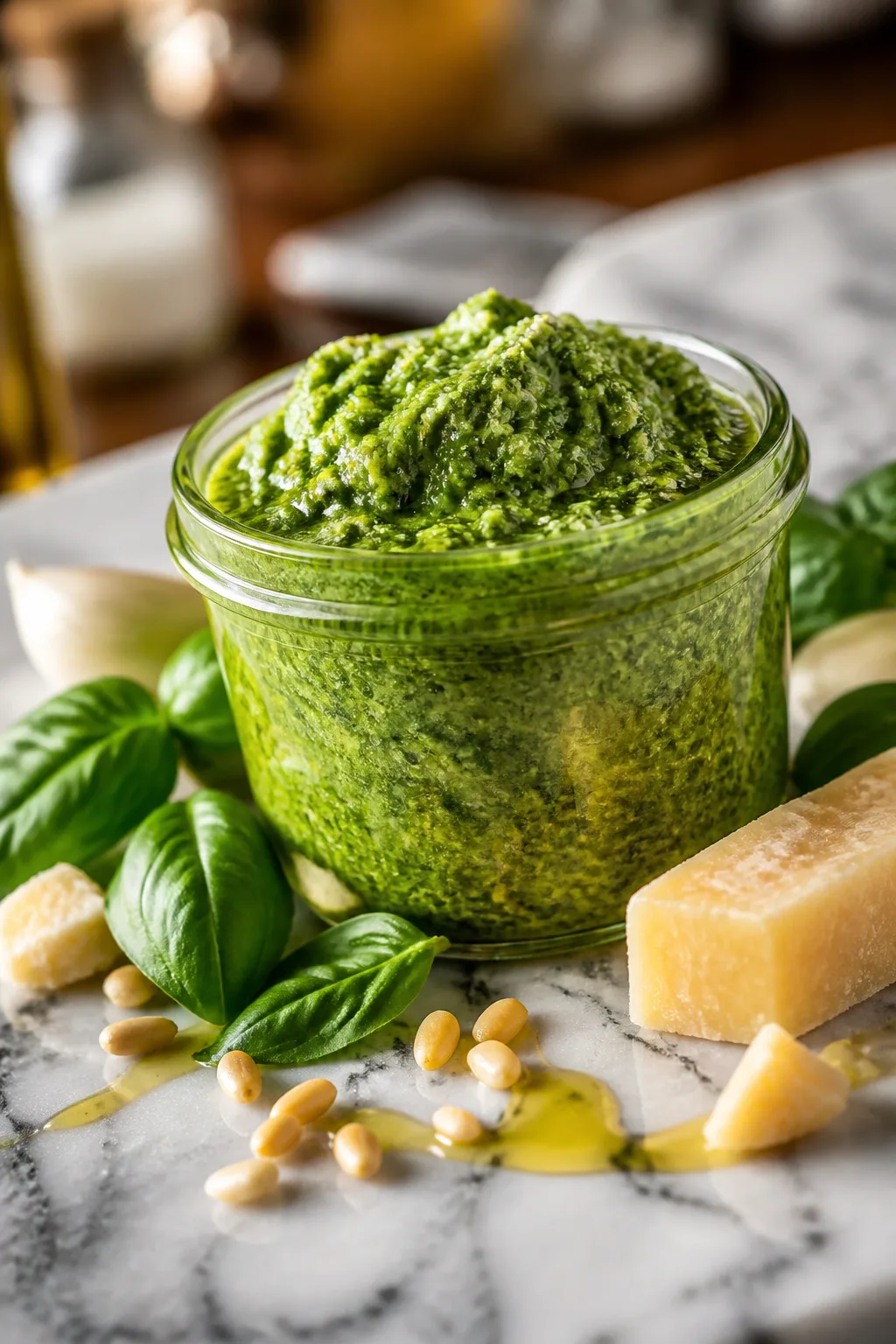
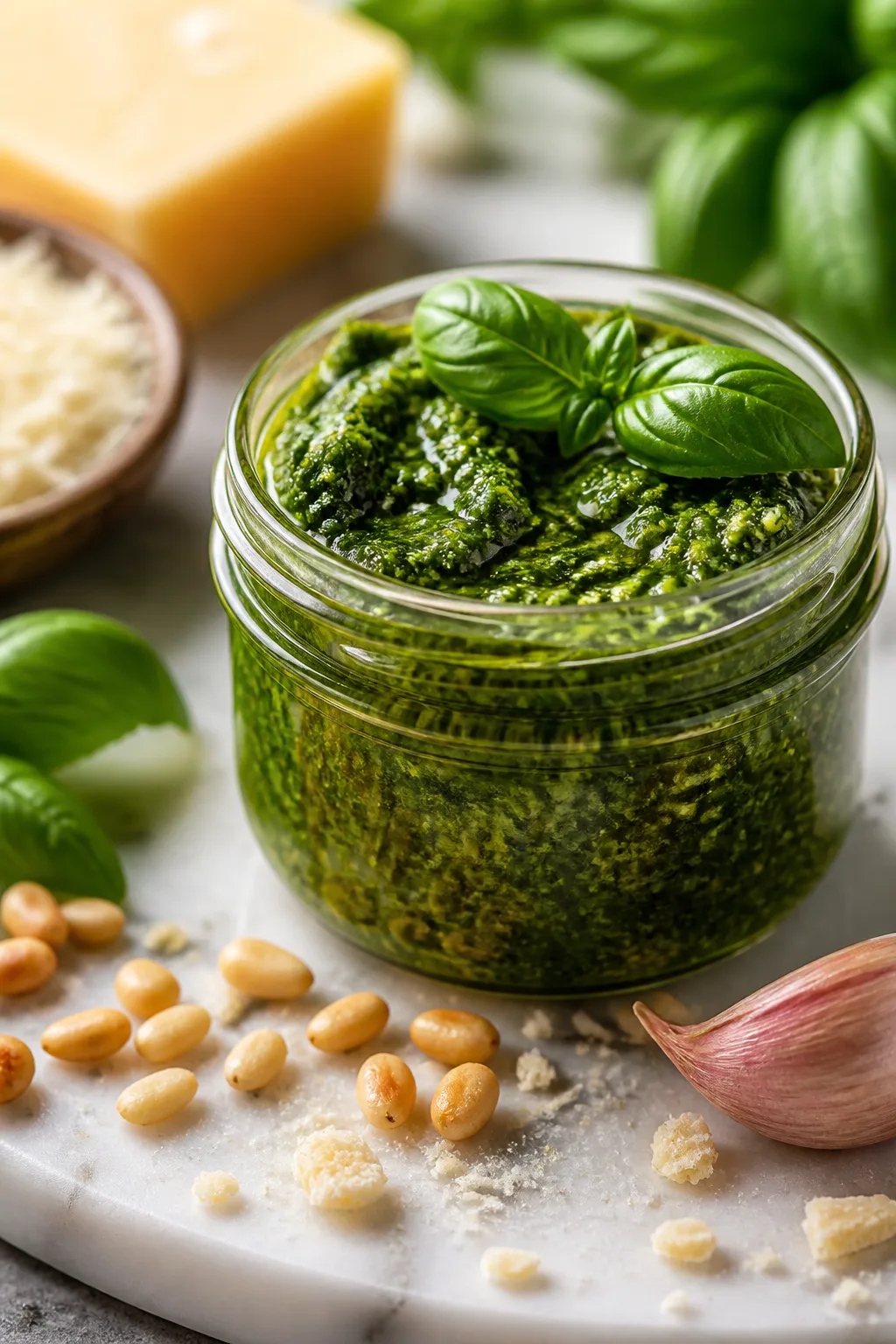
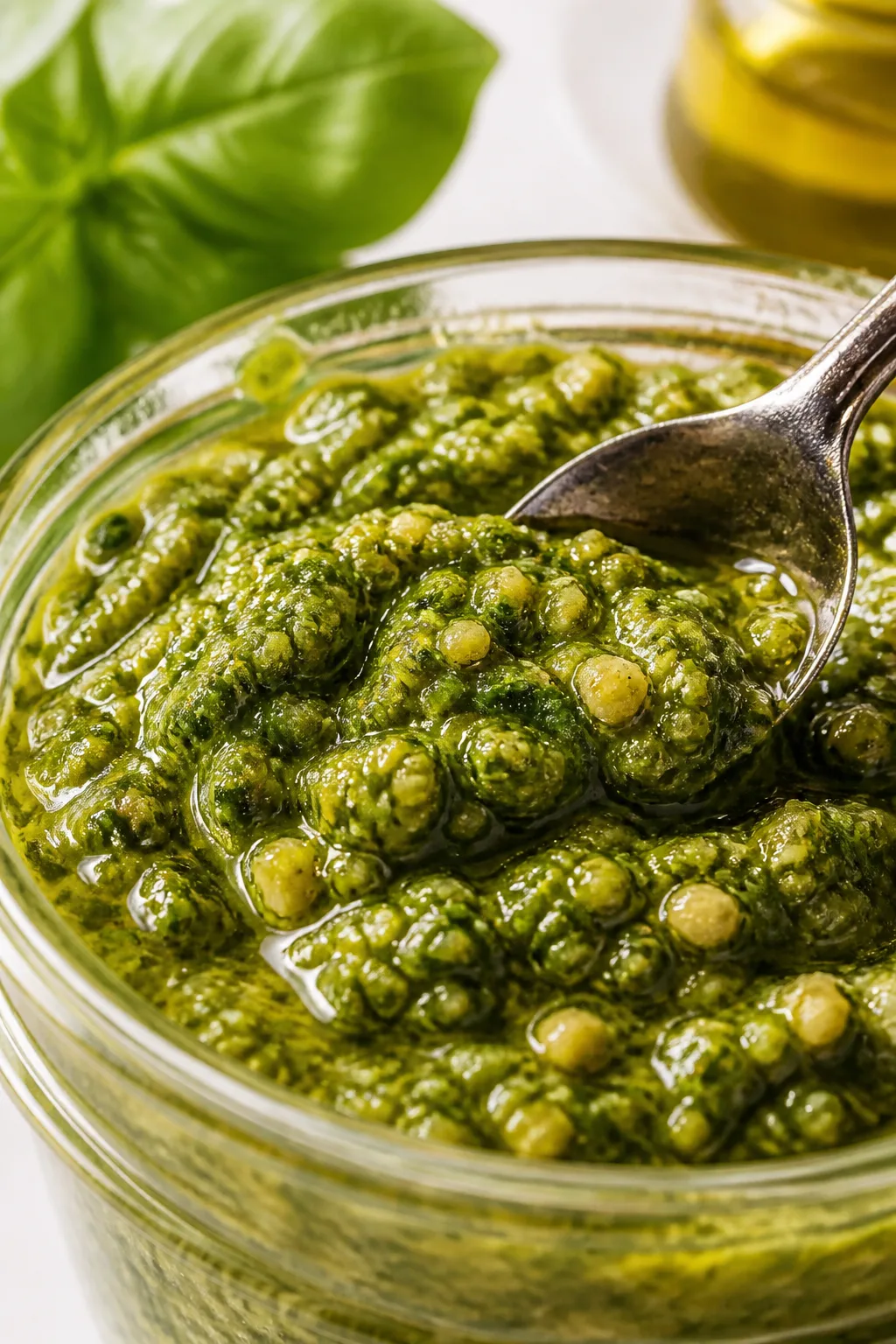
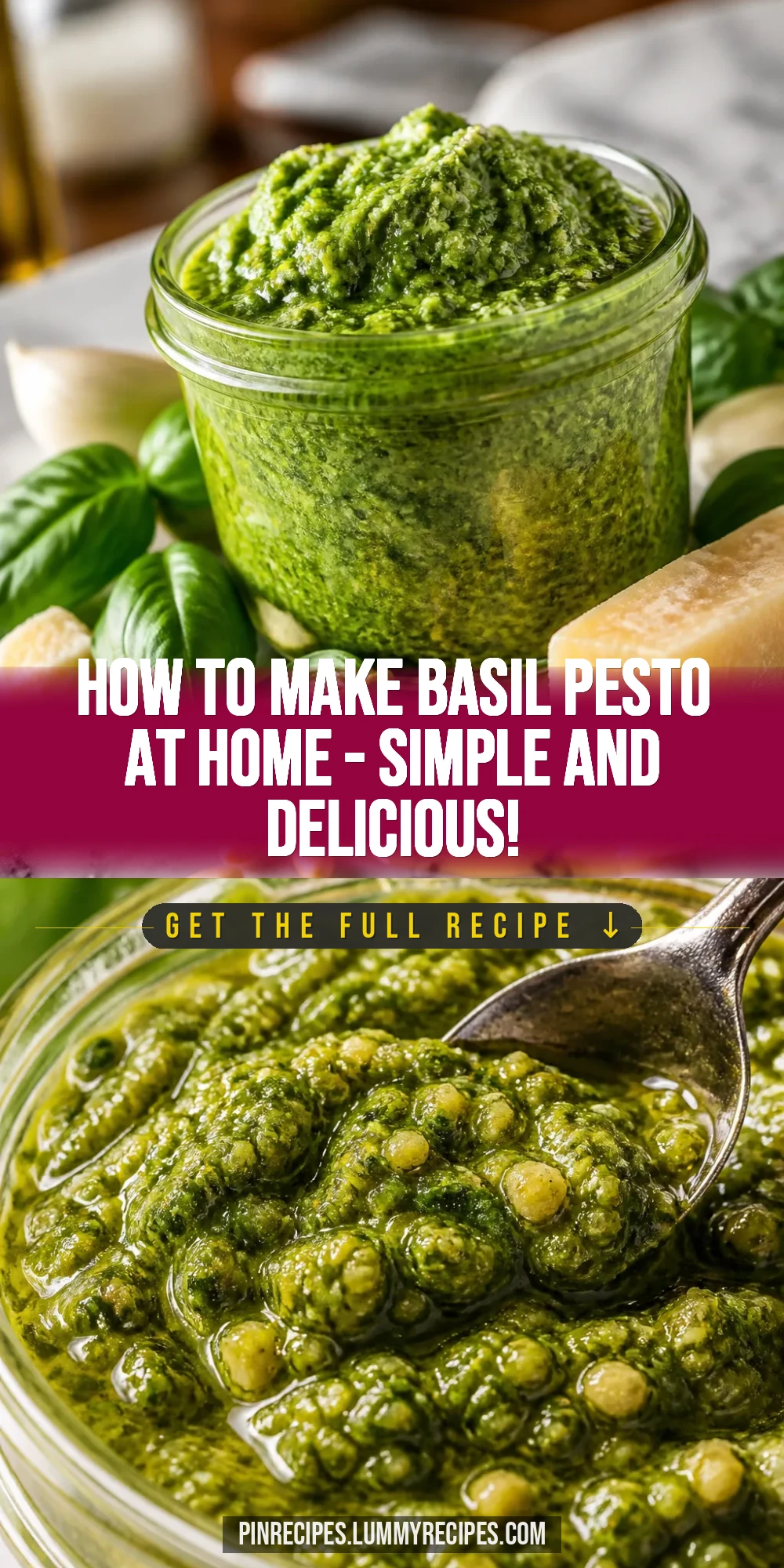
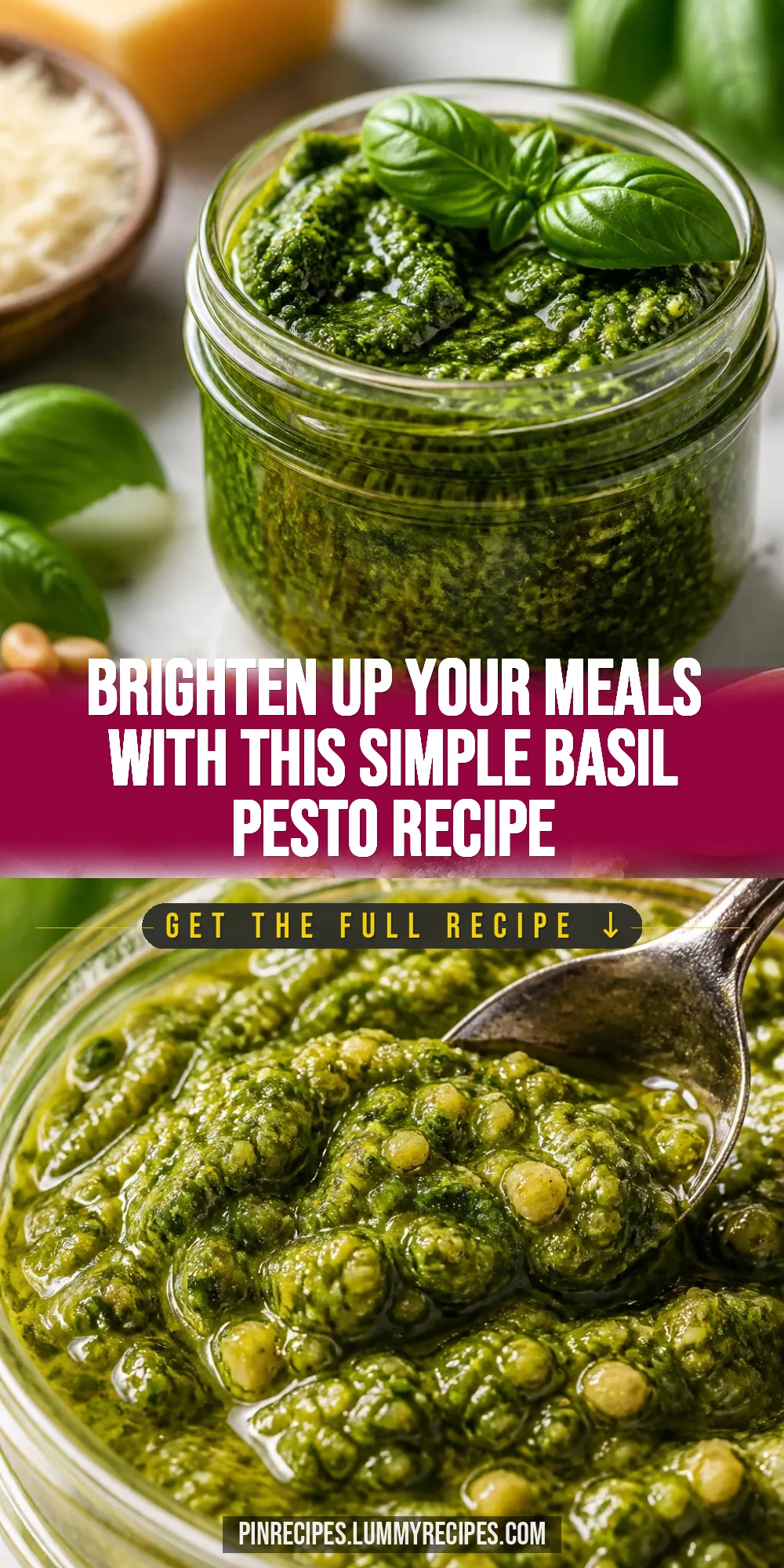
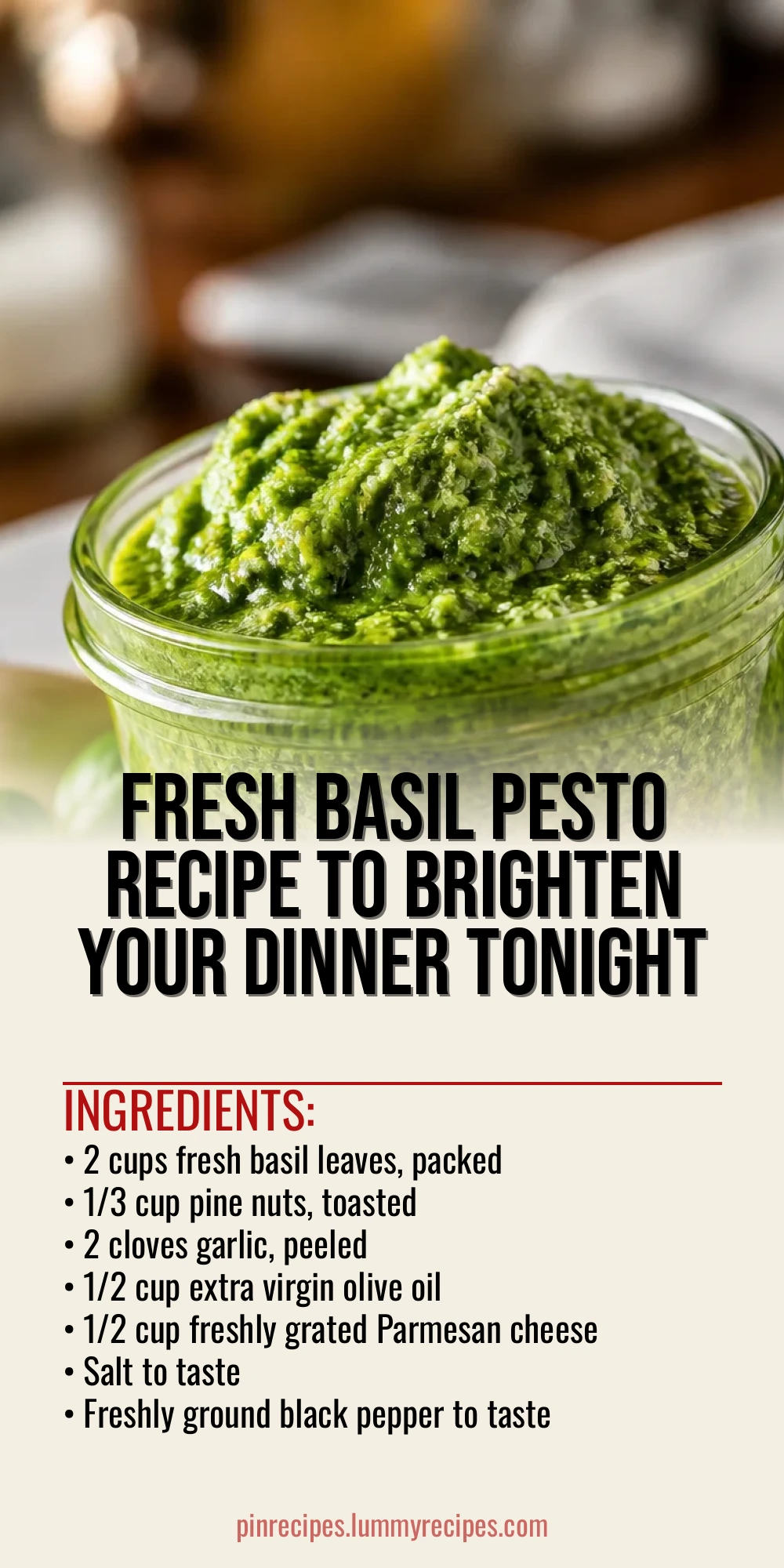
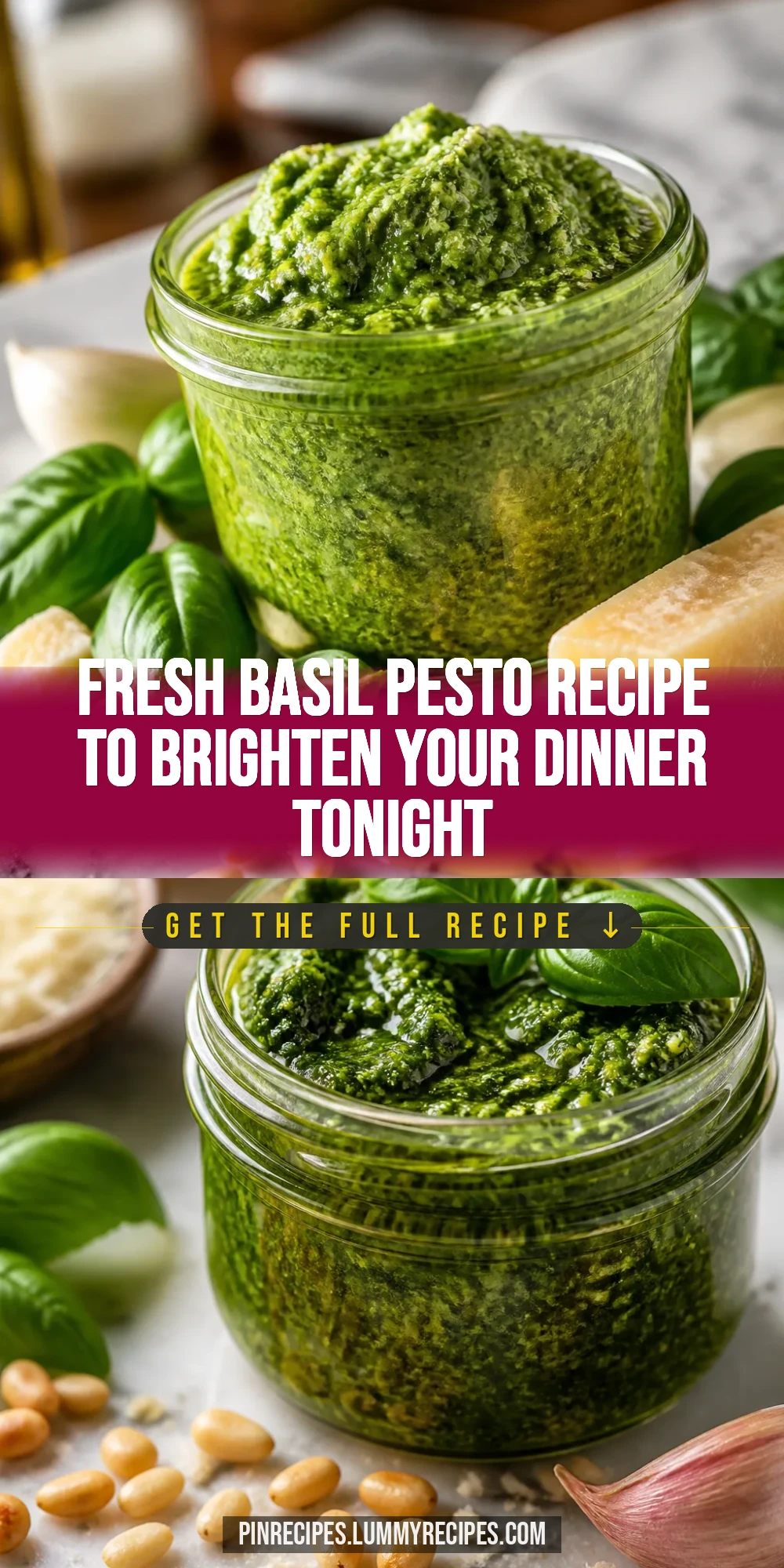
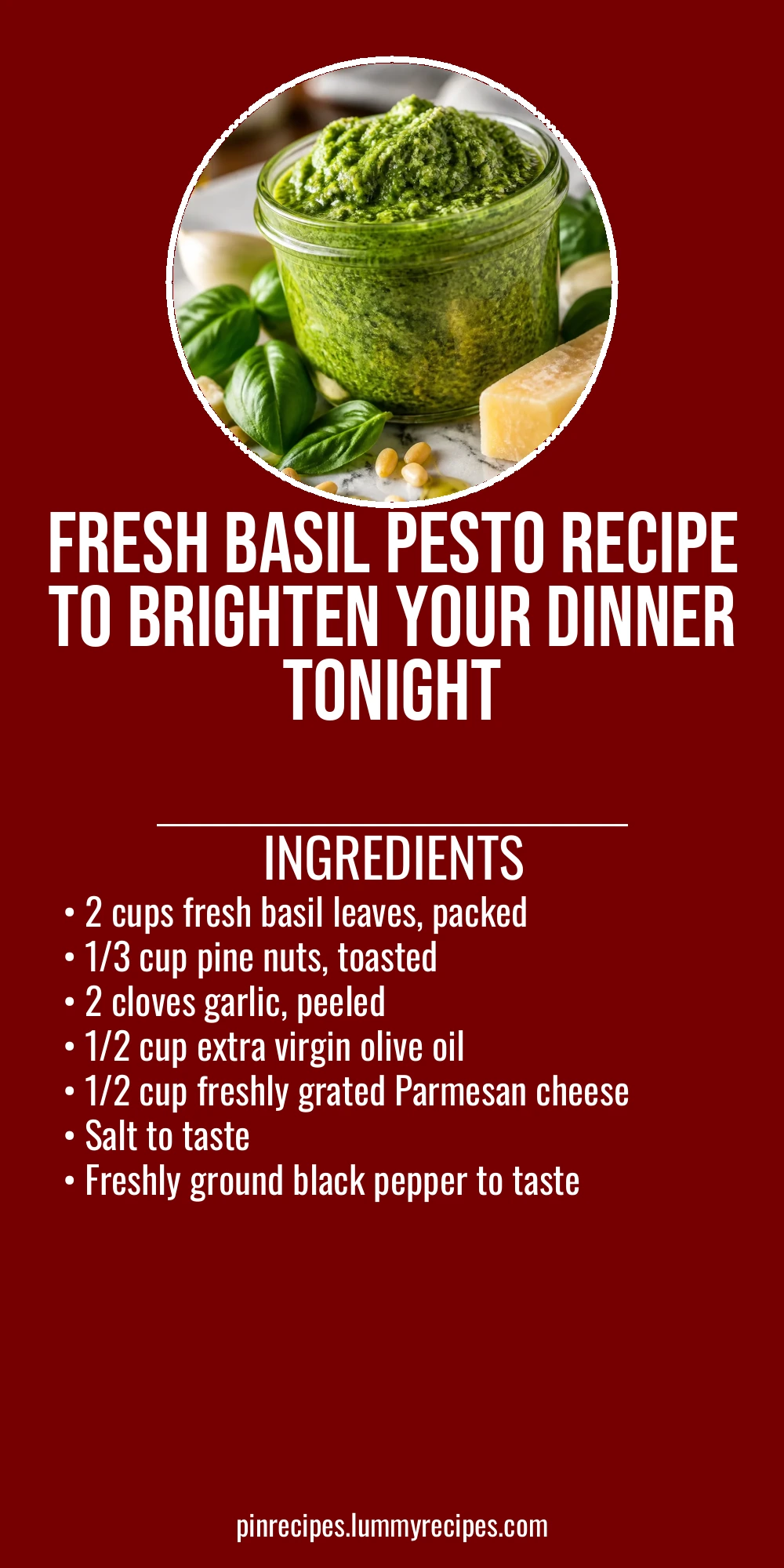
This vibrant basil pesto is my go-to for quick flavor boosts. Made with fresh basil, pine nuts, and a touch of garlic, it’s perfect on pasta or as a sandwich spread. I love whipping it up for easy weeknight dinners!
Introduction
I first made basil pesto years ago when I was craving something fresh and vibrant to brighten up a simple pasta dinner. Since then, it’s become a staple in my kitchen, especially for busy weeknights when I want something quick but flavorful. What I love about this recipe is that it’s super straightforward—fresh basil, toasted pine nuts, garlic, and good olive oil are all you need. The trick I learned early on is to toast the pine nuts gently; it brings out a deeper flavor that really makes the pesto sing. Also, I like to add the olive oil slowly while blending to get a smooth, creamy texture without making it too oily. The finished pesto is bright green, fragrant, and a little garlicky, perfect tossed with pasta, spread on sandwiches, or even drizzled over roasted veggies. It’s one of those recipes that feels fancy but is so easy to pull together, and my family always asks for seconds!
How To Do It
Step 1
Start by toasting the pine nuts in a dry skillet over medium heat. Stir frequently and watch closely because they can burn fast. Toasting releases their natural oils and nutty flavor, which adds depth to the pesto. Once they’re golden and fragrant, remove them from the heat and let cool. Avoid skipping this step, or your pesto might taste flat.
⏱ Time: 5 minutes
✓ Doneness: Pine nuts turn a light golden brown and smell nutty and fragrant
Step 2
Place the basil leaves, cooled pine nuts, and garlic cloves into a food processor. Pulse a few times to combine. This breaks down the ingredients evenly before adding oil. If you rush this, the garlic might not blend well, leaving chunks or uneven flavor.
⏱ Time: 2 minutes
✓ Doneness: Mixture looks roughly chopped and combined with no large garlic chunks
Step 3
With the processor running, slowly drizzle in the olive oil. Adding it gradually helps emulsify the pesto, creating a creamy texture rather than a greasy one. If you pour it too fast, the oil might separate or the pesto could become runny. Aim for a smooth but thick consistency.
⏱ Time: 3 minutes
✓ Doneness: Pesto has a smooth, spreadable texture, not oily or watery
Step 4
Stop the processor and add the grated Parmesan cheese. Pulse a few more times just to mix it in. The cheese adds saltiness and richness, balancing the fresh basil and pine nuts. Over-processing here can make the pesto too pasty, so be gentle.
⏱ Time: 1 minute
✓ Doneness: Cheese is evenly distributed and pesto looks creamy
Step 5
Taste your pesto and season with salt and freshly ground black pepper. Remember, Parmesan is salty, so add salt gradually. Seasoning is key to bringing out all the flavors. If you skip this, the pesto might taste bland.
⏱ Time: 1 minute
✓ Doneness: Balanced flavor with a slight kick from pepper and well-rounded saltiness
Step 6
If the pesto is too thick, add a teaspoon or two of water or more olive oil to loosen it up. This adjustment helps when using the pesto as a sauce for pasta, making it easier to coat the noodles evenly. Be careful not to thin it too much.
⏱ Time: 1 minute
✓ Doneness: Pesto is pourable but still thick enough to cling to pasta or bread
Step 7
Transfer the pesto to a clean jar or bowl. Cover the surface with a thin layer of olive oil to prevent browning if you’re not using it right away. This keeps the vibrant green color and fresh flavor intact.
⏱ Time: 2 minutes
✓ Doneness: Pesto surface is coated with oil and looks bright green
Step 8
Store the pesto in the refrigerator if not using immediately. It will keep fresh for up to a week. Before serving, bring it to room temperature and stir well. Cold pesto can taste muted and thick.
⏱ Time: 2 minutes
✓ Doneness: Pesto is smooth and fragrant when ready to serve
Step 9
Use your basil pesto tossed with freshly cooked pasta, spread on toasted bread, or dolloped over grilled chicken or roasted vegetables. It’s a versatile sauce that adds a fresh, herbal punch to many dishes.
⏱ Time: Varies
✓ Doneness: Pesto evenly coats the dish and enhances flavor
Pro Tips
Toast pine nuts gently until just golden.
Toasting releases the oils and enhances the nutty flavor, but over-toasting causes bitterness that can ruin the pesto’s delicate balance.
Add olive oil slowly while blending.
Slow addition helps emulsify the sauce, creating a creamy texture instead of an oily or separated mixture.
Use fresh basil and dry it well before blending.
Wet basil can water down the pesto and dull its vibrant color and flavor.
Grate Parmesan fresh from the block.
Freshly grated cheese melts better and adds more authentic flavor than pre-grated options.
Cover pesto with a thin layer of olive oil before storing.
This prevents oxidation and browning, keeping the pesto fresh and green longer.
Avoid over-processing the pesto.
Blending too long can turn the pesto into a paste, losing its fresh texture and bright appearance.
Season gradually with salt and pepper after blending.
Parmesan adds salt, so seasoning after blending helps avoid over-salting and balances flavors perfectly.
Common Mistakes to Avoid
Using pre-packaged basil with moisture.
Why it happens People often use pre-washed or bagged basil without drying, thinking it saves time.
Fix Always pat basil leaves dry with a towel to prevent watery pesto that’s thin and dull in color.
Skipping toasting pine nuts.
Why it happens Some assume raw nuts are fine and save time by skipping toasting.
Fix Toast nuts lightly in a dry pan to bring out flavor; watch closely to avoid burning.
Pouring olive oil too quickly.
Why it happens Rushing the process to finish faster.
Fix Drizzle oil slowly while blending to emulsify properly for creamy texture.
Over-blending pesto.
Why it happens Trying to get it super smooth without realizing it can turn pasty.
Fix Pulse in short bursts until just combined to keep fresh texture.
Not seasoning after adding cheese.
Why it happens Assuming cheese alone is enough salt.
Fix Taste and add salt and pepper gradually to balance flavors.
Variations
Walnut Basil Pesto
Swap pine nuts for toasted walnuts for a slightly earthier flavor and a budget-friendly twist. The texture will be a bit chunkier but still creamy and delicious.
Note: Toast walnuts gently and blend similarly; walnuts release more oil, so add olive oil carefully to avoid runny pesto.
Vegan Basil Pesto
Replace Parmesan with nutritional yeast or omit cheese altogether for a dairy-free pesto. Add a pinch of salt to compensate and boost the umami flavor.
Note: Nutritional yeast adds cheesy notes but less creaminess; consider adding a bit more nuts or oil for texture.
Spicy Basil Pesto
Add a pinch of red pepper flakes or a small fresh chili to the blender for a subtle heat that pairs wonderfully with the fresh basil flavor.
Note: Start with a small amount of chili and adjust to taste; too much can overpower the pesto’s delicate balance.
Lemon Basil Pesto
Add a tablespoon of fresh lemon juice and a little zest for a bright, citrusy note that lifts the sauce and pairs well with seafood or chicken dishes.
Note: Add lemon juice after blending to preserve brightness; too much acid can thin the pesto.
Sun-Dried Tomato Basil Pesto
Blend in some chopped sun-dried tomatoes for a richer, sweeter flavor. This variation adds color and depth, great for sandwiches or pasta.
Note: Use oil-packed sun-dried tomatoes drained well; reduce olive oil slightly to balance moisture.
Nutrition
Per Serving:
Nutritional values are estimates and may vary based on specific ingredients used.
Storage & Tips
Room Temperature
Pesto should not be left out at room temperature for more than 2 hours. If serving at a party or buffet, keep it chilled or covered with olive oil to protect from air exposure.
Refrigerator
Store pesto in an airtight container with a thin layer of olive oil on top in the refrigerator for up to 7 days. The flavor may mellow slightly when cold, so bring it to room temperature before serving for best taste and texture.
Freezer
Freeze pesto in small portions using ice cube trays or freezer-safe containers for up to 3 months. Wrap tightly to prevent freezer burn. Thaw overnight in the refrigerator and stir well before use. Texture might be slightly grainier after freezing but still delicious.
Reheating
Pesto is best served cold or at room temperature. If adding to hot dishes like pasta, stir it in off the heat or warm gently on low to preserve fresh flavors. Avoid boiling pesto as heat can dull the bright basil notes.
Make Ahead
You can prepare pesto 1-2 days ahead and store it refrigerated with olive oil on top. For longer storage, freeze in small batches. This makes weeknight meals quicker and allows flavors to meld beautifully.
FAQ
Can I use other nuts instead of pine nuts?
Absolutely! Walnuts, almonds, or even cashews work well as substitutes. Just toast them lightly to bring out their flavor. Keep in mind that each nut will slightly change the taste and texture of your pesto.
Why is my pesto turning brown?
Browning happens when basil oxidizes after exposure to air. To prevent this, cover the pesto surface with a thin layer of olive oil and store it in an airtight container. Using fresh basil and serving it soon after making also helps keep it green.
Can I freeze basil pesto?
Yes, freezing pesto is a great way to preserve it. Freeze in small portions for easy use. Thaw in the fridge overnight and stir before using. The texture might change slightly, but the flavor stays delicious.
How long does homemade pesto last in the fridge?
Stored properly with olive oil on top in an airtight container, pesto lasts about 5-7 days in the refrigerator. Always check for off smells or mold before using.
What if I don’t have a food processor?
You can make pesto by finely chopping the ingredients with a knife and mixing them together, though it will be chunkier. Using a mortar and pestle is the traditional method and gives great control over texture.
Can I make pesto without cheese?
Yes, omit the Parmesan for a dairy-free version or replace it with nutritional yeast for a cheesy flavor. The pesto will be less creamy but still tasty.
Why is my pesto too oily?
Adding olive oil too quickly or in excess can make pesto oily. Add oil slowly while blending to emulsify properly. If it’s too oily, stir in more basil or nuts to balance the texture.
Can I use frozen basil for pesto?
Frozen basil can be used in a pinch but tends to be watery and less vibrant. It’s best to use fresh basil for the best color and flavor.
Final Thoughts
I hope you enjoy making this classic basil pesto as much as I do! It’s such a simple way to add fresh, vibrant flavor to so many dishes. Don’t forget to share your pesto creations—I’d love to hear how it turns out!