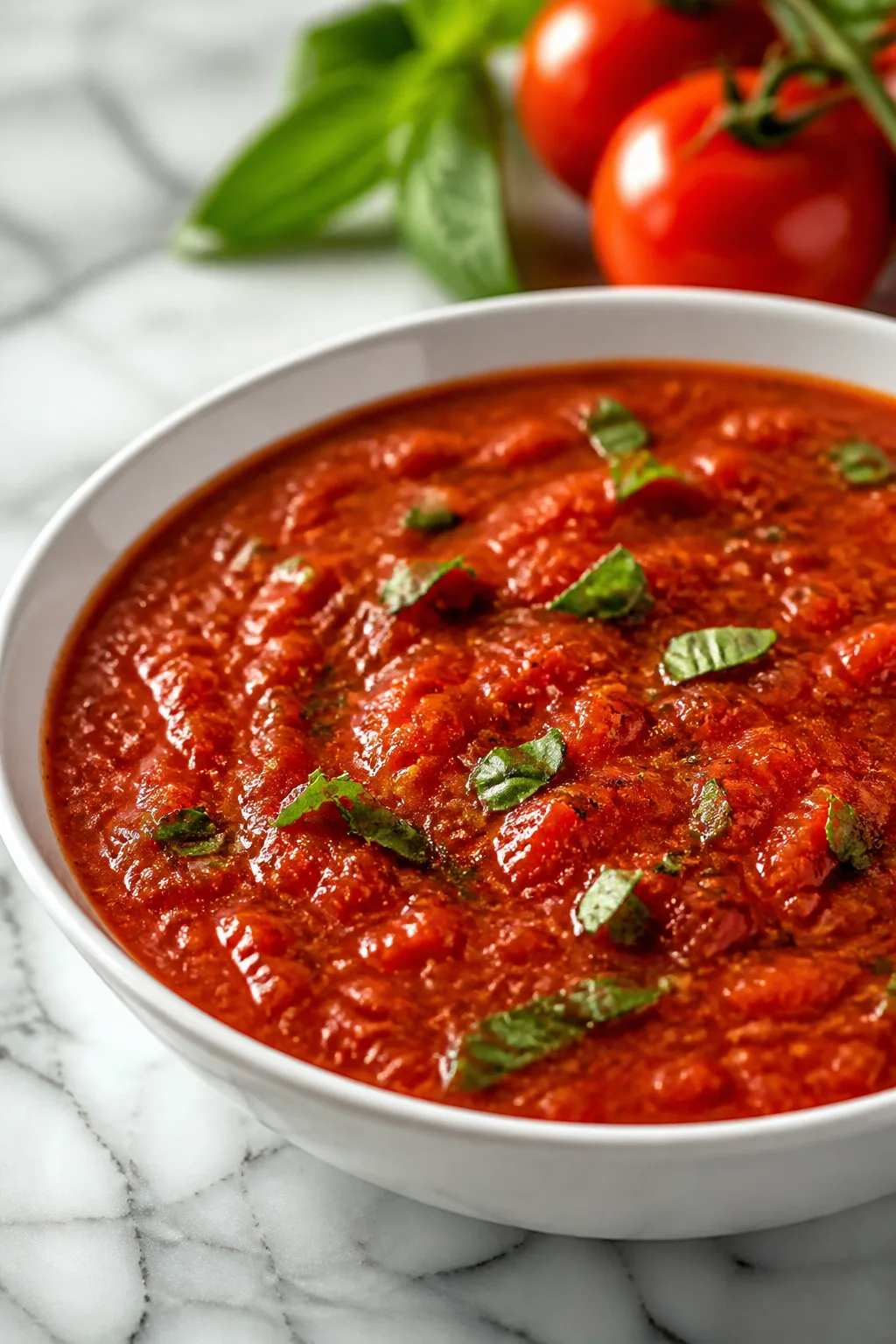
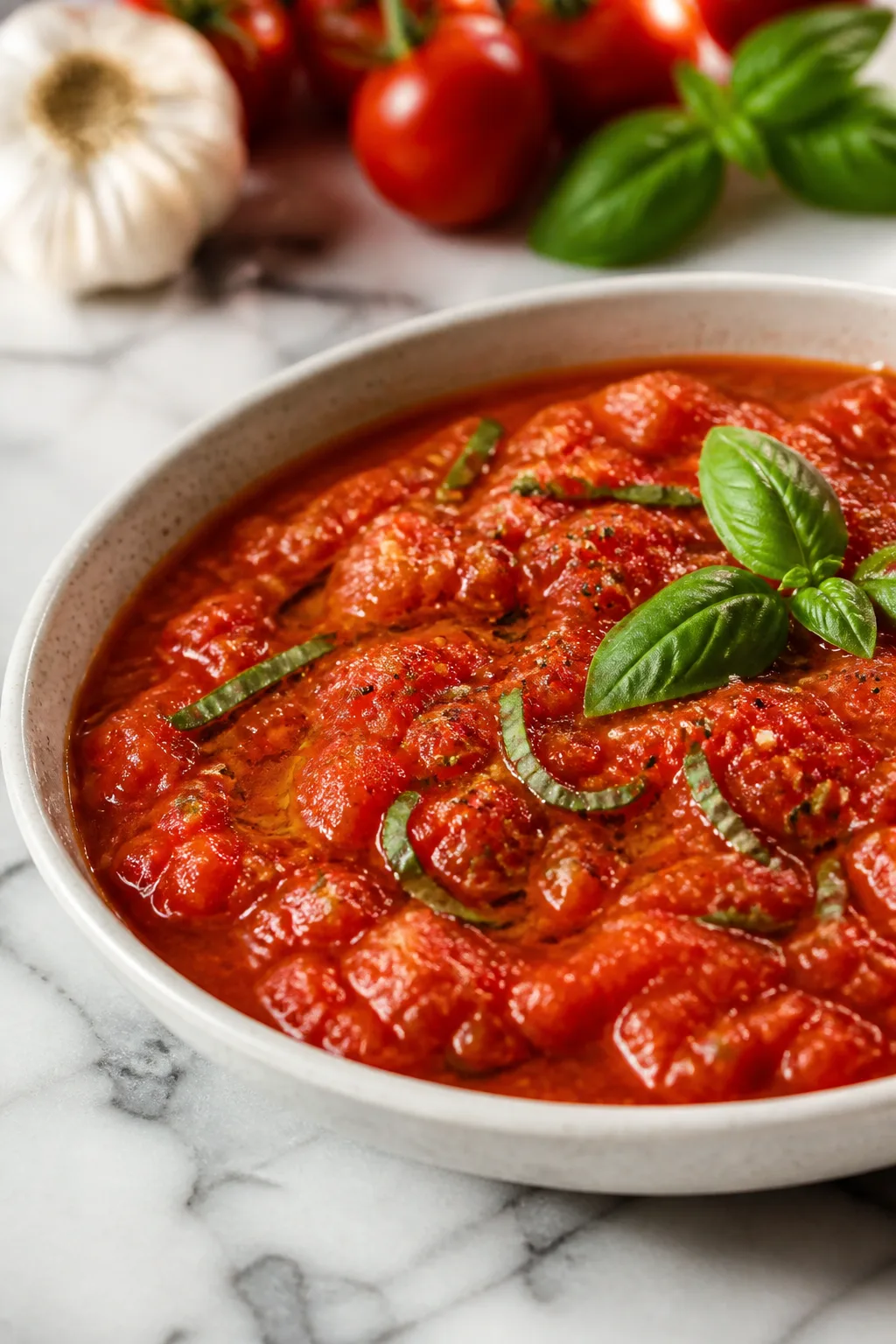
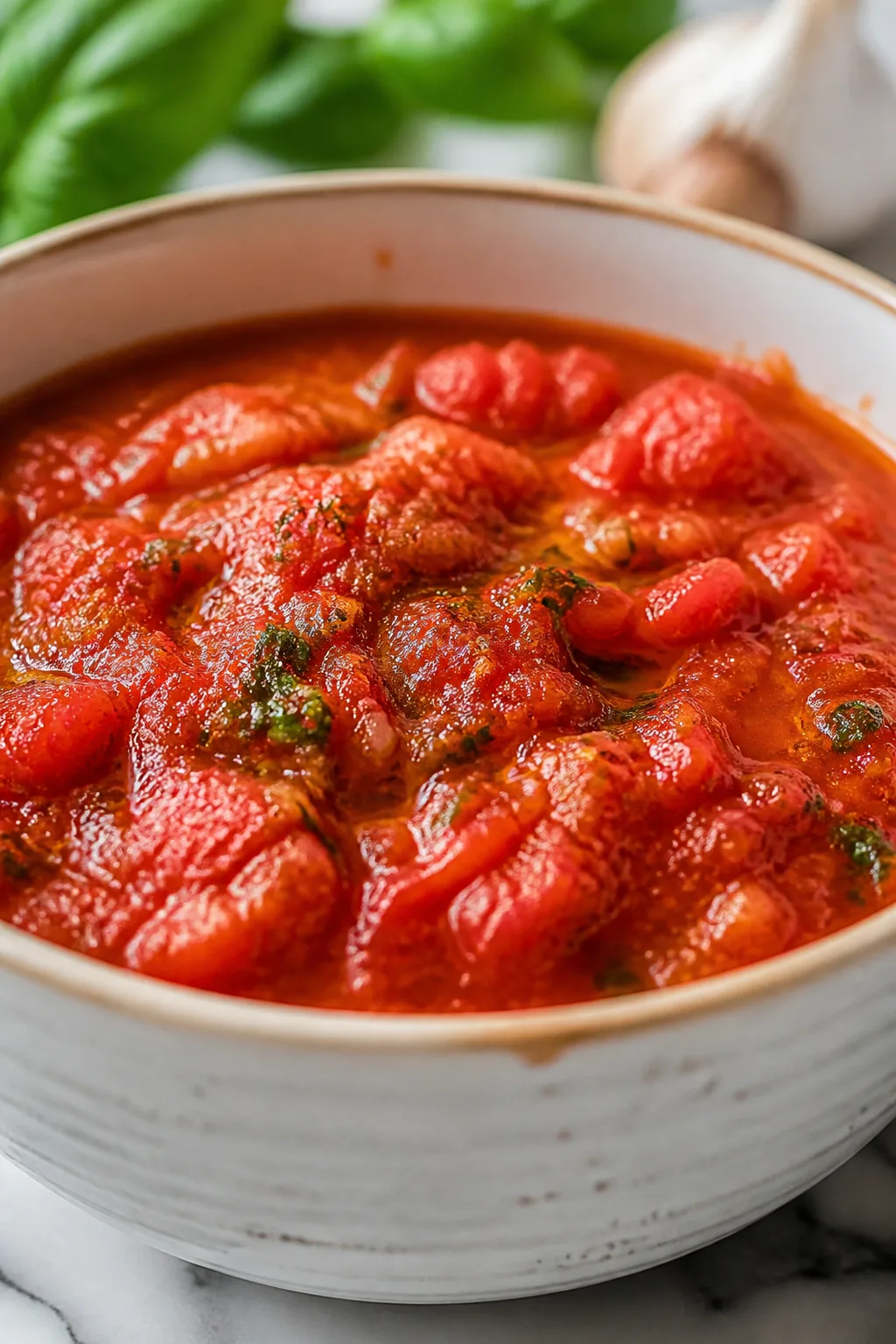
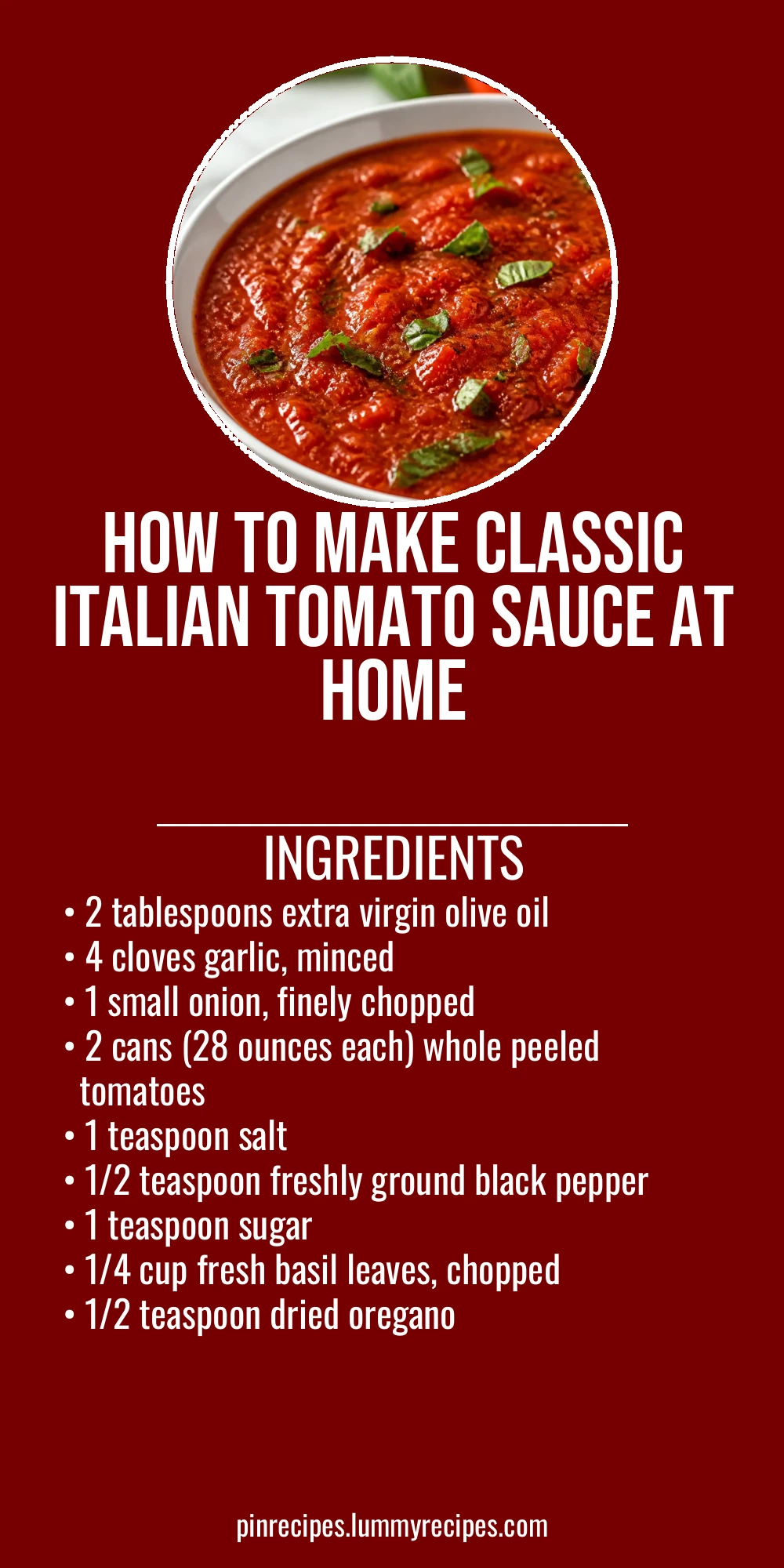
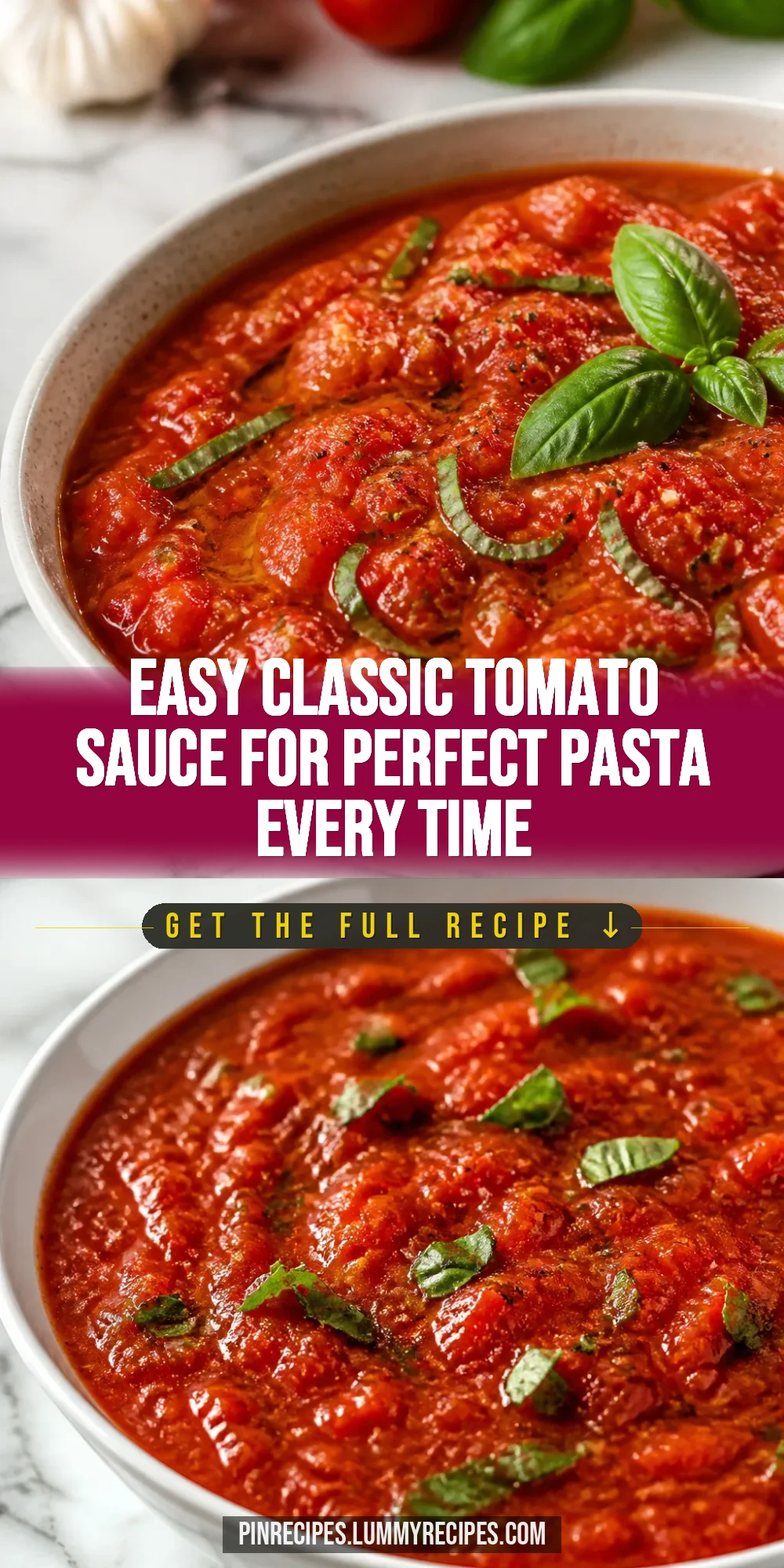
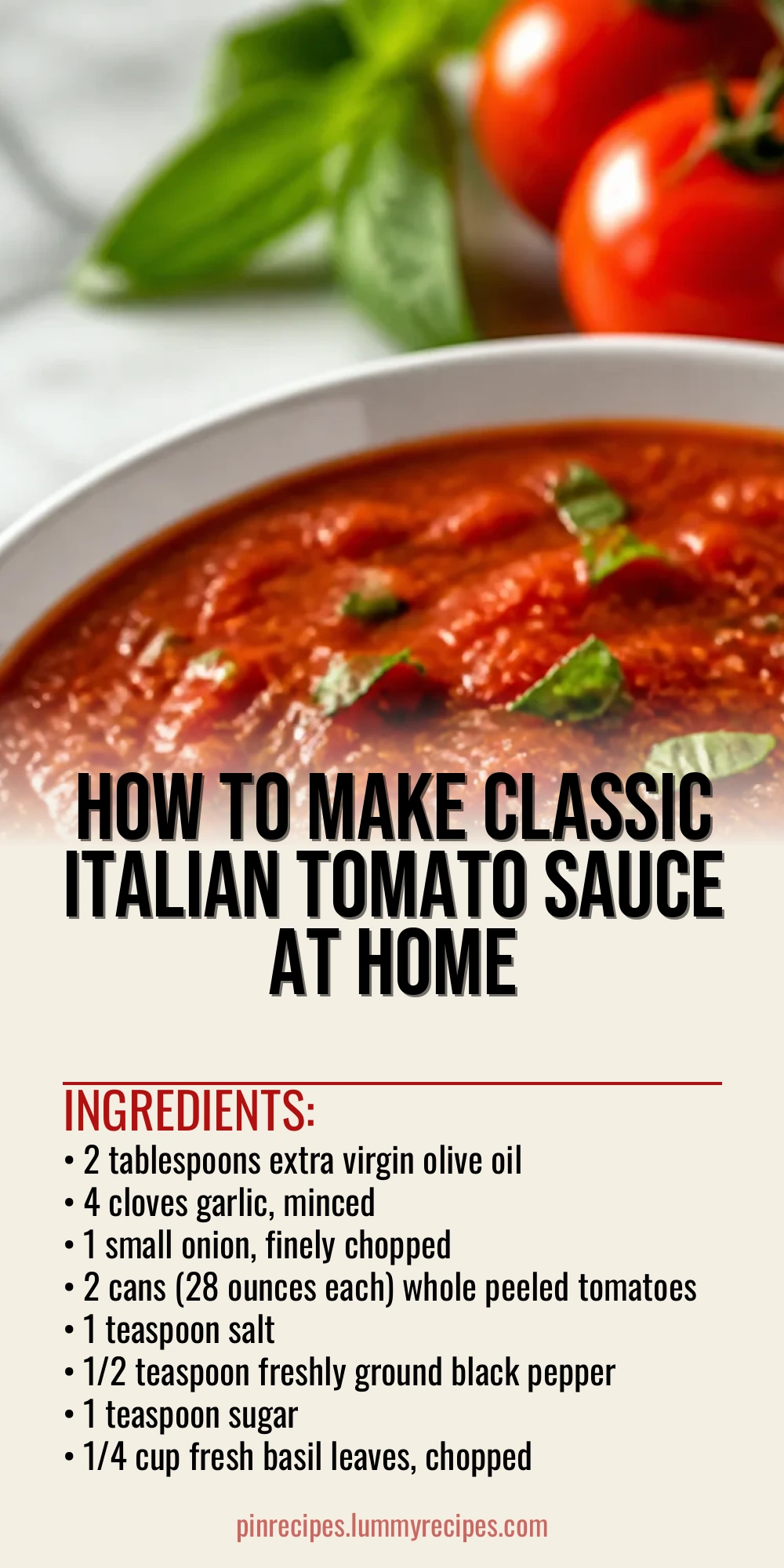
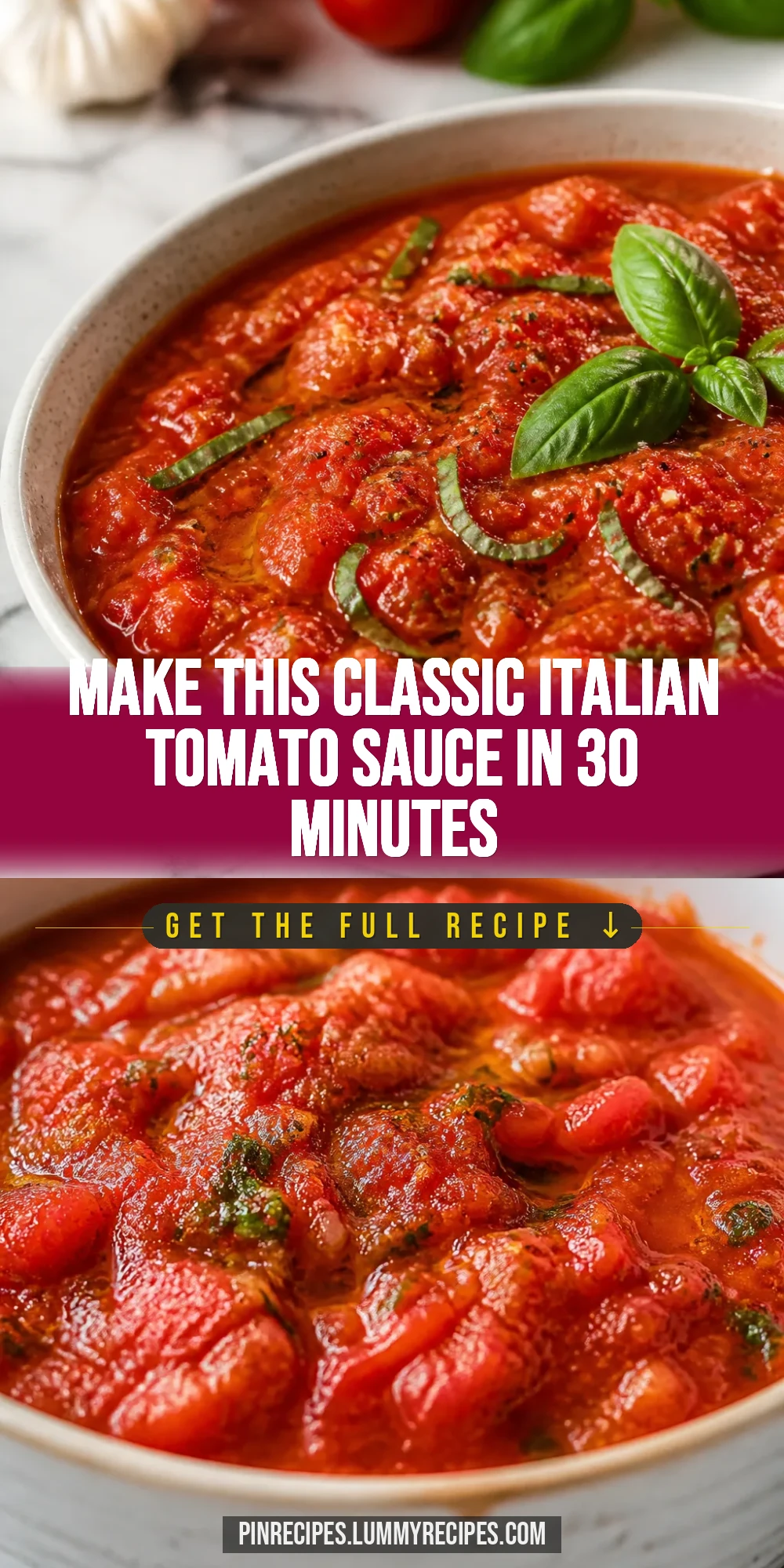
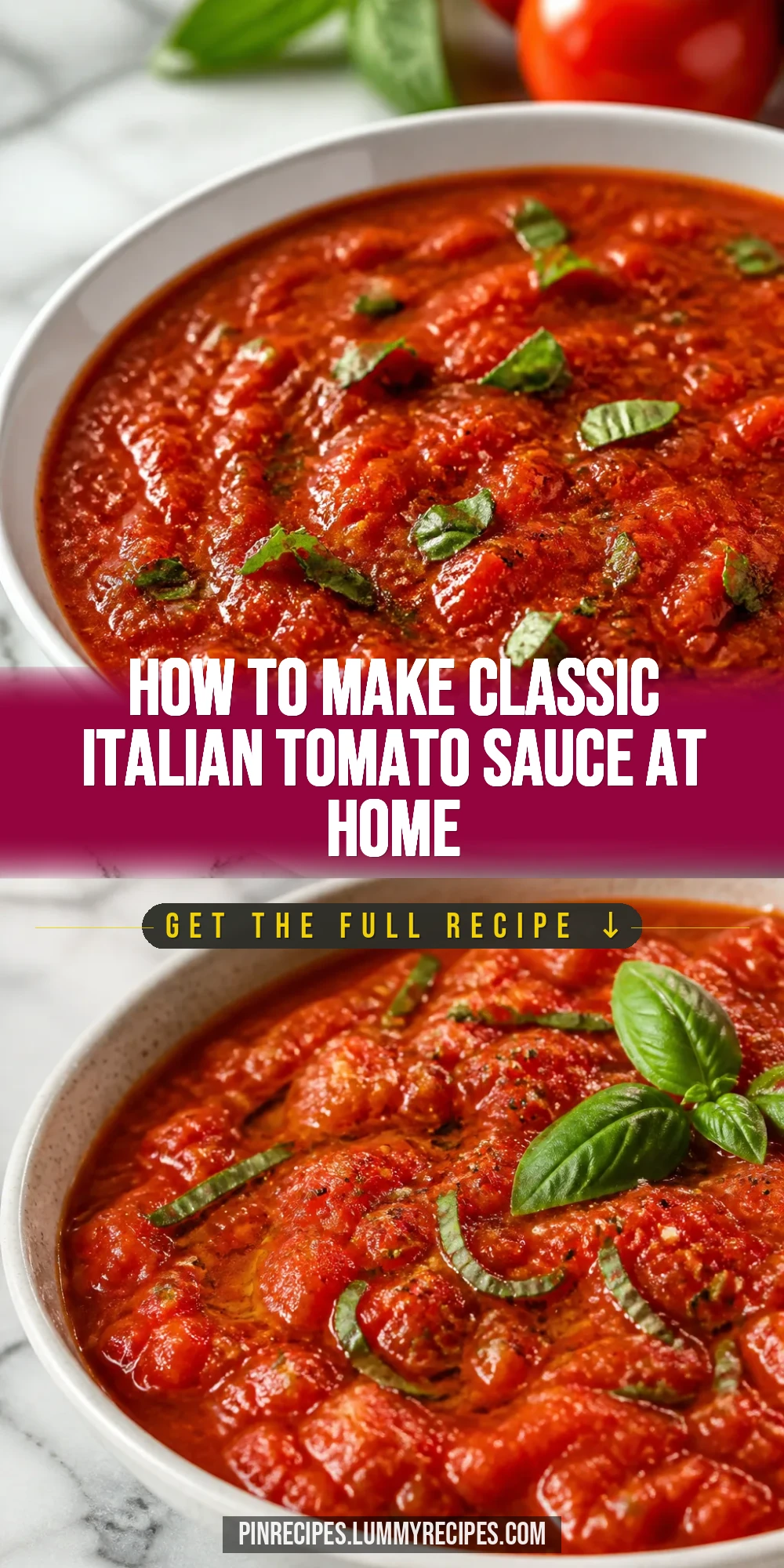
This classic Italian tomato sauce is a kitchen staple—rich, flavorful, and easy to make with just a few simple ingredients. I love using fresh garlic and a slow simmer to deepen the flavors. Perfect for pasta nights or as a base for other dishes!
Introduction
I've been making this classic tomato sauce recipe for years, and it’s become a family favorite that I turn to whenever I want a comforting, homemade meal. I first learned it from my Italian grandmother, who always said the secret was in the slow simmer and fresh basil. Unlike many store-bought sauces loaded with preservatives and extra sugar, this one is simple and fresh, relying on quality ingredients and patience. What makes this sauce special is the way the garlic and onion gently cook in olive oil before adding the tomatoes, creating a deep, mellow flavor that’s far from sharp or overpowering. I also like to crush the tomatoes by hand to keep a nice texture rather than pureeing everything smooth. When it’s done, the sauce is thick and fragrant, with just the right balance of sweetness and acidity. It’s perfect spooned over spaghetti, layered in lasagna, or even used as a base for meatballs. I think you’ll love how easy it is to make and how much better it tastes than anything in a jar.
What You'll Need
Approximately 4 cups, 4 servings
- 2 tablespoons extra virgin olive oil
- 4 cloves garlic, minced
- 1 small onion, finely chopped
- 2 cans (28 ounces each) whole peeled tomatoes
- 1 teaspoon salt
- 1/2 teaspoon freshly ground black pepper
- 1 teaspoon sugar
- 1/4 cup fresh basil leaves, chopped
- 1/2 teaspoon dried oregano
How To Do It
Step 1
Heat the olive oil in a large saucepan over medium heat. Add the minced garlic and chopped onion, stirring frequently. Cook gently until the onion is translucent and the garlic is fragrant but not browned, about 5-7 minutes. This step is crucial because it softens the aromatics and releases their flavors into the oil, which forms the sauce’s flavorful base. Be careful not to burn the garlic, as it will turn bitter and ruin the sauce’s taste.
⏱ Time: 7 minutes
✓ Doneness: Onions are soft and translucent; garlic aroma is fragrant but not sharp or burnt
Step 2
Add the whole peeled tomatoes with their juices to the pan. Use a wooden spoon or your hands to gently crush the tomatoes, breaking them down but leaving some chunks for texture. Stir in salt, pepper, sugar, dried oregano, and half the chopped basil. Bring the sauce to a gentle simmer over medium-low heat. This slow simmer allows the flavors to meld and the sauce to thicken naturally. Rushing this step can leave the sauce watery and underdeveloped in flavor.
⏱ Time: 30 minutes
✓ Doneness: Sauce thickens slightly, deep red color, and a rich tomato aroma fills the kitchen
Step 3
Continue to simmer the sauce uncovered for about 25-30 minutes, stirring occasionally. The sauce should reduce and thicken, concentrating the flavors. Keep the heat low enough to avoid splattering but steady enough for a gentle bubble. If the sauce thickens too quickly or sticks to the bottom, lower the heat and stir more frequently to prevent burning. This slow reduction is key for that classic rich tomato taste.
⏱ Time: 25-30 minutes
✓ Doneness: Sauce coats the back of a spoon and has a velvety texture
Step 4
Taste the sauce and adjust seasoning if needed. Stir in the remaining fresh basil just before serving to keep its bright, fresh flavor. Adding basil at the end preserves its aroma and prevents it from becoming dull or bitter. Serve the sauce hot over your favorite pasta or use it as a base for other dishes.
⏱ Time: 5 minutes
✓ Doneness: Fresh basil aroma noticeable; sauce tastes balanced and flavorful
Step 5
If you prefer a smoother sauce, you can use an immersion blender to blend it right in the pot after cooking. Blend just a little to keep some texture, or fully for a silky finish. Be cautious when blending hot liquids to avoid splashes or burns—blend slowly and keep the blender submerged.
⏱ Time: 2-3 minutes
✓ Doneness: Sauce texture is smooth or slightly textured, depending on preference
Step 6
For a deeper flavor, let the sauce cool and refrigerate overnight. Reheat gently before serving. This resting time allows the flavors to marry even more, making the sauce taste richer and more complex. It’s a great trick if you want to prepare ahead.
⏱ Time: Overnight resting
✓ Doneness: Flavor tastes more integrated and mellow after resting
Step 7
To add a little extra richness, stir in a tablespoon of butter or a splash of good olive oil right before serving. This adds a silky mouthfeel and rounds out the acidity of the tomatoes. It’s a small step that makes a big difference in taste.
⏱ Time: 1 minute
✓ Doneness: Sauce looks glossy and tastes balanced
Step 8
If you want to spice it up, add a pinch of red pepper flakes during the garlic and onion cooking step. This gives the sauce a subtle heat that complements the sweetness of the tomatoes. Adjust the amount to your taste, but start small to avoid overpowering the sauce.
⏱ Time: During step 1
✓ Doneness: A hint of warmth without overwhelming the sauce’s natural flavors
Step 9
Serve the sauce immediately over cooked pasta, or use it as a base for dishes like eggplant parmesan, chicken cacciatore, or homemade pizza. The versatility of this sauce makes it a fantastic staple in your cooking repertoire. Enjoy warm for best flavor and texture.
⏱ Time: Immediate serving
✓ Doneness: Sauce is hot, flavorful, and perfectly coats pasta or other dishes
Pro Tips
Use a heavy-bottomed saucepan to prevent scorching.
Heavy-bottomed pans distribute heat evenly and reduce the risk of burning the sauce during the long simmer. Burnt spots can impart bitter flavors and ruin the sauce, so even heat is essential for a smooth, rich tomato sauce.
Simmer the sauce gently, don’t boil.
A gentle simmer allows flavors to meld and the sauce to thicken without breaking down the tomatoes too much or evaporating liquid too quickly. Boiling can cause the sauce to become bitter and separate, ruining the texture.
Add fresh basil at the end of cooking.
Adding fresh herbs late preserves their bright, fresh aroma and flavor. Cooking basil too long dulls its taste and can turn it bitter, so stirring it in just before serving keeps the sauce vibrant.
Crush tomatoes by hand for better texture.
Hand crushing lets you control the sauce’s texture, leaving pleasant chunks rather than a uniform puree. This adds a homemade feel and mouthfeel that’s more satisfying than smooth sauces.
Don’t skip the sugar, just use a little.
A touch of sugar balances the natural acidity of the tomatoes, making the sauce taste rounder and more balanced. Too much sugar makes it overly sweet, but none can leave it sharp or sour.
Cook garlic and onion slowly to avoid bitterness.
Slow cooking softens their pungency and releases natural sweetness. High heat burns garlic quickly, causing a bitter taste that can overwhelm the sauce.
Let the sauce rest overnight for best flavor.
Resting allows the flavors to meld and deepen, making the sauce taste richer and more harmonious. It’s a simple step that improves the final dish significantly.
Common Mistakes to Avoid
Burning the garlic during sautéing.
Why it happens Many cooks increase the heat to speed up cooking or get impatient, causing garlic to burn quickly.
Fix Use medium or medium-low heat and stir frequently. Remove the pan from heat if garlic starts browning too fast. Burnt garlic tastes bitter and ruins the sauce.
Using low-quality canned tomatoes.
Why it happens Sometimes cheaper brands are used without considering flavor impact.
Fix Invest in good-quality canned tomatoes, ideally San Marzano or other premium brands. They have better flavor and texture, which makes a big difference.
Skipping the simmer time or rushing it.
Why it happens Busy cooks may want to speed up dinner prep.
Fix Allow at least 30 minutes for the sauce to simmer gently. This step is essential to develop flavor and thicken the sauce properly.
Adding fresh herbs too early.
Why it happens Some think adding all herbs at once saves time.
Fix Add dried herbs early but fresh basil last to preserve its bright flavor. Adding fresh basil too soon can make it bitter.
Over-sweetening the sauce.
Why it happens Trying to fix acidity by adding too much sugar.
Fix Add sugar sparingly, tasting as you go. The goal is to balance acidity, not make the sauce sweet.
Variations
Spicy Tomato Sauce
Add a pinch or two of red pepper flakes during the garlic and onion sauté to give the sauce a gentle heat. This variation adds warmth without overpowering the classic tomato flavor, perfect for those who like a little kick.
Note: Add red pepper flakes early in the cooking process for even heat distribution; adjust quantity to taste.
Chunky Vegetable Tomato Sauce
Stir in finely chopped carrots and celery with the onions for a heartier sauce packed with veggies. This adds sweetness and texture, making the sauce more substantial and nutritious.
Note: Sauté vegetables until softened before adding tomatoes to ensure they cook through and blend flavors.
Creamy Tomato Sauce
Finish the sauce with a splash of heavy cream or half-and-half for a rich, velvety texture. This turns the sauce into a luscious accompaniment for pasta or chicken dishes.
Note: Add cream at the end of cooking and heat gently to avoid curdling.
Herb-Infused Tomato Sauce
Add fresh rosemary or thyme sprigs during simmering for an earthy herbal note. Remove the sprigs before serving to keep the sauce smooth and aromatic.
Note: Use fresh herbs sparingly as they can overpower the sauce; remove before serving.
Roasted Garlic Tomato Sauce
Replace raw garlic with roasted garlic cloves for a sweeter, milder garlic flavor. Roast whole garlic heads in the oven until soft and caramelized, then mash and add to the sauce.
Note: Roasting garlic takes about 30-40 minutes; add mashed roasted garlic near the end of cooking.
Nutrition
Per Serving:
Nutritional values are estimates and may vary based on specific ingredients used.
Storage & Tips
Room Temperature
The sauce can safely sit at room temperature for up to 2 hours if covered. Beyond that, it should be refrigerated to prevent spoilage. Cover with a lid or plastic wrap to keep out contaminants.
Refrigerator
Store the sauce in an airtight container in the refrigerator for up to 4 days. The flavor may deepen but the texture can thicken; reheat gently with a splash of water or broth to loosen it.
Freezer
Freeze the sauce in airtight freezer-safe containers or heavy-duty freezer bags for up to 3 months. To avoid freezer burn, remove as much air as possible before sealing. Thaw overnight in the refrigerator before reheating.
Reheating
Reheat the sauce gently on the stovetop over low heat or in the microwave, stirring occasionally. Add a splash of water or olive oil if it’s too thick. Avoid boiling to preserve fresh flavors and prevent separation.
Make Ahead
Prepare the sauce up to 2 days in advance and store in the refrigerator. Reheat before serving and add fresh basil at the last minute. This saves time on busy days and enhances flavor.
FAQ
Can I use fresh tomatoes instead of canned?
Yes, but fresh tomatoes require peeling and longer cooking to break down. Use ripe, flavorful tomatoes and blanch them to remove skins before cooking. The sauce will taste fresher but may take more time to thicken.
How do I fix a sauce that’s too acidic?
Add a small pinch of sugar or a splash of cream to balance acidity. Also, cooking the sauce longer can mellow sharp flavors. Taste as you go to avoid over-sweetening.
Can I freeze this tomato sauce?
Absolutely! Freeze in airtight containers for up to 3 months. Thaw in the refrigerator overnight and reheat gently. Freezing preserves the sauce well without losing flavor.
What’s the best way to store leftover sauce?
Store leftovers in airtight containers in the refrigerator for up to 4 days. Reheat gently on the stove or microwave, adding a splash of water if needed to loosen the sauce.
Can I make this sauce in a slow cooker?
Yes, you can. Sauté the garlic and onions first, then add all ingredients to the slow cooker. Cook on low for 6-8 hours for a rich, developed flavor.
Should I peel the canned tomatoes before using?
No need to peel canned tomatoes; crushing them by hand breaks down the skins naturally during cooking, adding texture and flavor.
How do I make the sauce thicker?
Simmer the sauce uncovered to allow water to evaporate, thickening naturally. Avoid rushing this step or adding too much liquid.
Can I use dried basil instead of fresh?
Dried basil can be used but add it earlier in cooking since it needs time to release flavor. Fresh basil added at the end provides a brighter, fresher taste.
Final Thoughts
Give this classic tomato sauce a try—it’s simple, comforting, and truly delicious. I’d love to hear how it turns out for you, so don’t forget to share your results!