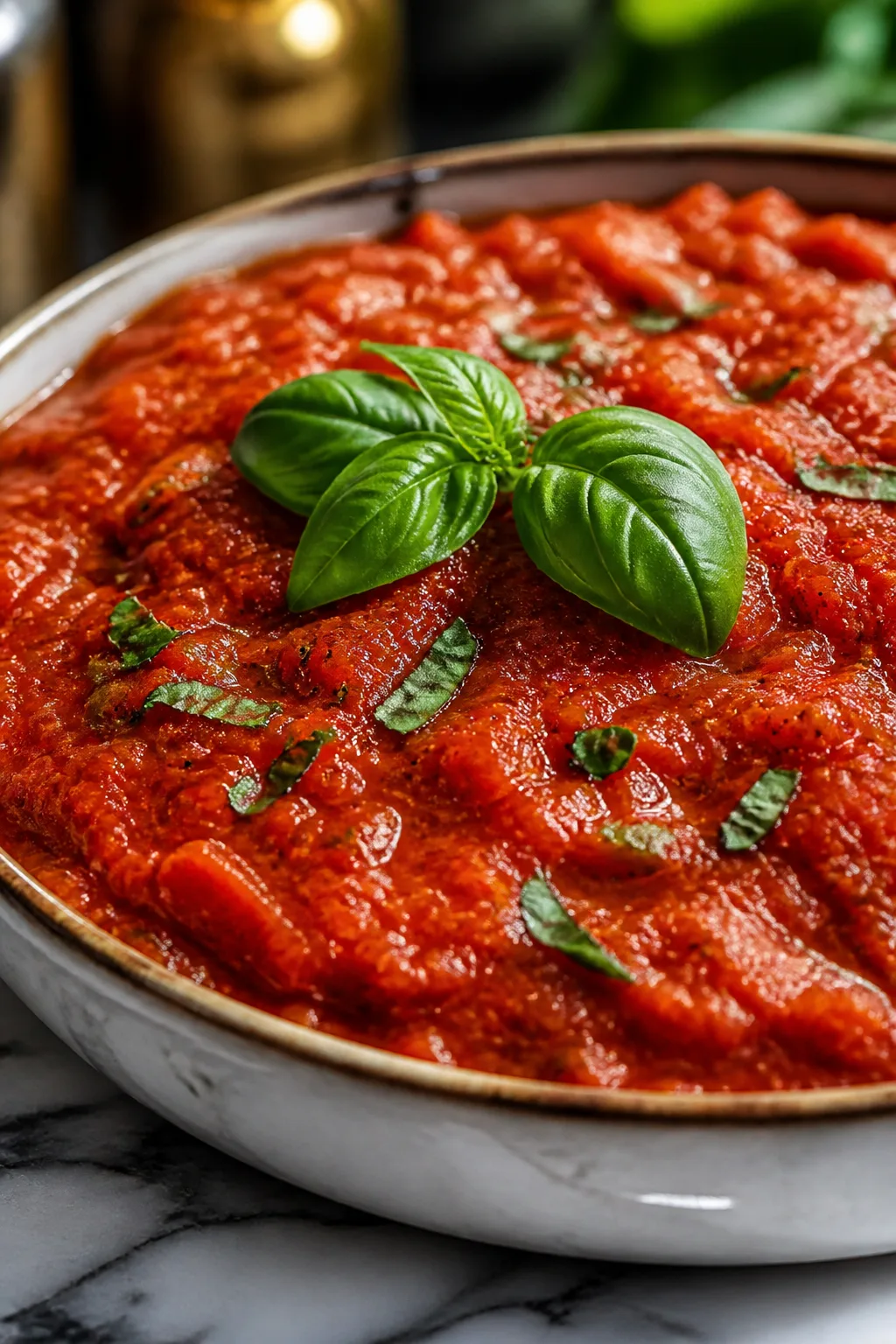
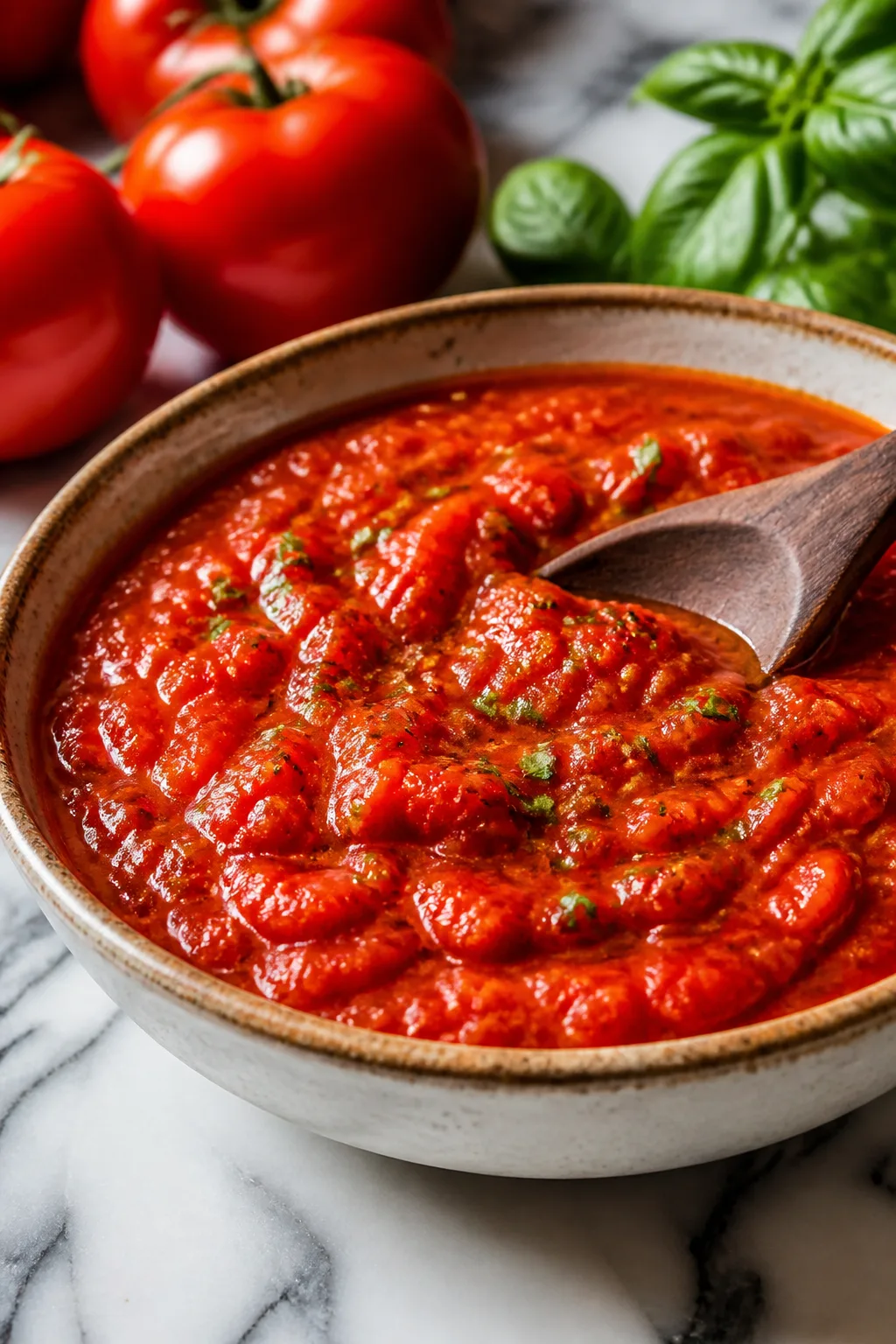
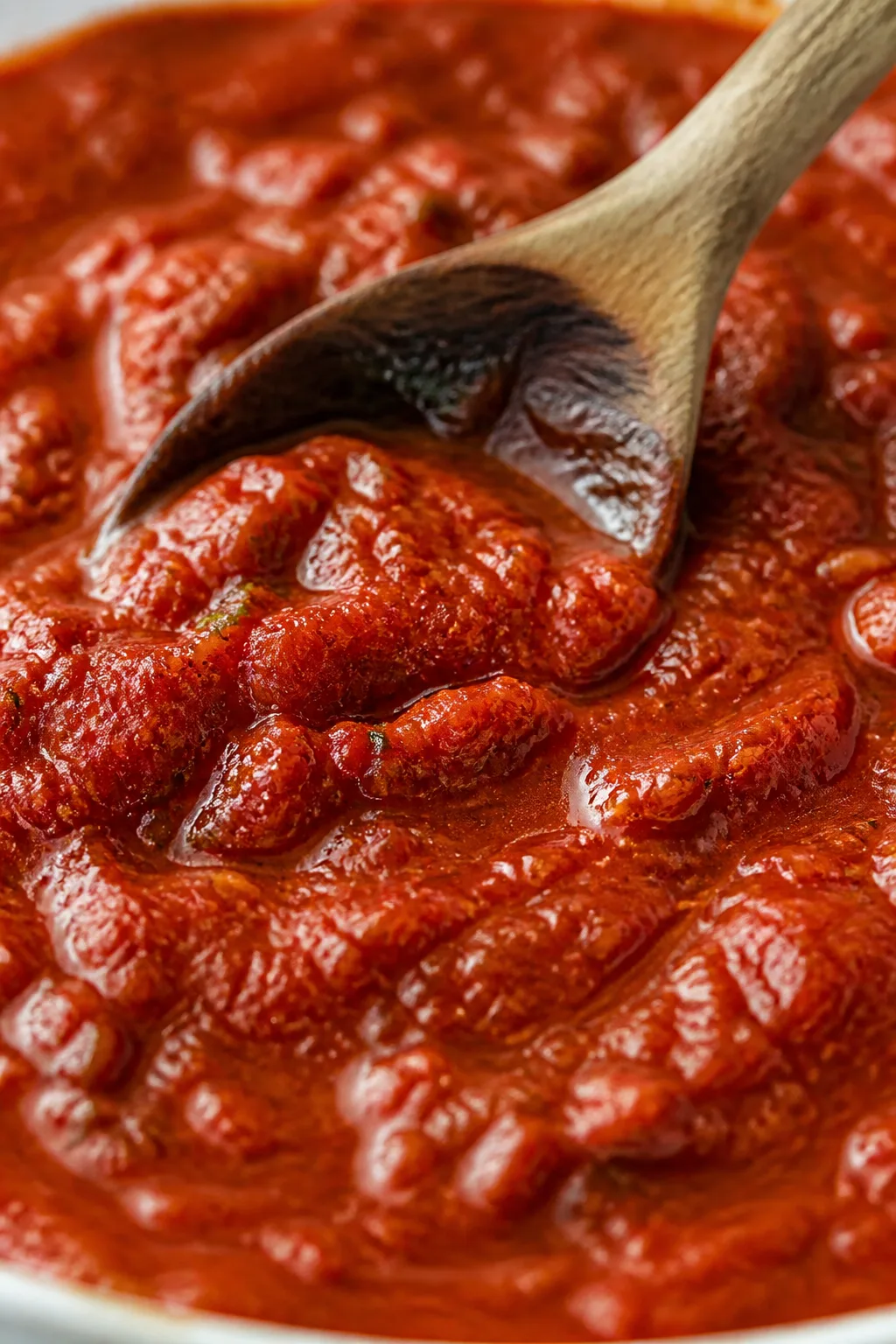
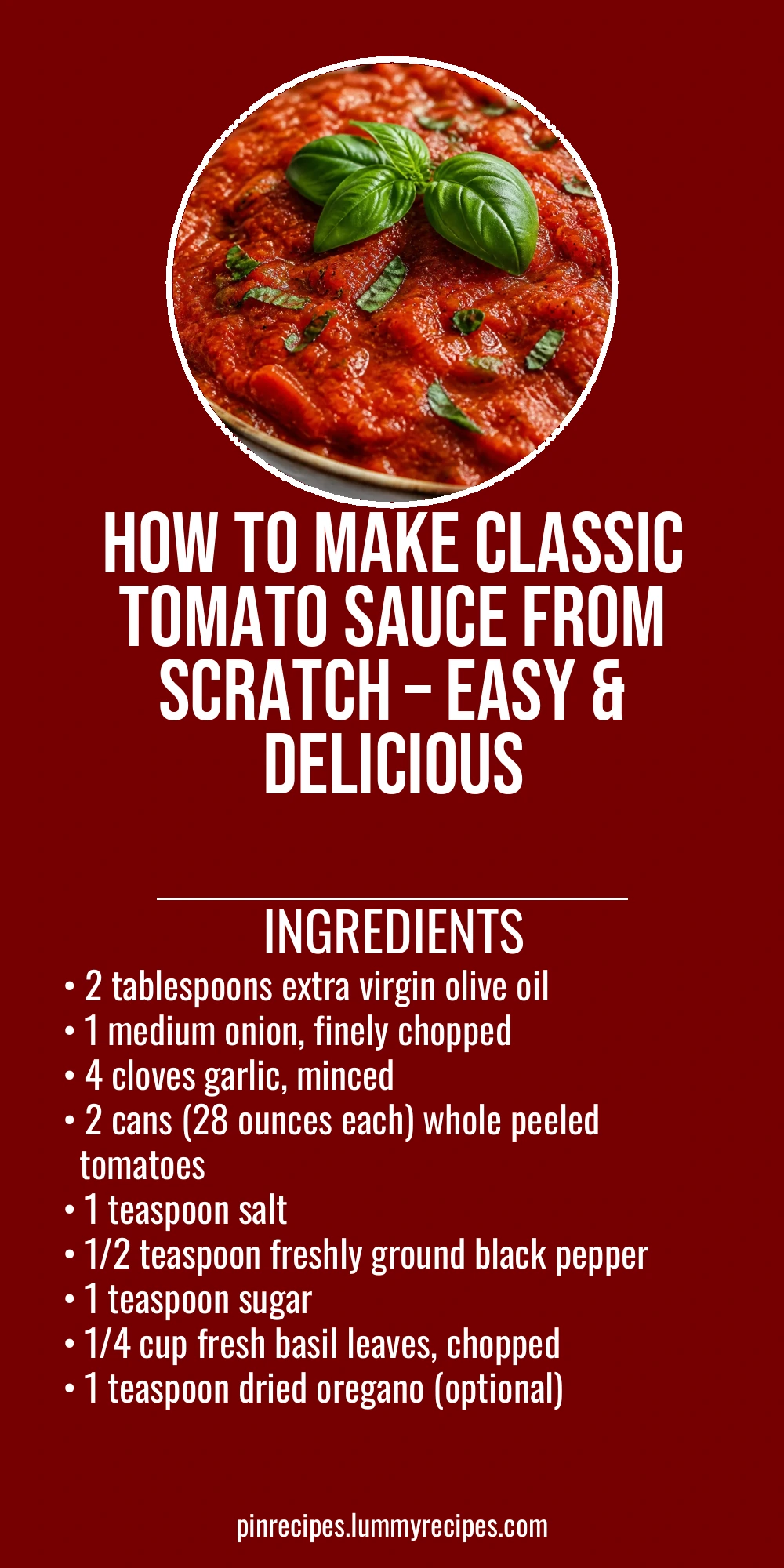
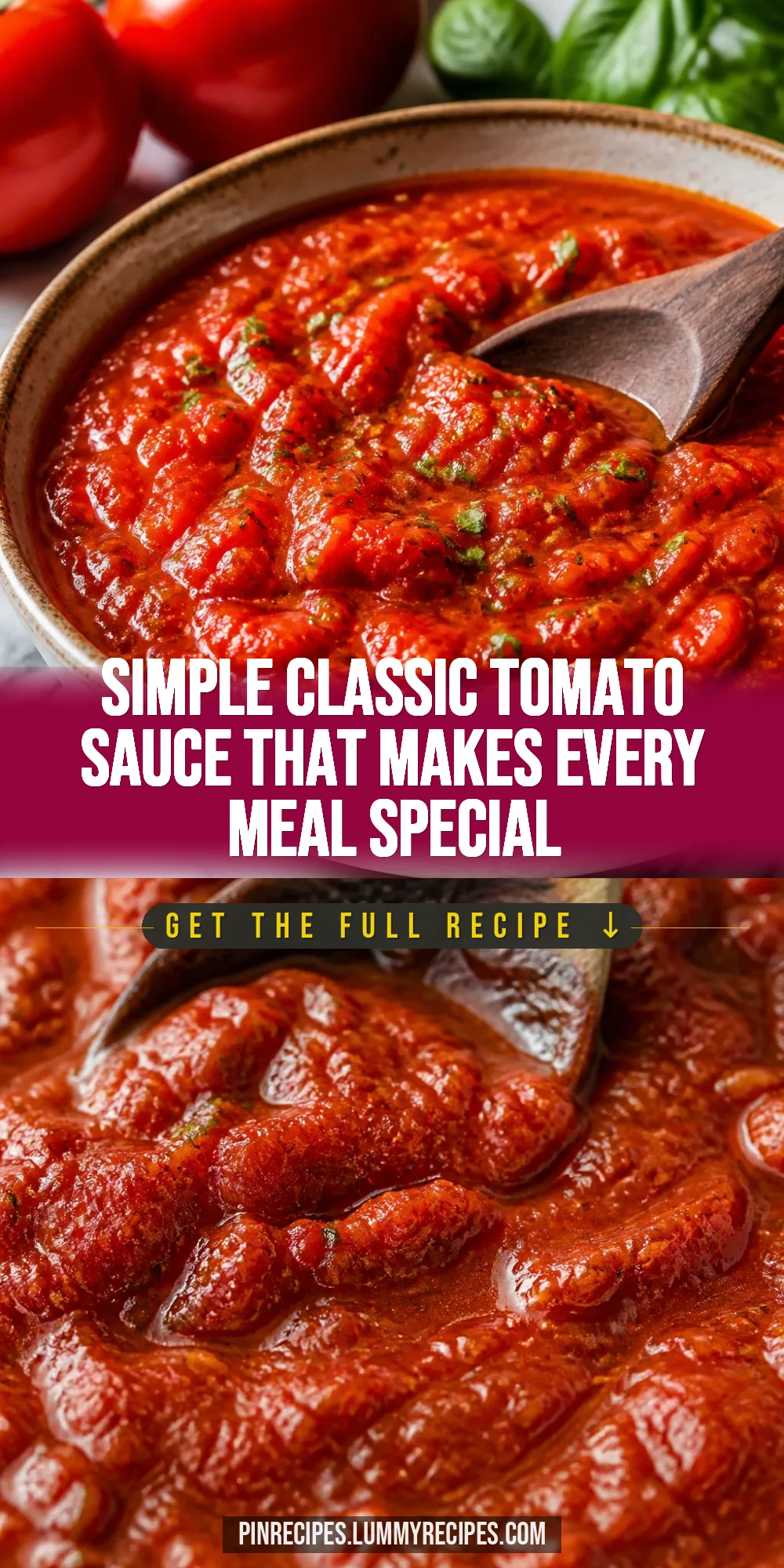
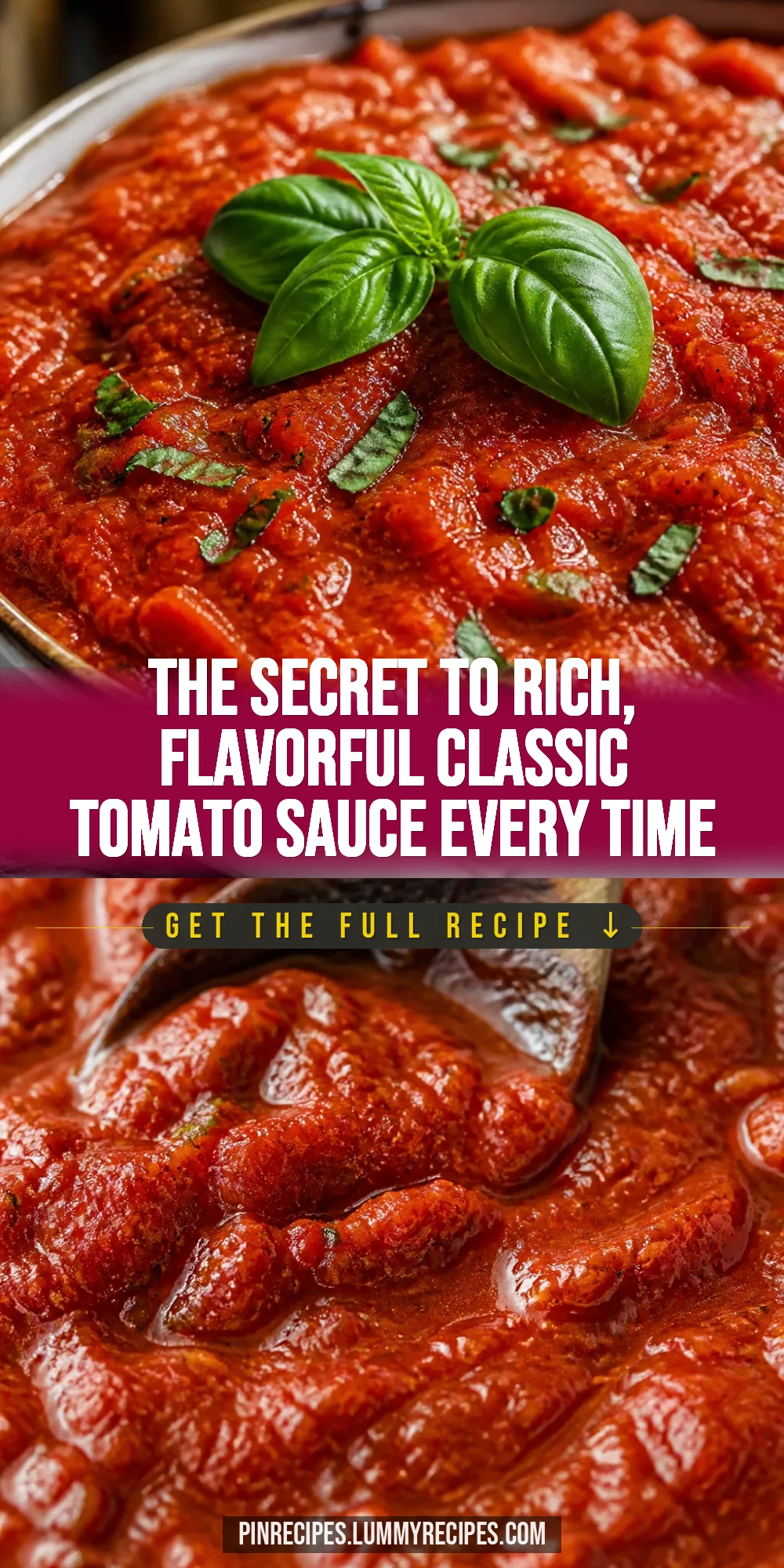
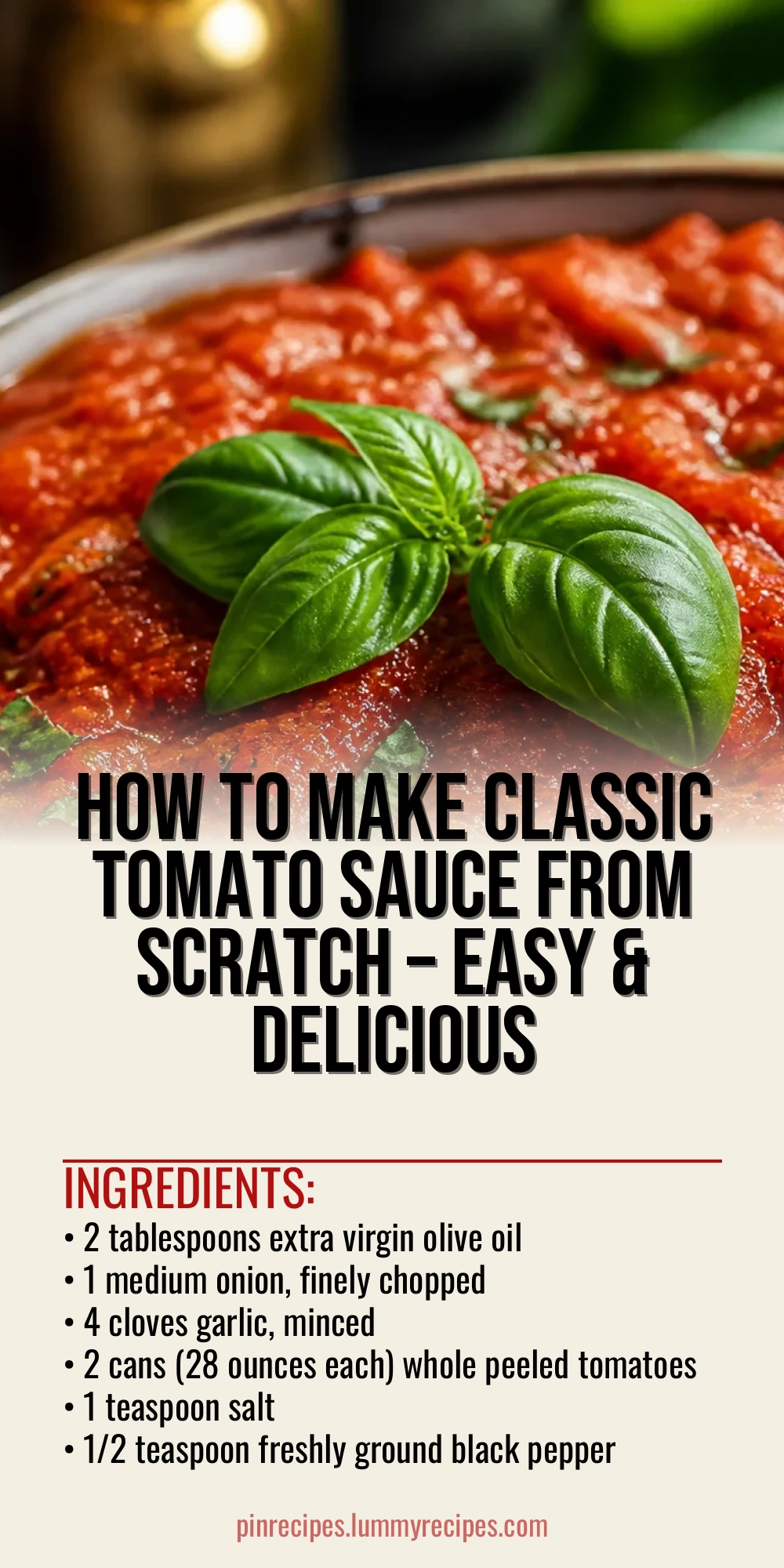
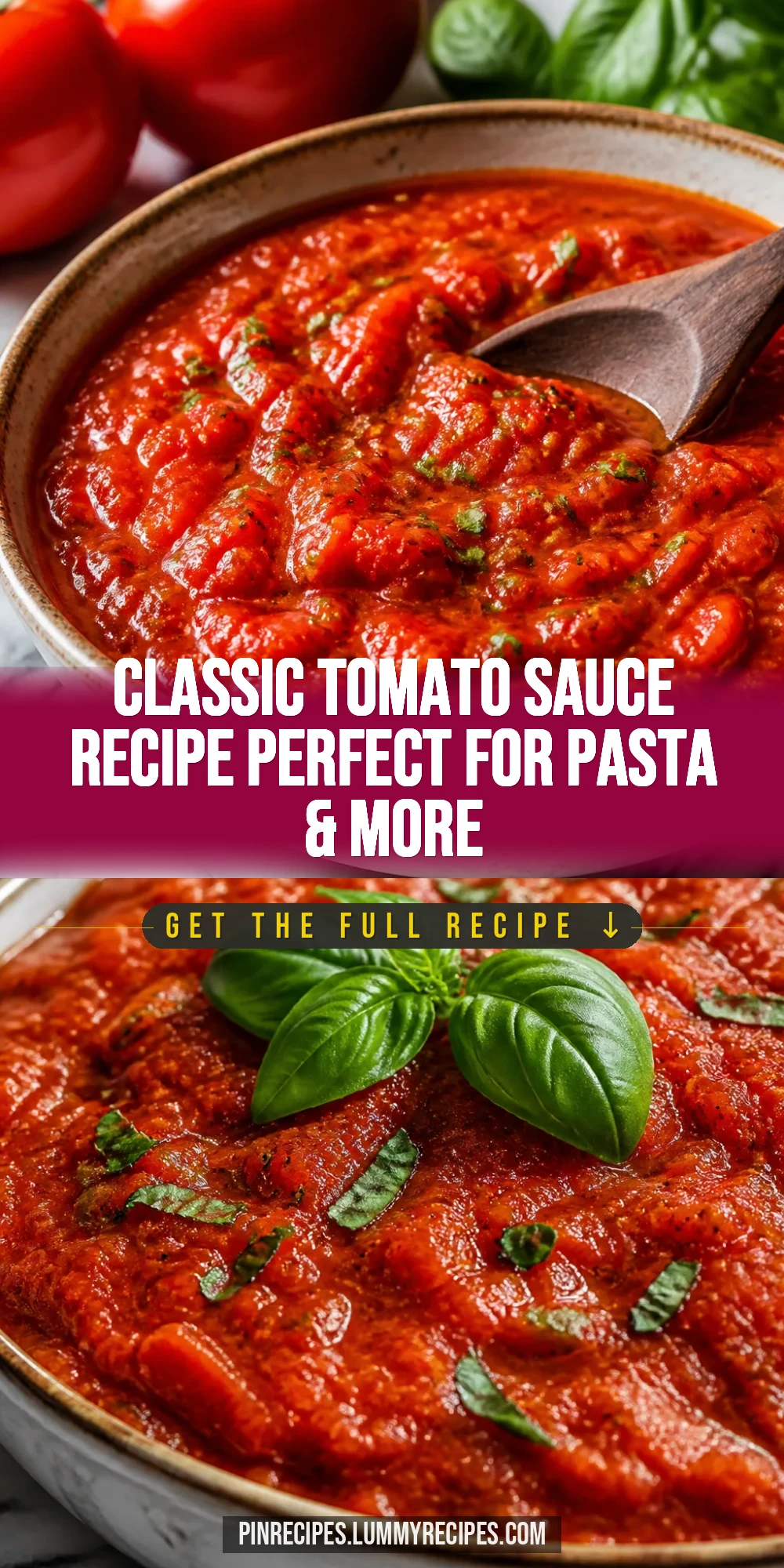
This tomato sauce is a simple, hearty staple that brings warmth to any meal. Slow-simmered with fresh garlic and a touch of basil, it’s perfect for pasta nights or as a base for your favorite Italian dishes.
Introduction
I remember the first time I tried making tomato sauce from scratch—it was a bit intimidating, but once I got the hang of it, it became a kitchen staple. This classic tomato sauce recipe is the one I keep coming back to because it’s simple, forgiving, and tastes like it’s been simmering for hours even when it hasn’t. What sets this version apart is the slow sauté of the onions and garlic in good olive oil before adding the tomatoes. It really builds depth without needing fancy tricks or hard-to-find ingredients. Plus, I add a pinch of sugar to balance the acidity, which makes a big difference. When it’s done, the sauce is thick, rich, and full of fresh basil aroma. It’s perfect for serving over spaghetti, layering in lasagna, or even as a base for homemade pizza. I love that it’s so versatile and always feels like a warm hug on a plate. Honestly, the trick I learned was to be patient with the simmering—rushing it just doesn’t develop the flavor the same way. This sauce is a keeper for family dinners or anytime you want a comforting Italian touch without fuss.
What You'll Need
Approximately 6 cups, 6 servings
- 2 tablespoons extra virgin olive oil
- 1 medium onion, finely chopped
- 4 cloves garlic, minced
- 2 cans (28 ounces each) whole peeled tomatoes
- 1 teaspoon salt
- 1/2 teaspoon freshly ground black pepper
- 1 teaspoon sugar
- 1/4 cup fresh basil leaves, chopped
- 1 teaspoon dried oregano (optional)
How To Do It
Step 1
Heat the olive oil in a large saucepan over medium heat. Add the finely chopped onions and cook gently, stirring often, until they become translucent and soft but not browned, about 8-10 minutes. This slow cooking draws out the natural sweetness of the onions, which is key to a balanced sauce. Avoid turning up the heat too high, or the onions will burn and turn bitter, ruining the sauce’s flavor.
⏱ Time: 10 minutes
✓ Doneness: Onions are soft, translucent, and slightly glossy without any brown edges.
Step 2
Add the minced garlic to the onions and cook for 1-2 minutes, stirring constantly. Garlic cooks quickly and can burn easily, so keep the heat moderate and watch closely. The garlic should smell fragrant and golden but not brown, which would impart a bitter taste.
⏱ Time: 2 minutes
✓ Doneness: Garlic is fragrant and lightly golden but not browned.
Step 3
Pour in the canned whole peeled tomatoes with their juice. Use a wooden spoon to gently crush the tomatoes in the pot. This helps release their juices and creates a nice chunky texture. Don’t over-stir or mash too much; you want some texture in the sauce.
⏱ Time: 5 minutes
✓ Doneness: Tomatoes are broken up but still have some chunks visible.
Step 4
Add salt, pepper, and sugar to the tomato mixture. The sugar cuts through the natural acidity of the tomatoes and rounds out the flavor. Stir everything well to combine. Seasoning early allows the flavors to meld as the sauce simmers.
⏱ Time: 1 minute
✓ Doneness: Seasonings are evenly distributed and sauce looks well mixed.
Step 5
Bring the sauce to a gentle simmer over medium-low heat. Once simmering, reduce the heat to low to maintain a slow, steady simmer. Cover partially with a lid to prevent splattering but allow steam to escape. This slow simmer helps thicken the sauce and deepen the flavors without drying it out.
⏱ Time: 30 minutes
✓ Doneness: Sauce is bubbling gently and thickening, with a rich red color.
Step 6
Stir the sauce occasionally to prevent sticking or burning on the bottom. Use a wooden spoon and scrape the bottom gently. This also helps break down the tomatoes further and keeps the sauce smooth. Avoid stirring too vigorously to maintain some texture.
⏱ Time: Throughout simmering
✓ Doneness: Sauce is smooth with no sticking on the pan bottom.
Step 7
About 5 minutes before finishing, stir in the chopped fresh basil and dried oregano if using. The fresh herbs add a bright, aromatic note that makes the sauce taste fresh and lively. Adding them late keeps their flavors vibrant rather than cooked away.
⏱ Time: 5 minutes
✓ Doneness: Herbs are wilted but still vividly green and fragrant.
Step 8
Taste the sauce and adjust seasoning if needed—add more salt or pepper to your preference. If the sauce tastes too acidic, a tiny pinch more sugar can help balance it out. This final tasting step ensures your sauce is perfectly seasoned before serving.
⏱ Time: 2 minutes
✓ Doneness: Balanced flavor with no harsh acidity or blandness.
Step 9
Remove the sauce from heat and let it rest for a few minutes before serving. This rest allows the flavors to settle and thicken slightly. Serve hot over your favorite pasta or use as a base for other dishes.
⏱ Time: 5 minutes
✓ Doneness: Sauce is thickened, glossy, and rich in aroma.
Pro Tips
Cook onions slowly over medium-low heat to develop sweetness.
Slow cooking breaks down the onions’ sugars, reducing sharpness and adding depth. If you rush or increase heat, onions can burn and make the sauce bitter.
Use whole peeled canned tomatoes instead of crushed or pureed.
Whole tomatoes allow you to control texture by crushing them yourself, resulting in a fresher, less processed taste and a better mouthfeel.
Add fresh basil near the end of cooking to preserve its aroma.
Basil’s delicate oils evaporate quickly with prolonged heat. Adding it late keeps the sauce bright and herbaceous.
Simmer sauce gently, not at a rolling boil.
A gentle simmer prevents burning and reduces bitterness, allowing flavors to meld slowly for a richer taste.
Stir occasionally but gently to maintain some tomato texture.
Over-stirring breaks down tomatoes too much, making the sauce mushy instead of pleasantly chunky.
Taste and adjust seasoning at the end for best balance.
Tomato sauces can vary in acidity and sweetness, so final seasoning ensures the sauce suits your palate perfectly.
Use good quality olive oil for best flavor.
Since olive oil is the flavor base, a fresh, fruity oil enhances the sauce’s richness and aroma compared to lower quality oils.
Common Mistakes to Avoid
Burning the garlic during sautéing.
Why it happens Garlic cooks quickly and can burn if the heat is too high or if left unattended.
Fix Keep the heat moderate and stir constantly when adding garlic. Remove from heat if it starts to brown too fast.
Skipping the sugar and ending with a too acidic sauce.
Why it happens Tomatoes vary in acidity, and without balancing, the sauce can taste sharp or sour.
Fix Add a small pinch of sugar early in cooking and adjust at the end to balance acidity without making it sweet.
Using canned diced or pureed tomatoes instead of whole peeled.
Why it happens Pre-processed tomatoes often lack texture and fresh flavor.
Fix Choose whole peeled tomatoes and crush them yourself for better texture and flavor control.
Cooking the sauce at too high a temperature.
Why it happens High heat can cause burning and bitterness, ruining the delicate balance.
Fix Maintain a low simmer to allow gentle flavor development and avoid scorching.
Adding fresh herbs too early.
Why it happens Prolonged heat destroys fresh herb flavors.
Fix Add basil and other fresh herbs in the last 5 minutes of cooking for vibrant aroma.
Variations
Spicy Tomato Sauce
Add a pinch of red pepper flakes with the garlic for a subtle heat. This variation adds a nice kick without overpowering the classic flavor and works great with meatballs or spicy sausage pasta.
Note: Add red pepper flakes early with garlic to infuse the oil but adjust quantity to your heat tolerance.
Chunky Vegetable Tomato Sauce
Stir in finely diced carrots, celery, and bell peppers with the onions for extra nutrition and texture. This makes the sauce heartier and adds natural sweetness, perfect for a family-friendly meal.
Note: Sauté vegetables until tender before adding tomatoes to ensure they cook through.
Creamy Tomato Sauce
Finish the sauce with a splash of heavy cream or half-and-half for a rich, velvety texture. It softens the acidity and creates a luxurious sauce great for pasta or chicken dishes.
Note: Add cream at the very end and heat gently to avoid curdling.
Herb-Infused Tomato Sauce
Add fresh rosemary and thyme sprigs during simmering for an earthy depth. Remove herbs before serving. This variation pairs beautifully with roasted vegetables or grilled meats.
Note: Use whole sprigs to easily remove after cooking.
Garlic-Heavy Tomato Sauce
Double the garlic for a bolder flavor. Roast the garlic beforehand for a sweeter, mellow taste. This sauce is perfect for garlic lovers and adds complexity to simple pasta dishes.
Note: Roast garlic until soft and mash before adding to the sauce.
Nutrition
Per Serving:
Nutritional values are estimates and may vary based on specific ingredients used.
Storage & Tips
Room Temperature
Tomato sauce can safely sit out for up to 2 hours if covered. Beyond that, bacteria growth increases, so refrigerate promptly. Cover with a clean lid or plastic wrap to avoid contamination.
Refrigerator
Store sauce in an airtight container for up to 5 days. Flavor may deepen but texture can thicken; reheat gently with a splash of water or broth to loosen it.
Freezer
Freeze sauce in freezer-safe containers or bags for up to 3 months. Leave some headspace for expansion. Thaw overnight in the fridge and reheat on the stove over low heat.
Reheating
Warm sauce on the stovetop over low heat, stirring occasionally. Add a splash of water or broth if too thick. Avoid microwaving uncovered to prevent drying out or splattering.
Make Ahead
Prepare sauce 1-2 days ahead and refrigerate. This resting time enhances the flavors. Reheat gently before serving and add fresh herbs if desired to brighten.
FAQ
Can I use fresh tomatoes instead of canned?
Yes, but fresh tomatoes require more prep and cooking time to break down and develop flavor. Use ripe Roma or plum tomatoes, blanch and peel them, then simmer longer to reduce excess water. Canned tomatoes are convenient and consistent, especially outside tomato season.
Why is my tomato sauce too acidic?
Tomatoes naturally vary in acidity. Adding a pinch of sugar early in cooking balances this out. Also, slow simmering helps mellow acidity. If it still tastes sharp, a little baking soda can neutralize acid, but use sparingly to avoid altering flavor.
Can I freeze this tomato sauce?
Absolutely! Freeze in airtight containers or freezer bags for up to 3 months. To prevent freezer burn, remove as much air as possible. Thaw in the fridge overnight and reheat gently on the stove with a splash of water.
How long can I keep tomato sauce in the fridge?
Store in an airtight container for up to 5 days. The flavor often improves after a day or two. Reheat gently and add a splash of water if it’s thickened too much.
Can I make this sauce in a slow cooker?
Yes, but reduce the olive oil and sauté the onions and garlic first on the stovetop for better flavor. Then transfer to the slow cooker with tomatoes and seasonings. Cook on low for 4-6 hours for a rich sauce.
What’s the best way to prevent burning during simmering?
Keep the heat low and stir occasionally, scraping the bottom gently. Using a heavy-bottomed pot helps distribute heat evenly and prevents hotspots that cause burning.
Can I omit the sugar?
You can, but the sauce may taste more acidic, especially if your tomatoes are very tart. If you prefer no sugar, consider adding a grated carrot to the onions for natural sweetness.
Why does my sauce taste bland?
Blending flavors takes time and proper seasoning. Make sure you cook onions and garlic slowly to develop sweetness and add salt gradually. Fresh herbs added at the end brighten the flavor. Taste and adjust seasoning before serving.
Final Thoughts
Give this classic tomato sauce a try—you'll love how it fills your kitchen with cozy aromas and tastes like a warm hug. Share your results and enjoy every spoonful!