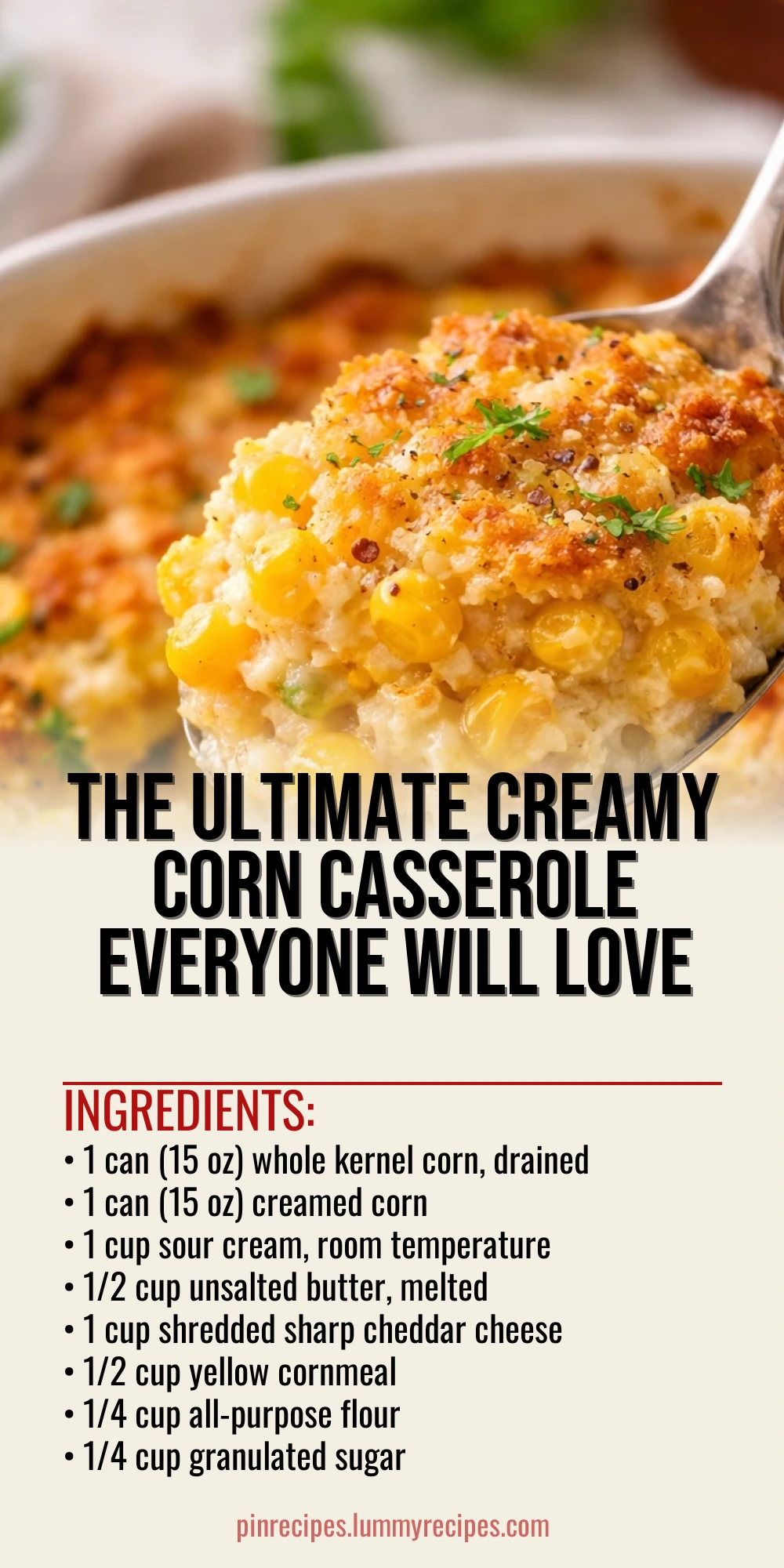
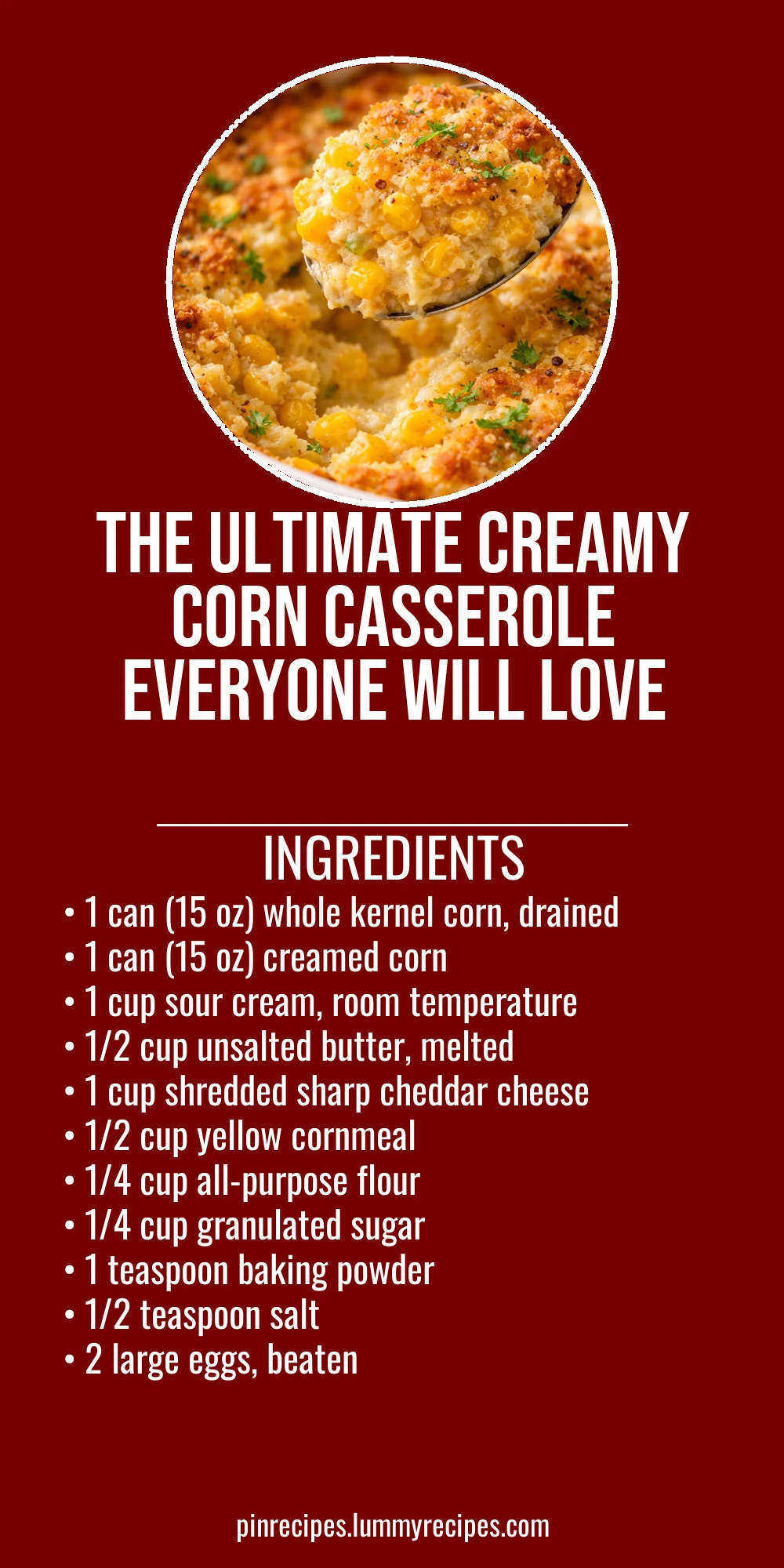
This baked corn casserole is my go-to comfort side dish—creamy, slightly sweet, and perfectly golden on top. The secret? A touch of sour cream for richness. It’s ideal for holiday dinners or cozy family meals.
Introduction
I first tried baked corn casserole at a family Thanksgiving years ago, and it instantly became a favorite. What I love about this version is how creamy and rich it feels without being heavy. The trick I learned is using both whole kernel and creamed corn together—that combo gives it a lovely texture and a bit of natural sweetness. Plus, adding sour cream makes it extra moist and tangy, which balances the sweetness from the corn and sugar. I’ve tweaked this recipe over time to get that perfect golden crust on top while keeping the inside soft and luscious. It’s perfect for holiday dinners or any time you want a comforting side that’s easy to throw together. The cheesy, buttery flavor and the hint of sweetness make it a crowd-pleaser every time. Honestly, I’ve had my share of corn casseroles that were either too dry or too mushy, but this one hits the spot just right. I hope you enjoy it as much as my family does!
How To Do It
Step 1
Preheat your oven to 350°F (175°C) and grease a 9x13-inch baking dish with butter or non-stick spray. This step is essential because a well-greased dish prevents sticking and helps the casserole brown evenly. Using a larger dish ensures the casserole cooks through without being too thick, which can cause sogginess. Avoid skipping the greasing, or you might struggle to serve the casserole neatly.
⏱ Time: 10 minutes
✓ Doneness: The dish is evenly coated with melted butter or spray, no dry spots visible
Step 2
In a large mixing bowl, combine the drained whole kernel corn and creamed corn. Stir gently to mix the textures without breaking up the kernels too much. This blend creates a creamy base with pleasant bursts of corn in every bite. If you rush this step or overmix, the texture can become too uniform and lose that nice contrast.
⏱ Time: 5 minutes
✓ Doneness: Corn mixture looks evenly combined with visible whole kernels and creamy parts
Step 3
Add the sour cream and melted butter to the corn mixture. Stir well to incorporate the richness and moisture. Sour cream adds a subtle tang and keeps the casserole moist during baking, while butter contributes to flavor and browning. Make sure the butter isn’t too hot or it might cook the eggs later.
⏱ Time: 3 minutes
✓ Doneness: Mixture is smooth and slightly glossy without lumps
Step 4
In a separate bowl, whisk together the cornmeal, flour, sugar, baking powder, and salt. These dry ingredients provide structure, a slight sweetness, and leavening to help the casserole rise gently. Mixing them separately ensures even distribution before combining with wet ingredients, preventing clumps or uneven texture.
⏱ Time: 5 minutes
✓ Doneness: Dry ingredients are thoroughly combined and free of lumps
Step 5
Pour the dry ingredients into the wet corn mixture and stir until just combined. Overmixing can develop gluten in the flour, making the casserole tough instead of tender. Aim for a batter that’s thick but pourable, with no streaks of dry flour.
⏱ Time: 3 minutes
✓ Doneness: Batter is uniform in color and texture, thick but smooth
Step 6
Beat the eggs lightly in a small bowl, then fold them into the batter. Eggs provide structure and help the casserole set while baking. Folding gently keeps the batter aerated for a lighter texture. Adding eggs last also prevents overmixing the flour.
⏱ Time: 2 minutes
✓ Doneness: Batter looks cohesive and slightly fluffy
Step 7
Fold in the shredded cheddar cheese evenly throughout the batter. Cheese adds richness and a savory balance to the sweet corn. Use a sharp cheddar for a more pronounced flavor. Be sure to distribute it well so every bite has cheesy goodness.
⏱ Time: 2 minutes
✓ Doneness: Cheese is evenly spread with no large clumps
Step 8
Pour the batter into the prepared baking dish and smooth the top with a spatula. This helps the casserole bake evenly and develop a nice crust. Avoid pressing down too hard, which can compress the batter and make it dense.
⏱ Time: 3 minutes
✓ Doneness: Surface is level and smooth
Step 9
Bake uncovered in the preheated oven for 40-45 minutes, or until the top is golden brown and a toothpick inserted in the center comes out clean. The baking time allows the casserole to set and develop a slightly crispy top while keeping the inside creamy. Check at 40 minutes to avoid overbaking, which can dry it out.
⏱ Time: 40-45 minutes
✓ Doneness: Top is golden and toothpick comes out mostly clean with a few moist crumbs
Pro Tips
Let the sour cream come to room temperature before mixing.
Room temperature sour cream blends more smoothly into the batter, preventing lumps and ensuring even moisture distribution. Cold sour cream can cause uneven texture and make mixing more difficult.
Don’t overmix the batter once dry ingredients are added.
Overmixing develops gluten in the flour, which can make the casserole tough and dense instead of tender and fluffy. Stir just until combined for the best texture.
Use freshly grated cheese instead of pre-shredded.
Pre-shredded cheese often contains anti-caking agents that prevent smooth melting, resulting in a grainy texture. Freshly grated cheese melts evenly and adds creaminess.
Grease your baking dish thoroughly.
A well-greased dish prevents sticking and helps the casserole develop a golden crust. Skipping this step can cause parts to stick and break apart when serving.
Check the casserole at 40 minutes to avoid overbaking.
Overbaking dries out the casserole and makes it crumbly. The ideal doneness is a golden top with a moist, tender interior.
Use a 9x13-inch pan for even baking.
A larger pan spreads the batter thin enough to cook evenly and develop a crust. A smaller pan can make the casserole too thick, causing uneven cooking.
Fold in the eggs gently last.
Folding preserves air bubbles that lighten the texture. Stirring vigorously can deflate the batter and make it dense.
Common Mistakes to Avoid
Skipping the sour cream or substituting with milk.
Why it happens People often think milk will provide enough moisture, but it lacks the fat and acidity that sour cream contributes.
Fix Always use sour cream or a full-fat yogurt substitute to maintain moisture and tang. This keeps the casserole tender and flavorful.
Overmixing batter after adding flour.
Why it happens In a rush to blend ingredients, it’s easy to stir too much, which develops gluten.
Fix Mix just until dry ingredients disappear. Stop as soon as the batter is uniform to avoid toughness.
Using a small or deep baking dish.
Why it happens Sometimes cooks want a thicker casserole and use a smaller pan, but this affects cooking time and texture.
Fix Stick to a 9x13-inch dish for even baking and the right thickness. If using a smaller pan, increase baking time and check doneness carefully.
Not greasing the baking dish properly.
Why it happens Overconfidence or forgetfulness leads to sticking and tearing when serving.
Fix Generously butter or spray the dish. This also helps develop a nice crust.
Baking at too high a temperature.
Why it happens Trying to speed up baking can cause the top to burn while the inside remains undercooked.
Fix Bake at 350°F for the recommended time to ensure even cooking and a golden crust.
Variations
Spicy Jalapeño Corn Casserole
Add 1-2 finely chopped jalapeños and a pinch of cayenne pepper for a spicy kick. This variation pairs well with Tex-Mex meals and adds a lively flavor contrast to the sweet corn.
Note: Reduce sugar slightly to balance heat and watch jalapeño quantity to avoid overpowering the casserole.
Bacon and Cheddar Corn Casserole
Fold in 6 slices of cooked, crumbled bacon for smoky flavor and texture. This version is a hearty side that works great for brunch or casual dinners.
Note: Drain bacon well to avoid excess grease, which can make the casserole oily.
Herbed Corn Casserole
Mix in 2 tablespoons of chopped fresh herbs like parsley, thyme, or chives for a fresh, aromatic touch. It brightens the casserole and adds complexity.
Note: Add herbs at the end of mixing to preserve their flavor and color.
Vegan Corn Casserole
Substitute sour cream with vegan yogurt, use a flax egg (1 tablespoon ground flaxseed + 3 tablespoons water), and vegan butter. This adaptation keeps the creamy texture while being plant-based.
Note: Baking time may increase slightly; check doneness with a toothpick.
Cheesy Jalapeño Cornbread Casserole
Add 1 cup of cornmeal and 1 cup of shredded pepper jack cheese, plus diced jalapeños for a spicy, cheesy twist. It’s a great side for chili or barbecue.
Note: Adjust baking time to ensure the thicker batter cooks through without drying.
Nutrition
Per Serving:
Nutritional values are estimates and may vary based on specific ingredients used.
Storage & Tips
Room Temperature
This casserole can safely sit out covered for up to 2 hours. Keep it covered with foil or a clean towel to prevent drying.
Refrigerator
Store leftovers in an airtight container for up to 4 days. The casserole firms up in the fridge; reheat gently to restore creaminess or serve cold as a side salad.
Freezer
Freeze in a tightly sealed container or wrapped well in foil and plastic wrap for up to 2 months. Thaw overnight in the fridge before reheating to maintain texture.
Reheating
Reheat in a 350°F oven for 15-20 minutes until warmed through. Add a splash of milk or cream if it seems dry. Avoid microwaving as it can make the texture rubbery.
Make Ahead
Prepare the casserole up to step 8, cover tightly, and refrigerate overnight. Bake fresh the next day for best texture and flavor.
FAQ
Can I use frozen corn instead of canned?
Yes, but thaw and drain frozen corn thoroughly to avoid excess moisture, which can make the casserole watery. Frozen corn has a fresher flavor but requires careful draining to keep the texture right.
What can I substitute for sour cream?
Greek yogurt or crème fraîche are good substitutes because they add similar tang and moisture. For a dairy-free option, use coconut yogurt or a vegan sour cream alternative, but expect a slight flavor difference.
How do I know when the casserole is done?
Look for a golden brown top and edges pulling slightly from the baking dish. A toothpick inserted in the center should come out mostly clean with a few moist crumbs, indicating it’s set but still creamy inside.
Can I make this recipe gluten-free?
Yes, replace the all-purpose flour with a gluten-free flour blend. Make sure the blend contains xanthan gum or another binder to maintain the casserole’s structure.
Why is my casserole too dry?
Dryness usually comes from overbaking or not enough moisture in the batter. Make sure to measure ingredients accurately and check the casserole a few minutes before the end of baking time to prevent drying out.
Can I add other vegetables to the casserole?
Absolutely! Diced bell peppers, green chilies, or sautéed onions work well. Just be mindful of moisture content and adjust baking time slightly if adding watery veggies.
Is it okay to prepare the casserole ahead of time?
Yes, you can assemble it a day ahead and refrigerate before baking. This actually helps flavors meld. Just bake it fresh before serving for the best texture.
Can I double this recipe?
You can double it but use a larger baking dish or two pans to ensure even cooking. Baking time may increase slightly, so check doneness carefully.
Final Thoughts
I hope you give this baked corn casserole a try soon—it’s one of those dishes that feels like a warm hug on a plate. Let me know how yours turns out!