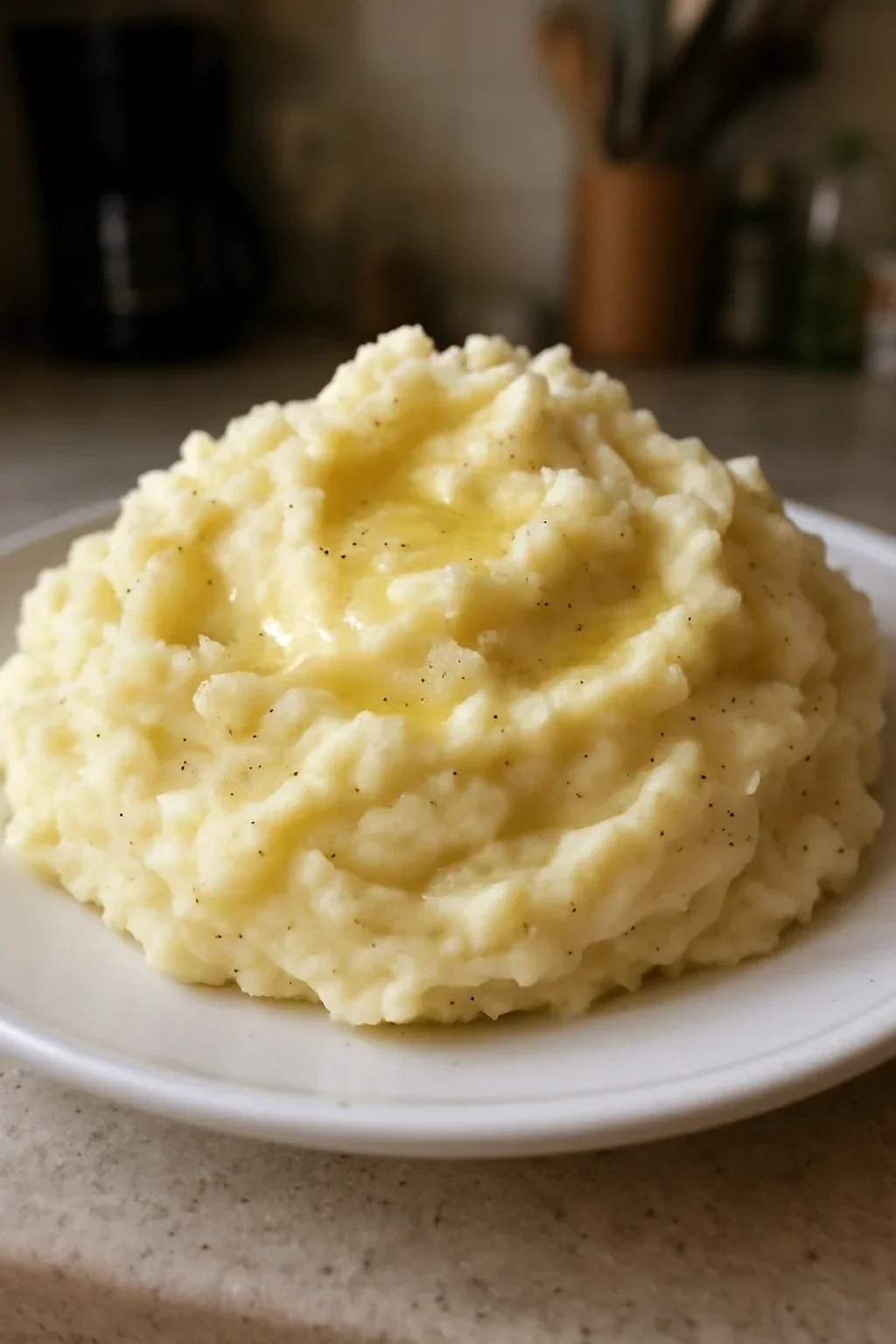
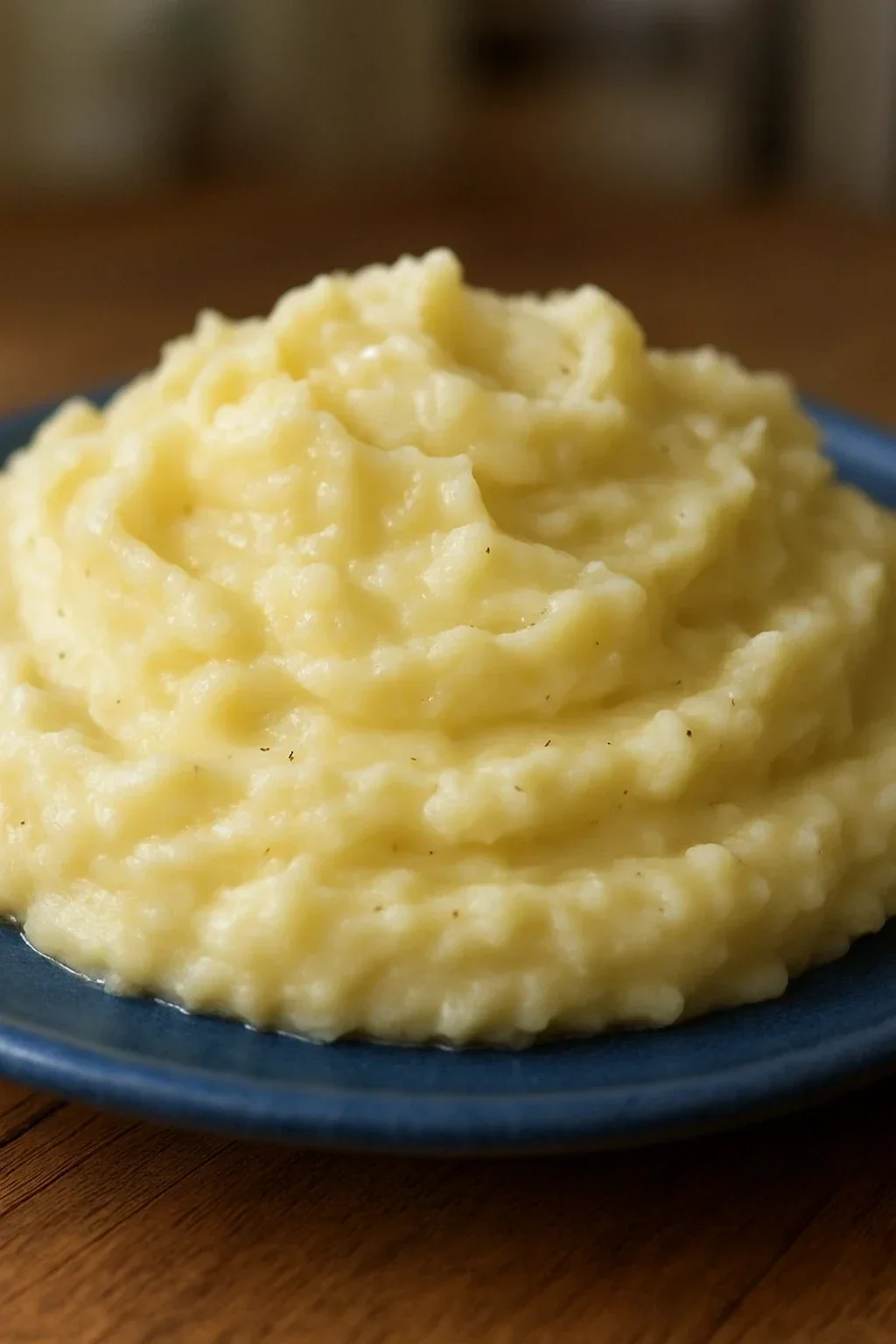
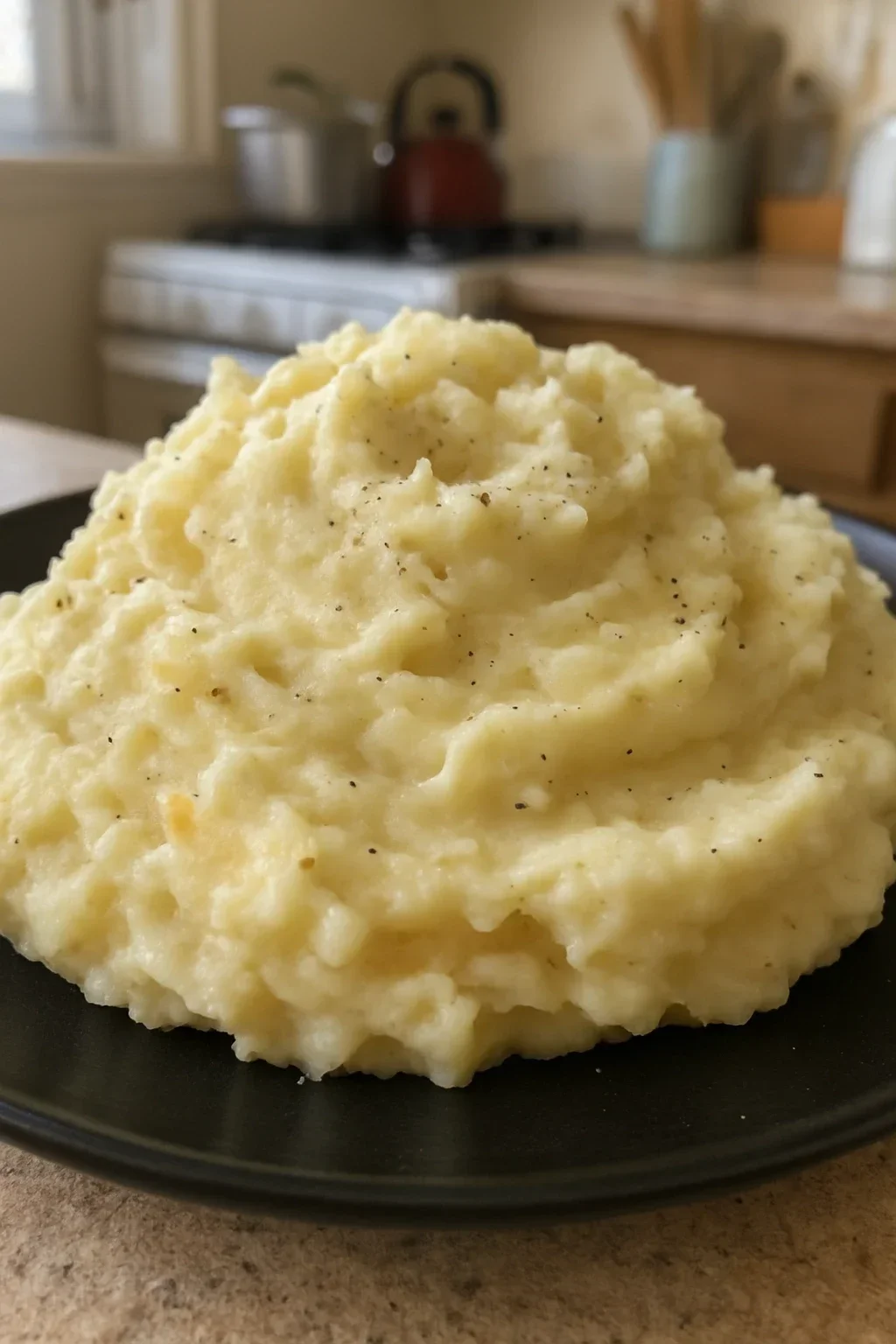
A guide to making mashed potatoes that achieve creamy texture and balanced garlic flavor through proper emulsification and heat management. Learn why Yukon gold potatoes work better than russets, how starch and fat interact, and how to prevent gluey, broken texture.
What You'll Need
Approximately 3 cups of mashed potatoes, 4 generous servings
- 2 pounds (900g) Yukon gold potatoes, peeled and quartered
- 1/2 teaspoon (3g) fine sea salt, for boiling water
- 6 tablespoons (85g) unsalted butter, divided
- 4 cloves (20g) garlic, minced
- 1/2 cup (120ml) heavy cream, warmed to room temperature
- 1/4 teaspoon (0.5g) white pepper, or black pepper to taste
- 1/4 teaspoon (0.5g) fine sea salt, for seasoning (adjust to taste)
- Optional garnish: 1 tablespoon (3g) fresh chives, finely chopped
How To Do It
Step 1
Fill a large pot with approximately 2 quarts (1.9 liters) of cold water and add 1/2 teaspoon (3g) of salt. The salt should dissolve completely. Bring the water to a rolling boil, which takes approximately 8-10 minutes with a covered pot. While waiting for the water to boil, peel the Yukon gold potatoes using a vegetable peeler or paring knife. Cut them into quarters that are roughly equal in size, approximately 2-3 inches (5-7 cm) across. Uniform sizing ensures even cooking—smaller pieces will become mushy while larger pieces remain undercooked if sizes vary too much.
⏱ Time: 8-10 minutes for water to boil, 5 minutes for preparation
✓ Doneness: Water reaches rolling boil with large bubbles bursting aggressively at the surface, potatoes are cut into uniform quarter-sized pieces
Step 2
Once the water reaches a rolling boil, carefully add all the potato pieces. The water will temporarily drop in temperature as the cold potatoes are added. Maintain a gentle boil (not a rolling boil) by adjusting the heat to medium-high. The potatoes will be fully submerged as they sink. Set a timer for 15-18 minutes. The exact time depends on the potatoes' size and your stove's heat, but do not cook longer than 18 minutes—overcooked potatoes absorb excess water and become gluey when mashed.
⏱ Time: 15-18 minutes
✓ Doneness: Potatoes are fork-tender and offer zero resistance when pierced with a knife, potato skin begins to visibly separate in places
Step 3
While the potatoes cook, prepare the garlic and butter. Mince 4 cloves of garlic into small, uniform pieces approximately 1/8 inch (3mm) in size. Place a small saucepan over low heat and add 2 tablespoons (28g) of butter. Allow the butter to melt slowly without browning. Once melted, add the minced garlic and stir constantly for 1-2 minutes. The garlic should release its aroma and become slightly softened but never brown or crispy. Brown garlic tastes acrid and bitter. Remove from heat and set aside. Do not combine the garlic butter mixture with the remaining butter—keep it separate.
⏱ Time: 3-4 minutes
✓ Doneness: Butter is fully melted and foamy, garlic is fragrant with no browning visible, mixture is golden and clear
Step 4
Once the potatoes are fork-tender, immediately drain them in a colander but do not rinse them. Rinsing removes starch from the surface, which is essential for proper mashing texture. Reserve approximately 1/4 cup (60ml) of the cooking water in case the final mash needs thinning. Return the hot, drained potatoes to the warm pot. The residual heat will continue softening the potatoes slightly and will help the butter and cream integrate better.
⏱ Time: 2-3 minutes
✓ Doneness: Potatoes are in the pot, steam is rising, pot is warm to the touch
Step 5
Before adding any butter or cream, allow the potatoes to rest for 1-2 minutes to release some of their steam. This prevents excess moisture from creating gluey texture. Then, begin mashing using a potato masher, working from the bottom of the pot upward. Use steady, firm pressure rather than aggressive pounding. Mash for approximately 2-3 minutes until potatoes are mostly broken down but still contain some small lumps. You should not see large chunks, but a few small specks of potato (approximately the size of peas) are fine and contribute to texture.
⏱ Time: 3-4 minutes
✓ Doneness: Potatoes are mostly smooth with texture like coarse sand, no large chunks remain, steam is rising steadily
Step 6
Add the remaining 4 tablespoons (56g) of unsalted butter in two additions, stirring well after each addition. The butter should integrate quickly and create a glossy sheen. Then add the garlic-infused butter mixture and stir thoroughly. The heat from the potatoes will warm everything to the same temperature, promoting proper emulsification.
⏱ Time: 1-2 minutes
✓ Doneness: Butter is fully integrated and creates glossy appearance, no visible butter streaks remain, mixture is cohesive
Step 7
Pour the room-temperature cream into the pot in a thin stream while stirring constantly. Do not add all the cream at once. The steady stirring and gradual addition allow the cream to emulsify properly with the starch and fat. The potatoes will immediately become creamier and smoother as the cream incorporates. Continue stirring for 1-2 minutes after all cream is added until the texture is completely uniform and smooth.
⏱ Time: 2-3 minutes
✓ Doneness: Cream is fully incorporated, texture is uniform and creamy throughout, no streaks of cream or butter visible
Step 8
Taste the potatoes and season with white pepper (which is milder and less visible than black pepper) and additional salt as needed. Start with 1/4 teaspoon (0.5g) of salt and add incrementally, tasting after each addition. The potatoes should taste seasoned but not salty. The garlic should be apparent as a savory depth, not a sharp, biting flavor. If the mixture seems too thick, thin it with reserved potato cooking water, adding 1-2 tablespoons (15-30ml) at a time.
⏱ Time: 2-3 minutes
✓ Doneness: Potatoes taste properly seasoned, flavors are well-developed and balanced, texture is creamy but not overly thick
Step 9
Transfer to a serving dish immediately and garnish with chopped fresh chives if desired. Mashed potatoes are best served hot, within 15 minutes of finishing. If holding for longer periods, transfer to a warm oven (200°F / 93°C) and stir occasionally, but this changes the texture slightly over time as the fat separates.
⏱ Time: 5 minutes
✓ Doneness: Potatoes are in serving dish, steam is rising, dish is warm to the touch
Pro Tips
Use Yukon gold potatoes specifically, not russets or red potatoes. Yukon golds contain slightly lower starch and higher natural fat, producing creamy texture with minimal effort. Russets are starchier and create drier, more absorbent mash that requires more liquid.
Yukon golds' waxy quality means they absorb fat differently than starchy russets. Their natural potato flavor is also more buttery and subtle, complementing garlic without competing for attention. This difference becomes obvious when comparing side-by-side results.
Warm the cream to room temperature before adding it. Remove it from the refrigerator 10-15 minutes before cooking, or gently warm it in a small saucepan over low heat. Cold cream added to hot potatoes will not emulsify properly and creates broken, gluey texture.
Fat emulsifies properly only when it's approximately the same temperature as the starch granules it's combining with. Cold cream introduced to hot potatoes shock-cools the surface, causing fat to coat rather than integrate. This produces a separated, gluey consistency instead of smooth creaminess.
Salt the cooking water properly. Use approximately 1/2 teaspoon (3g) per quart (liter) of water. This ensures salt penetrates the potatoes during cooking, seasoning them thoroughly. Additional salt adjustments at the end are fine, but most seasoning should happen during cooking.
Salt dissolved in cooking water penetrates potato cells through osmosis. Salt added only at the end sits on the surface and produces uneven seasoning. Properly salted potatoes taste seasoned throughout rather than having a salty exterior and bland interior.
Never overcook the potatoes. A fork should slide through with zero resistance at 15-18 minutes. Overcooked potatoes (beyond 20 minutes) absorb excess water and become starchy and gluey no matter how carefully you mash.
Potato starch granules absorb water during cooking and swell. Overcooking causes them to absorb so much water that they burst open, releasing starch into the liquid. This creates a gluey slurry rather than creamy mash. Undercooked potatoes also fail—they resist mashing and create lumpy texture.
Mash immediately after draining while potatoes are still hot, but allow 1-2 minutes of steam release first. Do not refrigerate potatoes and then reheat for mashing, as this produces a completely different, unpleasant texture.
Hot potatoes mash smoothly because their starch granules are fully swollen and fragile. Cold potatoes resist mashing and break apart unevenly. Reheating cold cooked potatoes changes starch structure in ways that create gummy texture that pure mashing can't overcome.
Use unsalted butter for complete control over final salt content. Salted butter varies wildly in actual salt content between brands, making consistent seasoning difficult. Unsalted butter also allows the natural butter flavor and garlic infusion to stand out.
Salted butter contains variable sodium (typically 80-100 mg per tablespoon), making final seasoning unpredictable. Unsalted butter lets you achieve precise salt balance. Additionally, salt in butter can coat starch particles and inhibit proper emulsification if concentrations are too high.
Common Mistakes to Avoid
Using russet or red potatoes instead of Yukon gold
Why it happens Russets are cheaper and more commonly available in many areas. Red potatoes are often recommended for boiling. However, these varieties have different starch and fat compositions that produce inferior results for creamy mash.
Fix Switch to Yukon gold potatoes. They're widely available and produce noticeably creamier results with less effort. The texture difference is immediately obvious to anyone who tastes both side by side.
Adding cold cream or cold butter directly from the refrigerator
Why it happens It seems efficient to grab ingredients cold and add them directly. However, temperature mismatch prevents proper emulsification and creates broken, gluey texture.
Fix Remove cream and butter from the refrigerator 10-15 minutes before cooking, or gently warm cream in a small saucepan. They should be approximately room temperature—not hot, not cold. This single change produces dramatically better texture.
Overcooking potatoes to complete tenderness beyond 18 minutes
Why it happens Extended cooking seems like it should produce softer potatoes, and testing for doneness can be inconsistent. Some people cook potatoes for 20-25 minutes 'to be sure.'
Fix Test at 15-17 minutes using a fork. The fork should slide through with zero resistance. If there's any resistance, cook another 1-2 minutes and test again. Once fork-tender, drain immediately. Overcooked potatoes absorb excess water and no amount of mashing can fix this.
Not salting the cooking water, only seasoning at the end
Why it happens People often think seasoning happens at the finish, after all other ingredients are added. However, salt in cooking water penetrates the potato cells during cooking.
Fix Add salt to the boiling water before potatoes go in. Use approximately 1/2 teaspoon (3g) per quart (liter). Taste at the end and adjust, but most seasoning should happen during cooking. This distributes salt throughout the potatoes evenly.
Overmashing or mashing with a mixer on high speed
Why it happens People think more mashing produces smoother potatoes. However, excessive mashing breaks down starch granules and releases too much starch, creating gluey texture rather than creamy texture.
Fix Mash by hand with a potato masher for 2-3 minutes until mostly smooth with small lumps remaining. Stop mashing once the texture is uniform. If using a hand mixer, use low speed and mix for less than 1 minute. Overmashed potatoes are worse than undermashed ones.
Adding all cream at once in a large volume
Why it happens It seems faster to pour all the cream in and stir. However, large volumes of cold liquid added at once cool the potatoes and prevent proper emulsification.
Fix Pour cream in a thin stream while stirring constantly. The gradual addition ensures it integrates evenly and emulsifies properly with the fat. This takes only 2-3 minutes and produces noticeably better results.
Variations
Roasted Garlic Mashed Potatoes
Replace fresh minced garlic with 4-5 cloves (20-25g) of roasted garlic. Roasted garlic is sweeter and more mellow than fresh garlic, with no sharp bite. Mash the roasted garlic directly into the potatoes along with the butter. This variation produces garlic flavor that's subtle and sweet rather than intense.
Note: Roasted garlic breaks down during cooking into a nearly paste-like consistency. It incorporates into potatoes more evenly than fresh garlic because it's already partially softened. If using jarred roasted garlic, drain off any excess oil before adding.
Herb-Infused Mashed Potatoes
Add 1 teaspoon (3g) of fresh thyme leaves, 1/2 teaspoon (1g) of fresh rosemary (finely minced), or 2 tablespoons (6g) of fresh chives to the warm potatoes after mashing. These herbs complement garlic without overwhelming it. Thyme and rosemary should be added before cream; chives should be added after for better color preservation.
Note: Fresh herbs add moisture and can create runnier potatoes if added in large quantities. Start with the amounts suggested and increase if desired. Dried herbs are too concentrated for this recipe unless using approximately 1/3 of the fresh amount.
Creamy Garlic and Cheese Mashed Potatoes
After cream is fully incorporated, stir in 1/2 cup (60g) of grated sharp cheddar or Gruyère cheese. The cheese should melt completely into the warm potatoes, creating a richer, more savory version. Reduce the salt adjustment by approximately 1/4 teaspoon (0.5g) since cheese adds saltiness.
Note: Cheese melts into warm potatoes but doesn't integrate well into cold or cooling mash. Add cheese immediately after the cream is incorporated while potatoes are still very hot. Use aged, quality cheese for best flavor—mild cheeses contribute little.
Cauliflower and Garlic Mashed
Replace 1 pound (450g) of the potatoes with 1 pound (450g) of fresh cauliflower florets. Cut cauliflower to match potato sizes. The two vegetables cook in the same time (15-18 minutes) and create a lighter, lower-carbohydrate side dish. The butter, cream, and garlic balance the cauliflower's earthy notes perfectly.
Note: Cauliflower contains less starch than potatoes and may produce slightly thinner mash. If the mixture seems runny after combining all ingredients, skip the reserved potato water. The ratio of butter and cream to vegetables is still adequate for proper emulsification.
Vegan Garlic Mashed Potatoes
Replace the 6 tablespoons (85g) of butter with 6 tablespoons (90ml) of quality olive oil or vegan butter, and replace the heavy cream with 1/2 cup (120ml) of unsweetened oat milk or vegetable broth. The technique remains identical. Olive oil creates a lighter, more Mediterranean flavor; vegan butter creates texture closer to traditional.
Note: Olive oil emulsifies differently than butter, creating a slightly thinner, more pourable consistency. Vegan butters vary in fat content and moisture—test the final texture and adjust liquid accordingly. The garlic infusion technique works identically with either fat.
Nutrition
Per Serving:
approximately 310
Calories
These values are estimates based on standard Yukon gold potatoes and salted cooking water. Actual values will vary based on exact butter type, cream brand, and garlic preparation. Values assume one minced fresh garlic clove infused in butter as specified.
Storage & Tips
Refrigerator
Store cooled mashed potatoes in an airtight container for up to 4 days. They will thicken slightly as they cool due to the fat solidifying and starch setting. This is normal. Do not store warm potatoes—cool them to room temperature first to prevent condensation and bacterial growth.
Freezer
Freeze mashed potatoes for up to 2 months in freezer-safe containers, leaving 1 inch (2.5cm) headspace for expansion. Upon thawing, the texture changes slightly—the emulsion can separate partially, creating a slightly grainier consistency. Frozen mashed potatoes work best for dishes like shepherd's pie rather than served as a standalone side.
Reheating
Reheat cold potatoes gently over low heat on the stovetop, stirring constantly and adding 1-2 tablespoons (15-30ml) of warm cream or milk as needed. The potatoes will have thickened during storage, and added liquid restores proper consistency. Never use high heat, which can scorch the bottom and create an unpleasant cooked flavor. Alternatively, reheat in the microwave in 30-second intervals, stirring between intervals, though stovetop reheating produces better texture.
Make Ahead
Prepare mashed potatoes up to 6 hours ahead and keep them warm in a covered pot in a 200°F (93°C) oven. Stir occasionally to maintain even temperature, and cover with aluminum foil to prevent a skin from forming. Do not refrigerate and reheat—this damages the emulsion significantly more than proper hot-holding. If planning to serve the next day, it's better to cool completely and refrigerate, then properly reheat.
FAQ
Why are my mashed potatoes gluey or gummy?
Gluey texture indicates overmashing, overcooking, or improper emulsification. Most commonly, potatoes were cooked beyond 18 minutes (they absorbed excess water) or mashed excessively in a food processor or electric mixer. Solution: Use fresh potatoes, cook exactly 15-18 minutes, and mash by hand for only 2-3 minutes. If using cold potatoes, this also causes gluey texture—always mash hot potatoes immediately after draining.
Can I use red potatoes or russets instead of Yukon gold?
Red potatoes are too waxy and create gluey potatoes. Russets are too starchy and create dry potatoes that absorb liquid excessively. Yukon golds strike the balance between starch and fat. If you must substitute, use all-purpose potatoes, but results will not be as good. The texture difference is immediately obvious.
Why is my garlic taste sharp and biting rather than smooth and mellow?
Raw garlic tastes sharp. You likely added raw minced garlic directly to the potatoes instead of infusing it in warm butter first. Solution: Always warm the minced garlic in butter over low heat for 1-2 minutes before adding to potatoes. This mellows the flavor and integrates it throughout the mash.
How do I make mashed potatoes ahead of time without them breaking down or separating?
Cool completely and refrigerate in an airtight container for up to 4 days. Do not leave at room temperature or store warm. When ready to serve, reheat gently over low heat with added cream or milk. Do not use a microwave if possible, as microwave heating produces uneven temperatures and can break the emulsion.
Can I use the mashed potatoes if I cooked them too long and they turned gluey?
Gluey potatoes are difficult to fix once created because excess starch has been released into the liquid. If you catch it immediately (before mashing), you can try passing them through a ricer instead, which sometimes helps. Otherwise, drain away excess liquid and fold in more warm cream, though results won't match fresh potatoes. Prevention is better than attempting rescue.
What's the difference between using a potato ricer versus mashing by hand?
A potato ricer produces smoother, more uniform texture than mashing by hand. However, it requires more pressing and can be tedious. Hand mashing is faster and produces acceptable texture if you stop after 2-3 minutes and leave small lumps. Use a ricer if you prefer ultra-smooth potatoes; mash by hand if you prefer rustic texture with some chunks remaining.
Final Thoughts
Learning to make truly creamy mashed potatoes teaches fundamental techniques that apply to many other dishes: proper seasoning timing, fat emulsification, vegetable cooking temperatures, and the importance of finishing dishes immediately rather than holding them. Once you understand why each step matters, you can adjust the recipe confidently—varying the garlic amount, herb additions, or liquid ratios without losing the essential creamy texture. The technique is what matters; the specific ingredients are flexible within reason. Master this, and you've mastered the foundation of countless side dishes and sauces.