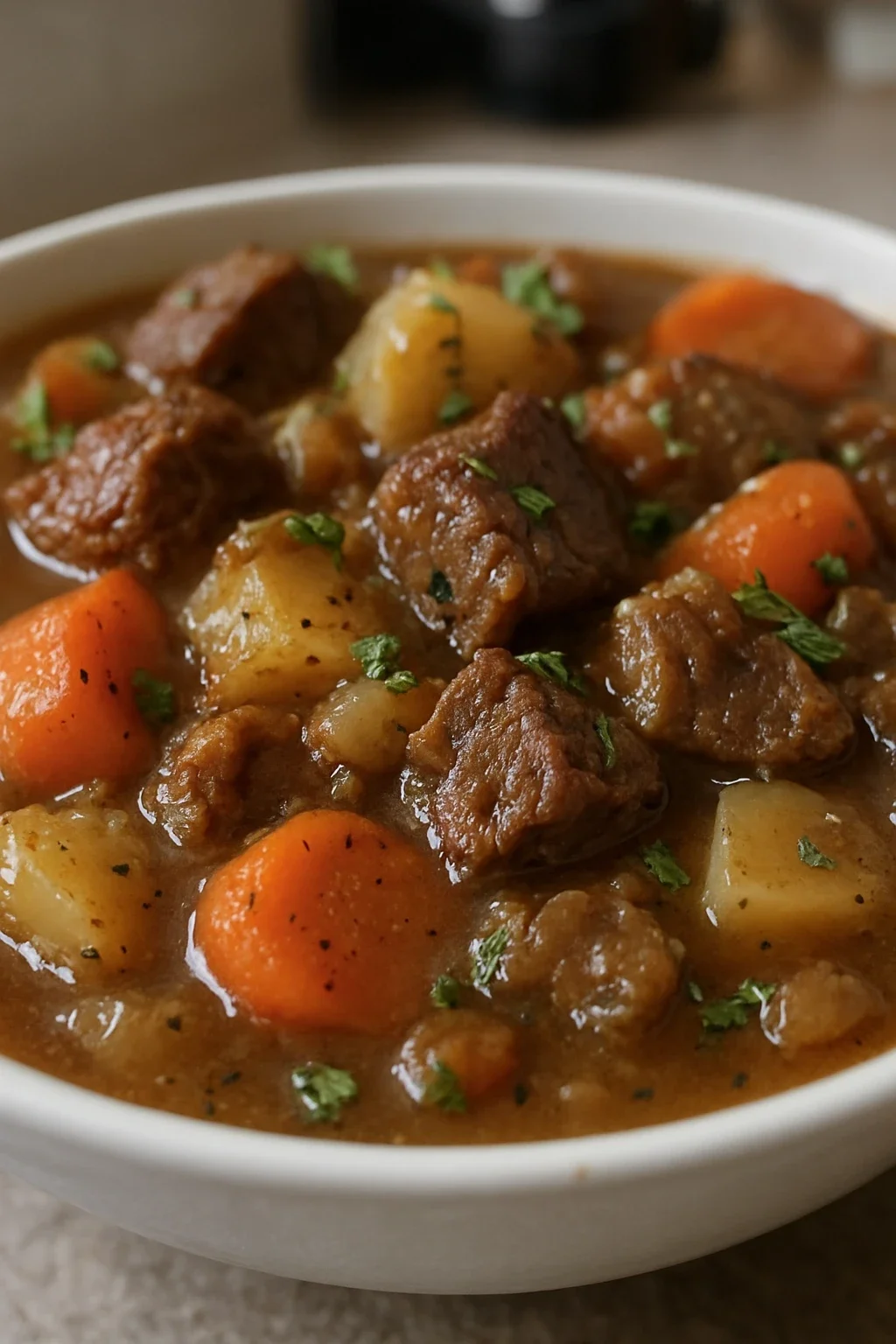
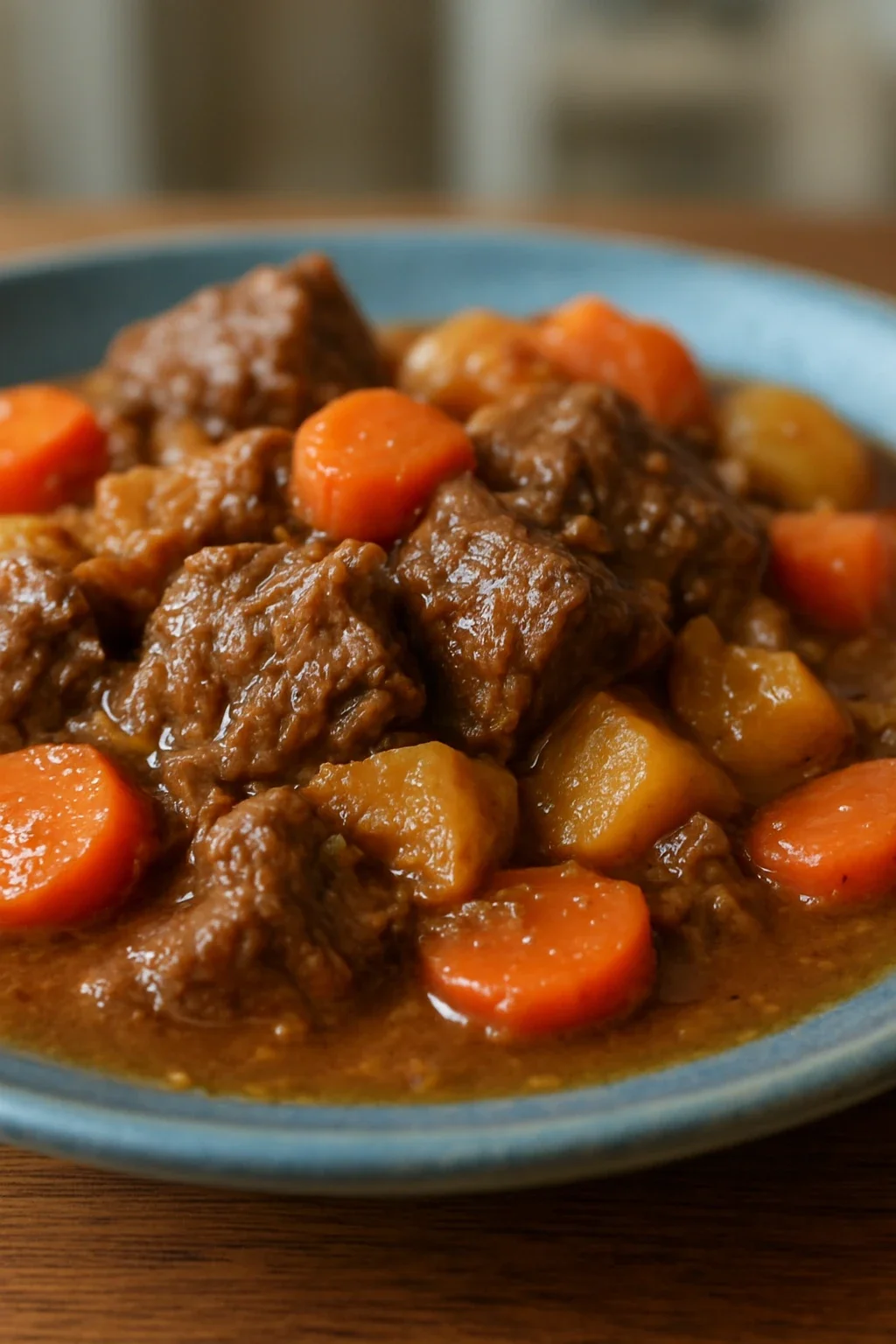
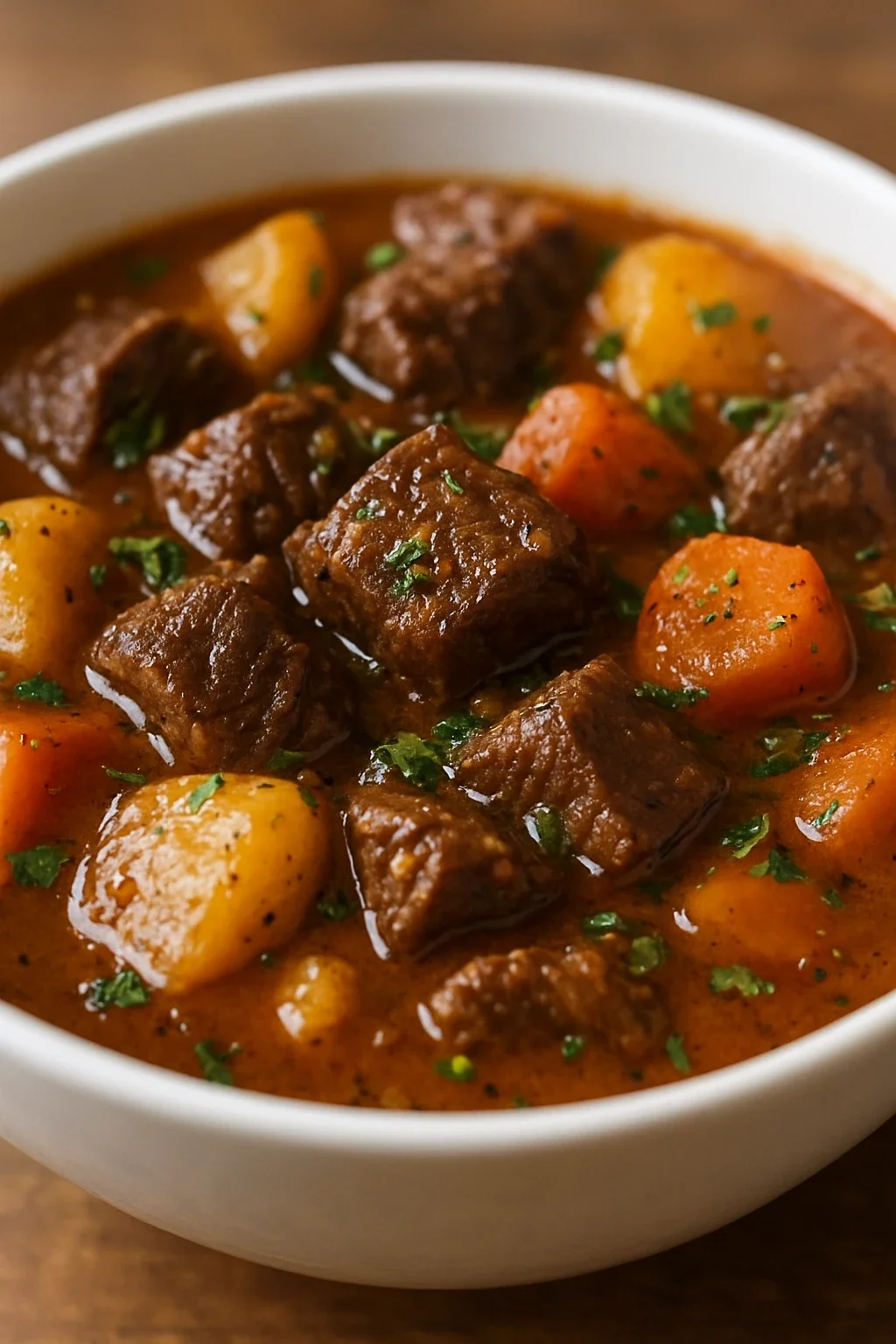
A guide to making beef stew that extracts maximum flavor from the beef and builds a properly textured broth. Learn why specific cuts work, how browning creates flavor compounds, and how to time vegetable additions for ideal texture in each component.
What You'll Need
Approximately 8 cups of stew, 6 servings
- 2 lbs (900g) beef chuck, cut into 1.5-inch (4cm) pieces
- 3 tbsp (45ml) neutral oil or bacon fat, divided
- 1 large yellow onion (300g), cut into 1-inch (2.5cm) pieces
- 4 cloves (20g) garlic, sliced
- 2 tbsp (30g) tomato paste
- 4 cups (960ml) beef broth, unsalted preferred
- 1 cup (240ml) water or additional broth
- 2 tsp (10g) fine sea salt, divided
- 1/2 tsp (1g) black pepper
- 1.5 tsp (3g) dried thyme
- 1 tsp (2g) dried rosemary, crushed
- 1 bay leaf
- 1 tbsp (15ml) Worcestershire sauce
- 3 large carrots (350g), cut into 1.5-inch (4cm) pieces
- 3 medium potatoes (450g), cut into 1-inch (2.5cm) cubes
- 1 cup (150g) frozen peas, added near end
- Optional: 1 tbsp (8g) cornstarch mixed with 2 tbsp (30ml) cold water for thickening
How To Do It
Step 1
Remove the beef from the refrigerator 15-20 minutes before cooking. Pat it dry with paper towels to ensure it browns properly.
⏱ Time: 15-20 minutes
✓ Doneness: Beef feels cool but not cold, surface is dry.
Step 2
In a Dutch oven over medium-high heat, add 1 tablespoon (15ml) of oil and heat until it shimmers. Add the beef pieces in a single layer without touching each other and let them brown undisturbed for 2-3 minutes.
⏱ Time: 2-3 minutes per side, 3 batches total (approximately 18-21 minutes)
✓ Doneness: Beef develops a golden-brown crust and doesn’t stick to the pan.
Step 3
Transfer the browned beef to a plate. If the pan looks dry, add another tablespoon (15ml) of oil, then sauté the onions with a pinch of salt for 4-5 minutes until translucent. Add the garlic and sauté for another minute.
⏱ Time: 5-6 minutes
✓ Doneness: Onion is translucent and soft, garlic releases a strong aroma.
Step 4
Stir in the tomato paste and cook for 1-2 minutes to deepen its flavor.
⏱ Time: 1-2 minutes
✓ Doneness: Tomato paste darkens slightly and the aroma intensifies.
Step 5
Return the beef to the pot, pour in the broth and water until it reaches halfway up the beef. Add the bay leaf, thyme, rosemary, Worcestershire sauce, and 1.5 teaspoons (9g) of salt. Bring the mixture to a gentle simmer.
⏱ Time: 5-10 minutes to reach simmer
✓ Doneness: Small bubbles form gently on the surface.
Step 6
Cover the pot and reduce heat to low, allowing it to simmer gently for 1.5 hours. Test the beef for tenderness with a fork.
⏱ Time: 1.5 hours, potentially longer
✓ Doneness: Fork slides easily through beef.
Step 7
Add the carrots and potatoes, stirring to distribute them evenly. Do not cover the pot during this phase.
⏱ Time: 0 minutes (vegetables being added)
✓ Doneness: Vegetables are well distributed in the stew.
Step 8
After 25-30 minutes, check the potatoes for tenderness. If needed, thicken the stew with a cornstarch slurry.
⏱ Time: 25-30 minutes
✓ Doneness: Potato is fork-tender and not falling apart.
Step 9
Stir in the frozen peas and simmer uncovered for 3-5 minutes.
⏱ Time: 3-5 minutes
✓ Doneness: Peas are bright green and heated through.
Step 10
Serve immediately, or keep warm over low heat. Enjoy with crusty bread.
⏱ Time: 0 minutes (serving time)
✓ Doneness: Stew is steaming and all ingredients are tender.
Pro Tips
Use beef chuck for its high collagen content.
This cut breaks down well during cooking, making the stew rich and silky.
Ensure proper browning of beef.
Browning develops the essential flavors needed for a hearty stew.
Opt for unsalted broth.
This allows better control over the stew's saltiness.
Keep a gentle simmer throughout cooking.
This prevents the meat from becoming tough.
Add vegetables at staggered intervals.
This ensures each vegetable reaches perfect tenderness.
Consider making the stew a day ahead.
The flavors meld beautifully overnight.
Common Mistakes to Avoid
Rushing the browning step.
Why it happens People want to speed up the process.
Fix Take the time to brown properly; it's crucial for flavor.
Boiling instead of simmering.
Why it happens Higher heat seems quicker.
Fix Always maintain a gentle simmer for best results.
Adding all vegetables at the start.
Why it happens It seems more efficient.
Fix Stagger vegetable additions for optimal doneness.
Tasting and salting at the end.
Why it happens It's thought to be easier.
Fix Season earlier for better flavor absorption.
Using too much liquid from the start.
Why it happens Fear of drying out the stew.
Fix Start with less liquid and adjust as needed.
Variations
Burgundy-Style Beef Stew
Add 1 cup (240ml) dry red wine along with the broth.
Note: This enhances flavor with acidity and depth.
Root Vegetable Stew
Substitute potatoes and carrots with parsnips and turnips.
Note: Each will add unique flavors to the stew.
Mushroom and Beef Stew
Incorporate 12 oz (340g) of quartered mushrooms at the same time as other vegetables.
Note: Mushrooms add umami and complement the beef.
Irish-Style Stew
Omit tomato paste and rely on potatoes and beef for flavor.
Note: Increase broth to 5 cups (1200ml) for moisture.
Pressure Cooker Beef Stew
Brown beef and vegetables, then pressure cook for 25 minutes.
Note: This method significantly reduces cooking time.
Nutrition
Per Serving:
approximately 425
Calories
These values are estimates and will vary based on exact beef trim level and broth saltiness.
Storage & Tips
Refrigerator
Store cooled stew in airtight containers for up to 4 days.
Freezer
Freeze for up to 3 months in freezer-safe containers.
Reheating
Reheat gently on the stovetop without boiling.
Make Ahead
Assemble through step 6 a day in advance.
FAQ
Why is my beef tough and chewy?
This might be due to cooking at too high a temperature or using a lean cut.
How do I thicken my stew?
Make a slurry with cornstarch and water, then stir into the simmering stew.
Can I use cuts other than beef chuck?
Other cuts like brisket or short ribs are also suitable but avoid lean cuts.
How can I tell if my stew is done?
The beef should be tender when pierced with a fork, and the flavors well-developed.
Can I use a slow cooker or Instant Pot?
Yes, both methods can be adapted for this recipe with slight adjustments.
Is it okay if my stew doesn't have a lot of visible broth?
Yes, you can adjust the liquid amount based on your preference for thickness.
Final Thoughts
Beef stew teaches fundamental braising technique that applies far beyond this single recipe. The process of browning for flavor development, then braising at low temperature for collagen conversion, is the foundation of many cooking techniques. Understanding why each step matters allows you to apply these principles to other recipes with confidence.