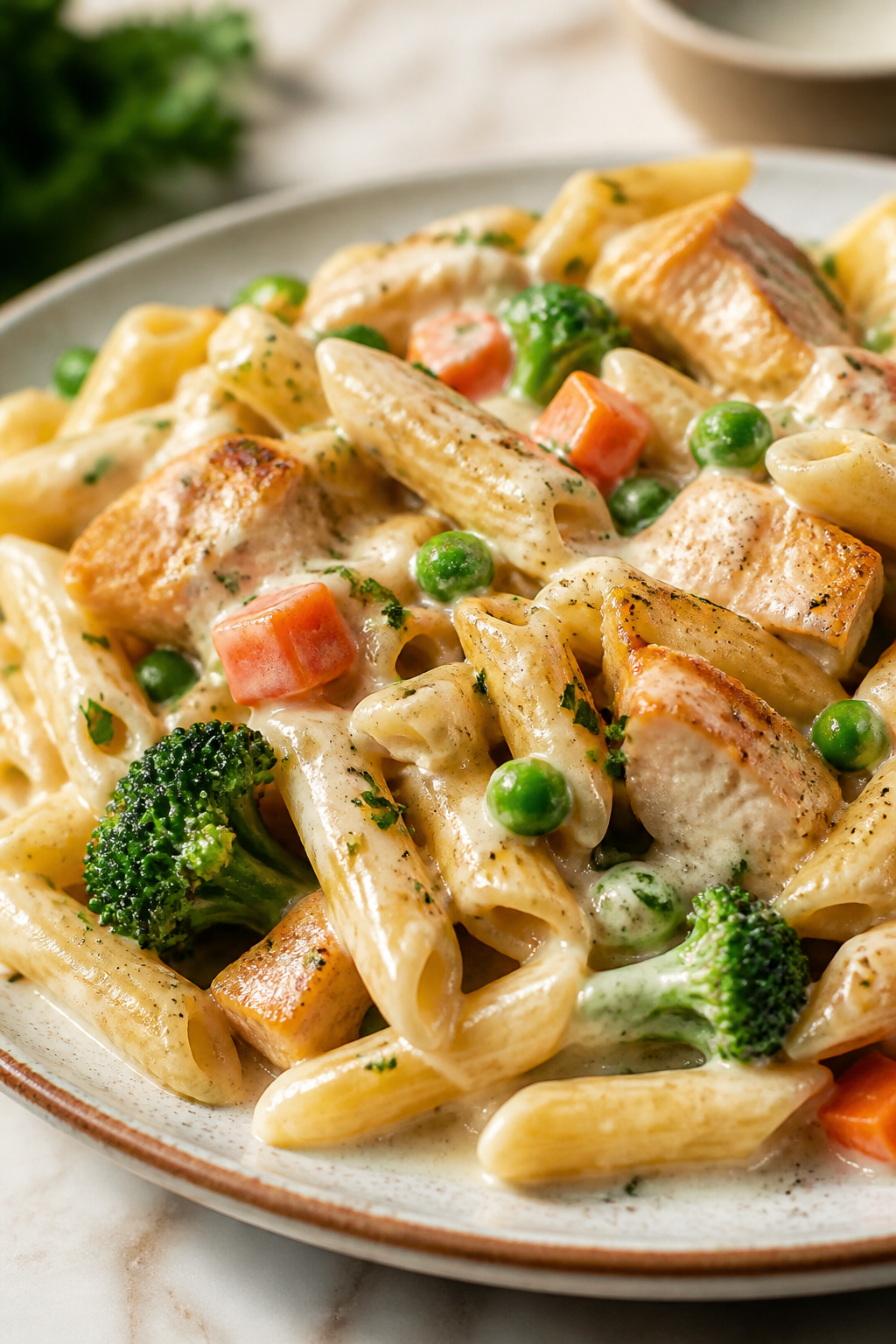
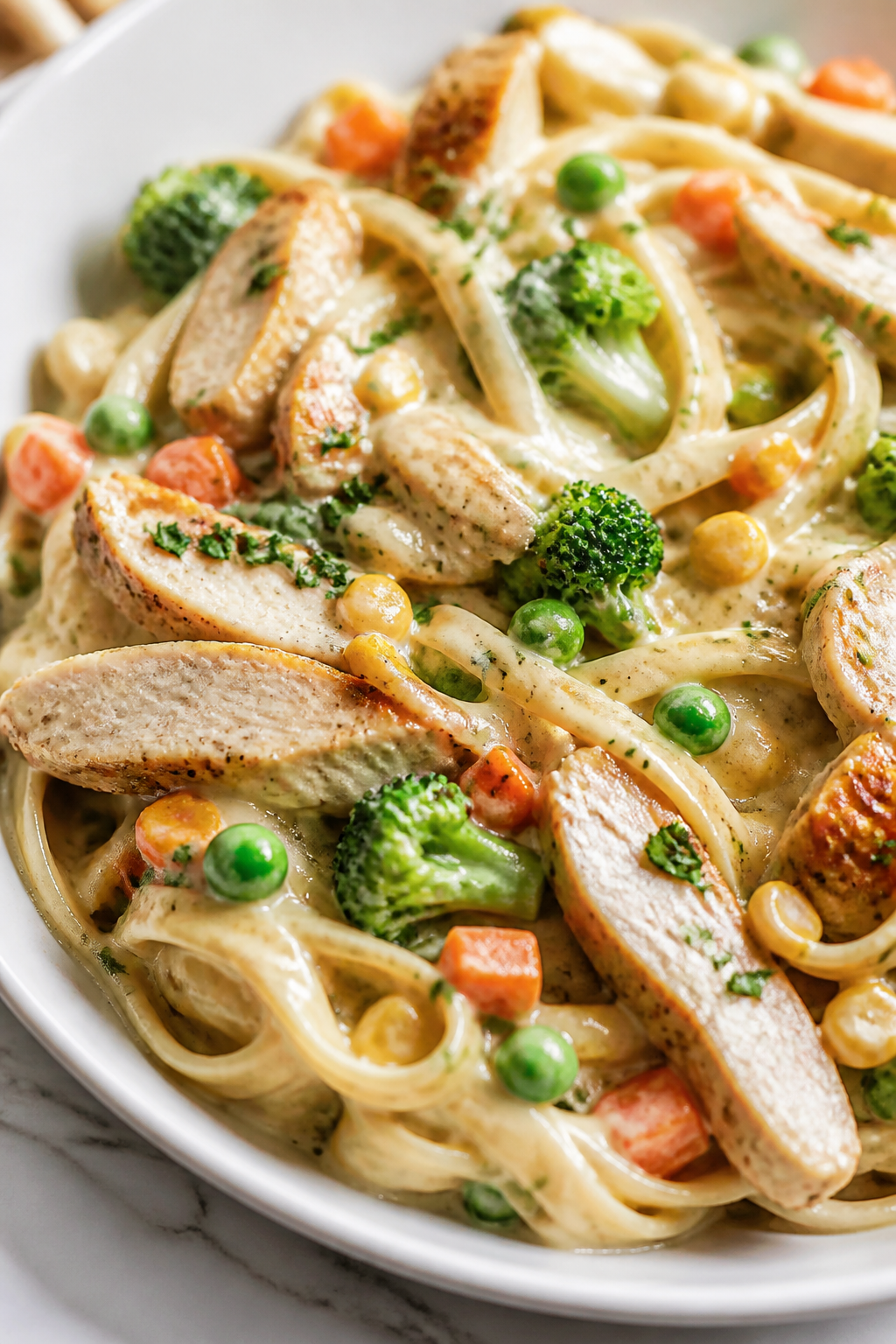
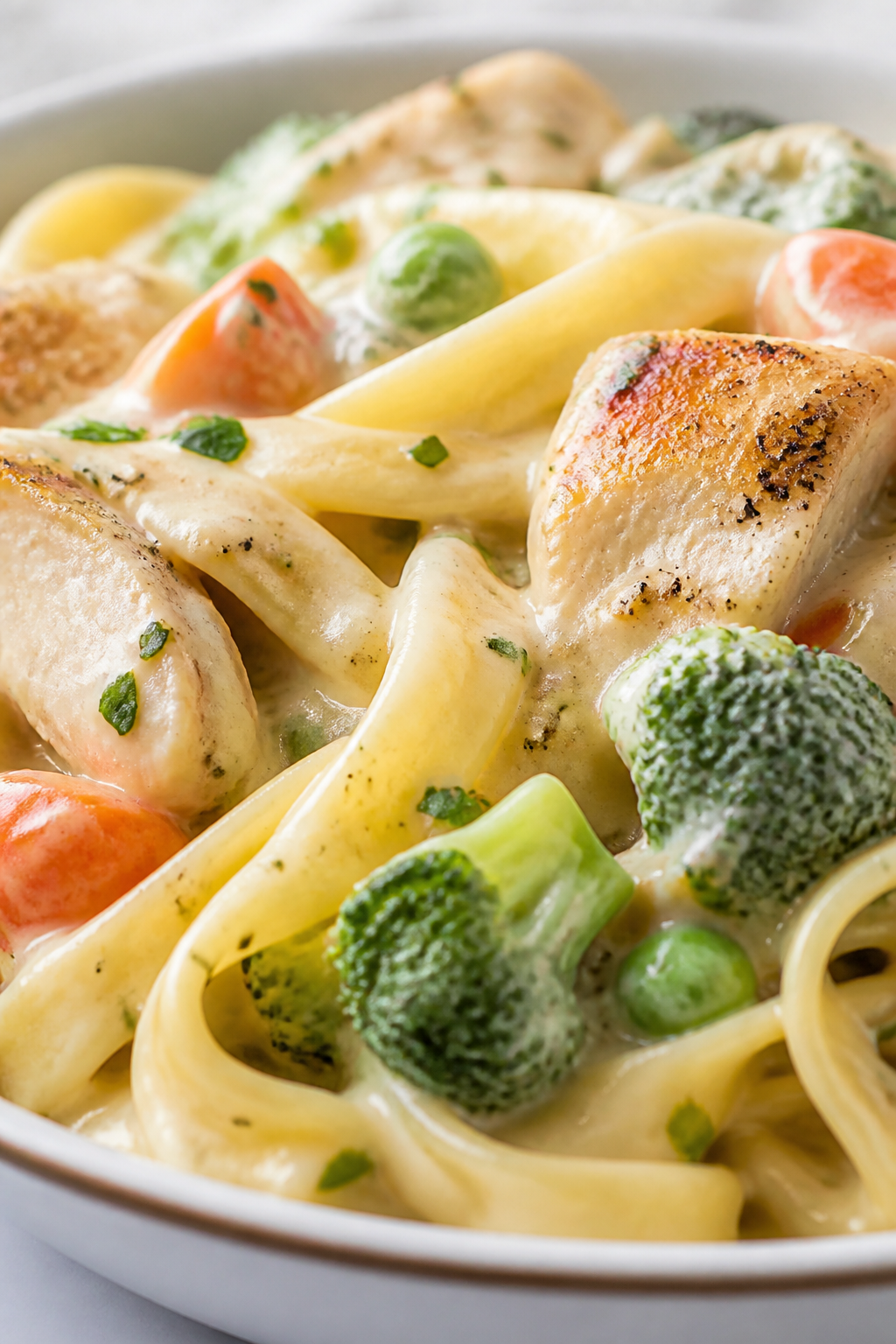
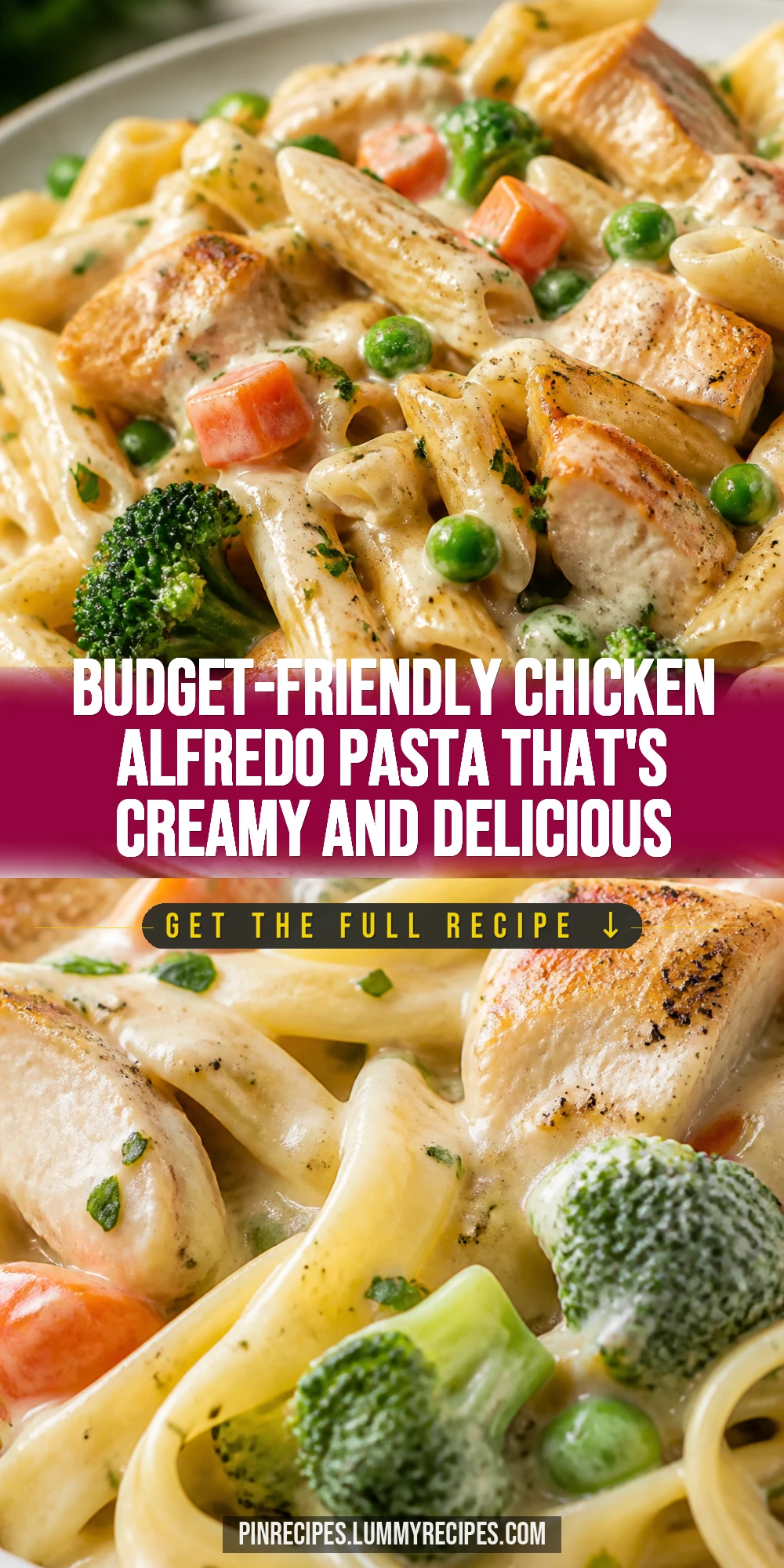
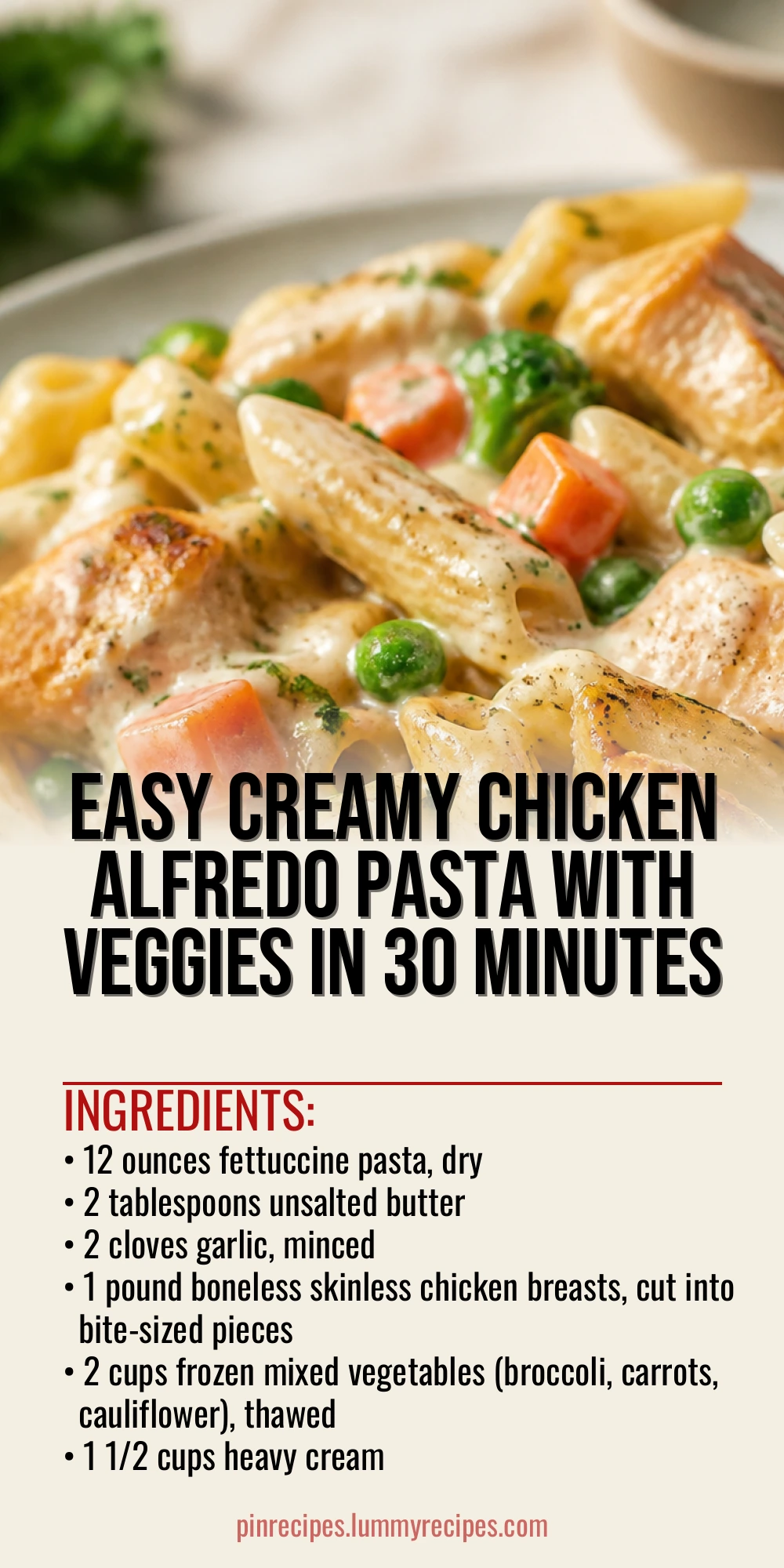
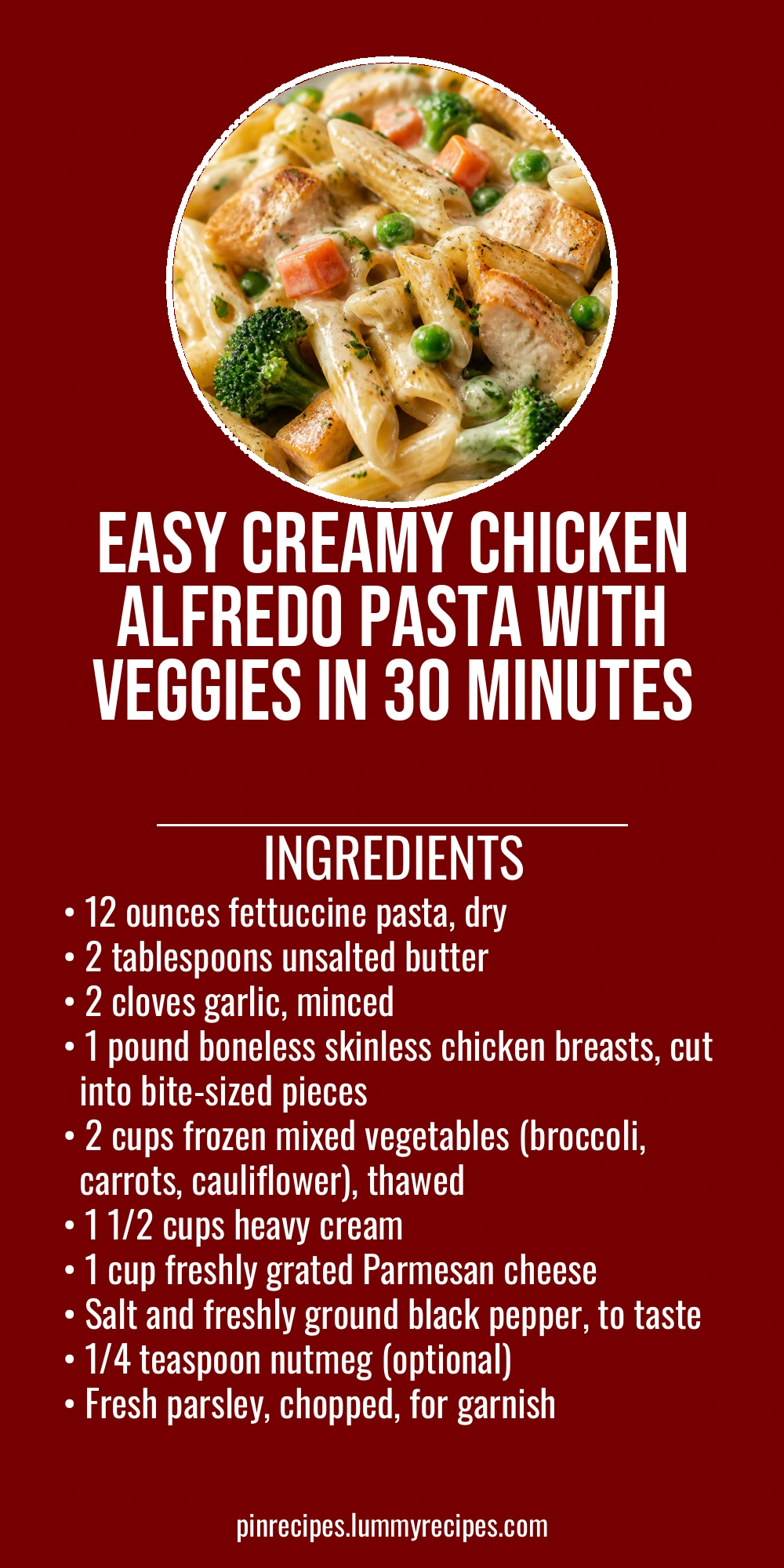
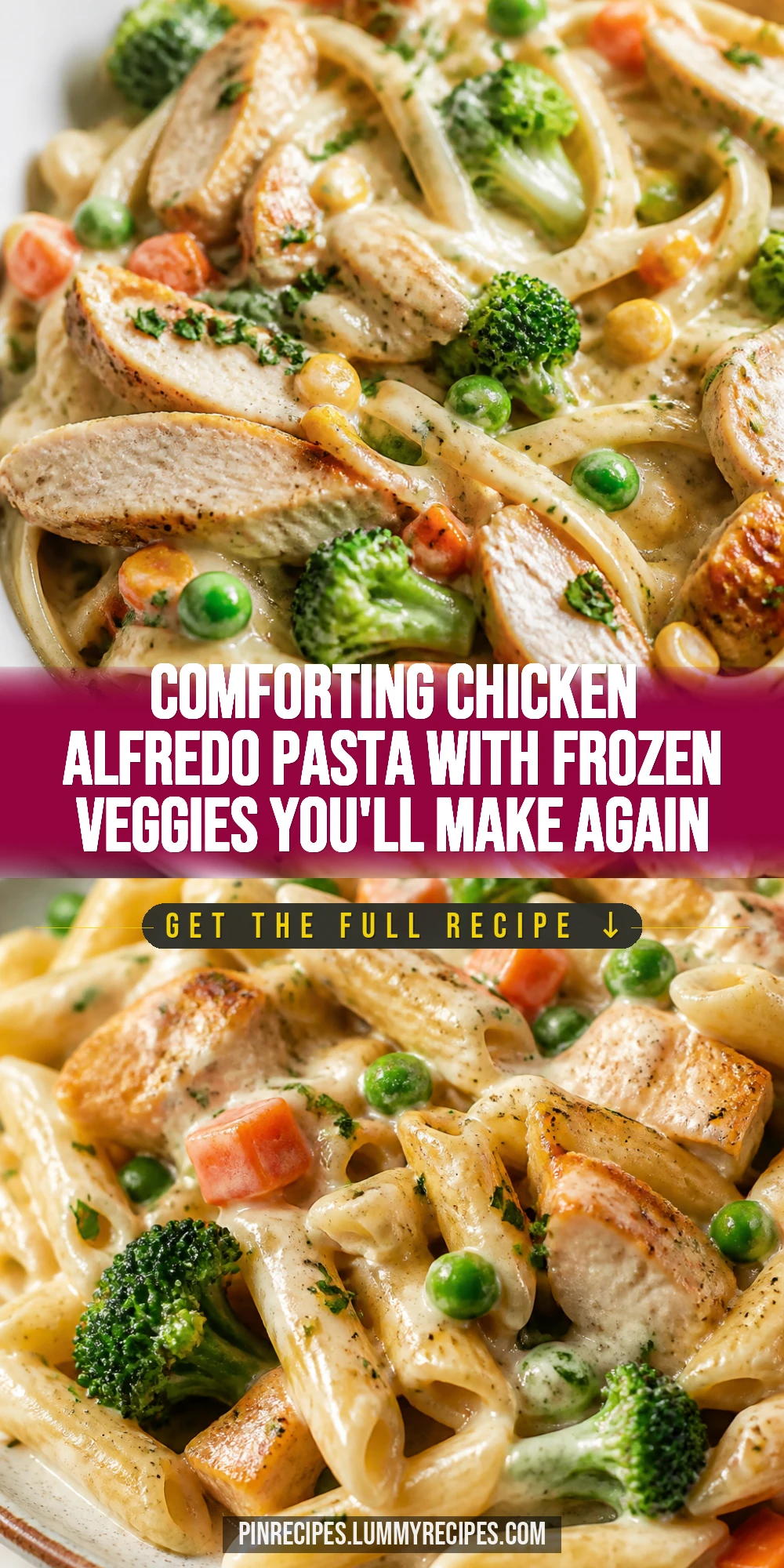
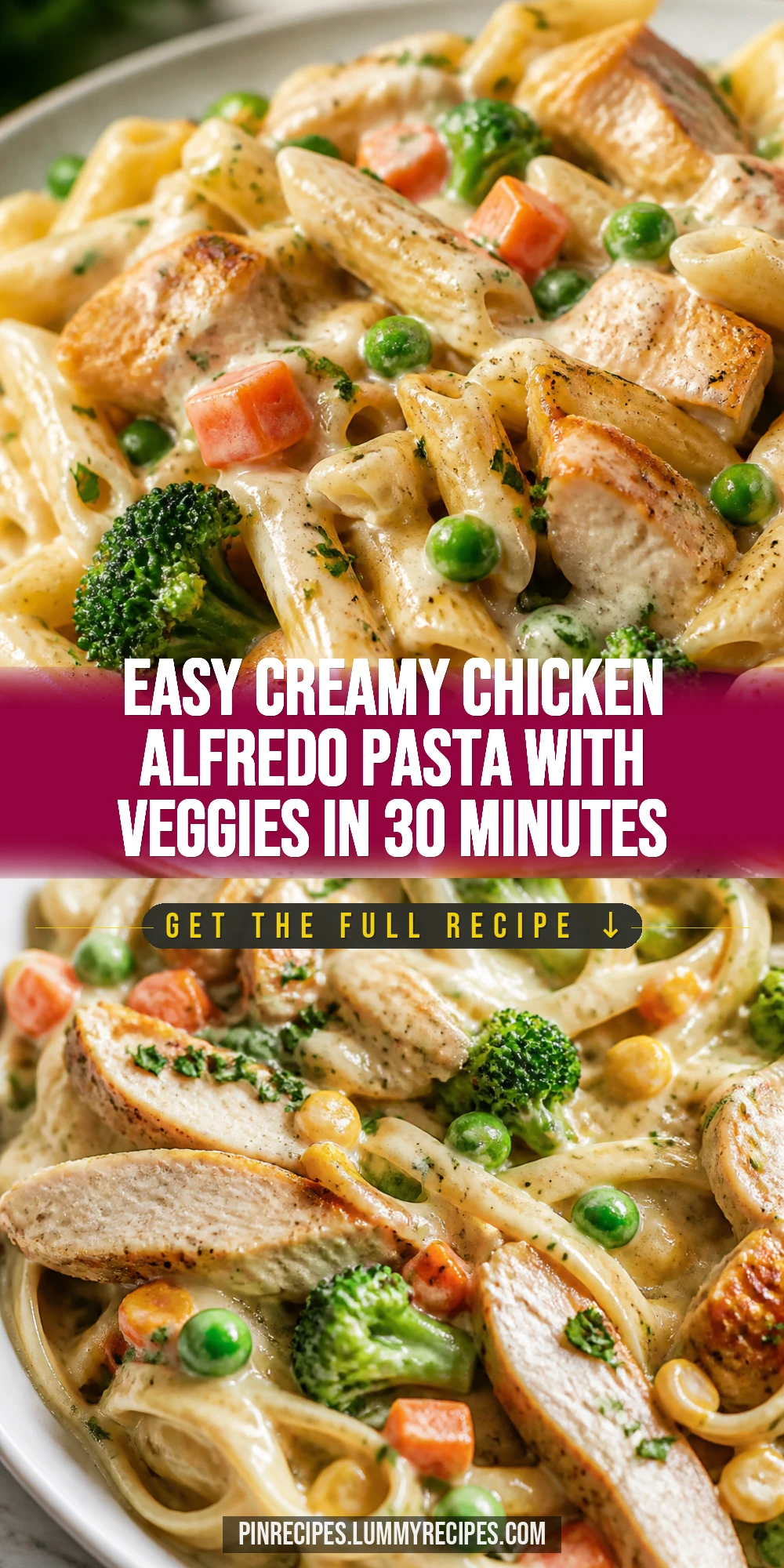
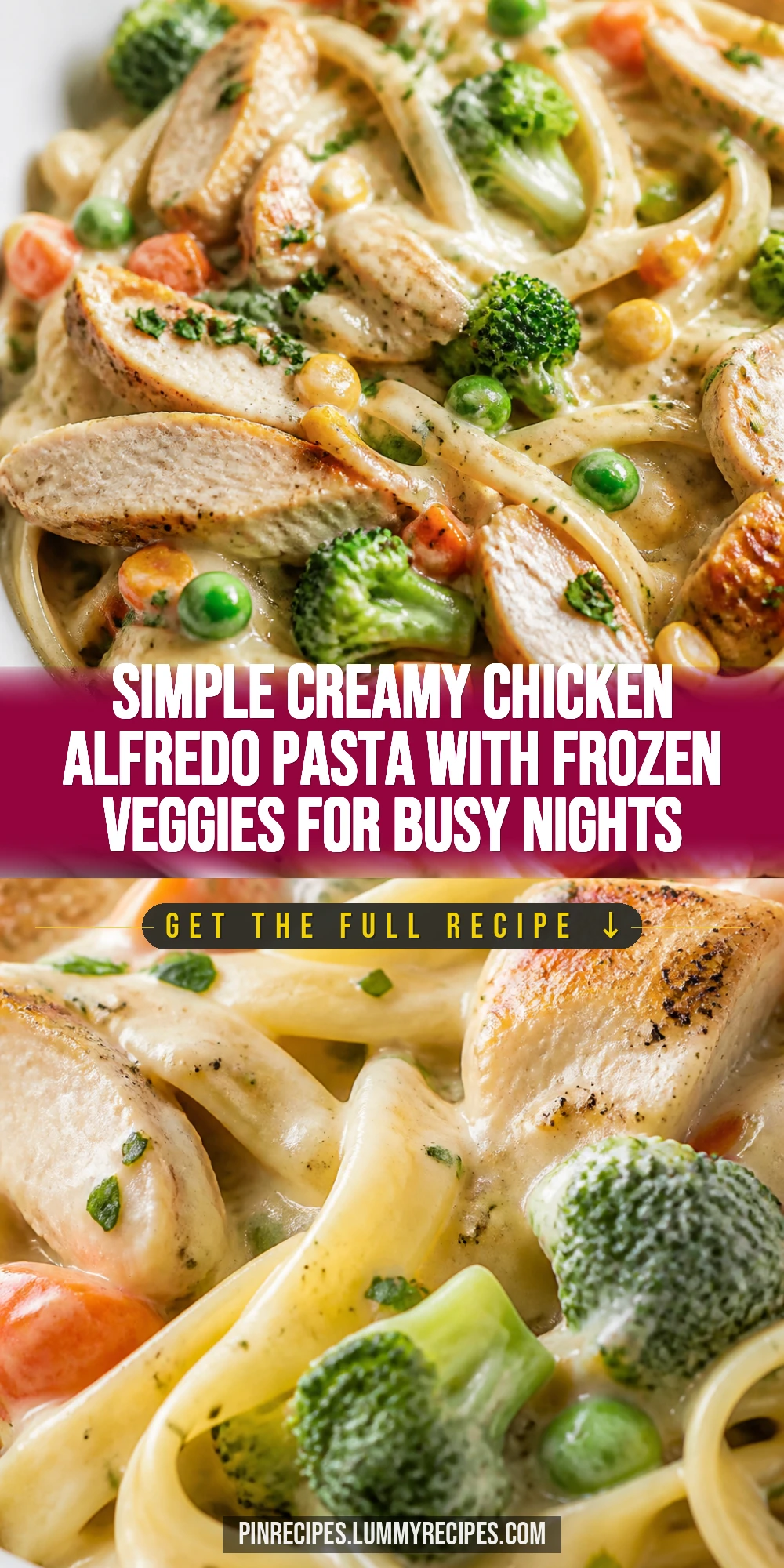
This creamy chicken alfredo pasta uses frozen veggies to save time and money without skimping on flavor. It’s a cozy, comforting dinner perfect for busy weeknights or when you want a simple, satisfying meal.
Introduction
I first made this creamy chicken alfredo pasta when I was trying to stretch my grocery budget without giving up on comfort food. Using frozen veggies was a game-changer — no chopping, no fuss, just a quick thaw and in the pan. What makes this version special is the way the sauce comes together: rich, velvety, and just cheesy enough without being heavy. I also learned that cooking the chicken bite-sized helps it cook evenly and stay tender. The finished dish is creamy, comforting, and packed with little bursts of veggie goodness. It’s become a favorite in my family, especially on busy weeknights when I want something warm and satisfying without spending hours in the kitchen. Plus, it’s one of those recipes where you can tweak the veggies or cheese amounts to suit your tastes, making it super flexible. Honestly, it feels like a warm hug on a plate every time I make it.
How To Do It
Step 1
Start by bringing a large pot of salted water to a boil. Cooking the pasta in well-salted water seasons it from the inside out, which is key for flavor. Add the fettuccine and cook according to package directions until al dente, usually about 10-12 minutes. Be careful not to overcook it because it will continue cooking a bit when mixed with the sauce. Drain the pasta, reserving about a cup of the pasta water, which you’ll use later to adjust the sauce consistency if needed.
⏱ Time: 10-12 minutes
✓ Doneness: Pasta should be tender but still have a slight bite when you taste it
Step 2
While the pasta cooks, melt the butter in a large skillet over medium heat. Add the minced garlic and sauté for about 1 minute until fragrant but not browned — burnt garlic turns bitter and can ruin the sauce. Then add the bite-sized chicken pieces. Cooking them in a single layer helps them brown nicely without steaming. Stir occasionally and cook until the chicken is cooked through and lightly golden, about 6-8 minutes. Season with salt and pepper as it cooks.
⏱ Time: 8-10 minutes
✓ Doneness: Chicken should be opaque throughout with a slight golden crust on the edges
Step 3
Add the thawed frozen vegetables to the skillet with the chicken. Stir them in and cook for 3-4 minutes until they’re heated through but still have a bit of crunch. This keeps the veggies from becoming mushy and preserves their color and nutrients. If the veggies release water, let it simmer off so the sauce doesn’t get too watery.
⏱ Time: 3-4 minutes
✓ Doneness: Veggies are bright in color and tender-crisp to the bite
Step 4
Lower the heat to medium-low and slowly pour in the heavy cream. Stir to combine and let the mixture warm gently — avoid boiling the cream to prevent curdling. The cream will start to thicken after a few minutes. If it seems too thick, add a splash of the reserved pasta water to loosen it up. This step creates that luscious, creamy texture that coats the pasta beautifully.
⏱ Time: 4-5 minutes
✓ Doneness: Sauce should be smooth, thick enough to coat the back of a spoon
Step 5
Gradually stir in the freshly grated Parmesan cheese, mixing constantly to help it melt smoothly into the sauce. Adding cheese slowly helps prevent clumping and ensures a silky texture. Season the sauce with salt, pepper, and a pinch of nutmeg if using — nutmeg adds a subtle warmth that complements the creaminess. Taste and adjust seasoning as needed.
⏱ Time: 3-4 minutes
✓ Doneness: Sauce is creamy, cheesy, and well-seasoned without graininess
Step 6
Add the drained pasta to the skillet with the sauce, chicken, and veggies. Toss everything gently but thoroughly so the pasta is evenly coated with the creamy sauce. If the sauce feels too thick, add a little more reserved pasta water to reach your desired consistency. The starch in the pasta water helps the sauce cling better to the noodles.
⏱ Time: 2-3 minutes
✓ Doneness: Pasta is fully coated and glossy without being dry or clumpy
Step 7
Once everything is combined and heated through, remove the skillet from heat. Let it rest for a minute or two; this helps the sauce thicken slightly and flavors meld. Avoid leaving it too long or the pasta might soak up too much sauce and become sticky.
⏱ Time: 2 minutes
✓ Doneness: Sauce slightly thickens, pasta remains moist and creamy
Step 8
Serve the creamy chicken alfredo pasta hot, garnished with freshly chopped parsley for a pop of color and freshness. The parsley adds a nice herbal brightness that cuts through the richness of the sauce, balancing the flavors beautifully.
⏱ Time: Immediate
✓ Doneness: Garnish looks fresh and vibrant, dish is steaming hot
Step 9
If you have leftovers, cool the pasta to room temperature before storing it in an airtight container in the fridge. Reheat gently on the stovetop with a splash of cream or milk to bring back the creamy texture without drying out. Avoid microwaving too long or it can become rubbery.
⏱ Time: N/A
✓ Doneness: Reheated pasta is creamy and warm without dryness
Pro Tips
Reserve some pasta water before draining the noodles.
The starchy pasta water helps loosen the sauce if it’s too thick and helps the sauce cling better to the pasta, giving a silky finish. Skipping this can result in a gluey or dry texture.
Don’t overcook the garlic when sautéing.
Burnt garlic tastes bitter and can ruin the delicate cream sauce. Cooking it just until fragrant ensures a mellow garlic flavor that enhances the dish.
Cut the chicken into uniform, bite-sized pieces.
Evenly sized pieces cook at the same rate, preventing some from drying out while others remain undercooked. This keeps the chicken tender and juicy.
Use freshly grated Parmesan cheese.
Freshly grated cheese melts smoothly without clumping, creating a creamy sauce. Pre-grated cheese can contain additives that affect texture.
Thaw frozen veggies before cooking.
Thawing prevents excess water from diluting the sauce and helps the veggies heat evenly, preserving texture and flavor.
Cook pasta al dente.
Pasta continues to cook slightly when mixed with sauce. Al dente pasta ensures it doesn’t become mushy after combining.
Add a pinch of nutmeg to the sauce.
Nutmeg adds warmth and depth to creamy sauces, balancing richness without overpowering.
Common Mistakes to Avoid
Overcooking the chicken
Why it happens Rushing the cooking or cutting uneven pieces leads to dry, tough chicken.
Fix Cut chicken into uniform bite-sized pieces and cook over medium heat until just opaque with a slight golden crust. Avoid cooking too long by checking frequently.
Burning the garlic
Why it happens High heat or unattended garlic can quickly burn, causing bitterness.
Fix Sauté garlic on medium heat just until fragrant, about 30-60 seconds, stirring constantly to prevent burning.
Adding cheese too quickly
Why it happens Dumping cheese in all at once can cause clumping and grainy sauce.
Fix Add Parmesan gradually while stirring to ensure smooth melting and a creamy texture.
Using frozen veggies without thawing
Why it happens Frozen veggies release water when heated, thinning the sauce.
Fix Thaw veggies first and drain any excess moisture before adding to the pan.
Overcooking pasta
Why it happens Cooking pasta past al dente makes it mushy after mixing with sauce.
Fix Cook pasta just until al dente according to package instructions, then drain promptly.
Variations
Garlic Herb Chicken Alfredo
Add fresh herbs like thyme and rosemary to the chicken while cooking for an aromatic twist. You can also sprinkle fresh basil on top when serving for a bright finish.
Note: Be careful not to burn the herbs; add them towards the end of cooking to preserve their flavor.
Mushroom and Spinach Alfredo
Sauté sliced mushrooms and fresh spinach with the chicken for extra veggies and earthy flavor. The spinach wilts quickly and adds a nice color contrast.
Note: Add spinach last to avoid overcooking; it wilts in just a minute or two.
Low-Carb Chicken Alfredo
Swap the fettuccine for spiralized zucchini noodles or shirataki noodles to reduce carbs. The creamy sauce pairs perfectly with these lighter noodle options.
Note: Zucchini noodles release water; cook briefly and drain excess moisture before mixing with sauce.
Spicy Cajun Alfredo
Add Cajun seasoning to the chicken and a pinch of red pepper flakes to the sauce for a spicy kick that livens up the classic recipe.
Note: Adjust spice levels gradually to suit your heat tolerance.
Cheesy Broccoli Alfredo Bake
Mix cooked broccoli into the pasta and sauce, then transfer to a baking dish. Top with extra cheese and bake until bubbly and golden for a comforting casserole.
Note: Use oven-safe dish and bake at 375°F for 15-20 minutes until cheese is melted and slightly browned.
Nutrition
Per Serving:
Nutritional values are estimates and may vary based on specific ingredients used.
Storage & Tips
Room Temperature
This dish can safely sit out covered for up to 2 hours. Beyond that, bacteria growth increases, so refrigerate promptly. Keep covered to prevent drying out.
Refrigerator
Store leftovers in an airtight container for up to 3 days. The sauce may thicken and the pasta absorb some liquid, so reheat gently with a splash of cream or milk to restore creaminess.
Freezer
Freeze in a sealed container for up to 2 months. To prevent freezer burn, wrap tightly and remove as much air as possible. Thaw overnight in the fridge before reheating.
Reheating
Reheat on the stovetop over low heat, stirring frequently and adding a splash of cream or milk to loosen the sauce. Avoid microwaving at high power as it can dry out the pasta and cause uneven heating.
Make Ahead
You can cook the chicken and sauce up to 2 days ahead and store separately from pasta and veggies. Reheat gently and toss with freshly cooked pasta for best texture on serving day.
FAQ
Can I use frozen chicken instead of fresh?
It’s best to thaw frozen chicken completely before cooking to ensure even cooking and avoid a rubbery texture. Cooking frozen chicken straight in the pan can lead to uneven doneness and longer cooking times.
How do I prevent the sauce from separating?
Avoid boiling the cream and add cheese slowly while stirring. High heat or rapid temperature changes cause the fat to separate, resulting in a grainy sauce.
Can I make this recipe gluten-free?
Yes! Use gluten-free pasta varieties. Just adjust cooking time according to the package, as gluten-free pasta can cook faster or slower than regular.
How do I keep the veggies from getting mushy?
Thaw frozen veggies before cooking and add them towards the end, cooking just until heated through. Overcooking breaks down cell walls, making them soft and watery.
Can I use pre-grated Parmesan cheese?
Pre-grated cheese often contains anti-caking agents that prevent smooth melting, leading to a grainy sauce. Freshly grated Parmesan yields the best texture and flavor.
What if I don’t have nutmeg?
Nutmeg is optional but adds warmth. If you don’t have it, you can skip it or add a tiny pinch of cinnamon or white pepper for a subtle flavor boost.
How do I store leftovers properly?
Cool the pasta to room temperature, then store in an airtight container in the fridge for up to 3 days. Reheat gently with a splash of cream to restore creaminess.
Can I double this recipe for a larger crowd?
Absolutely! Just use a larger pot and pan to avoid overcrowding, which can cause uneven cooking. Adjust seasoning and cooking times slightly as needed.
Final Thoughts
I hope you enjoy making and sharing this creamy budget-friendly chicken alfredo pasta with your family. It’s a simple, comforting dish that feels like a warm hug on a plate—give it a try and let me know how it turns out!