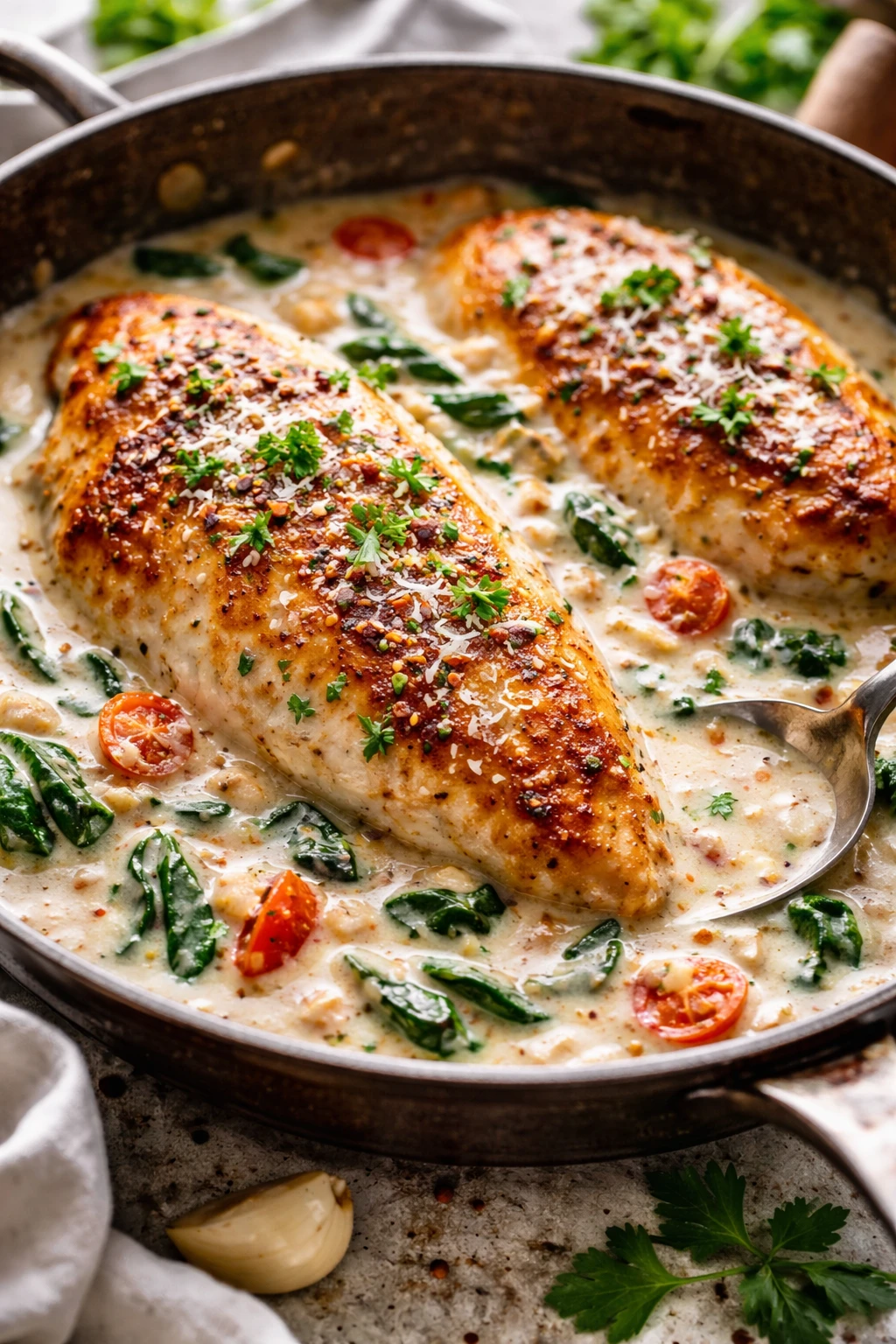
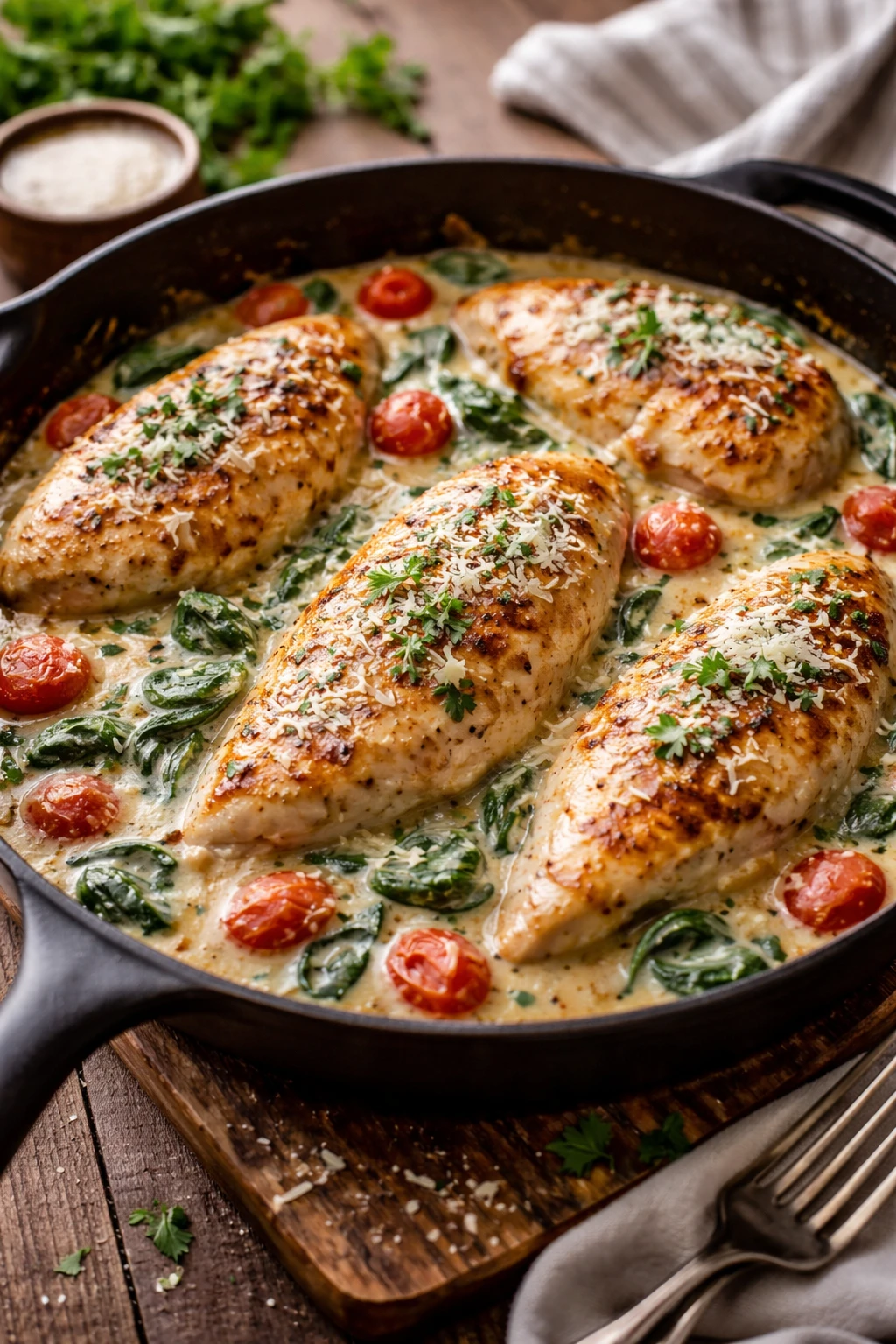
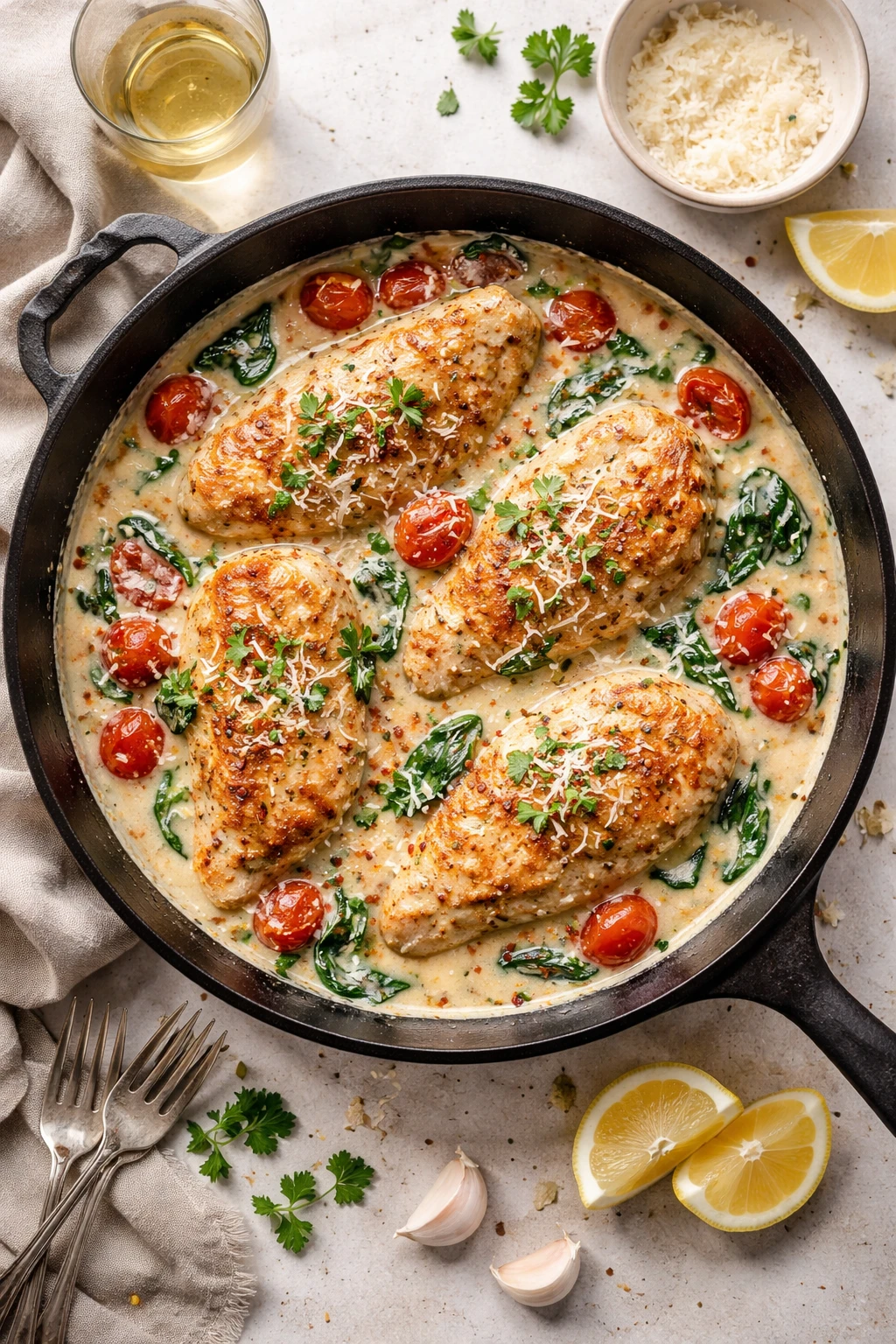
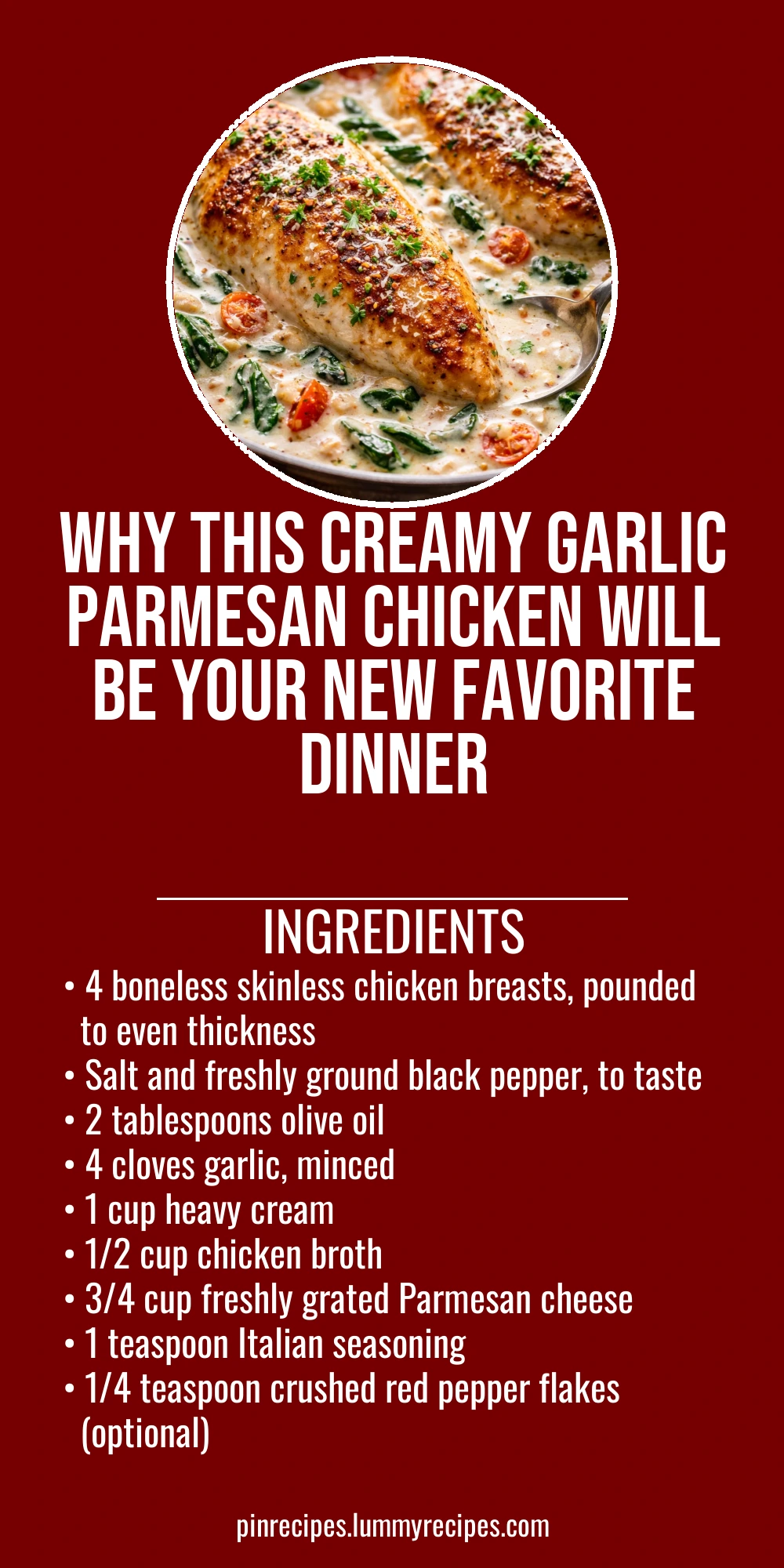
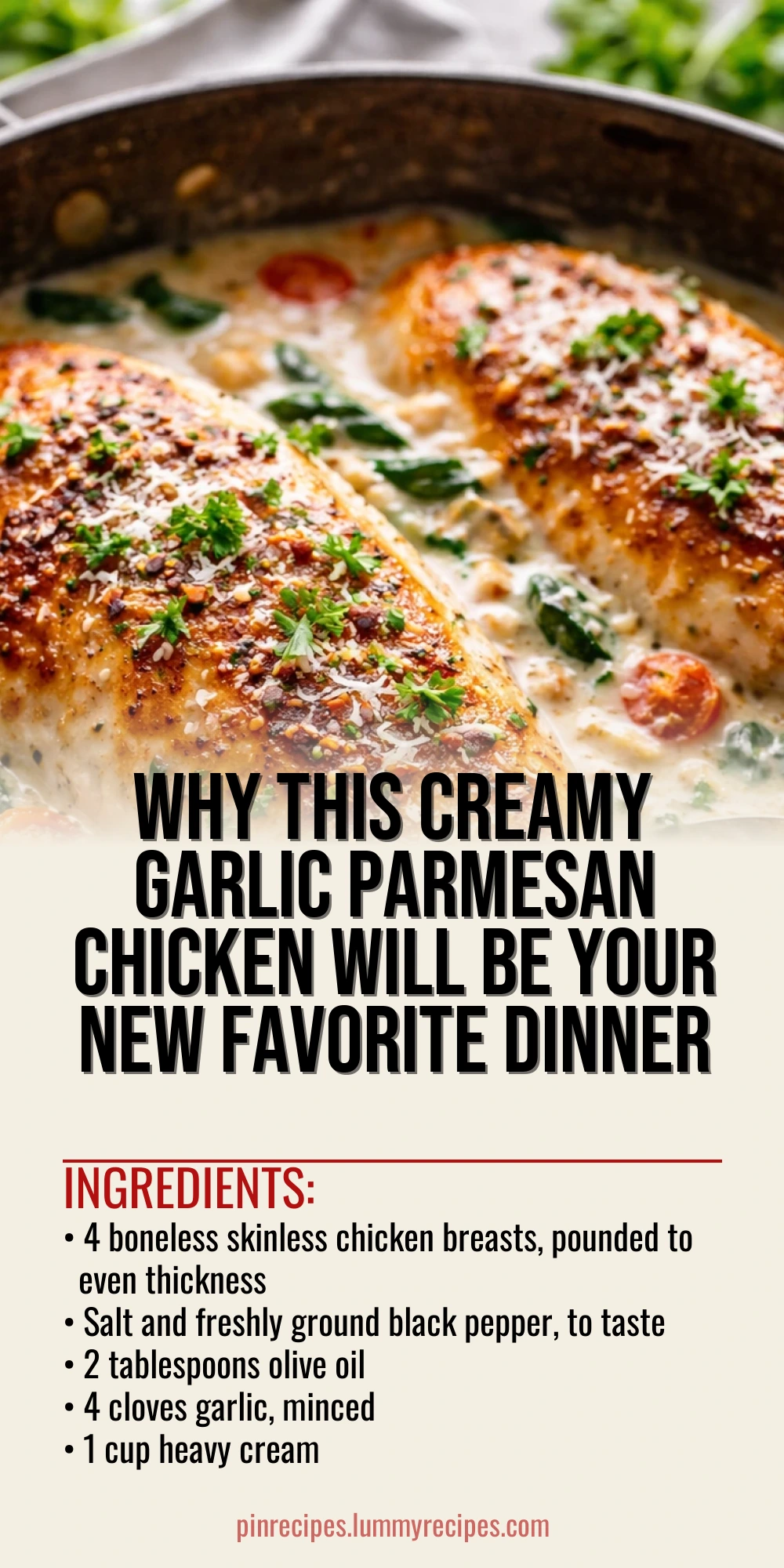
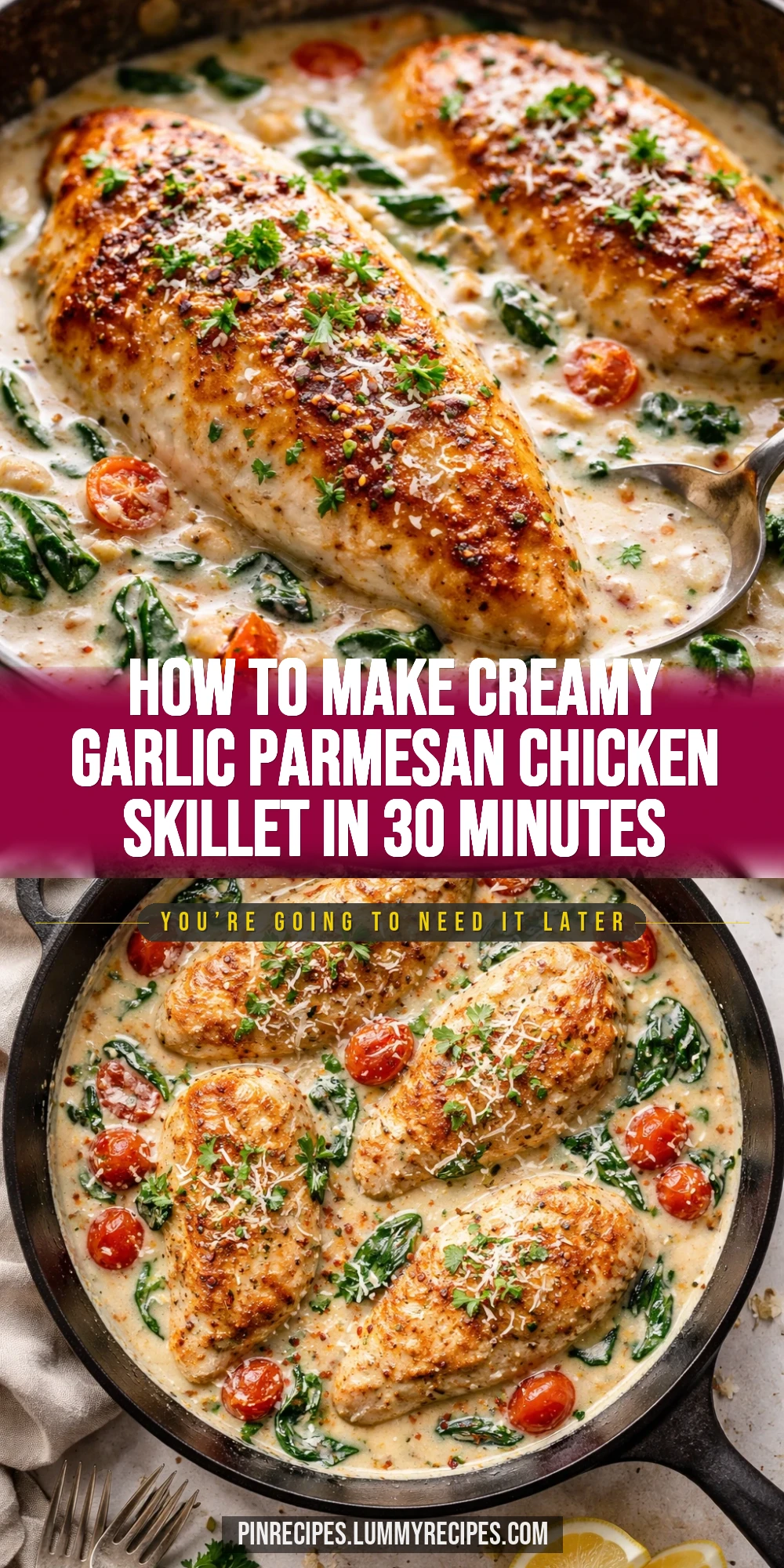
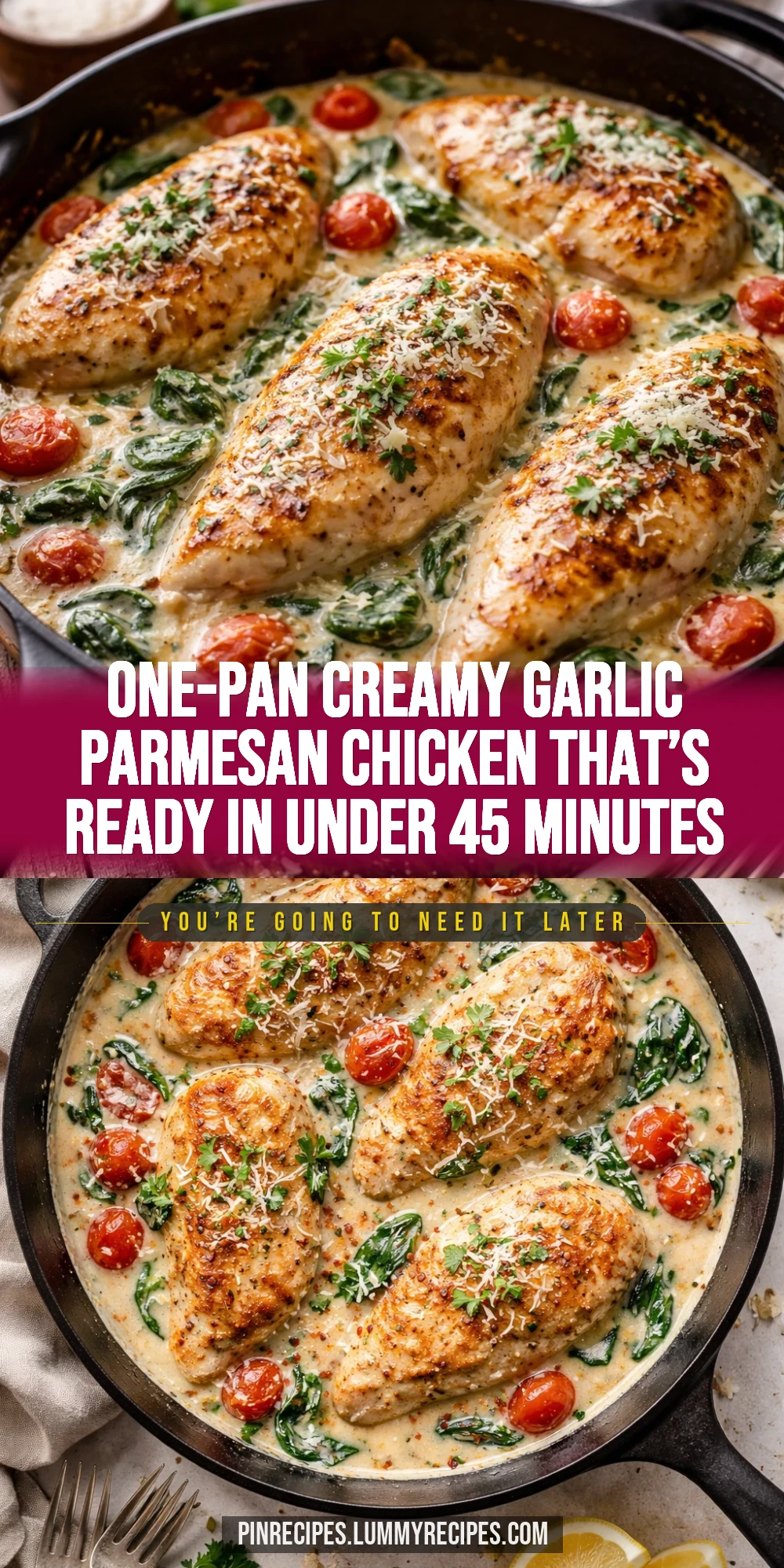
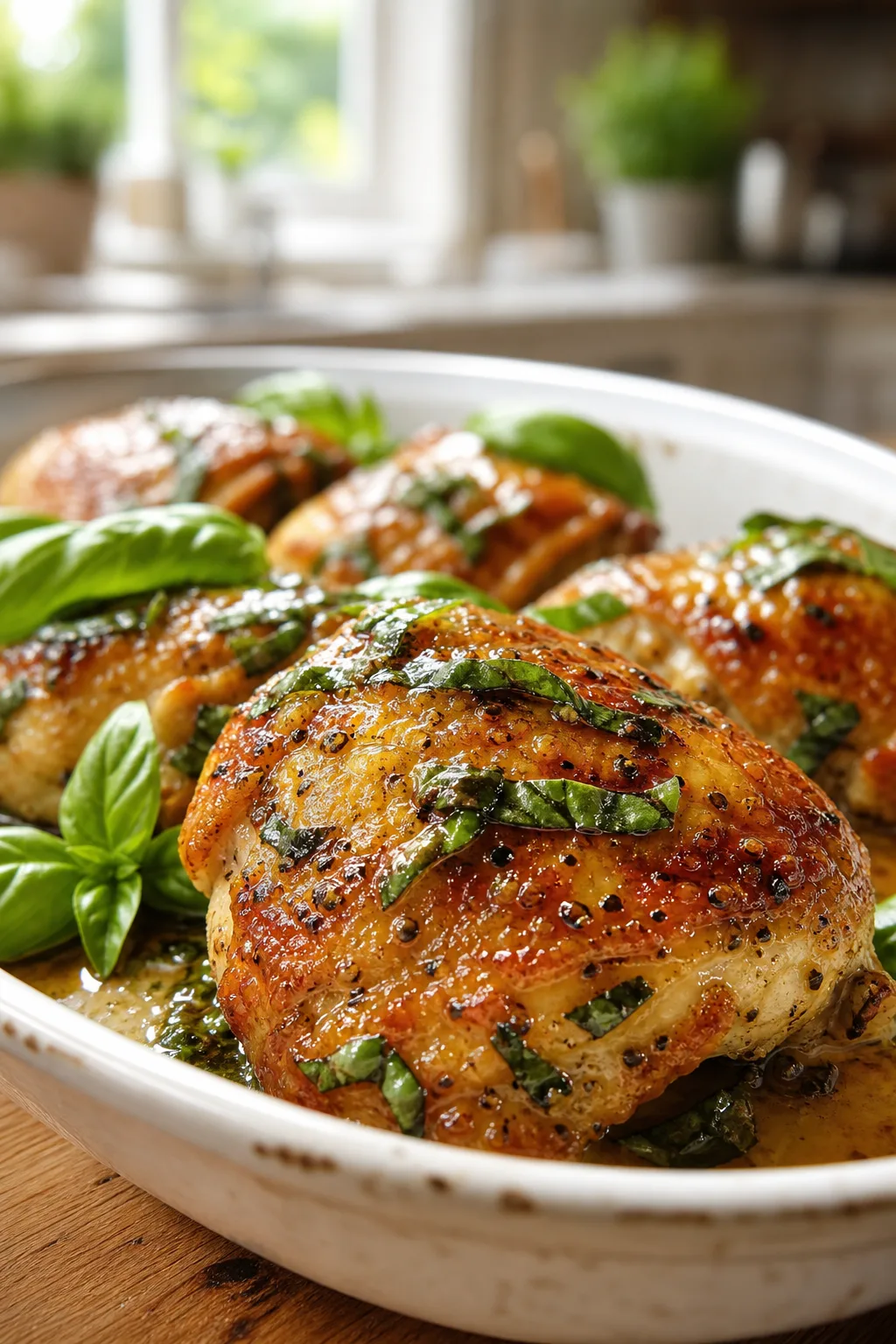
This skillet dinner is pure comfort—juicy chicken smothered in a garlicky, cheesy sauce that’s ready in under 45 minutes. The secret? A splash of cream and freshly grated Parmesan that makes all the difference. Perfect for cozy weeknights when you want something rich but easy.
Introduction
I remember the first time I made this creamy garlic Parmesan chicken skillet dinner—it was a chilly evening, and I wanted something comforting but quick. The usual chicken dishes felt a bit dull, so I experimented by adding a rich, garlicky cream sauce with freshly grated Parmesan. The result was a total game-changer. What makes this version stand out is how the sauce thickens just right without any flour or roux, thanks to the Parmesan melting into the cream and broth. I also love pounding the chicken breasts to an even thickness; it helps them cook evenly and stay juicy. The final dish is silky, flavorful, and perfect for those nights when you want something cozy but don’t have hours to spend in the kitchen. Plus, it all cooks in one skillet, which means less cleanup—a huge win in my book. Every time I make this, my family asks for seconds, and I’m pretty sure it’s because of that garlicky, cheesy sauce that clings to every bite. If you’re looking for a dinner that feels like a warm hug and comes together fast, this recipe is definitely worth trying.
How To Do It
Step 1
Start by pounding the chicken breasts to an even thickness, about 1/2 inch. This ensures they cook evenly and stay tender. Season both sides generously with salt and pepper. Heating the olive oil in a large skillet over medium-high heat, add the chicken breasts and sear them until golden brown on each side, about 4-5 minutes per side. Don’t overcrowd the pan—work in batches if needed. This step locks in juices and creates a flavorful crust that’s essential for the final dish. Avoid moving the chicken too much during searing to get a nice golden color.
⏱ Time: 10 minutes
✓ Doneness: Chicken should be golden brown and release easily from the pan when ready to flip
Step 2
Remove the chicken and set aside. In the same skillet, lower the heat to medium and add the minced garlic. Sauté for about 30 seconds until fragrant but not browned—burnt garlic will taste bitter. Then pour in the chicken broth and use a wooden spoon to scrape up any browned bits from the bottom of the pan; these add great flavor. Add the heavy cream, Italian seasoning, and crushed red pepper flakes if you like a little heat. Stir to combine and bring the sauce to a gentle simmer. This slow heating allows the flavors to meld and the sauce to thicken slightly before adding the cheese.
⏱ Time: 5 minutes
✓ Doneness: Sauce should be bubbling gently and slightly thickened
Step 3
Lower the heat to medium-low and stir in the freshly grated Parmesan cheese a handful at a time. Stir continuously to help it melt smoothly into the sauce without clumping. Parmesan acts as a natural thickener and adds a savory depth that’s key to this dish. If the sauce gets too thick, add a splash more chicken broth or cream to loosen it. Return the chicken breasts to the skillet, nestling them into the sauce. Cover and let everything simmer gently for 8-10 minutes, until the chicken is cooked through and the sauce is creamy and luscious.
⏱ Time: 12 minutes
✓ Doneness: Chicken reaches an internal temperature of 165°F and sauce coats the back of a spoon
Step 4
Once the chicken is cooked, taste the sauce and adjust seasoning with salt and pepper if needed. Sprinkle chopped fresh parsley over the top for a pop of color and freshness. Serve immediately, spooning plenty of that creamy garlic Parmesan sauce over the chicken. This dish pairs wonderfully with a side of steamed veggies, mashed potatoes, or crusty bread to soak up the sauce.
⏱ Time: 3 minutes
✓ Doneness: Sauce is smooth and flavorful; chicken is juicy and tender
Step 5
For best results, use freshly grated Parmesan rather than pre-grated. It melts better and avoids gritty texture. Also, be patient when adding the cheese—add it slowly and stir well to create a silky sauce. Rushing this step can cause the cheese to clump or separate. The gentle simmer helps the sauce thicken perfectly without curdling.
⏱ Time: 2 minutes
✓ Doneness: Sauce is creamy and smooth with no lumps
Step 6
If you want to add some veggies, toss in sliced mushrooms or spinach right after sautéing the garlic. They’ll cook down in the sauce and add extra flavor and nutrition. Just be careful not to overcrowd the pan so the sauce can thicken properly.
⏱ Time: 3 minutes
✓ Doneness: Vegetables are tender and incorporated into the sauce
Step 7
Use a meat thermometer to check the chicken’s internal temperature. This helps avoid overcooking, which can dry out the meat. The perfect doneness is 165°F. If you don’t have a thermometer, cut into the thickest part and make sure the juices run clear with no pink.
⏱ Time: 1 minute
✓ Doneness: Juices run clear and meat is opaque throughout
Step 8
Let the skillet rest off the heat for a few minutes before serving. This allows the sauce to thicken slightly and flavors to settle. It also helps the chicken retain moisture for a juicier bite.
⏱ Time: 5 minutes
✓ Doneness: Sauce thickens slightly and chicken remains tender
Step 9
Serve the chicken with your favorite sides like roasted potatoes, garlic bread, or a simple green salad. Don’t forget to spoon extra sauce over everything—it’s the best part! This meal feels indulgent but is surprisingly easy to pull together.
⏱ Time: 2 minutes
✓ Doneness: Plated dish looks vibrant and inviting with sauce coating chicken
Pro Tips
Pound chicken breasts to an even thickness before cooking.
This technique ensures the chicken cooks evenly and stays juicy. Uneven thickness often leads to overcooked thin edges and undercooked centers, which ruins the texture.
Add Parmesan cheese slowly while stirring the sauce.
Adding cheese gradually prevents clumping and helps it melt smoothly, resulting in a silky sauce. Rushing this step can cause the sauce to become grainy.
Use a wooden spoon to scrape browned bits when deglazing.
Those browned bits, or fond, are packed with flavor. Scraping them off the pan adds depth and richness to the sauce, elevating the dish.
Don’t overcook the garlic when sautéing.
Garlic burns quickly and turns bitter, which can spoil the sauce. Cook it just until fragrant, about 30 seconds, to keep the flavor bright.
Simmer the sauce gently rather than boiling.
High heat can cause the cream to curdle and the sauce to separate. A gentle simmer helps the sauce thicken evenly and maintain a smooth texture.
Let the skillet rest off heat before serving.
Resting allows the sauce to thicken slightly and flavors to meld, while keeping the chicken juicy and tender.
Use freshly grated Parmesan cheese for best results.
Pre-grated cheese often contains anti-caking agents that can affect melting and texture, leading to a less smooth sauce.
Common Mistakes to Avoid
Not pounding chicken breasts evenly
Why it happens Many cooks assume chicken will cook evenly as is, but breasts vary in thickness.
Fix Use a meat mallet or rolling pin to gently pound chicken to uniform thickness before cooking. This prevents overcooked edges and underdone centers.
Burning the garlic
Why it happens Garlic cooks fast and can quickly go from fragrant to bitter if left too long on high heat.
Fix Add garlic after searing chicken and sauté just until fragrant, about 30 seconds. Lower heat if it starts to brown too fast.
Adding Parmesan cheese all at once
Why it happens Rushing this step causes cheese to clump and sauce to become grainy.
Fix Add cheese gradually while stirring constantly to ensure smooth melting and creamy sauce.
Boiling the cream sauce
Why it happens High heat can cause cream to curdle or separate.
Fix Simmer sauce gently over medium-low heat, stirring often to maintain a smooth texture.
Skipping deglazing the pan
Why it happens Some skip scraping browned bits, missing out on flavor.
Fix Pour chicken broth into the hot pan and scrape the bottom with a wooden spoon to lift flavorful bits before adding cream.
Variations
Mushroom and Spinach Creamy Garlic Parmesan Chicken
Add sliced mushrooms and fresh spinach after sautéing the garlic for an earthy, green twist. The veggies cook down into the sauce, adding texture and nutrition without extra effort.
Note: Cook mushrooms until browned before adding liquids to avoid excess moisture; add spinach last to wilt gently.
Spicy Creamy Garlic Parmesan Chicken
Stir in extra crushed red pepper flakes or a dash of cayenne pepper for a spicy kick. This variation adds warmth and depth to the creamy sauce, perfect if you like a little heat.
Note: Adjust spice level gradually to avoid overpowering the garlic and Parmesan flavors.
Lemon Herb Creamy Garlic Parmesan Chicken
Add fresh lemon juice and zest along with chopped thyme or rosemary to brighten the sauce. The citrus cuts through the richness, making it feel lighter and fresh.
Note: Add lemon juice at the end of cooking to preserve its bright flavor.
Low-Carb Creamy Garlic Parmesan Chicken with Zucchini Noodles
Serve the chicken over sautéed zucchini noodles instead of traditional pasta or potatoes. This keeps the meal light and keto-friendly while soaking up the delicious sauce.
Note: Sauté zucchini noodles briefly to avoid sogginess and preserve texture.
Creamy Garlic Parmesan Chicken with Sun-Dried Tomatoes
Mix in chopped sun-dried tomatoes for a sweet, tangy contrast that complements the creamy sauce. This adds vibrant color and a Mediterranean flair.
Note: Add sun-dried tomatoes with the cream to infuse the sauce with their flavor.
Nutrition
Per Serving:
Nutritional values are estimates and may vary based on specific ingredients used.
Storage & Tips
Room Temperature
This dish can be safely left at room temperature for up to 2 hours if covered loosely. Beyond that, it’s best to refrigerate to avoid bacterial growth.
Refrigerator
Store leftovers in an airtight container for up to 3 days. The sauce may thicken when cold; gently reheat on the stovetop with a splash of cream or broth to loosen it before serving.
Freezer
Freeze in a sealed container for up to 2 months. To prevent freezer burn, wrap the container with plastic wrap before sealing. Thaw overnight in the refrigerator before reheating.
Reheating
Reheat gently on the stovetop over low heat, stirring frequently. Add a splash of chicken broth or cream to restore sauce consistency. Avoid microwaving at high power to prevent curdling.
Make Ahead
You can sear the chicken and prepare the sauce separately up to 1 day ahead. Store components separately in the fridge and combine them in the skillet to finish cooking before serving.
FAQ
Can I use chicken thighs instead of breasts?
Absolutely! Boneless skinless chicken thighs will add more richness and stay juicy. Just adjust cooking time slightly, as thighs may take a bit longer to cook through. The sauce will be just as delicious.
What can I substitute for heavy cream?
You can use half-and-half or whole milk for a lighter sauce, but it won’t be as thick or rich. To prevent curdling, add a little flour or cornstarch slurry to help thicken the sauce if using milk.
How do I prevent the sauce from separating?
Keep the heat moderate and avoid boiling the sauce. Adding Parmesan cheese slowly while stirring helps create a stable emulsion. If sauce looks grainy, lower the heat and stir gently until smooth.
Can I prepare this dish in advance?
Yes, you can sear the chicken and make the sauce up to a day ahead. Store separately in the fridge and combine in the skillet to warm through before serving to keep chicken juicy.
Is it okay to use pre-grated Parmesan cheese?
Pre-grated Parmesan often contains anti-caking agents that affect melting, resulting in a grainy sauce. Freshly grated Parmesan gives the best texture and flavor.
What sides go best with this chicken skillet?
Mashed potatoes, steamed veggies, garlic bread, or even zucchini noodles all pair wonderfully. The sauce is rich, so lighter sides help balance the meal.
Can I add vegetables to this recipe?
Definitely! Mushrooms, spinach, or sun-dried tomatoes can be added after sautéing the garlic. Just be mindful not to overcrowd the pan so the sauce thickens properly.
How do I know when the chicken is fully cooked?
Use a meat thermometer to check for an internal temperature of 165°F. Alternatively, cut into the thickest part to ensure juices run clear and meat is no longer pink.
Final Thoughts
Give this creamy garlic Parmesan chicken skillet a try—you’ll love how easy and comforting it is. Don’t forget to share your results; I’d love to hear how it turns out for you!