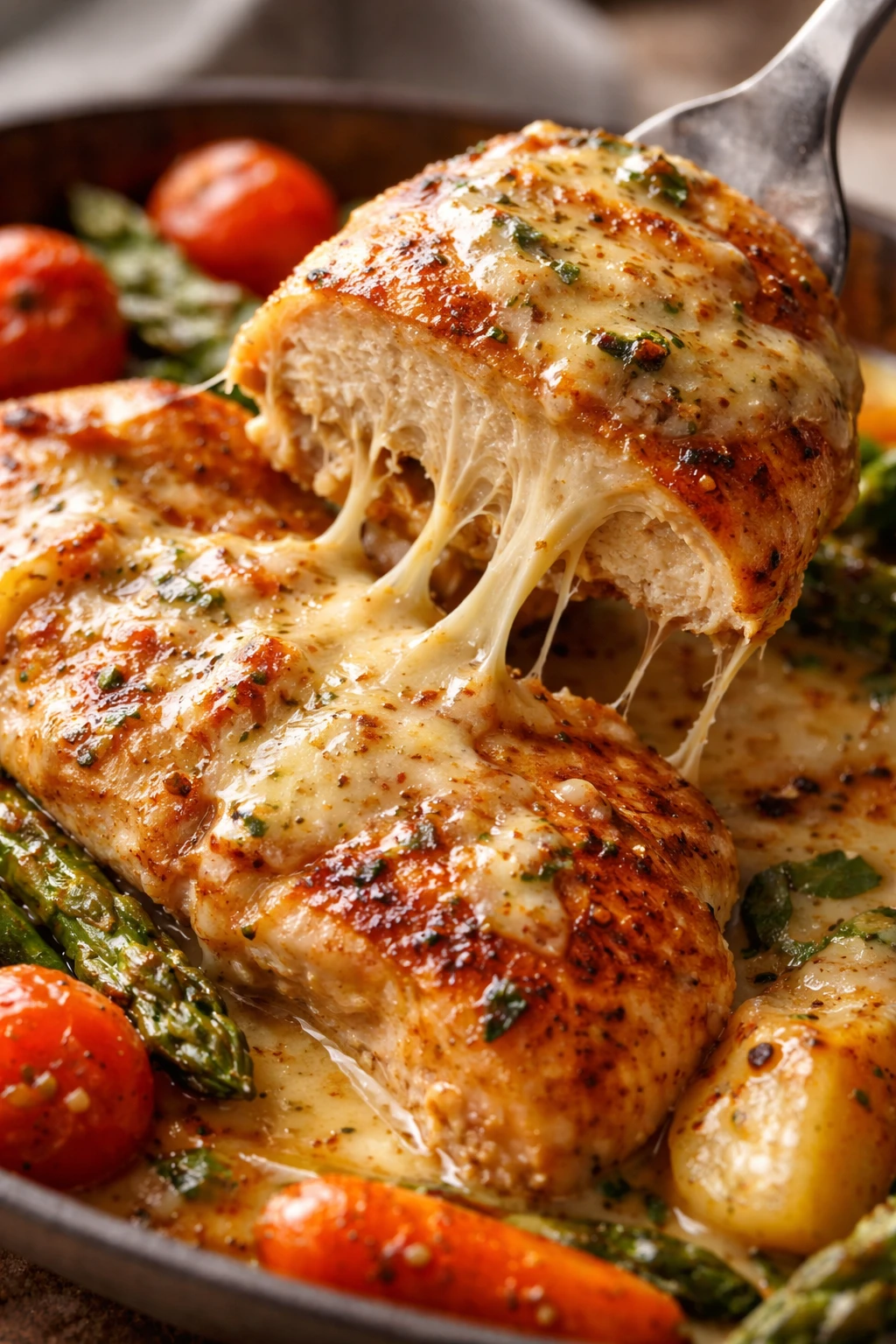
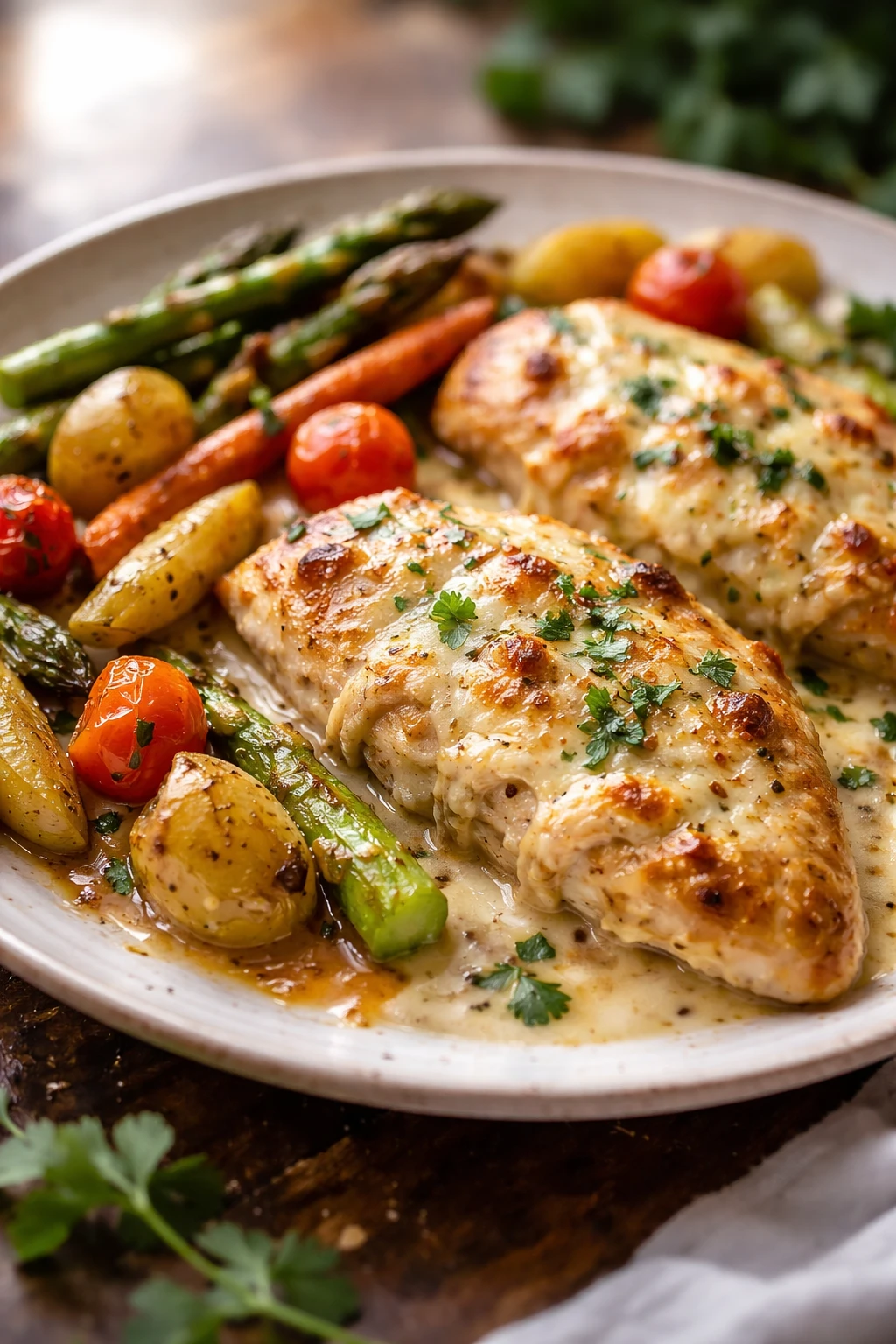
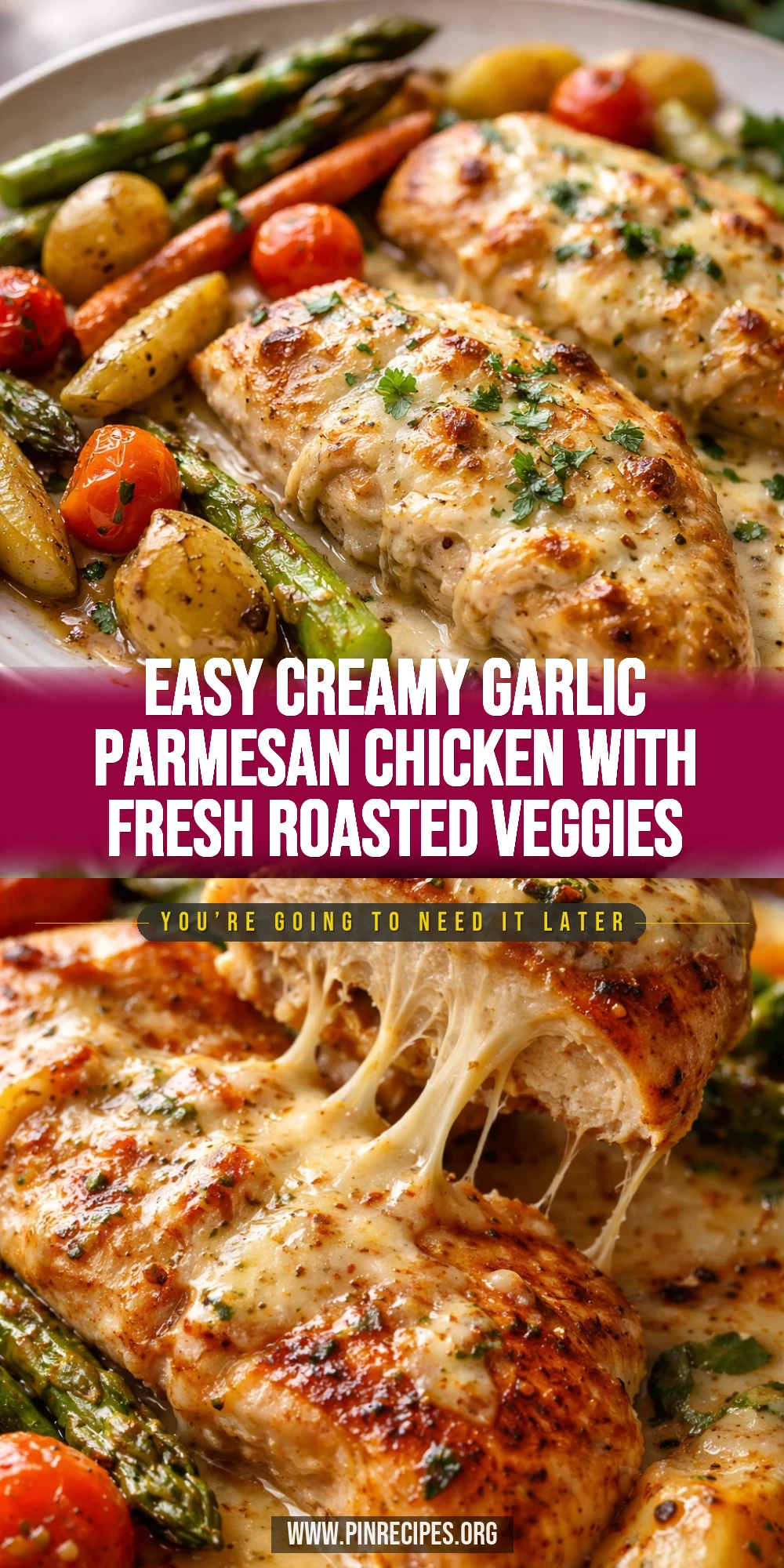
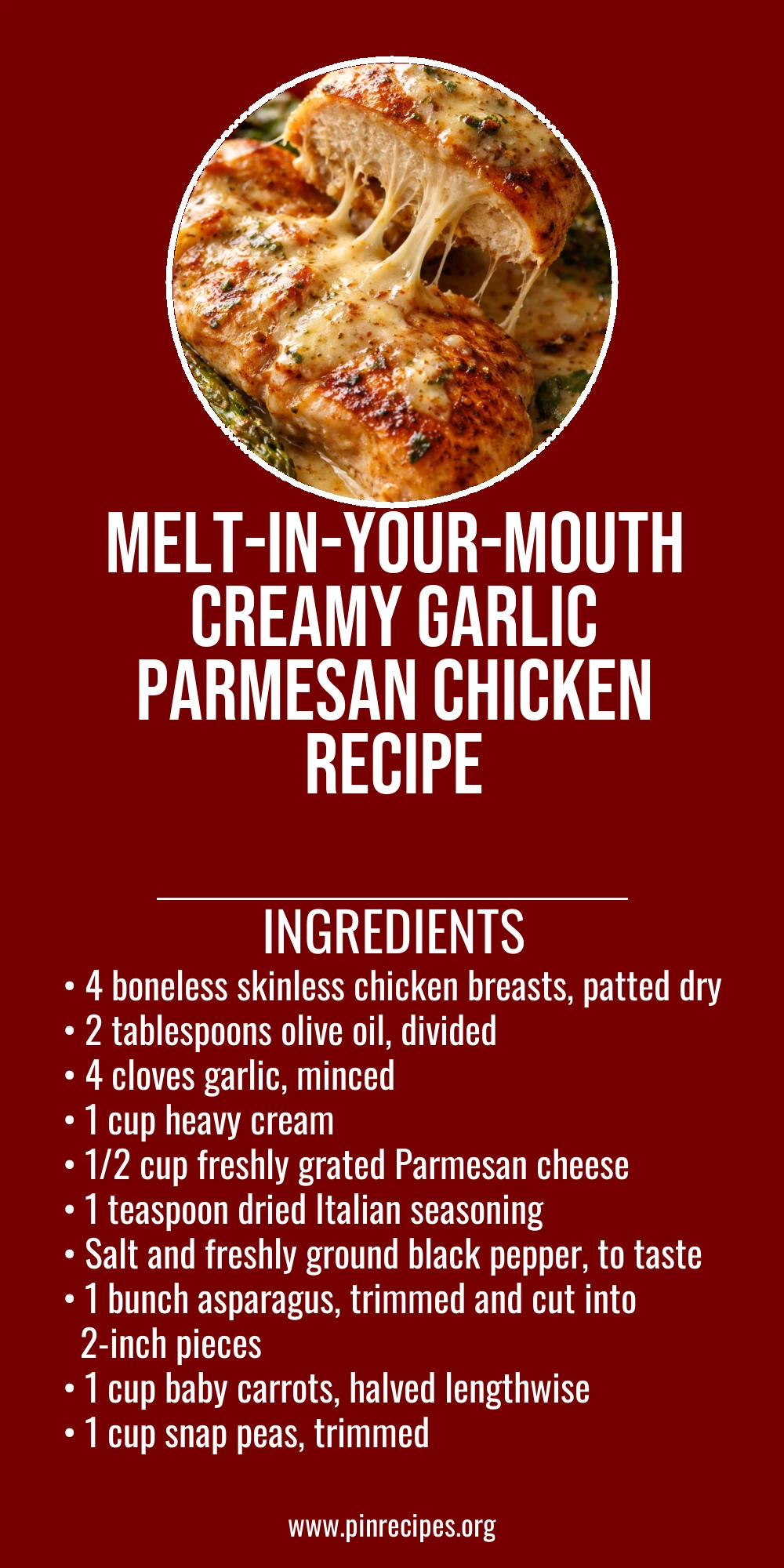
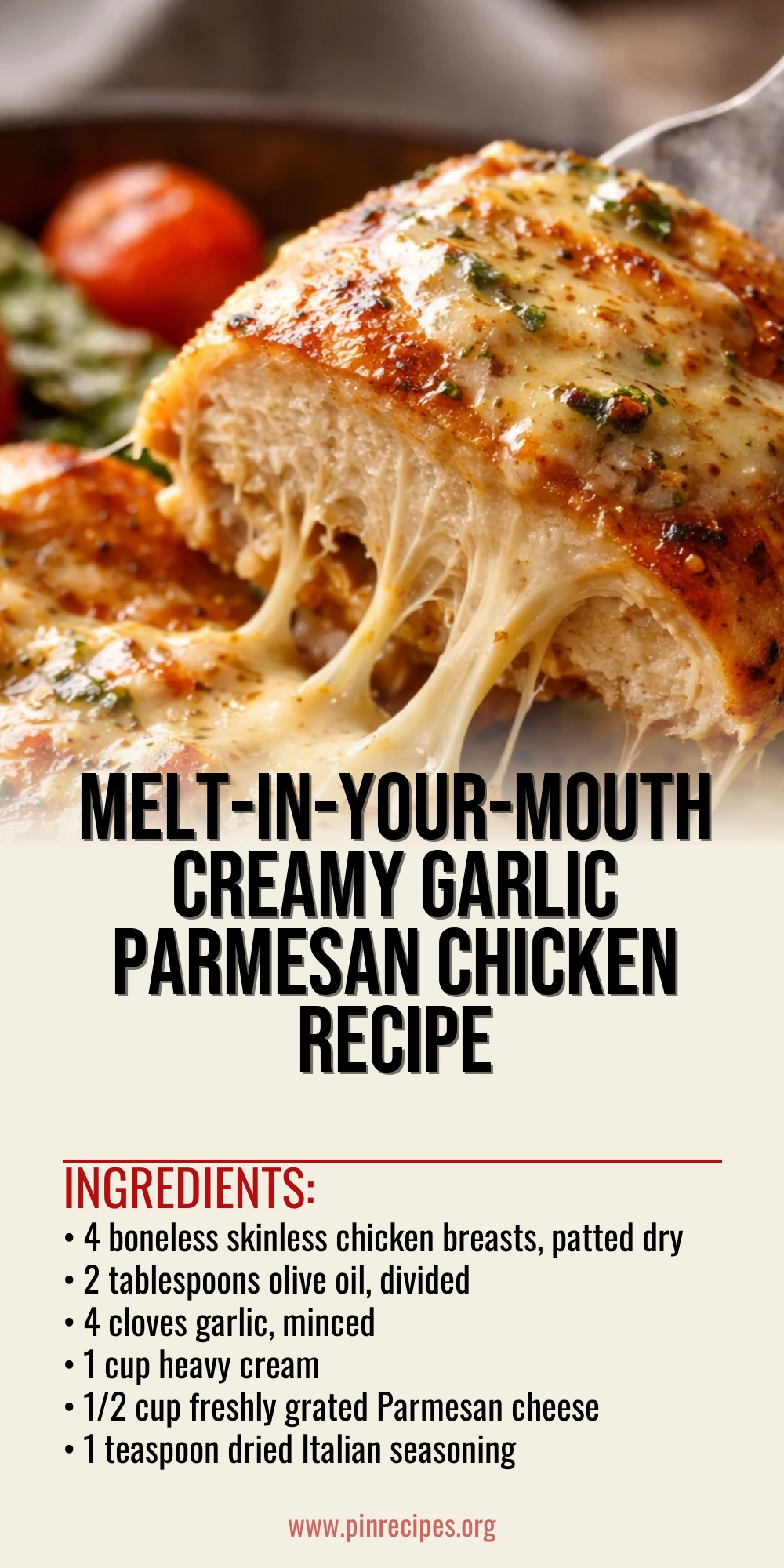
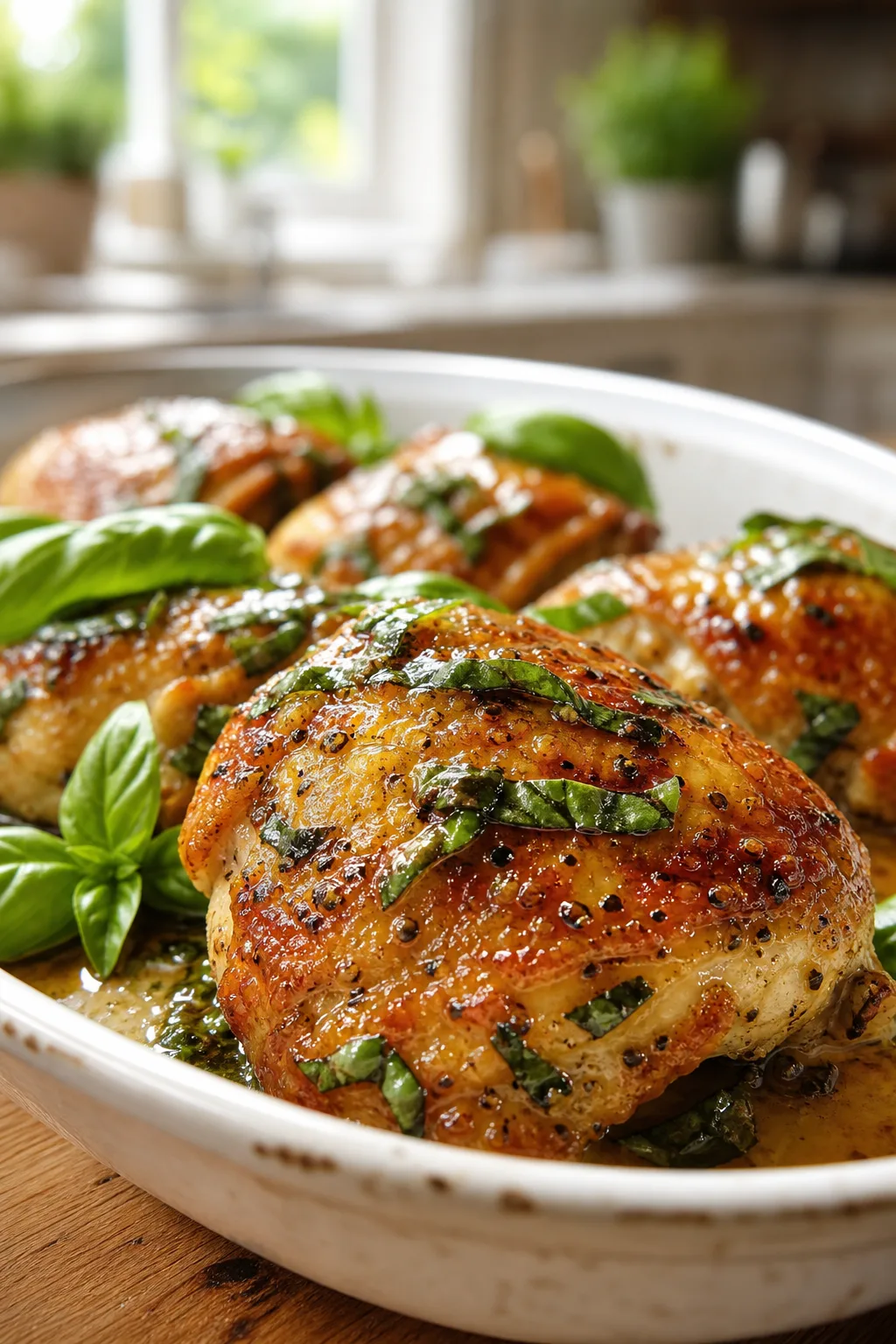
This creamy garlic parmesan chicken is tender and packed with flavor, paired perfectly with roasted spring veggies that bring freshness and crunch. The secret? Slow roasting the vegetables to caramelized perfection. Ideal for cozy dinners or weekend meals!
Introduction
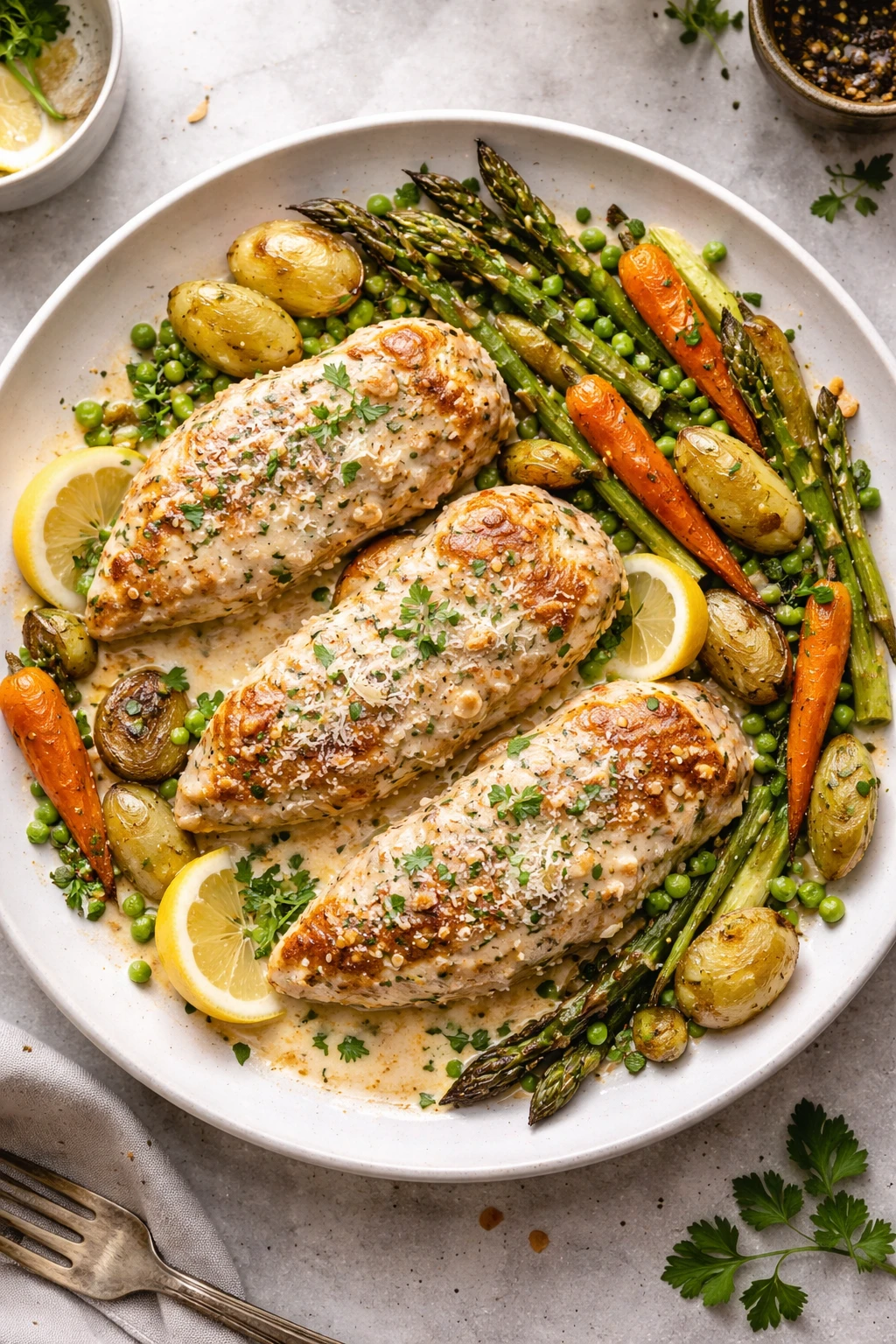
I first stumbled upon this creamy garlic parmesan chicken recipe a few years ago when I was craving something rich but still fresh and light enough for spring. What really hooked me was the way the sauce clings to the tender chicken, balanced by the roasted veggies that add a bit of sweetness and crunch. Over time, I tweaked the roasting technique for the vegetables to really bring out their natural sugars and get a slight caramelization, which makes a huge difference in flavor. I also learned to sear the chicken breasts first to lock in juiciness before letting them simmer gently in the creamy sauce. It’s a little trick that keeps the chicken tender and the sauce velvety. The finished dish looks bright and inviting with the green asparagus and orange carrots peeking out from the sauce, making it perfect for a family dinner or even a casual dinner party. Honestly, it’s one of those meals that feels fancy but is straightforward enough to whip up on a weeknight. I love serving it with crusty bread to soak up every last bit of that garlicky parmesan goodness.
How To Do It
Step 1
Preheat your oven to 425°F (220°C). Toss the asparagus, baby carrots, and snap peas with 1 tablespoon of olive oil, salt, and pepper. Spread them out evenly on a baking sheet. Roasting at a high temperature caramelizes the natural sugars in the vegetables, intensifying their flavor and giving them a delightful texture. Make sure they’re in a single layer to roast evenly and avoid steaming. Roast for about 20-25 minutes, stirring halfway through to get even browning.
⏱ Time: 25 minutes
✓ Doneness: Vegetables are tender with golden brown edges and a slight crispness
Step 2
While the vegetables roast, heat the remaining 1 tablespoon of olive oil in a large skillet over medium-high heat. Season the chicken breasts with salt, pepper, and Italian seasoning. Sear the chicken for about 3-4 minutes on each side until golden brown. This step locks in the juices and creates a flavorful crust that enhances the final dish. Avoid overcrowding the pan to ensure even browning. If the chicken isn’t browned enough, the sauce won’t develop its full depth of flavor.
⏱ Time: 8 minutes
✓ Doneness: Chicken has a golden crust and releases easily from the pan
Step 3
Reduce the heat to medium and add the minced garlic to the skillet. Sauté for about 1 minute until fragrant but not browned, as burnt garlic will add bitterness. Stir constantly to prevent sticking. Garlic infuses the oil and chicken with aromatic flavor that forms the base of the sauce.
⏱ Time: 1 minute
✓ Doneness: Garlic is soft and fragrant with no browning
Step 4
Pour in the heavy cream and bring to a gentle simmer. Stir in the grated Parmesan cheese slowly, allowing it to melt into the cream. This combination creates a silky, rich sauce. Keep the heat moderate to avoid curdling. Stir frequently until the sauce thickens slightly, about 3-5 minutes.
⏱ Time: 5 minutes
✓ Doneness: Sauce is creamy and coats the back of a spoon
Step 5
Return the chicken breasts to the skillet, spooning sauce over each piece. Cover and let simmer on low heat for 8-10 minutes, or until the chicken is cooked through and reaches an internal temperature of 165°F (74°C). This gentle cooking finishes the chicken perfectly without drying it out.
⏱ Time: 10 minutes
✓ Doneness: Chicken is opaque throughout and juices run clear
Step 6
Once the chicken is cooked, remove from heat and stir fresh parsley into the sauce for a bright herbal note. Taste the sauce and adjust seasoning with salt and pepper if needed. Fresh herbs add a pop of color and freshness to balance the richness.
⏱ Time: 2 minutes
✓ Doneness: Sauce is well-seasoned and vibrant
Step 7
Plate the roasted vegetables alongside the creamy garlic parmesan chicken. Spoon extra sauce over the top. The contrast of the roasted veggies’ slight sweetness with the savory, creamy chicken makes each bite interesting and satisfying.
⏱ Time: 2 minutes
✓ Doneness: Dish looks colorful and inviting
Step 8
Serve immediately with crusty bread or over a bed of rice or pasta to soak up the sauce. This meal pairs beautifully with a crisp white wine or sparkling water with lemon for a refreshing balance.
⏱ Time: 0 minutes
✓ Doneness: Ready to eat and enjoy
Step 9
Clean up the cooking area and store any leftovers in an airtight container. Leftover sauce can be gently reheated with a splash of cream or milk to restore creaminess.
⏱ Time: 0 minutes
✓ Doneness: Kitchen tidy and leftovers stored properly
Pro Tips
Pat chicken dry before searing.
Removing excess moisture from the chicken surface prevents steaming during searing, which is crucial for developing a golden, flavorful crust through the Maillard reaction. A wet surface inhibits browning and results in less flavorful chicken.
Don’t rush roasting the vegetables.
Roasting at a high temperature for the full time caramelizes natural sugars, enhancing sweetness and texture. Cutting this short or lowering the temperature leads to bland, soggy veggies instead of crisp, flavorful ones.
Add Parmesan cheese slowly to the cream.
Gradually stirring in cheese allows it to melt evenly and emulsify the sauce, preventing clumps or graininess. Dumping it all in at once can cause uneven melting and a separated sauce.
Use fresh herbs at the end.
Adding parsley or other fresh herbs just before serving preserves their bright flavor and color. Cooking them too long dulls their taste and makes the dish look less vibrant.
Simmer chicken gently in the sauce.
Cooking chicken over low heat in the sauce ensures it stays moist and tender. High heat can toughen the meat and cause the cream sauce to break or curdle.
Use a heavy-bottomed skillet.
A thick pan distributes heat evenly, preventing hot spots that can burn garlic or sauce. It also helps maintain steady simmering, which is key for sauce texture.
Season the vegetables before roasting.
A simple seasoning of oil, salt, and pepper enhances the natural flavors and helps the veggies brown nicely. Skipping this step results in bland roasted vegetables.
Common Mistakes to Avoid
Skipping the sear on chicken breasts.
Why it happens Some cooks assume that cooking chicken directly in the sauce saves time, but this prevents browning and flavor development.
Fix Always sear chicken first over medium-high heat until golden brown on both sides. This locks in juices and adds depth to the final dish.
Overcrowding the roasting pan.
Why it happens Trying to roast too many vegetables at once leads to steaming rather than roasting.
Fix Spread vegetables in a single layer with space between pieces to allow hot air circulation and proper caramelization.
Burning the garlic.
Why it happens Adding garlic to a pan that’s too hot or cooking it too long turns it bitter.
Fix Add garlic after reducing heat to medium and cook just until fragrant, about 30-60 seconds.
Using low-fat dairy.
Why it happens Some try to lighten the dish with milk or half-and-half, but these can curdle when heated.
Fix Stick with heavy cream for a stable, creamy sauce that won’t separate.
Not adjusting seasoning at the end.
Why it happens People often season too early and forget to taste before serving.
Fix Always taste the sauce at the end and adjust salt and pepper to balance flavors perfectly.
Variations
Add Mushrooms for Earthiness
Sauté sliced cremini or button mushrooms with the garlic for an earthy depth that pairs beautifully with the creamy sauce. Mushrooms add umami and a meaty texture, making the dish heartier.
Note: Cook mushrooms until golden and their moisture evaporates before adding cream to avoid a watery sauce.
Swap Heavy Cream for Coconut Milk
For a dairy-free twist, substitute heavy cream with full-fat coconut milk. This adds a subtle coconut flavor and keeps the sauce rich and creamy, perfect for those avoiding dairy.
Note: Simmer gently to prevent coconut milk from curdling and stir frequently.
Use Chicken Thighs Instead of Breasts
Chicken thighs stay juicier and more forgiving if slightly overcooked. Use boneless, skinless thighs for a richer flavor and tender texture that pairs well with the parmesan sauce.
Note: Adjust cooking time slightly; thighs may need a few extra minutes to reach safe temperature.
Add a Kick with Red Pepper Flakes
Sprinkle in red pepper flakes while sautéing garlic for a subtle heat that livens up the creamy sauce without overpowering it.
Note: Add flakes early with garlic to infuse the oil but watch closely to avoid burning.
Serve Over Pasta or Rice
Instead of serving with roasted vegetables on the side, spoon the creamy chicken and sauce over cooked pasta or rice for a comforting one-pan meal that’s perfect for leftovers.
Note: Drain pasta well and toss with a little olive oil before plating to prevent sticking.
Nutrition
Per Serving:
Nutritional values are estimates and may vary based on specific ingredients used.
Storage & Tips
Room Temperature
This dish can safely sit at room temperature for up to 2 hours if covered loosely. Beyond that, bacteria growth can occur, so refrigerate promptly.
Refrigerator
Store leftovers in an airtight container for up to 3 days. The sauce may thicken when cold; reheat gently with a splash of cream or milk to restore creaminess. Vegetables may soften slightly but remain tasty.
Freezer
Freeze cooked chicken and sauce separately from vegetables for up to 2 months. Wrap tightly in freezer-safe containers or bags to prevent freezer burn. Thaw overnight in the fridge before reheating.
Reheating
Reheat on the stovetop over low heat, stirring often and adding a splash of cream or milk to loosen the sauce. Avoid high heat to prevent curdling. Vegetables can be reheated in the oven or microwave separately to maintain texture.
Make Ahead
You can roast the vegetables and prepare the sauce a day ahead. Store separately and reheat gently before combining with freshly seared chicken on the day of serving for maximum freshness.
FAQ
Can I use frozen chicken breasts for this recipe?
It's best to use fully thawed chicken breasts to ensure even cooking and proper searing. Cooking frozen chicken directly can result in uneven doneness and watery sauce due to excess moisture.
What can I substitute for heavy cream if I don’t have any?
You can use half-and-half mixed with a bit of butter to mimic the fat content, but the sauce might be less rich and could separate if overheated. Coconut milk is a good dairy-free alternative but will add a coconut flavor.
How do I know when the chicken is fully cooked?
The safest way is to use a meat thermometer; the internal temperature should reach 165°F (74°C). Alternatively, cut into the thickest part to check that the juices run clear and the meat is opaque.
Can I prepare this recipe ahead of time?
Yes! Roast the vegetables and make the sauce a day ahead, storing them separately. On serving day, reheat gently and add freshly seared chicken for the best texture and flavor.
Why did my sauce separate or curdle?
Sauce can separate if cooked on too high heat or if low-fat dairy is used. To avoid this, simmer the sauce gently and use heavy cream. Stir frequently and add cheese slowly.
Can I use other vegetables instead of asparagus and snap peas?
Absolutely! Broccoli, zucchini, or green beans work well when roasted. Just adjust roasting times slightly based on vegetable density to avoid under or overcooking.
How can I make this recipe spicier?
Add red pepper flakes with the garlic or a dash of cayenne pepper to the sauce. Start with a small amount and adjust to your heat preference.
Can I use pre-grated Parmesan cheese?
Pre-grated cheese often contains anti-caking agents that can prevent smooth melting. For the best sauce texture and flavor, freshly grate your Parmesan cheese.
Final Thoughts
Give this creamy garlic parmesan chicken with roasted spring vegetables a try—you’ll love how comforting and fresh it feels. Don’t forget to share how it turns out!