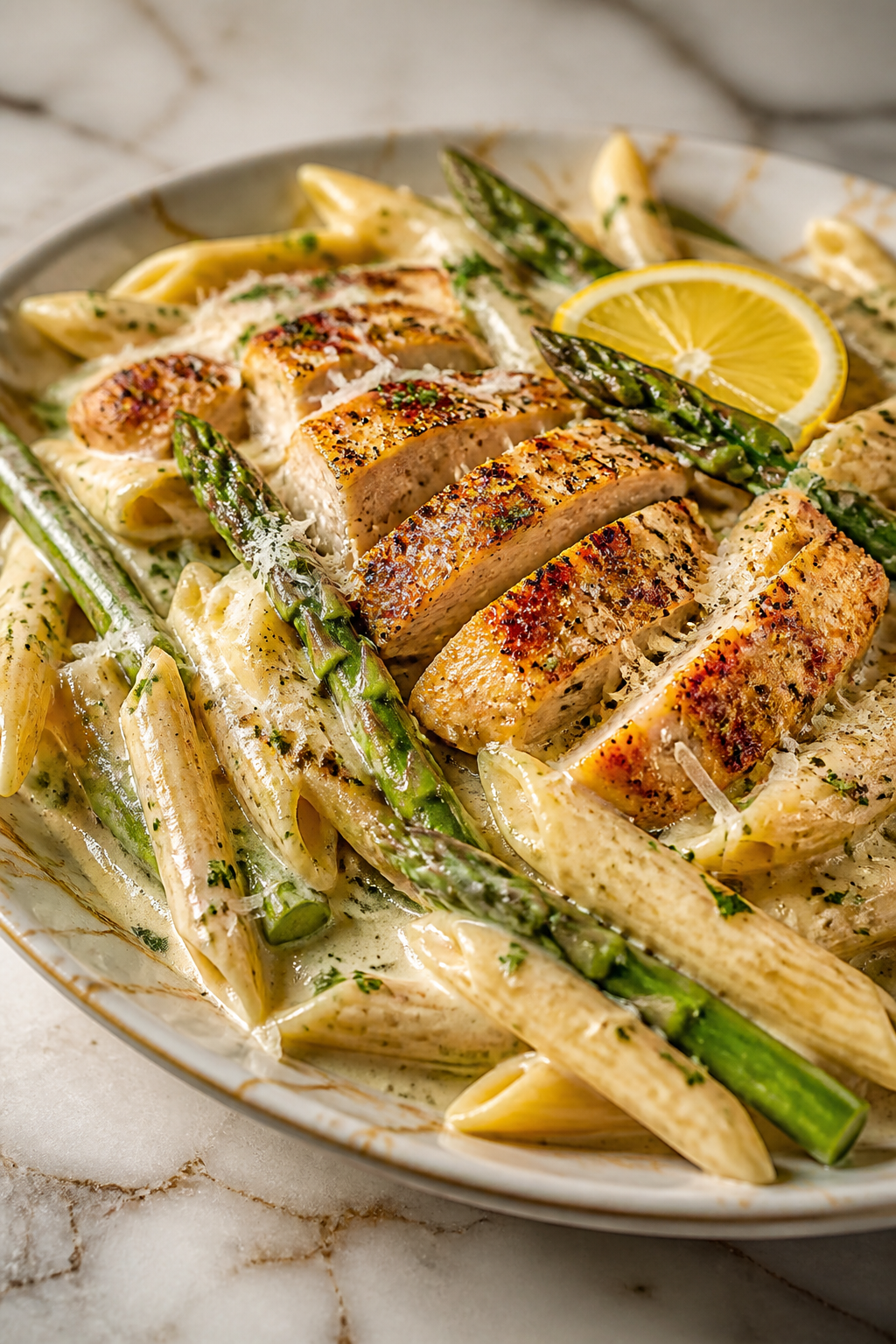
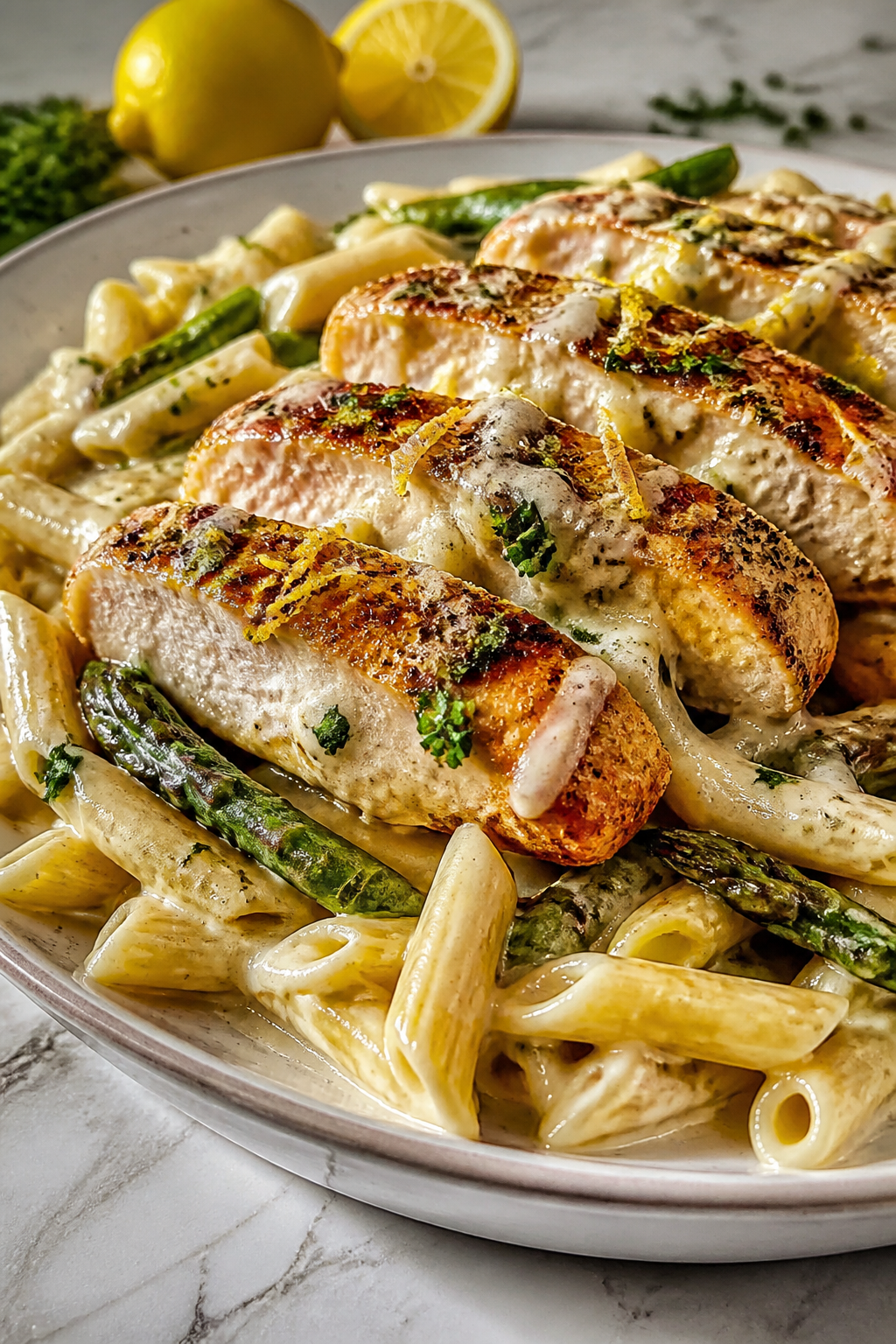
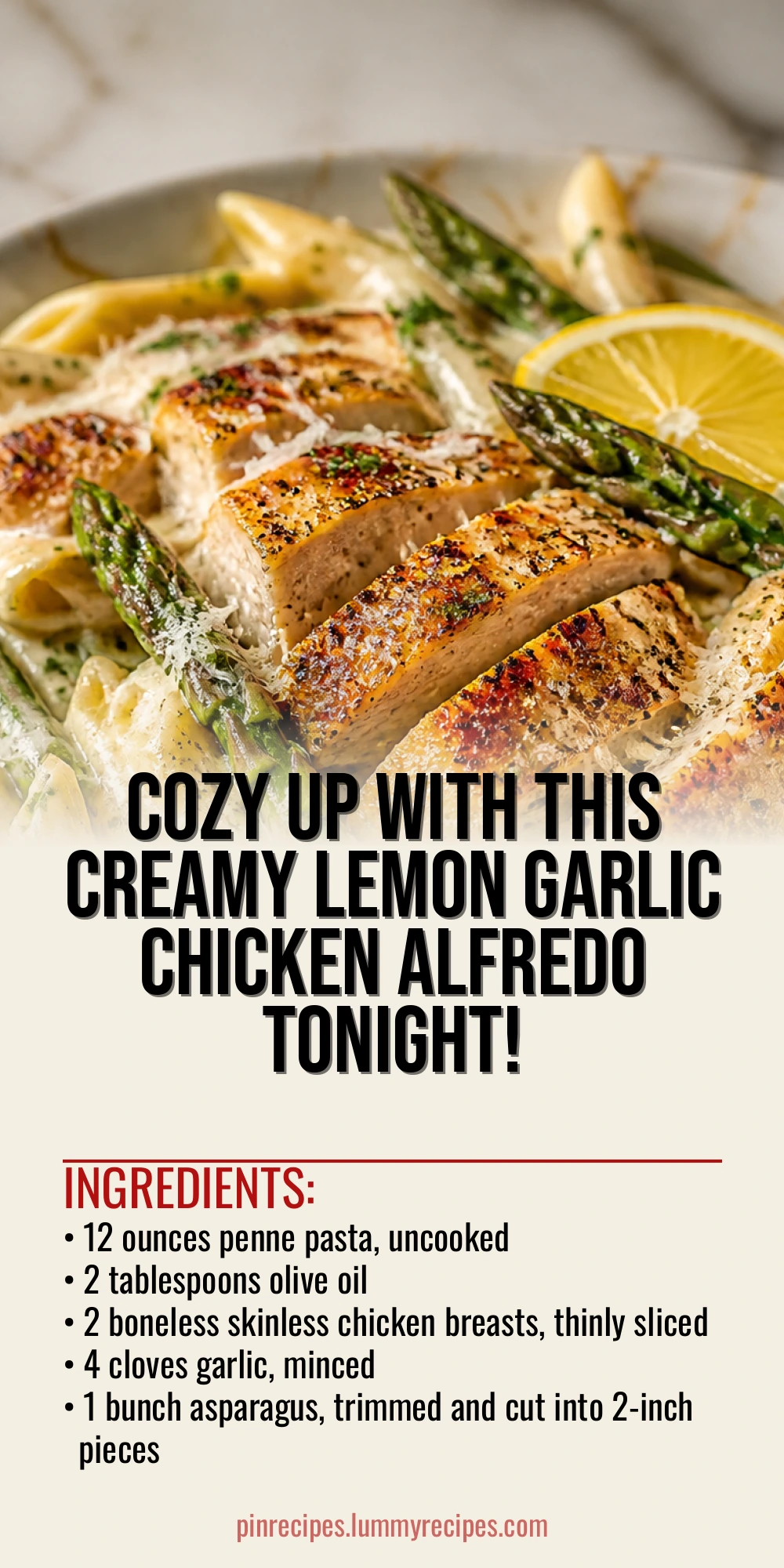
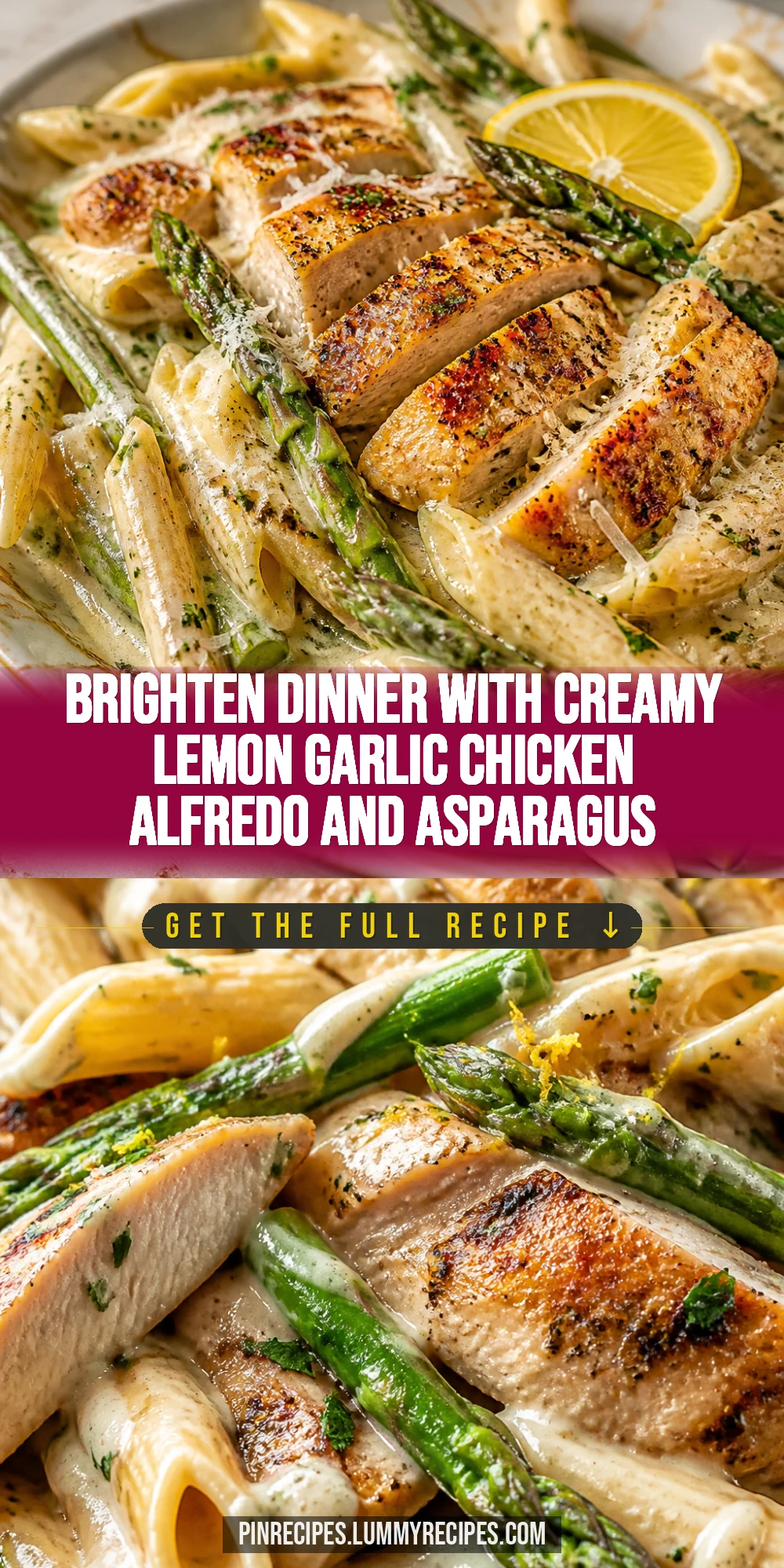
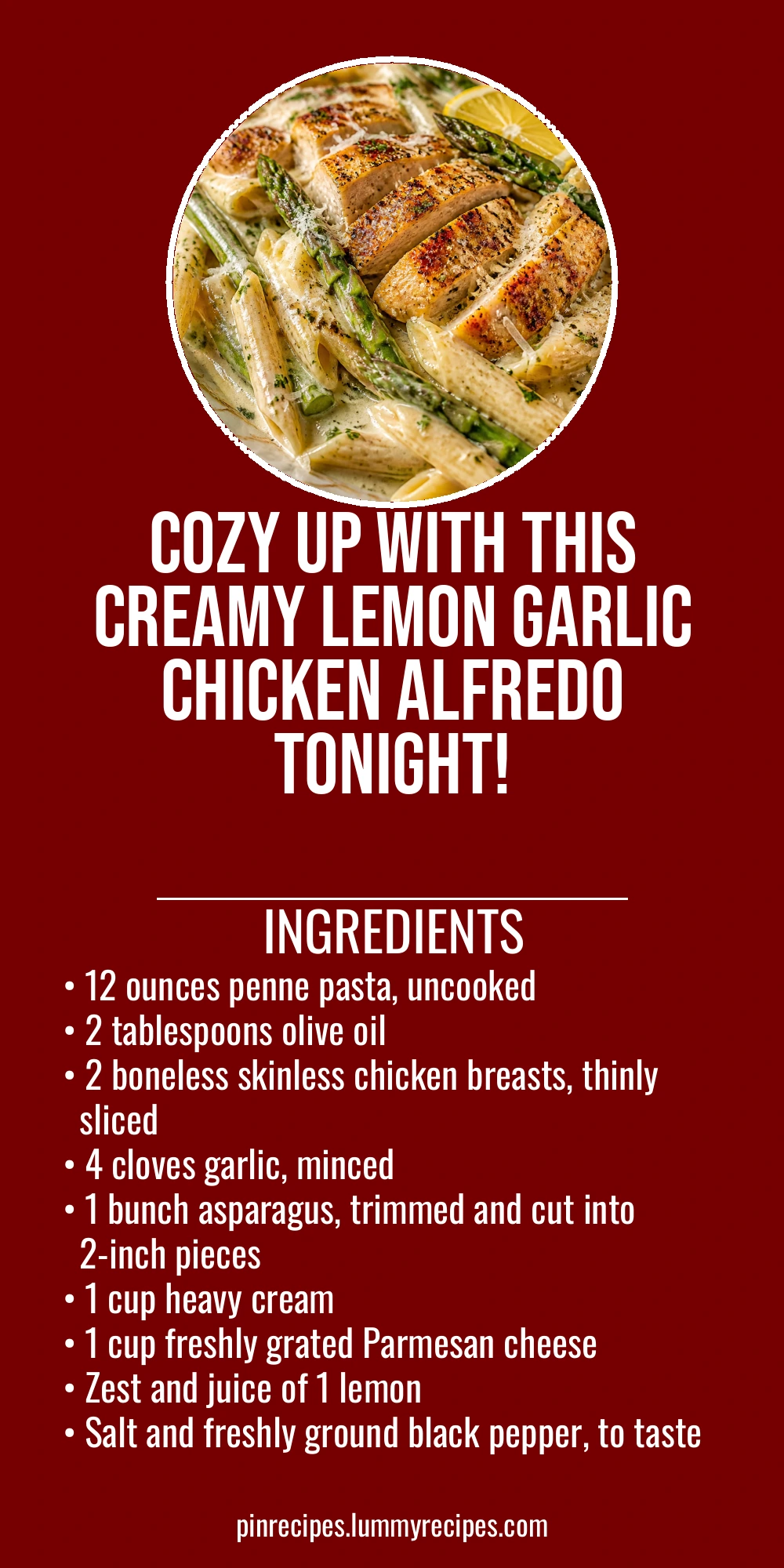
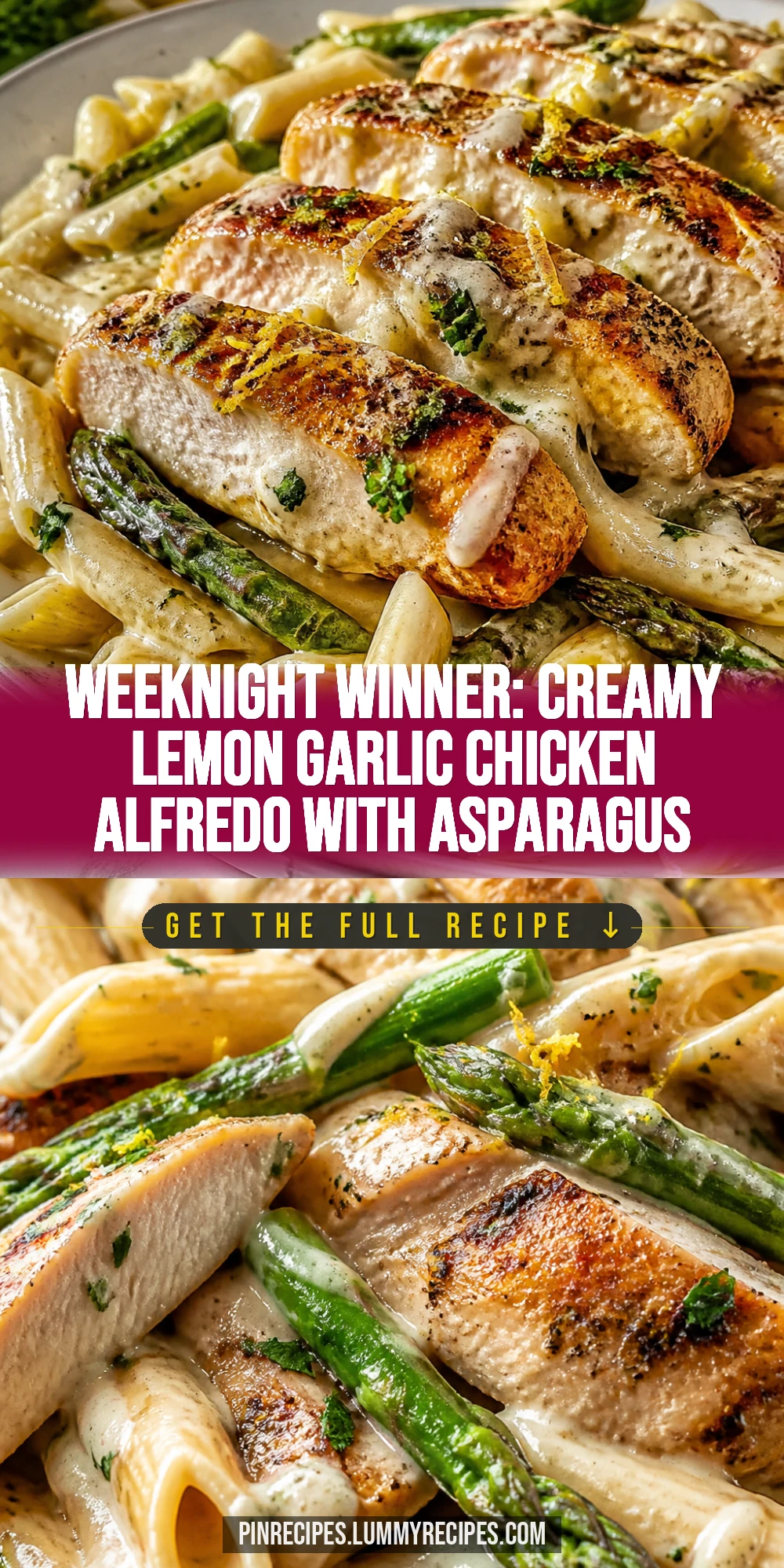
This creamy lemon garlic chicken Alfredo is comfort food with a fresh twist. The asparagus adds a nice crunch, and the lemon brightens up the rich sauce. Great for a cozy family dinner any night!
Introduction
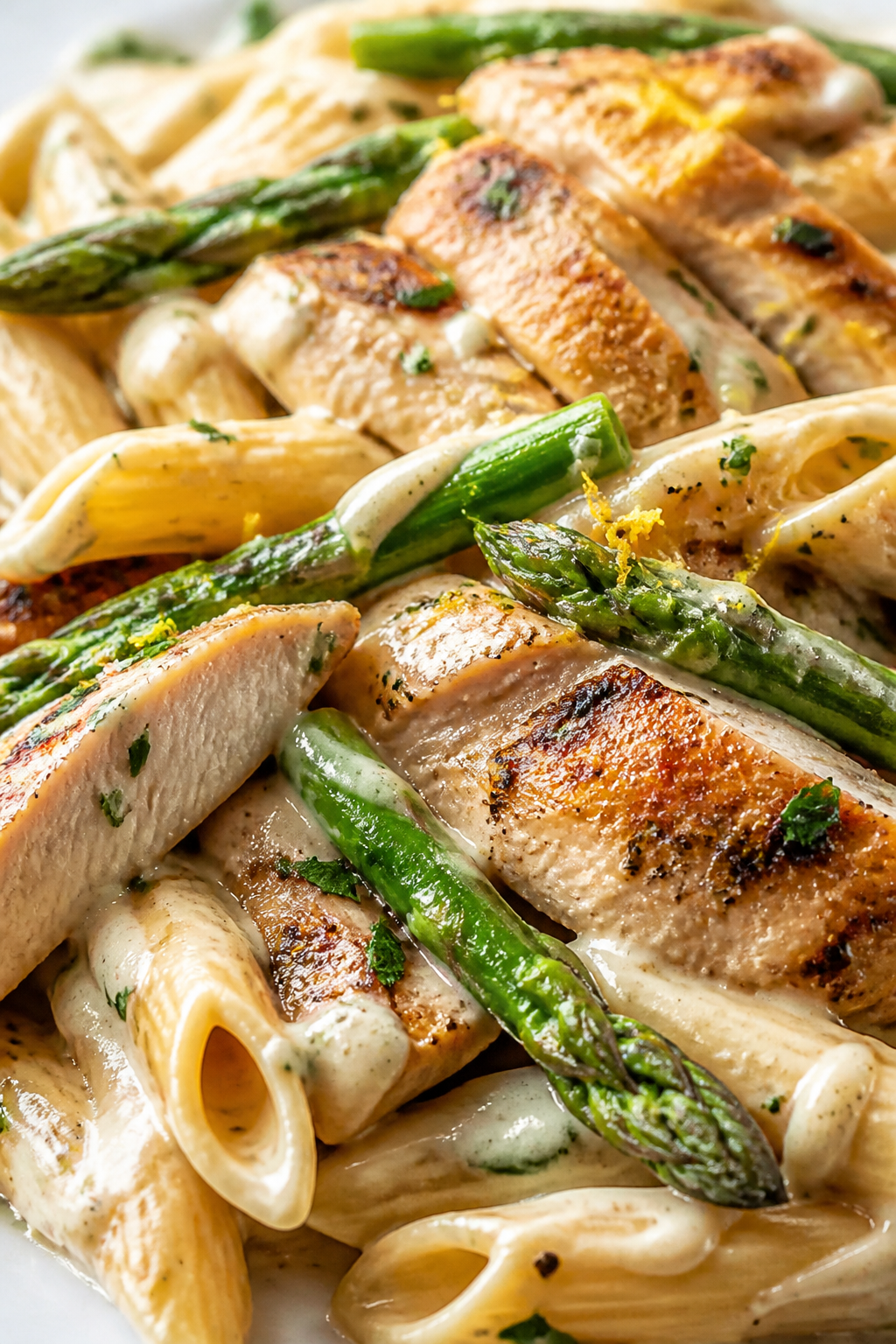
I first made this creamy lemon garlic chicken Alfredo on a chilly evening when I wanted something comforting but not too heavy. The classic Alfredo sauce is rich and luscious, but the addition of fresh lemon zest and juice gives it a bright, lively flavor that really wakes up the dish. Plus, tossing in tender asparagus adds a lovely crunch and a splash of green that makes it feel a little healthier. What I love most about this recipe is how it balances indulgence with freshness—perfect for a family dinner that feels special but is still easy to pull together. One little trick I learned is to cook the asparagus just until tender-crisp so it keeps its texture and color, which really makes the plate pop. Also, using freshly grated Parmesan instead of pre-shredded cheese makes a huge difference in the sauce’s creaminess and depth. When it’s done, you’ll have a silky, garlicky sauce coating perfectly cooked penne and juicy chicken slices, with that bright lemon note cutting through the richness. It’s a recipe I’ve made many times now, and it never fails to please the whole family.
How To Do It
Step 1
Bring a large pot of salted water to a boil. Add the penne pasta and cook according to package instructions until al dente, usually about 10-12 minutes. It’s important not to overcook the pasta because it will continue to cook slightly when mixed with the sauce later. Drain the pasta and set aside, reserving about a cup of pasta water. This starchy water will help loosen the sauce later if needed.
⏱ Time: 12 minutes
✓ Doneness: Pasta should be tender but still firm to the bite, not mushy.
Step 2
While the pasta cooks, heat olive oil in a large skillet over medium-high heat. Season the chicken slices with salt and pepper, then add them to the pan in a single layer. Cook without moving for about 3-4 minutes until golden brown, then flip and cook the other side until cooked through, about 3 more minutes. Avoid overcrowding the pan to ensure a nice sear instead of steaming. Remove chicken and set aside.
⏱ Time: 7 minutes
✓ Doneness: Chicken should be golden brown on both sides and no longer pink inside.
Step 3
In the same skillet, reduce heat to medium and add the butter. Once melted, add the minced garlic and sauté for about 1 minute until fragrant but not browned. Garlic burns quickly and turns bitter, so keep a close eye and stir frequently.
⏱ Time: 1 minute
✓ Doneness: Garlic should be soft and aromatic without any dark spots.
Step 4
Add the asparagus pieces to the skillet and sauté for 3-4 minutes until they turn bright green and are tender-crisp. You want them cooked but still with a little bite. Overcooked asparagus becomes mushy and dull in color.
⏱ Time: 4 minutes
✓ Doneness: Asparagus should be bright green and slightly firm when pierced with a fork.
Step 5
Pour in the heavy cream and stir to combine. Bring the mixture to a gentle simmer, then reduce heat to low. Let it cook for 3-5 minutes to thicken slightly. Stir occasionally to prevent the cream from scorching on the pan bottom.
⏱ Time: 5 minutes
✓ Doneness: Sauce should coat the back of a spoon and be slightly thickened.
Step 6
Remove the skillet from heat and stir in the grated Parmesan cheese until melted and smooth. Adding the cheese off the heat prevents it from clumping or separating. If the sauce feels too thick, add reserved pasta water a little at a time until you reach your desired consistency.
⏱ Time: 3 minutes
✓ Doneness: Sauce should be creamy, smooth, and glossy.
Step 7
Stir in the lemon zest and lemon juice to the sauce. The lemon adds a fresh brightness that cuts through the richness of the cream and cheese. Taste and adjust seasoning with salt and pepper as needed.
⏱ Time: 2 minutes
✓ Doneness: Sauce should taste balanced with a noticeable but not overpowering lemon flavor.
Step 8
Add the cooked chicken slices back into the skillet along with the drained pasta. Toss everything gently to coat the pasta and chicken evenly with the sauce and asparagus. Warm it through on low heat for a minute or two if needed.
⏱ Time: 2 minutes
✓ Doneness: Dish should be evenly coated and heated through without the sauce breaking.
Step 9
Serve immediately, garnished with chopped fresh parsley for a pop of color and fresh flavor. This dish is best enjoyed right away for the creamiest texture and freshest taste.
⏱ Time: 1 minute
✓ Doneness: Plated dish should look creamy, vibrant, and inviting.
Pro Tips
Reserve pasta water before draining to adjust sauce consistency.
The starchy pasta water acts as a natural thickener and helps the sauce cling to the noodles better. Without it, the sauce might be too thick or separate. Adding it gradually lets you control the perfect creamy texture.
Cook chicken in batches if needed to avoid overcrowding the pan.
Overcrowding traps steam and prevents the chicken from browning properly. Browning adds flavor through Maillard reactions and improves texture. Cooking in batches ensures each piece gets a nice sear.
Add Parmesan cheese off the heat to prevent clumping.
High heat can cause cheese proteins to seize and clump, resulting in a grainy sauce. Stirring cheese in off the heat allows it to melt smoothly into the cream, creating a silky sauce.
Use freshly grated Parmesan instead of pre-shredded cheese.
Pre-shredded cheese often contains anti-caking agents that inhibit smooth melting, leading to a less creamy sauce. Freshly grated cheese melts better and gives a richer flavor.
Cook asparagus until just tender-crisp for best texture.
Asparagus cooks quickly and continues to soften after removal from heat. Cooking until tender-crisp preserves its bright color and pleasant crunch, adding contrast to the creamy pasta.
Zest the lemon before juicing to avoid bitterness.
The white pith under the lemon peel is bitter, so zest only the colored part. This zest contains flavorful oils that brighten the dish without harshness.
Use a wide skillet to cook chicken in a single layer.
A wide pan ensures even heat distribution and space for chicken pieces to brown properly. Crowding causes steaming and less flavorful meat.
Common Mistakes to Avoid
Overcooking the pasta until mushy
Why it happens Many cooks leave pasta boiling too long, thinking softer is better, but it becomes mushy and loses bite.
Fix Cook pasta just until al dente, then drain immediately. Remember it will cook a bit more when mixed with sauce.
Burning the garlic
Why it happens Garlic cooks very fast and can burn if left unattended or cooked on too high heat.
Fix Sauté garlic on medium heat and watch closely, stirring frequently. Remove from heat as soon as fragrant.
Skipping reserving pasta water
Why it happens People often drain pasta without saving water, missing out on a natural sauce thickener.
Fix Always save at least ½ cup of pasta water before draining to adjust sauce texture.
Overcooking asparagus until limp
Why it happens Asparagus cooks quickly, and some assume it should be very soft.
Fix Sauté asparagus until bright green and tender-crisp, about 3-4 minutes, then remove from heat.
Adding cheese directly to boiling sauce
Why it happens High heat causes cheese to clump or separate.
Fix Remove pan from heat before stirring in Parmesan to ensure smooth melting.
Variations
Mushroom and Spinach Alfredo
Add sautéed mushrooms and fresh spinach along with the asparagus for an earthier flavor and extra veggies. The mushrooms add umami, and spinach wilts nicely in the creamy sauce.
Note: Sauté mushrooms until golden before adding garlic; add spinach last to avoid overcooking.
Shrimp Alfredo with Lemon and Garlic
Swap chicken for shrimp to give this dish a seafood twist. Shrimp cook quickly and pair beautifully with lemon and garlic flavors, making it a lighter but still indulgent meal.
Note: Cook shrimp separately until just pink to prevent rubberiness, then toss with pasta and sauce.
Gluten-Free Alfredo with Zucchini Noodles
Use spiralized zucchini noodles instead of penne for a low-carb, gluten-free option. The zucchini adds freshness but requires gentle cooking to avoid sogginess.
Note: Sauté zucchini noodles briefly to remove excess moisture before adding sauce.
Creamy Alfredo with Sun-Dried Tomatoes
Mix in chopped sun-dried tomatoes for a tangy, slightly sweet burst that complements the creamy sauce. It adds color and a Mediterranean flair.
Note: Add sun-dried tomatoes along with the cream to allow flavors to meld.
Spicy Cajun Chicken Alfredo
Add Cajun seasoning to the chicken before cooking and a pinch of red pepper flakes to the sauce for a spicy kick. This variation brings warmth and bold flavor.
Note: Adjust spice levels to taste and balance with lemon juice to keep freshness.
Nutrition
Per Serving:
Nutritional values are estimates and may vary based on specific ingredients used.
Storage & Tips
Room Temperature
This dish should not be left out at room temperature for more than 2 hours to avoid bacterial growth. Cover with foil or plastic wrap if you plan to serve within that timeframe.
Refrigerator
Store leftovers in an airtight container for up to 3 days. The sauce may thicken and the pasta absorb liquid, so gently reheat with a splash of milk or cream to restore creaminess.
Freezer
You can freeze this dish for up to 2 months. Pack in a freezer-safe container, leaving some headspace. Thaw overnight in the fridge before reheating to preserve texture and flavor.
Reheating
Reheat on the stovetop over low heat, stirring often and adding a splash of cream or milk to loosen the sauce. Microwave reheating is possible but may dry out the chicken and pasta.
Make Ahead
Prepare the sauce and chicken up to 1 day ahead and refrigerate separately from the pasta. Cook pasta fresh or reheat gently before combining all components just before serving.
FAQ
Can I use chicken thighs instead of breasts?
Yes, chicken thighs work well and add more flavor due to higher fat content. Slice them thinly and cook similarly, but they may need a minute or two longer to cook through. Just ensure they reach an internal temperature of 165°F for safety.
What if I don’t have heavy cream?
You can substitute half-and-half or whole milk mixed with a bit of butter, but the sauce will be less rich and creamy. To thicken it, you might need to add a small amount of flour or cornstarch slurry while simmering.
How do I prevent the sauce from separating?
Avoid boiling the sauce once the cheese is added, and stir gently off heat to melt the cheese smoothly. High heat or rapid boiling causes the fat and water to separate, making the sauce grainy.
Can I make this recipe vegetarian?
Absolutely! Skip the chicken and add extra vegetables like mushrooms, broccoli, or peas. You can also add plant-based protein like tofu or tempeh. Just adjust cooking times accordingly.
Is it okay to use pre-grated Parmesan cheese?
Pre-grated cheese often contains anti-caking agents that can prevent smooth melting, resulting in a grainy sauce. Freshly grated Parmesan is best for a creamy texture and richer flavor.
How do I keep the asparagus bright green?
Cook asparagus just until tender-crisp, about 3-4 minutes. Overcooking turns it dull and mushy. You can also shock it in ice water after cooking to preserve color if preparing ahead.
Can I prepare this dish ahead of time?
You can prepare the sauce and chicken a day ahead and refrigerate separately. Cook pasta fresh or reheat gently before combining. This keeps textures fresh and prevents the pasta from becoming mushy.
What’s the best way to reheat leftovers?
Reheat gently on the stovetop over low heat, adding a splash of cream or milk to loosen the sauce. Stir often to prevent sticking. Microwave can be used but may dry out the dish.
Final Thoughts
I hope you give this creamy lemon garlic chicken Alfredo a try—it’s one of those dishes that feels like a warm hug after a long day. Let me know how it turns out!