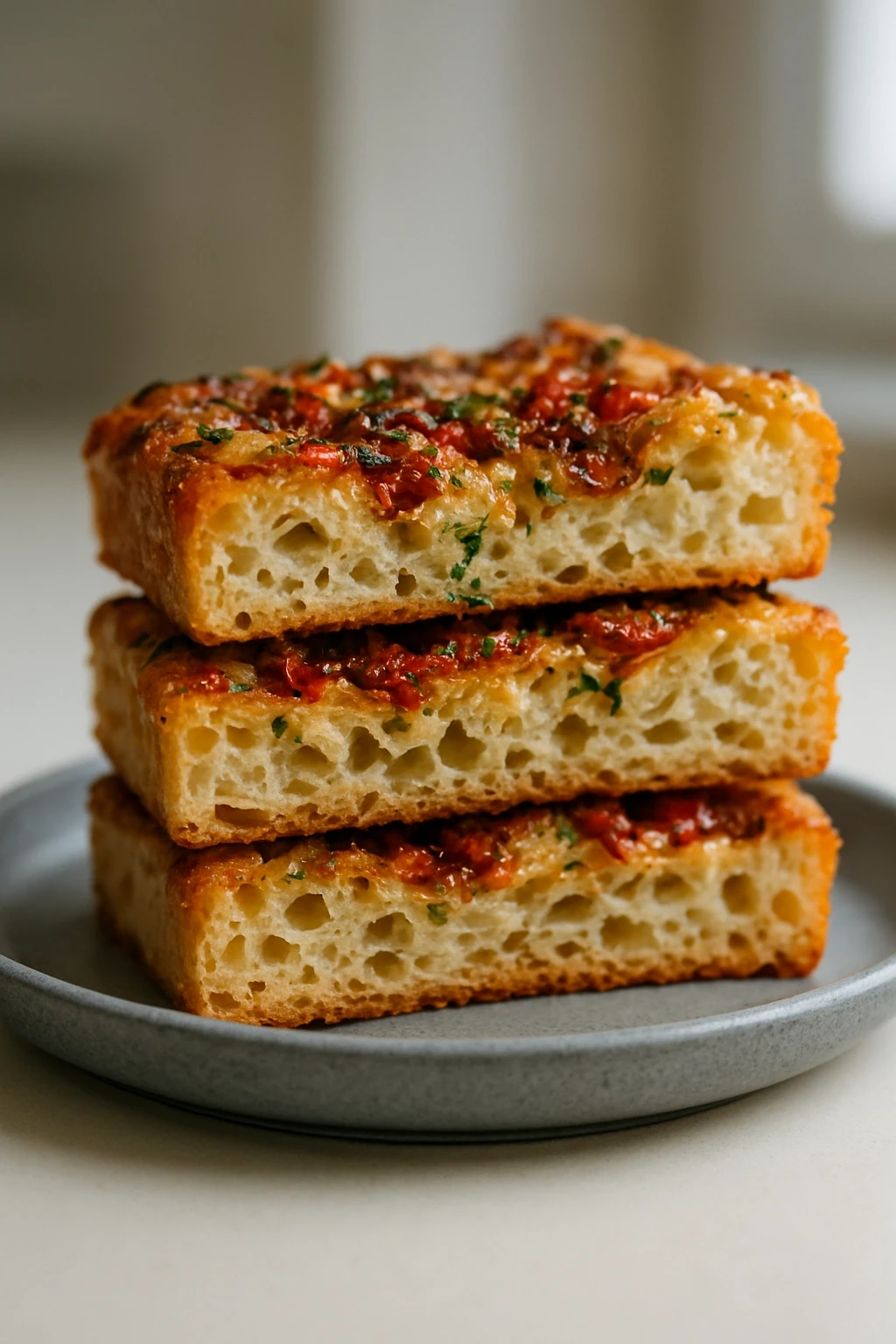
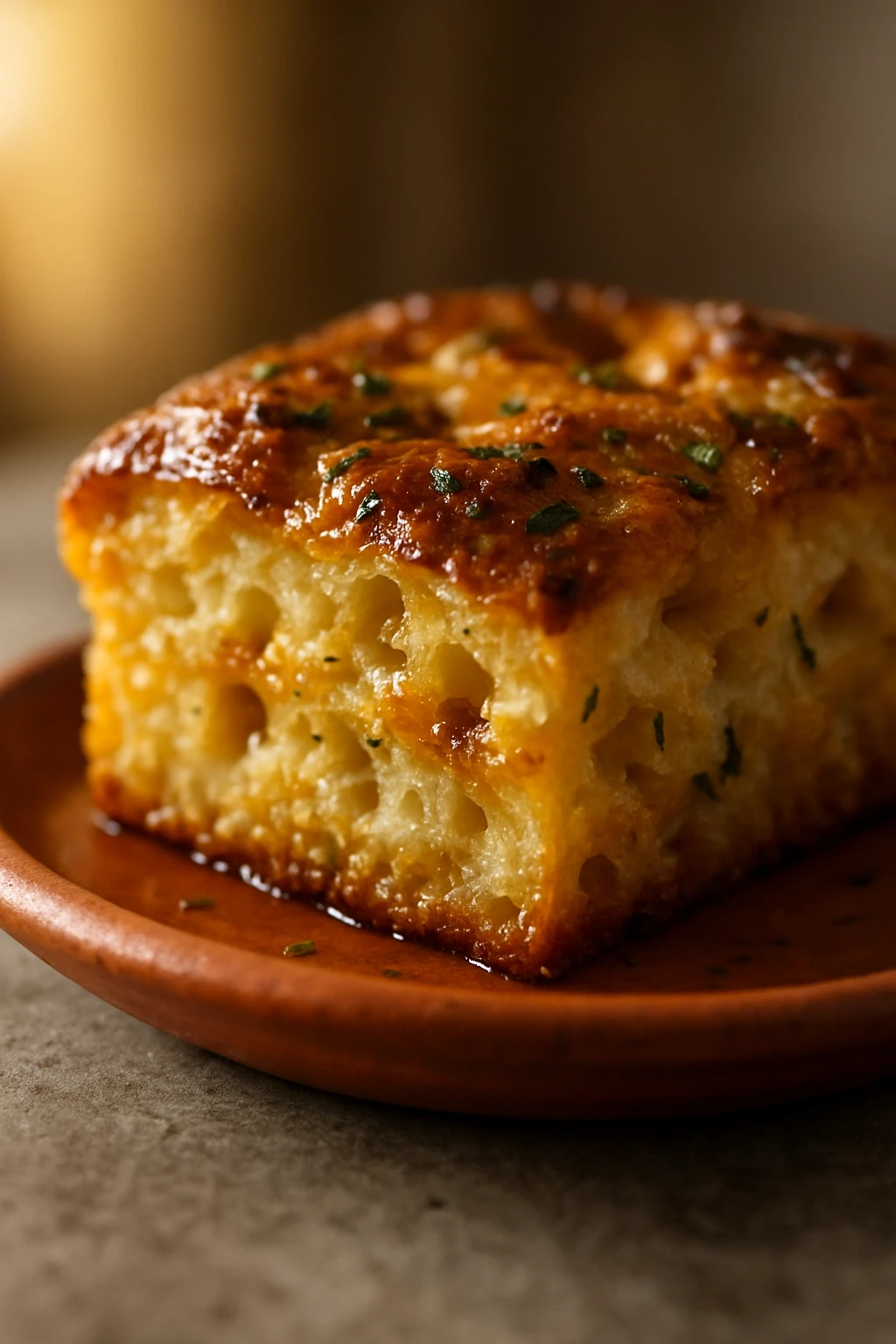
This sourdough focaccia is a game-changer for bread lovers. With a crispy crust and soft, airy center, it’s perfect for dipping or sandwiches. Your friends will be begging for the recipe!
How To Do It
Step 1
In a large mixing bowl, combine the bread flour and warm water. Mix until just combined, ensuring there are no dry flour pockets. This step is crucial because it activates the gluten, which will give your focaccia its structure. Allow this mixture to rest for about 30 minutes; this process, called autolyse, helps develop the dough's texture and flavor. If you skip this, you might end up with a denser bread.
⏱ Time: 30 minutes
✓ Doneness: The dough should look smooth and slightly elastic after resting.
Step 2
After the autolyse, add the sourdough starter and salt to the dough. Mix well until fully incorporated. The salt is essential for flavor and helps control yeast activity, so don’t skip it! Knead the dough for about 5-7 minutes until it's smooth and elastic. You can do this by hand or using a stand mixer with a dough hook. If the dough feels too sticky, add a little more flour, but be careful not to overdo it.
⏱ Time: 7 minutes
✓ Doneness: The dough should be smooth and slightly tacky but not overly sticky.
Step 3
Transfer the dough to a lightly oiled bowl, cover it with a damp cloth, and let it rise at room temperature for about 4-6 hours, or until it has doubled in size. This slow fermentation is what gives sourdough its unique flavor and texture. Make sure the environment is warm enough; if it's too cold, the dough will take longer to rise. You can also do a cold fermentation in the fridge overnight for even more flavor.
⏱ Time: 4-6 hours
✓ Doneness: The dough should have doubled in size and look puffy.
Step 4
Once risen, gently turn the dough out onto a well-oiled baking sheet. Using your fingers, stretch and press the dough into a rectangle, making dimples all over the surface. This step is important because it helps create those signature pockets of air. Don’t worry if it doesn’t reach the edges; it will spread as it rises again. Cover it and let it rest for another 30 minutes.
⏱ Time: 30 minutes
✓ Doneness: The dough should have puffed up slightly and filled in the dimples.
Step 5
Preheat your oven to 220°C (425°F). While the oven is heating, drizzle olive oil generously over the surface of the dough and sprinkle with fresh rosemary and coarse sea salt. The oil not only adds flavor but also helps achieve that crispy crust we all love. Make sure to get oil into those dimples for extra flavor!
⏱ Time: 10 minutes
✓ Doneness: The dough should be glistening with oil and fragrant from the rosemary.
Step 6
Bake the focaccia in the preheated oven for about 25-30 minutes, or until golden brown. Keep an eye on it; ovens can vary. The crust should be crispy, and if you tap the bottom, it should sound hollow. This is a sign that your focaccia is perfectly baked. If it’s browning too quickly, you can cover it loosely with foil.
⏱ Time: 30 minutes
✓ Doneness: Golden brown crust and a hollow sound when tapped.
Step 7
Once baked, remove the focaccia from the oven and let it cool slightly before slicing. I like to serve it warm, drizzled with a little extra olive oil or balsamic vinegar for dipping. This bread is perfect for sharing and pairs wonderfully with soups, salads, or just on its own. Enjoy the crispy edges and soft center!
⏱ Time: 5 minutes
✓ Doneness: The focaccia should be warm and inviting, ready to be enjoyed.
Make sure to give your sourdough starter plenty of time to rise before using it. If you find your focaccia is too dense, check your fermentation times and ensure your dough has risen adequately. Also, if you want to change up the flavors, consider adding different herbs or toppings to suit your taste!