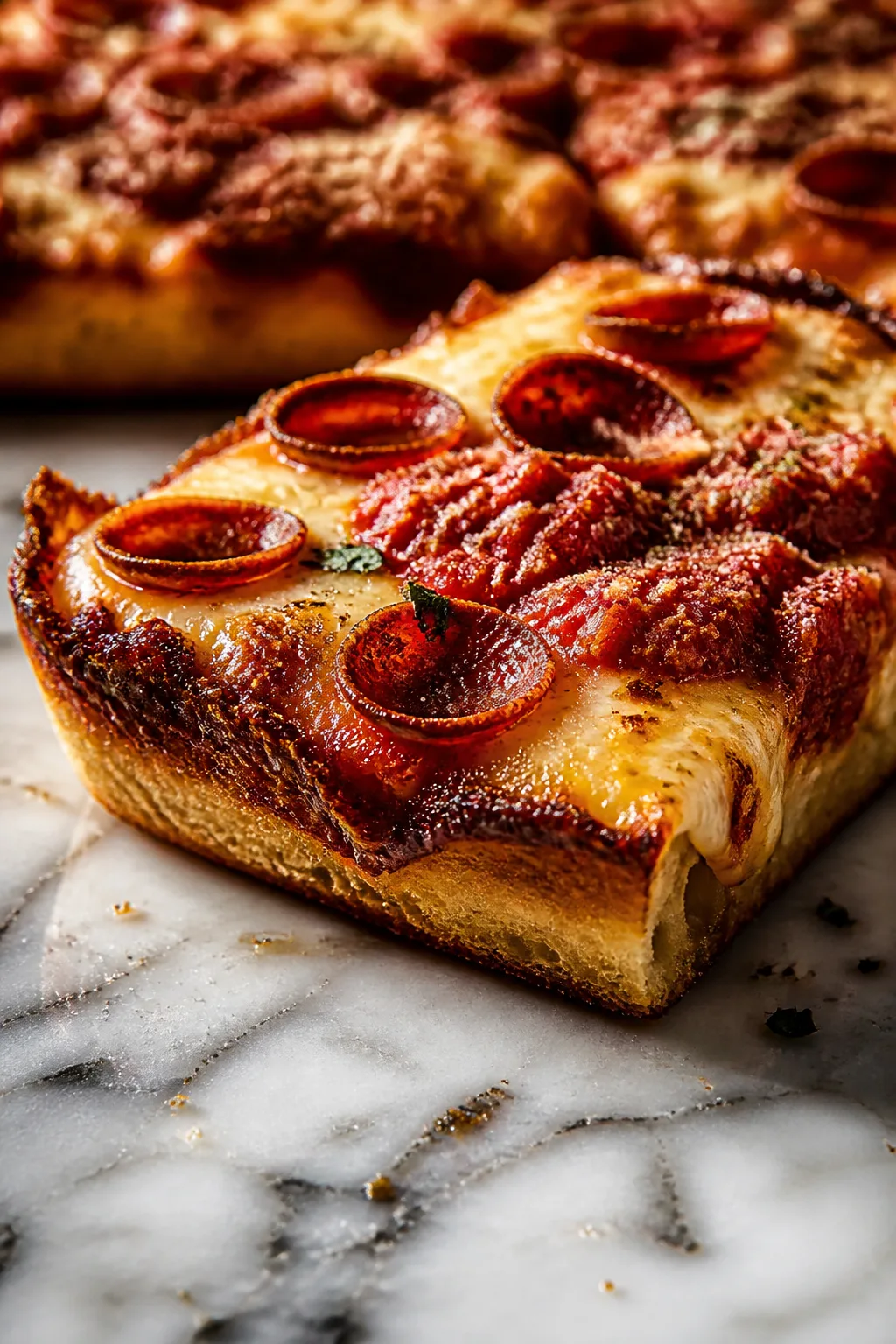
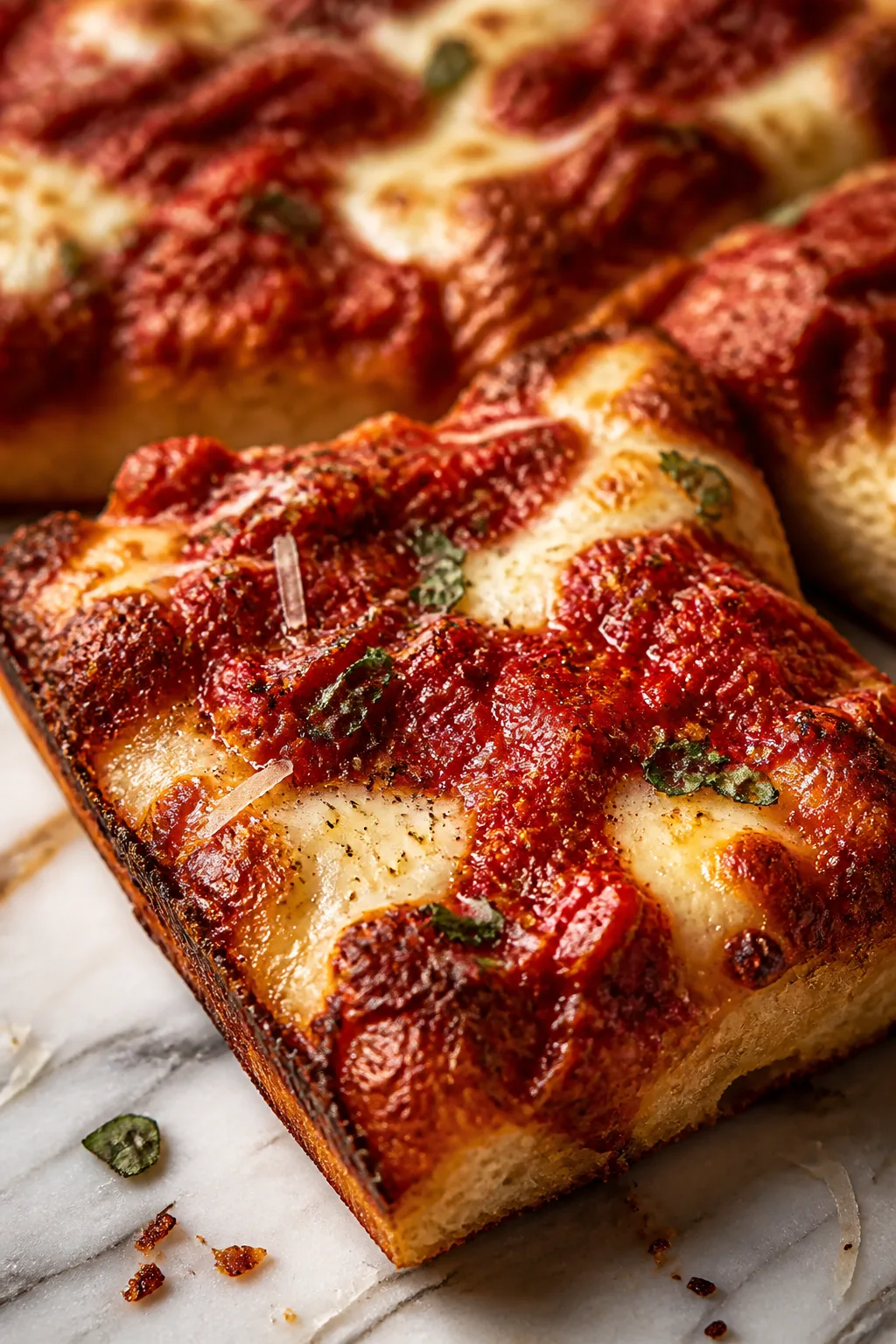
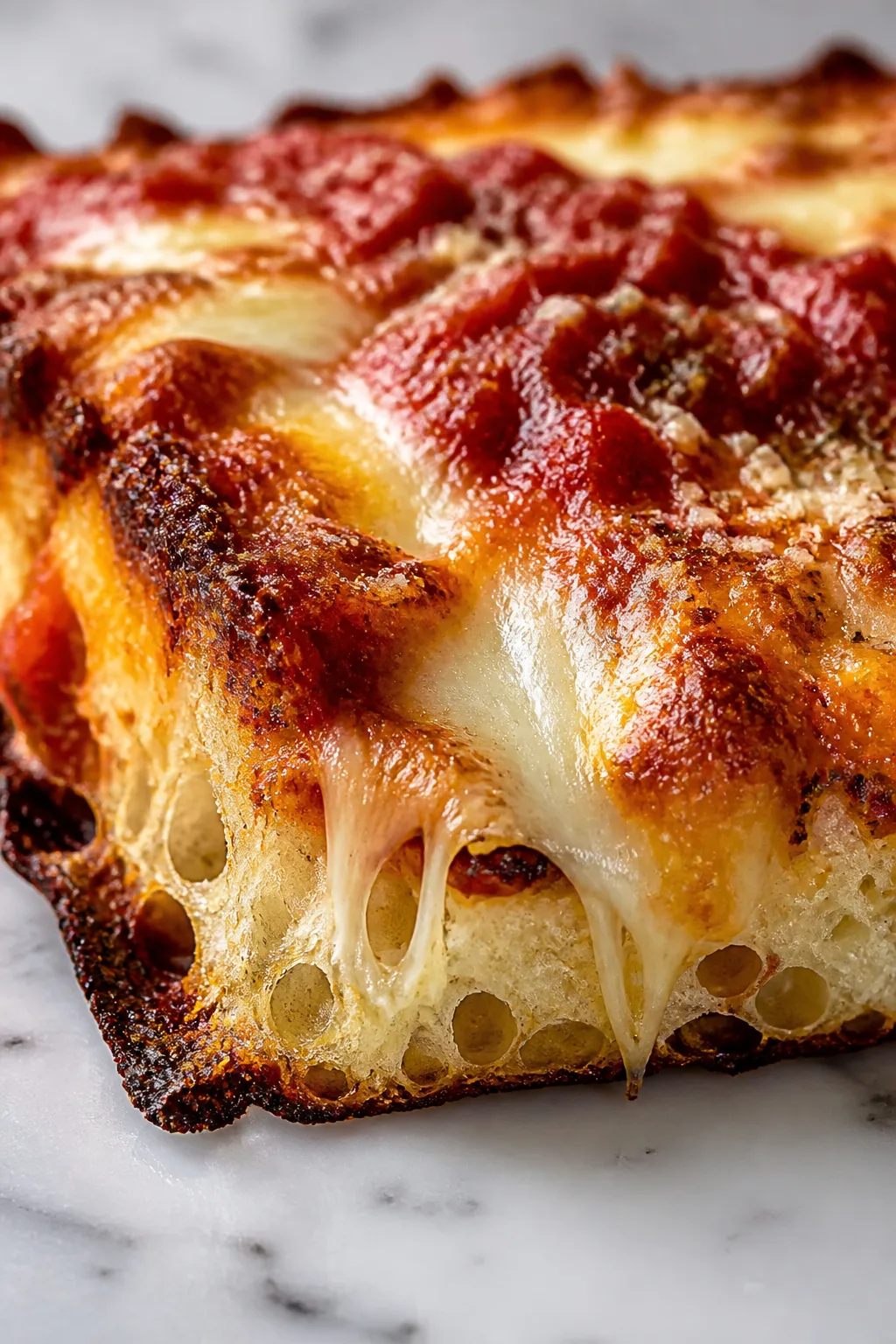
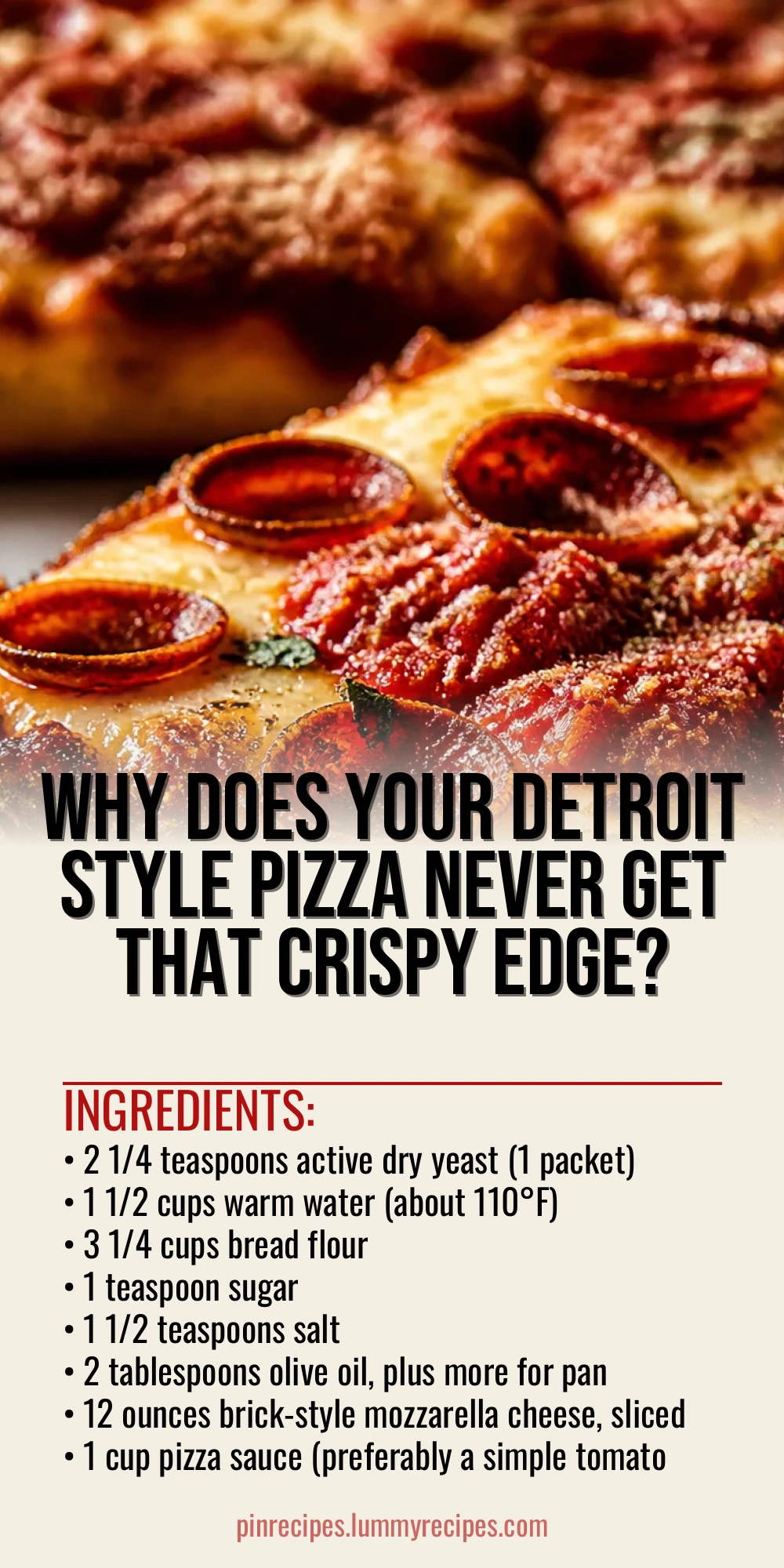
This Detroit style pizza is a thick, airy crust with a crunchy, cheesy edge that’s pure comfort. The secret? Cheese under the sauce for that perfect caramelized crust. Great for weekend dinners or sharing with friends!
Introduction
I first tried Detroit style pizza a few years ago at a local pizzeria and instantly fell in love with its thick, airy crust and the crispy, cheesy edges that are so unique to this style. I was determined to recreate it at home, but it took a few tries before I figured out the key to that perfect crispy crust and gooey cheese. What sets this pizza apart is the use of a rectangular steel pan and layering the cheese under the sauce, which creates that caramelized cheese edge everyone raves about. I’ve tweaked the dough to be light and airy, not dense, by using bread flour and a good hydration level. When you bake it, the cheese melts and fries against the sides of the pan, giving you those irresistible crunchy edges. The finished pizza is golden, cheesy, and has a satisfying chew that’s perfect for sharing on a cozy night in. If you love thick crusts but want something different from the usual deep dish, this recipe is a winner. I hope you enjoy making it as much as my family and I do!
What You'll Need
One 10x14 inch rectangular pizza, 4 servings
- 2 1/4 teaspoons active dry yeast (1 packet)
- 1 1/2 cups warm water (about 110°F)
- 3 1/4 cups bread flour
- 1 teaspoon sugar
- 1 1/2 teaspoons salt
- 2 tablespoons olive oil, plus more for pan
- 12 ounces brick-style mozzarella cheese, sliced
- 1 cup pizza sauce (preferably a simple tomato sauce)
- 1/2 cup grated Parmesan cheese
How To Do It
Step 1
In a large bowl, dissolve the yeast in warm water and let it sit for about 5 minutes until it becomes foamy. This step activates the yeast, which is essential for a good rise in your dough. If it doesn’t foam, your yeast might be dead, so start over with fresh yeast. Using warm water (not hot) helps wake up the yeast without killing it. This ensures your dough will be light and airy.
⏱ Time: 5 minutes
✓ Doneness: Foamy, bubbly surface on the water and yeast mixture
Step 2
Add the bread flour, sugar, salt, and 2 tablespoons of olive oil to the yeast mixture. Stir until a rough dough forms, then knead on a floured surface for about 8-10 minutes until smooth and elastic. Kneading develops gluten, which gives the crust structure and chew. Avoid adding too much flour; the dough should be slightly sticky to keep it airy.
⏱ Time: 10 minutes
✓ Doneness: Smooth, elastic dough that springs back when poked
Step 3
Place the dough in a lightly oiled bowl, cover with plastic wrap or a damp towel, and let it rise in a warm spot for 1 to 1.5 hours, or until doubled in size. This fermentation step develops flavor and texture. Don’t rush this; a slow rise means better taste and a lighter crust.
⏱ Time: 1 to 1.5 hours
✓ Doneness: Dough has doubled in size and feels puffy
Step 4
While the dough rises, generously oil a 10x14 inch Detroit style pizza pan or a similar rectangular steel pan. The oil helps create the signature crispy, fried crust on the edges. Don’t skimp here—this is key to the pizza’s texture.
⏱ Time: 5 minutes
✓ Doneness: Pan coated with a thin, even layer of oil
Step 5
Once the dough has risen, gently stretch it into the prepared pan, pushing it to the edges. Don’t overwork the dough here; you want to keep the air bubbles intact. If it resists, let it rest a few minutes and try again. This step creates the thick, airy base.
⏱ Time: 5 minutes
✓ Doneness: Dough evenly spread to edges without tearing
Step 6
Layer the sliced brick mozzarella cheese evenly over the dough, making sure to cover the edges. The cheese going right to the edges is what caramelizes and crisps up against the pan, creating that famous cheesy crust. Use good quality brick mozzarella for the best melt and flavor.
⏱ Time: 5 minutes
✓ Doneness: Cheese covers dough completely, edges included
Step 7
Bake the pizza in a preheated 500°F oven for 10-12 minutes until the cheese is melted and bubbly and the crust starts to turn golden. High heat is crucial here to get that crispy bottom and edges. Avoid opening the oven too soon, or you’ll lose heat and affect the crust’s texture.
⏱ Time: 10-12 minutes
✓ Doneness: Cheese bubbling and edges golden brown
Step 8
Remove the pizza from the oven and spoon the tomato sauce evenly over the cheese in three stripes or dollops. This classic Detroit style topping method keeps the sauce fresh and bright. Don’t spread it all over or it will weigh down the crust.
⏱ Time: 3 minutes
✓ Doneness: Sauce bright red and evenly spaced on top
Step 9
Sprinkle grated Parmesan cheese over the sauce and return the pizza to the oven for another 3-5 minutes to meld the flavors and finish crisping the edges. This final step adds a salty, nutty finish to the pizza. Watch carefully to avoid burning the cheese.
⏱ Time: 3-5 minutes
✓ Doneness: Parmesan melted and slightly golden on top
Pro Tips
Use a well-seasoned Detroit style pizza pan or a similar rectangular steel pan.
The pan’s material and seasoning help create the crispy, caramelized edges that define this pizza. Using a different pan, like a round pizza stone, won’t produce the same fried crust effect.
Don’t rush the dough rise; let it double in a warm spot for full flavor development.
A slow, complete rise allows yeast to ferment properly, creating complex flavors and an airy texture. Rushing this step results in dense, flavorless crust.
Stretch the dough gently to avoid deflating the air bubbles.
Preserving gas bubbles in the dough ensures a light, open crumb. Overworking the dough here crushes the bubbles and leads to a denser crust.
Layer the cheese right to the edges of the pan.
This ensures the cheese fries against the pan sides, creating the iconic crispy, caramelized cheese crust that’s the hallmark of Detroit style pizza.
Bake at a high temperature (500°F) for the best crust texture.
High heat quickly crisps the crust and melts the cheese without drying out the dough. Lower temperatures result in a pale, soft crust.
Add the sauce after the initial bake in stripes or dollops.
This keeps the sauce fresh and prevents the crust from getting soggy. It also maintains the traditional Detroit style look and flavor balance.
Use brick-style mozzarella for the best melt and caramelization.
This cheese type melts evenly and browns well, creating the crispy edges. Shredded mozzarella often releases too much moisture and doesn’t brown as nicely.
Common Mistakes to Avoid
Using too little oil in the pan
Why it happens Many cooks underestimate how much oil is needed to create the crispy, fried edges of Detroit style pizza.
Fix Be generous with the oil, coating the entire bottom and sides of the pan. This ensures the dough fries properly and develops the signature crispy crust.
Skipping the dough rise or rushing it
Why it happens Impatience or misunderstanding the importance of fermentation can lead to under-risen dough.
Fix Allow the dough to rise fully until doubled in size in a warm, draft-free spot. This develops flavor and texture essential for the airy crust.
Spreading sauce over the cheese before baking
Why it happens Some try to apply sauce like a traditional pizza, but this leads to soggy crust.
Fix Add the sauce only after the cheese has melted and the crust has baked, using stripes or dollops to keep the crust crisp.
Using low-moisture shredded mozzarella instead of brick cheese
Why it happens Brick cheese can be harder to find, so cooks substitute shredded mozzarella without realizing the texture difference.
Fix Seek out brick-style mozzarella or low-moisture whole milk mozzarella for proper melt and caramelization.
Baking at too low a temperature
Why it happens Ovens vary, and some cooks bake at lower temps to avoid burning.
Fix Preheat your oven to 500°F and bake quickly to get a crisp crust and bubbly cheese without drying out the dough.
Variations
Spicy Pepperoni Detroit Style Pizza
Add sliced pepperoni on top of the cheese before baking for a classic twist. For extra heat, sprinkle red pepper flakes into the sauce or on top after baking. This adds a savory, spicy kick without changing the crust texture.
Note: Pepperoni releases oils that can help crisp the cheese edges further but watch baking time to avoid burning.
Veggie-Loaded Detroit Style Pizza
Top the cheese with thinly sliced bell peppers, mushrooms, and onions before baking. The veggies roast in the oven, adding sweetness and texture. Keep toppings light to avoid sogginess.
Note: Use vegetables with low moisture content or pre-cook them slightly to prevent excess water on the crust.
White Detroit Style Pizza
Skip the tomato sauce and use a garlic cream sauce or olive oil base. Layer mozzarella and fontina cheese with fresh herbs. This variation highlights the crispy crust and cheesy edges beautifully.
Note: Without sauce, watch baking time closely to prevent drying out the cheese.
Detroit Style BBQ Chicken Pizza
Use BBQ sauce instead of tomato sauce and top with cooked chicken, red onions, and cheddar cheese along with mozzarella. This smoky, tangy version is a crowd-pleaser with the same crispy crust.
Note: Pre-cook chicken to avoid excess moisture and ensure it’s fully cooked before baking.
Gluten-Free Detroit Style Pizza
Use a gluten-free bread flour blend and add xanthan gum for elasticity. The crust will be slightly different in texture but still crispy on the edges if baked in the right pan with plenty of oil.
Note: Gluten-free dough is less elastic and needs gentle handling; rising times may vary.
Nutrition
Per Serving:
Nutritional values are estimates and may vary based on specific ingredients used.
Storage & Tips
Room Temperature
Detroit style pizza can be safely left at room temperature for up to 2 hours if covered loosely with foil or a clean kitchen towel to prevent drying out.
Refrigerator
Store leftovers in an airtight container or wrapped tightly in plastic wrap in the fridge for up to 3 days. The crust may lose some crispness but reheating in the oven restores texture well.
Freezer
Freeze pizza slices wrapped individually in plastic wrap and aluminum foil for up to 2 months. Thaw in the fridge overnight before reheating to maintain texture.
Reheating
Reheat slices in a preheated 375°F oven on a baking sheet for 8-10 minutes until warmed through and crust is crispy again. Avoid microwaving as it makes the crust soggy.
Make Ahead
Prepare the dough a day ahead and refrigerate it after the first rise to develop flavor. Let it come to room temperature before shaping and baking for best results.
FAQ
Can I use all-purpose flour instead of bread flour?
You can use all-purpose flour, but the crust won’t be as chewy or airy because all-purpose flour has less protein, which means less gluten formation. The dough may be softer and less structured, resulting in a denser pizza.
Why do I need to add the sauce after baking the cheese and crust?
Adding sauce after the initial bake prevents the crust from becoming soggy and keeps the sauce tasting fresh and bright. It also preserves the crispy edges created by the cheese frying against the pan.
What if I don’t have a Detroit style pan?
You can use a similar-sized rectangular steel or cast iron pan with high sides. Avoid nonstick pans that aren’t oven-safe at high temperatures. The pan material and shape are important for the signature crust texture.
How do I know when the dough has risen enough?
The dough should roughly double in size and look puffy. When you gently poke it with a finger, the indentation should slowly spring back. If it springs back quickly, it needs more time; if it doesn’t spring back, it may be over-proofed.
Can I make the dough ahead of time?
Yes, after the first rise you can refrigerate the dough for up to 24 hours. This slow fermentation enhances flavor. Just bring it to room temperature before shaping and baking to make it easier to stretch.
What’s the best cheese to use?
Brick-style mozzarella is traditional and ideal because it melts evenly and browns well without releasing too much moisture. If unavailable, low-moisture whole milk mozzarella is a good substitute.
Why is my crust not crispy on the edges?
This usually happens if there isn’t enough oil in the pan or if the oven temperature is too low. Make sure to coat the pan generously with oil and bake at a high temperature (around 500°F) for the best crust.
Can I add toppings before baking?
For toppings like pepperoni or vegetables, you can add them on top of the cheese before baking. Just be mindful of moisture content to avoid sogginess. The sauce should still be added after baking.
Final Thoughts
Give this Detroit style pizza a try—you’ll love the crispy edges and cheesy goodness! Let me know how your pizza turns out, and happy baking!