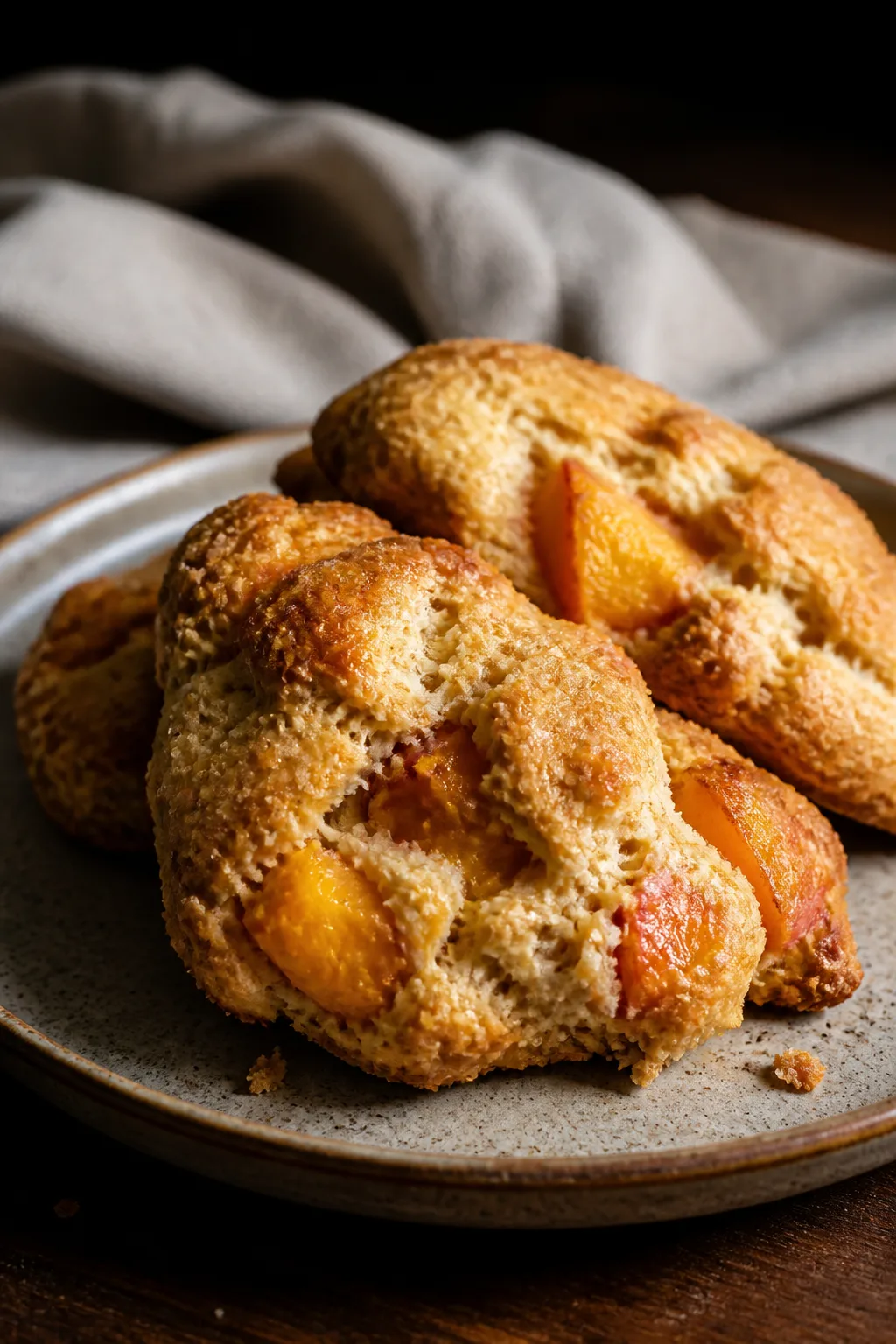
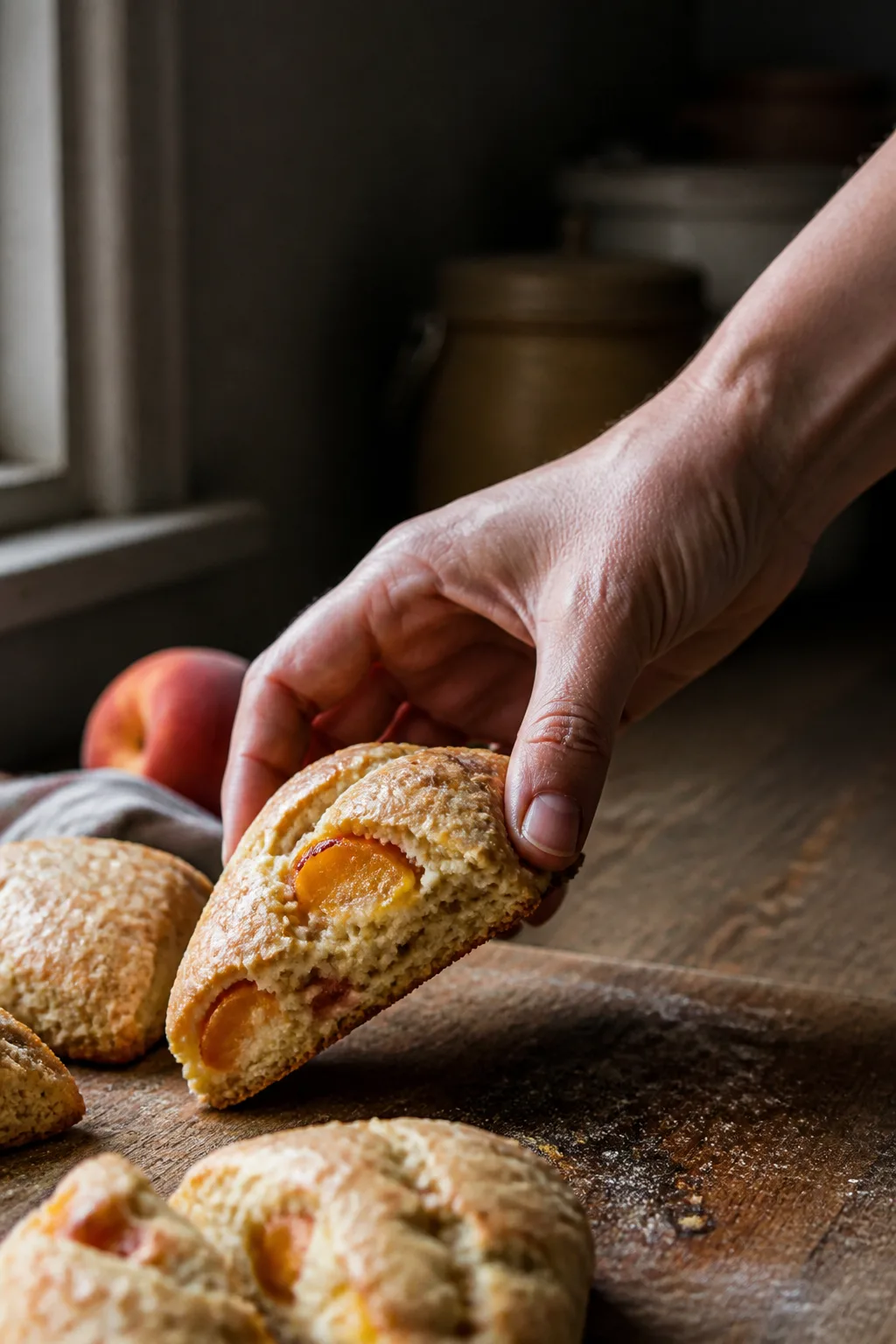
These peach scones are a flaky, buttery morning treat bursting with fresh peach chunks. I love adding a touch of vanilla for warmth. Perfect for weekend breakfasts or a cozy brunch with friends!
Introduction
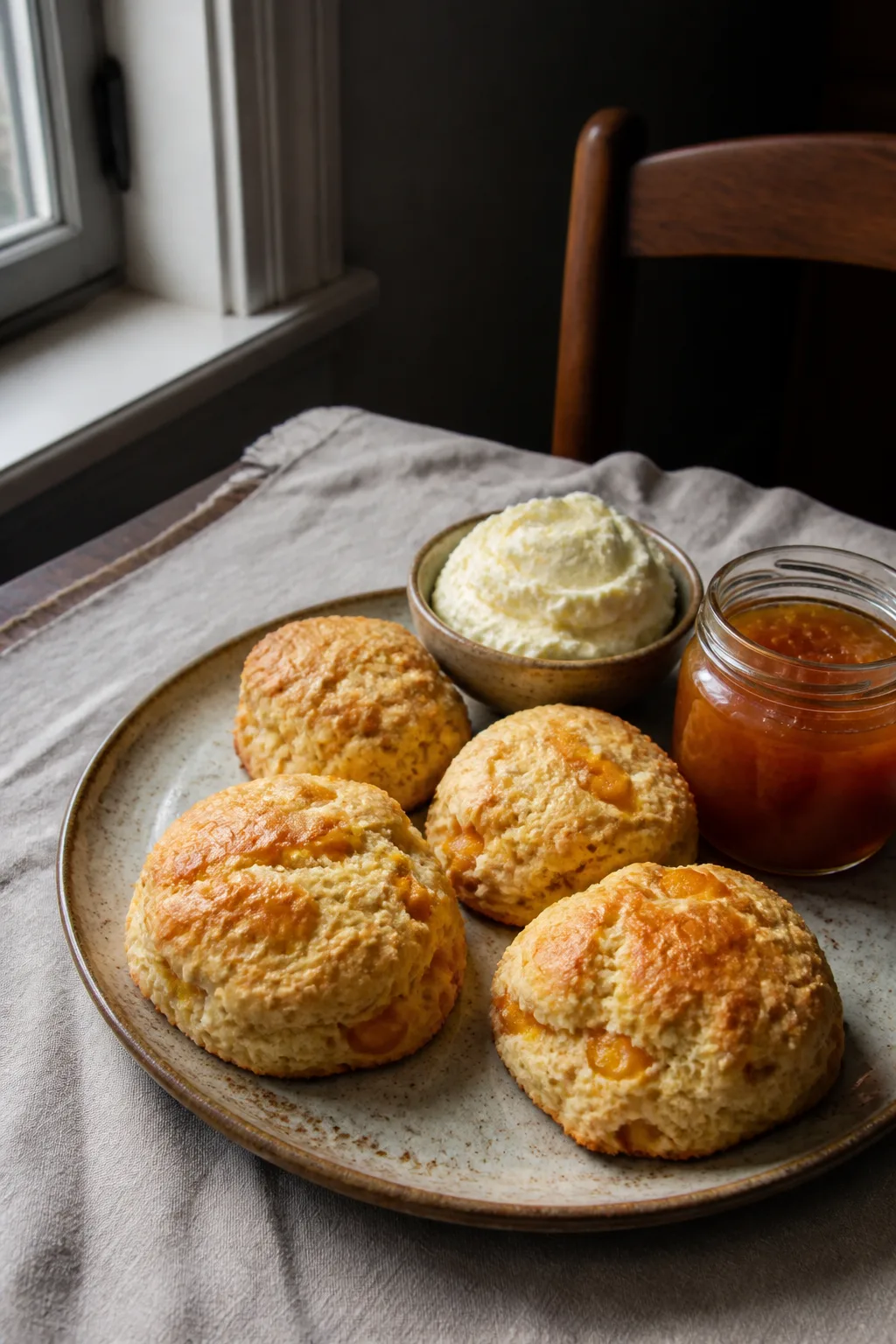
I first made these peach scones on a lazy summer morning when peaches were at their peak. I wanted a simple recipe that captured that fresh fruit flavor without fuss. What makes this recipe stand out is the cold butter technique that creates those perfect flaky layers, plus folding in fresh diced peaches for bursts of juicy sweetness. I’ve tried scones before that turned out dry or crumbly, but this one keeps them tender and moist, thanks to the heavy cream and a touch of vanilla. The scones bake up golden with a lightly crisp top, and the peach pieces soften just enough to meld with the buttery dough. They’re perfect for a weekend brunch or a special breakfast treat when you want something homemade but not complicated. Plus, they come together quickly — you don’t need to be a pro baker to get great results. I love serving these with clotted cream or a spoonful of peach jam, but they’re delicious on their own too. If you have fresh peaches in season, this is a recipe you’ll want to keep in your rotation.
How To Do It
Step 1
Preheat your oven to 400°F (200°C) and line a baking sheet with parchment paper. This ensures even baking and prevents sticking. It’s important to have your oven fully heated before baking scones so they rise properly and develop a golden crust.
⏱ Time: 10 minutes
✓ Doneness: Oven is fully preheated and baking sheet prepared
Step 2
In a large bowl, whisk together the sifted flour, sugar, baking powder, and salt. Mixing the dry ingredients first distributes the leavening agents evenly, which helps the scones rise uniformly. Avoid over-mixing here to keep the texture light.
⏱ Time: 5 minutes
✓ Doneness: Dry ingredients are fully combined with no lumps
Step 3
Add the cold cubed butter to the flour mixture. Using a pastry cutter or your fingertips, quickly cut the butter into the flour until the mixture resembles coarse crumbs with some pea-sized pieces. The cold butter creates steam during baking that forms flaky layers. Work fast to prevent the butter from melting.
⏱ Time: 5 minutes
✓ Doneness: Butter pieces are evenly distributed and mixture looks crumbly
Step 4
Gently fold in the diced fresh peaches, being careful not to break them up too much. The peaches add moisture and natural sweetness, but overmixing can make the dough soggy and tough.
⏱ Time: 2 minutes
✓ Doneness: Peach pieces are evenly dispersed without crushing
Step 5
In a separate bowl, whisk together the heavy cream, egg, and vanilla extract until smooth. This wet mixture adds richness and helps bind the dough. The vanilla adds a subtle warmth that complements the peaches beautifully.
⏱ Time: 3 minutes
✓ Doneness: Wet ingredients are well combined and slightly frothy
Step 6
Pour the wet ingredients into the dry mixture and gently stir with a wooden spoon or spatula until just combined. The dough should be slightly sticky but hold together. Overmixing develops gluten and leads to tough scones, so stop as soon as you see no dry flour.
⏱ Time: 3 minutes
✓ Doneness: Dough forms a cohesive ball with visible peach chunks
Step 7
Turn the dough out onto a lightly floured surface and gently pat it into a 7-inch circle about 1-inch thick. Use a sharp knife or bench scraper to cut the dough into 8 wedges. Avoid twisting the knife which can seal edges and prevent rise.
⏱ Time: 5 minutes
✓ Doneness: Dough is evenly shaped and wedges are cleanly cut
Step 8
Place the wedges on the prepared baking sheet spaced about 2 inches apart. Brush the tops lightly with heavy cream and sprinkle with turbinado sugar if using for a crunchy, sweet finish.
⏱ Time: 2 minutes
✓ Doneness: Scones are brushed and sprinkled, ready for oven
Step 9
Bake for 18-20 minutes until the scones are golden brown on top and a toothpick inserted in the center comes out clean. The high heat helps create a crisp crust while keeping the inside tender and moist.
⏱ Time: 20 minutes
✓ Doneness: Scones are golden and firm to the touch
Pro Tips
Keep your butter and peaches cold until just before mixing.
Cold butter creates steam pockets during baking that produce flaky layers. Warm butter will blend too thoroughly, resulting in a dense texture. Similarly, cold peaches prevent the dough from becoming too wet too quickly, preserving structure.
Don’t overmix the dough once the wet ingredients are added.
Overmixing develops gluten, which makes scones tough and chewy instead of tender and flaky. Stir just until the dough comes together with no visible dry flour.
Use a sharp knife or bench scraper to cut the scones cleanly.
Twisting or pressing the dough when cutting seals the edges and prevents proper rising. Clean cuts allow the scones to expand and bake evenly.
Common Mistakes to Avoid
Using warm butter instead of cold.
Why it happens Many home cooks leave butter out too long for ease of cutting, but warm butter blends into the flour rather than creating flaky layers.
Fix Chill the butter in the fridge until just before mixing. If it softens too much, pop it back in the freezer for 10-15 minutes before using.
Overmixing the dough after adding wet ingredients.
Why it happens It’s tempting to mix thoroughly to combine, but this activates gluten excessively.
Fix Mix gently and stop as soon as the dough holds together with no dry flour visible.
Variations
Glazed Peach Scones
Add a simple glaze made from powdered sugar and peach juice drizzled over the cooled scones for an extra sweet finish. This adds a glossy look and intensifies the peach flavor.
Note: Make sure scones are fully cooled before glazing to prevent melting the glaze.
Peach and Almond Scones
Fold in 1/4 cup sliced almonds along with the peaches and sprinkle chopped almonds on top before baking. The nuts add crunch and a nutty flavor that pairs beautifully with peaches.
Note: Toast the almonds lightly beforehand for deeper flavor.
Nutrition
Per Serving:
Nutritional values are estimates and may vary based on specific ingredients used.
Storage & Tips
Room Temperature
Store scones in an airtight container at room temperature for up to 2 days. They may lose some crispness but remain tasty. Avoid leaving them uncovered to prevent drying out.
Refrigerator
Keep scones in an airtight container in the fridge for up to 5 days. They will be firmer and less flaky when cold, so warm briefly before serving to restore softness.
Freezer
Wrap scones tightly in plastic wrap and place in a freezer-safe bag for up to 3 months. Thaw overnight in the fridge or at room temperature. Reheat in a warm oven to refresh texture.
Reheating
Warm scones in a 350°F oven for 5-7 minutes to crisp the exterior and soften the crumb. Avoid microwaving as it can make them rubbery.
Make Ahead
Prepare the dough up to the point of cutting and freeze the dough disc wrapped tightly. When ready, slice and bake directly from frozen, adding a few extra minutes to baking time.
FAQ
Can I use frozen peaches instead of fresh?
You can, but thaw and drain them well to avoid excess moisture that can make the dough soggy. Pat dry with paper towels before folding in gently.
What if I don’t have heavy cream?
You can substitute with whole milk or half-and-half, but the scones will be less rich and slightly less tender. Avoid using low-fat milk for best results.
How do I store leftover scones?
Keep them in an airtight container at room temperature for 2 days or refrigerate for up to 5 days. For longer storage, freeze wrapped tightly.
Can I make these scones vegan?
Yes, substitute butter with a vegan butter alternative and use a plant-based milk like oat or almond milk. The texture may be slightly different but still delicious.
Why are my scones dry?
Dry scones usually result from overmixing or using too much flour. Measure flour carefully and mix just until combined to keep them tender.
Can I add spices like cinnamon or nutmeg?
Absolutely! Adding 1/2 teaspoon of cinnamon or a pinch of nutmeg to the dry ingredients complements the peaches nicely.
Is it okay to freeze baked scones?
Yes, baked scones freeze well when wrapped tightly. Reheat in the oven to refresh texture after thawing.
Should I peel the peaches?
Peeling is recommended for a smoother texture and to avoid tough skin in the scones, but it’s a personal preference.
Final Thoughts
I hope you enjoy these peach scones as much as my family does. They’re simple, comforting, and perfect for sharing. Give them a try and let me know how yours turn out!