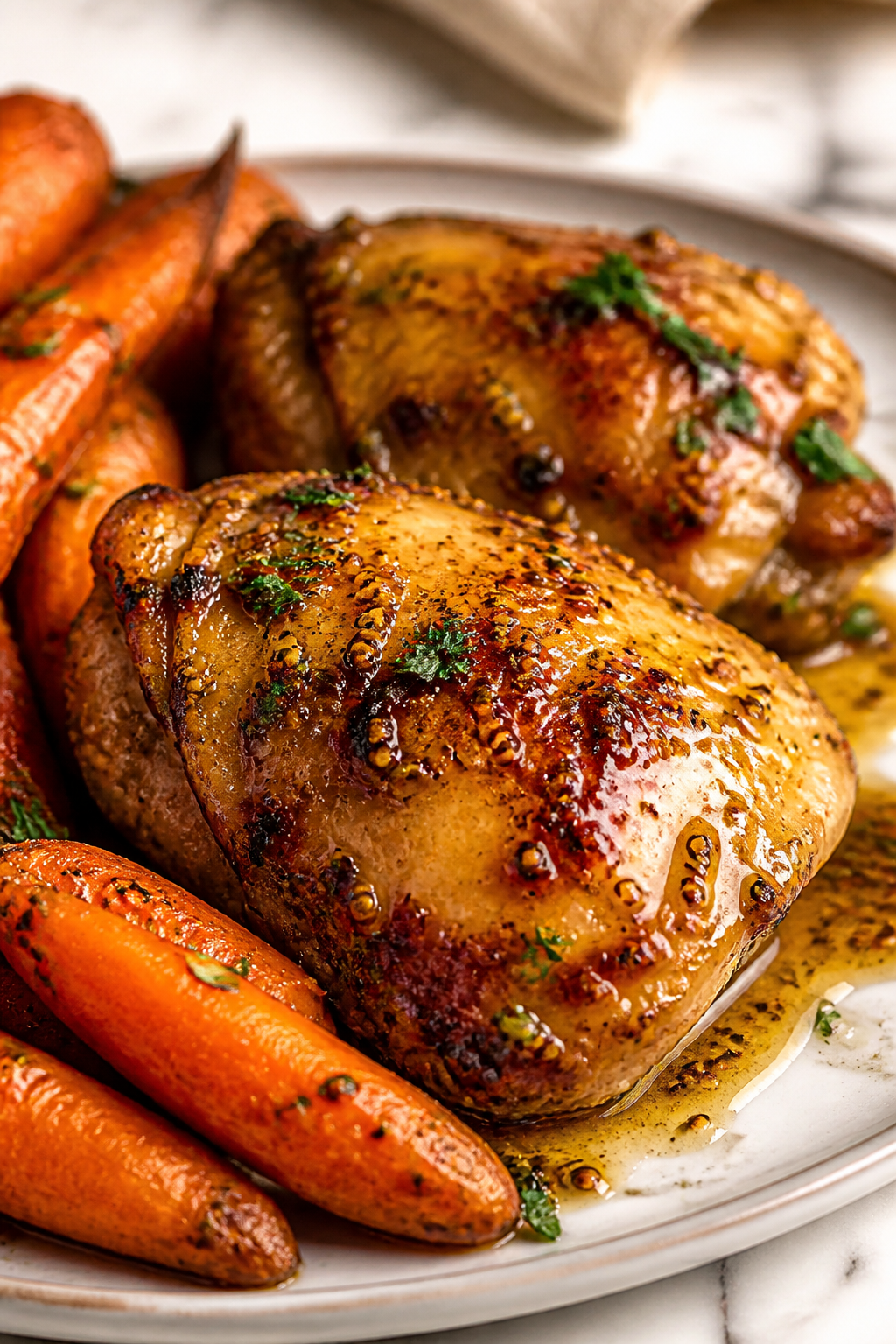
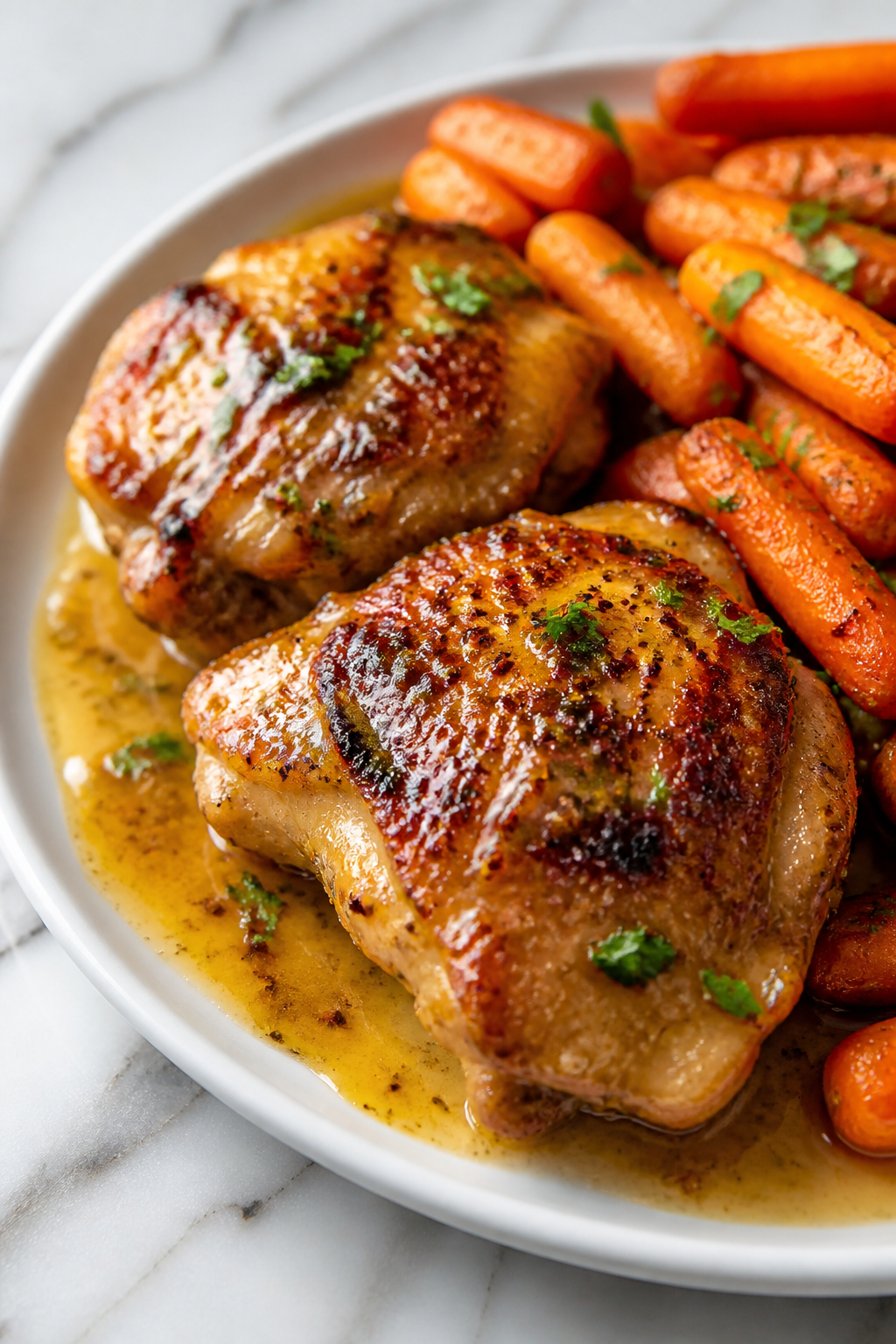
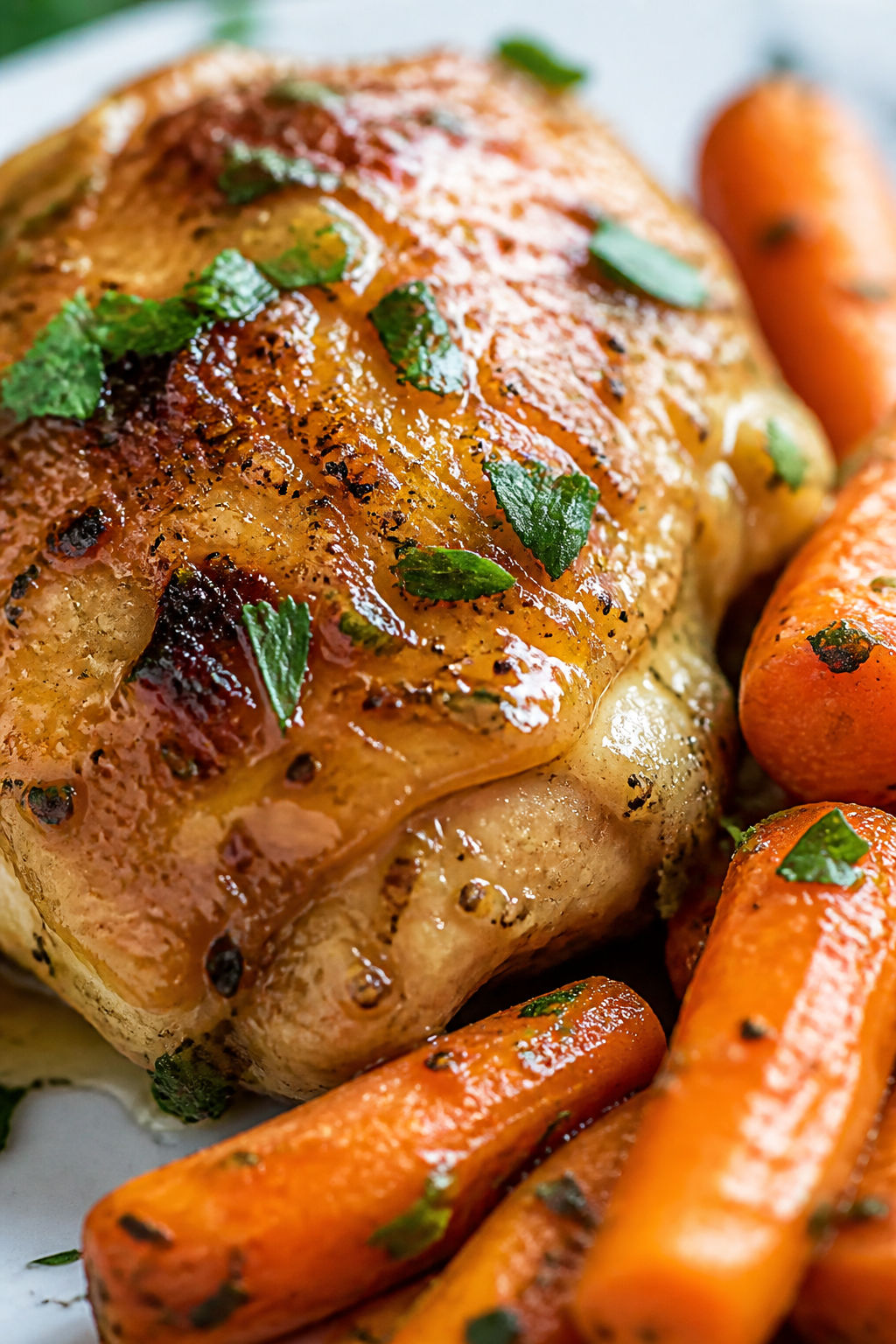
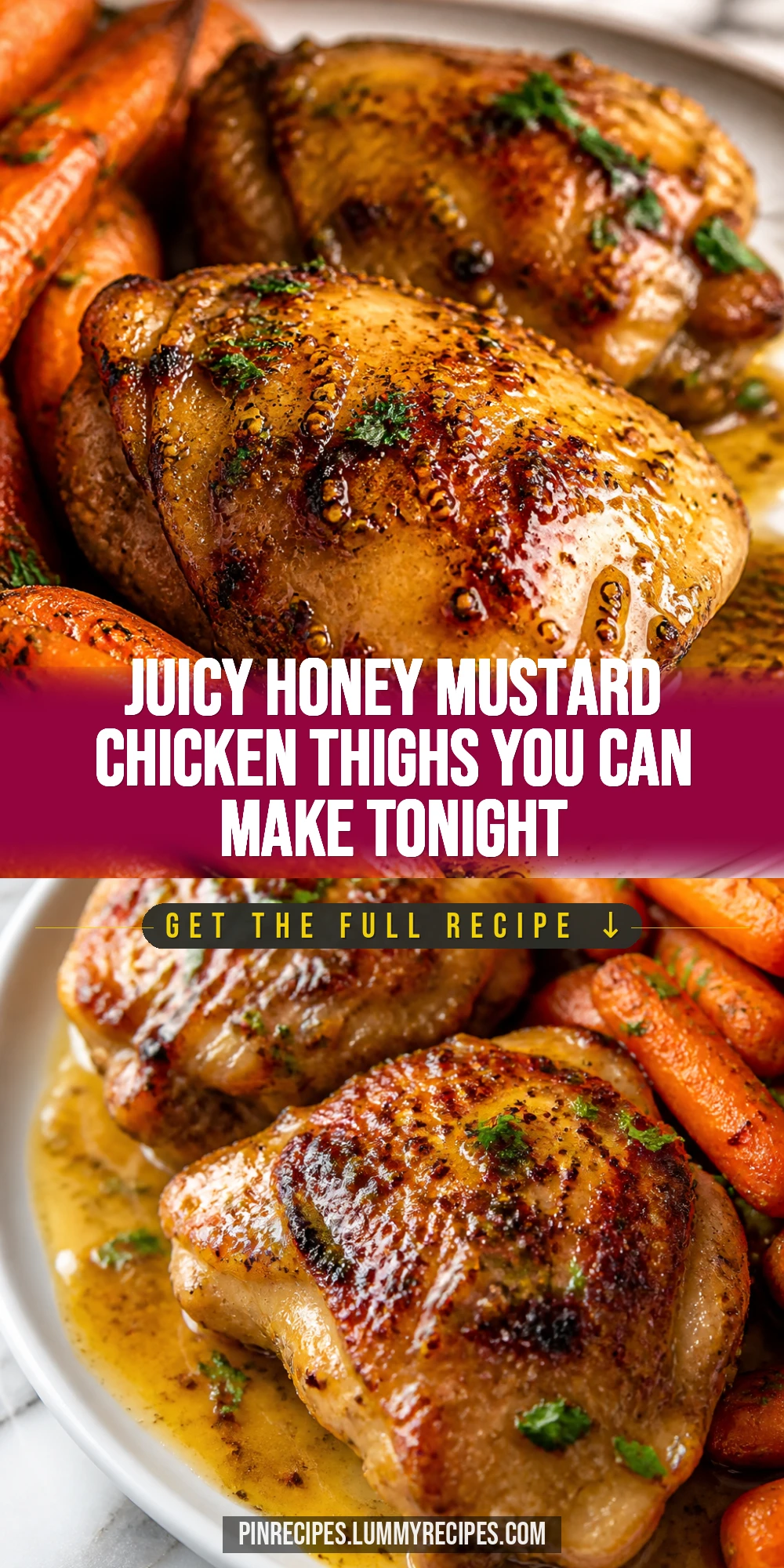
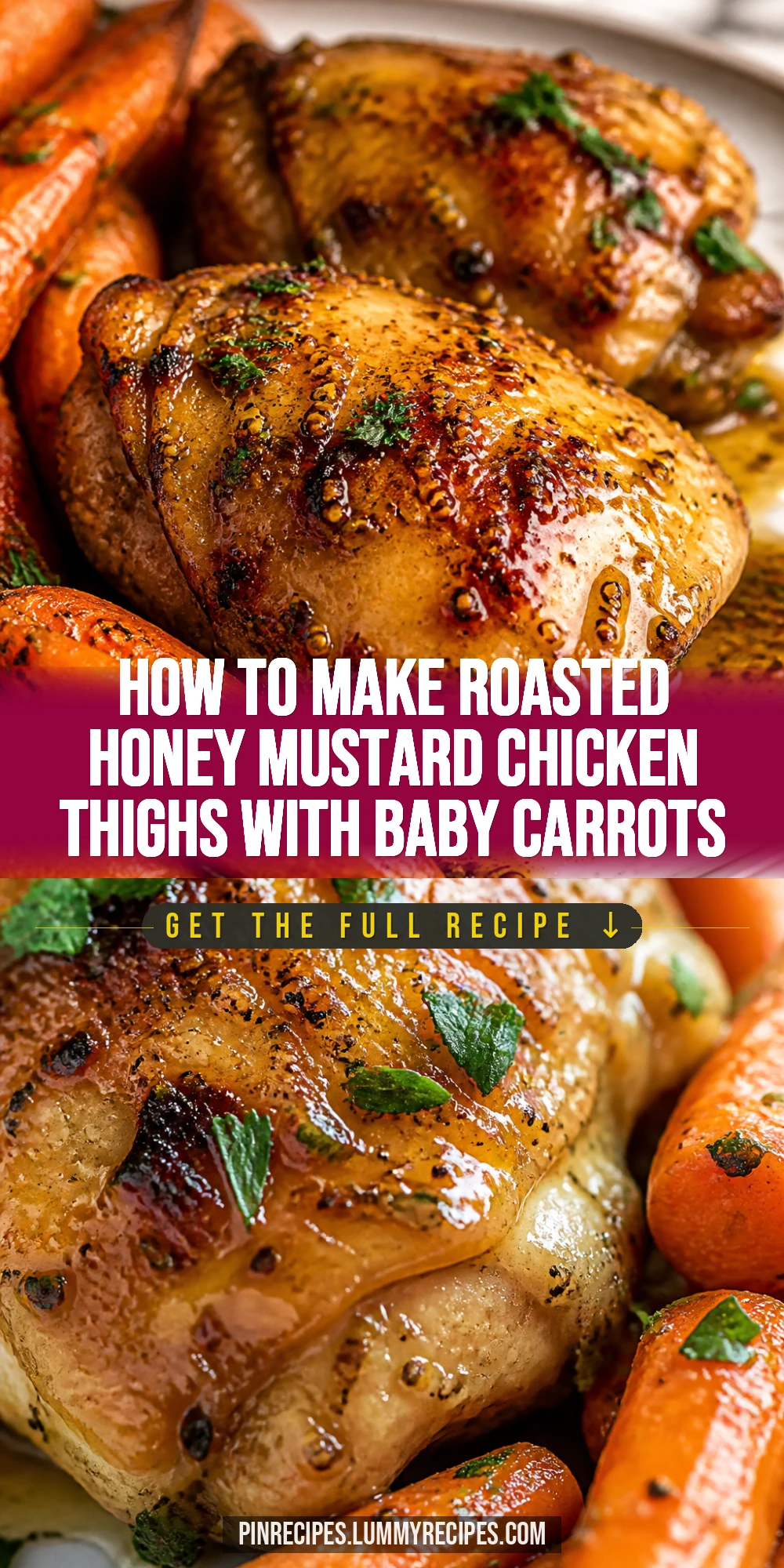
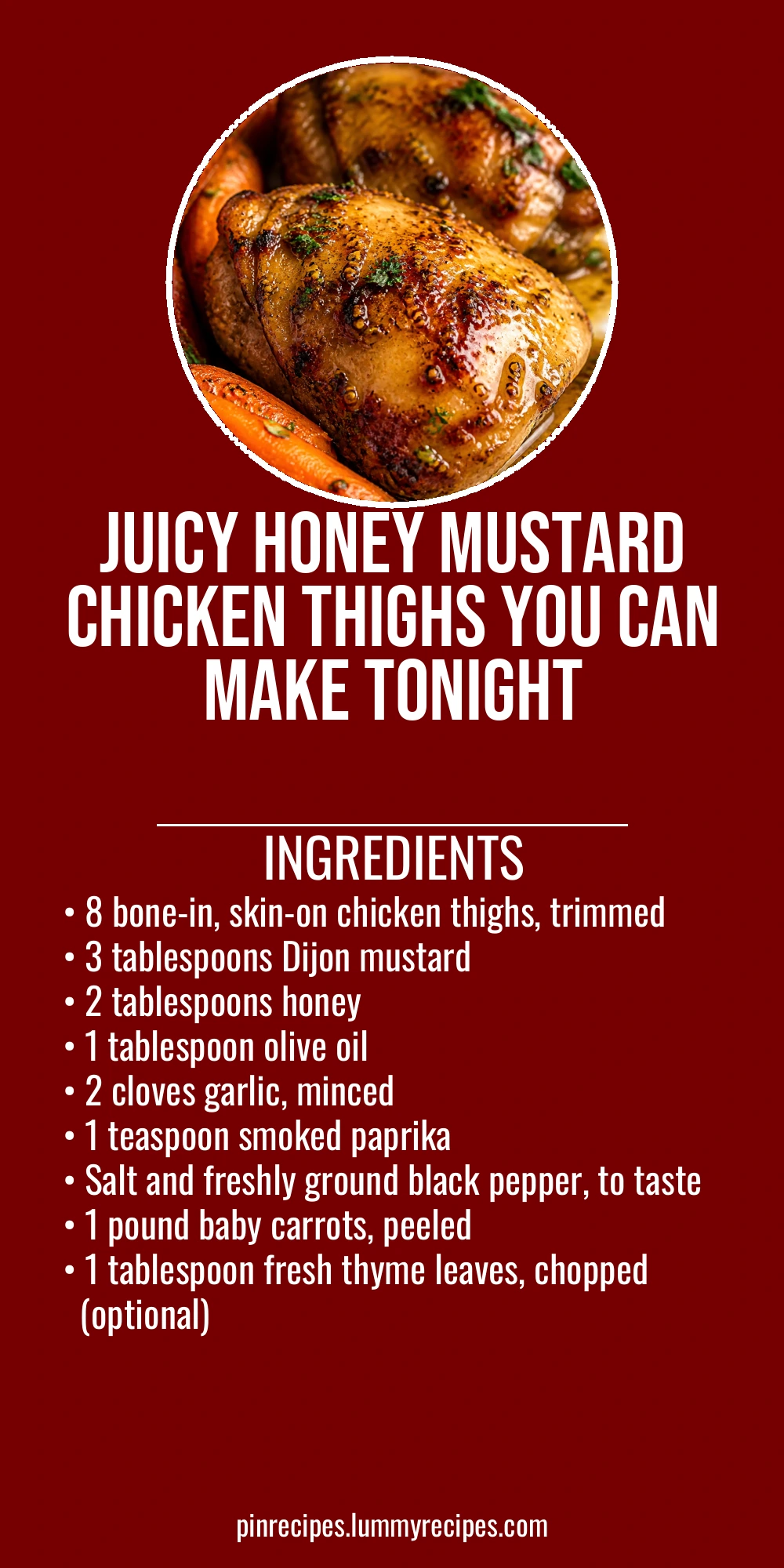
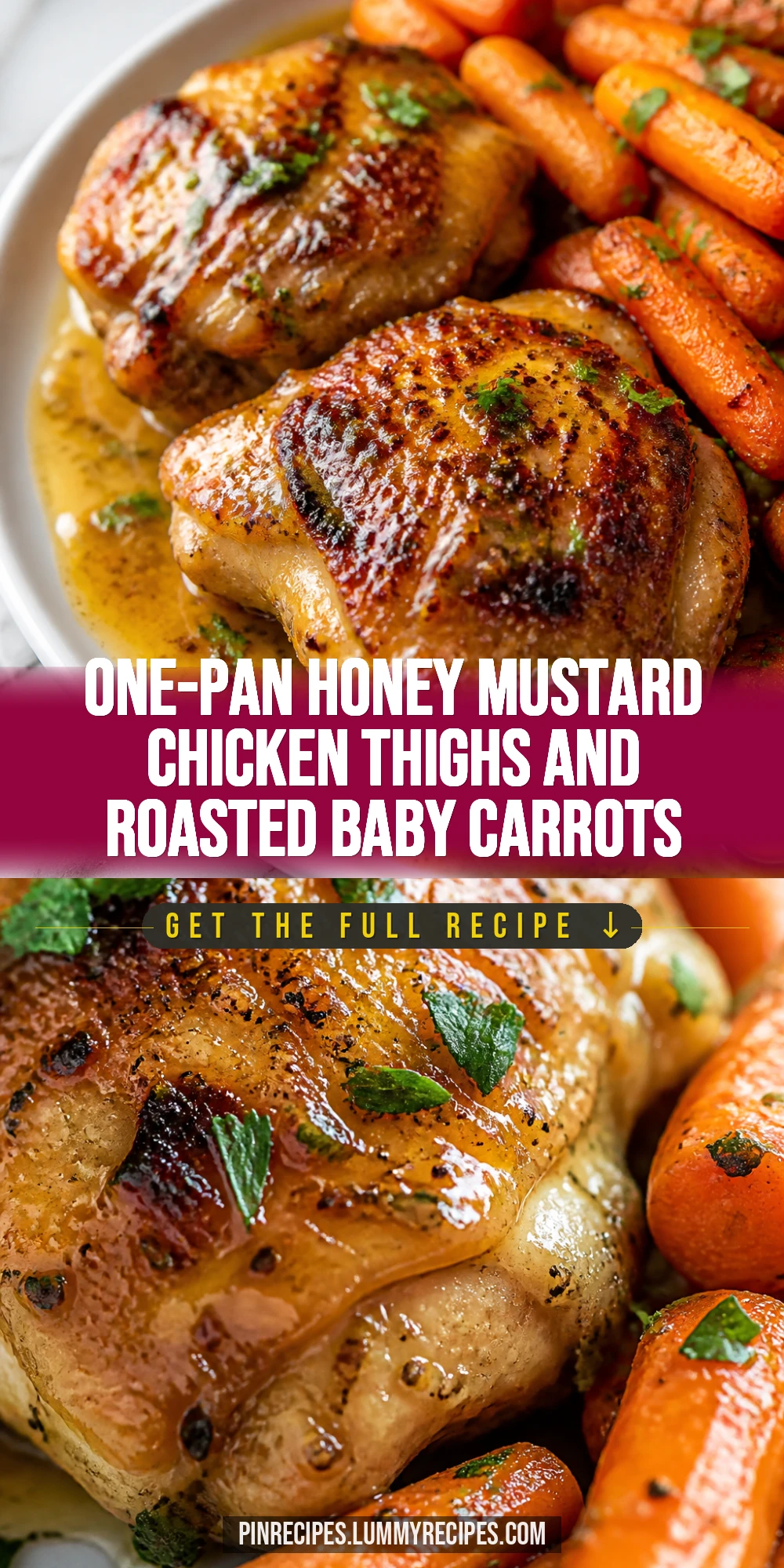
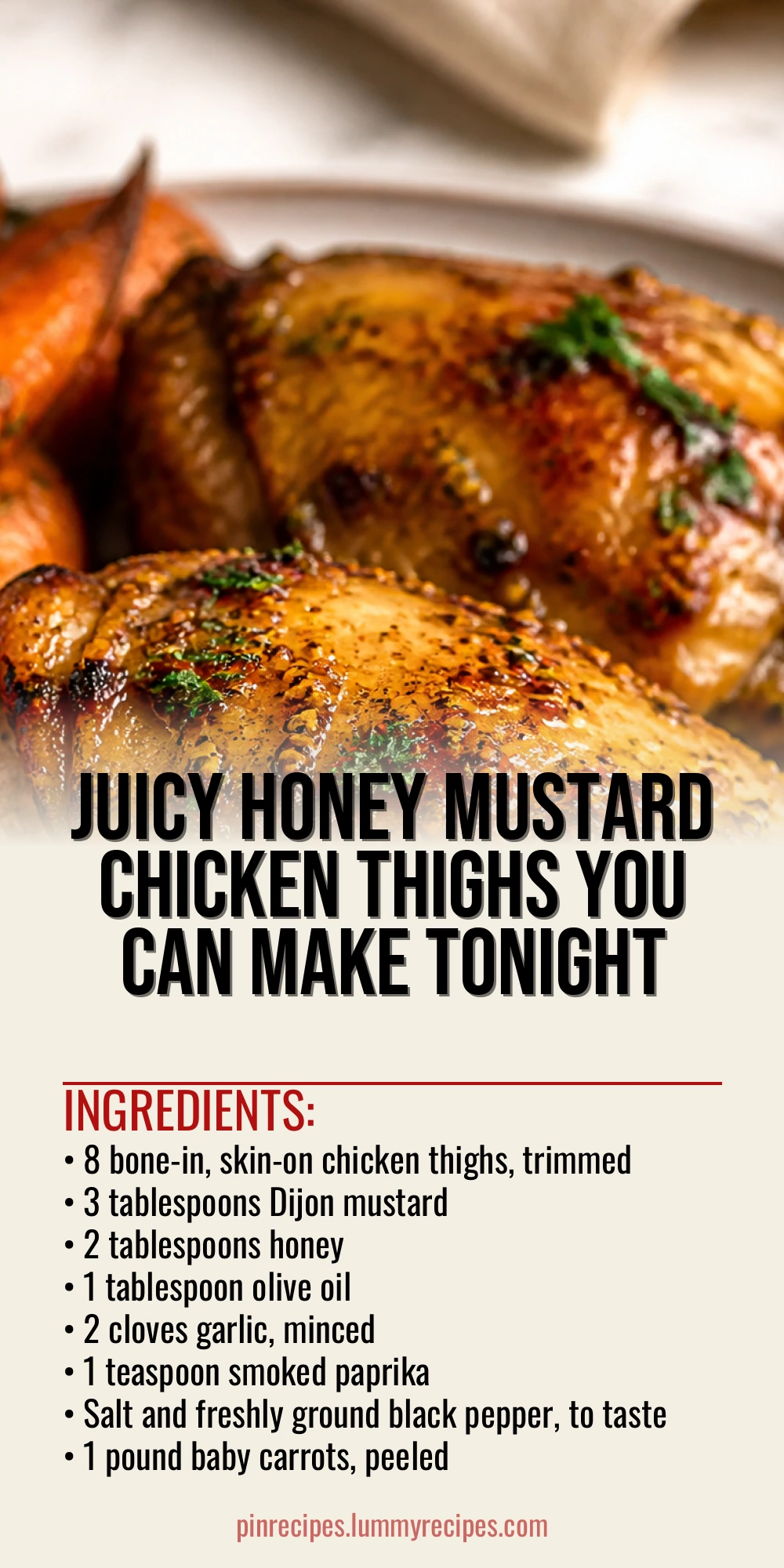
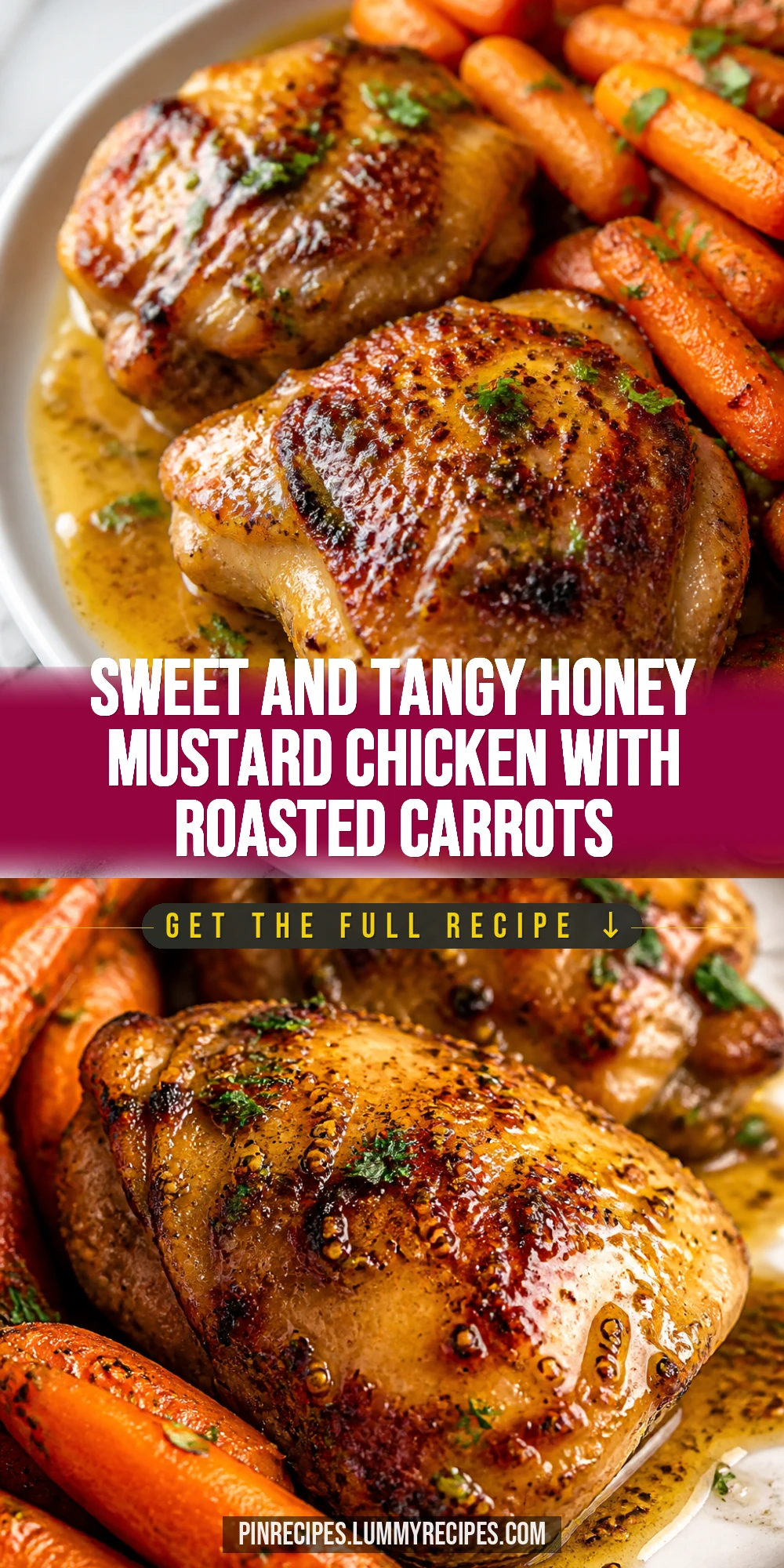
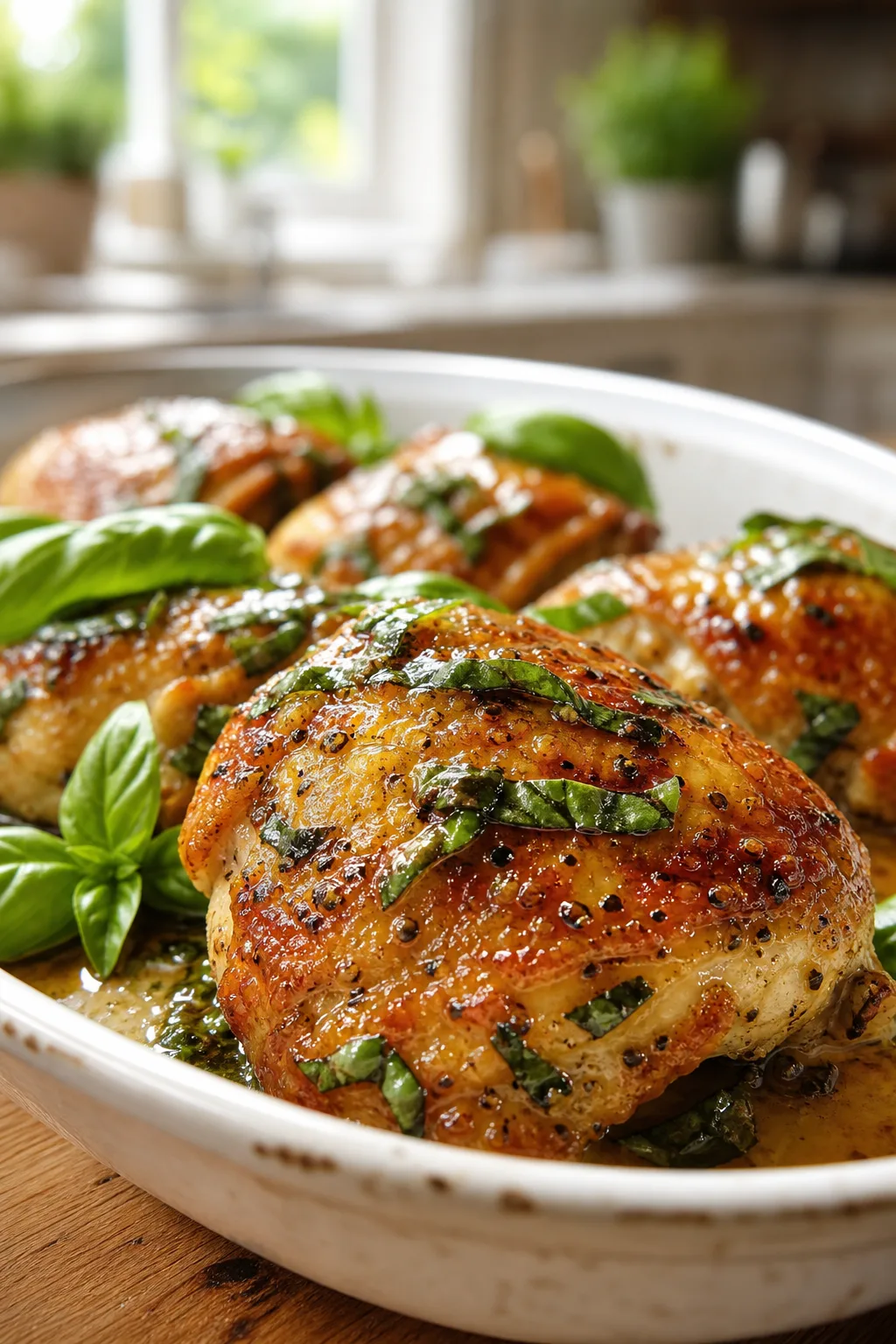
Juicy chicken thighs glazed with a sweet and tangy honey mustard sauce, paired with tender roasted baby carrots. The honey adds a lovely caramelized touch while roasting. Perfect for a cozy family dinner any night of the week!
Introduction
I first made this honey mustard chicken thighs recipe on a busy weeknight when I needed something quick, flavorful, and fuss-free. What I love about this dish is how the honey mustard glaze creates a beautiful sticky coating that keeps the chicken juicy and tender. Plus, roasting the baby carrots alongside the chicken means you get a naturally sweet, caramelized side with almost no extra effort. Over time, I tweaked the glaze ratio to get just the right balance of tangy mustard and sweet honey, and I always add a little smoked paprika for a subtle warmth. The key to success here is not overcrowding the pan so the chicken skin crisps up nicely while the carrots roast perfectly. When it’s done, you get a golden, slightly crispy chicken with soft, sweet carrots that make this an easy family favorite. It’s the kind of dish I’m happy to serve any night of the week, especially when I want a comforting meal without a lot of fuss.
How To Do It
Step 1
Preheat your oven to 425°F (220°C). This high heat is important because it helps the chicken skin crisp up beautifully while roasting the carrots to a tender, caramelized finish. Make sure your oven is fully heated before you put the chicken in, or you might end up with soggy skin. I like to line a baking sheet with foil or parchment paper for easier cleanup, but a rimmed sheet pan works best to catch any drippings.
⏱ Time: 10 minutes
✓ Doneness: Oven fully preheated to 425°F, ready for roasting
Step 2
In a small bowl, whisk together Dijon mustard, honey, olive oil, minced garlic, smoked paprika, salt, and pepper until smooth. This glaze is the star of the dish, so take a moment to mix it well. The honey adds sweetness and helps caramelize the chicken, while the mustard gives it a tangy kick. The garlic and smoked paprika add depth and warmth. If you skip the paprika, the dish will still be tasty but less complex in flavor.
⏱ Time: 5 minutes
✓ Doneness: Glaze is smooth and well combined with no lumps
Step 3
Pat the chicken thighs dry with paper towels to remove any moisture. This step is crucial because dry skin crisps up better during roasting. If the chicken is wet, it will steam instead of roast, and you won’t get that golden, crispy skin everyone loves. Season both sides lightly with salt and pepper before applying the glaze.
⏱ Time: 5 minutes
✓ Doneness: Chicken skin feels dry to the touch and is evenly seasoned
Step 4
Brush or spoon the honey mustard glaze generously over each chicken thigh, making sure to coat both the skin and the underside. Don’t be shy here — the glaze not only flavors the chicken but also helps it brown beautifully. Reserve a little glaze for basting later if you want an extra sticky finish.
⏱ Time: 5 minutes
✓ Doneness: Chicken thighs are evenly coated with a shiny glaze
Step 5
Arrange the chicken thighs skin side up on the prepared baking sheet, spacing them evenly so they don’t touch. Overcrowding the pan traps steam and prevents crisping. Scatter the baby carrots around the chicken in a single layer. Toss the carrots with a little olive oil, salt, pepper, and fresh thyme if using. The thyme adds a lovely herbaceous note that pairs beautifully with the honey mustard.
⏱ Time: 10 minutes
✓ Doneness: Chicken and carrots arranged in a single layer with space between pieces
Step 6
Place the baking sheet in the preheated oven and roast for 25-30 minutes. Halfway through cooking, baste the chicken with any reserved glaze or pan juices to boost flavor and help caramelize the skin. Keep an eye on the carrots; they should be tender and lightly browned when done. If the chicken skin isn’t crisping enough, you can broil for 2-3 minutes at the end, but watch closely to avoid burning.
⏱ Time: 25-30 minutes
✓ Doneness: Chicken skin is golden and crispy; carrots are tender and caramelized
Step 7
Check the internal temperature of the chicken thighs with a meat thermometer; it should read 165°F (74°C) to ensure they’re fully cooked and safe to eat. If you don’t have a thermometer, pierce the thickest part of the thigh—the juices should run clear, not pink. Let the chicken rest for 5 minutes after removing from the oven to allow the juices to redistribute, keeping the meat moist.
⏱ Time: 5 minutes
✓ Doneness: Internal temperature of 165°F; juices run clear when pierced
Step 8
Transfer the chicken and roasted carrots to a serving platter. Spoon any pan juices over the top for extra flavor. The glaze will have thickened slightly in the pan, creating a delicious sauce that ties everything together. This finishing touch really elevates the dish and keeps it moist and flavorful.
⏱ Time: 5 minutes
✓ Doneness: Dish is glossy with pan juices and ready to serve
Step 9
Serve warm with your favorite side—mashed potatoes, rice, or a simple green salad all work great. This meal is hearty but balanced thanks to the natural sweetness of the carrots and the tangy glaze. Leftovers reheat well and taste just as good the next day!
⏱ Time: 0 minutes
✓ Doneness: Meal plated and ready to enjoy
Pro Tips
Pat chicken skin dry before roasting.
Dry skin crisps up much better in the oven because moisture turns to steam and prevents browning. If you skip this step, you’ll end up with soggy skin instead of that delicious golden crunch everyone loves.
Don’t overcrowd the pan.
Giving the chicken and carrots enough space allows hot air to circulate and promotes even roasting. When pieces are too close, they steam instead of roast, resulting in less crispy skin and unevenly cooked veggies.
Use a meat thermometer to check doneness.
Chicken thighs can look done on the outside but still be undercooked inside. A thermometer ensures safety and prevents overcooking, which can dry out the meat.
Baste chicken halfway through cooking.
Basting with the pan juices or reserved glaze keeps the chicken moist and enhances the sticky, caramelized coating. Skipping this can result in a less flavorful, drier finish.
Roast at high heat (425°F).
High temperature triggers the Maillard reaction, browning the chicken skin and roasting carrots to sweet perfection. Lower temperatures won’t achieve the same crispy skin or caramelization.
Let the chicken rest after roasting.
Resting allows juices to redistribute throughout the meat, making each bite juicy and tender. Cutting in immediately causes the juices to run out, leaving dry chicken.
Use bone-in thighs for best flavor.
Bones conduct heat more slowly, which helps keep the meat juicy and flavorful. Boneless thighs cook faster but can dry out more easily.
Common Mistakes to Avoid
Not drying the chicken skin before roasting.
Why it happens Many cooks skip this step thinking it’s unnecessary or forget to pat dry after rinsing, leading to soggy skin.
Fix Always use paper towels to thoroughly pat the chicken skin dry before seasoning and glazing. This simple step ensures crisp, golden skin instead of steamed, rubbery texture.
Roasting at too low a temperature.
Why it happens Some assume lower heat is gentler and safer for chicken, but it prevents proper browning and crisping.
Fix Set your oven to 425°F to get that perfect Maillard reaction. If worried about burning, watch closely or tent loosely with foil towards the end.
Overcrowding the pan.
Why it happens Trying to fit everything on one small pan to save time or dishes, but this traps steam and prevents crisping.
Fix Use a large rimmed baking sheet and space pieces evenly. If needed, roast in batches or use two pans.
Skipping the resting period.
Why it happens Impatience or not knowing the importance of resting causes juices to escape when cutting immediately.
Fix Let the chicken rest 5-10 minutes after roasting. This keeps the meat juicy and tender.
Not checking internal temperature.
Why it happens Relying on appearance alone can lead to undercooked or overcooked chicken.
Fix Use a meat thermometer and cook to 165°F internal temperature for safety and best texture.
Variations
Spicy Honey Mustard Chicken
Add a teaspoon of cayenne pepper or hot sauce to the glaze for a spicy kick. This variation balances sweetness with heat and works great if your family likes a little spice. The carrots remain sweet, contrasting nicely with the spicy chicken.
Note: Adjust the amount of cayenne to taste and watch the glaze during roasting, as sugar can burn faster with added heat.
Herbed Honey Mustard Chicken
Mix fresh rosemary, thyme, and parsley into the honey mustard glaze for an herby, aromatic twist. This adds depth and freshness to the dish, making it feel a bit more elegant while still easy to prepare.
Note: Chop herbs finely and add them to the glaze before applying. Fresh herbs roast well alongside the chicken without burning quickly.
Mustard Yogurt Marinated Chicken
Marinate the chicken thighs in a mixture of honey, mustard, and plain yogurt for 2-3 hours before roasting. The yogurt tenderizes the meat and adds a tangy creaminess that complements the glaze beautifully.
Note: Pat chicken dry after marinating to ensure crispy skin, and reduce glaze honey slightly to avoid overly sweet coating.
Roasted Mixed Vegetables
Swap baby carrots for a mix of root vegetables like parsnips, sweet potatoes, and red onions. This adds variety and color to the plate while keeping the natural sweetness that pairs well with honey mustard.
Note: Cut vegetables into uniform pieces for even roasting and adjust cooking time depending on the mix.
Gluten-Free Honey Mustard Chicken
Ensure all ingredients, especially mustard and honey, are certified gluten-free. This simple swap makes the recipe safe for gluten-sensitive eaters without changing flavor or texture.
Note: Check labels carefully and avoid any pre-made mustard blends that may contain gluten additives.
Nutrition
Per Serving:
Nutritional values are estimates and may vary based on specific ingredients used.
Storage & Tips
Room Temperature
You can safely leave the cooked chicken and carrots out at room temperature for up to 2 hours if covered loosely with foil. Beyond that, bacteria can grow, so refrigerate promptly.
Refrigerator
Store leftovers in an airtight container in the fridge for up to 3 days. The chicken skin may lose some crispness, but reheating in the oven restores some texture. Carrots reheat well and retain their sweetness.
Freezer
Freeze cooked chicken and carrots in a freezer-safe container or heavy-duty freezer bag for up to 3 months. Wrap tightly to prevent freezer burn. Thaw overnight in the refrigerator before reheating.
Reheating
Reheat in a 350°F oven for 15-20 minutes until warmed through, adding a splash of water or broth to keep the chicken moist. Avoid microwaving if possible, as it can make the skin rubbery.
Make Ahead
You can prepare the honey mustard glaze and trim the chicken 1 day ahead, storing them separately in the fridge. Assemble and roast everything on the day you plan to serve for best freshness and texture.
FAQ
Can I use boneless chicken thighs instead of bone-in?
Yes, boneless thighs work fine but cook faster and can dry out more easily. Reduce roasting time by about 5-7 minutes and watch carefully. Pat them dry and apply the glaze as usual for best results.
What can I substitute for baby carrots?
You can use regular carrots cut into sticks or other root vegetables like parsnips or sweet potatoes. Just adjust roasting time to ensure even cooking and tender results.
Is this recipe suitable for meal prep?
Absolutely! The chicken and carrots reheat well and taste great the next day. Store in airtight containers and reheat in the oven to keep textures close to fresh.
Can I make the honey mustard glaze ahead of time?
Yes, you can prepare the glaze a day in advance and store it covered in the fridge. Bring it to room temperature and stir before using to ensure it’s smooth.
How do I know when the chicken is done without a thermometer?
Pierce the thickest part of the thigh; the juices should run clear, not pink or red. The meat should also feel firm but not hard. Using a thermometer is best for safety, though.
Can I use a different type of mustard?
Dijon mustard works best for its creamy texture and balanced tang. You can try yellow mustard, but it’s milder and less smooth, which might affect the glaze consistency and flavor.
What if I don’t have smoked paprika?
Regular sweet paprika is a fine substitute and still adds color and mild flavor. You can also add a pinch of cumin or chili powder for a different twist but avoid hot paprika if you want to keep it mild.
Can I bake this recipe in a covered dish instead of a sheet pan?
You can, but covering traps steam and prevents the skin from crisping. If you use a covered dish, uncover for the last 10 minutes to allow browning.
Final Thoughts
Give this honey mustard chicken with roasted baby carrots a try—you’ll love how easy and flavorful it is. Let me know how it turns out for your family!