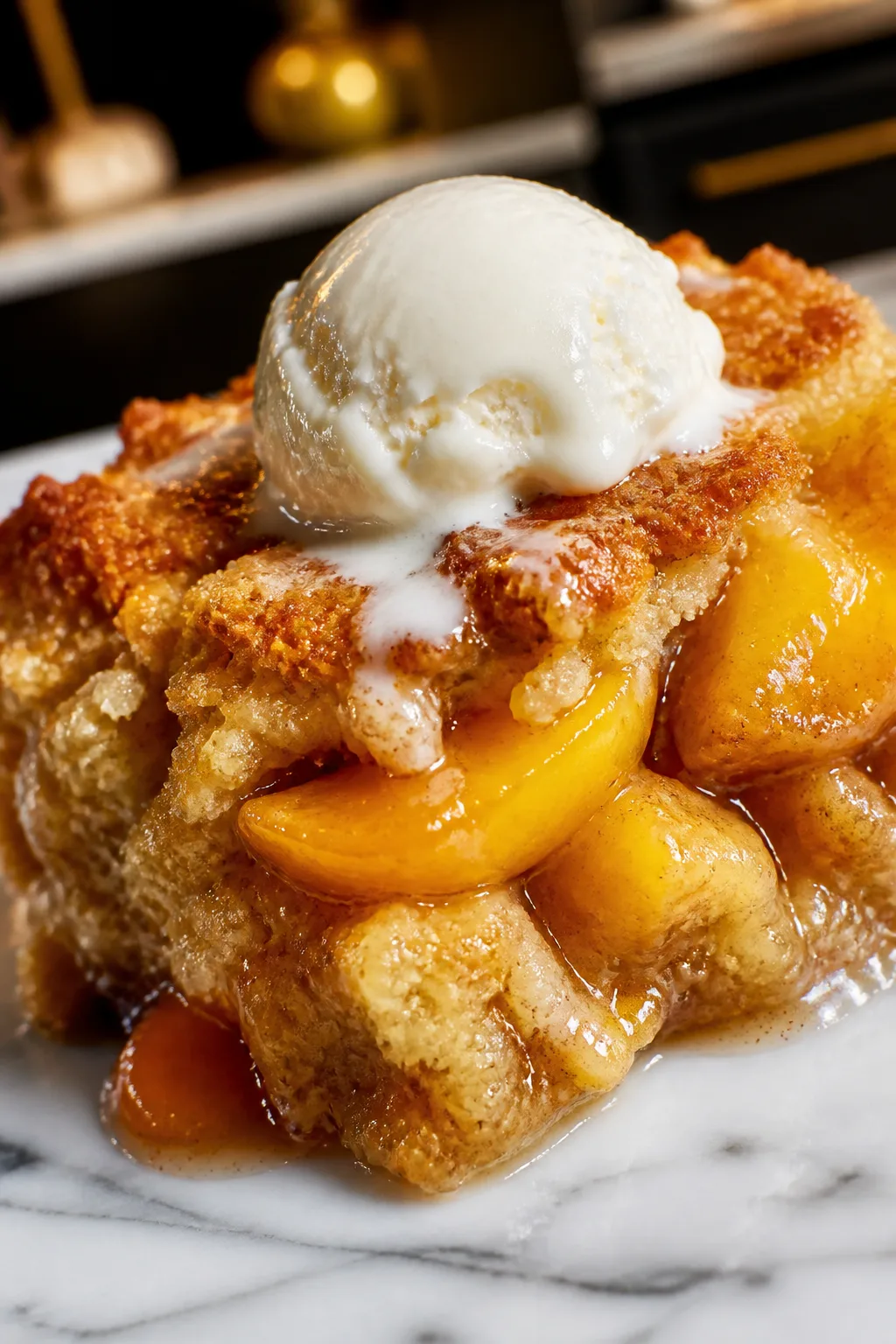
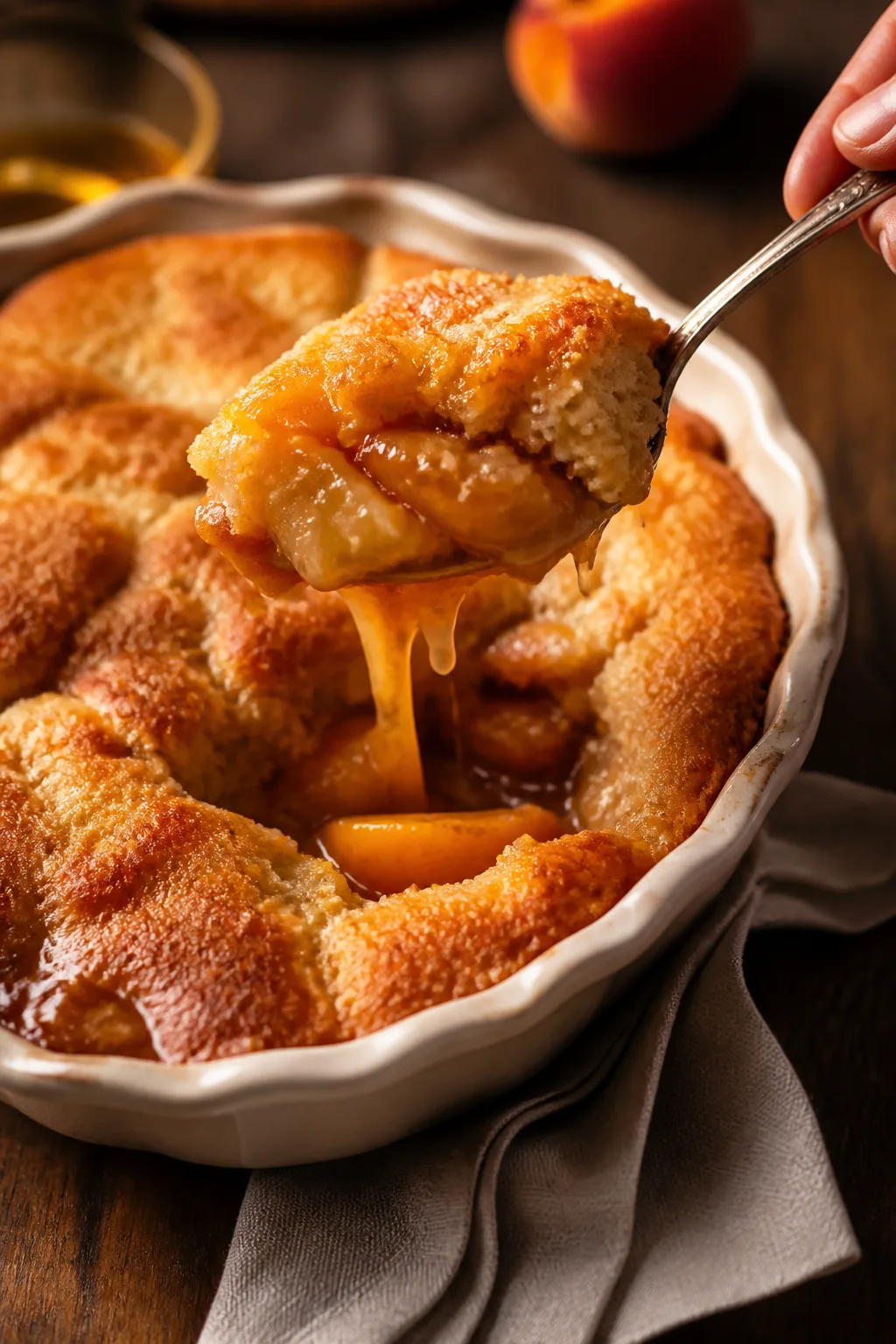
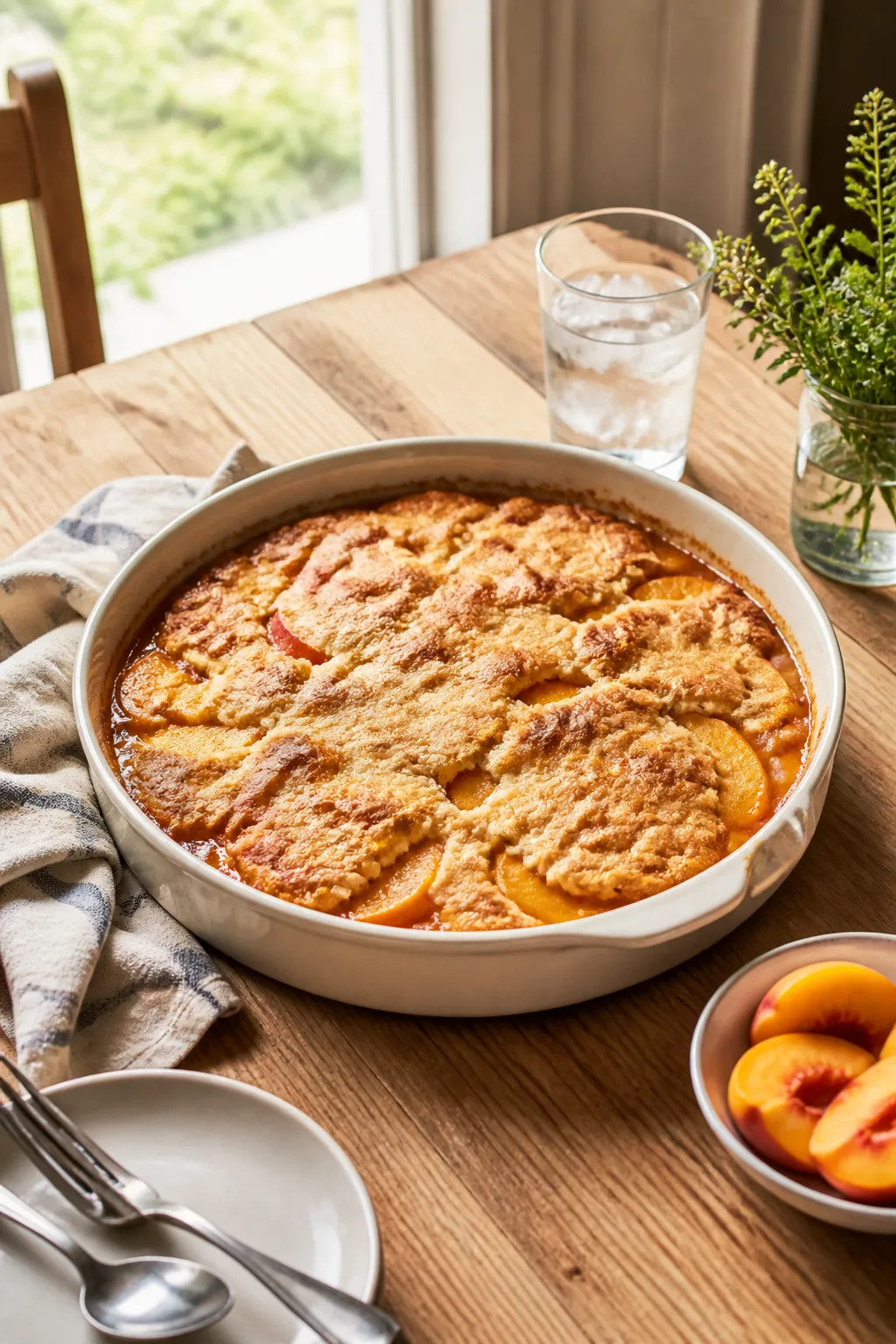
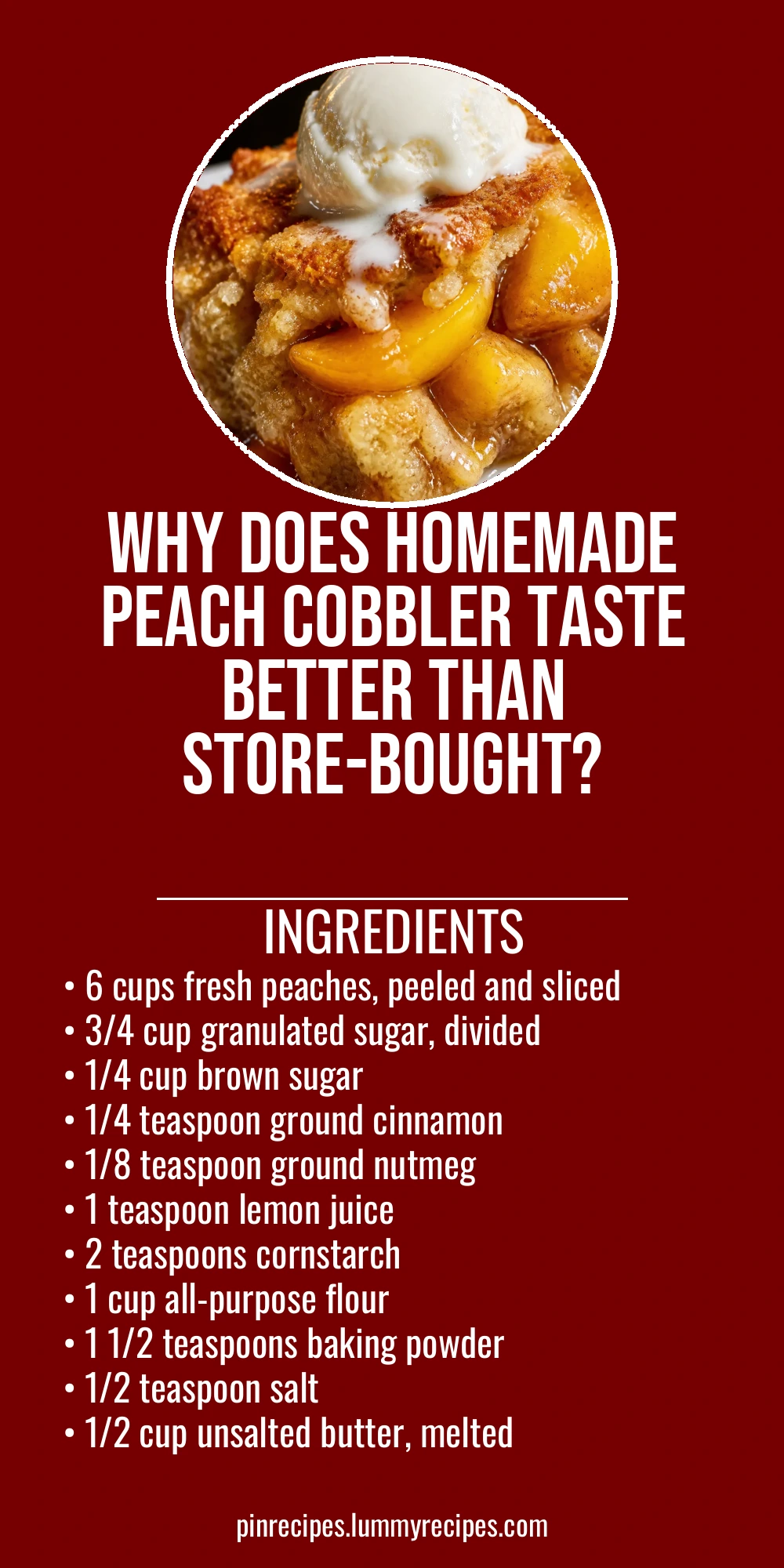
This peach cobbler is a warm hug on a plate, bursting with juicy fresh peaches and a tender, buttery crust. I love how the fruit stays bright and flavorful. Perfect for a cozy dessert after dinner or a weekend treat.
Introduction
I first tried making peach cobbler with fresh peaches years ago when the summer fruit was at its peak, and I was hooked immediately. There’s something about the juicy, fragrant peaches combined with a tender, buttery crust that just feels like a little slice of sunshine on a plate. Over time, I tweaked the recipe to balance sweetness and spice perfectly without overpowering the natural peach flavor. One trick I learned is to toss the peaches with lemon juice and a bit of cornstarch before baking; it helps keep the fruit juicy yet thickens the syrup so the cobbler isn’t soggy. Another key is melting the butter and pouring it under the batter so it crisps up beautifully while baking. The finished cobbler is golden on top, bubbling with peach syrup underneath, and just the right amount of sweetness. It’s the kind of dessert that brings everyone to the table, especially on warm summer evenings or casual family gatherings. I love serving it warm with a scoop of vanilla ice cream for that perfect contrast. If you’ve never made peach cobbler from scratch, this recipe will make you a believer—it’s easy, comforting, and utterly delicious.
How To Do It
Step 1
Preheat your oven to 375°F (190°C). In a large bowl, combine the sliced fresh peaches with 1/2 cup of the granulated sugar, brown sugar, cinnamon, nutmeg, lemon juice, and cornstarch. Toss everything gently to coat the peaches evenly. This step is crucial because the cornstarch helps thicken the fruit juices as the cobbler bakes, preventing it from becoming watery while the spices and sugars enhance the natural sweetness and aroma of the peaches.
⏱ Time: 10
✓ Doneness: Peaches are fully coated and slightly glossy with no dry spots
Step 2
Pour the melted butter into a 9x13-inch baking dish, making sure it covers the bottom evenly. This butter layer will create a crispy, golden base for the cobbler topping and infuse the dessert with rich flavor. Pouring the batter over the butter instead of mixing it in helps achieve that classic cobbler texture with a crisp crust and tender interior.
⏱ Time: 5
✓ Doneness: Butter fully coats the bottom of the baking dish without pooling excessively
Step 3
In a separate bowl, whisk together the flour, baking powder, salt, and remaining 1/4 cup sugar. Then stir in the milk until just combined. Be careful not to overmix here; a few lumps are okay. Overmixing can develop the gluten too much, resulting in a tougher crust rather than a tender, cake-like topping.
⏱ Time: 5
✓ Doneness: Batter is smooth with small lumps, thick but pourable
Step 4
Pour the batter gently over the melted butter in the baking dish. Do not stir. Then spoon the peach mixture evenly on top of the batter. This layering is what creates the cobbler’s signature texture — the batter rises through the fruit as it bakes, resulting in a deliciously soft crust interspersed with juicy peaches.
⏱ Time: 5
✓ Doneness: Batter covers butter evenly and peaches are spread in an even layer on top
Step 5
Bake the cobbler for about 40-45 minutes, or until the topping is golden brown and the peach juices are bubbly. You’ll know it’s done when the crust has a nice crisp edge and the filling is thickened and fragrant. Avoid opening the oven too early, as this can cause the crust to fall.
⏱ Time: 45
✓ Doneness: Top is golden brown and peach filling is bubbling around edges
Step 6
Remove the cobbler from the oven and let it cool for at least 15 minutes before serving. This resting time allows the peach juices to thicken further and makes it easier to serve. The cobbler will be hot and bubbly, so patience here really pays off.
⏱ Time: 15
✓ Doneness: Cobbler is warm but not overly runny when scooped
Step 7
Serve warm with a scoop of vanilla ice cream or a dollop of whipped cream if desired. The cold creaminess pairs perfectly with the warm, fruity cobbler, balancing the sweetness and adding a creamy texture contrast.
⏱ Time: 5
✓ Doneness: Ice cream begins to melt slightly over cobbler edges
Step 8
Store any leftovers covered in the refrigerator for up to 3 days. Reheat gently in the oven to keep the crust crisp. Avoid microwaving as it can make the topping soggy.
⏱ Time: 0
✓ Doneness: Leftovers warmed through with crisp crust
Step 9
For best results, use ripe but firm peaches. Overripe peaches can become mushy and watery. If fresh peaches aren’t available, thawed frozen peaches can work but may need additional thickener.
⏱ Time: 0
✓ Doneness: Fruit holds shape and isn’t overly soft before baking
Pro Tips
Peel peaches by blanching them in boiling water for 30 seconds then plunging into ice water.
This technique loosens the skin for easy peeling without damaging the flesh. It preserves the peach’s shape and texture, preventing mushiness in the cobbler.
Don’t overmix the batter; stir just until ingredients are combined.
Overmixing develops gluten, making the crust tough and chewy rather than tender. A few lumps in the batter are okay and will bake out.
Let the cobbler rest after baking before serving.
Resting allows the peach juices to thicken and the crust to set, making it easier to serve and enhancing flavor melding.
Use fresh lemon juice instead of bottled for brighter flavor.
Fresh lemon juice adds natural acidity that balances sweetness and prevents browning. Bottled lemon juice can have preservatives that affect taste.
If peaches are very juicy, add an extra 1/2 teaspoon cornstarch.
This helps absorb the additional liquid and keeps the filling from becoming too runny, ensuring a perfect cobbler texture.
Use a glass or ceramic baking dish for even heat distribution.
These materials heat evenly, preventing hot spots that can burn the crust or undercook the filling.
Serve with vanilla ice cream while the cobbler is still warm.
The contrast between warm cobbler and cold ice cream enhances the dessert experience, balancing sweetness and adding creamy texture.
Common Mistakes to Avoid
Skipping the cornstarch in the peach filling
Why it happens Many assume the fruit will thicken naturally during baking, but peaches release a lot of juice that can make the cobbler watery.
Fix Always toss the peaches with cornstarch before baking to absorb excess liquid and thicken the syrup. This keeps the cobbler from becoming soggy and ensures a luscious filling.
Overmixing the batter
Why it happens In a rush, cooks might mix the batter vigorously to combine ingredients quickly.
Fix Stir gently just until combined to avoid gluten development, which causes a tough crust. A few lumps are fine and produce a tender topping.
Not preheating the oven
Why it happens Sometimes the oven isn’t fully preheated before baking, especially when multitasking.
Fix Always preheat the oven to 375°F so the cobbler bakes evenly and the crust crisps properly. Baking in a cold oven leads to uneven cooking and soggy crust.
Using overripe or bruised peaches
Why it happens People sometimes use very ripe peaches to avoid waste.
Fix Choose peaches that are ripe but still firm. Overripe fruit breaks down too much during baking, resulting in a mushy texture and excess liquid.
Removing cobbler immediately after baking
Why it happens Eager to eat, some serve the cobbler hot from the oven.
Fix Let the cobbler rest 15 minutes to let juices thicken and crust set. Serving too hot can cause the filling to run and make serving messy.
Variations
Gluten-Free Peach Cobbler
Swap all-purpose flour with a gluten-free baking blend. Use xanthan gum if your blend doesn’t contain it to help with structure. The texture will be slightly different but still delicious and tender.
Note: Gluten-free flours absorb liquid differently, so you may need to adjust the milk amount slightly to get the right batter consistency.
Vegan Peach Cobbler
Replace butter with coconut oil or vegan butter and use a plant-based milk like almond or oat. The flavor will be a bit different but still rich and satisfying.
Note: Coconut oil melts differently than butter, so watch the crust closely to avoid over-browning.
Spiced Peach Cobbler
Add a pinch of ground ginger and cloves along with cinnamon and nutmeg for a warm, spiced flavor. Great for cooler months or holiday variations.
Note: Spices can intensify during baking, so start with small amounts and adjust to taste.
Peach Blueberry Cobbler
Add 1 cup fresh blueberries to the peach mixture for a colorful, tangy twist. Blueberries add extra juiciness and a lovely contrast in flavor.
Note: Blueberries release a lot of juice, so increase cornstarch to 2 teaspoons to prevent sogginess.
Peach Cobbler with Biscuit Topping
Instead of a batter, use biscuit dough for the topping. Drop spoonfuls over the peach filling for a rustic look and flaky texture.
Note: Biscuit dough takes longer to bake through, so bake an additional 5-10 minutes if needed.
Nutrition
Per Serving:
Nutritional values are estimates and may vary based on specific ingredients used.
Storage & Tips
Room Temperature
Peach cobbler can safely sit at room temperature for up to 2 hours covered with foil or plastic wrap to prevent drying out. Longer than that risks bacterial growth.
Refrigerator
Store leftovers in an airtight container in the fridge for up to 3 days. The cobbler may lose some crispness but can be reheated in the oven to restore texture. Serving cold is possible but less appealing.
Freezer
Freeze cobbler in a freezer-safe container for up to 2 months. Wrap tightly to prevent freezer burn. Thaw overnight in the refrigerator before reheating.
Reheating
Reheat in a 350°F oven for 15-20 minutes until warmed through and crust is crisp again. Avoid microwaving as it softens the crust and makes it soggy. Adding a splash of milk or water before reheating can help maintain moisture.
Make Ahead
Prepare the peach filling and batter separately up to 1 day ahead. Store filling in the fridge and batter covered at room temperature. Assemble and bake just before serving for best texture and flavor.
FAQ
Can I use frozen peaches instead of fresh?
Yes, you can use frozen peaches but thaw and drain them well before using to reduce excess liquid. You might need to increase the cornstarch slightly to help thicken the filling since frozen fruit tends to release more juice during baking.
How do I prevent the crust from burning before the peaches are cooked?
Baking at 375°F strikes a good balance between cooking the fruit and browning the crust evenly. If the crust browns too quickly, tent the cobbler loosely with foil halfway through baking to protect the top while the filling finishes cooking.
Can I make this cobbler gluten-free?
Absolutely! Substitute the all-purpose flour with a gluten-free baking mix that includes xanthan gum for structure. You may need to adjust the liquid slightly to get the batter consistency right, but the cobbler will still be delicious.
What’s the best way to peel peaches quickly?
Blanch peaches in boiling water for 30 seconds, then immediately transfer to ice water. The skins will slip off easily without damaging the fruit. This method is much faster and cleaner than peeling with a knife.
Can I make this recipe vegan?
Yes, replace butter with coconut oil or vegan butter and use a plant-based milk like almond or oat milk. The texture might vary slightly, but the cobbler will still be rich and flavorful.
Why did my cobbler turn out soggy?
Sogginess usually happens if the peaches release too much juice or there isn’t enough thickener like cornstarch. Make sure to toss the peaches with cornstarch and don’t skip the lemon juice, which helps balance and set the filling.
How long can I store leftover cobbler?
Store leftovers in the refrigerator for up to 3 days in an airtight container. Reheat in the oven to restore the crust’s crispness. You can also freeze for up to 2 months, thaw overnight before reheating.
Can I prepare the cobbler ahead of time?
Yes, you can prepare the peach filling and batter separately up to a day in advance. Store filling in the fridge and batter covered at room temperature. Assemble and bake just before serving for the best results.
Final Thoughts
I hope you enjoy making this peach cobbler as much as my family does. It’s a simple, comforting dessert that really celebrates fresh peaches. Let me know how yours turns out!