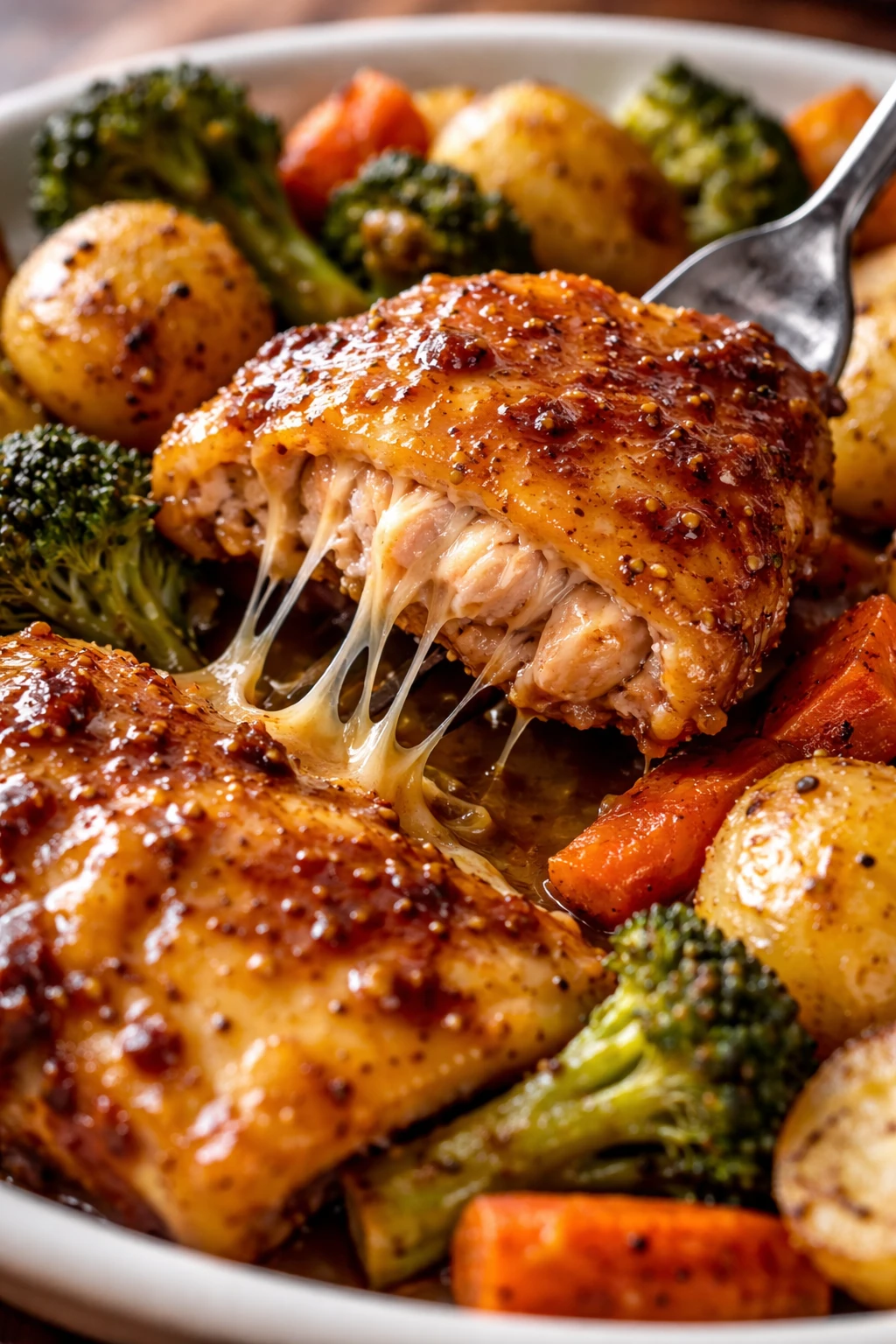
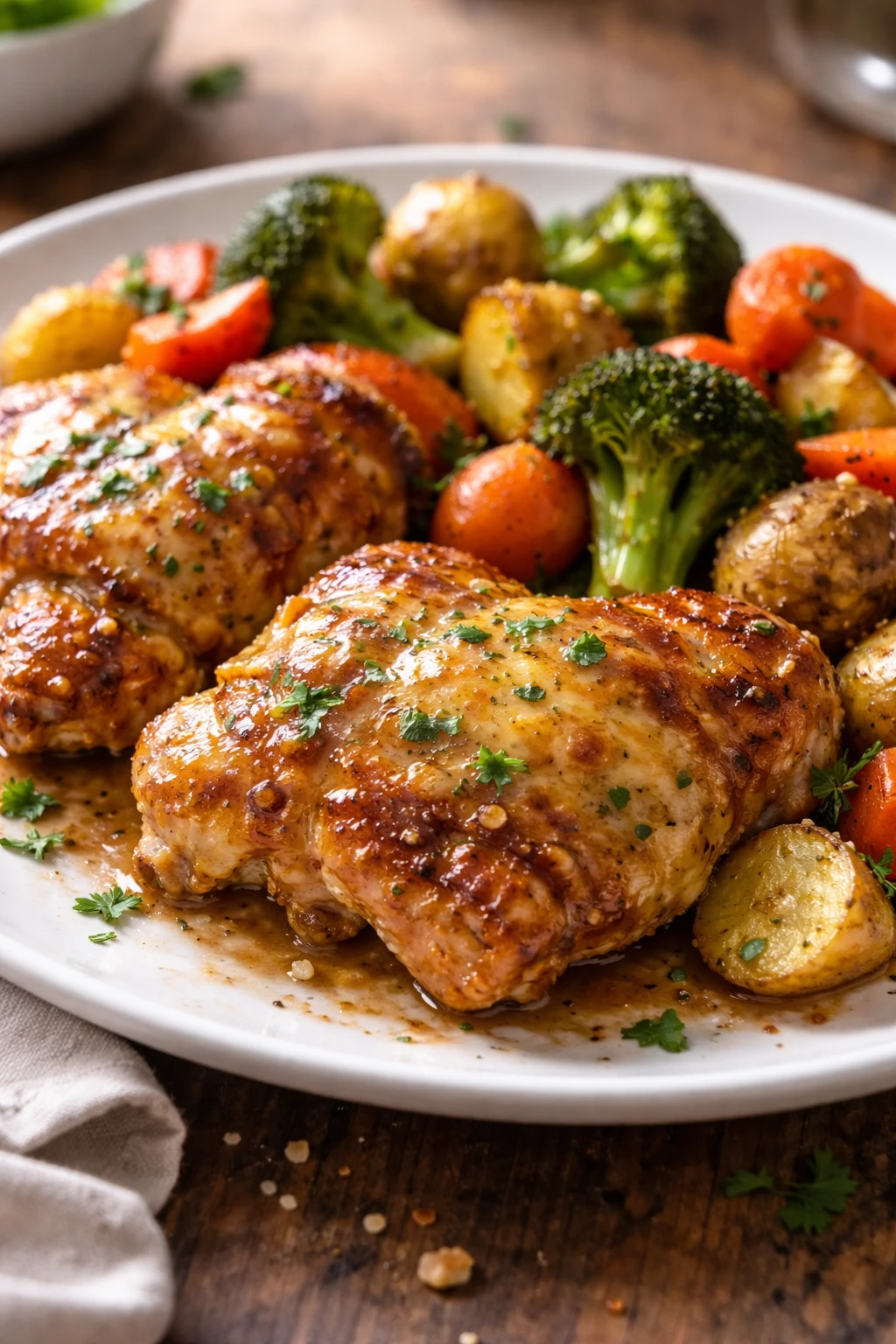
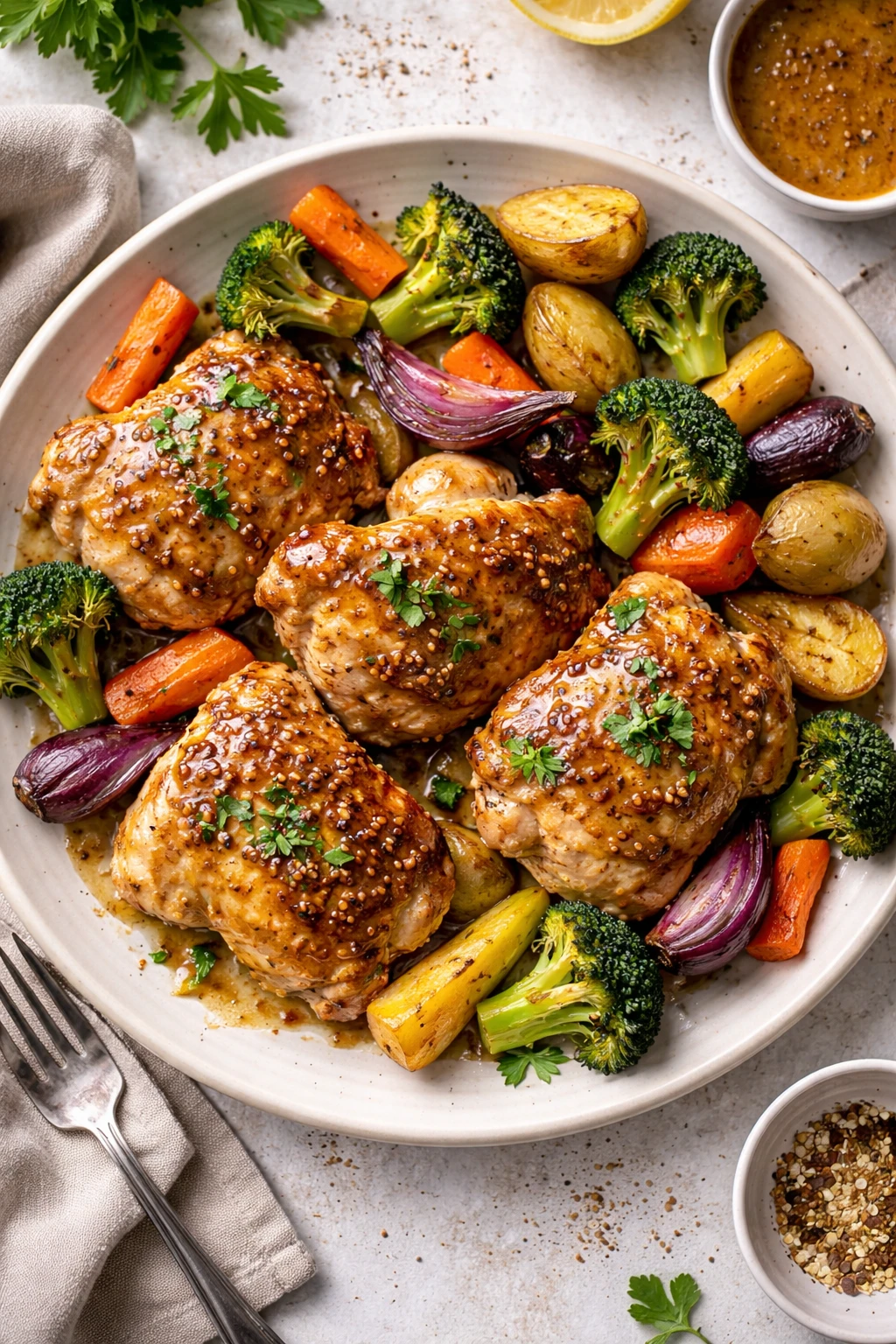
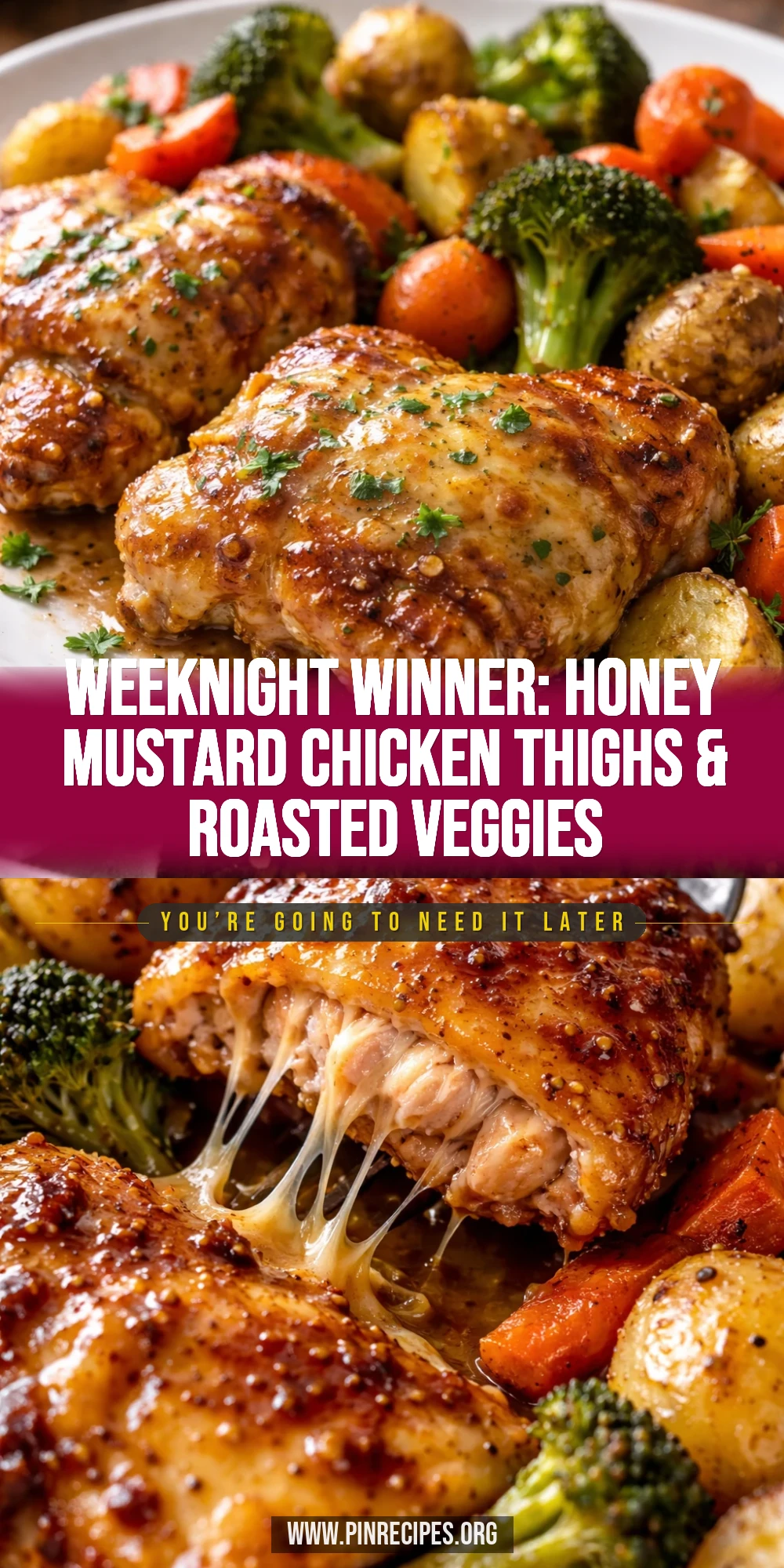
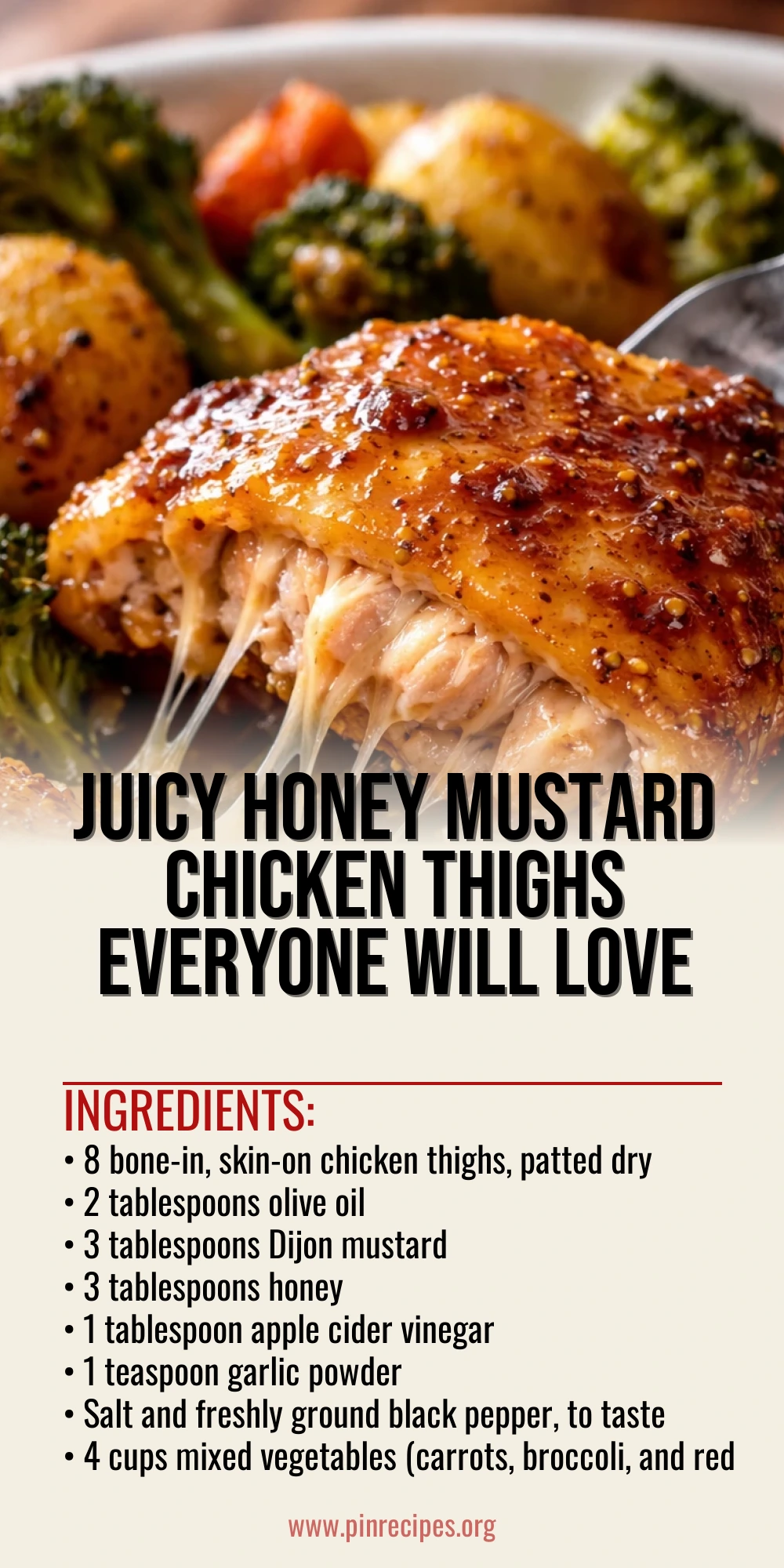
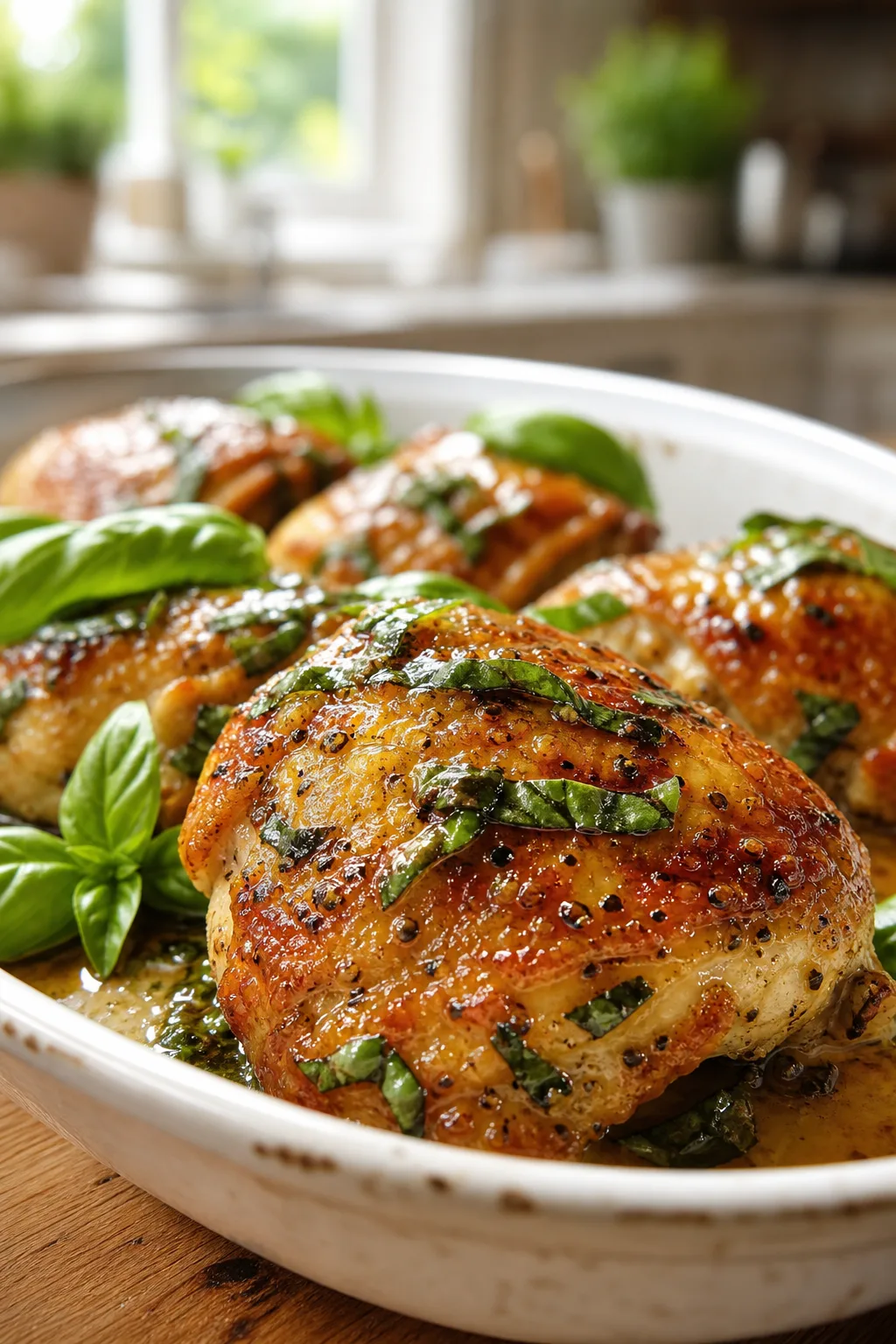
These juicy chicken thighs glazed in honey mustard are a total crowd-pleaser. Tossed with colorful roasted veggies, it’s an easy, comforting dinner that feels special but comes together without fuss. Perfect for weeknights or casual family meals!
Introduction
I’ve been making honey mustard chicken thighs for years, but this version with roasted veggies quickly became a family favorite. The first time I tried a honey mustard glaze, it was a bit too sweet and sticky, but after some trial and error, I found the perfect balance with a splash of apple cider vinegar to cut the sweetness and add brightness. What makes this recipe stand out is roasting the veggies alongside the chicken so everything cooks together, soaking up those delicious flavors. I love how the chicken skin crisps up beautifully while the honey mustard glaze caramelizes just right. It’s one of those meals that feels special without requiring hours in the kitchen. Plus, it’s hearty and comforting, perfect for those busy weeknights when you want something wholesome but easy. The veggies come out tender and slightly caramelized, complementing the juicy chicken perfectly. I think you’ll appreciate how simple it is to put together, yet it looks and tastes like you spent way more time on it. This is definitely a recipe I’ll keep coming back to, especially when feeding my family something everyone enjoys.
How To Do It
Step 1
Preheat your oven to 425°F (220°C). While it heats, pat the chicken thighs dry with paper towels to ensure the skin crisps up nicely when roasting. Dry skin is key because moisture creates steam, which prevents crispiness. Season both sides generously with salt, pepper, and garlic powder. This initial seasoning layers flavor and helps the chicken develop a beautiful golden crust.
⏱ Time: 10
✓ Doneness: Skin looks dry and well-seasoned before cooking
Step 2
In a small bowl, whisk together Dijon mustard, honey, apple cider vinegar, and olive oil until smooth. This glaze balances sweet, tangy, and savory flavors. The vinegar adds acidity that cuts through the richness of the chicken and honey, preventing it from being overly sweet. Set aside half the glaze for later to brush on during roasting.
⏱ Time: 5
✓ Doneness: Glaze is smooth and well combined with no separation
Step 3
Place the chopped vegetables in a large bowl. Toss them with a drizzle of olive oil, dried thyme, and a pinch of salt and pepper. This step ensures the veggies roast evenly and develop a nice caramelized flavor. Spread them out in a single layer on a large rimmed baking sheet to avoid steaming.
⏱ Time: 5
✓ Doneness: Veggies are evenly coated and spread out without crowding
Step 4
Arrange the chicken thighs skin-side up on top of the vegetables. Brush each piece generously with half of the honey mustard glaze. Placing chicken on veggies lets the juices drip down, flavoring the veggies as they roast. The glaze will caramelize on the chicken skin, creating a sticky, golden crust.
⏱ Time: 5
✓ Doneness: Chicken skin is well coated and shiny with glaze
Step 5
Roast in the preheated oven for 25 minutes. Avoid opening the oven door frequently to maintain the heat and ensure even cooking. The high temperature helps crisp the skin and caramelize the glaze. Halfway through, brush the chicken with the reserved glaze for extra flavor and shine.
⏱ Time: 25
✓ Doneness: Chicken skin is deep golden brown and veggies are tender
Step 6
Check the chicken’s internal temperature with a meat thermometer; it should read 165°F (74°C) to be safe and juicy. If the skin isn’t crispy enough, you can broil for 1-2 minutes but watch closely to prevent burning. Let the chicken rest for 5 minutes before serving to allow juices to redistribute.
⏱ Time: 5
✓ Doneness: Internal temperature at 165°F and skin crisped to your liking
Step 7
While the chicken rests, toss the roasted veggies gently on the baking sheet to coat them in any pan juices. This adds extra flavor and moisture. Taste and adjust seasoning with salt and pepper if needed. The veggies should be tender with some caramelized edges.
⏱ Time: 3
✓ Doneness: Veggies are tender and flavorful with slightly browned edges
Step 8
Serve the chicken thighs hot over the roasted vegetables. The combination of sticky honey mustard glaze and savory roasted veggies makes a comforting, well-rounded meal. Garnish with fresh herbs if you like for a pop of color and freshness.
⏱ Time: 2
✓ Doneness: Dish looks vibrant and inviting on the plate
Step 9
Clean up any leftover glaze on the baking sheet by soaking it in warm water before washing to prevent sticky residue buildup. Keeping your pans clean makes your next cooking session easier and keeps your kitchen smelling fresh.
⏱ Time: 5
✓ Doneness: Baking sheet is clean and ready for next use
Pro Tips
Pat the chicken skin dry before seasoning.
Removing moisture from the skin is essential for crispiness. If the skin is wet, it will steam instead of roast, resulting in soggy skin. Patting dry allows the heat to render the fat properly and creates a golden, crunchy exterior.
Use a meat thermometer to check doneness.
Chicken thighs can look done on the outside but still be undercooked inside. A thermometer ensures the internal temperature reaches 165°F, guaranteeing safety and juicy meat without overcooking.
Don’t overcrowd the baking sheet.
Crowding traps steam and prevents caramelization. Spreading the veggies and chicken out in a single layer allows hot air to circulate, ensuring crisp skin and nicely roasted vegetables.
Brush the glaze halfway through roasting.
Adding glaze mid-cook layers flavor and prevents the sugars in honey from burning. This technique builds a sticky, flavorful crust without bitterness or burning.
Let the chicken rest after roasting.
Resting allows juices to redistribute throughout the meat, making it tender and moist. Cutting immediately causes juices to run out, leading to dry chicken.
Use bone-in, skin-on thighs for best results.
The bone conducts heat evenly, ensuring juicy meat, and the skin crisps up nicely, adding texture and flavor. Boneless or skinless pieces won’t yield the same richness or crispiness.
Toss veggies with oil and herbs before roasting.
Oil helps veggies brown and prevents sticking, while herbs add aroma and flavor. This simple step elevates the roasted vegetables from bland to delicious.
Common Mistakes to Avoid
Not drying the chicken skin before cooking.
Why it happens Many cooks overlook this step, assuming seasoning alone is enough. Moist skin traps steam, preventing crispiness.
Fix Always pat the skin dry with paper towels before seasoning. This step ensures the skin crisps up during roasting, giving you that coveted golden crust.
Skipping the glaze brushing halfway through.
Why it happens Some think applying glaze just once is sufficient, but sugars can burn if applied too early or not layered.
Fix Brush the glaze on the chicken halfway through cooking to build flavor layers and avoid burning. This technique produces a sticky, caramelized finish.
Overcrowding the pan with veggies and chicken.
Why it happens Trying to fit everything on one pan without spacing leads to steaming instead of roasting.
Fix Spread the ingredients out in a single layer with space between pieces for proper air circulation and even roasting.
Not using a thermometer to check doneness.
Why it happens Relying on visual cues alone can be misleading, risking undercooked or dry chicken.
Fix Use a meat thermometer to ensure the internal temperature reaches 165°F for safety and juiciness.
Cutting into the chicken immediately after roasting.
Why it happens Impatience leads to juices running out, drying the meat.
Fix Let the chicken rest for at least 5 minutes after cooking to allow juices to redistribute for moist, tender meat.
Variations
Spicy Honey Mustard Chicken
Add a teaspoon of smoked paprika and a pinch of cayenne pepper to the glaze for a smoky, spicy kick. This variation adds warmth without overpowering the sweet and tangy balance. It’s perfect if you want a little heat.
Note: Spices in the glaze may darken faster; watch closely during roasting to avoid burning.
Lemon Herb Honey Mustard Chicken
Stir in fresh lemon juice and chopped rosemary into the glaze for a bright, herbaceous twist. The lemon adds freshness and cuts through richness, making it suitable for spring or summer meals.
Note: Add lemon juice just before roasting to preserve its brightness and avoid bitterness.
Honey Mustard Chicken with Sweet Potatoes
Swap out the mixed veggies for cubed sweet potatoes and green beans. Sweet potatoes add natural sweetness that complements the honey mustard glaze, creating a cozy, autumnal dish.
Note: Sweet potatoes take slightly longer to roast; cut into smaller pieces to ensure even cooking.
Gluten-Free Honey Mustard Chicken
Use gluten-free Dijon mustard and verify all ingredients are gluten-free. This recipe naturally suits gluten-free diets without sacrificing flavor or texture.
Note: No adjustments needed in cooking times or techniques.
Sheet Pan Honey Mustard Chicken and Brussels Sprouts
Replace veggies with halved Brussels sprouts and red onion for a slightly bitter, caramelized contrast to the sweet glaze. It’s a delicious way to get more greens on your plate.
Note: Brussels sprouts roast quickly; toss halfway through to prevent burning.
Nutrition
Per Serving:
Nutritional values are estimates and may vary based on specific ingredients used.
Storage & Tips
Room Temperature
You can safely leave the chicken and veggies at room temperature for up to 2 hours covered loosely with foil or a clean towel. Beyond that, bacteria growth increases, so refrigerate promptly.
Refrigerator
Store leftovers in an airtight container for up to 3 days. The chicken skin may lose crispness, but reheating in a hot oven or skillet can help restore some texture. Veggies may soften further but remain tasty.
Freezer
Freeze cooked chicken and veggies in airtight freezer-safe containers or heavy-duty freezer bags for up to 3 months. Wrap tightly to prevent freezer burn. Thaw overnight in the fridge before reheating.
Reheating
Reheat in a 375°F oven for 15-20 minutes, uncovered, to crisp skin and warm evenly. Alternatively, reheat in a skillet over medium heat adding a splash of water to prevent drying. Avoid microwaving as it softens the skin.
Make Ahead
You can prepare the honey mustard glaze and chop veggies 1-2 days ahead. Store separately in the fridge. Assemble and roast chicken and veggies on the day of serving for best texture and flavor.
FAQ
Can I use boneless chicken thighs instead of bone-in?
You can, but boneless thighs cook faster and may dry out more easily. Reduce cooking time by about 5-10 minutes and keep an eye on internal temperature. Boneless thighs won’t have the same juicy texture or crispy skin, but the flavor will still be delicious.
What if I don’t have apple cider vinegar?
You can substitute white wine vinegar or lemon juice in equal amounts. These will still add acidity to balance the honey's sweetness but may alter the flavor slightly. Avoid stronger vinegars like distilled white vinegar as they can be too harsh.
How do I make the chicken skin extra crispy?
Patting the skin dry before seasoning is the most important step. Also, roasting at a high temperature (425°F) helps render fat quickly. Avoid covering the pan and don’t overcrowd the chicken pieces to ensure air circulates around them.
Can I prepare this recipe in advance?
Yes! You can mix the glaze and marinate the chicken in it for up to 24 hours in the fridge. Keep veggies separate until ready to roast. This enhances flavor and saves time on cooking day.
What vegetables work best with this recipe?
Sturdy veggies like carrots, broccoli, bell peppers, Brussels sprouts, and sweet potatoes roast well alongside chicken. Avoid watery veggies like zucchini or tomatoes as they can become mushy.
Is this recipe gluten-free?
Yes, naturally. Just be sure to use gluten-free Dijon mustard and check that your honey and other ingredients don’t have additives containing gluten.
How do I know when the chicken is fully cooked?
The safest method is using a meat thermometer; the internal temperature should reach 165°F (74°C). The juices should run clear when pierced, and the skin should be golden and crisp.
Can I make this recipe spicier?
Absolutely! Add cayenne pepper, smoked paprika, or chili flakes to the glaze for a spicy twist. Adjust the amount to your heat preference.
Final Thoughts
I hope you give this honey mustard chicken with roasted veggies a try—it’s become a staple in my kitchen and I’m sure your family will love it too. Don’t forget to share how it turns out!