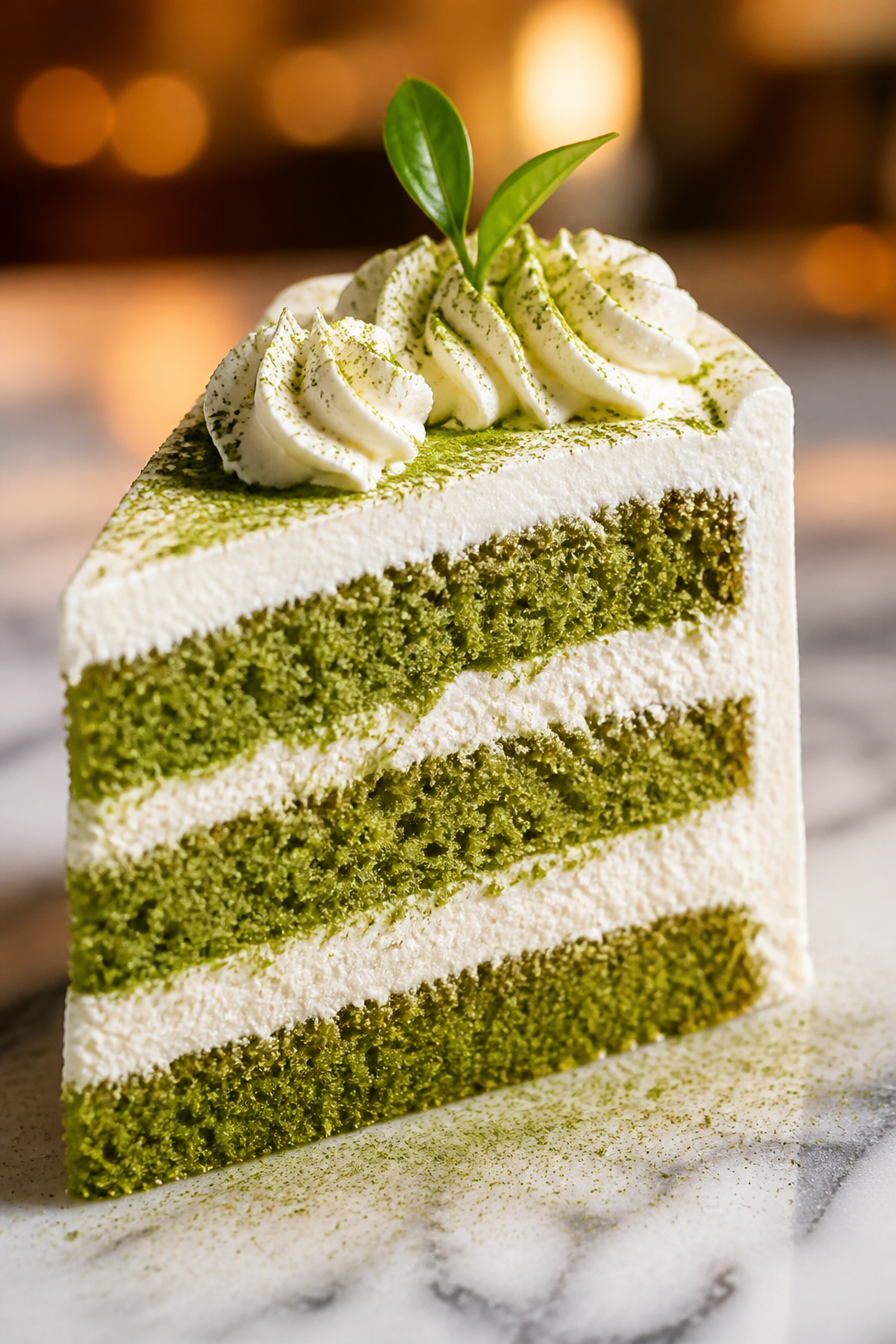
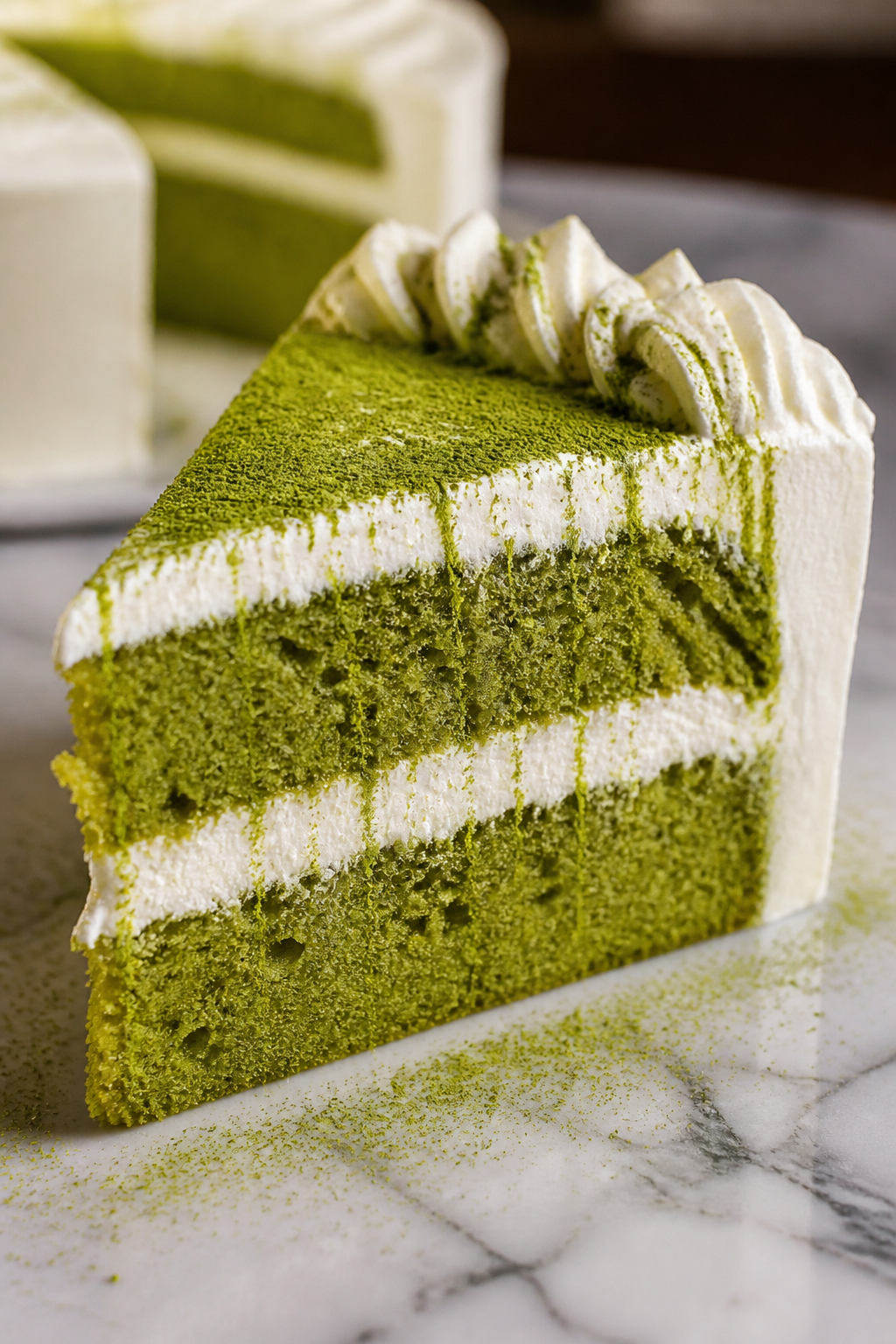
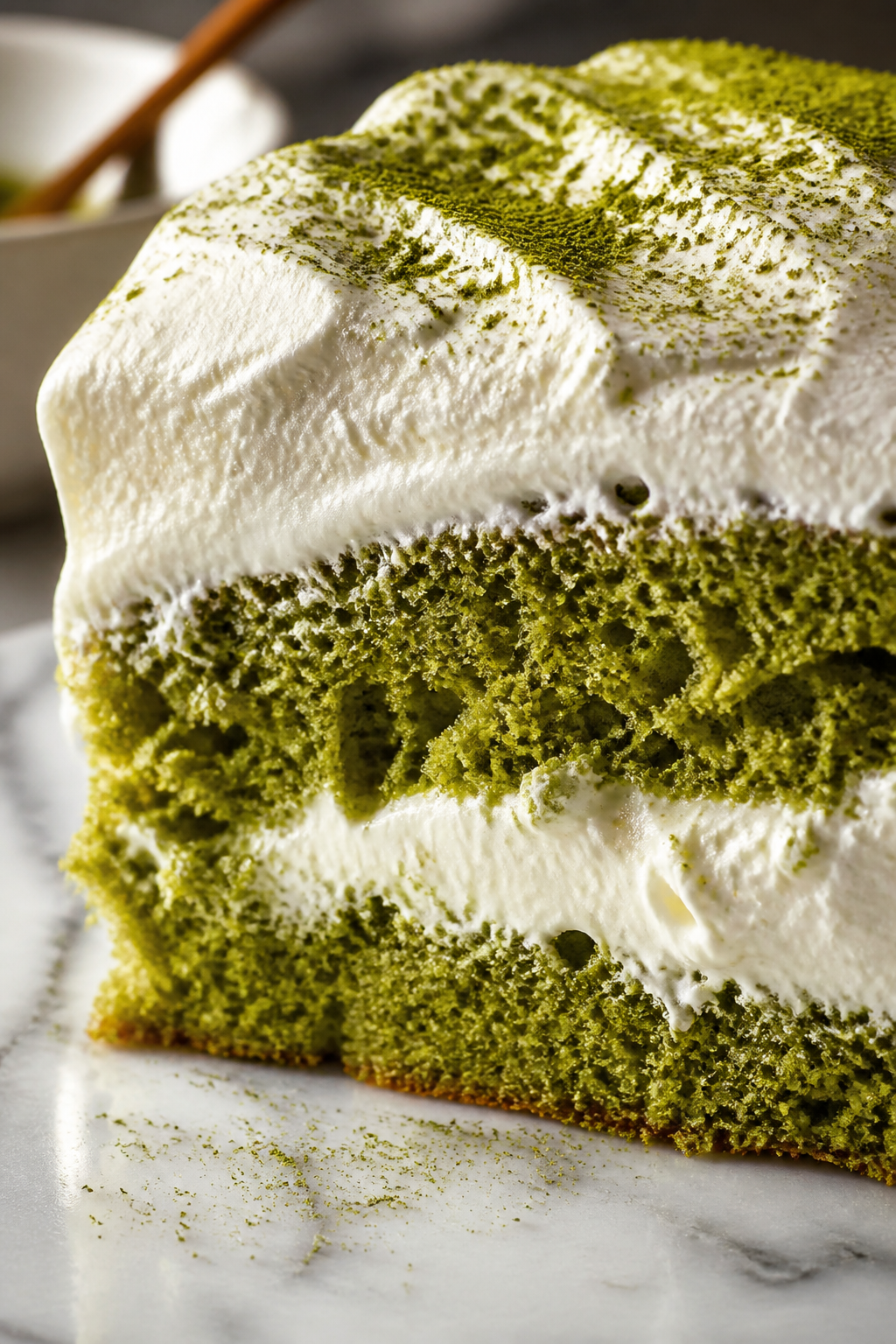
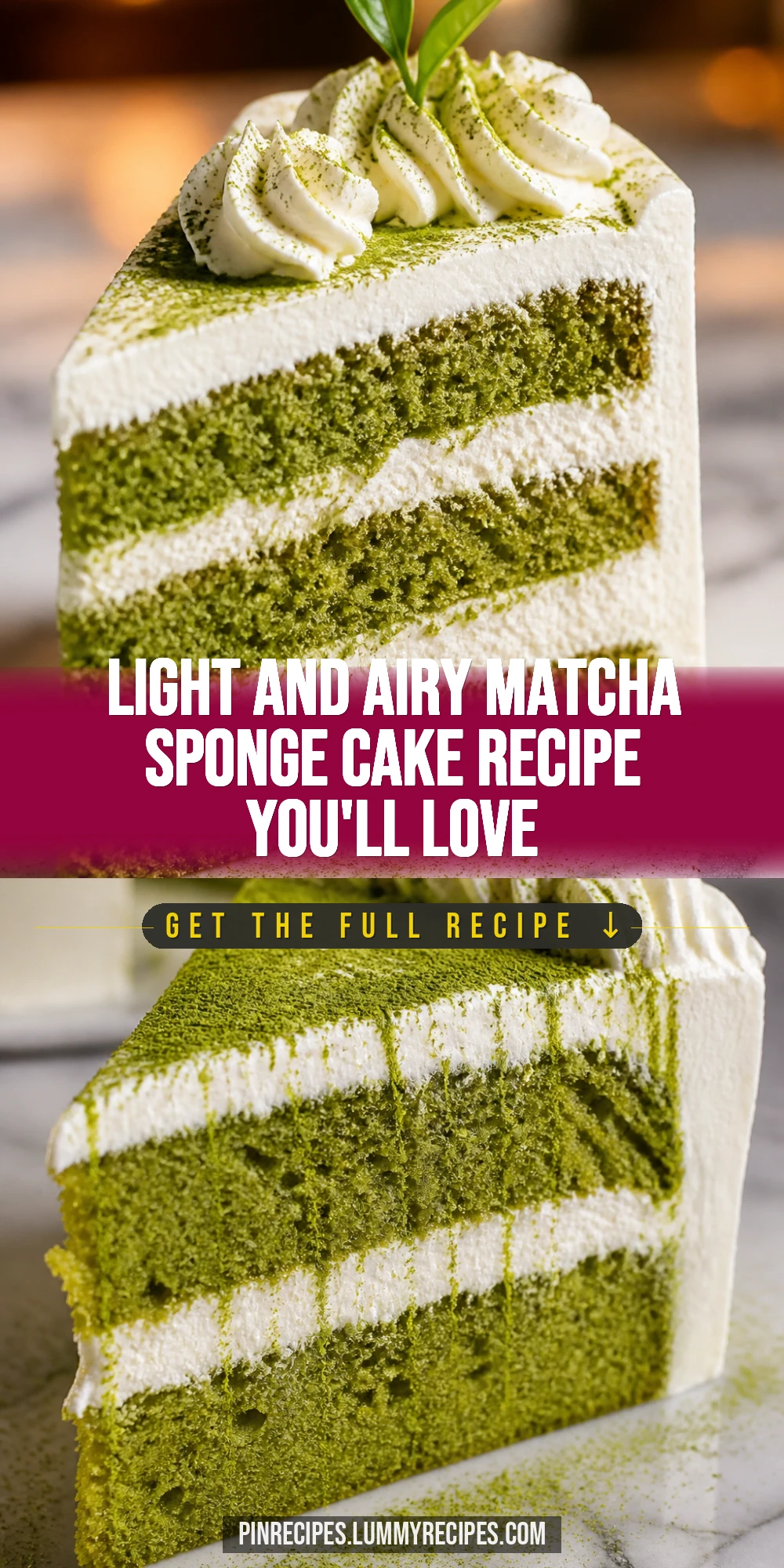
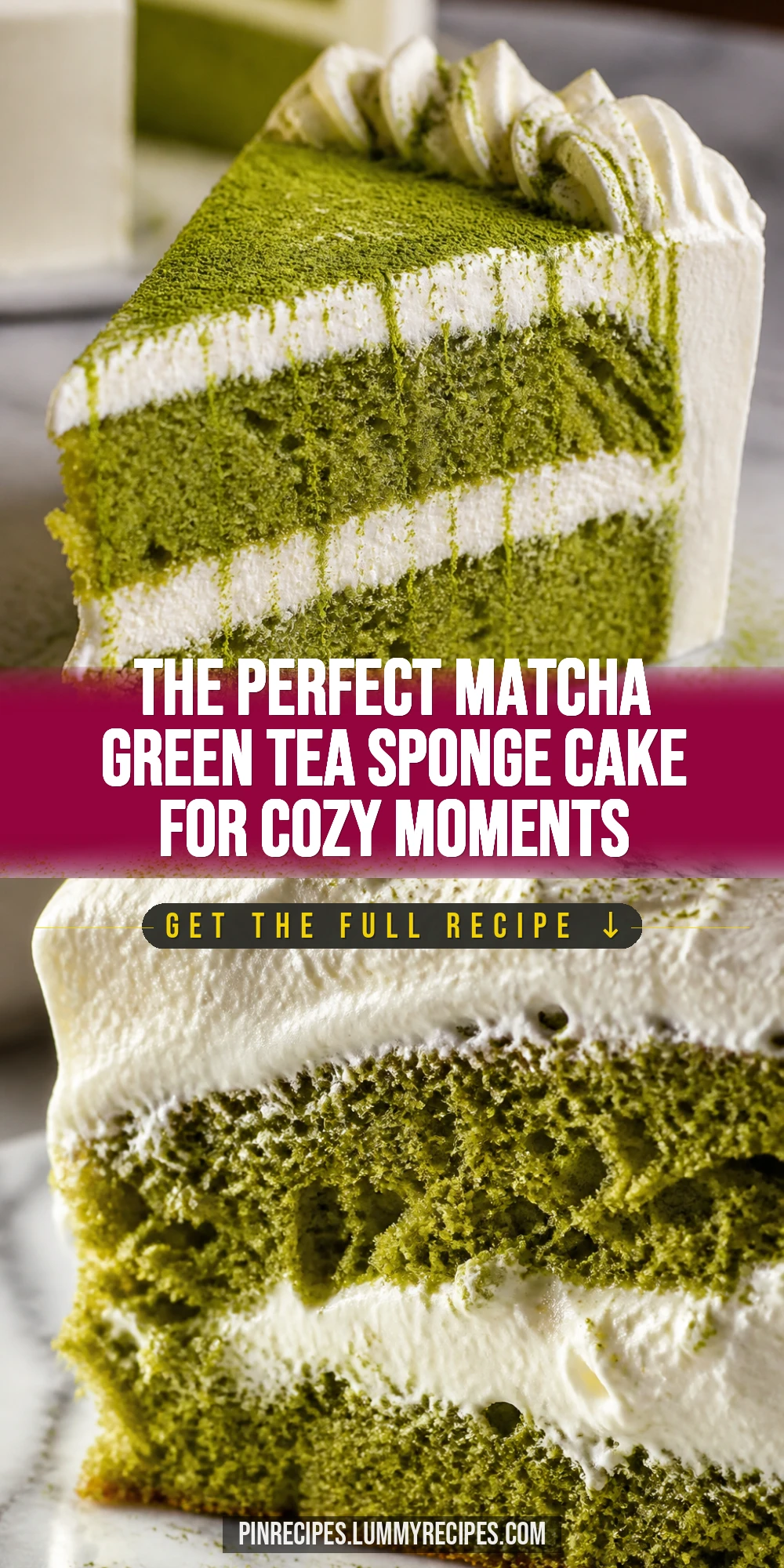
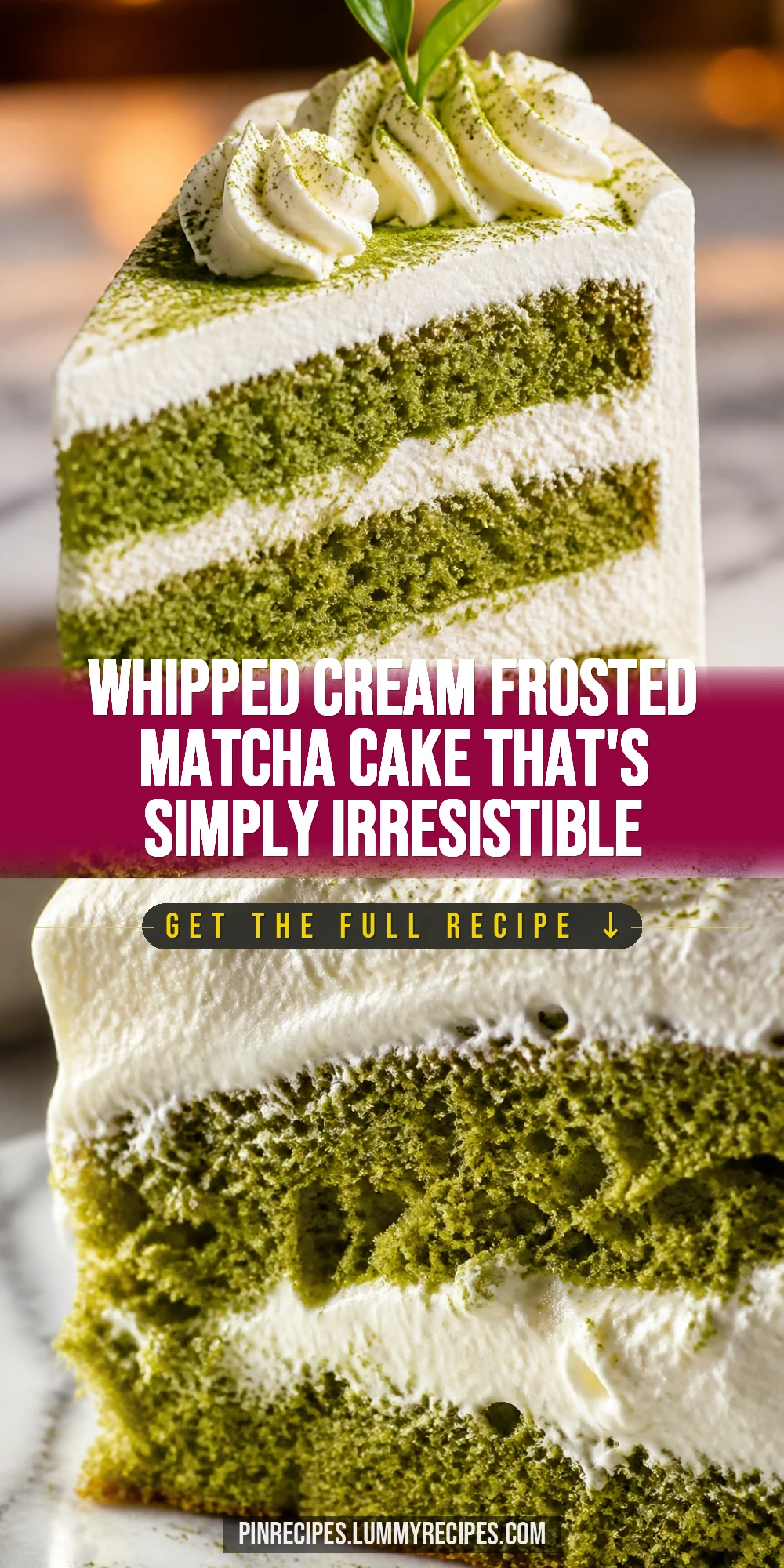
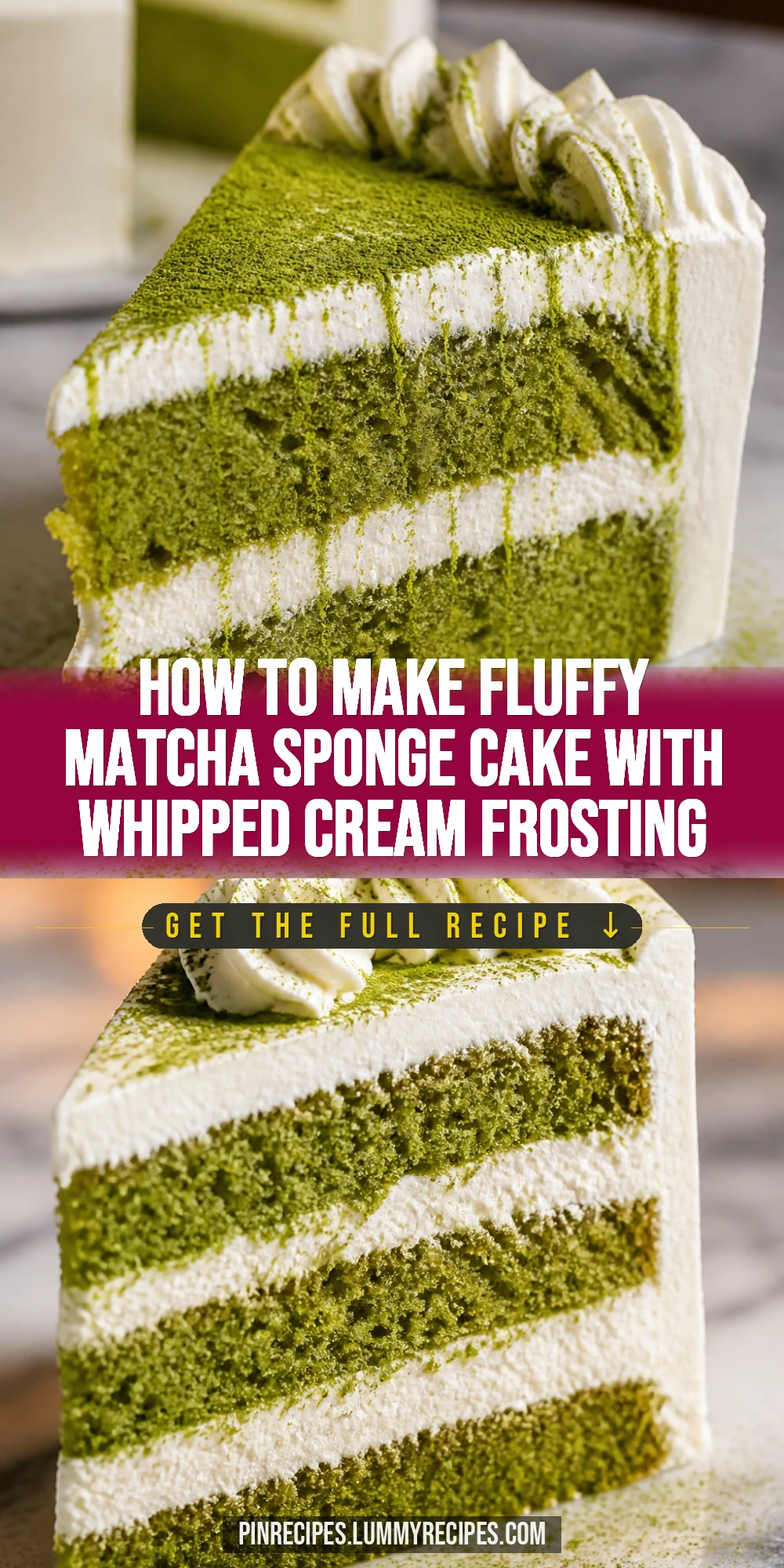
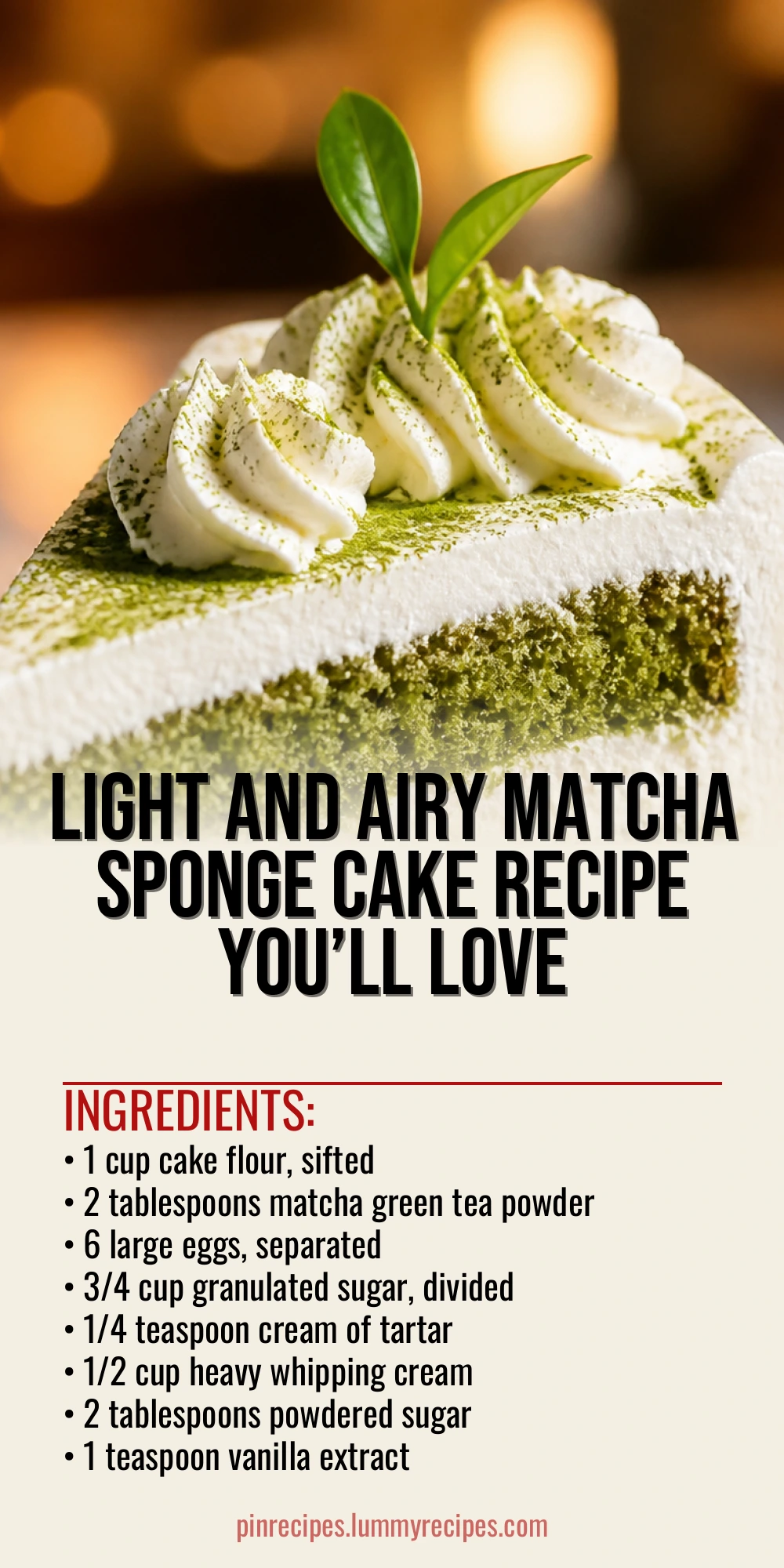
This airy matcha sponge cake is light and subtly sweet, with a delicate green tea flavor that’s perfectly balanced by soft whipped cream frosting. I love serving it with tea for a calming afternoon treat!
Introduction
I first tried making a matcha sponge cake years ago when I wanted to bring a little Japanese tea ceremony magic into my kitchen. The delicate flavor of matcha combined with a light, fluffy sponge is such a treat, but it took me several tries to get the texture just right. Most recipes I found were either too dense or too dry. What changed everything was learning to carefully fold the egg whites and use cake flour for that perfect springy crumb. The whipped cream frosting adds just the right touch of richness without overpowering the subtle green tea notes. When I serve this cake, it feels like a little moment of calm and elegance, perfect for afternoon tea or a special dessert. I think you’ll love how light and fresh it tastes, plus it’s surprisingly easy to make once you know the tricks!
What You'll Need
One 8-inch round cake, 8 servings
- 1 cup cake flour, sifted
- 2 tablespoons matcha green tea powder
- 6 large eggs, separated
- 3/4 cup granulated sugar, divided
- 1/4 teaspoon cream of tartar
- 1/2 cup heavy whipping cream
- 2 tablespoons powdered sugar
- 1 teaspoon vanilla extract
How To Do It
Step 1
Start by preheating your oven to 350°F (175°C) and preparing an 8-inch cake pan by lining it with parchment paper. This ensures the cake won’t stick and will release easily after baking. Also, sift together the cake flour and matcha powder to evenly distribute the green tea flavor and avoid any lumps. Sifting aerates the flour, which helps keep the sponge light and fluffy.
⏱ Time: 10 minutes
✓ Doneness: Flour and matcha powder combined with no clumps, oven preheated
Step 2
Separate the egg yolks and whites into two large bowls. Beat the egg yolks with half of the sugar (about 3/8 cup) until the mixture is pale and slightly thickened. This step helps dissolve the sugar and incorporates air, contributing to a tender crumb. Set aside while you whip the egg whites.
⏱ Time: 5 minutes
✓ Doneness: Egg yolks pale yellow and creamy, sugar mostly dissolved
Step 3
Add cream of tartar to the egg whites and beat on medium speed until soft peaks form. Gradually add the remaining sugar while continuing to beat until stiff, glossy peaks form. This stabilizes the meringue and traps air, which is crucial for the sponge’s rise. Be careful not to overbeat or the whites will become dry and grainy.
⏱ Time: 8 minutes
✓ Doneness: Stiff, shiny peaks that hold shape when you lift the whisk
Step 4
Gently fold the sifted flour and matcha mixture into the egg yolk mixture in small batches. Use a spatula and fold carefully to avoid deflating the batter. The goal is to keep as much air as possible for a light sponge. Overmixing will cause the cake to be dense and tough.
⏱ Time: 5 minutes
✓ Doneness: Flour fully incorporated with no streaks, batter smooth and airy
Step 5
Next, fold about a third of the beaten egg whites into the yolk-flour mixture to lighten it. Then gently fold in the remaining whites in two additions until just combined. This gradual folding helps maintain volume and creates that signature fluffy texture.
⏱ Time: 5 minutes
✓ Doneness: Batter light and airy with no large lumps of egg whites
Step 6
Pour the batter into the prepared cake pan and smooth the top with a spatula. Tap the pan lightly on the counter to release any large air bubbles. This helps the cake bake evenly without holes or tunnels.
⏱ Time: 3 minutes
✓ Doneness: Batter evenly spread with no big air pockets
Step 7
Bake the cake in the preheated oven for about 25-30 minutes. Avoid opening the oven door during the first 20 minutes to prevent the sponge from collapsing. The cake is done when it springs back lightly to the touch and a toothpick inserted in the center comes out clean.
⏱ Time: 25-30 minutes
✓ Doneness: Golden top, toothpick clean, cake springs back when pressed
Step 8
Remove the cake from the oven and let it cool in the pan for 10 minutes. Then run a knife around the edges and carefully invert onto a wire rack to cool completely. Cooling upside down helps maintain the cake’s height and prevents shrinking.
⏱ Time: 15-20 minutes
✓ Doneness: Cake cool and firm to touch, no cracks on surface
Step 9
For the frosting, whip the heavy cream with powdered sugar and vanilla extract until soft peaks form. Spread or pipe the whipped cream evenly over the cooled cake. Keep the cake refrigerated until serving to keep the frosting fresh and light.
⏱ Time: 10 minutes
✓ Doneness: Whipped cream smooth, fluffy, and holds shape
Pro Tips
Always sift the matcha powder with the flour to avoid lumps.
Matcha tends to clump because it’s a fine powder. Sifting ensures it’s evenly distributed throughout the batter, which prevents bitter pockets and gives the cake a smooth texture and consistent color.
Use room temperature egg whites for better volume when whipping.
Egg whites whip more easily and to a greater volume when they’re at room temperature. Cold whites take longer to whip and may not reach stiff peaks, which affects the cake’s rise and fluffiness.
Fold ingredients gently with a spatula instead of stirring vigorously.
Folding preserves the air bubbles in the whipped egg whites that give the sponge its light texture. Stirring or beating vigorously deflates the batter, resulting in a dense cake.
Don’t open the oven door during the first 20 minutes of baking.
Sudden temperature changes can cause the delicate sponge to collapse. Keeping the oven door closed allows the cake to set properly and rise evenly.
Cool the cake upside down to maintain height and prevent shrinkage.
Sponge cakes are delicate and tend to shrink as they cool. Inverting the pan allows gravity to keep the cake lifted, preserving its airy structure.
Chill the mixing bowl and beaters before whipping cream.
Cold equipment helps the cream whip faster and hold its shape longer, making the frosting smooth and stable without overwhipping.
Use fresh matcha powder for the best flavor and color.
Matcha loses flavor and color quickly when exposed to air and light. Fresh powder makes a noticeable difference in taste and the vibrant green appearance of your cake.
Common Mistakes to Avoid
Overmixing the batter after adding egg whites
Why it happens Many cooks want to make sure the flour is fully incorporated and end up stirring too much, which deflates the whipped egg whites.
Fix Fold the flour and whites gently using a spatula in a few light motions just until no streaks remain. Stop mixing as soon as the batter looks uniform to keep the air bubbles intact.
Not beating egg whites to stiff peaks
Why it happens Sometimes egg whites are under-whipped or the bowl isn’t clean, preventing proper volume.
Fix Make sure the mixing bowl is completely clean and dry, and beat the whites until they hold stiff, glossy peaks. Add cream of tartar to stabilize if needed.
Opening the oven door too early
Why it happens Impatience or curiosity leads to opening the oven, causing temperature drops.
Fix Resist opening the door until at least 20 minutes have passed. Use the oven light if you want to check progress.
Using old or stale matcha powder
Why it happens Matcha loses flavor and color over time, especially if not stored properly.
Fix Buy fresh matcha in small quantities, store it airtight in a cool dark place, and use it within a few weeks for best results.
Whipping cream to stiff peaks or overwhipping
Why it happens Overwhipped cream can become grainy and start turning into butter.
Fix Stop whipping as soon as soft to medium peaks form. The cream should be smooth and hold shape but still be creamy.
Variations
Matcha Sponge Cake with Azuki Bean Paste Filling
Add a traditional Japanese twist by slicing the cooled cake horizontally and spreading sweet azuki red bean paste between layers before frosting. It adds a lovely sweet earthiness that pairs beautifully with matcha.
Note: Make sure the cake is fully cooled before slicing to avoid crumbling. Spread the paste thinly to keep the cake light.
Lemon Matcha Sponge Cake
Add 1 tablespoon of lemon zest to the batter and a splash of lemon juice to the whipped cream frosting for a bright, citrusy contrast to the earthy matcha flavor. It’s refreshing and light.
Note: Zest finely to avoid bitter pith. Adjust lemon juice in frosting to taste, don’t overdo or it may curdle.
Matcha Sponge Cake with White Chocolate Ganache
Replace the whipped cream frosting with a silky white chocolate ganache for a richer, more decadent dessert. The sweetness of white chocolate balances the slight bitterness of matcha perfectly.
Note: Chill ganache before spreading to avoid melting the sponge. Ganache sets firmer than whipped cream.
Vegan Matcha Sponge Cake
Use aquafaba (chickpea water) whipped to stiff peaks instead of egg whites and a coconut cream-based frosting for a vegan-friendly version. The texture will be slightly different but still light and tasty.
Note: Whip aquafaba longer than egg whites for stability. Use full-fat coconut cream chilled for best frosting texture.
Matcha and Black Sesame Sponge Cake
Add 2 tablespoons of toasted black sesame seeds to the batter for a nutty crunch and extra depth of flavor. The contrast in colors is also visually stunning.
Note: Toast seeds lightly to avoid bitterness. Fold in seeds gently with the flour to keep batter airy.
Nutrition
Per Serving:
Nutritional values are estimates and may vary based on specific ingredients used.
Storage & Tips
Room Temperature
The cake can be kept at room temperature for up to 4 hours if covered loosely with a cake dome or plastic wrap. Longer than that risks drying out the sponge and softening the whipped cream frosting.
Refrigerator
Store the cake in an airtight container or cover with plastic wrap in the fridge for up to 3 days. The frosting will firm up and the cake may become slightly denser but still delicious. Bring to room temperature before serving for best flavor.
Freezer
Freeze the unfrosted sponge wrapped tightly in plastic wrap and foil for up to 2 months. Thaw overnight in the fridge before frosting. Freezing the frosted cake is not recommended as whipped cream can separate.
Reheating
This cake is best served chilled or at room temperature. If you prefer it warmer, gently warm slices in a microwave for 10-15 seconds but avoid overheating to prevent melting the frosting.
Make Ahead
Bake the sponge cake 1-2 days ahead and store wrapped tightly in the fridge or freezer. Whip the cream and frost the cake on the day you plan to serve for the freshest texture and flavor.
FAQ
Can I use all-purpose flour instead of cake flour?
Yes, but cake flour is preferred for a lighter texture. If you only have all-purpose flour, substitute 1 cup minus 2 tablespoons of AP flour plus 2 tablespoons cornstarch to mimic cake flour’s lower protein. Sift well to avoid lumps.
What if I don’t have cream of tartar?
You can substitute cream of tartar with a few drops of lemon juice or white vinegar to stabilize the egg whites. It’s important for volume and preventing collapse, so don’t skip this step entirely.
How do I know when the egg whites are whipped enough?
Look for stiff, glossy peaks that hold their shape when you lift the whisk. The meringue should be shiny and not runny. Under-whipped whites won’t provide enough structure and over-whipped whites become dry and grainy.
Can I use a different frosting instead of whipped cream?
Absolutely! Buttercream, cream cheese frosting, or even chocolate ganache work well. Just keep in mind whipped cream keeps the cake light and fresh, so heavier frostings will change the overall texture and feel.
Why did my cake shrink after baking?
Shrinking often happens if the cake cools too quickly or if the batter was overmixed causing the air bubbles to collapse. Cooling the cake upside down helps maintain height and prevents shrinkage.
Can I make this cake gluten-free?
You can try a gluten-free flour blend that’s designed for cakes, but results may vary. Gluten-free batters often need additional stabilizers or xanthan gum to mimic the structure gluten provides.
Is it okay to use store-bought whipped cream?
Store-bought whipped cream can be convenient but usually contains stabilizers and less fat, so it won’t be as fluffy or fresh tasting. I recommend whipping fresh heavy cream for best results.
How do I store leftover cake?
Keep leftover cake covered in the refrigerator for up to 3 days. Bring to room temperature before serving to soften the frosting and enhance flavor. Avoid storing at room temperature for long periods to prevent spoilage.
Final Thoughts
I hope you enjoy making and sharing this fluffy matcha sponge cake as much as I do! It’s a lovely way to bring a little calm and sweetness to your day. Please let me know how it turns out!