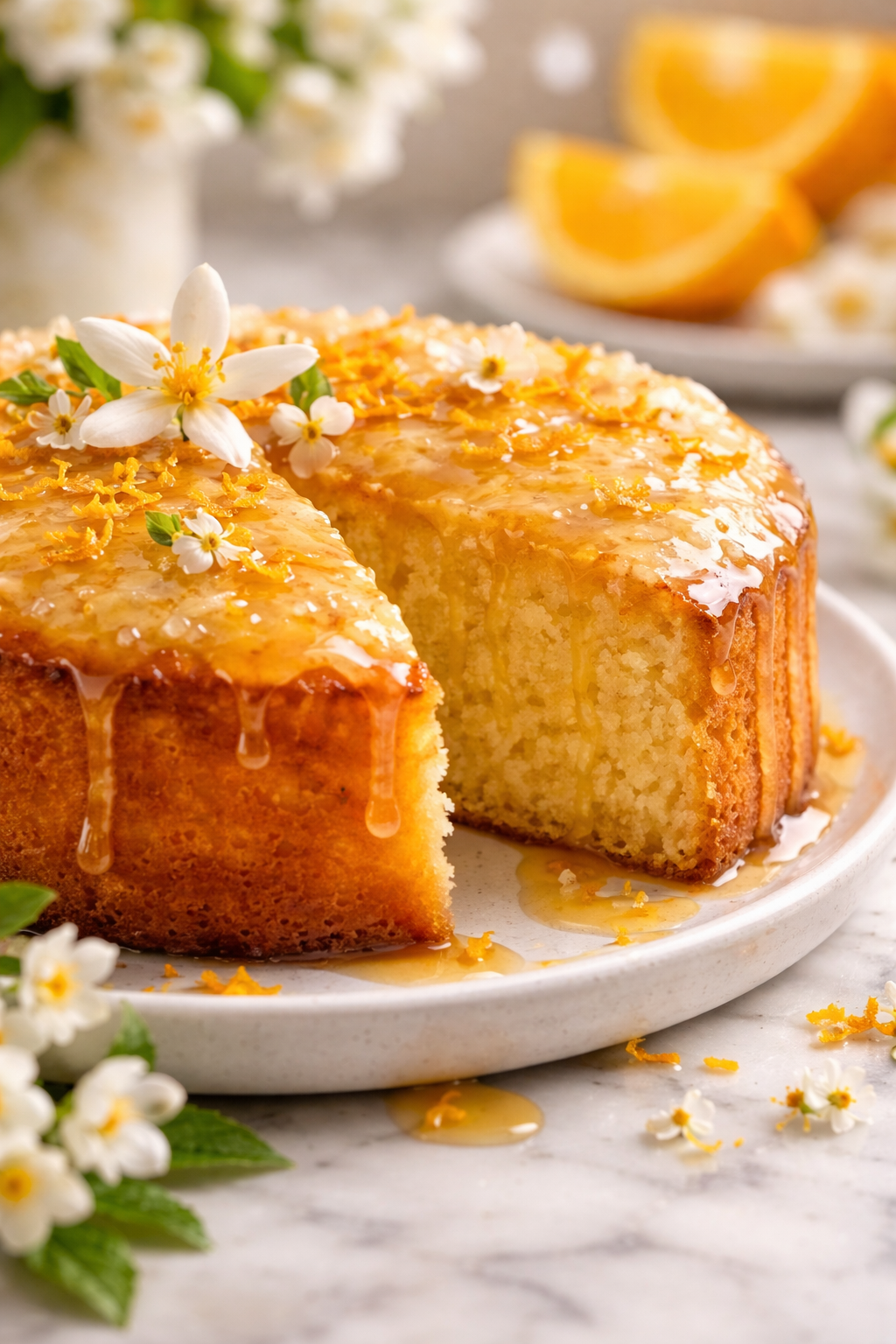
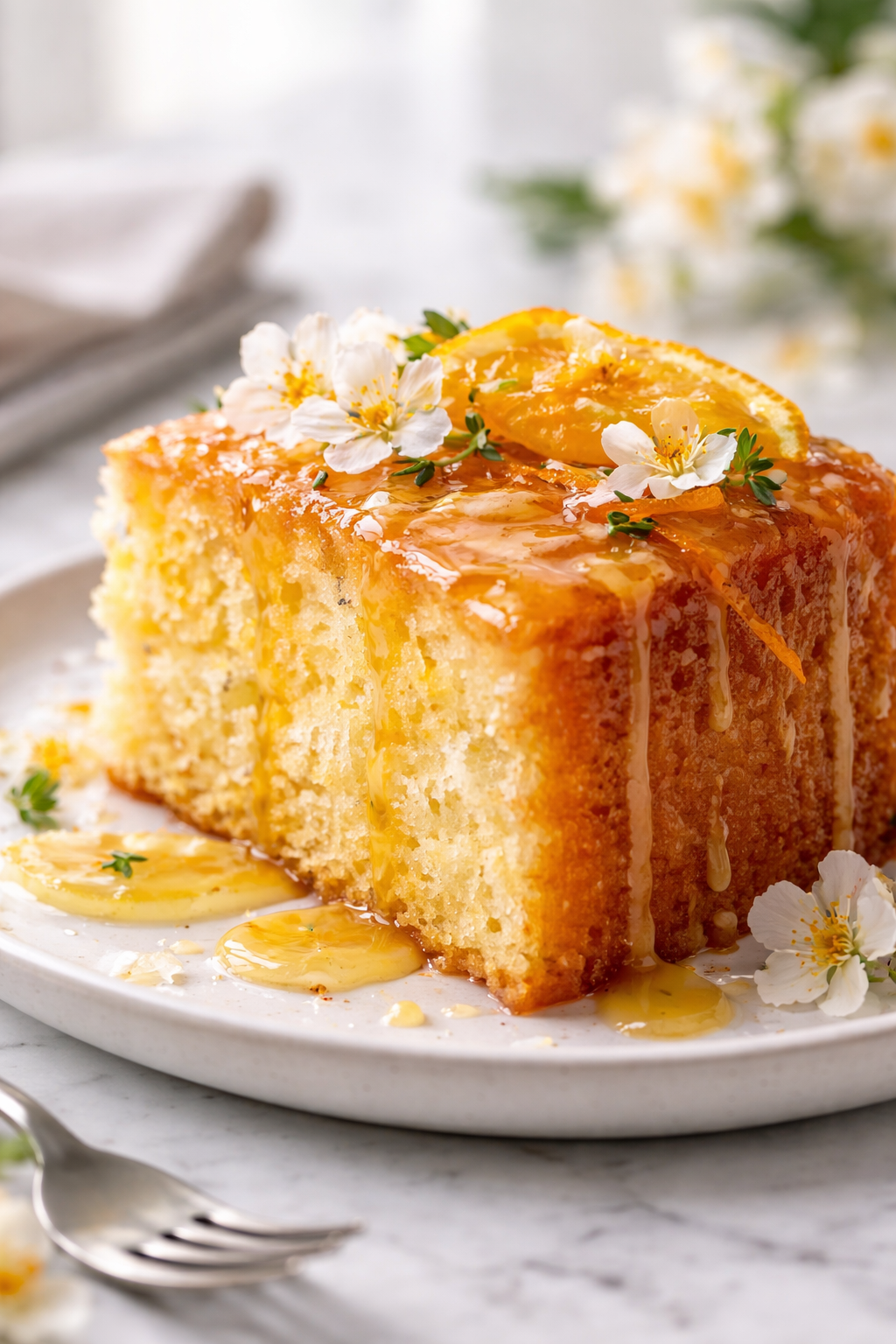
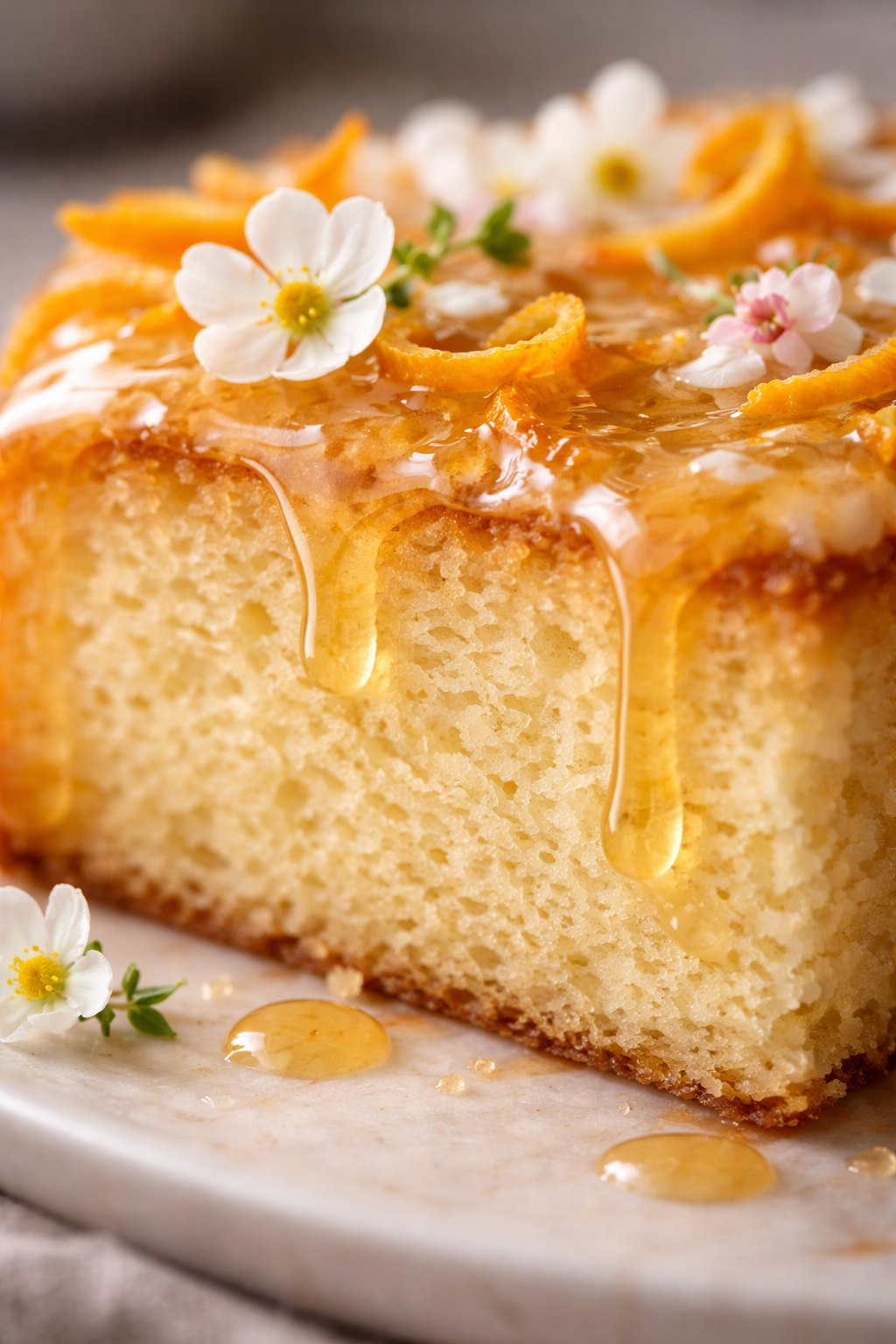
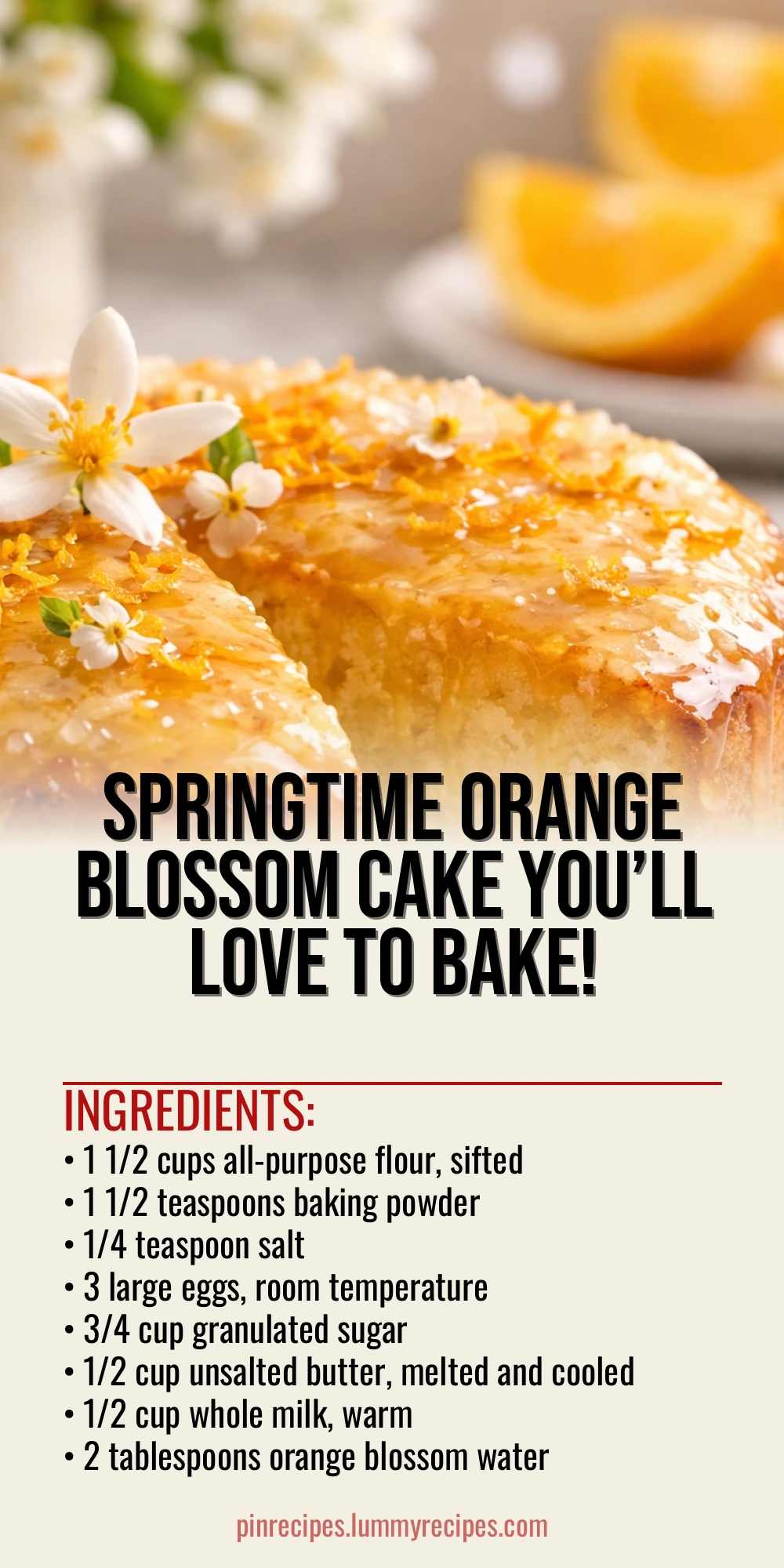
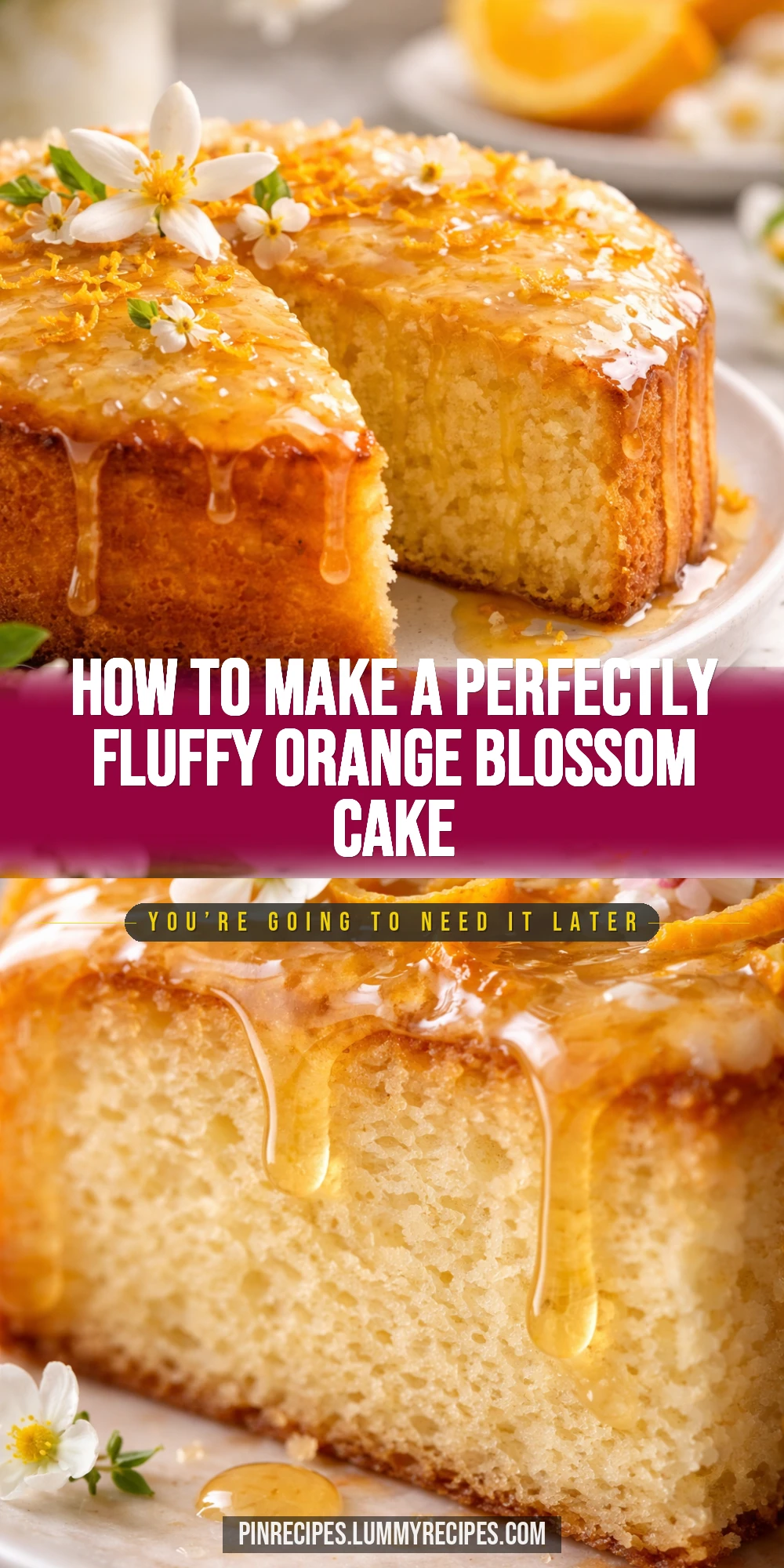
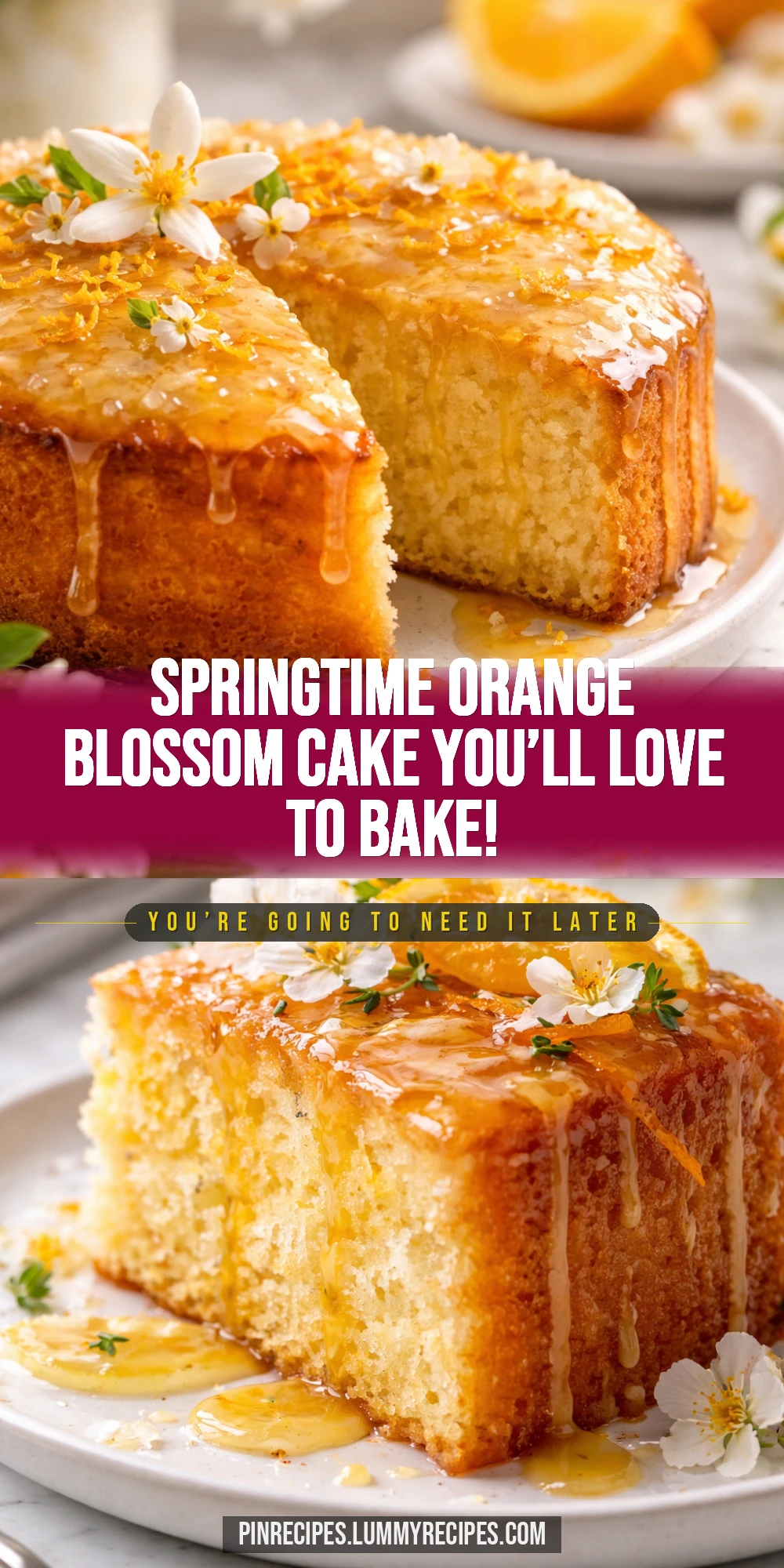
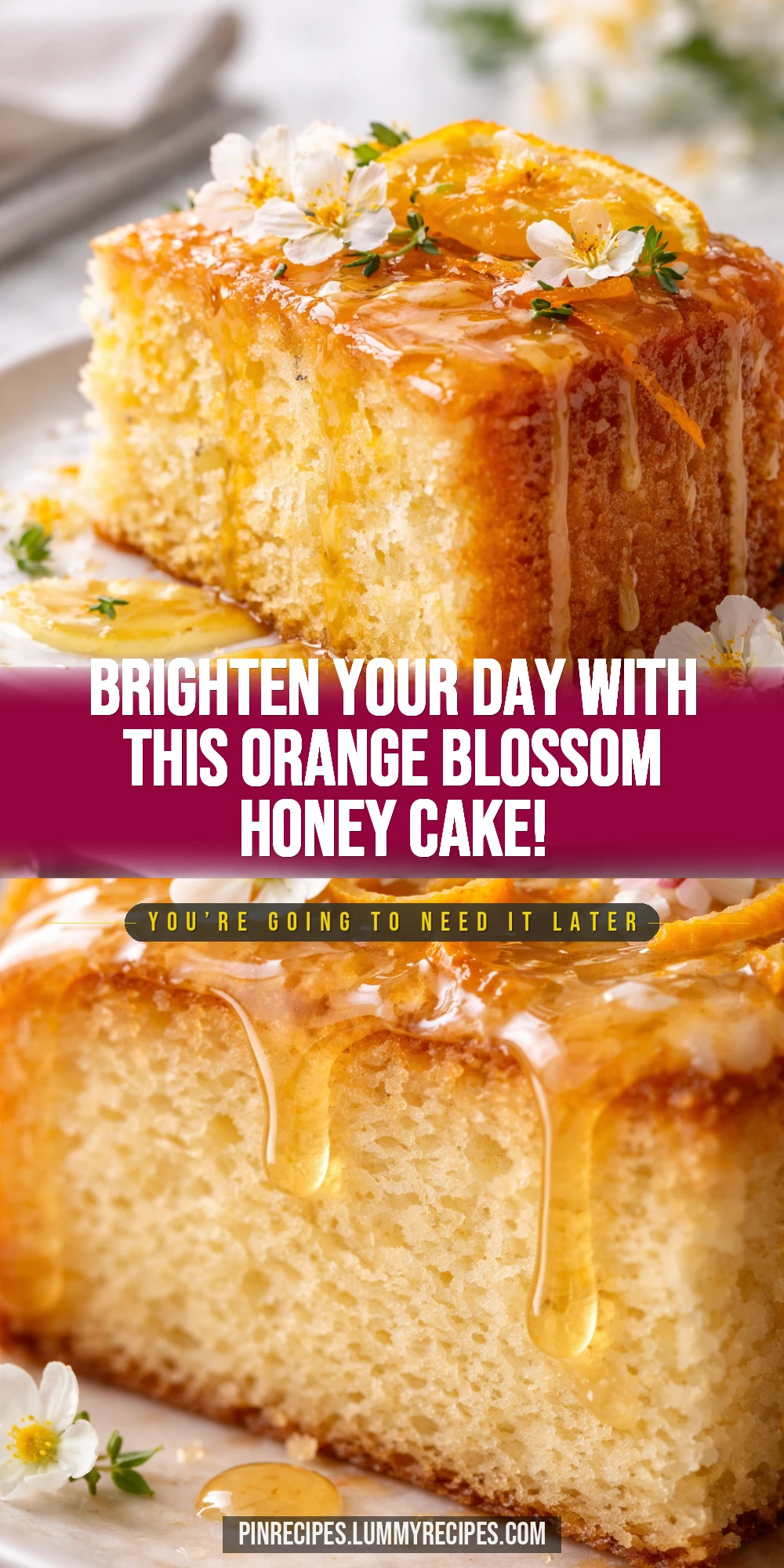
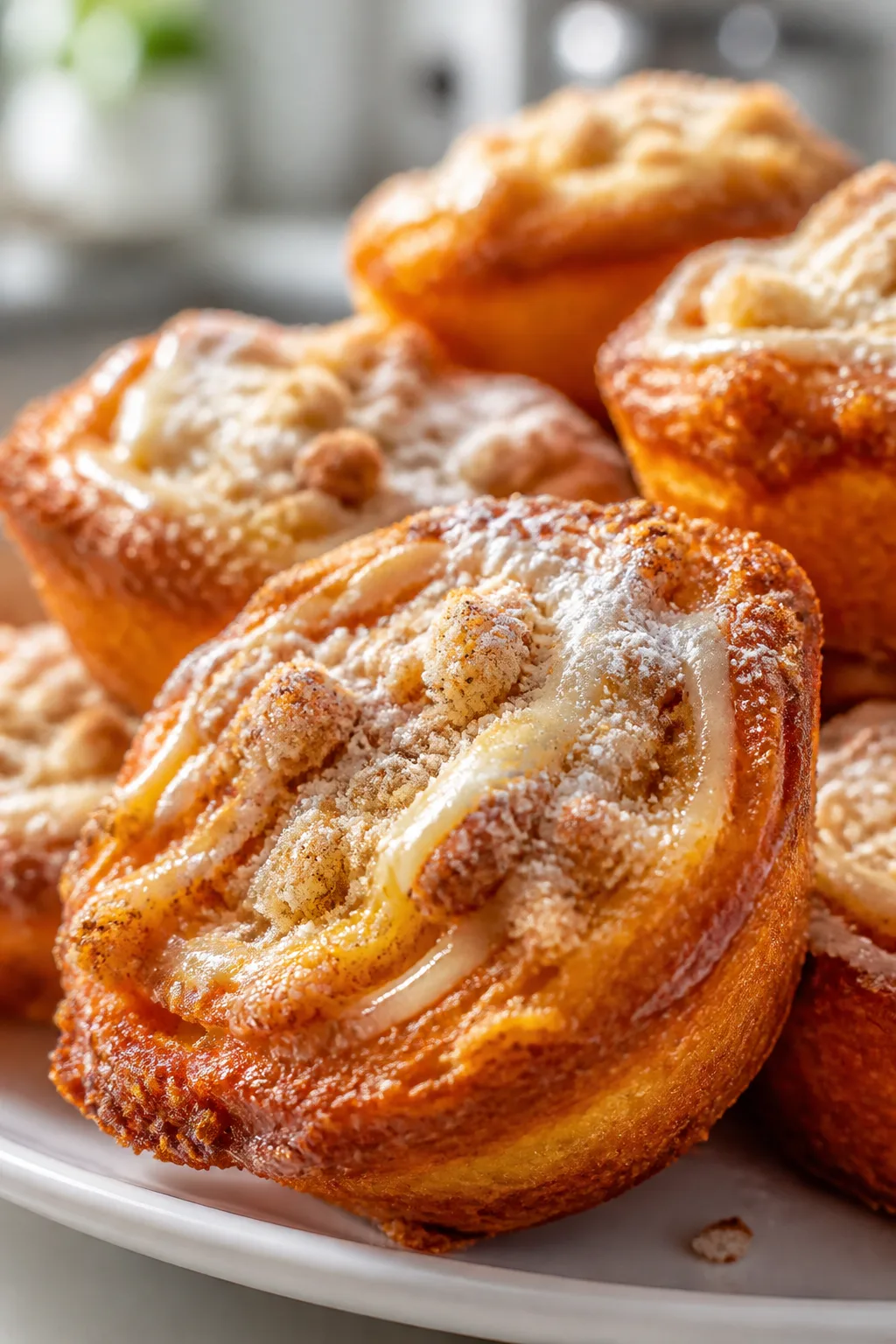
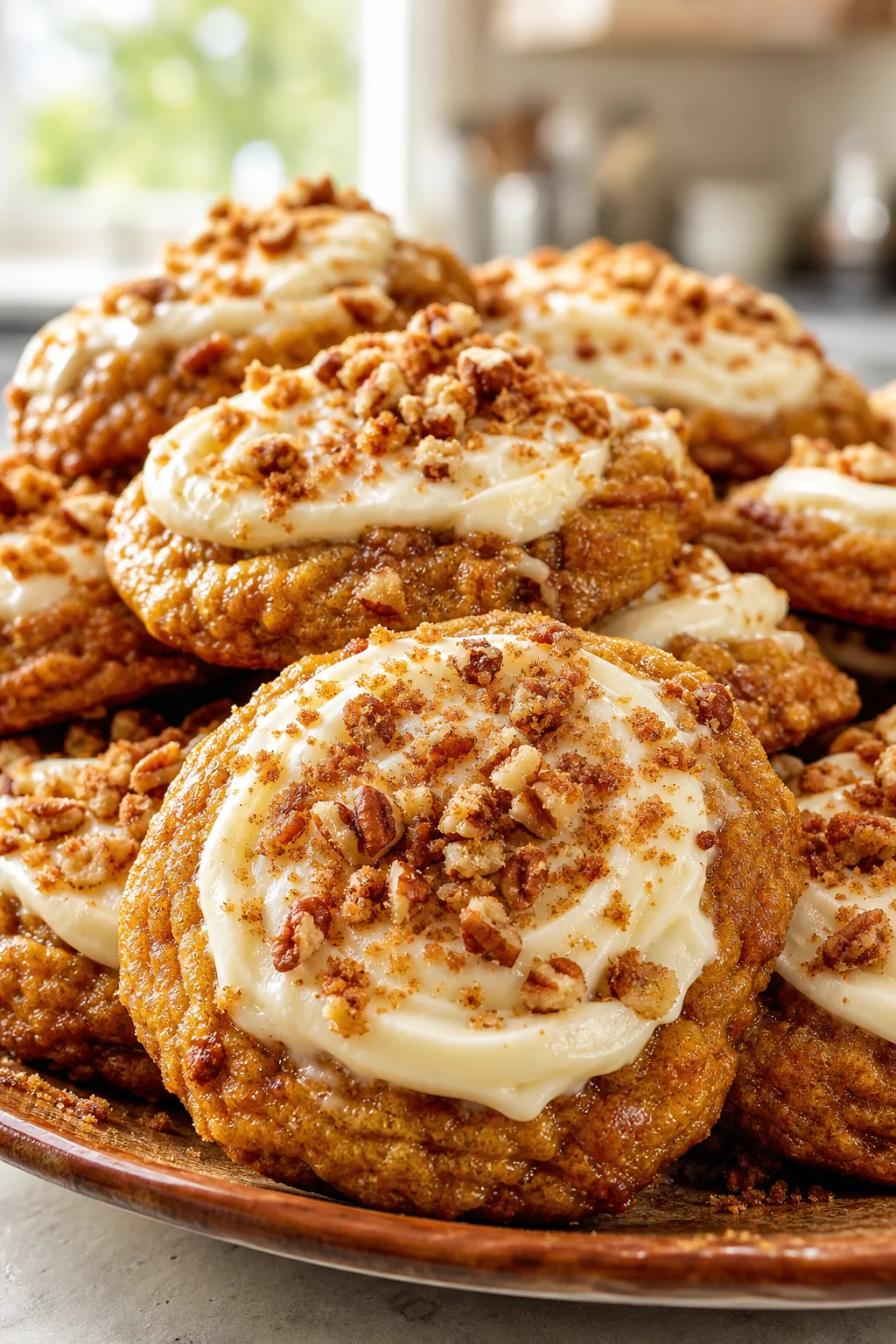
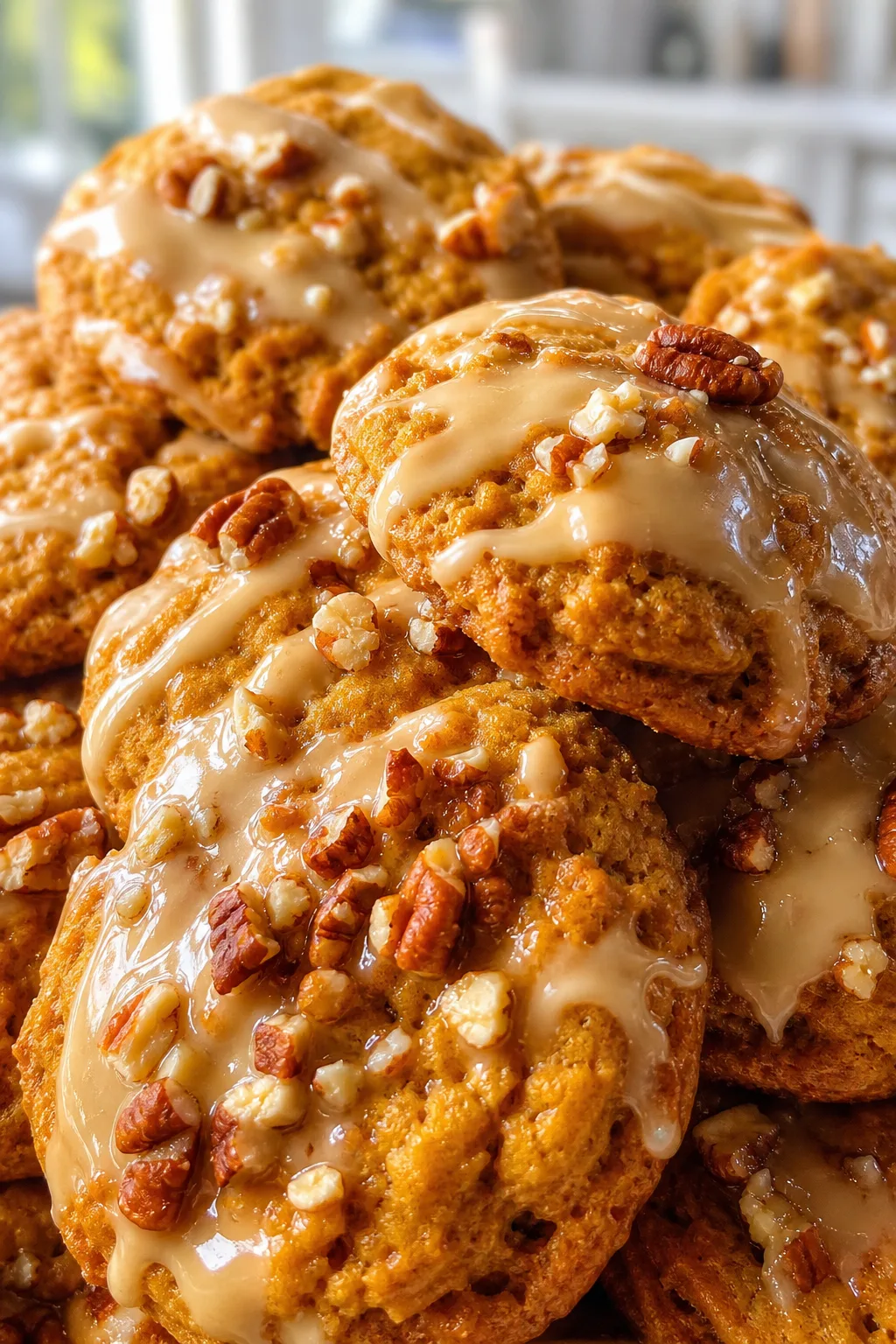
This airy orange blossom cake is light, fragrant, and topped with a sweet honey glaze that perfectly captures spring vibes. The secret? Fresh orange zest and a gentle folding technique. Great for afternoon tea or a cheerful dessert!
Introduction
I first stumbled upon this orange blossom cake recipe during a spring visit to a small bakery in Provence, and I was instantly smitten. The delicate floral notes combined with the light, fluffy crumb made it unlike any cake I'd tried before. Since then, I’ve tweaked the recipe a bit to make it easier to bake at home without losing that lovely aroma or texture. The trick I learned early on is to gently fold the dry ingredients into the wet to keep the batter airy—this really helps the cake rise beautifully and stay soft. Plus, the honey glaze isn’t just for sweetness; it adds a subtle sticky shine and a depth of flavor that balances the floral and citrus perfectly. When baked right, the cake is tender and fragrant, with a golden crust and a moist crumb that melts in your mouth. It’s become my go-to for springtime gatherings and a favorite to share with friends over tea. Honestly, the first time I tried rushing the folding step, the cake came out dense, so patience here is key! But once you get the hang of it, this cake feels like a little spring celebration in every bite.
What You'll Need
One 8-inch round cake, 8 servings
- 1 1/2 cups all-purpose flour, sifted
- 1 1/2 teaspoons baking powder
- 1/4 teaspoon salt
- 3 large eggs, room temperature
- 3/4 cup granulated sugar
- 1/2 cup unsalted butter, melted and cooled
- 1/2 cup whole milk, warm
- 2 tablespoons orange blossom water
- 1 tablespoon freshly grated orange zest
- 1/2 teaspoon vanilla extract
- For the glaze:
- 1/4 cup honey
- 2 tablespoons warm water
How To Do It
Step 1
Preheat your oven to 350°F (175°C) and grease an 8-inch round cake pan. This ensures your cake doesn’t stick and bakes evenly. Greasing and lightly flouring the pan is a small but crucial step because it helps the cake release cleanly after baking without breaking apart.
⏱ Time: 10 minutes
✓ Doneness: Pan is evenly greased with no dry spots visible
Step 2
In a medium bowl, whisk together the sifted flour, baking powder, and salt. Sifting helps aerate the flour and remove lumps, which contributes to the cake’s fluffiness. Mixing the dry ingredients separately also ensures even distribution of the leavening agents.
⏱ Time: 5 minutes
✓ Doneness: Dry ingredients are well combined and lump-free
Step 3
In a large bowl, beat the eggs and sugar together until the mixture is pale, thick, and fluffy. This step incorporates air, which is essential for a light cake texture. It usually takes about 3–5 minutes with an electric mixer on medium-high speed.
⏱ Time: 5 minutes
✓ Doneness: Egg mixture is lighter in color and has increased in volume
Step 4
Slowly drizzle in the melted butter while continuing to beat the egg mixture. Adding the butter gradually prevents it from curdling and helps it incorporate smoothly. If the butter is too hot, it might cook the eggs, so make sure it’s cooled to warm or room temperature.
⏱ Time: 3 minutes
✓ Doneness: Butter is fully incorporated with no separation
Step 5
Mix the warm milk with the orange blossom water, orange zest, and vanilla extract. The warmth helps the flavors infuse and ensures the milk blends smoothly into the batter, avoiding lumps. The orange blossom water adds a delicate floral aroma that defines this cake’s character.
⏱ Time: 3 minutes
✓ Doneness: Liquid mixture is uniform and fragrant
Step 6
Add the milk mixture to the egg mixture and stir gently to combine. Use a spatula and fold carefully to keep the batter airy. Overmixing at this stage can deflate the air bubbles and make the cake dense, so fold just until combined.
⏱ Time: 3 minutes
✓ Doneness: Batter is smooth with no streaks of dry flour
Step 7
Gradually fold the sifted dry ingredients into the wet batter in three additions. Folding instead of stirring preserves the light texture. Be patient and gentle—this is the key to the cake’s fluffiness. Stop mixing as soon as no flour streaks remain.
⏱ Time: 5 minutes
✓ Doneness: Batter is uniform and thick but airy
Step 8
Pour the batter into the prepared pan and smooth the top with a spatula. Tap the pan gently on the counter to release any large air bubbles. This helps the cake bake evenly and prevents holes or tunnels in the crumb.
⏱ Time: 2 minutes
✓ Doneness: Batter evenly spread and surface smooth
Step 9
Bake for 28–32 minutes or until a toothpick inserted in the center comes out clean. The cake should be golden and spring back lightly when pressed. Avoid opening the oven door too early, or the cake might collapse.
⏱ Time: 30 minutes
✓ Doneness: Golden top, toothpick clean, and cake springs back gently
Step 10
While the cake cools, mix the honey with warm water to create the glaze. Brush this glaze over the warm cake so it seeps in slightly, adding moisture and a shiny finish. This step elevates the flavor and gives the cake a lovely sticky sweetness.
⏱ Time: 5 minutes
✓ Doneness: Glaze is absorbed and cake surface shines
Pro Tips
Always sift your dry ingredients before folding them into the wet mixture.
Sifting aerates the flour and removes lumps, which helps maintain a light batter. This step also ensures even distribution of baking powder and salt, preventing dense spots or uneven rising.
Use room temperature eggs for better volume when beating.
Eggs at room temperature whip up more easily and hold air better, which is essential for a fluffy cake. Cold eggs can result in a batter that doesn’t rise as well, affecting texture.
Fold ingredients gently and avoid overmixing.
Overmixing develops gluten and deflates the air bubbles you worked to incorporate, leading to a tough, dense cake. Folding gently preserves the batter’s lightness and ensures a tender crumb.
Brush the honey glaze while the cake is still warm.
Applying the glaze when warm allows it to soak into the cake, adding moisture and flavor. If the cake is cold, the glaze will sit on top and not penetrate, missing the chance to enhance texture.
Use warm milk to mix with orange blossom water and zest.
Warm milk helps dissolve sugar and evenly disperse flavors. It also keeps the batter smooth and prevents lumps, which contributes to an even crumb.
Don’t open the oven door during the first 20 minutes of baking.
Opening the door too soon can cause the cake to collapse as the temperature drops suddenly. Keeping the oven closed lets the cake rise properly and develop a stable structure.
Tap the cake pan gently on the counter before baking.
This releases large air bubbles trapped in the batter, preventing holes or tunnels in the cake and ensuring an even crumb.
Common Mistakes to Avoid
Overmixing the batter
Why it happens Many think mixing longer makes a better batter, but overmixing develops gluten and deflates air bubbles.
Fix Fold the dry ingredients gently into the wet just until combined. Stop as soon as you see no flour streaks to keep the cake light and tender.
Using cold eggs
Why it happens It’s easy to forget to bring eggs to room temperature, but cold eggs don’t whip well.
Fix Plan ahead and let eggs sit out for 30 minutes or warm them gently in warm water before beating to maximize volume.
Skipping sifting of dry ingredients
Why it happens Sifting can feel like an extra step, so some skip it.
Fix Always sift flour, baking powder, and salt together to aerate and evenly distribute leavening agents for a lighter cake.
Not greasing the pan properly
Why it happens Rushing prep can lead to uneven greasing, causing sticking.
Fix Grease the pan thoroughly with butter or nonstick spray and lightly dust with flour to ensure easy release.
Applying glaze when cake is cold
Why it happens Waiting too long to glaze means the glaze won’t absorb.
Fix Brush the honey glaze immediately after removing the cake from the oven while it’s still warm.
Variations
Almond Orange Blossom Cake
Swap half the flour for almond flour to add a nutty richness and moist crumb. This variation also introduces a lovely texture contrast and deeper flavor that pairs beautifully with the honey glaze.
Note: Almond flour absorbs more moisture, so reduce milk slightly if batter feels too loose. Expect a denser but tender cake.
Gluten-Free Orange Blossom Cake
Use a gluten-free flour blend instead of all-purpose flour for a gluten-free treat. Make sure the blend contains xanthan gum or add a teaspoon to help with structure and rise.
Note: Gluten-free batters tend to be wetter; fold gently and avoid overmixing to keep it light.
Lavender Honey Glaze Twist
Add a teaspoon of culinary lavender to the honey glaze for a floral twist that complements the orange blossom beautifully. This adds sophistication and a subtle herbal note.
Note: Infuse the lavender in warm water before mixing with honey to extract flavor without grit.
Vegan Orange Blossom Cake
Replace eggs with flax eggs and use plant-based milk and vegan butter. This version is a bit denser but still fragrant and moist with the honey glaze replaced by maple syrup for sweetness.
Note: Flax eggs don’t trap as much air, so expect a slightly less fluffy texture.
Citrus Medley Cake
Add lemon and lime zest along with the orange zest for a bright, multi-citrus flavor. This variation is lively and refreshing, perfect for those who love a citrus punch.
Note: Balance the zest quantities to avoid bitterness; keep total zest volume the same as original.
Nutrition
Per Serving:
Nutritional values are estimates and may vary based on specific ingredients used.
Storage & Tips
Room Temperature
Store the cake covered loosely with a cake dome or plastic wrap at room temperature for up to 2 days. Keep away from direct sunlight and heat to maintain moisture and prevent the glaze from drying out.
Refrigerator
Keep the cake in an airtight container in the fridge for up to 5 days. The cake may firm up and the glaze can become sticky; let it come to room temperature before serving or warm gently for a few minutes.
Freezer
Wrap the cake tightly in plastic wrap and then in foil before freezing. Freeze for up to 2 months. Thaw overnight in the fridge, then bring to room temperature before serving to restore texture.
Reheating
Warm slices gently in a microwave for 15-20 seconds or in a low oven (300°F) for 5-7 minutes. Add a light brush of honey or water if the cake seems dry to restore moisture.
Make Ahead
You can bake the cake 1-2 days in advance and store it covered at room temperature. Prepare the honey glaze fresh on the day you plan to serve for the best shine and flavor.
FAQ
Can I substitute orange blossom water with another flavor?
Yes, you can substitute with rose water or vanilla extract, but this will change the cake's signature floral aroma. Use less rose water as it’s stronger. Vanilla will give a more classic flavor but lacks the citrus floral note.
Why is my cake dense instead of fluffy?
Dense cake often results from overmixing, cold eggs, or expired baking powder. Make sure to beat eggs well, fold dry ingredients gently, and use fresh leavening agents to keep the cake light.
Can I make this cake gluten-free?
Absolutely! Use a gluten-free flour blend with xanthan gum for structure. The texture will be slightly different, a bit more crumbly, but still delicious.
How do I store leftover cake?
Store leftovers in an airtight container at room temperature for 2 days or in the fridge for up to 5 days. Bring to room temp before serving for best texture.
Can I use a different sweetener instead of sugar?
You can try honey or maple syrup, but reduce the milk slightly to compensate for added liquid. The texture and sweetness level will vary, so adjust to taste.
What if I don’t have orange blossom water?
You can omit it and add extra orange zest or a splash of orange juice for flavor, but the cake won’t have the same delicate floral note.
Is it okay to use cold milk instead of warm milk?
Warm milk helps dissolve sugar and infuse flavors better. Cold milk won’t ruin the cake but may cause lumps and uneven mixing.
How do I know when the cake is done?
Insert a toothpick into the center; it should come out clean or with a few moist crumbs. The top should be golden and spring back lightly when touched.
Can I make this cake in a loaf pan instead of round?
Yes, but baking time will increase by about 10-15 minutes. Check doneness with a toothpick and cover loosely with foil if the top browns too fast.
Does the honey glaze make the cake too sweet?
No, the glaze adds a gentle sweetness and moisture that balances the floral and citrus flavors without overpowering them.
Final Thoughts
Give this fluffy orange blossom cake a try—it's a lovely way to welcome spring! I’d love to hear how yours turns out, so don’t forget to share your baking stories.