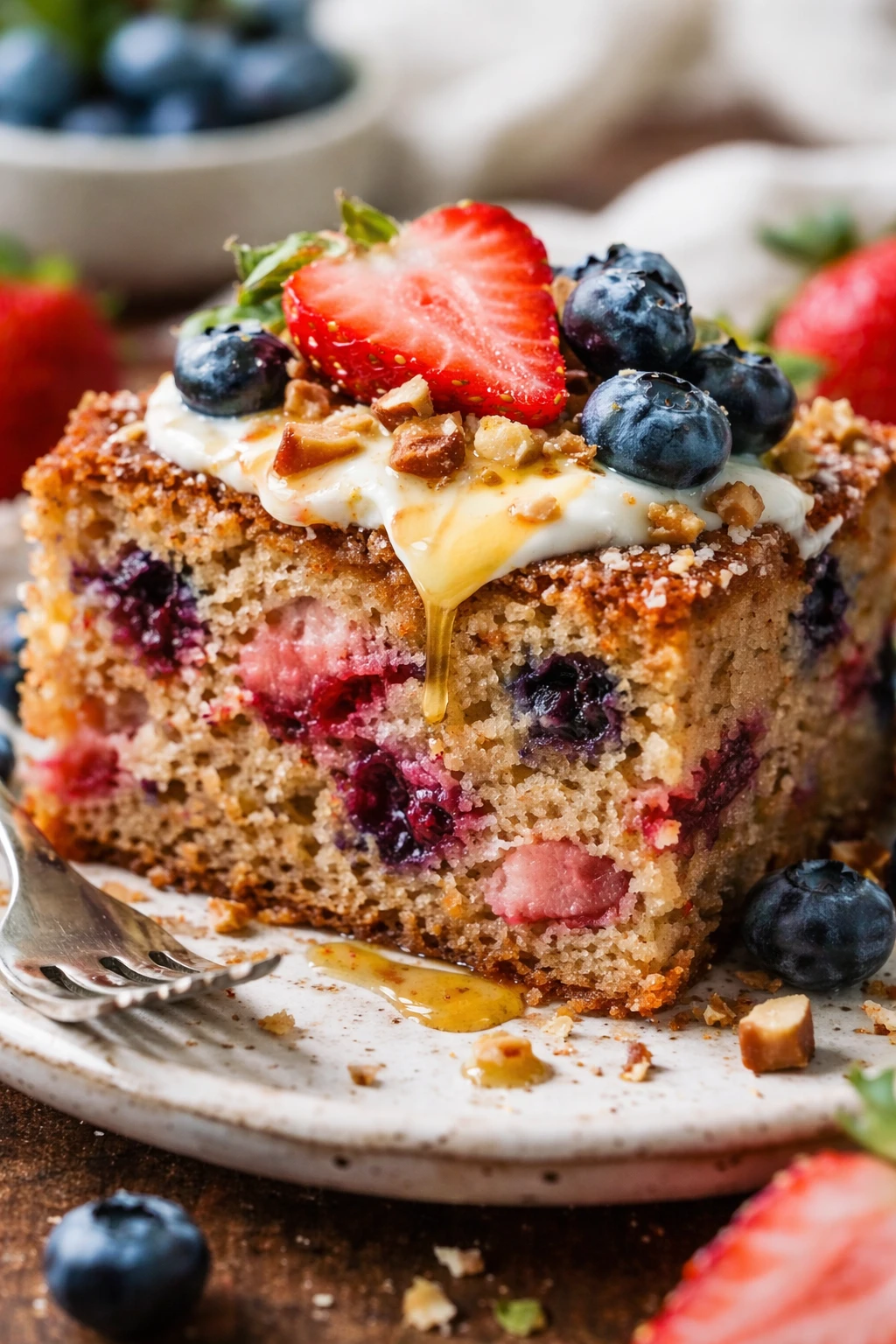
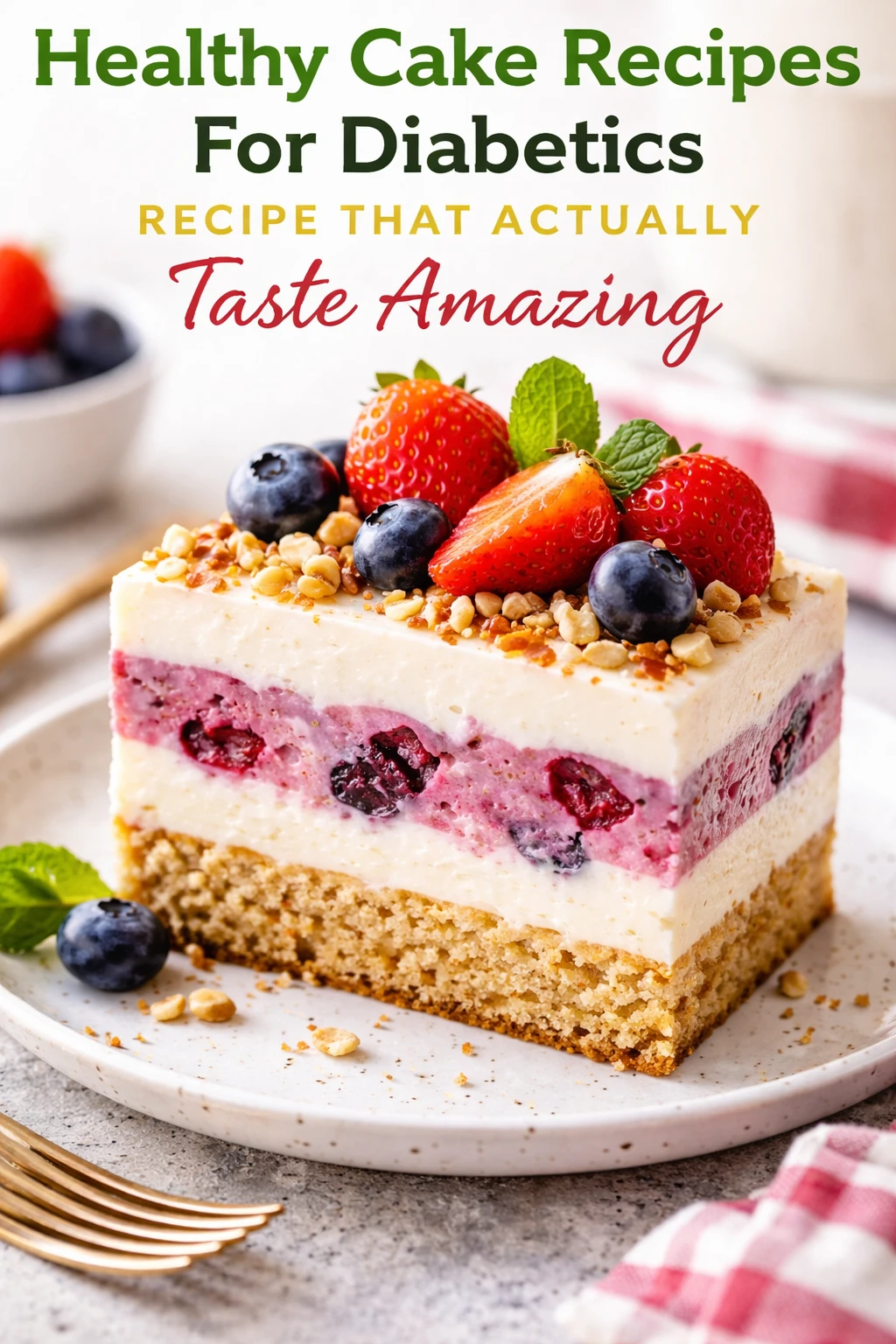
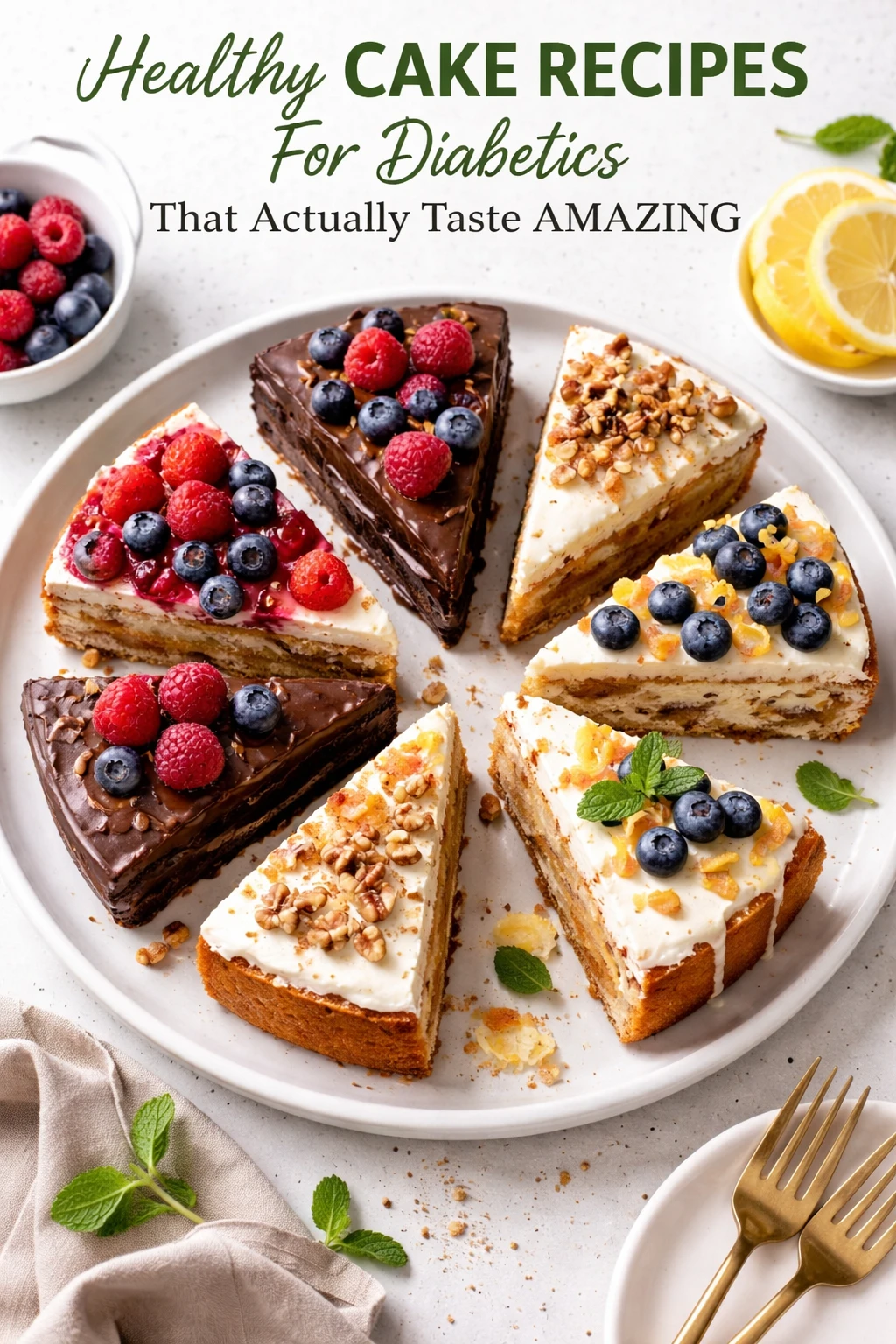
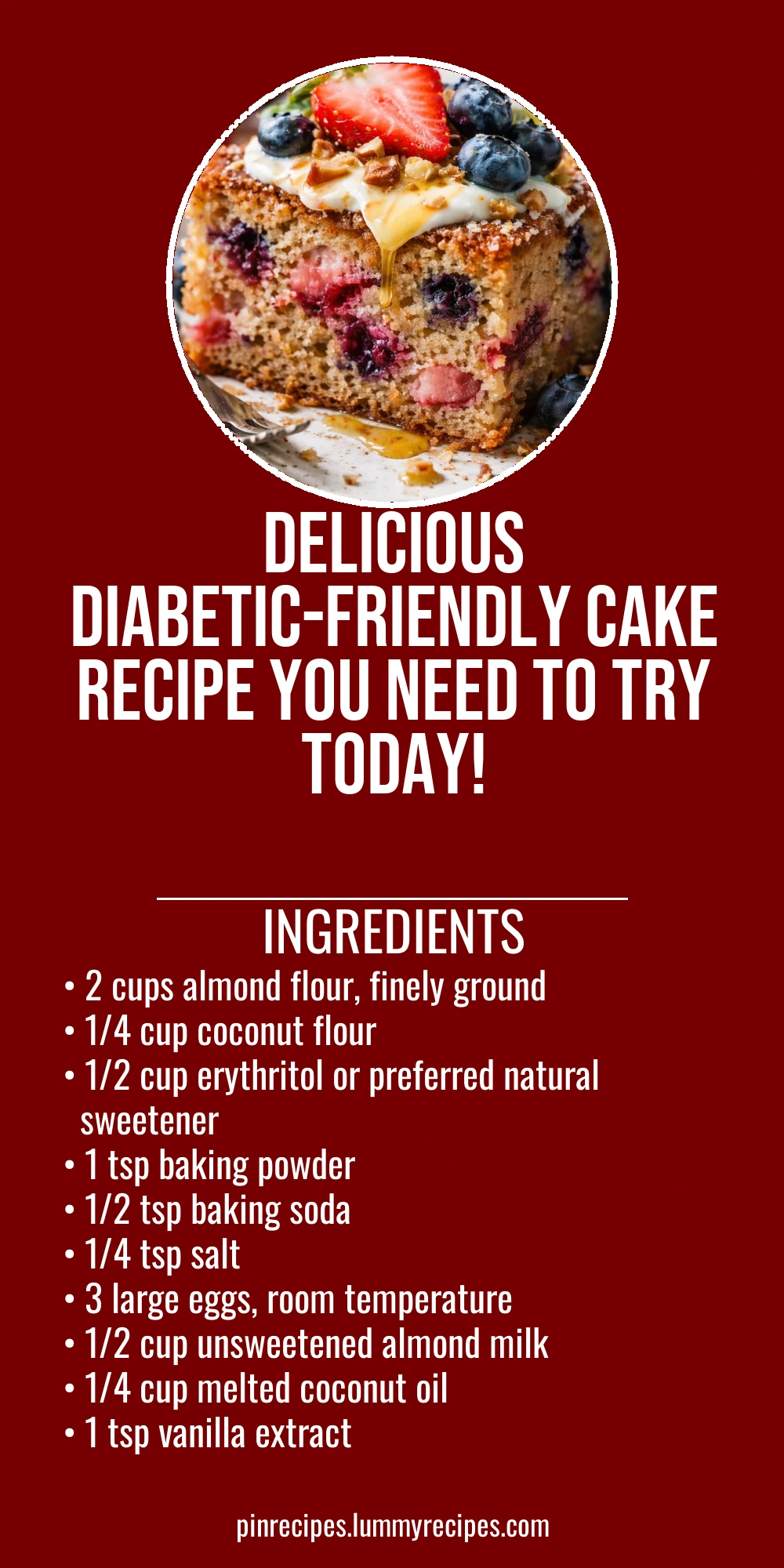
This diabetic-friendly cake is moist, lightly sweetened, and made with wholesome ingredients that won’t spike your blood sugar. Using almond flour and a touch of natural sweetener keeps it guilt-free. Perfect for celebrations or a cozy afternoon treat!
Introduction
I've been on the hunt for a cake recipe that’s both diabetic-friendly and actually tastes good — not dry, bland, or overly dense like some sugar-free cakes I’ve tried in the past. This recipe is one I developed after a few kitchen experiments and a lot of tasting sessions with my family. What makes it different is the use of almond flour combined with coconut flour, which gives it a tender crumb and just the right texture without spiking blood sugar. The erythritol sweetener keeps it sweet but without the sugar crash. I also add a splash of apple cider vinegar, which might sound odd, but it reacts with the baking soda to give the cake a nice rise and lightness. The end result is a moist, flavorful cake that I genuinely enjoy serving for birthdays or just a weekend treat. If you’ve been hesitant about diabetic desserts, this one might just change your mind. It’s not just good for you — it tastes like a real cake, and that’s what I love about it.
What You'll Need
One 8-inch round cake, 8 servings
- 2 cups almond flour, finely ground
- 1/4 cup coconut flour
- 1/2 cup erythritol or preferred natural sweetener
- 1 tsp baking powder
- 1/2 tsp baking soda
- 1/4 tsp salt
- 3 large eggs, room temperature
- 1/2 cup unsweetened almond milk
- 1/4 cup melted coconut oil
- 1 tsp vanilla extract
- 1 tbsp apple cider vinegar
How To Do It
Step 1
Preheat your oven to 350°F (175°C) and grease an 8-inch round cake pan or line it with parchment paper. This step is crucial because almond and coconut flours tend to stick more than regular flour. Preparing your pan well ensures the cake releases easily after baking without breaking apart.
⏱ Time: 10 minutes
✓ Doneness: Pan is fully greased or parchment paper fits snugly with no wrinkles
Step 2
In a large bowl, whisk together the almond flour, coconut flour, erythritol, baking powder, baking soda, and salt. Mixing these dry ingredients thoroughly ensures even distribution of the leavening agents, which helps the cake rise uniformly and prevents dense spots.
⏱ Time: 5 minutes
✓ Doneness: Dry ingredients are combined with no lumps or clumps
Step 3
In a separate bowl, beat the eggs until smooth. Then add almond milk, melted coconut oil, vanilla extract, and apple cider vinegar. Whisk everything well to combine. This wet mixture provides moisture and helps activate the baking soda through the vinegar, giving the cake its tender crumb.
⏱ Time: 5 minutes
✓ Doneness: Wet ingredients form a smooth, slightly frothy mixture
Step 4
Slowly pour the wet ingredients into the dry ingredients, stirring gently with a spatula until just combined. Avoid overmixing to keep the cake light; overworking the batter can make it dense and tough. The batter should be thick but spreadable.
⏱ Time: 3 minutes
✓ Doneness: No visible dry flour, batter thick and uniform
Step 5
Pour the batter into the prepared cake pan and smooth the top with a spatula. Tap the pan gently on the counter to release any air bubbles that might cause holes or uneven texture. This step helps produce a finer crumb and even bake.
⏱ Time: 2 minutes
✓ Doneness: Batter evenly spread with no large air pockets
Step 6
Bake in the preheated oven for about 30–35 minutes. Start checking at 30 minutes by inserting a toothpick in the center; it should come out clean or with a few moist crumbs. Baking too long can dry the cake, so watch closely near the end.
⏱ Time: 30-35 minutes
✓ Doneness: Toothpick inserted in center comes out clean or with moist crumbs
Step 7
Remove the cake from the oven and let it cool in the pan for 10 minutes. Cooling in the pan allows the cake to set and makes it easier to remove without breaking. Don’t try to unmold it while still hot as it’s fragile.
⏱ Time: 10 minutes
✓ Doneness: Cake edges slightly pulling away from pan, surface firm to touch
Step 8
Run a knife around the edges to loosen the cake, then invert it onto a wire rack to cool completely. Cooling fully prevents sogginess and improves texture. If you frost it, make sure it’s completely cool so the frosting doesn’t melt.
⏱ Time: 30 minutes
✓ Doneness: Cake is cool to touch and holds shape when moved
Step 9
Once cooled, frost or serve as desired. I like a light cream cheese frosting sweetened with a bit of stevia or just a dusting of cinnamon. This cake pairs well with fresh berries or a cup of tea for a perfect low-sugar treat.
⏱ Time: Optional
✓ Doneness: Frosting smooth and set, or cake ready to serve
Pro Tips
Use room temperature eggs and liquids for better batter consistency.
Cold ingredients can cause the melted coconut oil to solidify, resulting in uneven texture. Room temperature ingredients mix more smoothly, leading to a tender, uniform crumb.
Don’t overmix the batter once wet and dry ingredients are combined.
Overmixing develops the almond flour’s proteins too much and can create a dense, tough cake. Stir just until no dry flour remains to keep the texture light and fluffy.
Let the cake cool completely before frosting or slicing.
Warm cakes are fragile and crumbly. Cooling allows the crumb to set and makes slicing easier without breaking apart.
Tap the cake pan gently before baking to release air bubbles.
Trapped air can create holes or uneven texture. Tapping helps the batter settle for a finer crumb and uniform rise.
Use parchment paper to line your pan for easy removal.
Almond flour cakes can stick more than wheat flour ones. Parchment paper prevents sticking and keeps the cake intact when removing from the pan.
Adjust sweetness to your taste by varying erythritol amount slightly.
Sweetness preferences vary, and erythritol can have a cooling aftertaste if overused. Start with less and add more if needed.
Store leftovers in an airtight container in the fridge.
This keeps the cake moist and fresh longer, preventing it from drying out or absorbing fridge odors.
Common Mistakes to Avoid
Using too much coconut flour
Why it happens Many people think coconut flour can be substituted 1:1 for regular flour, but it absorbs much more liquid, causing dryness.
Fix Measure carefully and use coconut flour sparingly, balancing with moist ingredients like eggs and oil to keep the cake tender.
Skipping the vinegar
Why it happens Some may omit vinegar thinking it’s unnecessary, but it’s essential for reacting with baking soda to create lift.
Fix Always include the vinegar to ensure the cake rises properly and isn’t dense.
Overbaking the cake
Why it happens Leaving the cake in too long causes it to dry out, especially with gluten-free flours.
Fix Start checking doneness at 30 minutes with a toothpick and remove as soon as it comes out clean or with moist crumbs.
Not preparing the pan properly
Why it happens Almond flour cakes stick more, so skipping greasing or parchment leads to broken cakes.
Fix Grease the pan well and line it with parchment paper for easy removal.
Using cold eggs or liquids
Why it happens Cold ingredients cause coconut oil to solidify, resulting in uneven batter.
Fix Bring eggs and liquids to room temperature before mixing.
Variations
Lemon Poppy Seed Diabetic Cake
Add 2 tbsp poppy seeds and the zest of one lemon to the batter for a bright, refreshing twist. This variation adds a pleasant crunch and citrus aroma that pairs beautifully with the almond flour base.
Note: The lemon zest adds moisture and acidity, so keep the vinegar amount the same to maintain rise.
Chocolate Chip Diabetic Cake
Fold in 1/3 cup sugar-free dark chocolate chips before baking for a rich, indulgent flavor. The chocolate melts slightly, creating pockets of sweetness without added sugar.
Note: Use sugar-free chips to keep it diabetic-friendly and fold gently to avoid breaking the batter’s structure.
Spiced Cinnamon Walnut Cake
Mix in 1 tsp ground cinnamon and 1/2 cup chopped walnuts for a warm, nutty flavor profile. This version is perfect for fall or cozy gatherings and adds texture and depth.
Note: Toast walnuts lightly beforehand for enhanced flavor and crunch.
Berry Swirl Diabetic Cake
Swirl in 1/2 cup mashed fresh or frozen berries into the batter before baking for a fruity surprise. Berries add natural sweetness and antioxidants, making this cake even healthier.
Note: Use berries that are well-drained to avoid excess moisture affecting bake time.
Vanilla Chia Seed Cake
Add 2 tbsp chia seeds to the batter for extra fiber and omega-3s. Chia seeds add a slight crunch and boost the nutritional profile without changing the flavor much.
Note: Let the batter rest 5 minutes after mixing to allow chia seeds to hydrate.
Nutrition
Per Serving:
Nutritional values are estimates and may vary based on specific ingredients used.
Storage & Tips
Room Temperature
The cake can safely sit at room temperature for up to 4 hours if covered loosely with a cake dome or foil to prevent drying out.
Refrigerator
Store the cake in an airtight container in the fridge for up to 5 days. The texture firms up when chilled, so let it come to room temperature or warm slightly before serving for best taste.
Freezer
Freeze the cake wrapped tightly in plastic wrap and foil for up to 3 months. Thaw overnight in the fridge and warm gently in the oven to restore softness.
Reheating
Reheat slices in a microwave for 15-20 seconds or in a 300°F oven for 5-7 minutes. Adding a small splash of almond milk before reheating helps maintain moisture.
Make Ahead
You can bake the cake a day or two ahead and store it wrapped in the fridge. Frost or decorate just before serving to keep it fresh.
FAQ
Can I substitute almond flour with another flour?
Almond flour is key for this recipe’s texture and blood sugar benefits. Substituting with regular flour will change the carb content and texture drastically. If you need a substitute, finely ground hazelnut or cashew flour can work but results may vary.
Is erythritol the only sweetener I can use?
Erythritol works best here due to its zero glycemic impact and baking stability. You can try monk fruit sweetener or stevia blends, but adjust amounts carefully since sweetness levels differ and some can affect texture.
Why do I need apple cider vinegar in the recipe?
The vinegar reacts with baking soda to produce carbon dioxide gas, which helps the cake rise and become fluffy. Without it, the cake may turn out dense and flat.
Can I make this cake gluten-free?
This recipe is naturally gluten-free due to almond and coconut flours. Just ensure your baking powder and other ingredients are certified gluten-free if needed.
How do I store leftover cake?
Store leftovers in an airtight container in the fridge for up to 5 days to keep it moist and fresh. You can also freeze slices individually wrapped for longer storage.
Can I add frosting to this cake?
Yes! A cream cheese frosting sweetened with a bit of stevia or erythritol pairs beautifully. Just make sure the cake is completely cool before frosting to avoid melting.
What if my cake comes out dry?
Dryness can happen if overbaked or if too much coconut flour is used. Check doneness early and measure flours carefully. Adding a bit more oil or an extra egg can also help retain moisture.
Can I make this recipe vegan?
This recipe relies on eggs for structure and moisture, so vegan substitutions require more adjustments. Flax eggs or chia eggs can replace eggs, but texture will differ and may be denser.
Final Thoughts
I hope you enjoy making and sharing this diabetic-friendly cake as much as I do. It’s proof that healthy desserts can be delicious—give it a try and let me know how it turns out!