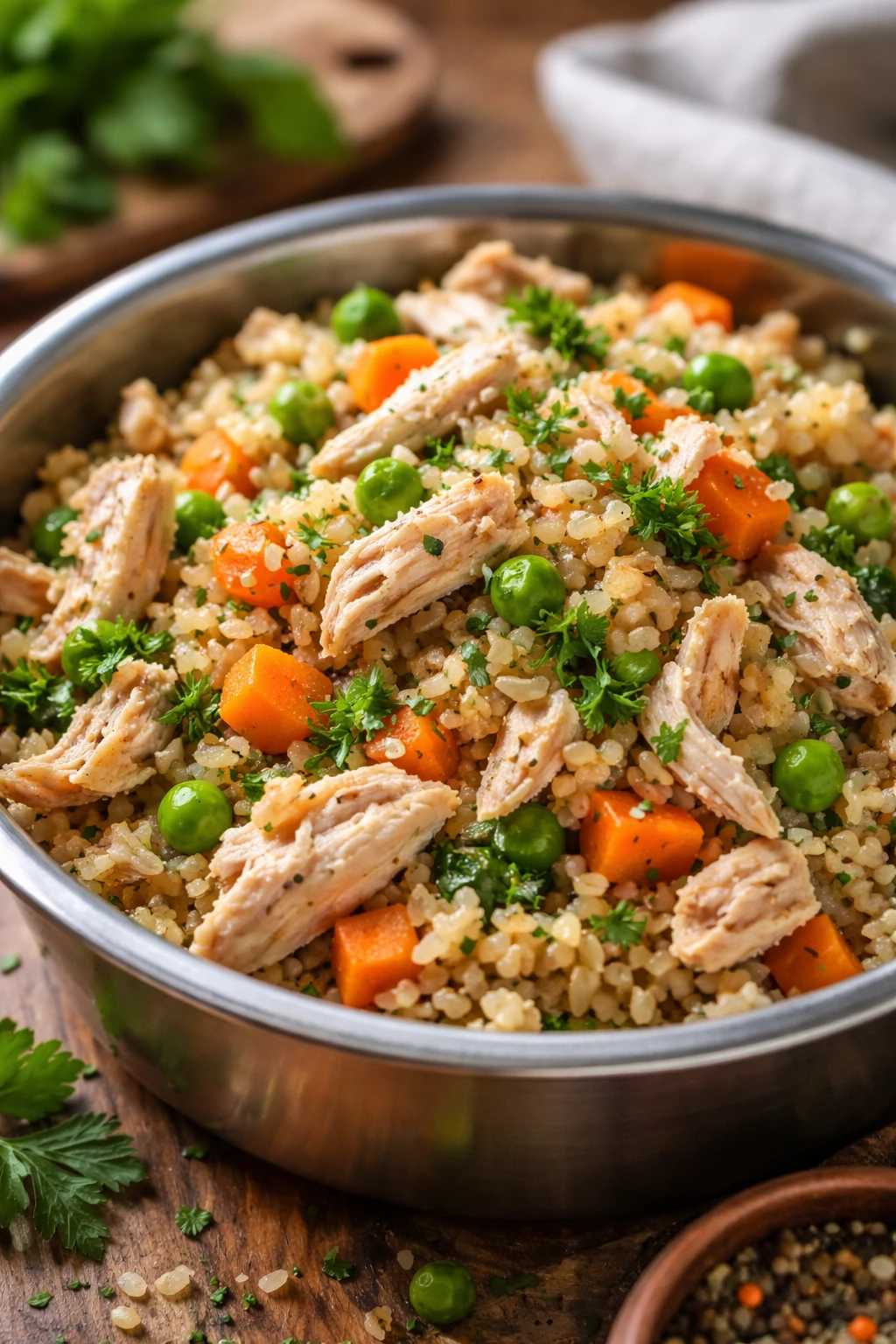
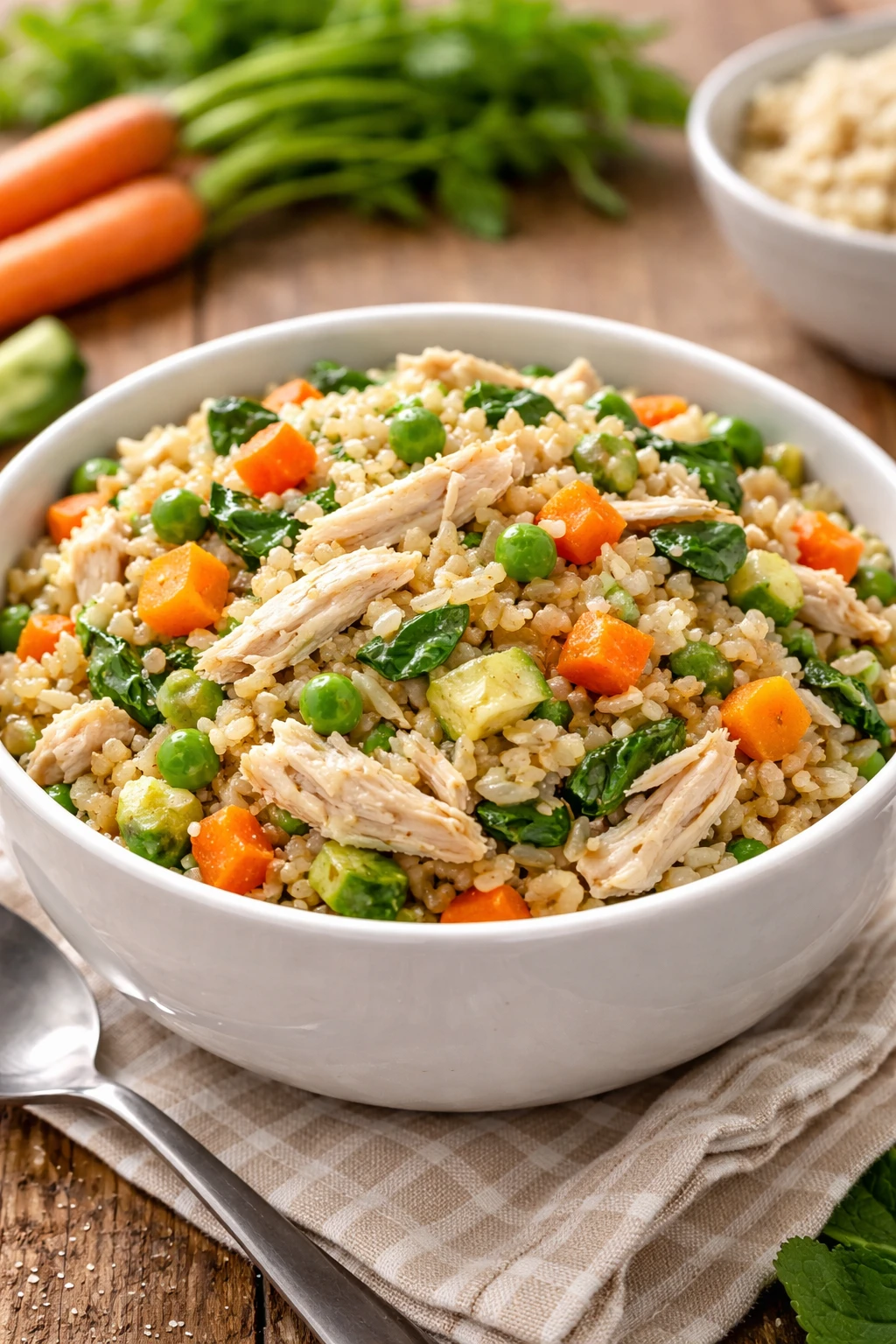
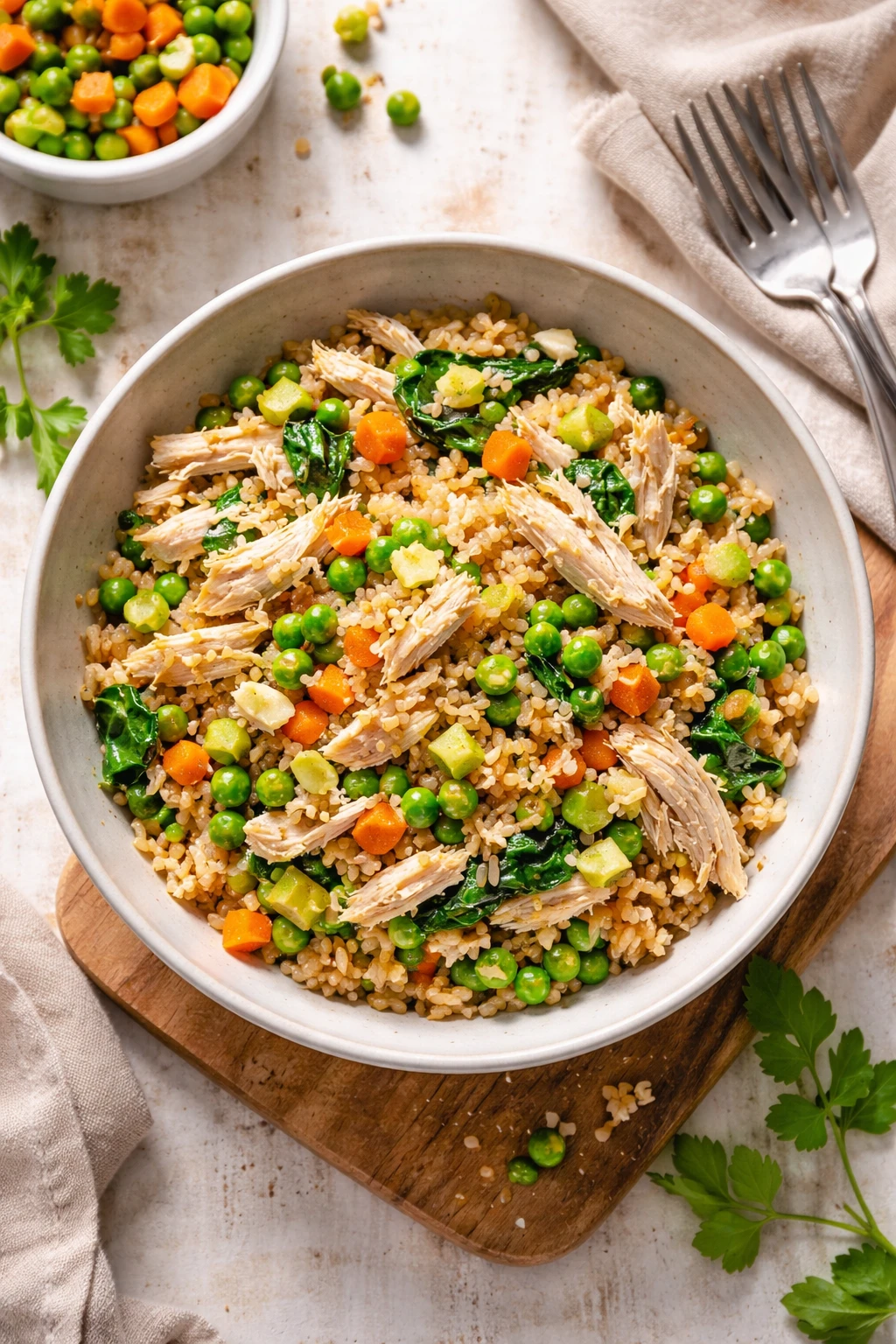
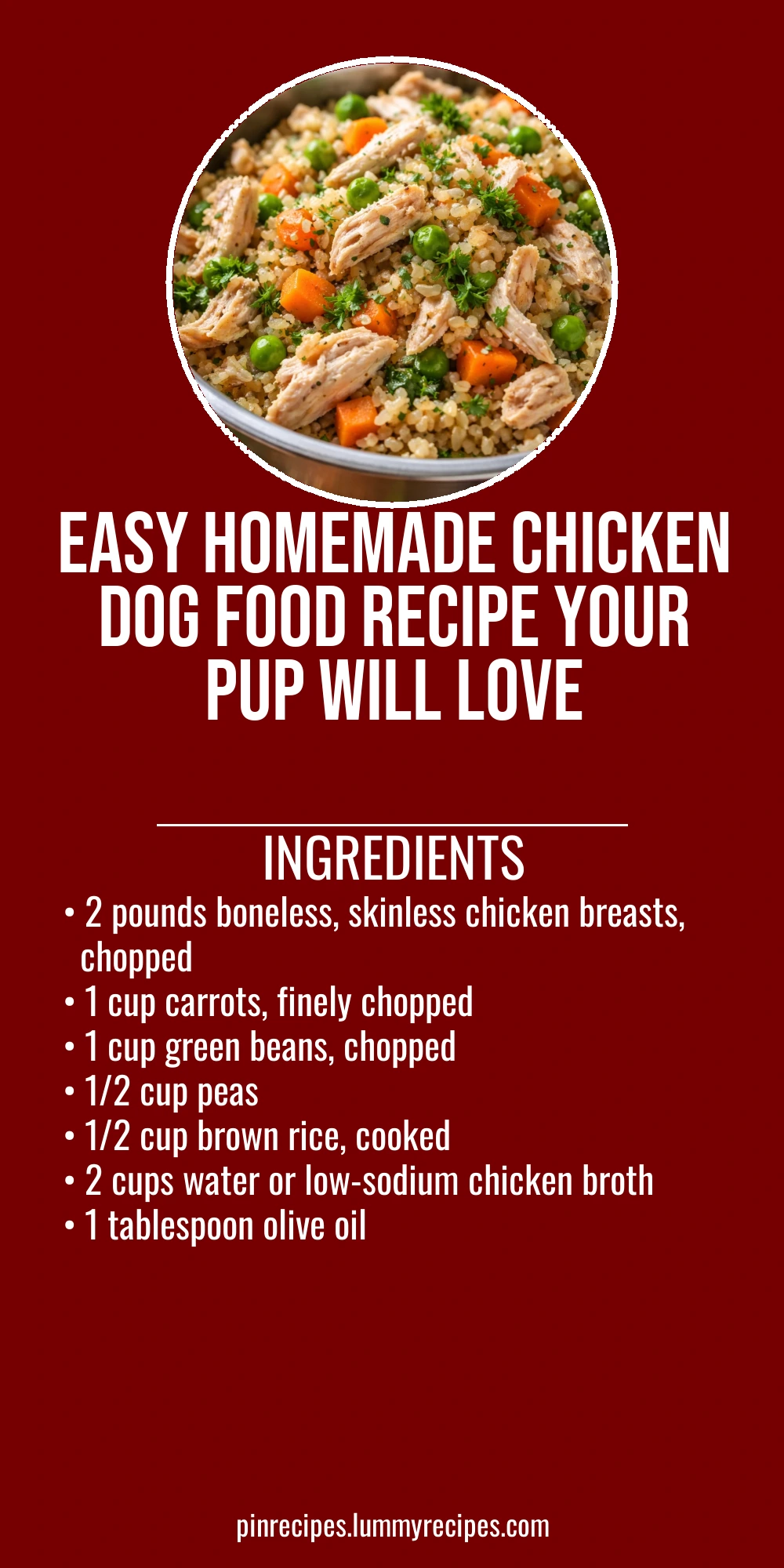
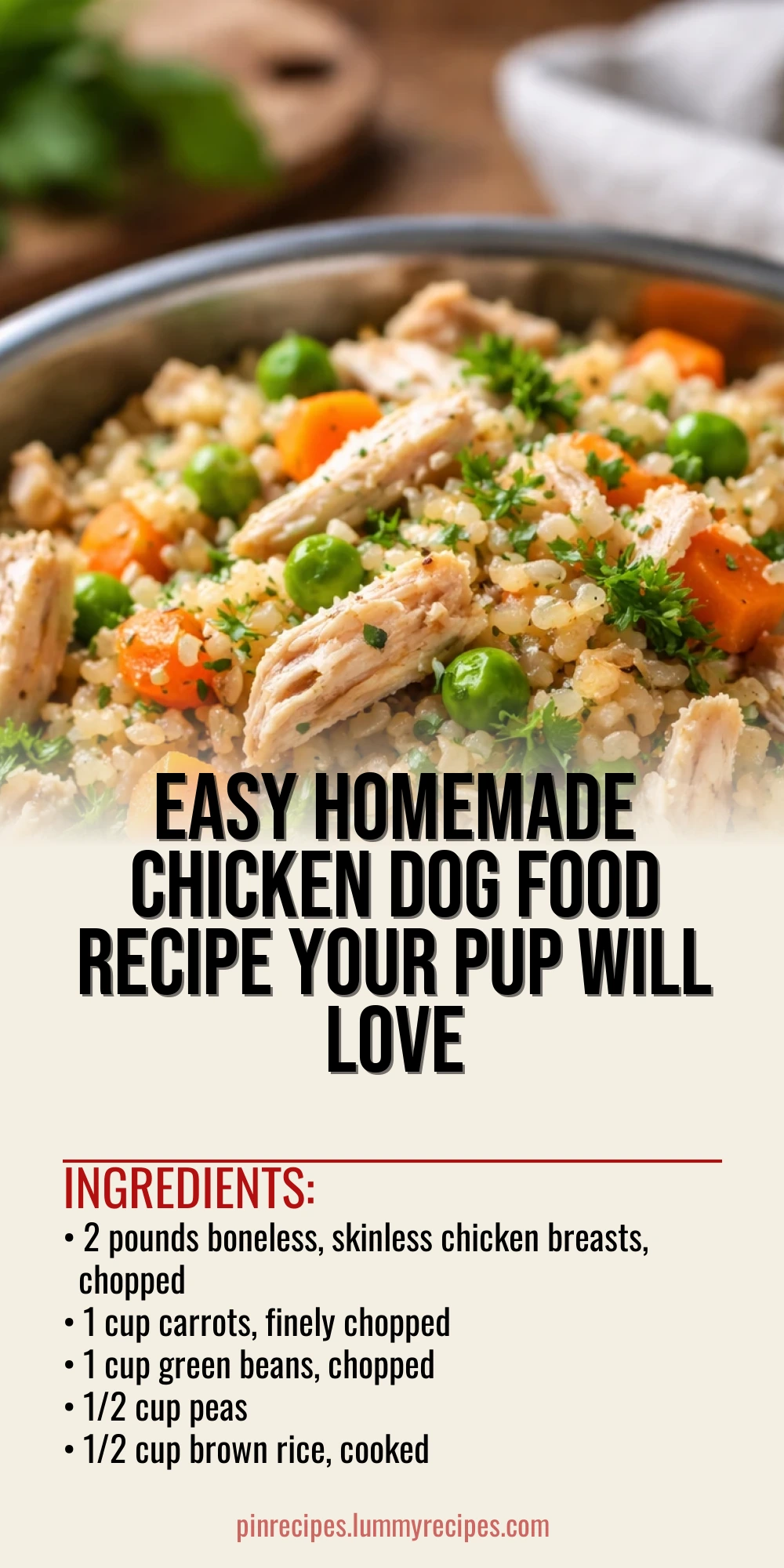
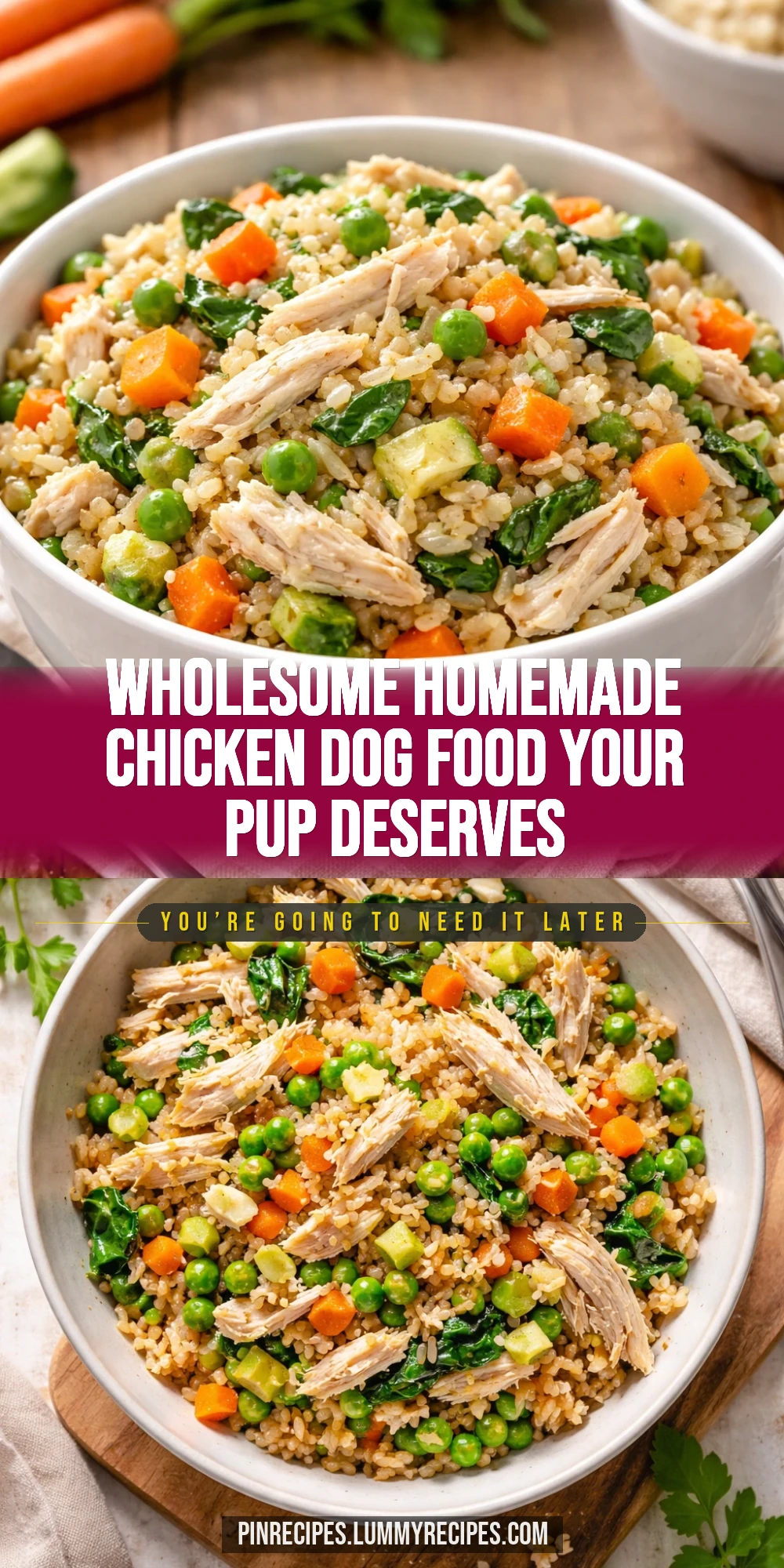
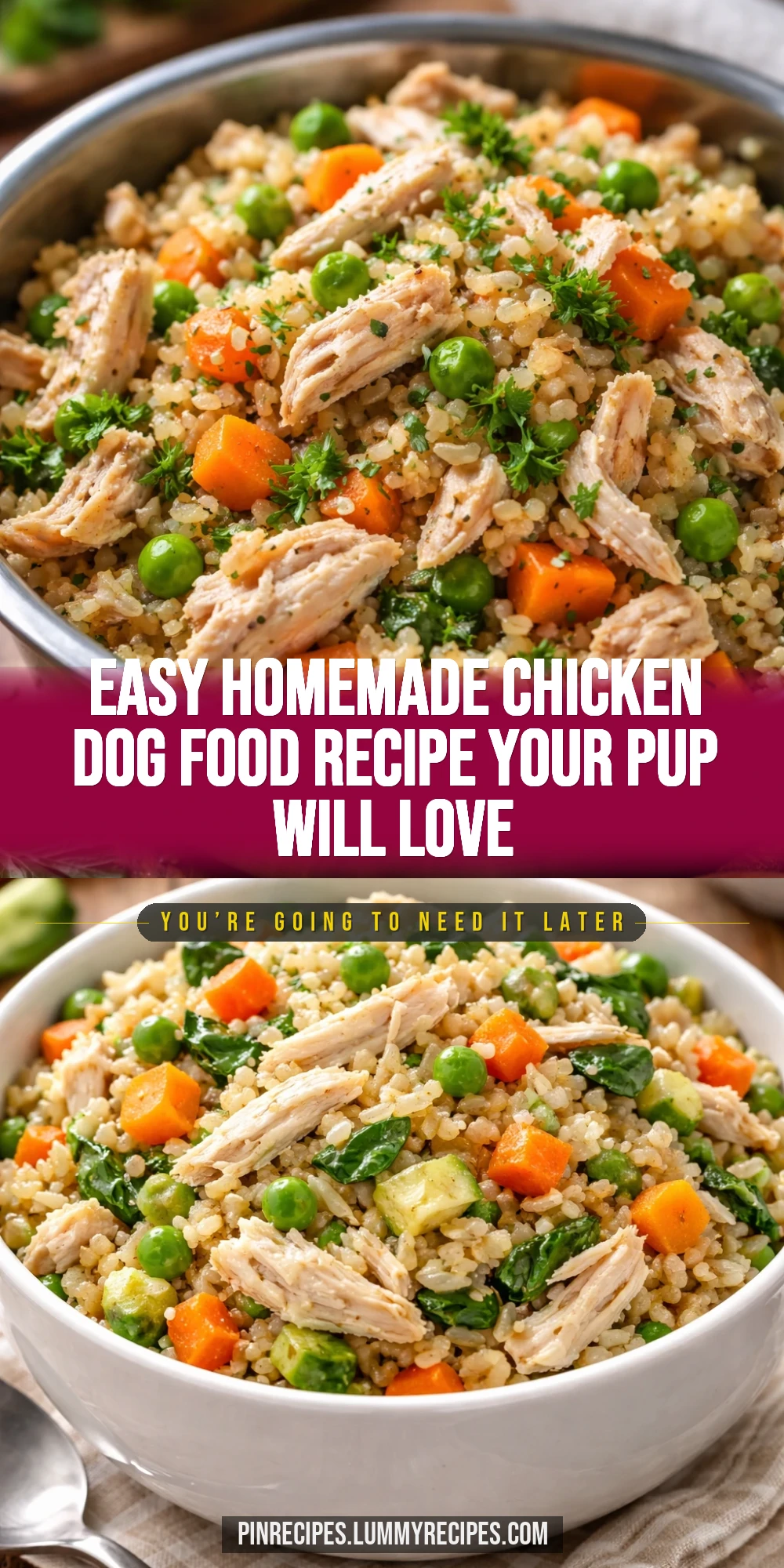
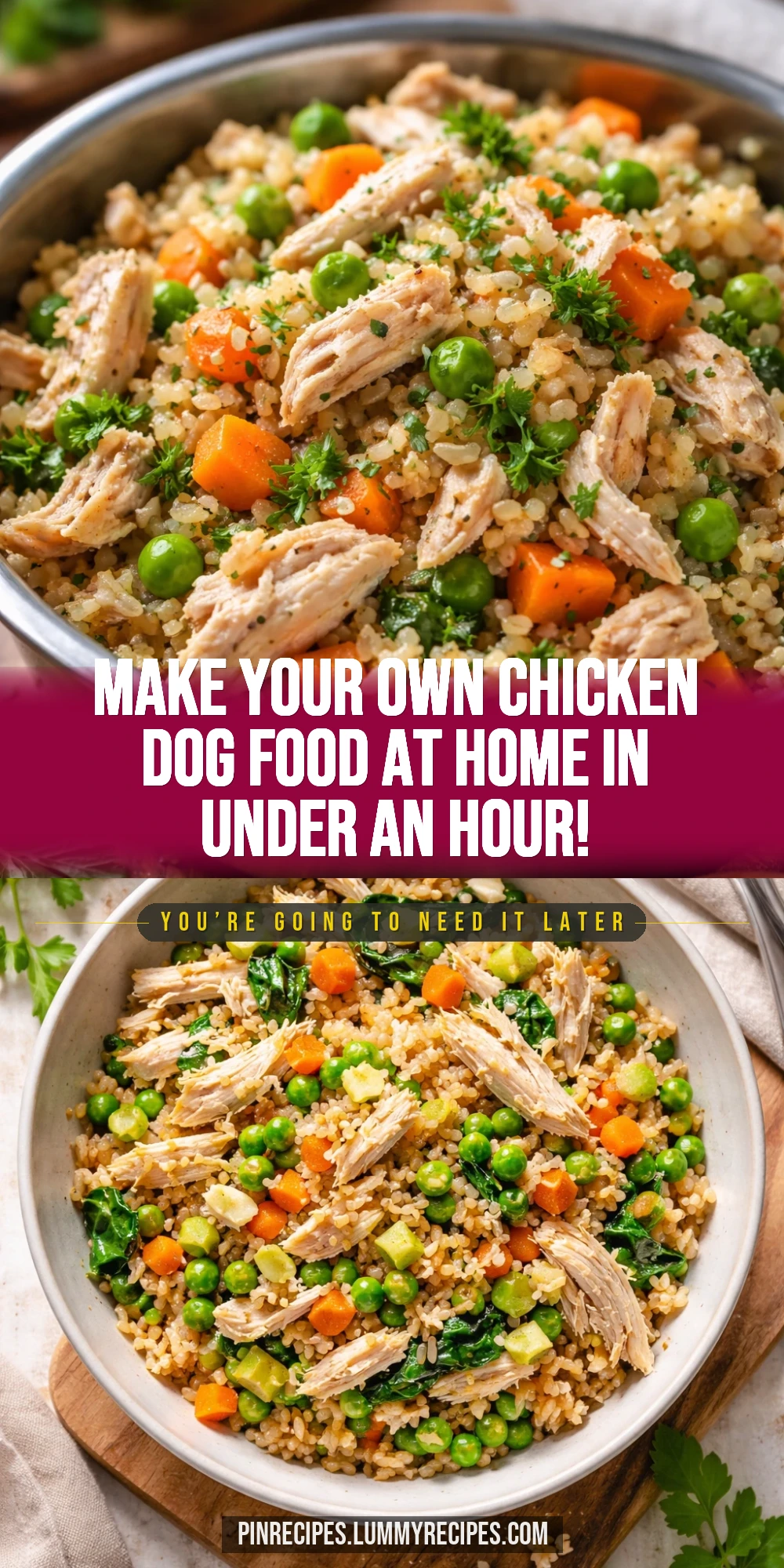
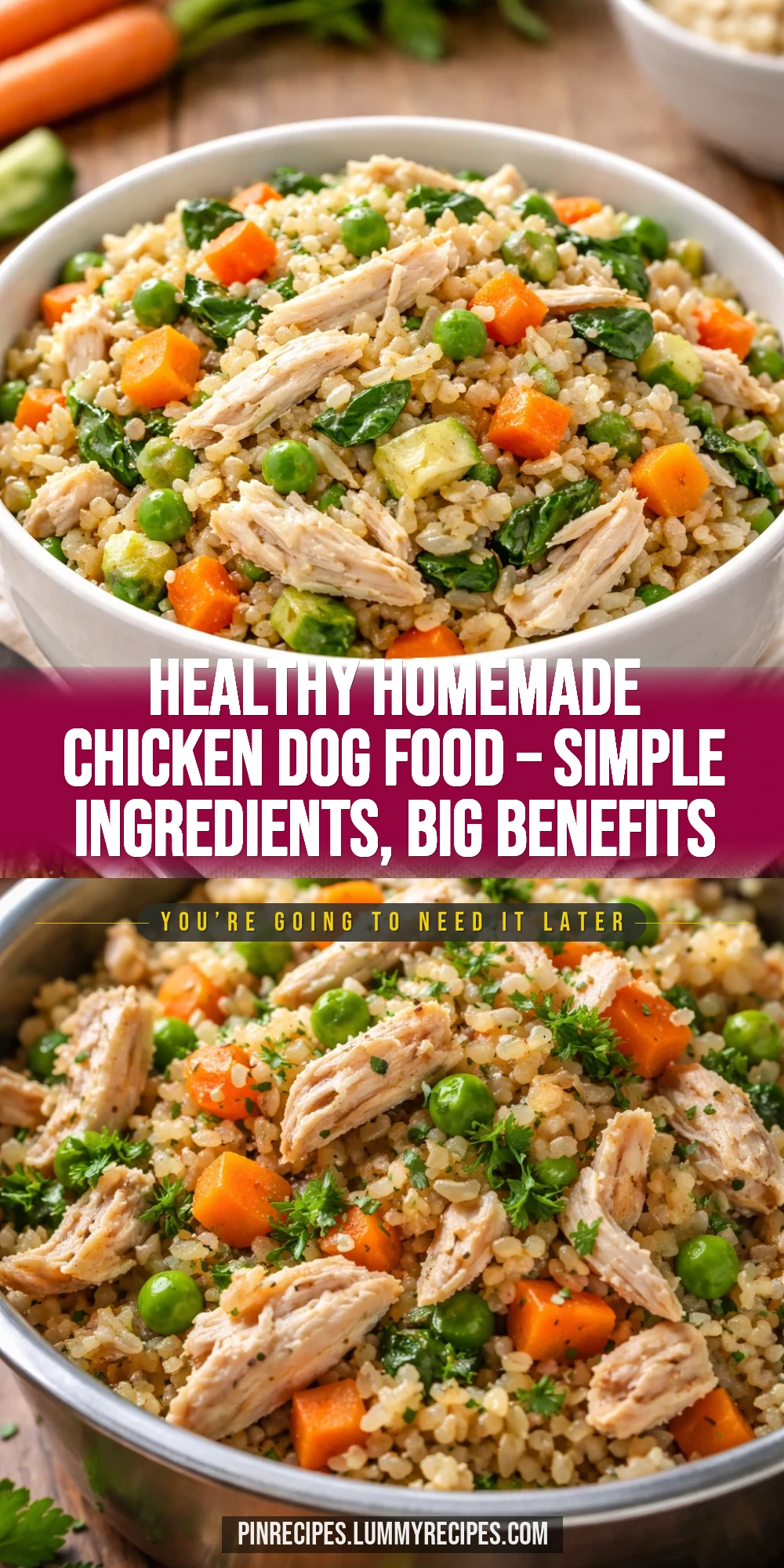
This homemade chicken dog food is packed with wholesome ingredients and easy to prepare. Using simple chicken and veggies, it’s a great way to treat your pup with fresh, healthy meals. Perfect for daily feeding or special treats!
Introduction
I started making homemade dog food a few years ago when my pup developed allergies to commercial kibble. It wasn’t easy at first, but I quickly realized that fresh ingredients made a huge difference in his energy and coat health. This chicken recipe is my go-to because it’s simple and uses ingredients that most dogs love. What makes it better than store-bought is the control over what goes in—no preservatives or fillers, just wholesome chicken, veggies, and rice. I always cook the chicken gently to keep it tender and mix in veggies for added fiber and vitamins. The trick I learned is to cook the rice separately and add it at the end so it doesn’t get mushy. The finished dish has a mild aroma and soft texture that’s easy for dogs to digest. Plus, it’s versatile enough to serve as a full meal or a topper on their regular food. I’ve shared this recipe with friends, and their dogs have loved it too!
How To Do It
Step 1
Start by chopping the chicken breasts into small, bite-sized pieces. This helps the meat cook evenly and makes it easier for your dog to eat. Use boneless, skinless chicken to avoid excess fat and bones that can be harmful. Cooking the chicken thoroughly is important for safety, so make sure the pieces are uniform for even cooking. Avoid overcrowding the pan to ensure the chicken browns nicely instead of steaming.
⏱ Time: 10 minutes
✓ Doneness: Chicken pieces are opaque and firm, no pink inside
Step 2
Heat olive oil in a large skillet over medium heat. Add the chopped chicken and cook, stirring occasionally, until fully cooked through. The olive oil adds a bit of healthy fat and helps prevent sticking. If you rush this step or cook on too high heat, the chicken can dry out or burn, so keep the temperature moderate and be patient.
⏱ Time: 10 minutes
✓ Doneness: Chicken is lightly golden and cooked through with no raw spots
Step 3
While the chicken cooks, steam or boil the carrots, green beans, and peas until tender but not mushy. Vegetables provide fiber and essential nutrients, so don’t skip this step. Overcooking can cause loss of vitamins and a mushy texture that dogs might not enjoy.
⏱ Time: 8 minutes
✓ Doneness: Vegetables are soft enough to mash easily but still hold shape
Step 4
Cook the brown rice according to package instructions separately. Brown rice adds fiber and slow-release energy. Cooking it separately prevents it from becoming too soggy in the mix. Rinse the rice before cooking to remove excess starch for fluffier grains.
⏱ Time: 20 minutes
✓ Doneness: Rice is tender but not mushy, grains separate easily
Step 5
Once chicken and vegetables are cooked, combine them in a large bowl. Add the cooked rice and mix well. This combination balances protein, carbs, and veggies for a complete meal. Mixing while warm helps flavors meld and makes it easier to portion out.
⏱ Time: 5 minutes
✓ Doneness: Ingredients are evenly distributed with consistent texture
Step 6
Add 2 cups of water or low-sodium chicken broth to the mixture to moisten the food. This keeps it juicy and helps with digestion. Avoid adding salt or seasoning as these can be harmful to dogs. The broth also adds flavor without extra calories.
⏱ Time: 2 minutes
✓ Doneness: Mixture is moist but not soupy, easy to scoop
Step 7
Let the mixture cool completely before serving to your dog. Hot food can burn their mouth and cause discomfort. Cooling also allows the flavors to settle. Store leftovers in an airtight container in the fridge.
⏱ Time: 15 minutes
✓ Doneness: Food is at room temperature, no steam rising
Step 8
Portion the food into daily servings based on your dog’s size and dietary needs. Consult your vet for exact portion sizes. Serving fresh homemade food regularly can improve your dog’s digestion and energy levels over time.
⏱ Time: 5 minutes
✓ Doneness: Portions are consistent and ready to serve or store
Step 9
Clean all utensils and cooking surfaces thoroughly after preparation to avoid cross-contamination. Handling raw chicken safely is crucial to prevent foodborne illness for both you and your pet.
⏱ Time: 5 minutes
✓ Doneness: Kitchen surfaces are clean and sanitized
Pro Tips
Cook chicken in batches if your pan is small to avoid overcrowding.
Overcrowding traps steam and prevents proper browning, which can make the chicken rubbery instead of tender. Cooking in batches ensures even heat distribution and better texture.
Let the food cool completely before storing to prevent condensation.
Storing hot food traps steam inside containers, creating moisture that can lead to bacterial growth and spoilage. Cooling first keeps the food fresh longer.
Use low-sodium chicken broth instead of water for added flavor and nutrients.
Broth adds moisture and a savory taste that encourages picky eaters. Low-sodium options avoid excess salt, which is harmful to dogs.
Freeze leftovers in portioned containers for easy thawing and serving.
Freezing preserves freshness and nutrients. Portioning helps you thaw just what you need, reducing waste and keeping meals safe.
Rinse brown rice before cooking to remove excess starch.
Removing starch prevents rice from becoming gummy or sticky, resulting in a fluffier texture dogs prefer.
Steam vegetables lightly rather than boiling to retain nutrients.
Boiling can leach vitamins into the water, which is discarded. Steaming cooks veggies gently and preserves more vitamins and minerals.
Consult your vet about portion sizes and ingredient suitability for your dog.
Every dog has unique dietary needs based on size, age, and health. Professional guidance ensures balanced nutrition and avoids allergies or sensitivities.
Common Mistakes to Avoid
Using seasoned or salted chicken.
Why it happens People often assume seasoning enhances flavor for dogs, but salt and spices can harm them.
Fix Always use plain, unseasoned chicken. Cook it simply with a bit of olive oil or water to keep it safe and healthy.
Feeding cooked bones or skin.
Why it happens Some cooks think bones add calcium or flavor, but cooked bones can splinter and cause injury.
Fix Remove all bones and skin before cooking. Use boneless, skinless chicken to avoid choking hazards and digestive issues.
Overcooking vegetables until mushy.
Why it happens Trying to make veggies soft enough for dogs can lead to nutrient loss and unappealing texture.
Fix Steam or boil veggies just until tender but still holding shape. This retains nutrients and keeps food appetizing.
Skipping the cooling step before serving.
Why it happens Impatience or lack of awareness leads to serving hot food that can burn your dog’s mouth.
Fix Always let the food cool to room temperature. This ensures safety and better acceptance by your pet.
Not consulting a vet about dietary needs.
Why it happens Assuming all dogs can eat the same homemade food may overlook allergies or special health conditions.
Fix Check with your veterinarian to tailor recipes to your dog’s specific nutritional requirements.
Variations
Add Sweet Potato Instead of Brown Rice
Swap brown rice for cooked sweet potato for a grain-free option. Sweet potatoes add natural sweetness and extra fiber, which can be easier on sensitive stomachs. Expect a softer texture and slightly sweeter flavor your dog might enjoy.
Note: Cook sweet potato until soft and mash before mixing to maintain consistent texture.
Include Pumpkin Puree for Digestive Health
Mix in a few tablespoons of plain pumpkin puree to support digestion and add moisture. Pumpkin is rich in fiber and antioxidants, helping with both constipation and diarrhea. It also adds a subtle earthy flavor.
Note: Use canned pumpkin without added sugars or spices; add after cooking and mix well.
Use Ground Turkey Instead of Chicken
Ground turkey is a lean protein alternative with a slightly different taste. It cooks quickly and blends well with veggies and rice. This variation keeps the recipe light but offers variety in protein sources.
Note: Cook turkey thoroughly and drain excess fat before combining with other ingredients.
Add Fish Oil for Omega-3 Boost
Stir in a teaspoon of fish oil after cooking to enhance coat shine and joint health. Omega-3 fatty acids are great for inflammation and overall wellness. This is an easy way to upgrade the meal’s nutritional profile.
Note: Add fish oil only after cooling to preserve its delicate fats.
Make It a Stew with Extra Broth
Increase the broth quantity to create a stew-like consistency. This is especially good for older dogs or those who prefer softer, wetter food. It’s comforting and hydrating, ideal during colder months or recovery periods.
Note: Simmer gently to blend flavors without overcooking ingredients.
Nutrition
Per Serving:
Nutritional values are estimates and may vary based on specific ingredients used.
Storage & Tips
Room Temperature
This homemade dog food can safely sit at room temperature for up to 2 hours. Cover it loosely with a lid or foil to protect from contaminants. Avoid leaving it out longer to prevent bacterial growth.
Refrigerator
Store leftovers in an airtight container in the fridge for up to 3 days. The texture may firm up slightly when cold; you can warm it gently before serving to restore softness and aroma.
Freezer
Freeze portions in airtight containers or freezer bags for up to 2 months. Label with date. Thaw in the fridge overnight and reheat gently to preserve texture and nutrients. Avoid refreezing thawed food.
Reheating
Reheat on the stovetop over low heat or in the microwave using short bursts, stirring often. Add a splash of water or broth if the food seems dry. Avoid overheating, which can destroy nutrients and dry out the meal.
Make Ahead
You can prepare the chicken and veggies 1-2 days ahead and store separately in the fridge. Cook rice fresh or store cooked rice separately. Combine and add broth just before serving for best freshness.
FAQ
Can I use chicken thighs instead of breasts?
Yes, chicken thighs can be used and offer more fat and flavor. However, they have higher fat content, so adjust portion sizes accordingly. Make sure to remove skin and bones to keep it safe and healthy for your dog.
Is it okay to add salt or seasoning to the dog food?
No, dogs don’t need added salt or spices, which can be harmful. Keep the recipe plain with just natural ingredients to avoid digestive upset or toxicity.
How do I know how much to feed my dog?
Portion sizes depend on your dog’s size, age, and activity level. It’s best to consult your vet for personalized guidance to ensure balanced nutrition and prevent overfeeding.
Can I freeze the homemade dog food?
Absolutely. Freeze in portioned containers for up to 2 months. Thaw in the fridge overnight and gently reheat before serving to keep nutrients and texture intact.
What if my dog has allergies to chicken?
You can substitute chicken with other lean proteins like turkey or fish. Always introduce new proteins gradually and observe for any reactions.
Can I add supplements or vitamins to this recipe?
Yes, but only under veterinary advice. Some dogs need additional supplements, but it’s important not to overdo it and maintain balanced nutrition.
Is brown rice necessary, or can I use white rice?
Brown rice is preferred for its fiber and nutrients, but white rice can be used if your dog has digestive issues. Just note white rice has less nutritional value.
How often should I feed homemade dog food?
You can feed it daily or alternate with commercial food. Consistency and balance are key, so monitor your dog’s health and adjust as needed.
Final Thoughts
I hope you and your pup enjoy this homemade chicken recipe as much as we do! Feel free to share your results and tweaks—happy cooking!