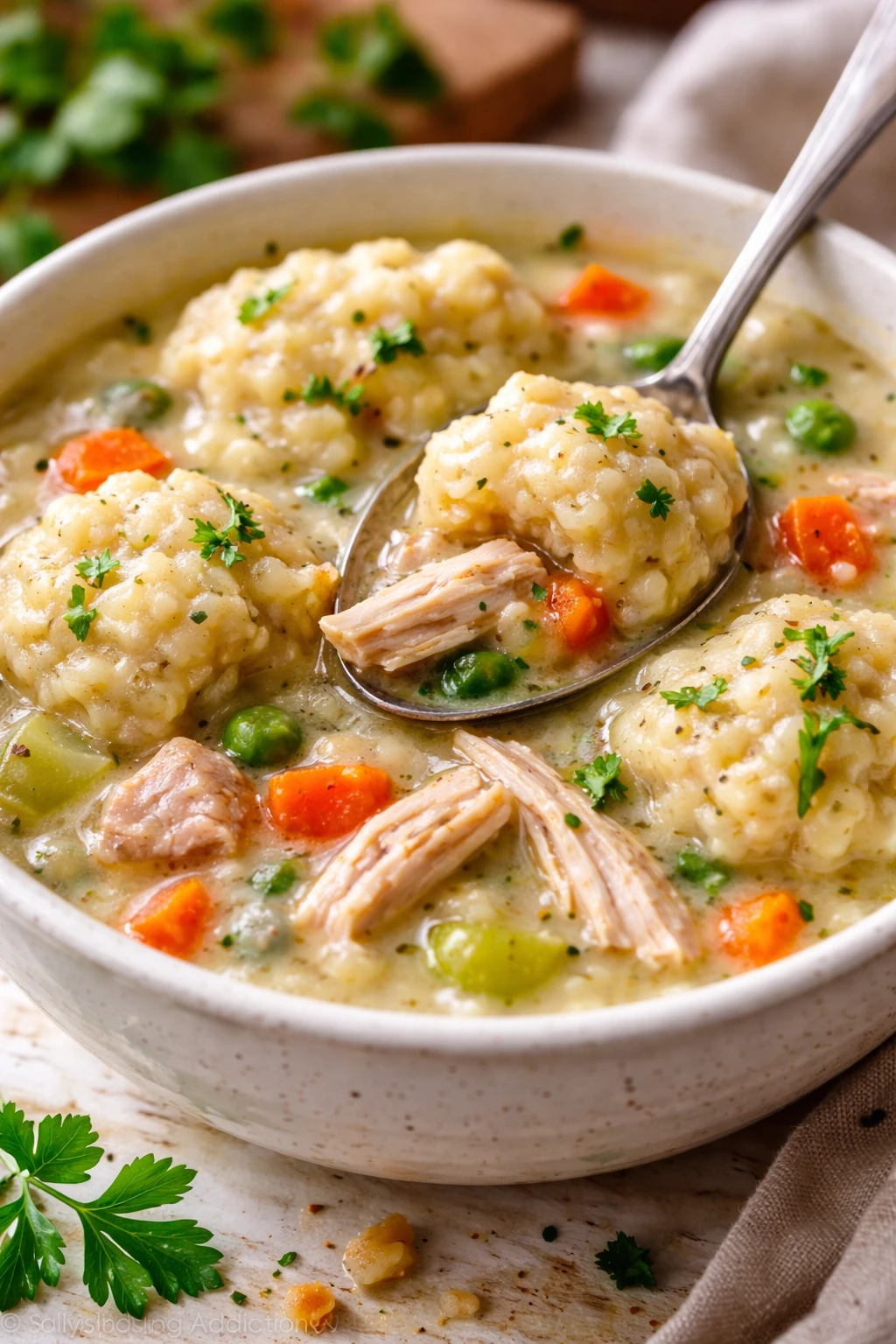
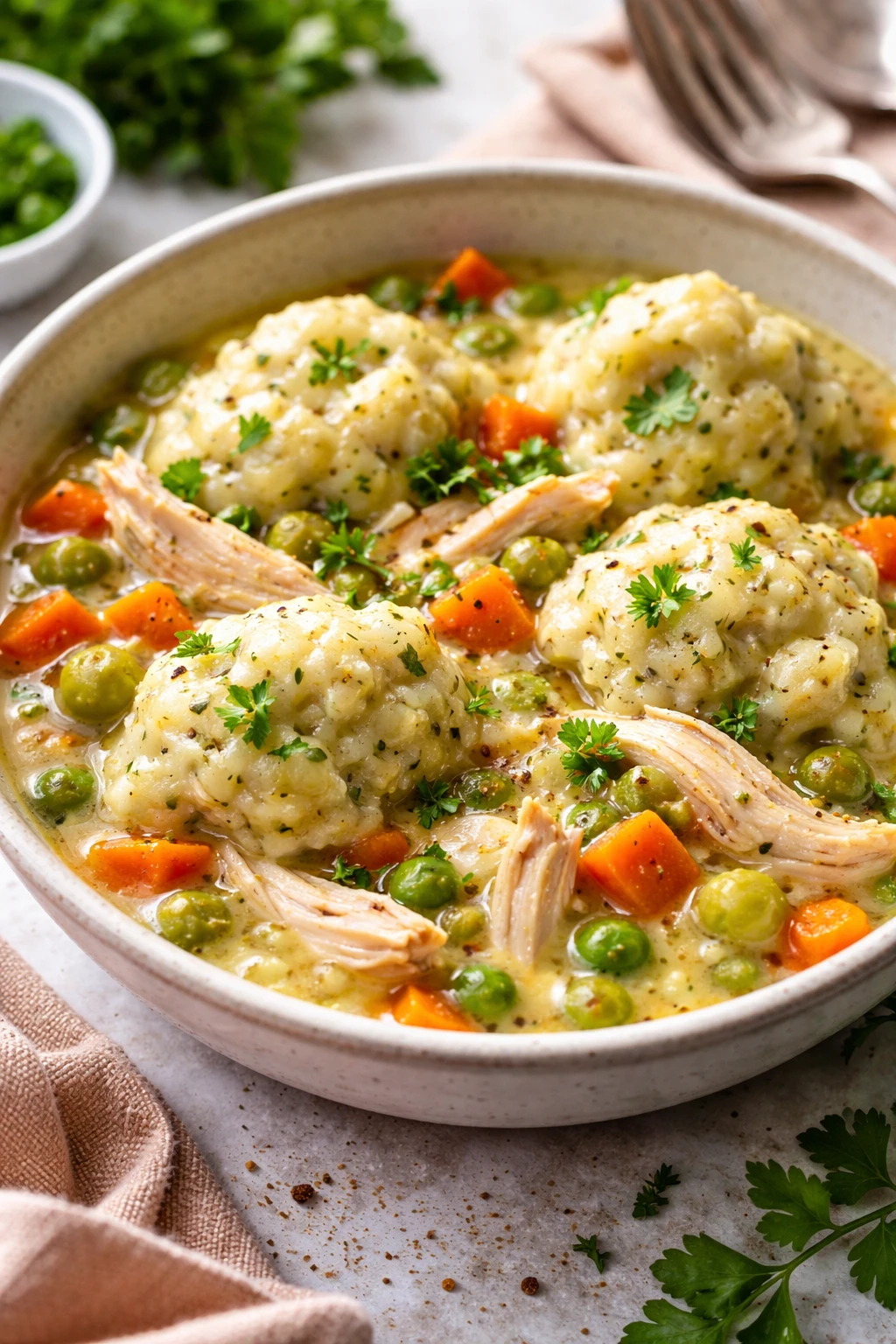
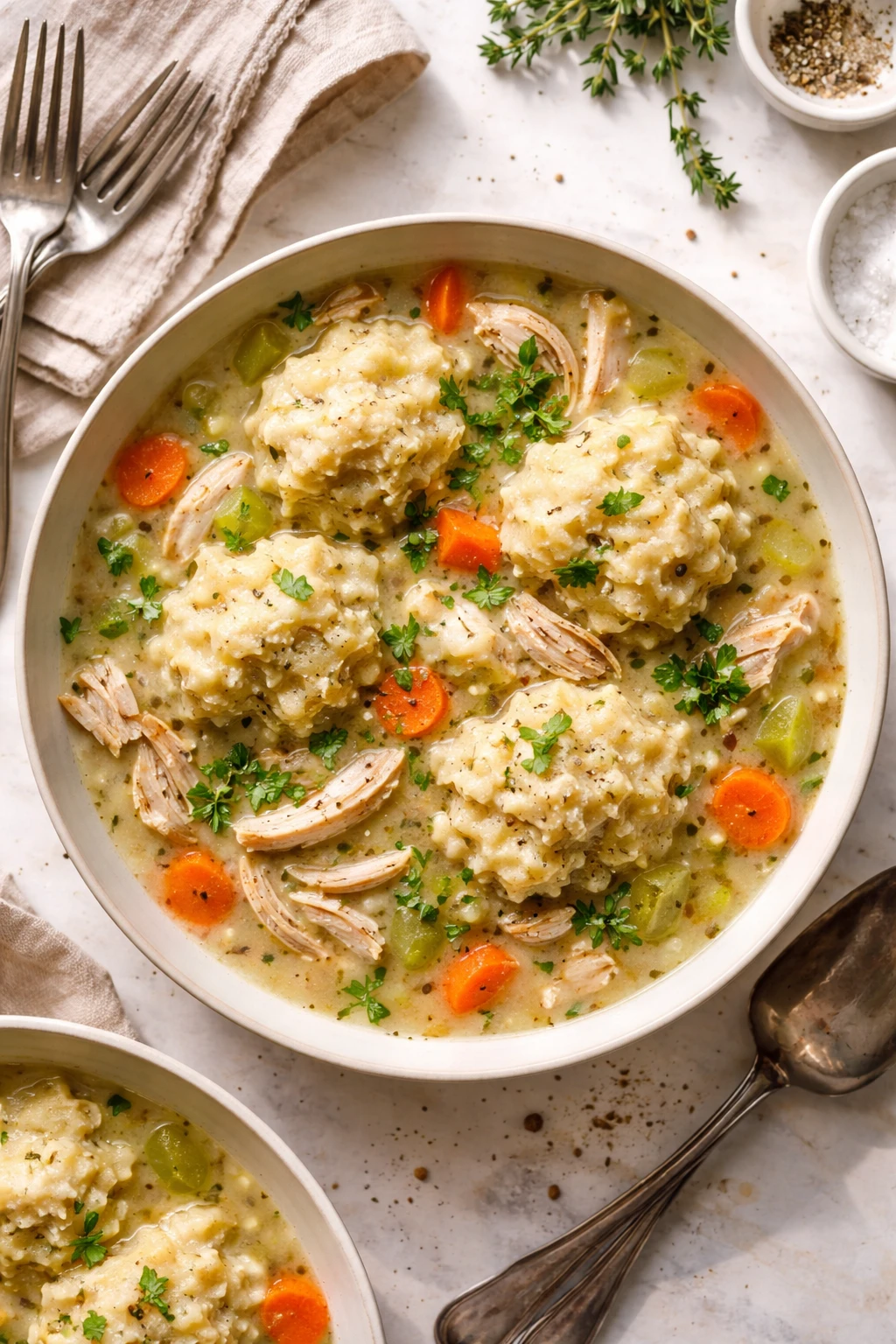
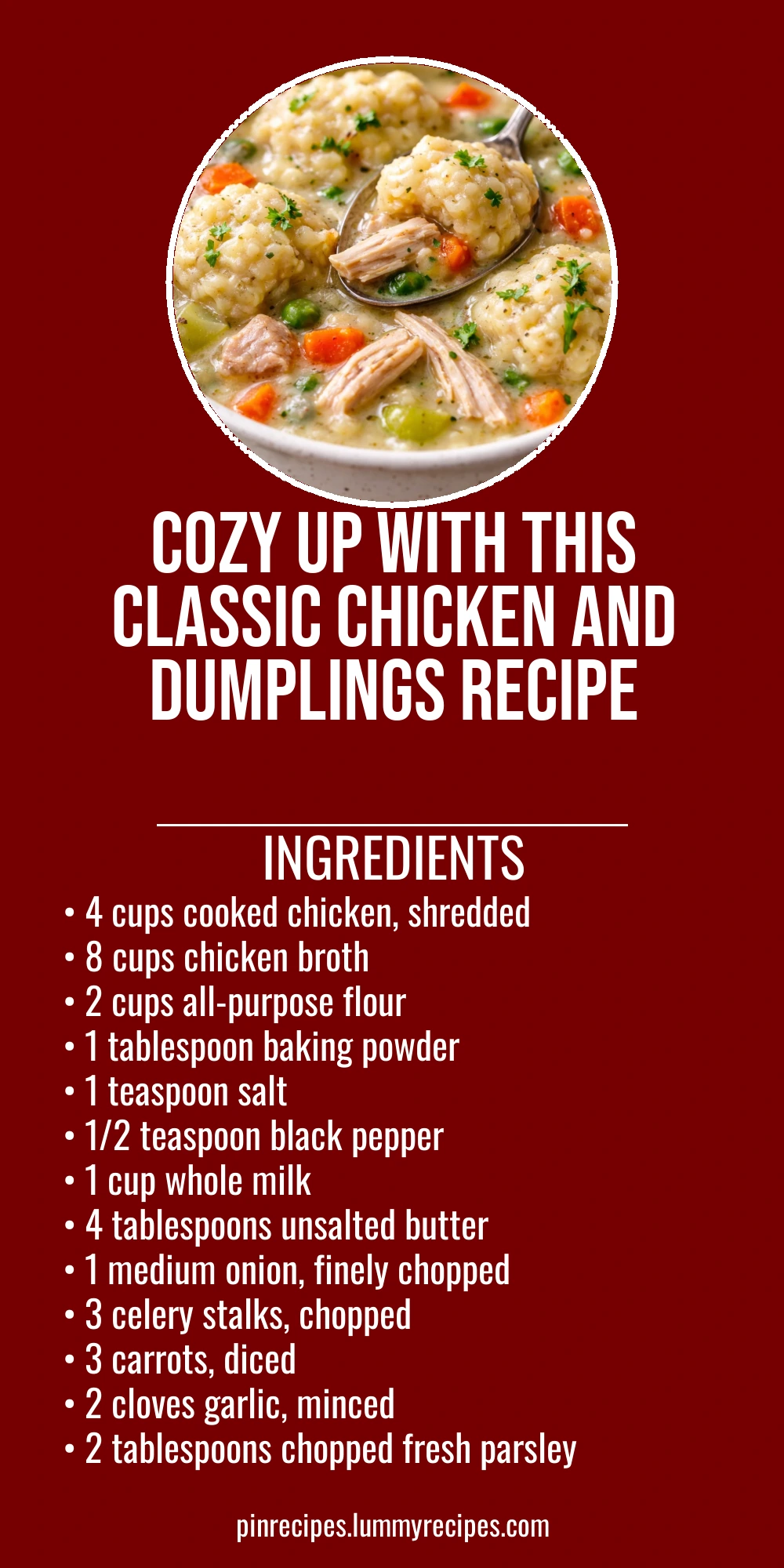
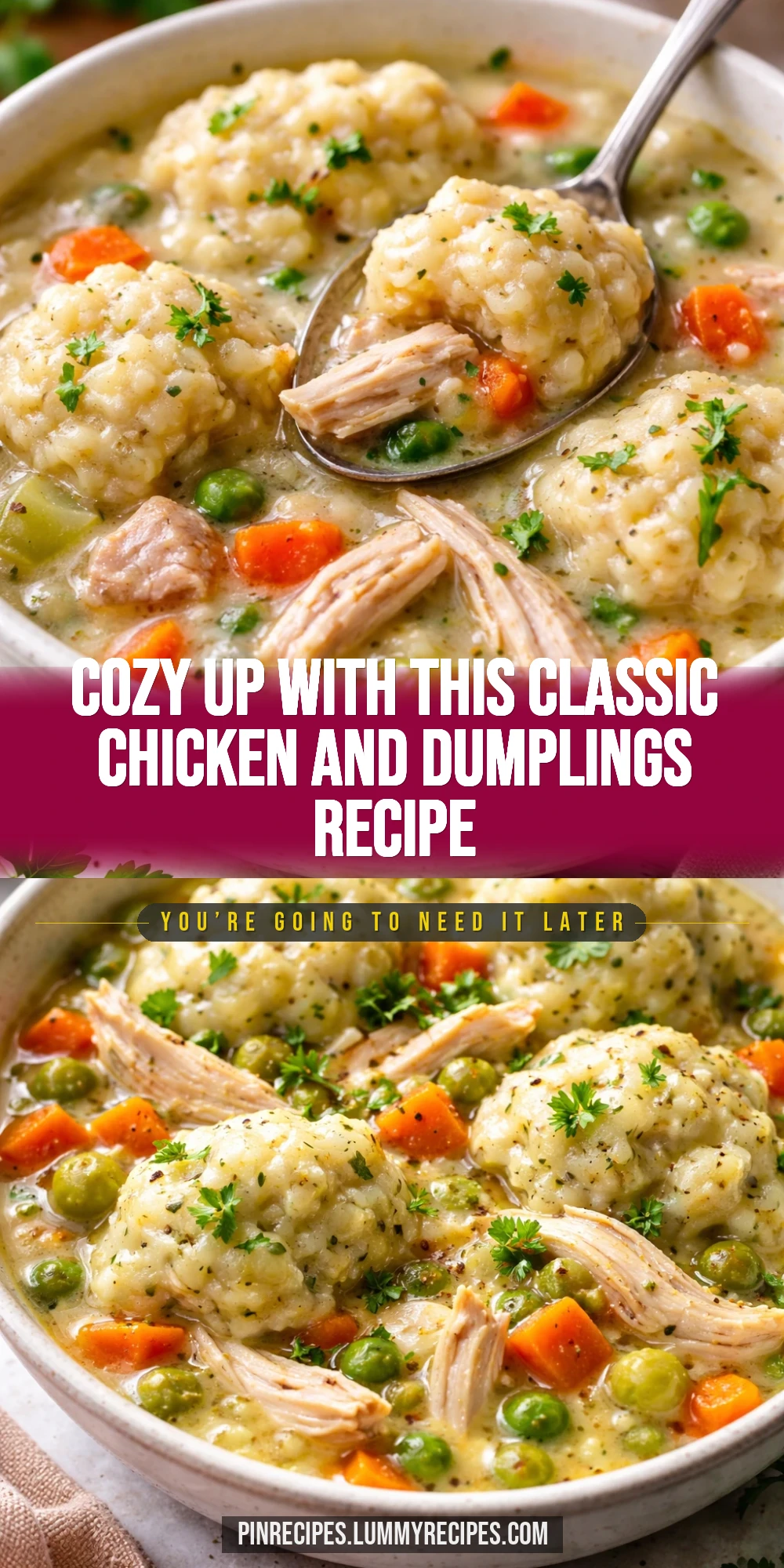
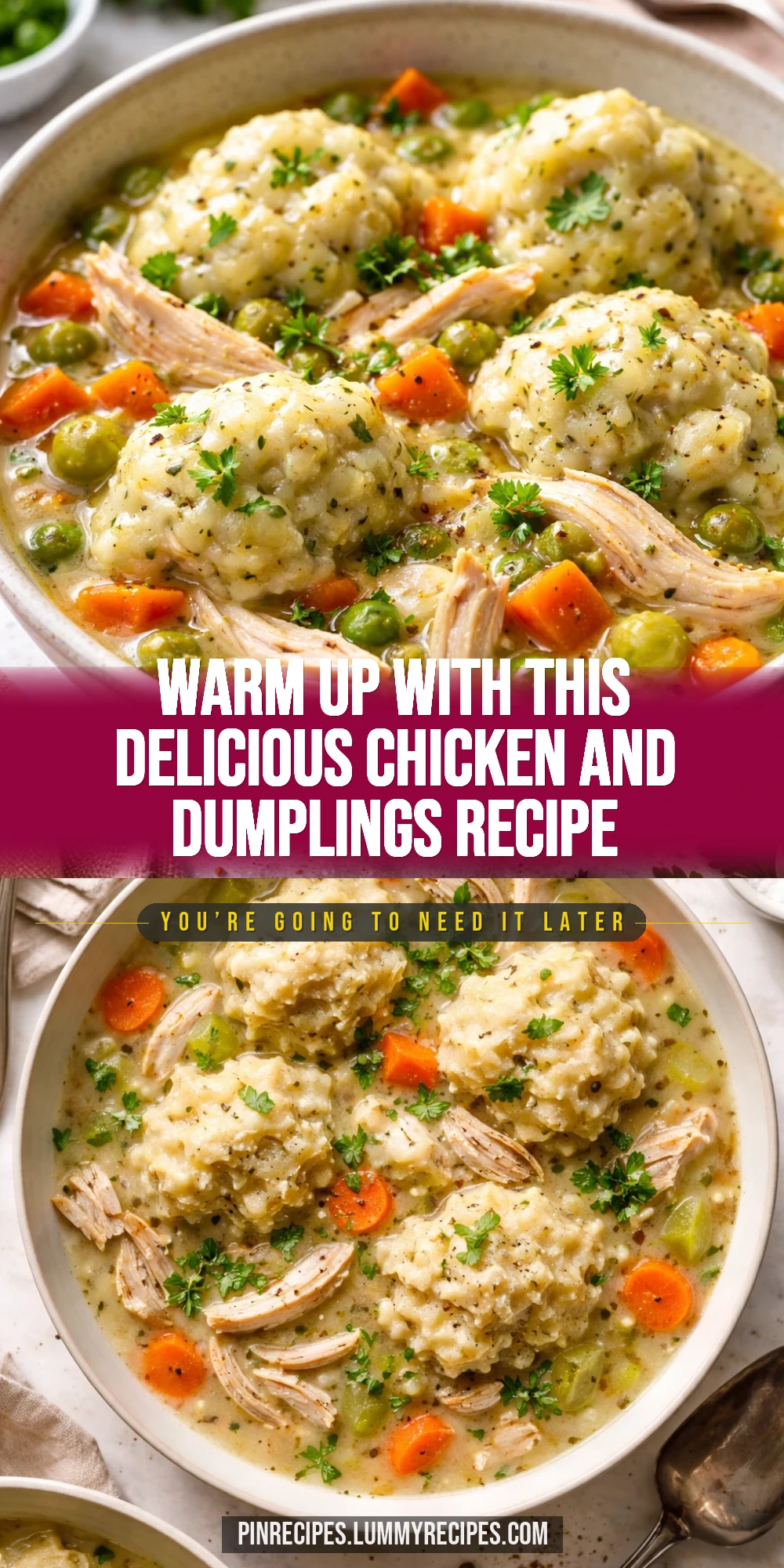
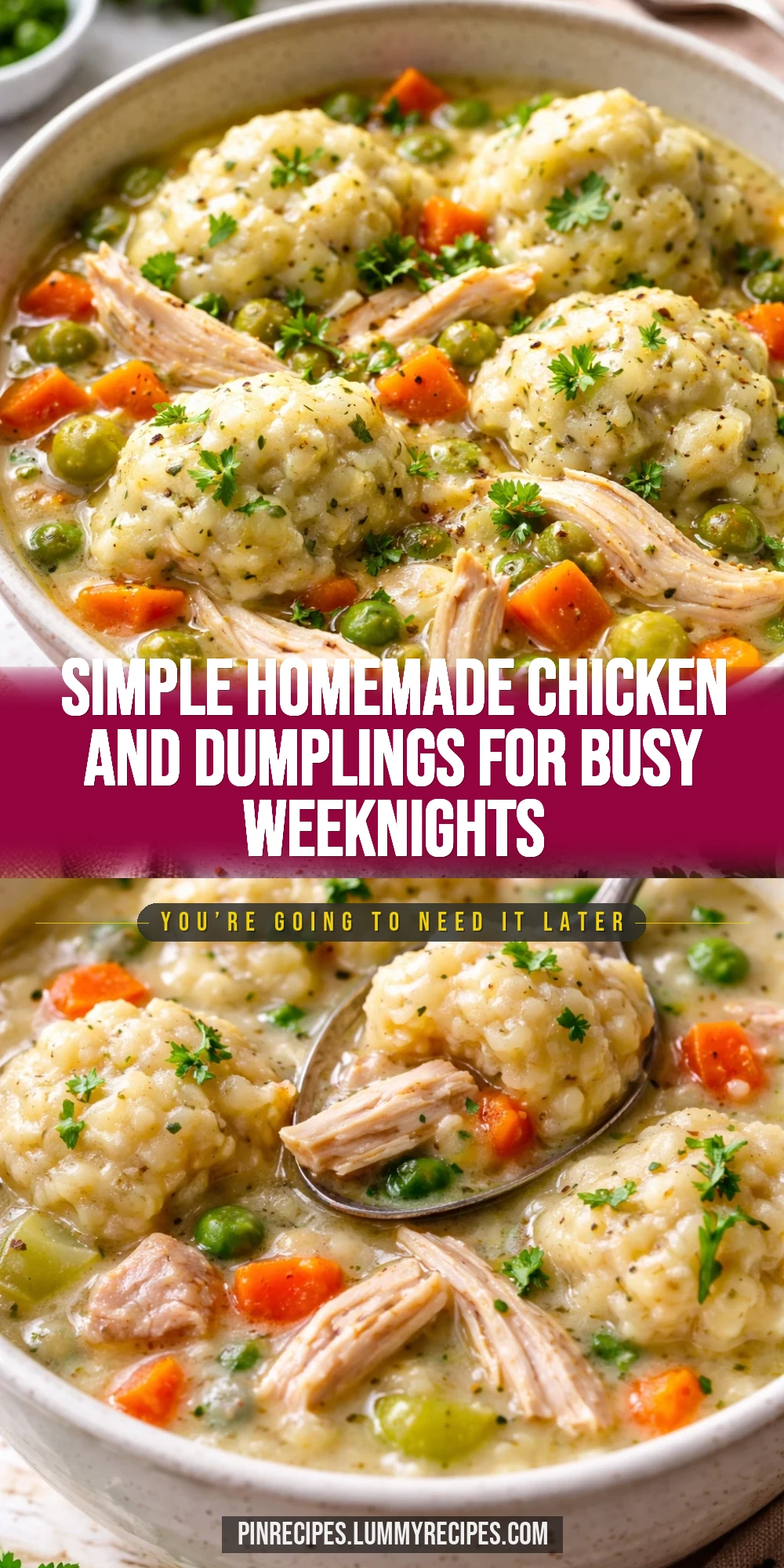
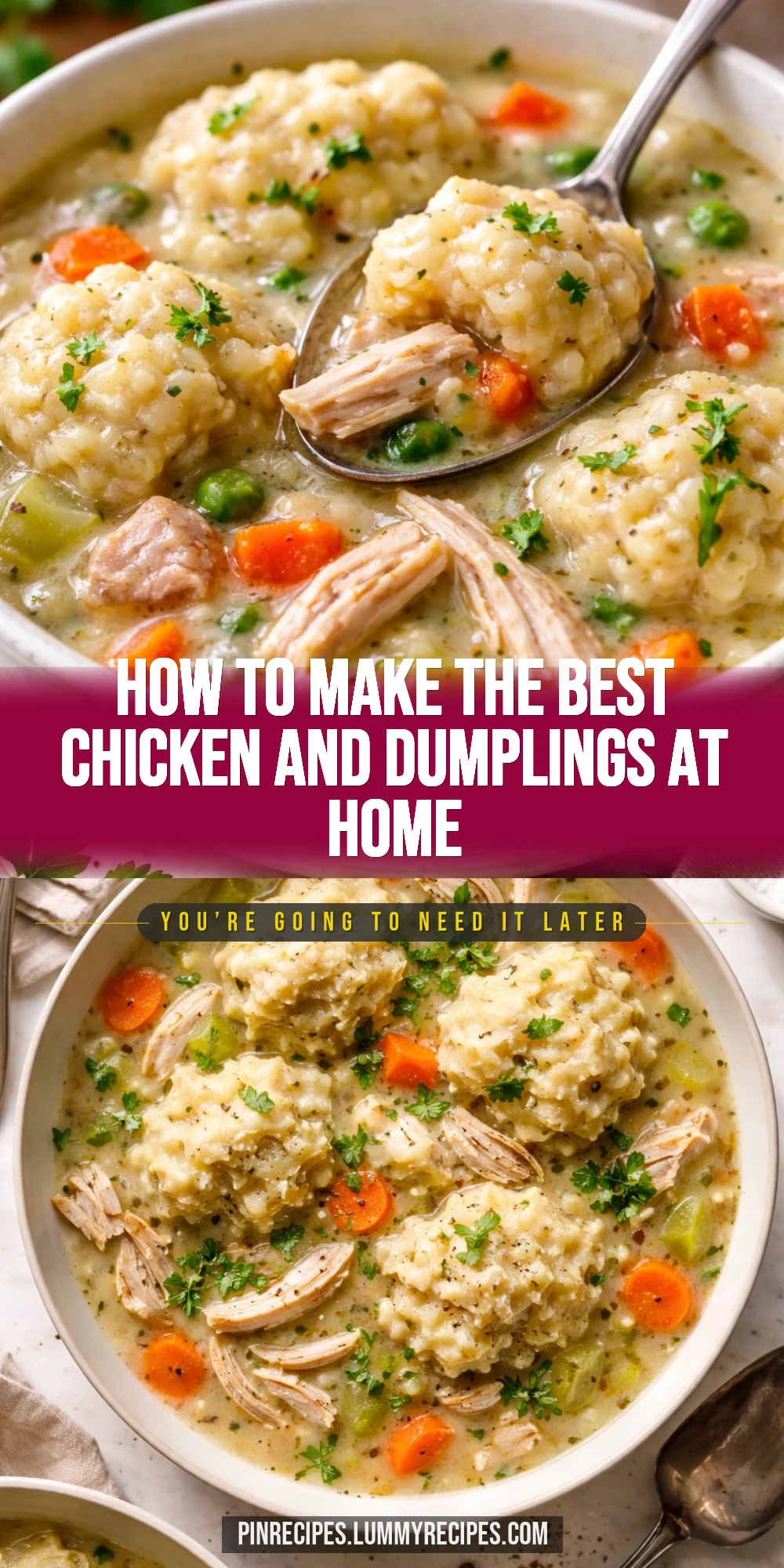
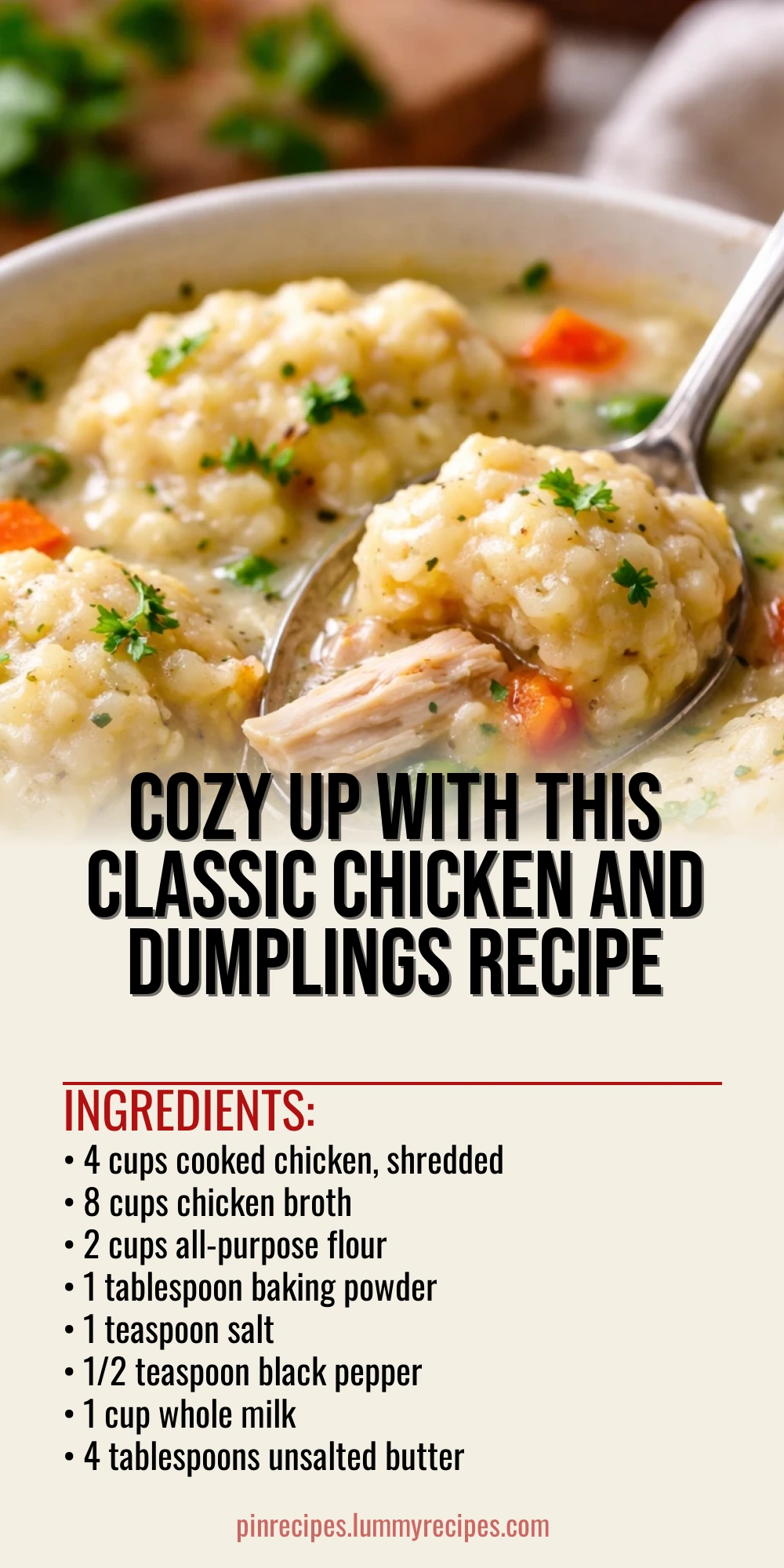
This chicken and dumplings recipe is pure comfort in a bowl. Tender chicken simmers in a rich broth with fluffy dumplings made from scratch. It’s perfect for chilly nights when you want something cozy and homemade.
Introduction
I first tried chicken and dumplings years ago at my grandmother’s house, and it instantly became one of my favorite comfort foods. There’s something so soothing about tender chicken swimming in a rich broth with soft, pillowy dumplings. Over time, I’ve tweaked the recipe to make the dumplings lighter and the broth more flavorful by simmering fresh vegetables and garlic. One trick I learned is to mix the dough just enough to combine it—overworking makes the dumplings tough. The result is a cozy, hearty dish that’s perfect for cold evenings or whenever you need a little food hug. I love how this dish brings everyone to the table, sharing stories over warm bowls. It’s not fancy, but it’s honest and satisfying, and that’s what I think good food should be.
What You'll Need
Approximately 8 cups, 6 servings
- 4 cups cooked chicken, shredded
- 8 cups chicken broth
- 2 cups all-purpose flour
- 1 tablespoon baking powder
- 1 teaspoon salt
- 1/2 teaspoon black pepper
- 1 cup whole milk
- 4 tablespoons unsalted butter
- 1 medium onion, finely chopped
- 3 celery stalks, chopped
- 3 carrots, diced
- 2 cloves garlic, minced
- 2 tablespoons chopped fresh parsley
How To Do It
Step 1
Start by preparing the broth base. In a large pot, melt the butter over medium heat and add the chopped onion, celery, and carrots. Sauté gently until the vegetables soften and the onion turns translucent, about 7-10 minutes. This step is crucial because it builds the flavor foundation for the broth. Avoid browning the vegetables too much, as you want a gentle sweetness, not bitterness. Stir occasionally to prevent sticking and ensure even cooking.
⏱ Time: 10
✓ Doneness: Vegetables are tender and onions are translucent without browning
Step 2
Add the minced garlic to the pot and cook for another minute until fragrant. Then pour in the chicken broth and bring the mixture to a gentle boil. Adding the broth now allows the flavors from the vegetables and garlic to infuse. Boiling helps concentrate the taste, but be careful not to boil too vigorously or the broth can become cloudy. Once boiling, reduce heat to maintain a simmer.
⏱ Time: 5
✓ Doneness: Broth is simmering gently with aromatic garlic and vegetable scents
Step 3
While the broth simmers, prepare the dumpling dough. In a mixing bowl, whisk together the flour, baking powder, salt, and pepper. Baking powder is the leavening agent that makes the dumplings fluffy, so don’t skip it. Then stir in the milk just until the dough comes together—don’t overmix or the dumplings will be dense. The dough should be slightly sticky but manageable.
⏱ Time: 10
✓ Doneness: Dough is soft, sticky, and holds together without being runny
Step 4
Add the shredded cooked chicken to the simmering broth. This warms the chicken through and lets it absorb some broth flavor. Stir gently to combine. Keep the broth at a low simmer to prevent breaking up the chicken too much. This step ensures your chicken stays tender and juicy.
⏱ Time: 5
✓ Doneness: Chicken is heated through and evenly distributed in broth
Step 5
Drop spoonfuls of the dumpling dough onto the simmering broth. Use a tablespoon or small ice cream scoop for even-sized dumplings. Cover the pot with a lid and cook for about 15 minutes without lifting the lid. Cooking with the lid on traps steam, which helps the dumplings cook evenly and become tender. Avoid opening the lid early or the dumplings might fall apart.
⏱ Time: 15
✓ Doneness: Dumplings are puffed up, firm to the touch but still soft inside
Step 6
After the dumplings have cooked, stir in the fresh parsley and adjust seasoning with salt and pepper to taste. The parsley adds a fresh, bright note that balances the rich broth. Taste before adding more salt, as the broth and chicken may already be seasoned.
⏱ Time: 3
✓ Doneness: Broth is flavorful and herbaceous with no overpowering saltiness
Step 7
Let the chicken and dumplings rest for a few minutes off the heat before serving. This allows the flavors to meld together and the dumplings to set slightly, making them easier to eat. If served immediately, the dumplings can be too loose and fall apart.
⏱ Time: 5
✓ Doneness: Dish has thickened slightly and dumplings hold their shape
Step 8
Serve the chicken and dumplings hot in bowls, making sure to get a good mix of broth, chicken, vegetables, and dumplings in each serving. This dish is best enjoyed fresh but also reheats beautifully the next day. Pair with crusty bread for a complete meal.
⏱ Time: 0
✓ Doneness: Steaming hot with balanced portions in each bowl
Step 9
Clean up and store leftovers in an airtight container in the fridge. When reheating, add a splash of broth or water to loosen the dumplings and avoid drying out. Gently warm on the stovetop or microwave until heated through.
⏱ Time: 0
✓ Doneness: Leftovers are moist and flavorful after reheating
Pro Tips
Don’t overmix the dumpling dough.
Mixing the dough just until combined prevents gluten overdevelopment, which can make dumplings tough and chewy instead of light and tender. Gentle handling preserves the right texture.
Cook dumplings with the lid on.
Covering traps steam and ensures the dumplings cook evenly from all sides, keeping them moist and fluffy. Lifting the lid too soon can cause them to deflate or cook unevenly.
Use fresh baking powder.
Baking powder loses potency over time. Fresh baking powder guarantees that the dumplings rise properly and become fluffy. Old baking powder can result in flat, dense dumplings.
Simmer broth gently, don’t boil vigorously.
A gentle simmer keeps the broth clear and flavorful. Boiling too hard can make the broth cloudy and toughen the chicken.
Shred chicken finely.
Smaller pieces of chicken distribute evenly throughout the broth and dumplings, ensuring every bite has a good balance of flavors and textures.
Add fresh herbs at the end.
Fresh parsley or herbs retain their brightness and aroma when added at the end, enhancing flavor without becoming dull or bitter.
Let the dish rest before serving.
Resting allows the dumplings to set and the flavors to meld, improving texture and taste. It also makes serving easier as dumplings hold their shape better.
Common Mistakes to Avoid
Overmixing dumpling dough
Why it happens Many cooks think mixing dough thoroughly makes it better, but it develops gluten, leading to tough dumplings.
Fix Mix ingredients just until combined. Use a gentle folding motion and stop as soon as dough holds together.
Boiling broth too hard
Why it happens A rapid boil seems faster but causes cloudy broth and rubbery chicken.
Fix Reduce heat to maintain a gentle simmer, which keeps broth clear and chicken tender.
Lifting lid while dumplings cook
Why it happens Impatience or curiosity leads to opening the lid, letting steam escape.
Fix Resist opening the lid until cooking time is complete to ensure dumplings steam properly.
Using old baking powder
Why it happens Baking powder loses effectiveness over time, often overlooked during pantry checks.
Fix Test baking powder by mixing a small amount with hot water; it should fizz. Replace if inactive.
Not seasoning broth adequately
Why it happens Assuming the chicken or broth alone adds enough salt can lead to bland results.
Fix Taste and adjust salt and pepper gradually after adding all ingredients, especially after cooking dumplings.
Variations
Herbed Dumplings with Thyme and Sage
Add chopped fresh thyme and sage to the dumpling dough for an herby twist. This gives the dumplings a fragrant, earthy flavor that pairs beautifully with chicken broth. Expect a slightly more aromatic and savory profile.
Note: Fresh herbs add moisture to dough; reduce milk slightly if needed to keep dough consistency.
Creamy Chicken and Dumplings
Stir in 1/2 cup heavy cream or half-and-half at the end of cooking for a richer, creamier broth. This variation feels indulgent and velvety, perfect for extra chilly days.
Note: Add cream off heat or on very low heat to prevent curdling.
Vegetable-Loaded Chicken and Dumplings
Increase the amount of carrots, celery, and add peas or corn for extra veggies. It makes the dish heartier and adds bursts of sweetness and texture.
Note: Add delicate vegetables like peas near the end to avoid overcooking.
Spicy Chicken and Dumplings
Add a pinch of cayenne pepper or diced jalapeño to the broth for a gentle heat kick. This variation adds warmth and depth without overpowering the classic flavors.
Note: Adjust spice level carefully; start small and taste before adding more.
Gluten-Free Dumplings
Use a gluten-free all-purpose flour blend with xanthan gum to make the dumplings. The texture will be slightly different but still tender and delicious.
Note: Gluten-free dough may need a bit more liquid; add gradually to get the right consistency.
Nutrition
Per Serving:
Nutritional values are estimates and may vary based on specific ingredients used.
Storage & Tips
Room Temperature
Chicken and dumplings can safely sit out covered for up to 2 hours. After that, refrigerate promptly to avoid bacterial growth. Keep covered to prevent drying out.
Refrigerator
Store leftovers in an airtight container for up to 3 days. The broth may thicken and dumplings soften; reheat gently with a splash of broth or water to restore texture.
Freezer
Freeze in a sealed container for up to 2 months. To prevent freezer burn, wrap the container in plastic wrap or foil. Thaw overnight in the fridge before reheating.
Reheating
Warm leftovers on the stovetop over low heat with a little broth or water added to loosen the dumplings. Stir gently to avoid breaking them. Microwave reheating is possible but may dry out the dish.
Make Ahead
You can prepare the broth and shredded chicken 1-2 days ahead and refrigerate. Make the dumpling dough fresh on serving day to ensure fluffiness. Alternatively, assemble fully and reheat gently before serving.
FAQ
Can I use frozen chicken for this recipe?
Yes, frozen cooked chicken works well. Just thaw it completely and shred before adding to the broth. Using cooked chicken is key since raw chicken would require longer cooking and change the timing.
What if my dumplings fall apart during cooking?
This usually happens if the dough is too wet or you stir too much after adding dumplings. Use a slightly sticky dough and avoid stirring the pot while dumplings cook to keep them intact.
Can I make the dumplings ahead of time?
Dumplings are best made fresh to maintain fluffiness. You can prepare the dough ahead but drop them into the broth just before cooking to avoid sogginess.
How do I thicken the broth if it’s too thin?
You can simmer the broth longer uncovered to reduce it or whisk in a slurry of flour and water gradually. Be careful not to add too much or the broth will become gummy.
Is there a vegetarian version of this recipe?
Absolutely! Substitute vegetable broth and use hearty vegetables or plant-based chicken alternatives. The dumplings remain the same and provide a comforting texture.
What can I substitute for baking powder?
If you don’t have baking powder, mix 1/2 teaspoon baking soda with 1 teaspoon cream of tartar as a substitute. This combination mimics baking powder’s leavening effect.
Why is my broth cloudy?
Boiling the broth too vigorously or stirring too much can cause cloudiness. Maintain a gentle simmer and avoid stirring once the broth is clear to keep it bright.
Can I use self-rising flour for dumplings?
You can, but reduce or omit baking powder since self-rising flour already contains leavening. Adjust salt accordingly as well to avoid over-seasoning.
Final Thoughts
I hope you enjoy making this homemade chicken and dumplings as much as my family does. It’s the kind of meal that warms your heart and fills your belly. Let me know how it turns out!