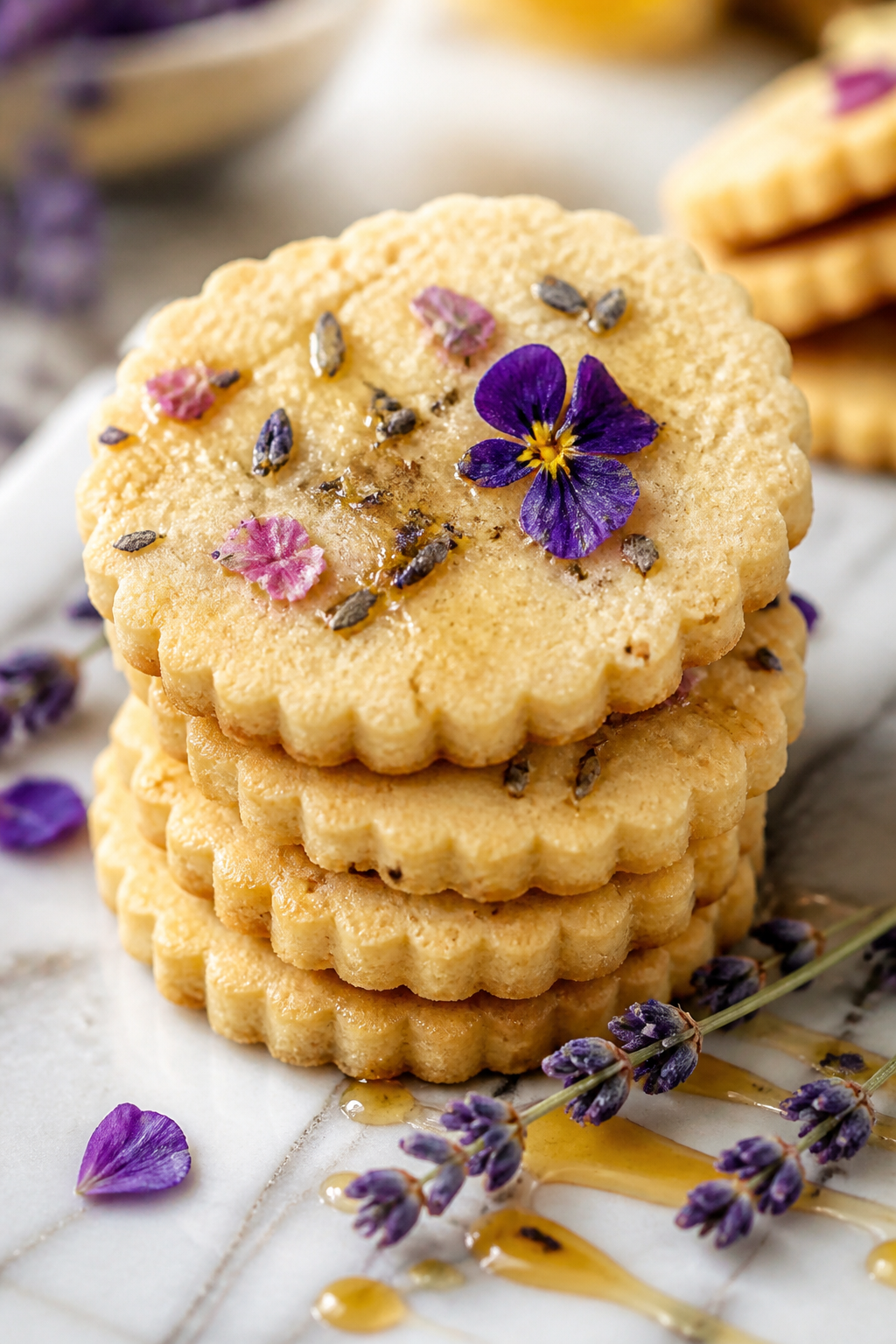
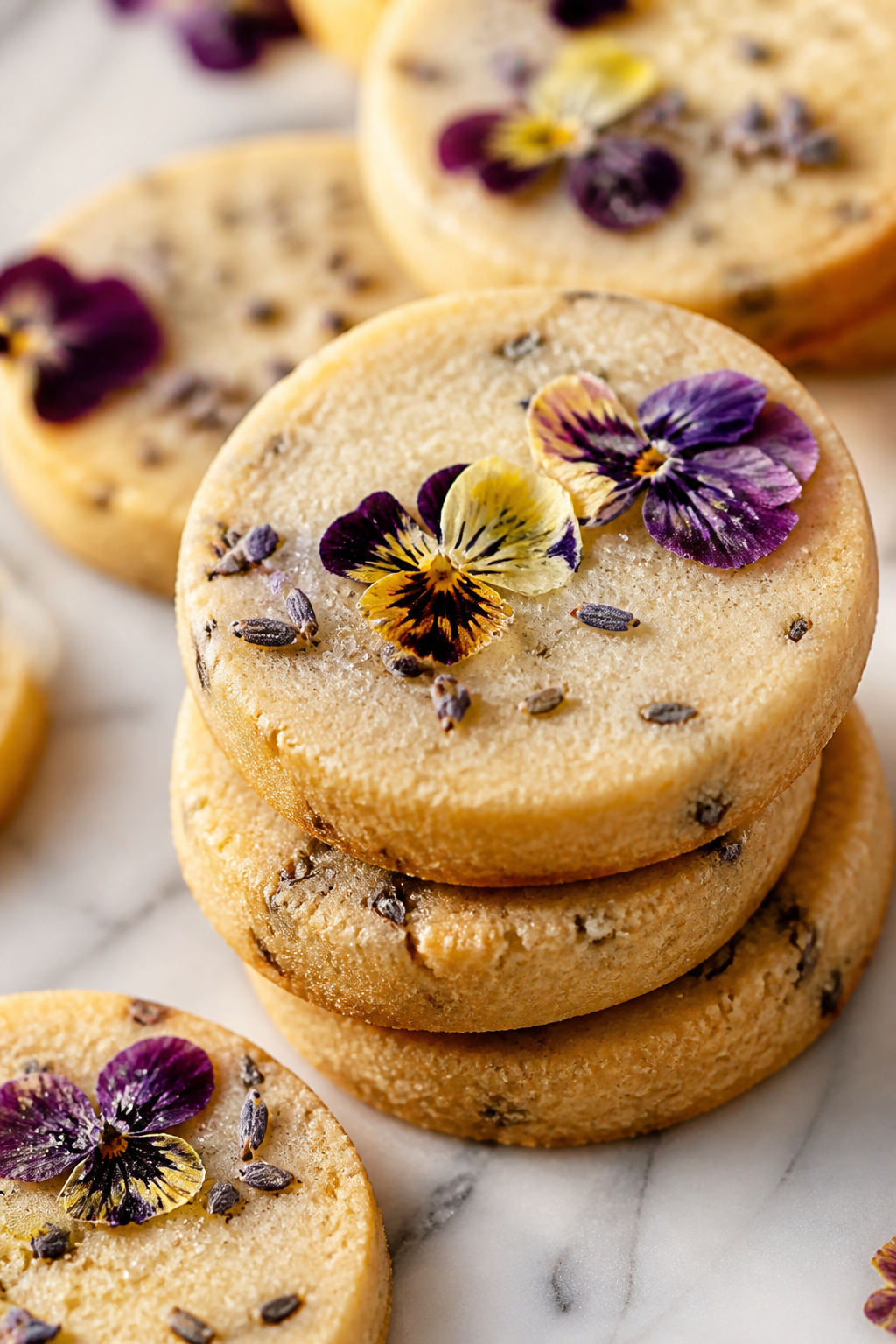
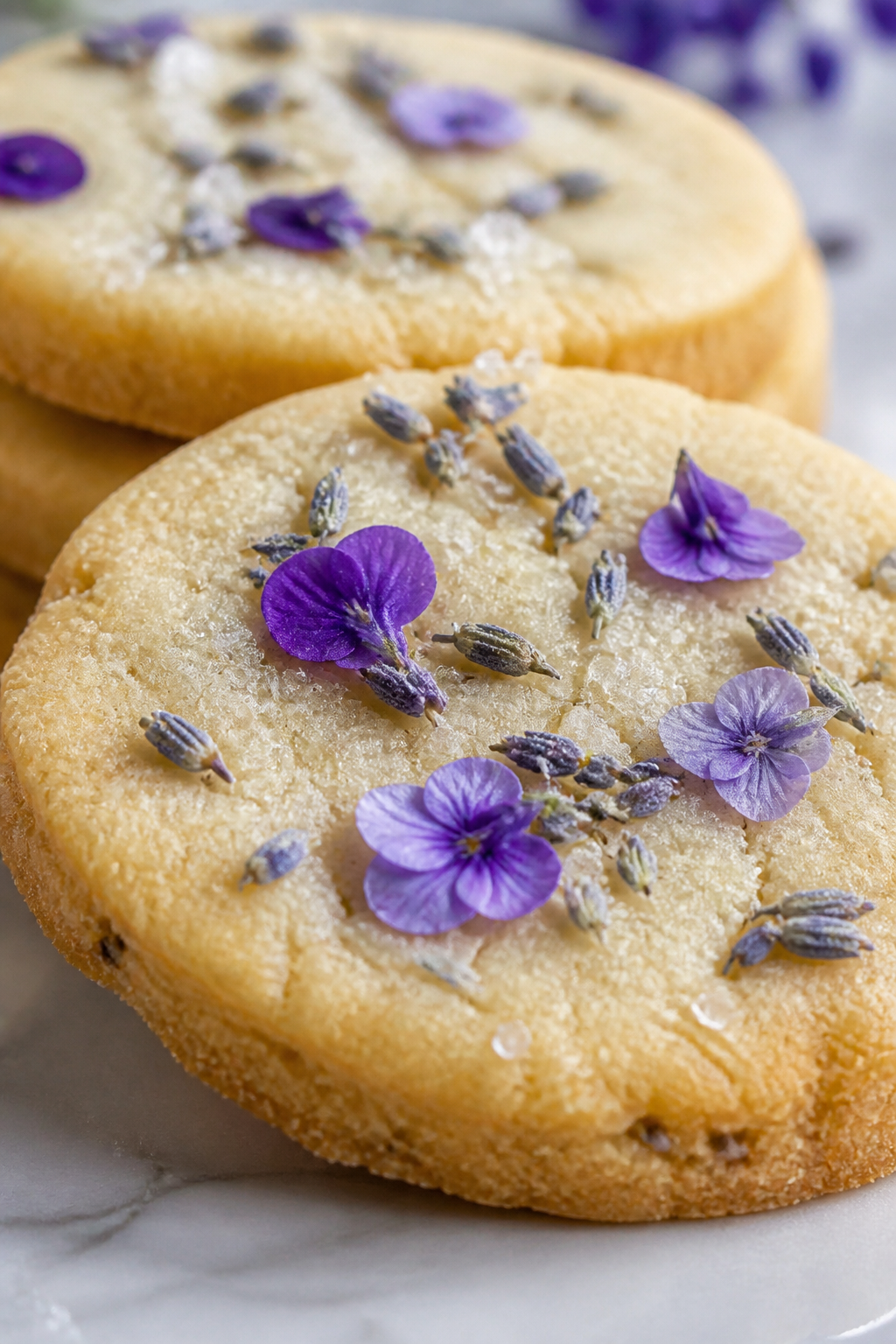
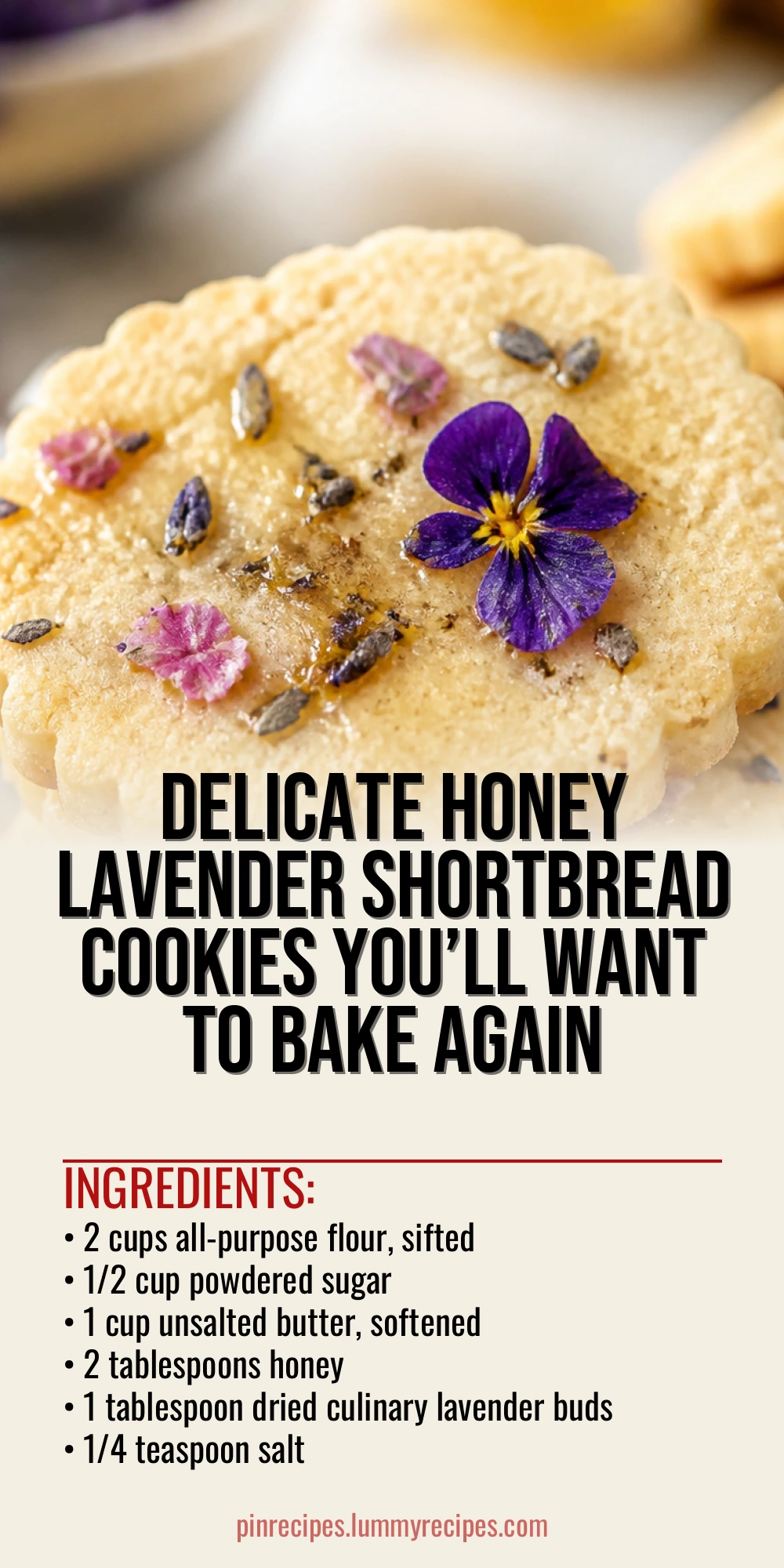
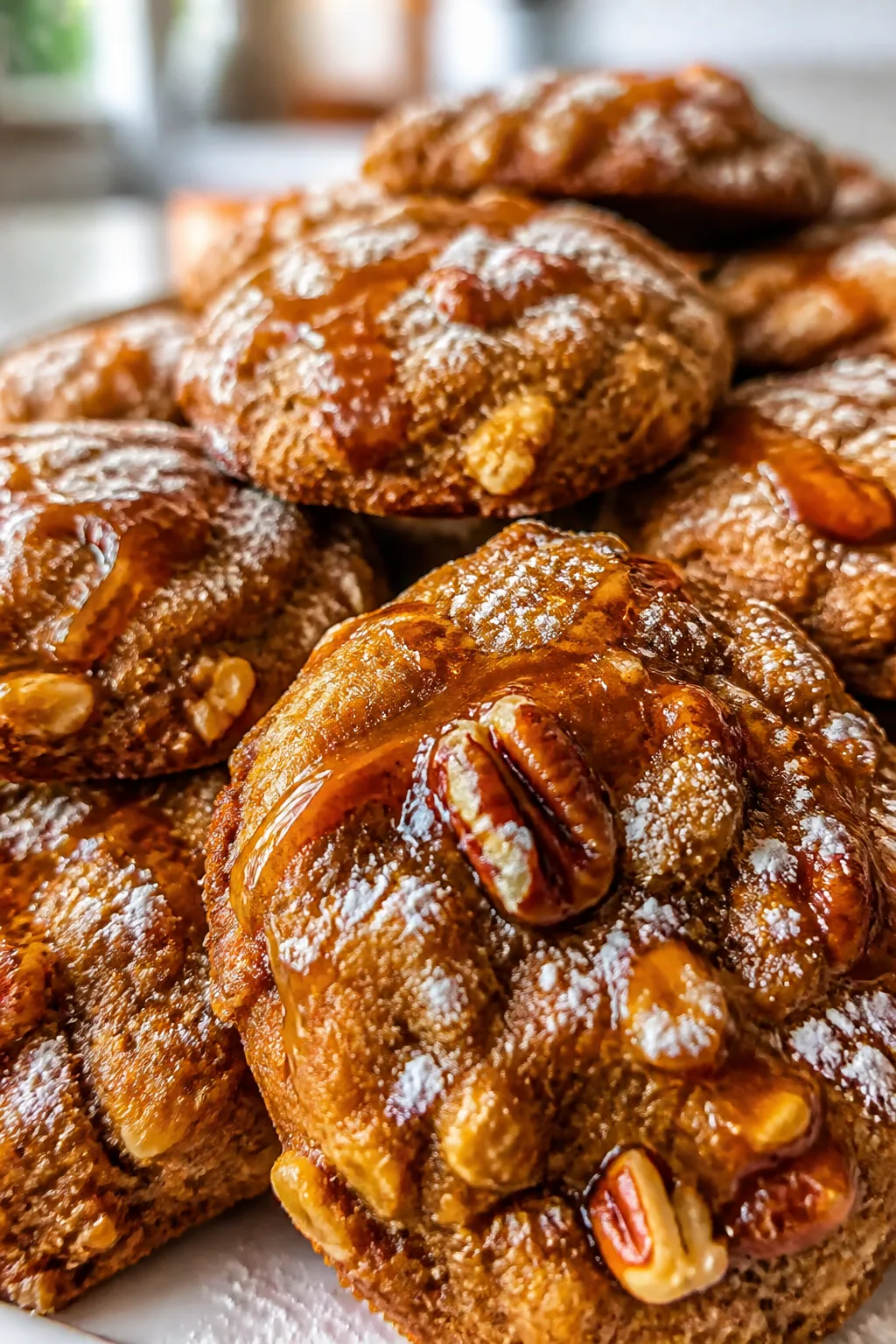
These shortbread cookies are soft, buttery, and lightly infused with honey and lavender. The edible flowers add a charming touch, making them perfect for afternoon tea or a special gift. I love how the honey sweetens without overpowering.
Introduction
I first made these honey lavender shortbread cookies when I wanted something a little different for my afternoon tea. The combination of honey and lavender creates a delicate, floral sweetness that’s just enough to brighten the buttery shortbread base without overwhelming it. What sets this version apart is the use of dried culinary lavender buds, which infuse the dough subtly, and the addition of edible flowers on top for a charming, natural decoration. I learned that grinding the lavender slightly before mixing helps release its aroma without making the cookies taste bitter. These cookies come out tender and crumbly, with a gentle floral note that pairs beautifully with a cup of tea or coffee. They’re perfect for sharing with friends or as a thoughtful homemade gift. Plus, they’re surprisingly easy to make, even if you’re not an experienced baker. Just be sure to use culinary-grade lavender, and don’t skip the honey—it adds a lovely depth of flavor and a touch of natural sweetness that really makes these cookies special.
How To Do It
Step 1
Start by sifting together the all-purpose flour, powdered sugar, and salt into a large mixing bowl. Sifting helps remove any lumps and aerates the flour, which ensures your shortbread will have a light, tender texture. Mixing these dry ingredients first also helps distribute the salt and sugar evenly throughout the dough, so every bite tastes balanced. Be gentle when stirring to avoid overworking the flour, which can make the cookies tough.
⏱ Time: 5 minutes
✓ Doneness: Dry ingredients are well combined and free of lumps.
Step 2
In a separate bowl, cream the softened unsalted butter with the honey until smooth and fluffy. This step is crucial because creaming incorporates air into the butter, which helps the cookies rise slightly and become tender. The honey blends in to add moisture and a subtle sweetness that complements the lavender. Use a hand mixer or stand mixer on medium speed, scraping down the sides as needed to ensure everything is well mixed.
⏱ Time: 5-7 minutes
✓ Doneness: Butter mixture looks pale, creamy, and slightly fluffy.
Step 3
Lightly grind the dried lavender buds using a mortar and pestle or spice grinder to release their fragrance without turning them into powder. Adding whole buds can create uneven flavor and an unpleasant texture. Once ground, fold the lavender gently into the butter and honey mixture. This technique ensures the floral notes are evenly dispersed, giving each cookie a delicate aroma without bitterness.
⏱ Time: 3 minutes
✓ Doneness: Lavender is evenly mixed with the butter-honey blend, fragrant but not overpowering.
Step 4
Slowly add the sifted dry ingredients to the wet mixture in two parts, folding gently with a spatula after each addition. Overmixing at this stage can develop gluten, resulting in tougher cookies. The dough should come together in a soft, slightly crumbly ball. If it feels too dry, add a teaspoon of cold water, but be careful not to add too much.
⏱ Time: 5 minutes
✓ Doneness: Dough holds together when pressed but still looks soft and crumbly.
Step 5
Turn the dough out onto a lightly floured surface and gently knead it just a few times to bring it fully together. Then, shape it into a flat disk, wrap it in plastic wrap, and chill in the refrigerator for at least 30 minutes. Chilling firms up the butter, which helps the cookies keep their shape during baking and develop a tender crumb.
⏱ Time: 30 minutes
✓ Doneness: Dough is firm and cold to the touch.
Step 6
Preheat your oven to 325°F (160°C) and line a baking sheet with parchment paper. Roll out the chilled dough on a lightly floured surface to about 1/4-inch thickness. Using a cookie cutter or knife, cut the dough into your desired shapes. Transfer the cookies carefully to the baking sheet, leaving a little space between each. This thickness and temperature ensure the cookies bake evenly without browning too quickly.
⏱ Time: 10 minutes
✓ Doneness: Cookies are evenly rolled and cut, with smooth edges.
Step 7
Optional: Gently press edible flowers onto the surface of each cookie before baking. This adds a beautiful, natural decoration that makes the cookies feel special. Be careful not to press too hard or the flowers will lose their shape. If you don’t have edible flowers, a light sprinkle of sugar or lavender buds works as well.
⏱ Time: 5 minutes
✓ Doneness: Flowers are lightly attached but not crushed.
Step 8
Bake the cookies in the preheated oven for 25-30 minutes, rotating the pan halfway through for even baking. The cookies should be pale golden on the edges but still light in the center. Avoid overbaking, which can dry them out and dull the delicate flavors. The smell of honey and lavender will fill your kitchen as they bake.
⏱ Time: 25-30 minutes
✓ Doneness: Edges are lightly golden; centers are set but not browned.
Step 9
Remove the cookies from the oven and let them cool on the baking sheet for 5 minutes before transferring to a wire rack. Cooling on the sheet first helps them firm up without breaking. Once fully cooled, store in an airtight container at room temperature to keep them fresh and tender.
⏱ Time: 15 minutes
✓ Doneness: Cookies are cool to the touch and firm enough to handle.
Pro Tips
Use softened butter, not melted, for creaming.
Softened butter traps air when creamed with honey, leading to a lighter, more tender cookie. Melted butter would create a denser dough and affect the crumb negatively.
Chill the dough for at least 30 minutes before rolling.
Chilling firms the butter, preventing excessive spreading during baking and ensuring a crisp yet tender texture.
Lightly grind lavender buds before adding to dough.
Grinding releases the aromatic oils without making the flavor bitter or the texture gritty, giving a balanced floral note.
Don’t overmix once flour is added.
Overmixing develops gluten, which toughens the cookies. Gentle folding keeps the texture delicate.
Roll dough evenly to about 1/4-inch thickness.
Uniform thickness ensures cookies bake evenly and have a consistent texture throughout.
Use a low oven temperature (325°F) for gentle baking.
Lower heat prevents the cookies from browning too fast, preserving the honey and lavender flavors and a pale, tender crumb.
Press edible flowers gently onto dough before baking.
This keeps flowers intact and visually appealing without bruising or wilting during the bake.
Common Mistakes to Avoid
Using regular lavender instead of culinary-grade
Why it happens People often use garden lavender or non-culinary types, assuming all lavender is edible, which can cause bitterness.
Fix Always buy culinary-grade lavender buds labeled safe for cooking. Grind lightly to avoid overpowering bitterness.
Overmixing the dough after adding flour
Why it happens It’s tempting to mix thoroughly, but this develops gluten and toughens the cookies.
Fix Fold flour in gently just until combined to keep the shortbread tender.
Skipping the chilling step
Why it happens Impatience or lack of planning leads to baking dough right away, causing cookies to spread too much.
Fix Chill dough at least 30 minutes to firm butter and maintain cookie shape.
Using melted butter instead of softened
Why it happens Some think melted butter is easier to mix, but it changes dough texture.
Fix Use butter softened to room temperature for proper creaming and airy texture.
Baking at too high a temperature
Why it happens Higher heat speeds baking but can brown cookies too fast and dull flavors.
Fix Bake at 325°F for gentle, even cooking that preserves delicate honey and lavender notes.
Variations
Lemon Honey Lavender Shortbread
Add 1 teaspoon finely grated lemon zest to the dough for a bright citrus twist that complements the floral lavender and sweet honey. This variation adds a refreshing zing, perfect for spring or summer gatherings.
Note: Add zest when creaming butter and honey to distribute flavor evenly.
Chocolate Drizzled Honey Lavender Cookies
Once cooled, drizzle melted dark chocolate over the cookies for a rich contrast to the delicate floral notes. This adds a bit of indulgence and pairs wonderfully with afternoon tea.
Note: Allow chocolate to set fully before storing to prevent smudging.
Lavender Almond Shortbread
Fold in 1/2 cup finely ground almonds to the dough for added texture and nutty flavor. Almonds enhance the buttery richness and create a slightly denser cookie with a lovely crunch.
Note: Reduce flour by 1/2 cup to balance added almonds.
Honey Lavender Shortbread Sandwich Cookies
Bake as usual, then sandwich two cookies with a thin layer of honey buttercream or lemon curd. This makes for a delightful treat that’s a bit more decadent and perfect for special occasions.
Note: Chill sandwich cookies after assembly to set filling before serving.
Gluten-Free Honey Lavender Shortbread
Substitute all-purpose flour with a gluten-free blend that includes xanthan gum. This allows those with gluten sensitivities to enjoy the delicate flavor and texture with minimal difference.
Note: Handle dough gently as gluten-free blends can be more fragile.
Nutrition
Per Serving:
Nutritional values are estimates and may vary based on specific ingredients used.
Storage & Tips
Room Temperature
Store cookies in an airtight container at room temperature for up to 5 days. Keep them away from direct sunlight or heat to maintain their delicate flavor and texture.
Refrigerator
You can refrigerate cookies in an airtight container for up to 1 week. They may become slightly firmer but will still taste great. Let them come to room temperature before serving for best flavor.
Freezer
Freeze cookies in a sealed container or freezer bag for up to 3 months. Wrap them individually in parchment paper to prevent sticking. Thaw at room temperature before serving to restore texture.
Reheating
Shortbread cookies are best served at room temperature. If preferred warm, heat gently in a low oven (250°F) for 5 minutes. Avoid microwaving as it can make them soggy.
Make Ahead
You can prepare the dough up to 2 days ahead and keep it wrapped in the fridge. Roll and cut the cookies just before baking for freshest results.
FAQ
Can I use fresh lavender instead of dried buds?
Fresh lavender has a much stronger, sometimes bitter flavor and higher moisture content, which can affect texture. Dried culinary lavender buds are preferred for a subtle, balanced floral note and better shelf life.
What if I don’t have edible flowers for decoration?
No worries! The cookies taste just as lovely without flowers. You can also sprinkle a little extra dried lavender or powdered sugar on top for a pretty finish.
Can I substitute honey with maple syrup or sugar?
Try to stick with honey for the best results, but small substitutions are possible with adjustments.
How do I prevent my cookies from spreading too much?
Chilling the dough thoroughly before baking and using a lower oven temperature (325°F) helps prevent excessive spreading, keeping cookies tender but well-shaped.
Can I make the dough in advance and freeze it?
Yes! Wrap the dough tightly and freeze for up to 1 month. Thaw overnight in the fridge before rolling and cutting to bake fresh cookies.
Why are my cookies crumbly or falling apart?
Also, handle dough gently and don’t overmix to keep the right texture.
Can I add other flavors like vanilla or almond extract?
Yes, a small amount (1/2 teaspoon) of vanilla or almond extract can complement the honey and lavender nicely. Just don’t add too much or it will overpower the delicate floral notes.
What type of honey works best for this recipe?
Use mild-flavored honeys like clover or wildflower to avoid overpowering the lavender. Strong, robust honeys can mask the subtle floral flavor.
Final Thoughts
Give these honey lavender shortbread cookies a try — they’re a lovely, simple way to add a bit of floral charm to your baking. I’d love to hear how yours turn out!