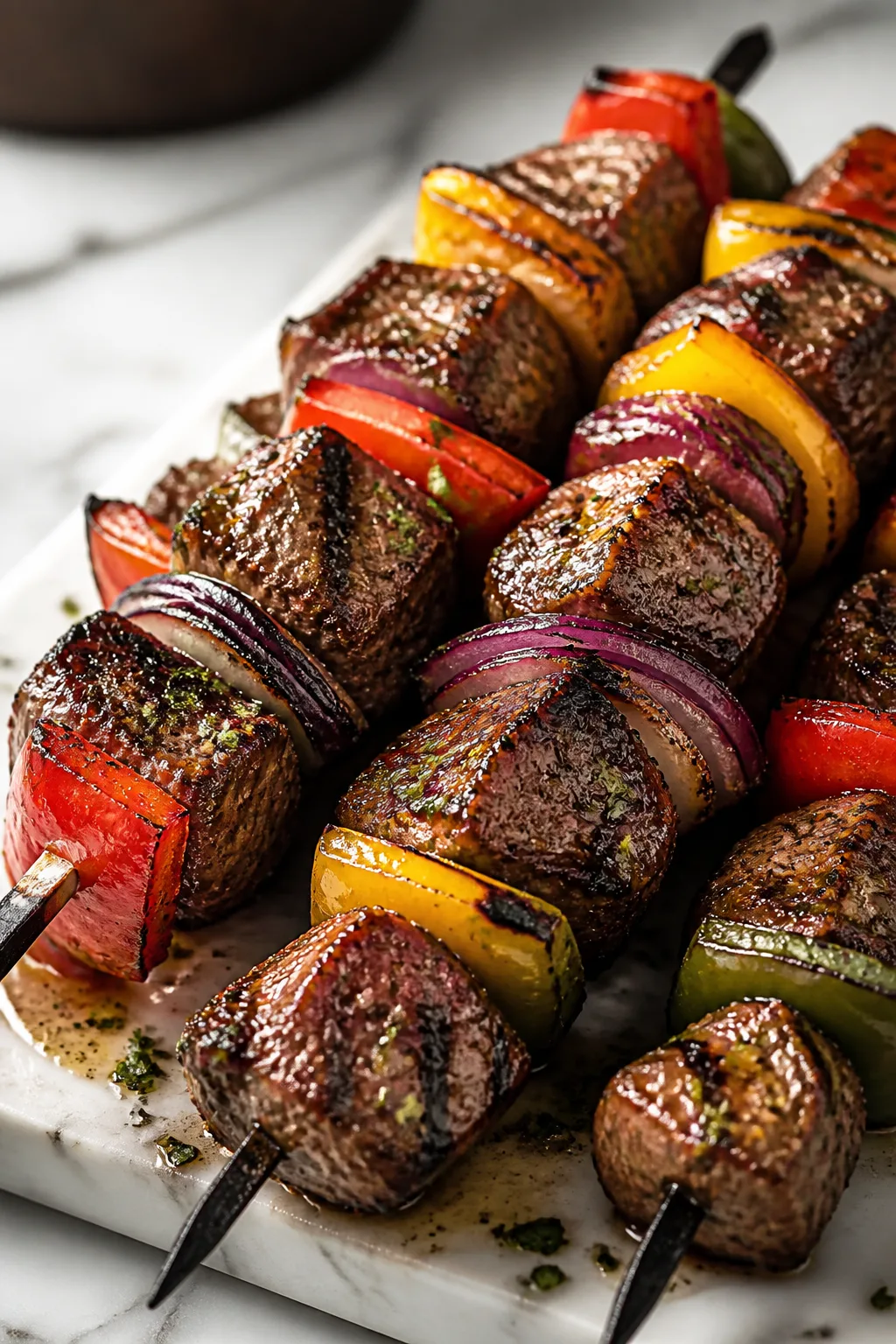
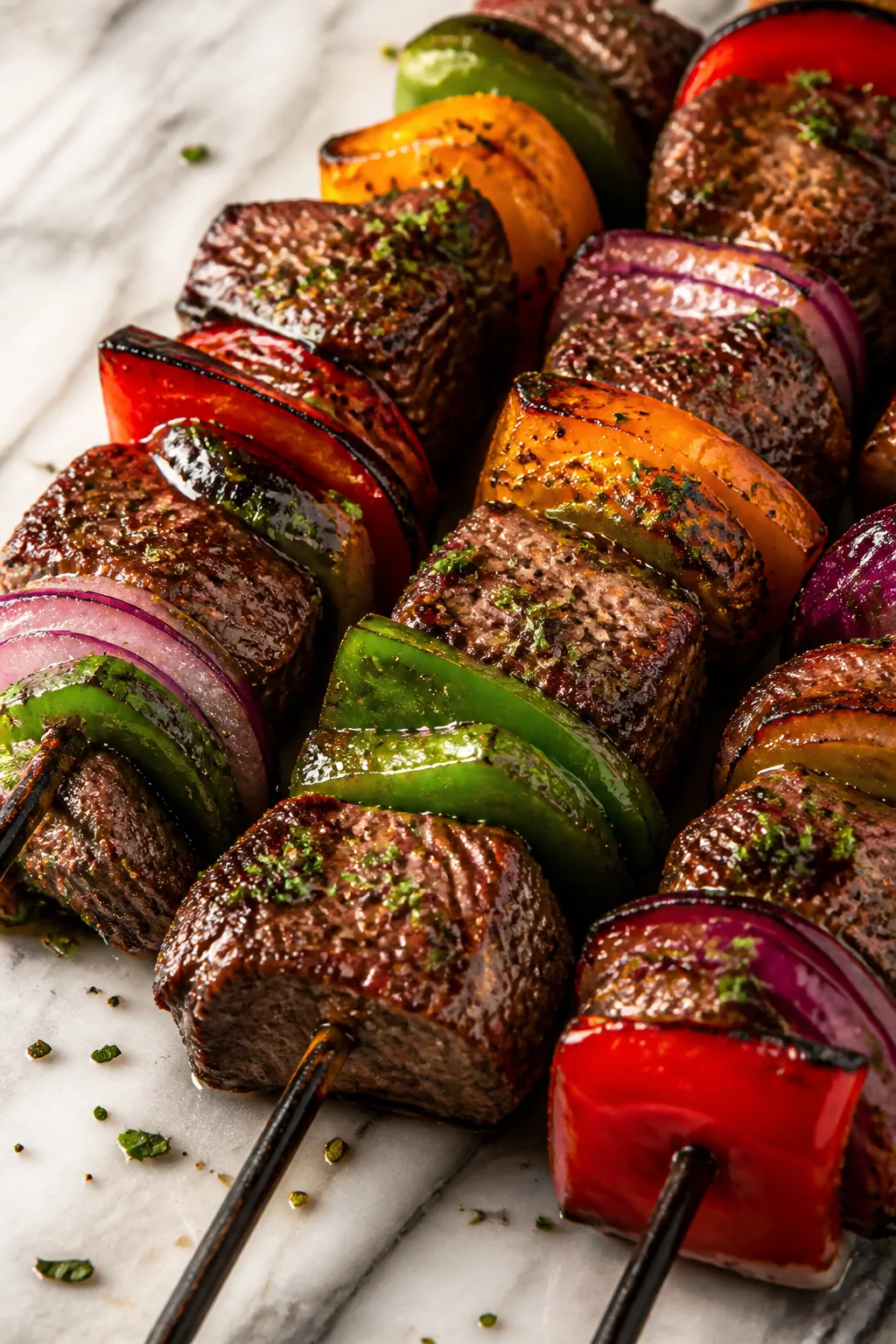
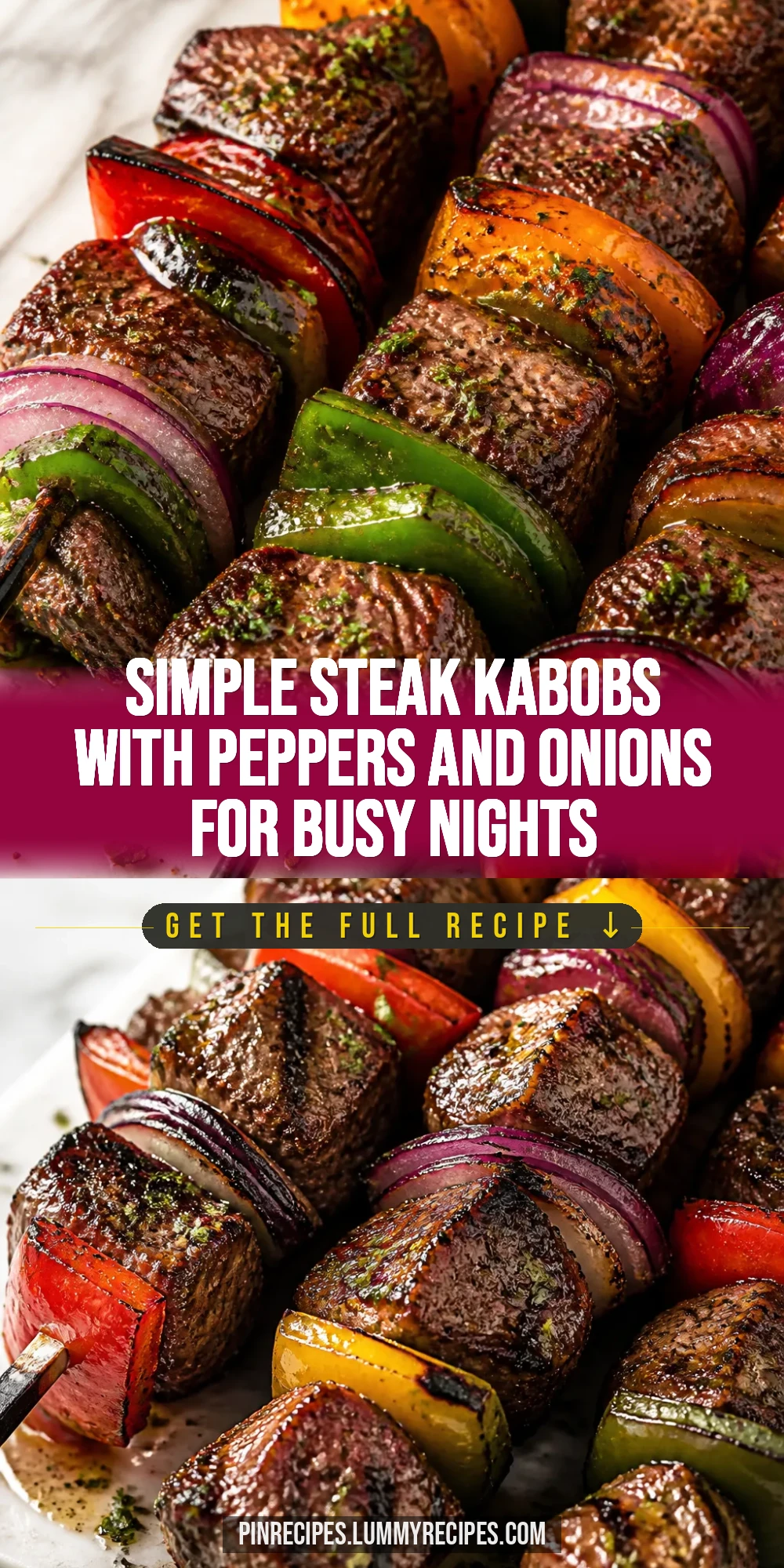
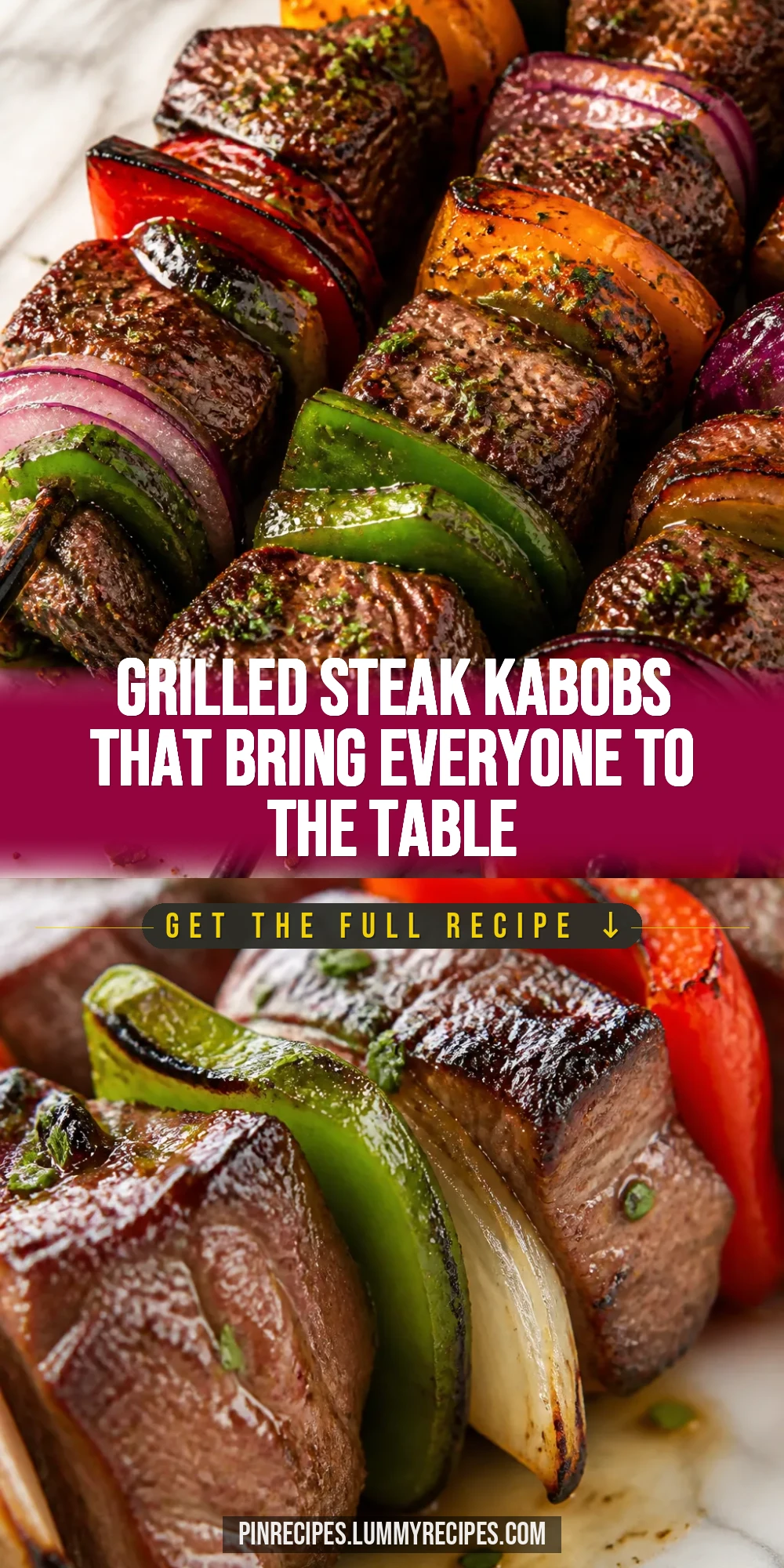
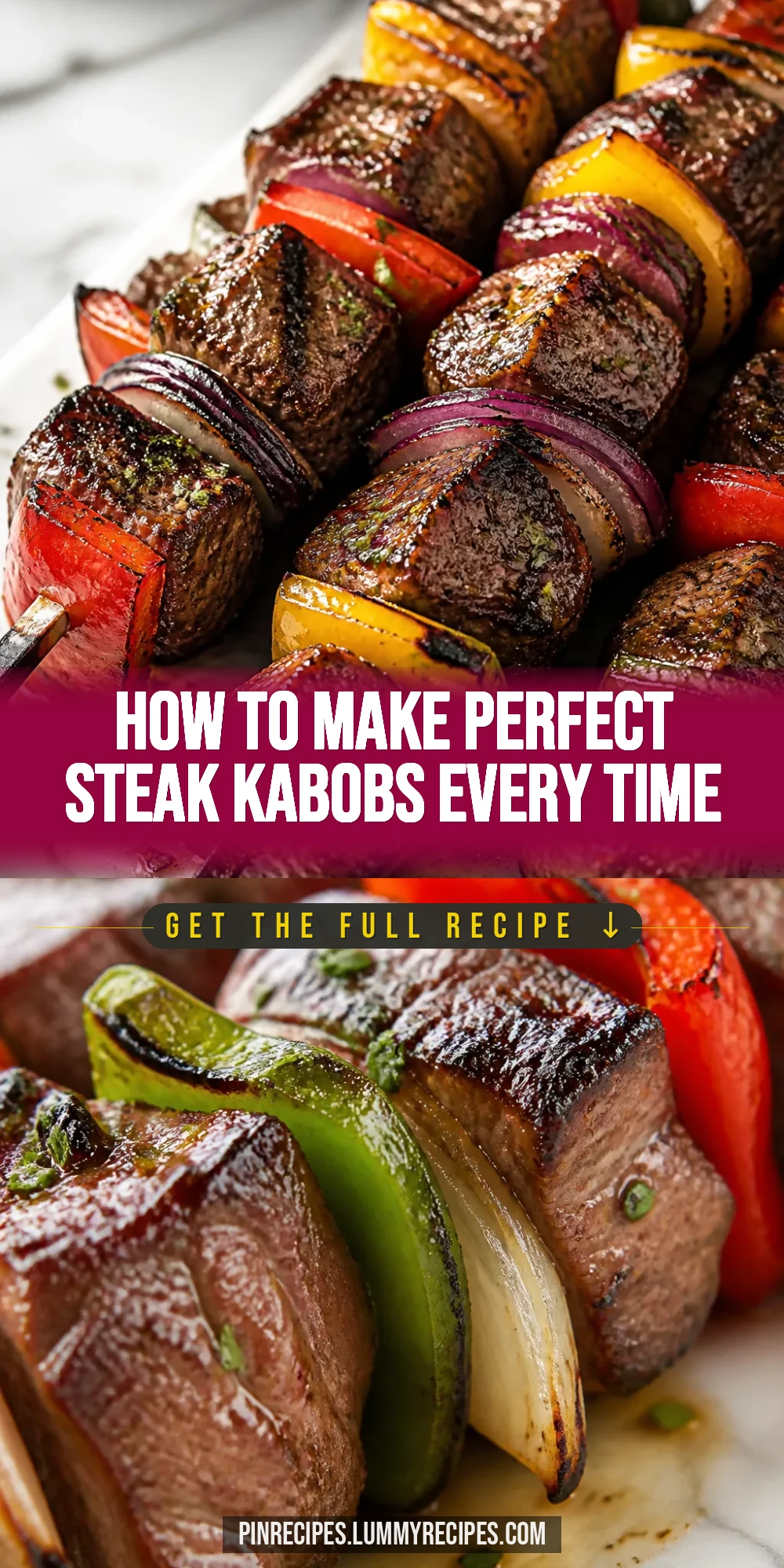
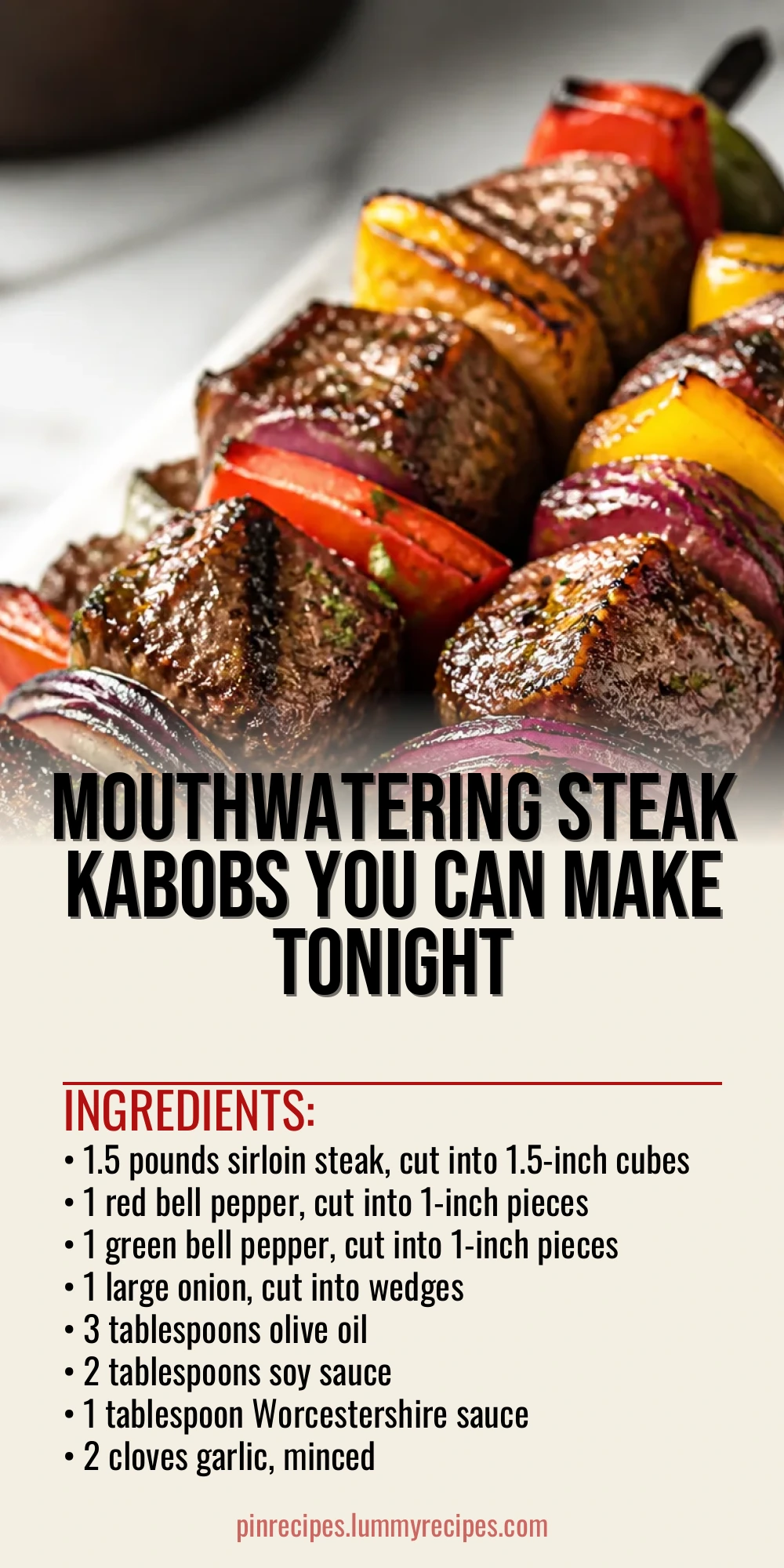
These steak kabobs are a family favorite—tender beef grilled with colorful peppers and onions. Marinated overnight for extra flavor, they’re perfect for backyard cookouts or easy weeknight dinners.
Introduction
I remember the first time I made steak kabobs for my family—it was a hot summer evening, and I wanted something easy but impressive. The trick I learned early on was marinating the beef overnight; it really tenderizes the meat and packs in flavor. Unlike the usual quick toss, this slow soak in a simple mix of olive oil, soy sauce, and garlic makes all the difference. I also like to alternate pieces of steak with colorful peppers and onions on the skewers, which not only looks inviting but gives a nice balance of flavors and textures. When grilled just right, the kabobs come out juicy with a slight char that everyone loves. It’s a straightforward recipe but feels special enough for family gatherings or a casual weeknight meal. Plus, it’s versatile—you can swap veggies or use different cuts of beef depending on what you have. I’ve had my share of overcooked, tough kabobs before, so I’m excited to share what really works. The finished kabobs are tender, flavorful, and perfectly charred, making them a go-to in my kitchen whenever grilling season hits.
What You'll Need
Approximately 12 kabobs, 4 servings
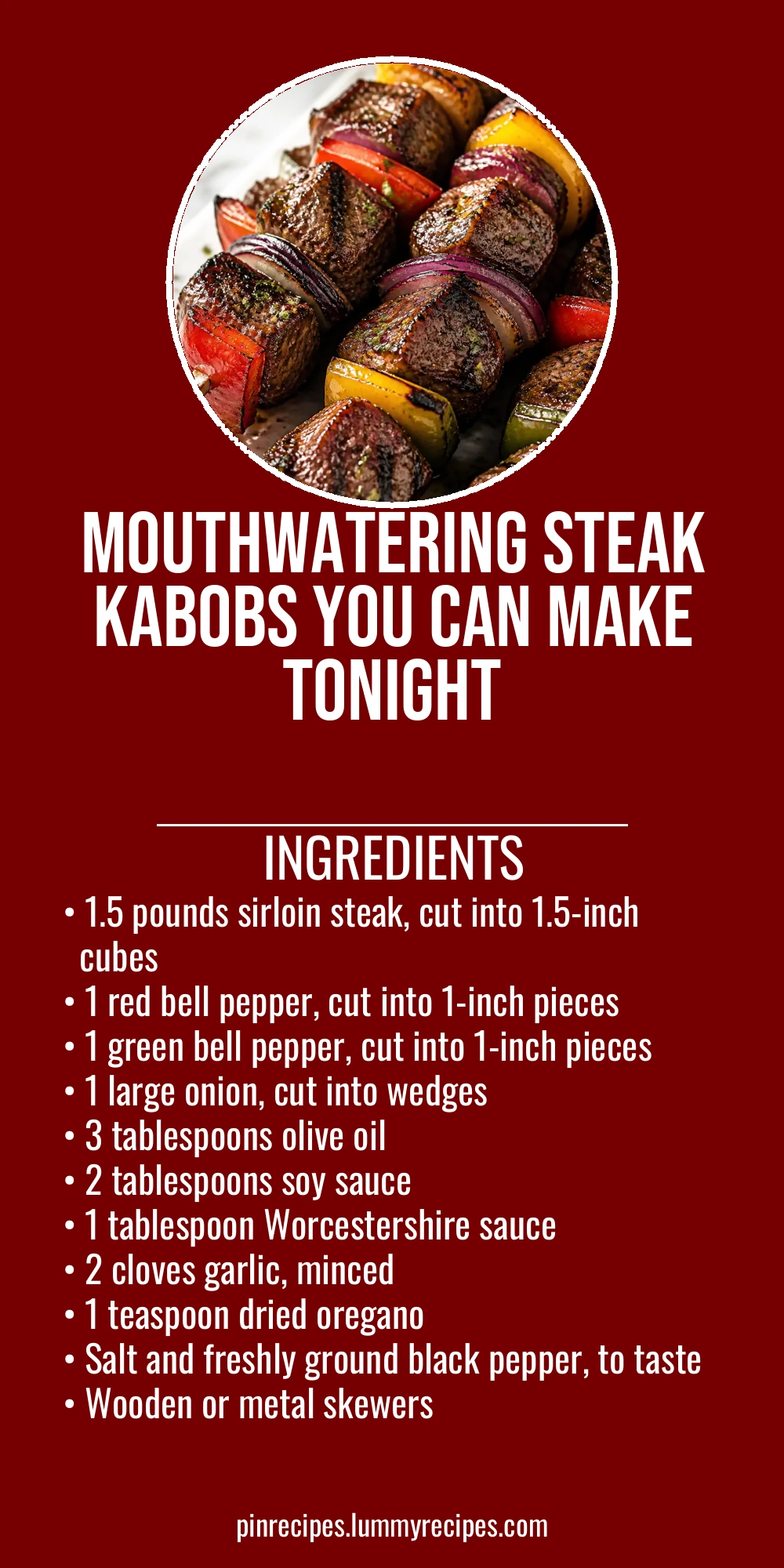
- 1.5 pounds sirloin steak, cut into 1.5-inch cubes
- 1 red bell pepper, cut into 1-inch pieces
- 1 green bell pepper, cut into 1-inch pieces
- 1 large onion, cut into wedges
- 3 tablespoons olive oil
- 2 tablespoons soy sauce
- 1 tablespoon Worcestershire sauce
- 2 cloves garlic, minced
- 1 teaspoon dried oregano
- Salt and freshly ground black pepper, to taste
- Wooden or metal skewers
How To Do It
Step 1
Start by cutting your sirloin steak into roughly 1.5-inch cubes. Try to keep the pieces uniform so they cook evenly. If the cubes are too small, they can dry out quickly; too large, and they might not cook through properly. Use a sharp knife and cut against the grain if you can, which helps keep the steak tender after cooking. Place the cubes in a large bowl for marinating.
⏱ Time: 10 minutes
✓ Doneness: Uniformly cut pieces about 1.5 inches in size
Step 2
Whisk together olive oil, soy sauce, Worcestershire sauce, minced garlic, dried oregano, salt, and pepper in a small bowl. Pour this marinade over the steak cubes and toss gently to coat every piece. Cover the bowl with plastic wrap and refrigerate for at least 2 hours, preferably overnight. This slow marinating softens the meat fibers and infuses flavor deeply, so don’t rush this step.
⏱ Time: 2 hours to overnight
✓ Doneness: Steak cubes fully coated and slightly darker from marinade absorption
Step 3
Prepare your vegetables by cutting the bell peppers into 1-inch pieces and the onion into wedges. These sizes match the steak cubes for even cooking. Pat the veggies dry with a paper towel to avoid excess moisture, which can cause steaming rather than grilling. Set aside while you soak wooden skewers in water for 30 minutes to prevent burning on the grill.
⏱ Time: 15 minutes
✓ Doneness: Vegetables cut evenly and skewers soaked
Step 4
Thread the marinated steak cubes, bell peppers, and onion wedges onto the skewers, alternating pieces for a colorful presentation. Don’t pack them too tightly; leave a little space so heat can circulate and cook everything evenly. This arrangement also helps the flavors mingle as they grill.
⏱ Time: 10 minutes
✓ Doneness: Skewers evenly loaded with alternating steak and veggies
Step 5
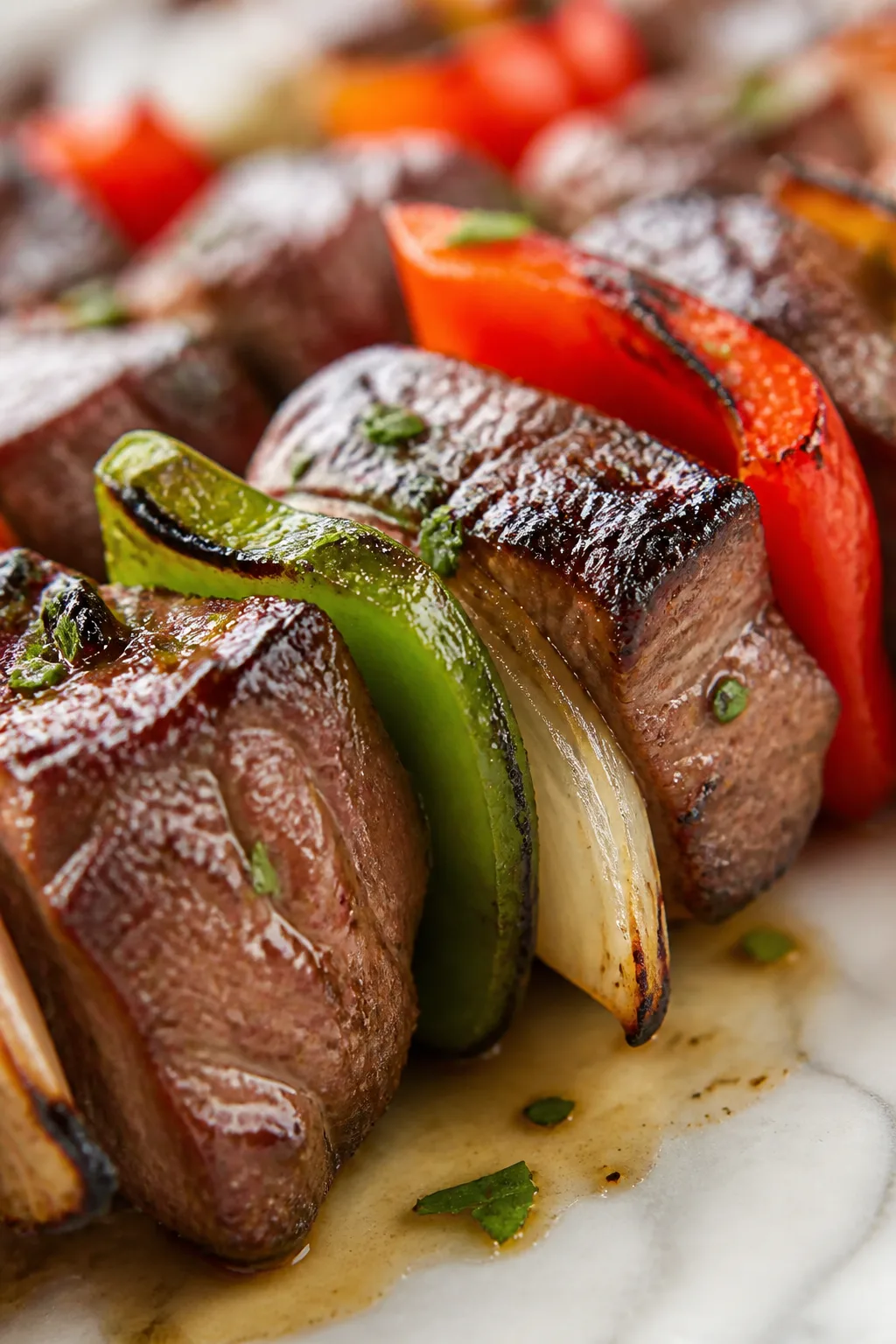
Preheat your grill to medium-high heat. Clean and oil the grates to prevent sticking. Place the kabobs on the grill and cook for about 12-15 minutes total, turning every 3-4 minutes. This frequent turning helps get an even char and prevents burning. Watch for nice grill marks and a slightly caramelized exterior while keeping the inside juicy.
⏱ Time: 12-15 minutes
✓ Doneness: Golden brown grill marks and slightly charred edges
Step 6
Use a meat thermometer to check for doneness—steak kabobs are best at medium-rare to medium, around 135-145°F internal temperature. Overcooking will dry out the meat, so keep an eye on it. If you don’t have a thermometer, cut into a piece to check; it should be pink and juicy inside.
⏱ Time: 2 minutes
✓ Doneness: Internal temperature 135-145°F or pink juicy center
Step 7
Remove the kabobs from the grill and let them rest for 5 minutes. This resting period allows the juices to redistribute inside the meat, making each bite tender and flavorful. Resist the urge to dig in immediately—it really makes a difference.
⏱ Time: 5 minutes
✓ Doneness: Juices redistribute, kabobs slightly cooled but warm
Step 8
Serve the kabobs hot with your favorite sides—rice, salad, or grilled bread all work beautifully. You can drizzle a little extra marinade warmed on the stove over the kabobs for added flavor if you like. This simple touch brings everything together.
⏱ Time: 5 minutes
✓ Doneness: Kabobs plated with sides, ready to enjoy
Step 9
For leftovers, remove steak and veggies from skewers and store in an airtight container. Reheat gently in a skillet or microwave with a splash of water to keep them moist. Avoid overcooking during reheating to maintain tenderness.
⏱ Time: 5 minutes
✓ Doneness: Leftovers warm but still juicy and tender
Pro Tips
Marinate the steak overnight whenever possible.
Allowing the steak to soak in the marinade overnight gives the salt and enzymes time to break down tough muscle fibers, resulting in a more tender and flavorful kabob. Skipping or shortening this step will produce less tender meat and weaker flavor penetration.
Soak wooden skewers in water for at least 30 minutes before grilling.
Soaking prevents the skewers from burning or catching fire on the grill, which can impart an unpleasant burnt flavor. It also helps keep the kabobs intact during cooking. Metal skewers are an alternative but can get very hot, so handle with care.
Cut vegetables and steak into uniform sizes.
Uniform pieces cook evenly, preventing some from being overdone while others remain undercooked. This consistency ensures a balanced texture and flavor in every bite, which is especially important on skewers where everything cooks simultaneously.
Turn kabobs frequently during grilling.
Flipping the kabobs every few minutes promotes even cooking and browning on all sides, avoiding burnt spots. It also helps develop those beautiful grill marks and caramelized edges that add flavor and visual appeal.
Use a meat thermometer to check doneness.
Steak can quickly go from perfectly cooked to overdone. A thermometer helps you hit the ideal medium-rare to medium range (135-145°F), ensuring juicy, tender meat. Cutting to check can release juices prematurely and dry out the steak.
Let kabobs rest after grilling.
Resting allows juices to redistribute throughout the meat, making it more tender and moist. Cutting into the steak immediately causes juices to run out, resulting in drier bites. A 5-minute rest is usually sufficient.
Avoid overcrowding the grill.
Giving kabobs space on the grill allows heat and smoke to circulate properly, ensuring even cooking and preventing steaming. Overcrowding traps moisture and can lead to unevenly cooked or soggy kabobs.
Common Mistakes to Avoid
Using tough or lean cuts of beef.
Why it happens People often choose cheaper or readily available cuts without considering tenderness, assuming marinade alone will fix toughness.
Fix Opt for sirloin or ribeye with good marbling. If using lean cuts, marinate longer and consider slicing thinner to help tenderize. Otherwise, the kabobs will be chewy and less enjoyable.
Skipping the marinade or marinating too briefly.
Why it happens Impatience or lack of planning leads to rushing the marinade step or skipping it entirely.
Fix Plan ahead to marinate at least 2 hours, preferably overnight. This step is key to tender, flavorful meat. If short on time, marinate for a minimum of 30 minutes but expect less depth.
Cutting unevenly sized pieces.
Why it happens Hurrying or not paying attention to size leads to uneven cooking.
Fix Take your time to cut steak and veggies into similar sizes (about 1.5 inches). This ensures even cooking and prevents some pieces from drying out or being underdone.
Grilling on too high heat or not turning kabobs.
Why it happens Some think higher heat means faster cooking, or forget to turn kabobs regularly.
Fix Use medium-high heat and turn kabobs every 3-4 minutes. This prevents burning and promotes even caramelization for juicy, flavorful kabobs.
Not letting kabobs rest before serving.
Why it happens Excitement to eat leads to cutting into kabobs right off the grill.
Fix Let kabobs rest for 5 minutes to allow juices to redistribute. This simple step makes bites more tender and juicy.
Variations
Mediterranean Steak Kabobs
Swap the marinade for olive oil, lemon juice, garlic, and fresh herbs like rosemary and thyme. Add cherry tomatoes and zucchini slices on the skewers. Expect a bright, herbaceous flavor with a slight tang from the lemon.
Note: The acidity in lemon juice tenderizes the meat quickly, so reduce marinating time to 1-2 hours to avoid over-tenderizing.
Spicy Southwest Steak Kabobs
Add chili powder, cumin, smoked paprika, and a dash of cayenne to the marinade. Include chunks of corn on the cob and red onion. The kabobs will have a smoky, spicy kick perfect for summer barbecues.
Note: Spices can burn if exposed directly to flame; turning kabobs frequently helps prevent charring.
Teriyaki Steak Kabobs
Use a homemade or store-bought teriyaki sauce as your marinade. Add pineapple chunks for sweetness and bell peppers for crunch. Expect a sweet-savory flavor profile with caramelized edges.
Note: Teriyaki sauce contains sugars that can burn quickly; grill over medium heat and turn often.
Garlic Butter Steak Kabobs
Brush kabobs with melted garlic butter during the last few minutes of grilling. This adds richness and a luscious finish. Serve with crusty bread to soak up the buttery goodness.
Note: Apply butter near the end to prevent flare-ups and burning on the grill.
Vegetarian Steak Kabobs
Replace steak with firm tofu or portobello mushrooms marinated in a similar sauce. Add zucchini, cherry tomatoes, and onions for a hearty vegetarian option that grills beautifully.
Note: Tofu should be pressed to remove excess moisture before marinating to improve texture and flavor absorption.
Nutrition
Per Serving:
Nutritional values are estimates and may vary based on specific ingredients used.
Storage & Tips
Room Temperature
Steak kabobs can safely sit out for up to 2 hours if covered loosely. Beyond that, bacteria can grow rapidly, so it’s best to refrigerate leftovers promptly.
Refrigerator
Store kabobs in an airtight container for up to 3 days. The flavors meld nicely but the texture may firm up slightly when cold. Reheat gently for best results.
Freezer
Freeze leftover kabobs in a sealed container or freezer bag for up to 3 months. Wrap tightly to prevent freezer burn. Thaw overnight in the refrigerator before reheating.
Reheating
Reheat kabobs in a skillet over medium heat with a splash of water or broth to keep moist, or microwave covered for 1-2 minutes. Avoid overheating to prevent toughness.
Make Ahead
Marinate the steak cubes a day ahead and keep refrigerated. Assemble the skewers just before grilling to keep veggies fresh and prevent sogginess.
FAQ
Can I use other cuts of beef for kabobs?
Yes, but choose tender cuts like sirloin, ribeye, or tenderloin. Tougher cuts like round or chuck can be used if marinated longer, but they may not be as juicy. Cutting against the grain helps improve tenderness.
How long should I marinate steak for kabobs?
Ideally, marinate for at least 2 hours, but overnight is best for tender, flavorful meat. If short on time, 30 minutes will add some flavor but won’t tenderize as much.
Should I soak wooden skewers before grilling?
Yes, soak wooden skewers in water for at least 30 minutes to prevent them from burning on the grill. Metal skewers don’t need soaking but get hot quickly, so use tongs to handle.
How do I know when steak kabobs are done?
Use a meat thermometer to check for 135-145°F internal temperature for medium-rare to medium. Otherwise, cut into a piece to check for a pink, juicy center. Avoid overcooking to keep meat tender.
Can I make steak kabobs indoors?
Yes, you can grill them on a stovetop grill pan or broil in the oven. Just watch closely to prevent burning and turn kabobs frequently for even cooking.
What sides go well with steak kabobs?
Rice, grilled vegetables, salads, or crusty bread are great companions. Choose simple, fresh sides to balance the rich, grilled flavors of the kabobs.
Can I prepare kabobs ahead of time?
You can marinate the steak cubes a day ahead and keep them refrigerated. Assemble the skewers just before cooking to keep vegetables crisp and fresh.
How do I prevent kabobs from drying out?
Marinate properly, cut uniform pieces, grill over medium-high heat turning often, and avoid overcooking. Rest kabobs after grilling to lock in juices.
Final Thoughts
I hope you give these steak kabobs a try—they’re a simple way to bring big flavor to your table. Let me know how your family likes them!