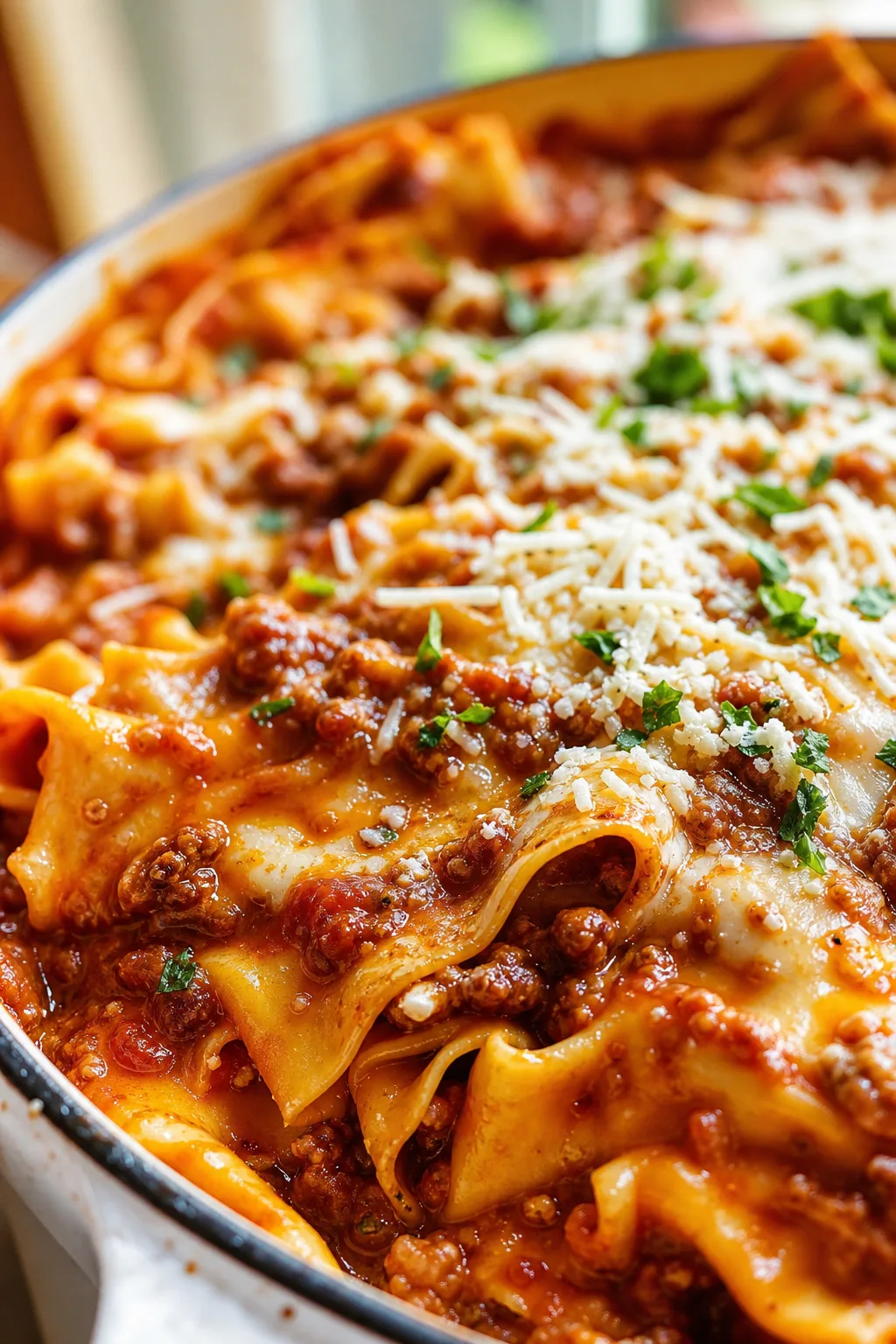
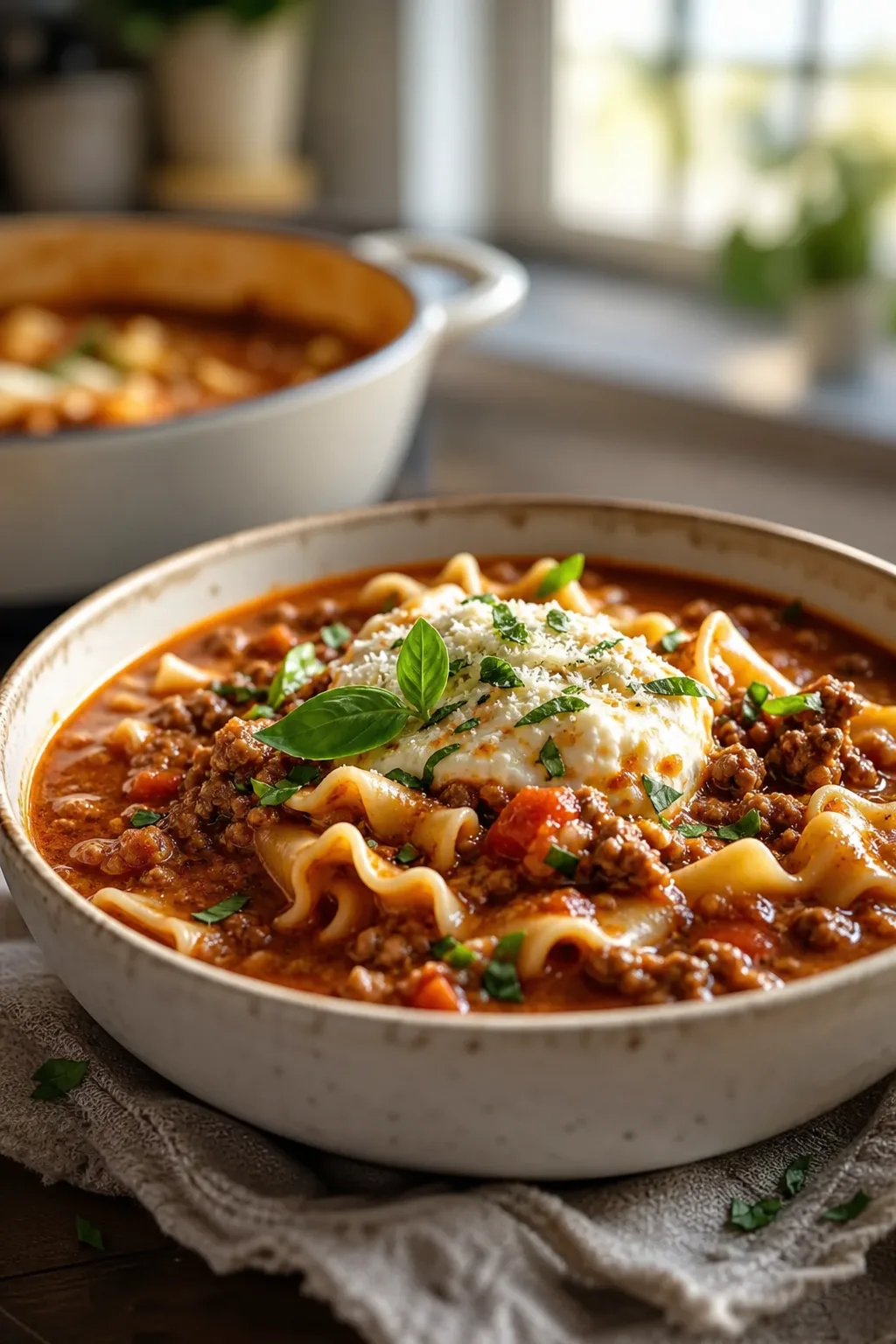
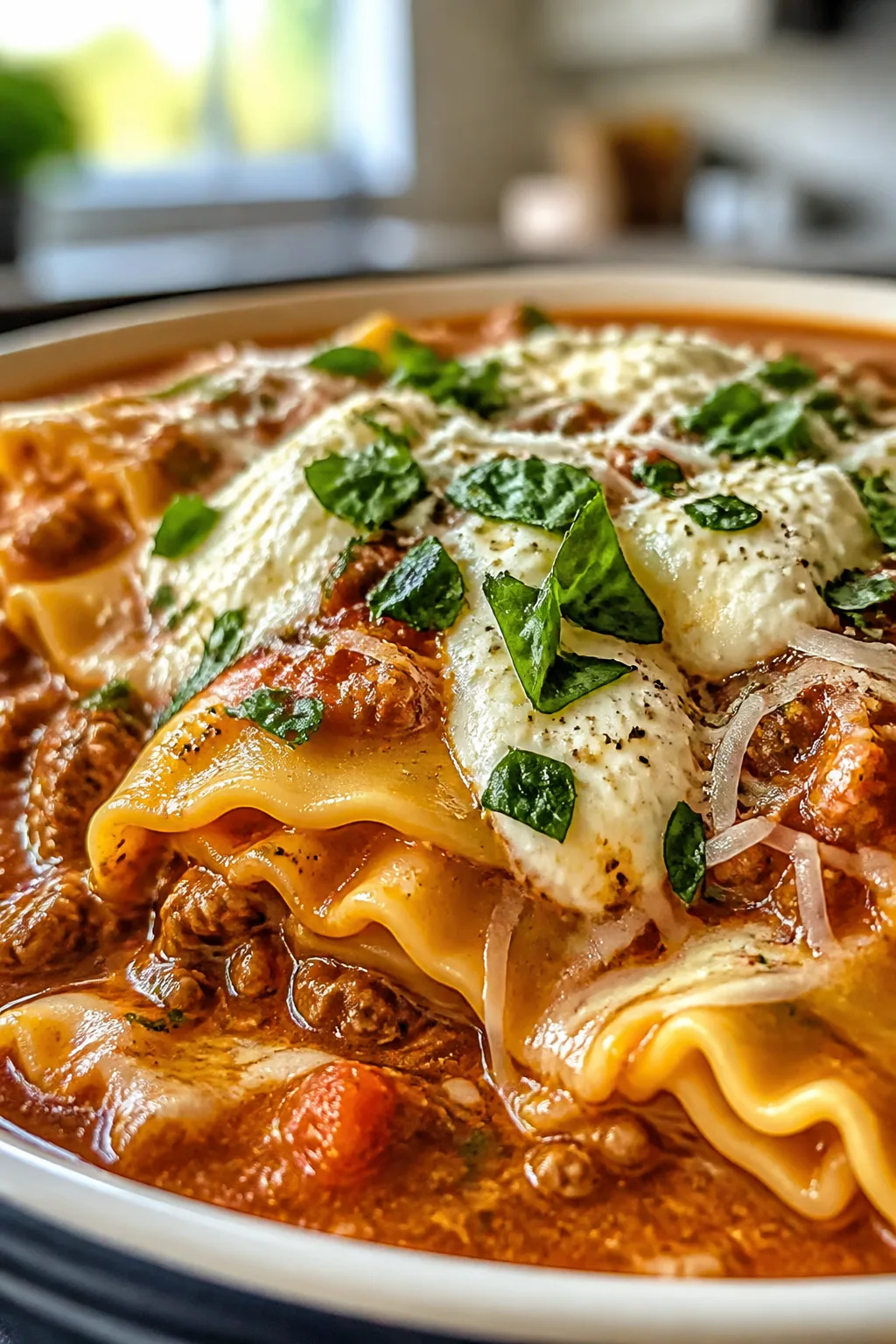
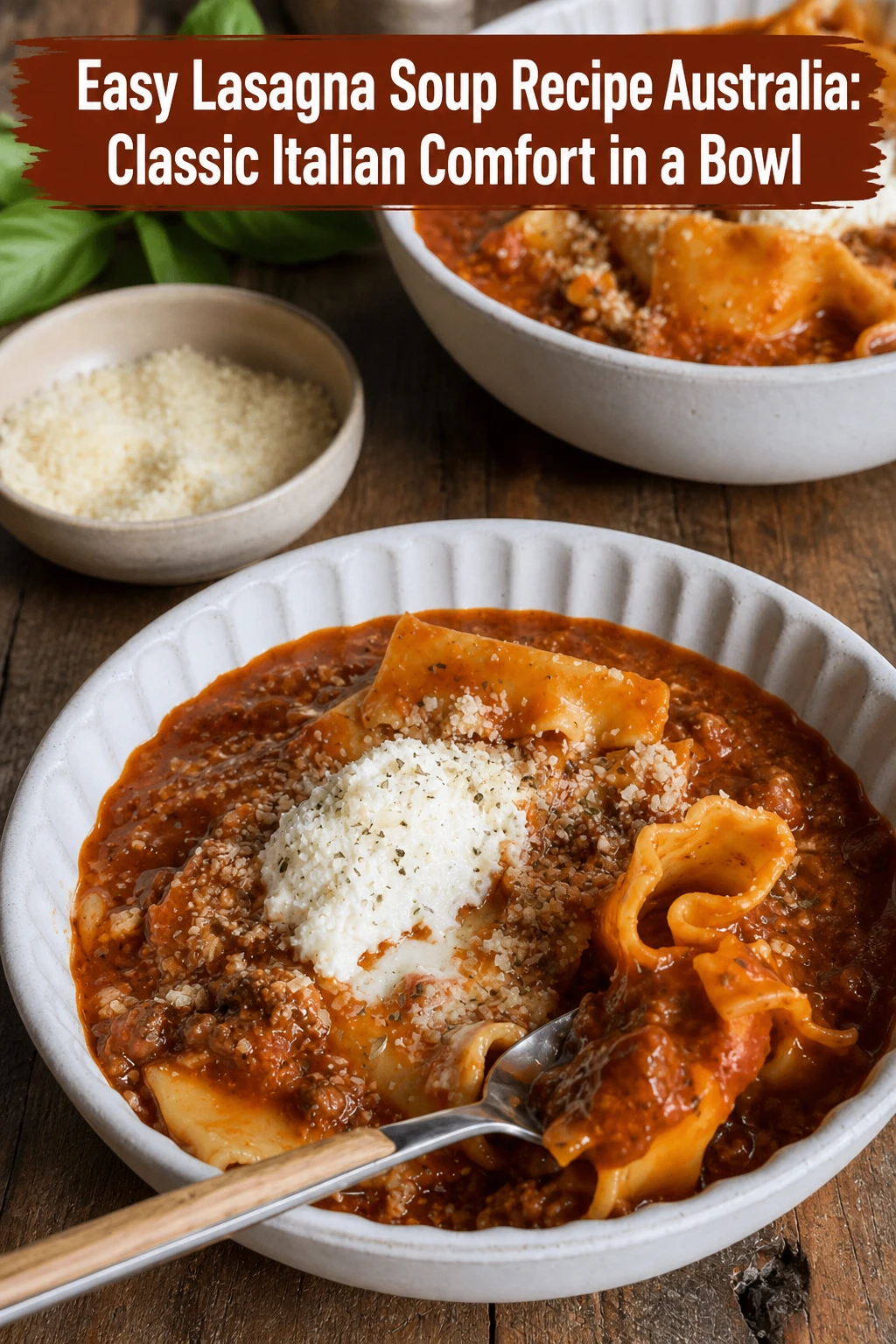
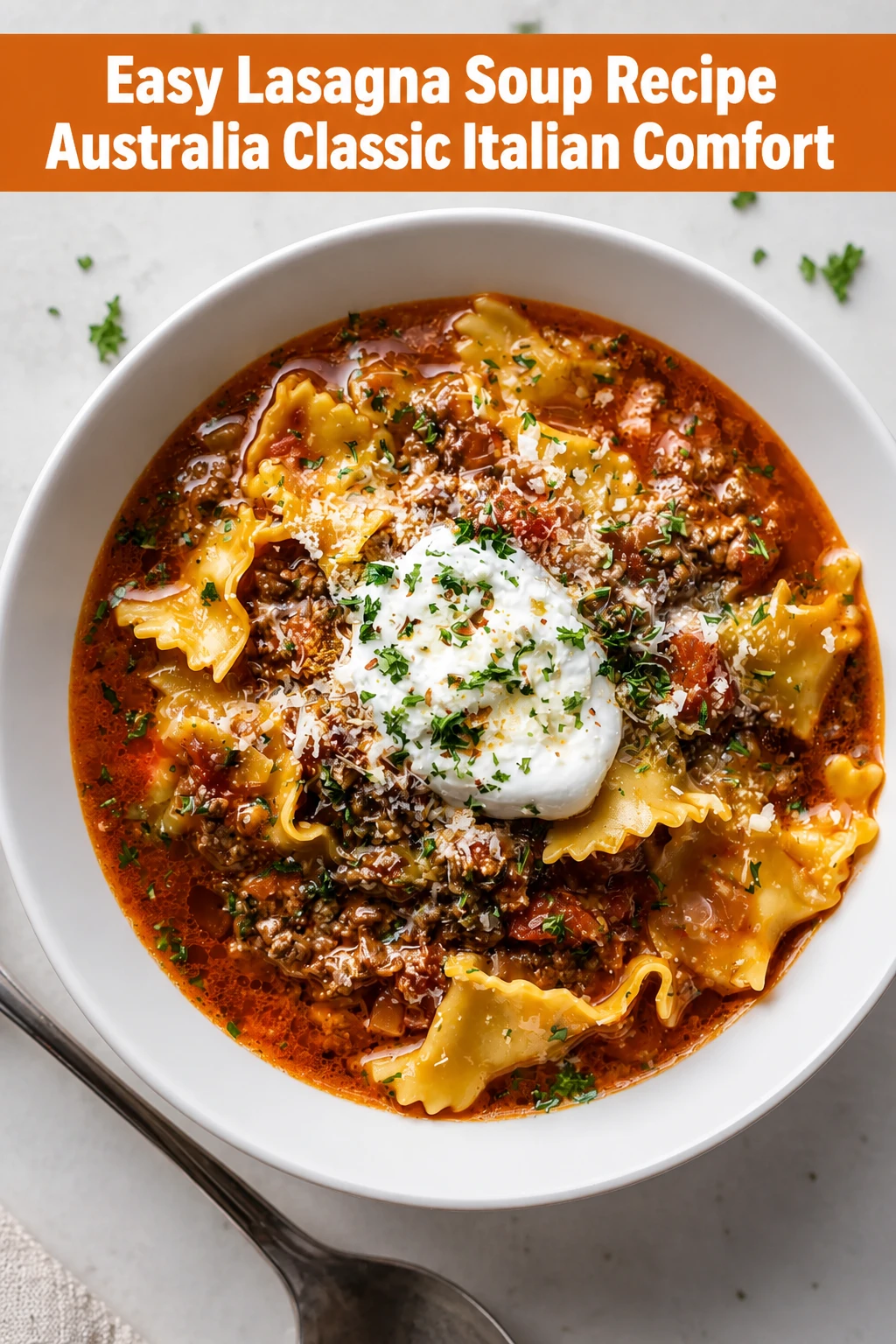
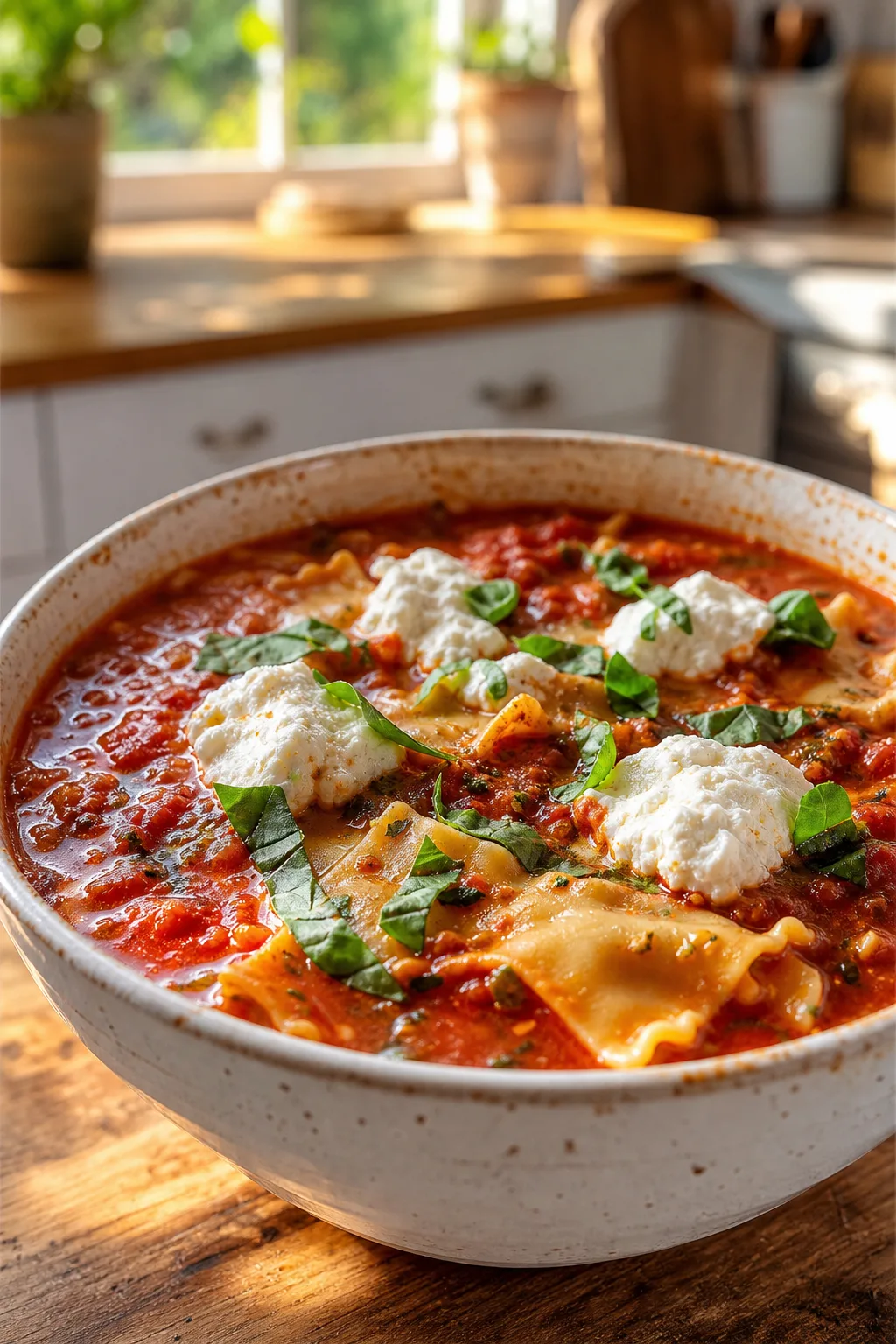
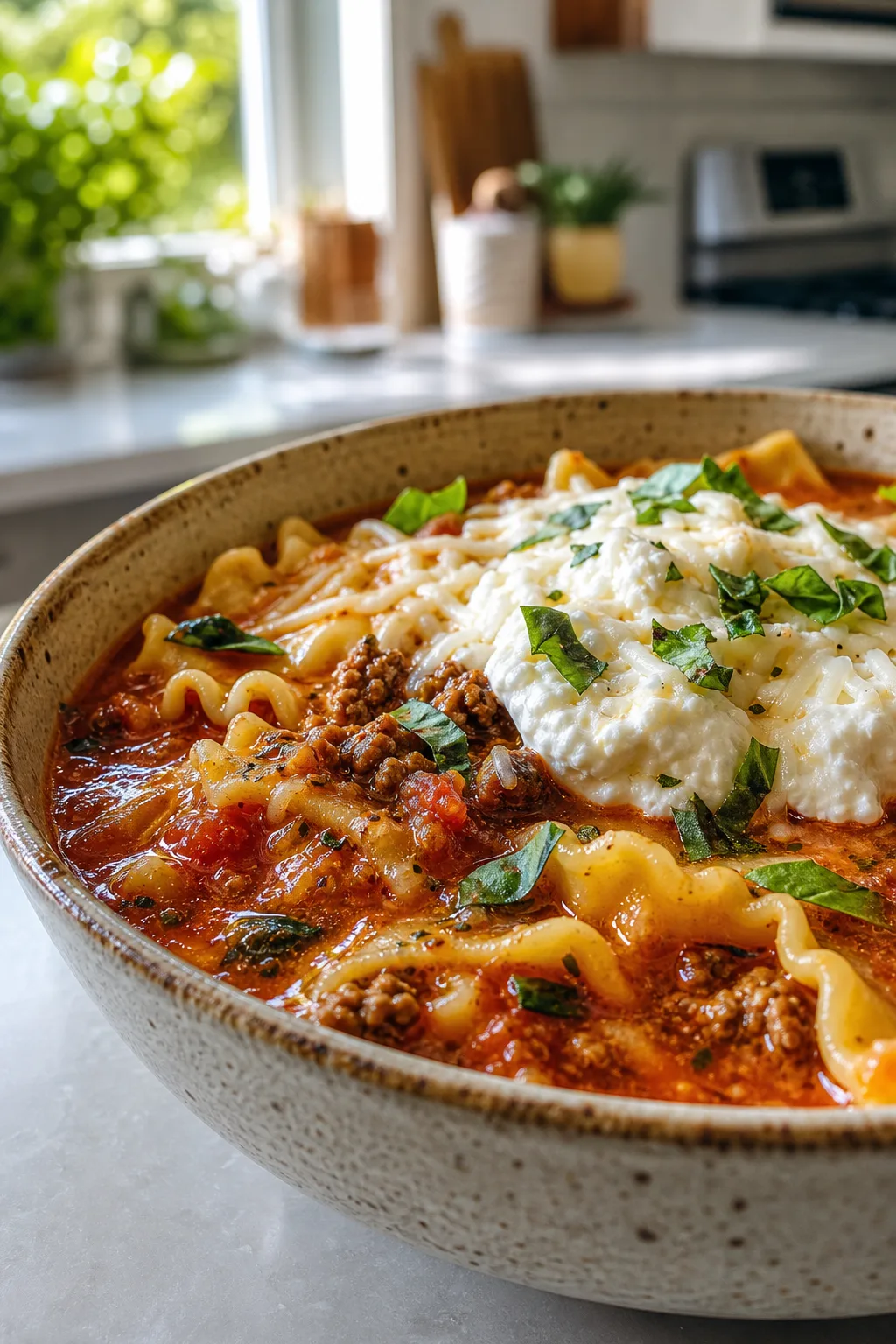
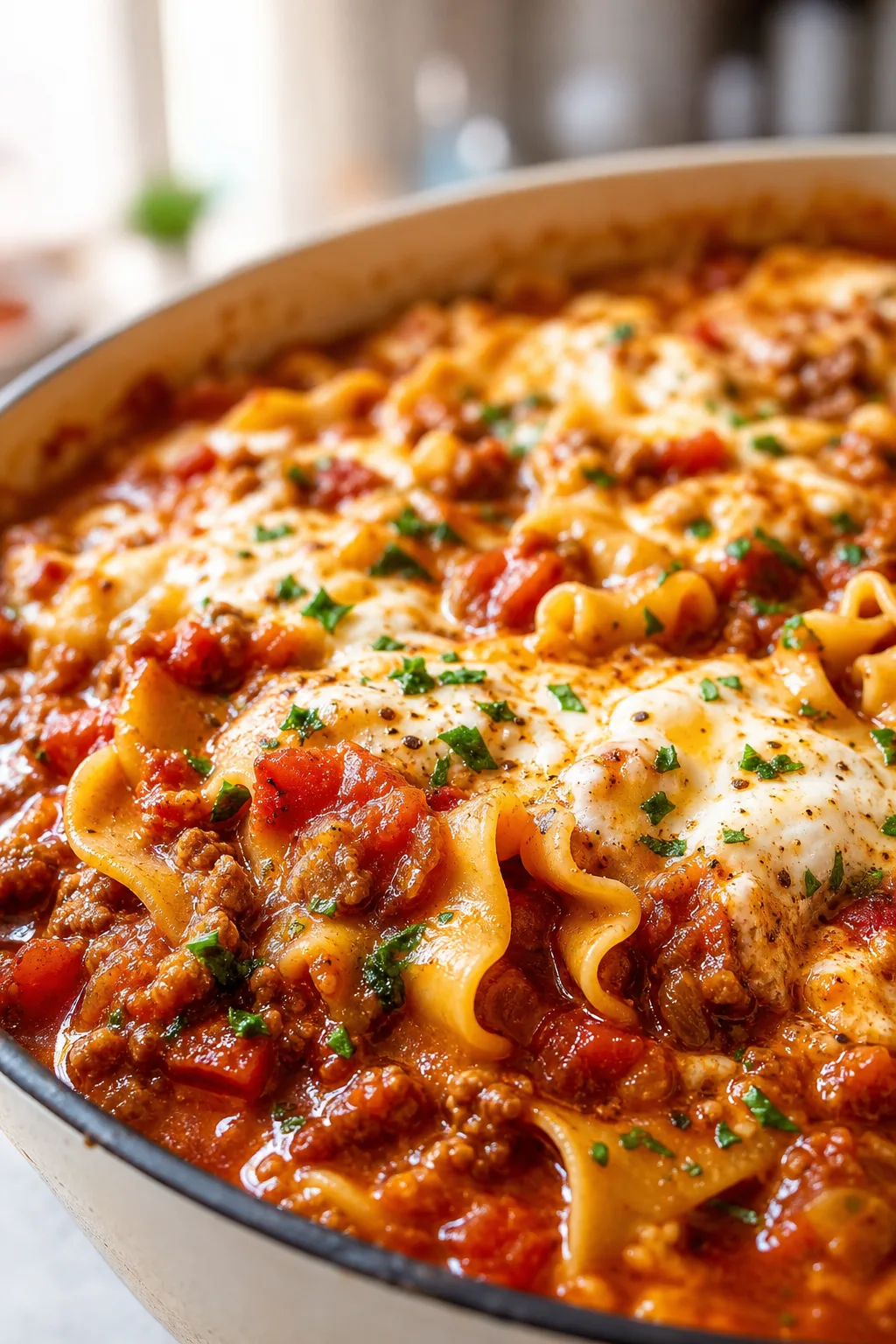
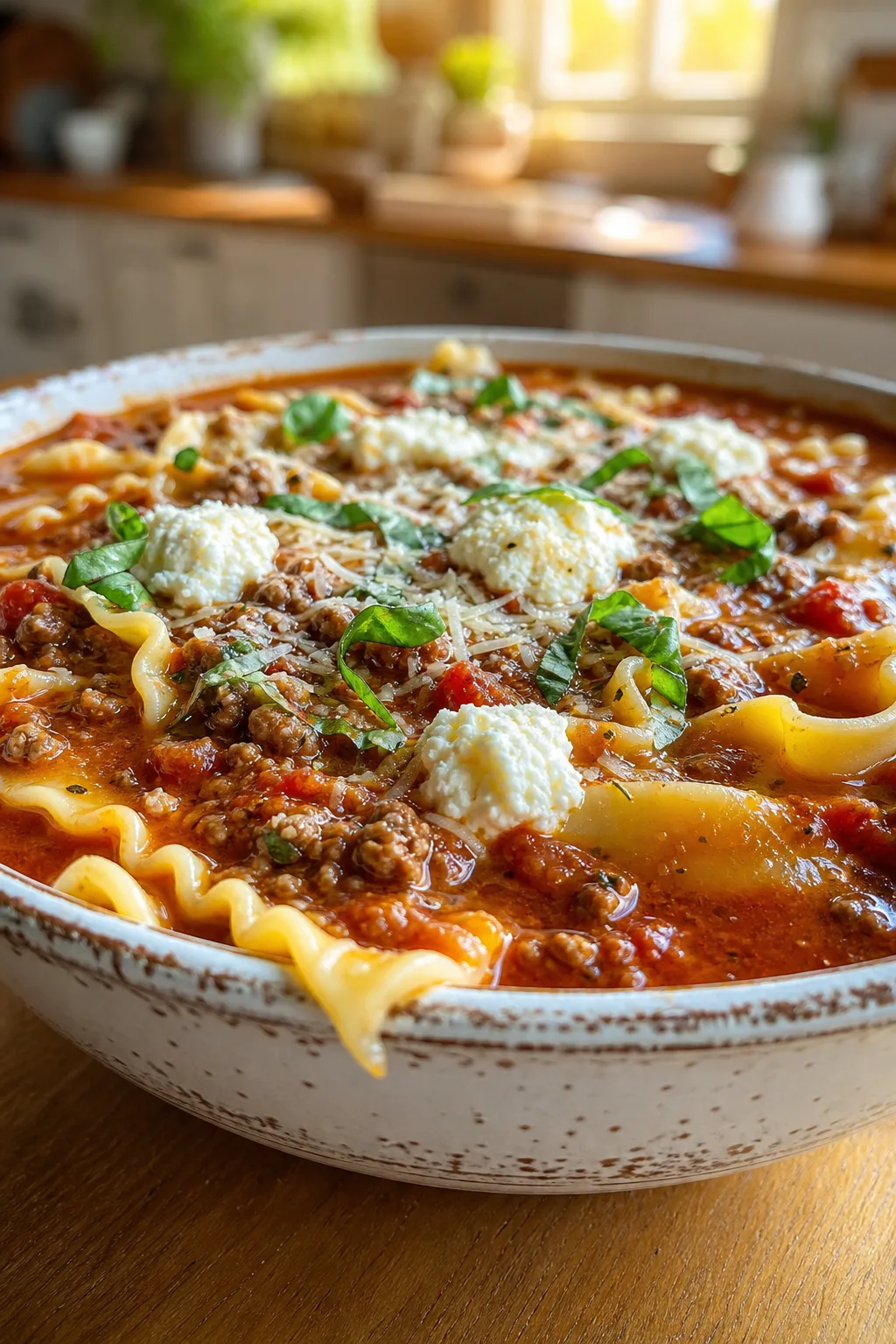
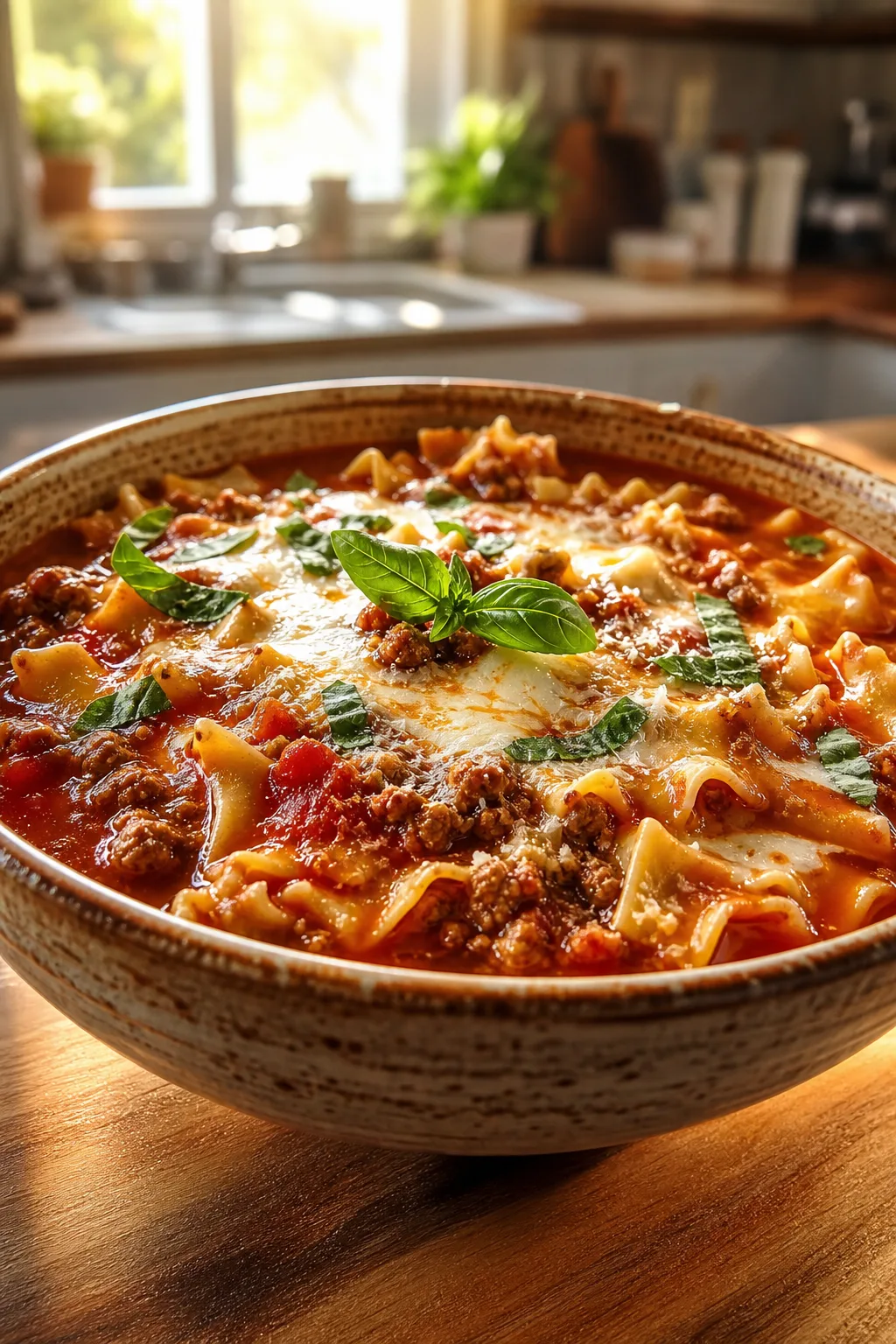
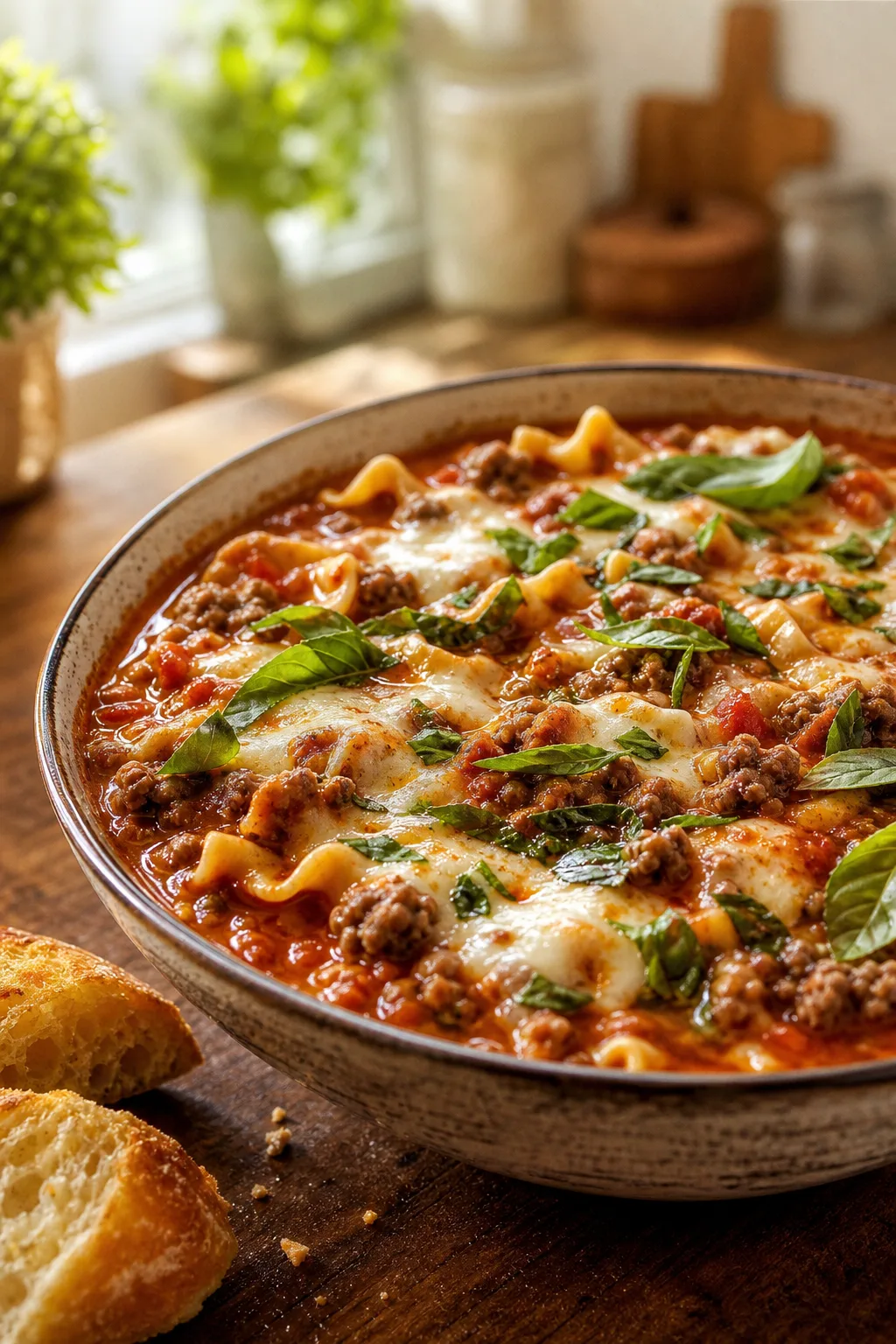
This lasagna soup is a cozy twist on a classic Italian favorite, blending rich tomato broth, tender pasta, and melty cheese. I love how easy it is to make yet so comforting, perfect for chilly nights or family dinners.
Introduction
I first stumbled upon lasagna soup while craving all the cozy flavors of traditional lasagna but without the long bake time and layers. This recipe quickly became a family favorite because it delivers that classic tomato and cheesy goodness in a warm, comforting bowl. What sets my version apart is the use of no-boil lasagna noodles that cook right in the soup, soaking up all the rich flavors without getting mushy. Plus, adding fresh spinach gives it a nice pop of color and nutrition without overpowering the taste. Over the years, I’ve tweaked the seasoning to balance the savory sausage with just the right herbs and a hint of heat from red pepper flakes, but you can easily adjust to your liking. The result? A soup that’s hearty, cheesy, and perfect for chilly evenings or casual family dinners when you want something delicious but fuss-free. I love how it comes together in under an hour and fills the kitchen with that irresistible Italian aroma. It’s one of those dishes that feels like a warm hug in a bowl, and I’m excited to share it with you!
What You'll Need
Approximately 4 hearty servings
- 1 tablespoon olive oil
- 1 small onion, diced
- 3 cloves garlic, minced
- 500g Italian sausage, casing removed
- 1 teaspoon dried oregano
- 1 teaspoon dried basil
- 1/2 teaspoon crushed red pepper flakes (optional)
- 1 can (28 oz) crushed tomatoes
- 4 cups chicken broth
- 120g no-boil lasagna noodles, broken into pieces
- 2 cups fresh spinach leaves
- 1 cup shredded mozzarella cheese
- 1/2 cup grated Parmesan cheese
- Salt and freshly ground black pepper to taste
- Fresh basil leaves for garnish
How To Do It
Step 1
Heat the olive oil in a large pot over medium heat. Add the diced onion and cook, stirring occasionally, until translucent and soft, about 5 minutes. This step builds the flavor base by gently caramelizing the onions, which adds sweetness and depth to the soup. Avoid browning too much or burning the onion, as that would introduce bitterness.
⏱ Time: 5
✓ Doneness: Onions are soft, translucent, and fragrant without any brown spots.
Step 2
Add the minced garlic and cook for 1 minute until fragrant, stirring constantly to prevent burning. Garlic releases its essential oils quickly, and cooking it just enough brings out its sweet, mellow flavor without bitterness.
⏱ Time: 1
✓ Doneness: Garlic aroma is strong but not burnt; garlic pieces remain pale.
Step 3
Add the Italian sausage to the pot, breaking it up with a wooden spoon. Cook until browned and cooked through, about 7-8 minutes. Browning the sausage develops rich savory flavors through the Maillard reaction, enhancing the soup’s depth. Stir occasionally to ensure even cooking and prevent sticking.
⏱ Time: 8
✓ Doneness: Sausage is browned with no pink remaining and slightly crispy edges.
Step 4
Stir in dried oregano, basil, and crushed red pepper flakes if using. Cooking the dried herbs briefly releases their essential oils, boosting the aromatic profile of the soup. Stir for about 1 minute to blend the flavors.
⏱ Time: 1
✓ Doneness: Herbs are evenly mixed and fragrant.
Step 5
Pour in the crushed tomatoes and chicken broth, stirring well to combine. Increase heat to bring the mixture to a gentle boil. This liquid base is crucial for cooking the pasta and melding all flavors together. Rushing this step can result in undercooked noodles or a thin broth.
⏱ Time: 5
✓ Doneness: Soup reaches a steady simmer with bubbles gently rising.
Step 6
Add the broken lasagna noodles to the boiling soup. Reduce heat to medium-low and simmer uncovered for about 10-12 minutes, stirring occasionally to prevent noodles from sticking. The noodles absorb the broth’s flavor while cooking to tender perfection. Avoid overcooking to prevent mushiness.
⏱ Time: 12
✓ Doneness: Noodles are tender but still hold their shape and have a slight bite.
Step 7
Stir in the fresh spinach leaves and cook for 2-3 minutes until wilted. Adding spinach at the end preserves its bright color and delicate texture, while adding a fresh, slightly earthy flavor to balance the richness.
⏱ Time: 3
✓ Doneness: Spinach is vibrant green and fully wilted.
Step 8
Remove the pot from heat and stir in the shredded mozzarella and grated Parmesan cheeses until melted and creamy. The cheese melts into the hot soup, creating a luscious, creamy texture that mimics the cheesy layers of traditional lasagna.
⏱ Time: 3
✓ Doneness: Cheese is fully melted and soup looks creamy and glossy.
Step 9
Taste the soup and season with salt and freshly ground black pepper as needed. Seasoning at the end lets you adjust the flavor balance perfectly. Serve immediately garnished with fresh basil leaves and extra Parmesan if desired.
⏱ Time: 2
✓ Doneness: Soup is well-seasoned, balanced, and piping hot.
Pro Tips
Brown the sausage well before adding liquids.
Browning the sausage develops complex flavors through Maillard reactions, adding savory depth to the soup. If skipped or rushed, the soup will lack richness and taste flat.
Break noodles into smaller pieces for even cooking.
Smaller pieces cook faster and fit better in the pot, preventing clumping or uneven textures. Whole sheets can be unwieldy and cause inconsistent cooking.
Add cheese off heat to prevent clumping.
Melting cheese slowly off heat ensures a smooth, creamy texture. High heat can cause cheese to seize and become grainy, ruining the soup’s mouthfeel.
Simmer noodles uncovered to control thickness.
Keeping the pot uncovered allows some liquid to evaporate, preventing the soup from becoming too watery. Covering traps steam and dilutes the broth.
Use fresh herbs as garnish for brightness.
Fresh basil or parsley added at the end adds a fresh aroma and visual appeal, balancing the rich soup flavors and making the dish more inviting.
Adjust seasoning last after all ingredients combine.
Salt and pepper levels can change as ingredients cook and meld. Seasoning at the end ensures a perfectly balanced flavor, avoiding over or under seasoning.
Serve with crusty bread for dipping.
A good crusty bread complements the soup’s rich broth and cheesy notes, making the meal more satisfying and authentic.
Common Mistakes to Avoid
Overcooking the noodles until mushy
Why it happens Many cooks leave the noodles in the soup too long or use regular noodles that aren’t designed to cook in liquid, resulting in a soggy texture.
Fix Use no-boil lasagna noodles and monitor cooking time carefully, stirring occasionally. Remove from heat as soon as noodles are tender but still hold their shape.
Skipping browning the sausage
Why it happens To save time, some skip browning, but this step is essential for flavor development.
Fix Take the extra minutes to brown sausage thoroughly, creating those flavorful browned bits that enrich the broth.
Adding cheese too early
Why it happens Adding cheese while the soup is boiling can cause it to clump or separate.
Fix Stir cheese in off heat at the end for a smooth, creamy texture.
Not seasoning properly
Why it happens Rushing seasoning or adding salt before cooking can lead to bland or overly salty soup.
Fix Season gradually and taste at the end to adjust perfectly.
Using frozen spinach
Why it happens Frozen spinach releases excess water, diluting the soup and affecting texture.
Fix Use fresh spinach added near the end to maintain flavor and texture.
Variations
Vegetarian Lasagna Soup
Swap out the Italian sausage for diced mushrooms and extra vegetables like zucchini or bell peppers. Use vegetable broth instead of chicken broth for a meat-free version that’s just as hearty and flavorful.
Note: Vegetables should be sautéed until tender before adding liquids to develop flavor; cooking time may be slightly longer for mushrooms.
Spicy Lasagna Soup
Add extra crushed red pepper flakes or a diced jalapeño for a spicy kick. You can also use spicy Italian sausage to elevate the heat and add complexity to the broth.
Note: Adjust spice levels gradually and taste often to avoid overpowering the other flavors.
Creamy Lasagna Soup
Stir in 1/2 cup of heavy cream or half-and-half at the end for a richer, creamier soup reminiscent of a white sauce lasagna. This adds a luxurious texture and mellows the acidity of the tomatoes.
Note: Add cream off heat to prevent curdling and maintain a smooth consistency.
Gluten-Free Lasagna Soup
Use gluten-free no-boil lasagna noodles or substitute with gluten-free pasta shapes. Ensure all other ingredients, like broth and sausage, are gluten-free certified for a safe meal.
Note: Cooking times may vary slightly with gluten-free pasta; watch noodles closely to avoid overcooking.
Slow Cooker Lasagna Soup
Combine all ingredients except cheese and spinach in a slow cooker. Cook on low for 6-8 hours or high for 3-4 hours. Add cheese and spinach in the last 15 minutes to finish.
Note: Use uncooked noodles designed for slow cooking or pre-soak them to avoid mushiness.
Nutrition
Per Serving:
Nutritional values are estimates and may vary based on specific ingredients used.
Storage & Tips
Room Temperature
Lasagna soup should not be left at room temperature for more than 2 hours. Cover the pot or transfer to a sealed container to prevent contamination if you need to pause before serving.
Refrigerator
Store leftovers in an airtight container in the refrigerator for up to 3 days. The pasta will continue to absorb broth and soften, so reheat gently and consider adding a splash of broth or water to loosen the soup.
Freezer
Freeze lasagna soup in airtight containers or heavy-duty freezer bags for up to 2 months. Thaw overnight in the refrigerator before reheating. Pasta texture may soften after freezing but still tastes delicious.
Reheating
Reheat on the stovetop over medium-low heat, stirring occasionally. Add a little broth or water if the soup is too thick. Avoid microwaving at high heat to prevent uneven warming and overcooked pasta.
Make Ahead
You can prepare the soup base (sausage, onions, garlic, broth, and tomatoes) 1-2 days ahead and refrigerate. Add noodles, spinach, and cheese just before reheating to keep textures fresh and vibrant.
FAQ
Can I use regular lasagna noodles instead of no-boil noodles?
You can, but regular noodles need to be pre-cooked separately before adding to the soup to avoid mushiness. No-boil noodles cook perfectly in the broth, absorbing flavor and saving time.
How do I make this soup vegetarian?
Replace the Italian sausage with sautéed mushrooms or a plant-based sausage alternative, and use vegetable broth instead of chicken broth. Add extra veggies to keep the soup hearty and flavorful.
Can I freeze lasagna soup?
Yes, you can freeze it for up to 2 months. Pasta texture may soften after freezing, so consider undercooking noodles slightly before freezing or adding fresh noodles when reheating.
How spicy is this soup?
This recipe includes optional crushed red pepper flakes for mild heat. You can adjust the amount or omit it entirely to suit your spice preference.
Why is my soup watery after adding noodles?
If you cover the pot while cooking noodles, condensation can drip back in, thinning the broth. Simmer uncovered to allow some evaporation and thicker broth.
Can I substitute the Italian sausage with ground beef?
Yes, ground beef works well but has a leaner flavor. You might want to add a bit of olive oil or butter to mimic the fat content for better richness.
What cheese is best for melting in this soup?
Whole-milk shredded mozzarella melts smoothly and creates the creamy texture this soup needs. Avoid pre-shredded cheese with anti-caking agents for best results.
How do I store leftovers to keep pasta from getting mushy?
Store soup and pasta separately if possible. If not, add a splash of broth when reheating to loosen the pasta and prevent it from becoming too soft.
Final Thoughts
Give this lasagna soup recipe a try for a cozy, flavorful meal that’s easy to make and perfect for sharing. I’d love to hear how it turns out in your kitchen!