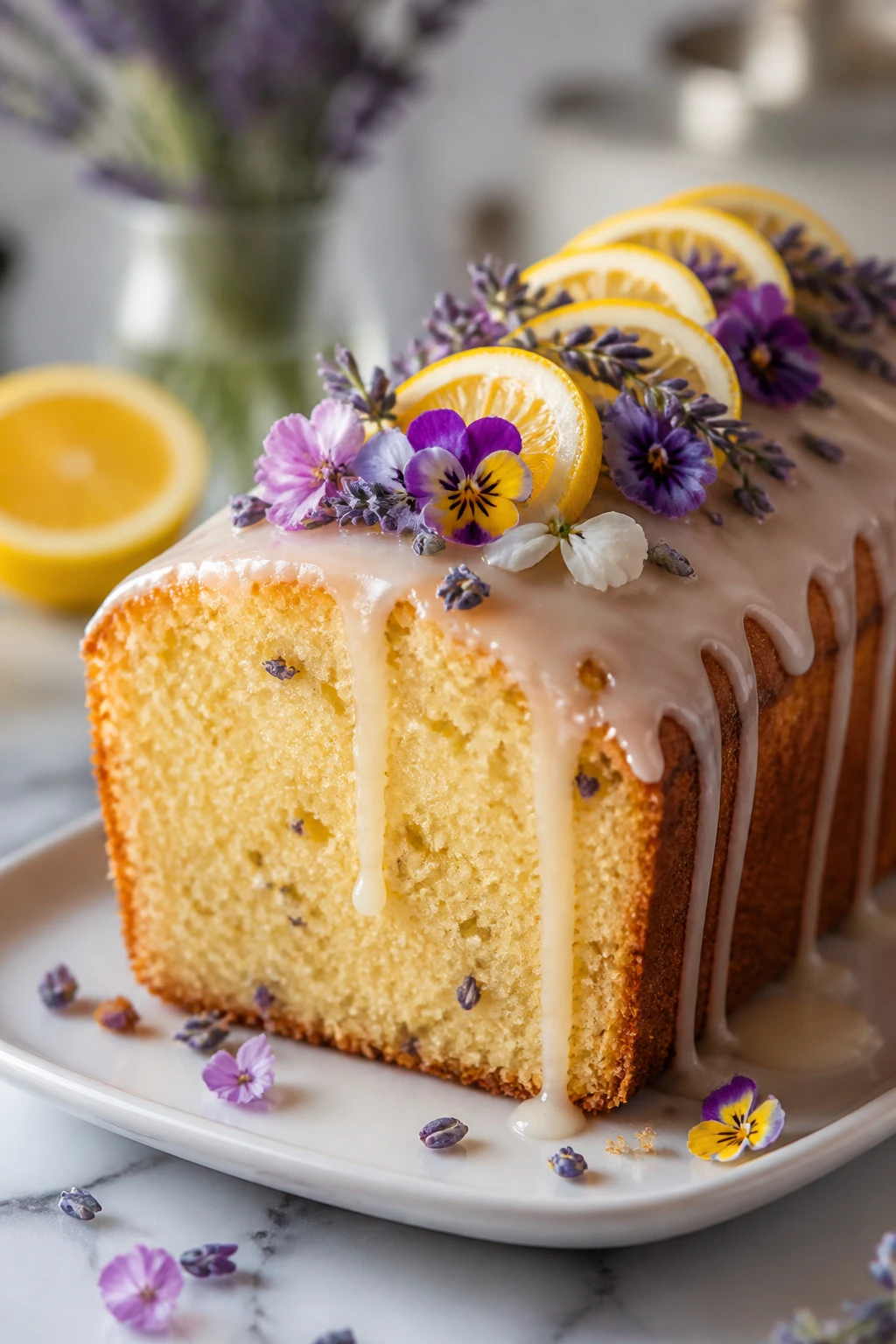
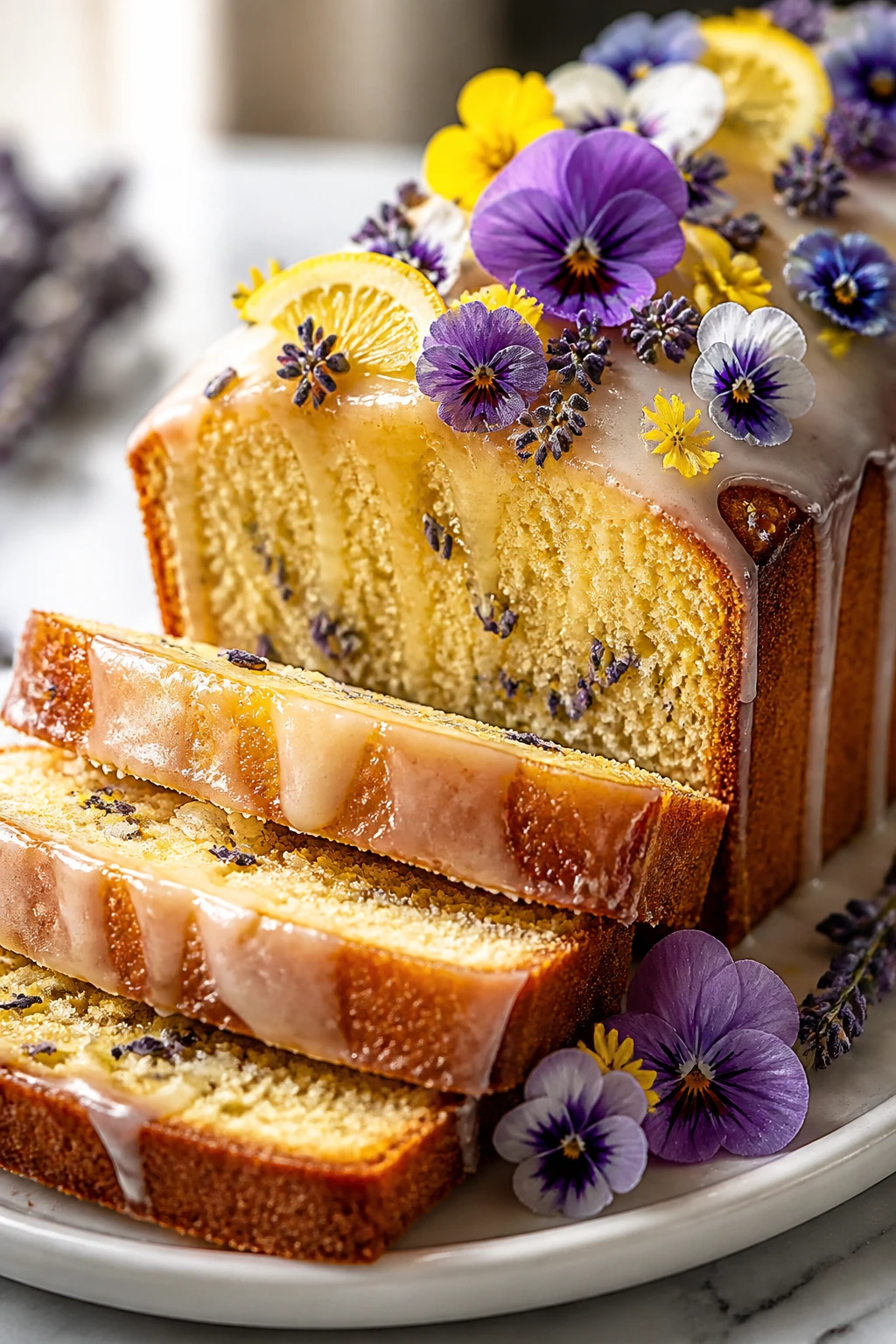
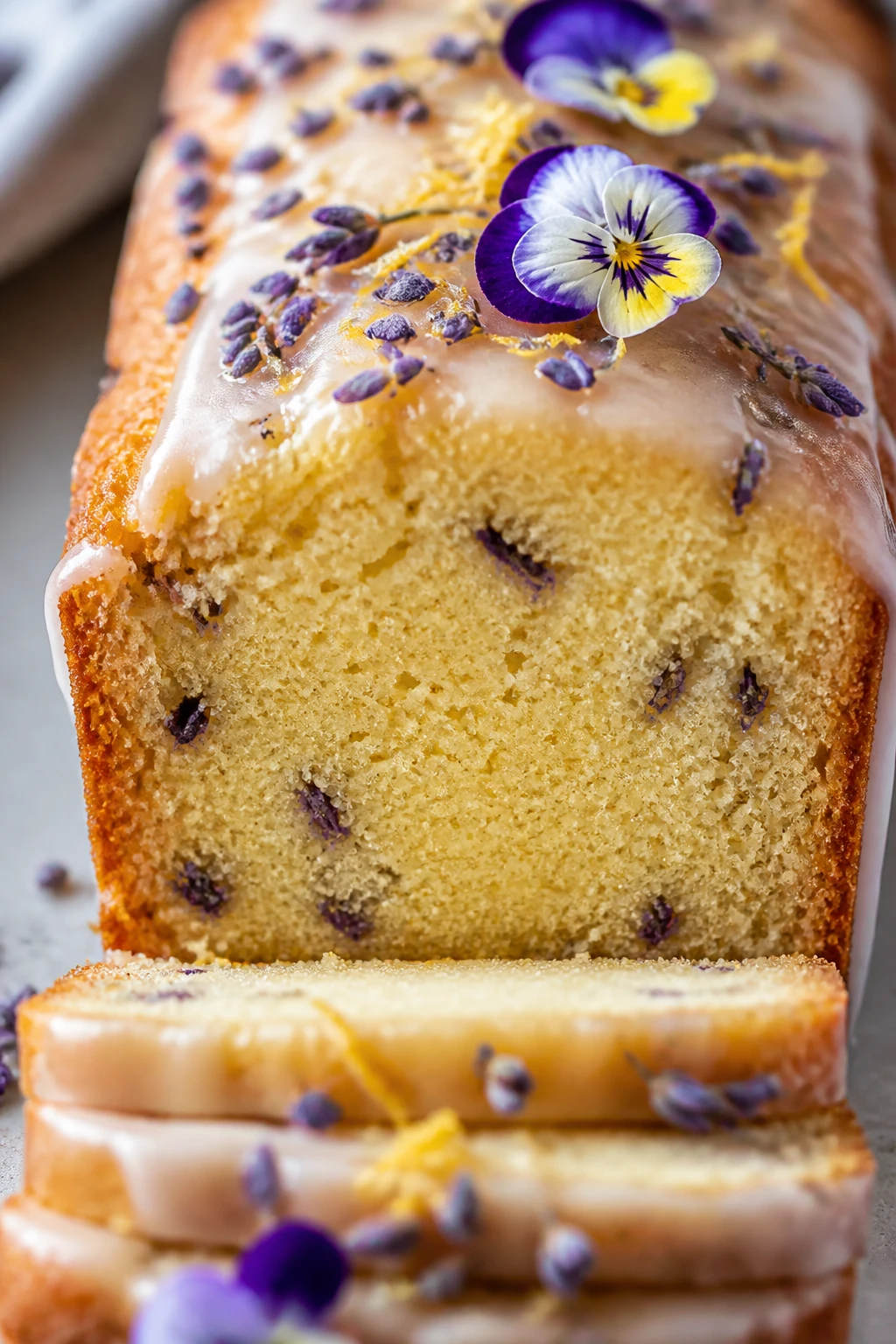
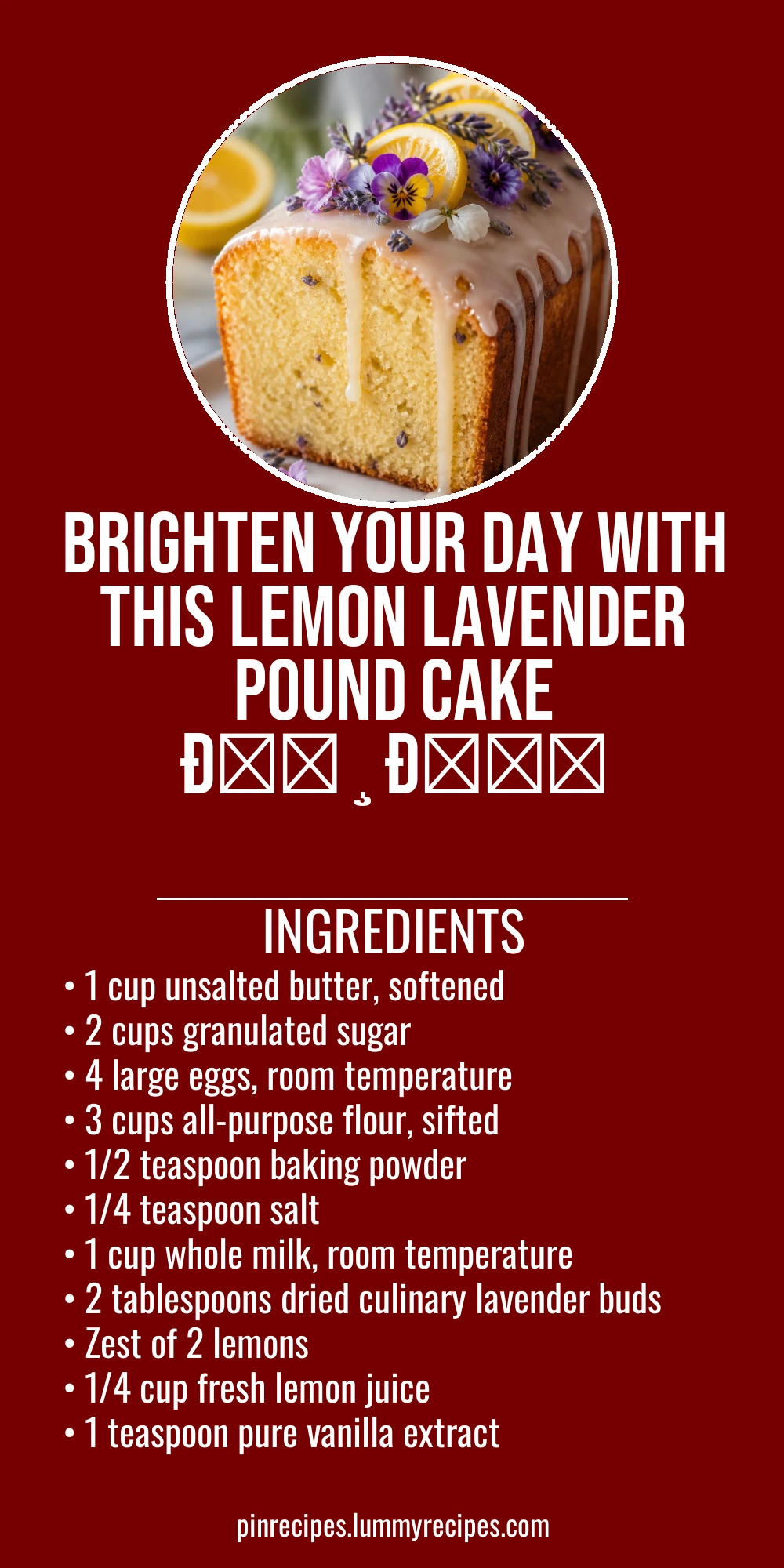
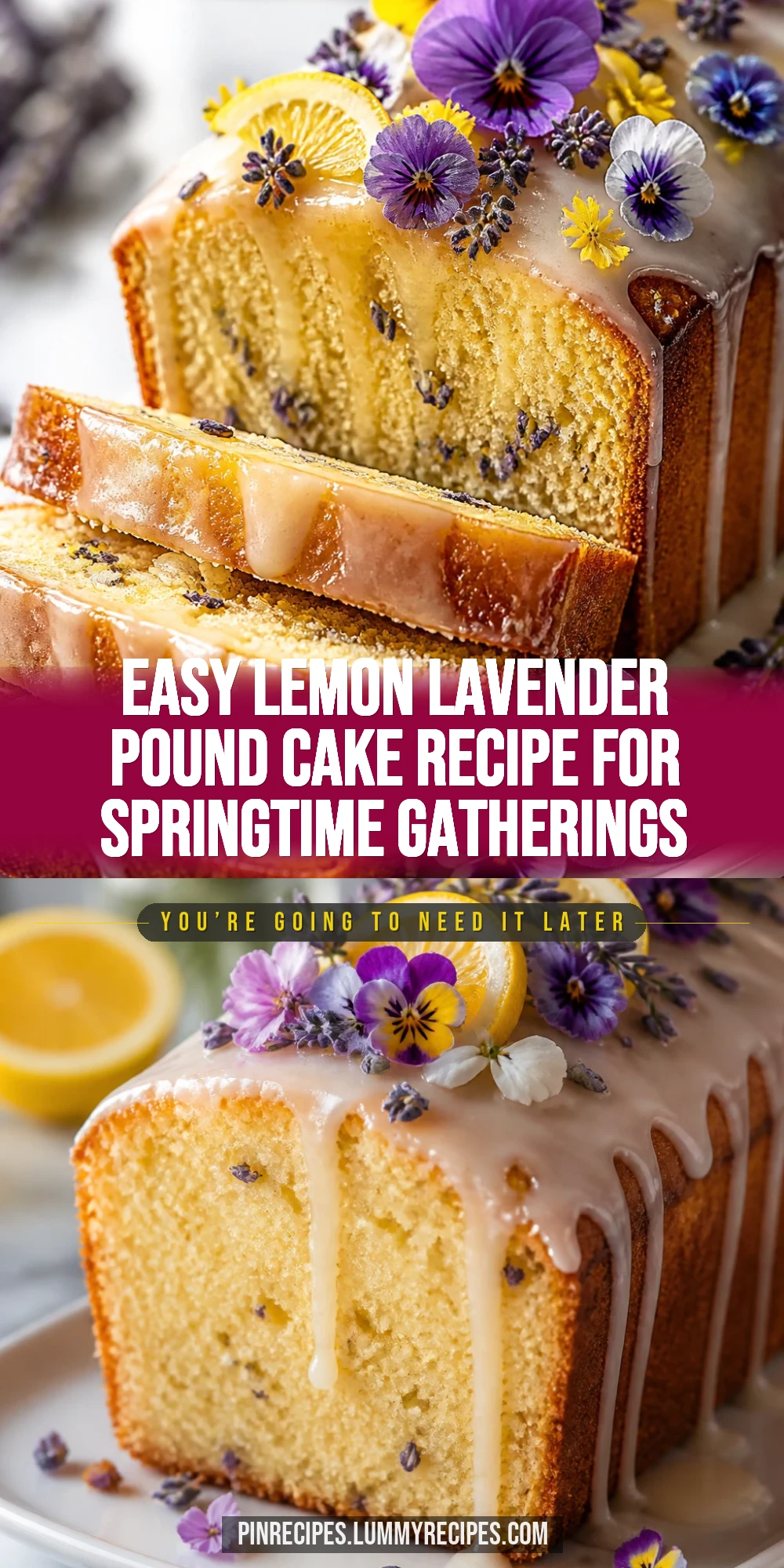
This lemon lavender pound cake is a fragrant, buttery treat perfect for afternoon tea or spring gatherings. The subtle floral notes come from dried lavender buds, and the fresh edible flowers on top add a beautiful, natural touch.
Introduction
I first made this lemon lavender pound cake a few springs ago when I wanted a dessert that felt both comforting and a little fancy. I’d always loved the idea of lavender in sweets but found some recipes too overpowering or dry. So, I experimented with gentle lavender buds and lots of fresh lemon zest to brighten everything up. The trick I learned is to infuse the milk with lavender first—it really brings out the floral notes without making the cake taste like soap! Plus, using a good amount of butter and sugar keeps the crumb moist and tender. I also love topping it with fresh edible flowers, which makes it look stunning for afternoon tea or a special brunch. When you slice into it, you’ll notice the subtle floral aroma mingling with bright citrus, balanced by a rich buttery texture. It’s one of those cakes that feels like a little celebration in every bite, and I’m excited to share the recipe with you. Just a heads up, patience during baking is key—the loaf needs a full hour to develop that perfect golden crust and moist interior.
What You'll Need
One 9x5 inch loaf, about 8 servings
- 1 cup unsalted butter, softened
- 2 cups granulated sugar
- 4 large eggs, room temperature
- 3 cups all-purpose flour, sifted
- 1/2 teaspoon baking powder
- 1/4 teaspoon salt
- 1 cup whole milk, room temperature
- 2 tablespoons dried culinary lavender buds
- Zest of 2 lemons
- 1/4 cup fresh lemon juice
- 1 teaspoon pure vanilla extract
- Fresh edible flowers for garnish (such as pansies, violets, or nasturtiums)
How To Do It
Step 1
Start by infusing the milk with dried lavender buds. Warm the milk gently in a small saucepan over low heat until it’s steaming but not boiling. Remove from heat and let the lavender steep for about 15 minutes. This step is crucial because it extracts the delicate floral oils without making the flavor bitter. Strain the milk through a fine mesh sieve to remove the buds, pressing lightly to get all the infused flavor. This lavender milk will be the secret to the cake’s subtle, aromatic profile.
⏱ Time: 20 minutes
✓ Doneness: Milk should be warm and fragrant with lavender, with no visible buds remaining.
Step 2
In a large mixing bowl, cream the softened butter and granulated sugar together using a hand mixer or stand mixer on medium speed. Beat until the mixture is pale, fluffy, and light in texture—this usually takes about 4 to 5 minutes. Creaming incorporates air into the batter, which helps the pound cake rise and gives it a tender crumb. Avoid rushing this step or using cold butter, as it won’t trap enough air and your cake might turn out dense.
⏱ Time: 5 minutes
✓ Doneness: Butter and sugar should look light in color and fluffy, with no grainy sugar visible.
Step 3
Add the eggs one at a time to the creamed butter and sugar mixture, beating well after each addition. This helps to emulsify the batter, ensuring it stays smooth and doesn’t curdle. If you add eggs too quickly or all at once, the batter can break and the texture of the cake will suffer. Once all eggs are incorporated, mix in the vanilla extract and lemon zest for that fresh citrus kick.
⏱ Time: 5 minutes
✓ Doneness: Batter should be smooth, glossy, and slightly thickened with no streaks of egg.
Step 4
In a separate bowl, whisk together the sifted all-purpose flour, baking powder, and salt. Sifting is important here to distribute the leavening evenly and avoid lumps, which can cause uneven rising. The salt balances the sweetness and enhances the other flavors. Set this dry mixture aside for now.
⏱ Time: 3 minutes
✓ Doneness: Dry ingredients should be evenly combined and light in texture.
Step 5
With the mixer on low speed, add the dry ingredients to the wet mixture in three batches, alternating with the lavender-infused milk. Start and end with the flour mixture. Mixing in batches prevents overworking the batter, which can make the cake tough. Stir just until combined after each addition—overmixing develops gluten and ruins the tender crumb we want.
⏱ Time: 7 minutes
✓ Doneness: Batter should be smooth and thick but not sticky or dry.
Step 6
Preheat your oven to 350°F (175°C). Grease a 9x5 inch loaf pan with butter and lightly dust it with flour, tapping out the excess. This ensures the cake releases easily after baking and prevents sticking. Pour the batter into the pan, smoothing the top with a spatula. Tap the pan gently on the counter to release any air bubbles that could cause holes or uneven texture.
⏱ Time: 10 minutes
✓ Doneness: Batter evenly spread with a smooth surface, no large air pockets visible.
Step 7
Bake the cake in the preheated oven for about 55-60 minutes. Start checking at 50 minutes by inserting a toothpick into the center—it should come out clean or with a few moist crumbs, but no wet batter. The baking time can vary depending on your oven, so keep a close eye near the end. Avoid opening the oven door too often, as temperature drops can cause the cake to sink.
⏱ Time: 55-60 minutes
✓ Doneness: Golden brown crust with toothpick coming out clean or with moist crumbs.
Step 8
Once baked, remove the cake from the oven and let it cool in the pan for about 15 minutes. This resting time allows the cake to firm up slightly, making it easier to remove. Then, carefully invert the cake onto a wire rack to cool completely. Cooling fully is important because warm cake can crumble and the flavors deepen as it rests.
⏱ Time: 30 minutes
✓ Doneness: Cake is firm to the touch and cool to room temperature.
Step 9
Before serving, gently decorate the top of the pound cake with fresh edible flowers. Choose varieties like pansies, violets, or nasturtiums that are safe to eat and add a pop of color. This final touch makes the cake look festive and inviting, perfect for springtime gatherings. If you’re not serving immediately, keep the flowers separate and add them just before presentation.
⏱ Time: 5 minutes
✓ Doneness: Cake is beautifully adorned with fresh flowers, ready to impress.
Pro Tips
Infuse the milk with lavender buds ahead of time for stronger flavor.
Allowing the lavender to steep in warm milk for at least 15 minutes extracts the floral oils gently without bitterness. This infusion method distributes flavor evenly and avoids the gritty texture you’d get from adding buds directly to the batter.
Use room temperature ingredients for better emulsification.
Butter, eggs, and milk at room temperature blend more smoothly, preventing curdling and ensuring a uniform batter. Cold ingredients can cause the batter to separate, leading to a dense or uneven crumb.
Don’t overmix once you add the flour.
Overmixing develops gluten, which makes the cake tough and chewy instead of tender. Mixing just until the flour is incorporated preserves the soft crumb texture that’s key to a great pound cake.
Grease and flour your pan thoroughly.
This prevents sticking and helps the cake release cleanly after baking. A stuck cake can tear or crumble, ruining its presentation and texture.
Let the cake cool completely before adding edible flowers.
Warm cake can cause flowers to wilt or discolor quickly. Cooling preserves the cake’s texture and keeps the flowers fresh and vibrant for serving.
Use a toothpick to check doneness starting at 50 minutes.
Ovens vary, so checking early prevents overbaking, which dries out the cake. A clean toothpick with moist crumbs means the cake is perfectly baked and tender.
Tap the pan gently before baking to remove air bubbles.
This helps prevent large holes or uneven texture inside the cake, ensuring a smooth, uniform crumb throughout.
Common Mistakes to Avoid
Using too much lavender and getting a soapy taste.
Why it happens Many assume more lavender means stronger flavor, but excess lavender can quickly become overpowering and unpleasant.
Fix Stick to the recommended amount and infuse lavender in milk rather than adding buds directly. This controls intensity and avoids bitterness.
Adding eggs all at once and curdling the batter.
Why it happens Cold eggs or adding too quickly can cause the butter mixture to separate.
Fix Add eggs one at a time, mixing well after each addition to keep the batter smooth and emulsified.
Overmixing after adding flour, resulting in a tough cake.
Why it happens Overworking the batter develops gluten, which makes the cake dense.
Fix Mix just until the flour disappears to keep the crumb tender.
Not greasing the pan properly causing the cake to stick.
Why it happens Skipping or rushing this step leads to a stuck cake that breaks apart.
Fix Grease and flour the pan thoroughly, tapping out excess flour for an easy release.
Cutting the cake before it cools and causing crumbling.
Why it happens Warm cake is fragile and crumbly.
Fix Let the cake cool completely on a wire rack before slicing for clean cuts.
Variations
Honey Lavender Pound Cake
Swap granulated sugar for honey for a natural sweetness and a slightly denser texture. Honey adds a floral depth that complements lavender beautifully. Expect a moist cake with a subtle caramel note.
Note: Reduce liquid slightly since honey adds moisture; bake time may be a few minutes longer.
Gluten-Free Lemon Lavender Pound Cake
Use a 1-to-1 gluten-free baking flour blend to make this cake suitable for gluten intolerance. The texture will be slightly different—more crumbly but still deliciously fragrant and moist.
Note: Add 1/4 teaspoon xanthan gum if your blend doesn’t contain it to improve structure.
Lemon Lavender Bundt Cake with Glaze
Bake the batter in a bundt pan and drizzle with a lemon glaze made from powdered sugar and lemon juice. This variation offers a pretty shape and an extra citrus punch on top.
Note: Adjust baking time to about 50-55 minutes; watch for doneness carefully.
Lavender Blueberry Pound Cake
Fold fresh or frozen blueberries into the batter for a fruity twist. The berries add bursts of juiciness that contrast nicely with the floral and lemon notes.
Note: Toss berries in a little flour before adding to prevent sinking; fold gently.
Vegan Lemon Lavender Pound Cake
Replace butter with vegan margarine and eggs with flax eggs (1 tbsp ground flax + 3 tbsp water per egg). The cake will be a bit denser but still fragrant and flavorful.
Note: Increase baking time by 5-10 minutes and check moisture with a toothpick.
Nutrition
Per Serving:
Nutritional values are estimates and may vary based on specific ingredients used.
Storage & Tips
Room Temperature
Store the cake covered loosely with a cake dome or plastic wrap at room temperature for up to 2 days. Avoid direct sunlight or heat, which can dry out the cake and wilt the flowers.
Refrigerator
Keep the cake in an airtight container in the fridge for up to 5 days. The cake may firm up and the texture become slightly denser when chilled. Bring to room temperature before serving for best flavor.
Freezer
Wrap the cake tightly in plastic wrap and then aluminum foil to prevent freezer burn. Freeze for up to 3 months. Thaw overnight in the refrigerator, then bring to room temperature before serving.
Reheating
Warm slices gently in a microwave for 15-20 seconds or in a low oven (300°F) for 5-7 minutes. Avoid overheating, which can dry out the cake. A light brush of lemon syrup or honey before warming can add moisture.
Make Ahead
You can prepare the batter and infuse the lavender milk a day ahead, storing the milk in the fridge. Bake the cake fresh the next day for best texture and flavor. Alternatively, bake in advance and freeze, then thaw and decorate with fresh flowers before serving.
FAQ
Can I use fresh lavender instead of dried buds?
Fresh lavender can be more potent and sometimes bitter, so it’s best to use dried culinary lavender buds for a balanced flavor. If you want to try fresh, use less and infuse gently, but dried buds offer more reliable results.
What if I don’t have edible flowers for decoration?
No worries! You can dust the cake with powdered sugar or top with thin lemon slices or candied lemon peel. The cake’s flavor stands on its own, so decorations are optional but pretty.
How do I know when the cake is fully baked?
Insert a toothpick into the center around 50 minutes. It should come out clean or with a few moist crumbs attached, but no wet batter. If it’s still wet, bake for 5-10 more minutes and check again.
Can I make this cake gluten-free?
Yes, substitute the all-purpose flour with a gluten-free baking blend and add xanthan gum if needed. The texture may be slightly different but still delicious and fragrant.
Why does the cake sometimes turn out dry?
Overbaking is the most common cause. Keep an eye on the bake time and test early for doneness. Also, avoid overmixing the batter, which can develop gluten and dry out the crumb.
Can I use lemon extract instead of fresh lemon?
Fresh lemon zest and juice provide a brighter, fresher flavor that lemon extract can’t fully replicate. If you must, use a small amount of extract but reduce other liquids accordingly.
How should I store leftover cake?
Store leftovers in an airtight container at room temperature for up to 2 days or in the fridge for up to 5 days. Bring to room temperature before serving for best taste and texture.
Is it okay to freeze this pound cake?
Absolutely! Wrap tightly in plastic wrap and foil to prevent freezer burn. Thaw overnight in the fridge and warm slightly before serving to refresh the texture.
Final Thoughts
I hope you enjoy baking and sharing this lemon lavender pound cake as much as I do. It really brings a little spring magic to any table—please let me know how yours turns out!