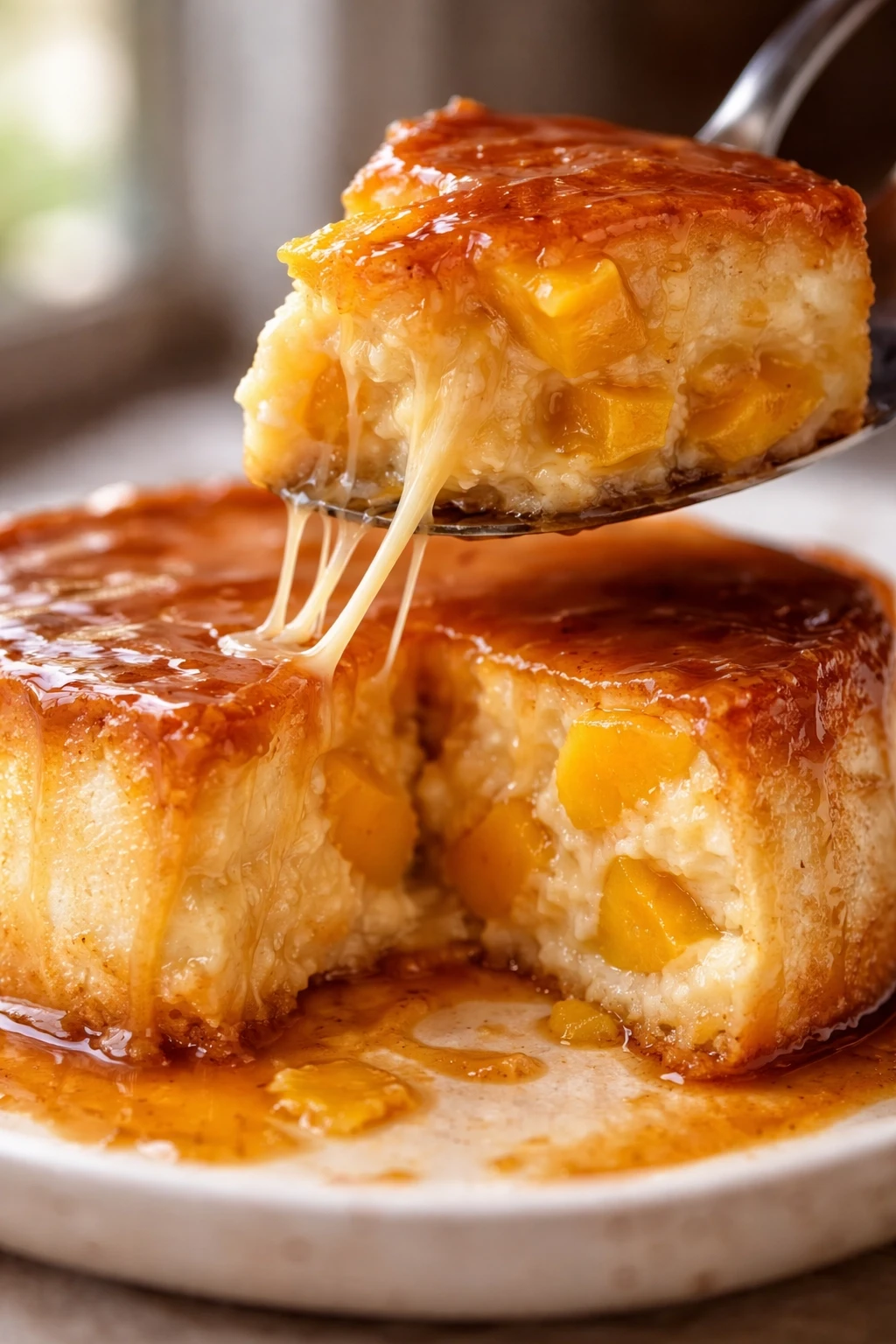
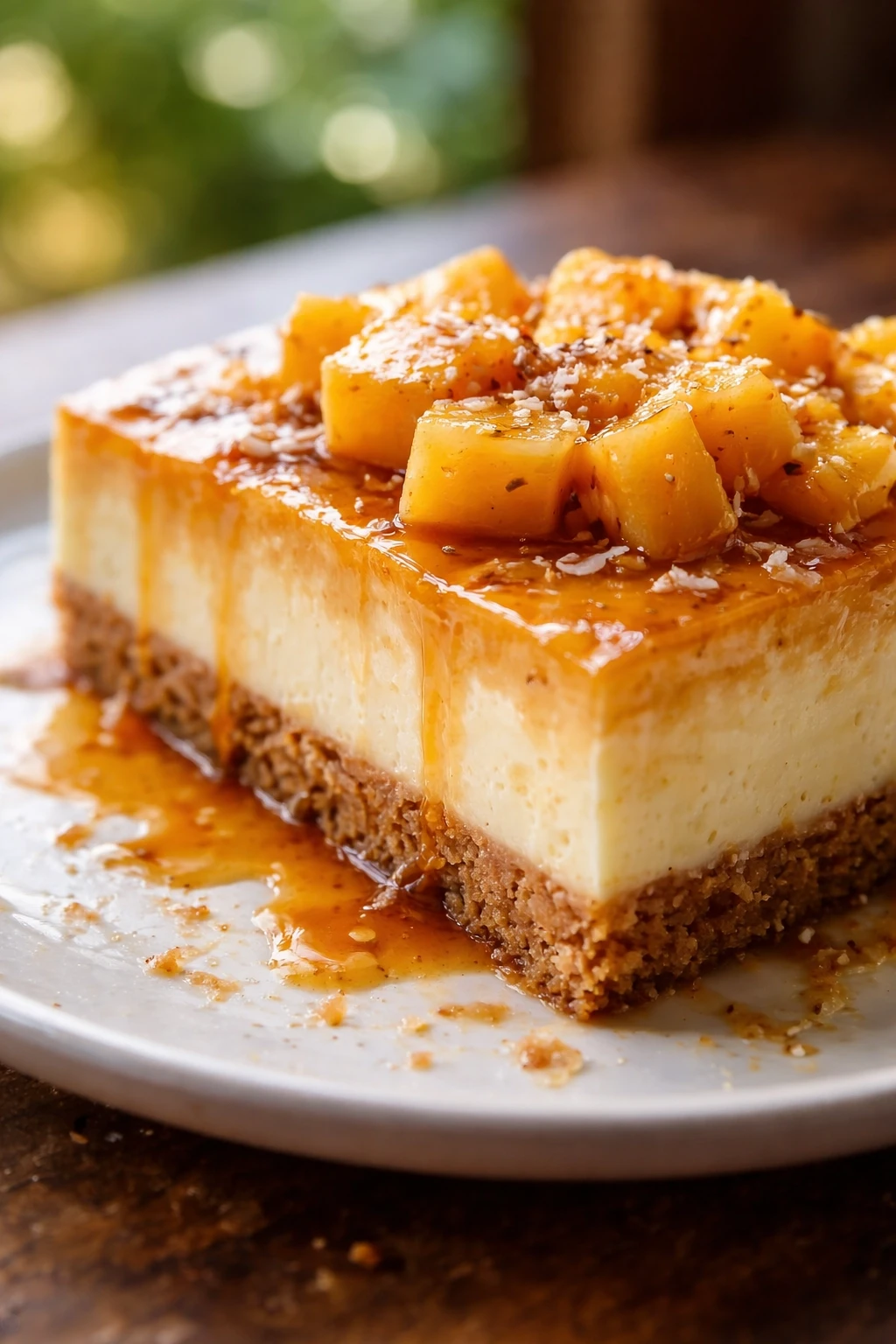
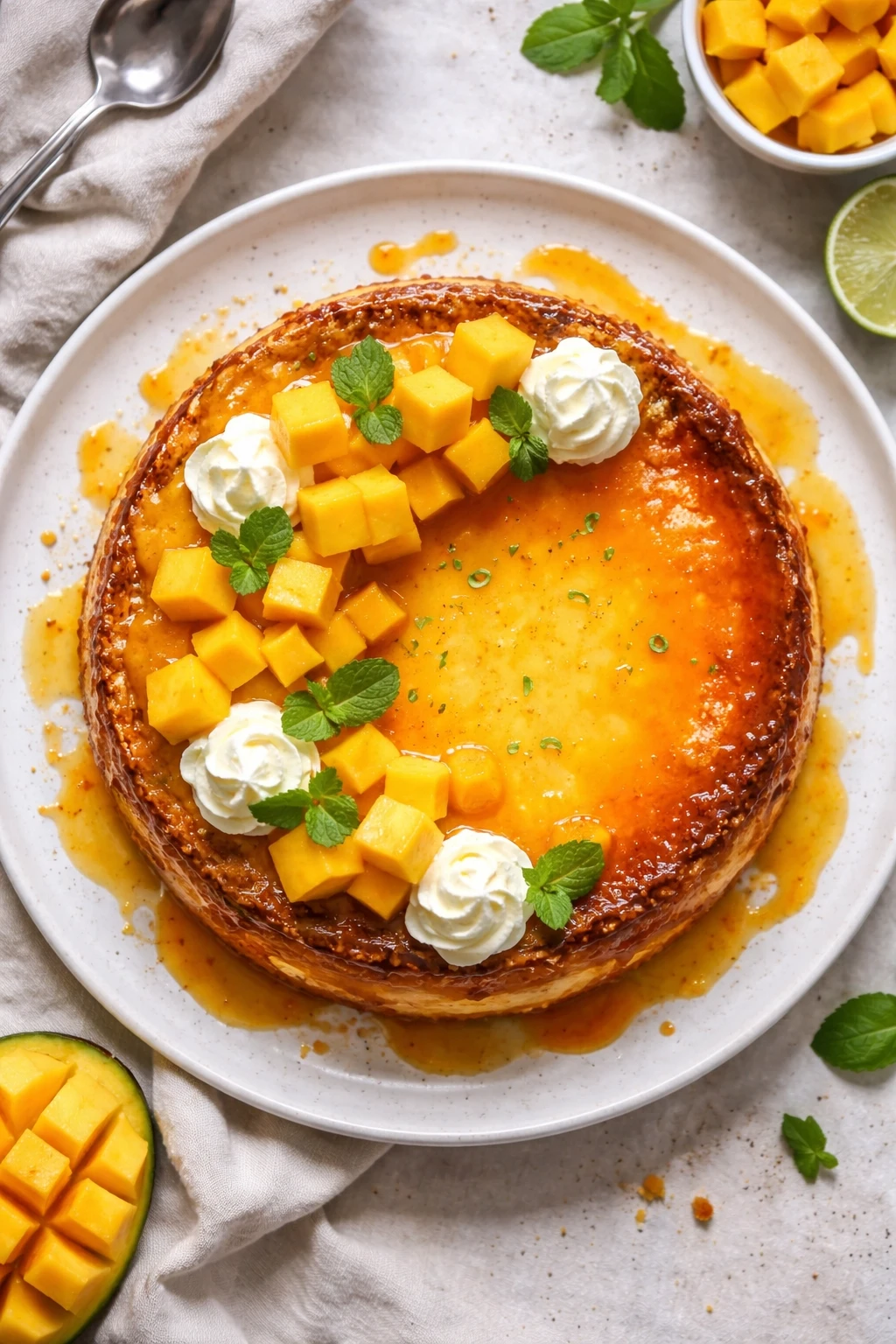
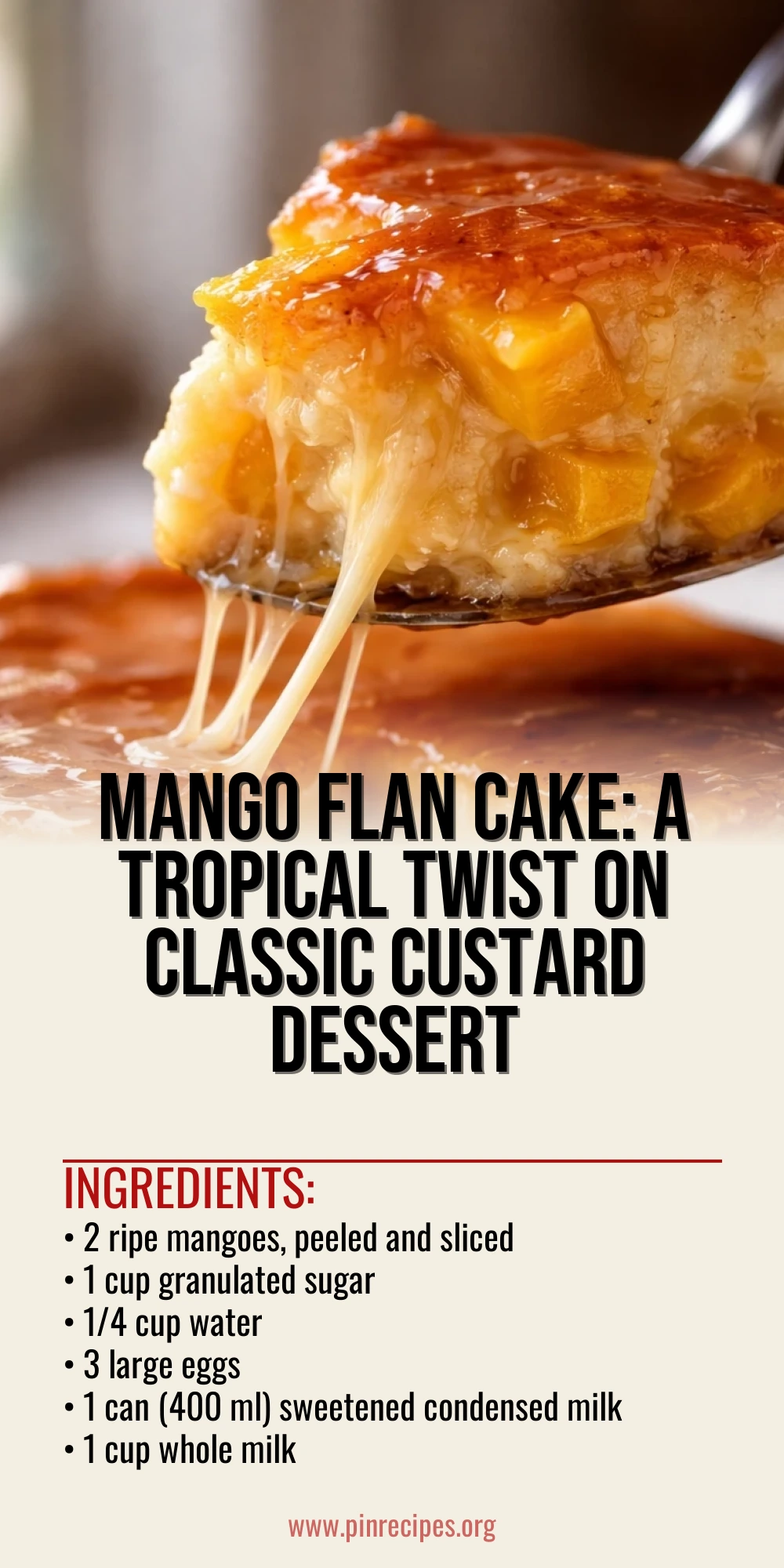
This mango flan cake combines silky custard with fresh mango slices and a luscious caramel base. The secret? Baking it in a water bath for that perfect creamy texture. Serve it chilled for a refreshing tropical treat anytime!
Introduction
I first tried mango flan cake during a summer visit to a friend’s house, and it instantly became one of my favorite desserts. The combination of smooth custard with the tropical sweetness of mango is just irresistible. Over time, I’ve tweaked the recipe a bit to make it easier and more foolproof, especially the caramel layer which adds a lovely depth of flavor and a bit of crunch. One trick I learned is baking the flan in a water bath—this gentle cooking method ensures the custard sets perfectly without cracking or curdling. The finished cake is glossy, creamy, and has that delicate mango aroma that’s just heavenly. It’s great chilled on a hot day or as a stunning dessert after dinner. I also love serving it with a dollop of whipped cream or on a soft sponge cake base for extra indulgence. Honestly, it’s a recipe that feels both fancy and comforting, and I’m excited to share it with you!
How To Do It
Step 1
Start by making the caramel: combine the sugar and water in a small saucepan over medium heat. Stir gently until the sugar dissolves, then let it simmer without stirring until it turns a deep golden amber color. This caramelization is key because it adds a rich, slightly bitter contrast to the sweet custard. Be careful not to burn it, as that will make your flan taste bitter. Once ready, immediately pour the caramel into your baking dish and tilt it to coat the bottom evenly. Let it harden while you prepare the rest.
⏱ Time: 10 minutes
✓ Doneness: Caramel is a deep golden amber and coats the pan evenly without burning
Step 2
Arrange the sliced mangoes evenly over the set caramel in the baking dish. The mango slices not only add fresh flavor but also create a beautiful presentation once the flan is inverted. Make sure the slices are laid flat and cover the caramel completely to prevent the custard from sticking to the dish later. This step is important because it ensures every bite has that lovely mango sweetness.
⏱ Time: 5 minutes
✓ Doneness: Mango slices are evenly spread and cover the caramel base fully
Step 3
In a blender or mixing bowl, combine the eggs, sweetened condensed milk, whole milk, and vanilla extract. Blend or whisk until the mixture is completely smooth and uniform. This blending step is crucial because it helps to incorporate air and ensures the custard will be silky and free of lumps. Avoid overmixing, which can create bubbles that cause holes in the flan.
⏱ Time: 5 minutes
✓ Doneness: Custard mixture is smooth, creamy, and homogenous
Step 4
Carefully pour the custard mixture over the mango and caramel layers in the baking dish. Pour slowly to avoid disturbing the mango slices. The custard should fill the dish almost to the top but leave a little room to prevent overflow during baking. This layering is what makes the flan visually stunning once flipped.
⏱ Time: 3 minutes
✓ Doneness: Custard covers mango slices evenly without spilling
Step 5
Prepare a water bath by placing the baking dish inside a larger roasting pan. Pour hot water into the roasting pan until it reaches halfway up the sides of the baking dish. This water bath method gently cooks the flan, preventing the custard from curdling or cracking by maintaining an even temperature around it. It’s a classic technique for custards and makes a huge difference in texture.
⏱ Time: 5 minutes
✓ Doneness: Water bath level reaches halfway up the flan dish sides
Step 6
Bake the flan in a preheated oven at 180°C (350°F) for 40 to 50 minutes. Check doneness by gently shaking the dish; the custard should be mostly set but still have a slight jiggle in the center. Overbaking will cause a rubbery texture, while underbaking means it won’t hold its shape when flipped. Patience here is key for that perfect creamy consistency.
⏱ Time: 40-50 minutes
✓ Doneness: Custard jiggles slightly in the center but is mostly set
Step 7
Remove the flan from the oven and carefully take the baking dish out of the water bath. Let it cool completely at room temperature, then refrigerate for at least 4 hours or overnight. Cooling allows the custard to fully set and the flavors to meld. It also makes flipping the flan easier without breaking it.
⏱ Time: 4 hours or overnight
✓ Doneness: Flan is fully chilled and firm to the touch
Step 8
To serve, run a thin knife around the edges of the flan to loosen it from the dish. Place a serving plate over the baking dish and quickly invert it. The caramel and mango slices will be on top, creating a beautiful glossy finish. If the flan sticks, refrigerate longer or gently warm the bottom of the dish in hot water to loosen the caramel.
⏱ Time: 5 minutes
✓ Doneness: Flan releases cleanly onto the plate with caramel and mango on top
Step 9
Optionally, add a dollop of whipped cream or serve the flan over a soft cake base for extra indulgence. This adds texture contrast and richness. Enjoy immediately or keep refrigerated until ready to serve. Leftovers taste great cold and the flavors deepen after a day.
⏱ Time: 2 minutes
✓ Doneness: Whipped cream or cake complements the flan without overpowering it
Pro Tips
Use a silicone spatula to gently stir caramel while it melts.
A silicone spatula is heat resistant and flexible, allowing you to stir the sugar without scratching your pan. Stirring gently helps dissolve sugar evenly before caramelization starts, preventing crystallization which can ruin the smooth texture of the caramel.
Strain the custard mixture before pouring it over the mango.
Straining removes any egg solids or lumps, ensuring a silky smooth custard. This extra step improves the texture and appearance of the flan, making it more professional and enjoyable to eat.
Don’t rush the water bath setup; make sure water is hot but not boiling.
Hot water helps maintain an even temperature around the flan, but boiling water can cause sudden temperature changes that might crack the custard. A gentle simmer in the water bath ensures even cooking and a smooth texture.
Cool the flan completely before refrigerating.
Cooling at room temperature prevents condensation from forming inside the container, which could make the flan watery. Gradual cooling also helps the custard set properly, improving texture and flavor.
Use a thin knife dipped in hot water to loosen the edges before flipping.
Warming the knife helps it glide smoothly between the flan and the dish, reducing the risk of breaking the custard or tearing the caramel layer. This technique makes unmolding easier and cleaner.
If you want a firmer flan, increase baking time slightly but watch closely.
Longer baking allows more water to evaporate and the custard to set firmer. However, overbaking can make it rubbery, so check frequently near the end to catch the perfect texture.
Serve the flan chilled for best flavor and texture.
Chilling enhances the custard’s creaminess and allows the caramel to soften slightly, creating a perfect balance of flavors and mouthfeel. Warm flan can taste too sweet and runny.
Common Mistakes to Avoid
Caramel burning during preparation
Why it happens Many cooks get distracted or stir the sugar too vigorously, causing uneven caramelization or burning.
Fix Keep a close eye on the sugar as it melts and caramelizes. Stir gently only until dissolved, then let it cook undisturbed. Remove from heat as soon as it reaches a golden amber color to avoid bitterness.
Custard curdling or cracking after baking
Why it happens This happens when the oven temperature is too high or the custard cooks too fast without a water bath.
Fix Always bake the flan in a water bath to moderate heat. Use an oven thermometer to ensure accurate temperature and avoid opening the oven door frequently during baking.
Flan sticking to the pan when unmolding
Why it happens If the caramel or custard hasn’t fully set or the edges weren’t loosened properly, the flan can stick.
Fix Cool the flan completely and refrigerate before flipping. Run a thin knife around the edges, warming it in hot water for easier release.
Mango slices sinking or floating unevenly
Why it happens Pouring custard too quickly or unevenly can disturb the mango placement.
Fix Arrange mango slices flat and pour custard slowly over the back of a spoon to gently cover them without shifting.
Flan texture too watery or too firm
Why it happens Incorrect egg to milk ratio or baking time can cause texture issues.
Fix Follow the recipe ratios carefully and check doneness by jiggle test. Adjust baking time slightly if needed but avoid overbaking.
Variations
Coconut Mango Flan Cake
Swap whole milk for coconut milk to add a tropical twist and richer flavor. The custard will have a subtle coconut aroma that pairs beautifully with mango. This variation makes the flan creamier and slightly denser.
Note: Coconut milk is thicker and fattier, so the custard may need slightly less baking time to avoid becoming too firm.
Mango Flan with Lime Zest
Add lime zest to the custard mixture for a zesty brightness that cuts through the sweetness. This adds a fresh citrus note that complements the mango and caramel perfectly.
Note: Add 1 teaspoon finely grated lime zest to the custard before blending. Be careful not to add juice which can affect custard setting.
Vegan Mango Flan Cake
Use silken tofu blended with coconut milk and agar-agar as an egg substitute to make this flan vegan-friendly. The texture will be slightly different but still creamy and delicious.
Note: Agar-agar must be dissolved and heated properly to set the custard. Baking time will be shorter; chill thoroughly before serving.
Mango Flan with Spiced Caramel
Add a pinch of cinnamon or cardamom to the caramel for a warm spice note that enhances the tropical flavors. This adds complexity and a cozy feel to the dessert.
Note: Add spices once caramel reaches amber color but before pouring into the dish. Stir quickly to combine.
Layered Mango Flan Cake with Sponge
Add a thin layer of soft sponge cake at the bottom before pouring the caramel and custard. This creates a layered dessert with more texture and a cake-like feel.
Note: Bake the sponge layer separately or use store-bought. Pour caramel and mango slices over the sponge before adding custard.
Nutrition
Per Serving:
Nutritional values are estimates and may vary based on specific ingredients used.
Storage & Tips
Room Temperature
The mango flan cake can be kept at room temperature for up to 2 hours if covered loosely to avoid drying out. Beyond that, refrigeration is recommended to maintain texture and safety.
Refrigerator
Store the flan in an airtight container in the fridge for up to 4 days. The texture becomes firmer and flavors meld nicely. It’s best served chilled but can be brought to room temperature before serving if desired.
Freezer
Freeze the flan wrapped tightly in plastic wrap and foil for up to 2 months. To thaw, place in the refrigerator overnight. Texture may soften slightly, but it remains delicious.
Reheating
Reheating is not recommended as it can cause the custard to curdle. Instead, serve chilled or at room temperature. If you prefer it warmer, gently warm a slice in a microwave for 10-15 seconds, avoiding overheating.
Make Ahead
You can prepare the caramel and custard mixture 1 day ahead and keep refrigerated separately. Assemble and bake the next day for fresher texture. Alternatively, bake the flan fully and refrigerate overnight for easier serving the following day.
FAQ
Can I use frozen mango slices for this flan?
Frozen mangoes can be used but make sure to thaw and drain excess liquid before arranging over the caramel. Excess moisture can affect the custard’s texture and cause it to be watery. Fresh mangoes are preferred for best flavor and firmness.
What if my caramel hardens before pouring?
If caramel hardens, gently reheat it over low heat until it melts back to a pourable consistency. Avoid overheating as it can burn. Pour quickly into the dish to prevent it from hardening again before spreading.
How do I know when the flan is done baking?
The flan is done when the edges are set and the center jiggles slightly when you gently shake the dish. It should not be liquidy but still have a slight wobble. Overbaking leads to a rubbery texture, so check near the end of baking time.
Can I make this flan without a water bath?
A water bath is highly recommended to ensure even, gentle cooking. Without it, the custard may cook unevenly, crack, or curdle due to direct heat. If you don’t have a water bath, bake at a lower temperature and watch carefully.
Is it okay to use low-fat milk instead of whole milk?
Low-fat milk can be used but the custard may be less creamy and slightly thinner. Whole milk provides richness and helps the custard set with a smooth texture, so it’s preferred for best results.
How long can I keep the flan before serving?
For best texture and flavor, refrigerate the flan for at least 4 hours or overnight before serving. It can be stored in the fridge up to 4 days but is freshest within the first 2 days.
Can I add other fruits besides mango?
Yes, fruits like peaches, pineapple, or berries can be used, but be mindful of their water content. Firmer fruits work best to maintain texture. Adjust sweetness accordingly if fruits are tart.
How do I prevent the flan from sticking to the pan?
The caramel layer acts as a natural release agent. Make sure the caramel covers the entire bottom evenly and the flan is fully chilled before unmolding. Running a warm knife around the edges also helps release it cleanly.
Final Thoughts
I hope you enjoy making and sharing this mango flan cake as much as I do. It’s a simple yet impressive dessert that brings a taste of the tropics to your table—give it a try and let me know how it turns out!