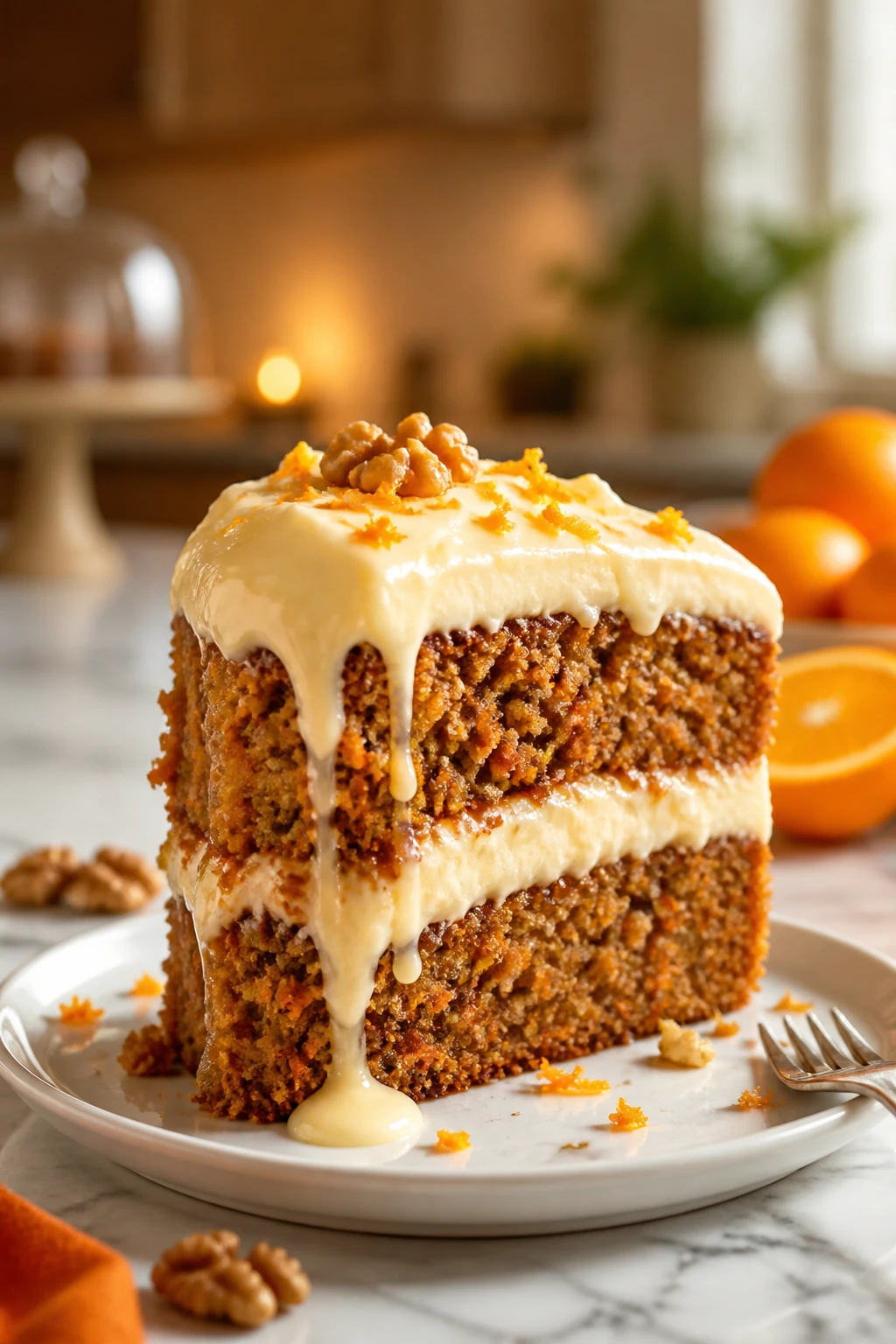
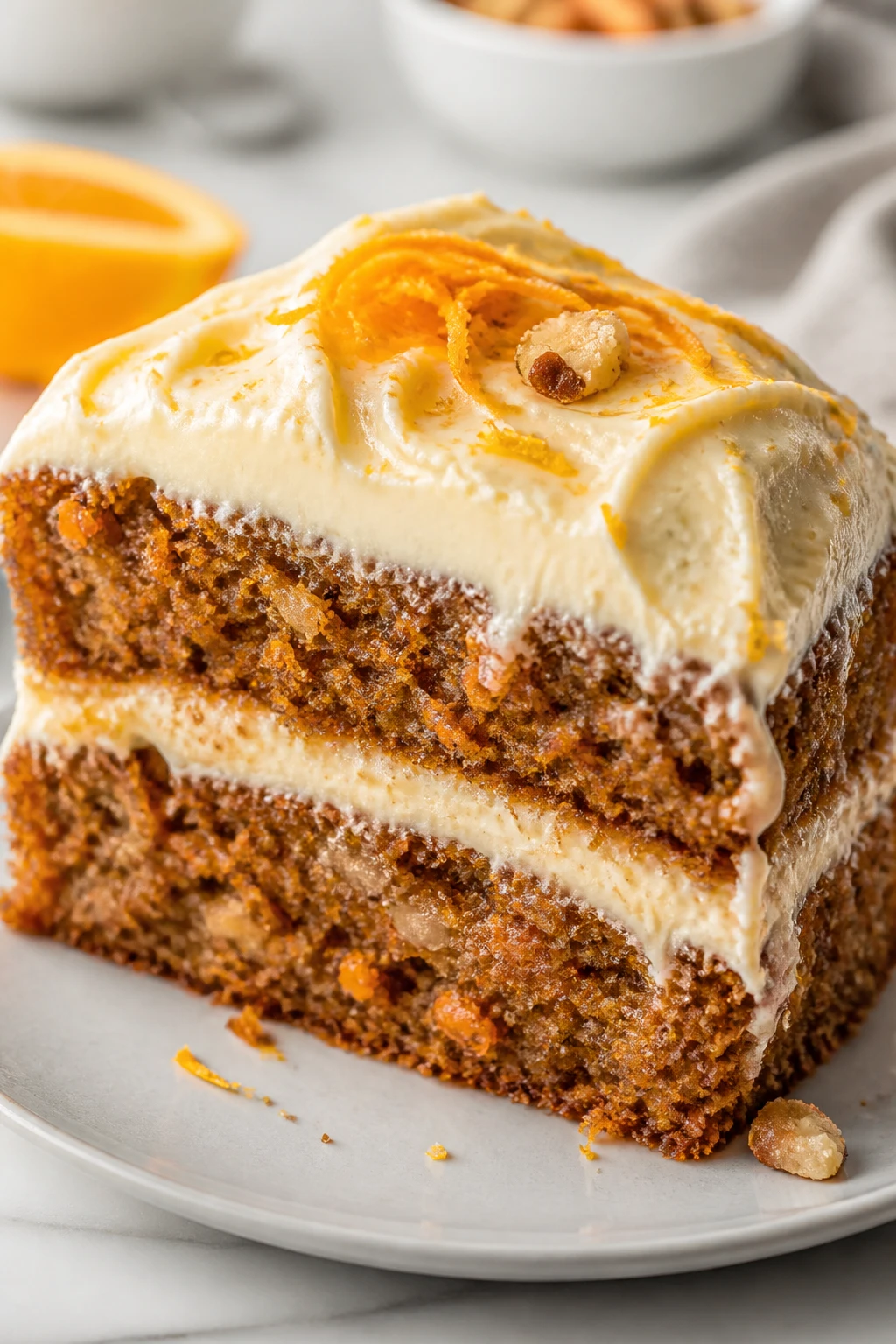
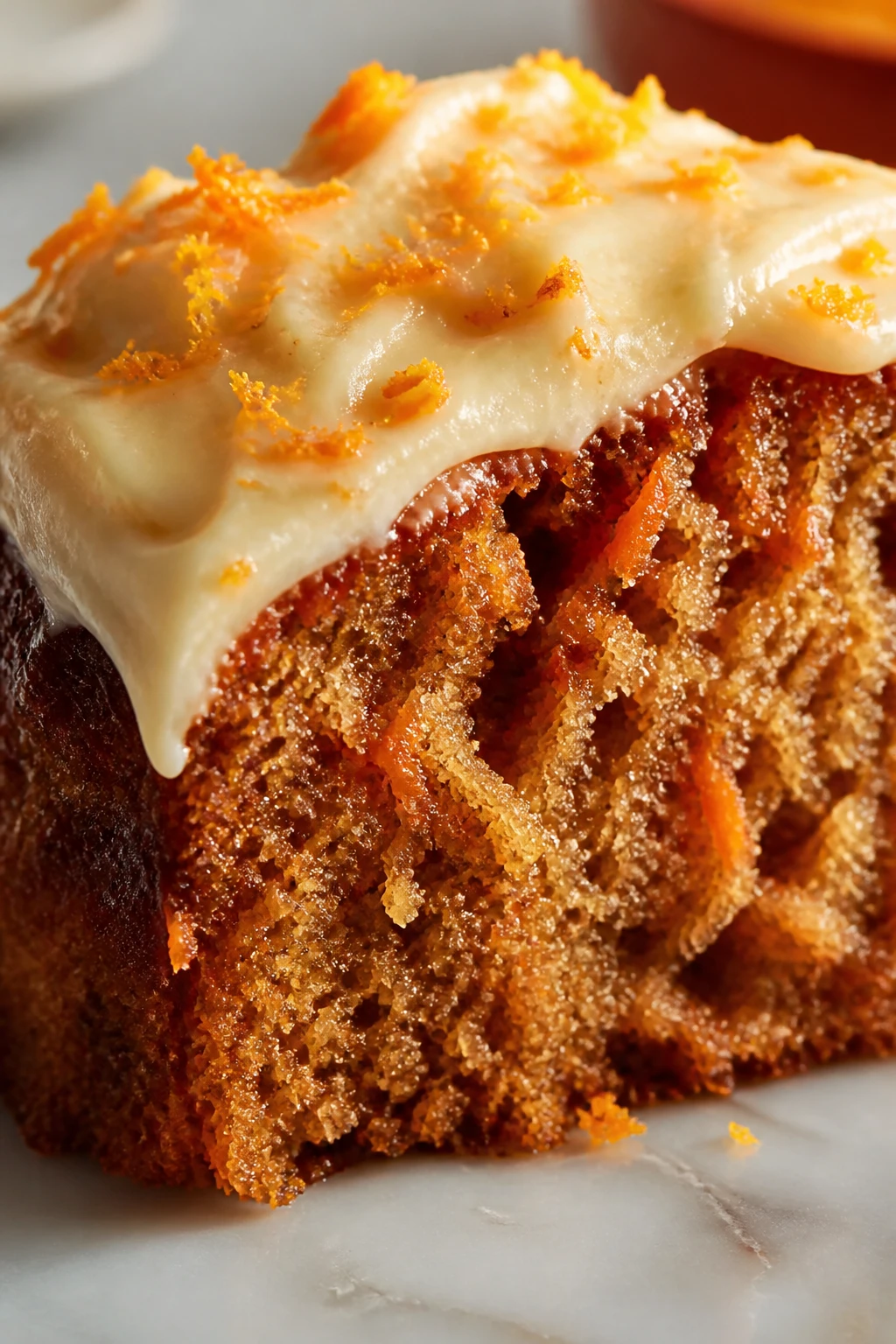
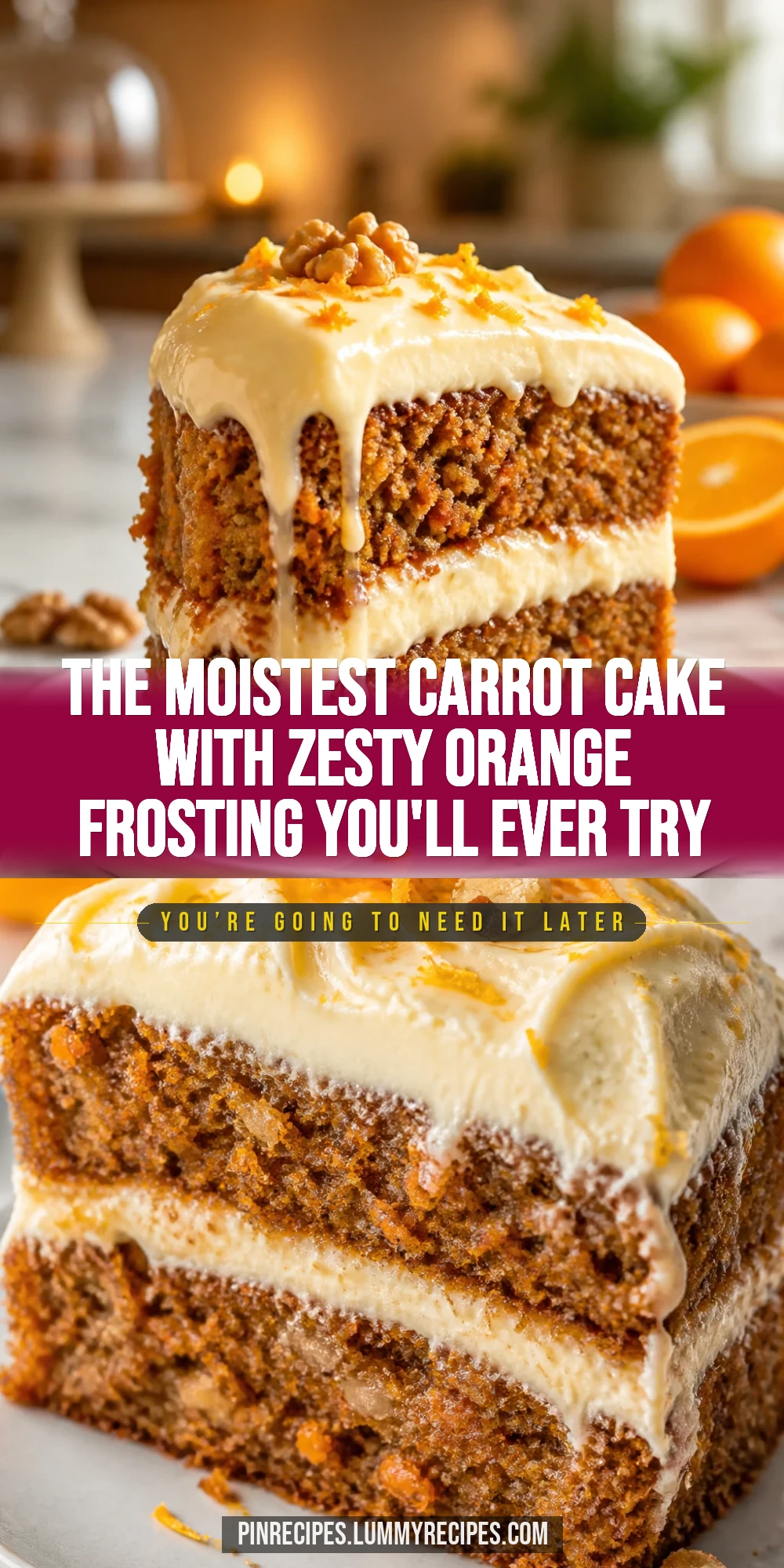
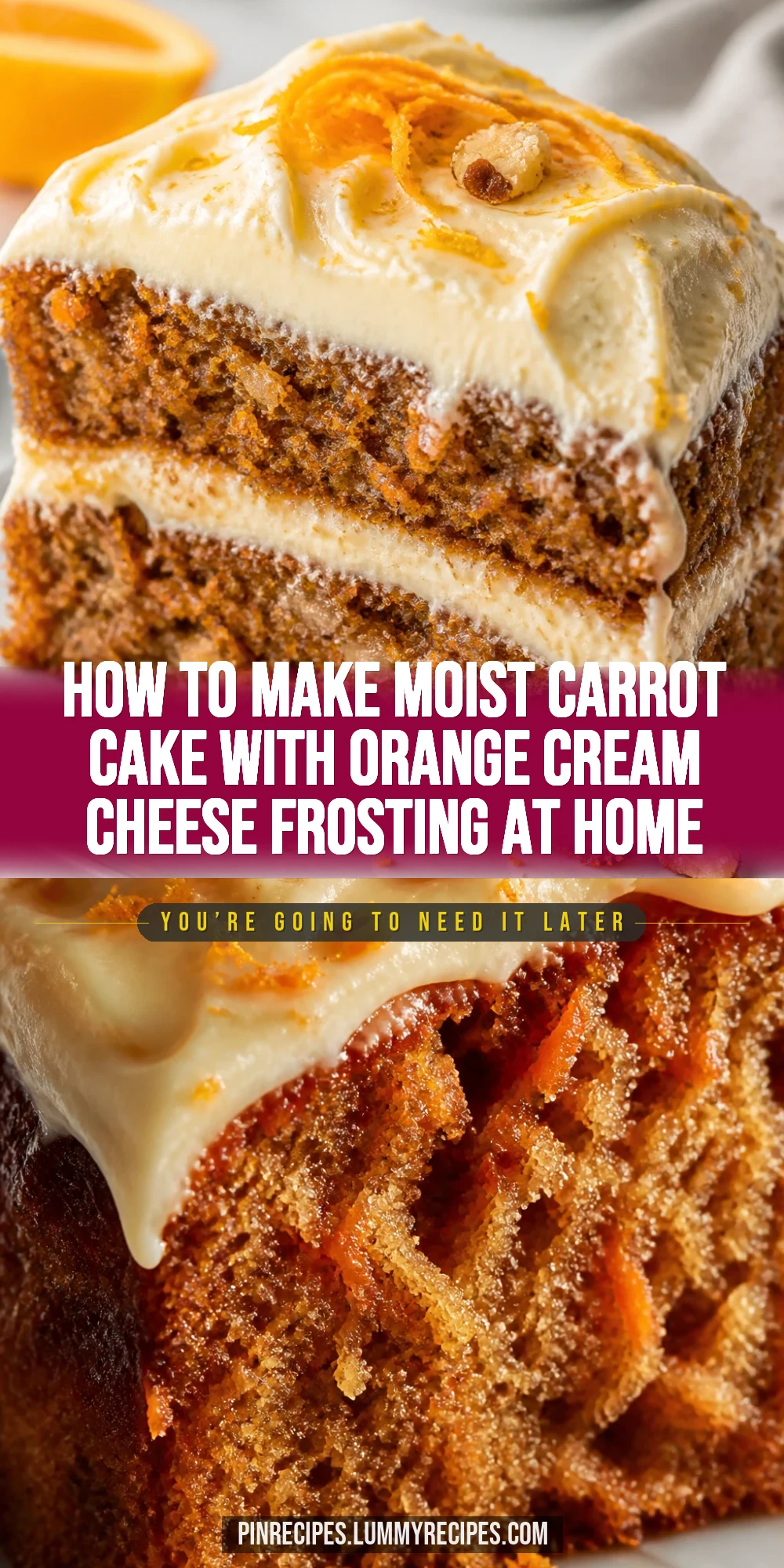
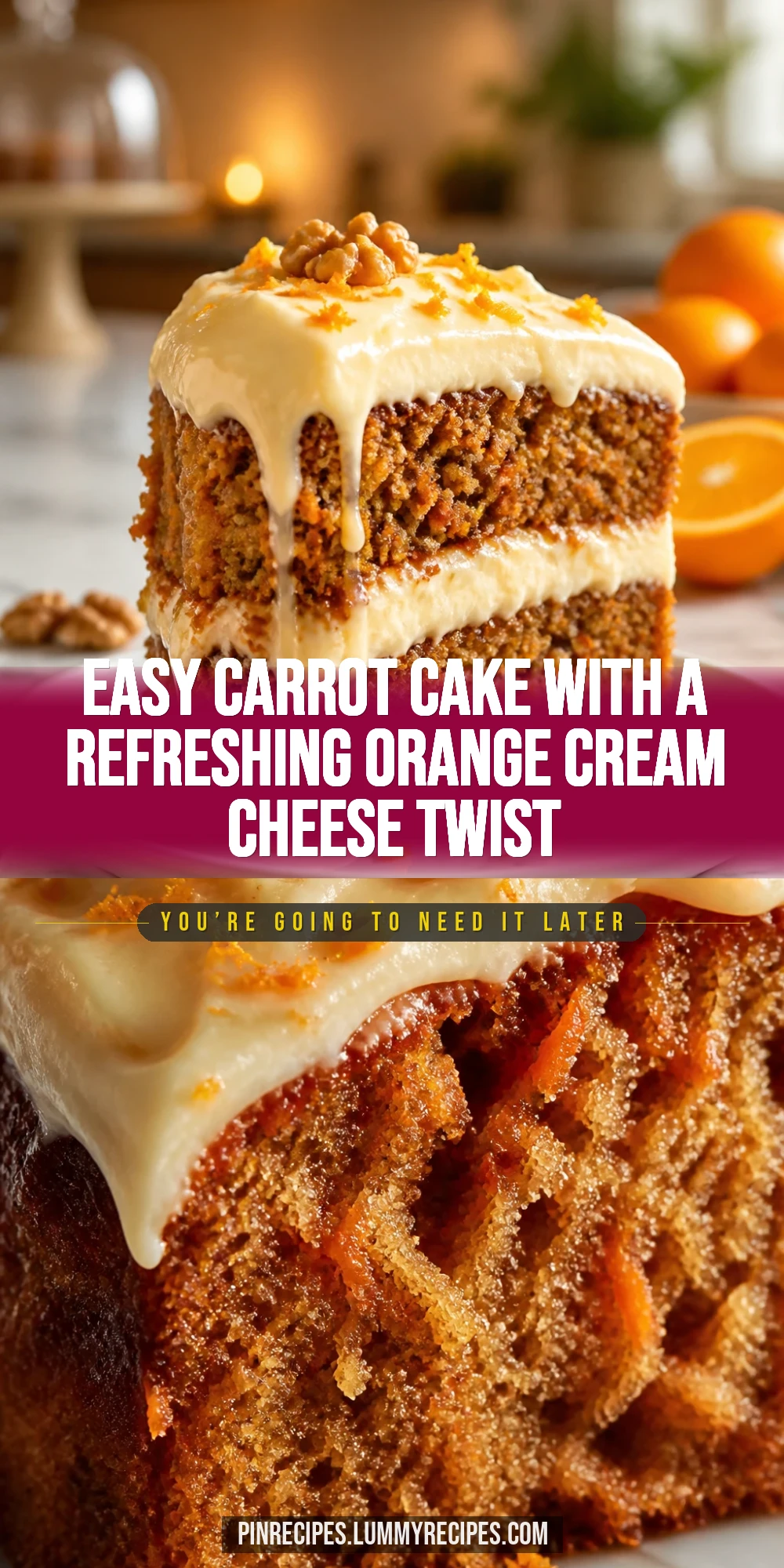
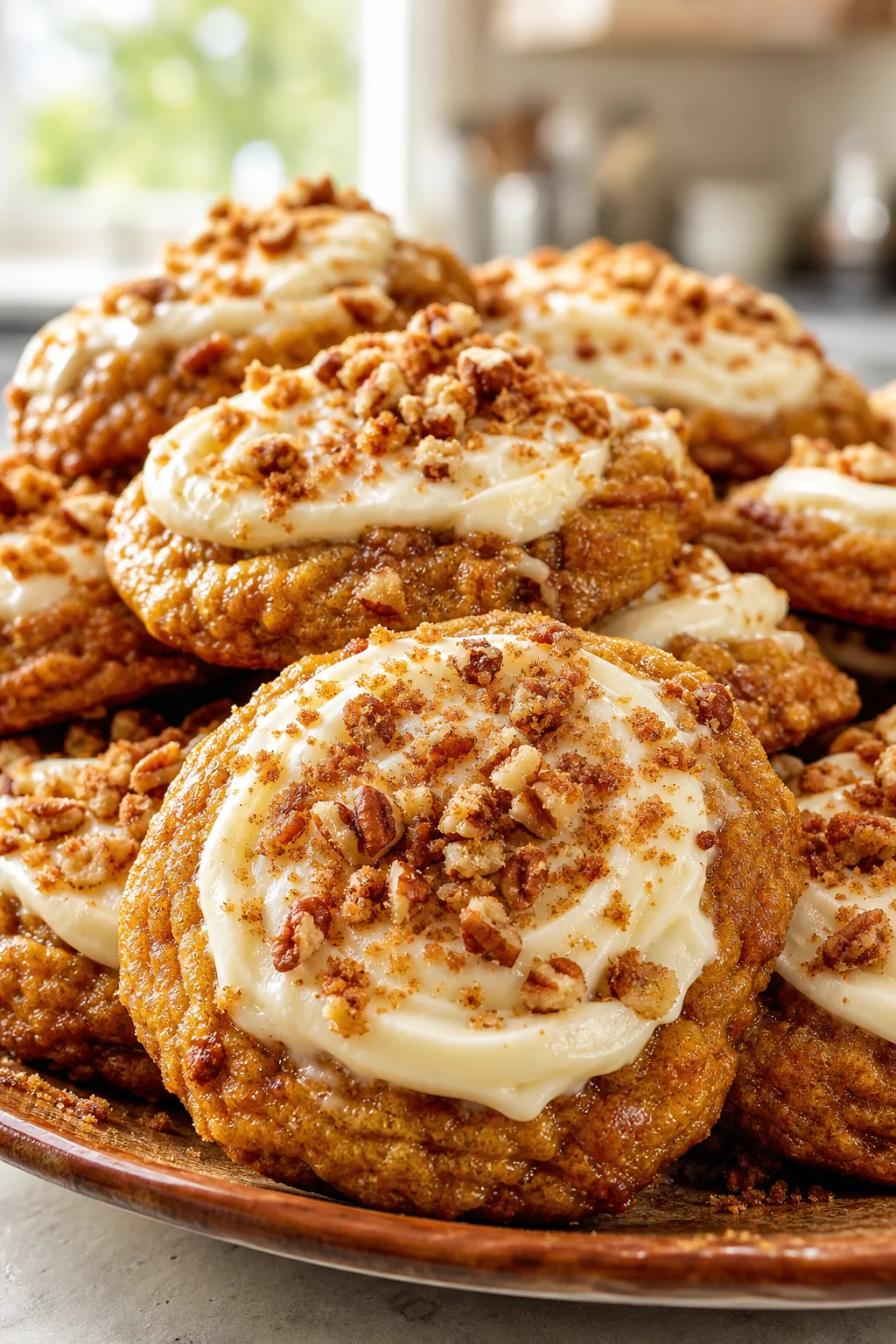
This carrot cake is incredibly moist and bursting with warm spices, perfectly balanced by a tangy orange cream cheese frosting. The fresh orange zest adds a bright twist that makes it a standout dessert for family gatherings or weekend treats.
Introduction
I first made carrot cake years ago when I wanted something comforting but a little different from the usual chocolate or vanilla. This version quickly became a favorite because it’s so moist and full of warm spices, but the real game changer is the orange cream cheese frosting. Adding fresh orange zest and juice to the frosting gives it a lively brightness that cuts through the sweetness perfectly. I’ve tried recipes that were either too dry or too dense, but the trick I learned is to grate the carrots finely and not overmix the batter to keep it light and tender. The layers bake evenly and the frosting spreads smoothly without being too runny. It’s the kind of cake that looks impressive but is actually straightforward to make, and my family always asks for it at birthdays or weekend get-togethers. When you slice into it, you get that perfect balance of spice, sweetness, and citrus tang that feels like a hug in cake form. If you love carrot cake but want a fresh twist, this recipe is for you!
What You'll Need
One 9-inch two-layer cake, 8 servings
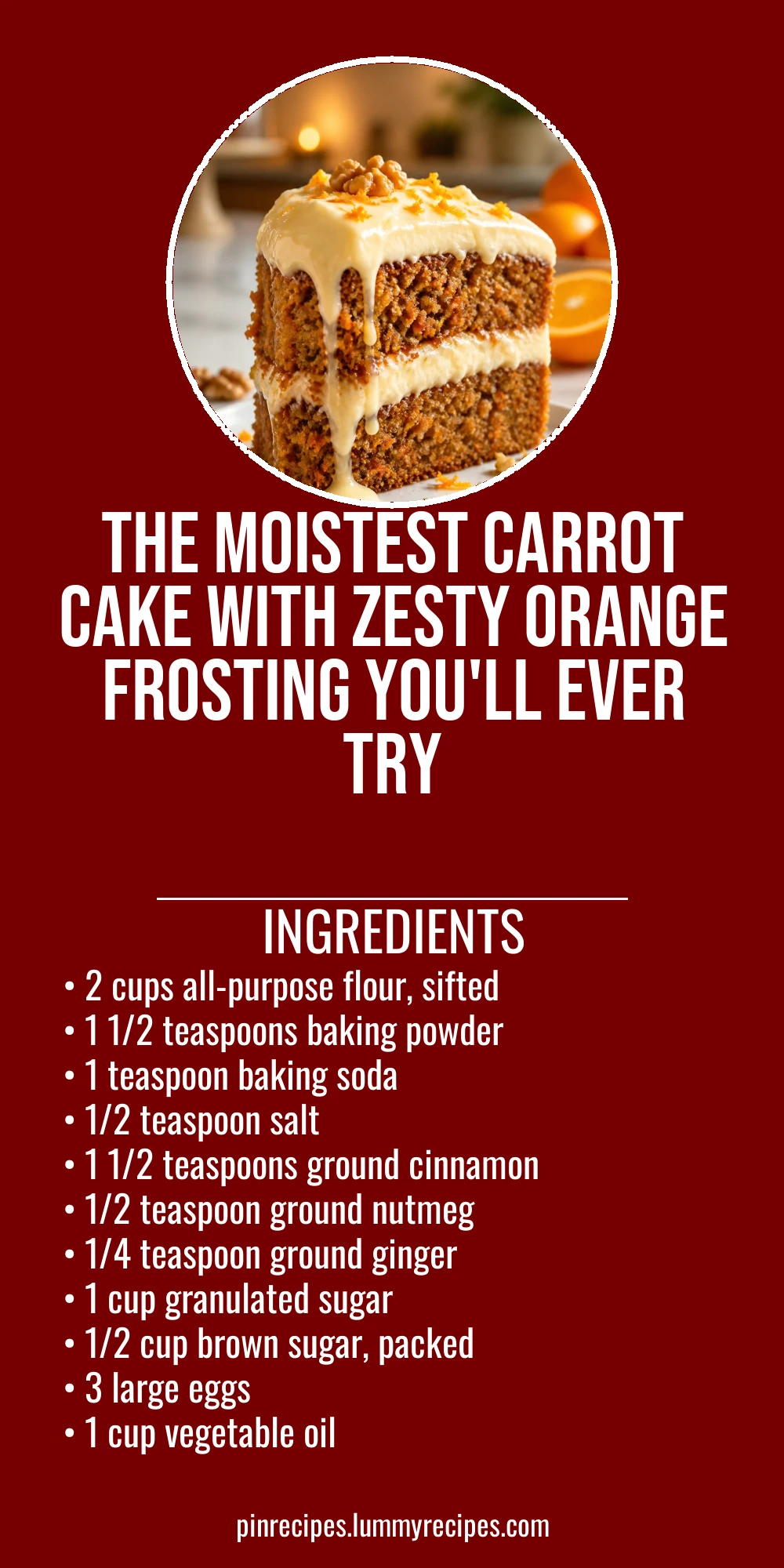
- 2 cups all-purpose flour, sifted
- 1 1/2 teaspoons baking powder
- 1 teaspoon baking soda
- 1/2 teaspoon salt
- 1 1/2 teaspoons ground cinnamon
- 1/2 teaspoon ground nutmeg
- 1/4 teaspoon ground ginger
- 1 cup granulated sugar
- 1/2 cup brown sugar, packed
- 3 large eggs
- 1 cup vegetable oil
- 2 teaspoons vanilla extract
- 3 cups finely grated carrots (about 4-5 medium carrots)
- 1 cup chopped walnuts (optional)
- Zest of 1 large orange
How To Do It
Step 1
Preheat your oven to 350°F (175°C). Grease and flour two 9-inch round cake pans or line them with parchment paper. This step ensures your cake layers release easily after baking without sticking or breaking, which is crucial for a neat layered cake. If you skip greasing properly, the cake might tear when you try to remove it, so take your time here.
⏱ Time: 10 minutes
✓ Doneness: Pans are evenly greased with no dry spots visible
Step 2
In a large bowl, whisk together the flour, baking powder, baking soda, salt, cinnamon, nutmeg, and ginger. This dry mix is where the structure and spice flavor come from. Whisking evenly distributes the leavening agents and spices, so your cake rises properly and tastes balanced. If you don’t mix well, you could end up with pockets of baking soda or uneven spice distribution.
⏱ Time: 5 minutes
✓ Doneness: Dry ingredients are fully combined with no clumps
Step 3
In a separate bowl, beat the granulated sugar, brown sugar, eggs, vegetable oil, and vanilla extract until smooth and slightly thickened. This wet mixture helps dissolve the sugars and incorporates air, which contributes to the cake’s moist texture. Beating eggs and sugars well is key; rushing this step can lead to a dense cake.
⏱ Time: 3-4 minutes
✓ Doneness: Mixture is smooth, glossy, and slightly thickened
Step 4
Slowly add the dry ingredients to the wet, folding gently with a spatula just until combined. Overmixing at this stage develops gluten and can make the cake tough, so fold carefully and stop as soon as you see no more flour. The batter should be thick but pourable.
⏱ Time: 3 minutes
✓ Doneness: Batter is uniform with no visible flour streaks
Step 5
Fold in the finely grated carrots, chopped walnuts if using, and orange zest. The carrots add moisture and natural sweetness, while the zest gives that fresh citrus brightness. Adding them last prevents the carrots from breaking down too much and keeps the texture just right.
⏱ Time: 2 minutes
✓ Doneness: Carrots and nuts are evenly distributed without overmixing
Step 6
Divide the batter evenly between the prepared pans and smooth the tops with a spatula. Even layers bake more uniformly, which helps with stacking and frosting later. Try to avoid air bubbles by tapping the pans gently on the counter before baking.
⏱ Time: 5 minutes
✓ Doneness: Batter is level in both pans with no large air pockets
Step 7
Bake for 35-40 minutes, or until a toothpick inserted into the center comes out clean or with a few moist crumbs. Avoid opening the oven door too early or too often, as temperature changes can cause the cake to sink. The edges should be pulling away slightly from the pan when done.
⏱ Time: 35-40 minutes
✓ Doneness: Toothpick comes out clean and cake springs back lightly when touched
Step 8
Let the cakes cool in the pans for 15 minutes, then run a knife around the edges and invert onto wire racks to cool completely. Cooling properly prevents the frosting from melting and helps the cake layers hold their shape when stacked.
⏱ Time: 1 hour
✓ Doneness: Cakes are completely cool to the touch
Step 9
For the frosting, beat softened cream cheese and butter until smooth. Gradually add powdered sugar, orange zest, and a tablespoon of fresh orange juice, beating until fluffy and spreadable. The acidity from the orange juice balances the cream cheese’s richness and adds a fresh flavor. If the frosting is too thin, chill it briefly before spreading.
⏱ Time: 10 minutes
✓ Doneness: Frosting is creamy, smooth, and holds soft peaks
Step 10
Spread a thick layer of frosting on one cake layer, top with the second layer, and frost the top and sides evenly. Use an offset spatula for smooth edges. Chill the finished cake for at least 30 minutes before slicing to let the frosting set nicely.
⏱ Time: 15 minutes
✓ Doneness: Frosting is evenly applied and firm after chilling
Pro Tips
Grate carrots finely for even moisture distribution.
Finely grated carrots release moisture more evenly throughout the batter, helping the cake stay moist without sogginess. Larger chunks can cause uneven texture and pockets of moisture that affect baking.
Don’t overmix the batter once you add flour.
Overmixing develops gluten, which toughens the cake and ruins the tender crumb. Folding just until combined keeps the texture light and soft.
Use room temperature eggs and cream cheese.
Room temperature ingredients blend more smoothly and trap air better, resulting in a fluffier batter and smoother frosting without lumps.
Add orange zest to both batter and frosting.
Zest contains essential oils that add fresh citrus aroma and flavor, brightening the rich spices and cream cheese tang for a balanced taste.
Chill the cake after frosting before slicing.
Chilling firms up the frosting, making it easier to cut neat slices without smearing or crumbling.
Use parchment paper to line cake pans.
Parchment prevents sticking better than greasing alone and helps remove cakes cleanly without breaking the delicate crumb.
Toast walnuts before adding.
Toasting walnuts enhances their flavor and crunch, adding depth to the cake’s texture and taste.
Common Mistakes to Avoid
Overmixing the batter
Why it happens Many assume mixing longer makes batter smoother, but overmixing activates gluten and makes the cake dense.
Fix Fold the dry ingredients into the wet just until no flour remains. Use gentle motions to avoid toughening the cake.
Using cold cream cheese for frosting
Why it happens Cold cream cheese doesn’t blend well and creates lumps in the frosting.
Fix Let cream cheese sit at room temperature for at least 30 minutes before mixing to achieve a smooth, creamy frosting.
Not measuring flour properly
Why it happens Scooping flour with a cup can compact it and add too much, leading to dry cake.
Fix Spoon flour into the measuring cup and level off with a knife for accurate measurement.
Skipping orange zest
Why it happens Some think orange juice alone is enough, but zest contains concentrated oils that add essential flavor.
Fix Always include fresh orange zest in both batter and frosting for the best flavor impact.
Baking at too high temperature
Why it happens High heat can cook edges too fast, leaving the center undercooked or dry.
Fix Bake at 350°F (175°C) consistently and avoid opening the oven door early to maintain even temperature.
Variations
Pineapple Carrot Cake
Add 1/2 cup crushed pineapple (drained) to the batter for extra moisture and tropical sweetness. Omit some oil to balance the added moisture. The cake will be juicier with a subtle fruit flavor.
Note: Reduce oil by 2 tablespoons and fold in pineapple gently to avoid overmixing.
Vegan Carrot Cake
Replace eggs with flax eggs (1 tbsp flaxseed meal + 3 tbsp water per egg) and use vegan butter and cream cheese alternatives. The texture will be slightly denser but still moist and flavorful.
Note: Increase baking time by 5 minutes and check doneness carefully.
Gluten-Free Carrot Cake
Swap all-purpose flour for a gluten-free blend with xanthan gum. The texture may be a bit crumbly but still delicious. Use almond flour for a nuttier flavor.
Note: Add an extra egg or a tablespoon of yogurt to improve binding.
Spiced Walnut Carrot Cake
Increase cinnamon to 2 teaspoons and add 1/2 teaspoon ground cloves for a spicier kick. Toast walnuts before mixing for enhanced crunch and flavor.
Note: Watch baking time carefully as spices can slightly affect browning.
Orange Glaze Instead of Frosting
For a lighter finish, drizzle a simple orange glaze made from powdered sugar and fresh orange juice over the cooled cake instead of frosting. It’s less sweet but still bright and fresh.
Note: Apply glaze when cake is completely cool to avoid melting.
Nutrition
Per Serving:
Nutritional values are estimates and may vary based on specific ingredients used.
Storage & Tips
Room Temperature
Store the carrot cake covered at room temperature for up to 2 days. Keep it in a cake dome or airtight container to prevent drying out. Avoid leaving it uncovered as the frosting can become sticky and the cake crumb can harden.
Refrigerator
Keep the cake in an airtight container in the fridge for up to 5 days. The frosting may firm up and the cake will stay moist. Let it sit at room temperature for 20 minutes before serving for best texture and flavor.
Freezer
Wrap the cake tightly in plastic wrap and then foil, or freeze unfrosted layers separately for up to 3 months. Thaw in the fridge overnight and frost just before serving to maintain freshness and texture.
Reheating
Carrot cake is best served at room temperature. If desired, warm individual slices gently in the microwave for 10-15 seconds to soften the frosting slightly. Avoid overheating as it can melt the frosting and dry the cake.
Make Ahead
Bake the cake layers 1-2 days ahead and store wrapped in plastic wrap at room temperature. Prepare the frosting the day of serving for the freshest flavor and texture, then assemble and chill before serving.
FAQ
Can I use shredded carrots from a store-bought package?
While pre-shredded carrots can work, they often contain less moisture and may be clumpy or dry, which can affect the cake’s texture. I recommend grating fresh carrots finely for the best moisture and flavor balance.
How do I know when the cake is fully baked?
Insert a toothpick into the center of the cake; it should come out clean or with a few moist crumbs attached. The cake should also spring back lightly when pressed and the edges will start to pull away from the pan.
Can I make this cake gluten-free?
Yes! Substitute the all-purpose flour with a gluten-free flour blend that includes xanthan gum. You might need to add an extra egg or a tablespoon of yogurt to help with binding since gluten is absent.
What’s the best way to store leftover cake?
Store leftover cake in an airtight container in the refrigerator for up to 5 days. Bring it to room temperature before serving for the best texture and flavor.
Can I freeze the frosted cake?
Freezing a frosted cake can sometimes affect the frosting’s texture. It’s better to freeze unfrosted layers wrapped tightly and frost after thawing. If you freeze the frosted cake, wrap it well and thaw in the fridge overnight.
How can I make the frosting less sweet?
Reduce the powdered sugar slightly and add a bit more fresh orange juice or zest to boost the tanginess. This balances the sweetness without compromising texture.
Can I substitute walnuts for another nut?
Absolutely! Pecans or almonds work well and add their own unique crunch and flavor. Toast the nuts lightly before adding to enhance their aroma.
Why is my carrot cake dry?
Dryness usually results from overbaking or overmixing the batter. Make sure to check the cake a few minutes before the recommended baking time and fold the batter gently to avoid toughening the crumb.
What’s the secret to a smooth cream cheese frosting?
Use full-fat cream cheese and butter at room temperature and beat them well before adding sugar. Gradually add powdered sugar to avoid lumps and beat until fluffy.
Can I make this recipe vegan?
Yes, replace eggs with flax eggs and use vegan butter and cream cheese alternatives. The texture will be slightly different but still delicious.
Final Thoughts
I hope you enjoy making and sharing this moist carrot cake with orange cream cheese frosting as much as I do. Don’t forget to let me know how it turns out!