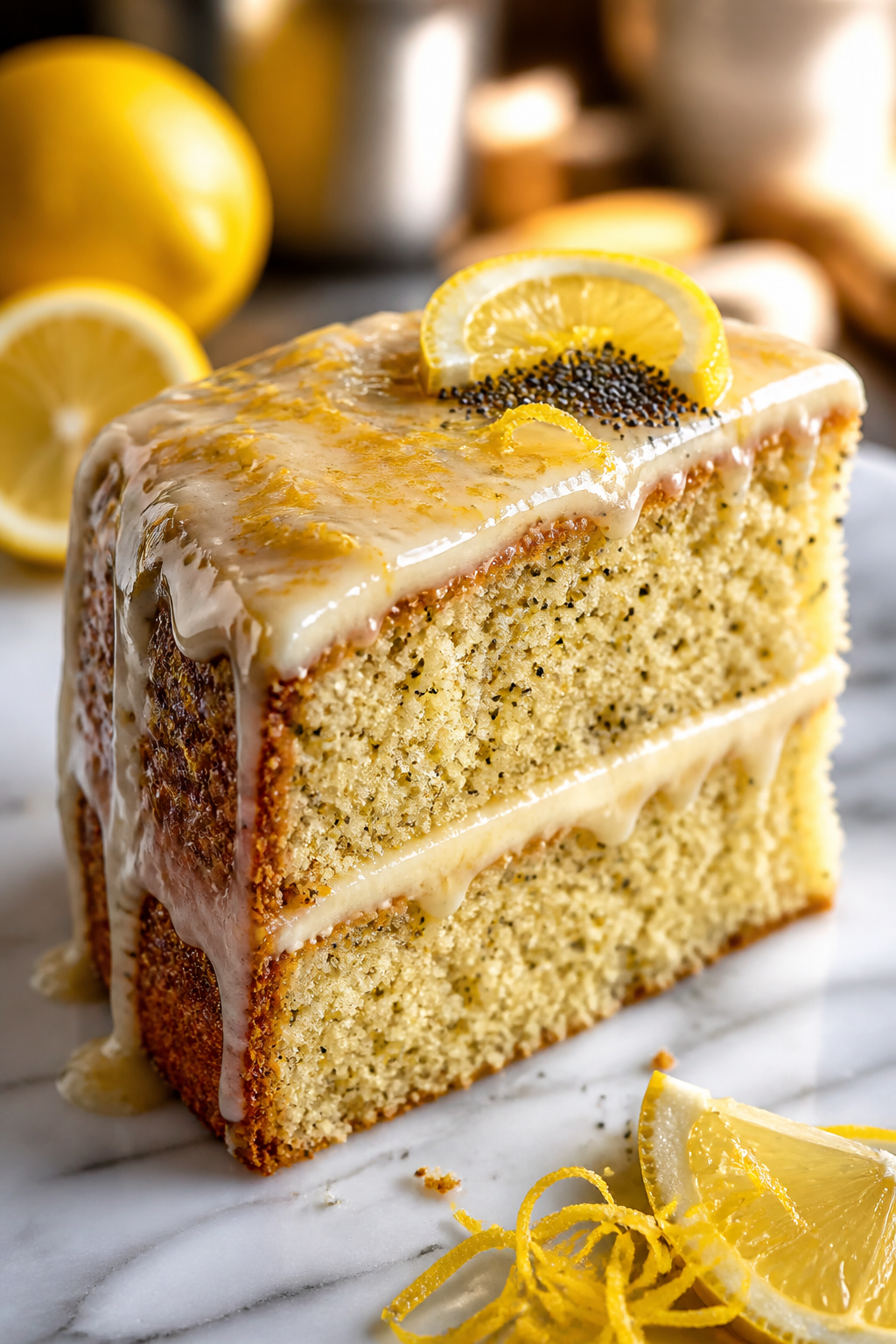
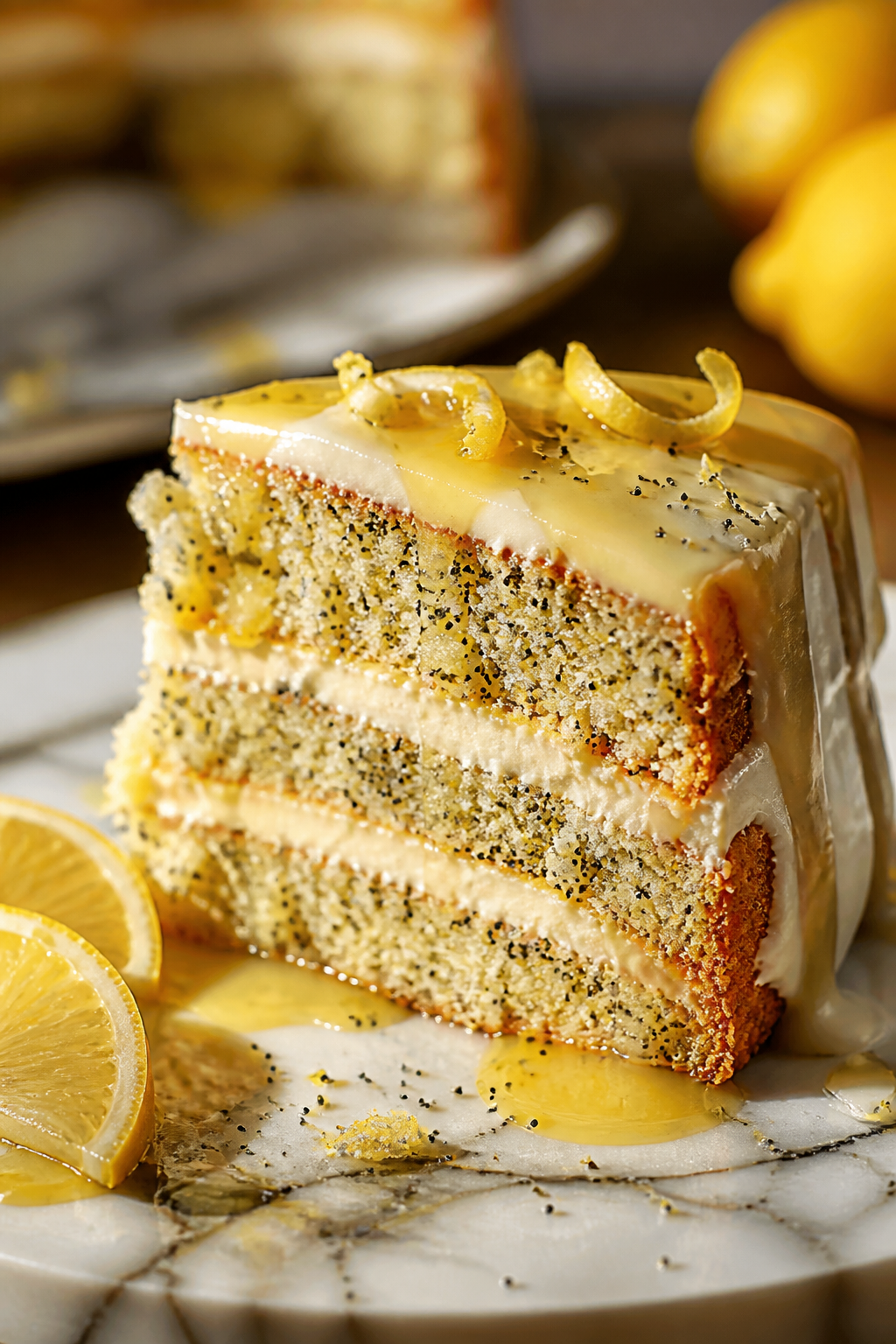
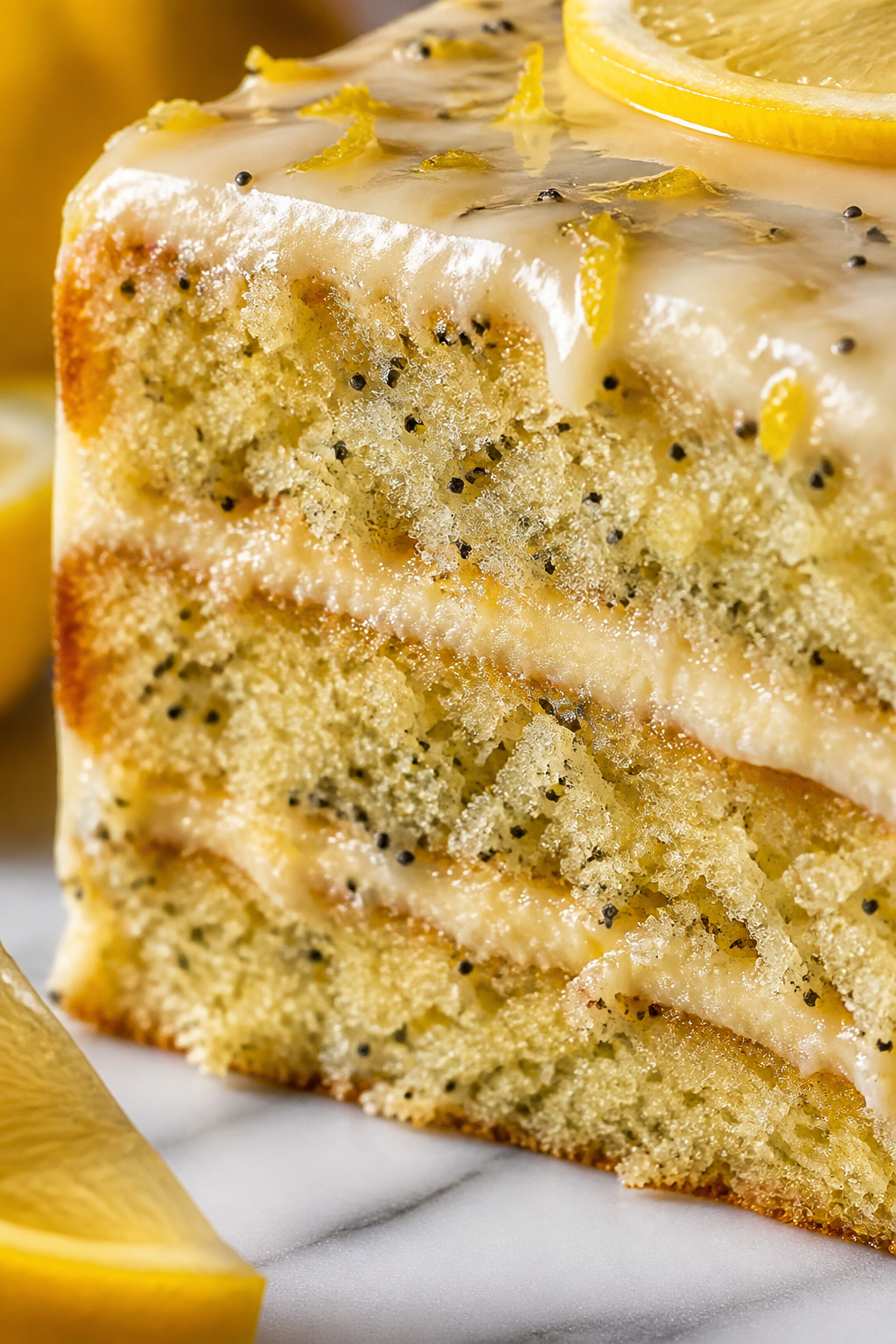
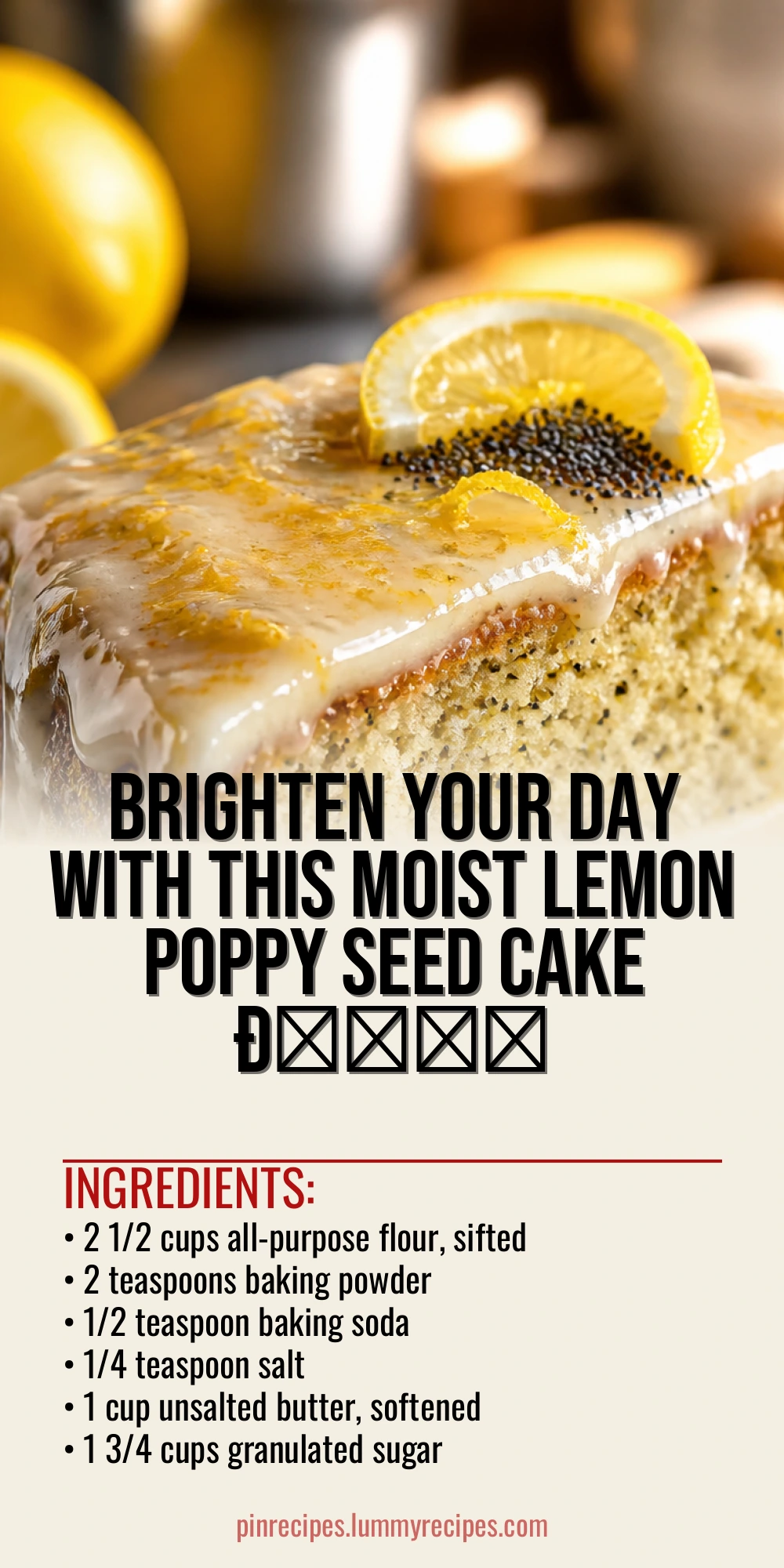
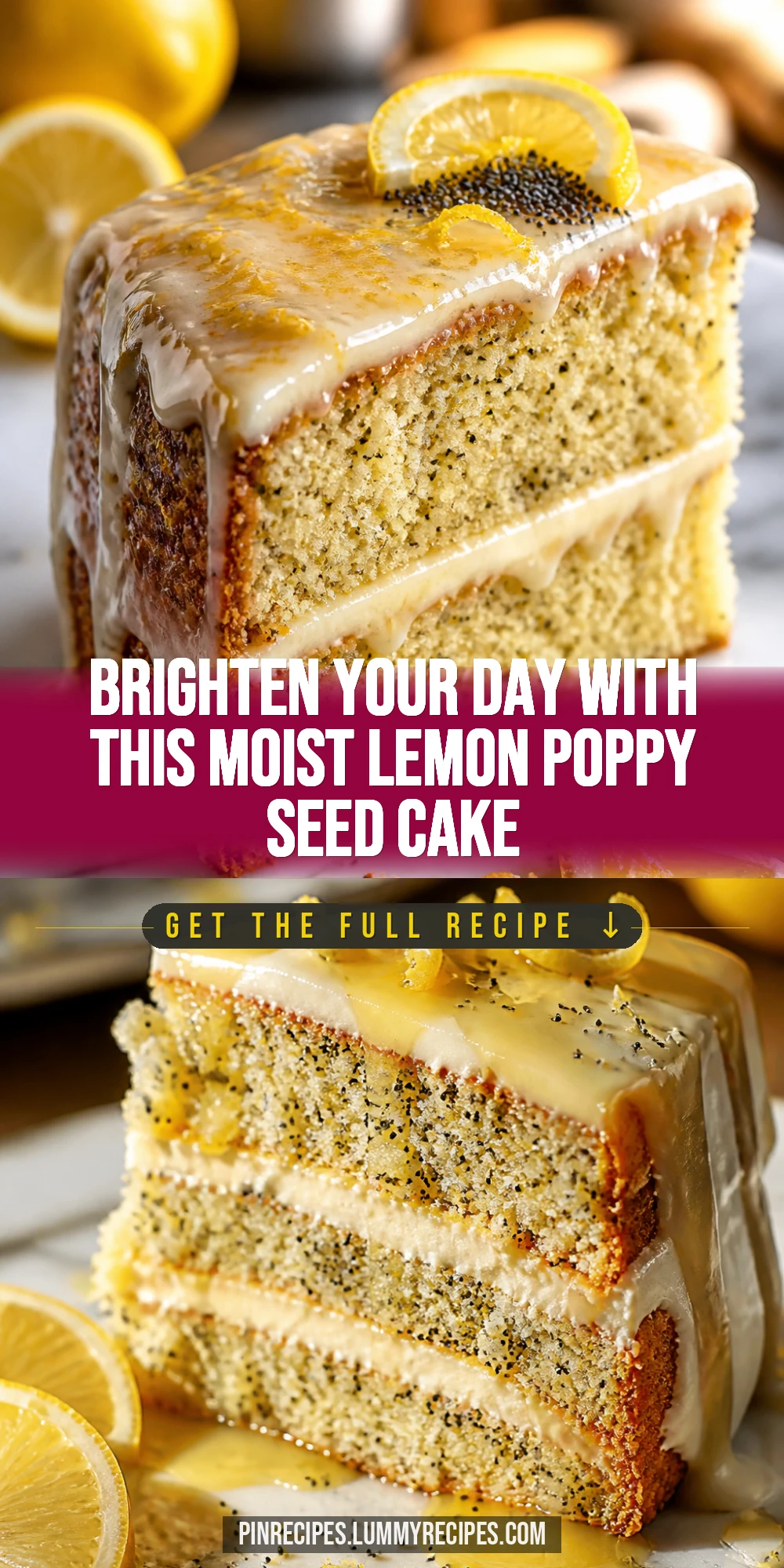
This lemon poppy seed cake is wonderfully moist with a fresh citrus glaze that makes it feel like spring in every bite. The poppy seeds add a lovely crunch, and it’s perfect for family gatherings or afternoon tea.
Introduction
I've been baking lemon cakes for years, but this moist lemon poppy seed layer cake quickly became a favorite in my family. The first time I made it, I was aiming for a bright, fresh dessert to celebrate spring, and this cake delivered beyond expectations. What sets this version apart is the balance between the tender crumb and the zingy citrus glaze that soaks just enough into the layers without making them soggy. The poppy seeds add a subtle crunch that I think makes every bite interesting. The trick I learned was to use buttermilk and fresh lemon juice, which keep the cake moist and add a lovely tang. Plus, folding the poppy seeds in at the end ensures they don’t get crushed. When it’s done, the cake looks inviting with a glossy glaze and a sprinkle of lemon zest on top, perfect for a family gathering or a sunny afternoon tea. I love how this cake feels both classic and a little special—like a homemade treat that’s just a bit elevated. It’s a recipe I’m happy to share with friends because it always gets compliments and requests for seconds.
What You'll Need
One 9-inch 3-layer cake, serves 8
- 2 1/2 cups all-purpose flour, sifted
- 2 teaspoons baking powder
- 1/2 teaspoon baking soda
- 1/4 teaspoon salt
- 1 cup unsalted butter, softened
- 1 3/4 cups granulated sugar
- 3 large eggs, room temperature
- 1 tablespoon lemon zest, finely grated
- 1/4 cup fresh lemon juice
- 1 cup buttermilk, room temperature
- 2 tablespoons poppy seeds
- 1 teaspoon vanilla extract
- For the glaze: 1 cup powdered sugar
- 3 tablespoons fresh orange juice
- 1 tablespoon fresh lemon juice
- 1 teaspoon lemon zest
How To Do It
Step 1
Preheat your oven to 350°F (175°C) and grease three 9-inch round cake pans. Line the bottoms with parchment paper for easy removal. This step is crucial because a properly prepared pan helps the cake layers bake evenly and come out cleanly without sticking. Avoid skipping the parchment or greasing only partially, as it can cause the cake to tear when you remove it.
⏱ Time: 10 minutes
✓ Doneness: Pans are fully greased and lined, ready for batter
Step 2
In a medium bowl, whisk together the sifted flour, baking powder, baking soda, and salt. Sifting helps aerate the flour and ensures even distribution of the leavening agents, which is key for a light, fluffy cake. Skipping this can lead to uneven rising or dense spots in your cake.
⏱ Time: 5 minutes
✓ Doneness: Dry ingredients fully combined with no lumps
Step 3
In a large bowl, beat the softened butter and granulated sugar together on medium speed until light and fluffy, about 3-5 minutes. This creaming step incorporates air into the batter, which helps the cake rise and gives it a tender crumb. Don’t rush this; under-creamed butter will result in a denser cake.
⏱ Time: 5 minutes
✓ Doneness: Butter and sugar mixture is pale and fluffy
Step 4
Add the eggs one at a time, beating well after each addition. Then mix in the lemon zest and vanilla extract. Adding eggs slowly helps maintain the emulsion and prevents the batter from curdling. The lemon zest infuses the batter with fresh citrus aroma, essential for that bright lemon flavor.
⏱ Time: 4 minutes
✓ Doneness: Batter is smooth and slightly thickened, with zest evenly distributed
Step 5
Alternately add the dry ingredients and buttermilk to the butter mixture, starting and ending with the dry ingredients. Mix gently after each addition just until combined. Overmixing can develop gluten and make the cake tough, so be careful to stop as soon as you see no more flour.
⏱ Time: 5 minutes
✓ Doneness: Batter is smooth with no visible flour streaks
Step 6
Gently fold in the poppy seeds by hand using a spatula. This step ensures the seeds stay whole and evenly spread, giving texture without breaking them down. Folding rather than mixing vigorously preserves the batter’s lightness.
⏱ Time: 2 minutes
✓ Doneness: Poppy seeds evenly dispersed throughout the batter
Step 7
Divide the batter evenly among the three prepared pans and smooth the tops with a spatula. Bake for 25-30 minutes, or until a toothpick inserted in the center comes out clean. Even batter distribution ensures uniform layers, and testing doneness prevents under or overbaking.
⏱ Time: 25-30 minutes
✓ Doneness: Golden tops and clean toothpick test
Step 8
Let the cakes cool in the pans for 10 minutes, then turn out onto wire racks to cool completely. Cooling in the pan helps the cake set, but removing it after 10 minutes prevents sogginess. Complete cooling is vital before glazing to avoid melting the glaze.
⏱ Time: 1 hour
✓ Doneness: Cakes are completely cool to the touch
Step 9
To make the glaze, whisk together powdered sugar, orange juice, lemon juice, and lemon zest until smooth. Drizzle the glaze over the top of the stacked layers, letting it drip down the sides. The glaze adds a tangy sweetness and a beautiful shine that complements the cake’s moist crumb perfectly.
⏱ Time: 10 minutes
✓ Doneness: Glaze is smooth, shiny, and evenly coats the cake
Pro Tips
Always use room temperature ingredients for batter.
Room temperature eggs, butter, and buttermilk blend more evenly, creating a smooth, consistent batter. Cold ingredients can cause curdling or uneven mixing, leading to dense spots or uneven rise.
Don’t overmix after adding flour.
Overmixing develops gluten, which toughens the cake crumb. Mix just until no dry streaks remain to keep the cake tender and light.
Line your pans with parchment paper.
This ensures the cake layers release easily without breaking, preserving their shape and making assembly easier.
Let the cake cool completely before glazing.
Applying glaze to warm cake melts it and causes it to soak in unevenly, ruining the texture and appearance.
Use fresh citrus juice and zest for best flavor.
Fresh ingredients provide bright, natural flavors and aromas that bottled juices and dried zest can’t replicate.
Fold in poppy seeds gently at the end.
This prevents crushing the seeds and keeps their crunchy texture intact throughout the cake.
Test cake doneness with a toothpick.
Insert it in the center; if it comes out clean or with a few moist crumbs, the cake is perfectly baked. Underbaking leaves it gummy; overbaking dries it out.
Common Mistakes to Avoid
Using cold ingredients
Why it happens Many home cooks forget to take eggs or butter out ahead of time, assuming it won’t affect the batter.
Fix Always plan ahead and bring ingredients to room temperature. This ensures smooth mixing and proper emulsification for a tender cake.
Overmixing batter after adding flour
Why it happens It’s tempting to mix thoroughly to avoid lumps, but this develops gluten.
Fix Mix just until combined. Stop as soon as the flour disappears to keep the cake soft.
Skipping parchment paper
Why it happens Some assume greasing alone is enough, but cakes can stick.
Fix Line pans with parchment in addition to greasing to prevent sticking and tearing.
Applying glaze on warm cake
Why it happens Impatience or not allowing enough cooling time.
Fix Wait until the cake is fully cool to maintain glaze texture and appearance.
Using bottled lemon juice
Why it happens Convenience or not having fresh lemons on hand.
Fix Use fresh juice and zest whenever possible for the best flavor and aroma.
Variations
Orange Poppy Seed Layer Cake
Swap lemon juice and zest for fresh orange juice and orange zest for a sweeter, milder citrus flavor. The glaze can be made with orange juice only for a cohesive taste. Expect a softer citrus note and a slightly different aroma.
Note: Orange juice is less acidic, so the cake may rise a bit less. Consider adding a teaspoon of lemon juice to maintain leavening.
Lemon Poppy Seed Bundt Cake
Use a bundt pan instead of layers for a rustic presentation. The baking time will be longer, about 45-50 minutes. The glaze can be drizzled over the top after cooling. Texture stays moist but the shape changes the serving style.
Note: Check doneness with a skewer as bundt cakes take longer to bake fully in the center.
Gluten-Free Lemon Poppy Seed Cake
Replace all-purpose flour with a gluten-free blend that includes xanthan gum. The texture will be slightly denser but still moist. This version is great for gluten-sensitive guests without sacrificing flavor.
Note: Gluten-free flours absorb liquids differently; you may need to adjust buttermilk slightly to get the right batter consistency.
Lemon Poppy Seed Cake with Cream Cheese Frosting
Instead of glaze, frost the cooled cake with a tangy cream cheese frosting. This adds richness and a creamy texture that pairs beautifully with the citrus notes.
Note: Chill the cake layers before frosting to prevent melting and sliding.
Vegan Lemon Poppy Seed Cake
Use flax eggs (ground flaxseed mixed with water) and a plant-based milk with vinegar as buttermilk substitute. Replace butter with vegan margarine or coconut oil. The cake will be a bit denser but still delicious and moist.
Note: Vegan batters tend to be more delicate; handle gently and avoid overmixing.
Nutrition
Per Serving:
Nutritional values are estimates and may vary based on specific ingredients used.
Storage & Tips
Room Temperature
The cake can safely sit at room temperature for up to 2 days if covered tightly with plastic wrap or stored in a cake dome to prevent drying out. Avoid leaving it uncovered as it will dry quickly.
Refrigerator
Store the cake in an airtight container or wrapped tightly in plastic wrap for up to 5 days. The glaze and cake may firm up in the fridge; bring to room temperature before serving for best texture and flavor.
Freezer
Freeze the cake layers separately wrapped in plastic and foil for up to 3 months. Thaw overnight in the refrigerator and bring to room temperature before glazing and assembling to maintain moisture and texture.
Reheating
If you want a warm slice, microwave individual pieces for 10-15 seconds or warm in a low oven (300°F) for 5-7 minutes, covered with foil to avoid drying. Avoid overheating which can make the cake dry.
Make Ahead
Bake the cake layers 1-2 days ahead and store wrapped in the fridge or freezer. Prepare the glaze fresh the day of serving for best shine and flavor. Assemble just before serving to keep the layers moist and the glaze fresh.
FAQ
Can I use bottled lemon juice instead of fresh?
While bottled lemon juice can be used in a pinch, fresh lemon juice and zest provide much brighter, fresher flavor and aroma. Bottled juice often lacks the essential oils in the zest that give the cake its signature citrus punch, so I recommend fresh whenever possible.
How do I know when the cake is done baking?
Insert a toothpick or skewer into the center of the cake layers. If it comes out clean or with just a few moist crumbs, the cake is done. If batter sticks, bake for a few more minutes and test again. Avoid opening the oven too often, which can cause the cake to sink.
Can I make this cake gluten-free?
Yes, substituting a gluten-free all-purpose flour blend with xanthan gum works well. The texture will be slightly different—usually a bit denser—but the flavor remains delicious. You might need to adjust liquid amounts slightly to achieve the right batter consistency.
What’s the best way to store leftover cake?
Store leftover cake in an airtight container or wrapped tightly in plastic wrap. It keeps well in the fridge for up to 5 days. Bring to room temperature before serving for the best texture. You can also freeze cake layers wrapped well for up to 3 months.
Can I make this cake in a bundt pan?
Absolutely! Use the same batter but bake for 45-50 minutes or until a toothpick comes out clean. Let the cake cool in the pan for 15 minutes before turning out. Glaze can be drizzled on top once cooled.
Why is my cake dense or dry?
Common causes are overmixing the batter after adding flour, not using room temperature ingredients, or overbaking. Mix just until combined, use room temperature eggs and butter, and check for doneness early to avoid dryness.
Can I replace butter with oil?
You can substitute some or all of the butter with a neutral oil like canola, but the texture will change slightly—oil makes cakes more moist but less fluffy. Butter adds flavor and structure, so I recommend sticking to butter for this recipe.
How do I get the glaze to be shiny and smooth?
Whisk the glaze ingredients thoroughly until smooth and lump-free. Use fresh citrus juice and sift powdered sugar if clumpy. Drizzle over a completely cooled cake to prevent melting and to maintain that glossy finish.
Final Thoughts
I hope you enjoy making this lemon poppy seed layer cake as much as I do! It’s a bright, moist treat that’s perfect for sharing—please let me know how it turns out for you.