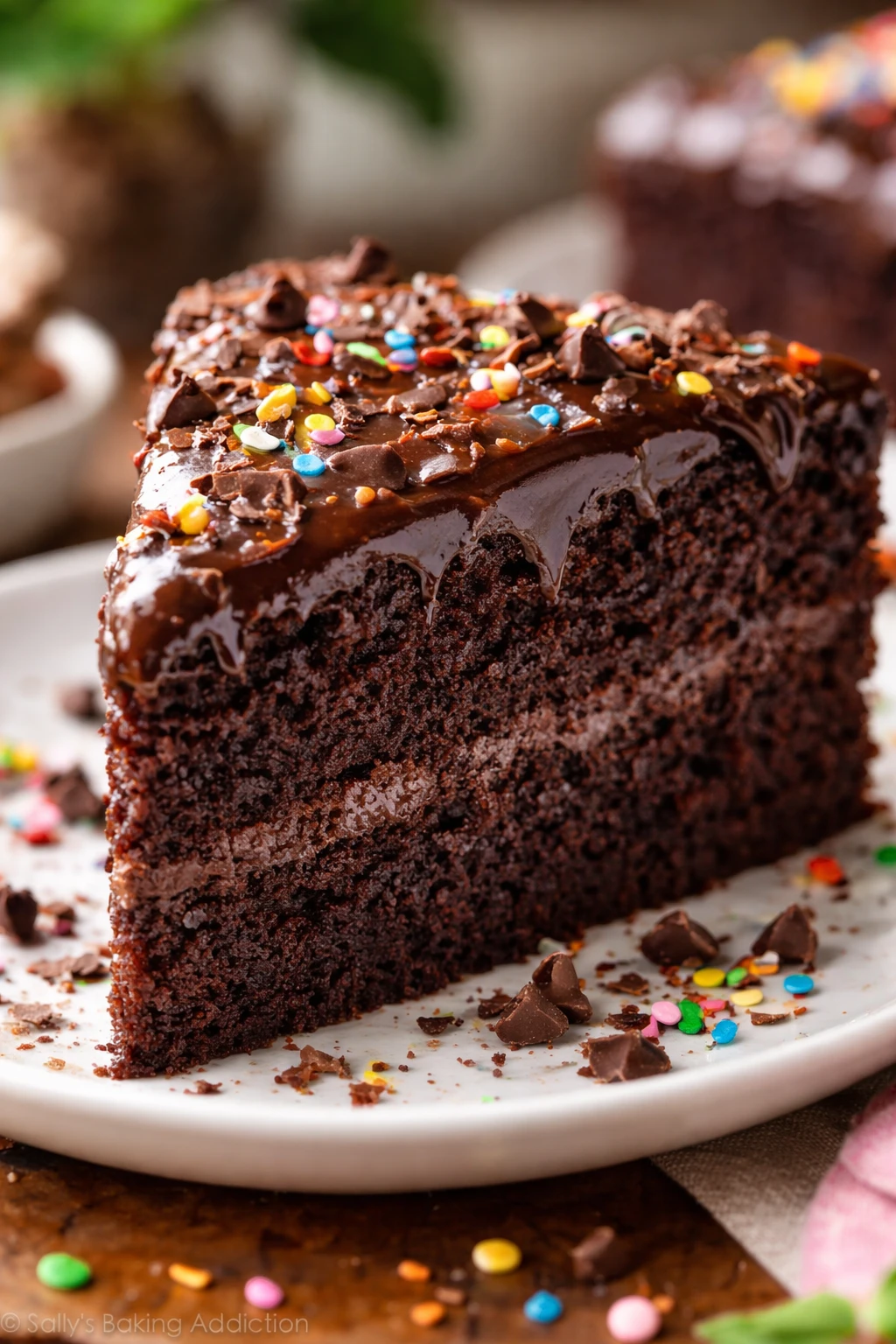
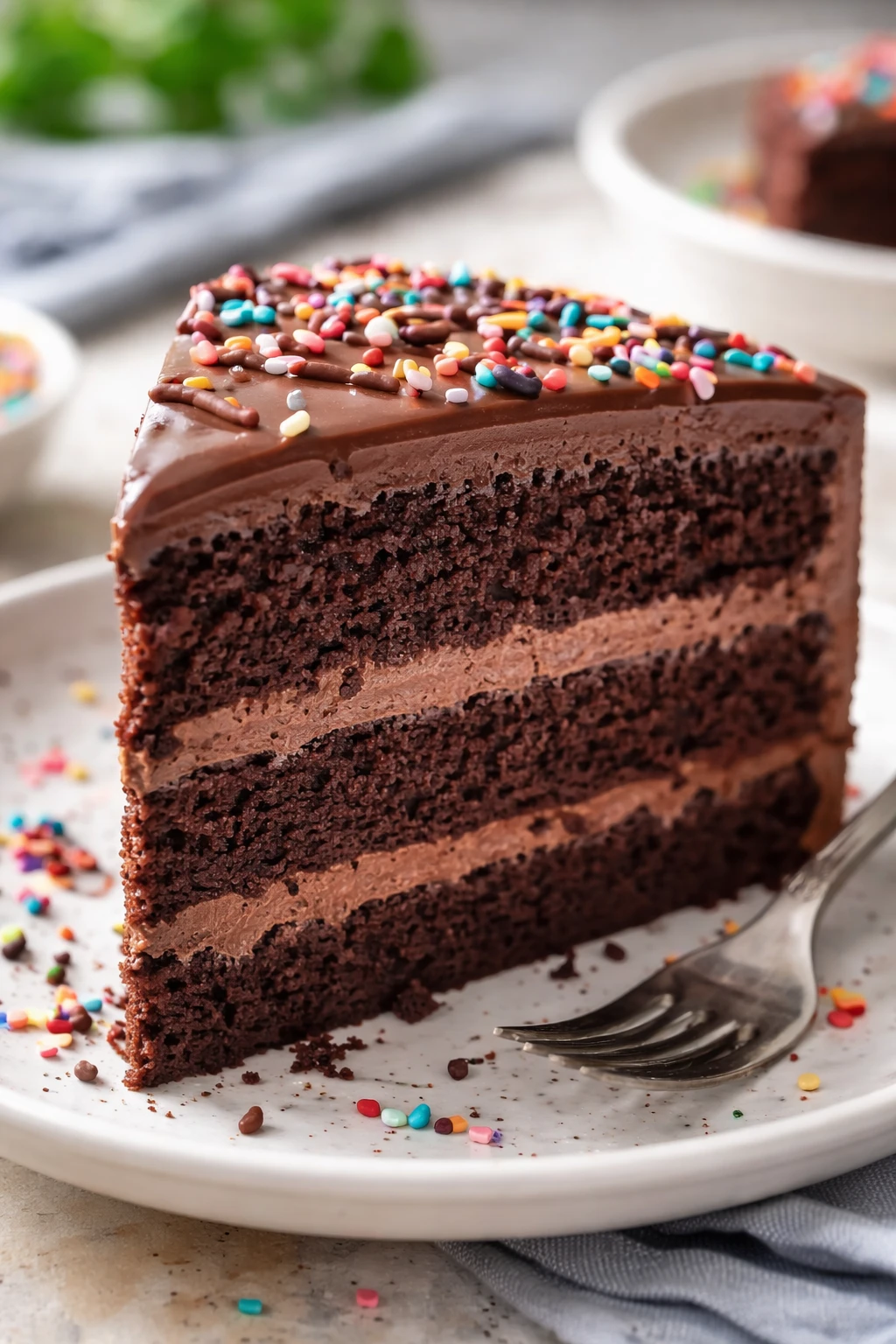
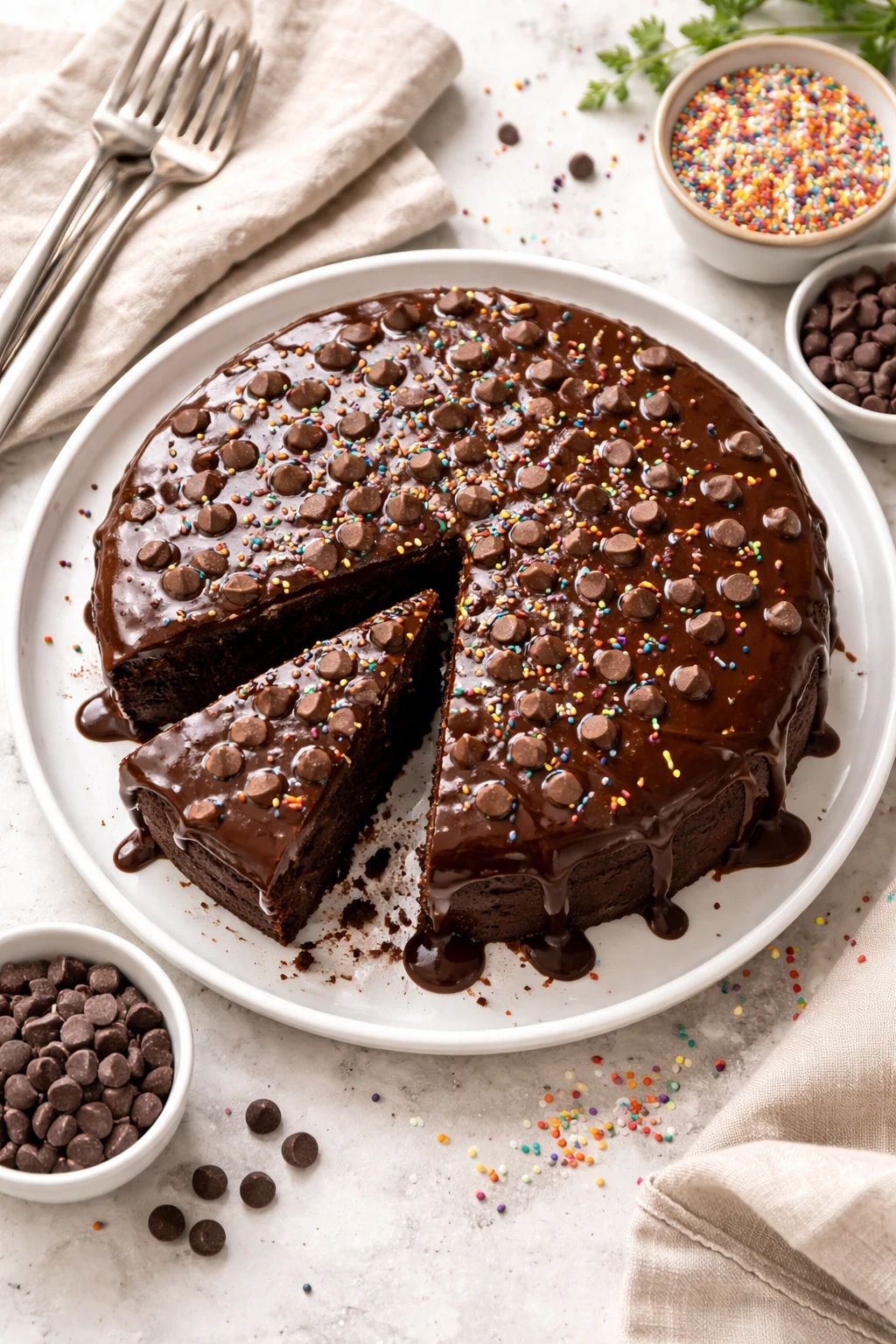
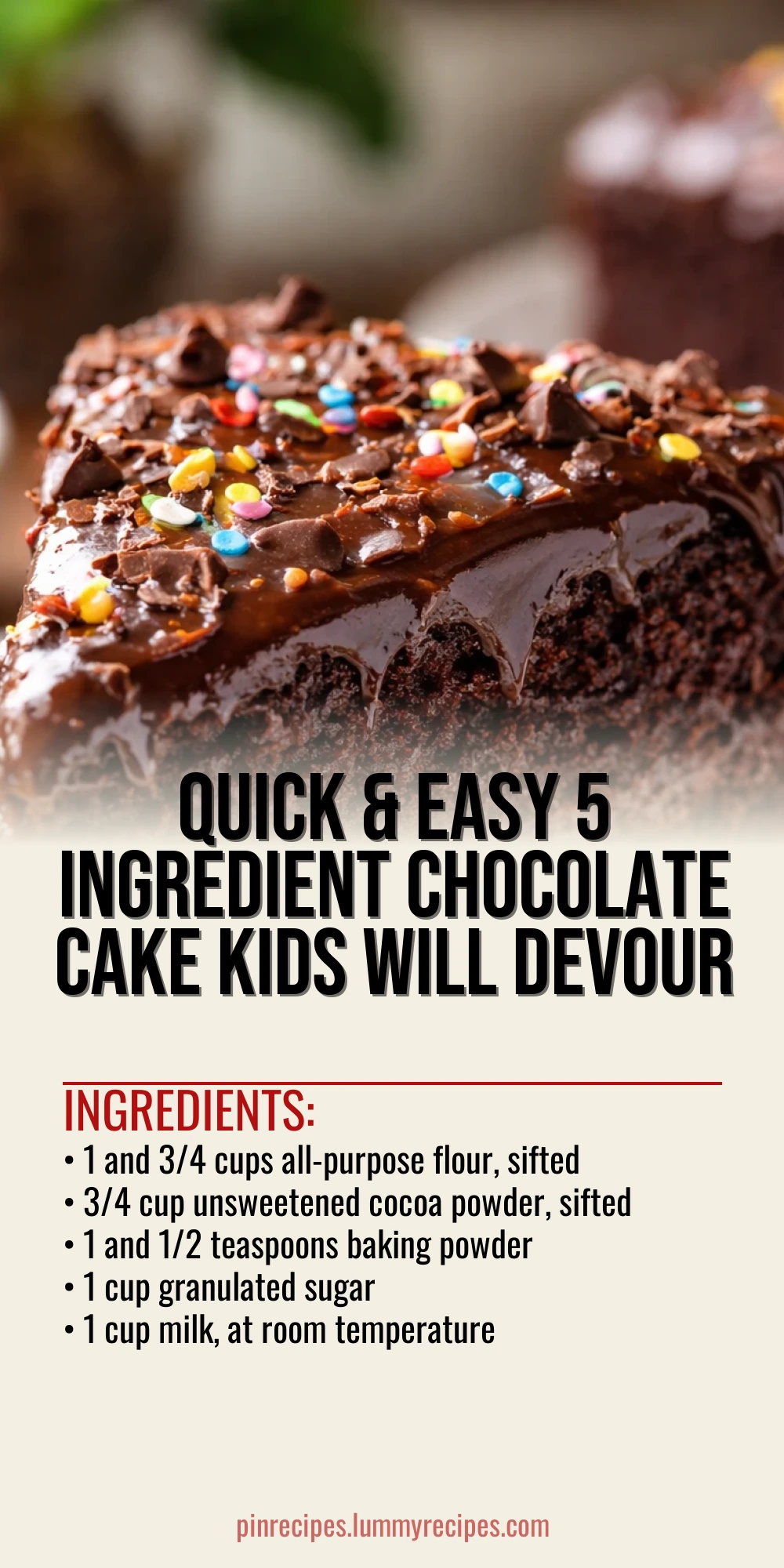
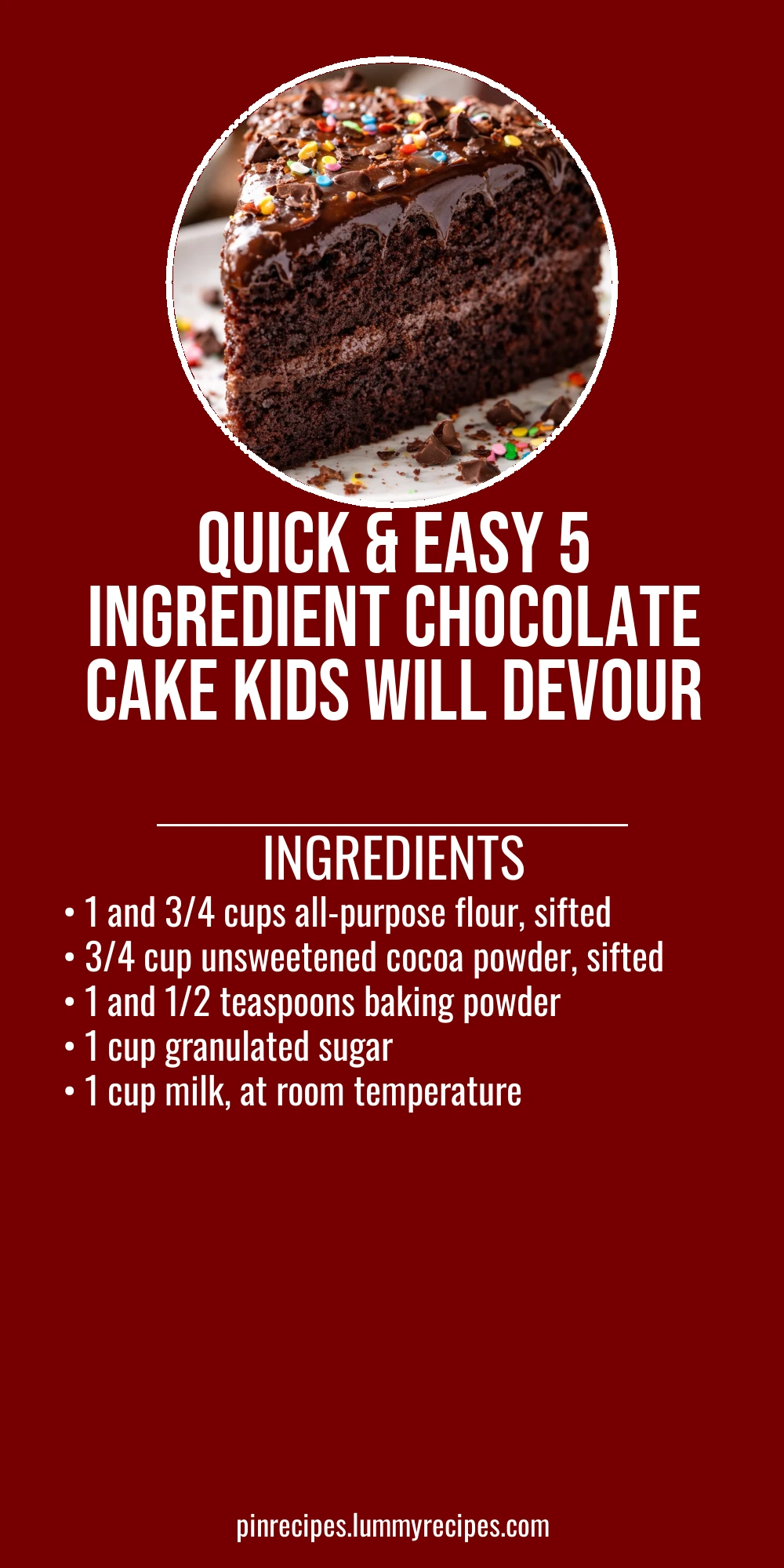
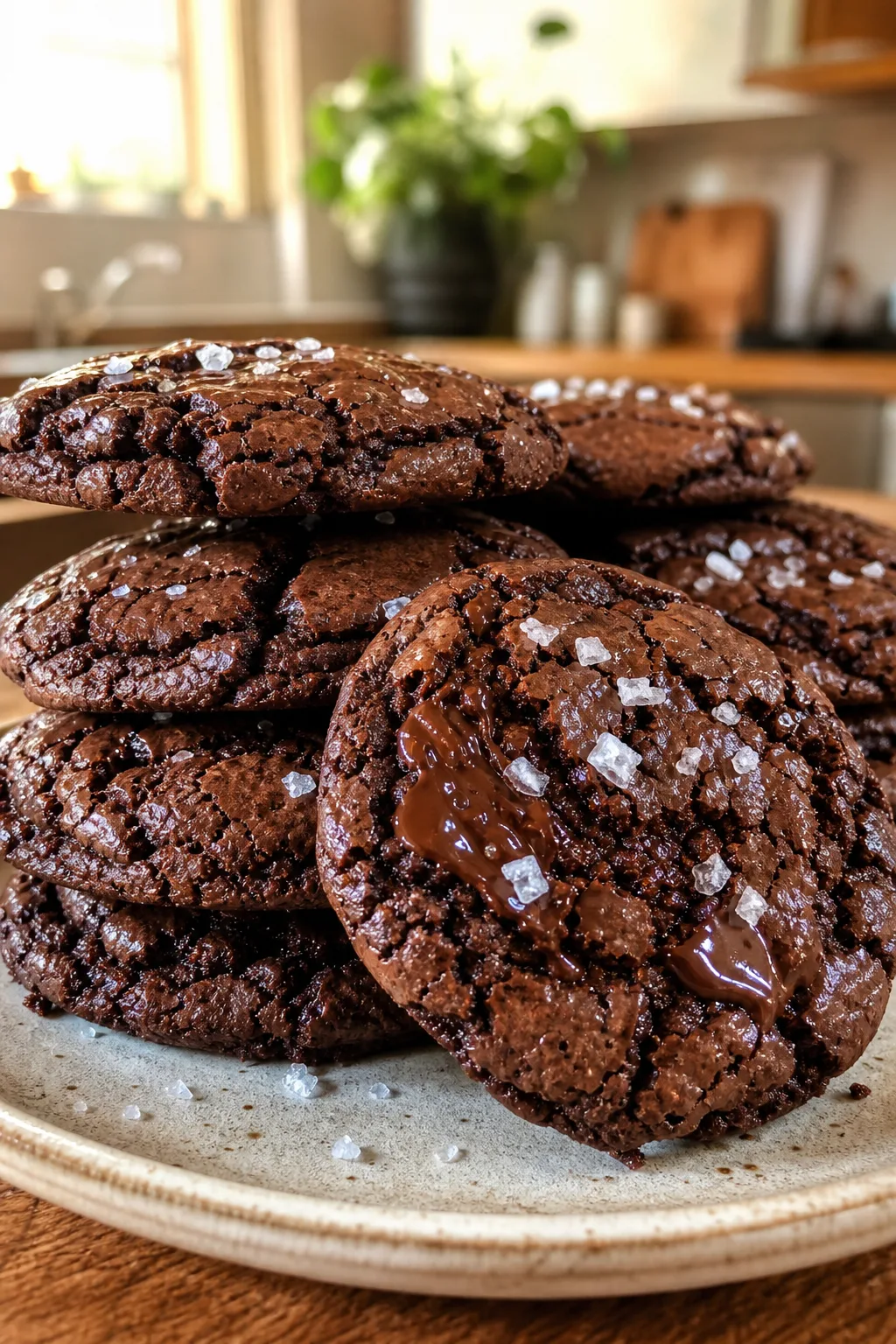
This chocolate cake is ridiculously simple with just five ingredients and zero fuss. It’s moist, chocolaty, and perfect for a quick family dessert or birthday treat. Kids adore the rich flavor and soft crumb!
Introduction
I stumbled upon this no-fuss chocolate cake recipe a few years ago when I needed a quick dessert for my kids’ birthday party. Honestly, I was skeptical about a cake with just five ingredients, but it blew me away! What sets this cake apart is how simple it is—no fancy gadgets or exotic ingredients, just pantry staples. The trick I learned is to sift the dry ingredients well and use room temperature milk to get a smooth batter that bakes up moist and tender. I’ve made it dozens of times since, and my kids always ask for seconds. It’s the kind of cake that’s perfect for last-minute celebrations or whenever you want a chocolate fix without the hassle. The crumb is soft, the cocoa flavor is rich but not overpowering, and it’s easy to dress up with frosting or enjoy plain. If you’re like me and love baking that’s quick and fuss-free but still delicious, you’ll appreciate this recipe as much as my family does.
What You'll Need
One 9-inch round cake, 8 servings
- 1 and 3/4 cups all-purpose flour, sifted
- 3/4 cup unsweetened cocoa powder, sifted
- 1 and 1/2 teaspoons baking powder
- 1 cup granulated sugar
- 1 cup milk, at room temperature
How To Do It
Step 1
Preheat your oven to 350°F (175°C) and grease a 9-inch round cake pan with butter or non-stick spray. This step is essential because a properly greased pan ensures the cake releases easily after baking. Also, preheating the oven fully before baking guarantees even cooking and a nice rise. Avoid skipping this or baking in a cold oven, as it can cause uneven texture or a dense cake.
⏱ Time: 10 minutes
✓ Doneness: Oven is fully preheated to 350°F and pan is evenly greased with no excess oil pooling
Step 2
In a large bowl, sift together the all-purpose flour, cocoa powder, and baking powder. Sifting removes lumps and aerates the mixture, which helps create a light, even crumb. If you skip sifting, your cake might have dry pockets or uneven texture. Mix gently but thoroughly to combine the dry ingredients evenly before adding wet ingredients.
⏱ Time: 5 minutes
✓ Doneness: Dry ingredients are well combined with no visible lumps or clumps of cocoa powder
Step 3
Add the granulated sugar to the dry ingredients and stir to combine. Sugar helps tenderize the cake and adds sweetness. Mixing it now ensures it’s evenly distributed. Be careful not to overmix once you add the wet ingredients later, or the cake could become tough.
⏱ Time: 2 minutes
✓ Doneness: Sugar is evenly mixed in and the dry ingredients look uniform
Step 4
Pour in the milk (make sure it’s at room temperature) gradually while stirring with a wooden spoon or spatula. Room temperature milk blends more easily with dry ingredients, preventing lumps and promoting even hydration of the flour. Stir until just combined — the batter will be slightly thick but smooth. Overmixing here can develop gluten and make the cake dense.
⏱ Time: 5 minutes
✓ Doneness: Batter is smooth, thick but pourable, with no dry streaks of flour
Step 5
Transfer the batter to the prepared cake pan and smooth the surface with a spatula. This helps the cake bake evenly and look neat. Tap the pan gently on the counter to release any large air bubbles trapped inside the batter, which can cause holes or uneven texture.
⏱ Time: 3 minutes
✓ Doneness: Batter is evenly spread with a smooth surface and no large bubbles
Step 6
Bake in the preheated oven for 28-32 minutes. Start checking at 28 minutes by inserting a toothpick into the center; it should come out with a few moist crumbs but not wet batter. Baking too long will dry out the cake, too short and it will be undercooked. The edges will pull away slightly from the pan when done.
⏱ Time: 28-32 minutes
✓ Doneness: Toothpick comes out mostly clean with a few moist crumbs; edges slightly pulling from pan
Step 7
Remove the cake from the oven and let it cool in the pan for 10 minutes. Cooling slightly allows the structure to set, making it easier to remove from the pan without breaking. If you try to unmold it while too hot, it may crumble or stick.
⏱ Time: 10 minutes
✓ Doneness: Cake feels firm to the touch but still warm; edges slightly pulling from pan
Step 8
Run a knife around the edges of the cake to loosen it, then invert onto a cooling rack or plate. This step helps the cake release cleanly. Let it cool completely before slicing to prevent it from falling apart and to let flavors develop.
⏱ Time: 5 minutes
✓ Doneness: Cake releases easily from pan and is resting on rack for full cooling
Step 9
Serve the cake as is or dust with powdered sugar, or frost with your favorite icing. This cake is versatile and pairs well with whipped cream, fresh berries, or a simple glaze. Enjoy immediately or store for later.
⏱ Time: 0 minutes
✓ Doneness: Cake is fully cooled and ready to serve or decorate
Pro Tips
Always sift your dry ingredients together before mixing.
Sifting aerates the flour and cocoa powder, removing lumps and ensuring even distribution. This leads to a lighter, more uniform cake crumb. Skipping this step can result in clumps of cocoa or flour pockets that affect texture and appearance.
Use room temperature milk for the best batter consistency.
Cold milk can cause the batter to seize or mix unevenly, leading to lumps and a denser cake. Room temperature milk blends smoothly with dry ingredients, promoting even hydration and a tender crumb.
Don’t overmix the batter once wet ingredients are added.
Overmixing develops gluten excessively, making the cake tough and chewy instead of soft. Stir just until combined to keep the texture light and tender.
Grease the pan thoroughly and consider lining with parchment paper.
Proper pan preparation ensures the cake releases cleanly without sticking or breaking. Parchment paper adds an extra layer of protection and makes removal easier.
Check the cake a few minutes before the minimum baking time.
Ovens vary, so starting to test early prevents overbaking and drying out the cake. Use a toothpick to check for moist crumbs to know it’s perfectly done.
Let the cake cool in the pan before removing.
Cooling allows the structure to set, reducing the risk of the cake breaking apart. Trying to unmold while hot often leads to crumbling.
Tap the cake pan gently after pouring batter to release air bubbles.
Trapped air bubbles can cause holes or uneven texture in the cake. Tapping helps level the batter and creates a smooth surface for even baking.
Common Mistakes to Avoid
Skipping sifting of dry ingredients
Why it happens Many assume sifting is optional or time-consuming, so they mix dry ingredients directly, leading to lumps.
Fix Always sift flour, cocoa, and baking powder together before mixing. This ensures even distribution and removes clumps, resulting in a smooth batter and uniform crumb.
Using cold milk straight from the fridge
Why it happens It’s easy to overlook milk temperature, especially when in a hurry, causing uneven mixing.
Fix Let milk sit at room temperature for 20-30 minutes before mixing. This helps ingredients combine smoothly, preventing lumps and dense texture.
Overmixing batter after adding wet ingredients
Why it happens Trying to get a perfectly smooth batter can lead to excessive stirring, developing gluten.
Fix Mix just until dry ingredients are moistened and batter is uniform. A few small lumps are okay. This keeps the cake tender.
Not preheating the oven fully
Why it happens Some start baking before the oven reaches temperature to save time, but this affects rise and texture.
Fix Always preheat oven to 350°F before baking. A hot oven ensures the cake rises properly and cooks evenly.
Removing cake from pan too soon
Why it happens Impatience or wanting to speed up serving leads to unmolding when cake is still hot and fragile.
Fix Let cake cool in pan for at least 10 minutes to set structure, then loosen edges and invert onto rack to finish cooling.
Variations
Add a Coffee Kick
Mix 1/4 cup brewed coffee into the milk to enhance the chocolate flavor with a subtle mocha note. The coffee deepens the cake’s richness without overpowering it, perfect for grown-up palates while kids still enjoy it.
Note: Substitute coffee for milk fully or partially. Keep the milk at room temperature for best mixing.
Gluten-Free Version
Swap all-purpose flour for a 1:1 gluten-free baking flour blend. This keeps the texture soft and moist while making the cake accessible for gluten-sensitive eaters. Expect a slightly different crumb but equally delicious.
Note: Ensure your gluten-free blend contains xanthan gum for structure. Mixing time remains the same.
Chocolate Chip Surprise
Fold in 1/2 cup mini chocolate chips into the batter before baking for melty pockets of chocolate throughout. Kids love the surprise texture and extra sweetness this adds.
Note: Gently fold chips at the end to avoid melting or sinking to the bottom.
Frosted Delight
Top the cooled cake with a quick cream cheese frosting or chocolate ganache for a richer dessert. This adds moisture and a creamy texture that pairs perfectly with the simple cake base.
Note: Allow cake to cool completely before frosting to prevent melting.
Nutty Twist
Stir in 1/3 cup chopped walnuts or pecans for crunch and a nutty flavor contrast. This adds texture and makes the cake more filling without complicating the recipe.
Note: Fold nuts in gently after wet ingredients are combined.
Nutrition
Per Serving:
Nutritional values are estimates and may vary based on specific ingredients used.
Storage & Tips
Room Temperature
Store the cake covered at room temperature for up to 2 days. Keep it in an airtight container or wrapped tightly with plastic wrap to prevent drying out. The cake stays moist but is best eaten within this timeframe for freshness.
Refrigerator
Keep the cake in an airtight container in the fridge for up to 5 days. It may firm up and dry slightly, so bring to room temperature before serving or warm gently in the microwave for 10-15 seconds to restore softness.
Freezer
Wrap the cooled cake tightly in plastic wrap and then foil to prevent freezer burn. Freeze for up to 2 months. Thaw overnight in the refrigerator or at room temperature. To refresh texture, warm slices briefly in the microwave.
Reheating
Reheat slices in the microwave for 10-20 seconds or warm the whole cake in a 300°F oven for 10 minutes, loosely covered with foil. Avoid overheating, which dries out the cake. Adding a splash of milk or covering with foil helps retain moisture.
Make Ahead
You can prepare the batter the night before and keep it covered in the fridge. Bake fresh the next day for best rise and texture. Alternatively, bake the cake and store it wrapped; frost or decorate just before serving.
FAQ
Can I use oil or butter instead of milk in this recipe?
This recipe relies on milk to hydrate the dry ingredients and create the right batter consistency. Using oil or butter instead would change the texture and moisture balance significantly. If you want a richer cake, consider adding a small amount of melted butter along with the milk, but replacing milk entirely isn’t recommended.
What if I don’t have baking powder, can I use baking soda?
Baking powder and baking soda are not interchangeable one-to-one because baking powder contains acid and base, while baking soda needs an acid to activate. Since this recipe doesn’t include acidic ingredients, substituting baking soda alone will result in no rise. You’d need to add an acid like vinegar or lemon juice to use baking soda, but it’s simpler to use baking powder.
Why is my cake dense and not fluffy?
Dense cake can result from overmixing the batter, expired baking powder, or not preheating the oven. Overmixing develops gluten, making the cake tough. Old baking powder won’t produce enough rise. Also, baking in an oven that’s not fully heated can cause poor texture. Follow mixing and baking times carefully for best results.
Can I make this cake vegan?
To make it vegan, substitute the milk with plant-based milk like almond or oat, and replace the sugar with a vegan-certified brand if needed. However, this may slightly affect texture and flavor. The cake may be less tender, so adding a flax egg or applesauce could help improve moisture and binding.
How do I store leftover cake to keep it moist?
Wrap leftover cake tightly in plastic wrap or keep it in an airtight container at room temperature. Avoid refrigeration if possible, as it dries out the cake. If refrigerated, bring it back to room temperature or warm slightly before serving to restore softness.
Can I double this recipe for a larger cake?
Yes, doubling the ingredients works well. Use two 9-inch pans or a larger pan and adjust the baking time accordingly—start checking for doneness a few minutes earlier to prevent overbaking. Make sure to mix ingredients thoroughly but avoid overmixing.
Is it okay to add frosting or should I eat the cake plain?
Both ways are great! The cake is moist and flavorful enough to enjoy plain, especially with a dusting of powdered sugar. But frosting like cream cheese or chocolate ganache adds richness and makes it feel more festive. It’s up to your preference and occasion.
Why does my cake crack on top sometimes?
Cracking can happen if the oven temperature is too high or if the batter is overmixed. High heat causes the top to set quickly while the inside expands, causing cracks. Use an oven thermometer to ensure accurate temperature and mix gently to avoid excess air incorporation.
Final Thoughts
Give this no-fuss 5 ingredient chocolate cake a try and see how easy and delicious simple baking can be. I’d love to hear how your family enjoys it—don’t forget to share your results!