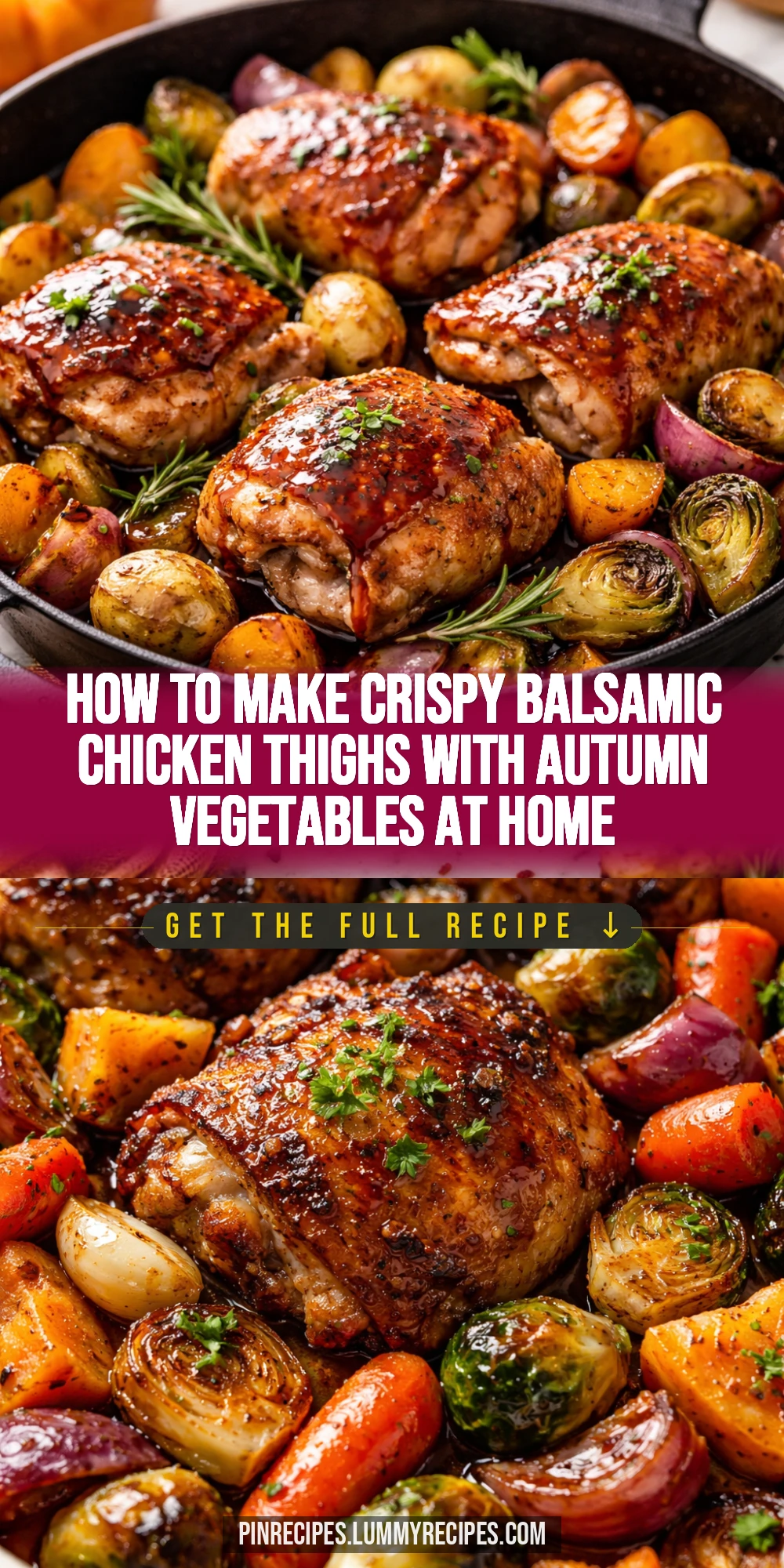
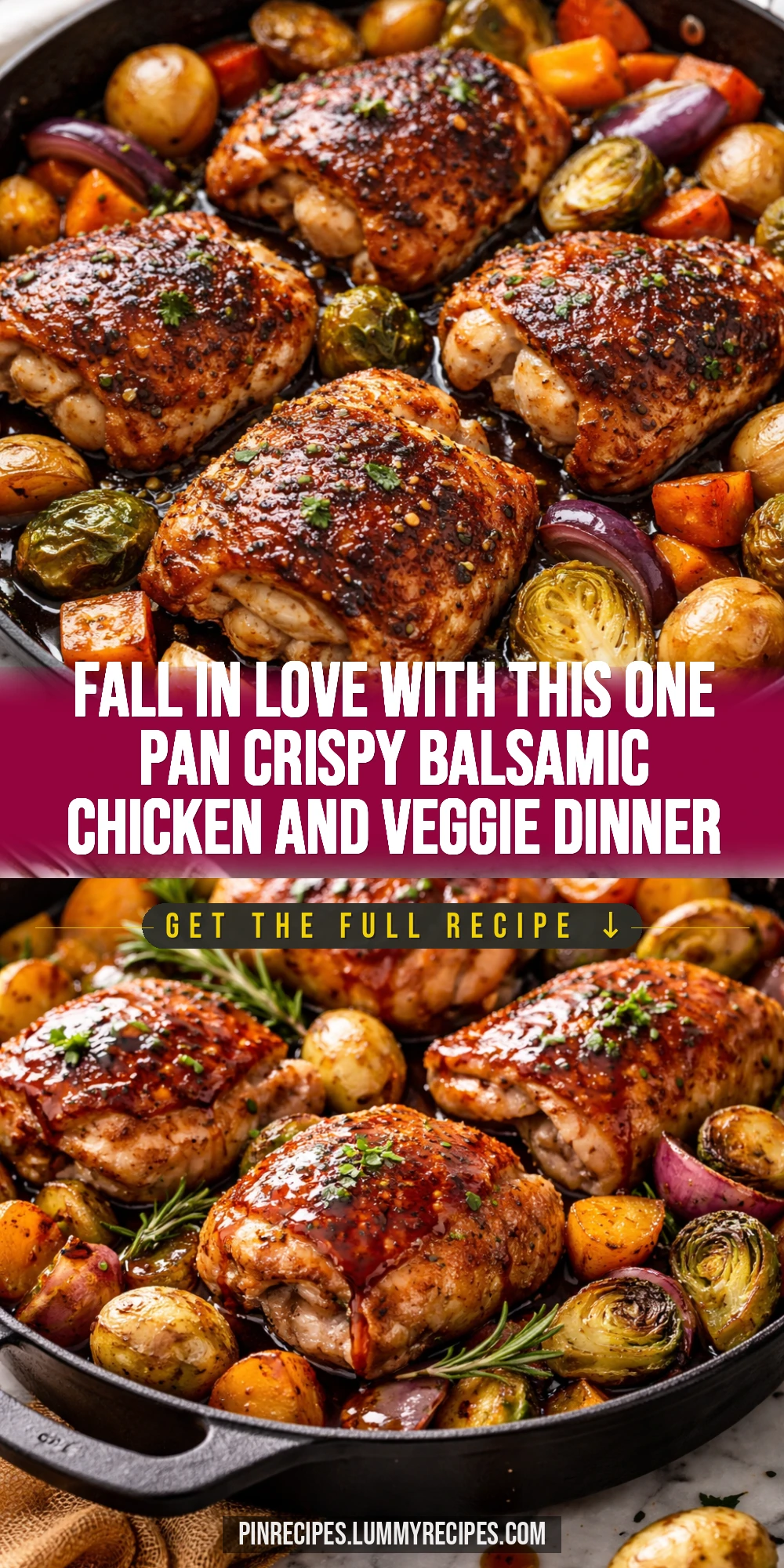
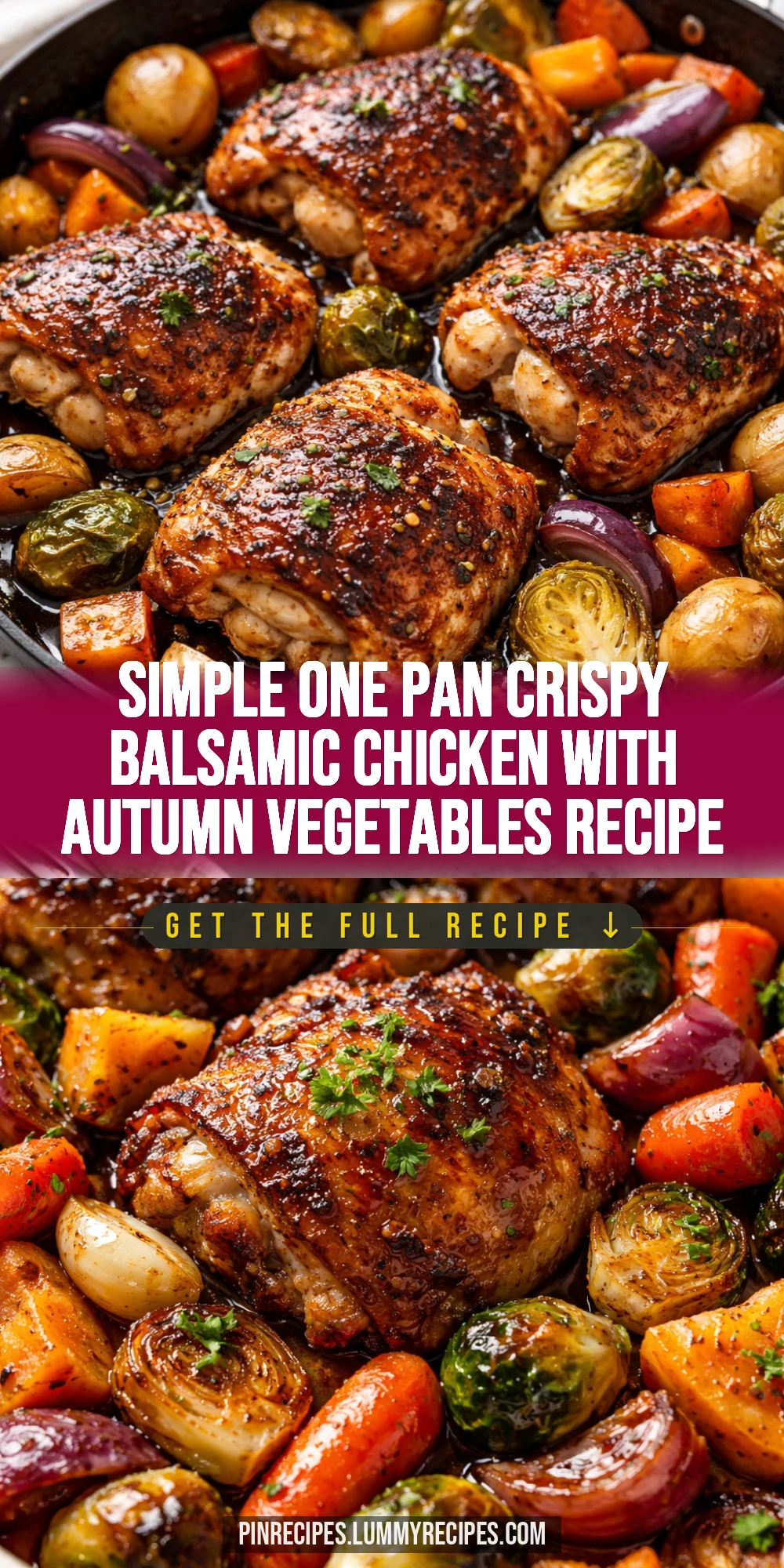
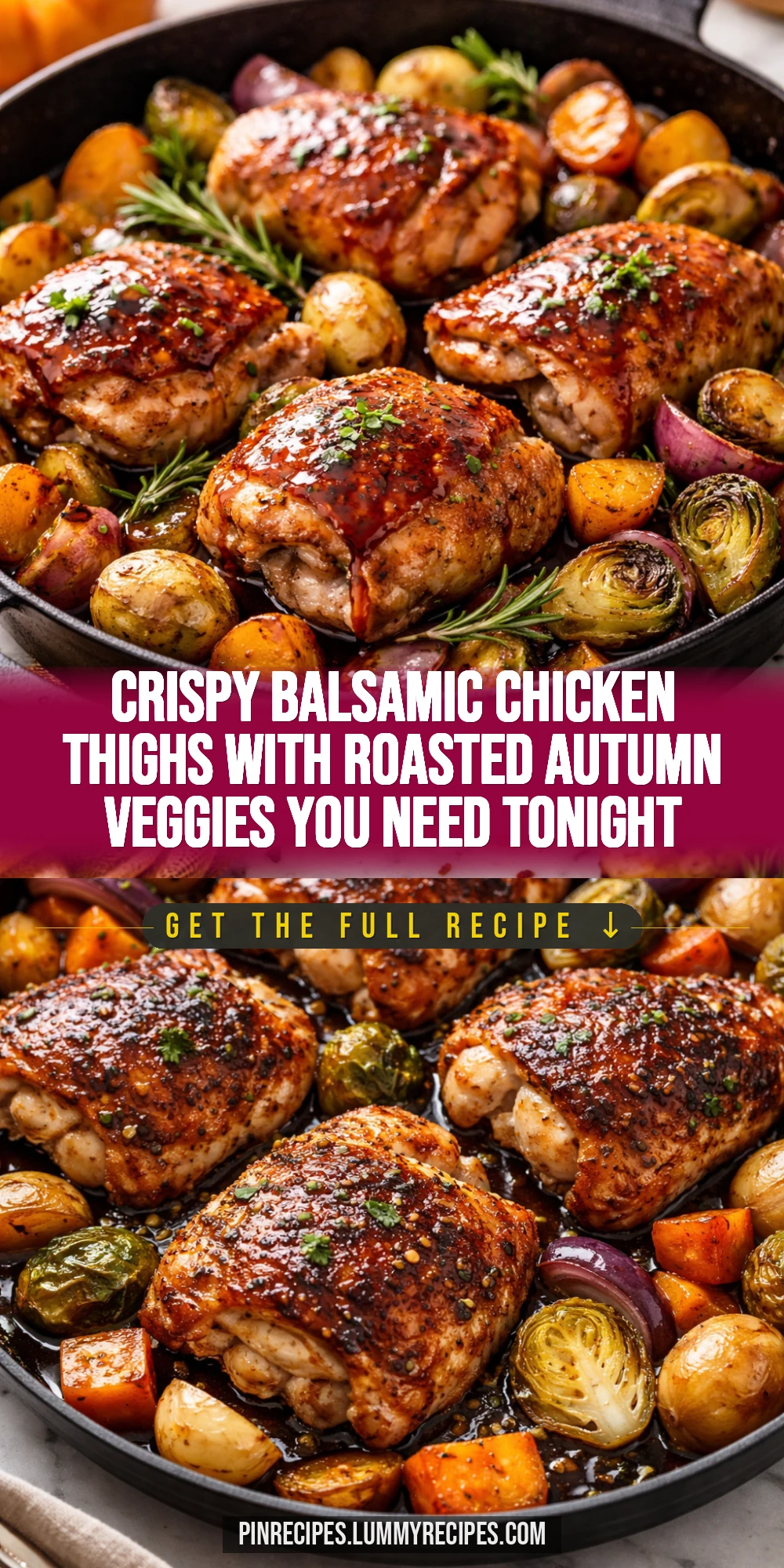
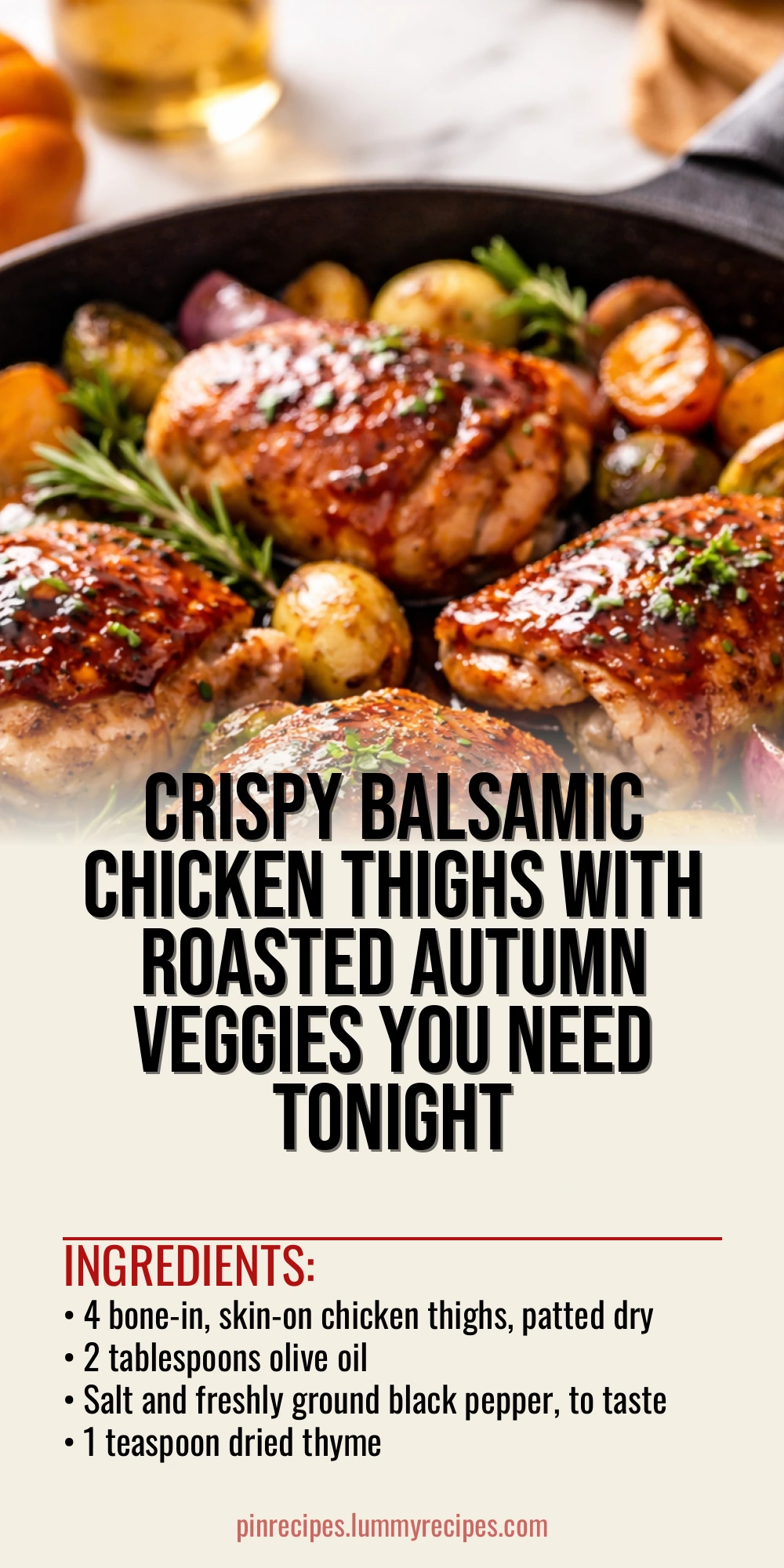
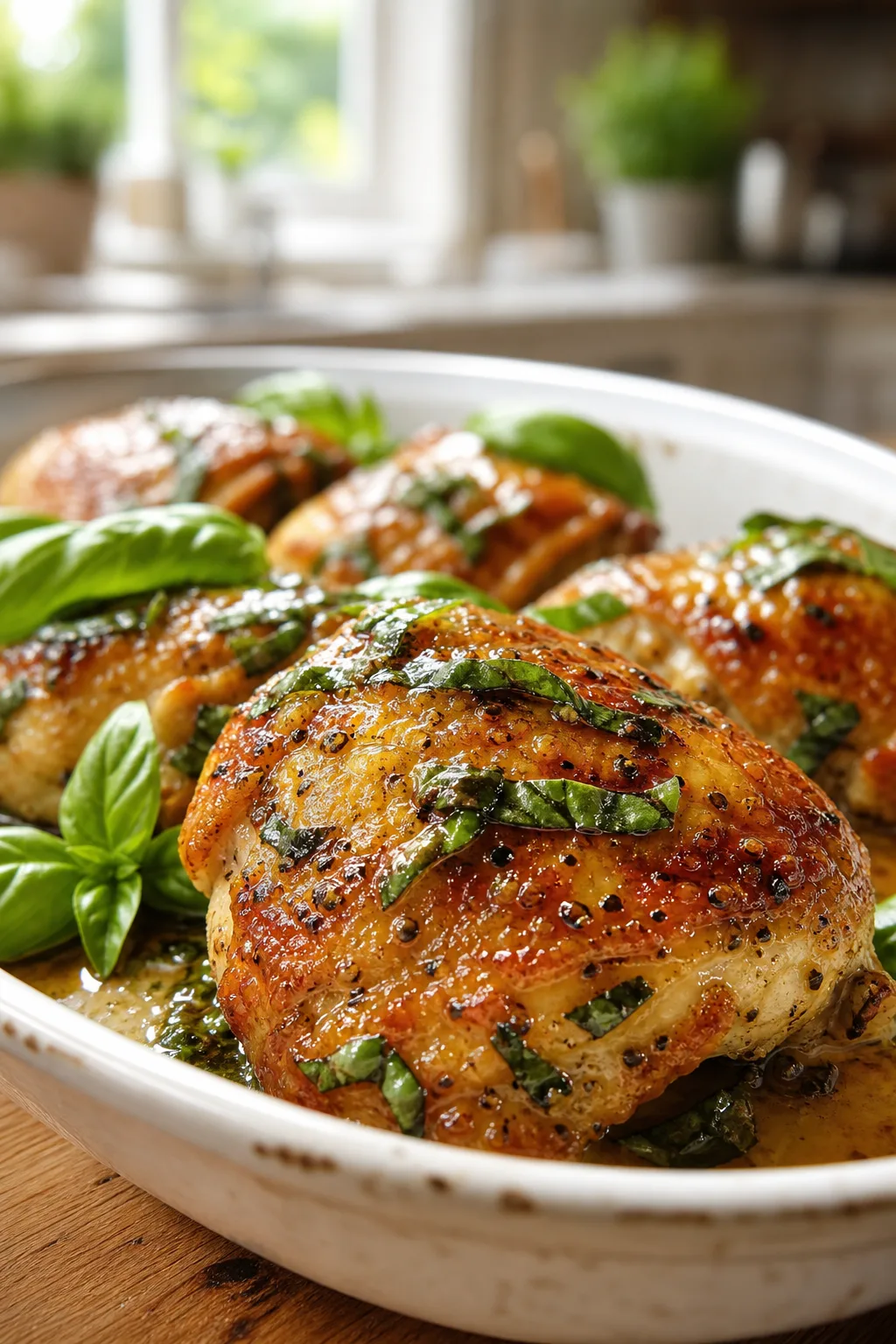
This one-pan dinner combines crispy chicken thighs with tender autumn veggies, all glazed in a tangy balsamic sauce. It’s a simple, cozy meal perfect for chilly evenings when you want comfort without fuss.
Introduction
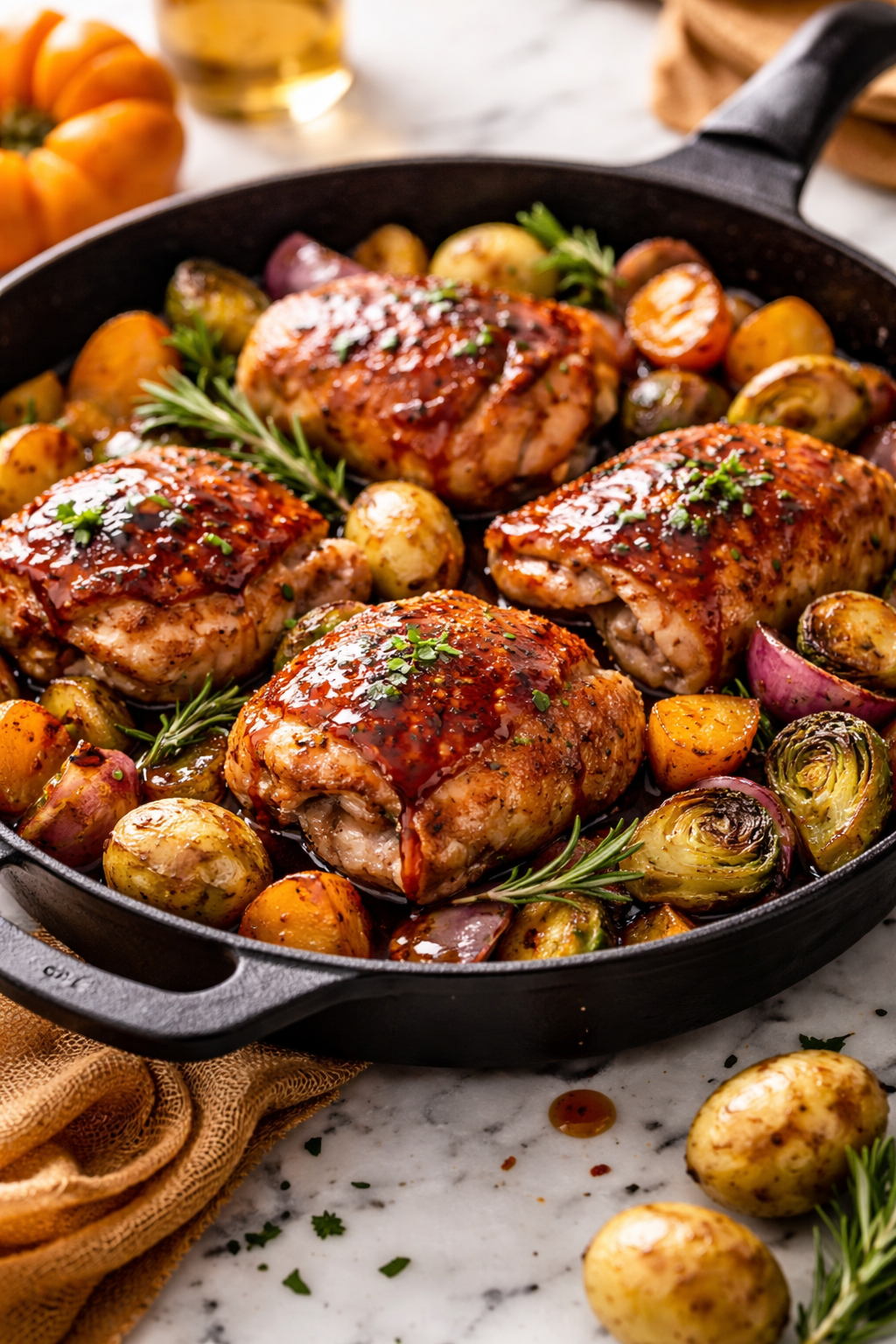
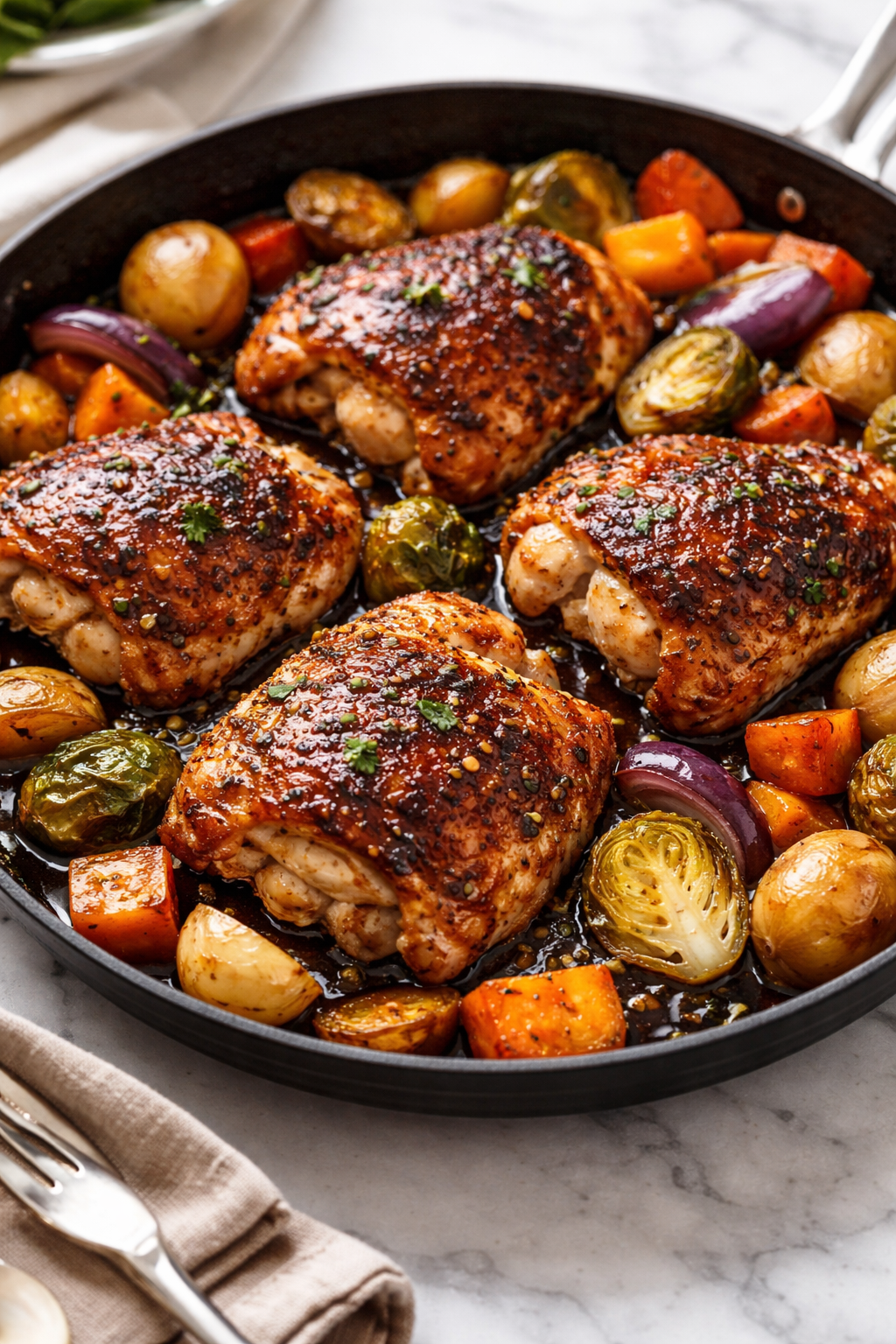
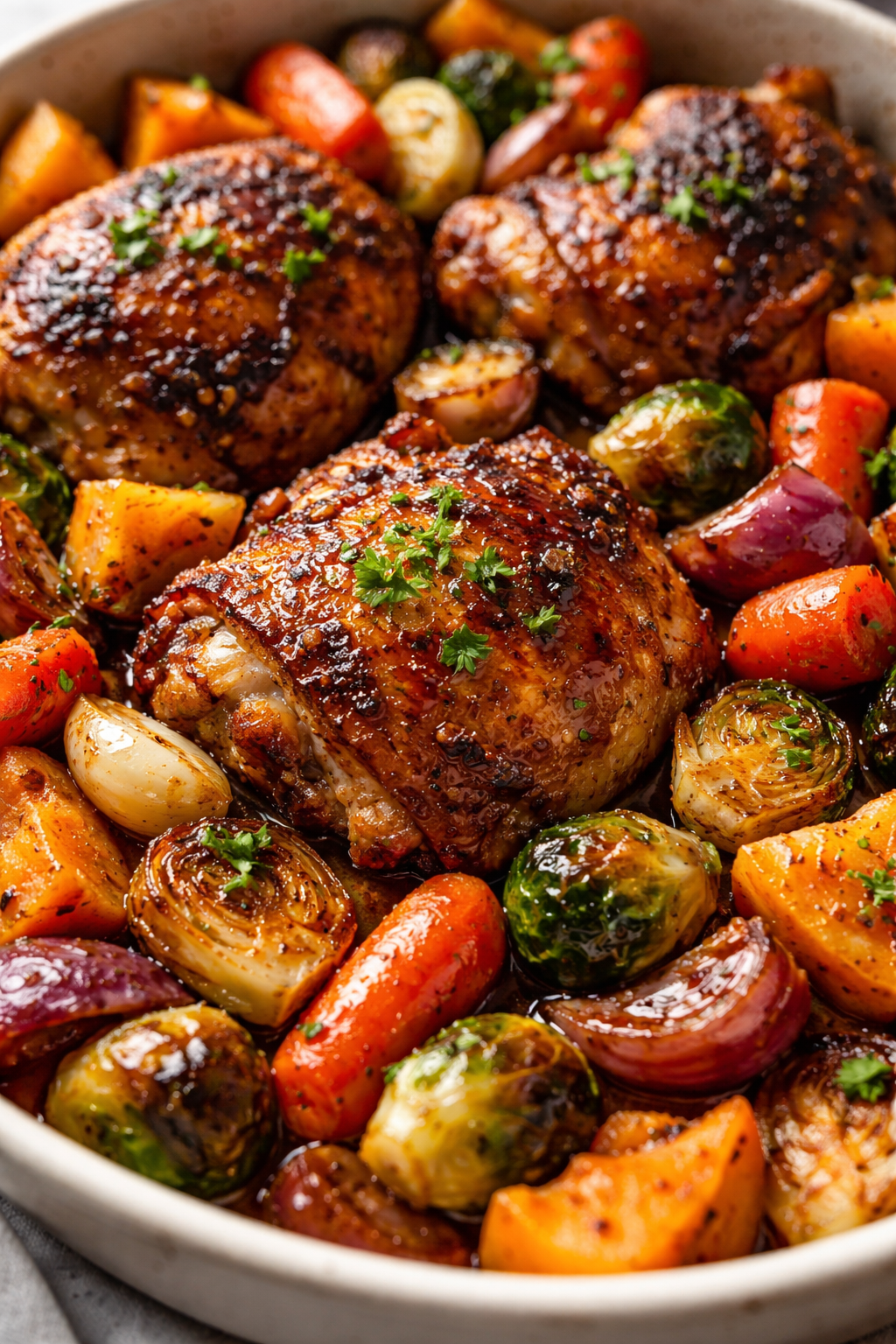
I first made this one-pan balsamic chicken dish on a chilly autumn evening when I wanted something hearty but not complicated. What I love most about this recipe is how the chicken skin crisps up beautifully while the balsamic vinegar and honey create a sticky, tangy glaze that clings to every piece and vegetable. The autumn vegetables soak up all those flavors, making every bite comforting and full of seasonal goodness. Over time, I tweaked the roasting time and the balance of spices to get that perfect harmony between crispy skin and tender meat. Plus, roasting everything together means less mess and a deliciously easy dinner. It’s the kind of meal that feels like a warm hug—perfect for family dinners or when you want to impress without spending hours in the kitchen. The finished dish looks rustic and inviting, with golden chicken thighs nestled among colorful roasted veggies, all glazed with that irresistible balsamic sheen. I think you’ll love how simple and satisfying it is!
How To Do It
Step 1
Preheat your oven to 425°F (220°C). While it heats up, pat the chicken thighs dry with paper towels—this is crucial for getting that crispy skin. Season both sides generously with salt, pepper, thyme, and garlic powder. Dry skin means better browning and crispiness, so don’t skip this step. If the skin is damp, it won’t crisp properly in the oven.
⏱ Time: 10 minutes
✓ Doneness: Chicken skin looks dry and seasoned evenly
Step 2
In a large oven-safe skillet or roasting pan, heat the olive oil over medium-high heat until shimmering. Place the chicken thighs skin-side down and sear without moving for about 6-7 minutes. This initial sear locks in juices and starts crisping the skin. Avoid flipping too soon or the skin may tear. You want a deep golden brown color before turning.
⏱ Time: 7 minutes
✓ Doneness: Skin is deep golden brown and releases easily from the pan
Step 3
Flip the chicken thighs over and cook for another 3 minutes just to begin cooking the other side. Then remove the chicken from the pan and set aside. This partial cooking ensures the thighs will finish evenly in the oven without drying out.
⏱ Time: 3 minutes
✓ Doneness: Chicken has browned on both sides but is not fully cooked through
Step 4
Add the chopped butternut squash, carrots, and red onion to the skillet. Toss with the minced garlic, salt, and pepper, making sure everything is coated in the flavorful pan juices. Spreading the vegetables evenly helps them roast uniformly and soak up the chicken’s flavor.
⏱ Time: 5 minutes
✓ Doneness: Vegetables are glossy and coated with oil and seasoning
Step 5
Nestle the chicken thighs back into the pan on top of the vegetables, skin side up. This placement allows the skin to stay crispy while the veggies roast underneath, absorbing the drippings and balsamic glaze later.
⏱ Time: 2 minutes
✓ Doneness: Chicken and vegetables arranged evenly in the pan
Step 6
In a small bowl, whisk together the balsamic vinegar and honey until smooth. Drizzle this mixture evenly over the chicken and vegetables. The honey balances the acidity of the vinegar and helps create that sticky glaze during roasting.
⏱ Time: 3 minutes
✓ Doneness: Balsamic-honey glaze coats chicken and vegetables evenly
Step 7
Transfer the skillet to the preheated oven and roast for 20-25 minutes, or until the chicken reaches an internal temperature of 165°F (74°C) and the vegetables are tender. Keep an eye on the glaze—it should thicken and become glossy without burning. Stir vegetables halfway through for even roasting.
⏱ Time: 25 minutes
✓ Doneness: Chicken juices run clear; vegetables are fork-tender and caramelized
Step 8
Remove the pan from the oven and let the chicken rest for 5 minutes before serving. Resting allows the juices to redistribute, keeping the meat juicy and tender. Don’t skip this step or the chicken might dry out when cut.
⏱ Time: 5 minutes
✓ Doneness: Chicken feels firm but juicy when gently pressed
Step 9
Garnish with fresh chopped parsley for a pop of color and fresh flavor. Serve the chicken thighs with the roasted vegetables spooned alongside, making sure to drizzle any remaining pan juices over everything for extra richness.
⏱ Time: 2 minutes
✓ Doneness: Dish looks vibrant and inviting with fresh green garnish
Pro Tips
Always pat chicken skin dry before seasoning and searing.
Moisture on the skin creates steam during cooking, which prevents crisping. Dry skin allows the heat to directly brown the surface, resulting in that irresistible crispy texture. Ignoring this step leads to soggy skin and less flavor.
Use an oven-safe skillet for searing and roasting in the same pan.
This technique saves time and reduces cleanup. Searing in the same pan means the fond (browned bits) stays on the pan, adding flavor to the vegetables and glaze. Transferring to the oven without moving the chicken preserves the crispy skin.
Don’t overcrowd the pan with vegetables.
Crowding traps steam and prevents roasting, leading to soggy vegetables instead of caramelized edges. Spread veggies in a single layer for even roasting and maximum flavor development.
Let the chicken rest after roasting.
Resting allows juices to redistribute throughout the meat, keeping it moist and tender. Cutting immediately after cooking causes the juices to run out, resulting in dry chicken.
Stir vegetables halfway through roasting.
Turning the veggies promotes even cooking and browning on all sides, which enhances flavor and texture. Skipping this can leave some pieces undercooked or burnt.
Adjust balsamic and honey quantities to taste.
Everyone’s palate is different; some may prefer a sweeter or tangier glaze. Tasting the glaze before drizzling lets you customize the balance and ensure it complements your family’s preferences.
Use a meat thermometer to check doneness.
Chicken thighs can be tricky to judge by sight alone. A thermometer ensures safe internal temperature (165°F) without overcooking, preserving juiciness and texture.
Common Mistakes to Avoid
Skipping the drying step on chicken skin
Why it happens Many cooks assume seasoning is enough and overlook that moisture prevents crisping.
Fix Always pat chicken skin thoroughly with paper towels before seasoning and cooking. This simple step makes a huge difference in achieving crispy skin.
Overcrowding the pan with vegetables
Why it happens Trying to fit all ingredients in one pan can cause steaming instead of roasting.
Fix Arrange veggies in a single layer with some space around pieces. If needed, roast in batches or use a larger pan to ensure proper caramelization.
Not searing chicken before roasting
Why it happens Some skip searing to save time or avoid extra pans.
Fix Take the few extra minutes to sear chicken skin-side down in the pan first. This step locks in flavor and creates the crispy skin that defines this dish.
Using low-quality balsamic vinegar
Why it happens Budget choices or unfamiliarity with vinegar types.
Fix Invest in a good-quality balsamic vinegar with balanced acidity and sweetness. It greatly impacts the glaze flavor and overall dish.
Cutting chicken immediately after roasting
Why it happens Eager to serve or unaware of resting benefits.
Fix Let chicken rest 5 minutes off the heat to keep juices inside. This simple pause makes the meat more tender and juicy.
Variations
Spicy Balsamic Chicken Thighs
Add a pinch of red pepper flakes or cayenne to the seasoning mix and glaze for a subtle heat that pairs beautifully with the sweet balsamic. The spice adds warmth and depth without overpowering the dish.
Note: Be careful not to add too much spice at once; start small and adjust to taste to avoid overpowering the glaze’s balance.
Herb-Roasted Chicken with Root Vegetables
Swap thyme for rosemary and add parsnips or turnips alongside the squash and carrots. This variation brings a woodsy, earthy flavor that’s perfect for fall dinners.
Note: Root vegetables may require slightly longer roasting; cut them smaller or check for tenderness before serving.
Maple Balsamic Glaze
Replace honey with pure maple syrup for a richer, deeper sweetness that complements the balsamic vinegar and autumn veggies beautifully.
Note: Maple syrup is thinner than honey, so glaze may be less sticky; consider reducing balsamic slightly to thicken.
Lemon Garlic Balsamic Chicken
Add fresh lemon zest and juice to the balsamic glaze for a bright, citrusy twist that lightens the richness of the chicken and vegetables.
Note: Add lemon juice after roasting to preserve brightness; too much acid during cooking can toughen meat.
Vegetarian Balsamic Roasted Vegetables
Omit chicken and roast a mix of hearty vegetables like cauliflower, Brussels sprouts, and sweet potatoes with the balsamic glaze for a flavorful vegetarian main dish.
Note: Roast vegetables at 400°F for 25-30 minutes, stirring halfway, to avoid burning without chicken juices.
Nutrition
Per Serving:
Nutritional values are estimates and may vary based on specific ingredients used.
Storage & Tips
Room Temperature
This dish can safely sit at room temperature for up to 2 hours if covered loosely. Beyond that, bacteria growth risks increase, so refrigerate promptly.
Refrigerator
Store leftovers in an airtight container in the fridge for up to 3 days. The chicken skin may lose some crispness, but reheating gently can help restore texture. Serve warm or at room temperature.
Freezer
Freeze cooked chicken and vegetables in a freezer-safe container for up to 2 months. Wrap tightly to prevent freezer burn. Thaw overnight in the fridge before reheating.
Reheating
Reheat in a 350°F oven for 15-20 minutes, uncovered, to help crisp skin and warm vegetables evenly. Avoid microwaving as it can make skin soggy and vegetables mushy.
Make Ahead
You can prep and season the chicken and chop vegetables 1-2 days ahead, storing them separately in the fridge. Assemble and roast fresh on the day of serving for best texture and flavor.
FAQ
Can I use boneless chicken thighs instead of bone-in?
Yes, boneless thighs work but they cook faster and may dry out more easily. Reduce roasting time by about 5-7 minutes and check internal temperature early to avoid overcooking. The flavor will be slightly less rich without the bone.
What if I don’t have balsamic vinegar? Can I substitute it?
You can substitute with red wine vinegar mixed with a little sugar or honey to mimic balsamic’s sweetness and acidity. Use about 3 tablespoons red wine vinegar plus 1 tablespoon honey. The flavor will be different but still tasty.
How do I know when the chicken is fully cooked?
The safest way is to use a meat thermometer. Insert it into the thickest part without touching bone; it should read 165°F. The juices should run clear, and the meat should feel firm but springy.
Can I make this recipe gluten-free?
Absolutely! This recipe is naturally gluten-free as long as your balsamic vinegar and other ingredients don’t contain gluten additives. Always double-check labels to be sure.
What vegetables work best besides butternut squash and carrots?
Other root vegetables like sweet potatoes, parsnips, and turnips work well. Brussels sprouts and red onions add nice texture and flavor too. Just adjust roasting times if veggies vary in size or density.
Can I prepare this recipe in advance and reheat?
Yes, you can prep ingredients a day ahead and store separately. Cooked leftovers reheat well in the oven to keep skin crispy. Avoid microwaving to maintain texture.
Why is my chicken skin not crispy after roasting?
Common causes include not drying the skin well before cooking, overcrowding the pan causing steam, or insufficient searing before roasting. Make sure to pat dry, sear skin side down, and roast uncovered at high heat.
Is it okay to use frozen chicken thighs?
You can, but thaw completely before cooking for even roasting and safety. Cooking from frozen will result in uneven cooking and soggy skin.
Final Thoughts
I hope you give this one-pan balsamic chicken and autumn vegetables a try—it’s a cozy, simple dinner that feels like a warm hug. Let me know how it turns out for your family!