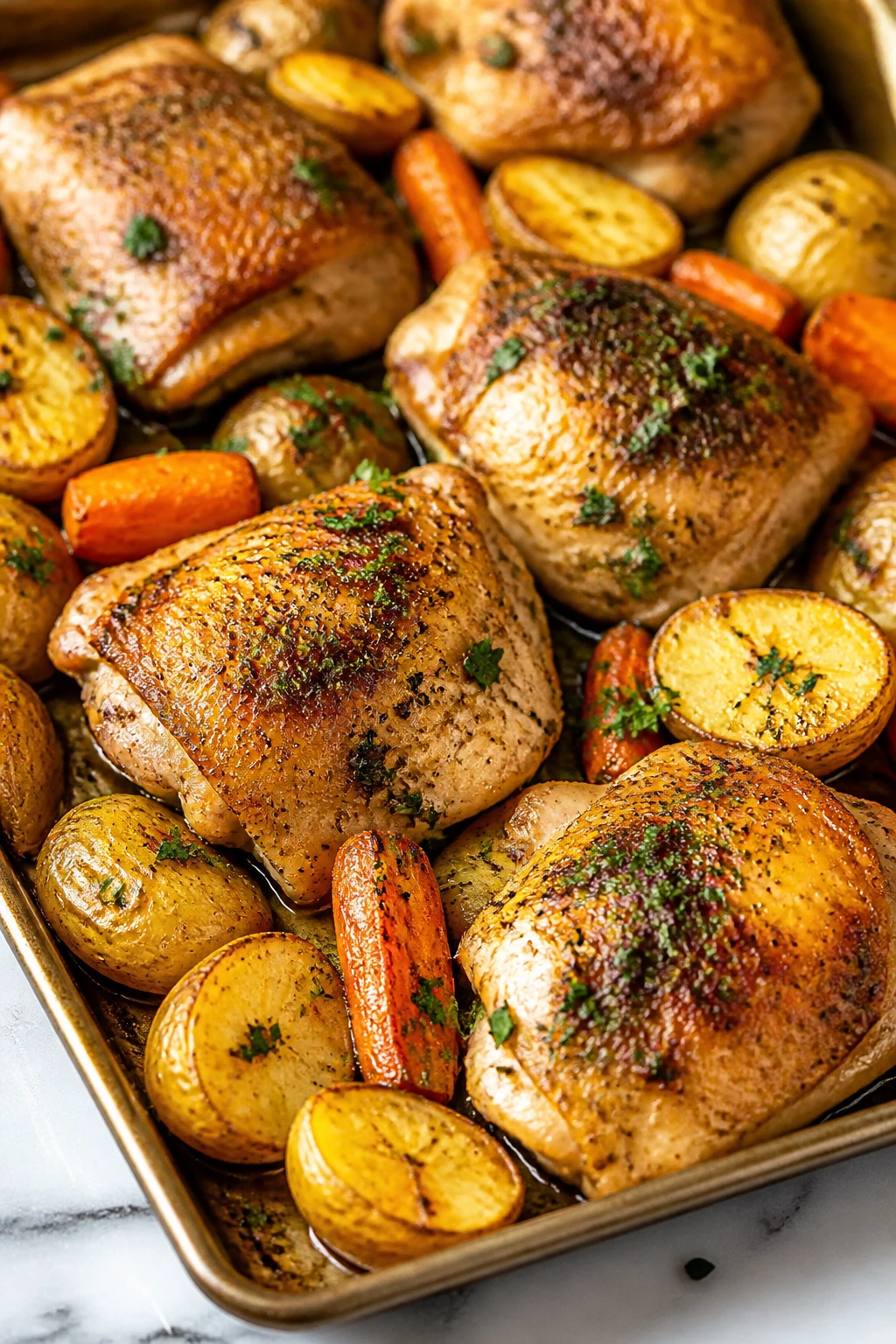
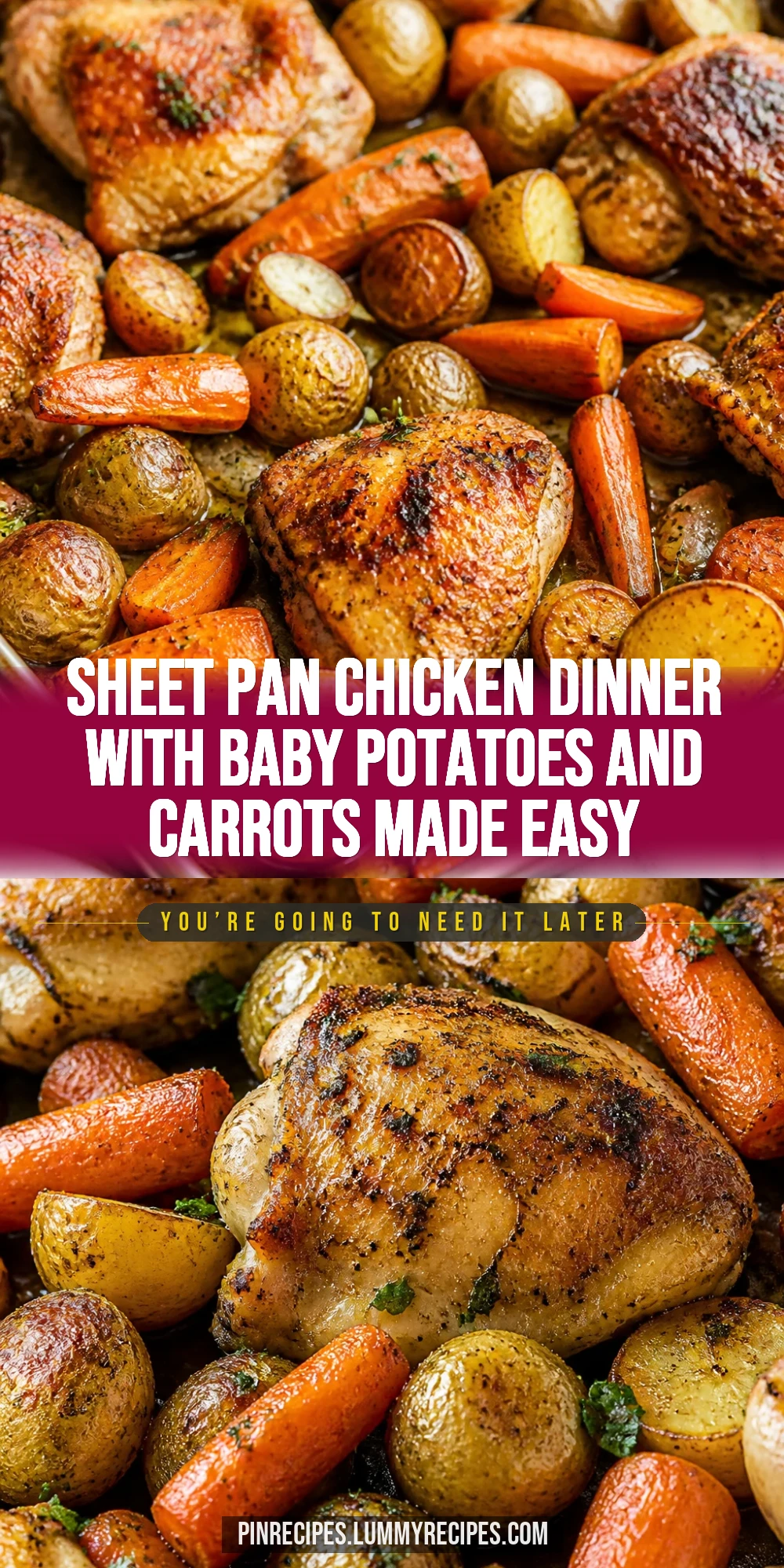
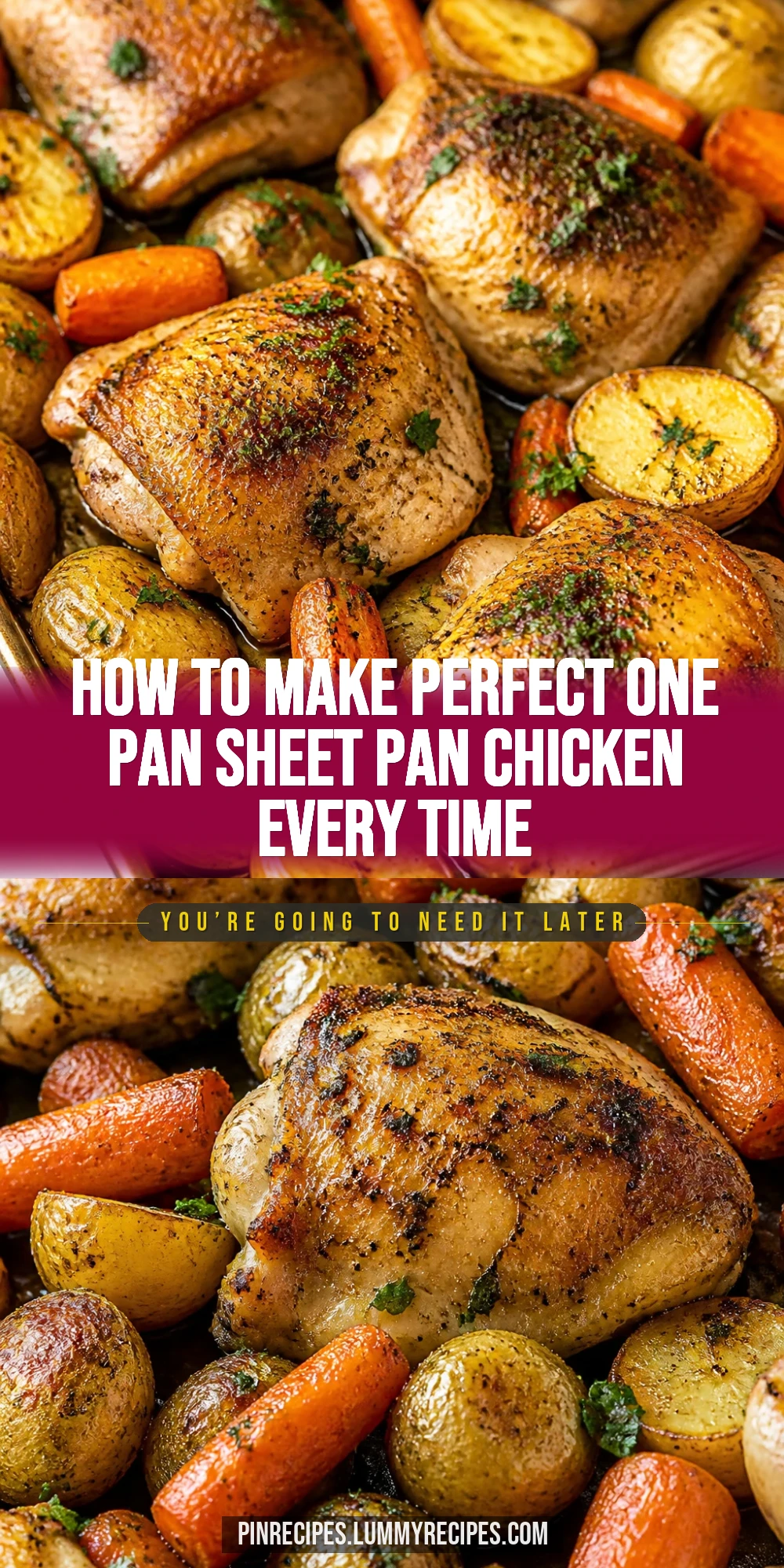
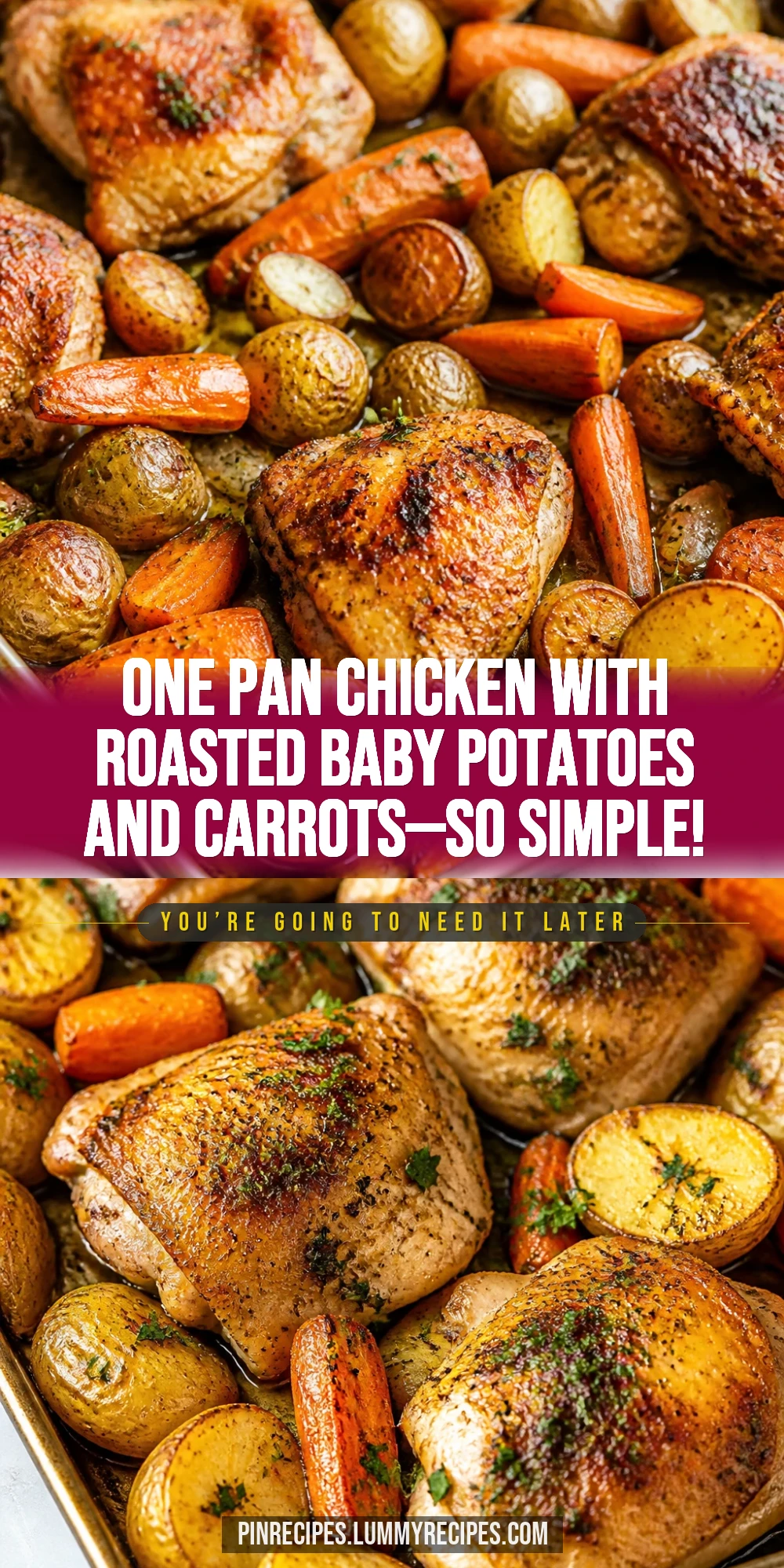
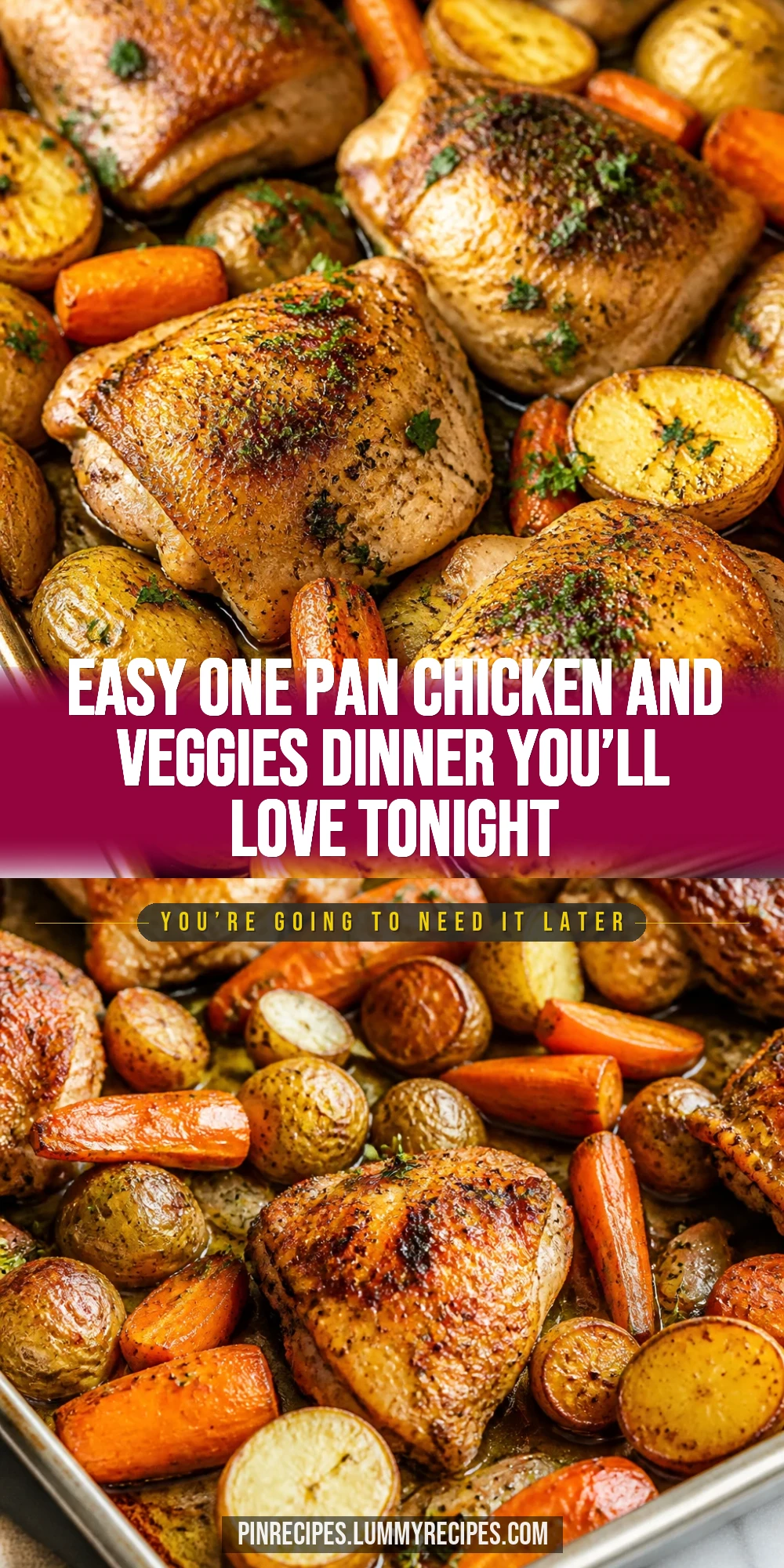
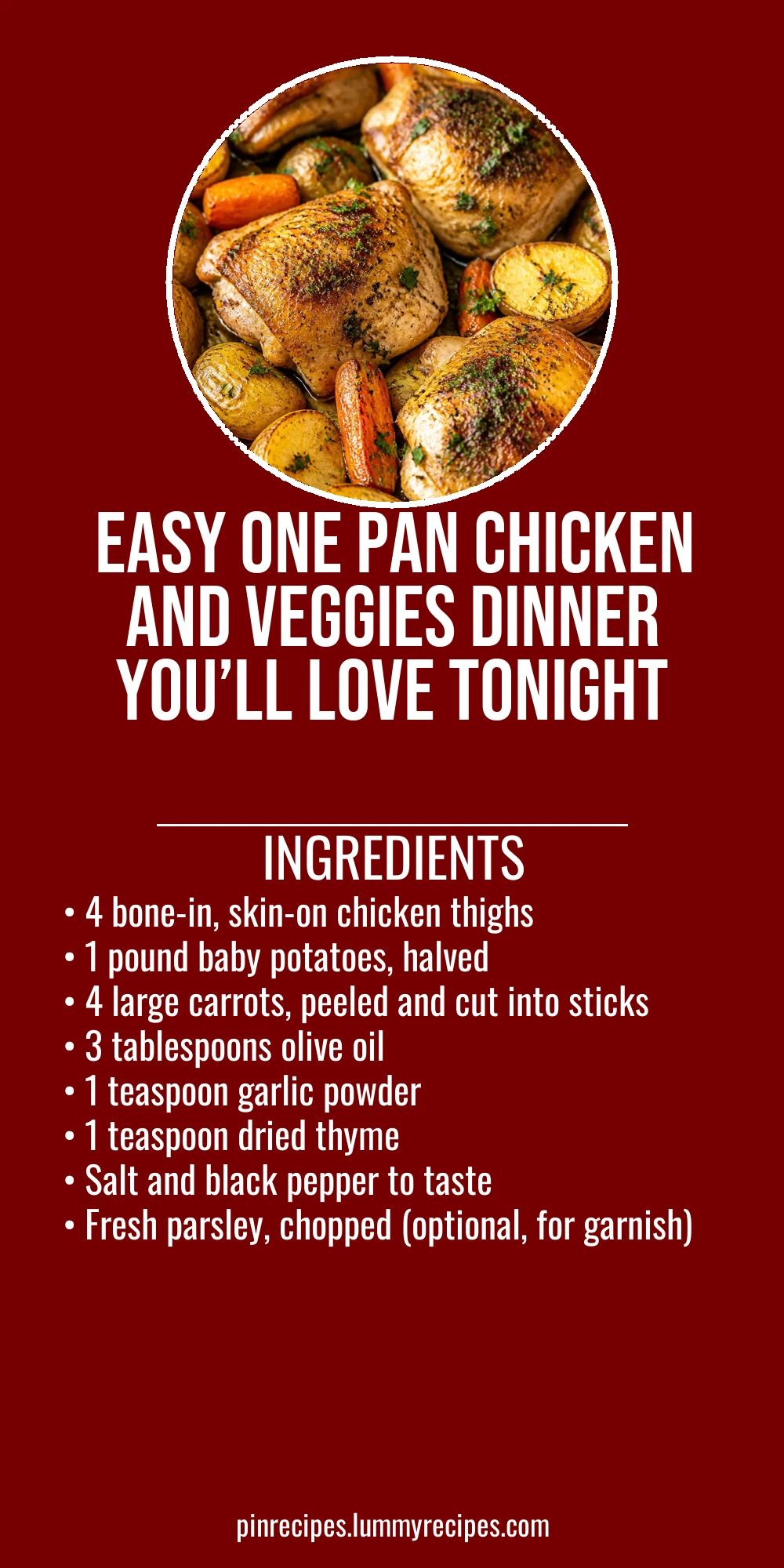
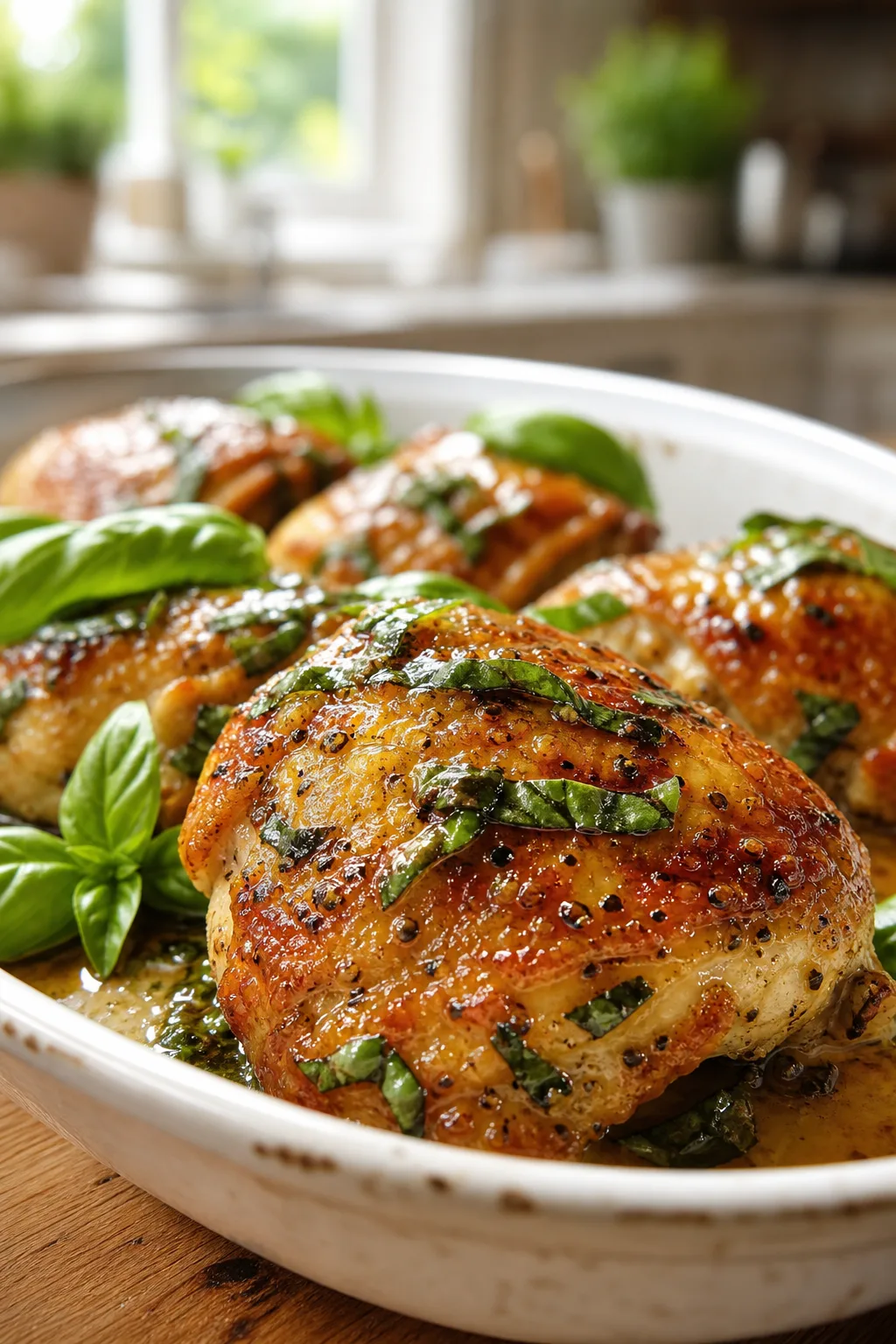
This one-pan chicken dinner is a lifesaver on busy nights. Tender chicken bakes alongside baby potatoes and sweet carrots, all seasoned with herbs for cozy comfort. Perfect for a simple family meal!
Introduction
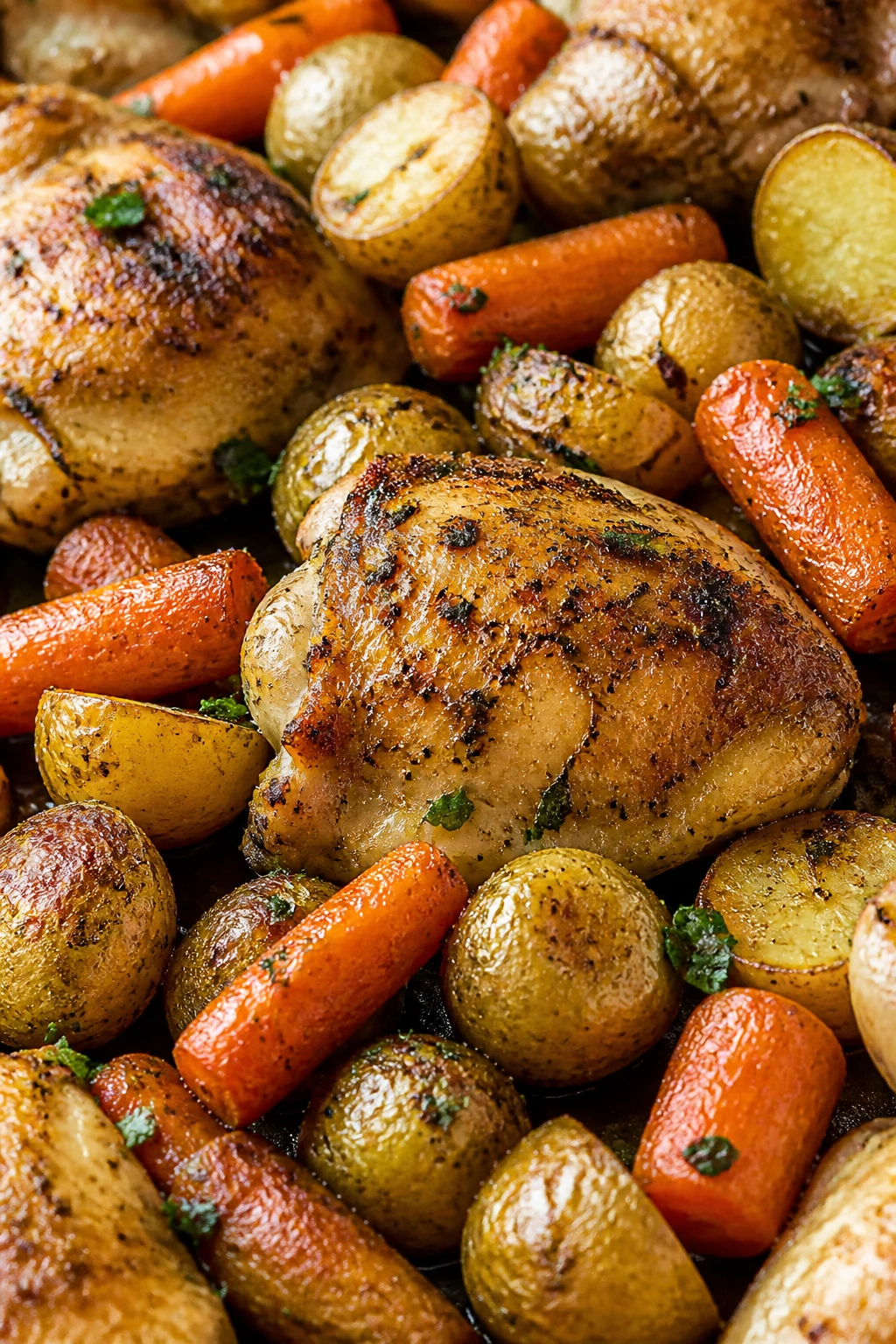
I first made this one pan sheet pan chicken with baby potatoes and carrots on a hectic weeknight when I wanted something comforting but quick. What I love about this recipe is how everything cooks together on one tray—no extra pots, no fuss. The chicken skin crisps up beautifully, while the baby potatoes roast tender and slightly caramelized, and the carrots add a touch of sweetness. I’ve tried other sheet pan dinners before, but adding a simple blend of garlic powder and thyme really elevates the flavors without complicating the prep. Plus, roasting the chicken thighs skin-side down at first helps render the fat and gives you that golden crispy skin everyone loves. The whole house smells incredible as it cooks, and it’s such a satisfying meal that feels like a bit of a treat but is actually very easy. My family always asks for seconds, and it’s become one of my go-to dinners when I want something that feels homemade but doesn’t take hours. Try it with a simple green salad or steamed greens on the side, and you’ve got a perfect balanced meal that’s both cozy and fresh.
How To Do It
Step 1
Preheat your oven to 425°F (220°C). This high temperature is key for getting that crispy chicken skin and nicely roasted vegetables. Start by patting the chicken thighs dry with paper towels—dry skin browns better and crisps up instead of steaming. Place the chicken skin-side down on a large rimmed baking sheet. This initial placement helps render the fat from the skin, creating a crispy texture. Avoid overcrowding the pan, or the chicken will steam instead of roast properly.
⏱ Time: 10 minutes
✓ Doneness: Chicken skin turns golden and starts to crisp, and you see rendered fat pooling slightly around the thighs.
Step 2
While the chicken starts roasting skin-side down, toss the halved baby potatoes and carrot sticks in olive oil, garlic powder, dried thyme, salt, and pepper. Make sure each piece is evenly coated for uniform roasting. The olive oil helps the veggies caramelize and the herbs infuse flavor. If you skip this step or don’t coat well, the vegetables might roast unevenly or dry out.
⏱ Time: 5 minutes
✓ Doneness: Vegetables are glossy with oil and speckled with herbs, ready to go into the oven.
Step 3
After the chicken has roasted skin-side down for about 10 minutes, flip the thighs over so the skin side is up. This allows the skin to crisp fully and the chicken to cook through evenly. Arrange the seasoned potatoes and carrots around the chicken on the same baking sheet, spreading them out to avoid overcrowding, which can cause steaming instead of roasting.
⏱ Time: 5 minutes
✓ Doneness: Chicken skin is golden and crispy on top; vegetables are spaced out and coated with seasoning.
Step 4
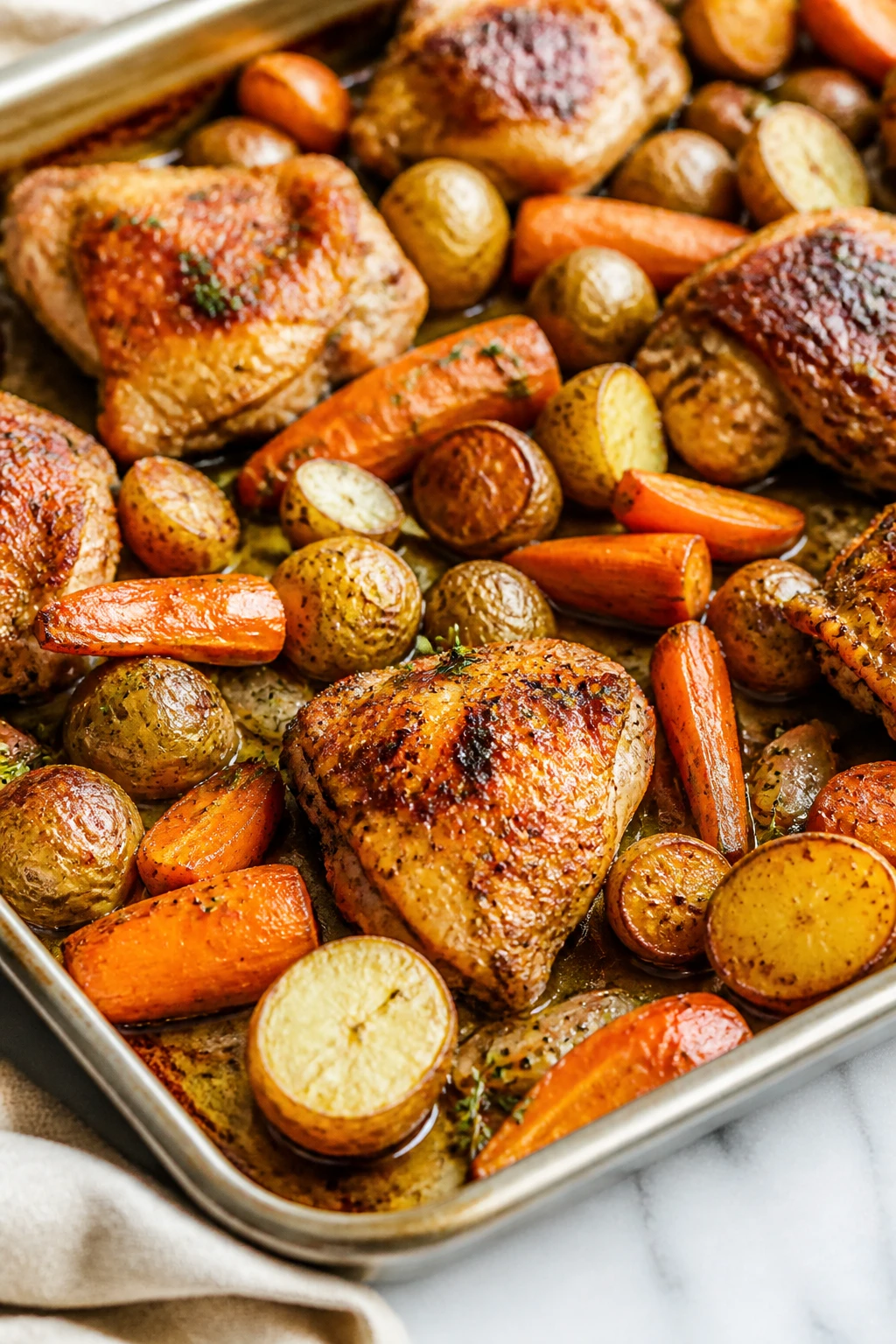
Return the baking sheet to the oven and roast everything for another 25-30 minutes. The chicken should reach an internal temperature of 165°F (74°C) for safe eating. The potatoes should be fork-tender and nicely browned, and the carrots should be soft with caramelized edges. Check the vegetables around 20 minutes to stir them gently if needed for even browning.
⏱ Time: 25-30 minutes
✓ Doneness: Chicken juices run clear when pierced, potatoes are golden brown, and carrots are tender with browned tips.
Step 5
Once cooked, remove the pan from the oven and let the chicken rest for 5 minutes. Resting allows the juices to redistribute, keeping the meat moist and tender. Meanwhile, you can sprinkle fresh parsley over the dish for a pop of color and fresh flavor. Avoid cutting into the chicken immediately, or the juices will run out and the meat will be drier.
⏱ Time: 5 minutes
✓ Doneness: Chicken looks juicy and rested, vegetables glistening with roasted edges.
Step 6
Serve the chicken thighs alongside the roasted baby potatoes and carrots directly from the pan for a rustic feel. The combination of crispy skin, tender meat, and sweet roasted veggies makes for a comforting and balanced meal. If you want, add a simple green salad or steamed greens to brighten the plate.
⏱ Time: 0 minutes
✓ Doneness: Plate looks colorful and inviting, with golden chicken and vibrant vegetables.
Step 7
For extra flavor, drizzle a little fresh lemon juice over the chicken and veggies before serving. The acidity cuts through the richness and adds brightness. This step is optional but highly recommended if you like a fresh contrast.
⏱ Time: 1 minute
✓ Doneness: Dish has a fresh, zesty aroma and balanced flavor.
Step 8
If you want to add a bit of heat, sprinkle crushed red pepper flakes over the chicken before roasting or add a dash of smoked paprika to the seasoning mix for a smoky twist. These small tweaks can easily customize the dish to your taste.
⏱ Time: 0 minutes
✓ Doneness: Seasoning is evenly distributed with a hint of color from spices.
Step 9
Clean your baking sheet promptly after it cools to prevent stuck-on bits. If there are stubborn roasted pieces, soak the pan in warm soapy water for 15 minutes before scrubbing. Keeping your sheet pan in good shape makes future cooking easier and prevents flavors from transferring between meals.
⏱ Time: 5 minutes
✓ Doneness: Baking sheet is clean and ready for next use.
Pro Tips
Pat chicken skin dry before roasting.
Moisture on the skin creates steam during cooking, preventing it from crisping properly. Dry skin allows the heat to directly brown the surface, producing that desirable golden, crispy texture.
Don’t overcrowd the baking sheet.
Crowding traps steam and inhibits proper roasting. Giving each piece space allows hot air to circulate, promoting even browning and caramelization on both chicken and vegetables.
Flip chicken skin-side up after initial roasting.
Starting skin-side down renders fat and partially cooks the chicken. Flipping skin-side up finishes crisping the skin and ensures the meat cooks evenly without drying out.
Use bone-in, skin-on chicken thighs for best flavor.
Bones conduct heat evenly and add moisture, while skin crisps beautifully. Boneless or skinless cuts tend to dry out faster and lack the same depth of flavor.
Rest chicken after baking before slicing.
Resting allows juices to redistribute within the meat, resulting in a juicier, more tender bite rather than dry or tough chicken.
Toss vegetables in oil and seasoning thoroughly.
Even coating ensures consistent roasting and flavor. Skipping this can lead to uneven cooking and bland spots.
Use a rimmed baking sheet to catch juices.
A rimmed pan contains rendered fat and vegetable juices, preventing messes and allowing the chicken and veggies to roast in flavorful drippings.
Common Mistakes to Avoid
Not drying the chicken skin before roasting.
Why it happens Many cooks skip this step because it feels unnecessary or time-consuming.
Fix Pat the chicken skin thoroughly with paper towels before seasoning and roasting. This simple step prevents steaming and helps achieve crispy, golden skin.
Overcrowding the pan with chicken and vegetables.
Why it happens Trying to fit everything on one pan quickly without spacing.
Fix Use a large enough pan or roast in batches. Spread ingredients out with space between pieces to allow proper air circulation and even roasting.
Skipping the flip of chicken thighs skin-side up.
Why it happens Forgetting or rushing the process.
Fix Set a timer to remind yourself to flip the chicken after 10 minutes. This step crisps the skin and cooks chicken evenly.
Using too low oven temperature.
Why it happens Fear of burning or drying out food.
Fix Roast at 425°F to get proper browning and crispiness. Lower temps lead to steaming and pale, soggy skin.
Not letting chicken rest after cooking.
Why it happens Eagerness to eat or unaware of the benefit.
Fix Allow chicken to rest for 5 minutes off heat to let juices settle, resulting in moister meat.
Variations
Add Garlic and Rosemary
Toss minced garlic and fresh rosemary sprigs with the potatoes and carrots before roasting. The garlic adds a savory punch, while rosemary brings a fragrant, piney aroma that pairs beautifully with chicken.
Note: Add garlic towards the last 10 minutes of roasting if you want to avoid burning it; rosemary can be added at the start.
Spicy Sheet Pan Chicken
Mix smoked paprika, cayenne pepper, and chili powder into your seasoning blend for a smoky, spicy kick. This variation adds warmth and depth without overpowering the natural flavors.
Note: Adjust cayenne to taste, and ensure even coating to prevent any bitter burnt spots.
Lemon Herb Twist
Add lemon zest and juice to the seasoning mix and finish with lemon wedges on the pan. This brightens the dish and adds a fresh, zesty contrast to the rich chicken and roasted veggies.
Note: Add lemon juice after roasting to prevent bitterness from prolonged heat exposure.
Swap Carrots for Brussels Sprouts
Replace carrots with halved Brussels sprouts for a different texture and flavor. Brussels roast quickly and develop a lovely nutty taste that complements the chicken and potatoes.
Note: Roast Brussels sprouts cut side down for better caramelization and adjust cooking time if needed.
Honey Mustard Glaze
Brush the chicken with a honey mustard glaze before roasting for a sweet and tangy flavor profile. This adds a sticky, caramelized coating that’s irresistible.
Note: Apply glaze halfway through cooking to prevent burning sugars.
Nutrition
Per Serving:
Nutritional values are estimates and may vary based on specific ingredients used.
Storage & Tips
Room Temperature
This dish can safely sit at room temperature for up to 2 hours if covered loosely with foil or a clean kitchen towel to prevent drying out.
Refrigerator
Store leftovers in an airtight container for up to 3 days. Flavors meld nicely but the skin may lose crispness. Reheat gently to avoid drying the chicken.
Freezer
Freeze cooked chicken and vegetables in a freezer-safe container for up to 2 months. Wrap tightly to prevent freezer burn. Thaw overnight in the fridge before reheating.
Reheating
Reheat in a 350°F oven for 15-20 minutes until warmed through. Adding a splash of water or broth helps maintain moisture. Avoid microwaving if possible to preserve texture.
Make Ahead
You can prep and season the chicken and vegetables up to 24 hours ahead, storing them separately in the fridge. Assemble on the baking sheet and roast just before serving for best results.
FAQ
Can I use boneless chicken breasts instead of thighs?
Yes, but boneless breasts cook faster and can dry out more easily. Reduce roasting time and watch closely to avoid overcooking. Consider marinating or basting to keep them moist.
What if I don’t have baby potatoes?
You can use small Yukon Gold or red potatoes cut into uniform pieces. Larger potatoes will take longer to cook, so cut accordingly to ensure even roasting with the chicken.
Can I add other vegetables to this dish?
Absolutely! Vegetables like Brussels sprouts, green beans, or bell peppers work well. Just adjust cooking times and cut sizes so everything finishes together.
How do I know when the chicken is fully cooked?
Use a meat thermometer to check for an internal temperature of 165°F (74°C). Juices should run clear, and the meat should feel firm but not dry.
Can I prepare this recipe in advance?
Yes, you can season the chicken and veggies a day ahead and keep them refrigerated separately. Assemble and roast on the day you plan to serve for the best texture.
Why is my chicken skin not crispy?
This usually happens if the skin isn’t dried well before roasting or if the pan is overcrowded. Make sure to pat dry and give space for air to circulate.
Is it okay to use frozen vegetables?
Frozen veggies tend to release more moisture and may not roast as well. If using frozen, thaw and pat dry thoroughly before roasting to avoid sogginess.
How can I make this recipe spicier?
Add spices like cayenne pepper, smoked paprika, or chili flakes to your seasoning mix. Adjust amounts to your heat preference and sprinkle evenly for balanced flavor.
Final Thoughts
Give this one pan sheet pan chicken with baby potatoes and carrots a try—you’ll love how easy and delicious it is! Don’t forget to share your results and tweaks with me.