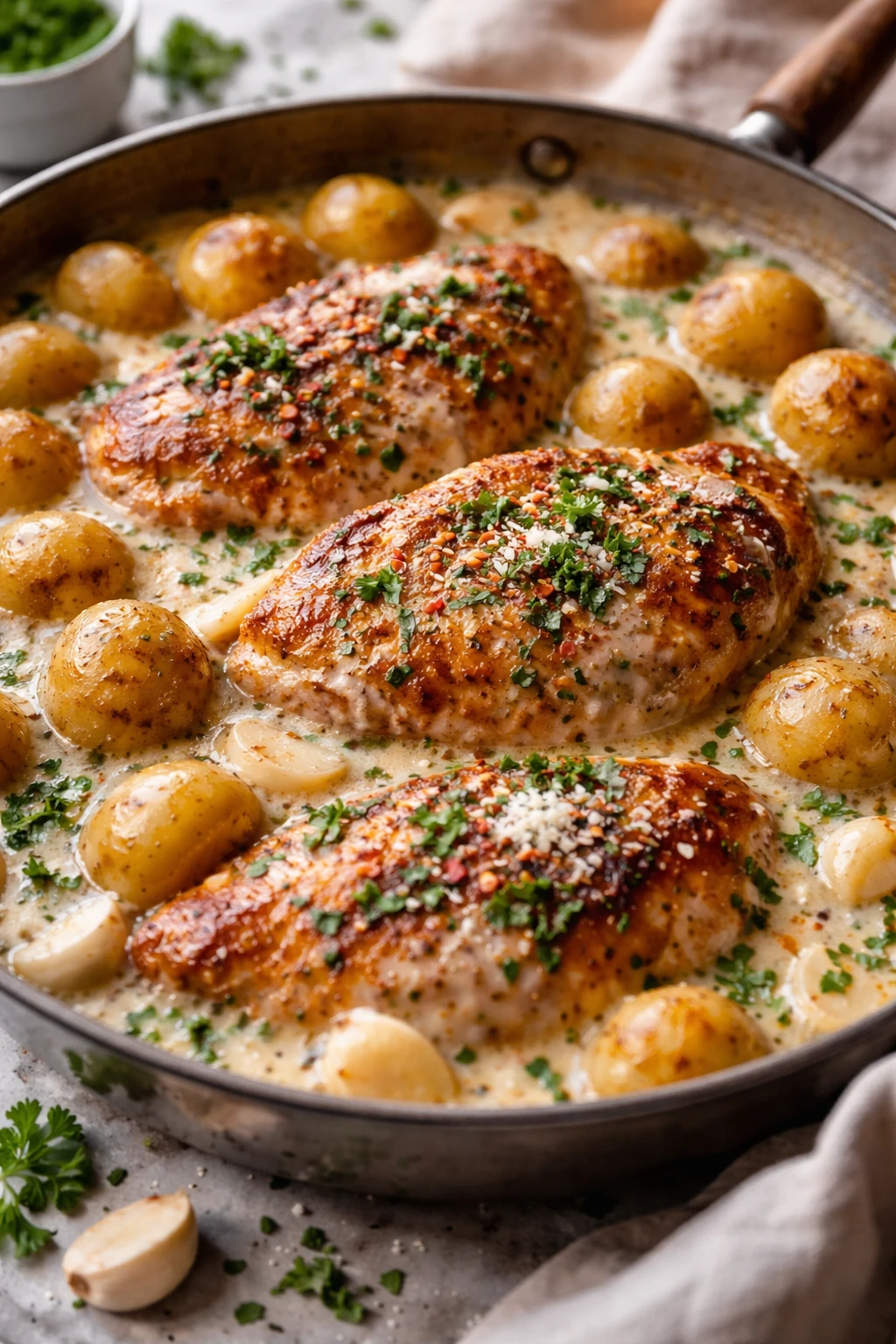
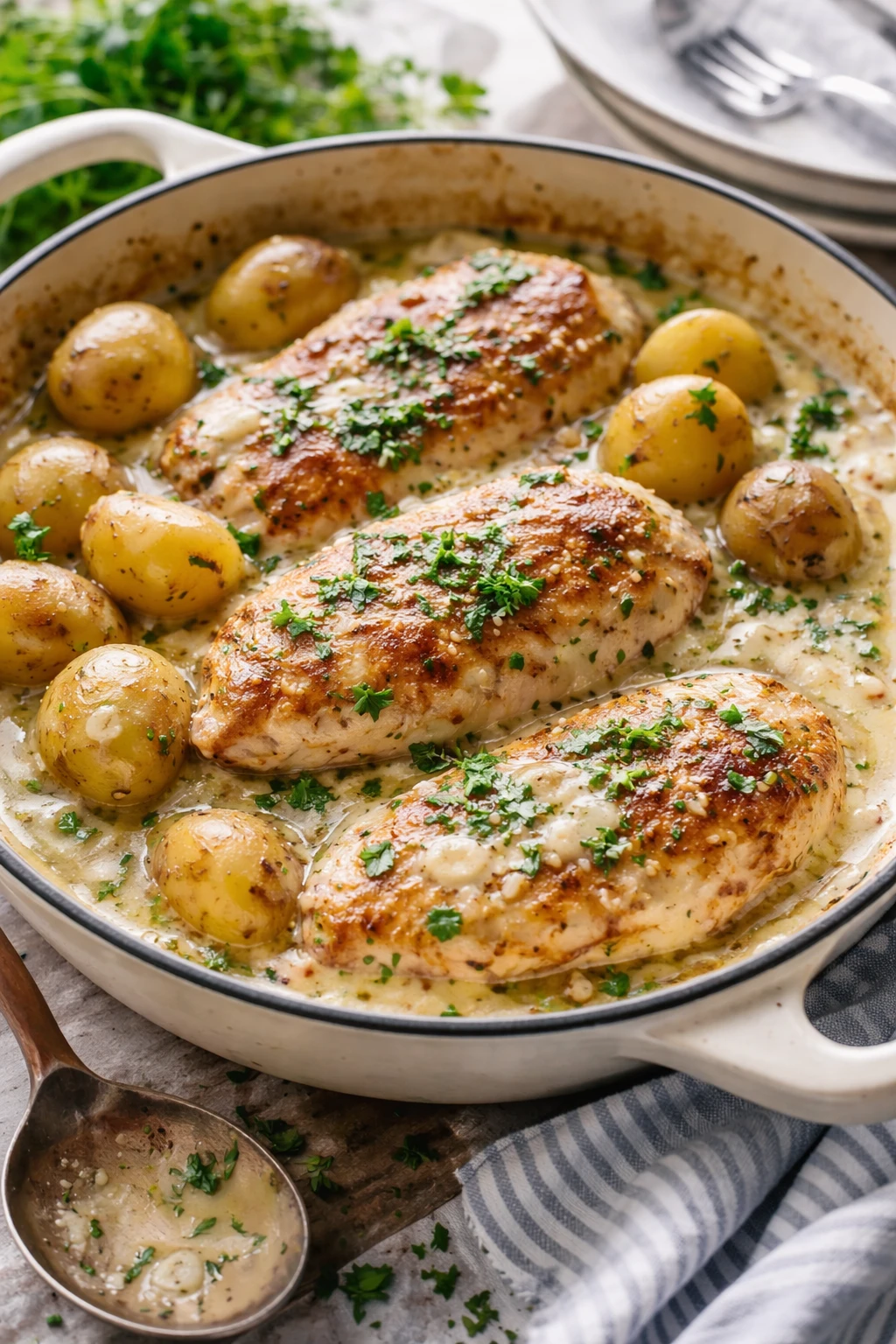
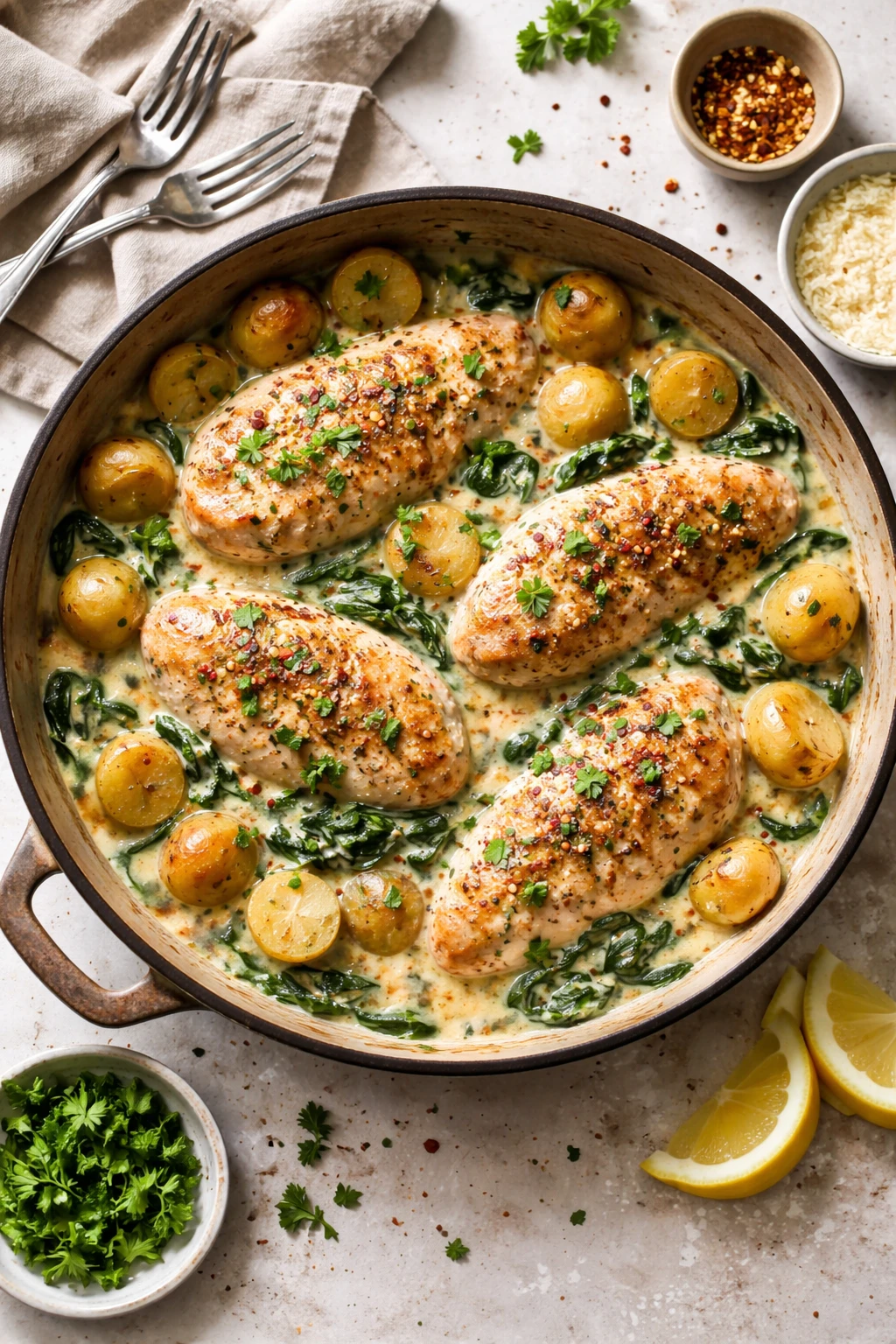
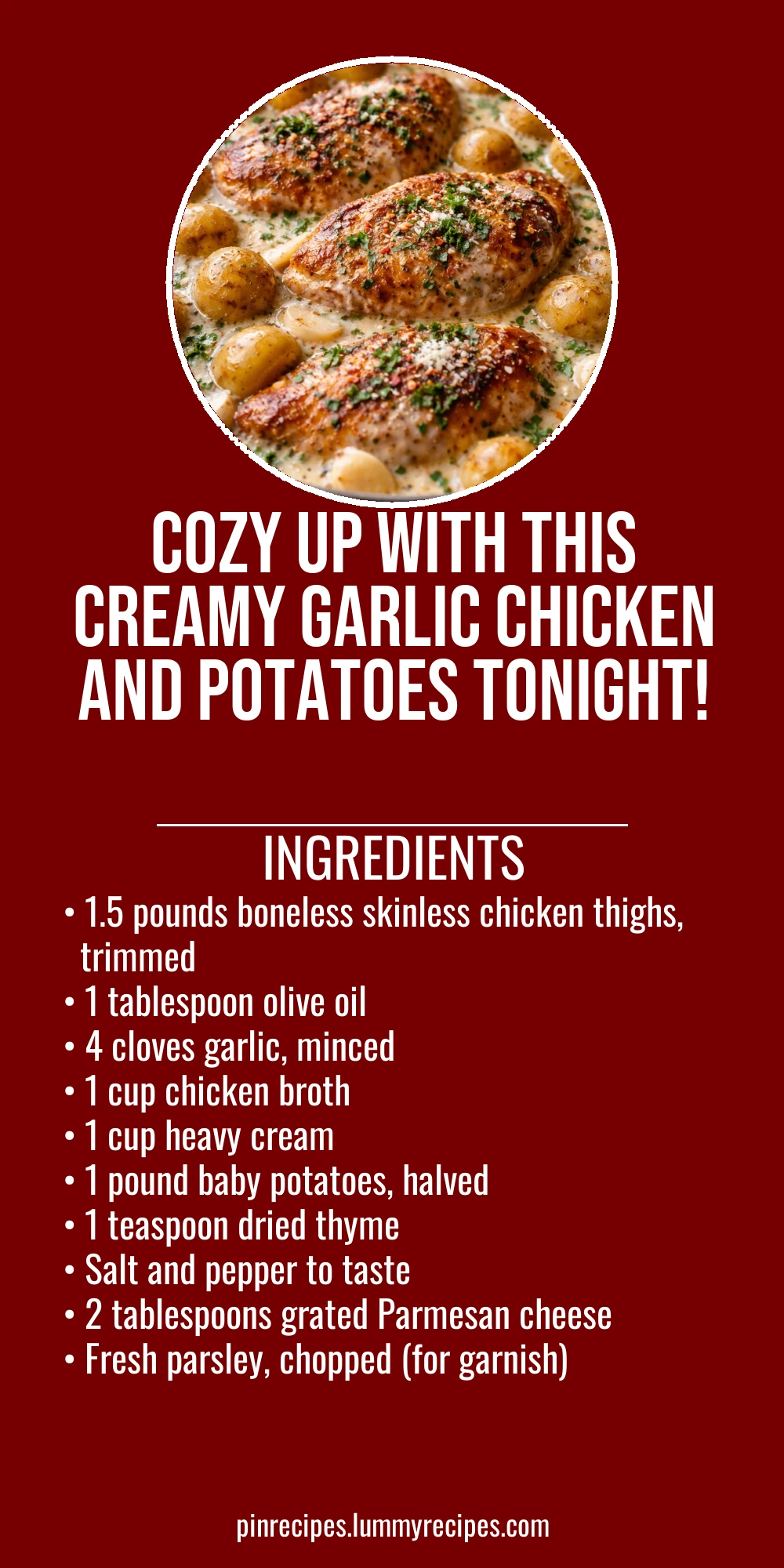
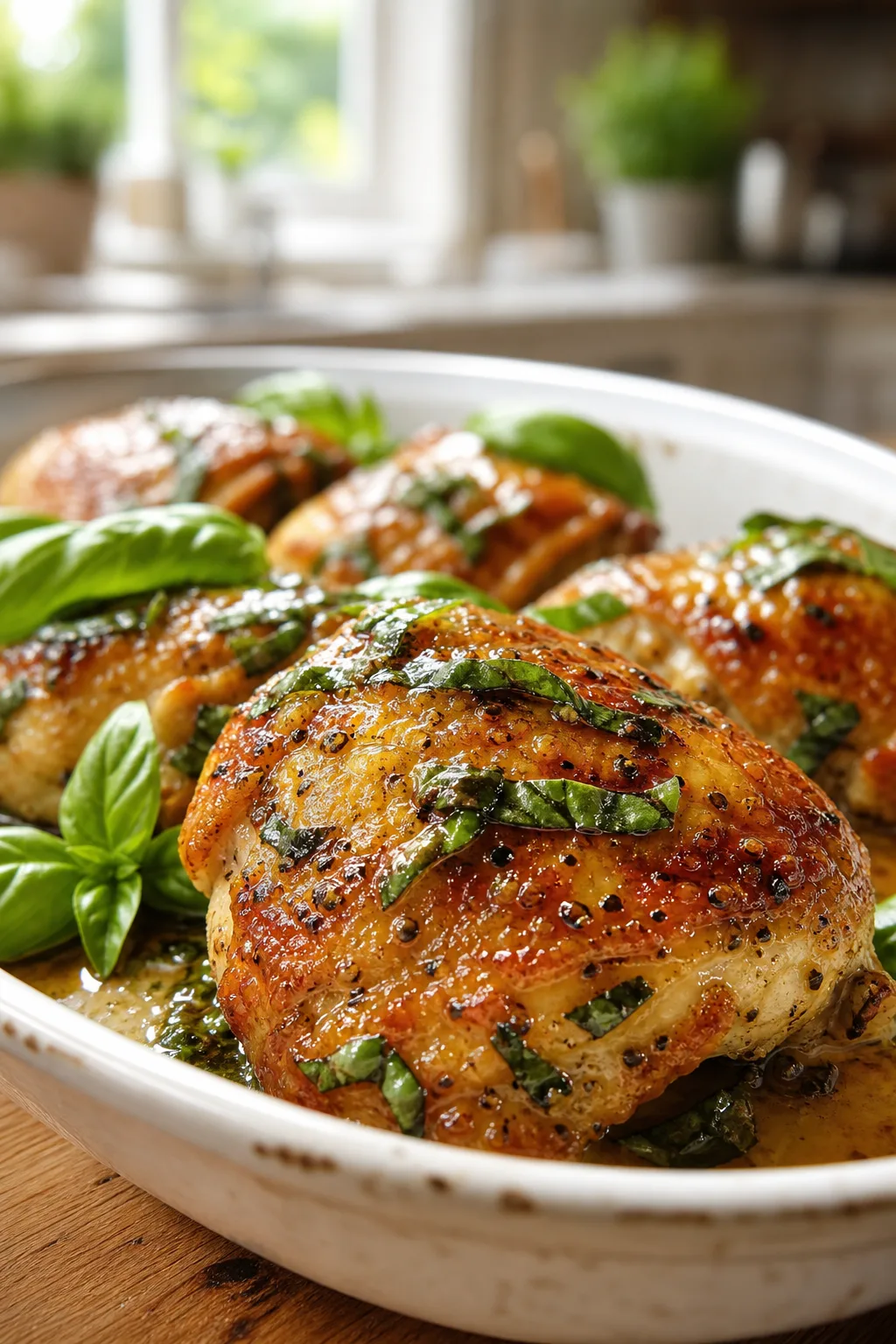
This one pot creamy garlic chicken dinner is everything you want on a cozy night in. Tender chicken, baby potatoes, and a luscious garlic cream sauce all cooked together for easy cleanup. Perfect for busy weeknights or lazy weekends!
Introduction
I first made this one pot creamy garlic chicken dinner on a hectic weeknight when I wanted something comforting but without the usual mess. Honestly, it was a game changer. The whole meal cooks in one pan, which means less cleanup and more time to relax. What makes this version stand out is the creamy garlic sauce that clings to tender chicken thighs and perfectly cooked baby potatoes. I learned that using thighs instead of breasts keeps the chicken juicy and flavorful, and halving the potatoes helps them cook through evenly with the sauce. The trick I use is to lightly brown the chicken first, which adds a depth of flavor before simmering everything in the cream sauce. When it’s done, you get a rich, velvety dish that’s hearty, comforting, and perfect for dinner any night of the week. Plus, it looks beautiful on the plate with a sprinkle of fresh parsley on top. I love serving this with a simple green salad or steamed veggies for a balanced meal. It’s definitely become a favorite in my house, and I think you’ll love it too!
How To Do It
Step 1
Heat the olive oil in a large deep skillet or Dutch oven over medium-high heat. Season the chicken thighs generously with salt and pepper. Once the oil is shimmering, add the chicken thighs skin-side down (if using skin-on) and cook without moving for about 5 minutes until golden brown. This browning step is crucial because it develops a rich flavor through the Maillard reaction, which you wouldn’t get if you skipped it. Flip the chicken and brown the other side for 3 minutes. Don’t overcrowd the pan or the chicken will steam instead of brown, so cook in batches if needed.
⏱ Time: 8 minutes
✓ Doneness: Chicken is golden brown on both sides with crispy edges
Step 2
Remove the browned chicken and set aside. In the same pan, add the minced garlic and sauté for about 30 seconds until fragrant but not browned, as burnt garlic can taste bitter. Pour in the chicken broth and scrape up any browned bits from the bottom of the pan with a wooden spoon — those bits add tons of flavor to the sauce. Stir in the heavy cream and dried thyme, then add the halved baby potatoes. Season with a bit more salt and pepper. Bring the mixture to a gentle simmer over medium heat.
⏱ Time: 5 minutes
✓ Doneness: Sauce is bubbling gently and garlic aroma is noticeable
Step 3
Return the chicken thighs to the pan, nestling them into the sauce and potatoes. Cover the pan with a lid and reduce the heat to medium-low. Let everything simmer gently for 20 minutes, stirring occasionally to prevent sticking. This slow simmer cooks the potatoes through and allows the chicken to become tender while the sauce thickens. Avoid high heat here, or the cream might curdle and the potatoes won’t cook evenly.
⏱ Time: 20 minutes
✓ Doneness: Potatoes are tender when pierced with a fork, chicken is cooked through
Step 4
Remove the lid and sprinkle the grated Parmesan cheese over the chicken and potatoes. Stir gently to combine and let the sauce thicken further for 2-3 minutes uncovered. The cheese adds a lovely umami depth and helps thicken the sauce naturally. Taste and adjust seasoning with more salt or pepper if needed.
⏱ Time: 3 minutes
✓ Doneness: Sauce is creamy and coats the chicken and potatoes nicely
Step 5
Turn off the heat and sprinkle chopped fresh parsley over the dish for a pop of color and fresh flavor. Let the dish rest for a couple of minutes before serving to allow the sauce to settle and flavors to meld. Serve hot with your favorite side or a simple salad.
⏱ Time: 2 minutes
✓ Doneness: Dish looks glossy with fresh herbs on top, ready to serve
Step 6
If you want to add a veggie, toss in some green beans or spinach during the last 5 minutes of cooking. This adds a fresh, vibrant contrast to the creamy sauce and rounds out the meal nicely. Just be sure not to overcook the greens; they should stay bright and slightly crisp.
⏱ Time: 5 minutes
✓ Doneness: Vegetables are tender but still vibrant green
Step 7
For a thicker sauce, remove the chicken and potatoes after cooking and simmer the sauce uncovered over medium heat for a few minutes until it reaches your desired consistency. This concentrates the flavors and gives a luscious finish. Then return everything to the pan to rewarm briefly.
⏱ Time: 3-5 minutes
✓ Doneness: Sauce coats the back of a spoon thickly
Step 8
Make sure to use a heavy-bottomed pan to prevent the sauce from scorching. Stir gently but regularly during simmering to avoid sticking, especially as the cream thickens. If you notice the sauce sticking or burning, lower the heat immediately and add a splash of broth to loosen it.
⏱ Time: Throughout cooking
✓ Doneness: Sauce remains smooth and doesn’t stick to the pan
Step 9
Let leftovers cool before storing in an airtight container in the fridge. When reheating, add a splash of broth or cream to loosen the sauce and warm gently over low heat or in the microwave. This keeps the chicken tender and the sauce creamy without drying out.
⏱ Time: 5 minutes reheating
✓ Doneness: Dish is warmed through and sauce is smooth again
Pro Tips
Don’t skip browning the chicken first.
Browning develops flavor through the Maillard reaction, creating a deeper, more complex taste. If you skip this, the chicken will be pale and less flavorful, and the sauce will lack that rich base.
Use baby potatoes halved for even cooking.
Halving ensures the potatoes cook through in the same time as the chicken and absorb the sauce flavors better. Whole potatoes would take longer and might remain undercooked.
Simmer the sauce gently to avoid curdling.
Heavy cream can separate if boiled rapidly. Keeping the heat moderate allows the cream to thicken smoothly and integrate with the broth for a velvety sauce.
Add Parmesan at the end off heat.
Adding cheese too early can cause it to clump or separate. Stirring it in at the end ensures it melts evenly and thickens the sauce naturally.
Use a heavy-bottomed pan for even heat.
This prevents hot spots that can scorch the cream sauce or cause uneven cooking, which would ruin the texture and flavor.
Rest the dish before serving.
Letting it sit for a few minutes allows the sauce to thicken slightly and the flavors to meld, making each bite more balanced and delicious.
Add fresh herbs just before serving.
Fresh parsley adds brightness and color without losing its flavor to heat, balancing the richness of the dish.
Common Mistakes to Avoid
Skipping the chicken browning step
Why it happens Many home cooks want to save time and skip browning, assuming it’s optional.
Fix Take the extra few minutes to brown the chicken first. This step creates flavor compounds that enrich the whole dish. Use medium-high heat and don’t move the chicken too soon to get a proper crust.
Cooking the sauce on too high heat
Why it happens Rushing the cooking process or trying to boil off liquid quickly.
Fix Maintain a gentle simmer to prevent the cream from curdling. If the sauce boils vigorously, reduce heat immediately and stir to keep it smooth.
Using large potatoes or not cutting them evenly
Why it happens Not considering cooking times or texture differences.
Fix Use baby potatoes halved or quartered evenly so they cook through in the same time as the chicken. This ensures uniform tenderness.
Adding cheese too early
Why it happens Adding Parmesan at the start to save time.
Fix Add cheese after simmering off heat to avoid clumping or separating. This keeps the sauce creamy and smooth.
Not seasoning properly
Why it happens Under-seasoning or forgetting to taste.
Fix Season the chicken before browning and adjust salt and pepper at the end. Taste the sauce and potatoes before serving to balance flavors.
Variations
Spicy Creamy Garlic Chicken
Add a pinch of red pepper flakes or a diced jalapeño during the garlic sauté for a subtle kick. This adds warmth without overpowering the creamy sauce, making it perfect if you like a little heat.
Note: Simmer with the spice to infuse flavor but don’t add too early to avoid bitterness.
Herb-Infused Version
Add fresh rosemary and thyme sprigs along with the dried thyme for a more aromatic sauce. Fresh herbs add brightness and complexity, perfect for a special occasion dinner.
Note: Remove herb stems before serving to avoid woody texture.
Mushroom Creamy Garlic Chicken
Sauté sliced mushrooms with the garlic for an earthy addition. Mushrooms soak up the sauce beautifully and add a meaty texture, making the dish heartier.
Note: Cook mushrooms until browned to develop flavor before adding liquids.
Dairy-Free Creamy Garlic Chicken
Use coconut cream or cashew cream instead of heavy cream and nutritional yeast in place of Parmesan for a dairy-free option. This keeps the dish creamy and flavorful for those avoiding dairy.
Note: Adjust seasoning as coconut cream can be sweeter and less salty.
Lemon Garlic Chicken with Potatoes
Add lemon zest and a squeeze of lemon juice at the end for a fresh, tangy twist that cuts through the richness. Great for spring and summer meals.
Note: Add lemon juice off heat to preserve brightness.
Nutrition
Per Serving:
Nutritional values are estimates and may vary based on specific ingredients used.
Storage & Tips
Room Temperature
This dish can safely sit at room temperature for up to 2 hours if covered loosely to avoid drying out. Beyond that, bacteria growth risks increase, so refrigerate promptly.
Refrigerator
Store leftovers in an airtight container for up to 3 days. The sauce may thicken and firm up when cold; reheat gently with a splash of broth or cream to restore creaminess.
Freezer
Freeze in a sealed container for up to 2 months. Wrap tightly to prevent freezer burn. Thaw overnight in the fridge before reheating gently to maintain texture.
Reheating
Reheat over low heat on stovetop or in microwave with a splash of chicken broth or cream to loosen the sauce. Avoid high heat to prevent curdling or drying out the chicken.
Make Ahead
You can brown the chicken and prepare the sauce up to 2 days ahead. Store components separately or combined in the fridge. Reheat gently and add fresh herbs just before serving for best flavor.
FAQ
Can I use chicken breasts instead of thighs?
Yes, but chicken breasts cook faster and can dry out more easily. If using breasts, reduce simmer time and watch closely to avoid overcooking. Thighs are preferred for their juiciness and flavor retention in this recipe.
What if I don’t have heavy cream?
You can substitute with half-and-half or a mixture of milk and butter, but the sauce will be less rich and creamy. For a dairy-free option, try coconut cream or cashew cream, but expect a slight flavor difference.
How do I know when the potatoes are done?
Pierce them with a fork or knife; they should be tender and slide off easily without resistance. If they’re still firm, continue simmering gently until fully cooked.
Can I make this recipe gluten-free?
Yes, this recipe is naturally gluten-free as long as your chicken broth and Parmesan cheese are certified gluten-free. Always check labels to be sure.
Why did my sauce separate or curdle?
This usually happens if the sauce boils too rapidly or if acidic ingredients are added too early. Keep the heat moderate and add cheese off heat to prevent curdling.
Can I add vegetables to this dish?
Absolutely! Green beans, spinach, or mushrooms work well. Add them in the last 5-10 minutes of cooking to avoid overcooking and keep their texture fresh.
What’s the best pan to use for this recipe?
A heavy-bottomed skillet or Dutch oven works best to distribute heat evenly and prevent scorching the cream sauce. Avoid thin pans that can cause hot spots.
How to reheat leftovers without drying them out?
Reheat gently over low heat with a splash of broth or cream to loosen the sauce. Using the microwave, heat in short bursts and stir in between to avoid overheating.
Final Thoughts
I hope you give this creamy garlic chicken dinner a try soon—it’s become one of my go-to comfort meals. Let me know how it turns out for you!