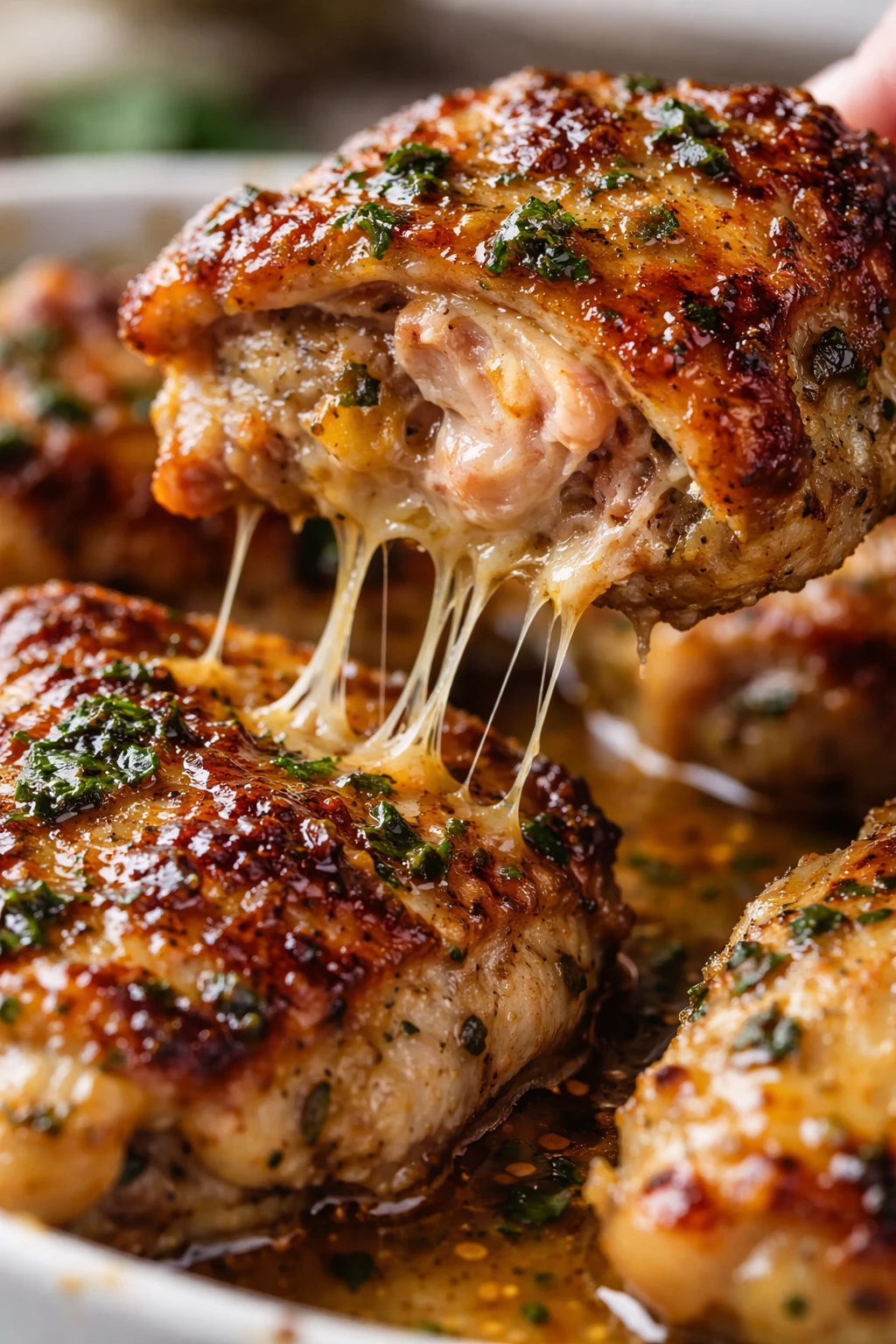
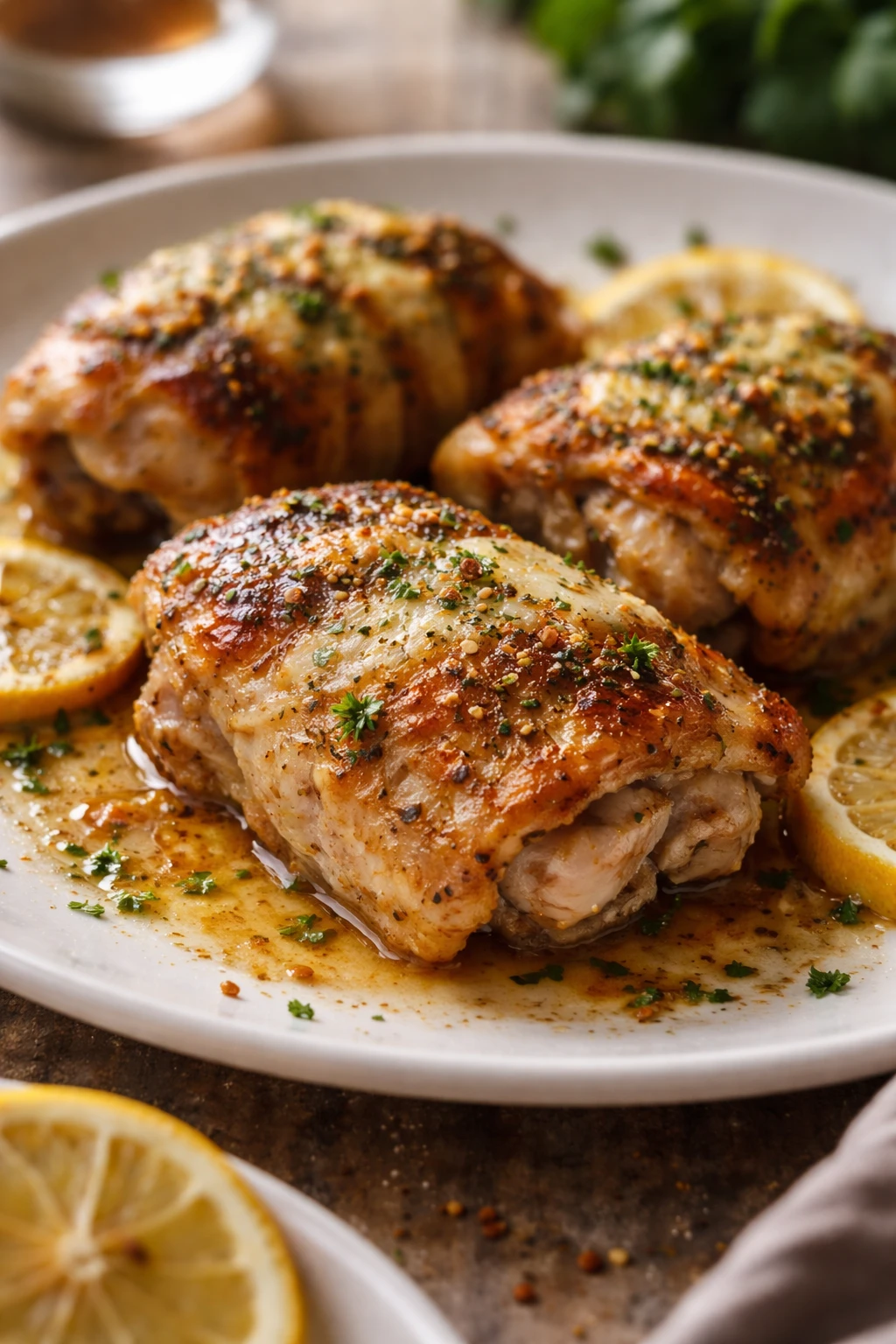
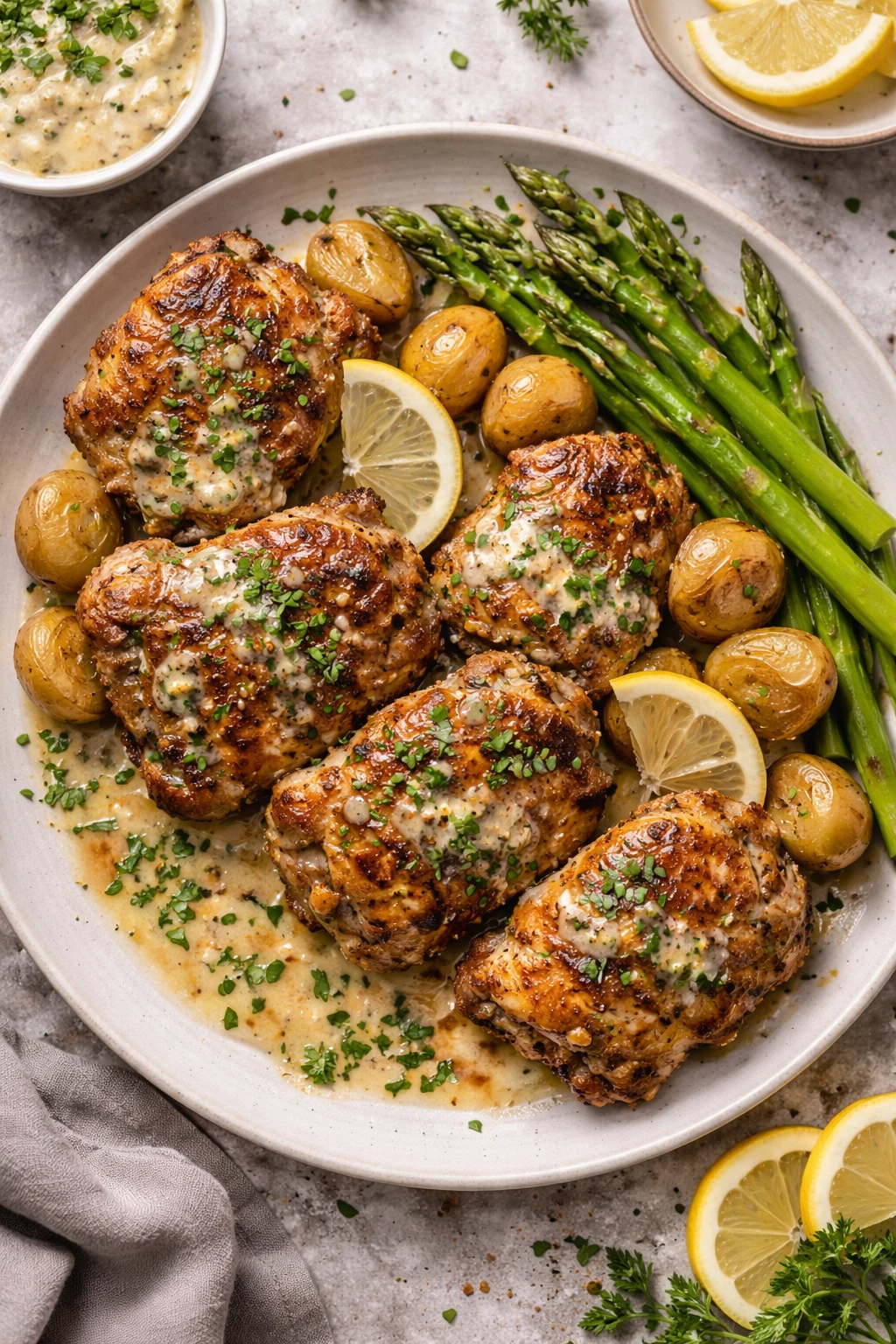
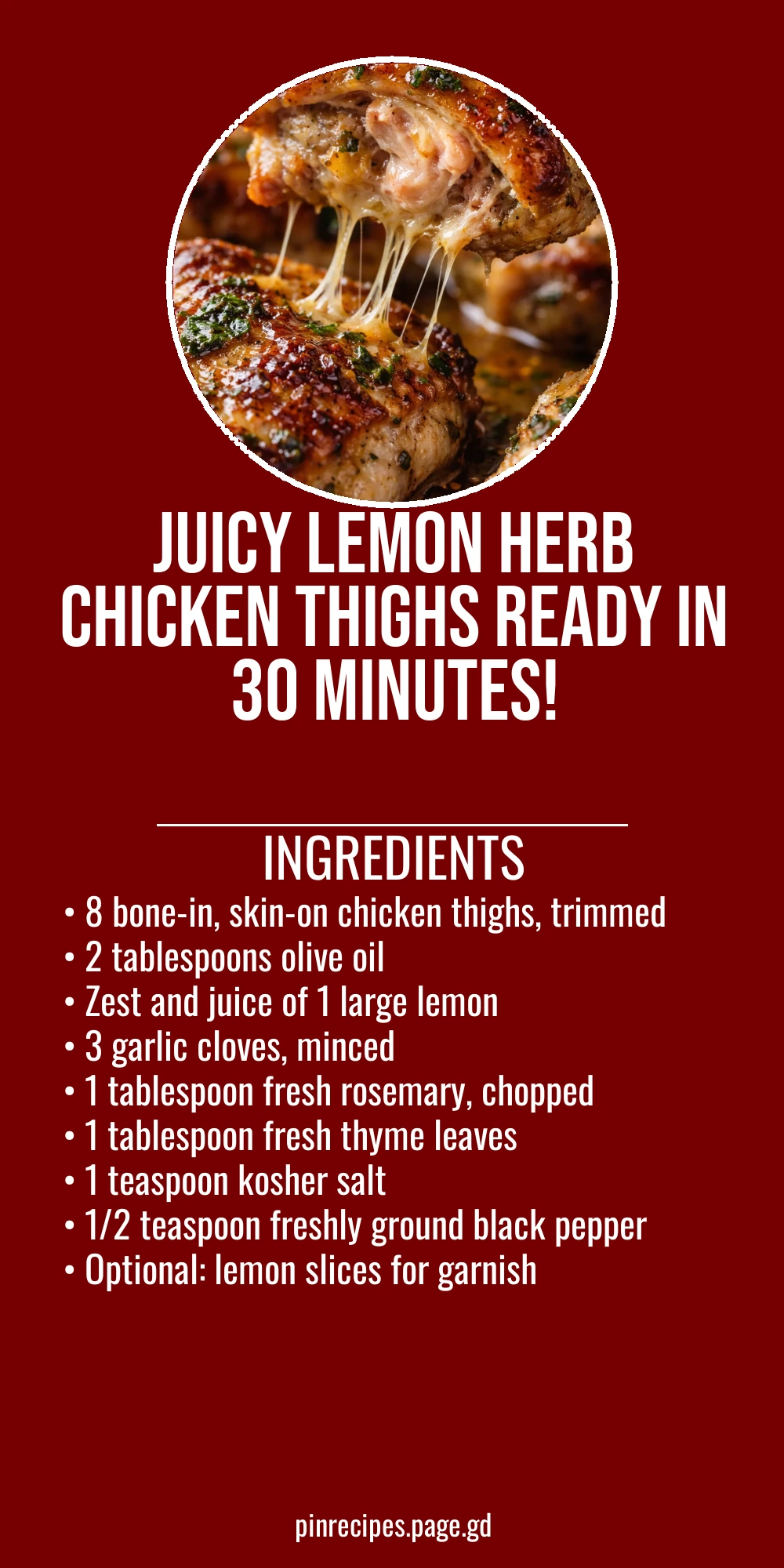
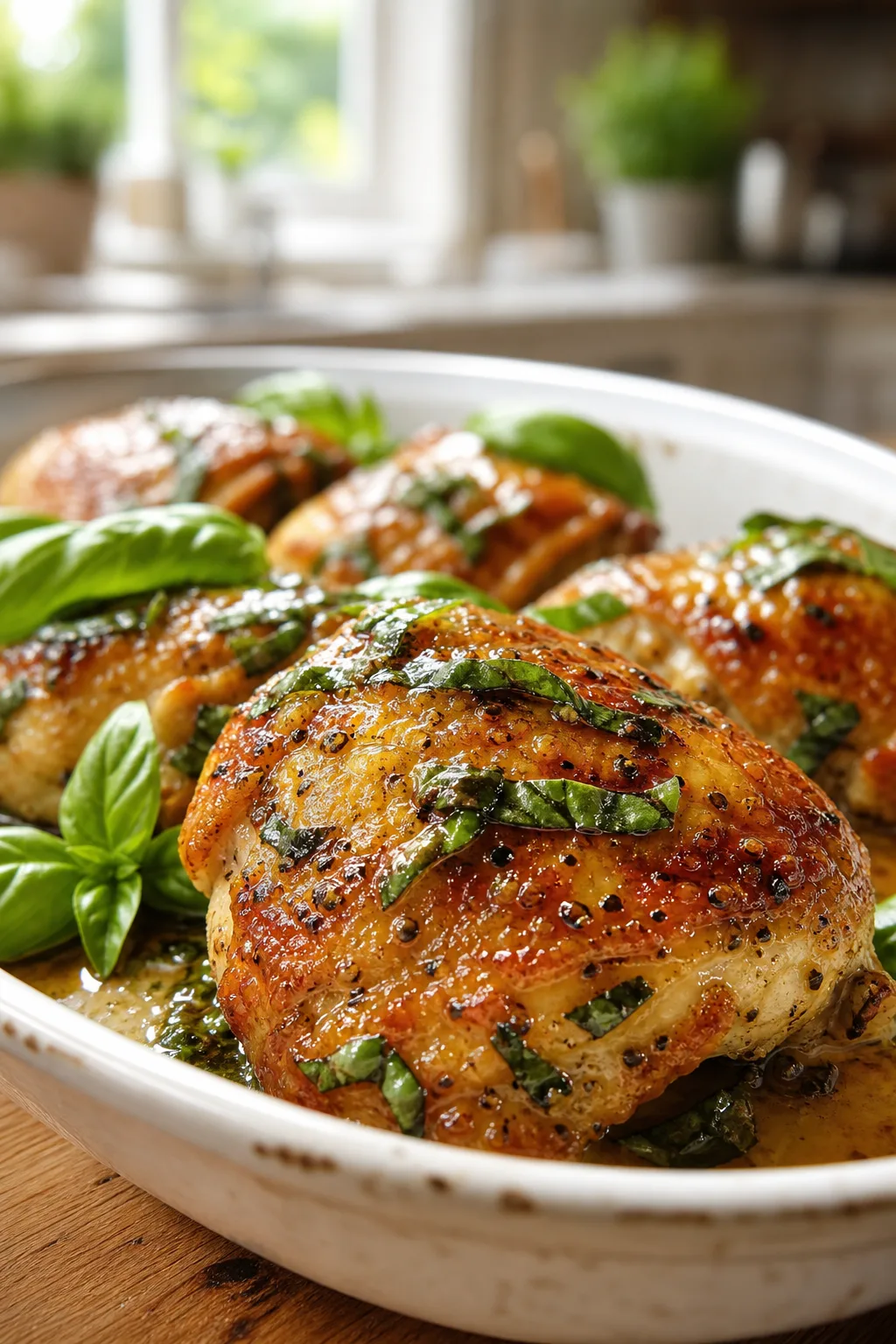
These lemon herb roasted chicken thighs are juicy and packed with bright flavors. The lemon zest and fresh herbs give a fresh twist, and it’s ready in just 30 minutes—perfect for busy weeknights or last-minute dinners!
Introduction
I first made this quick lemon herb roasted chicken thighs recipe on a hectic weeknight when I wanted something both flavorful and fuss-free. What makes this version stand out is the bright lemon zest combined with fresh rosemary and thyme, which gives the chicken a vibrant, fresh taste that’s a bit different from the usual roasted chicken. Plus, I learned that drying the skin well before roasting is key to getting that crispy, golden crust everyone loves. I’ve tried it a few times now, and each time it turns out juicy and tender inside with a perfect balance of herbs and citrus. This recipe is great when you want a comforting dinner without spending hours in the kitchen. The chicken comes out beautifully caramelized, and the lemon juice adds just the right tang to brighten it up. Whether you’re serving it for family dinner or a casual weeknight meal, it’s always a hit. I think you’ll love how easy it is to whip up but tastes like you’ve been slow-cooking it all day.
How To Do It
Step 1
Preheat your oven to 425°F (220°C). While it heats, pat the chicken thighs dry with paper towels—this step is crucial because dry skin crisps up much better during roasting. If the skin is damp, it steams instead, leaving it soggy. Make sure to remove any excess moisture for that golden, crispy finish everyone loves.
⏱ Time: 5 minutes
✓ Doneness: Chicken skin looks dry and matte before seasoning
Step 2
In a small bowl, combine olive oil, lemon zest, lemon juice, minced garlic, chopped rosemary, thyme, salt, and pepper. Whisk together until well blended. This mixture will infuse the chicken with fresh, zesty flavors and help tenderize the meat slightly thanks to the lemon juice’s acidity.
⏱ Time: 5 minutes
✓ Doneness: Mixture is smooth and fragrant with herbs and lemon
Step 3
Rub the lemon herb mixture all over the chicken thighs, making sure to get under the skin where possible. This ensures the flavors penetrate deeply and the meat remains juicy. Don’t rush this step—massaging the marinade in helps develop flavor layers.
⏱ Time: 5 minutes
✓ Doneness: Chicken thighs are evenly coated with marinade
Step 4
Arrange the chicken thighs skin-side up on a rimmed baking sheet or roasting pan. Space them out so air can circulate, which helps the skin crisp evenly. Crowding the pan traps moisture and leads to less crispy skin.
⏱ Time: 2 minutes
✓ Doneness: Chicken pieces sit comfortably apart on the pan
Step 5
Place the pan in the preheated oven and roast for about 20 minutes. The high heat encourages browning and crisp skin while cooking the meat through quickly. Avoid opening the oven door frequently, as temperature drops can affect cooking.
⏱ Time: 20 minutes
✓ Doneness: Skin is golden brown and juices run clear when pierced
Step 6
Halfway through cooking, baste the chicken with the pan juices to keep it moist and boost flavor. This step helps the lemon herb mixture caramelize nicely on the skin without burning.
⏱ Time: 1 minute
✓ Doneness: Skin looks glossy and slightly caramelized after basting
Step 7
Once done, remove the chicken from the oven and let it rest for 5 minutes. Resting allows the juices to redistribute throughout the meat, making each bite juicy rather than dry. It also finishes the cooking gently off the heat.
⏱ Time: 5 minutes
✓ Doneness: Chicken feels warm and juices settle when touched
Step 8
Optional: Garnish with fresh lemon slices and a sprinkle of chopped herbs before serving. This adds a fresh pop of color and enhances the citrus aroma, making the dish look as good as it tastes.
⏱ Time: 2 minutes
✓ Doneness: Bright lemon slices and herbs decorate the chicken
Step 9
Serve the chicken with your favorite sides—roasted veggies, a simple salad, or fluffy rice all pair beautifully. Enjoy immediately for the best texture and flavor.
⏱ Time: 0 minutes
✓ Doneness: Chicken is hot, juicy, and flavorful on the plate
Pro Tips
Always pat chicken skin dry before seasoning.
Removing moisture from the skin ensures it crisps up instead of steaming. Moisture creates steam in the oven, which prevents the Maillard reaction responsible for browning and crisp texture.
Use bone-in, skin-on thighs for juicier results.
Bones help retain moisture and conduct heat evenly, while the skin protects the meat and crisps up nicely. Boneless or skinless cuts tend to dry out faster and lack that rich flavor.
Don’t skip resting the chicken after roasting.
Resting allows juices to redistribute throughout the meat rather than spilling out when cut. This makes the chicken more tender and juicy instead of dry.
Baste the chicken halfway through cooking.
Basting with pan juices keeps the meat moist and encourages even caramelization on the skin. It also adds extra layers of flavor from the marinade drippings.
Use fresh herbs instead of dried when possible.
Fresh herbs release essential oils and vibrant aromas during roasting that dried herbs can’t match. They add brightness and complexity to the dish.
Roast at a high temperature like 425°F.
High heat quickly crisps the skin and browns the chicken without overcooking the interior. Lower temps can dry out meat and produce less appealing texture.
Apply marinade under the skin too.
Getting the lemon herb mix beneath the skin flavors the meat directly and helps keep it moist while roasting.
Common Mistakes to Avoid
Skipping the drying step before roasting.
Why it happens Many cooks overlook drying the skin because it seems extra work or they assume the oven heat will crisp it anyway.
Fix Always use paper towels to thoroughly dry the chicken skin before seasoning. This removes excess moisture that causes steaming and soggy skin, ensuring crispness.
Using boneless or skinless chicken thighs.
Why it happens Boneless thighs cook faster and seem convenient, but they don’t retain moisture as well.
Fix Choose bone-in, skin-on thighs for better flavor and juiciness. If using boneless, reduce cooking time and consider adding extra fat to keep moist.
Not letting the chicken rest after cooking.
Why it happens Impatience or lack of awareness leads to cutting chicken immediately, causing juices to run out.
Fix Let the chicken rest covered loosely with foil for 5 minutes. This step traps juices inside, making the meat tender and juicy.
Crowding the pan during roasting.
Why it happens Trying to cook all pieces at once without enough space is common in busy kitchens.
Fix Arrange chicken thighs with space between each piece so air circulates and skin crisps evenly. Use two pans if needed.
Using bottled lemon juice instead of fresh.
Why it happens Bottled juice is convenient but lacks fresh flavor and brightness.
Fix Always use fresh lemon zest and juice for best flavor and aroma. The zest especially adds oils that bottled juice can’t replicate.
Variations
Spicy Lemon Herb Chicken Thighs
Add 1/2 teaspoon red pepper flakes or a dash of cayenne to the marinade for a gentle heat that pairs beautifully with the lemon and herbs. This version gives the dish a nice kick without overpowering the fresh flavors.
Note: Spicy additions won’t affect cooking time but watch for burning garlic or herbs if heat is too high.
Honey Lemon Herb Chicken Thighs
Stir 1 tablespoon honey into the marinade for a touch of sweetness that balances the lemon’s acidity. The honey caramelizes during roasting, creating a beautifully glossy, slightly sticky skin.
Note: Honey can brown quickly, so keep an eye on the chicken near the end of cooking to avoid burning.
Mediterranean Style with Olives and Capers
Scatter pitted olives and capers around the chicken before roasting for a briny, savory twist. This variation adds complexity and a Mediterranean flair that’s perfect with roasted veggies or couscous.
Note: Olives and capers release salty juices, so reduce added salt slightly in the marinade.
Garlic Butter Lemon Herb Chicken
After roasting, brush the chicken with melted garlic butter mixed with fresh herbs for an indulgent finish. This adds richness and an extra layer of flavor that’s irresistible.
Note: Apply garlic butter right after roasting while chicken is hot to allow it to soak in.
Sheet Pan Lemon Herb Chicken with Veggies
Add chopped vegetables like baby potatoes, carrots, and green beans to the roasting pan for a complete one-pan meal. The veggies roast in the chicken juices, soaking up all the lemon herb goodness.
Note: Cut veggies uniformly for even cooking and toss them with a little oil and seasoning before adding to the pan.
Nutrition
Per Serving:
Nutritional values are estimates and may vary based on specific ingredients used.
Storage & Tips
Room Temperature
Cooked chicken thighs can be safely kept at room temperature for up to 2 hours if covered loosely. Avoid leaving them out longer to prevent bacterial growth.
Refrigerator
Store leftovers in an airtight container in the fridge for up to 3 days. The chicken may lose some crispness but reheats well. Warm gently to avoid drying out.
Freezer
Freeze cooked chicken thighs wrapped tightly in plastic wrap and foil or in a freezer-safe container for up to 3 months. Thaw overnight in the fridge before reheating.
Reheating
Reheat in a 350°F oven for 10-15 minutes to restore crisp skin, or microwave covered with a splash of water to keep moist. Avoid overheating as it dries the meat.
Make Ahead
Marinate the chicken up to 12 hours ahead and keep refrigerated. When ready, roast directly from the fridge, adding a few extra minutes to cooking time if needed.
FAQ
Can I use boneless chicken thighs instead of bone-in?
Yes, but boneless thighs cook faster and tend to dry out more easily. Reduce cooking time by about 5 minutes and watch closely to avoid overcooking. Skin-on is still best for crispness.
How can I make the chicken extra crispy?
Pat the skin very dry before seasoning and roast on a wire rack set over a baking sheet to allow air circulation. Also, avoid overcrowding the pan to ensure even crisping.
Can I prepare this recipe in advance?
Absolutely! Marinate the chicken up to 12 hours ahead in the fridge. When ready to cook, bring it to room temperature for 15 minutes before roasting for even cooking.
Is it okay to use bottled lemon juice?
Bottled lemon juice lacks the fresh zest and brightness of fresh lemons, so the flavor won’t be as vibrant. If you use bottled juice, consider adding lemon zest to boost aroma.
Can I cook this chicken on the stovetop instead of the oven?
You can pan-sear the thighs skin-side down to crisp, then finish in a covered pan on low heat. However, oven roasting ensures even cooking and crisp skin without extra attention.
How do I know when the chicken is fully cooked?
Use a meat thermometer; the internal temperature should reach 165°F (74°C). The juices should run clear when pierced, and the skin should be golden brown and crisp.
What sides go well with this chicken?
Roasted vegetables, mashed potatoes, rice pilaf, or a simple green salad all pair beautifully. The lemon herb flavors complement many classic sides.
Can I double the recipe for a larger group?
Yes, just be sure to use a larger baking sheet or roast in batches to avoid overcrowding, which affects browning and crispness.
Final Thoughts
Give this lemon herb roasted chicken a try—you’ll love how quick and flavorful it is. Don’t forget to share your results; I’d love to hear how it turns out!