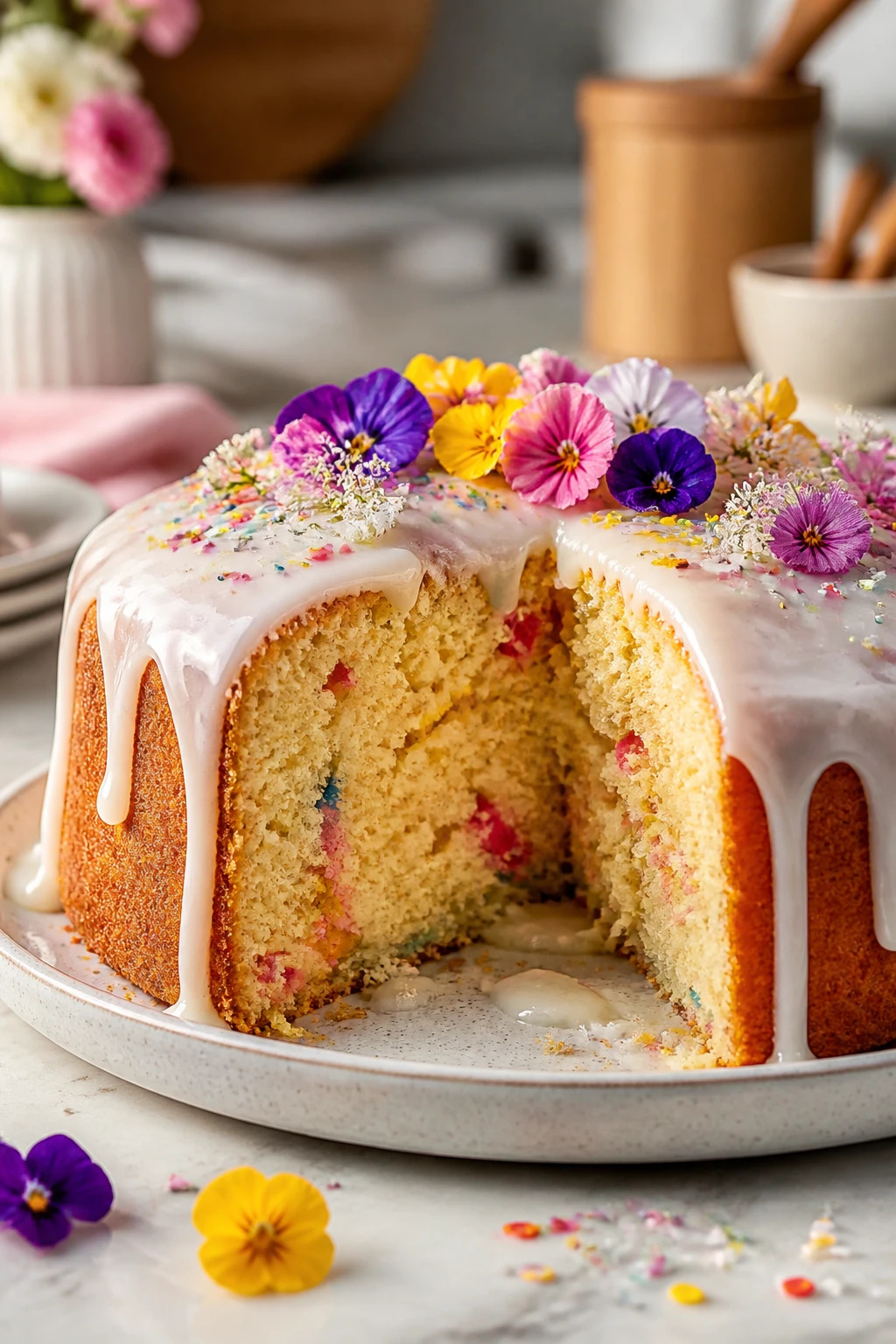
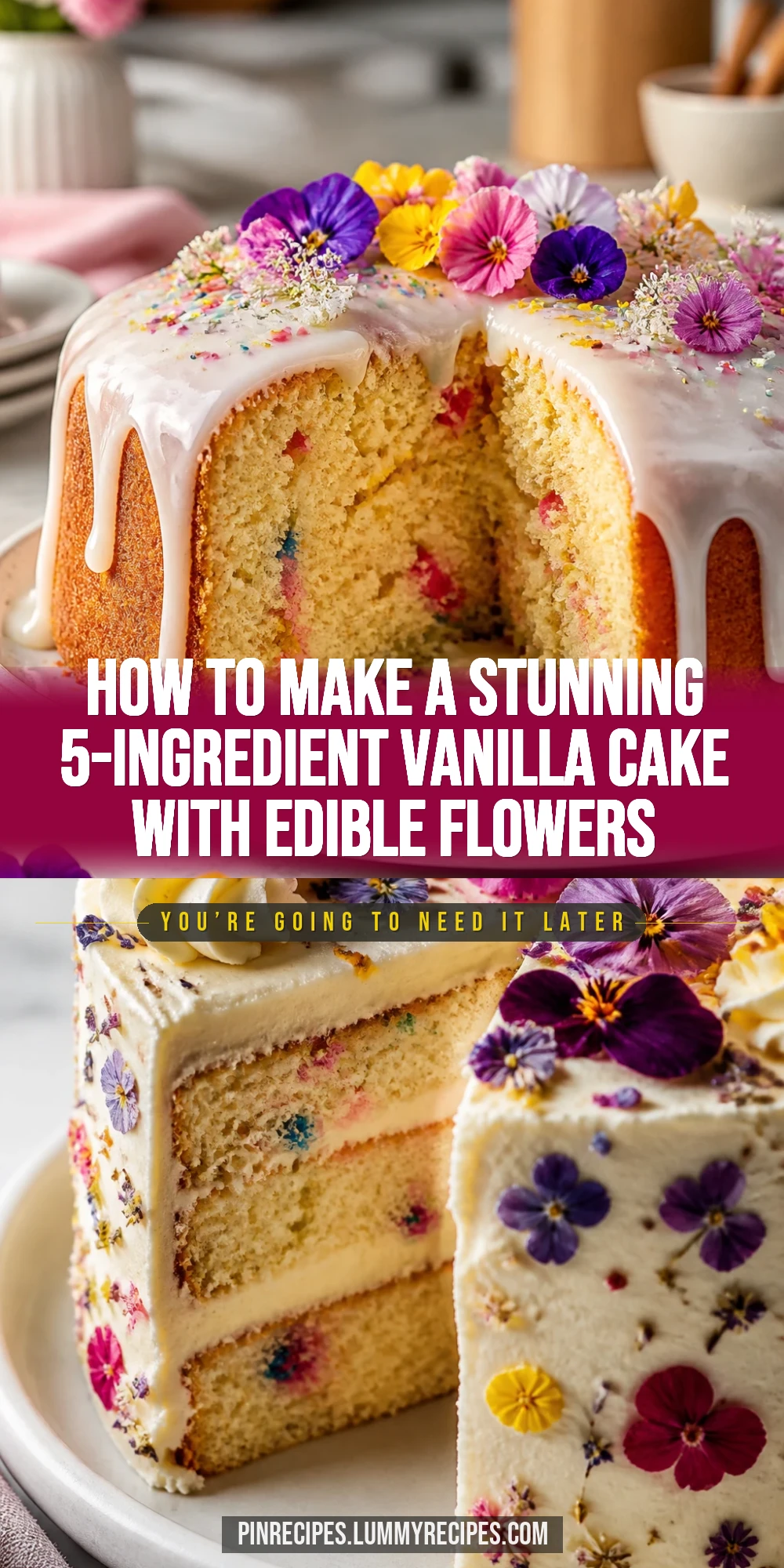
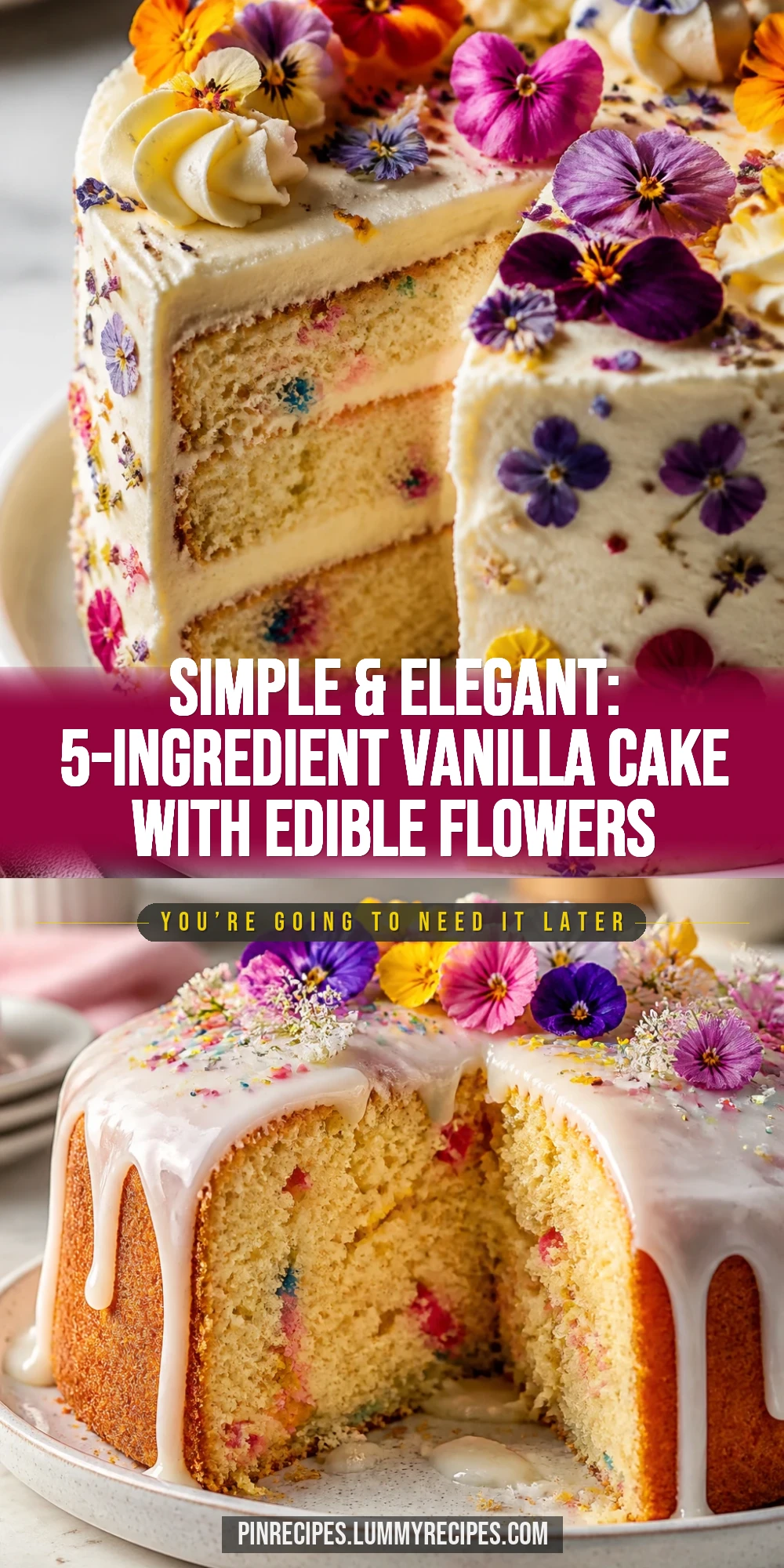
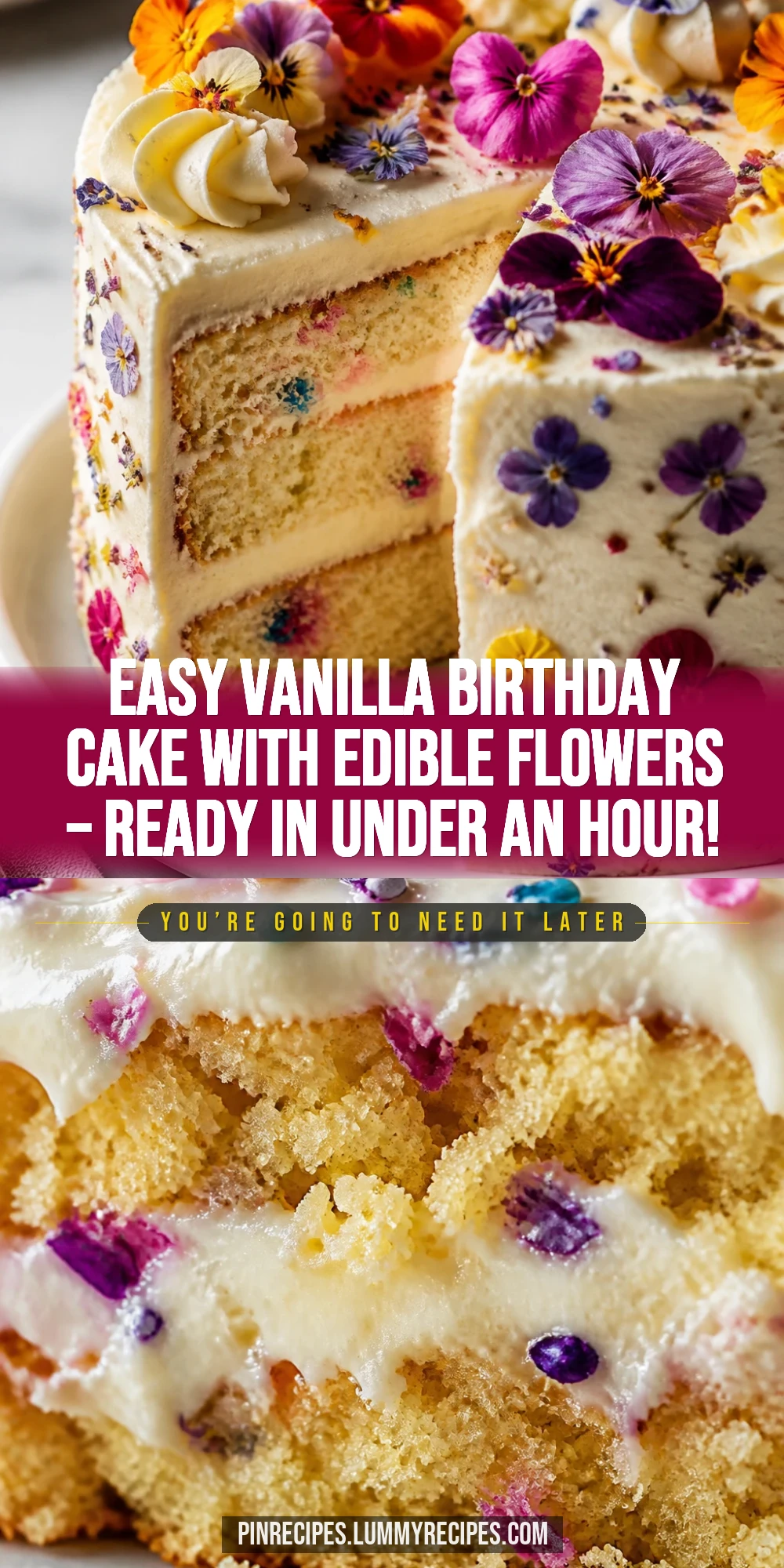
This vanilla birthday cake is super simple but feels fancy thanks to edible flowers. Only five ingredients and done in under an hour! Perfect for last-minute celebrations or when you want something charming without fuss.
Introduction
I still remember the first time I whipped up this vanilla birthday cake. It was a last-minute idea when I realized I had almost no time but wanted something special for a friend’s birthday. Most cakes with fancy decorations can feel intimidating, but this one is a total breeze with just five ingredients and a simple technique. What makes it different? The use of real vanilla extract and softened butter gives it a rich, buttery flavor that feels homemade and comforting. Plus, topping it off with edible flowers adds that wow factor without extra effort. I learned that gently folding the flour instead of vigorously mixing keeps the cake tender and light. The result? A moist, fluffy cake with a golden crust that’s perfect for any celebration. Honestly, it’s become my go-to when I want something quick but still impressive. You’ll love how it tastes and how it looks on the table—like you spent hours but really didn’t. It’s sweet, fragrant, and just the right amount of fancy without any fuss. Give it a try for your next birthday or special occasion—you might just find your new favorite!
What You'll Need
One 9-inch round cake, 8 servings
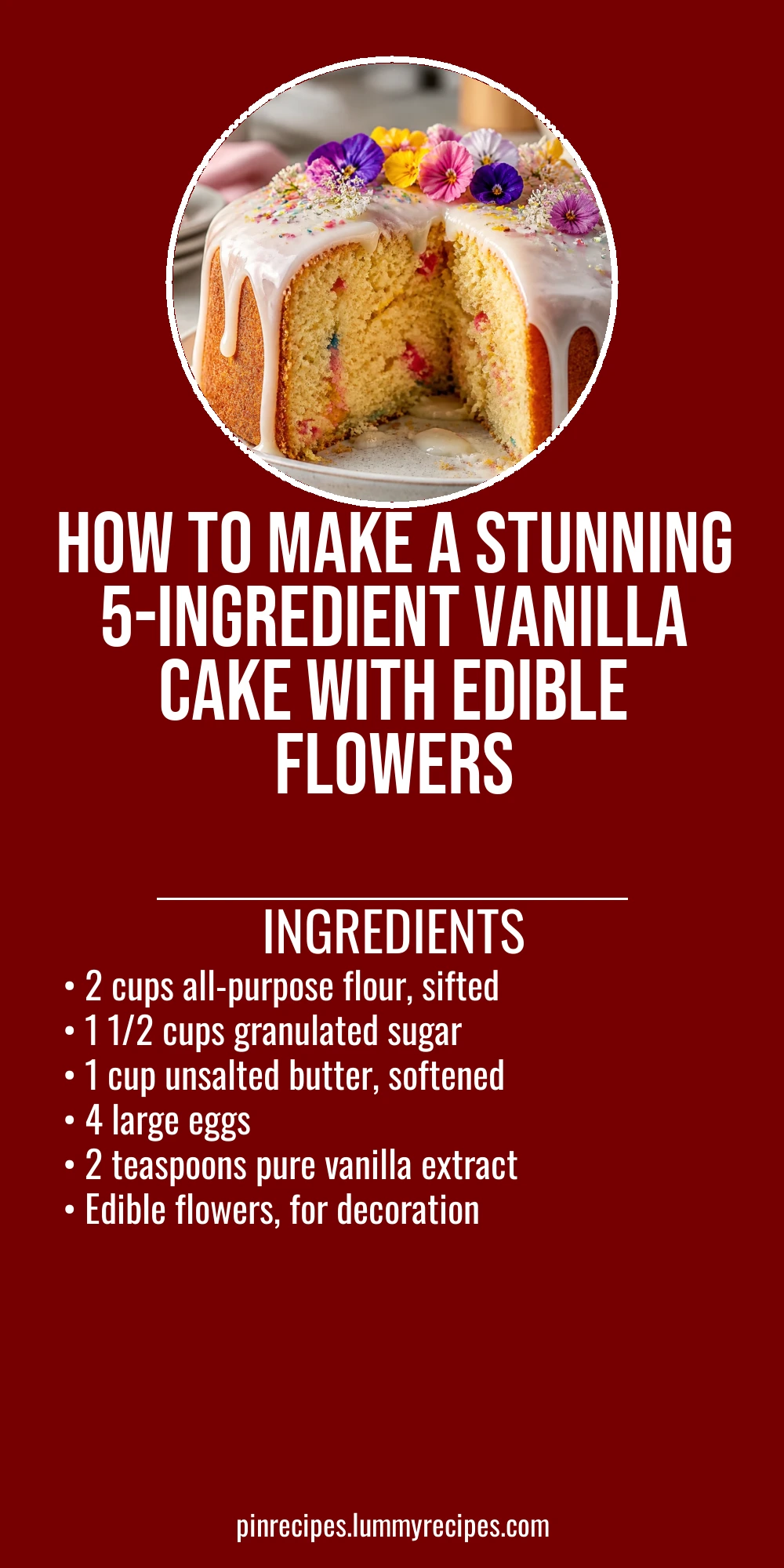
- 2 cups all-purpose flour, sifted
- 1 1/2 cups granulated sugar
- 1 cup unsalted butter, softened
- 4 large eggs
- 2 teaspoons pure vanilla extract
- Edible flowers, for decoration
How To Do It
Step 1
Preheat your oven to 350°F (175°C) and grease a 9-inch round cake pan with butter or non-stick spray. This step is important because a well-greased pan ensures your cake will release cleanly after baking, preventing any frustrating sticking. Also, line the bottom with parchment paper for extra insurance. Proper oven temperature is crucial here; too hot and the cake might brown too quickly on the outside while staying raw inside, too low and it won’t rise well.
⏱ Time: 10 minutes
✓ Doneness: Oven fully preheated and cake pan prepared with greasing and parchment paper
Step 2
In a large bowl, cream together the softened butter and sugar using a hand mixer or stand mixer on medium speed until the mixture is light and fluffy. This usually takes about 3-5 minutes. Creaming incorporates air into the batter which helps the cake rise and creates a tender crumb. If you rush this or skip it, your cake may turn out dense and heavy. Make sure the butter is truly softened to room temperature for the best results.
⏱ Time: 5 minutes
✓ Doneness: Mixture is pale, smooth, and fluffy with no visible sugar granules
Step 3
Add the eggs one at a time, beating well after each addition to fully incorporate. This ensures the eggs emulsify properly with the butter and sugar, creating a smooth batter. Adding eggs too quickly or all at once can cause the batter to curdle, affecting texture. After the last egg, mix in the vanilla extract for that warm, classic flavor.
⏱ Time: 5 minutes
✓ Doneness: Batter is smooth, glossy, and slightly thickened
Step 4
Slowly sift the flour over the wet mixture in two additions, folding gently with a spatula each time until just combined. This folding technique keeps the air bubbles intact, so your cake stays light and fluffy. Overmixing here will develop gluten and make the cake tough. The batter should look smooth but still a bit airy when done.
⏱ Time: 5 minutes
✓ Doneness: No streaks of flour visible, batter is smooth and thick but airy
Step 5
Pour the batter into the prepared pan and smooth the top with a spatula. This helps the cake bake evenly and rise uniformly. If the batter is uneven, you might get lopsided baking or cracks on top. Tap the pan gently on the counter to release any large air bubbles trapped inside the batter.
⏱ Time: 3 minutes
✓ Doneness: Batter surface is even and smooth, no large bubbles visible
Step 6
Bake in the preheated oven for 28-32 minutes. Start checking at 28 minutes by inserting a toothpick into the center; it should come out clean or with just a few moist crumbs. Baking too long will dry the cake out, too short and it will be undercooked. The cake should have a golden top and begin to pull slightly away from the pan edges when done.
⏱ Time: 28-32 minutes
✓ Doneness: Toothpick inserted in center comes out clean or with moist crumbs
Step 7
Remove the cake from the oven and let it cool in the pan for 10 minutes. This resting period allows the cake to firm up slightly, making it easier to remove without breaking. If you try to unmold it while too hot, it might crack or fall apart. After 10 minutes, run a knife around the edges to loosen it before flipping onto a wire rack to cool completely.
⏱ Time: 10 minutes
✓ Doneness: Cake edges start to pull away from pan and cake is warm but not hot
Step 8
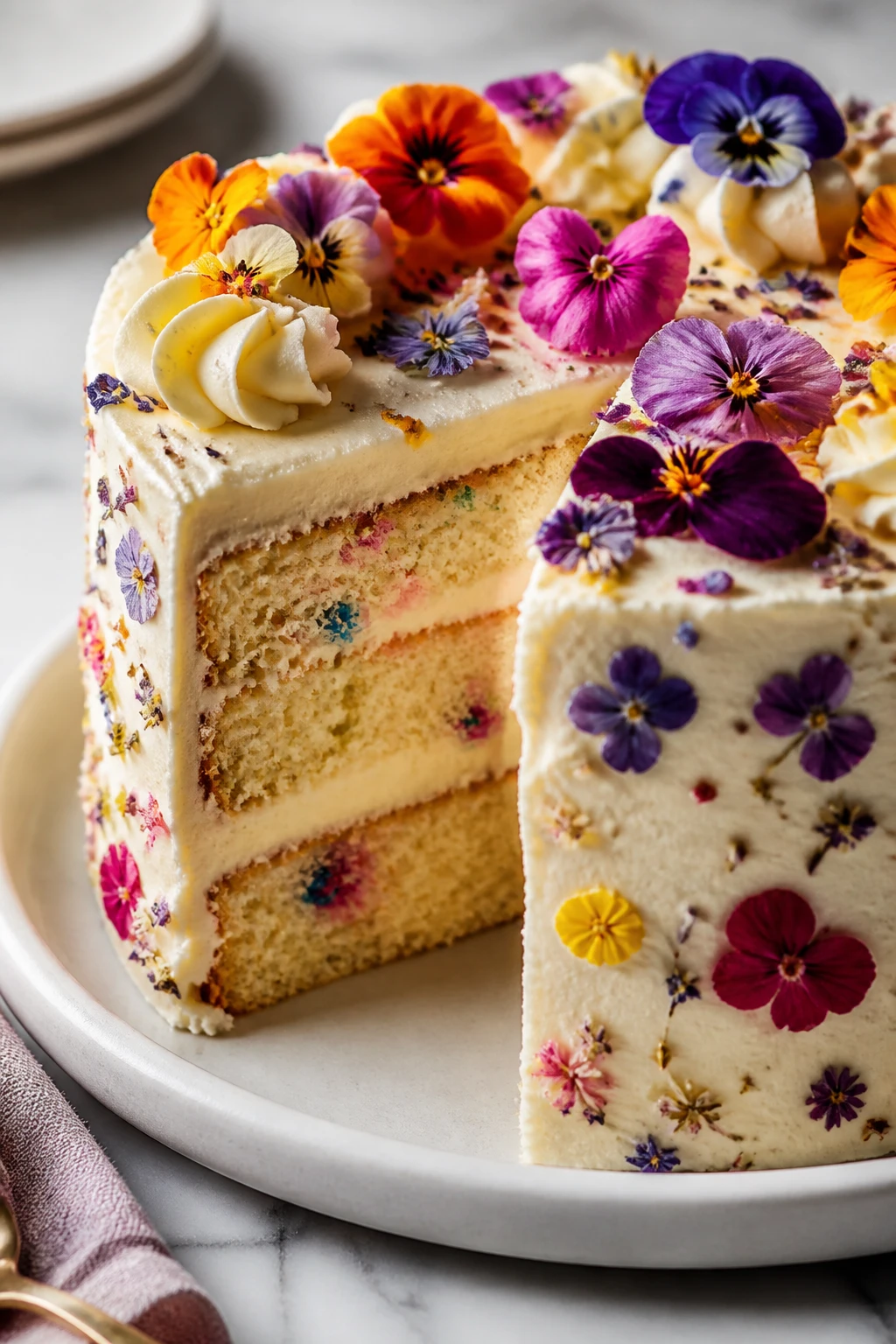
Once cooled, decorate the cake with edible flowers. Choose fresh, clean flowers suitable for eating like pansies, nasturtiums, or violets. Arrange them gently on top for a pretty, natural look. Avoid using flowers that are sprayed with pesticides or are bitter. This simple decoration elevates the cake’s appearance without adding fuss or extra calories.
⏱ Time: 5 minutes
✓ Doneness: Flowers look fresh and vibrant, evenly distributed on cake top
Step 9
Slice and serve your beautiful vanilla birthday cake! It pairs wonderfully with a cup of tea or a scoop of vanilla ice cream if you want to jazz it up. Store leftovers covered at room temperature for up to two days or refrigerate if your kitchen is warm. Enjoy the tender crumb and delicate vanilla flavor that’s truly comforting and festive.
⏱ Time: Immediate serving
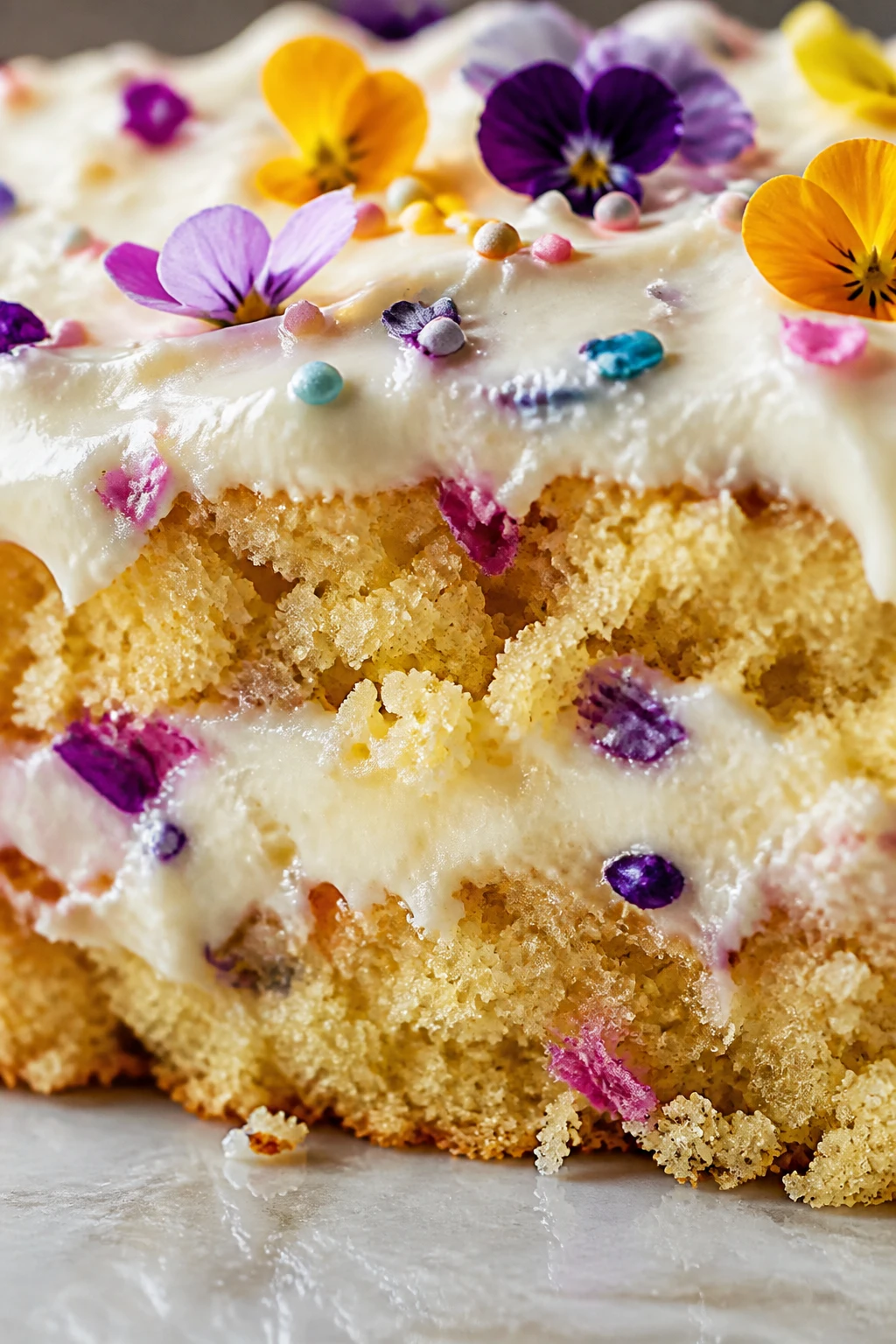
✓ Doneness: Cake slices cleanly with moist, tender crumb visible
Pro Tips
Always use room temperature butter and eggs for best texture.
Room temperature ingredients blend more easily, ensuring a smooth batter and proper emulsification. Cold butter won’t cream well, trapping less air, which leads to a dense cake. Similarly, cold eggs can cause the batter to curdle, negatively affecting texture and rise.
Fold flour gently instead of stirring vigorously.
Overmixing flour develops gluten, making cakes tough and chewy. Folding maintains the air bubbles created during creaming, resulting in a light, tender crumb. This technique is key to achieving the soft texture this vanilla cake is known for.
Line your cake pan with parchment paper.
Even with greasing, some cakes stick to the pan edges or bottom. Parchment paper ensures easy release, preserving the cake’s shape and preventing frustrating breakage. This simple step saves time and stress during unmolding.
Don’t open the oven door during the first 20 minutes of baking.
Opening the oven early causes temperature drops that can make the cake collapse or bake unevenly. Keeping the oven closed allows the batter to rise steadily and set properly, resulting in a fluffy texture.
Tap the cake pan gently before baking to release air bubbles.
Large air bubbles trapped in the batter can cause holes or tunnels in the cake. Tapping the pan helps these bubbles rise to the surface and pop, yielding a more uniform crumb and smooth top.
Use fresh edible flowers that are pesticide-free for decoration.
Flowers sprayed with chemicals can be toxic if ingested. Fresh, organic edible flowers add beauty and a subtle flavor without health risks. Always wash flowers gently before placing them on the cake.
Cool the cake completely before decorating.
Decorating a warm cake can cause flowers or frosting to wilt or slide off. Cooling ensures the cake is firm enough to hold decorations in place, making your presentation last longer.
Common Mistakes to Avoid
Using cold butter and eggs.
Why it happens Many assume ingredients straight from the fridge are fine, but cold butter and eggs don’t blend well, causing dense or curdled batter.
Fix Plan ahead to let butter and eggs sit at room temperature for about 30 minutes before baking. This ensures smooth mixing and better texture.
Overmixing flour into the batter.
Why it happens Eager cooks often stir vigorously to avoid lumps, not realizing this develops gluten and toughens the cake.
Fix Use a spatula to fold flour gently until just combined, stopping as soon as no streaks remain.
Opening the oven door too early.
Why it happens Curiosity or checking too soon can cause heat loss, collapsing the cake.
Fix Wait at least 20 minutes before checking to allow the cake to set and rise properly.
Not greasing and lining the pan properly.
Why it happens Skipping parchment or insufficient greasing leads to sticking and broken cake edges.
Fix Grease the pan thoroughly and line the bottom with parchment paper for easy removal.
Using non-edible or pesticide-treated flowers.
Why it happens People often use garden flowers without verifying if they’re safe to eat.
Fix Only use flowers labeled edible and pesticide-free, washing them gently before decorating.
Variations
Lemon Vanilla Cake
Add 1 tablespoon of fresh lemon zest to the batter for a bright, citrus twist. Swap vanilla extract for lemon extract if you want a stronger lemon flavor. This variation is refreshing and perfect for spring or summer birthdays.
Note: Zest should be finely grated and folded in with the flour to distribute evenly without overmixing.
Chocolate Swirl Vanilla Cake
Stir in 1/4 cup of melted dark chocolate into half the batter and swirl it gently into the plain vanilla batter in the pan. This creates a marbled effect with rich chocolate ribbons, adding a decadent touch without complicating the recipe.
Note: Avoid fully mixing chocolate into the batter to preserve the swirl pattern; fold gently for best results.
Vegan Vanilla Cake
Replace eggs with 1/2 cup unsweetened applesauce and use vegan butter or coconut oil. Use plant-based milk instead of dairy if needed. This makes the cake suitable for vegans while maintaining a moist, tender crumb.
Note: Baking time may vary slightly; check doneness with a toothpick starting at 25 minutes.
Gluten-Free Vanilla Cake
Substitute all-purpose flour with a gluten-free flour blend that includes xanthan gum. This keeps the texture light and moist while accommodating gluten sensitivities. The flavor remains classic vanilla with a slightly different crumb.
Note: Ensure the gluten-free blend is suitable for baking and sift it well to avoid clumps.
Lavender Infused Vanilla Cake
Add 1 tablespoon of dried culinary lavender buds to the sugar and butter during creaming for a floral aroma. This subtle flavor pairs beautifully with the vanilla and edible flowers, making it extra special for tea parties or garden celebrations.
Note: Use only culinary-grade lavender to avoid bitterness and rinse buds if desired to soften flavor.
Nutrition
Per Serving:
Nutritional values are estimates and may vary based on specific ingredients used.
Storage & Tips
Room Temperature
Store the cake covered loosely with a cake dome or plastic wrap at room temperature for up to two days. This keeps it moist but avoid warm, humid areas to prevent spoilage.
Refrigerator
Keep the cake in an airtight container in the fridge for up to 4 days. The texture may firm up and the cake can dry slightly, so allow it to come to room temperature before serving or warm gently.
Freezer
Wrap the cooled cake tightly in plastic wrap and then foil, freezing for up to 2 months. To thaw, transfer to the fridge overnight and then bring to room temperature before serving to preserve texture.
Reheating
Warm slices gently in the microwave for 10-15 seconds or in a low oven (300°F) for 5-7 minutes. Adding a small dab of butter or a splash of milk can help restore moisture if needed. Avoid overheating to prevent drying out.
Make Ahead
You can bake the cake a day ahead and store it wrapped tightly at room temperature. Decorate with edible flowers just before serving to keep them fresh and vibrant.
FAQ
Can I use salted butter instead of unsalted?
Yes, but reduce or omit any additional salt in the recipe since salted butter contains salt. Using unsalted butter gives you more control over seasoning, but salted butter will still yield a tasty cake.
What if I don’t have edible flowers?
You can decorate with fresh berries, powdered sugar, or even simple frosting swirls. Edible flowers add charm but aren’t essential for flavor or structure.
How do I know when the cake is done?
Insert a toothpick into the center; if it comes out clean or with a few moist crumbs, it’s done. The cake should also have a golden top and start to pull away from the pan edges.
Can I make this cake gluten-free?
Yes, substitute all-purpose flour with a gluten-free blend that includes xanthan gum. Baking time might vary slightly, so start checking doneness earlier.
Is it okay to use imitation vanilla extract?
Imitation vanilla can be used but the flavor won’t be as rich or natural. For best taste, use pure vanilla extract.
How should I store leftover cake?
Store leftovers covered at room temperature for up to two days or in the fridge for up to four days. Bring to room temperature before serving for best texture.
Can I freeze the cake after baking?
Yes, wrap the cooled cake tightly in plastic wrap and foil, then freeze for up to two months. Thaw in the fridge overnight for best results.
Why is my cake dense and heavy?
This often happens if butter and sugar aren’t creamed enough, or if flour is overmixed. Make sure to cream butter and sugar until fluffy and fold flour gently.
Final Thoughts
I hope you give this quick vanilla birthday cake a try—it’s one of those recipes that’s easy, beautiful, and always a crowd-pleaser. Let me know how it turns out!