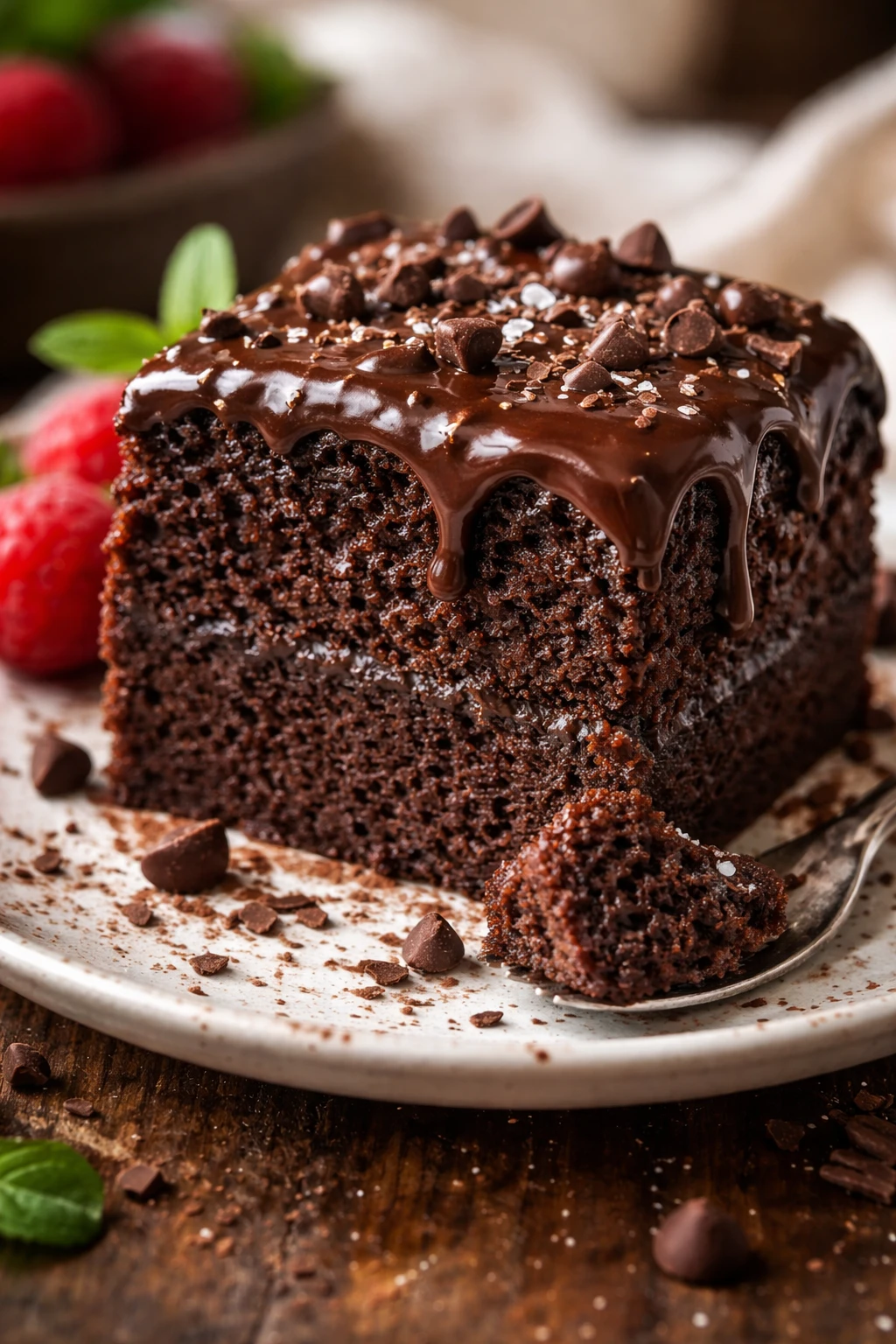
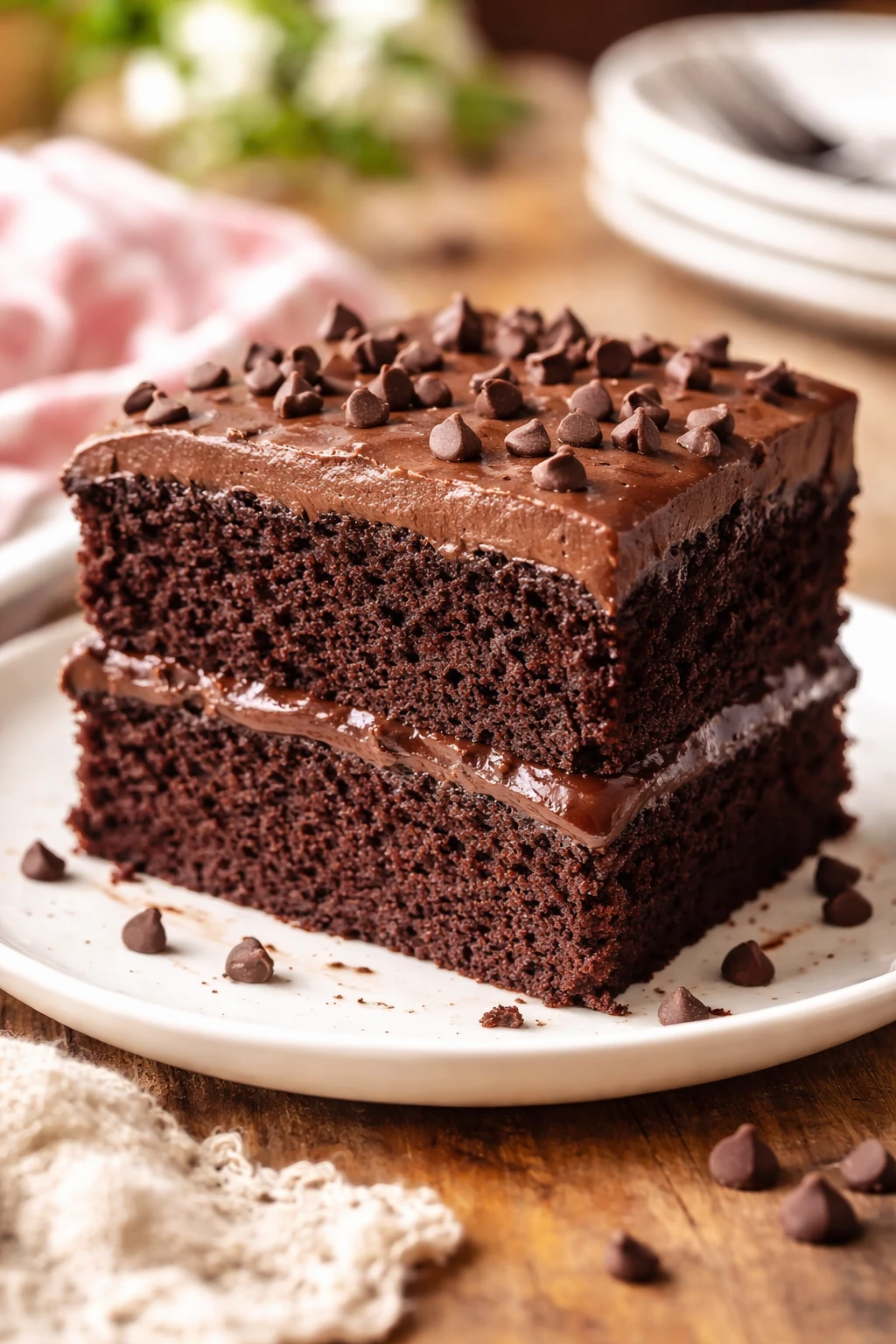
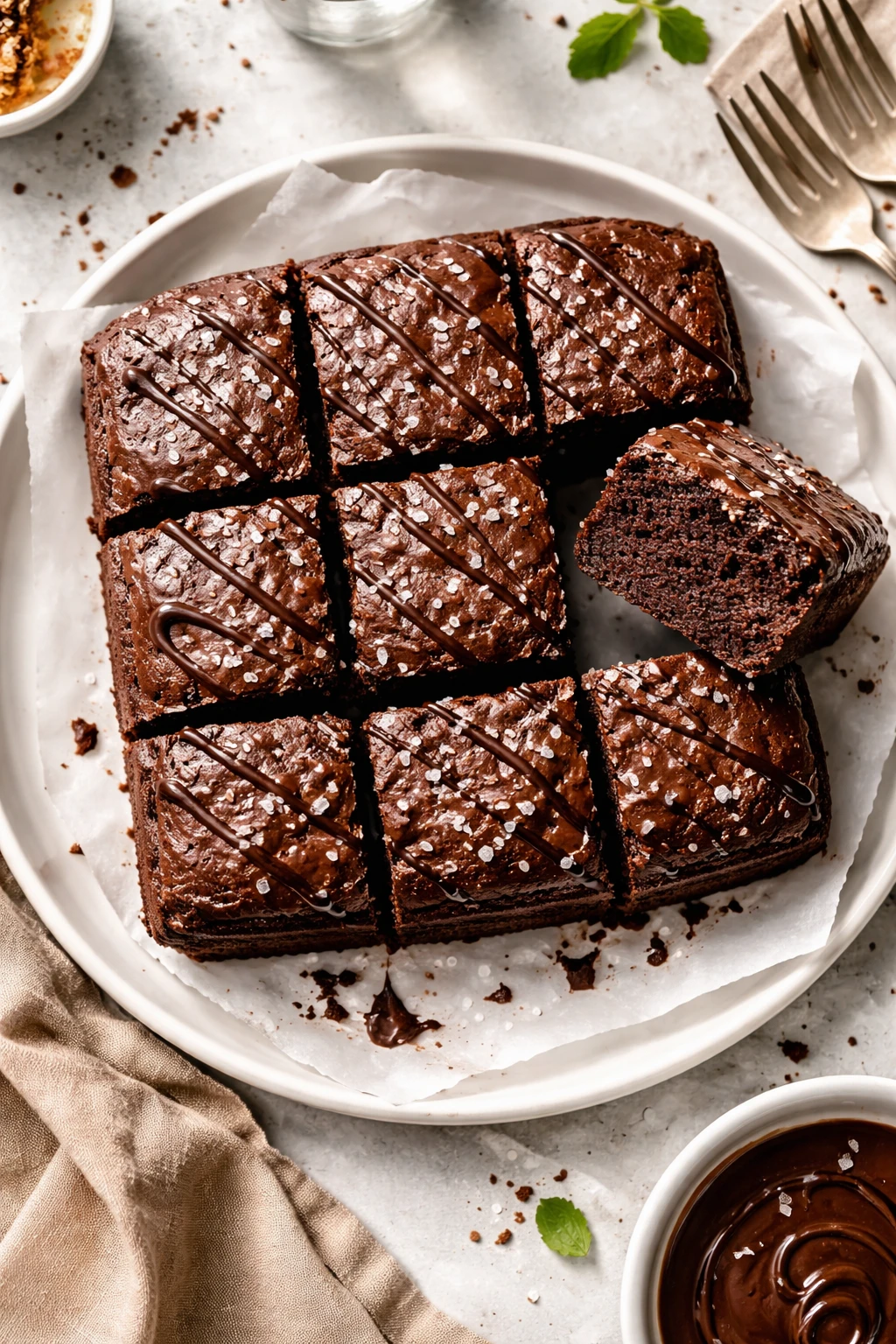
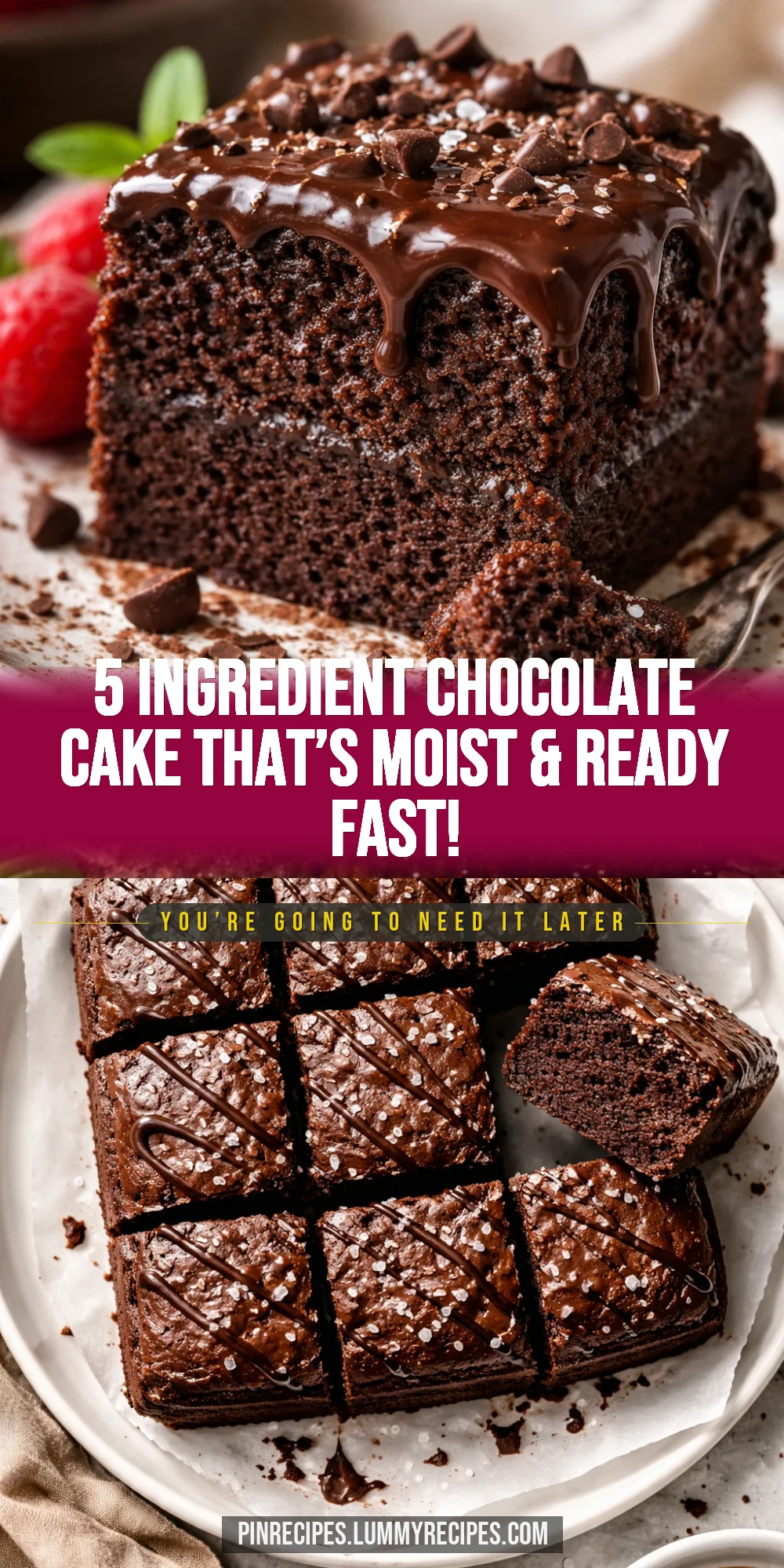
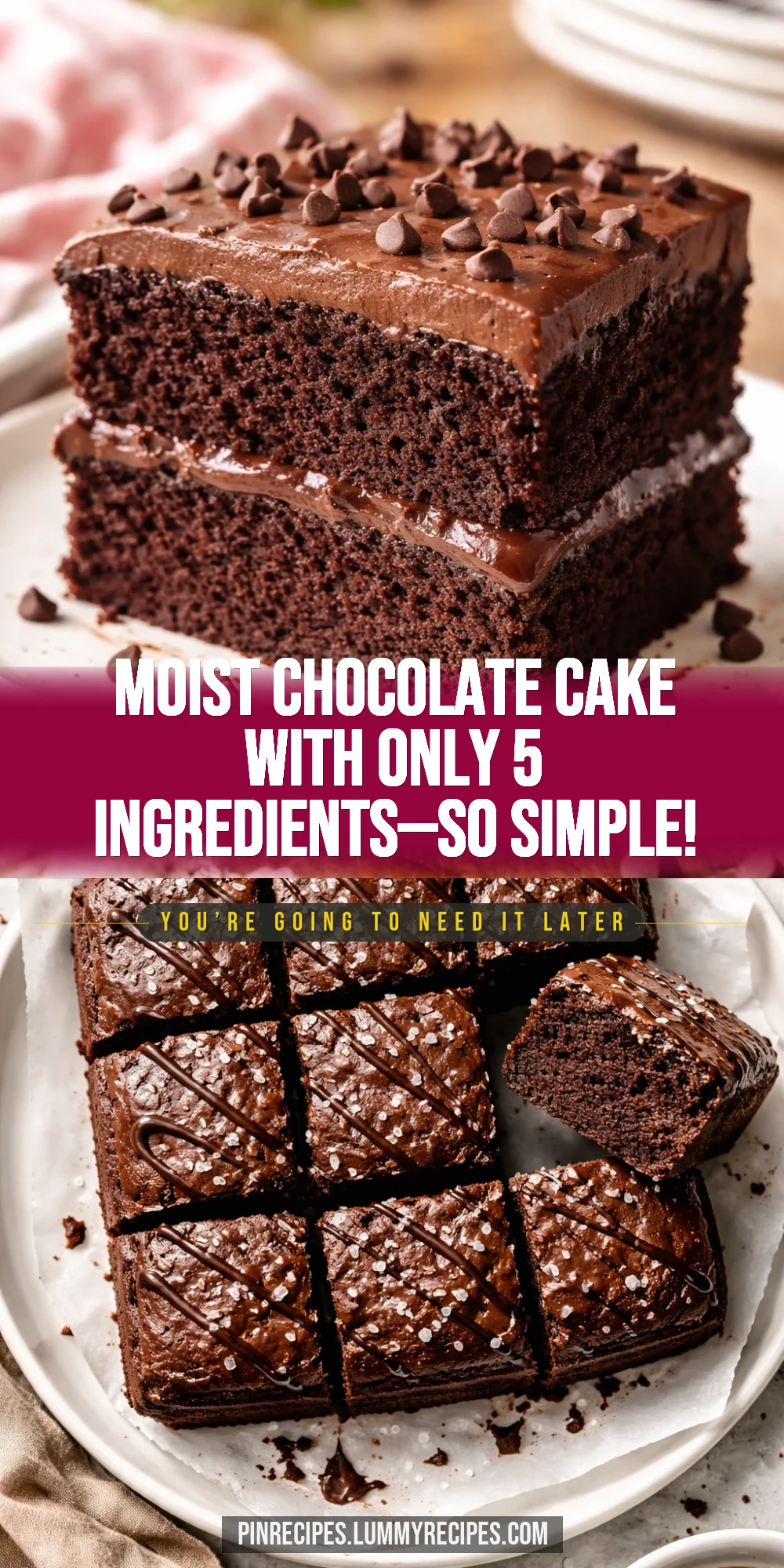
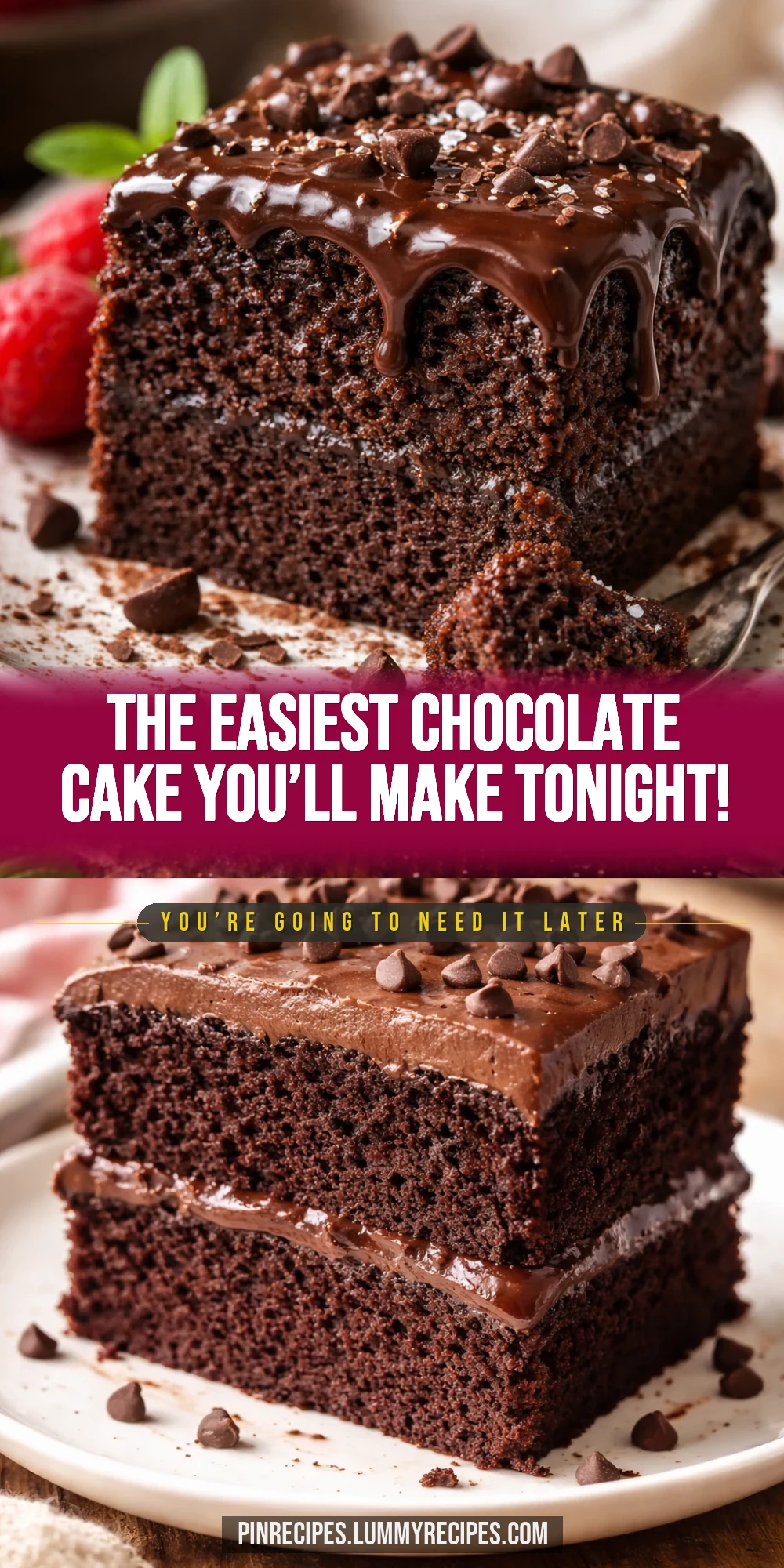
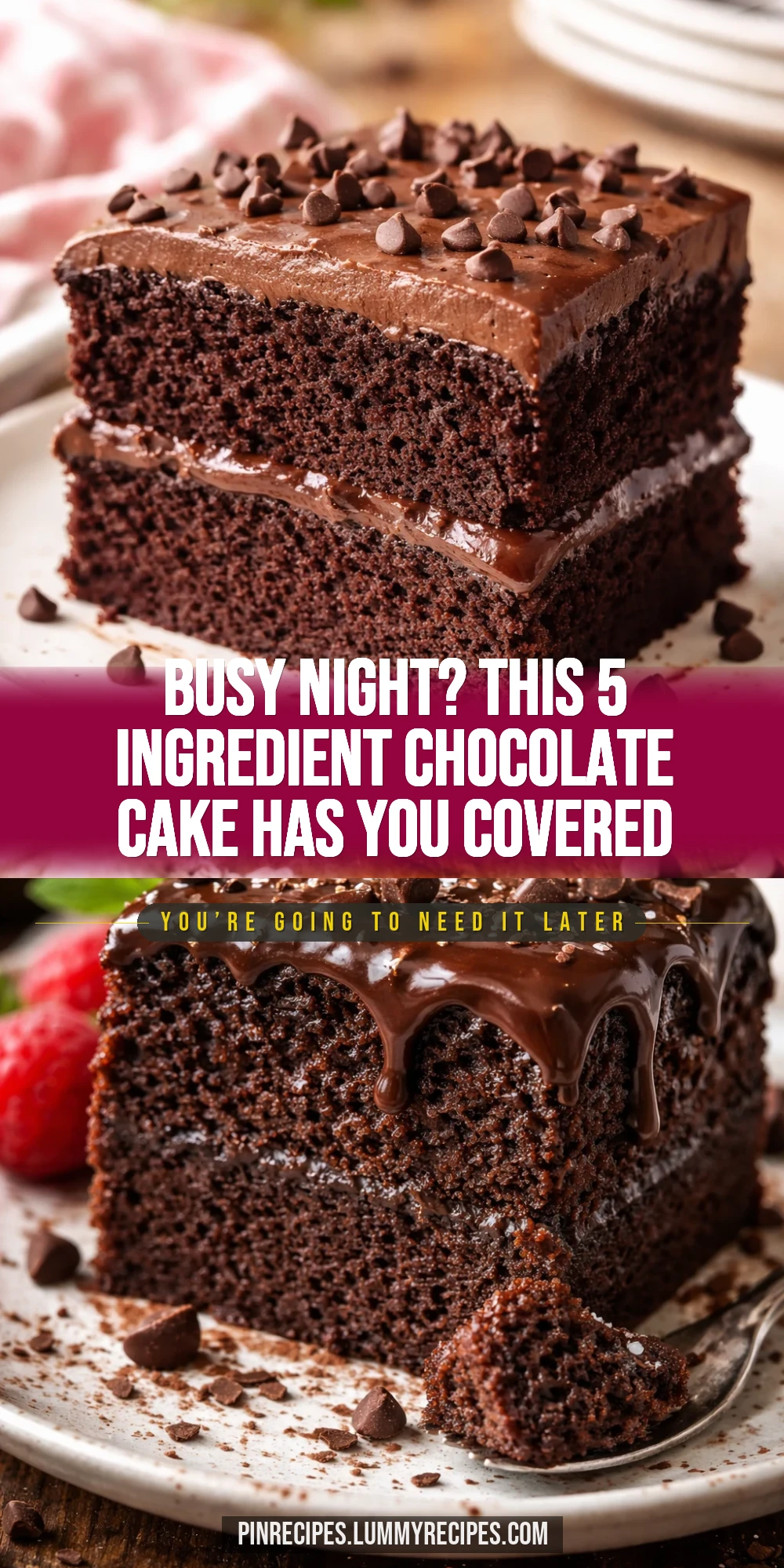
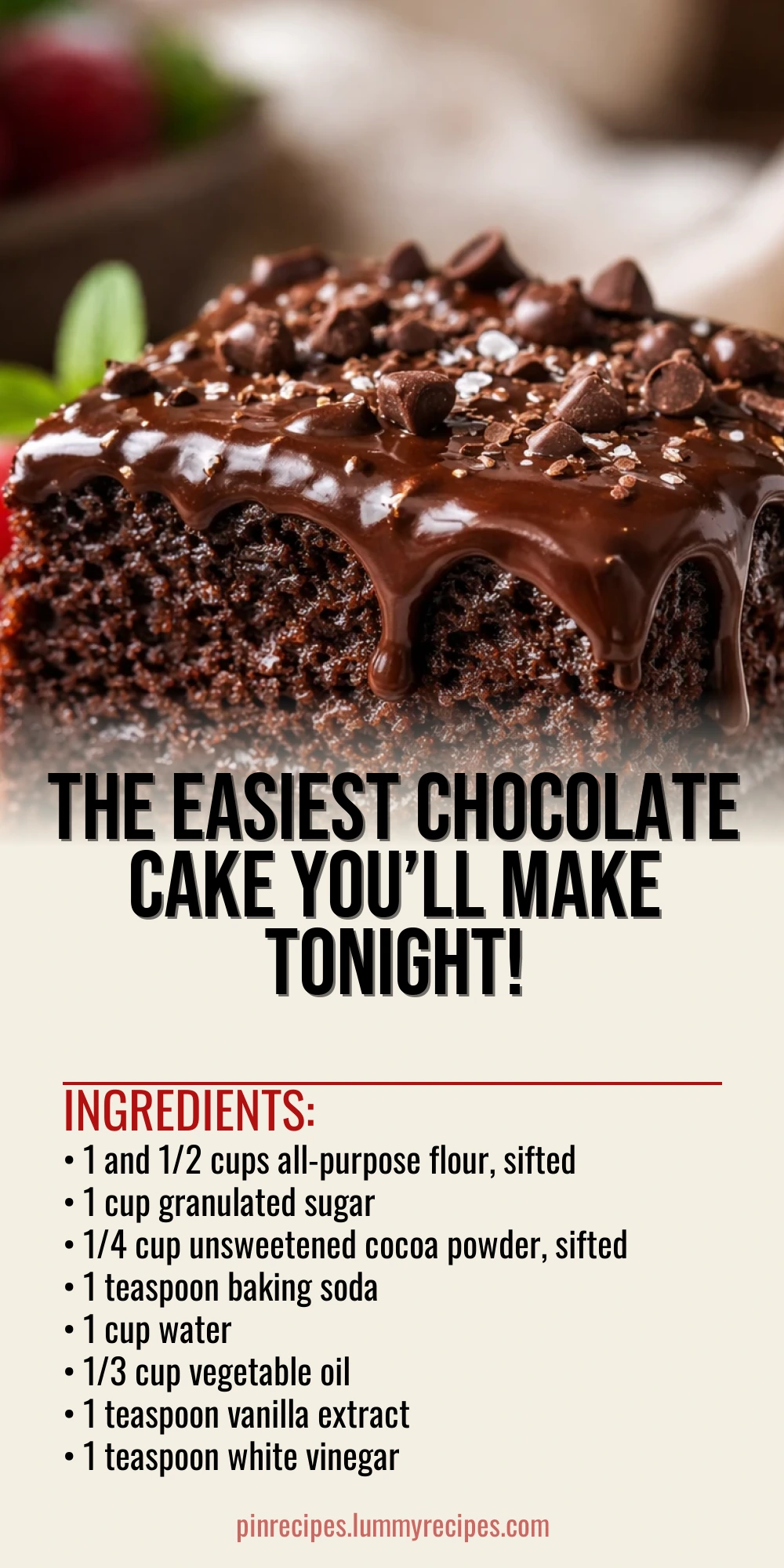
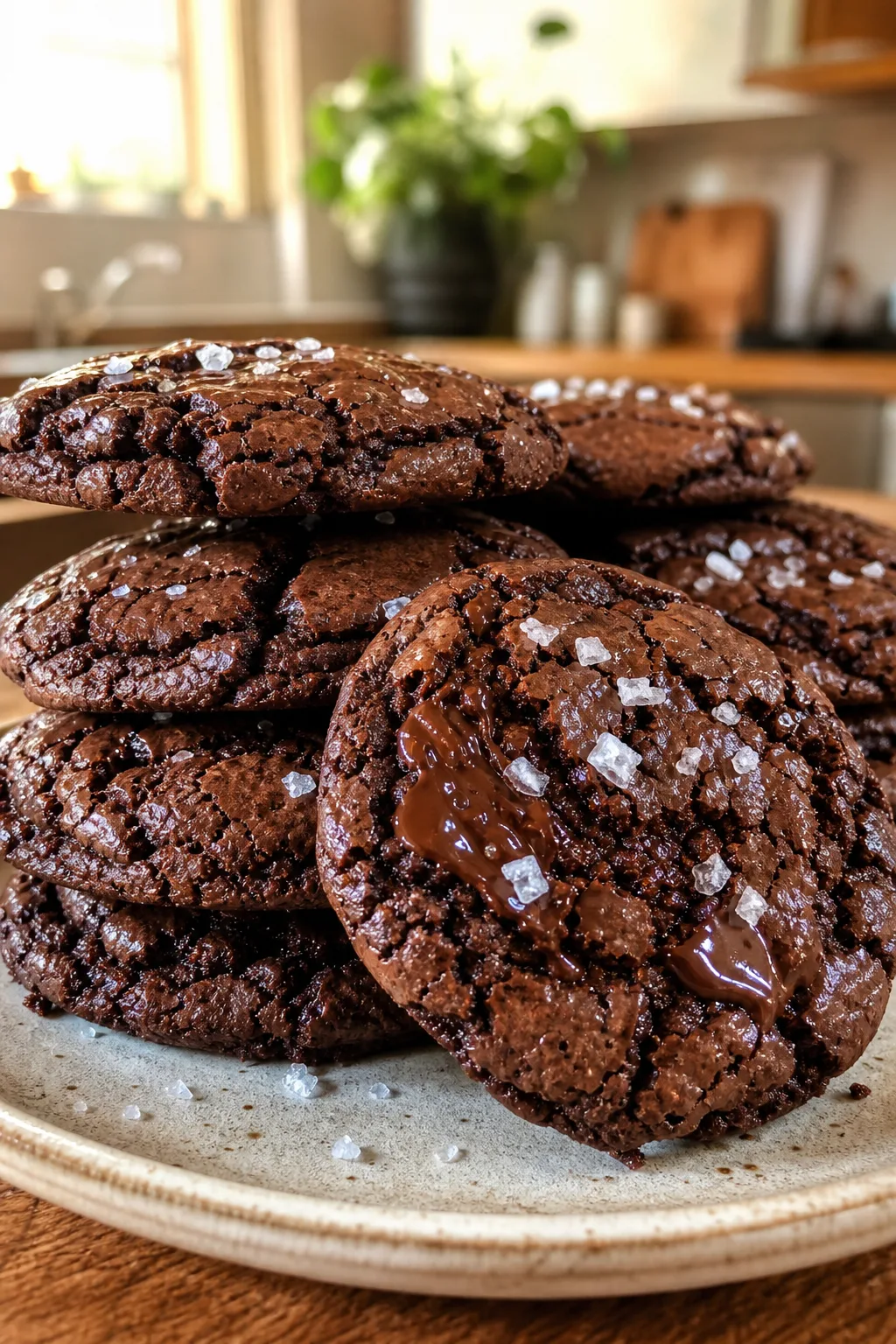
This chocolate cake is a lifesaver when you want something sweet but don't have much time or ingredients. Only five simple things, yet it turns out super moist and rich. Perfect for a cozy weeknight treat!
Introduction
I first stumbled upon this chocolate cake recipe on a hectic weeknight when I desperately wanted something homemade but had zero time to fuss. It’s amazing how just five simple ingredients come together to create a cake that’s moist, tender, and deeply chocolatey. What I love most is how the vinegar reacts with the baking soda to give the cake a light, fluffy texture without any eggs or butter. Over the years, I’ve tweaked it slightly—like sifting the cocoa and flour to keep the crumb fine and smooth—and it’s become my go-to for quick desserts. The finished cake is soft but not dense, with a subtle tang that balances the sweetness perfectly. It’s great on its own or dressed up with a dusting of powdered sugar or a scoop of ice cream. Honestly, this cake feels like a little indulgence that’s also incredibly forgiving, perfect for when you want something sweet but don’t want to spend hours in the kitchen.
What You'll Need
One 9-inch round cake, 8 servings
- 1 and 1/2 cups all-purpose flour, sifted
- 1 cup granulated sugar
- 1/4 cup unsweetened cocoa powder, sifted
- 1 teaspoon baking soda
- 1 cup water
- 1/3 cup vegetable oil
- 1 teaspoon vanilla extract
- 1 teaspoon white vinegar
How To Do It
Step 1
Preheat your oven to 350°F (175°C) and grease a 9-inch round cake pan with a little oil or nonstick spray. This step is crucial because a properly greased pan prevents the cake from sticking, ensuring you get a clean release and a pretty cake edge. If you skip this, your cake might tear or crumble when you try to remove it. Also, line the bottom with parchment paper if you want extra insurance against sticking. This prep sets you up for success before you even mix the batter.
⏱ Time: 10 minutes
✓ Doneness: Oven preheated and pan fully greased and ready
Step 2
In a large mixing bowl, whisk together the sifted flour, sugar, cocoa powder, and baking soda until evenly combined. Sifting helps remove lumps and aerates the flour and cocoa, which makes the cake lighter and prevents clumps of dry ingredients. Whisking ensures everything is evenly distributed so your cake bakes uniformly. If you rush or skip sifting, you might end up with pockets of cocoa or flour that don’t blend well.
⏱ Time: 5 minutes
✓ Doneness: Dry ingredients are smooth, uniform, and lump-free
Step 3
Make a well in the center of the dry ingredients and pour in the water, vegetable oil, vanilla extract, and vinegar. Stir gently with a spatula or wooden spoon until just combined. Avoid overmixing here; it’s tempting to get rid of all lumps, but overmixing can develop gluten and make the cake tough instead of tender. You want a smooth, slightly loose batter that’s well incorporated but not beaten to death.
⏱ Time: 3-5 minutes
✓ Doneness: Batter is smooth with no dry patches, slightly fluid but thick
Step 4
Pour the batter into your prepared pan and gently tap it on the counter to release any large air bubbles. This helps prevent big holes or tunnels in your cake crumb and ensures an even texture. Then, place it in the center rack of your preheated oven. Positioning matters because it allows even heat circulation around the cake for uniform rising and baking.
⏱ Time: 2 minutes
✓ Doneness: Batter evenly spread with no large bubbles on surface
Step 5
Bake the cake for 28 to 32 minutes, checking at the 28-minute mark by inserting a toothpick into the center. If it comes out clean or with a few moist crumbs, the cake is done. If it’s wet batter, it needs more time. Baking too long dries the cake out, so keep a close eye near the end. The cake should spring back lightly when pressed and have a slightly shiny surface.
⏱ Time: 28-32 minutes
✓ Doneness: Toothpick comes out clean or with a few moist crumbs; cake springs back
Step 6
Remove the cake from the oven and let it cool in the pan for about 10 minutes. This resting time allows the cake to set and makes it easier to remove without breaking. If you try to unmold it too soon, it might crumble or stick. After 10 minutes, run a knife around the edges to loosen it before turning it out onto a wire rack to cool completely.
⏱ Time: 10 minutes
✓ Doneness: Cake edges pull slightly away from pan and surface feels set
Step 7
Once the cake is completely cool, you can dust it with powdered sugar or frost it if you like. Cooling fully is important because warm cake can cause frosting to melt and slide off. If you want a simple finish, a light dusting of cocoa powder or powdered sugar adds a lovely touch without extra effort.
⏱ Time: 30 minutes to cool
✓ Doneness: Cake feels cool to the touch and firm on top
Step 8
Slice the cake with a sharp knife, wiping the blade clean between cuts for neat slices. This keeps the edges clean and prevents crumbs from sticking to the knife, giving you nice presentation. Serve as is or with a scoop of vanilla ice cream or fresh berries for an extra special treat.
⏱ Time: 5 minutes
✓ Doneness: Clean, even slices with no crumbling edges
Step 9
Store any leftovers in an airtight container at room temperature for up to 3 days, or refrigerate if your kitchen is warm. This cake stays moist thanks to the oil and vinegar, but refrigeration can dry it out slightly, so bring it back to room temp before serving. For longer storage, wrap tightly and freeze for up to 2 months.
⏱ Time: N/A
✓ Doneness: Cake remains moist and fresh when stored properly
Pro Tips
Always sift your dry ingredients before mixing.
Sifting aerates the flour and cocoa powder, removing lumps and ensuring an even distribution of ingredients. This leads to a lighter, more uniform crumb and prevents dense spots in the cake.
Don’t overmix the batter once wet ingredients are added.
Overmixing develops gluten in the flour, which makes the cake tough rather than tender. Stir just until combined for a soft, moist crumb.
Use fresh baking soda for best rise.
Old baking soda loses potency, which means your cake won’t rise properly and could turn out dense. A quick test is to add a pinch to vinegar—if it bubbles vigorously, it’s fresh.
Let the cake cool completely before frosting or slicing.
Cutting or frosting a warm cake can cause it to crumble or the frosting to melt. Cooling helps the structure set and makes handling easier.
Tap the pan gently before baking to release air bubbles.
This prevents large air pockets that can cause uneven baking or holes in the crumb, ensuring a smooth, even texture.
Use a sharp knife wiped between slices for clean cuts.
This keeps the cake edges neat and prevents crumbs from sticking to the knife, which can tear the cake.
Store leftovers in an airtight container at room temperature.
This keeps the cake moist and fresh for several days. Refrigeration can dry it out, so only refrigerate if your kitchen is very warm.
Common Mistakes to Avoid
Skipping the vinegar or using the wrong type
Why it happens Some cooks might omit vinegar thinking it’s optional or use balsamic or flavored vinegar, assuming any vinegar works.
Fix Always use white or apple cider vinegar in the exact amount called for. This acid reacts with baking soda to leaven the cake and adds a subtle tang. Without it, your cake may be dense and flat.
Overmixing the batter after adding wet ingredients
Why it happens It’s natural to want to mix well to get a smooth batter, but overenthusiasm leads to gluten development.
Fix Mix just until no dry flour remains. A few small lumps are okay. This ensures a tender cake instead of a tough one.
Not greasing the pan properly
Why it happens Sometimes people skip greasing to save time or assume parchment alone is enough.
Fix Grease the pan with oil or spray and line it with parchment paper if possible. This prevents sticking and helps the cake release cleanly.
Using Dutch-processed cocoa instead of natural cocoa
Why it happens Dutch-processed cocoa is common and sometimes preferred for flavor, but it lacks acidity.
Fix Use natural unsweetened cocoa powder to get the right chemical reaction with baking soda. Dutch-processed cocoa won’t react properly, leading to poor rise.
Overbaking the cake
Why it happens Leaving the cake in too long because you’re unsure if it’s done or oven runs hot.
Fix Start checking at 28 minutes with a toothpick. Pull it out as soon as it comes out clean or with moist crumbs to keep the cake moist.
Variations
Chocolate Coffee Cake
Add 1 tablespoon of instant coffee granules dissolved in the water to deepen the chocolate flavor with a subtle mocha note. The coffee enhances the richness without overpowering the cake.
Note: Dissolve coffee granules fully in water before mixing to avoid grainy texture.
Gluten-Free Chocolate Cake
Swap the all-purpose flour for a gluten-free blend that includes xanthan gum. This keeps the structure intact while making it safe for gluten-sensitive eaters. Expect a slightly different crumb but still moist and delicious.
Note: Make sure your gluten-free blend has a binding agent to mimic gluten's elasticity.
Vegan Chocolate Cake with Flaxseed
Replace the vinegar with apple cider vinegar and add 1 tablespoon of ground flaxseed mixed with 3 tablespoons of water as an egg replacer. This adds a bit of texture and nutrition while keeping the cake moist.
Note: Let the flaxseed mixture sit for 5 minutes to gel before adding.
Chocolate Orange Cake
Add 1 teaspoon of orange zest to the dry ingredients and replace vanilla with orange extract. This gives a fresh citrus twist that pairs beautifully with chocolate’s richness.
Note: Zest only the colored part of the peel to avoid bitterness.
Spiced Chocolate Cake
Mix in 1/2 teaspoon cinnamon and a pinch of cayenne pepper to the dry ingredients for a warm, spicy kick. This variation is perfect for fall or winter evenings when you want something cozy and different.
Note: Adjust cayenne carefully; a little goes a long way.
Nutrition
Per Serving:
Nutritional values are estimates and may vary based on specific ingredients used.
Storage & Tips
Room Temperature
Store the cake covered at room temperature for up to 3 days. Keep it in an airtight container or wrapped tightly with plastic wrap to preserve moisture and prevent it from drying out or absorbing odors.
Refrigerator
You can refrigerate the cake for up to 5 days in an airtight container. However, refrigeration may dry it out slightly, so bring it to room temperature before serving or warm gently in the microwave for 10-15 seconds.
Freezer
Wrap the cooled cake tightly in plastic wrap and then aluminum foil to prevent freezer burn. Freeze for up to 2 months. Thaw overnight in the refrigerator or at room temperature for a few hours before serving.
Reheating
Warm slices gently in the microwave for 10-20 seconds or in a low oven (300°F) for 5-10 minutes. Adding a small splash of water before reheating can help keep the cake moist. Avoid overheating which can make it dry.
Make Ahead
You can prepare the batter and keep it covered in the fridge for up to 24 hours before baking. Alternatively, bake the cake a day ahead and store it wrapped at room temperature. This allows flavors to develop and makes serving easy on busy nights.
FAQ
Can I substitute the vinegar with lemon juice?
Yes, lemon juice works similarly as an acid to react with baking soda and help the cake rise. Use the same amount (1 teaspoon). The flavor difference is minimal and usually not noticeable in the finished cake.
Why is my cake dense and not fluffy?
A dense cake usually means the baking soda and vinegar reaction didn’t happen properly. Make sure your baking soda is fresh and you add the vinegar. Also, avoid overmixing the batter, as this develops gluten and makes the cake tough.
Can I use butter instead of oil?
Butter can be used but it will change the texture and moisture level. Oil keeps the cake moist longer because it stays liquid at room temp. If substituting, melt the butter first and use the same quantity, but expect a slightly firmer crumb.
How do I know when the cake is done?
Insert a toothpick into the center after 28 minutes. If it comes out clean or with a few moist crumbs, it’s done. The cake should also spring back lightly when touched. Avoid overbaking to keep it moist.
Can I double this recipe?
Absolutely! Use a larger pan or two pans and adjust baking time accordingly. Check for doneness earlier and later as ovens vary. The batter should remain the same consistency.
Is this cake gluten-free?
No, this recipe uses all-purpose flour. To make it gluten-free, substitute with a gluten-free flour blend that contains xanthan gum for structure. The texture may vary slightly but it will still be delicious.
Can I add frosting or glaze?
Yes! This cake pairs wonderfully with chocolate ganache, cream cheese frosting, or a simple powdered sugar glaze. Just be sure the cake is completely cooled before applying to avoid melting.
What’s the best way to store leftover cake?
Store leftovers in an airtight container at room temperature for up to 3 days. If your kitchen is warm, refrigeration is fine but bring it back to room temp before eating to avoid dryness.
Final Thoughts
Give this quick and moist chocolate cake a try next time you need a simple, satisfying dessert. I’d love to hear how it turns out for you—don’t forget to share your results!