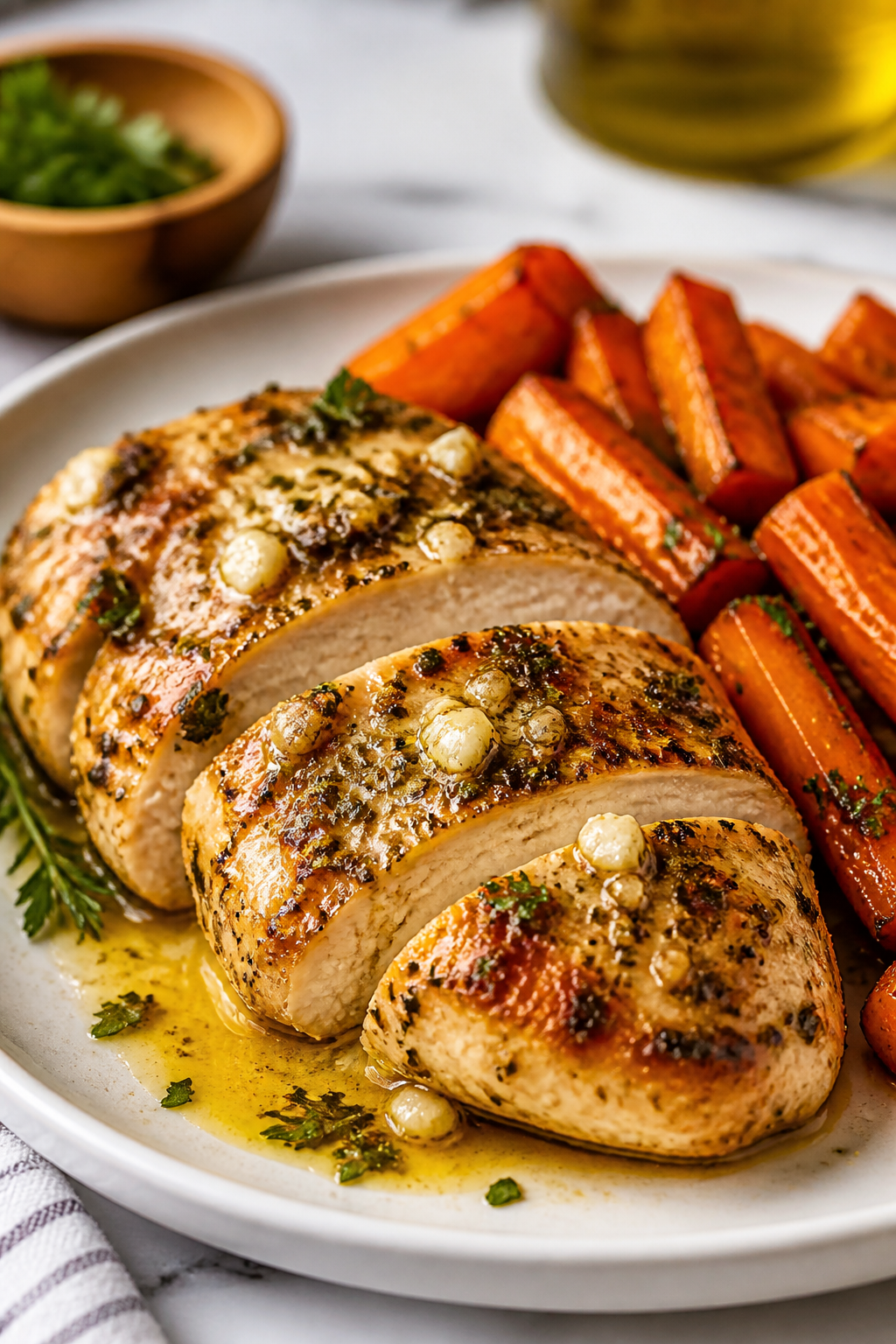
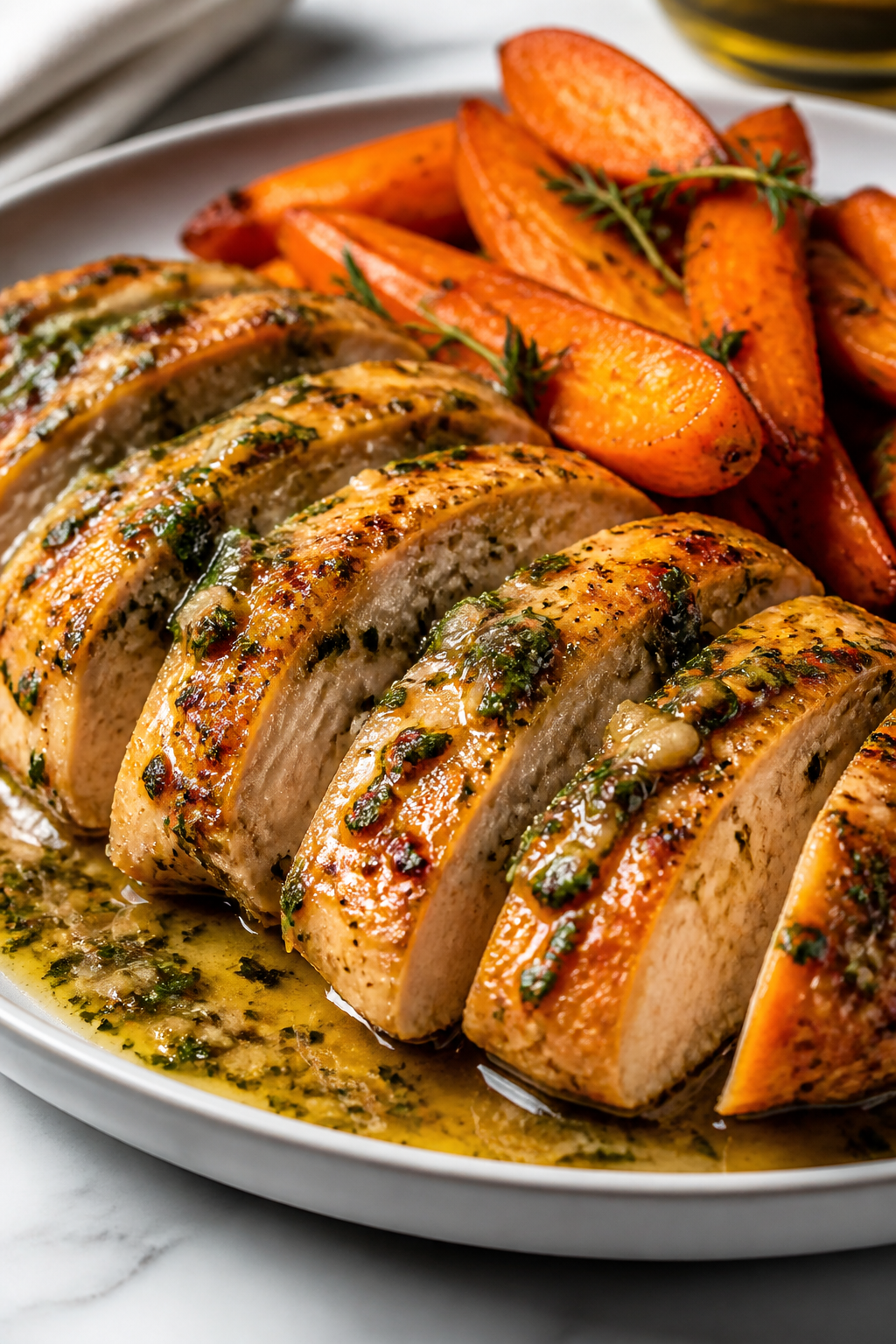
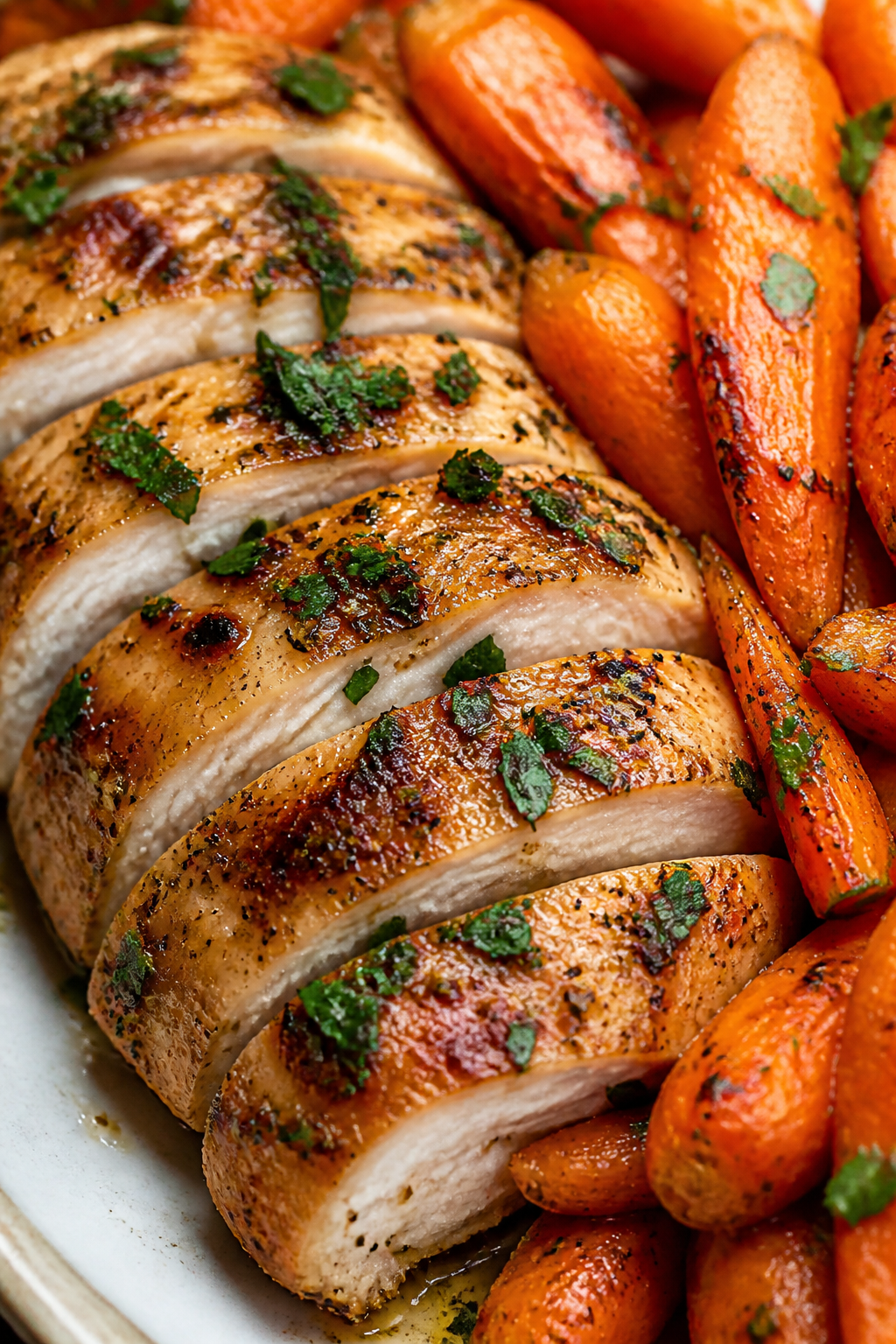
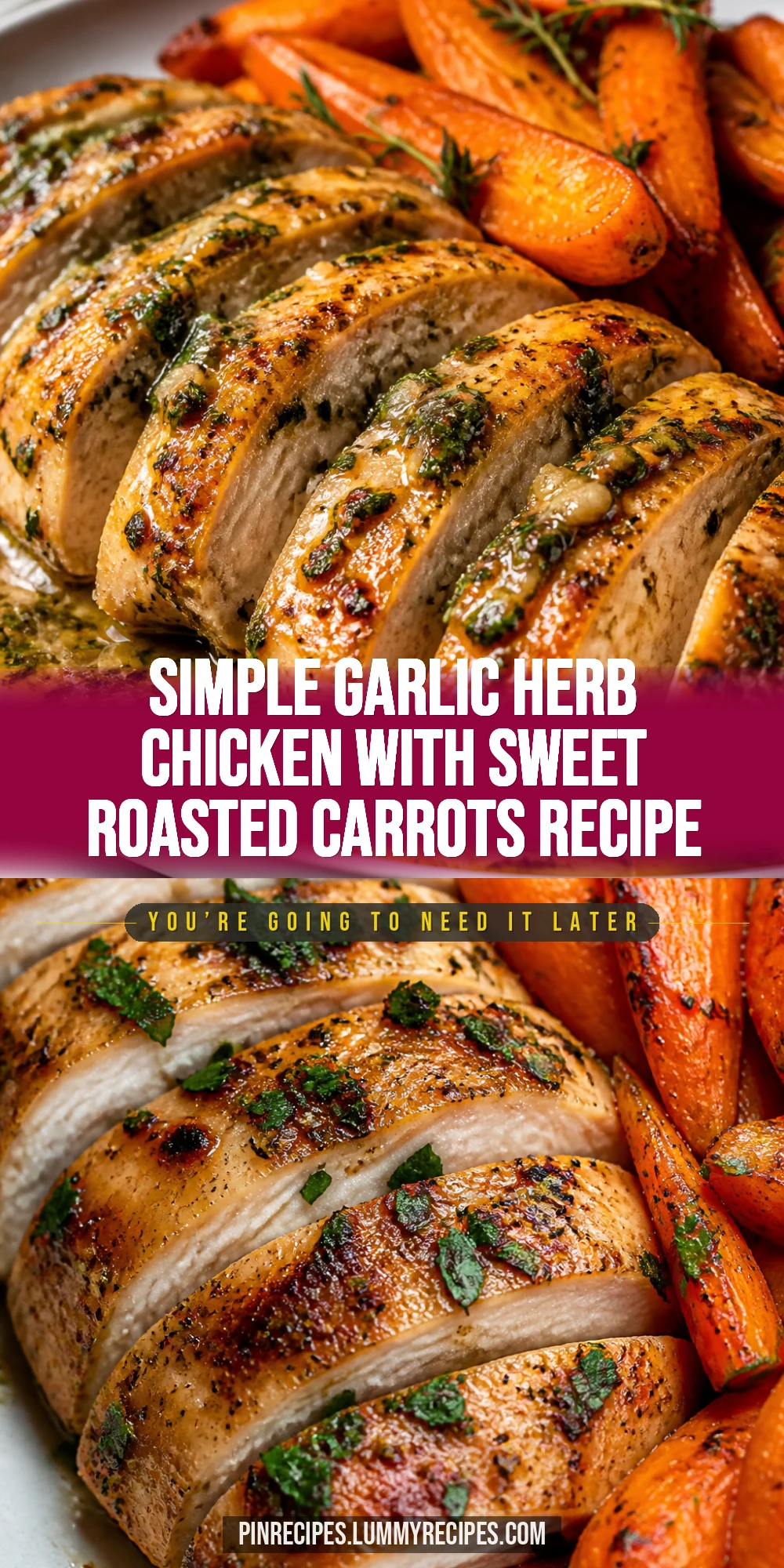
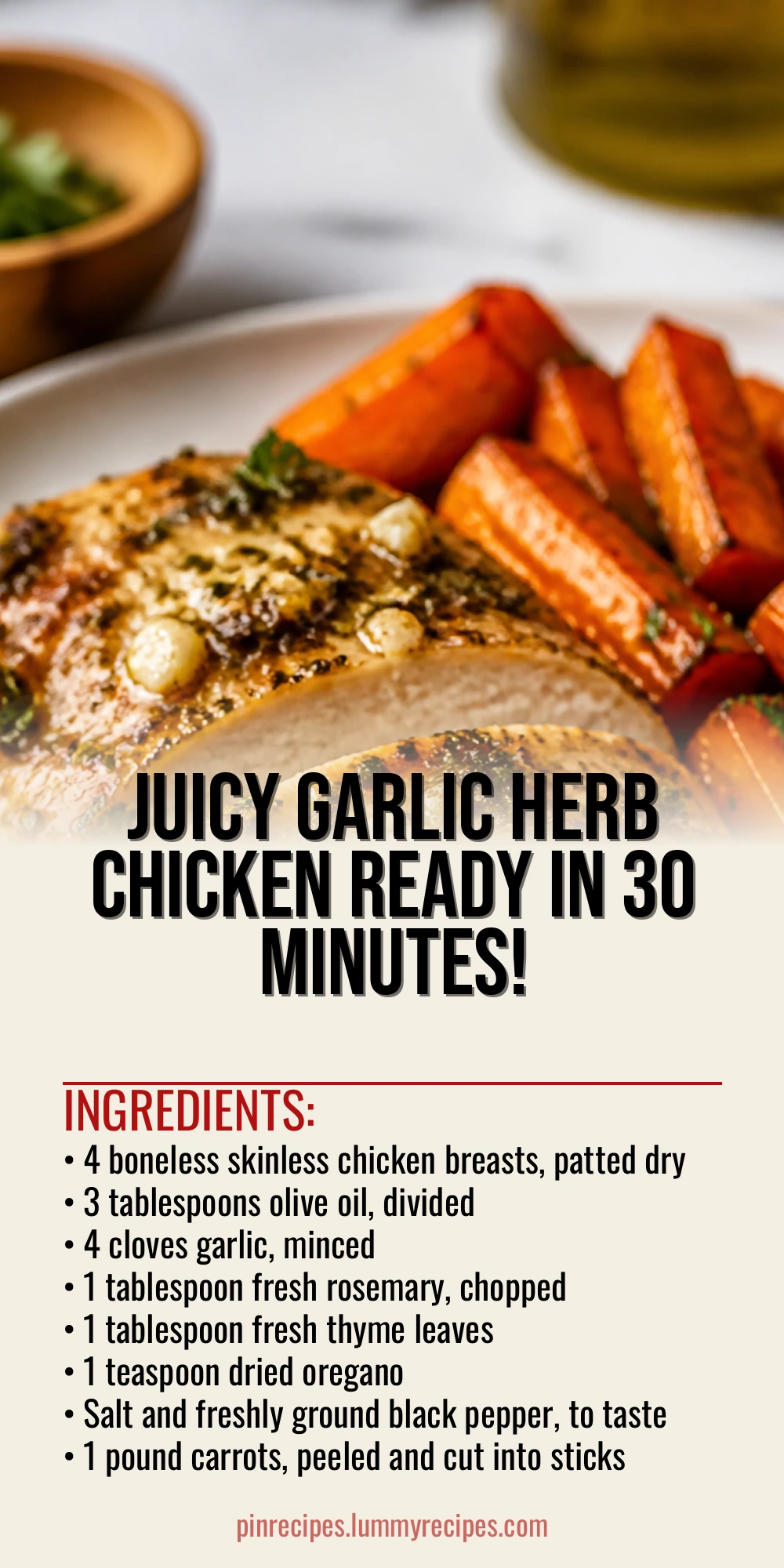
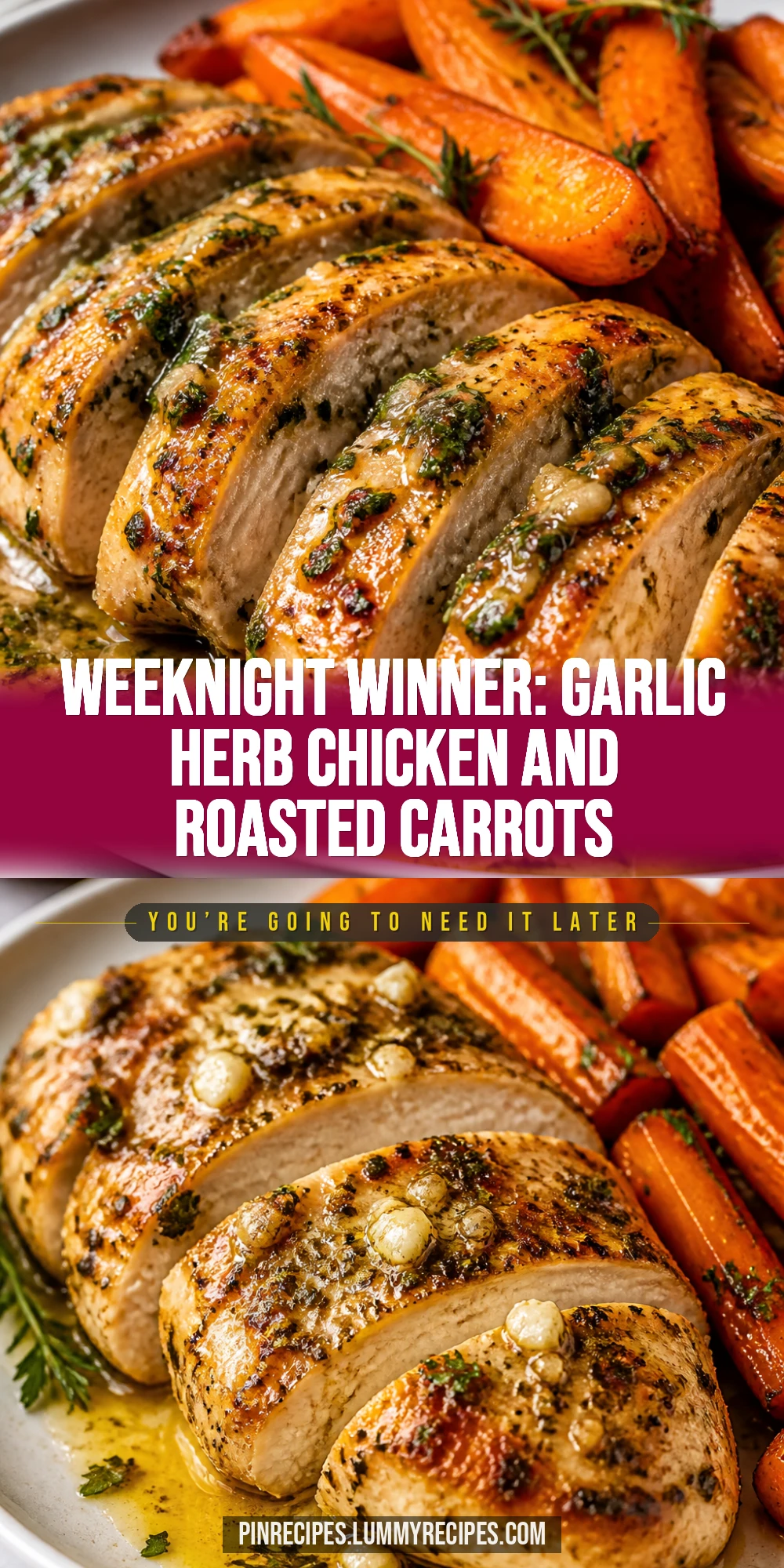
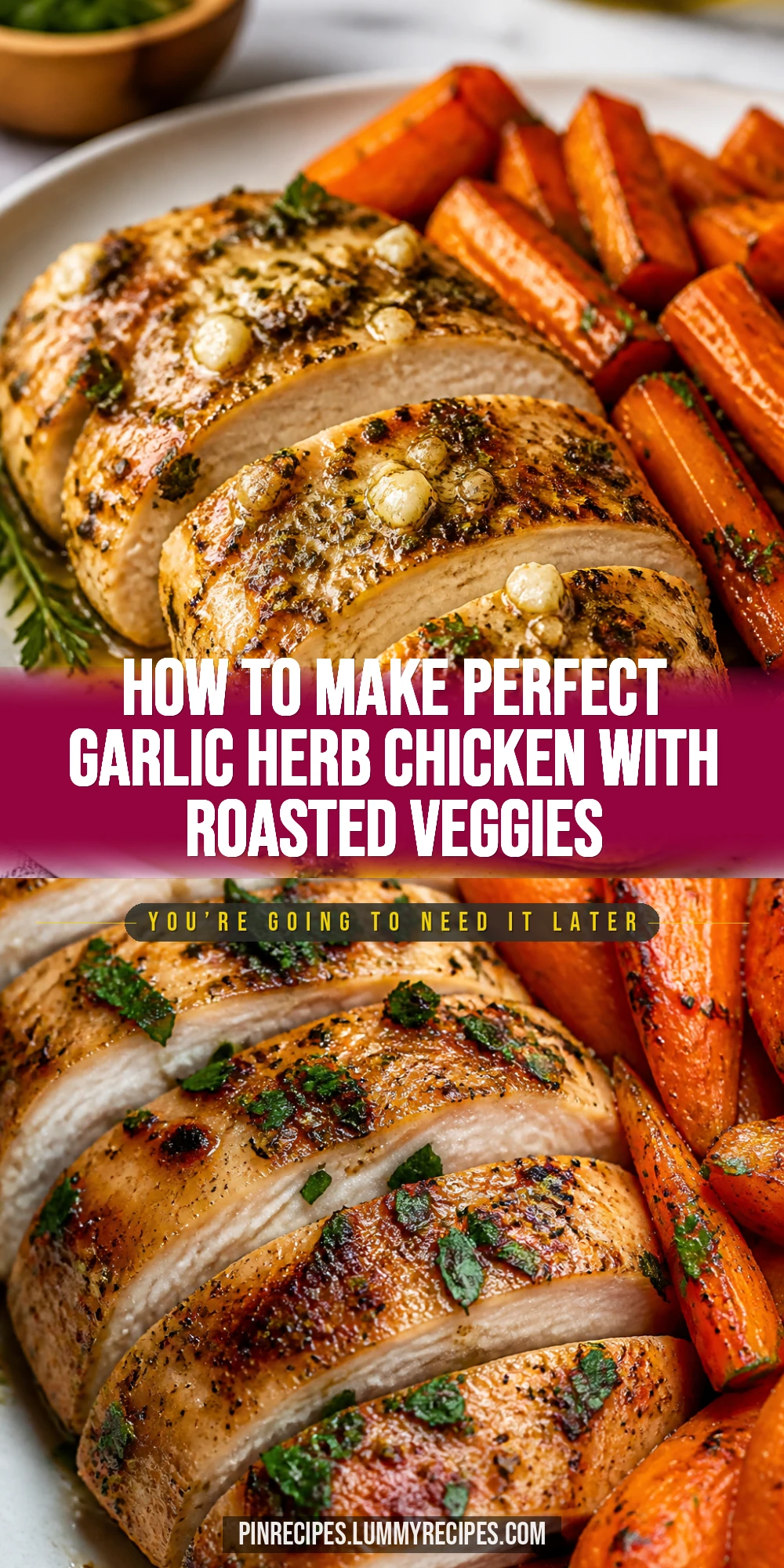
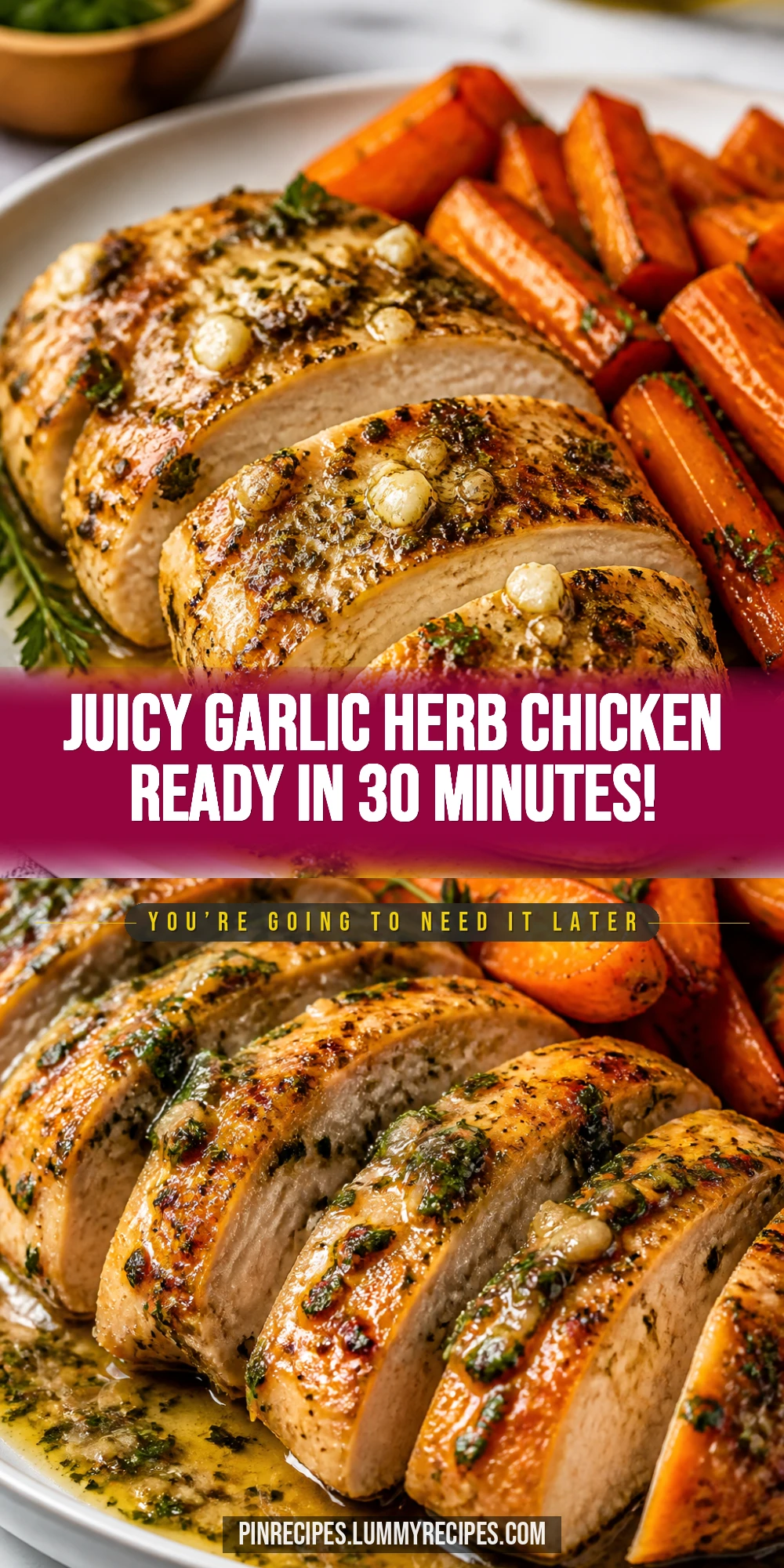
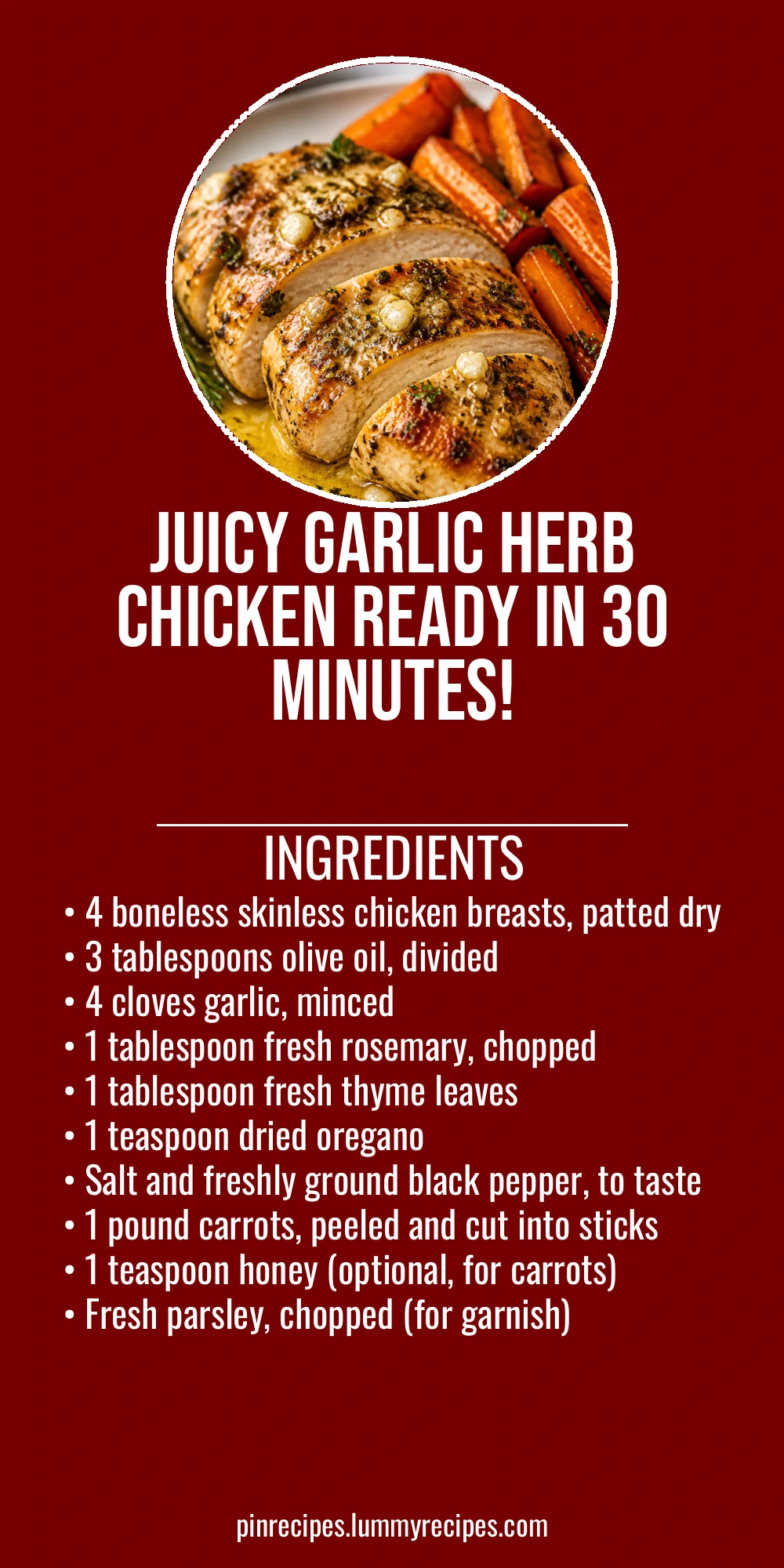
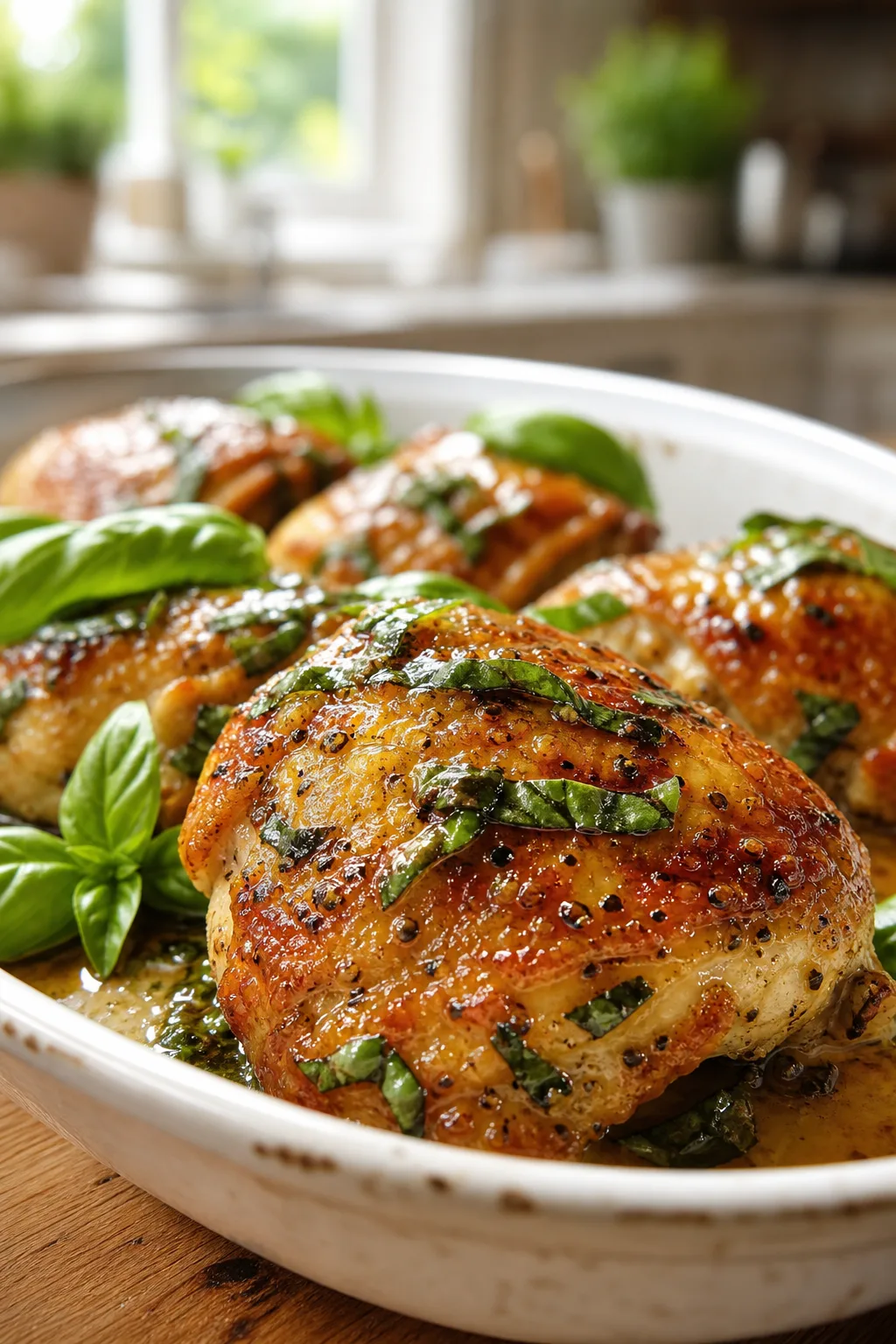
This garlic herb chicken breast is juicy and flavorful, paired with sweet roasted carrots. The secret? A quick marinade that locks in all those fresh herb flavors. Great for dinner when you want something wholesome but fast!
Introduction
I stumbled upon this garlic herb chicken breast recipe a few years ago when I needed a quick, healthy dinner that didn’t skimp on flavor. What I love most about it is how the fresh herbs and garlic come together to create this amazing aroma and taste without any fuss. I usually marinate the chicken just long enough to let the flavors soak in, then roast the carrots alongside so everything finishes at the same time. The trick I learned early on was to make sure the chicken breasts are patted dry before seasoning; this helps them get a nice golden crust instead of steaming in the pan. Plus, roasting the carrots with a touch of honey brings out their natural sweetness, balancing the savory herbs perfectly. The finished dish is juicy, fragrant, and comforting—definitely a family favorite on busy weeknights. It’s simple enough that even beginner cooks can pull it off, but it tastes like you spent hours in the kitchen. I hope you enjoy making and eating it as much as we do!
How To Do It
Step 1
Preheat your oven to 425°F (220°C). This high heat will help the chicken develop a golden crust while roasting the carrots to tender perfection. Make sure your oven is fully heated before placing the dish inside to ensure even cooking and caramelization.
⏱ Time: 10 minutes
✓ Doneness: Oven temperature stable at 425°F
Step 2
In a small bowl, whisk together 2 tablespoons olive oil, minced garlic, chopped rosemary, thyme, oregano, salt, and pepper. This marinade infuses the chicken with fresh herb flavors and garlic aroma. The olive oil helps carry the flavors and keeps the chicken moist.
⏱ Time: 5 minutes
✓ Doneness: Marinade is well combined and fragrant
Step 3
Pat the chicken breasts dry with paper towels to remove excess moisture. This step is crucial because it allows the chicken to brown properly instead of steaming. Then, rub the garlic herb mixture evenly over each breast, coating thoroughly on both sides.
⏱ Time: 5 minutes
✓ Doneness: Chicken breasts are evenly coated and dry to the touch
Step 4
Place the chicken breasts on a rimmed baking sheet or in a roasting pan, spacing them out so they aren’t touching. This spacing helps air circulate and promotes even cooking and browning.
⏱ Time: 3 minutes
✓ Doneness: Chicken breasts arranged with space between each piece
Step 5
In a separate bowl, toss the carrot sticks with 1 tablespoon olive oil, a pinch of salt, pepper, and honey if using. The honey adds a subtle sweetness that caramelizes beautifully in the oven, complementing the savory chicken.
⏱ Time: 5 minutes
✓ Doneness: Carrots are evenly coated and glossy
Step 6
Arrange the carrots around the chicken breasts on the baking sheet or in a separate baking dish if needed. Roasting them together saves time and lets the flavors mingle slightly, deepening the overall taste.
⏱ Time: 3 minutes
✓ Doneness: Carrots spread evenly around chicken
Step 7
Roast everything in the preheated oven for about 25-30 minutes, flipping the chicken halfway through for even browning. The chicken is done when its internal temperature reaches 165°F (74°C) and the carrots are tender and slightly caramelized.
⏱ Time: 30 minutes
✓ Doneness: Chicken juices run clear, carrots are fork-tender and golden
Step 8
Once cooked, let the chicken rest for 5 minutes before slicing. Resting allows the juices to redistribute, keeping the meat moist and flavorful. Don’t skip this step or your chicken might dry out.
⏱ Time: 5 minutes
✓ Doneness: Chicken feels firm but juicy when pressed gently
Step 9
Garnish the chicken and carrots with freshly chopped parsley for a pop of color and fresh flavor. Serve immediately with your favorite side or a simple salad for a complete meal.
⏱ Time: 2 minutes
✓ Doneness: Dish looks vibrant and fresh
Pro Tips
Always pat chicken dry before seasoning.
Removing excess moisture ensures the chicken browns properly instead of steaming. This step is critical for developing that flavorful crust and prevents the meat from becoming soggy.
Use fresh herbs instead of dried for marinade.
Fresh herbs have volatile oils that are more aromatic and flavorful. They infuse the chicken with bright, vibrant notes that dried herbs can’t replicate, making the dish taste fresher.
Let chicken rest after cooking.
Resting allows juices to redistribute evenly inside the meat, resulting in a tender, juicy bite. Cutting immediately causes the juices to run out, leaving the chicken dry.
Roast carrots with a touch of honey.
Honey promotes caramelization, bringing out the natural sweetness of the carrots and adding a subtle glaze that complements the savory chicken perfectly.
Flip chicken halfway through roasting.
Turning the chicken ensures even cooking and browning on both sides, preventing one side from drying out or burning.
Use a meat thermometer to check doneness.
Chicken is safe to eat at 165°F (74°C). Using a thermometer prevents overcooking, which can dry out the meat, and ensures it’s perfectly juicy.
Arrange carrots and chicken with space between.
Proper spacing allows hot air to circulate around each piece, promoting even roasting and preventing steaming, which can make vegetables soggy.
Common Mistakes to Avoid
Skipping the pat dry step on chicken.
Why it happens People often overlook this because it seems trivial, but wet chicken won’t brown well.
Fix Always use paper towels to thoroughly dry chicken before seasoning. This step is essential for a nice crust and prevents steaming.
Using dried herbs instead of fresh.
Why it happens Dried herbs are convenient and shelf-stable, so cooks sometimes substitute without adjusting quantities or flavor expectations.
Fix If fresh isn’t available, use about one-third the amount of dried herbs and add them earlier in the cooking process to release flavor.
Overcrowding the pan.
Why it happens Trying to cook everything at once can lead to crowded pans, which traps steam.
Fix Give chicken and carrots space on the pan to roast properly. Use two pans if necessary for even cooking.
Not letting chicken rest before slicing.
Why it happens Impatience or lack of awareness leads to cutting too soon.
Fix Set a timer for 5 minutes after cooking to let juices settle, ensuring moist, tender chicken.
Skipping the honey on carrots.
Why it happens Some omit honey either due to preference or oversight.
Fix Even a small amount of honey enhances caramelization and flavor. If avoiding sugar, use a pinch of brown sugar or leave plain but expect less sweetness.
Variations
Lemon Garlic Herb Chicken
Add the zest and juice of one lemon to the marinade for a bright, tangy twist. The citrus cuts through the richness and adds a refreshing note. Roasted carrots can be tossed with a little lemon juice after cooking for extra zing.
Note: Lemon juice is acidic and tenderizes the chicken slightly, so marinate for no more than 30 minutes to avoid mushy texture.
Spicy Herb Chicken with Roasted Carrots
Mix in a teaspoon of smoked paprika and a pinch of cayenne to the herb marinade for a smoky, spicy flavor. This variation adds warmth without overpowering the herbs. Serve with a cooling yogurt sauce if desired.
Note: Spices should be added to the marinade to meld with the herbs; avoid adding too much cayenne to keep heat balanced.
Honey Mustard Herb Chicken
Swap some of the olive oil with a tablespoon of Dijon mustard and honey for a sweet and tangy glaze. This changes the flavor profile but keeps the chicken juicy and flavorful. Roasted carrots pair well with the mustard’s sharpness.
Note: Mustard emulsifies with oil to create a smooth coating that helps lock in moisture during roasting.
Garlic Herb Chicken with Roasted Root Vegetables
Add parsnips and sweet potatoes to the carrots for a heartier side. The mixed root veggies roast similarly and add variety in texture and sweetness, complementing the chicken perfectly.
Note: Cut root veggies into similar-sized pieces to ensure even roasting time alongside carrots.
Herb Butter Chicken Breast
Finish the cooked chicken breasts with a pat of herb-infused butter melted on top. This adds richness and a silky texture, elevating the simple roasted chicken to something special.
Note: Butter should be added immediately after removing chicken from oven to melt perfectly over hot meat.
Nutrition
Per Serving:
Nutritional values are estimates and may vary based on specific ingredients used.
Storage & Tips
Room Temperature
You can safely keep the chicken and carrots at room temperature for up to 2 hours covered loosely with foil or a clean towel to avoid contamination.
Refrigerator
Store leftovers in an airtight container for up to 3 days. The chicken may firm up when cold; reheat gently to restore juiciness. Carrots stay tasty cold but are best warmed slightly.
Freezer
Freeze cooked chicken and carrots in freezer-safe containers or bags for up to 2 months. Wrap tightly to avoid freezer burn. Thaw overnight in the fridge before reheating.
Reheating
Reheat gently in a 350°F oven for 10-15 minutes or microwave on medium power, adding a splash of water or broth to keep chicken moist. Avoid high heat which can dry out the meat.
Make Ahead
Marinate the chicken up to 24 hours ahead and keep refrigerated. Carrots can be peeled and cut in advance. Assemble and roast everything fresh on the day for best flavor and texture.
FAQ
Can I use frozen chicken breasts for this recipe?
Yes, but make sure to fully thaw the chicken in the fridge before marinating and cooking. Cooking from frozen will result in uneven cooking and dry texture. Thawing ensures the marinade penetrates and the chicken cooks evenly.
What if I don’t have fresh herbs? Can I use dried?
You can substitute dried herbs, but use about one-third the amount since dried herbs are more concentrated. Add them earlier in the marinade to allow flavors to develop. Fresh herbs give a brighter flavor, but dried still works well.
How do I know when the chicken is fully cooked?
The safest method is to use a meat thermometer. The internal temperature should reach 165°F (74°C). If you don’t have one, cut into the thickest part and check that juices run clear and meat is no longer pink.
Can I roast the carrots separately?
Absolutely! If your pan is crowded or you want to control cooking times separately, roast carrots on a different tray. They take about the same time but can be removed earlier if you prefer them less soft.
What sides go well with this dish?
Simple sides like a green salad, quinoa, or steamed rice complement this dish well. The chicken and carrots are flavorful enough to stand alone but pair nicely with light, fresh sides.
Is it okay to marinate the chicken longer than 30 minutes?
Yes, up to 24 hours in the fridge is fine and will deepen the flavor. However, avoid acidic marinades for too long as they can break down the meat texture. This recipe uses mostly herbs and oil, so longer marinating is safe.
Can I grill the chicken instead of roasting?
Grilling works great! Just make sure to oil the grill grates well and cook over medium heat to avoid burning the herbs. Grill about 6-7 minutes per side until the internal temperature hits 165°F.
How do I prevent the chicken from drying out?
Patting the chicken dry, using olive oil in the marinade, and not overcooking are key. Also, resting the chicken after cooking helps retain moisture. Using a thermometer prevents guesswork and keeps it juicy.
Final Thoughts
I hope you give this quick garlic herb chicken breast and roasted carrots a try soon—it’s one of those meals that feels like a warm hug after a busy day. Let me know how it turns out!