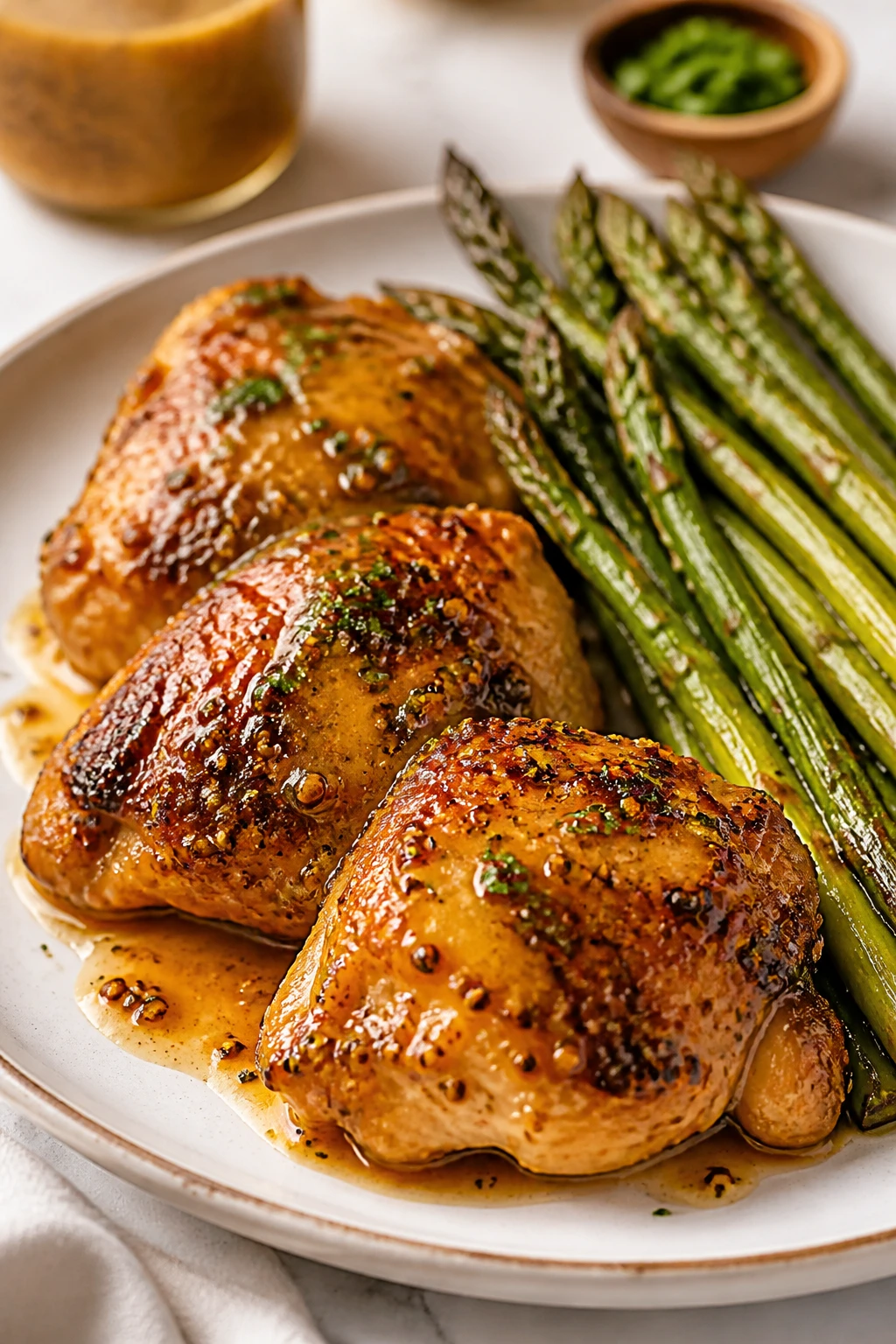
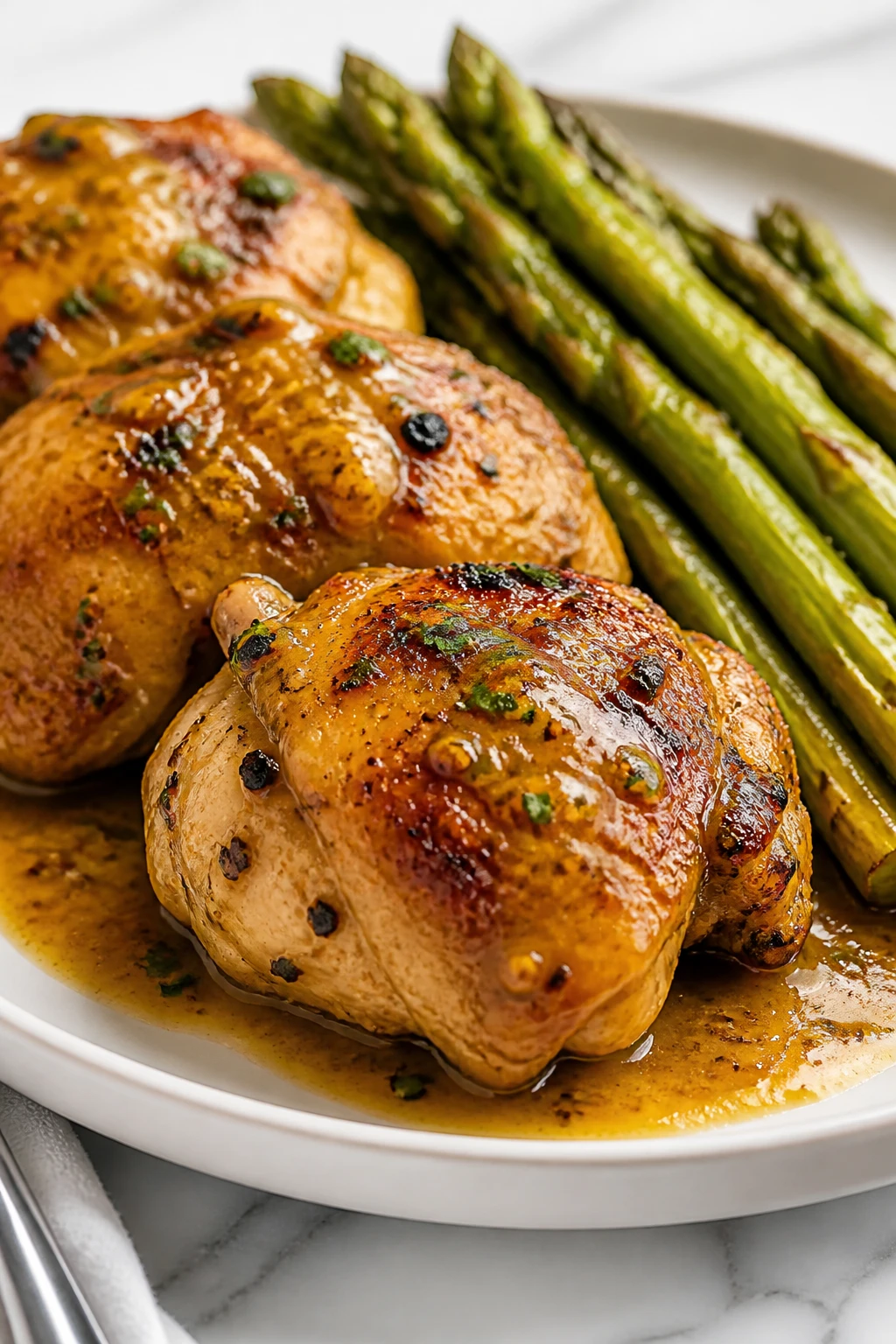
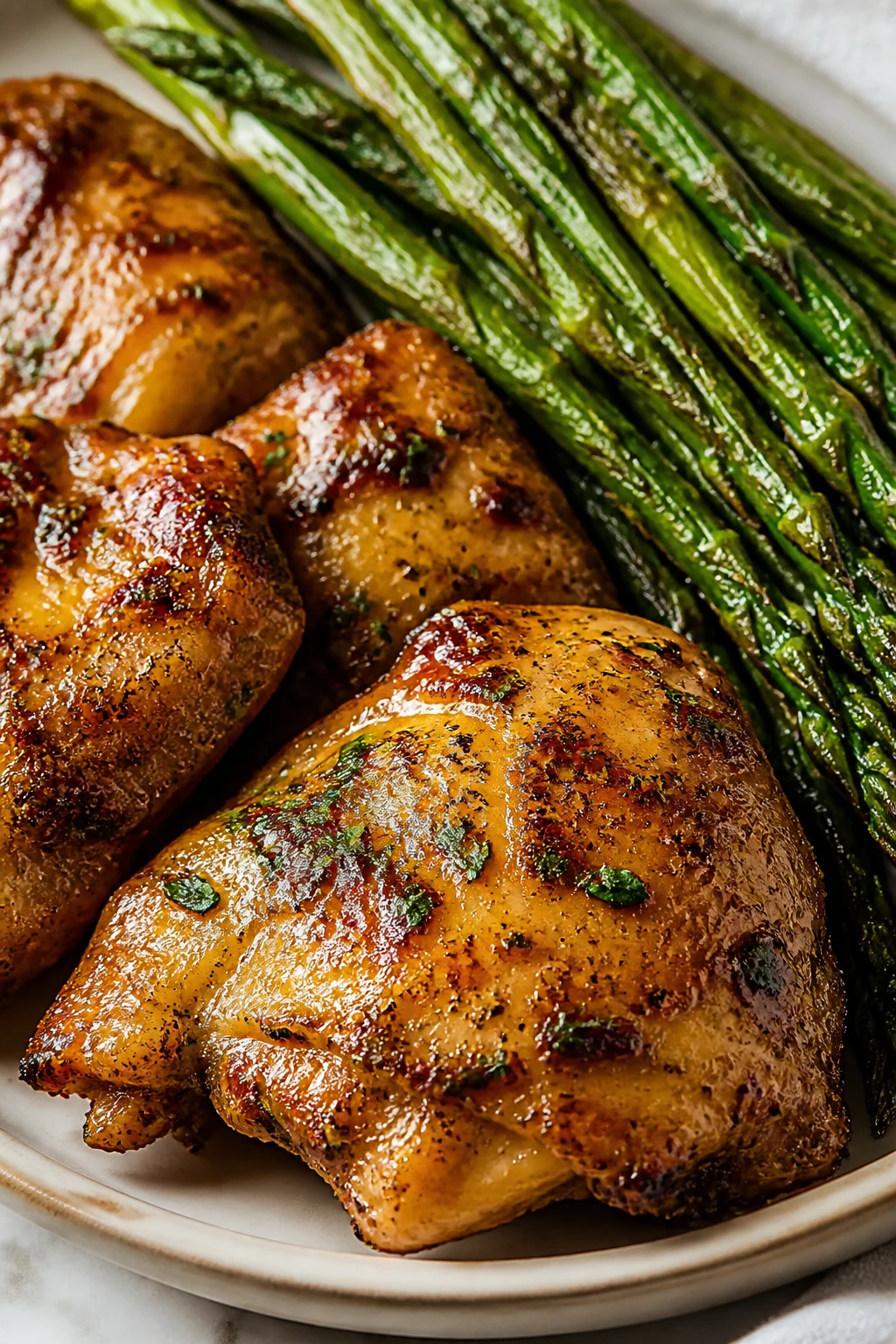
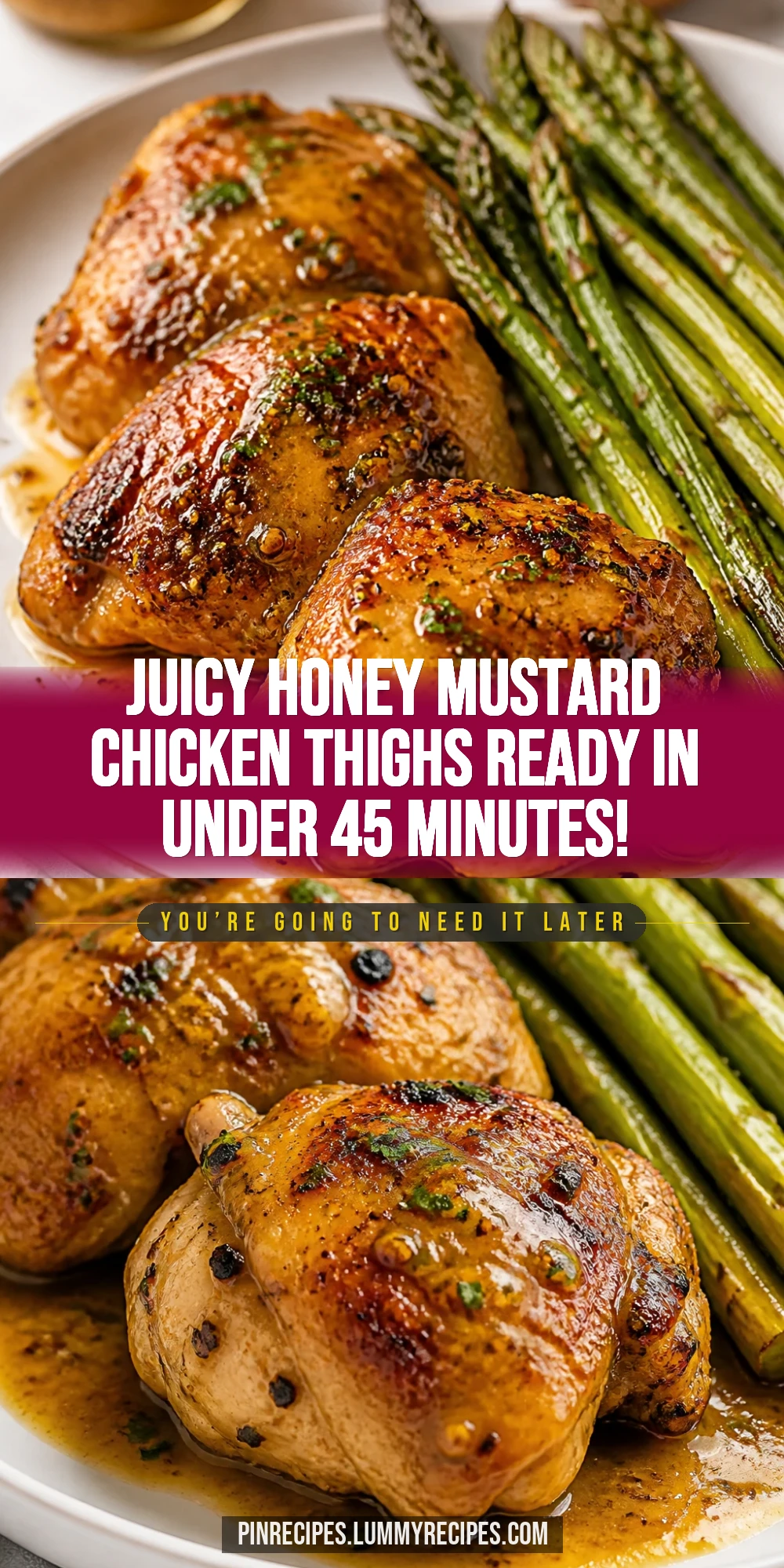
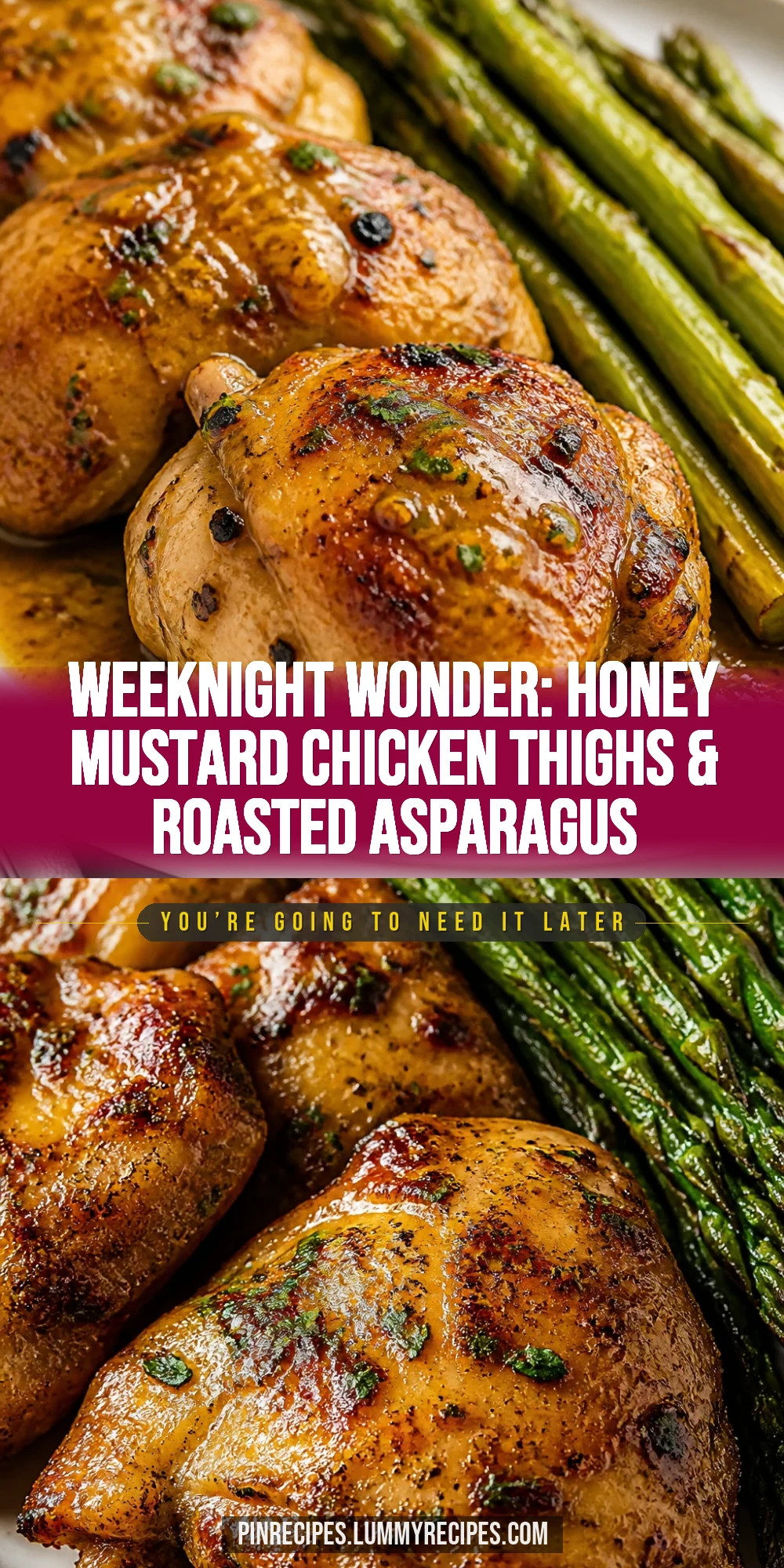
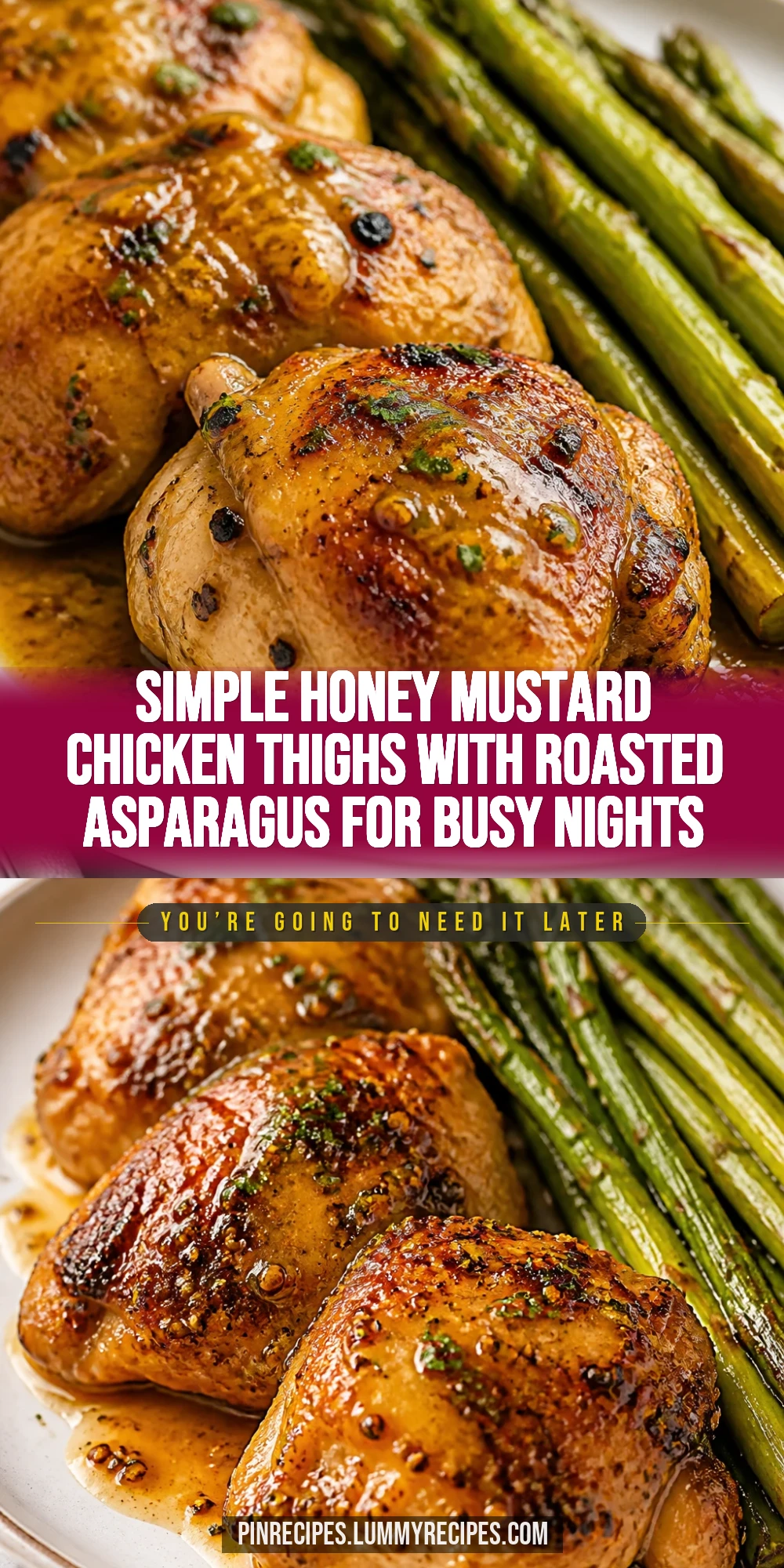
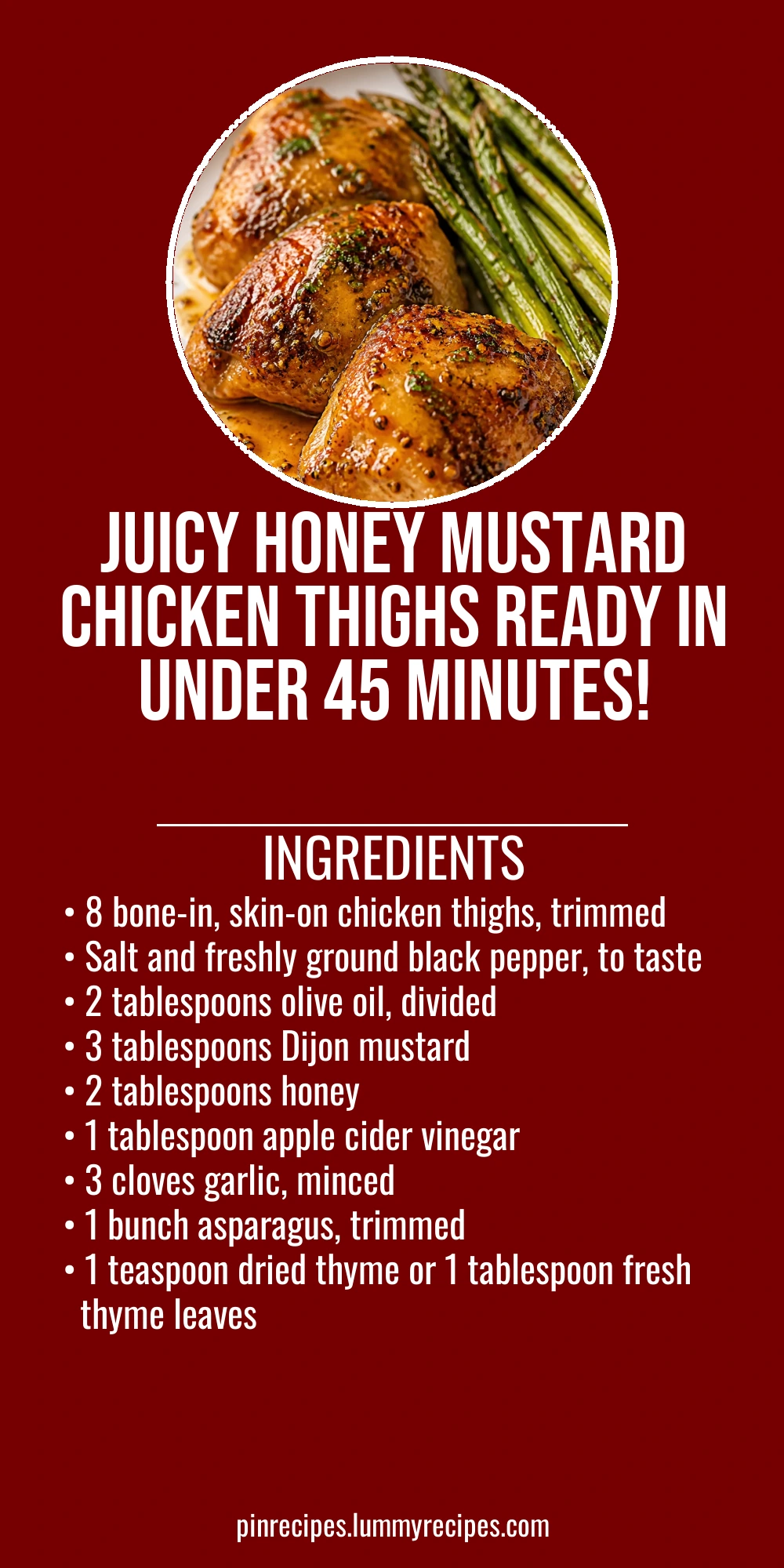
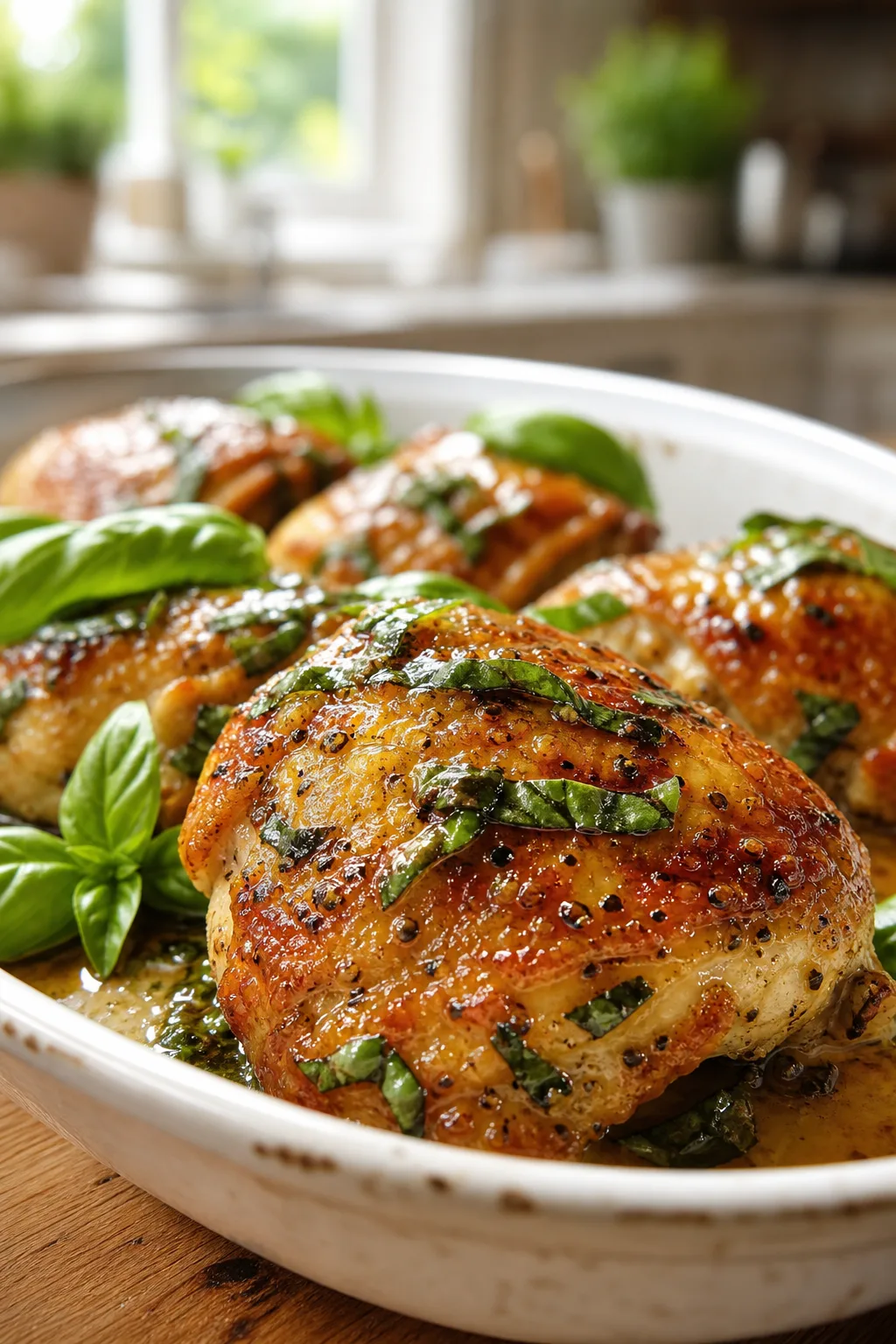
This dish is a weeknight lifesaver—juicy chicken thighs glazed in a tangy honey mustard sauce paired with perfectly roasted asparagus. The honey adds a subtle sweetness that balances the mustard's kick. Ready in under 45 minutes, it's great for busy dinners!
Introduction
I first made these honey mustard chicken thighs on a hectic weeknight when I needed something quick but satisfying. The combo of honey and Dijon mustard creates this perfect balance of sweet and tangy that just clings to the crispy skin. What really sets this recipe apart is roasting the asparagus alongside the chicken in the same pan—it picks up all those lovely drippings and caramelizes beautifully. I’ve tried other versions before, but adding a splash of apple cider vinegar in the sauce really brightened the flavors and cut through the richness. The chicken comes out juicy with a golden crust, and the asparagus is tender but still has a nice bite. It’s one of those meals that feels a little fancy but is so simple to pull together, especially when you don’t want to spend hours in the kitchen. Plus, it’s a crowd-pleaser; my family always asks for seconds. If you’re looking for a fuss-free dinner that’s packed with flavor and comes together quickly, this recipe is a keeper.
How To Do It
Step 1
Preheat your oven to 425°F (220°C). Pat the chicken thighs dry with paper towels—this step is crucial because dry skin crisps up much better in the oven. Season both sides generously with salt and pepper. Dry skin also helps the honey mustard glaze stick better later on, so don’t skip this.
⏱ Time: 10 minutes
✓ Doneness: Chicken skin looks dry and matte before cooking, not wet or damp
Step 2
Heat 1 tablespoon of olive oil in a large oven-safe skillet over medium-high heat. Once shimmering, place chicken thighs skin-side down and sear without moving them for about 5-7 minutes until the skin is golden brown and crispy. This step locks in juices and creates a flavorful crust. Avoid flipping too soon or the skin might stick and tear.
⏱ Time: 7 minutes
✓ Doneness: Skin is deep golden brown and releases easily from the pan
Step 3
Flip the chicken thighs over and cook the other side for 3 minutes. Remove the pan from heat. This partial cooking ensures the chicken finishes evenly in the oven without drying out.
⏱ Time: 3 minutes
✓ Doneness: Chicken is lightly browned on the underside but not fully cooked
Step 4
In a small bowl, whisk together Dijon mustard, honey, apple cider vinegar, minced garlic, and remaining 1 tablespoon olive oil. This sauce balances sweetness, acidity, and savory notes for a complex glaze. The vinegar also helps tenderize the chicken slightly.
⏱ Time: 5 minutes
✓ Doneness: Sauce is smooth and well combined with no separation
Step 5
Brush the honey mustard sauce generously over the chicken thighs, making sure to coat the skin and sides. This glaze will caramelize in the oven, creating a sticky, flavorful crust.
⏱ Time: 3 minutes
✓ Doneness: Chicken is evenly coated with a glossy layer of sauce
Step 6
Arrange the trimmed asparagus around the chicken in the skillet. Toss asparagus with dried thyme, a pinch of salt, and a drizzle of olive oil. The asparagus will roast in the chicken drippings, absorbing flavor and roasting to tender-crisp perfection.
⏱ Time: 5 minutes
✓ Doneness: Asparagus is coated lightly and spread out evenly around chicken
Step 7
Transfer the skillet to the preheated oven and roast for 20-25 minutes, or until the chicken reaches an internal temperature of 165°F (74°C) and the asparagus is tender but still crisp. Roasting at high heat caramelizes the glaze and cooks the veggies perfectly.
⏱ Time: 25 minutes
✓ Doneness: Chicken skin is caramelized and chicken juices run clear; asparagus is vibrant green and tender
Step 8
Remove the skillet from the oven and let the chicken rest for 5 minutes before serving. Resting allows the juices to redistribute, keeping the meat moist and tender.
⏱ Time: 5 minutes
✓ Doneness: Chicken feels slightly firm but juicy when pressed gently
Step 9
Serve the chicken thighs with the roasted asparagus on the side. Spoon any extra pan juices over the top for added flavor. This simple plating lets the star ingredients shine and keeps the meal light yet satisfying.
⏱ Time: 2 minutes
✓ Doneness: Dish looks glossy and vibrant, ready to enjoy
Pro Tips
Always pat chicken dry before seasoning.
Drying the skin removes excess moisture, which prevents steaming and helps the skin crisp up beautifully during searing. Wet skin will steam instead, resulting in soggy texture rather than the desired crunch.
Don’t overcrowd the pan when searing chicken.
Crowding traps moisture and lowers the pan’s temperature, preventing proper browning. Searing in batches or using a large skillet ensures each piece crisps evenly and develops rich flavor.
Use an oven-safe skillet for seamless stovetop-to-oven cooking.
This saves time and cleanup by allowing you to sear and roast in the same pan. Transferring to the oven directly also preserves the crispy skin and lets the glaze caramelize without disruption.
Trim asparagus ends before roasting.
Woody ends don’t soften well and can be unpleasant to eat. Snapping or cutting off the bottom inch or two ensures the asparagus cooks evenly and remains tender without toughness.
Apply the honey mustard glaze just before roasting.
Adding the glaze too early can cause it to burn during searing. Applying it before roasting allows the sugars in honey to caramelize gently, creating a sticky, flavorful crust.
Let chicken rest after roasting.
Resting redistributes juices inside the meat, making each bite juicy and tender. Cutting immediately causes juices to run out, resulting in drier chicken.
Use a meat thermometer to check doneness.
Chicken thighs can look done but still be undercooked inside. A thermometer ensures safe internal temperature (165°F) without overcooking, preserving juiciness.
Common Mistakes to Avoid
Skipping the sear step.
Why it happens Sometimes cooks want to save time and skip searing, thinking roasting alone is enough.
Fix Always sear chicken skin-side down first to render fat and crisp skin. This step adds flavor and texture that roasting alone can’t achieve.
Applying glaze too early.
Why it happens Some apply honey mustard sauce before searing, causing it to burn.
Fix Apply glaze only after searing and just before roasting to prevent burning and ensure caramelization.
Overcrowding the pan.
Why it happens Trying to cook everything at once in a small pan reduces heat and causes steaming.
Fix Use a large skillet or cook in batches to maintain high heat for proper browning.
Not trimming asparagus ends.
Why it happens Forgetting to trim can leave woody, tough parts in the dish.
Fix Snap or cut off the bottom 1-2 inches of asparagus before roasting for tender results.
Cutting chicken immediately after cooking.
Why it happens Impatience leads to cutting right away and losing juices.
Fix Let chicken rest 5 minutes after roasting to keep it juicy and tender.
Variations
Spicy Honey Mustard Chicken
Add a teaspoon of cayenne pepper or hot sauce to the honey mustard glaze for a spicy kick. This variation balances sweet, tangy, and heat for those who like a bit of fire. The asparagus can be tossed with chili flakes to complement the spice.
Note: Spices in the glaze may darken faster during roasting, so watch closely to avoid burning.
Lemon Herb Honey Mustard Chicken
Add fresh lemon juice and chopped herbs like rosemary or parsley to the glaze for a bright, fresh flavor. This variation lightens the dish and pairs beautifully with the roasted asparagus.
Note: Lemon juice can thin the glaze, so reduce other liquids slightly to maintain coating consistency.
Gluten-Free Honey Mustard Chicken
Use gluten-free Dijon mustard and ensure all other ingredients are gluten-free. This recipe is naturally gluten-free but double-check labels to keep it safe for sensitive diets.
Note: No texture or flavor changes expected; cooking times remain the same.
Honey Mustard Chicken with Roasted Potatoes
Swap asparagus for baby potatoes tossed in olive oil and thyme. Roast alongside chicken for a heartier meal with crispy potatoes soaking up the glaze.
Note: Potatoes require longer roasting; parboil them first to ensure they cook fully with the chicken.
Sheet Pan Honey Mustard Chicken and Veggies
Add carrots, bell peppers, or Brussels sprouts to the roasting pan for a colorful, veggie-packed dinner. This variation makes it easy to get a full meal on one pan.
Note: Cut veggies into uniform sizes to ensure even roasting with chicken thighs.
Nutrition
Per Serving:
Nutritional values are estimates and may vary based on specific ingredients used.
Storage & Tips
Room Temperature
This dish can safely sit out for up to 2 hours if covered loosely. Avoid leaving chicken out longer to prevent bacterial growth.
Refrigerator
Store leftovers in an airtight container for up to 3 days. The chicken may firm up and the asparagus soften when chilled; reheat gently to avoid drying out.
Freezer
Freeze cooked chicken and asparagus separately in airtight containers for up to 2 months. Wrap tightly with plastic wrap and foil to prevent freezer burn. Thaw overnight in the fridge before reheating.
Reheating
Reheat chicken and asparagus in a 350°F oven for 10-15 minutes until warmed through. Add a splash of water or chicken broth to keep chicken moist. Avoid microwaving directly as it can dry out the meat.
Make Ahead
Prepare the honey mustard glaze and trim asparagus 1 day ahead. Marinate chicken in the glaze overnight for extra flavor. Assemble and roast on the day you plan to serve for best texture.
FAQ
Can I use boneless chicken thighs instead of bone-in?
Yes, but boneless thighs cook faster and can dry out more easily. Reduce roasting time by about 5-7 minutes and watch closely to avoid overcooking. The flavor might be slightly less rich without the bone.
What can I substitute for apple cider vinegar?
You can use white wine vinegar or lemon juice as alternatives. Both provide acidity to balance the sweetness but may slightly alter the flavor profile. Avoid balsamic vinegar as it’s too sweet and dark.
How do I know when the chicken is fully cooked?
The safest way is to use a meat thermometer; chicken thighs are done at 165°F (74°C) internal temperature. The juices should run clear when pierced, and the meat should feel firm but springy.
Can I make this recipe gluten-free?
Absolutely! Just ensure your Dijon mustard and any other packaged ingredients are labeled gluten-free. This recipe naturally avoids gluten-containing ingredients otherwise.
How do I prevent the honey mustard glaze from burning?
Apply the glaze after searing and roast at a high temperature for a shorter time to caramelize without burning. Keep an eye during roasting and tent with foil if it browns too quickly.
Can I use frozen asparagus?
Frozen asparagus tends to be softer and releases more moisture, which can affect roasting. If using frozen, thaw and pat dry thoroughly before roasting to avoid sogginess.
What sides go well with this dish?
Roasted potatoes, rice, or a simple green salad complement the chicken and asparagus well. You can also serve with crusty bread to soak up the glaze.
Is it okay to marinate the chicken in the glaze ahead of time?
Yes, marinating for a few hours or overnight enhances flavor and tenderness. Just reserve some fresh glaze for brushing before roasting to maintain that sticky finish.
Final Thoughts
Give this honey mustard chicken and roasted asparagus a try—you’ll love how quick and flavorful it is! Don’t forget to share your results; I’d love to hear how it turns out for you.