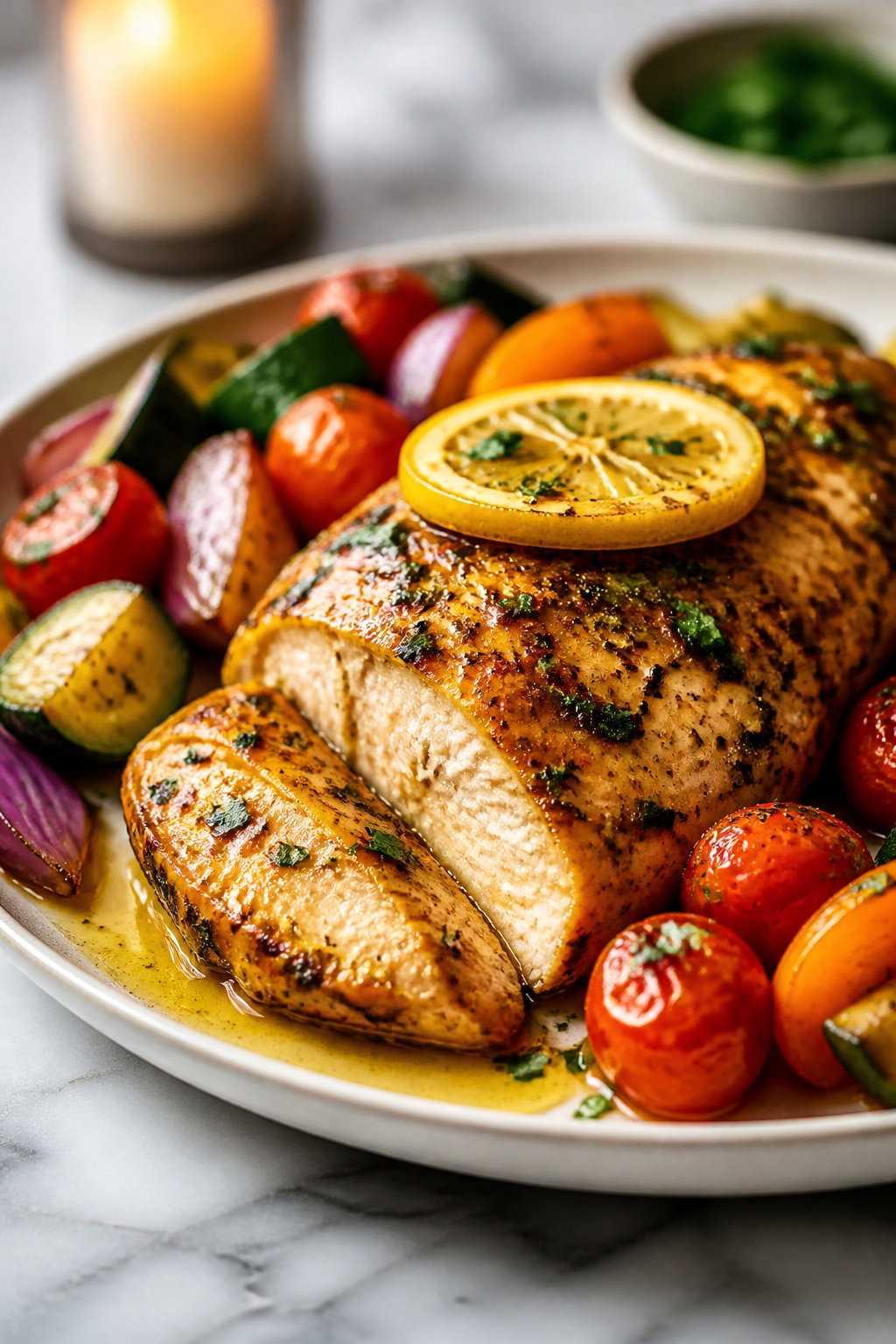
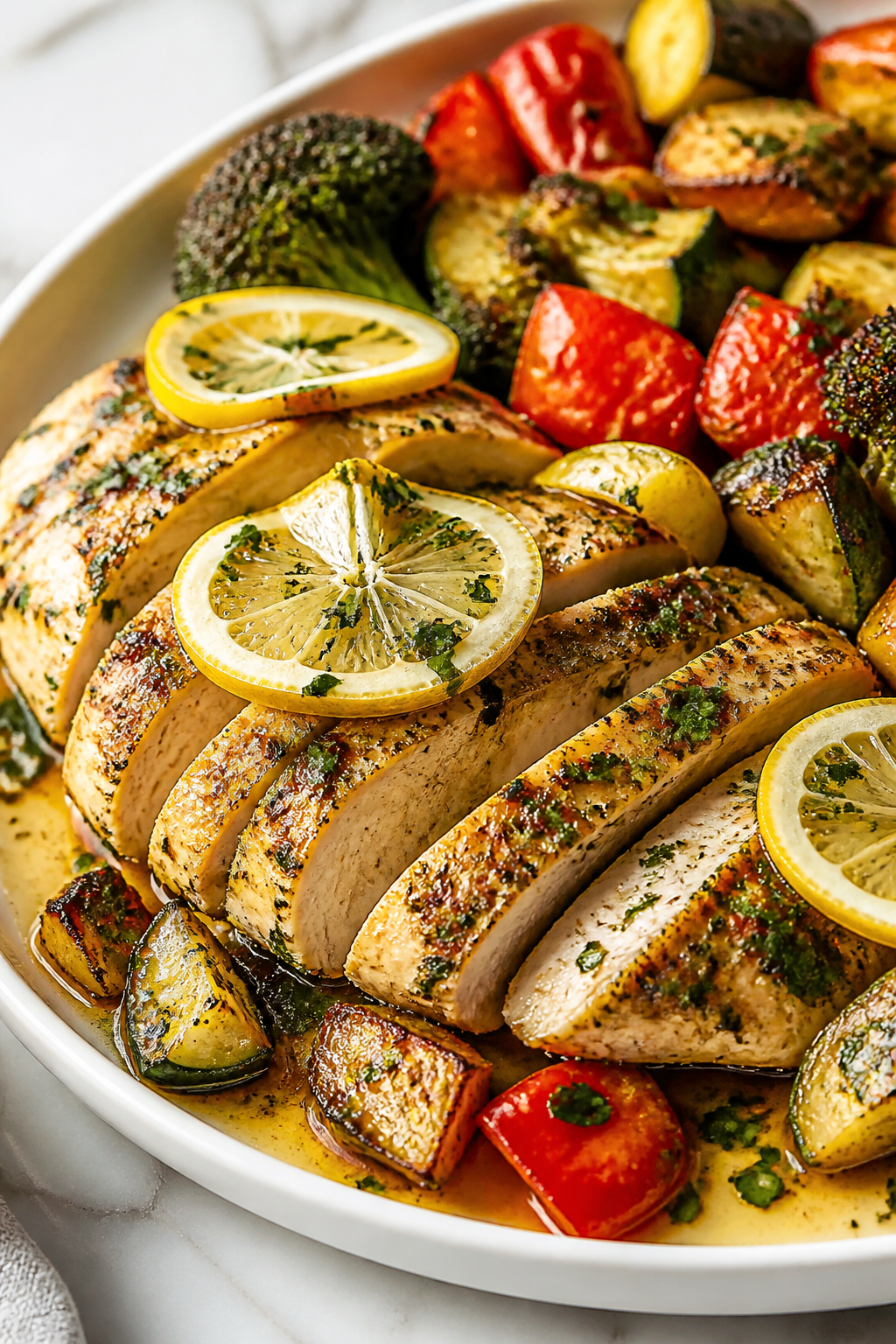
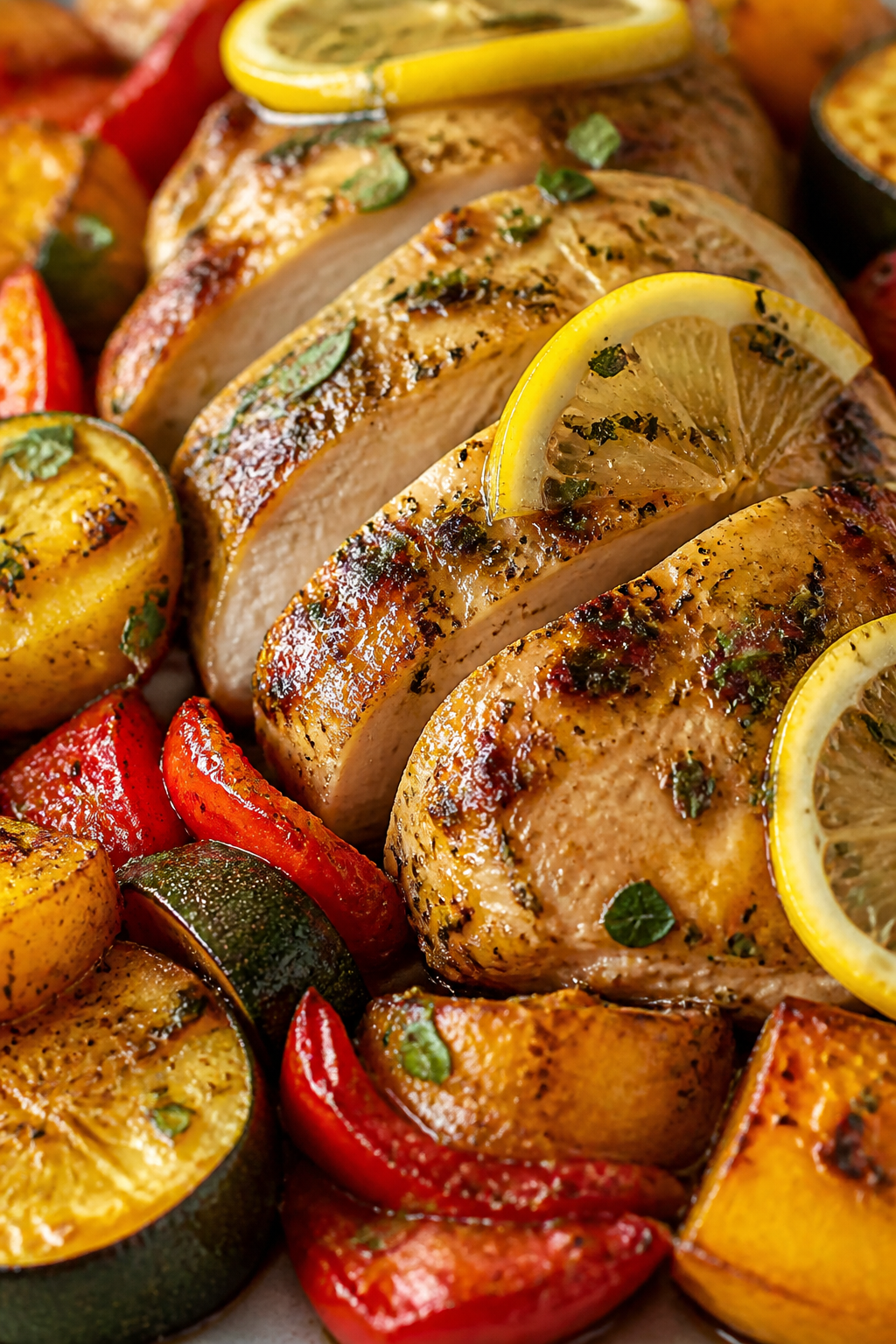
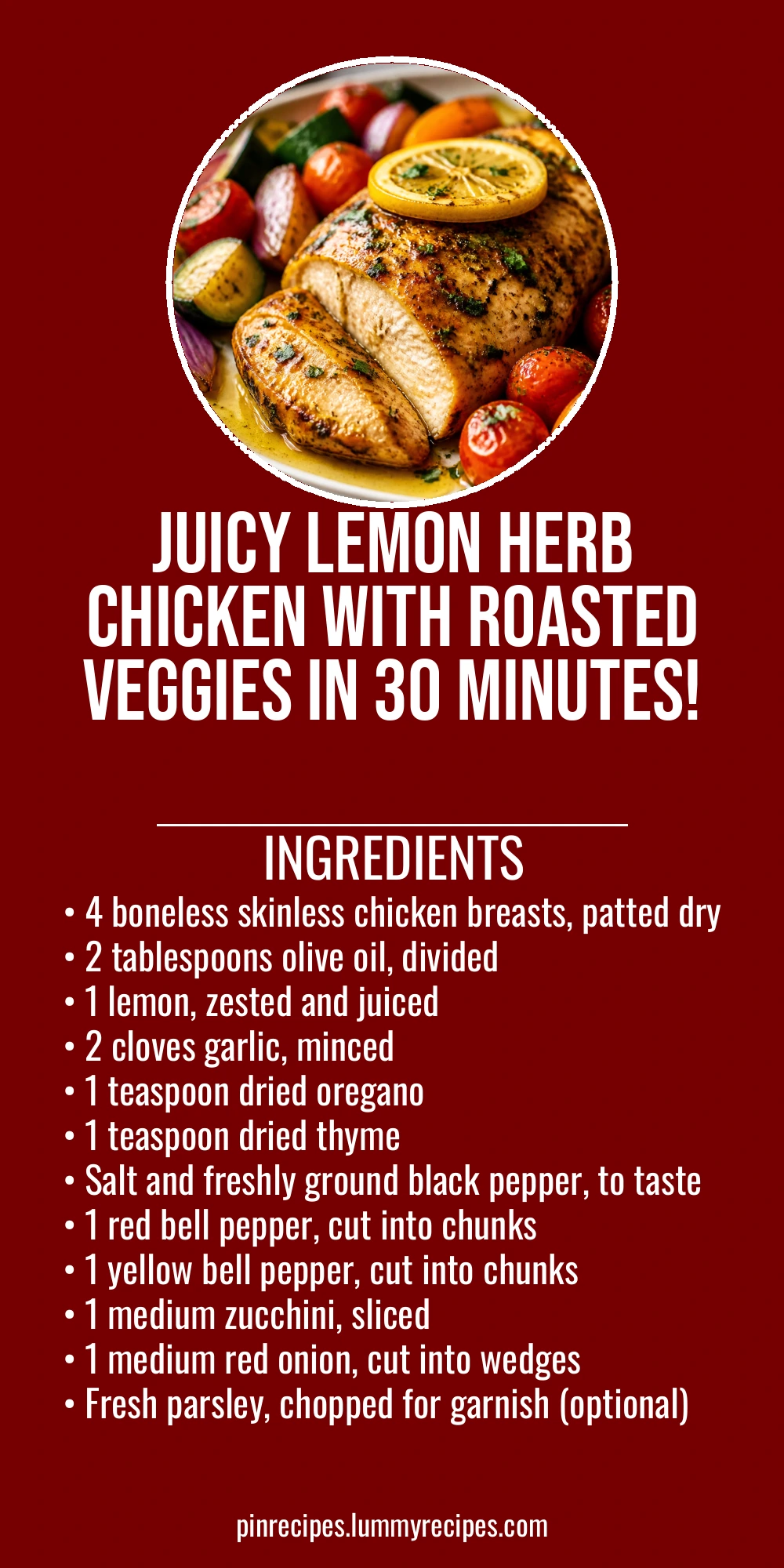
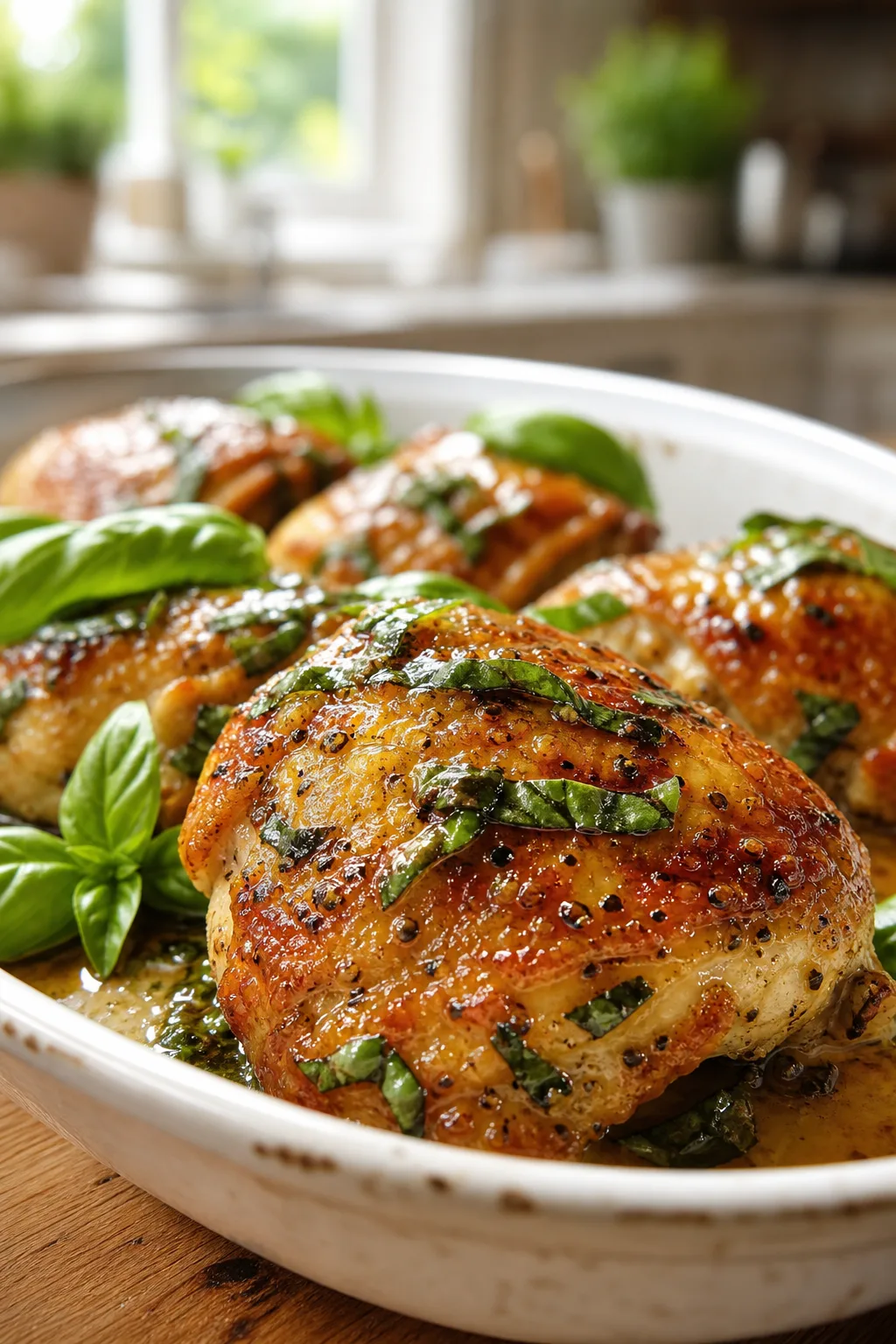
This lemon herb chicken breast is juicy and flavorful, paired perfectly with roasted veggies that get tender and caramelized. The fresh lemon zest and herbs brighten the dish, making it a great weeknight dinner that’s both easy and satisfying.
Introduction
I first made this Quick Lemon Herb Chicken Breast with Roasted Veggies on a hectic weeknight when I needed something fast but still flavorful. I’d tried a few lemon chicken recipes before, but they often ended up dry or bland. What makes this version different is the simple marinade of lemon zest, juice, garlic, and herbs that really packs a punch without needing hours to soak. Roasting the veggies alongside the chicken not only saves time but also brings out their natural sweetness and adds a lovely caramelized edge. I learned that patting the chicken dry before marinating and roasting helps get a better sear and juicier meat. The finished dish is bright, fresh, and comforting—a perfect balance that feels like a little celebration on your plate even after a long day. Plus, it’s easy to customize with whatever veggies you have on hand. I love how the lemon juice tenderizes the chicken while the herbs add that fresh garden flavor. It’s become a go-to in my kitchen when I want a wholesome meal without fussing over complicated steps or ingredients.
How To Do It
Step 1
Preheat your oven to 425°F (220°C). This high temperature is key to roasting the veggies and chicken quickly while getting a nice caramelization on the peppers and onions. Line a large baking sheet with parchment paper or lightly grease it to prevent sticking. Having a hot oven ensures the chicken stays juicy and the veggies get tender but still have a slight crisp edge.
⏱ Time: 10 minutes
✓ Doneness: Oven is fully preheated and baking sheet is ready.
Step 2
In a small bowl, whisk together 1 tablespoon olive oil, lemon zest, lemon juice, minced garlic, dried oregano, dried thyme, salt, and pepper. This marinade is simple but bright and flavorful. The acid from the lemon juice helps tenderize the chicken while the herbs infuse it with aromatic notes. Mixing the oil with lemon juice helps coat the chicken evenly and keeps it moist during roasting.
⏱ Time: 5 minutes
✓ Doneness: Marinade is well combined and aromatic.
Step 3
Pat the chicken breasts dry with paper towels. This step is crucial because moisture on the surface can steam the chicken instead of roasting it, resulting in less browning. Once dry, place the chicken in a shallow dish or zip-top bag and pour the marinade over it. Toss to coat evenly. Let the chicken marinate at room temperature for 10-15 minutes; this short time is enough to impart flavor without waiting hours.
⏱ Time: 15 minutes
✓ Doneness: Chicken is evenly coated and slightly glossy from marinade.
Step 4
While the chicken marinates, prepare your veggies. Toss the chopped bell peppers, zucchini, and red onion with the remaining tablespoon of olive oil and a pinch of salt and pepper. Spread them out in a single layer on the baking sheet, leaving space for the chicken breasts. This ensures even roasting and caramelization. Overcrowding the pan can cause steaming instead of roasting.
⏱ Time: 10 minutes
✓ Doneness: Veggies are evenly coated and spread out on the sheet.
Step 5
Place the marinated chicken breasts on the baking sheet alongside the veggies. Make sure they aren’t touching to allow hot air to circulate and cook evenly. The lemon juice in the marinade helps keep the chicken moist, but spacing is still important to avoid steaming. Pop the baking sheet into the oven.
⏱ Time: 2 minutes
✓ Doneness: Chicken and veggies are arranged with space on the sheet.
Step 6
Roast everything in the oven for about 20-25 minutes. Halfway through, use tongs to flip the chicken breasts and stir the veggies for even cooking. This step ensures the chicken browns nicely on both sides and the veggies caramelize without burning. Keep an eye on the veggies—they should be tender and lightly charred when done.
⏱ Time: 25 minutes
✓ Doneness: Chicken registers 165°F internally and veggies are tender with golden edges.
Step 7
Once cooked, remove the chicken and veggies from the oven. Let the chicken rest for 5 minutes before slicing; this allows the juices to redistribute, keeping it juicy. Resting is a simple step that makes a big difference in texture. The veggies will continue to soften slightly off the heat but should still have some bite.
⏱ Time: 5 minutes
✓ Doneness: Chicken is firm but juicy; veggies are tender and caramelized.
Step 8
Slice the chicken breasts against the grain to maximize tenderness. Arrange the slices on plates with the roasted veggies. Garnish with a sprinkle of fresh parsley if you like for a pop of color and freshness. Serving immediately ensures the best texture and flavor.
⏱ Time: 5 minutes
✓ Doneness: Chicken slices are tender and veggies look vibrant.
Step 9
Optional: Drizzle any pan juices over the chicken and veggies for extra flavor. These juices carry the concentrated lemon and herb notes from roasting and add moisture. If you want, squeeze a bit more fresh lemon over the top just before serving for an extra zing. Enjoy your quick, fresh, and satisfying meal!
⏱ Time: 2 minutes
✓ Doneness: Dish is glossy with juices and ready to eat.
Pro Tips
Pat chicken breasts dry before marinating.
Removing surface moisture helps the chicken brown properly instead of steaming. This step is essential for developing a flavorful crust during roasting and locking in juices.
Marinate the chicken for at least 10 minutes at room temperature.
Allowing the chicken to sit in the marinade at room temperature enhances flavor absorption and helps it cook evenly. Marinating too long or in the fridge can sometimes make the texture mushy due to acid breakdown.
Don’t overcrowd the baking sheet.
Giving space between chicken and veggies allows hot air to circulate for even roasting and caramelization. Crowding traps steam, resulting in soggy veggies and less browning on the chicken.
Flip chicken and stir veggies halfway through cooking.
Turning the chicken ensures both sides get a golden crust. Stirring the veggies promotes even caramelization and prevents burning on one side.
Let chicken rest after roasting before slicing.
Resting allows juices to redistribute throughout the meat, making the chicken juicier and more tender when cut.
Use fresh herbs and lemon zest for maximum flavor.
Fresh ingredients add brightness and aromatic complexity that dried or bottled alternatives can’t match, elevating the overall taste.
Preheat your oven fully before roasting.
A hot oven jumpstarts the Maillard reaction, giving the chicken and veggies a nice sear and caramelization, which enhances flavor and texture.
Common Mistakes to Avoid
Skipping patting the chicken dry before marinating.
Why it happens Many cooks assume marinating alone is enough for flavor and moisture, overlooking how moisture affects browning.
Fix Always pat the chicken dry with paper towels before adding the marinade. This removes excess moisture that would steam the chicken instead of roasting it, ensuring a flavorful crust and juicy interior.
Overcrowding the baking sheet with veggies and chicken.
Why it happens Trying to fit everything on one pan to save time can backfire by trapping steam.
Fix Use a large enough baking sheet or roast in batches so ingredients aren’t touching. This promotes even roasting and caramelization instead of soggy veggies and pale chicken.
Not flipping chicken or stirring veggies halfway through cooking.
Why it happens Forgetting or rushing the cook time can lead to uneven cooking.
Fix Set a timer to remind yourself to flip the chicken and stir the veggies. This ensures all sides brown evenly and prevents burning or undercooked spots.
Cutting into chicken immediately after roasting.
Why it happens Impatience to serve can cause juices to spill out.
Fix Let the chicken rest for 5 minutes after roasting. This step lets juices redistribute, resulting in moist, tender slices.
Using bottled lemon juice without zest.
Why it happens Convenience often leads to skipping zest, but it’s a key flavor component.
Fix Always zest the lemon before juicing. The zest contains essential oils that add bright, fresh flavor that juice alone can’t provide.
Variations
Spicy Lemon Herb Chicken
Add a pinch of red pepper flakes to the marinade for a subtle kick. You can also toss the veggies with smoked paprika for a smoky depth. This variation adds warmth without overpowering the fresh lemon and herbs.
Note: Monitor the roasting time closely as the spices can darken quickly; stir veggies halfway to avoid burning.
Mediterranean Style
Include kalamata olives, cherry tomatoes, and a sprinkle of feta cheese after roasting. Swap oregano for fresh rosemary. This gives the dish a tangy, salty Mediterranean twist with a richer flavor profile.
Note: Add delicate ingredients like feta and tomatoes after roasting to prevent them from drying out or melting too much.
Garlic Butter Chicken
After roasting, brush the chicken with melted garlic butter and sprinkle with fresh parsley. This adds richness and a luscious finish that complements the lemon and herbs beautifully.
Note: Use unsalted butter to control salt levels and add it right after resting the chicken for maximum flavor impact.
Sheet Pan Chicken with Root Vegetables
Swap bell peppers and zucchini for carrots, sweet potatoes, and parsnips. These hearty veggies roast beautifully and add natural sweetness, making the dish perfect for cooler months.
Note: Root vegetables may require a slightly longer roasting time; cut them smaller or parboil briefly to ensure tenderness.
Herb-Marinated Grilled Chicken
Instead of roasting, marinate the chicken as usual and grill it over medium-high heat. Serve with grilled veggies for a smoky flavor. This method adds a charred complexity that’s great for summer meals.
Note: Watch the grill closely to prevent flare-ups and overcooking; use a meat thermometer to check doneness.
Nutrition
Per Serving:
Nutritional values are estimates and may vary based on specific ingredients used.
Storage & Tips
Room Temperature
You can keep leftovers at room temperature for up to 2 hours covered loosely with foil or a clean towel. Beyond that, bacteria growth increases and it’s safer to refrigerate promptly.
Refrigerator
Store leftovers in an airtight container for up to 3 days. The chicken may firm up slightly when cold but reheating gently restores moisture. Veggies might lose some crispness but remain tasty.
Freezer
Freeze cooked chicken and veggies in a sealed container or heavy-duty freezer bag for up to 2 months. Wrap tightly to prevent freezer burn. Thaw overnight in the fridge before reheating for best texture.
Reheating
Reheat gently in a skillet over medium-low heat with a splash of water or broth to keep chicken moist. Alternatively, microwave covered in short bursts. Avoid high heat which can dry out the meat.
Make Ahead
You can marinate the chicken up to 24 hours ahead and store it covered in the fridge. Chop veggies and store separately. On the day of cooking, arrange on the baking sheet and roast as directed for fresh flavor and texture.
FAQ
Can I use chicken thighs instead of breasts?
Absolutely! Chicken thighs are juicier and more forgiving if slightly overcooked. Adjust roasting time to about 30-35 minutes depending on size. Thighs also pair beautifully with lemon and herbs, offering a richer flavor.
What if I don’t have dried herbs?
You can use fresh herbs like thyme and oregano, but reduce the quantity by about half since fresh herbs are more potent. Alternatively, a simple mix of garlic and lemon zest still creates great flavor.
How do I know when the chicken is fully cooked?
The safest way is to use a meat thermometer inserted into the thickest part of the chicken; it should read 165°F (74°C). The juices should run clear, and the meat should feel firm but not hard.
Can I roast the chicken and veggies separately?
Yes, if you want to control cooking times more precisely. Veggies may roast faster or slower depending on type, so cooking separately lets you remove them when perfectly tender without overcooking the chicken.
What vegetables work best with this recipe?
Bell peppers, zucchini, red onion, carrots, and cherry tomatoes all roast well and complement the lemon herb chicken. Choose veggies that cook at similar rates or cut them into sizes that match cooking time.
Is it okay to marinate the chicken overnight?
You can marinate overnight, but be cautious as too much acid can start to break down the chicken texture, making it mushy. For best texture, 1-2 hours or up to overnight in the fridge is ideal.
Can I skip the lemon juice and use vinegar instead?
While vinegar can tenderize, it has a sharper, more pungent flavor that changes the dish’s profile. Lemon juice provides brightness and subtle citrus notes that vinegar lacks, so it’s best to stick with lemon here.
How do I prevent the veggies from getting soggy?
Toss veggies in oil and spread them in a single layer with space between pieces. Roasting at a high temperature helps evaporate moisture quickly, creating caramelization instead of sogginess.
Final Thoughts
I hope you give this quick lemon herb chicken and roasted veggies a try—it’s a simple but flavorful dinner that always feels special. Let me know how it turns out and what veggies you paired it with!