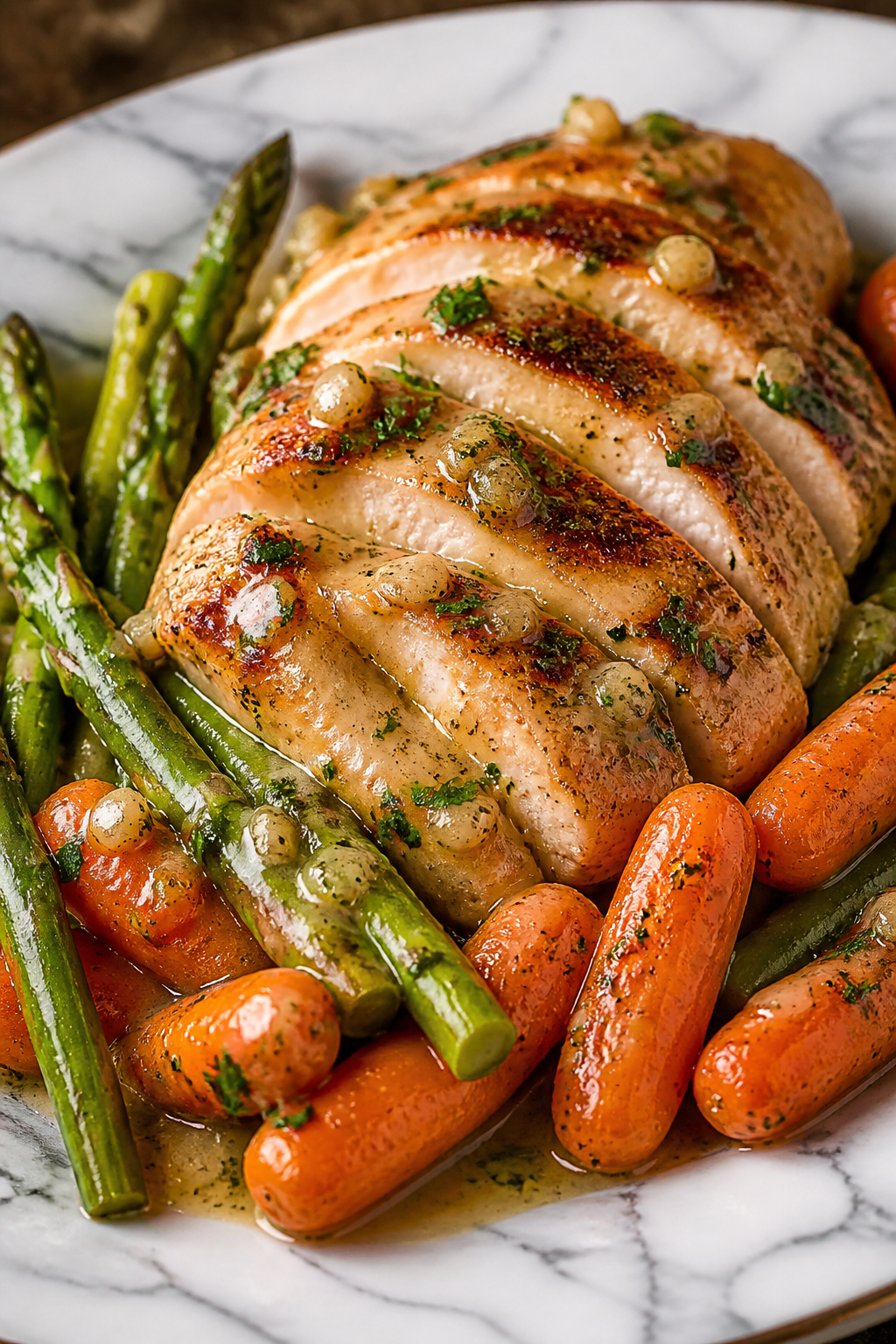
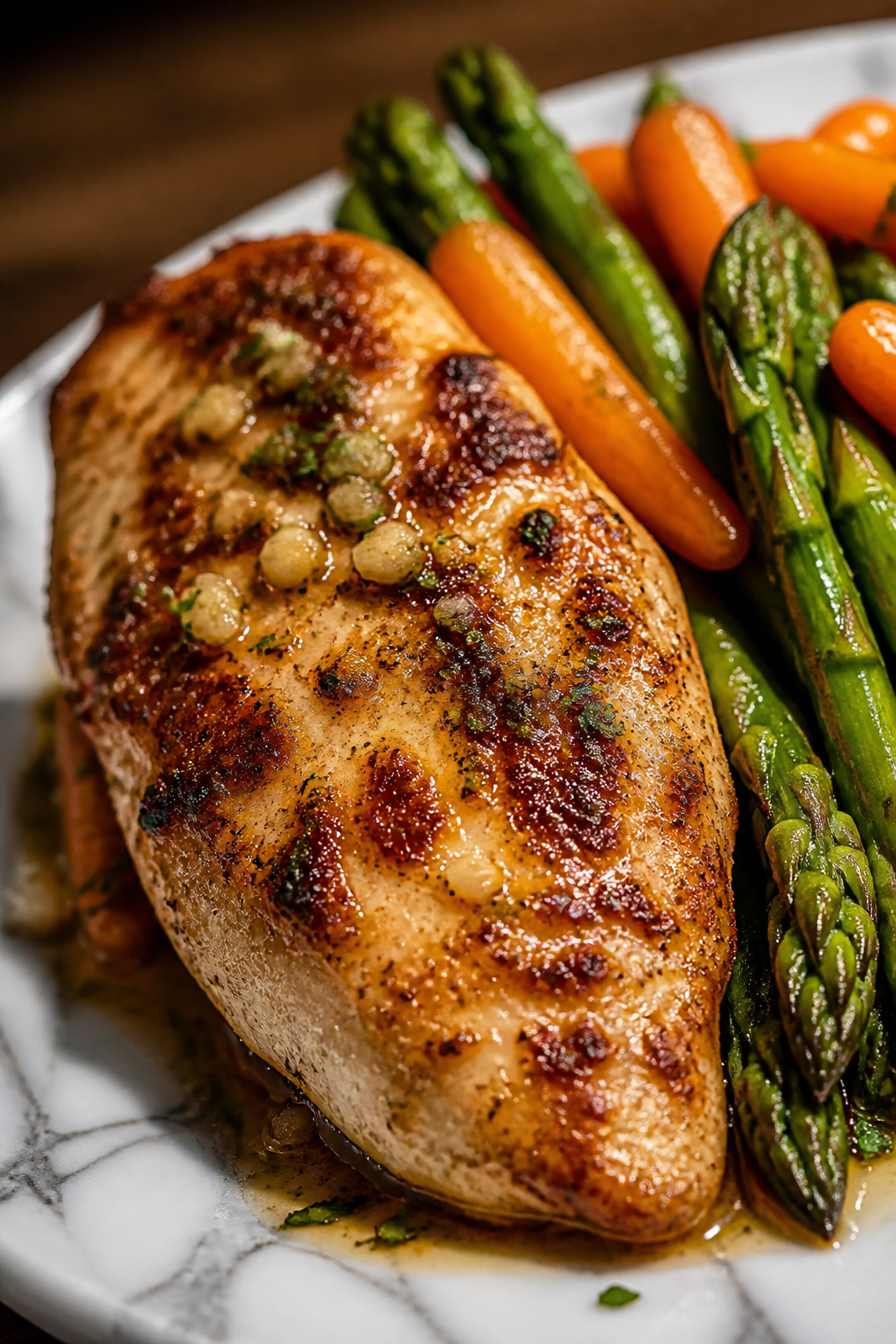
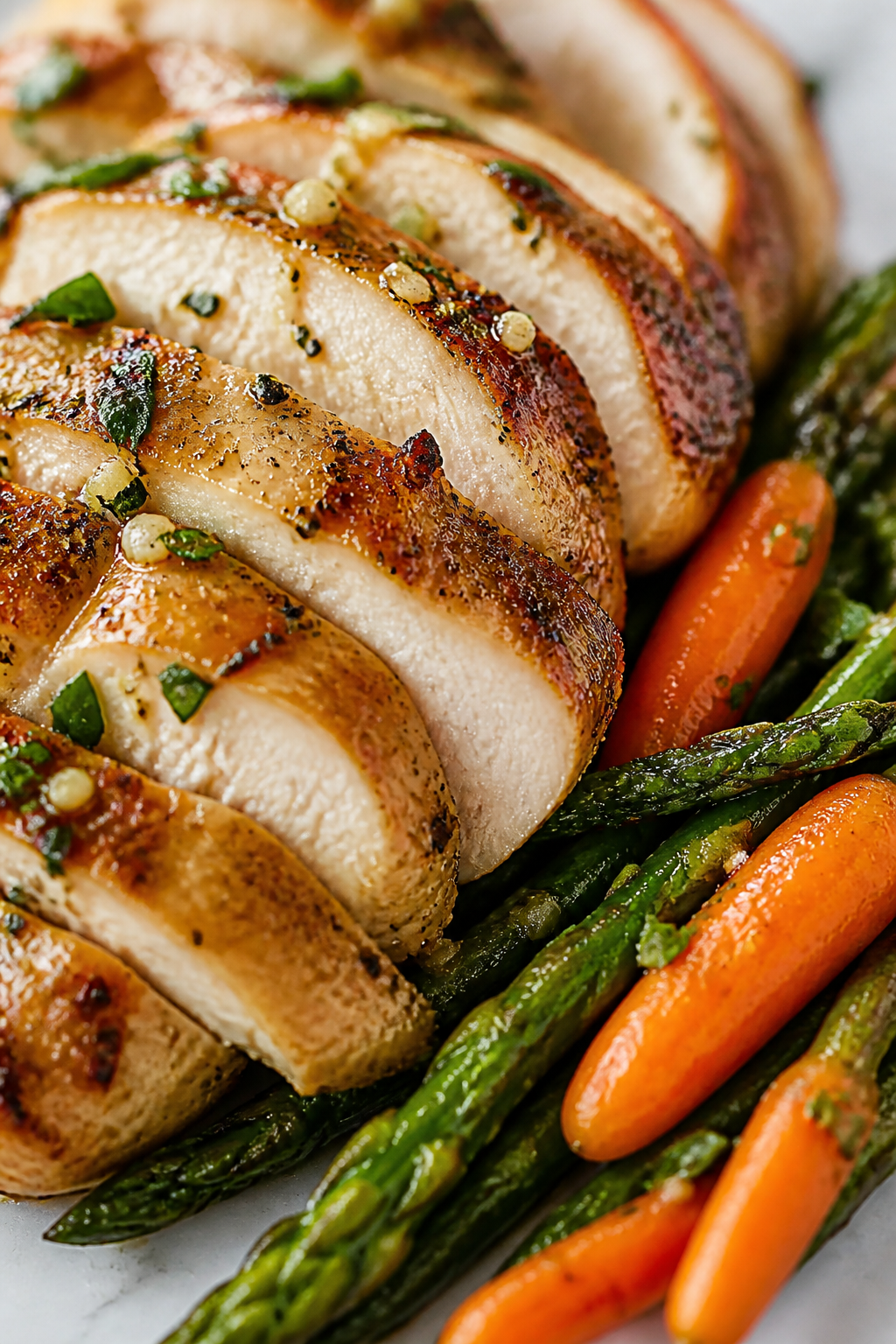
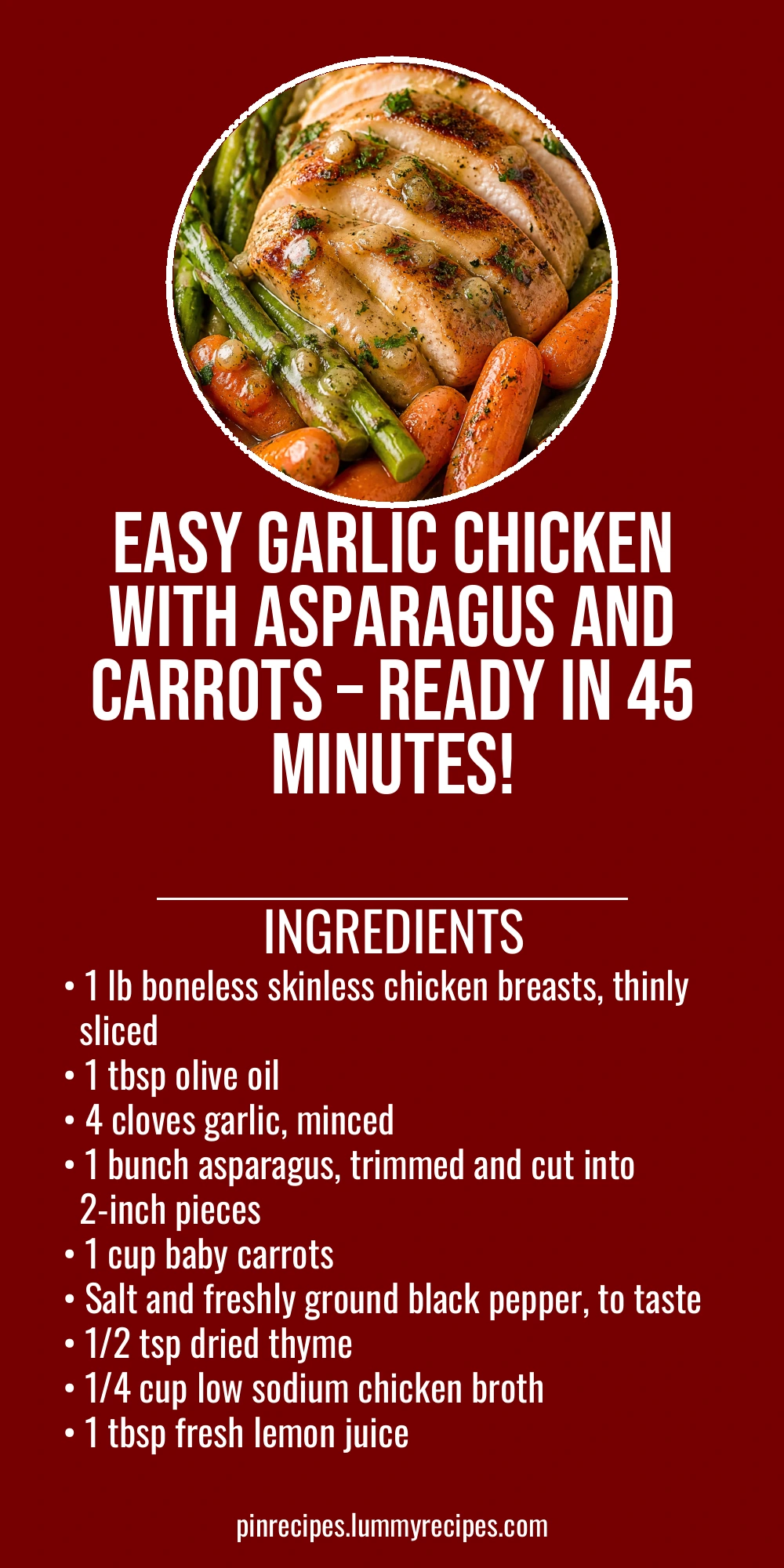
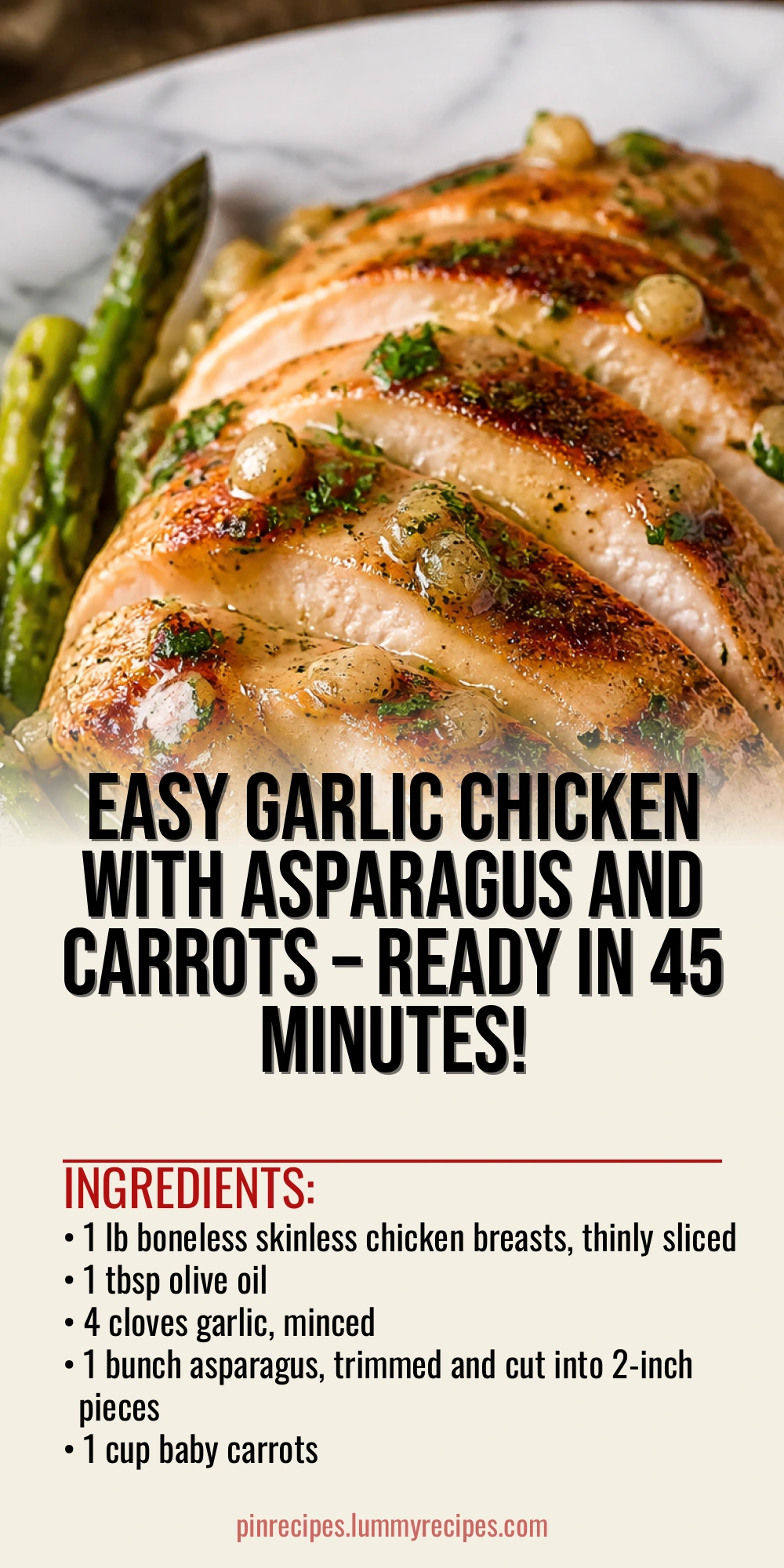
This light garlic chicken dish is perfect when you want something healthy but satisfying. The fresh asparagus and baby carrots add a sweet crunch, while the garlic gives it a cozy, homey flavor. Ready in just 45 minutes, great for weeknight dinners!
Introduction
I've been making this quick garlic chicken with asparagus and baby carrots for years now, especially when life gets hectic but I still want a wholesome dinner on the table. What I love about this dish is how simple it is—just a handful of fresh ingredients and minimal prep. The garlic really shines here, giving the chicken a warm, comforting flavor without overwhelming the lightness of the veggies. One trick I learned is to slice the chicken thinly so it cooks evenly and stays juicy, plus sautéing the garlic gently first helps it mellow and infuse the oil, which carries the flavor through the whole dish. The asparagus and baby carrots add a nice crunch and a touch of sweetness that balances the savory chicken perfectly. It’s a meal that feels fresh but still satisfies, and it’s great for those evenings when you don’t want to spend hours cooking. When it’s done, you’ll have tender chicken and crisp-tender veggies coated in a fragrant garlic sauce that’s just right—not too heavy, not bland. My family always asks for seconds, which tells me it’s a keeper. I think you’ll find it’s one of those easy weeknight dinners that feels like a treat without any fuss.
How To Do It
Step 1
Start by slicing the chicken breasts thinly against the grain. This helps the chicken cook quickly and stay tender. Heat the olive oil in a large skillet over medium heat. Once hot, add the minced garlic and sauté it gently for about 1-2 minutes until fragrant but not browned. This step is crucial because garlic burns quickly and turns bitter if overheated, so keep the heat moderate and stir constantly to release its aroma without burning.
⏱ Time: 5 minutes
✓ Doneness: Garlic is soft and fragrant, lightly golden but not dark brown
Step 2
Add the sliced chicken to the skillet in a single layer and season with salt, pepper, and dried thyme. Let it cook undisturbed for about 3-4 minutes to get a nice sear, then stir and cook for another 3-4 minutes until the chicken is just cooked through. Avoid overcrowding the pan to ensure the chicken browns instead of steams, which keeps it flavorful and juicy.
⏱ Time: 8 minutes
✓ Doneness: Chicken pieces are opaque, firm to the touch, and have a light golden crust
Step 3
Add the baby carrots and asparagus pieces to the skillet. Stir everything together and cook for 5 minutes, allowing the veggies to soften slightly but still retain their crunch. This timing keeps the carrots from becoming mushy and the asparagus bright green, which makes the dish more appealing both visually and texturally.
⏱ Time: 5 minutes
✓ Doneness: Veggies are tender-crisp and vibrant in color
Step 4
Pour in the chicken broth and lemon juice, then stir to combine. The broth adds moisture and helps create a light sauce, while the lemon juice brightens the overall flavor. Let the mixture simmer gently for 5-7 minutes to reduce the liquid slightly and let the flavors meld. Don’t rush this step or the sauce won’t develop its full flavor.
⏱ Time: 7 minutes
✓ Doneness: Sauce is slightly thickened and glossy, with a fresh citrus aroma
Step 5
Taste and adjust seasoning with more salt or pepper if needed. Then remove the skillet from the heat. The chicken should be tender and juicy, and the vegetables perfectly cooked but still crisp. Letting it rest for a minute or two off the heat helps the flavors settle before serving.
⏱ Time: 2 minutes
✓ Doneness: Dish tastes balanced with no overpowering garlic or acidity
Step 6
Serve the garlic chicken and veggies warm, spooning the sauce over the top. This dish goes great with a side of rice or crusty bread to soak up the flavorful juices. I like to garnish with a little fresh parsley or a lemon wedge for an extra pop of freshness.
⏱ Time: 1 minute
✓ Doneness: Dish looks vibrant and inviting on the plate
Step 7
For best results, use fresh garlic and trim the asparagus just before cooking. This keeps the flavors bright and the texture crisp. Avoid pre-chopping the garlic too far in advance to prevent bitterness.
⏱ Time: N/A
✓ Doneness: Fresh ingredients contribute to a lively flavor profile
Step 8
If you want to add a bit more depth, sprinkle a pinch of red pepper flakes when adding the chicken. It gives a subtle kick without overpowering the dish, perfect if you like a little heat.
⏱ Time: N/A
✓ Doneness: Slight warmth in flavor without spiciness overwhelming
Step 9
Clean your skillet promptly after cooking to prevent garlic residue from sticking and becoming bitter later. A quick soak with warm soapy water usually does the trick.
⏱ Time: N/A
✓ Doneness: Skillet is clean and ready for your next meal prep
Pro Tips
Slice chicken thinly against the grain for tender bites.
Cutting across the muscle fibers shortens them, making the chicken easier to chew and less likely to be tough after cooking. This simple technique improves texture significantly, especially for lean cuts like chicken breast.
Sauté garlic gently over medium heat to avoid bitterness.
Garlic contains sulfur compounds that turn bitter when burned. Cooking it slowly in oil releases its sweet, nutty flavors without scorching. This step lays a flavorful foundation for the whole dish.
Cook vegetables just until tender-crisp for best texture.
Overcooked veggies become mushy and lose nutrients. Timing is key to preserving their natural sweetness, color, and crunch, which adds contrast and appeal to the dish.
Use a splash of chicken broth to create a light sauce.
Adding broth helps deglaze the pan and lifts up browned bits, enriching the flavor without adding fat or heaviness. It also keeps the chicken moist and ties the ingredients together.
Add lemon juice at the end to brighten flavors.
Acidic ingredients like lemon juice lose their brightness if cooked too long. Adding it near the end preserves its fresh, zesty character, balancing the richness of the oil and chicken.
Avoid overcrowding the pan when cooking chicken.
Crowding traps steam and prevents browning, which leads to less flavor and a soggy texture. Cooking in batches or using a large skillet ensures a nice sear and juicier meat.
Rest the cooked chicken a few minutes before serving.
Letting the meat rest allows juices to redistribute, making each bite moist and flavorful rather than dry. It also helps the sauce thicken slightly for a better coating.
Common Mistakes to Avoid
Burning the garlic during sautéing
Why it happens Many cooks turn the heat too high or leave garlic unattended, causing it to brown quickly and develop a bitter taste that ruins the dish’s flavor.
Fix Cook garlic over medium heat and stir constantly for 1-2 minutes until fragrant and lightly golden. If garlic starts to brown too fast, lower the heat immediately to prevent bitterness.
Overcooking chicken breasts until dry
Why it happens Chicken breast is lean and can dry out quickly if cooked too long or at too high a temperature, especially if sliced thickly.
Fix Slice chicken thinly and cook just until opaque and firm. Use a meat thermometer if unsure; 165°F internal temperature is safe. Remove from heat promptly to avoid dryness.
Overcooking vegetables until mushy
Why it happens Leaving the veggies in the pan too long or cooking at too high heat causes them to lose texture, color, and flavor.
Fix Add asparagus and carrots at the right time and cook 5-7 minutes until tender-crisp. Test by piercing with a fork; they should offer slight resistance.
Skipping the broth or lemon juice
Why it happens Some may omit these thinking they’re optional, but without them, the dish can taste dry and flat.
Fix Don’t skip the broth and lemon juice; they add moisture and balance. Add them as directed and simmer to develop a light, flavorful sauce.
Overcrowding the pan when cooking chicken
Why it happens Trying to cook all chicken at once traps steam and prevents browning, leading to bland, rubbery meat.
Fix Cook chicken in batches if necessary, leaving space between pieces. This promotes even browning and juicier results.
Variations
Add Mushrooms and Spinach
For a heartier veggie boost, toss in sliced mushrooms and fresh spinach during the last few minutes of cooking. The mushrooms add earthiness while spinach wilts quickly, enriching the dish with nutrients and color.
Note: Add mushrooms earlier with the carrots to allow them to soften; add spinach last to prevent overcooking.
Spicy Garlic Chicken
If you like a little heat, sprinkle red pepper flakes when cooking the garlic or finish with a dash of hot sauce. This adds a nice warm kick without overpowering the garlic flavor.
Note: Start with a small amount of spice and adjust to taste to keep the balance harmonious.
Use Chicken Thighs Instead of Breasts
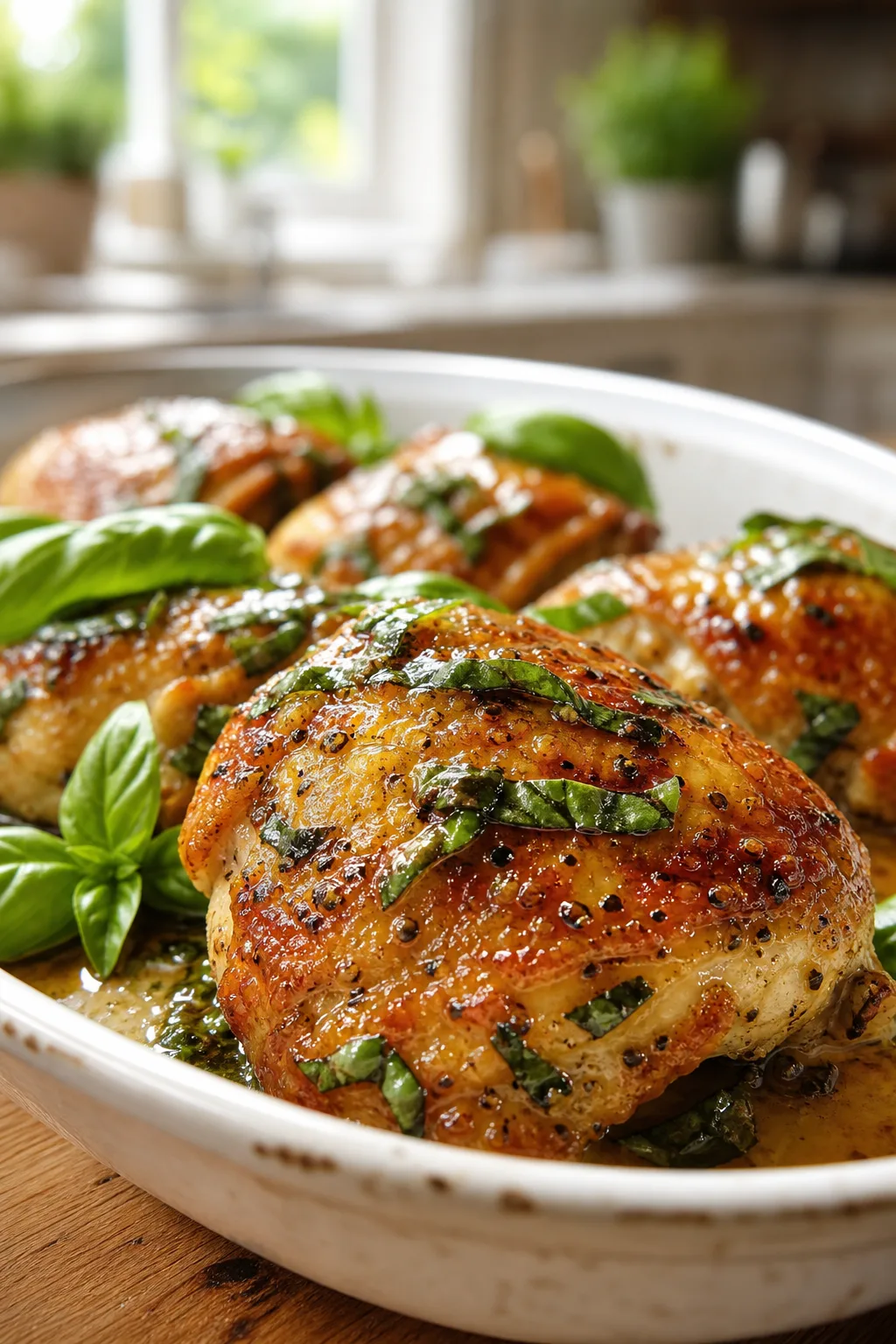
Swap chicken breasts for boneless skinless thighs for a juicier, more flavorful result. Thighs are forgiving and stay tender even if slightly overcooked.
Note: Adjust cooking time slightly as thighs take a bit longer to cook through.
Serve Over Quinoa or Cauliflower Rice
For a low-carb or gluten-free option, serve the chicken and veggies over cauliflower rice or cooked quinoa. This adds texture and makes the meal more filling.
Note: Prepare grains separately and plate chicken and veggies on top to keep textures distinct.
Lemon Herb Variation
Enhance the lemon flavor by adding fresh chopped parsley and a little rosemary or oregano along with the thyme. This herb combo brightens the dish and gives it a fresh garden taste.
Note: Add fresh herbs at the end of cooking to preserve their bright flavors.
Nutrition
Per Serving:
Nutritional values are estimates and may vary based on specific ingredients used.
Storage & Tips
Room Temperature
This dish can safely sit at room temperature for up to 2 hours when covered. Beyond that, bacteria growth increases, so it’s best to refrigerate promptly after serving.
Refrigerator
Store leftovers in an airtight container in the fridge for up to 3 days. The chicken may firm up slightly, and vegetables soften, but reheating gently restores moisture. Serve warm for best flavor.
Freezer
Freeze in airtight containers or heavy-duty freezer bags for up to 2 months. To prevent freezer burn, remove as much air as possible before sealing. Thaw overnight in the fridge before reheating.
Reheating
Reheat gently on the stovetop over low heat with a splash of chicken broth or water to keep the sauce from drying out. Microwaving on medium power works too but stir halfway through to heat evenly. Avoid overheating to prevent drying.
Make Ahead
You can slice the chicken and prep the vegetables 1 day ahead. Store them separately in the fridge. Cook the dish fresh on the day of serving for best texture and flavor.
FAQ
Can I use frozen chicken for this recipe?
It's best to use fresh chicken breasts for this recipe because frozen chicken tends to release extra water when cooked, which can make the dish watery and affect texture. If using frozen, thaw completely and pat dry before slicing and cooking to reduce excess moisture.
What can I substitute for asparagus if I don’t like it?
Green beans or broccoli florets make great substitutes. They have similar cooking times and textures, providing that fresh crunch. Just adjust cooking slightly to ensure they don’t overcook and become mushy.
How do I prevent the chicken from drying out?
Slicing the chicken thinly and cooking it just until opaque helps keep it tender. Also, avoid overcooking by watching closely and removing from heat as soon as it’s done. Resting the chicken briefly after cooking helps juices redistribute.
Can I make this recipe vegetarian?
You can swap the chicken for firm tofu or tempeh and use vegetable broth instead of chicken broth. Sauté the tofu carefully to get a golden crust, then add the veggies and broth as usual. The garlic and lemon will still provide great flavor.
Is it okay to add more garlic if I love it?
Absolutely! Garlic is the star here, so feel free to increase it to your taste. Just be mindful not to burn it during cooking to avoid bitterness. Adding extra minced garlic near the end of cooking can also boost flavor safely.
What’s the best way to reheat leftovers?
Reheat on the stovetop over low heat with a splash of broth or water to keep it moist. Stir occasionally until warmed through. Avoid high heat or microwave reheating without stirring, which can dry out the chicken and veggies.
Can I prepare this dish ahead of time?
You can prep the chicken and veggies a day ahead, but it’s best to cook the dish fresh for optimal texture and flavor. If you make it ahead, store components separately and combine when reheating.
How do I make this dish spicier?
Add red pepper flakes or a dash of hot sauce when cooking the chicken. Start with a small amount and adjust to your heat preference. This adds a nice warmth without overpowering the garlic and lemon flavors.
Final Thoughts
Give this quick garlic chicken with asparagus and baby carrots a try—you’ll love how easy and flavorful it is. Don’t forget to share how it turns out for your family!