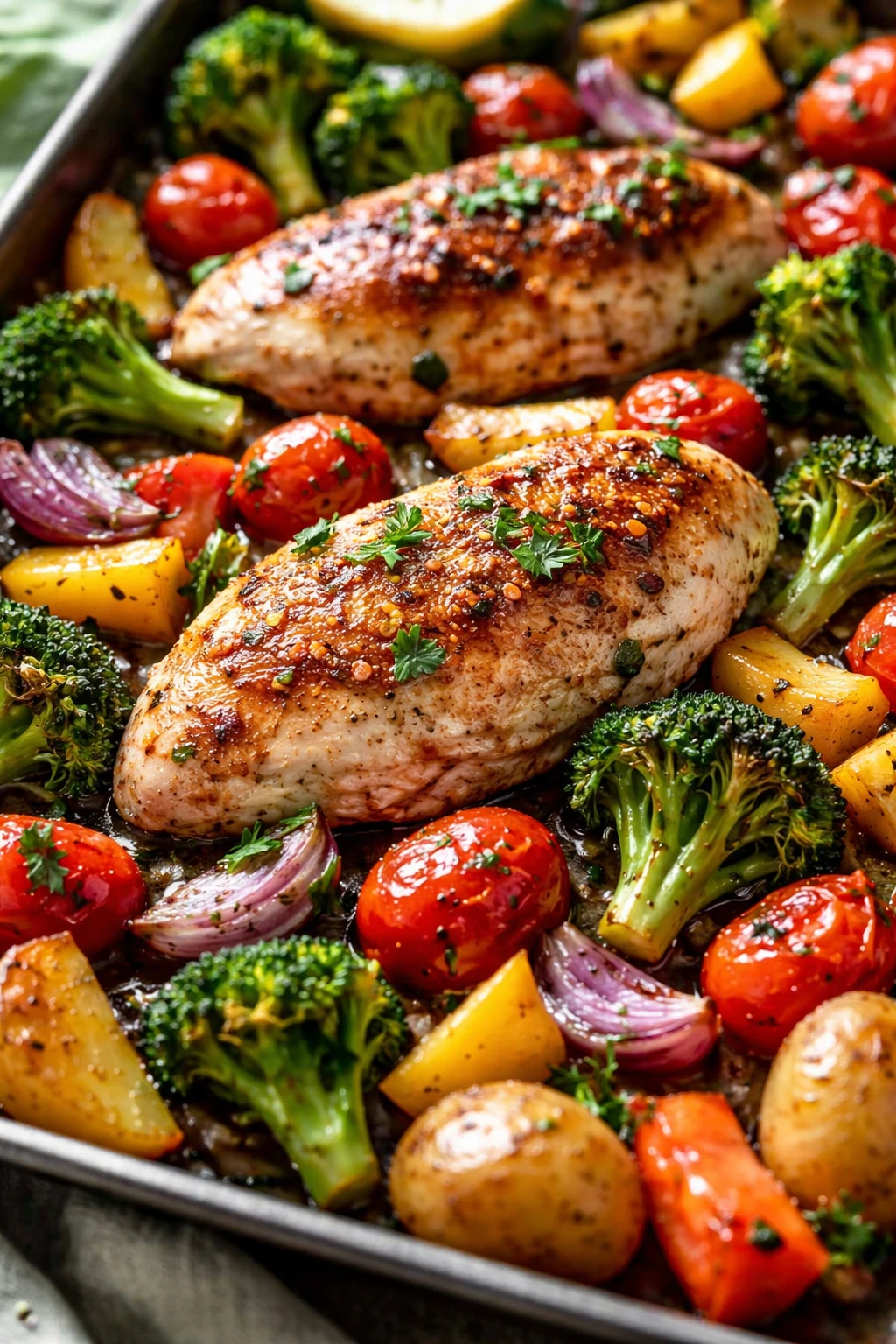
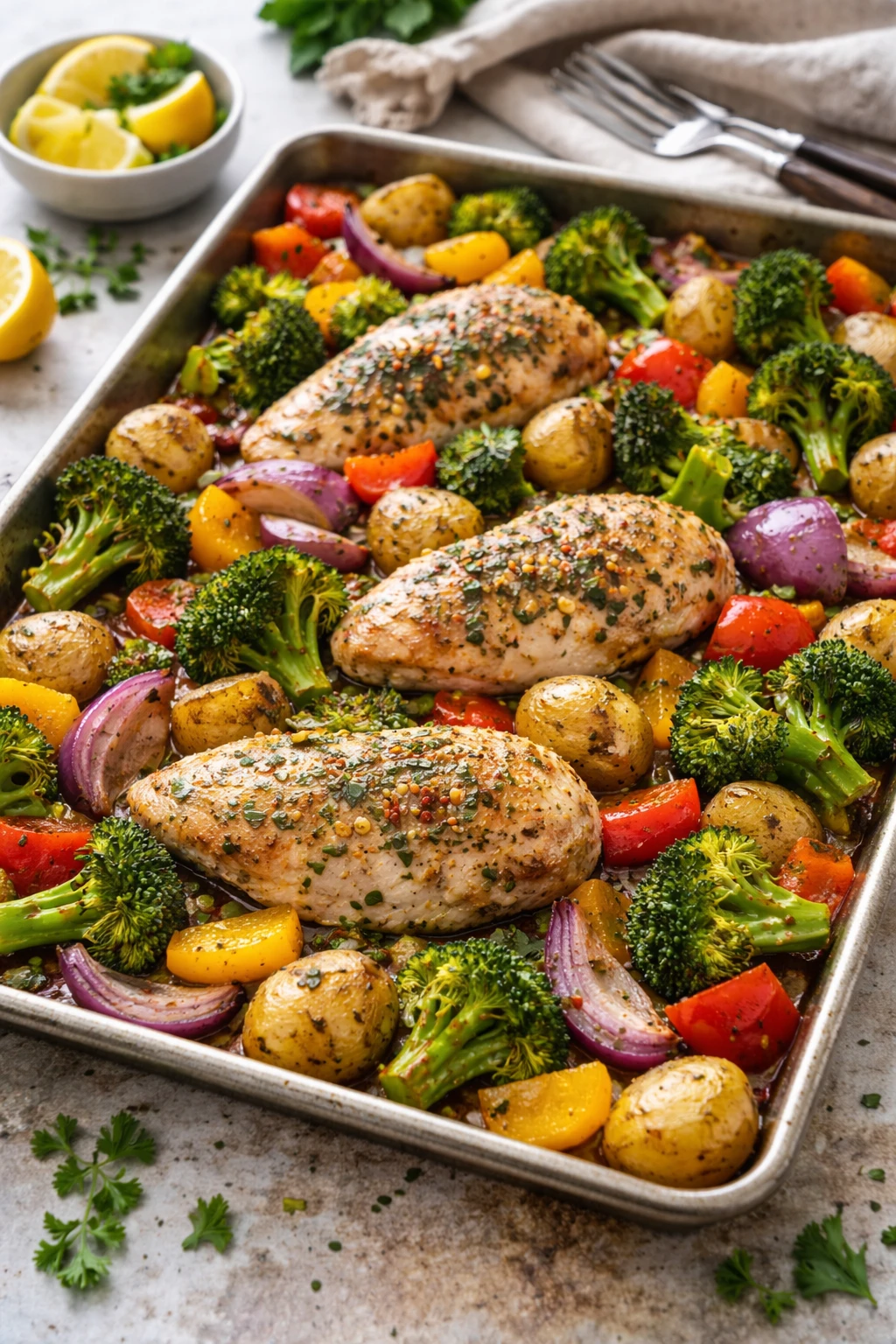
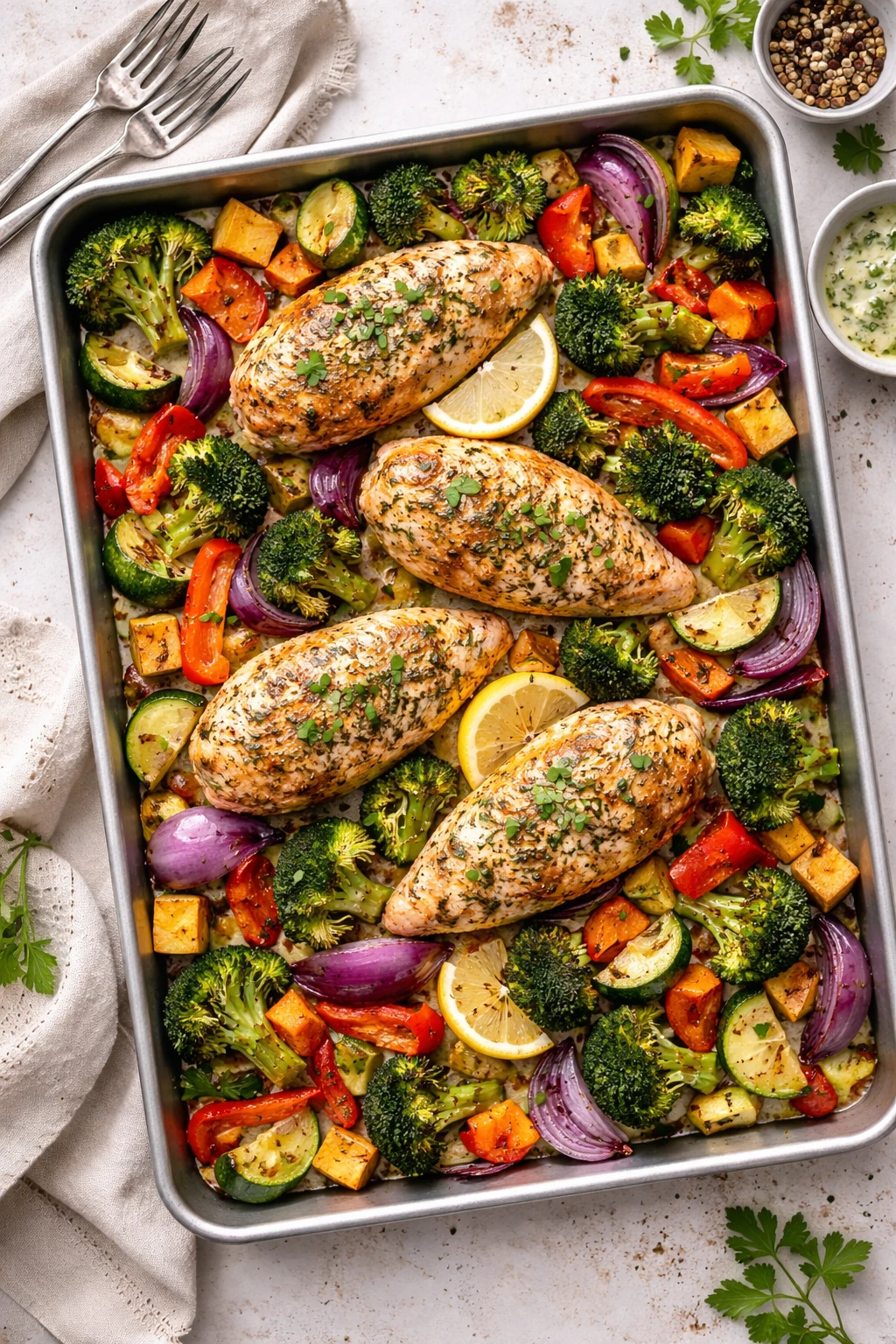
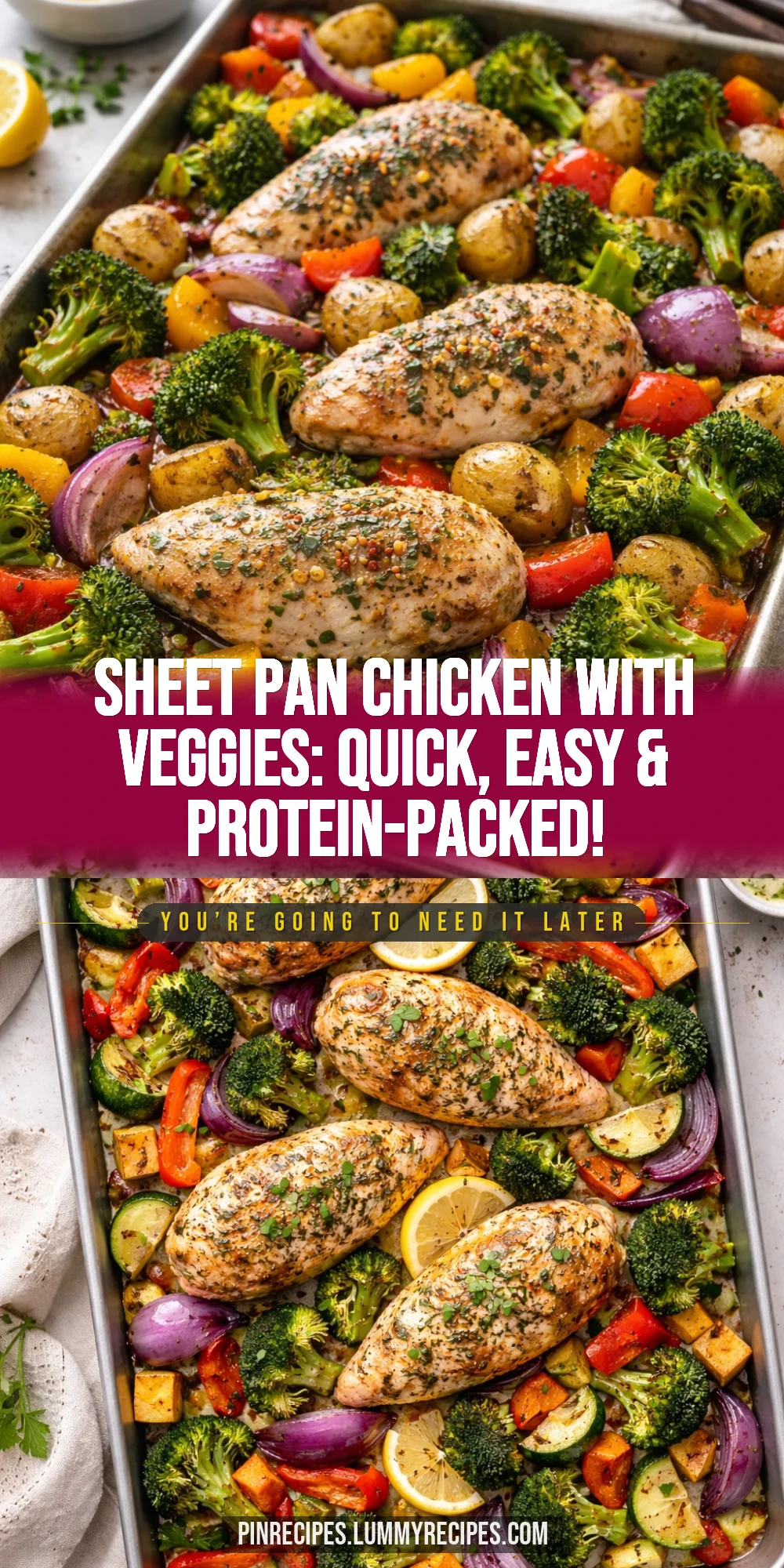
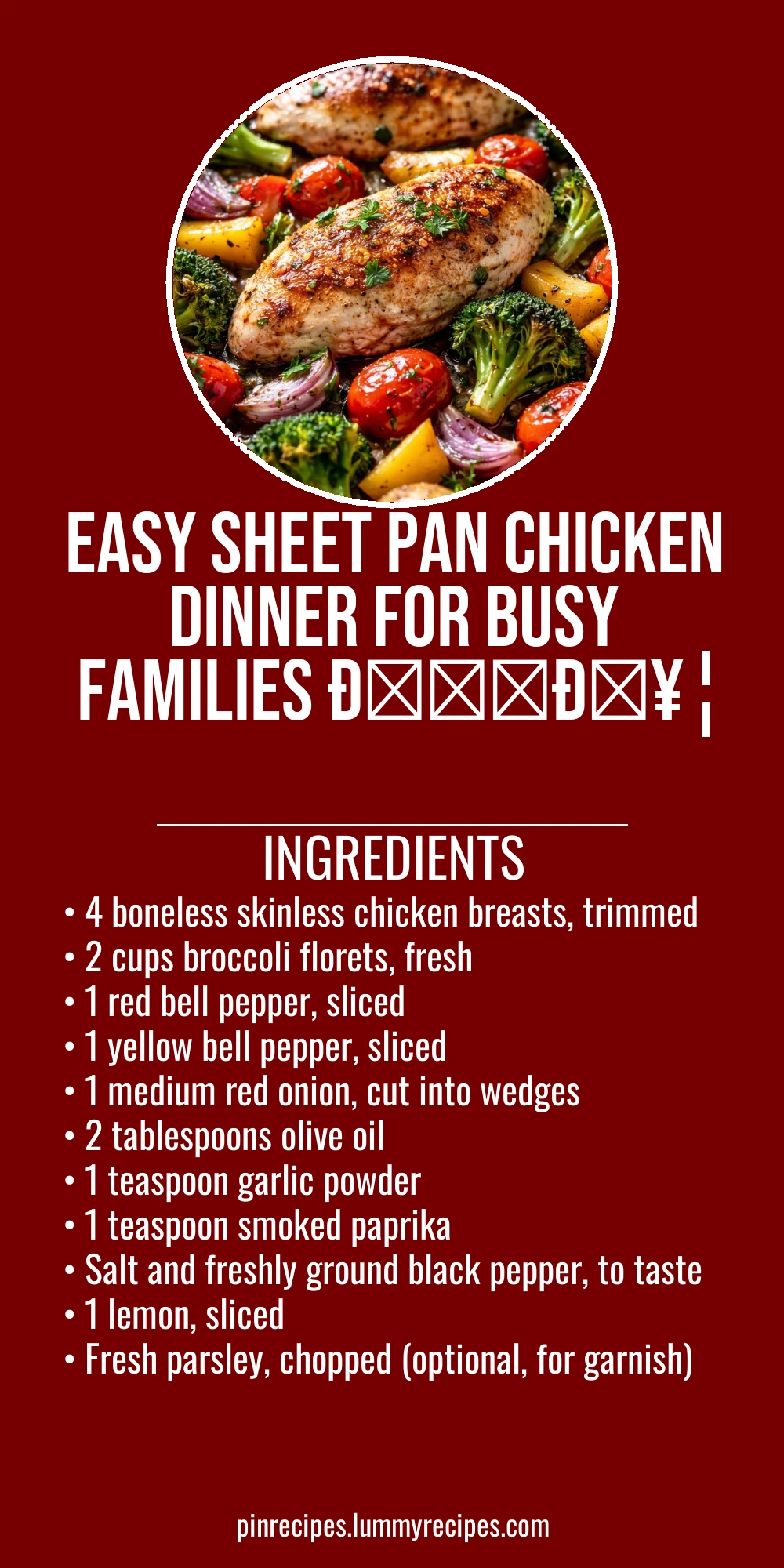
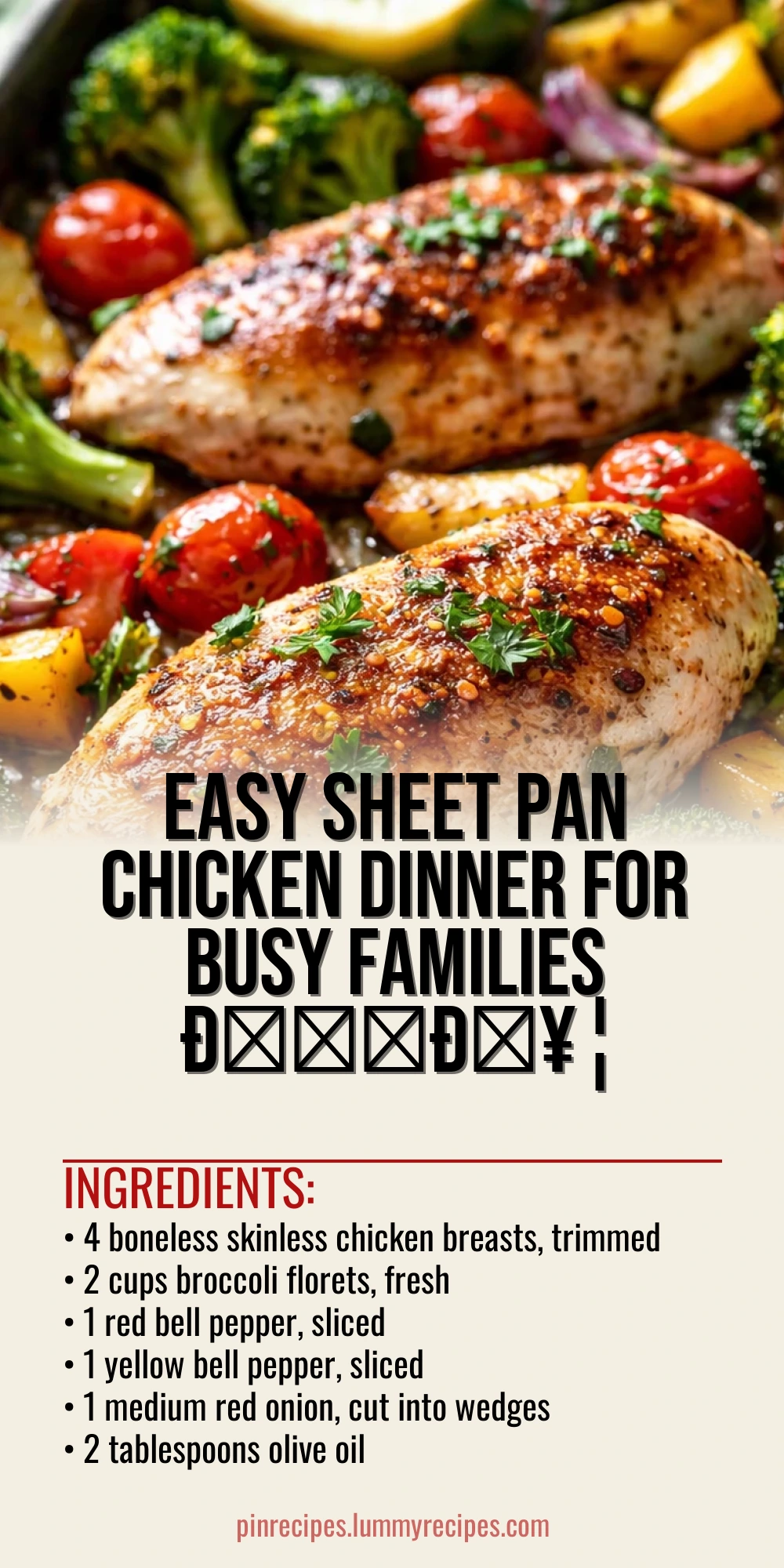
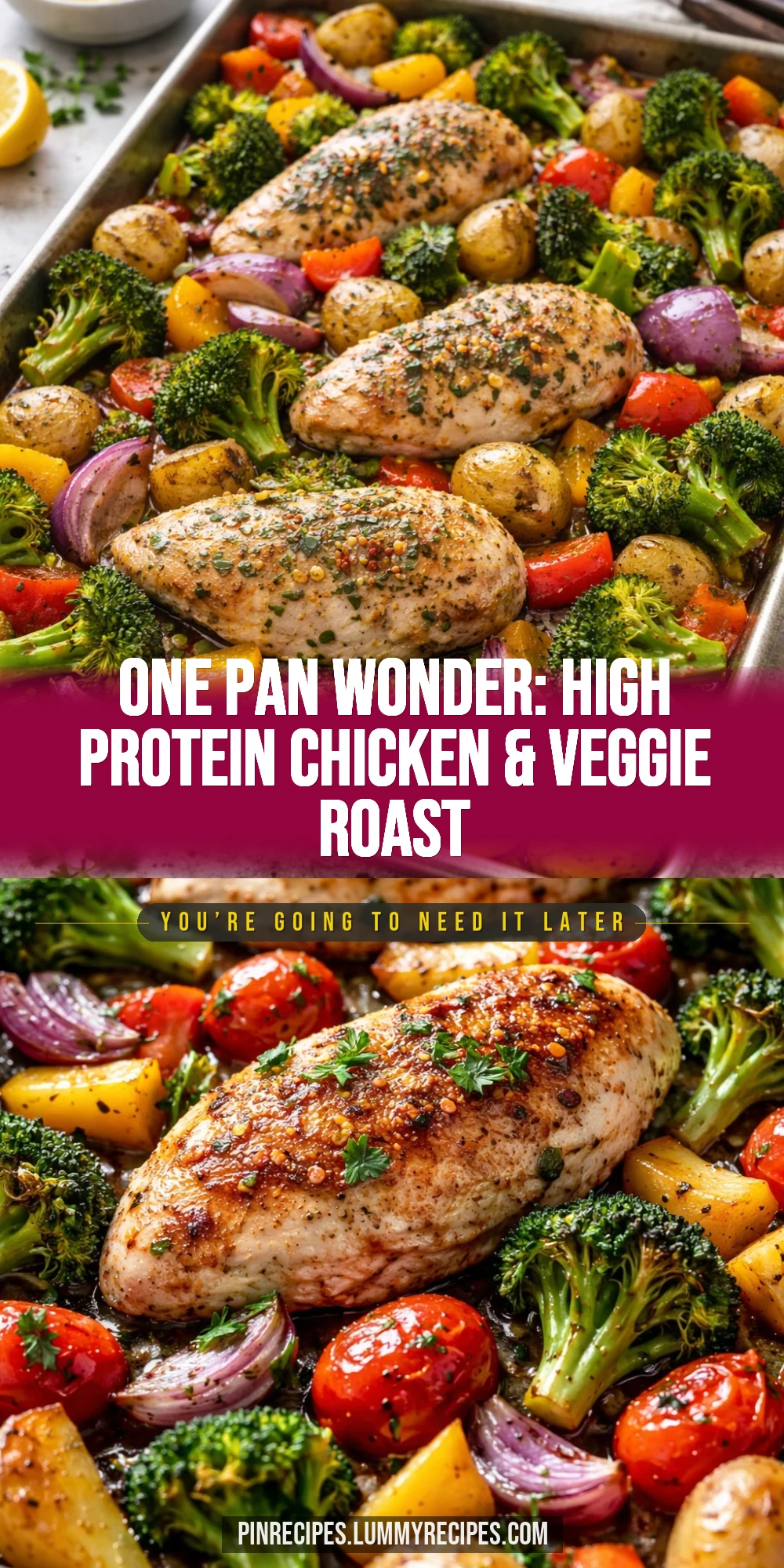
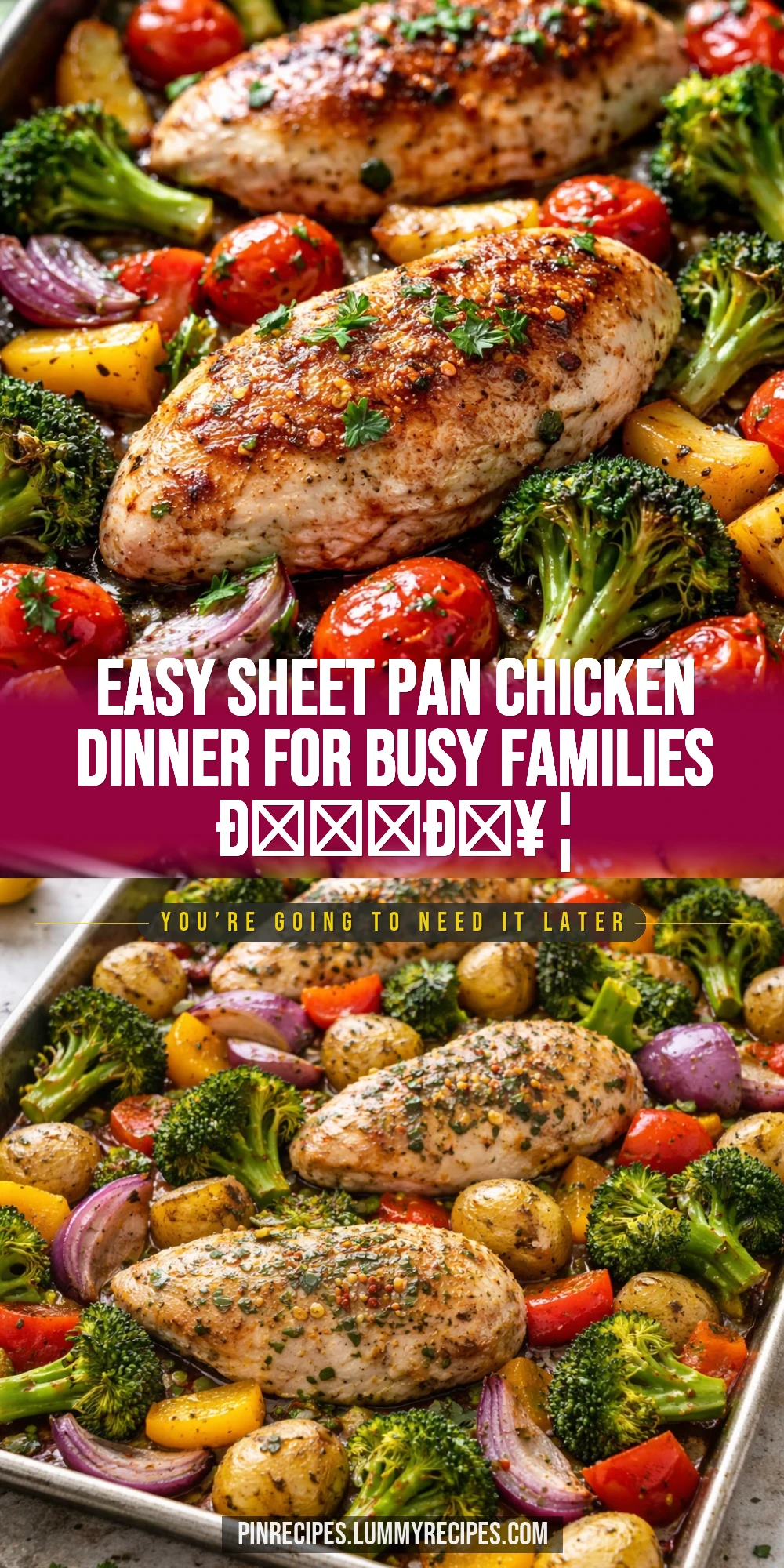
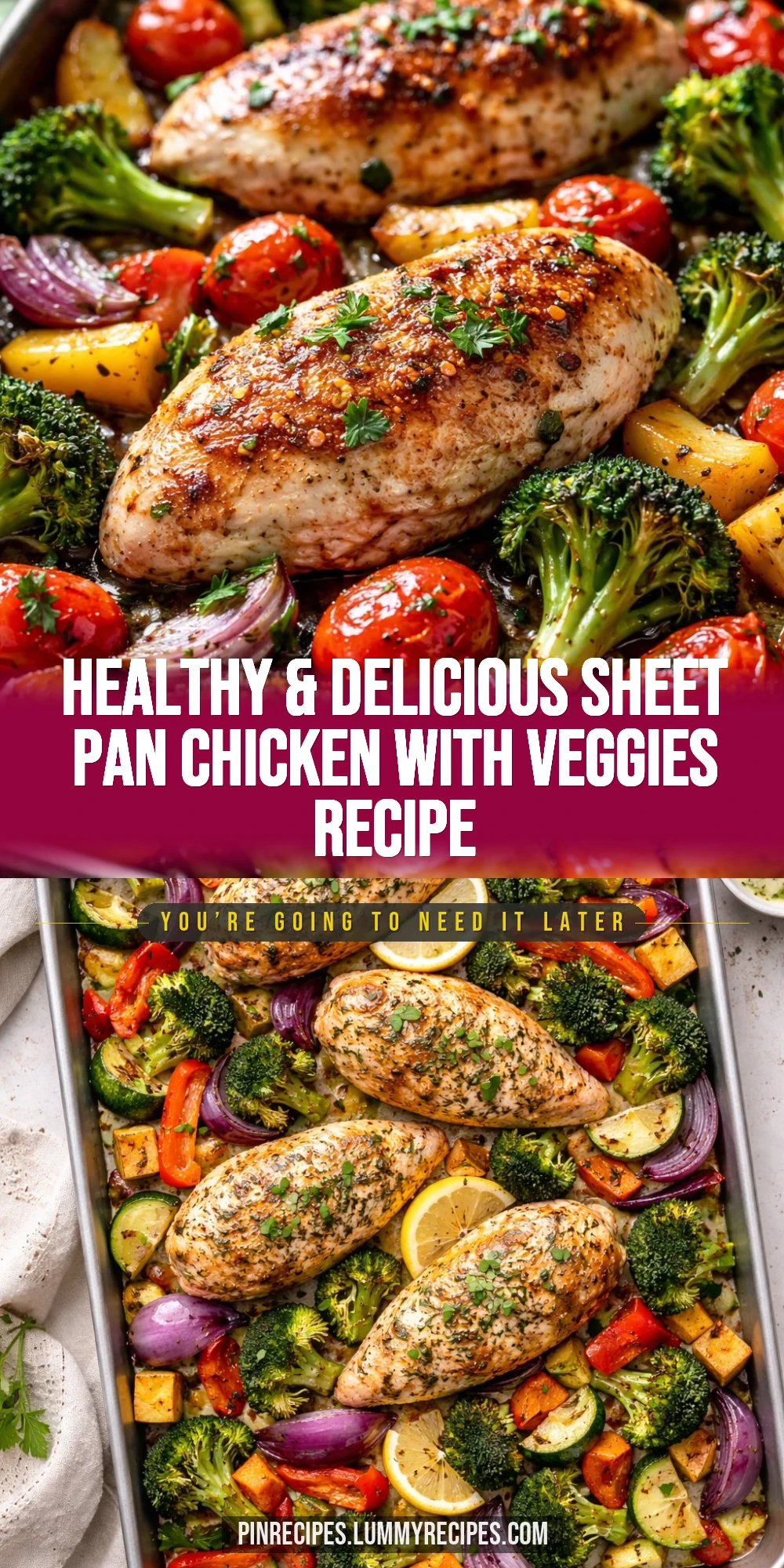
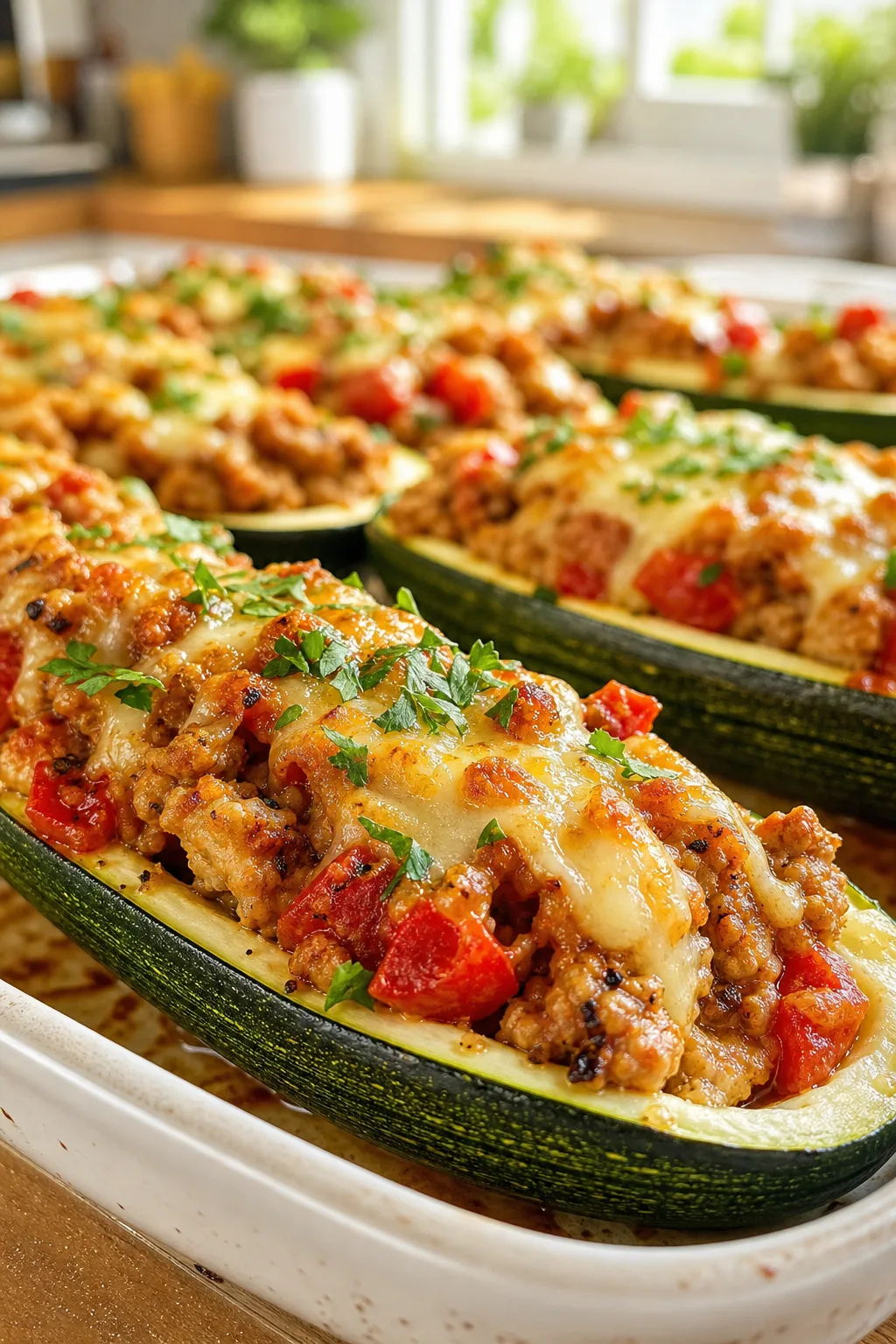
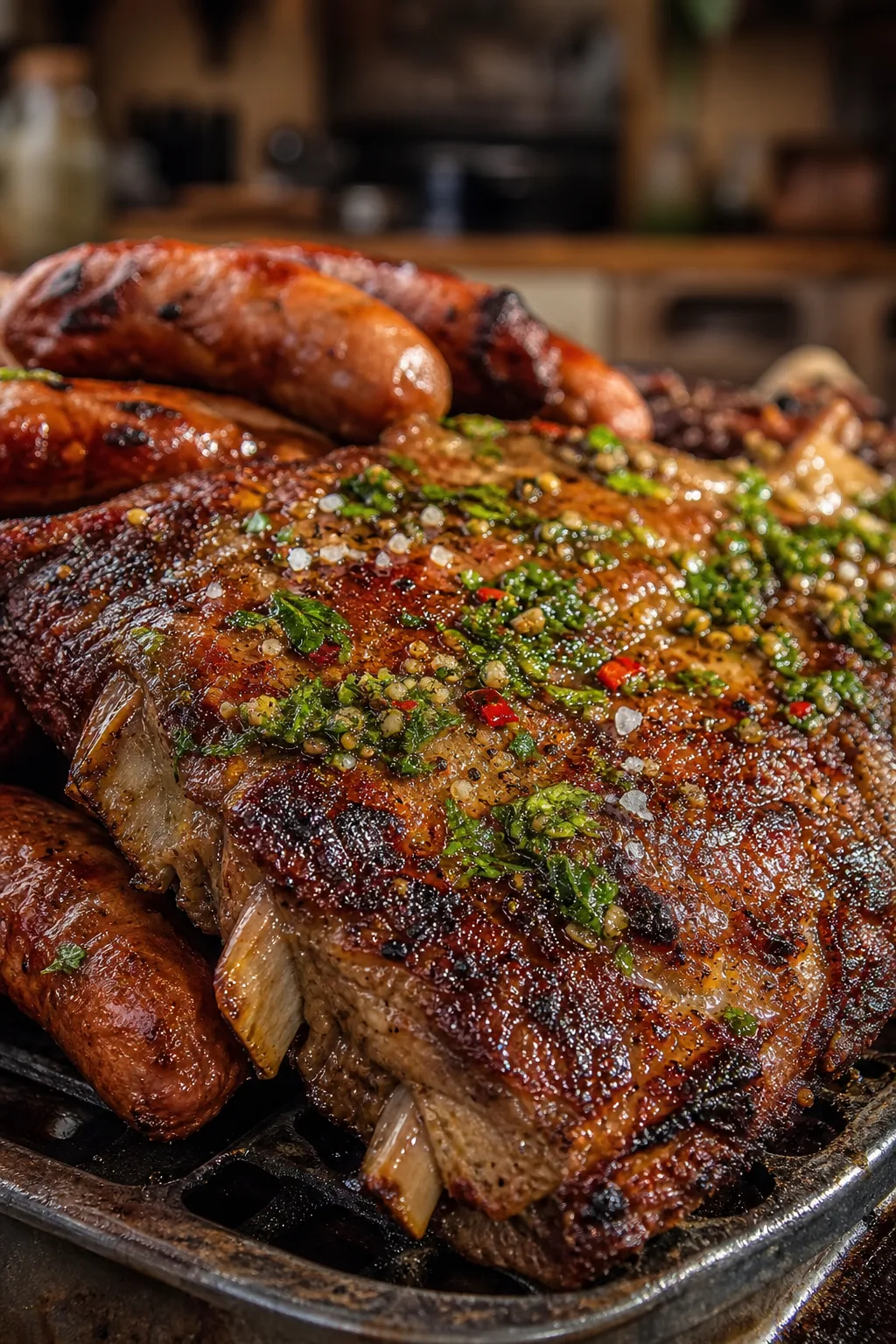
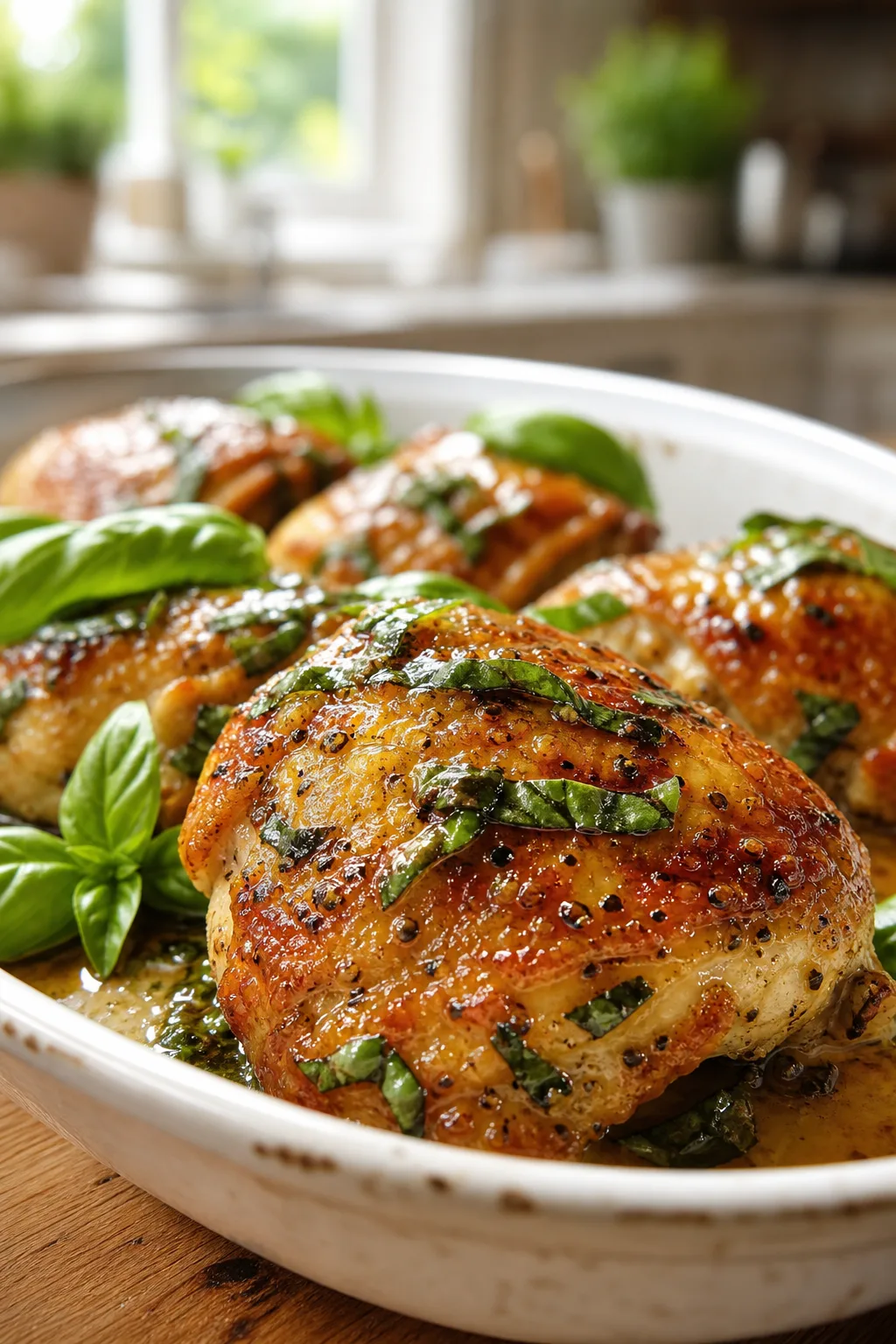
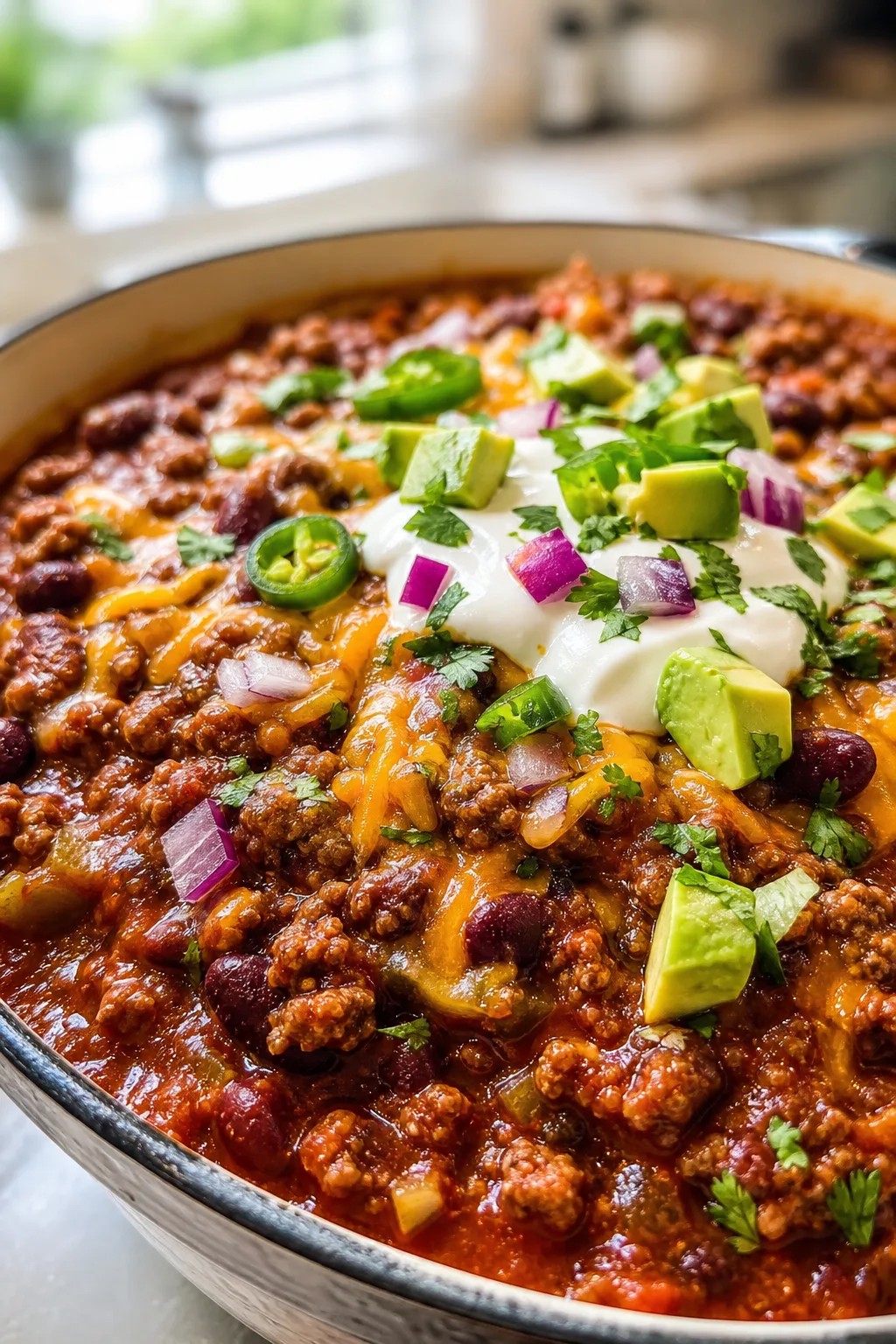
This sheet pan chicken dinner is packed with protein and colorful veggies, making weeknight meals both easy and nutritious. I love how roasting everything together brings out such great flavors. Perfect for busy families craving a wholesome meal!
Introduction
I first made this sheet pan chicken with veggies recipe on a hectic weeknight when I wanted something quick, wholesome, and filling. What I love most is how everything cooks together on one tray, which means less mess and more time to relax after dinner. Over time, I tweaked the seasoning to balance smoky paprika with a hint of garlic, and adding lemon slices on top really brightens the whole dish. The secret I learned is to space out the chicken and veggies so they roast evenly and get that perfect caramelized edge. The finished meal is juicy, tender chicken paired with crisp-tender, flavorful vegetables — it’s a colorful, protein-packed dinner the whole family enjoys. I think it’s the kind of recipe that feels both comforting and fresh, and I always keep the ingredients on hand for those busy nights when I want something healthy but fuss-free.
How To Do It
Step 1
Preheat your oven to 425°F (220°C). This high heat is key to getting the chicken skinless breasts nicely browned and the veggies caramelized without drying out. Line a large sheet pan with parchment paper or lightly grease it to prevent sticking. Arranging the ingredients properly on the pan helps everything cook evenly and develop great texture.
⏱ Time: 10 minutes
✓ Doneness: Oven fully preheated, pan prepared and ready
Step 2
In a large bowl, toss the chicken breasts with 1 tablespoon olive oil, garlic powder, smoked paprika, salt, and pepper. Make sure each piece is well coated for even seasoning and flavor. The oil helps the spices stick and promotes browning, while the paprika adds a smoky depth that makes this dish special.
⏱ Time: 5 minutes
✓ Doneness: Chicken breasts evenly coated with seasoning and oil
Step 3
In the same bowl, toss the broccoli florets, bell pepper slices, and onion wedges with the remaining tablespoon of olive oil, a pinch of salt, and pepper. Coating the veggies ensures they roast evenly and develop a slightly crisp edge while staying tender inside.
⏱ Time: 5 minutes
✓ Doneness: Veggies evenly coated and ready for roasting
Step 4
Arrange the chicken breasts on the sheet pan, spacing them out so heat circulates around each piece. Place the veggies around the chicken in a single layer. This spacing prevents steaming and encourages caramelization, which adds flavor and texture.
⏱ Time: 5 minutes
✓ Doneness: Chicken and veggies spread out evenly on the pan
Step 5
Place lemon slices over the chicken breasts. The lemon adds a subtle bright acidity during roasting, balancing the smoky spices and keeping the chicken moist. It also infuses the veggies with a fresh citrus aroma.
⏱ Time: 2 minutes
✓ Doneness: Lemon slices evenly placed on chicken
Step 6
Roast the sheet pan in the preheated oven for 25 to 30 minutes. Check at 20 minutes and toss the veggies gently to promote even cooking. The chicken should reach an internal temperature of 165°F (74°C), and the veggies should be tender with caramelized edges.
⏱ Time: 25-30 minutes
✓ Doneness: Chicken cooked through, veggies tender and browned
Step 7
Once cooked, remove the pan from the oven and let the chicken rest for 5 minutes. Resting locks in juices and keeps the meat tender. Meanwhile, you can sprinkle chopped fresh parsley over the veggies and chicken for a pop of color and fresh flavor.
⏱ Time: 5 minutes
✓ Doneness: Chicken rested and flavors melded
Step 8
Serve the chicken breasts with the roasted veggies on the side. This meal pairs well with a simple green salad or crusty bread to soak up any juices. The combination is balanced, filling, and satisfying without being heavy.
⏱ Time: 0 minutes
✓ Doneness: Plate assembled and ready to enjoy
Step 9
Clean up the sheet pan by soaking it immediately after use to prevent stuck-on bits. The parchment paper should make cleanup easier, but a quick soak helps keep your pan in good shape for next time.
⏱ Time: 10 minutes
✓ Doneness: Pan clean and ready for next use
Pro Tips
Let the chicken come to room temperature before roasting.
Allowing the chicken to sit out for 15-20 minutes helps it cook more evenly and prevents the outside from drying out before the inside is done. Cold chicken straight from the fridge can cause uneven cooking, resulting in a dry exterior and undercooked center.
Use a rimmed sheet pan to catch juices.
A rimmed pan prevents juices from spilling into the oven and helps keep the chicken moist by allowing it to roast in its own flavorful drippings. It also makes cleanup easier since the juices stay contained.
Don’t overcrowd the pan.
Crowding traps steam and prevents browning, which is essential for flavor and texture. Give each piece of chicken and vegetable enough space so the hot air can circulate freely, ensuring caramelization and crisp edges.
Toss veggies halfway through cooking.
Flipping the vegetables midway promotes even roasting and prevents burning on one side. This simple step ensures all sides get that nice caramelized color and flavor.
Use a meat thermometer to check doneness.
Chicken breasts can dry out quickly if overcooked. A meat thermometer takes the guesswork out, ensuring the internal temperature reaches 165°F (74°C) for safe consumption while keeping the meat juicy.
Add fresh herbs after roasting.
Adding herbs like parsley after cooking preserves their bright color and fresh flavor. Cooking herbs at high heat can make them bitter or dull their aroma.
Line the pan with parchment paper for easy cleanup.
Parchment paper prevents food from sticking and makes washing the pan much quicker. It also protects the pan’s surface from burnt bits, extending its lifespan.
Common Mistakes to Avoid
Overcrowding the sheet pan
Why it happens Many cooks try to fit all ingredients on one pan without spacing them out, thinking it saves time or dishes.
Fix Spread the chicken and veggies out with enough room between pieces. If needed, use two pans or roast in batches. This allows hot air to circulate and promotes proper browning and caramelization.
Skipping the resting period
Why it happens Impatience to serve can lead to slicing chicken immediately after roasting.
Fix Let the chicken rest for 5 minutes off the heat. This step lets juices redistribute inside the meat, resulting in tender, juicy chicken instead of dry, stringy bites.
Not patting chicken dry before seasoning
Why it happens Rushing prep or forgetting to dry chicken can leave excess moisture on the surface.
Fix Use paper towels to pat chicken dry before oiling and seasoning. Dry skin browns better and develops more flavor during roasting.
Using too low oven temperature
Why it happens Some think low and slow is safer for chicken breasts.
Fix Roast at 425°F (220°C) for proper browning and caramelization. Lower temps can result in pale chicken and steamed veggies lacking texture.
Not checking internal temperature
Why it happens Guessing doneness can lead to undercooked or overcooked chicken.
Fix Use a meat thermometer to ensure chicken reaches 165°F (74°C). This guarantees safety and juiciness.
Variations
Spicy Sheet Pan Chicken
Add 1 teaspoon cayenne pepper and 1 teaspoon chili powder to the seasoning mix for a spicy kick. Swap bell peppers for jalapeños or add sliced hot peppers to the veggies. Expect a bolder, fiery flavor that complements the smoky paprika.
Note: Watch the cooking time closely as spicy peppers can soften faster; toss veggies halfway to prevent burning.
Mediterranean Style
Use dried oregano, thyme, and rosemary in place of paprika and garlic powder. Add kalamata olives and cherry tomatoes to the veggies. This variation offers herbaceous, tangy flavors with a Mediterranean twist.
Note: Add olives and tomatoes halfway through roasting to avoid overcooking and breaking down.
Sheet Pan Chicken with Sweet Potatoes
Swap some veggies for cubed sweet potatoes tossed in cinnamon and olive oil. Sweet potatoes add natural sweetness and extra fiber, making the dish heartier and colorful.
Note: Cut sweet potatoes small enough to cook fully in 25-30 minutes or parboil slightly before roasting.
Asian-Inspired Sheet Pan Chicken
Marinate the chicken in soy sauce, ginger, garlic, and sesame oil before roasting. Add snap peas and sliced carrots to the veggies. This gives a savory, umami-packed dinner with an Asian flair.
Note: Reduce added salt due to soy sauce and add sesame seeds after roasting for texture.
Sheet Pan Chicken with Mushrooms and Green Beans
Add whole mushrooms and green beans to the veggie mix. Mushrooms bring earthiness while green beans add crunch, creating a well-rounded, savory meal.
Note: Mushrooms release moisture, so spread ingredients evenly and roast at high heat to avoid sogginess.
Nutrition
Per Serving:
Nutritional values are estimates and may vary based on specific ingredients used.
Storage & Tips
Room Temperature
This dish can safely sit out at room temperature for up to 2 hours if covered loosely with foil or a clean towel. Beyond that, bacteria growth increases, so refrigerate promptly.
Refrigerator
Store leftovers in an airtight container for up to 3 days. The chicken may firm up and veggies soften when cold. Reheat gently to avoid drying out, or enjoy cold in salads.
Freezer
Freeze cooked chicken and veggies in a freezer-safe container for up to 2 months. Wrap tightly to prevent freezer burn. Thaw overnight in the fridge before reheating.
Reheating
Reheat in a 350°F oven for 10-15 minutes until warmed through, adding a splash of water or broth to keep chicken moist. Avoid microwave reheating if possible, as it can dry out the chicken.
Make Ahead
You can prep the chicken and veggies seasoned and ready on the sheet pan 1 day ahead. Cover and refrigerate overnight, then roast fresh on the day of serving for best texture and flavor.
FAQ
Can I use bone-in chicken thighs instead of breasts?
Absolutely! Bone-in thighs add extra flavor and stay juicy. However, they will take longer to cook—about 35-40 minutes. Make sure to check the internal temperature, aiming for 175°F (79°C) for thighs to be safe and tender.
What if I don’t have smoked paprika?
You can substitute with regular paprika or a mix of paprika and a pinch of cayenne for some heat. Smoked paprika adds a subtle smoky flavor that enhances the dish, but regular paprika will still yield a tasty meal.
Can I use frozen vegetables instead of fresh?
While fresh veggies roast best for texture and flavor, frozen vegetables can work in a pinch. Thaw and pat them dry before roasting to reduce excess moisture, but note they might be softer and less caramelized.
How do I know when the chicken is fully cooked?
The safest and most reliable way is to use a meat thermometer. Insert it into the thickest part of the chicken; it should read 165°F (74°C). The juices should also run clear, and the meat should be firm but juicy.
Can I add other vegetables to this recipe?
Definitely! Root vegetables like carrots or sweet potatoes, green beans, or mushrooms all work well. Just be mindful of cooking times—firmer veggies may need to be cut smaller or added earlier to cook through.
Is it necessary to use lemon slices?
Lemon slices add a nice brightness and subtle acidity that balances the richness, but if you don’t have lemons, you can skip them or squeeze fresh lemon juice over the dish after cooking.
How do I prevent the chicken from drying out?
Don’t overcook the chicken—use a thermometer to check doneness. Also, letting the chicken rest after roasting helps retain juices. Brushing the chicken with olive oil before roasting also keeps it moist.
Can I make this recipe gluten-free?
Yes, this recipe is naturally gluten-free as long as you use gluten-free spices and avoid any pre-seasoned ingredients with gluten additives.
Final Thoughts
I hope you enjoy making this sheet pan chicken with veggies as much as my family does. It’s a simple, satisfying dinner that’s perfect for busy nights—please share how it turns out!