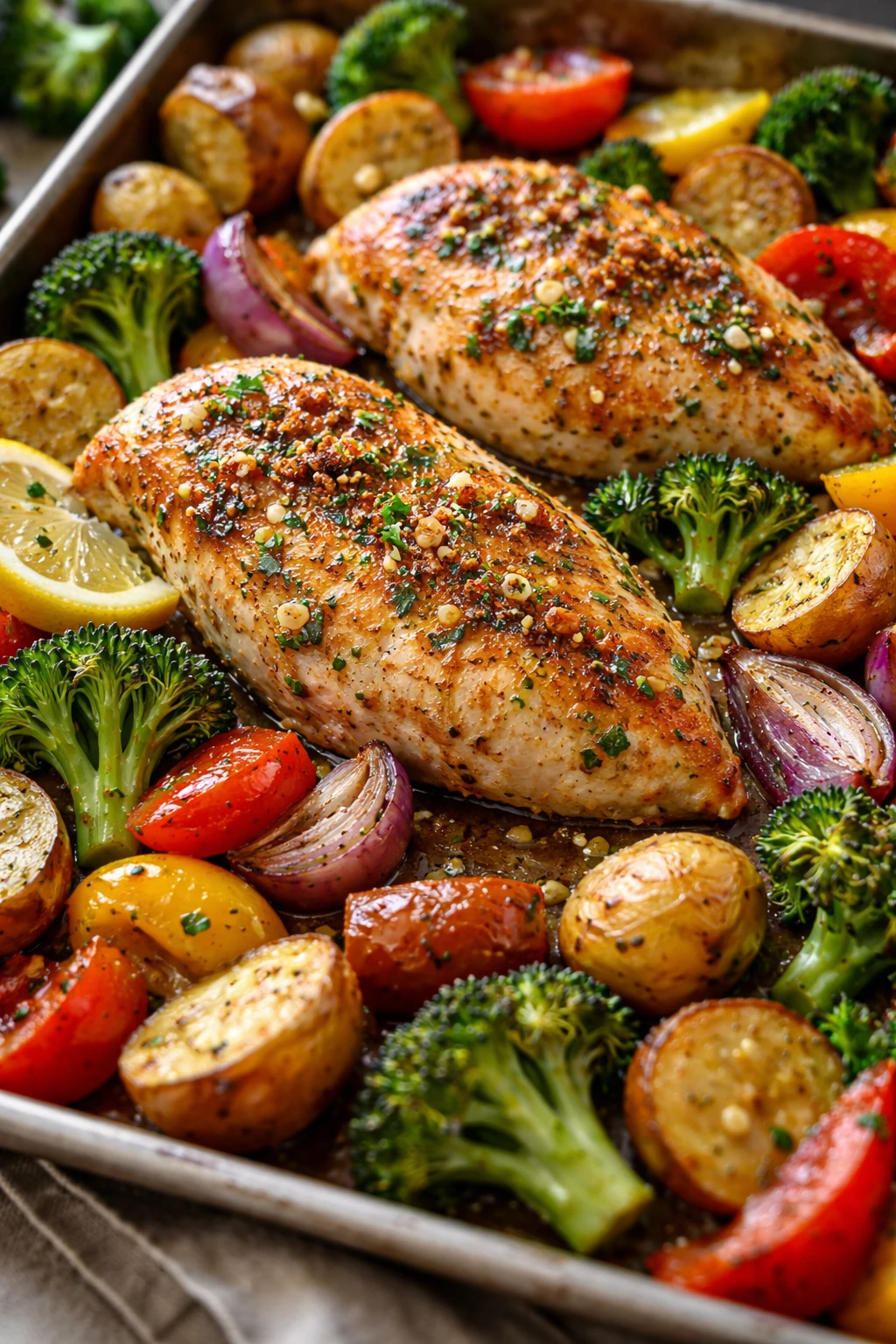
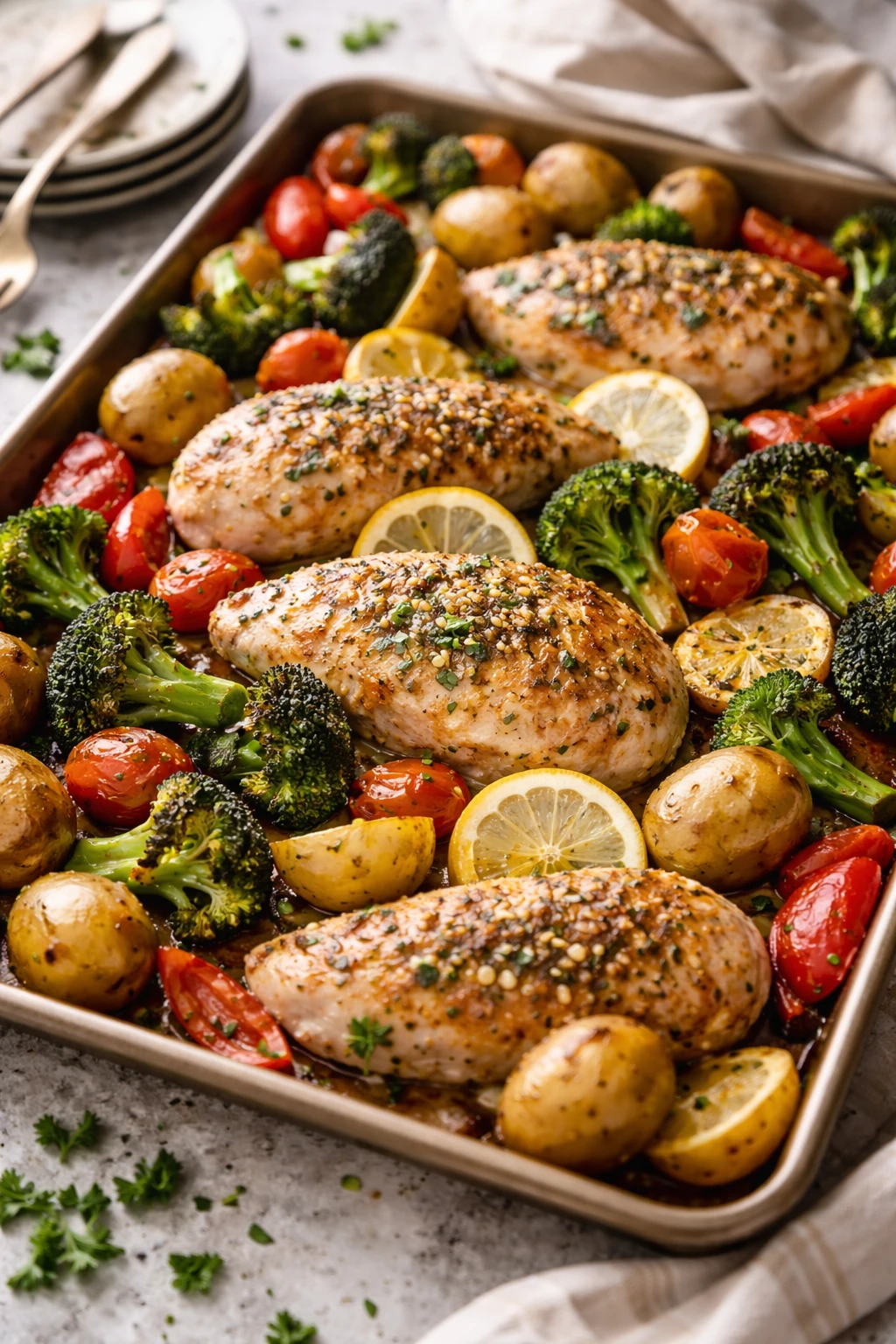
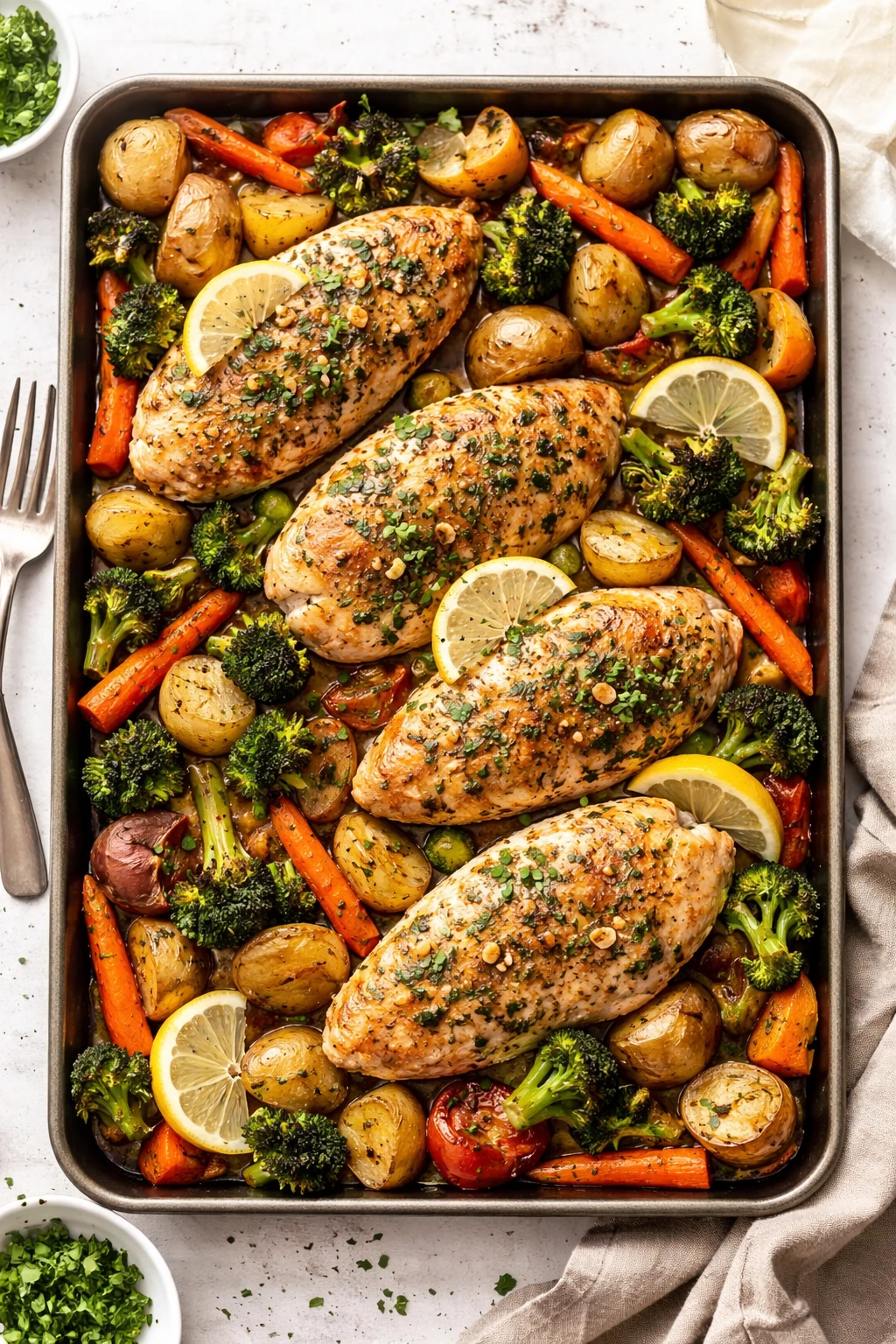
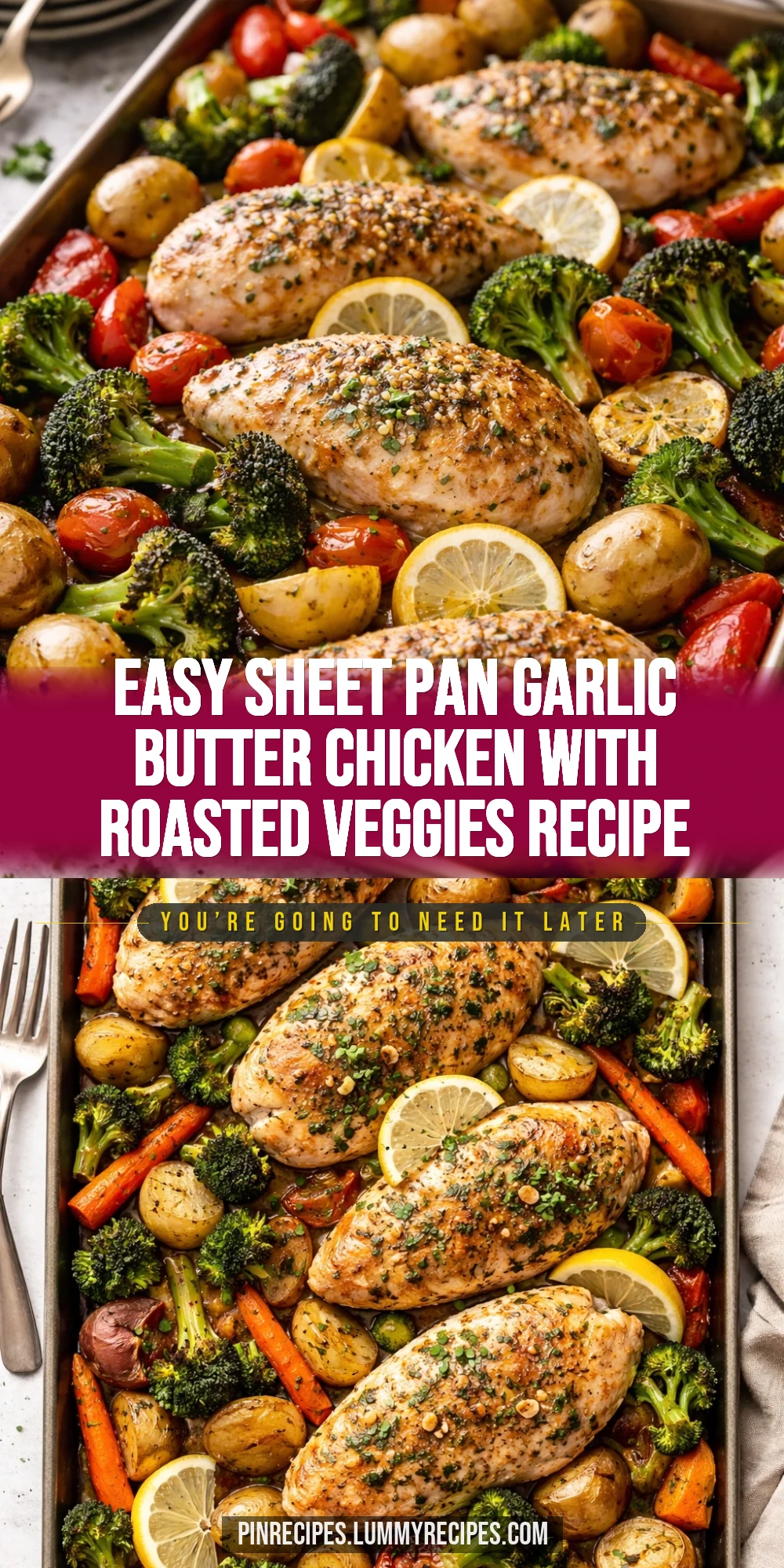
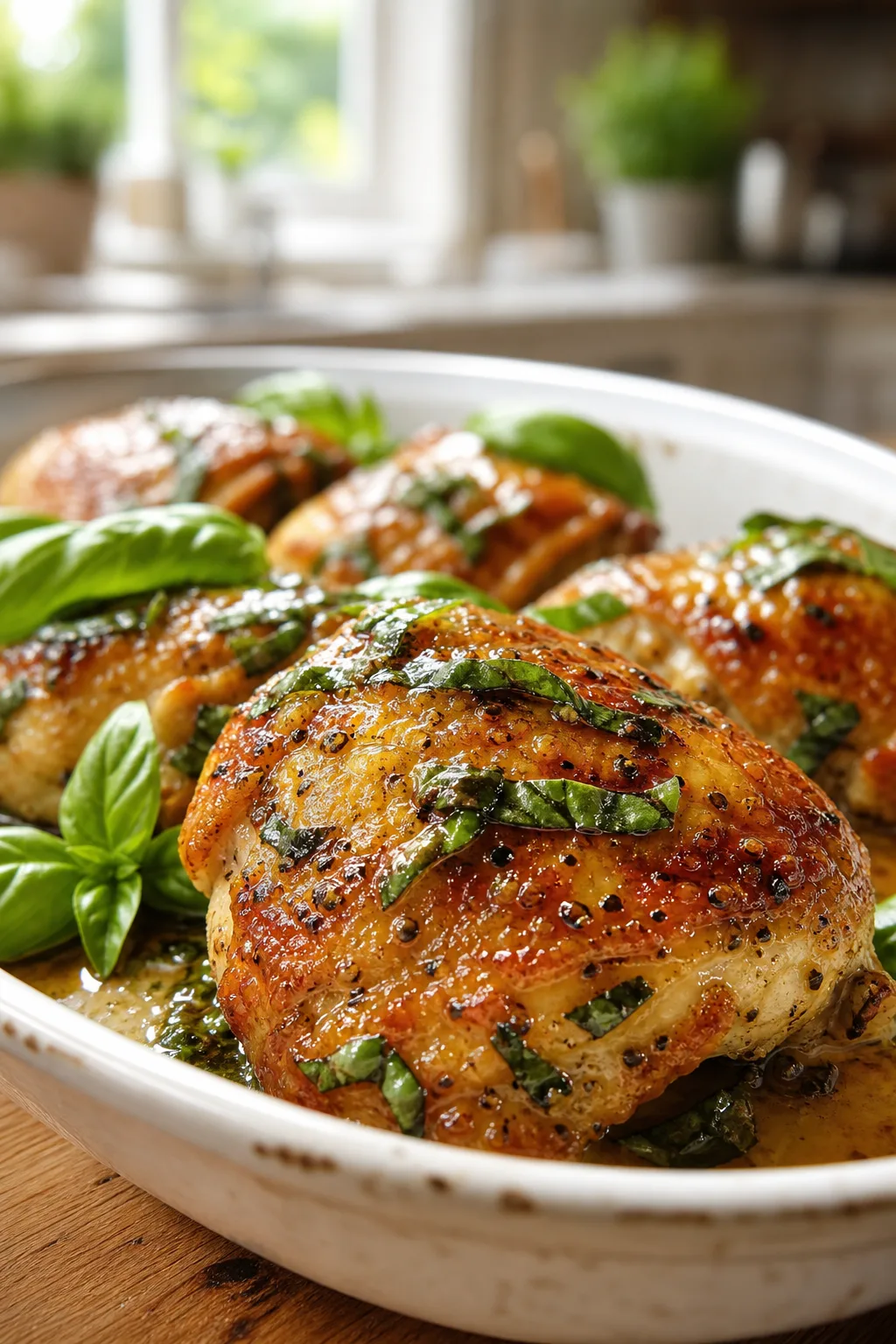
This sheet pan garlic butter chicken is a total game changer—juicy chicken, tender roasted veggies all cooked together with a buttery garlic sauce. It’s super simple and perfect for busy weeknights when you want something hearty but fuss-free.
Introduction
I first made this sheet pan garlic butter chicken with roasted veggies on a hectic weeknight when I wanted dinner ready fast but still comforting and flavorful. What I love most about this dish is how everything cooks together on one pan, soaking up that buttery garlic goodness. It’s a simple trick, but using bone-in, skin-on chicken thighs keeps the meat super juicy and flavorful, while the skin crisps up beautifully. Roasting the veggies alongside means they get caramelized edges without any extra work. I’ve tried this recipe a few times tweaking the garlic amount and roasting times, and the trick I learned is to toss the veggies in olive oil and season well before roasting to get that perfect texture and flavor. The end result is a dinner that’s both hearty and fresh with a lovely golden finish, perfect for busy weeknights or casual weekends when you want something satisfying but easy. Plus, clean-up is a breeze since it’s all done on one pan—definitely a win in my book!
How To Do It
Step 1
Preheat your oven to 425°F (220°C). While it heats, prepare the garlic butter sauce by mixing melted butter, minced garlic, dried thyme, smoked paprika, salt, and pepper in a small bowl. This mixture will infuse the chicken and veggies with rich, aromatic flavor during roasting. The high oven temperature helps crisp the chicken skin and caramelize the vegetables, so don’t skip preheating. Avoid overcrowding the pan later to ensure even roasting.
⏱ Time: 10 minutes
✓ Doneness: Butter mixture is well combined and fragrant, oven fully preheated
Step 2
In a large bowl, toss the halved baby potatoes, baby carrots, and trimmed green beans with olive oil, salt, and pepper. Spread them evenly on a large rimmed baking sheet, leaving space in the center for the chicken. This step ensures the veggies roast evenly and develop those delicious browned edges. If you skip seasoning the veggies well, they can turn out bland, so be generous here.
⏱ Time: 5 minutes
✓ Doneness: Veggies are evenly coated and spread out on the pan without crowding
Step 3
Pat the chicken thighs dry with paper towels—this step is crucial for getting crispy skin. Then, brush each piece generously with the garlic butter mixture, making sure to get some under the skin for deeper flavor. Place the chicken thighs skin-side up in the center of the baking sheet among the veggies. Dry skin crisps better; wet skin steams and won’t brown properly.
⏱ Time: 7 minutes
✓ Doneness: Chicken is evenly coated and arranged skin-side up on the pan
Step 4
Pour any remaining garlic butter over the veggies to boost flavor and help with caramelization. Place the pan in the preheated oven and roast for about 30-35 minutes. Halfway through, stir the veggies gently to ensure even cooking and baste the chicken with pan juices if desired. This promotes even roasting and juicy chicken. Rushing this step can cause uneven cooking.
⏱ Time: 35 minutes
✓ Doneness: Chicken skin is golden brown and crisp; veggies are tender with browned edges
Step 5
Check the chicken’s internal temperature with a meat thermometer; it should read 165°F (74°C). If you don’t have a thermometer, pierce the thickest part—the juices should run clear. If it’s not quite done, return to the oven for a few more minutes. Undercooked chicken is unsafe, but overcooking dries it out, so keep a close eye here.
⏱ Time: 5 minutes
✓ Doneness: Juices run clear and thermometer reads 165°F
Step 6
Once cooked, remove the pan from the oven and let the chicken rest for 5 minutes. Resting allows the juices to redistribute, keeping the meat moist and tender. Don’t skip resting—it makes a big difference in texture.
⏱ Time: 5 minutes
✓ Doneness: Chicken feels firm but juicy when pressed lightly
Step 7
Sprinkle chopped fresh parsley over the chicken and veggies for a fresh, vibrant finish. This adds a pop of color and a mild herbaceous note that balances the richness of the garlic butter.
⏱ Time: 2 minutes
✓ Doneness: Parsley is bright green and evenly scattered
Step 8
Serve the chicken and roasted veggies hot, straight from the pan. The mix of crispy chicken skin, tender meat, and caramelized veggies is irresistible. Pair with a simple side salad or crusty bread if you like.
⏱ Time: 0 minutes
✓ Doneness: Dish is plated and ready to enjoy
Step 9
Clean the baking sheet promptly after it cools to avoid stuck-on bits. Soak if needed. Keeping your pans in good shape ensures even cooking next time and prolongs their life.
⏱ Time: Varies
✓ Doneness: Pan is clean and ready for next use
Pro Tips
Pat the chicken skin dry thoroughly before applying the garlic butter.
Dry skin crisps up much better in the oven. Moisture on the skin creates steam during roasting, which prevents the Maillard reaction responsible for that golden, crispy texture. This simple step makes a huge difference in the final dish’s appearance and mouthfeel.
Spread the veggies out evenly and avoid overcrowding the pan.
Overcrowding traps steam and causes the vegetables to steam instead of roast, resulting in soggy, less flavorful veggies. Giving each piece space allows hot air to circulate, creating those beautifully caramelized edges and tender centers.
Use a meat thermometer to check chicken doneness.
Chicken thighs can look cooked on the outside but still be underdone inside. A thermometer ensures safety and prevents overcooking, which dries out the meat. Aim for 165°F (74°C) internal temperature for perfectly juicy, safe-to-eat chicken.
Stir veggies halfway through roasting.
Turning the vegetables ensures even cooking and browning on all sides. It also prevents burning on one side and undercooking on the other. This simple step balances texture and flavor across the whole pan.
Let the chicken rest after roasting before serving.
Resting allows the juices to redistribute throughout the meat instead of spilling out when cut. This keeps the chicken moist and tender, enhancing the eating experience significantly.
Use fresh herbs like parsley as a finishing touch.
Fresh herbs add a pop of color and a bright, fresh flavor that balances the richness of the garlic butter. Adding them at the end preserves their vibrant taste and appearance.
Line your baking sheet with parchment paper or foil for easy cleanup.
Roasting garlic butter and veggies can leave sticky, browned bits on the pan. Lining it prevents sticking and makes cleanup faster, encouraging you to make this dish more often without hassle.
Common Mistakes to Avoid
Skipping the step to dry chicken skin before roasting.
Why it happens Many cooks assume rinsing or patting lightly is enough, but residual moisture causes steaming rather than crisping.
Fix Use paper towels to thoroughly pat the skin dry until it feels almost chalky. This ensures the skin crisps up nicely in the oven.
Overcrowding the baking sheet with veggies and chicken.
Why it happens Trying to fit everything on one pan without spacing can seem convenient but traps steam.
Fix Use a large rimmed baking sheet and spread ingredients out. If needed, roast veggies separately or in batches for best caramelization.
Not seasoning the veggies enough.
Why it happens People often focus seasoning on the chicken and forget the veggies.
Fix Toss veggies with olive oil, salt, and pepper before roasting to bring out their natural flavors and balance the dish.
Removing chicken from oven too early or too late.
Why it happens Without a thermometer, it’s easy to guess wrong and end up with undercooked or dry chicken.
Fix Use an instant-read thermometer to check for 165°F internal temp and remove promptly to avoid drying out.
Skipping the resting period after roasting.
Why it happens Impatience or hunger makes cooks serve immediately.
Fix Let chicken rest 5 minutes to lock in juices for tender, moist meat.
Variations
Spicy Sheet Pan Garlic Butter Chicken
Add 1/2 teaspoon cayenne pepper and a pinch of chili flakes to the garlic butter mixture for a spicy kick. This variation adds warmth and depth, perfect if you like a bit of heat with your meal.
Note: Monitor roasting closely as spices can darken quickly; adjust cayenne to taste.
Lemon Herb Garlic Butter Chicken
Mix in the zest and juice of one lemon into the garlic butter sauce along with fresh rosemary and thyme. The citrus brightens the dish and adds a fresh, zesty note that pairs beautifully with the roasted veggies.
Note: Add lemon juice after roasting to preserve brightness and prevent bitterness.
Sheet Pan Garlic Butter Chicken with Sweet Potatoes
Swap baby potatoes for cubed sweet potatoes for a sweeter, earthier flavor. Sweet potatoes roast beautifully and add a nice color contrast and nutritional boost to the dish.
Note: Cut sweet potatoes into smaller pieces than regular potatoes to ensure even cooking.
Sheet Pan Chicken with Broccoli and Mushrooms
Replace green beans and carrots with broccoli florets and sliced mushrooms for a different veggie profile. These veggies roast quickly and soak up the garlic butter flavor wonderfully.
Note: Add mushrooms halfway through roasting to prevent them from becoming too soft.
Sheet Pan Garlic Butter Chicken with Asparagus
Add trimmed asparagus spears to the pan during the last 10 minutes of roasting for a fresh springtime twist. Asparagus roasts quickly and keeps a nice crunch.
Note: Watch asparagus carefully to avoid overcooking; it should remain bright green and slightly firm.
Nutrition
Per Serving:
Nutritional values are estimates and may vary based on specific ingredients used.
Storage & Tips
Room Temperature
This dish can safely sit at room temperature for up to 2 hours if covered loosely with foil or a clean kitchen towel. Avoid leaving it out longer to prevent bacterial growth.
Refrigerator
Store leftovers in an airtight container in the fridge for up to 3 days. The chicken may lose some crispiness, but reheating in the oven or skillet can help restore texture. Veggies might be softer but still tasty.
Freezer
Freeze cooked chicken and veggies in a freezer-safe container or bag for up to 2 months. Wrap tightly to avoid freezer burn. Thaw overnight in the fridge before reheating.
Reheating
Reheat in a 350°F oven for 15-20 minutes until warmed through, adding a splash of water or broth to keep veggies moist if needed. Avoid microwaving to preserve texture and crispiness.
Make Ahead
You can prep the garlic butter sauce and chop veggies 1-2 days ahead. Store separately in the fridge. Assemble the pan just before roasting for maximum freshness and flavor.
FAQ
Can I use chicken breasts instead of thighs?
Yes, you can substitute chicken breasts, but they tend to dry out faster than thighs. To keep them juicy, consider marinating briefly and reduce roasting time, checking frequently. Bone-in breasts work best for moisture retention.
Can I add other vegetables?
Definitely! Vegetables like bell peppers, zucchini, or Brussels sprouts can be added. Adjust roasting times accordingly—denser veggies like carrots go in earlier, delicate ones like zucchini later to avoid mushiness.
How do I prevent the chicken skin from sticking to the pan?
Use a well-oiled baking sheet or line it with parchment paper or foil. Also, make sure the chicken skin is dry before roasting. This helps create a barrier and promotes crisping without sticking.
Is it okay to use frozen vegetables?
Frozen veggies can be used but often release extra moisture, which can steam rather than roast them, resulting in softer texture. If using frozen, pat dry and roast at a slightly higher temperature to encourage browning.
Can I double this recipe for a larger group?
Yes, but use two baking sheets to avoid overcrowding. Overcrowding leads to steaming and uneven cooking. Also, rotate pans halfway through cooking for even heat exposure.
Why does my chicken sometimes come out dry?
Dry chicken usually means it was overcooked or not rested properly. Use a thermometer to avoid overcooking and always let the chicken rest for at least 5 minutes after roasting to keep it juicy.
Can I make this recipe gluten-free?
Absolutely! This recipe is naturally gluten-free as long as you use gluten-free spices and ingredients. Just double-check any packaged items like paprika for additives.
Final Thoughts
I hope you enjoy making this sheet pan garlic butter chicken with roasted veggies as much as I do! It’s a simple, flavorful dinner that’s sure to become a family favorite. Don’t forget to share your results!