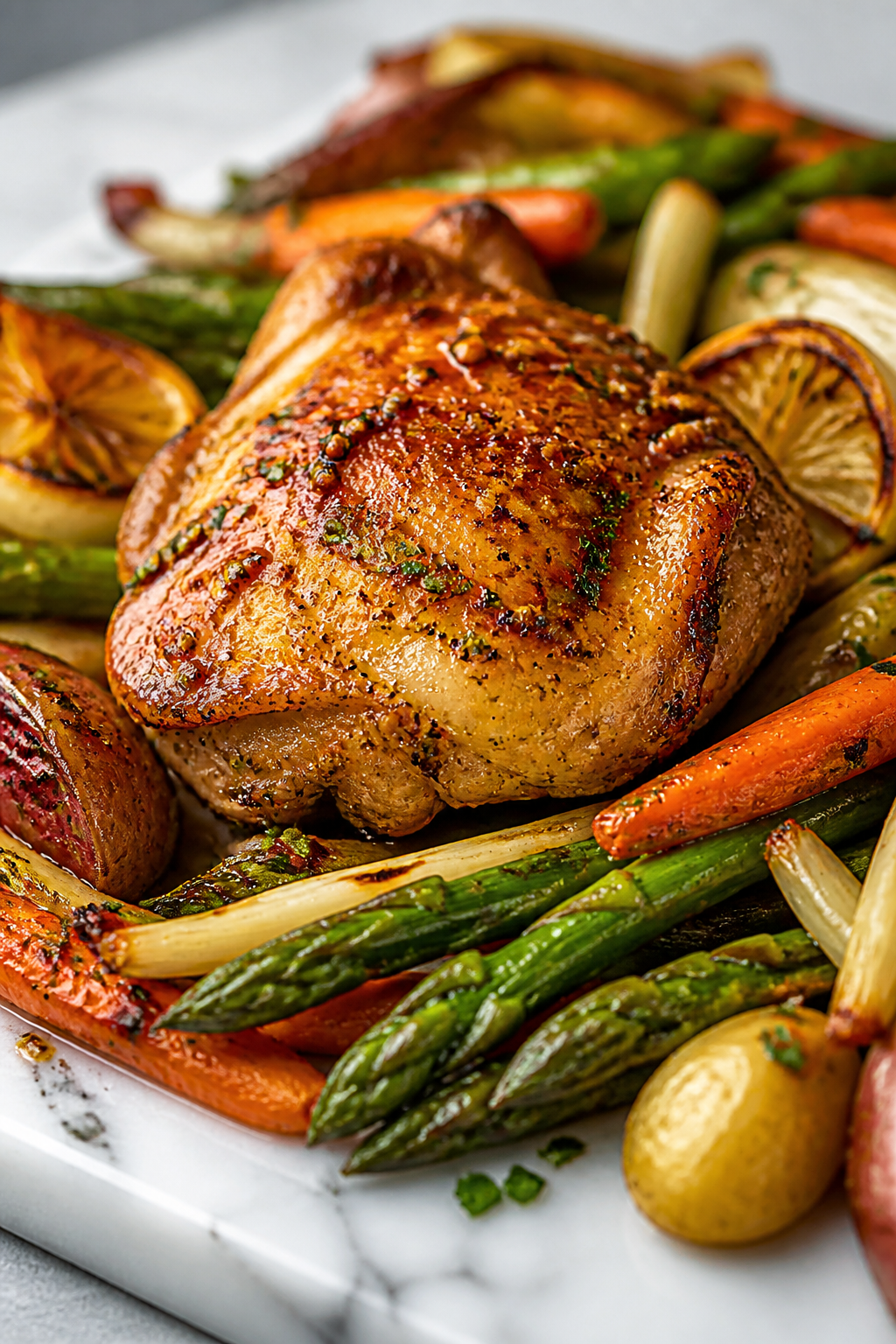
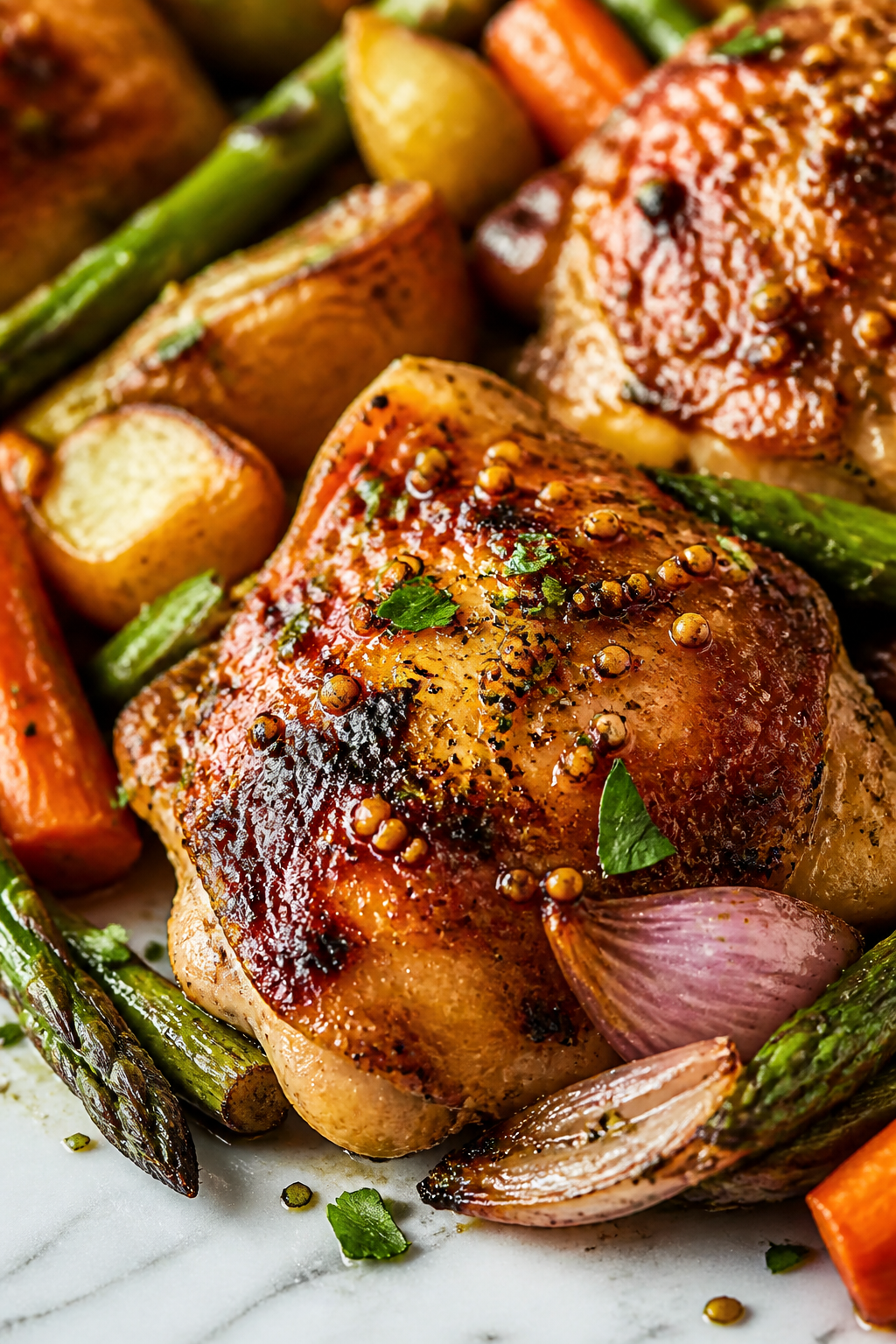
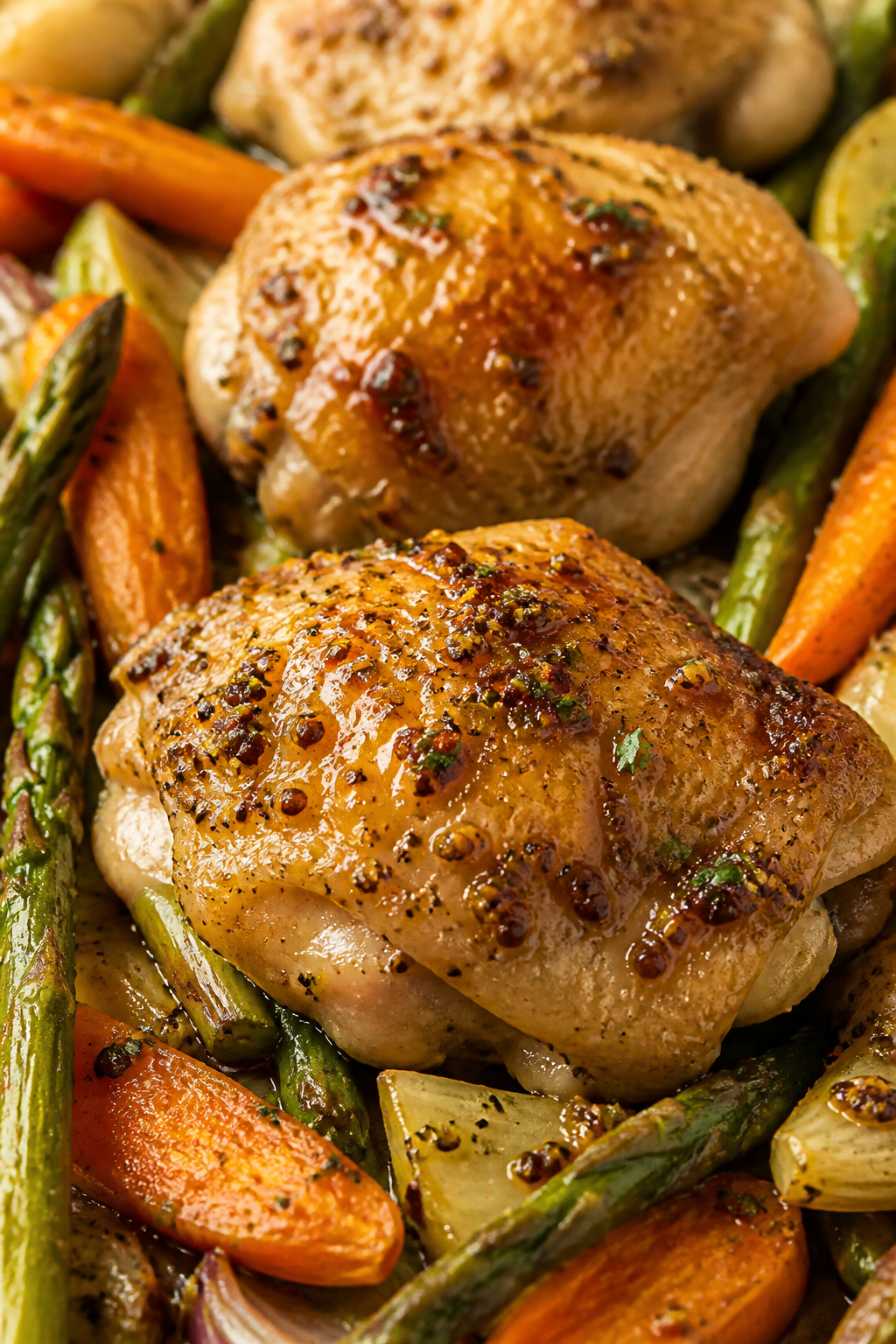
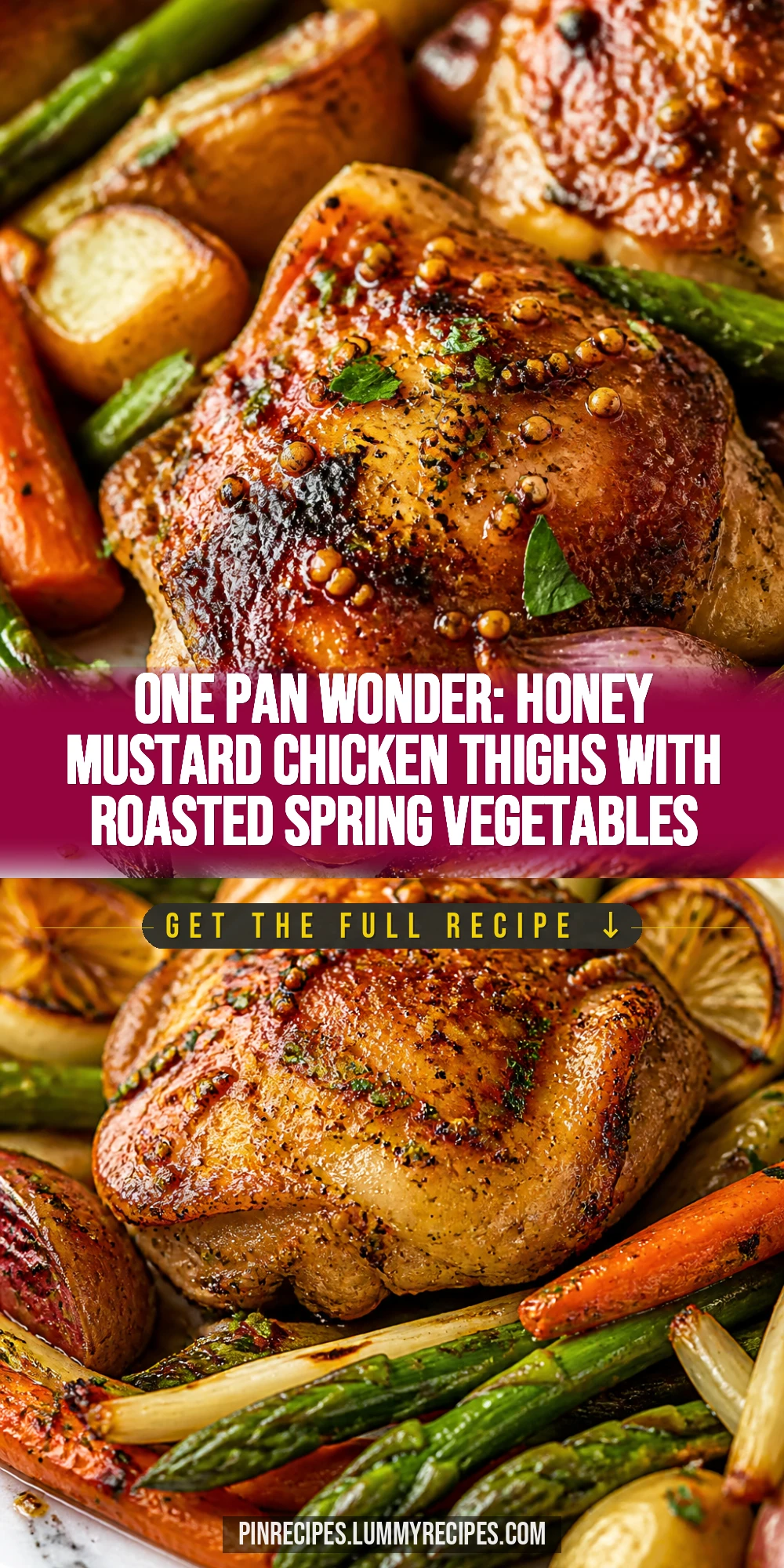
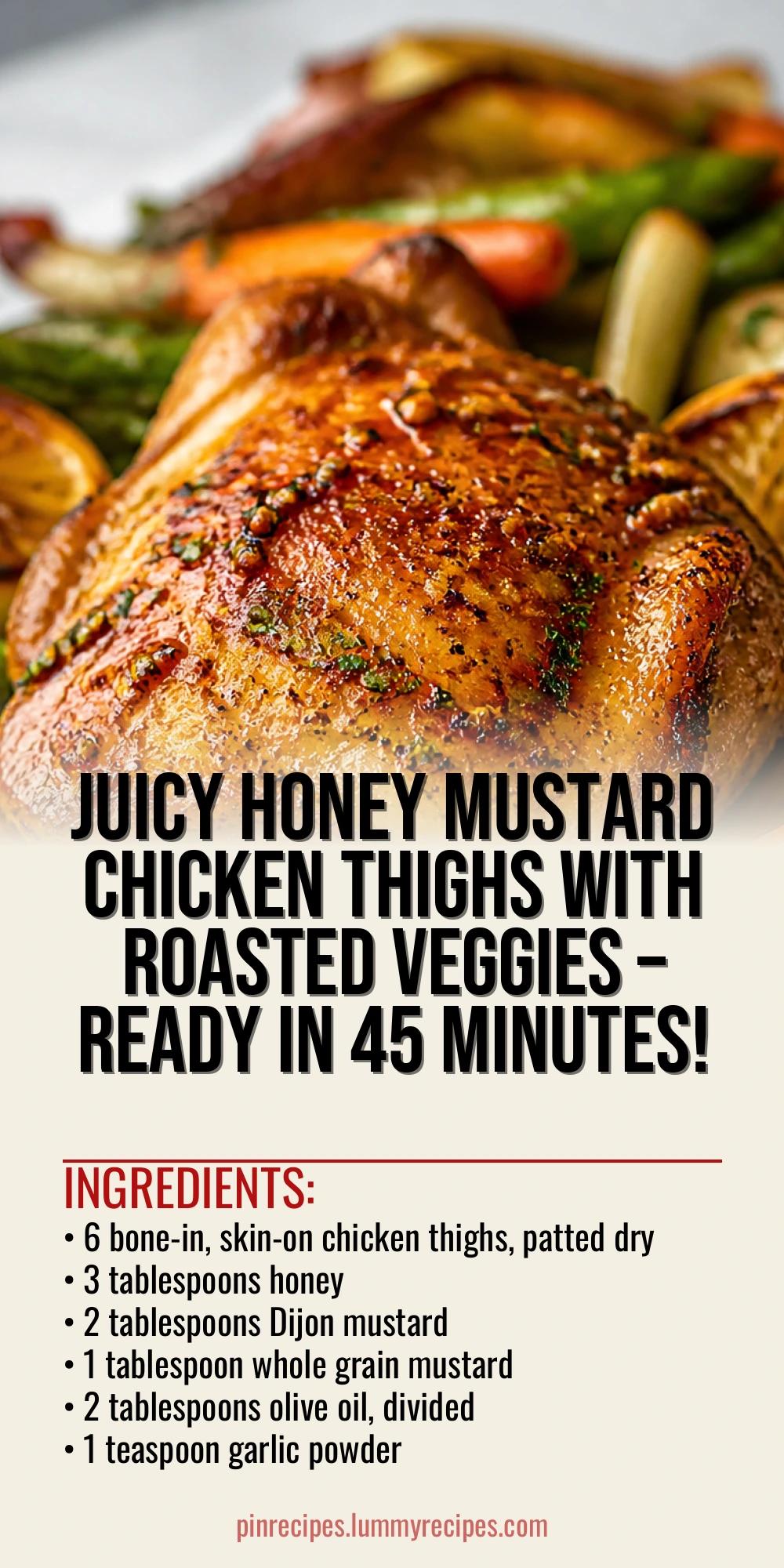
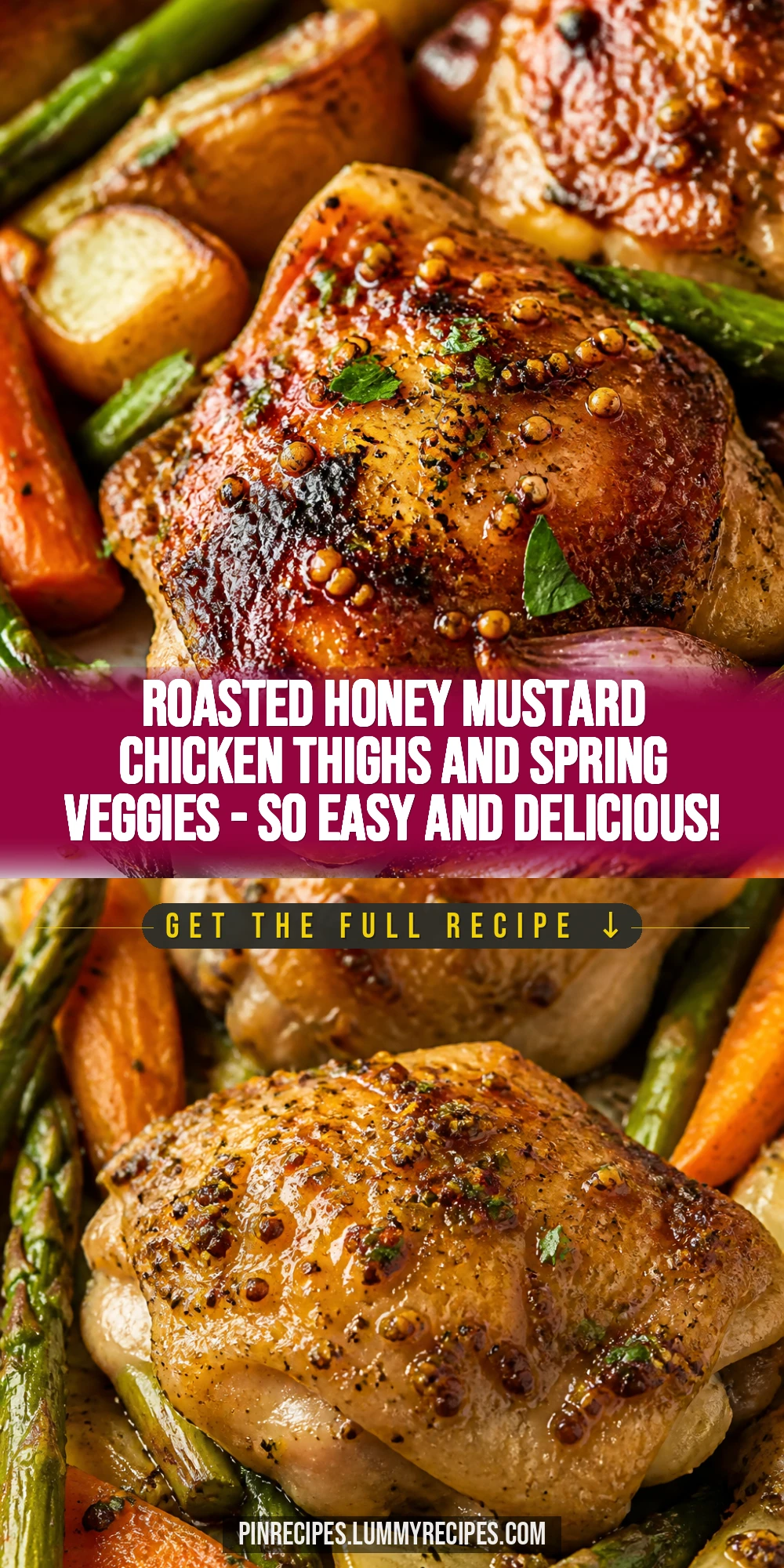
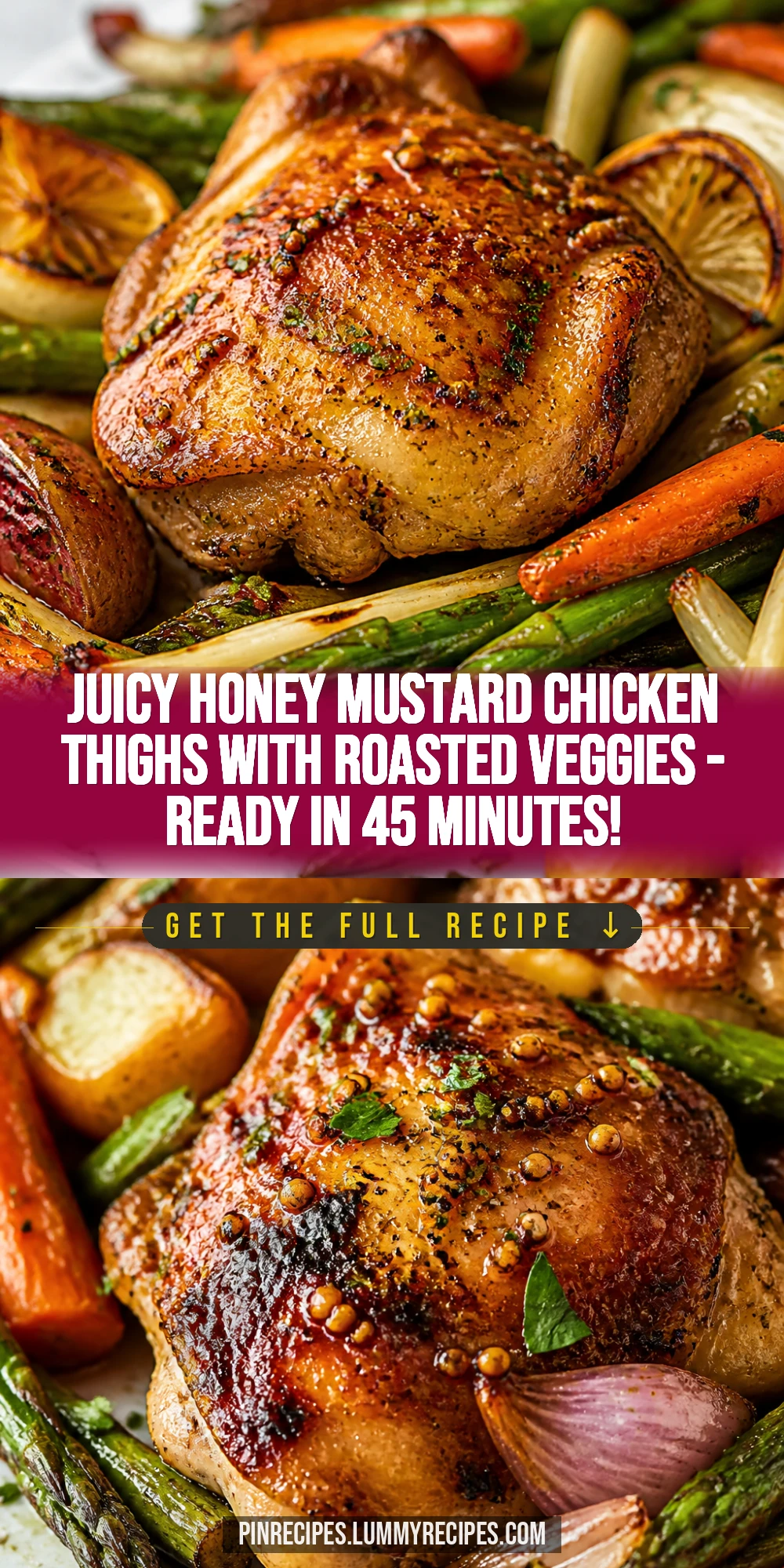
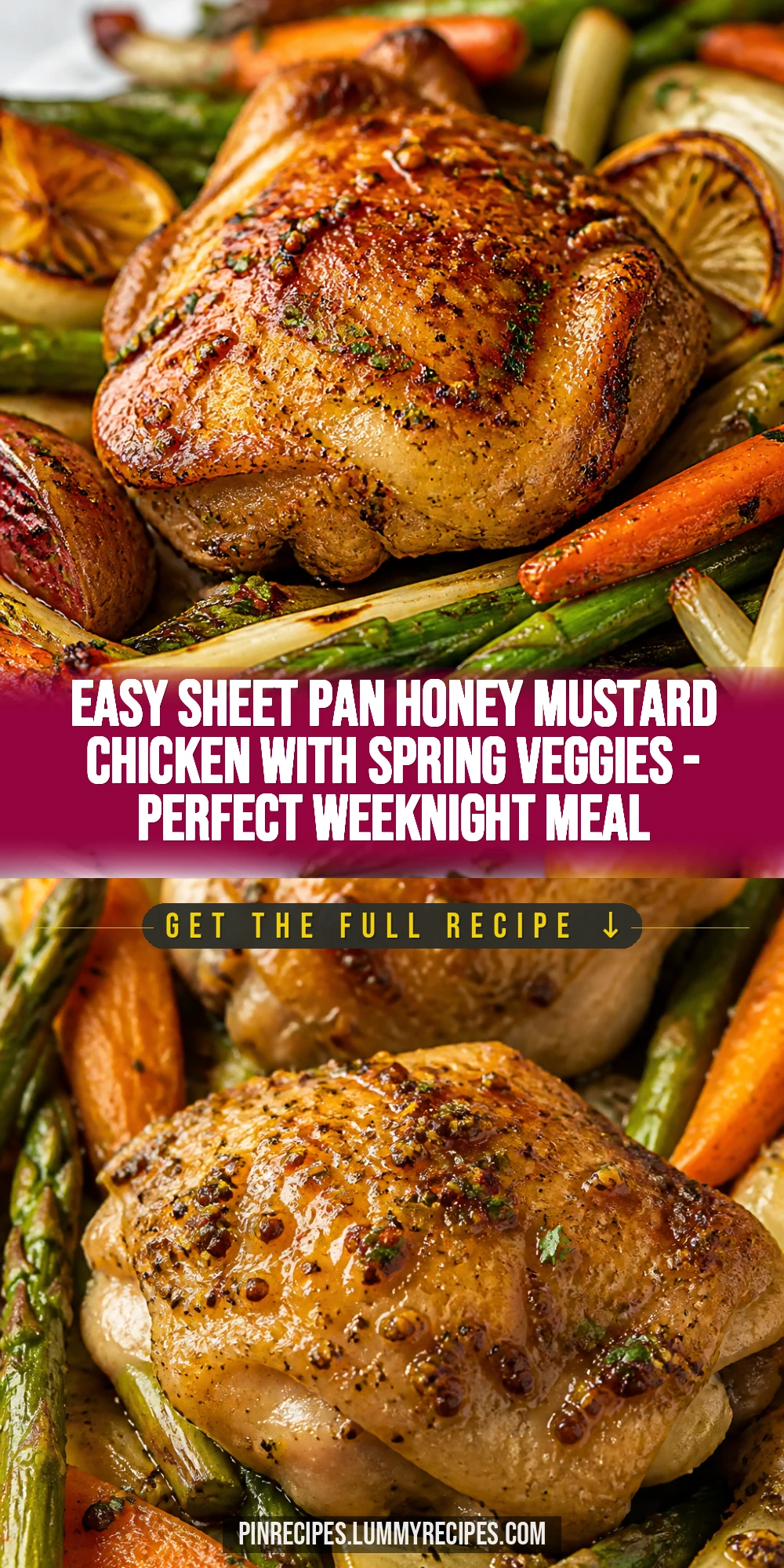
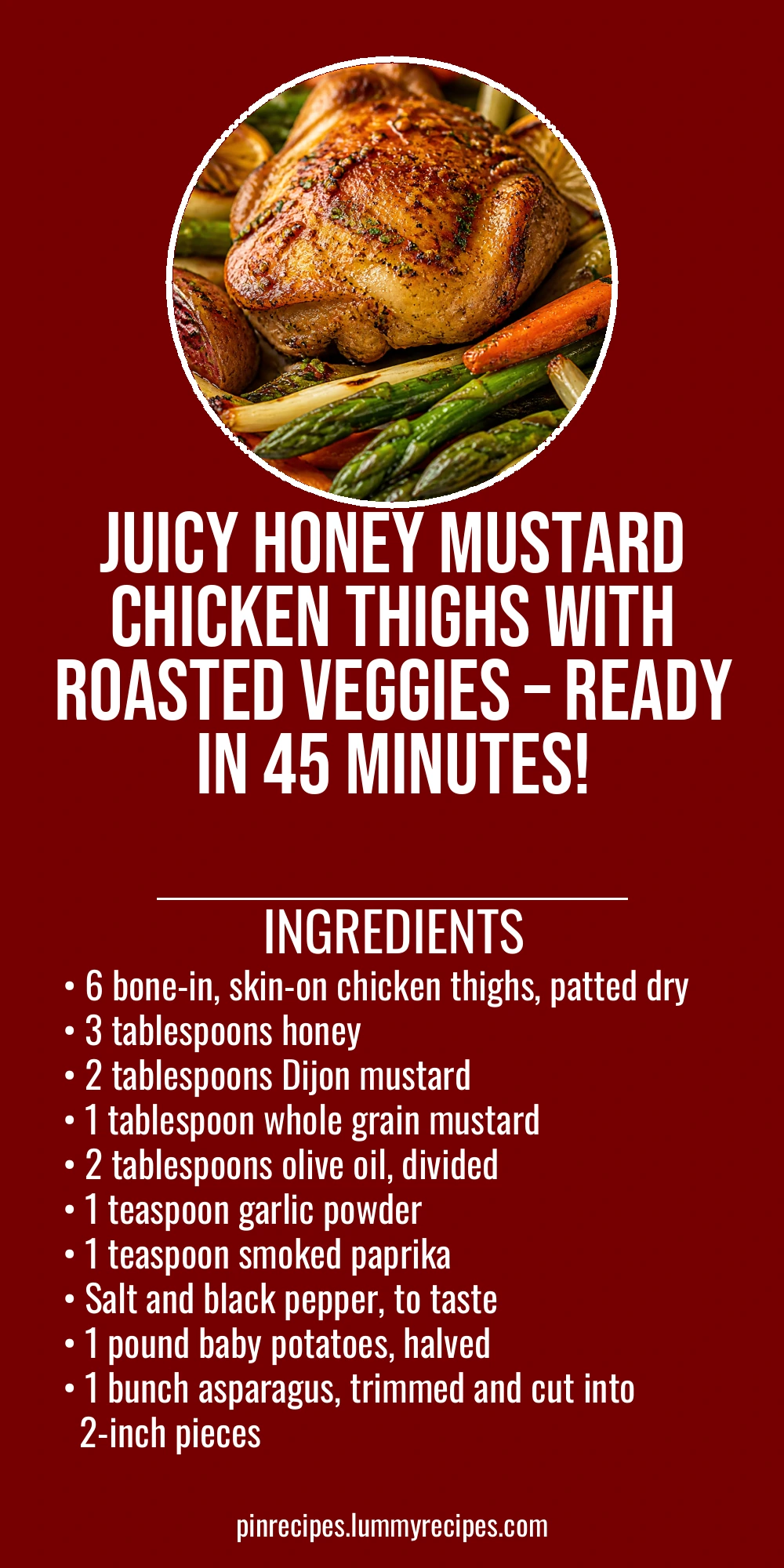
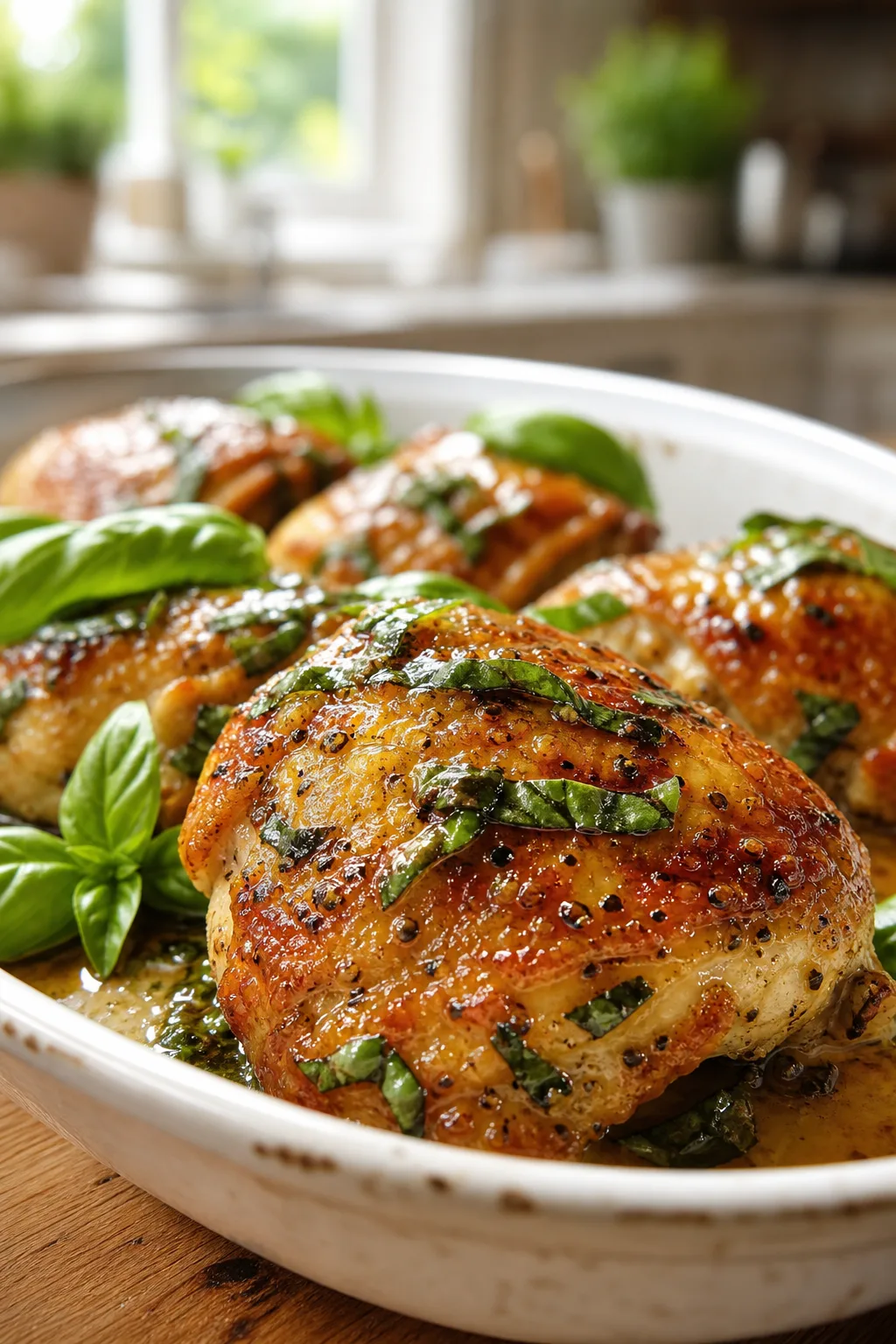
This one-pan dinner combines juicy chicken thighs with a sweet and tangy honey mustard glaze and tender roasted spring veggies. It’s an easy, no-fuss meal that’s perfect for busy weeknights or casual family dinners.
Introduction
I first made this sheet pan honey mustard chicken thighs recipe on a busy weeknight when I wanted something quick but still comforting. What I love about this dish is how everything cooks together on one pan, which means less cleanup and more time to relax. The honey mustard glaze is my favorite part — it’s sweet but with a nice tang from the Dijon and whole grain mustards. I’ve tried a few versions over the years, but the trick I learned is to pat the chicken dry before coating it. This helps the skin get crispy in the oven, which is key for that perfect bite. The spring vegetables roast alongside the chicken, soaking up all those lovely flavors, and they come out tender but still with a bit of bite. It’s a family favorite now, especially because it feels special without being complicated. Expect juicy, flavorful chicken with a golden crust and veggies that taste like sunshine on a plate.
How To Do It
Step 1
Preheat your oven to 425°F (220°C). While it heats, pat the chicken thighs dry with paper towels. This step is crucial because removing excess moisture helps the skin crisp up beautifully during roasting. If the skin is wet, it steams instead of crisps, leading to a soggy texture. Set the chicken aside while you prepare the glaze and veggies.
⏱ Time: 10 minutes
✓ Doneness: Chicken skin feels dry to the touch before glazing
Step 2
In a small bowl, whisk together honey, Dijon mustard, whole grain mustard, 1 tablespoon olive oil, garlic powder, smoked paprika, salt, and pepper. This mixture balances sweetness with tang and a smoky depth. Whisking thoroughly emulsifies the ingredients, ensuring an even coating on the chicken and vegetables for consistent flavor.
⏱ Time: 5 minutes
✓ Doneness: Glaze is smooth and well combined
Step 3
Place the halved baby potatoes on a large rimmed baking sheet. Drizzle with the remaining tablespoon of olive oil and season with salt and pepper. Toss to coat evenly. Potatoes take longer to roast, so they go on the pan first to start cooking while you prep the rest.
⏱ Time: 5 minutes
✓ Doneness: Potatoes are evenly coated and spread out in a single layer
Step 4
Arrange the chicken thighs skin-side up on the baking sheet among the potatoes. Brush each piece generously with the honey mustard glaze, making sure to get some under the skin if possible. This helps the flavor penetrate the meat and keeps the chicken moist.
⏱ Time: 5 minutes
✓ Doneness: Chicken is well coated and skin is shiny
Step 5
Roast the chicken and potatoes in the preheated oven for 20 minutes. This initial roasting time allows the chicken skin to start crisping and the potatoes to soften. Avoid opening the oven door too often, as it lowers the temperature and slows cooking.
⏱ Time: 20 minutes
✓ Doneness: Chicken skin starts turning golden and potatoes begin to soften
Step 6
Remove the baking sheet from the oven and add the asparagus, baby carrots, and lemon slices around the chicken and potatoes. Toss the veggies lightly with any remaining glaze or a drizzle of olive oil. Adding the vegetables later prevents them from overcooking and keeps them vibrant and slightly crisp.
⏱ Time: 5 minutes
✓ Doneness: Vegetables are evenly distributed and lightly coated
Step 7
Return the pan to the oven and roast for an additional 10-15 minutes, or until the chicken reaches an internal temperature of 165°F (74°C) and the vegetables are tender but not mushy. Use a meat thermometer to check doneness to avoid drying out the chicken.
⏱ Time: 10-15 minutes
✓ Doneness: Chicken juices run clear and vegetables are fork-tender
Step 8
Once cooked, remove the pan from the oven and let the chicken rest for 5 minutes before serving. Resting allows the juices to redistribute, keeping the chicken juicy and flavorful instead of drying out when cut.
⏱ Time: 5 minutes
✓ Doneness: Chicken is slightly cooled and juices are settled
Step 9
Serve the honey mustard chicken thighs with the roasted spring vegetables and lemon slices for garnish. The lemon adds a fresh brightness that complements the sweet glaze. Enjoy this easy, flavorful meal with your family or friends!
⏱ Time: Immediate
✓ Doneness: Dish is plated attractively and ready to eat
Pro Tips
Pat chicken skin dry before applying glaze.
Dry skin crisps up better in the oven. Moisture causes steaming, which prevents the skin from getting golden and crunchy, a key texture element for this dish.
Use a meat thermometer to check doneness.
Chicken thighs can dry out if overcooked. A thermometer ensures they reach the safe internal temp of 165°F without guessing, keeping the meat juicy and tender.
Spread vegetables evenly in a single layer.
Crowding the pan traps steam and prevents roasting. Even spacing allows hot air circulation, resulting in nicely browned, caramelized veggies.
Add quicker-cooking veggies later in roasting.
Vegetables like asparagus cook faster and can become mushy if added too early. Adding them midway keeps them crisp-tender and vibrant.
Let chicken rest after roasting.
Resting redistributes juices inside the meat, preventing them from spilling out when cut, which keeps the chicken moist and flavorful.
Use smoked paprika for subtle warmth.
It adds depth without heat, enhancing the honey mustard glaze’s complexity and complementing the roasted flavors.
Line your baking sheet with foil or parchment.
This makes cleanup easier and prevents the honey glaze from sticking or burning on the pan, saving time and frustration.
Common Mistakes to Avoid
Skipping drying the chicken skin.
Why it happens Many assume the glaze alone is enough, but wet skin steams instead of crisps, leading to soggy texture.
Fix Always pat the chicken skin dry with paper towels before glazing. This removes surface moisture so the skin crisps up in the oven.
Overcrowding the pan with vegetables.
Why it happens Trying to fit too many veggies on one pan can seem efficient but traps steam and prevents proper roasting.
Fix Spread vegetables in a single layer with space between pieces. Use two pans if needed to allow air circulation and browning.
Adding all vegetables at the start.
Why it happens Some veggies cook faster and can become mushy or lose color if roasted too long.
Fix Add quicker-cooking vegetables like asparagus halfway through roasting to keep them crisp and fresh.
Not using a thermometer to check chicken doneness.
Why it happens Guessing can lead to undercooked or dry chicken, as visual cues are unreliable.
Fix Use an instant-read thermometer to ensure the chicken reaches 165°F internally for safety and juiciness.
Skipping the resting period after roasting.
Why it happens Impatience or rushing to serve can cause juices to spill out when slicing, drying the meat.
Fix Let chicken rest at least 5 minutes after roasting to allow juices to redistribute and keep meat moist.
Variations
Spicy Honey Mustard Chicken
Add a teaspoon of cayenne pepper or chili flakes to the honey mustard glaze for a spicy kick. This variation adds warmth without overpowering the sweetness, perfect if you like a little heat.
Note: Adjust roasting time if needed to prevent burning the glaze due to added sugars and spices.
Lemon Herb Honey Mustard Chicken
Mix fresh chopped rosemary and thyme into the glaze and squeeze extra lemon juice over the chicken before roasting. This adds a fragrant, fresh twist that brightens the dish.
Note: Herbs can burn if exposed; tuck some under the chicken skin or add halfway through roasting.
Sheet Pan Honey Mustard Chicken with Root Vegetables
Swap spring vegetables for a mix of diced sweet potatoes, parsnips, and carrots for a heartier, earthy flavor that’s great in cooler months.
Note: Root vegetables may need a longer initial roast time; adjust accordingly.
Honey Mustard Chicken with Brussels Sprouts
Add halved Brussels sprouts to the pan with the potatoes for a slightly bitter contrast to the sweet glaze. It’s a great way to enjoy seasonal veggies.
Note: Brussels sprouts roast well but can be added with the potatoes for even cooking.
Gluten-Free Honey Mustard Chicken
Ensure all mustard and honey ingredients are gluten-free certified. This recipe naturally contains no gluten, making it safe for those with sensitivities.
Note: Check labels on mustard varieties to avoid hidden gluten.
Nutrition
Per Serving:
Nutritional values are estimates and may vary based on specific ingredients used.
Storage & Tips
Room Temperature
You can safely keep leftovers at room temperature for up to 2 hours if covered loosely. Beyond that, refrigerate to avoid bacterial growth.
Refrigerator
Store leftovers in an airtight container for up to 3 days. The chicken may lose some crispness, but reheating gently will help restore moisture. Veggies might soften but still taste great cold or warmed.
Freezer
Freeze leftovers in a freezer-safe container or bag for up to 2 months. Wrap tightly to prevent freezer burn. Thaw overnight in the fridge before reheating.
Reheating
Reheat in a 350°F oven for 15-20 minutes, adding a splash of water or broth to keep veggies moist. Avoid microwaving if possible, as it can make the chicken skin soggy.
Make Ahead
You can prepare the honey mustard glaze and chop vegetables 1-2 days ahead. Store separately in the fridge. Assemble and roast the chicken and veggies just before serving for best texture and flavor.
FAQ
Can I use boneless chicken thighs instead of bone-in?
Yes, but bone-in thighs tend to stay juicier and have more flavor. If using boneless, reduce cooking time by about 5-7 minutes and watch carefully to avoid drying out.
What if I don’t have whole grain mustard?
You can substitute with extra Dijon mustard, but you’ll lose the texture and slight bite of the mustard seeds. The glaze will still be tasty, just smoother.
Can I use frozen vegetables for this recipe?
It’s best to use fresh vegetables for roasting because frozen ones release water and can become mushy. If using frozen, thaw and pat dry thoroughly before roasting.
Is this recipe gluten-free?
Yes, as long as you check that your mustard and honey are gluten-free certified. Most pure honeys and mustards are naturally gluten-free.
How do I know when the chicken is fully cooked?
The safest way is to use an instant-read thermometer. The internal temperature should reach 165°F (74°C). The juices should run clear when pierced.
Can I make this recipe in advance?
You can prep the glaze and veggies a day ahead, but it’s best to roast the chicken and vegetables just before serving to keep textures fresh.
What sides go well with this dish?
This recipe includes vegetables, but you can serve it with a simple green salad or crusty bread to soak up the glaze for a fuller meal.
How do I prevent the honey from burning during roasting?
Roast at 425°F but keep an eye on the chicken. If the glaze starts to darken too quickly, tent loosely with foil to prevent burning while the chicken finishes cooking.
Final Thoughts
I hope you give this sheet pan honey mustard chicken thighs recipe a try soon. It’s one of those meals that feels special but comes together so easily—perfect for any night! Let me know how it turns out.