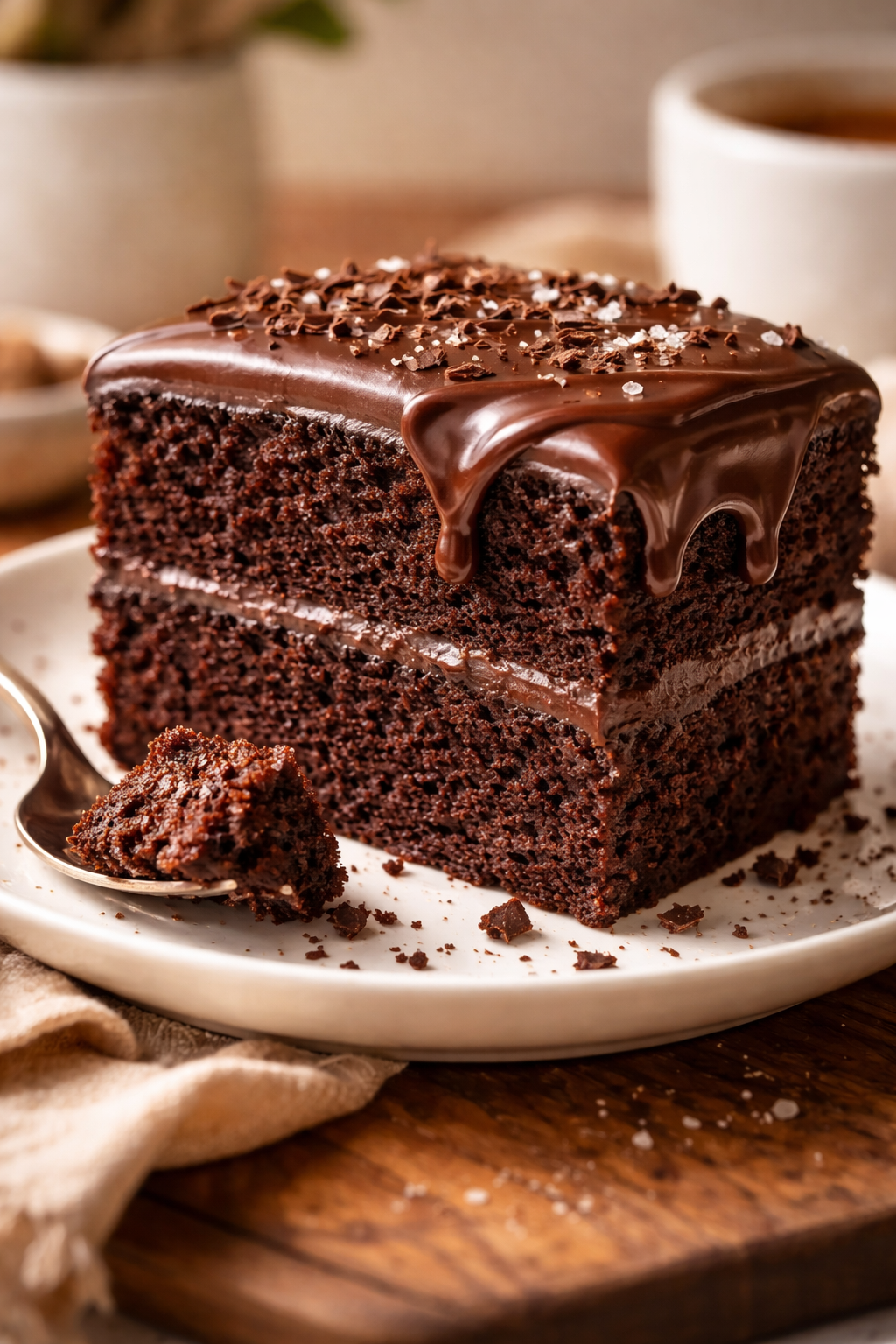
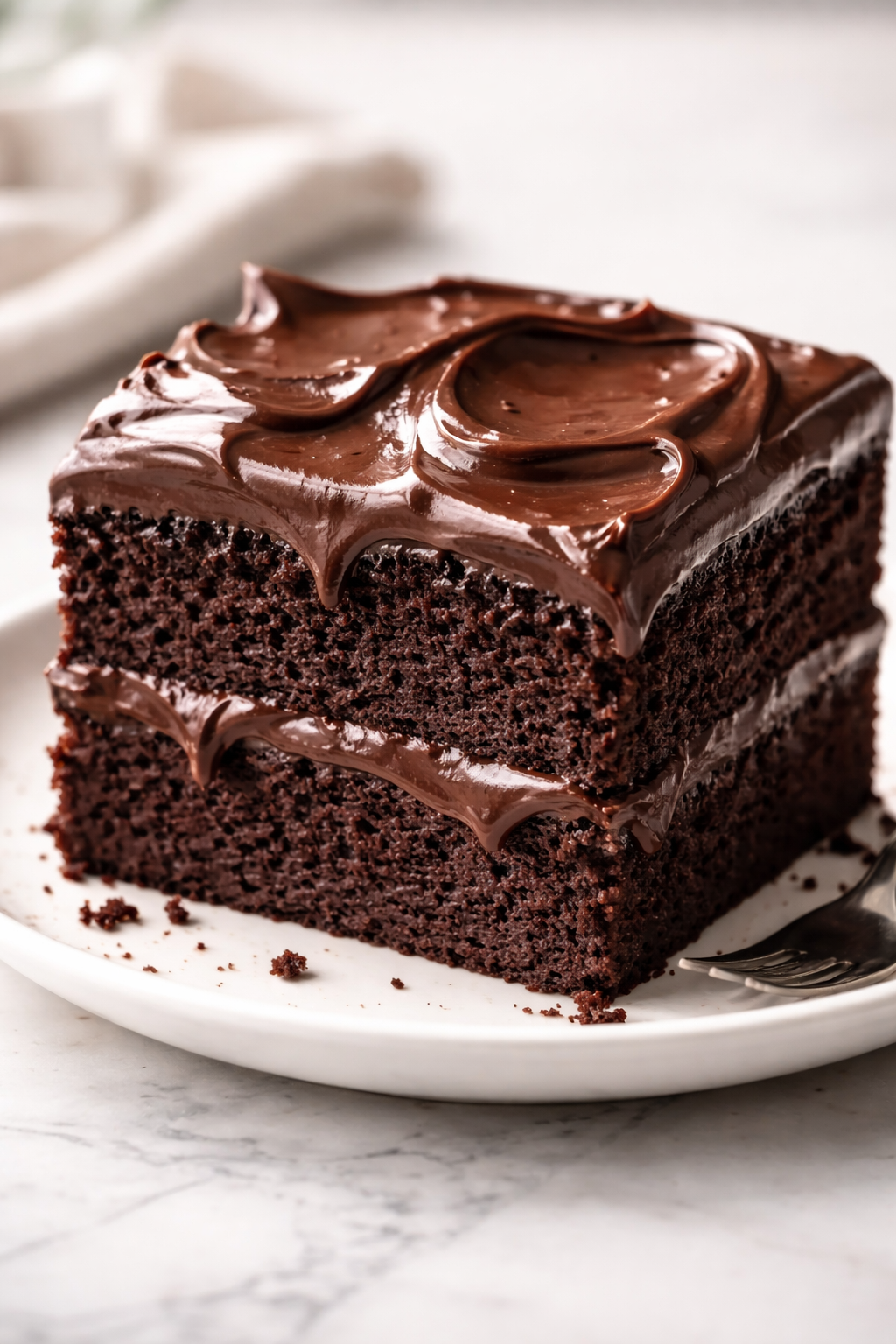
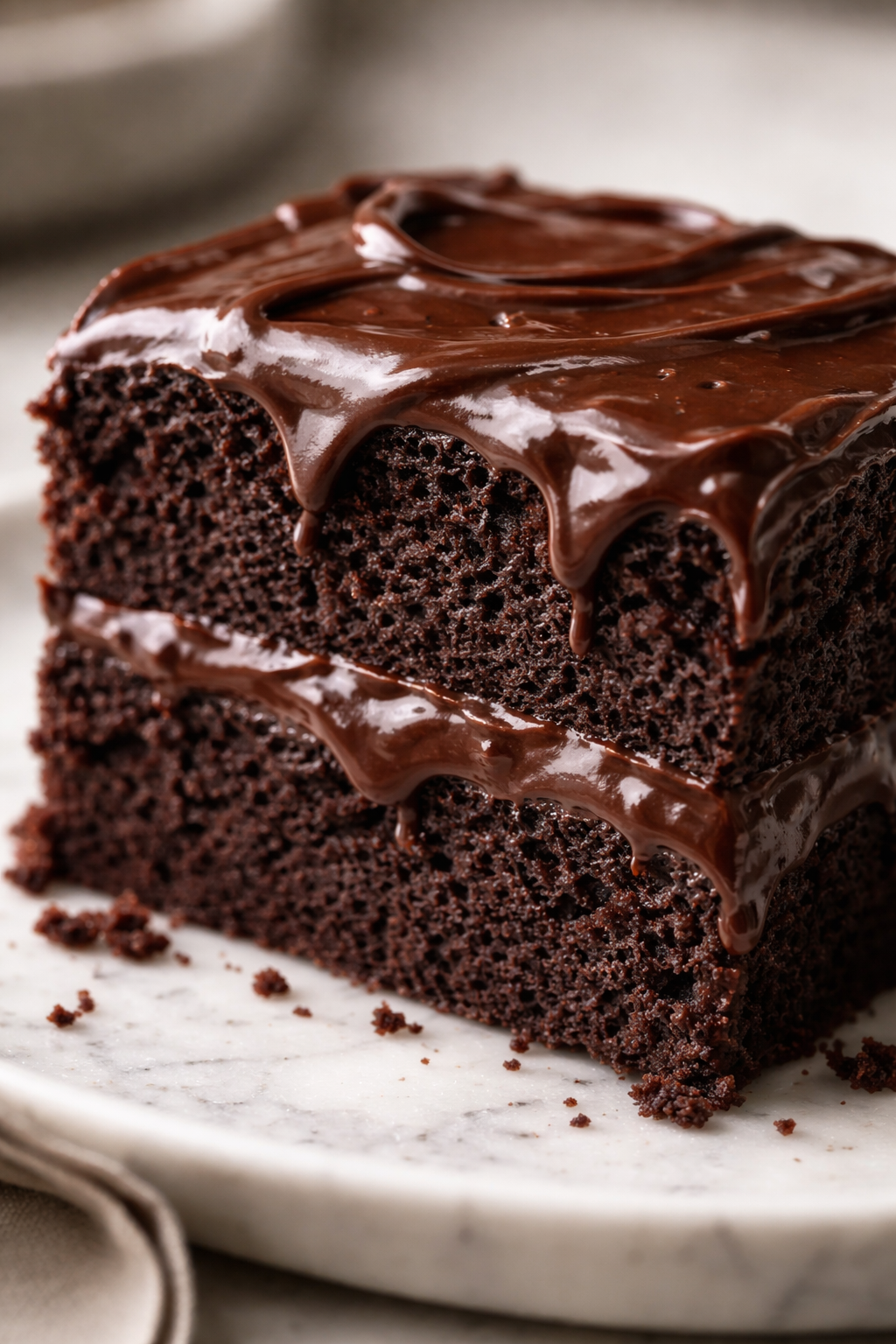
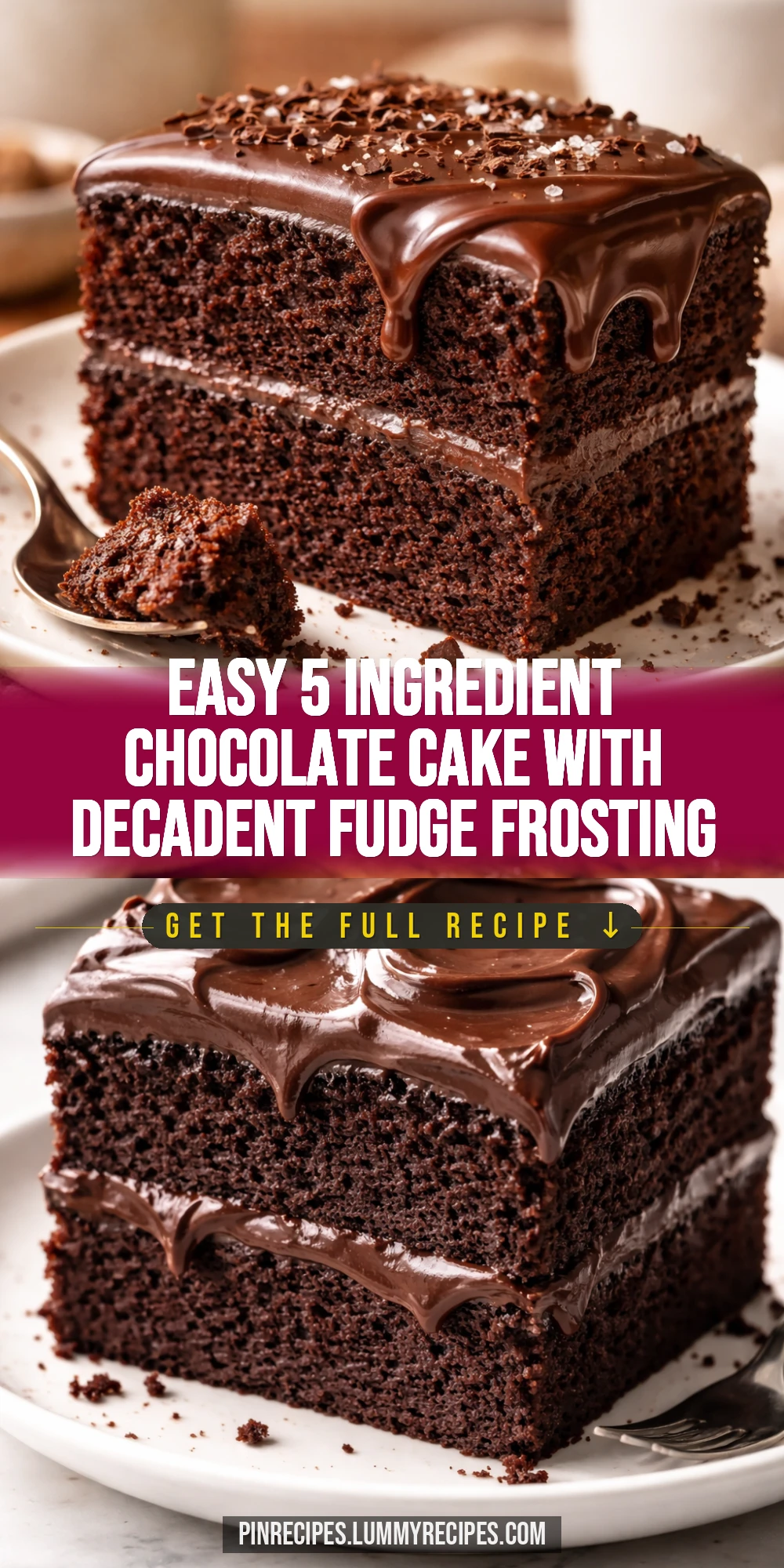
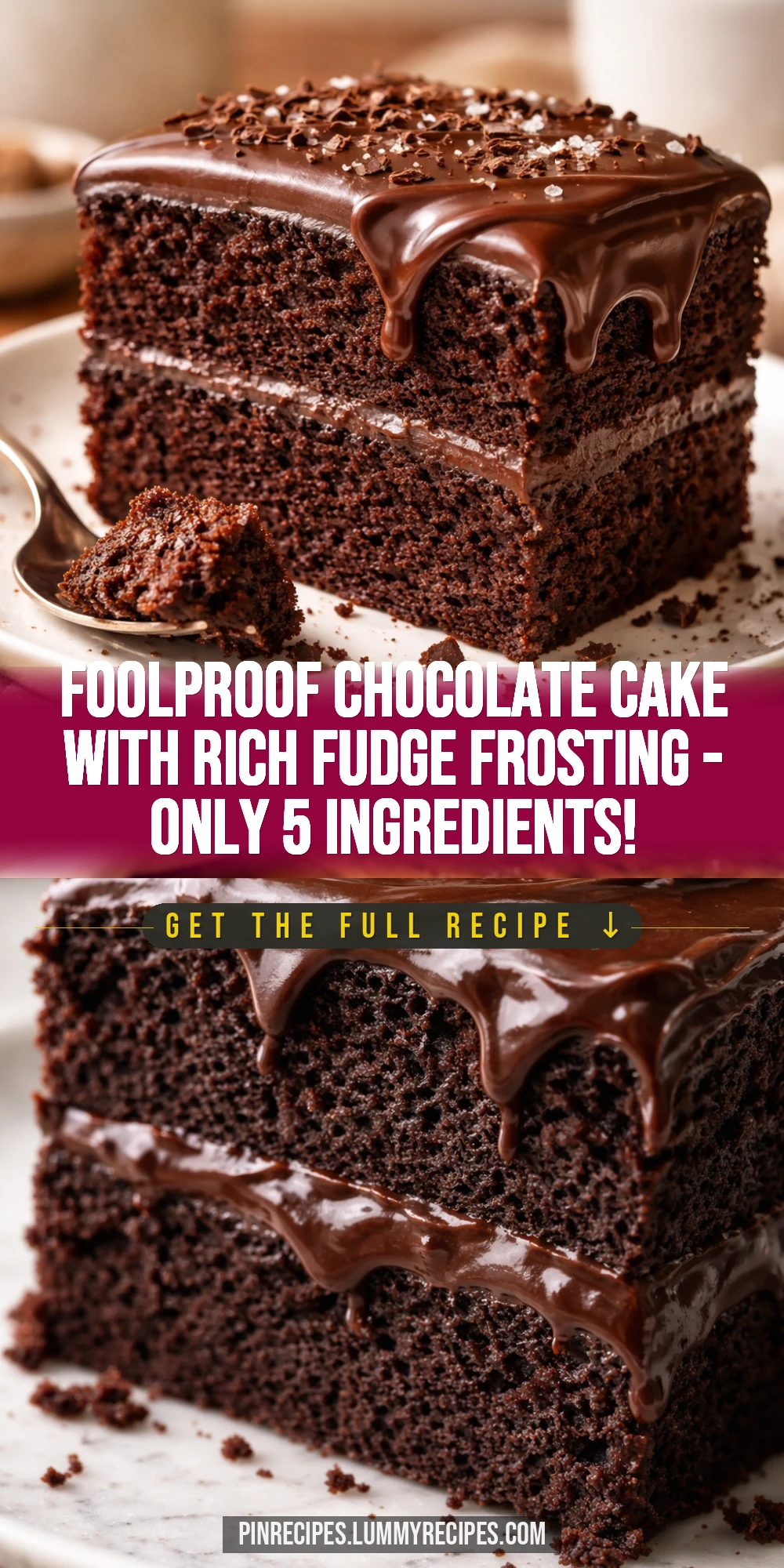
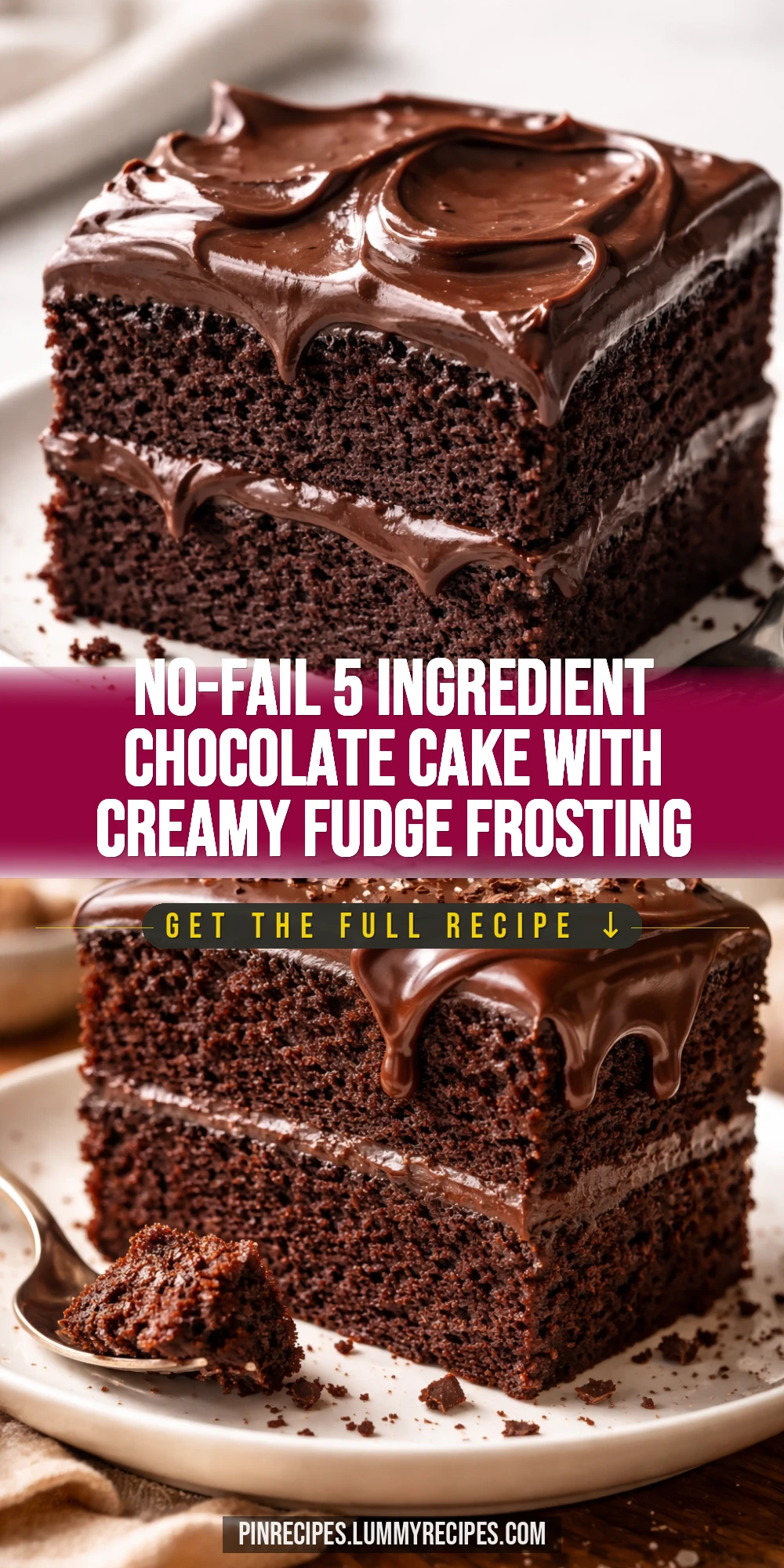
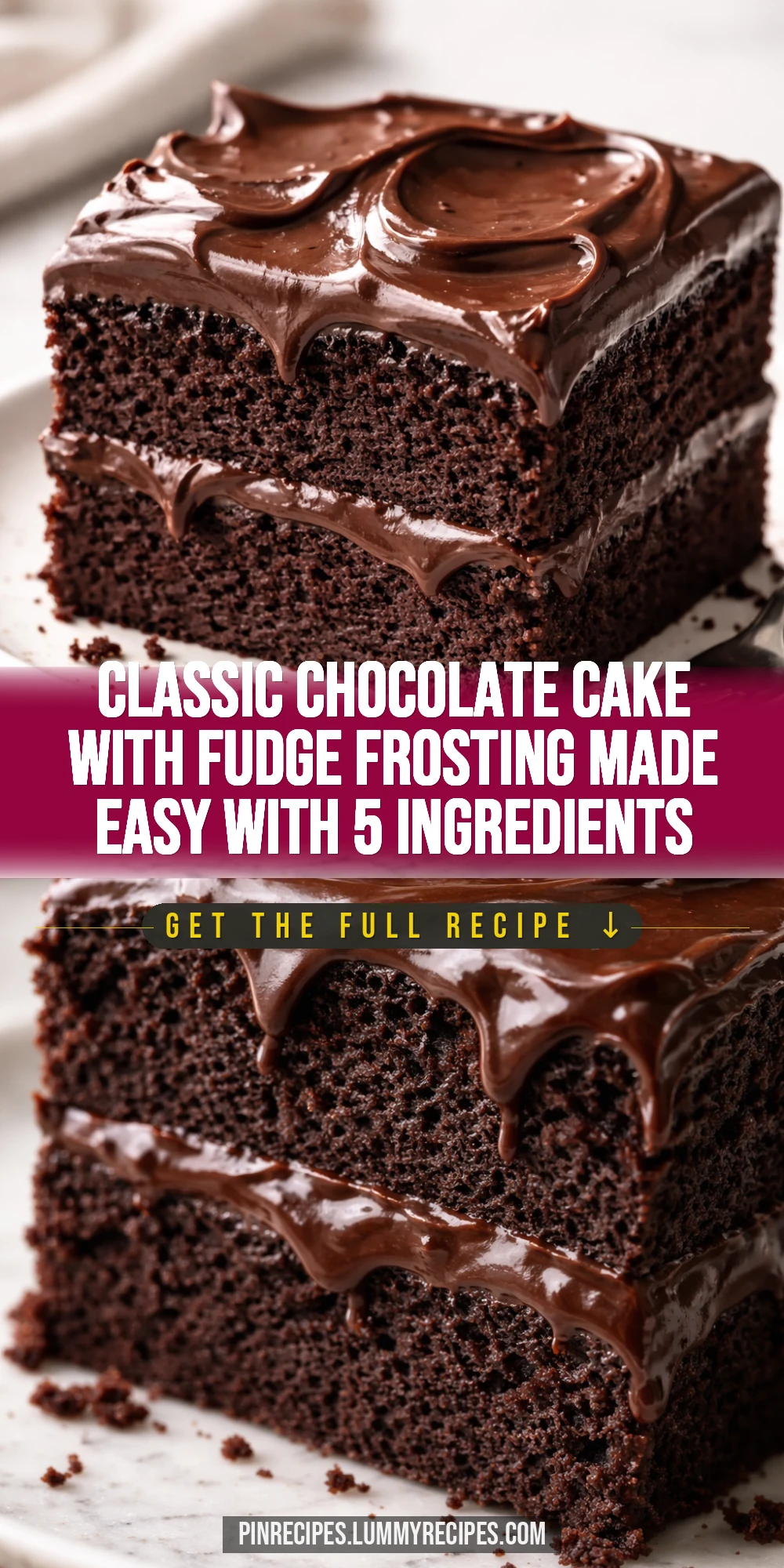
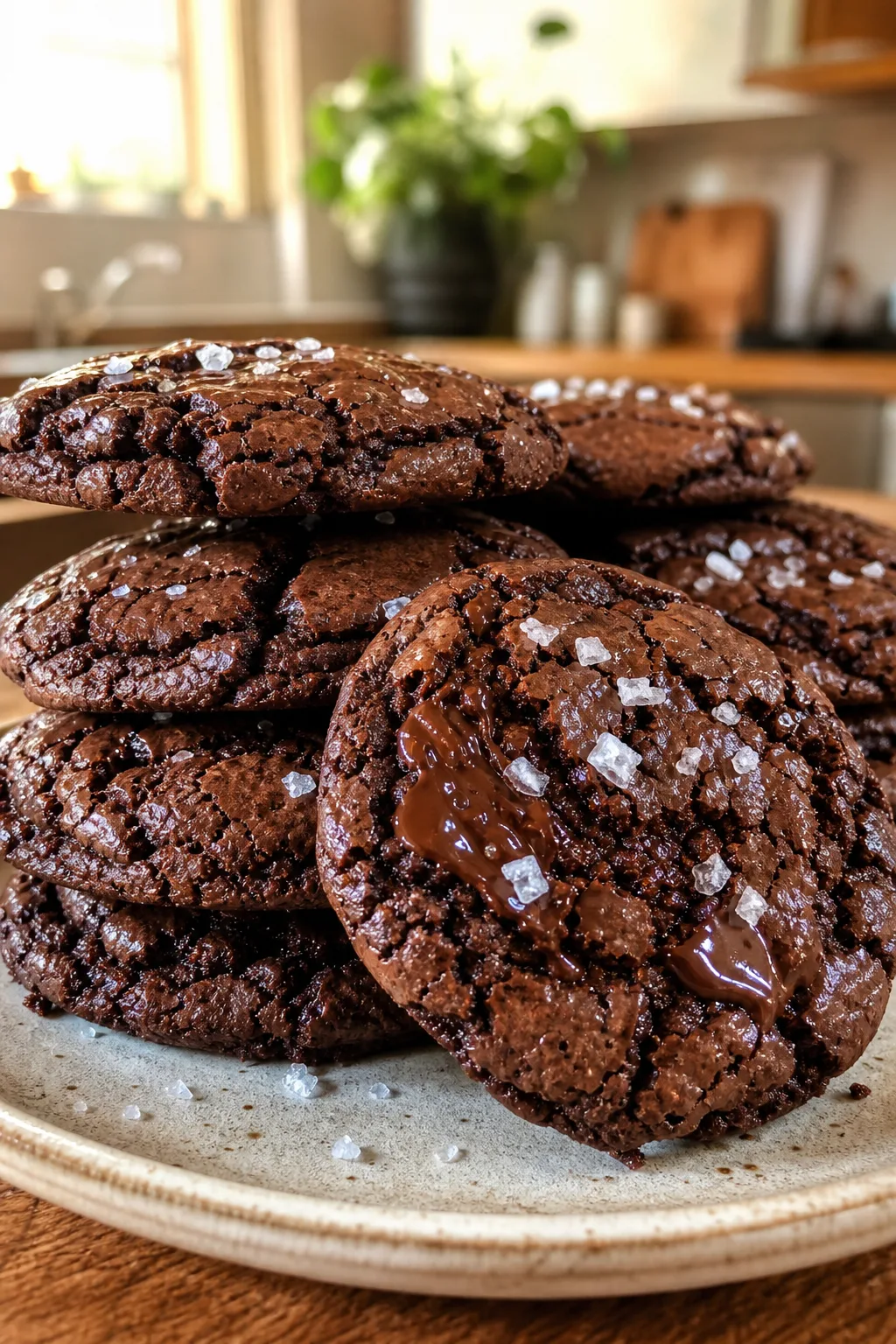
This chocolate cake is a no-fuss, rich treat made with just five ingredients. The fudge frosting is silky and indulgent without any complicated steps. It’s perfect for a cozy family dessert or last-minute celebrations!
Introduction
I remember the first time I made this chocolate cake—it was a rainy afternoon, and I just wanted something simple and sweet without a long list of ingredients. This recipe caught my eye because it uses only five basic pantry staples, yet it turns out so moist and chocolatey. What makes it stand out for me is the fudge frosting, which is rich but not too heavy, and you don’t need any fancy equipment or techniques to pull it off. I've tried other chocolate cakes before, but this one feels like the perfect balance between easy and indulgent. The trick I learned is to sift the dry ingredients well and use room temperature milk to get the batter just right. When it comes out of the oven, the cake has a tender crumb with a deep chocolate flavor that pairs beautifully with the smooth fudge frosting. It’s great for family dinners, birthdays, or even just a weekend treat when you want something comforting but fuss-free. Honestly, it’s become a staple in my kitchen because it’s reliable and always hits the spot.
What You'll Need
One 9-inch round cake, 8 servings
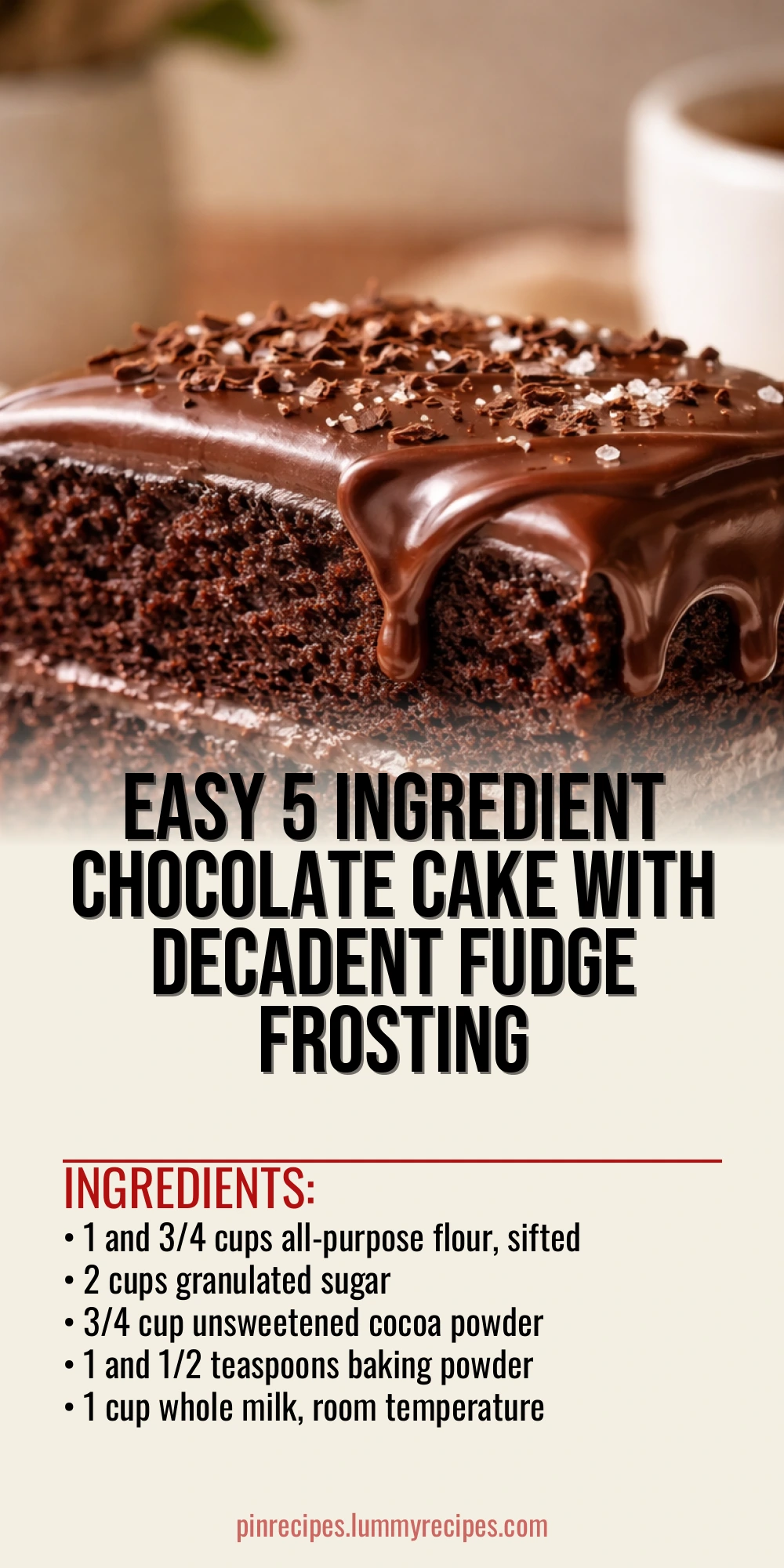
- 1 and 3/4 cups all-purpose flour, sifted
- 2 cups granulated sugar
- 3/4 cup unsweetened cocoa powder
- 1 and 1/2 teaspoons baking powder
- 1 cup whole milk, room temperature
How To Do It
Step 1
Preheat your oven to 350°F (175°C) and grease a 9-inch round cake pan with butter or nonstick spray. Then, sift together the flour, sugar, cocoa powder, and baking powder in a large bowl. Sifting helps remove lumps and aerates the dry ingredients, which is key for a light, tender cake crumb. Make sure to mix these well so the leavening agent is evenly distributed. Avoid skipping this step because clumps of cocoa or baking powder can cause uneven texture or bitter spots in the cake.
⏱ Time: 10 minutes
✓ Doneness: Dry ingredients are evenly combined with no lumps visible
Step 2
Add the milk gradually to the dry ingredients while stirring gently with a wooden spoon or spatula. Mixing slowly helps prevent overworking the batter, which can make the cake tough. Stir just until you have a smooth, thick batter—some small lumps are okay. If you mix too vigorously or too long, the gluten in the flour develops too much, resulting in a dense cake. The batter should be pourable but not runny.
⏱ Time: 5 minutes
✓ Doneness: Smooth, thick batter with no dry flour patches
Step 3
Pour the batter into the prepared pan and use a spatula to smooth the top evenly. This ensures the cake bakes uniformly and looks neat when finished. Tap the pan gently on the counter to release any air bubbles trapped in the batter. Air bubbles can cause holes or uneven texture in the finished cake if left unchecked.
⏱ Time: 5 minutes
✓ Doneness: Batter surface is smooth and even
Step 4
Bake the cake in the preheated oven for about 30 minutes. Start checking at 25 minutes by inserting a toothpick into the center; it should come out with a few moist crumbs but no wet batter. Baking times can vary based on your oven, so watch closely near the end. Overbaking will dry out the cake, while underbaking leaves it gooey and unstable.
⏱ Time: 30 minutes
✓ Doneness: Toothpick comes out mostly clean with a few moist crumbs
Step 5
Once baked, remove the cake from the oven and let it cool in the pan for 10 minutes. This resting time lets the cake firm up a bit, making it easier to remove without breaking. After that, turn it out onto a wire rack to cool completely before frosting. Frosting a warm cake will cause the frosting to melt and slide off.
⏱ Time: 15 minutes
✓ Doneness: Cake is warm but not hot and can be handled without crumbling
Step 6
To make the fudge frosting, melt 1 cup of semisweet chocolate chips and 1/2 cup of heavy cream together in a heatproof bowl over simmering water, stirring constantly until smooth. This gentle melting prevents the chocolate from burning and keeps the frosting silky. Avoid direct heat or microwave melting without stirring, which can cause the chocolate to seize.
⏱ Time: 10 minutes
✓ Doneness: Smooth, glossy chocolate mixture with no lumps
Step 7
Remove the chocolate mixture from heat and let it cool slightly. Then, whisk in 2 tablespoons of unsalted butter until fully incorporated. The butter adds richness and helps the frosting set with a nice sheen. If the mixture is too hot when adding butter, it might separate, so be sure it’s just warm to the touch.
⏱ Time: 5 minutes
✓ Doneness: Frosting is thickened and smooth, ready to spread
Step 8
Spread the fudge frosting evenly over the cooled cake using an offset spatula or the back of a spoon. Start from the center and work outwards, covering the top and sides if desired. The frosting should be thick but spreadable. If it's too stiff, let it warm slightly; if too runny, chill briefly before spreading.
⏱ Time: 10 minutes
✓ Doneness: Cake is fully covered with smooth, even frosting
Step 9
Let the frosted cake set at room temperature for about 30 minutes before slicing. This allows the frosting to firm up a bit for cleaner cuts. Use a sharp knife wiped clean between each slice to avoid smearing. Serve with a glass of milk or your favorite hot drink for a classic comforting dessert experience.
⏱ Time: 30 minutes
✓ Doneness: Frosting is set but still soft, cake slices cleanly
Pro Tips
Always sift your dry ingredients together before mixing.
Sifting removes lumps and aerates the ingredients, which helps the cake rise evenly and prevents pockets of dry flour or cocoa. It also ensures the leavening agent is spread uniformly, giving a consistent texture.
Use room temperature milk for the batter.
Cold milk can cause the batter to seize or become uneven, leading to a dense or unevenly baked cake. Room temperature milk blends better and encourages even baking and a tender crumb.
Don’t overmix the batter once liquids are added.
Overmixing develops gluten in the flour, which makes the cake tough and chewy instead of soft and tender. Mix just until ingredients are combined for the best texture.
Let the cake cool completely before frosting.
Frosting a warm cake can cause the frosting to melt and slide off, ruining the appearance and texture. Cooling ensures the frosting sets properly and looks smooth.
Use an offset spatula for spreading frosting evenly.
An offset spatula gives better control and smooth results, helping you create a professional-looking finish without tearing the cake surface.
Check your baking powder’s freshness regularly.
Expired baking powder loses its leavening power, resulting in a flat, dense cake. Test it by mixing a small amount with hot water; it should fizz immediately if fresh.
Tap the cake pan gently before baking.
Tapping releases trapped air bubbles in the batter, preventing holes or uneven texture in the finished cake.
Common Mistakes to Avoid
Skipping sifting of dry ingredients
Why it happens Many cooks assume it's an unnecessary extra step or are in a hurry, so they mix dry ingredients directly.
Fix Always sift your flour, cocoa, sugar, and baking powder together. It removes lumps and ensures even distribution, preventing bitter clumps and uneven texture.
Adding cold milk straight from the fridge
Why it happens People often forget to take milk out ahead of time or don’t plan for it.
Fix Bring milk to room temperature before mixing. You can warm it slightly in the microwave for 15 seconds if needed to avoid curdling and ensure smooth batter.
Overmixing the batter
Why it happens Some think more mixing equals better blending, but it develops gluten.
Fix Stir gently and stop as soon as ingredients come together. The batter should be thick but smooth, not runny or elastic.
Frosting the cake while still warm
Why it happens Impatience or underestimating cooling time.
Fix Allow the cake to cool completely on a wire rack before frosting to prevent melting and sliding of the frosting.
Using expired baking powder
Why it happens Baking powder often gets overlooked in pantry checks.
Fix Test baking powder freshness by adding a teaspoon to hot water; it should bubble vigorously. Replace if no reaction.
Variations
Add a pinch of cinnamon
Mix 1/2 teaspoon cinnamon into the dry ingredients for a warm, spicy twist that complements the chocolate beautifully. It adds depth without overpowering the classic flavor.
Note: No change in baking time needed; just ensure cinnamon is evenly sifted with dry ingredients.
Use coffee instead of milk
Replace the milk with brewed coffee (cooled) to intensify the chocolate flavor. Coffee enhances cocoa’s richness and adds a subtle complexity to the cake.
Note: Use room temperature coffee to avoid affecting batter texture; baking time remains the same.
Top with fresh berries
After frosting, add fresh raspberries or strawberries on top for a fresh, tangy contrast. It brightens the dessert and adds a lovely color pop.
Note: Add berries just before serving to keep them fresh and prevent moisture from softening the frosting.
Make it gluten-free
Swap all-purpose flour with a gluten-free baking blend of equal measure. This makes the cake suitable for gluten-sensitive guests without sacrificing texture.
Note: Use a blend with xanthan gum included for best results; baking time may vary slightly—check doneness early.
Add chopped nuts
Fold in 1/2 cup chopped walnuts or pecans into the batter for a crunchy texture contrast. Nuts add a lovely earthiness that pairs well with chocolate.
Note: Gently fold nuts in after mixing wet and dry ingredients; no change in baking time.
Nutrition
Per Serving:
Nutritional values are estimates and may vary based on specific ingredients used.
Storage & Tips
Room Temperature
Keep the cake covered loosely with a cake dome or foil at room temperature for up to 2 days. This prevents it from drying out while keeping the frosting soft. Avoid direct sunlight or heat sources.
Refrigerator
Store the cake in an airtight container or covered tightly with plastic wrap in the fridge for up to 5 days. The frosting firms up when chilled, so let the cake sit at room temperature for 20 minutes before serving to soften the frosting.
Freezer
Wrap the cake tightly in plastic wrap and then foil to freeze for up to 2 months. Thaw overnight in the refrigerator, then bring to room temperature before serving. Freezing may slightly change the texture of the frosting.
Reheating
Warm individual slices gently in the microwave for 10-15 seconds to soften the frosting and enhance flavors. Avoid overheating which can melt the frosting completely and make the cake soggy.
Make Ahead
You can bake the cake layers 1-2 days ahead and keep them wrapped tightly at room temperature or refrigerated. Prepare the fudge frosting the day of serving for best texture and spread it on cooled cake layers just before serving.
FAQ
Can I use baking soda instead of baking powder?
Baking soda requires an acidic ingredient to activate, which this recipe doesn’t include. Using baking soda alone will result in a flat or oddly flavored cake. Stick to baking powder for the right rise and texture.
What if I don’t have cocoa powder?
Cocoa powder is essential for the chocolate flavor and structure here. Using melted chocolate instead would change the recipe ratios and texture. It’s best to use unsweetened cocoa powder for this cake.
Can I make this cake vegan?
You can substitute the milk with plant-based milk like almond or oat milk, and replace butter in the frosting with a vegan butter alternative. Keep in mind it might slightly affect texture and taste, but it still works well.
How do I know when the cake is done?
Insert a toothpick into the center of the cake; it should come out with a few moist crumbs but no wet batter. If it’s too wet, bake a few minutes longer, checking often to avoid drying out.
Can I double this recipe for a larger cake?
Yes, doubling works fine. Use two pans or a larger pan and adjust baking time accordingly, checking doneness early. Larger pans may need 5-10 extra minutes.
What’s the best way to store leftovers?
Cover the cake tightly with plastic wrap or store in an airtight container in the fridge for up to 5 days. Bring to room temperature before serving for best flavor.
Why is my cake dry sometimes?
Dry cake usually results from overbaking or overmixing. Check your oven temperature and baking time carefully, and mix batter just until combined to keep the cake moist.
Can I freeze the frosted cake?
Yes, but wrap it tightly to prevent freezer burn. Thaw in the fridge overnight and bring to room temperature before serving. The frosting texture may be a bit different after freezing.
Final Thoughts
I hope you enjoy making this simple chocolate cake as much as my family does! It’s a sweet, fuss-free treat that always brings smiles. Give it a try and let me know how it turns out!