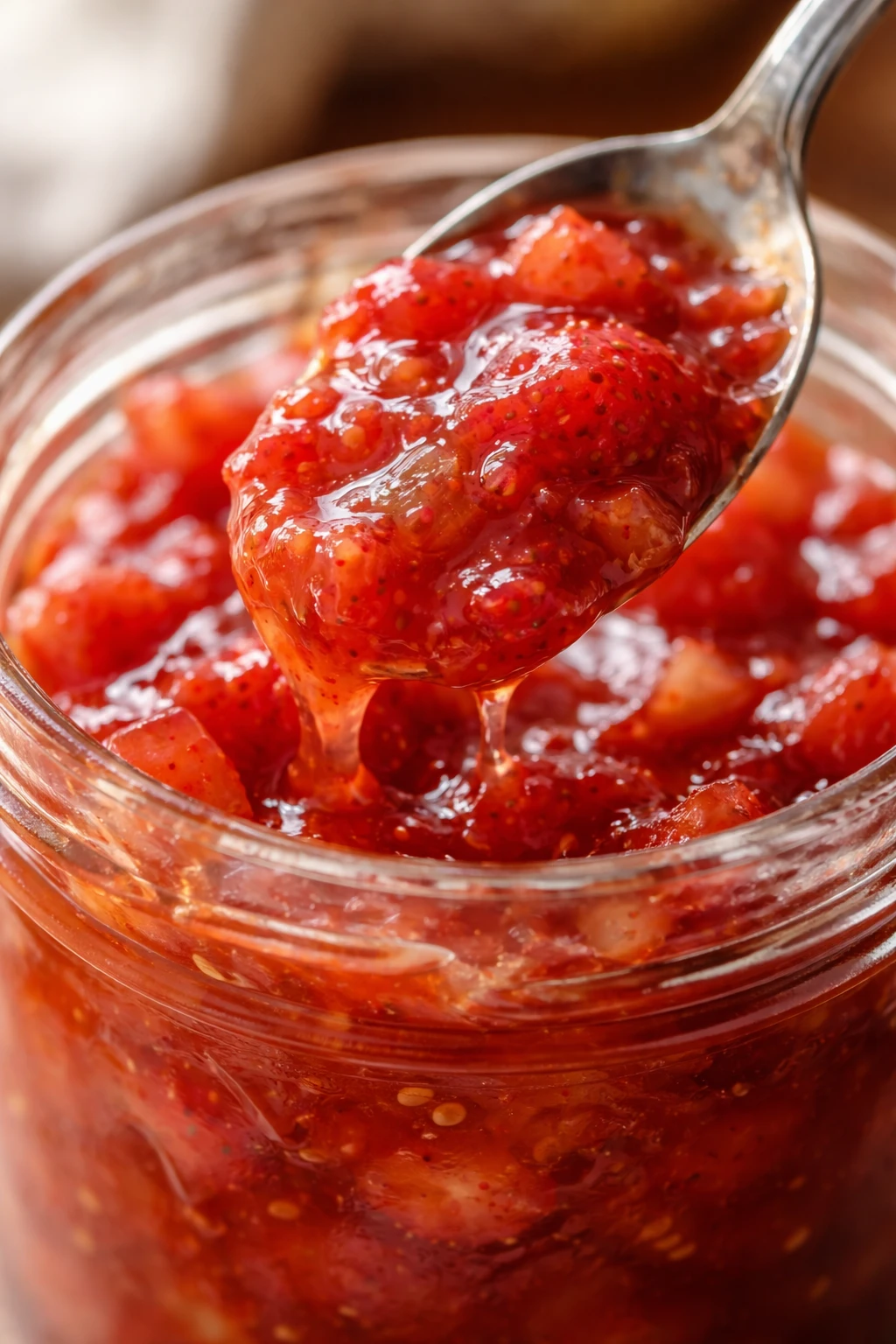
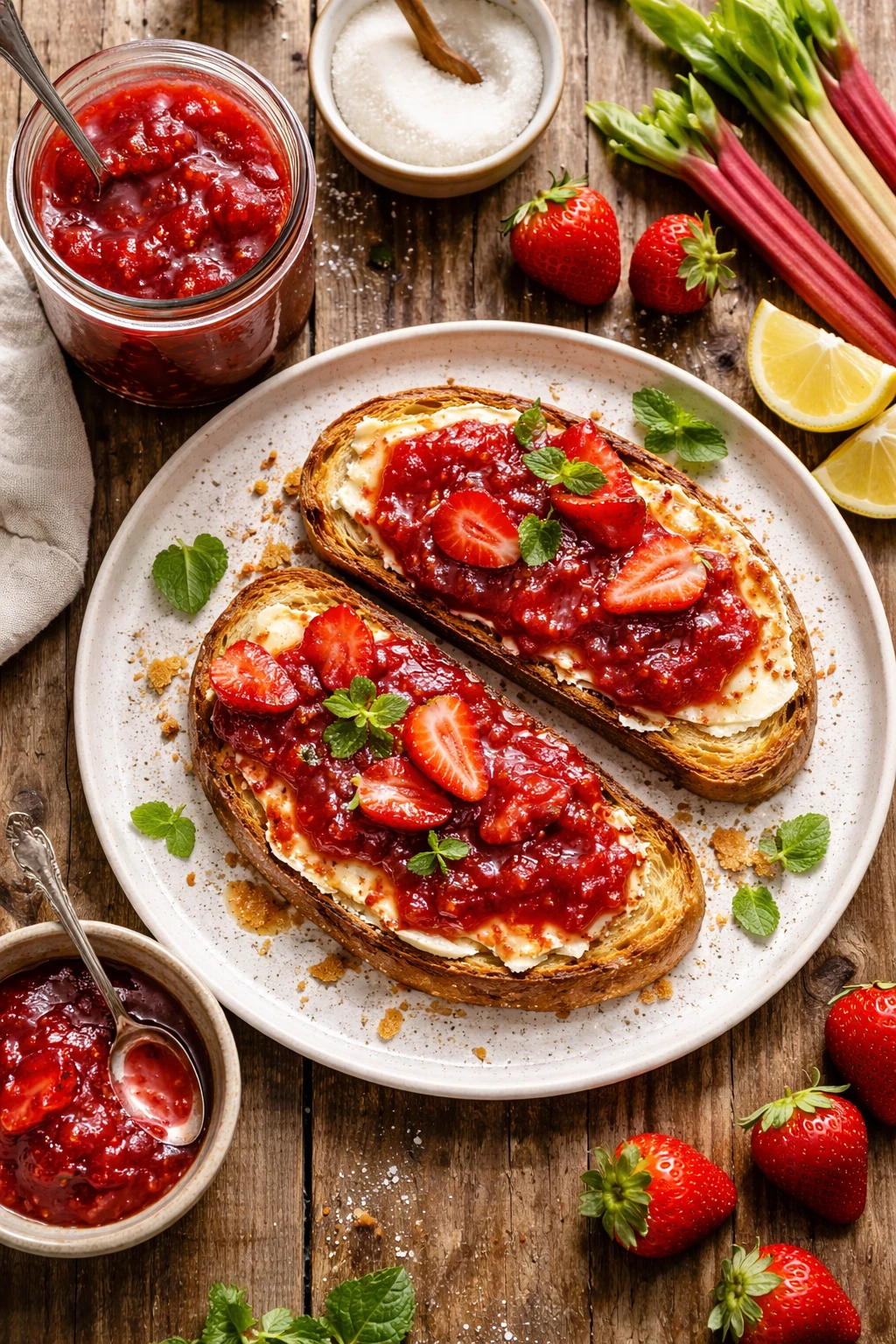
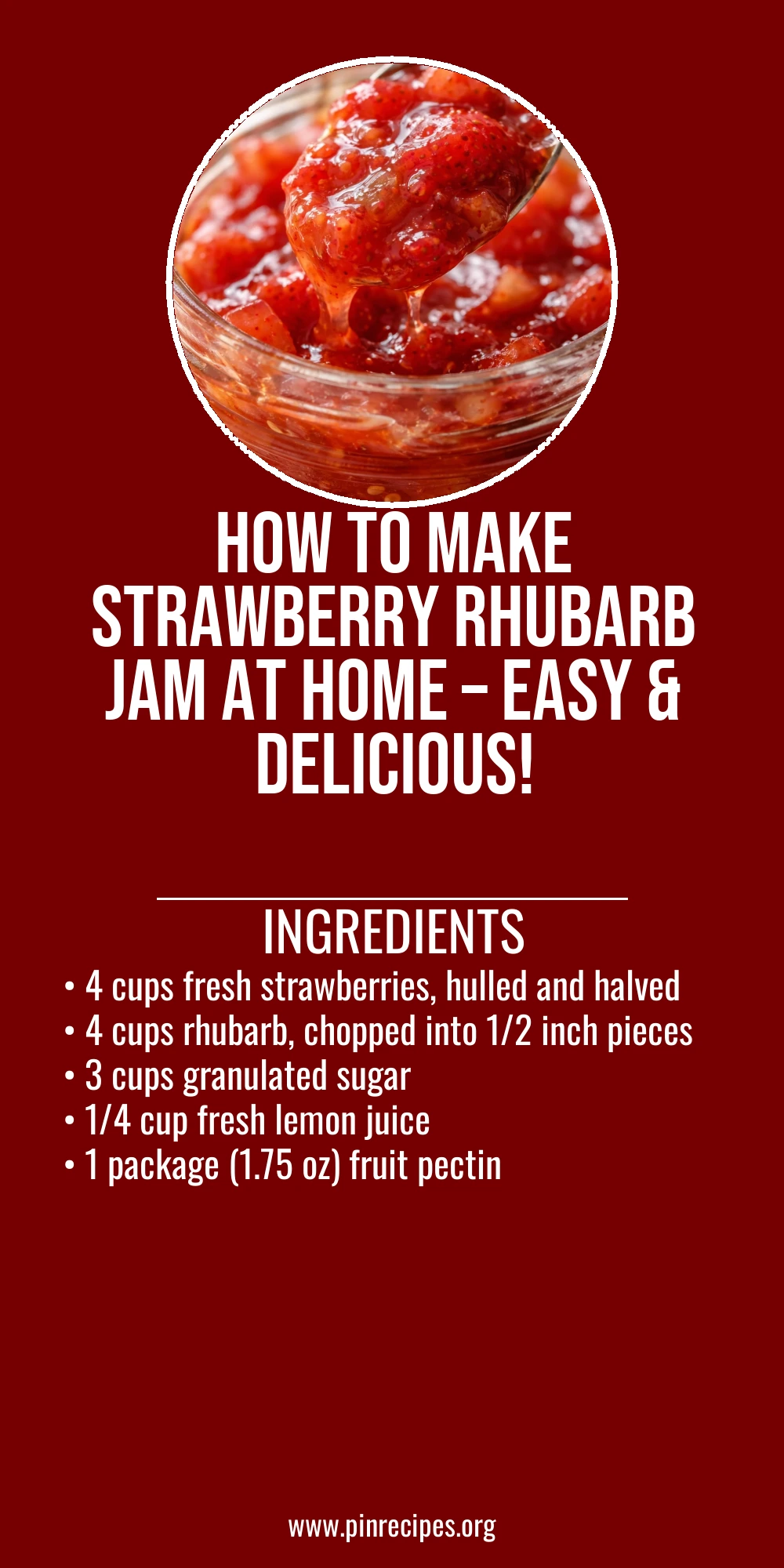
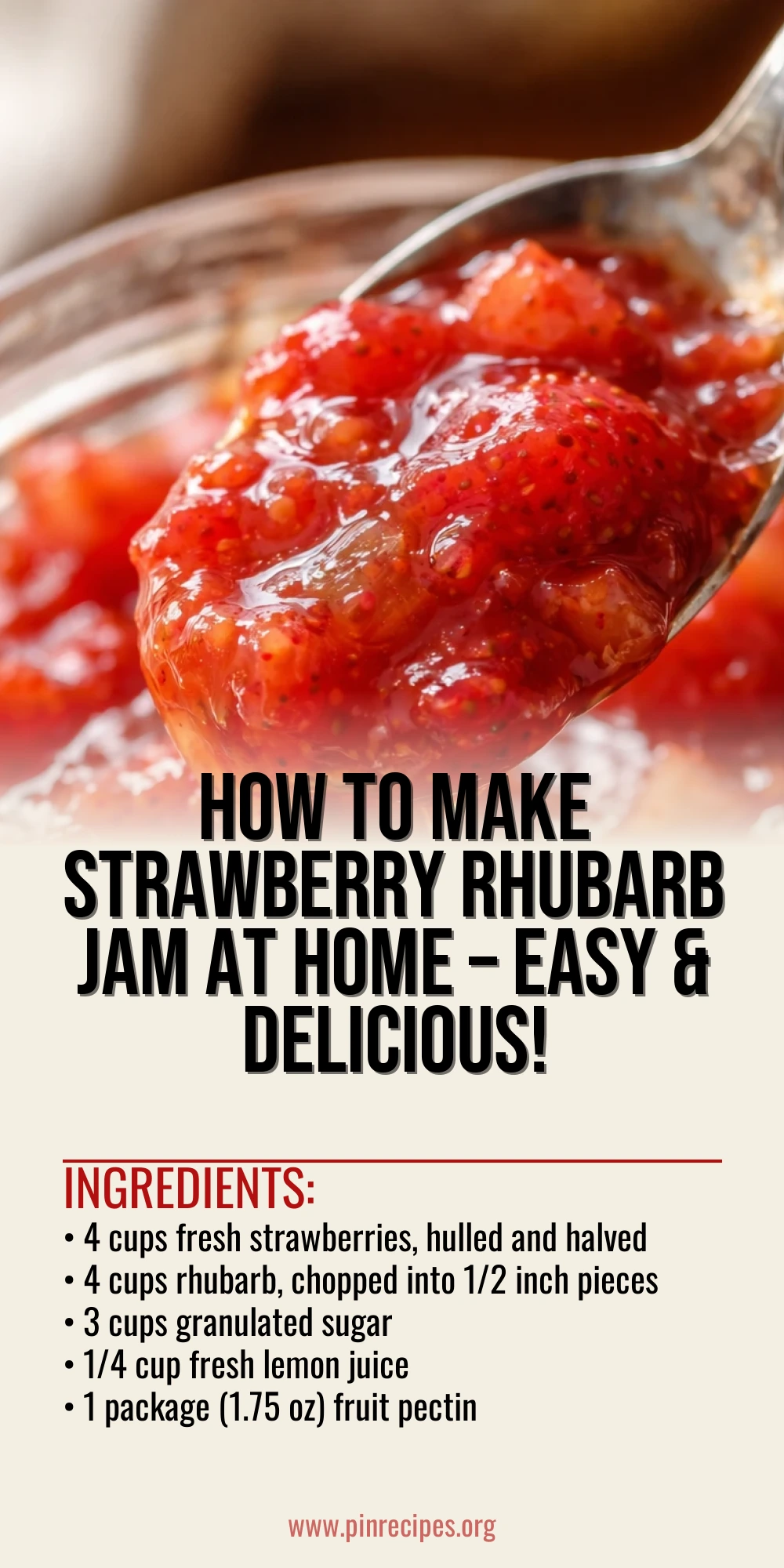
This strawberry rhubarb jam is the perfect balance of sweet and tart, capturing the essence of spring. Made with fresh fruit and just the right amount of sugar, it’s great on toast or dolloped on yogurt. I love making it when rhubarb is in season!
Introduction
I first made strawberry rhubarb jam a few springs ago when I stumbled upon a bounty of fresh rhubarb at the farmer’s market. I’d always loved the combo of sweet strawberries and tart rhubarb in pies but had never tried it as jam. After a couple of trial runs, I found a simple method that really lets the natural flavors shine without being overly sweet. What makes this version special is the balance—the rhubarb adds a bright tang that cuts through the strawberry’s sweetness, and the lemon juice enhances that freshness. I also use a bit of fruit pectin to get the perfect set without cooking the jam too long, which keeps the fruit flavor vibrant. The finished jam is thick but spreadable, with chunks of fruit that feel homemade and comforting. It’s fantastic on toast, swirled into yogurt, or even spooned over ice cream. Honestly, it’s become a spring staple in my kitchen, and I love sharing it with friends and family. If you’re looking for a jam recipe that’s approachable but tastes like you spent hours perfecting it, this one’s for you.
What You'll Need
Approximately 6 cups, 4 servings
- 4 cups fresh strawberries, hulled and halved
- 4 cups rhubarb, chopped into 1/2 inch pieces
- 3 cups granulated sugar
- 1/4 cup fresh lemon juice
- 1 package (1.75 oz) fruit pectin
How To Do It
Step 1
Start by thoroughly washing your strawberries and rhubarb. Hull the strawberries and cut them in halves or quarters depending on size, and chop the rhubarb into roughly 1/2 inch pieces. This size ensures the fruit cooks evenly and breaks down nicely without turning into complete mush. Taking the time here to prep the fruit well sets the stage for a jam with good texture and flavor. Avoid cutting pieces too small as they will lose their identity in the jam.
⏱ Time: 10 minutes
✓ Doneness: Fruit pieces are uniform and ready for cooking
Step 2
Combine the strawberries, rhubarb, and lemon juice in a large pot over medium heat. Stir gently as the fruit begins to release its juices. The lemon juice not only brightens the flavor but also helps the pectin set properly later. Let the mixture simmer for about 10 minutes, stirring occasionally to prevent sticking. You’re aiming for the fruit to soften but not completely break down at this point.
⏱ Time: 10 minutes
✓ Doneness: Fruit is tender and the mixture is bubbling gently
Step 3
Gradually stir in the sugar, mixing until it dissolves completely. It’s important to add the sugar slowly and stir well to avoid crystallization. Once combined, bring the mixture back to a full rolling boil that can’t be stirred down, which is key for activating the pectin properly. Boil for exactly 1 minute, stirring constantly to prevent burning. This step thickens the jam and ensures it will set once cooled.
⏱ Time: 5 minutes
✓ Doneness: Jam reaches a full rolling boil and sugar is dissolved
Step 4
Remove the pot from heat and immediately stir in the fruit pectin powder. Mix thoroughly to distribute the pectin evenly throughout the jam. This quick addition after boiling helps the jam gel properly without overcooking the fruit, preserving fresh flavor and color. If you add pectin too early, it can cause the jam to set unevenly or become too stiff.
⏱ Time: 2 minutes
✓ Doneness: Pectin fully incorporated and jam slightly thickened
Step 5
Let the jam sit for 5 minutes to allow bubbles to settle and the mixture to cool slightly. This resting period helps the jam thicken a bit more before you transfer it to jars. Avoid stirring during this time to prevent breaking the gel structure forming.
⏱ Time: 5 minutes
✓ Doneness: Jam surface is smooth and less foamy
Step 6
While the jam rests, sterilize your jars and lids by boiling them in water for 10 minutes or running them through a dishwasher cycle. Proper sterilization is crucial for safe preservation and to prevent mold growth. Dry them on a clean towel before filling.
⏱ Time: 10 minutes
✓ Doneness: Jars and lids are clean, hot, and ready to use
Step 7
Carefully ladle the hot jam into the sterilized jars, leaving about 1/4 inch headspace at the top. Wipe the rims with a clean, damp cloth to remove any residue that could interfere with sealing. Then, place the lids on and screw the bands fingertip tight.
⏱ Time: 10 minutes
✓ Doneness: Jars filled neatly with no spills on rims
Step 8
Process the filled jars in a boiling water bath for 10 minutes to seal them properly. Make sure the water covers the jars by at least an inch. This step kills any remaining bacteria and creates a vacuum seal for long-term storage. After processing, carefully remove the jars and let them cool undisturbed for 12-24 hours.
⏱ Time: 15 minutes
✓ Doneness: Jars sealed with lids concave and no movement when pressed
Step 9
Once cooled, check the seals by pressing the center of each lid. If it doesn’t pop back, the jar is sealed. Label your jars with the date and store them in a cool, dark place. Refrigerate after opening and enjoy your fresh homemade strawberry rhubarb jam on toast, biscuits, or however you like!
⏱ Time: 5 minutes
✓ Doneness: Lids sealed and jars properly labeled and stored
Pro Tips
Use fresh, ripe fruit for the best flavor and texture.
Fresh fruit contains the natural pectin and acidity needed for proper jam setting. Overripe fruit can cause the jam to be too soft and sweet, while underripe fruit lacks flavor. The balance of ripe strawberries and crisp rhubarb is what makes this jam stand out.
Add pectin after boiling the fruit and sugar mixture.
Adding pectin too early can cause uneven setting or overly stiff jam. Adding it after boiling preserves fresh fruit flavor and color while ensuring the jam gels properly. This timing is key to a smooth, spreadable texture.
Sterilize jars thoroughly before filling to prevent spoilage.
Proper sterilization kills bacteria and molds that can cause jams to spoil. Boiling jars and lids or using a dishwasher cycle ensures your jam stays safe and fresh for months. Skipping this step risks mold growth and off flavors.
Use a candy thermometer to monitor boiling temperature.
The jam must reach a full rolling boil to activate pectin and dissolve sugar. A thermometer helps you avoid under- or overcooking. Underboiling results in runny jam; overboiling can darken flavor and toughen texture.
Leave headspace in jars when filling to allow for expansion.
Jams expand slightly during processing. Leaving about 1/4 inch headspace prevents overflow and ensures a proper vacuum seal. Too little space can cause jars to crack or lids to not seal correctly.
Avoid stirring the jam during the resting period after cooking.
Stirring while the jam cools can break the gel structure forming, resulting in a thinner set. Letting it rest undisturbed helps the jam thicken evenly and develop a smooth surface.
Label jars with date and contents right after cooling.
This helps you keep track of freshness and use your jam within the best window. Homemade jams typically last about a year when stored properly, so dating helps avoid accidental spoilage.
Common Mistakes to Avoid
Not boiling the jam mixture long enough.
Why it happens Many assume a quick boil is enough, but the jam needs a full rolling boil to activate pectin and dissolve sugar properly.
Fix Bring the mixture to a vigorous boil that cannot be stirred down and maintain it for the full minute specified. This ensures the jam will set correctly and have the right texture.
Skipping jar sterilization.
Why it happens Some cooks think washing jars is enough, but sterilization kills harmful microbes that cause spoilage.
Fix Boil jars and lids for at least 10 minutes or use a hot dishwasher cycle before filling. This step is vital for safe preservation and longer shelf life.
Adding pectin too early or too late.
Why it happens Misunderstanding when to add pectin can lead to jam that doesn’t set or is too stiff.
Fix Add pectin immediately after boiling the fruit and sugar mixture, stirring well to incorporate. This timing preserves fresh flavors and ensures proper gel formation.
Using underripe or overripe fruit.
Why it happens Choosing fruit based on availability rather than ripeness can affect flavor and texture.
Fix Select ripe but firm strawberries and crisp rhubarb for balanced sweetness and acidity. This results in a jam with great flavor and texture.
Not leaving enough headspace in jars.
Why it happens Forgetting this detail can cause jars to overflow or lids to fail sealing.
Fix Leave about 1/4 inch headspace when filling jars to allow for expansion during processing and ensure a vacuum seal.
Variations
Strawberry Rhubarb Jam with Vanilla Bean
Add a split vanilla bean pod to the fruit mixture while cooking for a warm, aromatic twist. The vanilla complements the tartness and adds depth to the flavor profile. Remove the pod before adding pectin.
Note: Simmer the vanilla bean with fruit for full infusion; remove before boiling with sugar to avoid bitterness.
Low-Sugar Strawberry Rhubarb Jam
Reduce sugar by half and use a low-sugar pectin designed for this purpose. The jam will be less sweet but still balanced by the rhubarb’s tartness. Expect a softer set and store refrigerated after opening.
Note: Use low-sugar pectin and monitor boiling time carefully to ensure proper gel formation.
Strawberry Rhubarb Jam with Ginger
Add 1 tablespoon of freshly grated ginger during cooking for a spicy kick. Ginger pairs wonderfully with the fruit and adds a warming note perfect for cooler spring days.
Note: Add ginger early in cooking to mellow its sharpness and infuse flavor evenly.
Chunky Strawberry Rhubarb Jam
For a chunkier texture, reduce cooking time slightly and mash some fruit with a potato masher after boiling. This creates a rustic jam with visible fruit pieces and a hearty mouthfeel.
Note: Shorten simmering to preserve fruit shape; mash gently after pectin addition.
Strawberry Rhubarb Freezer Jam
Skip the boiling water bath and use a no-cook pectin to make freezer jam. It’s quick and keeps the fruit flavor bright but must be stored frozen and used within a few months.
Note: Follow manufacturer instructions for no-cook pectin; use sterilized containers and freeze promptly.
Nutrition
Per Serving:
Nutritional values are estimates and may vary based on specific ingredients used.
Storage & Tips
Room Temperature
Once sealed, jam can safely keep at room temperature for up to one year if stored in a cool, dark place. Keep jars away from direct sunlight and heat sources to preserve flavor and color.
Refrigerator
After opening, store jam in an airtight container in the fridge for up to 3 weeks. The flavor may mellow slightly, but it remains delicious spread cold or warmed gently.
Freezer
Jam can be frozen for up to 6 months. Use freezer-safe containers leaving headspace for expansion. Thaw in the refrigerator overnight and stir before serving to restore texture.
Reheating
If you prefer warm jam, gently heat in a small saucepan over low heat, stirring occasionally. Avoid boiling to prevent breaking down the gel. Add a splash of water if too thick.
Make Ahead
You can prepare the jam base up to 2 days ahead and refrigerate it. Add sugar and pectin and complete cooking on the day you plan to jar it to ensure best texture and flavor.
FAQ
Can I use frozen strawberries and rhubarb for this jam?
Yes, you can use frozen fruit, but thaw and drain excess liquid before cooking to avoid a runny jam. The flavor might be slightly less vibrant than fresh, but it still works well.
What if my jam doesn’t set properly?
If your jam is too runny, it might not have reached the right boiling temperature or pectin wasn’t added at the correct time. You can re-cook the jam with extra pectin following package instructions to thicken it.
Can I substitute lemon juice with vinegar or other acids?
Lemon juice is preferred because it adds a fresh flavor and the right acidity for pectin to work. Vinegar has a harsher taste and may alter the jam’s flavor negatively.
How long does homemade jam last once opened?
Once opened, store jam in the refrigerator and consume within 3 weeks for best quality. Always use a clean spoon to avoid contamination.
Is it necessary to use commercial pectin?
Pectin helps the jam set quickly and reliably. You can make jam without it, but it requires longer cooking to reduce water, which may affect flavor and color.
Can I make this jam vegan and organic?
Yes, this recipe is naturally vegan and you can use organic fruit and sugar to make it fully organic. Just ensure your pectin is plant-based and free of animal products.
Why is my jam crystallizing after storage?
Crystallization can happen if sugar isn’t fully dissolved or if the jam is stored in fluctuating temperatures. Reheating gently and stirring can dissolve crystals.
Can I add spices like cinnamon or nutmeg?
Absolutely! Adding warm spices during cooking can complement the fruit flavors nicely. Just add them early to allow the flavors to infuse.
Final Thoughts
I hope you enjoy making and sharing this strawberry rhubarb jam as much as I do. It’s a little jar of spring sunshine that’s perfect for any day—give it a try and let me know how it turns out!