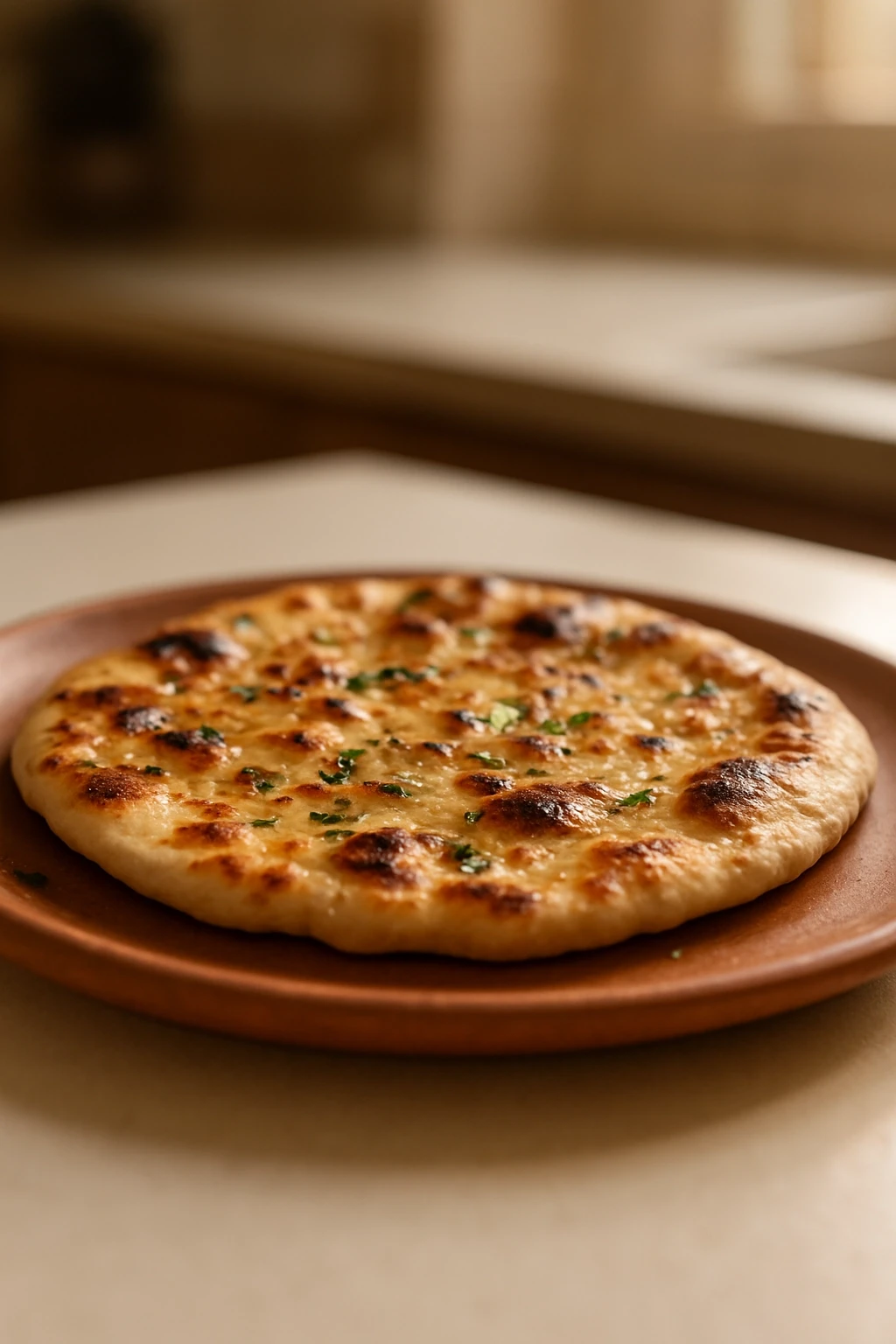
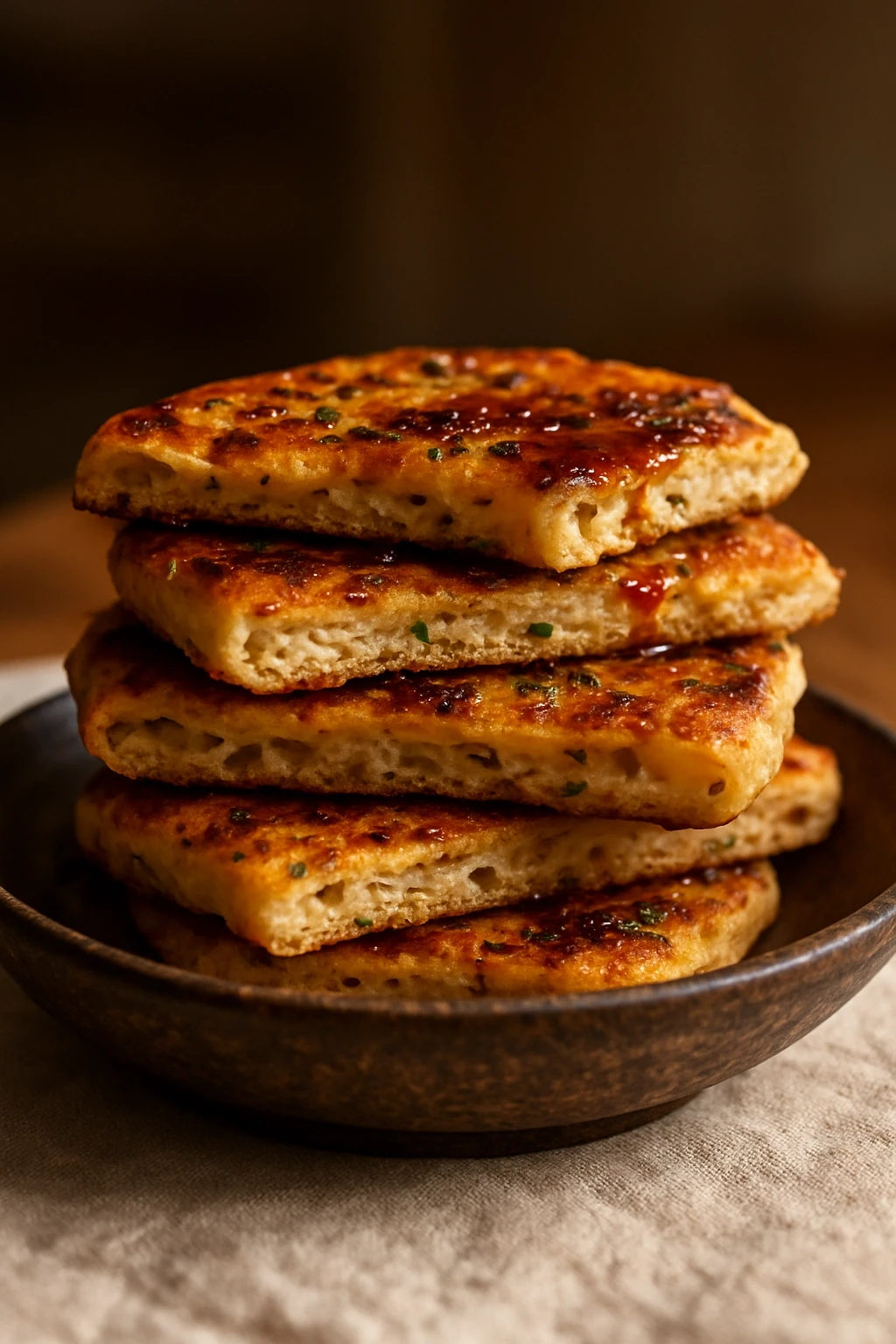
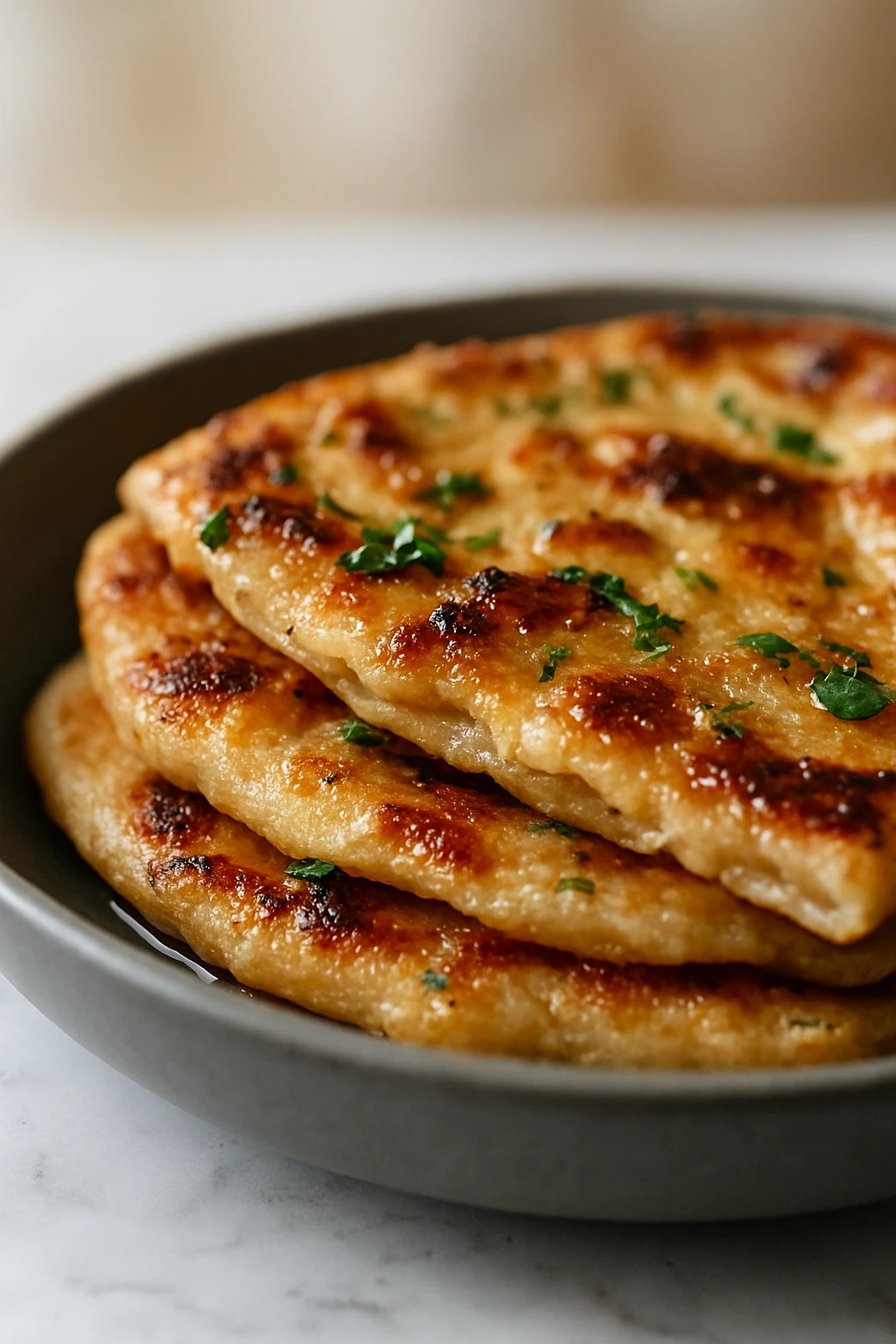
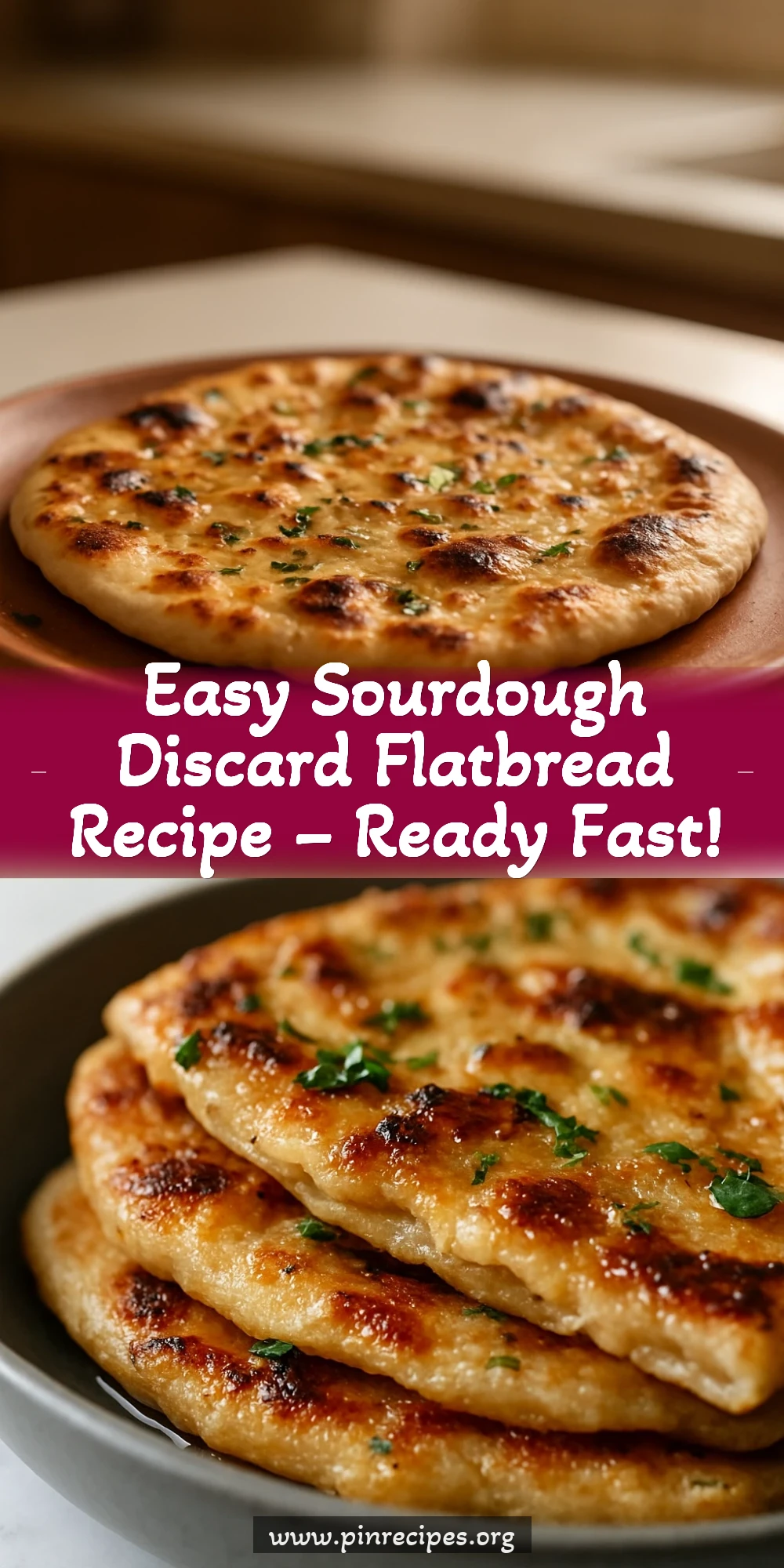
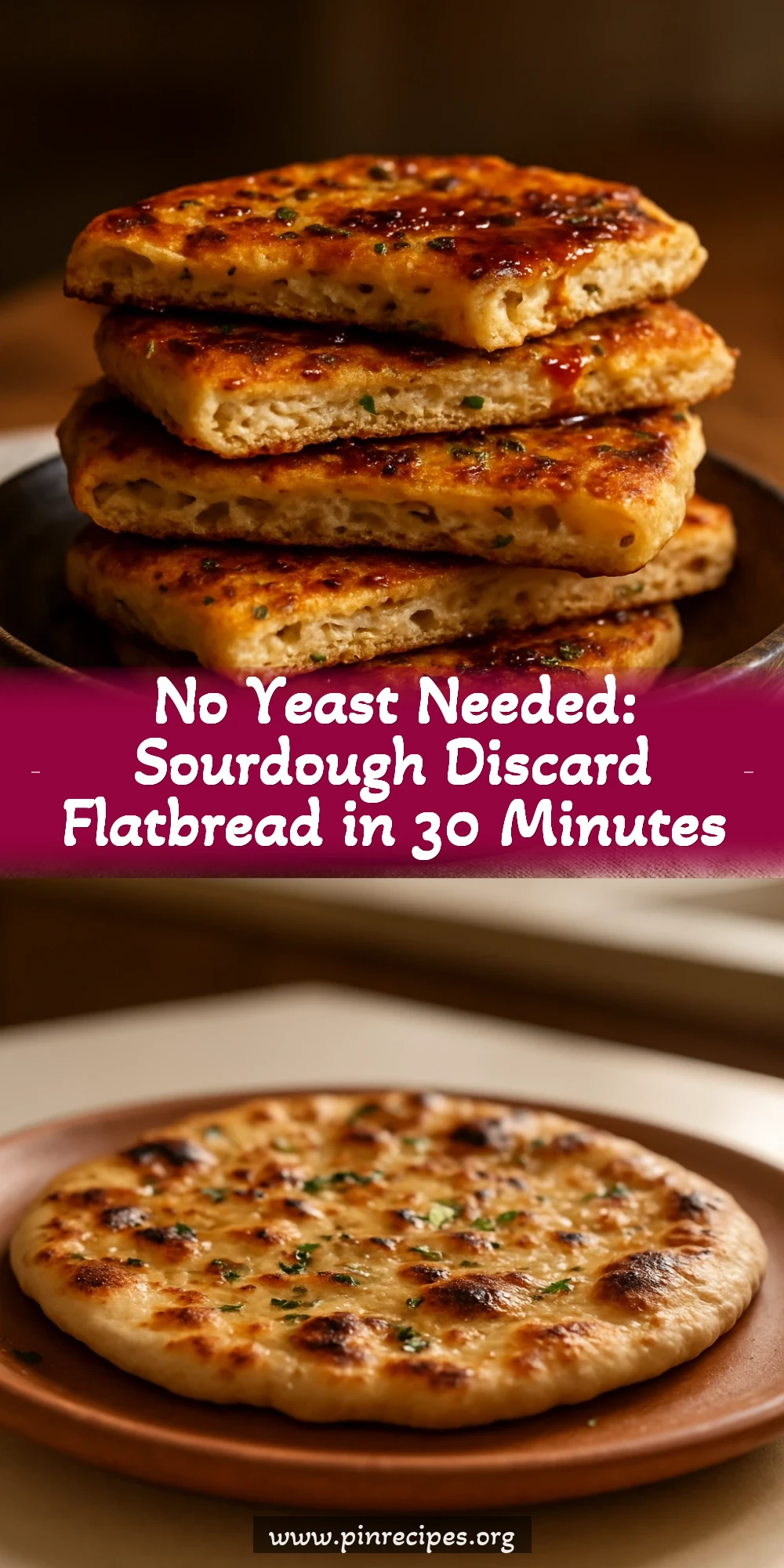
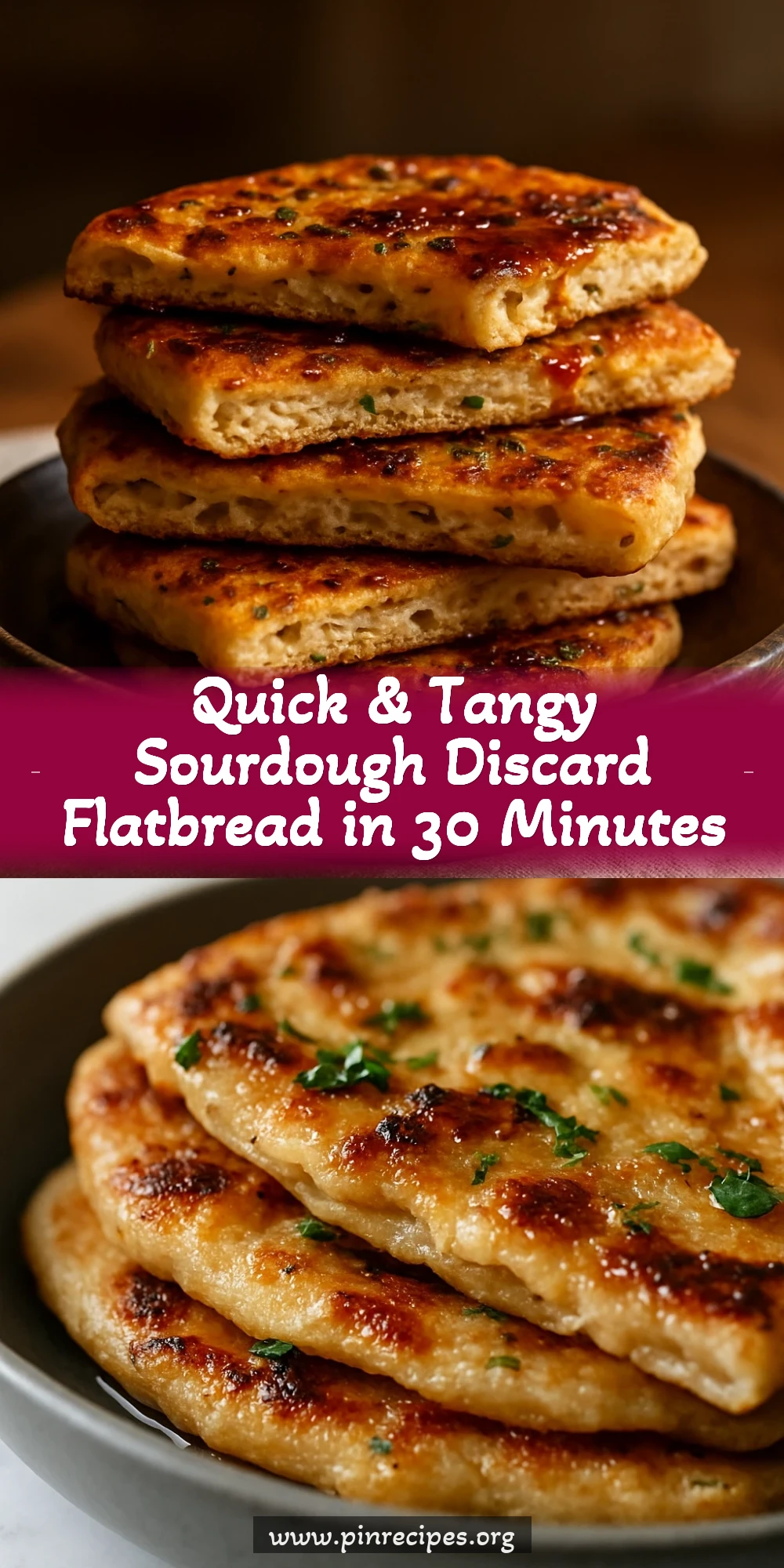
This flatbread uses sourdough discard to create a quick, chewy bread with a hint of tang. No yeast needed, and it’s ready in half an hour—perfect for a fast snack or alongside your favorite dips!
Introduction
I first stumbled upon sourdough discard flatbread when I was trying to find a way to use up my sourdough starter discard instead of tossing it. I was pleasantly surprised how easily it came together and how delicious the flatbreads turned out. Unlike traditional sourdough breads that require long fermentation, this recipe uses baking powder to give a little lift, so you get a soft, chewy texture with a subtle tang in just 30 minutes. The trick I learned is to not overwork the dough—it should be slightly sticky and relaxed to keep the flatbreads tender. Cooking them quickly in a hot pan with a bit of olive oil gives a lovely golden crust and a bit of crispness on the outside while staying soft inside. These flatbreads are perfect for impromptu dinners, wrapping up leftovers, or serving alongside hummus or curry. Honestly, they’ve become my go-to quick bread whenever I have discard on hand.
What You'll Need
Makes 4 medium flatbreads
- 1 cup sourdough discard, unfed and room temperature
- 1 cup all-purpose flour, plus extra for dusting
- 1/4 teaspoon baking powder
- 1/2 teaspoon salt
- 2 tablespoons olive oil, plus extra for cooking
- 1/4 cup water, adjust as needed
How To Do It
Step 1
In a large mixing bowl, combine the sourdough discard, flour, baking powder, and salt. Stir together with a spoon until the ingredients start to come together. Then add the olive oil and water gradually, mixing until a rough dough forms. The water amount can vary depending on your discard’s hydration, so add it slowly to avoid a sticky mess. The goal is a soft, slightly tacky dough that holds together but isn't wet. Overmixing can make the flatbread tough, so stop once everything is just combined.
⏱ Time: 10 minutes
✓ Doneness: Dough holds together in a soft ball, slightly sticky but not overly wet
Step 2
Turn the dough out onto a lightly floured surface and knead gently for about 1-2 minutes—just enough to smooth it out. Divide the dough into 4 equal pieces and roll each into a ball. Let them rest for 5 minutes covered with a kitchen towel; this rest relaxes the gluten and makes rolling easier. If you skip this rest, the dough might spring back and be harder to shape.
⏱ Time: 7 minutes
✓ Doneness: Dough balls feel smooth and pliable, not tight or resistant
Step 3
Using a rolling pin, roll each dough ball into a thin circle about 6-8 inches in diameter. Dust with flour as needed to prevent sticking, but try not to add too much or the flatbread can dry out. Aim for even thickness so the flatbreads cook uniformly. Thin flatbreads will be crispier; thicker ones will be chewier.
⏱ Time: 5 minutes
✓ Doneness: Flat disc is evenly rolled with no thick spots
Step 4
Heat a large non-stick or cast-iron skillet over medium-high heat and brush lightly with olive oil. Place one flatbread in the pan and cook for about 2-3 minutes until bubbles form and the bottom is golden brown. Flip carefully with a spatula and cook the other side for another 2 minutes. Adjust heat if browning too fast or slow. The olive oil helps develop a crisp, flavorful crust.
⏱ Time: 5 minutes
✓ Doneness: Flatbread has golden brown spots and bubbles on surface
Step 5
Repeat the cooking process with the remaining flatbreads, adding more oil to the pan as needed. Keep cooked flatbreads warm wrapped in a clean kitchen towel to retain softness. Serve warm for best texture; they’re wonderful dipped in olive oil, used as wraps, or alongside stews.
⏱ Time: 5 minutes
✓ Doneness: All flatbreads cooked with golden crust, soft inside, and warm
Pro Tips
Don’t skip the dough rest before rolling out.
Resting lets the gluten relax, making the dough easier to roll out and preventing it from springing back. Skipping this step can cause frustration and uneven thickness, resulting in tough flatbreads.
Use a hot skillet and watch the browning closely.
High heat promotes Maillard browning, which adds flavor and texture. Cooking too slowly results in pale, doughy flatbreads; too hot and they burn before cooking through. Adjust heat as needed to get golden spots.
Add olive oil to the pan before cooking each flatbread.
The oil helps create a crisp, flavorful crust and prevents sticking. Without it, flatbreads can stick or cook unevenly, losing that desirable golden exterior.
Roll the flatbreads to an even thickness.
Uneven thickness causes some parts to cook faster than others, leading to burnt edges or undercooked centers. Even rolling ensures consistent texture and doneness.
Use room temperature discard for better dough consistency.
Cold discard can make the dough stiff and harder to mix, while room temperature discard blends more smoothly and helps activate the baking powder evenly.
Store cooked flatbreads wrapped in a kitchen towel.
Wrapping keeps them warm and traps moisture, preventing the flatbreads from drying out or becoming tough before serving.
Don’t overwork the dough during mixing or kneading.
Overmixing develops too much gluten, resulting in tough, chewy bread rather than tender flatbreads. Gentle mixing keeps the texture soft and pliable.
Common Mistakes to Avoid
Adding too much water and ending up with sticky dough.
Why it happens Beginners often add all the water at once or don’t account for the discard’s moisture content, leading to overly wet dough that’s hard to handle.
Fix Add water gradually while mixing and stop once the dough holds together without being overly sticky. Use flour sparingly on your hands and surface to handle dough without drying it out.
Cooking flatbreads on too low heat causing pale, doughy bread.
Why it happens Fear of burning leads to low heat, but this prevents proper browning and leaves the bread undercooked inside.
Fix Preheat your pan well and maintain medium-high heat. Watch carefully and adjust as needed to get golden spots quickly without burning.
Skipping the resting step before rolling out dough.
Why it happens Impatience or misunderstanding that dough needs time to relax leads to tough dough that springs back.
Fix Let dough rest covered for 5-10 minutes after dividing. This makes rolling easier and results in softer flatbreads.
Overworking the dough causing tough texture.
Why it happens Trying to knead or mix too much develops excessive gluten, making the flatbread chewy and dense rather than tender.
Fix Mix just until combined and knead briefly to smooth. Avoid prolonged kneading or mixing.
Using old baking powder with no rise.
Why it happens Baking powder loses potency over time, so old powder won’t leaven the dough properly.
Fix Check expiration date and test baking powder by mixing a small amount in hot water to see if it bubbles before using.
Variations
Garlic and Herb Flatbread
Add 1 teaspoon minced garlic and 1 tablespoon chopped fresh herbs like rosemary or thyme to the dough for extra flavor. This variation pairs beautifully with Mediterranean dishes or as a snack with dips.
Note: Incorporate herbs and garlic during mixing. Watch for slightly more moisture from fresh herbs and adjust flour if needed.
Spicy Chili Flatbread
Mix 1/2 teaspoon chili flakes and a pinch of smoked paprika into the dough for a subtle heat kick. Great for serving alongside spicy stews or as a base for wraps with grilled meats.
Note: Add spices with dry ingredients. Ensure even distribution to avoid hot spots.
Whole Wheat Sourdough Flatbread
Substitute half the all-purpose flour with whole wheat flour for a nuttier flavor and more fiber. The texture will be denser and slightly heartier, perfect for rustic meals.
Note: Whole wheat absorbs more water; increase hydration slightly and rest dough longer for better elasticity.
Cheese-Stuffed Flatbread
Roll out dough, place shredded cheese in the center, fold over and seal edges, then roll gently again before cooking. The result is a melty, cheesy flatbread that’s a fun snack or side.
Note: Seal edges tightly to prevent cheese leaking. Cook slightly longer on low heat to melt cheese inside.
Gluten-Free Version
Use a gluten-free all-purpose flour blend with xanthan gum to replace the flour. The texture will be more delicate and crumbly but still tasty. Ideal for those avoiding gluten.
Note: Adjust water as gluten-free flours absorb differently. Handle dough gently and cook at slightly lower heat to prevent burning.
Nutrition
Per Serving:
Nutritional values are estimates and may vary based on specific ingredients used.
Storage & Tips
Room Temperature
Flatbreads can be kept at room temperature for up to 4 hours when wrapped in a clean kitchen towel or stored in an airtight container. Avoid leaving them uncovered as they dry out quickly.
Refrigerator
Store leftovers in an airtight container or wrapped tightly in plastic wrap for up to 3 days. They may become firmer in the fridge but can be refreshed by warming gently before serving.
Freezer
Wrap flatbreads individually in plastic wrap and place in a freezer-safe bag. Freeze for up to 2 months. To thaw, leave at room temperature for 1-2 hours or warm directly in a skillet.
Reheating
Reheat flatbreads in a hot skillet over medium heat for 1-2 minutes per side, brushing lightly with olive oil to restore crispness. Avoid microwaving as it can make them rubbery.
Make Ahead
Prepare the dough up to the resting stage 1 day ahead and keep it covered in the fridge. Roll and cook flatbreads fresh the next day for best texture and flavor.
FAQ
Can I use fed sourdough starter instead of discard?
You can, but fed starter is more active and less acidic, which changes the flavor and hydration. You might need to reduce added water slightly. The tanginess from discard is what makes this flatbread distinct.
What if I don’t have baking powder?
Baking powder is essential here to get that quick rise and soft texture. Without it, the flatbread will be dense and chewy. If you have baking soda, you’d need an acid to activate it, but that’s more complex.
How thin should I roll the dough?
Aim for about 1/8 inch thick. Thinner flatbreads get crispier, while thicker ones stay softer inside. Uneven rolling can cause uneven cooking, so try to keep it consistent.
Can I bake these flatbreads instead of pan-frying?
Yes, you can bake at 450°F for about 5-7 minutes until golden. However, pan-frying gives a better crust and more flavor from the oil and direct heat.
Why is my flatbread tough?
Toughness usually comes from overmixing or overkneading, which develops too much gluten. Also, skipping the rest period or cooking at too low heat can affect texture. Handle dough gently and rest before rolling.
Can I add seeds or nuts to the dough?
Absolutely! Adding sesame seeds, flaxseeds, or chopped nuts adds texture and flavor. Mix them into the dough during the initial mixing step for even distribution.
How long can I keep the dough before cooking?
You can refrigerate the dough covered for up to 24 hours. Bring it to room temperature before rolling out for easier handling.
Why does my flatbread stick to the pan?
Insufficient oil or not preheating the pan properly often causes sticking. Use a non-stick or well-seasoned cast iron skillet and brush oil before each flatbread.
Final Thoughts
Give this quick sourdough discard flatbread a try next time you want fresh bread fast. I’d love to hear how yours turns out—don’t forget to share your tweaks and favorite ways to enjoy it!