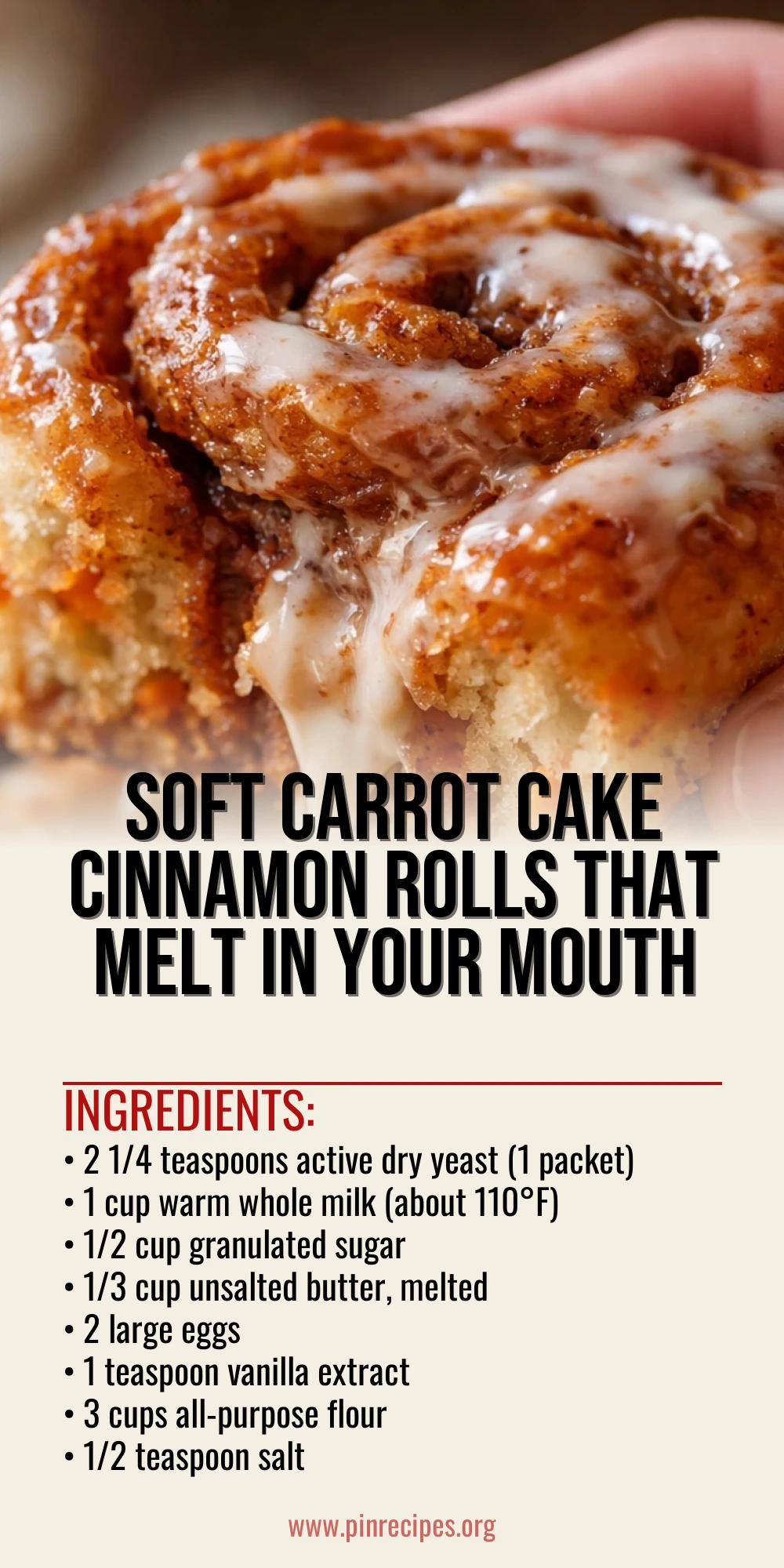
These carrot cake cinnamon rolls are incredibly tender and packed with warm spices and shredded carrots. The cream cheese frosting adds a tangy finish that’s perfect for brunch or a cozy weekend treat.
Introduction
I first made these Soft Carrot Cake Cinnamon Rolls a few years ago when I wanted to combine two of my favorite treats—carrot cake and cinnamon rolls. Honestly, I wasn’t sure if the shredded carrots would work in a yeast dough, but the result blew me away. The dough stays incredibly soft and tender, and the carrots add a subtle sweetness and moisture that’s just perfect. What makes this recipe stand out is the balance of warm spices like cinnamon and nutmeg, paired with a tangy cream cheese frosting that cuts through the sweetness. I’ve tweaked the dough to be just the right consistency—not too sticky or dry—which helps the rolls rise beautifully and bake up fluffy. The trick I learned is to grate the carrots finely so they integrate seamlessly without weighing down the dough. When these rolls come out of the oven, they’re golden, soft, and smell like heaven. They’re great for weekend brunches or special occasions when you want something a little extra but still comforting. I love serving them warm with a cup of coffee, watching the cream cheese frosting melt into every swirl. If you’ve ever hesitated to bake cinnamon rolls, this carrot cake version might just be the one to get you hooked!
How To Do It
Step 1
Activate the yeast by sprinkling it over the warm milk (about 110°F) with a pinch of sugar. Let it sit for 5-10 minutes until it becomes foamy. This step is crucial because it tells you if your yeast is alive and ready to work. If the mixture doesn’t foam, your yeast might be old or the milk too hot or cold. Using warm milk helps activate the yeast without killing it, which ensures your dough will rise properly.
⏱ Time: 10 minutes
✓ Doneness: Foamy, bubbly surface on the milk and yeast mixture
Step 2
In a large bowl, combine the melted butter, sugar, eggs, and vanilla extract. Stir in the yeast mixture once it’s foamy. This creates a rich, flavorful base for your dough. Mixing these ingredients first helps distribute the sugar and fat evenly, which tenderizes the dough and improves its texture.
⏱ Time: 5 minutes
✓ Doneness: Smooth, well-mixed wet ingredients with no lumps
Step 3
In a separate bowl, whisk together the flour, salt, cinnamon, and nutmeg. Gradually add this dry mix to the wet ingredients, stirring with a wooden spoon until the dough starts to come together. This slow incorporation prevents clumps and helps evenly distribute the spices, ensuring every bite is flavorful.
⏱ Time: 5 minutes
✓ Doneness: Dough begins to form a shaggy ball, pulling away from the bowl
Step 4
Turn the dough onto a floured surface and knead for about 8-10 minutes until smooth and elastic. Kneading develops the gluten, which gives the rolls their soft, chewy texture. If the dough is sticky, sprinkle a little more flour, but be careful not to add too much or the rolls will be dense.
⏱ Time: 10 minutes
✓ Doneness: Smooth, slightly tacky dough that springs back when pressed
Step 5
Place the dough in a greased bowl, cover with a clean towel, and let it rise in a warm spot for 1 to 1 1/2 hours until doubled in size. This rise allows the yeast to ferment, producing gas bubbles that make the dough airy and light. Don’t rush this step; a proper rise is key to soft rolls.
⏱ Time: 1 to 1.5 hours
✓ Doneness: Dough has visibly doubled and looks puffy
Step 6
While the dough rises, prepare the filling by mixing the softened butter, brown sugar, cinnamon, and finely shredded carrots. The carrots add moisture and a subtle sweetness that complements the cinnamon perfectly. Make sure the carrots are very finely grated so they blend well without making the filling too wet.
⏱ Time: 10 minutes
✓ Doneness: Smooth, spreadable filling with evenly mixed carrots
Step 7
Once the dough has risen, punch it down gently and roll it out on a floured surface into a 16x12-inch rectangle. Spread the carrot filling evenly over the dough, leaving a small border around the edges. Rolling the dough carefully ensures even thickness, which helps the rolls bake uniformly.
⏱ Time: 10 minutes
✓ Doneness: Evenly rolled dough with smooth, fully covered filling
Step 8
Starting from the long edge, roll the dough tightly into a log. Cut into 8 equal slices using a sharp knife or dental floss. Tightly rolling traps the filling and creates those beautiful spirals. Using floss instead of a knife can prevent squishing the rolls.
⏱ Time: 10 minutes
✓ Doneness: Clean, even slices showing distinct swirls of filling
Step 9
Place the rolls in a greased baking dish, cover, and let them rise for another 30-45 minutes until puffed up. Bake at 350°F for 25-30 minutes until golden brown and cooked through. The second rise makes the rolls extra fluffy, and the baking time ensures the dough is fully cooked without drying out.
⏱ Time: 1 hour 15 minutes (including second rise and bake)
✓ Doneness: Golden tops with a soft, springy texture when pressed lightly
Step 10
While the rolls bake, whisk together the cream cheese, powdered sugar, and vanilla to make the frosting. Spread it over the warm rolls right after they come out of the oven so it melts into the spirals. This tangy frosting balances the sweetness and adds a luscious finish.
⏱ Time: 5 minutes
✓ Doneness: Smooth, creamy frosting that spreads easily
Pro Tips
Grate carrots very finely to avoid soggy dough.
Finely grated carrots distribute moisture evenly without weighing down the dough. Coarser shreds can release too much water, making the dough sticky and harder to handle.
Use dental floss to slice the rolls cleanly.
Dental floss cuts through the soft dough without squishing or tearing the rolls, preserving the beautiful spiral shape and ensuring even sizes.
Let the rolls rise twice for maximum fluffiness.
The first rise develops flavor and texture, while the second rise after shaping lightens the dough, resulting in soft, airy rolls that bake evenly.
Don’t over-bake to keep the rolls soft.
Overbaking dries out the rolls and makes them tough. Pull them out when golden and springy to the touch for the best texture.
Spread frosting while rolls are warm to melt in.
Warm rolls help the cream cheese frosting soften and seep into the spirals, enhancing flavor and adding moisture.
Use room temperature ingredients for even mixing.
Cold ingredients can inhibit yeast activity and cause uneven dough texture, while room temperature ones blend smoothly for consistent rising.
Cover dough with a damp towel during rising.
This prevents the dough surface from drying out and forming a crust, which can inhibit rising and create uneven texture.
Common Mistakes to Avoid
Using milk that’s too hot or cold for yeast activation.
Why it happens Many assume any warm liquid works, but milk above 120°F kills yeast, and colder milk won’t activate it, leading to no rise.
Fix Use a thermometer to ensure milk is around 110°F. If it’s too hot, let it cool slightly; if too cold, warm gently until it reaches the right temperature.
Adding too much flour during kneading.
Why it happens Sticky dough can be intimidating, so cooks often add extra flour to make it easier to handle, but this creates dense rolls.
Fix Stick to the recipe measurements and knead gently. Slightly tacky dough is normal and yields softer rolls. Use just enough flour to prevent sticking.
Skipping the second rise after shaping.
Why it happens Rushing to bake saves time, but skipping the second rise results in dense, less fluffy rolls.
Fix Allow the rolls to rise again until puffed and nearly doubled. This step is crucial for light texture and good oven spring.
Cutting rolls with a dull knife.
Why it happens Using a blunt knife squashes the dough and distorts the shape of the rolls.
Fix Use a sharp knife or dental floss to slice cleanly without compressing the dough.
Applying frosting to cold rolls.
Why it happens Cold rolls don’t allow the frosting to melt and soak in, leading to a thicker, less integrated glaze.
Fix Spread frosting immediately after baking while rolls are warm for the best flavor and texture.
Variations
Walnut and Raisin Carrot Cake Rolls
Add 1/2 cup chopped walnuts and 1/3 cup raisins to the filling for extra texture and bursts of sweetness. This variation adds a lovely crunch and chewiness that complements the soft dough.
Note: Mix nuts and raisins into the filling before spreading to ensure even distribution without affecting dough moisture.
Vegan Carrot Cake Cinnamon Rolls
Replace eggs with flax eggs and use plant-based milk and vegan butter. The rolls remain soft and flavorful, perfect for a dairy-free or vegan diet.
Note: Flax eggs require slightly longer rising times; monitor dough texture and adjust flour if needed.
Orange-Glazed Carrot Cake Rolls
Add fresh orange zest to the dough and replace vanilla in the frosting with orange juice for a bright, citrusy twist that pairs beautifully with the spices.
Note: Reduce other liquids slightly to compensate for added orange juice in the frosting.
Spiced Cream Cheese Filling
Mix cream cheese, powdered sugar, cinnamon, and a pinch of ground cloves into the filling for a richer, spiced center that enhances the carrot cake flavor.
Note: Keep the filling chilled before spreading to prevent it from melting into the dough during rolling.
Mini Carrot Cake Cinnamon Buns
Divide dough into smaller rolls for individual servings perfect for parties or lunchboxes. Baking time is reduced slightly, so watch closely.
Note: Bake mini rolls for 18-22 minutes and check for golden tops and springy texture.
Nutrition
Per Serving:
Nutritional values are estimates and may vary based on specific ingredients used.
Storage & Tips
Room Temperature
Keep the rolls covered loosely at room temperature for up to 2 days. They may dry out slightly, so covering with plastic wrap or a clean towel helps maintain softness.
Refrigerator
Store in an airtight container for up to 5 days. The rolls will firm up in the fridge but can be warmed gently before serving to restore softness.
Freezer
Freeze wrapped tightly in plastic wrap and foil for up to 3 months. Thaw overnight in the fridge or at room temperature before reheating.
Reheating
Warm rolls in a 300°F oven for 10-15 minutes or microwave individually for 20-30 seconds with a damp paper towel to keep moisture. Avoid overheating as it dries them out.
Make Ahead
Prepare the dough and filling a day ahead, refrigerate after the first rise, then shape, rise, and bake fresh the next day for best flavor and texture.
FAQ
Can I use instant yeast instead of active dry yeast?
Yes, you can substitute instant yeast for active dry yeast. Use about 25% less instant yeast since it’s more concentrated, and mix it directly with the dry ingredients without proofing. This can speed up the rising time but monitor the dough closely to avoid over-proofing.
What if my dough is too sticky to handle?
Sticky dough is normal for enriched rolls, but if it’s unmanageable, sprinkle a little flour on your hands and work surface. Add flour gradually to avoid making the dough tough. Proper hydration helps keep the rolls soft, so resist adding too much extra flour.
How do I know when the rolls are fully baked?
The rolls should be golden brown on top and spring back when gently pressed. You can also insert a toothpick in the center; it should come out clean. Avoid overbaking to keep them soft and moist.
Can I prepare the rolls the night before baking?
Yes! After shaping the rolls, cover and refrigerate overnight. Remove them about an hour before baking to let them come to room temperature and complete their second rise. This slow rise enhances flavor and fits well into busy schedules.
What’s the best way to grate carrots for this recipe?
Use the fine side of a box grater or a food processor with a grating attachment. Finely grated carrots blend better into the filling and dough, preventing sogginess and ensuring even moisture distribution.
Can I make the frosting ahead of time?
Absolutely. You can prepare the cream cheese frosting a day ahead and keep it refrigerated. Bring it to room temperature and give it a quick whip before spreading to restore its creamy texture.
Is it possible to freeze the dough before baking?
Yes, you can freeze the dough after the first rise. Wrap it tightly and freeze for up to 2 months. Thaw overnight in the fridge, then shape, rise, and bake as usual. This is a great option for prepping ahead.
Can I substitute carrots with zucchini or pumpkin?
You can try shredded zucchini or pumpkin, but they have higher water content. Squeeze out excess moisture before adding to avoid soggy dough. The flavor will shift slightly, so adjust spices accordingly.
Final Thoughts
Give these Soft Carrot Cake Cinnamon Rolls a try—you’ll love how tender and flavorful they are! Don’t forget to share your baking stories and tweaks with me.