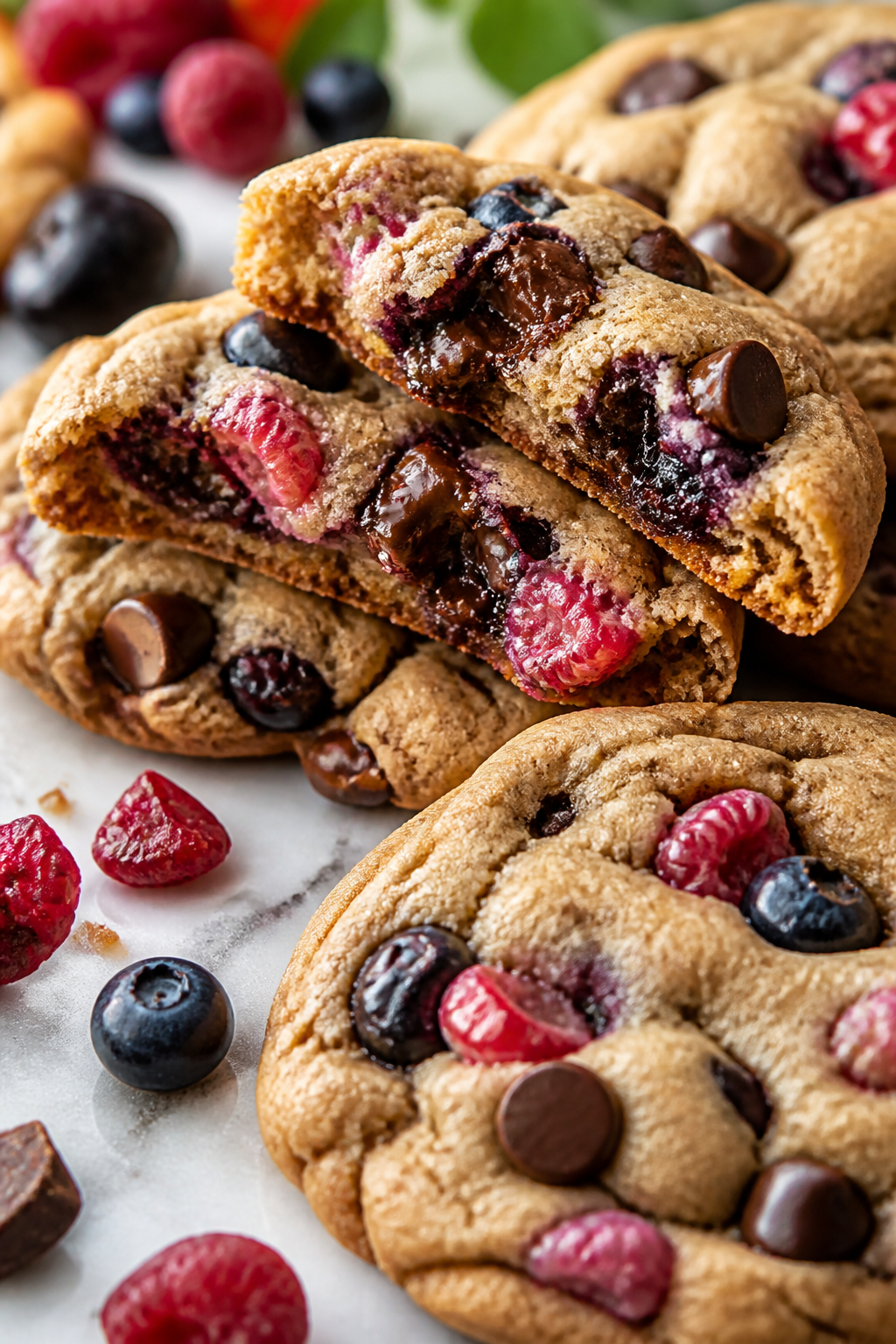
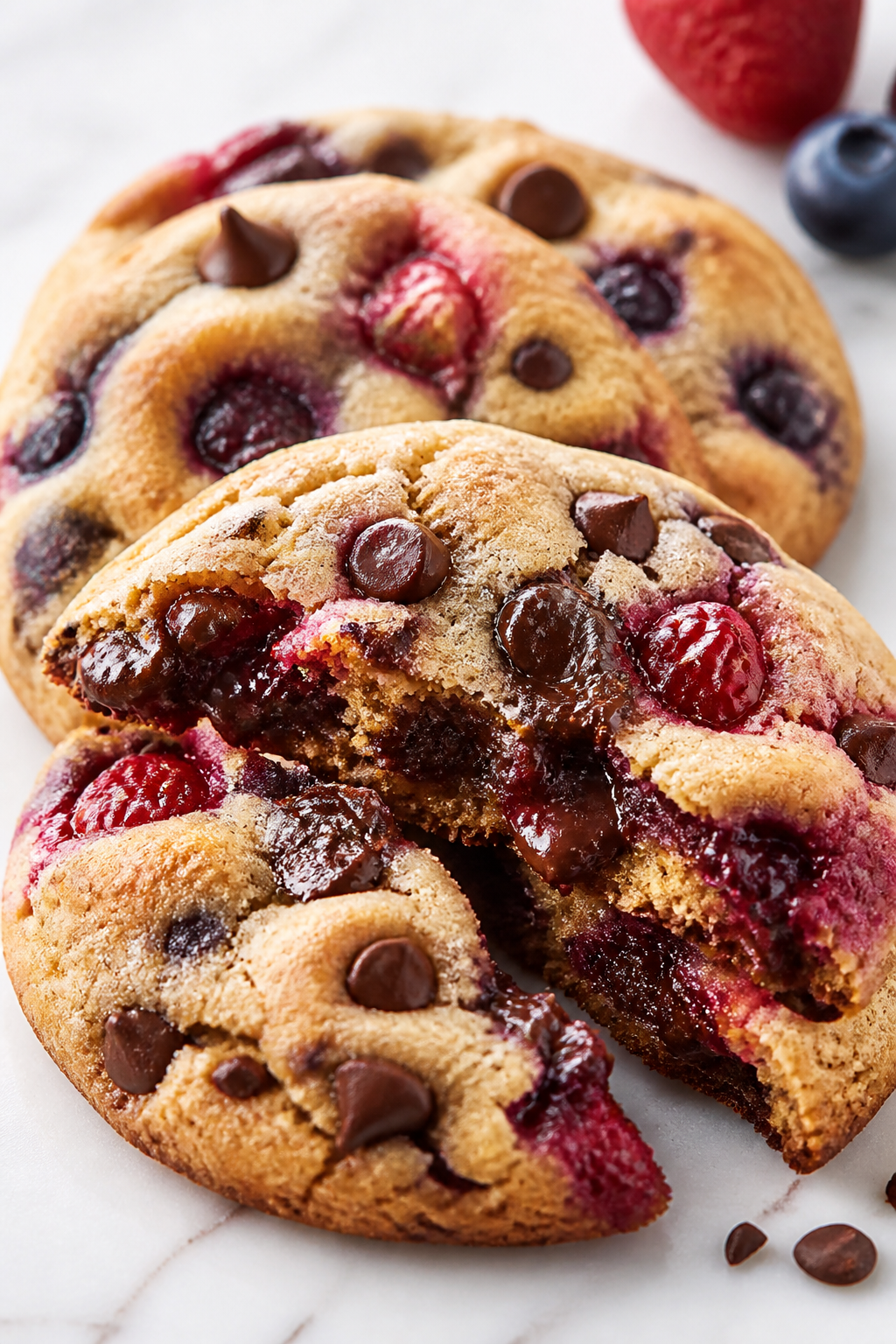
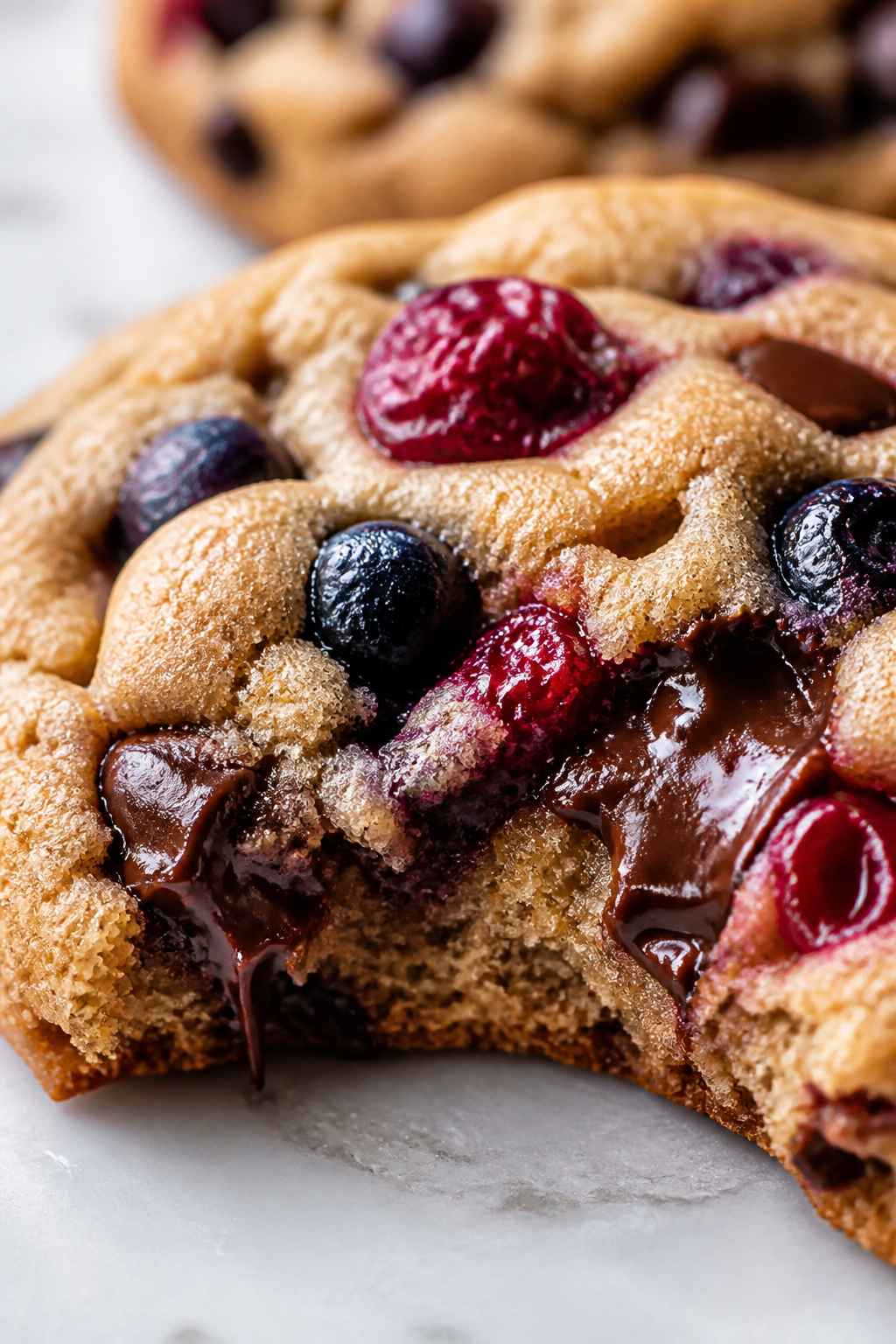
These cookies blend the classic chocolate chip with fresh spring berries for a soft, chewy treat. The secret? Adding a touch of cream cheese to keep them moist. Perfect for afternoon tea or a sweet snack anytime!
Introduction
I first made these spring berry chocolate chip cookies a few years ago when I wanted to add a fresh twist to my usual chocolate chip recipe. The idea of mixing in fresh berries came from my garden’s early harvest, and honestly, it was a happy accident. Unlike the typical crispy cookies, these have a soft, chewy center that my family absolutely adores. What sets this recipe apart is the addition of cream cheese in the dough—it keeps the cookies moist and tender, even after baking. Plus, the berries add a burst of natural sweetness and a little tang that pairs perfectly with the chocolate chips. I’ve tried making these without cream cheese before, but they just didn’t have the same texture or flavor. The trick I learned is to gently fold the berries in at the end to avoid breaking them up too much, which keeps the cookies looking pretty and prevents the dough from turning too wet. When you bite into one, you get the comforting taste of a classic cookie with a lovely fruity surprise. These are perfect for a spring afternoon snack or to pack in a lunchbox for a sweet treat. I hope you enjoy baking and sharing them as much as I do!
How To Do It
Step 1
Preheat your oven to 350°F (175°C) and line two baking sheets with parchment paper. This step ensures your cookies bake evenly and don’t stick. Using parchment also helps with cleanup and prevents the bottoms from burning, which can happen if you skip this step.
⏱ Time: 10 minutes
✓ Doneness: Oven reaches steady 350°F temperature; parchment paper is flat and smooth on baking sheets
Step 2
In a medium bowl, whisk together the sifted flour, baking soda, and salt. Sifting helps remove lumps and aerates the flour, which contributes to a lighter cookie texture. Mixing these dry ingredients first ensures they’re evenly distributed throughout the dough.
⏱ Time: 5 minutes
✓ Doneness: Dry ingredients are well combined with no clumps
Step 3
In a large bowl, beat the softened butter and cream cheese together until smooth and creamy using a hand mixer or stand mixer. This step is crucial because it creates a smooth base for the dough and helps incorporate air for a tender crumb. Make sure your butter and cream cheese are softened to room temperature for the best results.
⏱ Time: 3-4 minutes
✓ Doneness: Mixture is pale, creamy, and smooth without lumps
Step 4
Add the brown sugar and granulated sugar to the butter mixture and beat until fluffy and well combined. The sugars help with browning and add sweetness, while beating them in creates air pockets that make the cookies soft. Don’t rush this step; proper creaming is key to texture.
⏱ Time: 3 minutes
✓ Doneness: Mixture looks light and fluffy with no visible sugar granules
Step 5
Beat in the egg and vanilla extract until fully incorporated. The egg adds moisture and structure, while vanilla enhances flavor. If you add the egg too quickly or don’t mix well, the dough can curdle, so beat until smooth and uniform.
⏱ Time: 2 minutes
✓ Doneness: Dough is smooth and slightly glossy without streaks of egg
Step 6
Gradually add the dry ingredients to the wet mixture, mixing on low speed just until combined. Overmixing will develop gluten and make the cookies tough, so stop as soon as the flour disappears into the dough. The dough should be soft but not sticky.
⏱ Time: 3 minutes
✓ Doneness: No visible flour; dough is cohesive and slightly soft
Step 7
Gently fold in the chocolate chips and fresh berries using a spatula. This step requires a light hand to avoid crushing the berries, which would release too much juice and make the dough soggy. The berries add a fresh burst of flavor and a lovely texture contrast.
⏱ Time: 2 minutes
✓ Doneness: Chocolate chips and berries are evenly distributed without broken berries
Step 8
Scoop dough onto prepared baking sheets using a tablespoon or cookie scoop, spacing them about 2 inches apart. This spacing allows the cookies to spread without merging. If you place them too close, they’ll bake into one large cookie, which isn’t the goal here.
⏱ Time: 5 minutes
✓ Doneness: Uniform mounds of dough spaced evenly on parchment
Step 9
Bake in the preheated oven for 10-12 minutes, or until the edges are golden and the centers look set but still soft. Avoid overbaking, which dries out the cookies. They’ll firm up as they cool, so it’s better to take them out a little early for that perfect chewy center.
⏱ Time: 10-12 minutes
✓ Doneness: Edges are lightly golden, centers look slightly underbaked but not wet
Step 10
Let the cookies cool on the baking sheet for 5 minutes before transferring to a wire rack to cool completely. This resting time helps them set and prevents breaking. Moving them too soon can cause them to fall apart, especially with the fresh berries inside.
⏱ Time: 10 minutes
✓ Doneness: Cookies are firm enough to lift without breaking
Pro Tips
Use room temperature ingredients for smoother mixing and better texture.
When butter and cream cheese are softened to room temperature, they blend more easily with sugar, trapping air that creates a lighter, tender cookie. Cold ingredients can lead to uneven mixing and dense dough.
Don’t overmix the dough once you add the flour to keep cookies tender.
Overmixing develops gluten, which makes cookies tough and chewy in an unpleasant way. Mixing just until the flour disappears ensures a soft, tender crumb.
Fold in berries gently at the end to prevent the dough from becoming soggy.
Berries are delicate and release juice when crushed. Folding them in last preserves their shape and prevents excess moisture from ruining the dough’s consistency.
Chill the dough for 30 minutes if time allows for better flavor and shape.
Chilling firms the dough, which slows spreading during baking and lets flavors meld. This results in thicker cookies with a more developed taste.
Use parchment paper or silicone mats to prevent sticking and burning.
These liners provide an even surface that protects the cookie bottoms from direct heat, preventing over-browning and sticking.
Remove cookies from the oven when centers look slightly underbaked for chewy texture.
Cookies continue to cook from residual heat after removal. Taking them out too late results in dry, hard cookies instead of soft, chewy ones.
Let cookies cool on the baking sheet before transferring to a rack.
This resting time allows cookies to set and firm up, reducing the chance they’ll break apart when moved.
Common Mistakes to Avoid
Using frozen berries instead of fresh
Why it happens It’s tempting to use frozen berries for convenience, but they release excess moisture when thawed, which can make the dough too wet and the cookies soggy.
Fix Always use fresh berries or freeze and thoroughly drain frozen berries before adding. Pat them dry gently with paper towels to remove extra moisture.
Overbaking the cookies
Why it happens Many think cookies should be fully browned before removal, but this dries them out and ruins the chewy texture.
Fix Take cookies out when edges are golden but centers still look soft and slightly underbaked. They’ll firm up as they cool.
Not softening butter and cream cheese properly
Why it happens Rushing this step leads to lumps and uneven dough texture.
Fix Let ingredients sit at room temperature for about an hour before mixing. If short on time, cut into small pieces to speed softening.
Mixing flour too vigorously
Why it happens Overmixing develops gluten, making cookies tough, which is the opposite of the desired soft chewiness.
Fix Mix flour in slowly and stop as soon as it’s incorporated. Use a spatula for folding to avoid overworking the dough.
Crowding the baking sheet
Why it happens Placing dough balls too close causes cookies to merge and bake unevenly.
Fix Space cookies at least 2 inches apart to allow proper spreading and even baking.
Variations
Oatmeal Berry Chocolate Chip Cookies
Add 1 cup rolled oats to the dough for extra chew and a heartier texture. This variation adds fiber and a rustic flavor that pairs well with the berries and chocolate chips.
Note: Reduce flour by 1/2 cup to balance the added oats and maintain dough consistency.
Lemon Zest Berry Chocolate Chip Cookies
Add 1 tablespoon fresh lemon zest to the dough for a bright, citrusy note that enhances the berry flavor. This gives the cookies a refreshing twist perfect for spring.
Note: Fold zest in with the wet ingredients to evenly distribute flavor.
White Chocolate and Macadamia Berry Cookies
Swap semi-sweet chips for white chocolate and add 1/2 cup chopped macadamia nuts for a rich, buttery flavor with crunch. This creates a decadent cookie with a tropical vibe.
Note: Toast nuts lightly before adding to deepen their flavor.
Gluten-Free Berry Chocolate Chip Cookies
Use a 1:1 gluten-free baking flour blend instead of all-purpose flour. This makes the cookies safe for gluten-sensitive eaters while keeping the chewy texture intact.
Note: Add 1/4 teaspoon xanthan gum if your blend doesn’t contain it for better structure.
Vegan Berry Chocolate Chip Cookies
Replace butter and cream cheese with vegan alternatives and use a flax egg (1 tablespoon flaxseed meal + 3 tablespoons water) instead of a chicken egg. This keeps the cookies moist and flavorful without animal products.
Note: Chill the dough longer (about 1 hour) to help it firm up since vegan fats behave differently.
Nutrition
Per Serving:
Nutritional values are estimates and may vary based on specific ingredients used.
Storage & Tips
Room Temperature
Cookies keep well at room temperature for up to 2 days when stored in an airtight container. Avoid leaving them exposed to air, which dries them out and makes them lose their chewy texture.
Refrigerator
Store cookies in an airtight container in the fridge for up to 5 days. They may firm up slightly when cold, so bring them to room temperature or warm briefly before serving for best texture.
Freezer
Freeze cookies in a single layer on a baking sheet, then transfer to a freezer bag or container for up to 3 months. Thaw at room temperature and warm in a low oven or microwave to restore softness.
Reheating
Reheat cookies in a 300°F oven for 5-7 minutes or microwave for 10-15 seconds. Adding a small piece of bread in the container while reheating can help maintain moisture. Avoid overheating, which makes cookies hard.
Make Ahead
You can prepare the dough 1-2 days ahead and keep it tightly wrapped in the fridge. This resting time enhances flavor and texture. Scoop and bake fresh on the day you want to serve for best results.
FAQ
Can I use frozen berries instead of fresh in this recipe?
Frozen berries tend to release extra moisture when thawed, which can make the cookie dough soggy and affect the texture. If you must use frozen, thaw them fully, drain excess liquid, and gently pat dry before folding into the dough to minimize moisture.
What’s the purpose of adding cream cheese to the cookie dough?
Cream cheese adds moisture and a slight tang, which tenderizes the gluten in the flour and keeps the cookies soft and chewy. It also adds richness and improves the overall flavor balance between sweet and tart.
Can I substitute the butter with margarine or oil?
Butter provides flavor and structure that margarine or oil can’t fully replicate. Margarine may work but can affect texture and taste, while oil will make the dough too soft and greasy. For best results, use unsalted butter as called for.
How do I keep the cookies from spreading too much in the oven?
Make sure your butter and cream cheese aren’t melted but softened. Also, chilling the dough for at least 30 minutes before baking helps the cookies hold their shape better and prevents excessive spreading.
Why do my cookies sometimes turn out dry or crumbly?
Overbaking is often the culprit. Remove cookies from the oven when edges are golden but centers still look slightly soft. Also, make sure not to overmix the dough, as that develops gluten and makes cookies tough.
Can I make these cookies gluten-free?
Yes, by using a 1:1 gluten-free baking flour blend and adding xanthan gum if your blend doesn’t contain it. This helps maintain structure and chewiness similar to the original version.
How should I store leftover cookies to keep them soft?
Store them in an airtight container at room temperature with a slice of bread or apple to maintain moisture. Avoid refrigeration unless you prefer a firmer texture, and reheat gently before eating.
Is it okay to use frozen dough for baking later?
Absolutely! Freeze scooped dough balls on a baking sheet, then transfer to a bag. Bake from frozen, adding a few extra minutes to the baking time. This is great for fresh cookies anytime.
Final Thoughts
I hope you enjoy these spring berry chocolate chip cookies as much as my family does. Give them a try and let me know how they turn out!